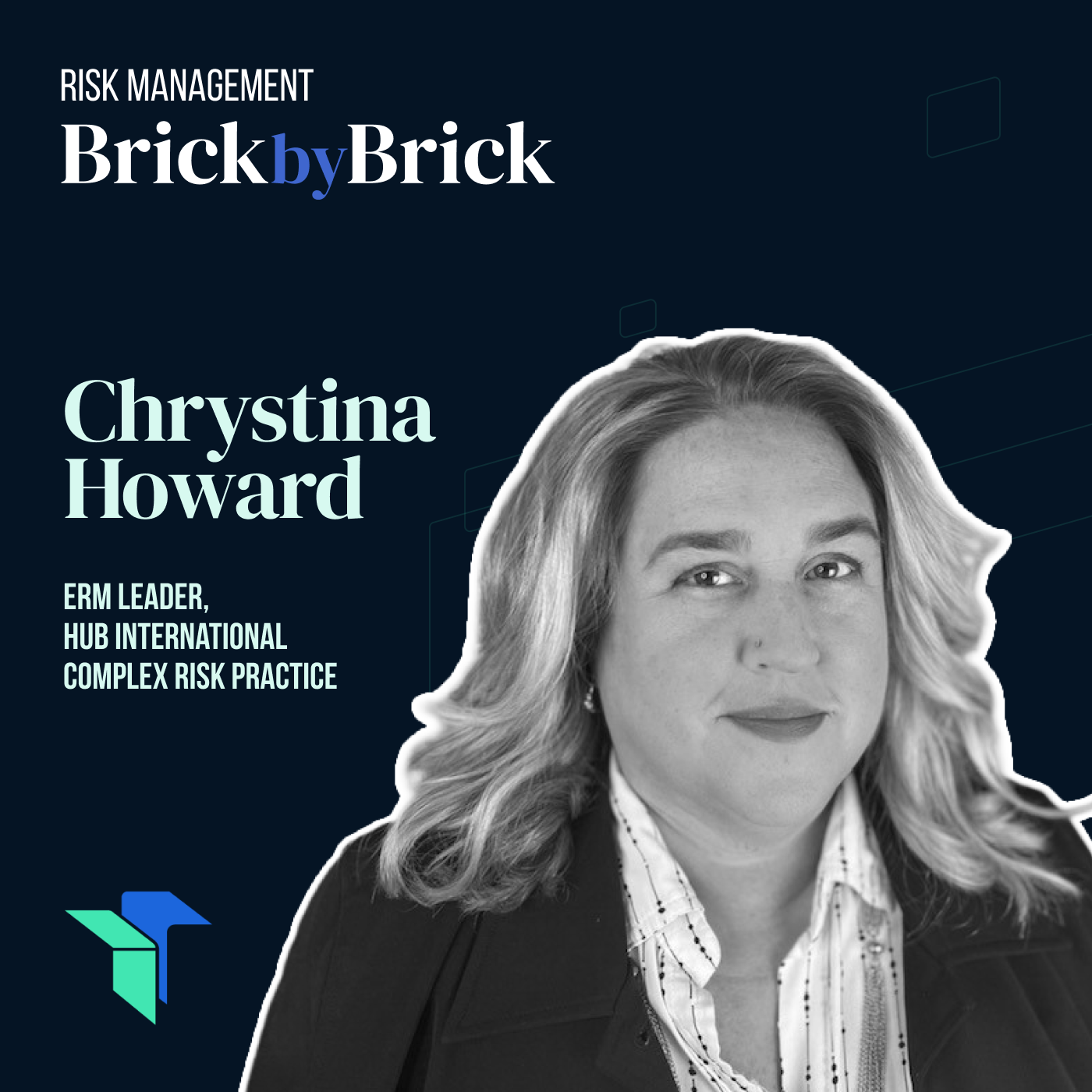
Risk Management: Brick by Brick
Is ERM Just "Stapled to the Back of the Strategy Report"? with Chrystina Howard
Today · 22 min
Every show filed under management, ranked by what listeners actually play.


In this episode of Risk Management: Brick by Brick, host Jason Reichl sits down with Chrystina Howard, ERM Leader in the Complex Risks Practice at HUB International. Chrystina shares her expertise on managing layered, complex corporate exposures and breaks down why enterprise risk management (ERM) should be a dynamic decision-support engine rather than an afterthought "stapled to the back of the strategy report." Discover why buying fancy risk tech platforms before establishing organizational p


 2Bobs—with David C. Baker and Blair Enns
Blair recognizes that AI has triggered a knowledge product oversupply and now we have a signal-to-noise ratio problem. He sees reputation and reach reshaping the knowledge economy, consolidating a lot of power and wealth among a smaller number of experts who demonstrate their trustworthiness and rise above the noise. Links "Demand Is the New Supply" by Blair Enns for winwithoutpitching.com: https://www.winwithoutpitching.com/insights/demand-is-the-new-supply

 Dental A Team Podcast
Success doesn't come from attaining perfection. It comes when you're looking to improve each day. Kiera talks about specific ways you can improve your practice without expecting perfection every minute of every day. Episode resources: Subscribe to The Dental A-Team podcast Schedule a Practice Assessment Leave us a review Transcript: Kiera (00:00.792) Hello, Dental A Team listeners. This is Kiera, and I am so jazzed about today's topic because I think that this applies to practices. I think it applies to life. And fun fact, my husband and I were chatting about this the other day. So I'm very excited about it. And consistent doesn't mean perfect. And this is honestly how great teams move forward and have excellent results. And it's such like a fun, like little piece for you guys that I just think are gonna help you set your practices apart. So I am really excited because I think so many people in their practices feel like I have to have this perfect practice in order to hit the highest heights and all the great things. And the reality is you don't actually have to have that. You just need to have a consistent practice. But we have to be good, consistent, not just consistent. So I want you to know that like perfection really does like have this high bar, unlike canny feeling about it, where I have to be perfect, I can't make any mistakes versus like, hey, if we're consistent, we're consistently good and we're consistently getting better. That's really what this is about. So I hope that you guys take this. I hope you realize that this is a great way to become an elite practice. It's a great way to set you and your team apart. And I really want you to know that just if you are a consistent practice, it doesn't mean that things are going to go perfect for you. It does mean that things are still gonna have happens. Like I I want to just dispel that so many people feel like, my gosh, I need my practice to be perfect. I need to be at this level in order for me to hit this level of success. And I want to just dispel the A, that doesn't exist, B, you're never gonna get there. And see, you can actually get there a lot sooner to a happy, successful practice without having to be perfect. And so some people are like, I want my team to be on autopilot. Well, guess what? You're probably never gonna get there. Like teams don't exist on autopilot. We can get them very systematized. and a lot of that's gonna start with consistency. So today I want to walk you guys through like how chasing perfection can actually slow your practice down, where consistency really matters most, and what are three ways to build a practice that ultimately gets better without expecting perfection. So, if you guys don't know us, we're the Dental A Team. I'm Kiera Dent. Yep, Dent really is my last name. It just took me three fiances to get there. So it's a great time. I love my life. I love helping dentists have the best, most fulfilled life that they could possibly ever have. That is ultimately what we're here for. I do believe that building a successful practice should and can be easy. So ask yourself, like, what if this could be easy? Because with Dental A Team it can. So if you are wanting to get help and help your practice, we help practices across the nation. We literally have practices in almost all 50 states. Kiera (02:19.918) and have worked across the globe and genuinely love to help teens, love to help dentists, just find their niche, find their happiness. I believe that your business should be serving your life and not the other way around. So let's help you have that same success. If you want to reach out, Hello@TheDentalATeam.com, be part of our family. We meet in person, we have a good time, we help flourish you and your team. So come hang out with us and just know our job is to truly make your life as easy as possible. So I want you guys to to just think about like what happens is Like a practice is creating incredible results and they aren't perfect. And like when we're executing on fundamental consistency, we can have predictable outcomes. I love Disneyland so much. Disneyland is one of the core companies our company models after. And there was this great quote that said that they're able to create predictable magic with the systems behind the scenes. And I would venture to say that those systems are the consistency pieces that they have. Like you show up to Disneyland every single time, the grass is mown. You show up and there's gonna always be flowers or decorations. There's never gonna be trash on the floor. They are going to make sure that they always have the right treats for you. people love Starbucks because of consistency, not because it's great. A lot of people just need consistency in our world. And so I really want you guys to just like see that there's some simple little shifts that you can help your team so that way you guys stop chasing this perfection model and you start building consistency. And Jason and we're talking the other day and we talked about how he said, Kiera, I'm really proud of you. You're very consistent. And I thought about it and I was like, A, thank you. That's a huge compliment. And B, I wasn't always this way. I remember when we were at Midwestern, he was in pharmacy school. I had my goal board on the on the wall. I've always had a nice goal board there. And I remember writing a little sticky note and putting it there. And I said calm, consistent. And there was one other one. I don't remember what it was. but I did not feel like I was consistent with work, with my life, with my routine. and so just so you know, I believe that consistency can be not just born and built in. I'm a walking proof of that. I believe like what can we put into place to make consistency easier? I don't like people to have to remember. So for example, like I'm always going to plan in my planner every Sunday. I just set that as a date. I never forget. I always do it. It's not super fun, but I'm going to do it because I believe that discipline equals freedom. Other things to be consistent on. At the end of every month, I transfer money like profit first. I have set like triggers in my brain so I don't have to remember. It's the atomic habits by James Clare. It's the stacking principle. So every Sunday, I plan my week. Every Kiera (04:42.124) like 30th, 28th, 29th, 30th, before the last day, before midnight of the last day of the month, I transfer money for profit first. At the end of every quarter, I review my PL, review my goals. In December, I always set goals for the next year and I review them. Again, those consistent pieces are what your you and your team need. So I just want you to know of like when we're going through this, there's a lot of ways that you can just build this muscle and let's stack. So number one is like define what good looks like. So we can't ask for consistency. If we don't even know what the standard is. So a lot of times, like, I want a perfect schedule. Well, great. Like perfect for you versus perfect for me versus perfect for this doctor. Like, what does a perfect schedule look like? So we need to make sure that, like, how do we all answer the phones? What is our scheduling process? What are our financial agreements? What are like, how does this doctor work? Like some large practices that have a lot of doctors, and every doctor works with different pr like different cement or different composite that like makes ordering really hard and very inconsistent. And then doctors are annoyed when Different assistants come in and they don't know how to assist you. So, how can we get all of our doctors to be similar? How can we get all of our hygienists? Like hygienists, you want your doctors to get in and out faster on an exam, set up to where you guys all introduce the doctor the same. We all hand off our patients the exact same. That's going to exponentially help you all. So when you guys have successful, like to get that consistency, let's define our standard processes. And I look at it like, okay, well, we could define a lot of standard processes, but what are the main ones that are really going to give us bang for buck? One, how do we answer for new patients? Two, how do we schedule? Three, what's our policy? Like how soon do I need to get people in? Do we have a block scheduling protocol? Like all that right there is just gonna fix your block scheduling right then and there. And if we all follow, then what are the rules of the game if we choose not to follow through? Also, what do we do for phone calls? What are we doing for hygiene? What's our hygiene period protocol? All of the hygiene need follow through on that. What do we all do for that? How do we set up our financial arrangements? What's allowed? What's not allowed? What's our treatment tracker? How do we follow up on treatment plans? How do we set up rooms for our doctors for different procedures? That's like in a quick nutshell. And then there's business sides too of like how do we track our marketing ROI? When do we look at our PL? When do we review every business expense in the practice? Those different things, but like that's the core process of a business. And if you get those and we set standards of we always schedule to this, our hygiene's always here, our reappointments there. A lot of times these standards could also be considered the bulk of your KPIs within a practice, because then we're gonna be able to have set standards and rules of like this is what we expect. We expect 98% collections, we expect 98% reappointment. Kiera (07:08.472) We expect 30% period protocol. We expect our schedule to be scheduled to goal every single day. We expect one or two openings every single day. That helps. Then we document it, we train it, we repeat it. It becomes like this is your SOP if you guys want, this is your operations manual. This is how you create consistency within your practice. And so just like simple little things in practices where we see this is like every patient gets reappointed. I've got a practice and they're like, tell us why reappointment is so important. I'm like, well, you guys are sitting at 90%. I gotta go chase 8% of your patients and get them back on the books. If you're seeing 500 patients a month, that's about 50 patients a month. And that's gonna compound over time that we're chasing down. Versus if, hey, take the blood pressure, make the next appointment, tell the patient this is when you're going to see them rather than asking. 95% of them are going to be there. Then we work through and we muddle through the couple of people that aren't gonna be easy for you. We now have just fixed our reappointment. Your patient, like your production, all that's going to go up. But we have this set standard of this is our reappointment and this is how we do it. Other things for this of like, we want to make sure that our hygiene perio protocol is there. Well, let's create a perioprotocol together. How do we co-diagnose it? What do we say? What is it like four millimeters and above with bleeding? Is that when we diagnose period? Some practices it is, some practices it's not. What's our standard of care and what's the expectation? And what happens if I choose to be your hygienist who wants to do some bloody profies? Also, hygienist, let's give you some great verbiage for this of how do we talk to a patient who might be having these periods like they've got period and we don't want to talk to them about it. We're embarrassed by that. That's okay. Let's give you this. Like, we don't change our standard, we just give you the tools and solutions so that way you can work through it. Consistency really does start with clarity. And then clarity is going to also need to have us hold accountability because I can talk, talk, talk, talk, talk. But if I don't hold accountable, then I'm just talking to you. I'm seagull, I'm seagull, what do they call it? It's called seagull leadership where I come, I squawk, I shiz with a Z, and I take off. We can't do that to our teams. We've got to come, we've got to talk about it, we've got to set standards, have the processes documented, and then hold accountable to that line. And truly, discipline does equal freedom. Think about if you're practice, we knew we always hit 98% reappointment, we always hit 98% collections, we always schedule to goal at least 75% of the way, three like three weeks into the month. So next month is already scheduled. Kiera (09:26.411) We hit our case acceptance at a certain percentage that we've agreed to. We always have our overhead at a certain percentage. Like just imagine how your practice would be if those were what we did consistently, month over month over month. That's a freaking dream. And I just listed up only five things for you. So really this consistency, this is where I don't want to be perfect. We can still make mistakes. We can still be late. We can still miss lab appointments, like whatever it is. But we've consistently hit this. What if we then add on like labs have a set process and we always are checking it? We color code them. So we never miss our lab pieces. There's so many little ways for you to just hold this consistency. But notice I started with the five like very big ones that are going to impact your production, impact your patients, impact your reputation first. And then I went into like smaller things like labs. That would be nice to have. I want you to fix them, but that's not gonna move my practice forward as fast. And I really think when we're looking at consistency and discipline, what's gonna drive me forward the most? I could sit here and say, well, number one, I want to be consistent with making dinner every night. That's great. But I could also be consistent with planning my week and reviewing my PL every single month. What's going to move me forward towards my goal? Well, maybe if I'm trying to eat healthy, making dinner every single night that's healthy would definitely move me towards my goals more. Me if I'm trying to hit production and profit, me planning my week, planning my schedule, reviewing my PL, that's gonna drive me there more. So what really is the biggest pain point with the biggest bang for buck? That's where we're going to start. So I want you just to say, like, where do we start? We're gonna pick an area where our team is inconsistent and ask, have we defined what good looks like? Do we have weat documented? And is this really the most important need today, or is this a nice to have rather than a must have? Okay, point number two, we're gonna coach on the miss instead of expecting perfection. And this, I think, is something for me is like sometimes when people miss, it isn't automatically failure. Like we need to be pushing hard, we need to be making mistakes. And honestly, it's just information, it's not like our whole team has failed. And so when this is broken, we have like one bad day becomes a huge issue. Leaders become frustrated. Team members hide behind mistakes. People are afraid to make decisions. And that's like if you have that culture, then we're expecting perfection. We're not allowed to have mistakes. When we are allowing our culture to make mistakes, like we identify what happens, we coach to the gap, like all right, there was a miss, let's coach this. We fix the protocol and expectations, we reset the expectation, and we try again tomorrow. Kiera (11:47.682) And I will say that sometimes I sit in camp A, not Camp B. I know camp B is better, but I like to control so much. But it's an illusion of control and it's not true control. In our mastermind group, when we meet in person, we're talking about the paradox of control, and I'm so excited. But the reality is, like, does you don't want them to be perfect. You just want them to make it better the next day. Now, if they continue to miss, yeah, that might be when you like clamp down and you're like, hey, we need to fix this. But I think there's pieces of like, There was an office and they just wrote in and like, hey, we're we have team members that are not gonna be there. Should we skip our leadership meeting? And I'm like, hard no. That consistency, like we never miss our leadership meetings. Even if people are gone, we have a way to fill them in. We never miss our morning huddles. We never miss reappointment. We never miss following up on our treatment trackers. We never miss our period protocol. Like those things don't get missed. And when you start to put those processes in play, your practice can move forward. It's not like, well, it was busy, so we just didn't do period today. well, was busy, we just didn't fill the schedule. my gosh, Mrs. Jones called and she canceled her appointment, like we just couldn't fill the schedule. Absolutely not. Like, what is our standard that we are absolutely not going to tolerate below that and hold to that and coach to that? We do not. The goal is like never getting off track. Like we will get off track. It's getting back on track faster and holding a true standard rather than just saying a lot of words but never actually executing on it. So I want you to look at like number one, do we have a defined process? That's number two. Number Number one. Number two is the next time something doesn't go as planned, what do we need to adjust to have this work the next time? And then implement that and hold people to that standard and expectation moving forward. That is going to be an absolute zone for you to really have like your practice move forward in a great way and to truly win and to keep consistency because things will break no matter what. There are times, but like I do not miss on my Sunday planning. I do not miss at my end of month. We do not miss our meetings in any of our departments. I don't care if people are out. Like we have Monday off. It's a holiday. That's usually when we run our meetings. We reschedule it to another time that week. We don't miss. And I think when people can bank on that consistency, that to me just creates like comfort. It creates consistency. Like that's the word. And that's going to create continuity for you as well. People live. Like, why do you go to Starbucks? Because you know it's going to the same thing every single time. So we keep going back to it, even if it's not the best. Kiera (14:04.385) Like most team members thrive in routine. People like that's human nature is have routine. Why do you go the same way home every single day from work? because it's routine, because you don't have think about it. So this consistency is creating routine, which makes jobs easier and like culture more fun. So step three is like let's make sure our wins compound. So it can be boring to have consistency. It can. Like there is a lot of boring that happens when things are consistent. Like it just feels like vanilla. Just think about investing. Investing is not fun and people try to like add sprinkles. Nope, it's just vanilla. And if you consistently do it, most of the time you're gonna end up on top. Same thing if we just do like plain vanilla ice cream in our practice and have it consistent, it's going to go there. But it can be very boring. So like just imagine your practice, like morning huddles run every single day. ARs recei reviewed every single week. KPIs are reviewed weekly and monthly, and then we we coach to that. Patients are reappointed at ninety eight percent or Collection percentages at 98% always. Unscheduled treatment is consistently followed up. Team meetings happen and they're very productive. Like, wow, that's great. But every one of those little things can become very boring and very like mundane. But guess what? That consistency actually creates clarity and it allows teams to flourish. It is not fun to do some of these items. Like nothing's crazy about that. But that's going to transform your practice. So having very much these consistent pieces. Now, I can run a morning huddle and do it consistently, but it can be junk. So it's gotta be a great morning huddle that actually pushes towards winning. I can reappoint my patients, and if I'm hitting 98%, there's really nothing I'm gonna change about that. If our collection percentages are 98%, I'm gonna double check and make sure I've got less than one month's worth of AR. I'm not gonna touch that, I'm gonna move on. But every one of these little checkpoints within a KPI scorecard, if they are checked off consistently, your practice will thrive. Like that's just math, the math maths. So When I look at a KPI scorecard, also looking at the vitals and the metrics, let's say your reappointment's at 75%, like this other practice there at 90%. Bumping it up to 98% doesn't happen because of one awesome meeting. It happens because we have set into place, we blood pressure's on, we reappoint, we look six months in a day out, reappoint them. Odds are Kiera, you're probably gonna come in on a Thursday at one o'clock because you're already seeing me on a Thursday at one o'clock. Don't ask me, don't make hard decisions. Just put it in there and like let's bump that number up to 98%. Kiera (16:26.071) That just cut down a ton of people working hard on something else. Our team is gonna flourish, our patients are gonna thrive. This helps so well. We do this week after week after week after week. People are like, Kiera, how do you get practices to do this? And I'm like, it's the simple things that seem boring. Like, how do you grow practice? a great morning huddle, and we track KPIs and like we coach to that based on whatever the KPIs tell us. That's it. That's really it. And you're like, wow, it sounds revolutionary. It's not, it's very simple, basic things. And so from that. I want you to know that people look exponential, like so extraordinary from the outside and inside, they're just consistent. Like Starbucks, they're consistent. That's why you go back. Practices that are consistent make patients want to come back. Practices that are consistent make team members feel like it's very easy. I know my job, I know how to get my gold stars. I know how to like leave and like really leave a great impact. So I want you guys to look at this of like, what are the wins that we can do? What's the boring mundane that we're gonna get us into that's just consistent? Morning huddles, if you don't have that, start there. If you're not tracking KPIs, start there. If we're not looking at our KPIs and measuring up to that, start there. If we're not hitting a KPI, let's start there. Like whatever one it is, I want you guys to look at this, commit to executing consistently for 90 days on that and improving that metric and that number that's ultimately going to drive you forward. It does not have to be hard, guys. We need to define what good looks like. So everybody knows like what our standard is, and we need to coach and hold to that. Then we need to coach on the misses. It's okay if we miss, let's just fix it, let's improve it, let's go for it. And then we need to let the small winds compound and create the consistency that really is vanilla boring. But guess what? That vanilla is always good. I can go get a vanilla frosty and it will be great. I can get vanilla ice cream and I'm really happy with it. Would I love sprinkles or would I love chocolate or would love something else? Yes. But do I hate vanilla? Somebody might hate vanilla. I hope you're just getting the analogy here. It's not something I'm gonna go right home about, but it is something that I'm can always bank on to and whatever yours is. Maybe yours is chocolate. Chocolate's not super great. But it's always good consistently, always good. That's what we're going for. Your team is going to have bad days. You are going to have things where things go off the rails. I'm going to have days where like my week is freaking psycho and I don't want to plan. We're going to have months where I don't want to look at those numbers. But guess what? We show up and we do it anyway. That is what discipline looks like. Discipline and consistency are things that actually create freedom. And you're looking for this freedom. And I'm going to say, where are you lacking that consistency? Where are you lacking this tracking? Where are you lacking having your team know what the standards and expectations are? Kiera (18:52.299) Where are we not holding accountable? Let's start there. And if you're struggling with this, like, my gosh, it just seems like everything's broken. High five, you're not alone. A lot of practices feel that way. A lot of them do. And there's nothing wrong with you. I want you to know that every practice is going to be on top. Every practice is going to be at the bottom. Every practice is going to go through ups and downs the entire time. It's what you do in those ups and downs is ultimately going to determine. Do you continue to go down or do you continue to go up? It's a decision for you. And I'd love to help you. So reach out. Hello@TheDentalATeam.com. You do not need to be perfect. You need to be consistent on the things that matter. And I hope today we gave you a lot of those. Please do yourself, your team, and your practice a favor and take care of these items. It does not have to be hard. Like I said, running a successful practice should be easy. And these are some great ways for you to do it. Go be consistent, not perfect. Perfection is an illusion is the lowest standard. Consistency is something that you can actually achieve. So go do it. Go make today amazing. Reach out if we can help you in any way. And as always, thanks for listening. I'll catch you next time on the Dental A Team Podcast.

Christian Schappeit

Ivan Golovko

Nina Schwarting

Kerstin Wolff

Amaury Solera

Leonardo Volpi

Carlijn Bergshoeff en Annik Dirkx

Ulrik Branner

Elżbieta i Maciej Światełko-Nachtlicht

Eric Michrowski

Fisher Phillips
Larry Weidel

Nat Schooler - Business Futurist

Today's Wills and Probate

Venki Padmanabhan

Brought to you by Donnie Shelton and Dan Gordon

The Small Business Cyber Security Guy

Jan Hawliczek, Robindro Ullah

Uwe Dotzlaff, Manfred Stockmann

Peer Schulze

Christoph Mahdalik - Ideengeber für Transformation, Mobilität & Umwelt

Thomas Lührmann

André Kaeber

Barbara Wietasch