

CyberCode Academy
CyberCode Academy
Welcome to CyberCode Academy — your audio classroom for Programming and Cybersecurity.
🎧 Each course is divided into a series of short, focused episodes that take you from beginner to advanced level — one lesson at a time.
From Python and web development to ethical hacking and digital defense, our content transforms complex concepts into simple, engaging audio learning.
Study anywhere, anytime — and level up your skills with CyberCode Academy.
🚀 Learn. Code. Secure.
You can listen and download our episodes for free on more than 10 different platforms:
https://linktr.ee/cybercode_academy
- 88 episodes
- daily
- Avg 20 min
- English
Counted on this page — what you have heard stays on this device, so it is not something the list can be paged by.
 Yesterday · 21 min
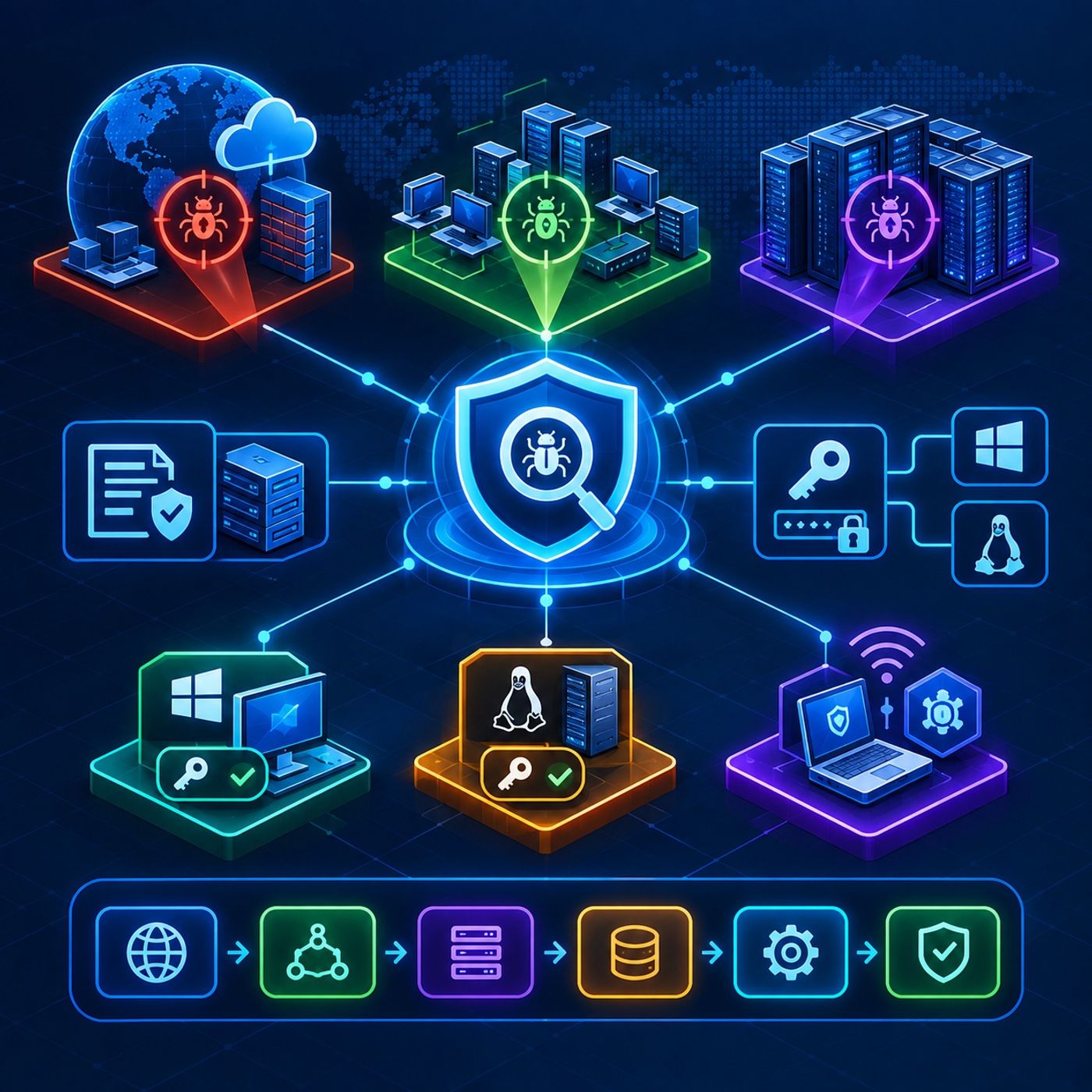
Course 46 - CompTIA Cybersecurity Analyst | Episode 12: Vulnerability Scanning Foundations
- Transcript
 Saturday · 17 min
Course 46 - CompTIA Cybersecurity Analyst | Episode 11: Foundations of Vulnerability Management
- Transcript

 Thursday · 20 min
Course 46 - CompTIA Cybersecurity Analyst | Episode 9: Domain Names, IP Ranges, and Zone Transfers
- Transcript
 Wednesday · 22 min
Course 46 - CompTIA Cybersecurity Analyst | Episode 7: Network Footprinting & Mapping
- Transcript
 Wednesday · 19 min
Course 46 - CompTIA Cybersecurity Analyst | Episode 8: Active Port Scanning to Passive Analysis
- Transcript

 October 12 · 20 min
Course 46 - CompTIA Cybersecurity Analyst | Episode 5: Network Deception and Secure Endpoint Management
- Transcript

 October 10 · 20 min
Course 46 - CompTIA Cybersecurity Analyst | Episode 3: Measuring and Managing Risk
- Transcript

 October 8 · 21 min
Course 46 - CompTIA Cybersecurity Analyst | Episode 1: Fundamentals, Risk & the CIA Triad
- Transcript

 October 6 · 23 min
Course 45 - IE Data Center Network Design | Episode 4: Cisco Data Center Fabrics
- Transcript
 October 5 · 24 min
Course 45 - IE Data Center Network Design | Episode 3: Mastering Virtual Port Channels
- Transcript
 October 4 · 22 min
Course 45 - IE Data Center Network Design | Episode 2: Modern Layer 3 Data Center Design
- Transcript
 October 3 · 25 min
Course 45 - IE Data Center Network Design | Episode 1: Layer 2 Data Center Design
- Transcript
 October 2 · 20 min
Course 44 - RH Security Specialist | Episode 12: Securing Linux with Nessus and IPTables
- Transcript
 October 1 · 14 min
Course 44 - RH Security Specialist | Episode 11: System Tracking and Port Reconnaissance
- Transcript