Skip to content
Artwork for CyberCode Academy
CyberCode Academy · Tuesday · 26 min

Course 46 - CompTIA Cybersecurity Analyst | Episode 6: Penetration Testing, Team War Games, and Reverse Engineering

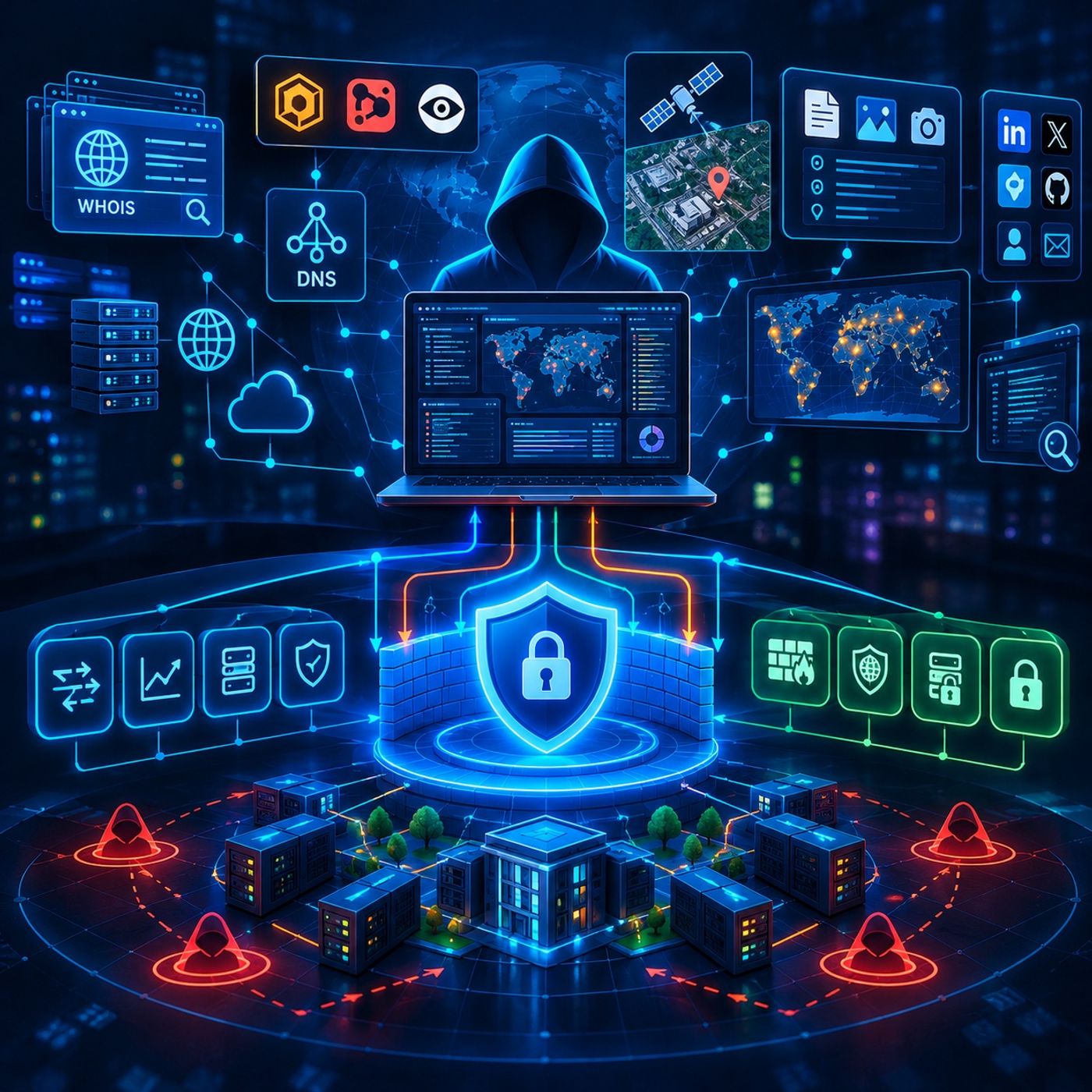
Episode OverviewThis episode explores the core methodologies used to assess, simulate, investigate, and strengthen cybersecurity defenses. It brings together three complementary areas of security operations: structured penetration testing, controlled adversary simulations, and reverse engineering for malware analysis.From evaluating an organization's external attack surface to conducting realistic Red Team and Blue Team exercises, the episode demonstrates how security professionals can identify weaknesses and validate defensive capabilities. It also examines how reverse engineering and malware analysis can reveal the behavior and internal logic of unknown binaries, while highlighting the importance of security throughout the technology supply chain.Key Topics Covered1. Penetration Testing FrameworkThe episode introduces the fundamentals of structured penetration testing and distinguishes outside-in security assessments from inside-out vulnerability management and scanning activities.It examines the four major phases described in NIST Special Publication 800-115: Planning — defining scope, objectives, rules of engagement, and assessment requirements. Discovery — gathering information and identifying systems, services, vulnerabilities, and potential attack paths. Attack / Exploitation — safely validating whether identified weaknesses can actually be exploited within the authorized scope. Reporting — documenting findings, evidence, business impact, and prioritized remediation recommendations. The episode emphasizes that effective penetration testing is not simply about finding vulnerabilities. Clear reporting and meaningful risk prioritization are essential for helping management understand exposure and allocate remediation resources effectively.2. Security Exercises and Cybersecurity War GamesThe episode then moves from individual security assessments to live-fire security exercises, where organizations simulate realistic attacks and defensive responses inside controlled environments.These exercises commonly divide participants into three primary roles: Red Team — simulates adversarial activity through authorized reconnaissance, attack simulation, and exploitation. Blue Team — protects the environment by hardening systems, monitoring activity, detecting attacks, containing threats, and restoring affected services. White Team — provides neutral coordination by defining the rules, managing the exercise environment, resolving disputes, and ensuring that the simulation remains within its approved boundaries. Virtualized and isolated environments make these exercises especially valuable because organizations can test their people, processes, technologies, and incident-response capabilities without exposing production systems to unnecessary risk.3. Reverse Engineering and Malware AnalysisThe final section examines how security researchers investigate unknown or suspicious compiled binaries.The episode compares two complementary approaches: Dynamic Analysis — executing a sample in an isolated sandbox and observing its runtime behavior, including processes, files, registry activity, network communications, and other indicators. Static Analysis — examining a binary without executing it by using tools such as decompilers, disassemblers, hexadecimal editors, and other reverse-engineering utilities to understand its structure and logic. Together, these techniques help analysts determine what a suspicious program does, identify indicators of compromise, understand potential capabilities, and support incident-response and defensive engineering efforts.The discussion also expands beyond software to consider technology supply-chain risks, including the possibility of malicious or unauthorized firmware modifications introduced during hardware procurement or distribution.Security Operations WorkflowThe three topics demonstrate a broader security lifecycle:Assess → Discover → Validate → Simulate → Analyze → Detect → Remediate → ImprovePenetration testing identifies and validates weaknesses, security exercises test how organizations respond to realistic adversaries, and malware analysis helps defenders understand potentially malicious software. Together, these practices provide complementary perspectives for improving an organization's overall security posture.Key Takeaways Penetration testing should follow a defined methodology, scope, and rules of engagement. NIST SP 800-115 provides a structured framework for conducting technical security assessments. Effective security testing requires meaningful reporting and risk prioritization, not just vulnerability discovery. Red, Blue, and White Teams provide distinct responsibilities during controlled security exercises. Isolated environments allow organizations to conduct realistic attack-and-defense simulations safely. Dynamic and static malware analysis provide complementary views of suspicious binaries. Reverse engineering can help uncover functionality that is not immediately visible from a program's external behavior. Security considerations must extend beyond software and networks to the broader technology supply chain. Continuous assessment, simulation, analysis, and remediation are essential components of mature cybersecurity operations. You can listen and download our episodes for free on more than 10 different platforms: https://linktr.ee/cybercode_academy

0:00-26:17

transcript

No transcript — this publisher did not publish one.

show notes

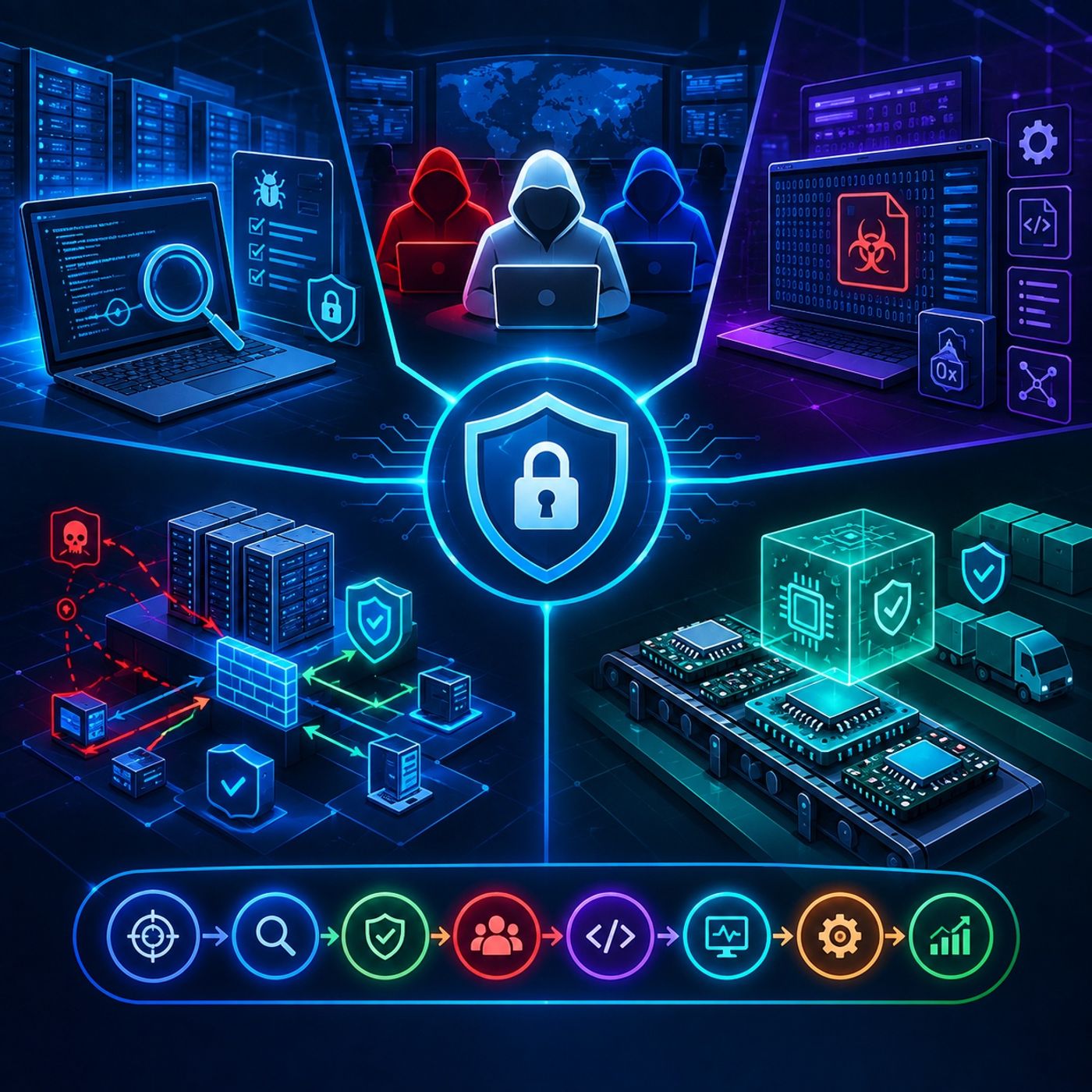
Episode OverviewThis episode explores the core methodologies used to assess, simulate, investigate, and strengthen cybersecurity defenses. It brings together three complementary areas of security operations: structured penetration testing, controlled adversary simulations, and reverse engineering for malware analysis.From evaluating an organization's external attack surface to conducting realistic Red Team and Blue Team exercises, the episode demonstrates how security professionals can identify weaknesses and validate defensive capabilities. It also examines how reverse engineering and malware analysis can reveal the behavior and internal logic of unknown binaries, while highlighting the importance of security throughout the technology supply chain.Key Topics Covered1. Penetration Testing FrameworkThe episode introduces the fundamentals of structured penetration testing and distinguishes outside-in security assessments from inside-out vulnerability management and scanning activities.It examines the four major phases described in NIST Special Publication 800-115:
  • Planning — defining scope, objectives, rules of engagement, and assessment requirements.
  • Discovery — gathering information and identifying systems, services, vulnerabilities, and potential attack paths.
  • Attack / Exploitation — safely validating whether identified weaknesses can actually be exploited within the authorized scope.
  • Reporting — documenting findings, evidence, business impact, and prioritized remediation recommendations.
The episode emphasizes that effective penetration testing is not simply about finding vulnerabilities. Clear reporting and meaningful risk prioritization are essential for helping management understand exposure and allocate remediation resources effectively.2. Security Exercises and Cybersecurity War GamesThe episode then moves from individual security assessments to live-fire security exercises, where organizations simulate realistic attacks and defensive responses inside controlled environments.These exercises commonly divide participants into three primary roles:
  • Red Team — simulates adversarial activity through authorized reconnaissance, attack simulation, and exploitation.
  • Blue Team — protects the environment by hardening systems, monitoring activity, detecting attacks, containing threats, and restoring affected services.
  • White Team — provides neutral coordination by defining the rules, managing the exercise environment, resolving disputes, and ensuring that the simulation remains within its approved boundaries.
Virtualized and isolated environments make these exercises especially valuable because organizations can test their people, processes, technologies, and incident-response capabilities without exposing production systems to unnecessary risk.3. Reverse Engineering and Malware AnalysisThe final section examines how security researchers investigate unknown or suspicious compiled binaries.The episode compares two complementary approaches:
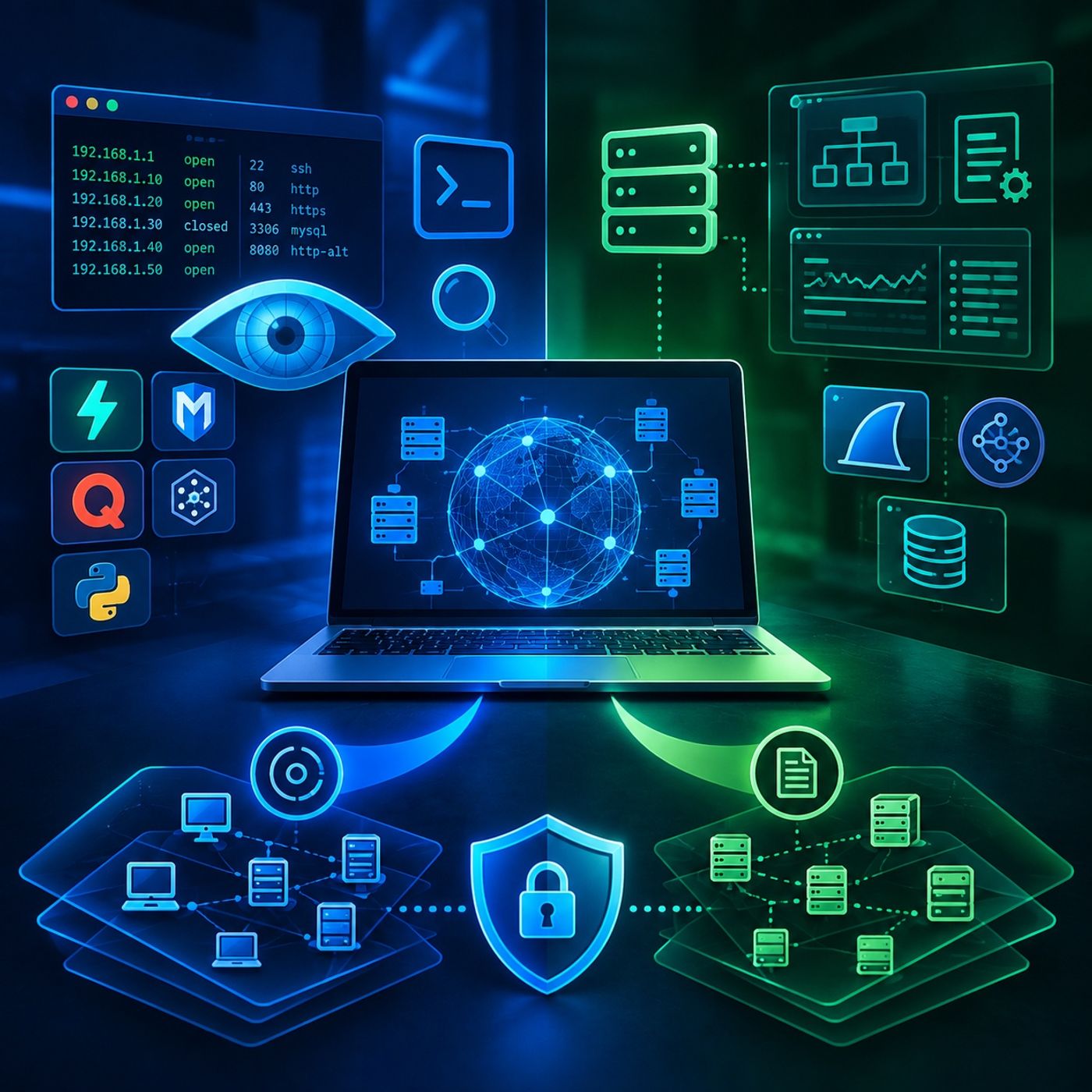
  • Dynamic Analysis — executing a sample in an isolated sandbox and observing its runtime behavior, including processes, files, registry activity, network communications, and other indicators.
  • Static Analysis — examining a binary without executing it by using tools such as decompilers, disassemblers, hexadecimal editors, and other reverse-engineering utilities to understand its structure and logic.
Together, these techniques help analysts determine what a suspicious program does, identify indicators of compromise, understand potential capabilities, and support incident-response and defensive engineering efforts.The discussion also expands beyond software to consider technology supply-chain risks, including the possibility of malicious or unauthorized firmware modifications introduced during hardware procurement or distribution.Security Operations WorkflowThe three topics demonstrate a broader security lifecycle:Assess → Discover → Validate → Simulate → Analyze → Detect → Remediate → ImprovePenetration testing identifies and validates weaknesses, security exercises test how organizations respond to realistic adversaries, and malware analysis helps defenders understand potentially malicious software. Together, these practices provide complementary perspectives for improving an organization's overall security posture.Key Takeaways
  • Penetration testing should follow a defined methodology, scope, and rules of engagement.
  • NIST SP 800-115 provides a structured framework for conducting technical security assessments.
  • Effective security testing requires meaningful reporting and risk prioritization, not just vulnerability discovery.
  • Red, Blue, and White Teams provide distinct responsibilities during controlled security exercises.
  • Isolated environments allow organizations to conduct realistic attack-and-defense simulations safely.
  • Dynamic and static malware analysis provide complementary views of suspicious binaries.
  • Reverse engineering can help uncover functionality that is not immediately visible from a program's external behavior.
  • Security considerations must extend beyond software and networks to the broader technology supply chain.
  • Continuous assessment, simulation, analysis, and remediation are essential components of mature cybersecurity operations.


You can listen and download our episodes for free on more than 10 different platforms:
https://linktr.ee/cybercode_academy
links1