Skip to content

Philosophy

Every show filed under philosophy, ranked by what listeners actually play.

650
shows
0
subcategories
4
new this week

Most subscribed

audio · in philosophy · refreshed hourly

Newest episodes

audio · last seven days
  • Weltgeist

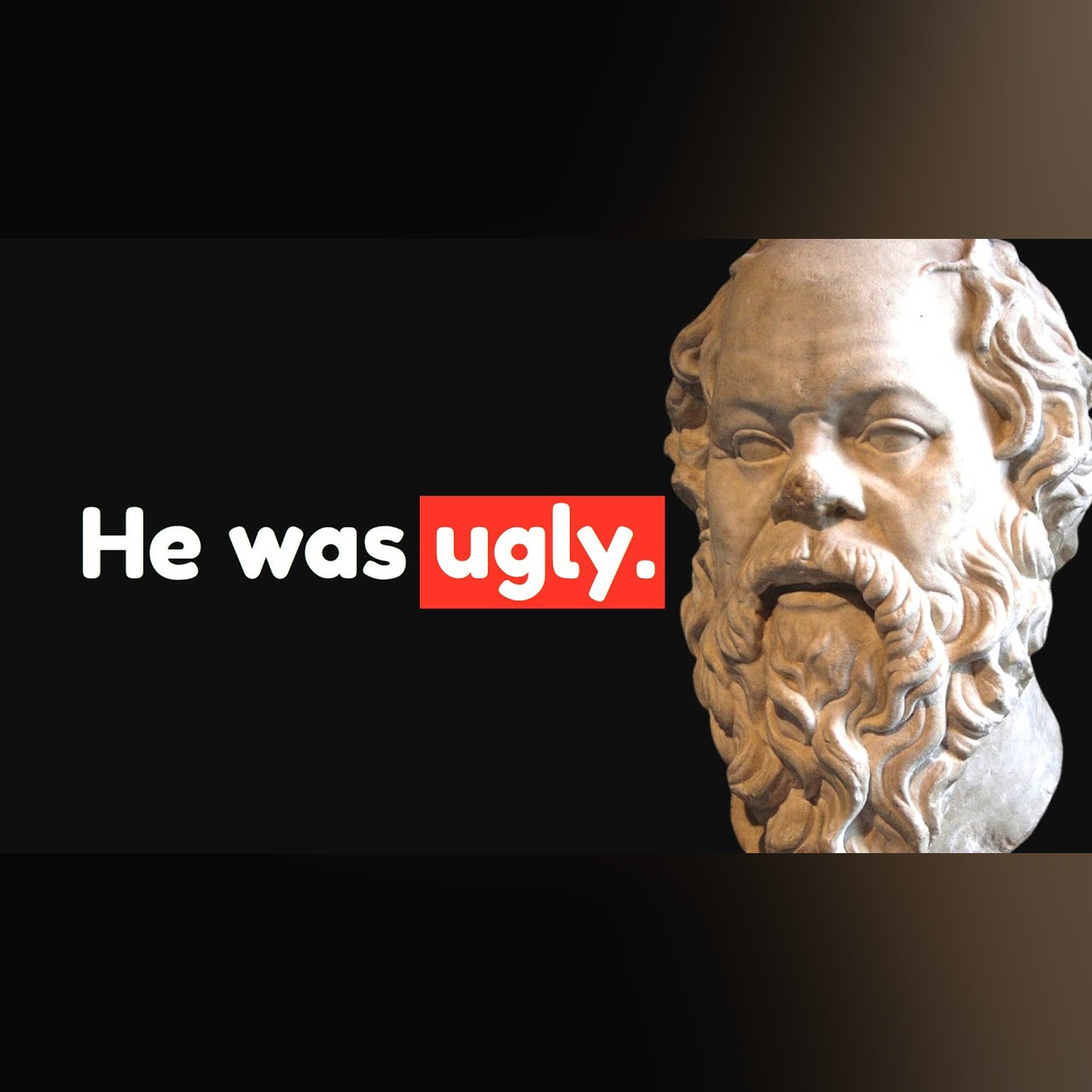
    Nietzsche's Problem With Socrates

    To try everything Brilliant has to offer—free—for a full 30 days, visit https://brilliant.org/Weltgeist/ . You’ll also get 20% off an annual premium subscription. Support us on Patreon, get access to exclusive videos: ▶ https://www.patreon.com/WeltgeistYT OUR ANALYSES: ▶ Beyond Good and Evil: https://youtu.be/WIHXZUltfqk ▶ The Antichrist: https://youtu.be/qej1Z8Qzq_c ▶ Genealogy of Morals: https://youtu.be/6PUx4cOfFcI ▶ Twilight of the Idols: https://youtu.be/YpVr_NEvWYA ▶ The Will to Power: https://youtu.be/He6ZC7ZFBt8 ▶ Daybreak: https://youtu.be/cOL2z7nuXdA ▶ The Joyful Science: https://youtu.be/U0fTBOJ-C_I In Twilight of the Idols, Nietzsche opens up the chapter "The Problem of Socrates" with a bold statement: he calls him ugly. By itself that's not really a controversial statement: Socrates's unsightly physique is well-attested in ancient sources, and Socrates himself (with a dint of his trademark irony) even agrees with detractors who insult his looks. (His bulging crab-like eyes, for example, allow him to take a broader view of the world than those with normal, forward-facing eyes can... he says to his friend Crito.) What's so provocative about Nietzsche's statement is not the statement itself but rather that he uses it as an argument against Socrates. Isn't that the classic example of an ad hominem attack? You're ugly therefore you're wrong? But Nietzsche goes deeper into it and uses the ugliness of Socrates as a springboard to critique ancient Greek culture - how Socrates and the Socrates Revolution was a symptom of decadence, of the ancient pre-Socratic Greeks losing their noble tastes, allowing themselves to be seduced by reason, allowing Socrates to convince them that from now on, they needed good reasons, solid arguments, for their way of life. The happy instinct of the powerful, that needs no justification beyond itself, now stood in need of a justification: good reasons were required for your beliefs. And the Greeks had Socrates to thank for that. For Nietzsche, this is not a sign of philosophical enlightenment, but a sign of decay, of decadence, of a loss of strength; of weakness. Moreover, with Socrates, the way was paved for Plato, and his world-changing distinction between appearance and reality. The Greeks used to judge books by their covers, and Plato changed that. Now, there is this rotten, fallen, imperfect material world juxtaposed with a perfect World of Forms. For the pre-Socratic Greeks, this idea was not as forceful as it is today: appearance WAS reality. And only ugly Socrates, who could not compete with the strong, healthy, noble Greeks on physical terms, had to invent a kind of mental challenge: the tyranny of reason, and the prelude to the World of Forms where reason would reign supreme over all the rest. Mind over body, reason over instinct, idea over reality. This video was sponsored by Brilliant. Learn more about your ad choices. Visit megaphone.fm/adchoices

    Today · 29 min
  • Einzelgänger

    The feeling of wanting to leave everything behind... | Einzelgänger

    The feeling of wanting to leave everything behind... Where does this urge to leave everything behind come from? And is packing our stuff and starting somewhere afresh actually a smart move? Is there anything profound and meaningful about changing location, or is it just a means to escape discontent?Video: The feeling of wanting to leave everything behindSupport the channel: ✔️ PayPal: https://www.paypal.me/einzelgangerco ✔️ Patreon: https://www.patreon.com/einzelgangster ✔️ Bitcoin: 3HQnEz1LQ4G6dqN2LdZgzc7qoJjJCyWjTC (Donated BTC and want in the credits? Send me an email with the amount/address)🎞️ Animations and thumbnail art by Munkaa: https://www.youtube.com/user/jus7yPurchase Stoicism for Inner Peace (affiliate links): 📘 Paperback: https://amzn.to/3wB9iHb 💻 Ebook: https://amzn.to/2RdjbKVPurchase Unoffendable (affiliate links): 📘 Paperback: https://amzn.to/2RJYfti 💻 Ebook: https://amzn.to/35e23a5Merchandise: 🛍️ Shop: teespring.com/stores/einzelgangerstore 🛍️ Merchandise design by Punksthetic Art: https://www.youtube.com/user/JRStoneart00:00 Introduction 01:22 Wanting to leave 05:09 The irrationality of leaving 08:39 An assertion of freedom 10:44 Our truest selves Turn on notifications for the podcast & rate it a 5star for new episodes. Einzelgänger explores a wide range of topics and ideas, with a dose of "as I see it," out of curiosity and creative urge. Einzelgänger is under the supervision of the Dutch Regulatory Media Authority (Commissariaat voor de Media). *Disclaimer: The material provided by Einzelgänger isn't a clinical/medical service or replacement of mental health professionals, nor an academic resource. Disclaimer: This audio project is an independent interpretation of content originally created by Einzelgänger. It was made by a listener who resonates deeply with the channel’s quiet reflections on philosophy, solitude, and selfmastery - and seeks to share that experience in a format suited for stillness, movement, or anything in between. This is not an official production of Einzelgänger, nor is it affiliated with or endorsed by the creator. All rights to the original material remain with Einzelgänger. If you represent the channel and wish to get in touch regarding this adaptation, please feel free to reach out. ------------- ------------ Keywords: ancient philosophy, self improvement, nihilism, personal growth, existential crisis Learn more about your ad choices. Visit megaphone.fm/adchoices

    Today · 18 min
  • Weltgeist

    NIETZSCHE: The Art of Not Reading (And What to Do Instead)

    SUPPORT US ON PATREON: ▶ https://www.patreon.com/WeltgeistYT WATCH: ▶ Why Nietzsche Hated Plato: https://youtu.be/nEhNRuPh4As ▶ Why Nietzsche Hated Socrates: https://youtu.be/DM78nStythg ▶ How the Real World Became a Myth: https://youtu.be/mVCwIg95ZrY OUR ANALYSES: ▶ Beyond Good and Evil: https://youtu.be/WIHXZUltfqk ▶ The Antichrist: https://youtu.be/qej1Z8Qzq_c ▶ Genealogy of Morals: https://youtu.be/6PUx4cOfFcI ▶ Twilight of the Idols: https://youtu.be/YpVr_NEvWYA ▶ The Will to Power: https://youtu.be/He6ZC7ZFBt8 ▶ Daybreak: https://youtu.be/cOL2z7nuXdA Even though Nietzsche turned from one of Schopenhauer’s greatest admirers to one of his greatest opponents over the course of his intellectual career, in one aspect at least he was always in agreement with his former mentor. It’s not a good idea to read too many books. A brief passage in Ecce Homo is dedicated to “the scholar”… The type of person who spends his entire day reading books. Nietzsche would’ve been all too familiar with this type of person from his days as a scholar himself, when he was a professor philology at the University of Basel in Switzerland. Nietzsche’s problem with reading too many books is related to overstimulation. By constantly reading books, you become dependent on their stimulus to formulate your own thoughts. A yes or no or a critique of those thoughts. In other words, you become a reactive being as opposed to a proactive being. Of course, we also know for certain that Nietzsche had around 1100 books in his private library at the end of his life. And those represent less than half of all the books he’s read in his life. So, make no mistake: Nietzsche did read a lot. But he warns against reading too much, and becoming dependent upon books and the ideas of others to formulate your own opinions. In other words, he warned against becoming reactive in your thinking rather than proactive. The first is the hallmark of a critic, someone who takes another person’s system and criticises it. But the proactive thinker comes up with his own system and ideas, he generates original thoughts. Nietzsche doesn’t attribute his inspiration to reading books. Quite the opposite: he states multiple times that his best ideas came to him while being out on a walk, while being physically active in the real world. For example, he famously came up with his concept of the Eternal Recurrence while looking at a rock during one of his hikes in the Swiss Alps. Learn more about your ad choices. Visit megaphone.fm/adchoices
    Today · 15 min
  • Beyond the Void: Philosophy & Psychology for the Modern Mind

    Modern Collectivism and The Death of Individual Thought

    Modern Collectivism and The Death of Individual Thought Uploaded 03-10-25 In a world saturated with information and constant digital connection, when was the last time you had a thought that felt truly, entirely your own? This video explores the subtle yet profound shift towards 'modern collectivism' – a phenomenon where the pressure to conform, amplified by social media and algorithms, quietly erodes our individual voice and critical thinking. We'll delve into the psychological forces driving us towards group approval, the surprising historical parallels, and the hidden costs to creativity and societal progress when individuality fades. Discover how our biological wiring pushes us towards conformity, why 'belonging' can be a trap, and why reclaiming your unique perspective might be the most revolutionary act you can take today. Learn to distinguish your own beliefs from the collective noise and protect the spark of original thought that truly moves humanity forward. This isn't just about society; it's about what happens inside your own mind. Are you ready to ask the most important question of all: Is your mind truly yours? Have you ever wondered about the silent battles, the unspoken thoughts, and the hidden mechanics of human behavior? Welcome to a dedicated auditory space for the introspective mind. We explore the deep intersections of philosophy and psychology, taking a closer look at the complex experiences that shape us—from the profound impact of growing up too fast to the unseen psychology of those who choose to stay quiet in a loud world. This show goes past surface-level self-help. It provides empathetic, single-voice breakdowns of the mind's most intricate states. Whether you are navigating your own inner landscape or trying to understand the nuanced behaviors of those around you, each episode offers deeply reflective, well-researched essays designed purely for your ears on Spotify. Expect zero filler, no forced banter, and a completely immersive listening experience that peels back the layers of human nature. *If you find value in these deep dives, please hit the follow button and rate the show with 5 stars. Your support is essential in helping us continue this journey.* ----------- Learn more about your ad choices. Visit megaphone.fm/adchoices​ Learn more about your ad choices. Visit megaphone.fm/adchoices​ Learn more about your ad choices. Visit megaphone.fm/adchoices​ Learn more about your ad choices. Visit megaphone.fm/adchoices​ Learn more about your ad choices. Visit megaphone.fm/adchoices​ Learn more about your ad choices. Visit megaphone.fm/adchoices​ Learn more about your ad choices. Visit megaphone.fm/adchoices​ Learn more about your ad choices. Visit megaphone.fm/adchoices​ Learn more about your ad choices. Visit megaphone.fm/adchoices​ Learn more about your ad choices. Visit megaphone.fm/adchoices​ Learn more about your ad choices. Visit megaphone.fm/adchoices​ Learn more about your ad choices. Visit megaphone.fm/adchoices​ Learn more about your ad choices. Visit megaphone.fm/adchoices Learn more about your ad choices. Visit megaphone.fm/adchoices
    Today · 21 min

Audio in Philosophy641