Skip to content
Artwork for The Nietzsche Podcast

The Nietzsche Podcast

Untimely Reflections

A podcast about Nietzsche's ideas, his influences, and those he influenced. Philosophy and cultural commentary through a Nietzschean lens.

Support the show at Patreon: https://www.patreon.com/untimelyreflections

A few collected essays and thoughts: https://untimely-reflections.blogspot.com/

Play
  • 26 episodes
  • weekly
  • Avg 1 hr 50 min
  • English
Counted on this page — what you have heard stays on this device, so it is not something the list can be paged by.
  • S7 · E5
    Yesterday · 1 hr 55 min

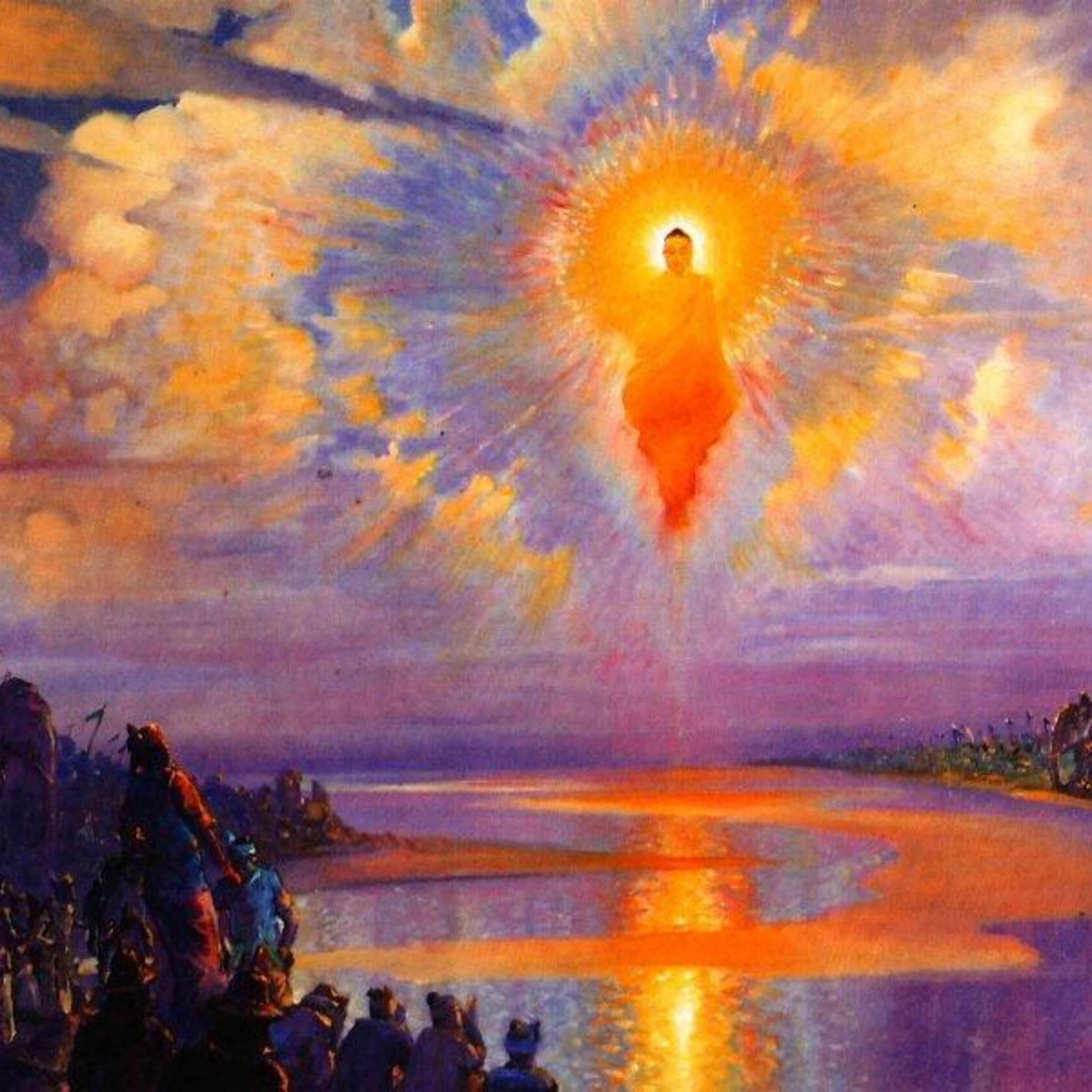
    149: The Laṅkāvatāra Sutra

    In this episode, we're going to discuss what is likely the founding text of the Zen tradition, the Laṅkāvatāra Sutra. According to some of the earliest sources on Bodhidharma, the founder of Zen in China, the "Lanka" was the teaching whose "abstruse principle" he passed down to his successor, Huike. Within the same story, Huike laments that within only a few generations, the sutra will pass into obscurity - which is exactly what has happened. Though few read this text today, during my time in Zen, I found the Lanka's philosophical presentation of the "mind only" teaching to be uniquely intriguing among all the Buddhist scriptures I'd read. Join me on this exploration of the Buddha's teaching in Lanka, including an analysis of the eight consciousness model of the mind, the concept of paravrrti, the non-reliance on either existence or non-existence, and sublime teaching that the world is nothing other than mind. My Diagram: https://untimely-reflections.blogspot.com/2026/09/lankavatara-sutra-my-diagram-of-eight.html
  • S7 · E4
    September 8 · 1 hr 25 min

    148: Keiji Nishitani - Religion and Nothingness, part 2

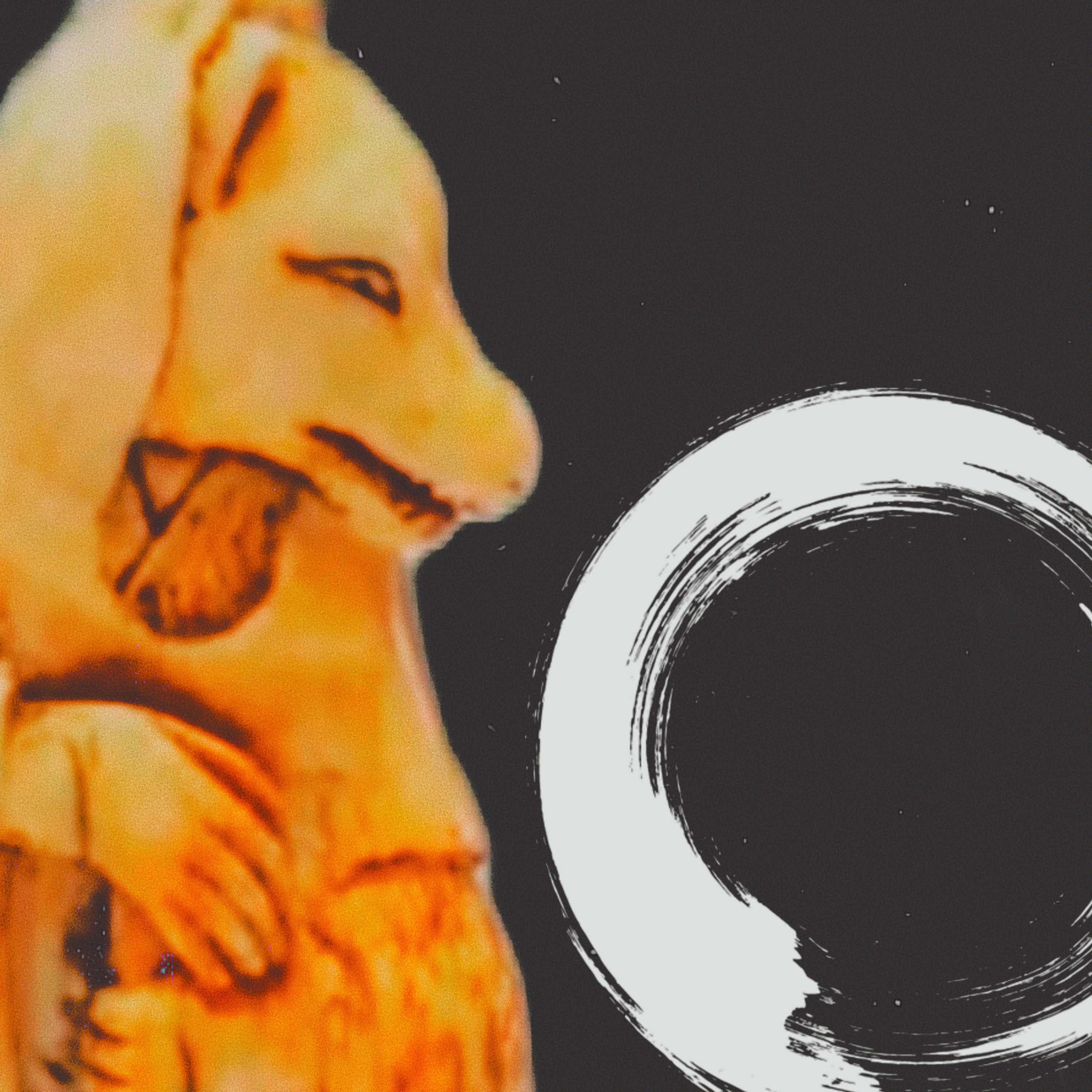
    This episode begins with an analysis of Baizhang's wild fox koan found in the Wumenguan, which we will use as a jumping off point for understanding the paradoxical relationship of the enlightened person with karma. This opens up into the general problem of discussing reality from the perspective of sunyata, in which samsara and nirvana become equivalent - because, so long as one approaches from the perspective of conceptual thought, they will remain forever unequivalent, and all such statements will be false or misleading. Join me as we discuss karma, the bodhisattva vow, "plucking out the eye of Buddha and sitting in its hollow", the meaning of "just sitting" in zazen, and the time when St. Francis made the sign of the cross to a cauterizing iron and blessed his brother, fire.

  • S7 · E3
    September 2 · 1 hr 46 min

    147: Keiji Nishitani - Religion & Nothingness, part 1

    UPDATE: I accidentally uploaded part two to Spotify instead of part one. This has been fixed. To those who got to listen to the entire two-parter already already, lucky! But, the audio should now be part one. Join me for a deep dive into Nishitani's opus, Religion and Nothingness: an intersection of philosophy and religion, east and west, Heidegger and the Mahayana. The topics I choose to emphasize in my reading are: the "double exposure" whereby the two layers of reality (being and nihility) are simultaneously perceived; the mechanization of the world, which serves to objectify the scientific worldview; Nietzsche's answer to this problem, as Nishitani understands it; the religious quest, in which one pushes through nihility, subsuming their entire life and body within the "great doubt"; finally, the standpoint of sunyata in which emptiness is perceived as the ground of being.

  • S7 · E2
    August 25 · 1 hr 39 min

    146: Extinction (Nietzsche vs Buddhism, pt. 2)

    For all that is admirable in Buddhism, Nietzsche fundamentally opposes the movement towards the Last Man that Buddhism not only cannot oppose, but may even help bring forth. Why does the notion of a "European Buddhism" haunt Nietzsche's later writings? We will explore this question here: how a religion that is realistic, empirical, and achieves great practical success in the relief of suffering isnevertheless inevitably aimed at uprooting all action and delivering man to a state of passivity. Here we find another religion of pity, and another denial of the world - merely deprived of the sensualism and moral fanaticism of Christianity. Were such a religion to take hold in the West, Nietzsche believes, the opportunity of moment, which we face as a consequence of the death of God, would be squandered. Join me in exploring more sutras, as well Nietzsche's criticisms of Buddhism in The Gay Science, Daybreak, Beyond Good and Evil, and the Will to Power.

  • S7 · E1
    August 18 · 1 hr 53 min

    145: The Religion of Self-Redemption (Nietzsche vs Buddhism, pt. 1)

    Welcome back to The Nietzsche Podcast, Season Seven! We're beginning with a two-part episode concerning Nietzsche's view of Buddhism. This episode, we will consider some of the basic teachings of Buddhism, and explore why Nietzsche viewed Buddhism with admiration. A repeated refrain in The Antichrist concerns Buddhism's superiority over Christianity. Why is it that Nietzsche considered Buddhism, a religion with a complex metaphysics and cosmology, to be a far more realistic and logical religion than Christianity? We are pointed in the direction of an answer in Nietzsche's description of Buddhism as "the religion of self-redemption". The following episode will concern Nietzsche's criticisms of Buddhism.

  • S6 · E43
    August 11 · 2 hr 51 min

    Q&A #16

    Season seven begins soon! For now, enjoy a selection of fascinating questions.

  • S6 · E42
    August 4 · 1 hr 51 min

    The Gay Science #25 (V.372-393)

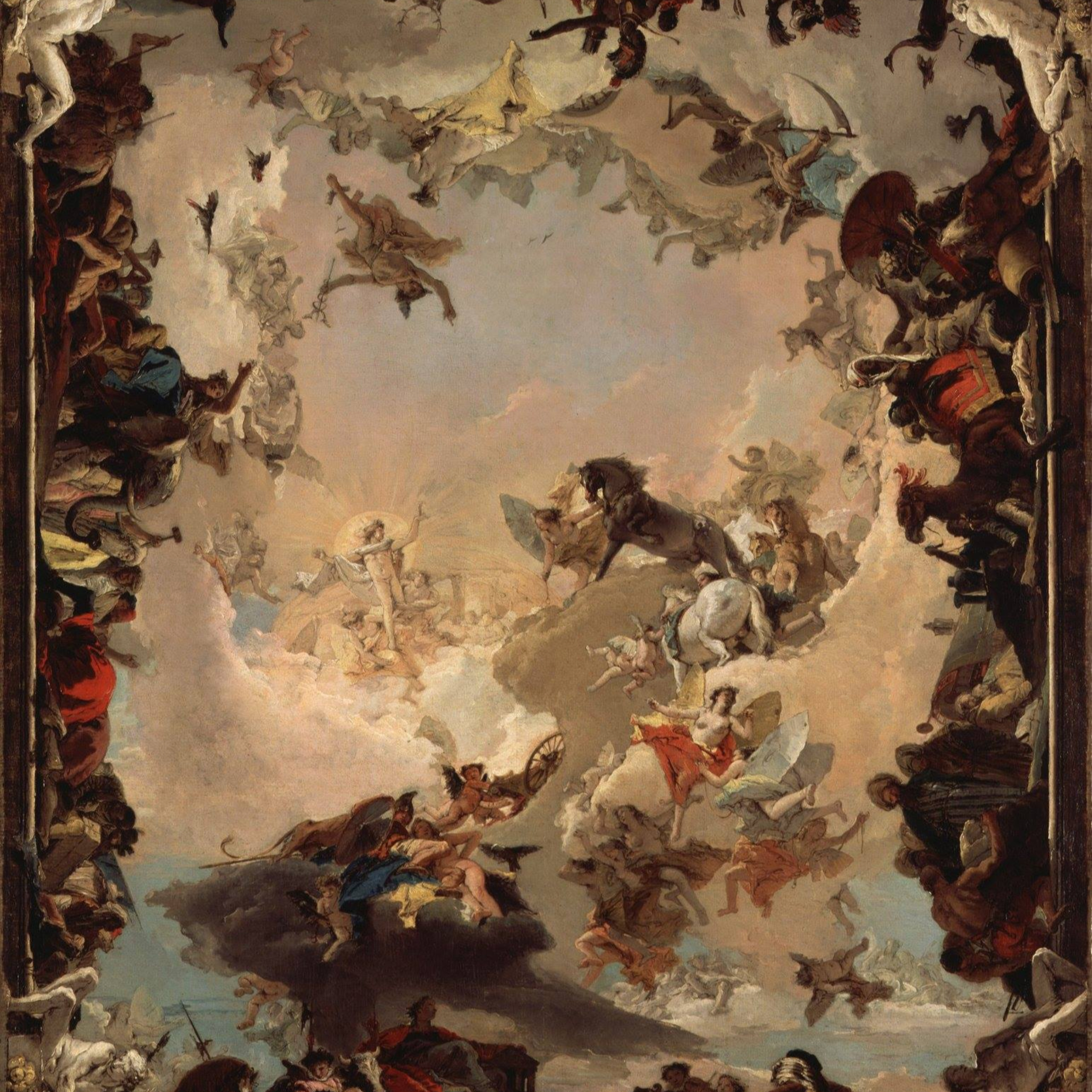
    We've finally arrived at the conclusion of The Gay Science. The theme of these final sections is perspectivism - we have opened up a "new infinite", penetrating beyond narrow, limited views of the world that have always made grand claims to universalism but have only ever trapped us in dogmatic certainties. Nietzsche sums up his new affirmative attitude as a quest for "the great health", which one does not possess, but must continually give up. This great health has for its image a kind of abundant playfulness that is both human and superhuman. By making all that was once sacred and serious into our playthings, the true seriousness can begin. We conclude with a reading of one of Nietzsche's "songs". Episode art: Allegory of the Planets and Continents, by Giovanni Battista Tiepolo

  • S6 · E41
    July 28 · 1 hr 37 min

    The Gay Science #24 (V.364-371)

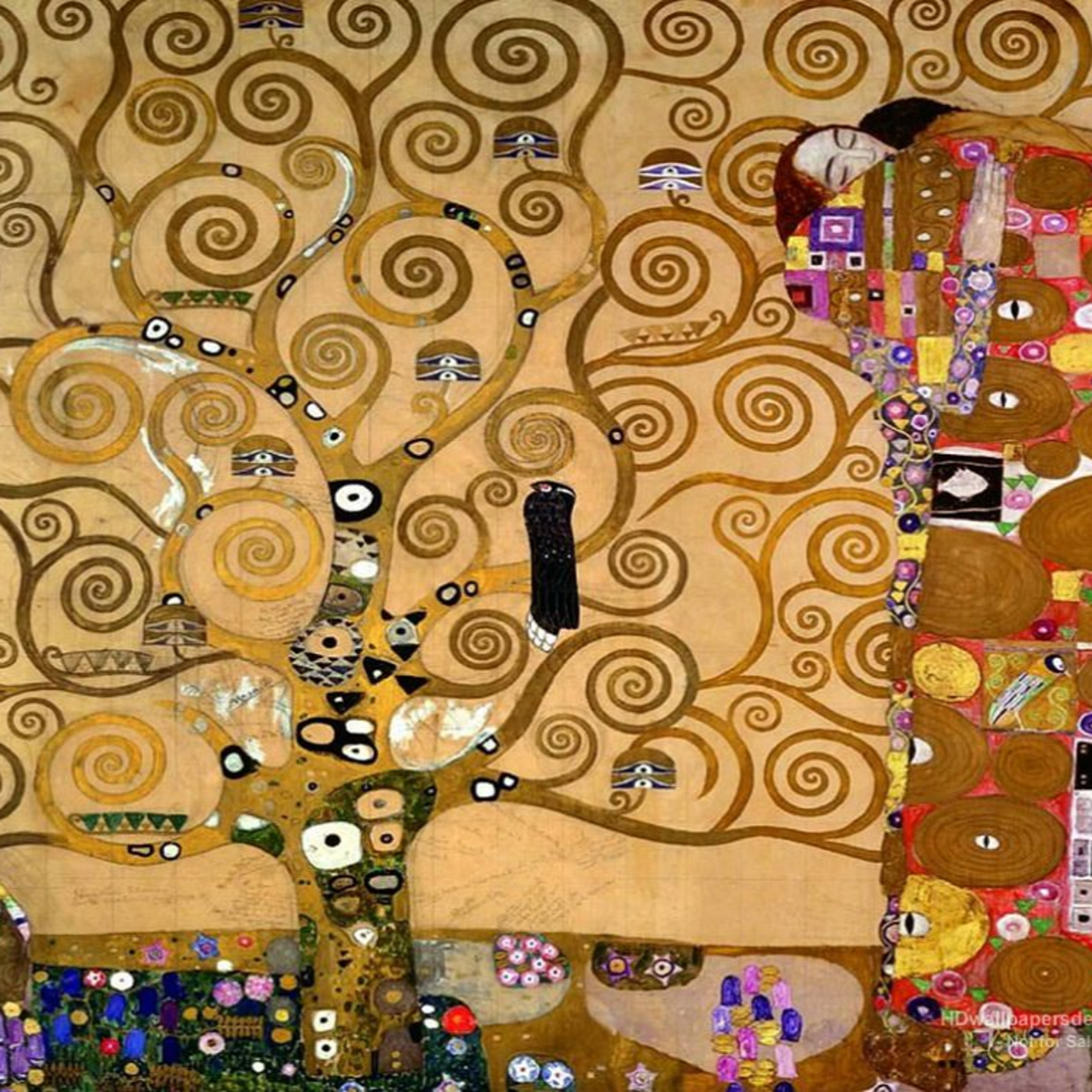
    We incomprehensible ones - how our thought branches in every direction, how willing we are to shed our bark, to grow, to change! In this episode, we discuss, among many other sections, important passages such as "What is Romanticism" - in which Nietzsche explains how he departed from the romantic pessimism of Wagner and Schopenhauer. He opposes the theater to music, fully breaking with his earlier views in Birth of Tragedy. Nietzsche also flips the script on some of his previous views regarding academics, and suggests that the scholarly specialist is a type of higher value than the so-called "man of letters", the master of nothing who represents himself as everything. Here, the hermit and the cynic speak, and Nietzsche spares no one his criticism. Episode art: The Tree of Life by Gustav Klimt

  • S6 · E40
    July 21 · 2 hr 21 min

    The Gay Science #23 (V.356-363)

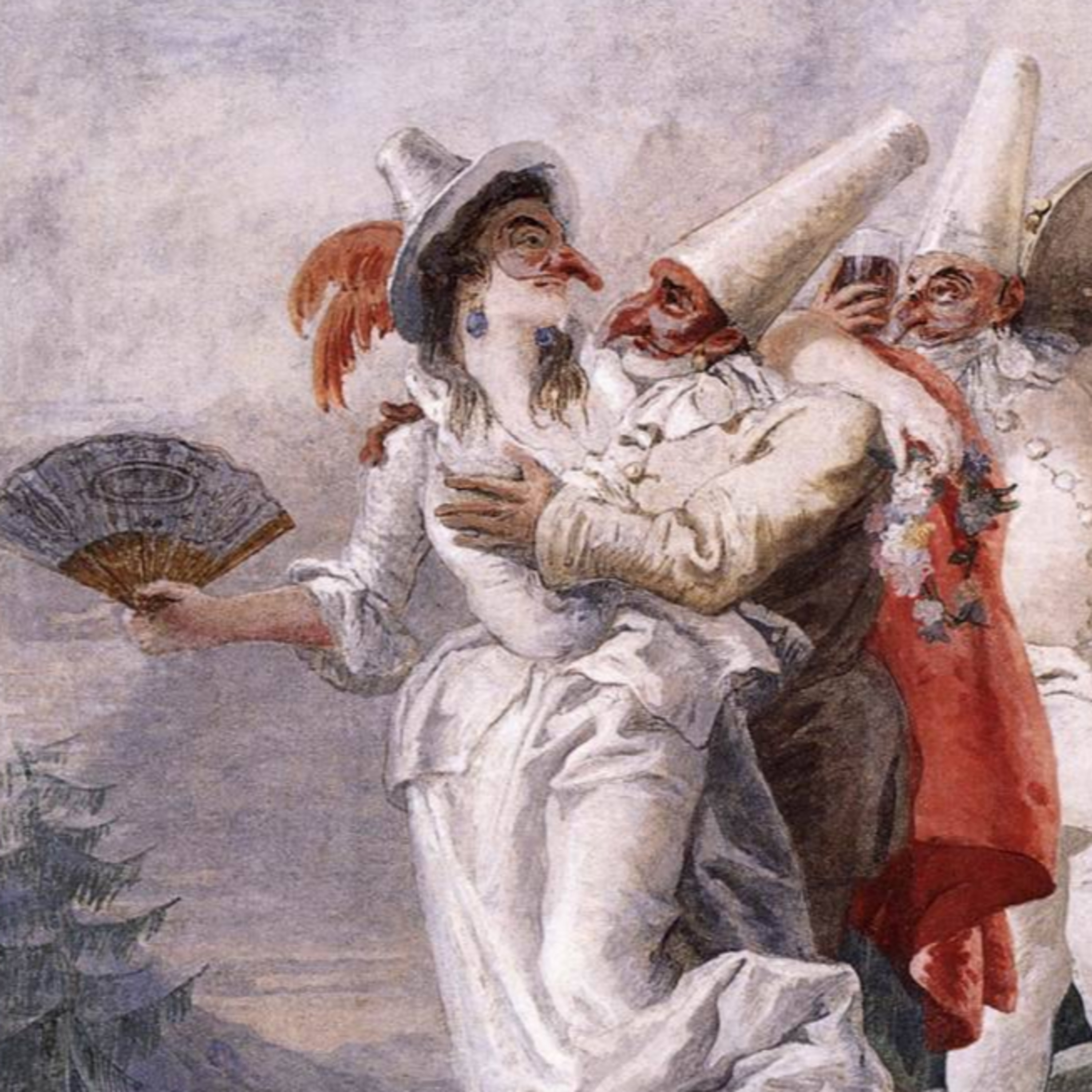
    In this chapter of our readthrough, we confront "the problem of the actor". Nietzsche predicts that things shall become ever more "artistic" in Europe, as the actor's talent self-falsification becomes developed in all members of society. Whereas in the Middle Ages, the individual was bound to his role as an unchangeable identity, the modern person picks up and discards roles: he gives the appearance of being a given type, but is often obliged to change roles. Nietzsche continues to increasingly offer reversals of perspective, at times even differing with previous assertions in this very same work. Episode art: Giandomenico Tiepolo, Pulcinella in Love, 1797 (A depiction of the masked actors of the Commedia dell'arte).

  • S3 · E39
    July 14 · 1 hr 54 min

    The Gay Science #22 (V.348-355)

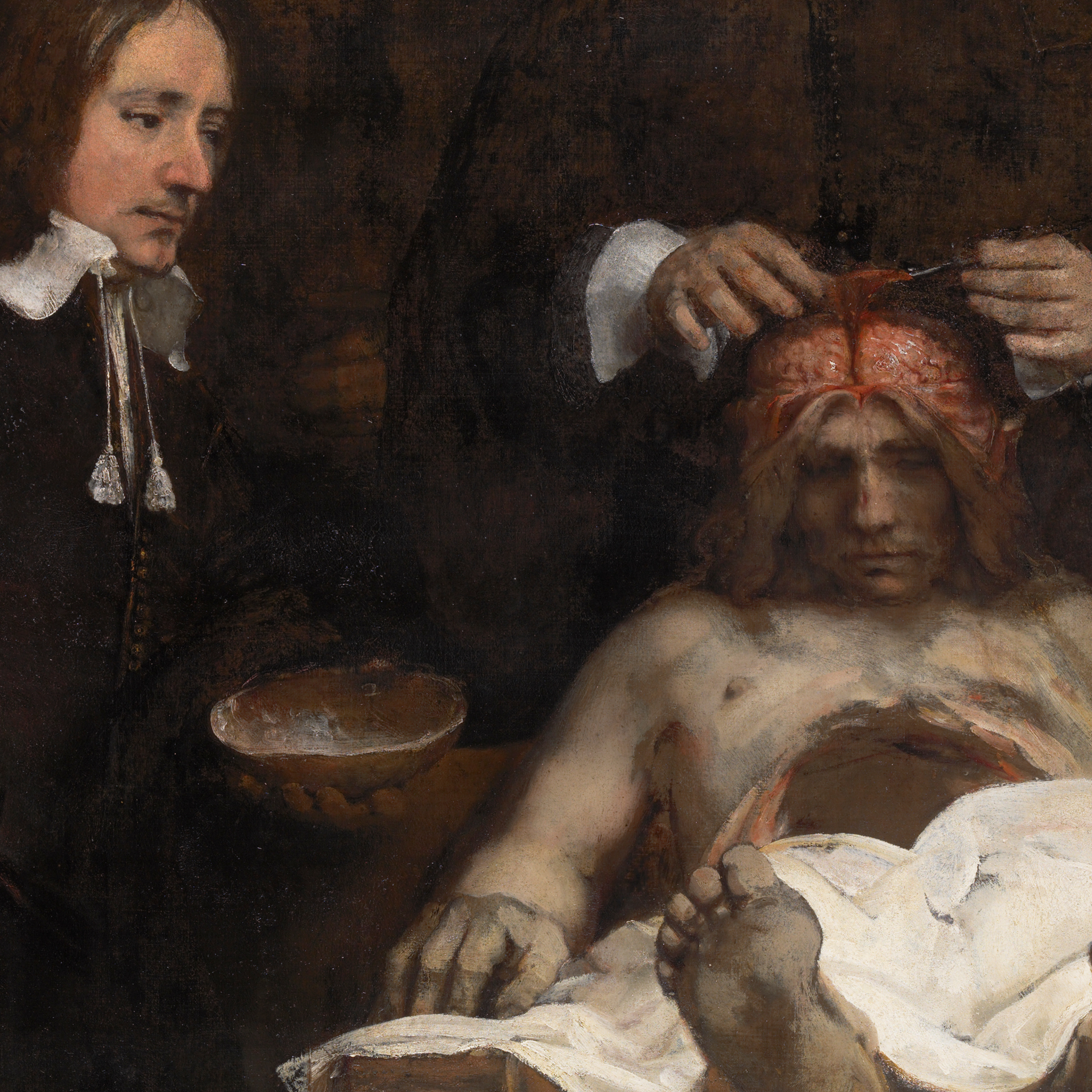
    The grand experiment continues with a series of naturalistic explanations for the origins of ideas or modes of life. The scholar's intellectual habits are inherited "in blood and instinct"; Spinoza's philosophy is sourced to his sickliness; Darwinian theories of evolution are a product of the "musty air" of English overpopulation; religious and moralistic perspectives are the post hoc rationalizations of the weak and the tame. In this episode we'll also discuss the very important section, "On the Genius of the Species", which treats consciousness as an organ of communication. Episode art: The Anatomy Lesson of Dr. Deijman by Rembrandt

  • S6 · E39
    July 7 · 2 hr 5 min

    The Gay Science #21 (V.343-347)

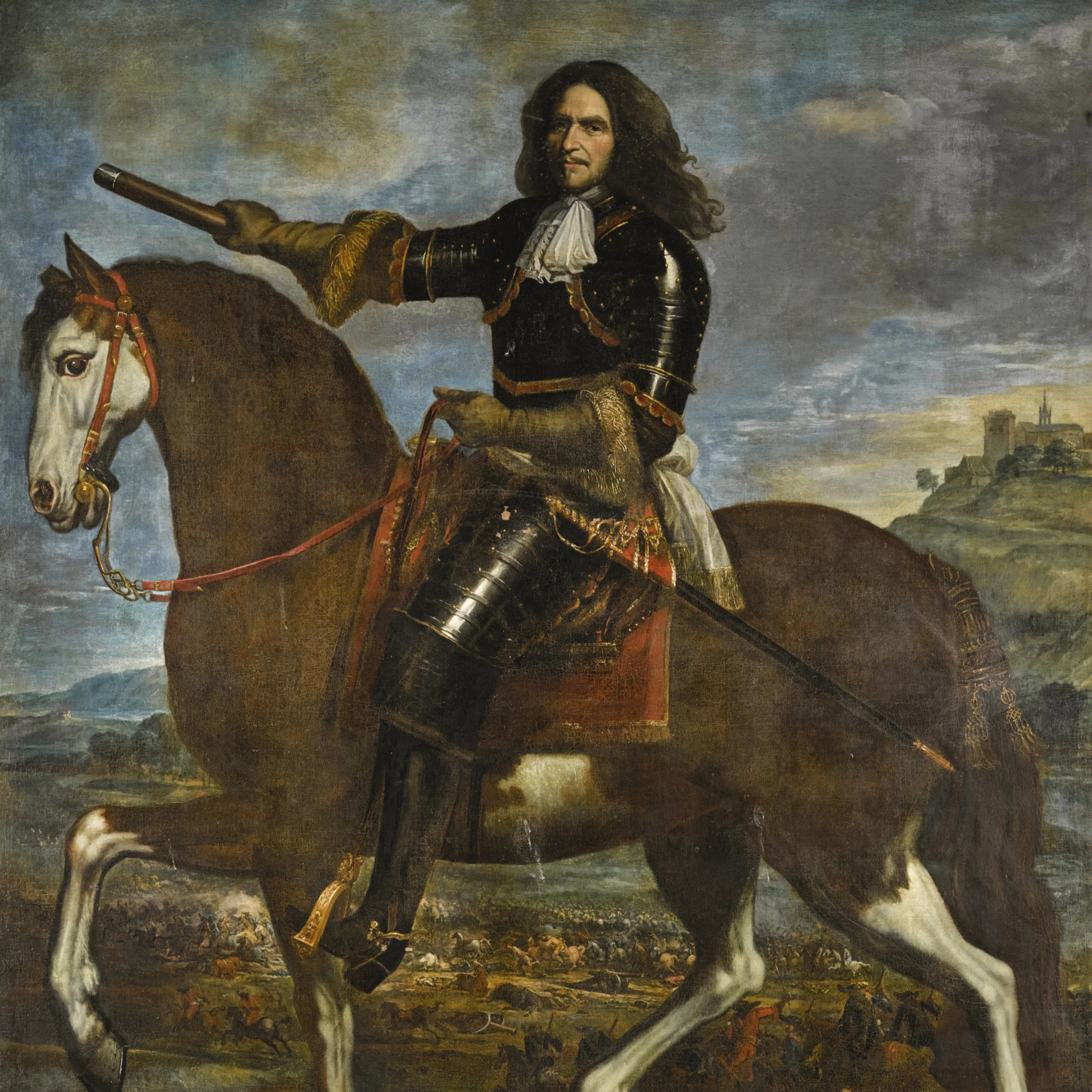
    "You tremble, carcass?" After a long hiatus, we shall now fearlessly embark upon book V of The Gay Science, added to the text in 1887. In this final division of the text, we'll see Nietzsche's attempt to incorporate his late philosophy, as the conclusion of his middle period meditations. Some of the hardest-hitting sections in the book appear here. Join me on this quixotic journey for the truth... after all, we, too, are still pious! Episode art: Portrait of Henri de la Tour d'Auvergne, Vicomte de Turenne (1611–1675), as Marshall of France on horseback, by Charles le Brun

  • S6 · E38
    June 30 · 2 hr 49 min

    Q&A #15

    You know what it is. Questions get answered. The Gay Science readthrough begins in a week's time.

  • S6 · E37
    June 23 · 1 hr 44 min

    144: Georges Bataille, part 2 - 1944 Diaries

    "You, whoever you are, reading me - take your own chance. Just as, at the moment of writing, I gamble with you." The much-awaited conclusion to season six is here! The year is 1944, and we follow Georges Bataille through the months of February to August as he recounts the end of the Nazi occupation of France, while writing of his daily encounters, his inner experiences, first-hand accounts of the war, mad ramblings and poems - and astute, if sometimes confusing, commentary on the work of Nietzsche. In this episode we will explore the will to chance, immanence vs. transcendence, desire as "time-being", and the possibility of affirming desire in itself and for itself, having fully seen through the lie of every "end" or "goal" presented to us by the mad pursuit of passion. The Gay Science readthrough episodes coming soon!

  • S6 · E36
    June 16 · 1 hr 54 min

    143: Georges Bataille, part 1 - On Nietzsche

    The two-part conclusion of season six begins. We're delving into the work of Georges Bataille, with a focus on his book, "On Nietzsche". Bataille is one of the most interesting intellectual nodes of 20th century philosophy. For a long time, his work was obscure in the English-speaking world, often eclipsed by those he influenced, such as Derrida and Foucault. However, among the postmodernists, Bataille takes Nietzsche as his closest companion, and struggles most fiercely with him. On Nietzsche is written during the war years, and is a very strange book that defies categorization. We'll talk about the background of the text, Bataille's life, the secret society Acephale, and the main ideas in Summit and Decline. In the next episode, we'll discuss 1944 diaries with a focus on the philosophical ideas therein.

  • S6 · E35
    June 9 · 1 hr 20 min

    Untimely Reflections #46: Stuart Kendall - On Georges Bataille

    Today, I'm speaking with independent scholar, translator, and lecturer, Stuart Kendall. Stuart is responsible for helping to bring new translations of Georges Bataille's work into English, and he joined me for a conversation about Georges Bataille and his influence from Friedrich Nietzsche. We discussed the notion of expenditure, the metaphor of the potlach, the will to chance, war as an object of meditation, and the enigmatic work, On Nietzsche. Future episode's on Bataille's On Nietzsche will soon arrive as regular episodes of the podcast (in fact, as the two-part conclusion to season six), but here I was interested in introducing Bataille and the background of this text, which will hopefully be of help to any prospective reader who opens its pages and wonders just what the hell is going on. This conversation was intended to be accessible to all those who have never read Bataille or encountered his ideas, and thus to provide an entrypoint for the listeners before we tackle the book in earnest. Enjoy, and may your hearts overflow with generosity.

  • S6 · E34
    June 2 · 1 hr 37 min

    142: Commands, Symbols & Games - Nietzsche, Cassirer & Wittgenstein on Language

    In this episode we're going to explore three very different thinkers who nonetheless converge on their theories of language. We're going to see if we can't extract an intelligible whole out of the ideas generated by this trio: the Nietzschean theory of language as command, the view of Cassirer that man is a symbolic animal, and Wittgenstein's concept of the language-game.

  • S6 · E33
    May 26 · 1 hr 40 min

    141: Ernst Cassirer - Language & Myth

    In this episode, we're venturing into the life and thought of Ernst Cassirer, the last humanist of the Enlightenment tradition. Cassirer is widely known today for his debate with Heidegger at Davos, in which Cassirer appeared as the old style philosopher against the new world signified by Heidegger's radical existentialism. And yet, the very fact that this debate was taking as symbolic of the broader trends in philosophy is in some sense a vindication of Cassirer, who believed that mankind was properly undertsood as animale symbolicum: the animal who symbolizes. Thinking in the Neo-Kantian tradition, Cassirer doesn't seem the symbolic world as approximating a "ready-made" world of objects, but as the conceptual organ for experiencing and thinking about the world at all. From this framework, Cassirer advances a remarkable notion: that language and myth are two shoots from the same stem, and if we want to understand language, we should look to the phases of mythic thinking. The central mystery we shall explore is how the "metaphorical transference" can take place, in which a sound comes to stand for an image, and the specific for the general category. At the root of all this, Cassirer raises an intriguing possibility: perhaps all of language originates in magical thinking and spiritual excitement.

  • S6 · E32
    May 19 · 1 hr 34 min

    140: Anti-Schmitt

    This is an audio version of the first two sections of a planned series of political writings, gathered under the name Antipolitik: I. The Birth of the State at the End of Warre, and II. Anti-Schmitt. I've grouped them under the name Anti-Schmitt because these two sections form a polemical unity, against the philosophy of Carl Schmitt and his friend-enemy distinction. Enjoy!

  • S6 · E31
    May 12 · 1 hr 16 min

    Untimely Reflections #45: Nick Nielsen - Philosophy of History

    I spoke with Nick Nielsen (Geopolicraticus), who publishes a regular newsletter, and the series, Today in the Philosophy of History. We discussed Augustine's theory of history; the differing views of history of Hegel and Schopenhauer; the Renaissance and the Reformation; textual gaps in the Middle Ages; Nietzsche's "On the Use and Abuse of History for Life"; Nietzsche & Machiavelli as the monumental role models of our time; ideographic versus nomothetic knowledge; Peter Turchin's Cliodynamics. This was my first conversation with Nick, but it was lovely to meet him and I had a nice time talking to him. I very much enjoy his Youtube channel and would recommend it to those among the Patrons who enjoy history, and speculations about history.

  • S6 · E30
    May 5 · 1 hr 21 min

    Untimely Reflections #44: Christopher Satoor (The Young Idealist) - Friedrich Schelling

    Chris joined me for a conversation on Friedrich Schelling & German Idealism! In spite of his prominence, Schelling tends to be underdiscussed in popular philosophy circles when it comes to the German Idealist tradition. In this episode, we talk about his essay Philosophical Inquiries into the Essence of Human Freedom, the dialectic of potencies that develops out of nature-philosophy, and the relation of Schelling's ideas to those of his school friends at Tubingen - two gentlemen you may or may not have heard of, named Hegel and Holderlin. The three of them were enthusiastic about the French Revolution, and planted a "freedom tree", around which they danced and sang "Hen Kai Pain" - "One and All" - the watchword of Hellenistic pantheists. Schelling's late lectures were attended by everyone from Kierkegaard to Burckhardt to Engels to Bakunin; his views on myth (centering on Apollo and Dionysus) likely influenced Nietzsche, and his notion of the dark ground as a ceaseless impulsive striving echoes in the work of Schopenhauer. At the end of the episode, we have a brief discussion about Chris' thoughts on Deleuze, a philosopher he has drifted away from, and some of the pitfalls of post-structuralist thinking. Christopher, on how to read Schelling's Freedom Essay: https://epochemagazine.org/77/freedom-god-and-ground-an-introduction-to-schellings-1809-freedom-essay/ Papers Referenced: Exceeding Reason: Freedom and Religion in Schelling and Nietzsche by Dennis Vanden Auweele Nietzsche, German Idealism and Its Critics (DeGruyter)

Showing 1–20 of 26 episodes