Skip to content
Artwork for Death Drive Radio

Death Drive Radio

Nicholas Tolliver and Tyler Mraz

Listen to our content without those pesky visuals.

Play
  • 20 episodes
  • Avg 51 min
  • English
  • #29
    August 22 · 1 hr 45 min

    The Autistic Subject - An Interview with Dr. Leon S. Brenner

    In this episode we have on Dr. Leon S Brenner to discuss his book, The Autistic Subject: On the Threshold of Language. Through the lens of Freudian and Lacanian psychoanalysis, Brenner presents autism as a "mode of being", occupying its own linguistic structure alongside the neurotic and the psychotic. A fascinating read and an equally fascinating discussion, we highly recommend you give this a listen and read his groundbreaking book. As we arrive at a definition of autistic being and its particularities, Brenner provides eye-opening insights and wonderful metaphors for some of psychoanalysis' most fundamental concepts. Any listener, no matter their familiarity with Lacan or Freud, will benefit from this interview. Here is a link to his book: https://www.amazon.com/dp/B08JQ4QCQY?lv=shuf&channelId=500&plpRedirect=mhFallback (p.s. Brenner himself said he's happy to see people downloading it for free :D ) Find us on YouTube: https://www.youtube.com/channel/UCK_VrSXB5G4gOVOcGC6INxA Music by Fabulizer: https://www.youtube.com/watch?v=u4rguCBGPP0&list=RDu4rguCBGPP0&start_radio=1

  • #25
    March 18 · 1 hr 43 min

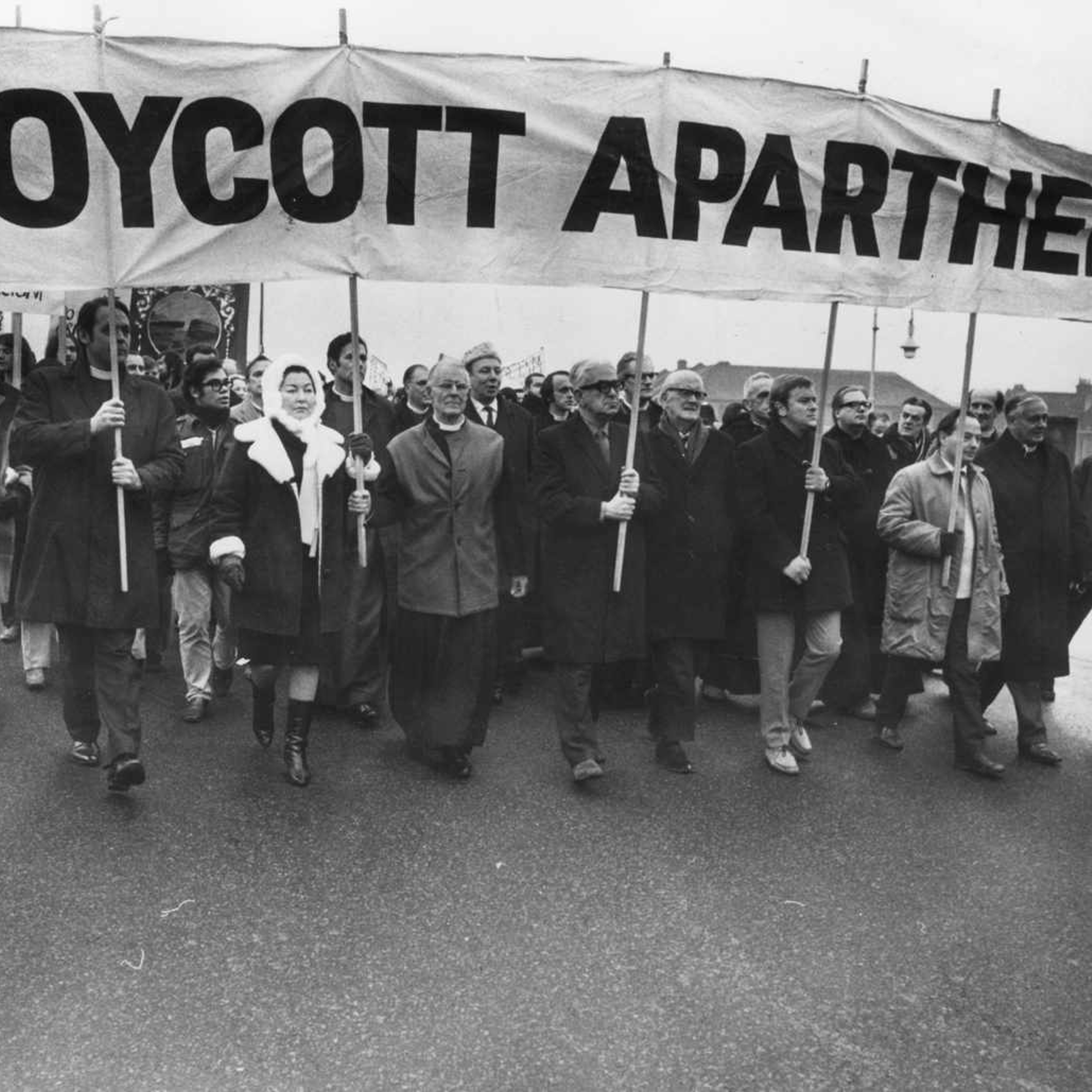
    Interview with Dr. Derek Hook: Fanon, Psychoanalysis, and Critical Decolonial Psychology

    What explains the "madness" of Race? Its excessive and violent intensities? Its tenacious persistence beyond the economic interests of the ruling class? Any serious analysis of Race must take into account its contradictory, libidinal, and bodily aspects (in addition to discursive and economic analysis). To this end, Dr. Hook takes his readers and us on a body-horroresque journey through the nightmarish contradictions of race, where erotic charge and murderous hatred feed one another, where fantasy disrupts the body, and where racism sinks its teeth into the flesh. We are excited to bring you this interview with Dr. Derek Hook concerning all of this and more. Enjoy! Find us on YouTube: https://www.youtube.com/channel/UCK_VrSXB5G4gOVOcGC6INxA Music by Fabulizer: https://www.youtube.com/watch?v=u4rguCBGPP0&list=RDu4rguCBGPP0&start_radio=1 Derek Hook's YouTube Channel: https://www.youtube.com/@derekhookonlacan Buy Derek Hook's Book: https://www.routledge.com/Fanon-Psychoanalysis-and-Critical-Decolonial-Psychology-The-Mind-of-Apartheid/Hook/p/book/9781032308012
  • #24
    Dec 12, 2025 · 16 min

    The Death Drive: An Introduction from Freud to Lacan

    In this episode we offer an introduction to the Death Drive, starting from Freud's coining of the term, Lacan's contribution to the idea, and ending with its effects on society. The Death Drive is a fundamental psychoanalytic concept that informs so much of our worldview, how lack and excess constitutes us as subjects and our world as we experience it. This concept defines much of what it means to be human and that’s why we would like to take the time to explain it.

  • #23
    Dec 12, 2025 · 58 min

    Interview with Gerald Horne: Settler Colonialism and its Vicissitudes

    In this episode, we’ve invited Dr. Gerald Horne to speak about how the violent domination and exploitation of our colonial past impacts our politics and culture today. Through a discussion of whiteness, colonial history, and capitalist exploitation, we highlight the connections between the 15th century and our present reality. Dr. Horne thoughtfully answers our questions on the history of settler colonialism while frequently clarifying its connections to relevant contemporary events and policies. Dr. Gerald Horne is an esteemed historian of American, African, and Colonial History, author of some of our favorite books on these topics, including the Counterrevolution of 1776, the Apocalypse of Settler Colonialism series, and White Supremacy Confronted, and professor of African American Studies at the University of Houston. We find that no one speaks as clearly on the historical roots of Race and Capitalism in the Colonization of Africa and the Americas.

  • #22
    Dec 12, 2025 · 1 hr 5 min

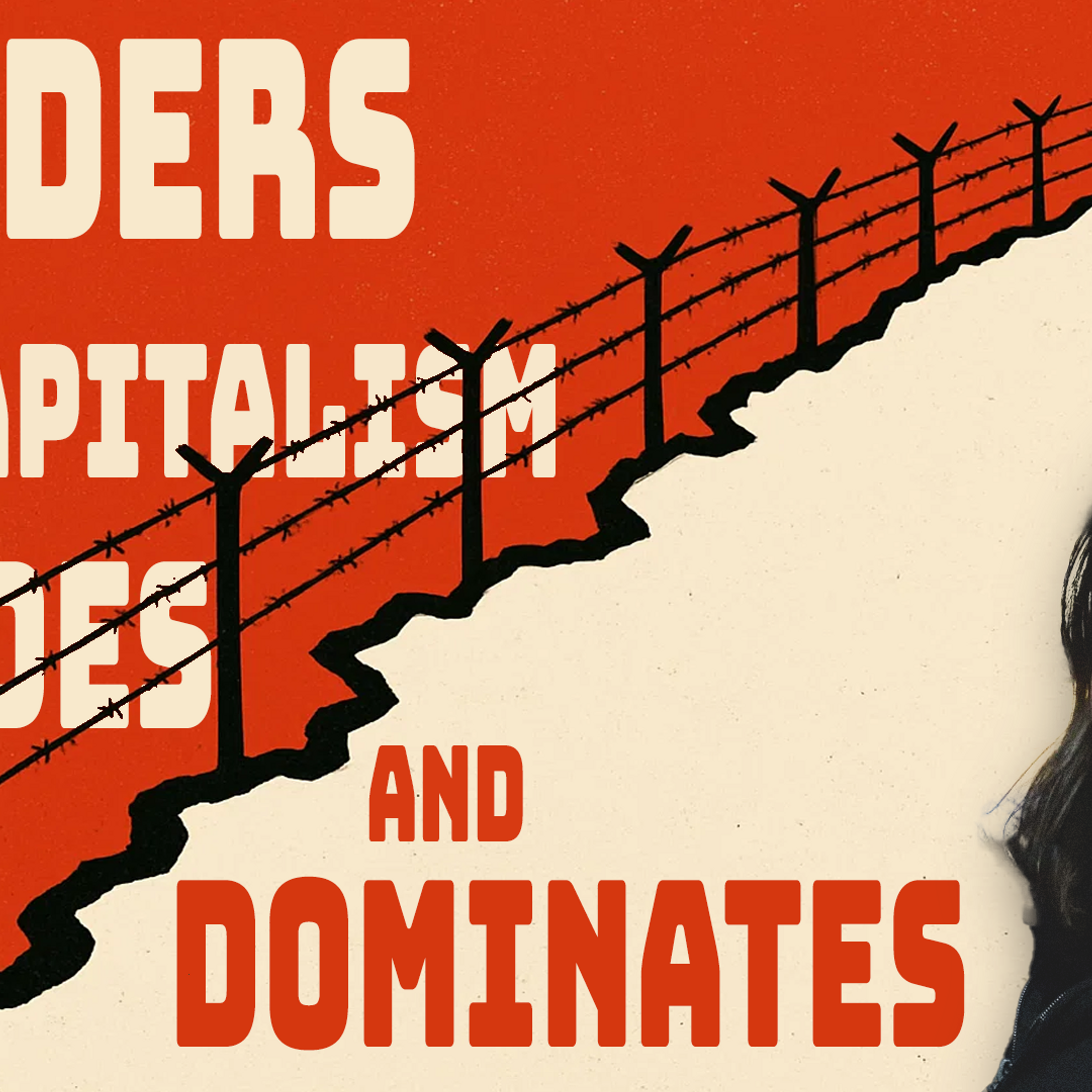
    Interview with Harsha Walia on Borders: How Capitalism Divides and Dominates

    In this video we have on Harsha Walia, renown Author, Activist, and Scholar to discuss pertinent issues regarding immigration, borders, and imperialism. Harsha has dedicated her studies and activism to justice for migrants and displaced peoples across the globe. In this interview, she offers invaluable insight into how borders are engineered as a fundamental and necessary feature of capitalism. Borders are not static lines on a map, but dynamic sets of practices that, ideologically and economically, continuously reproduce the exploitable "other". Harsha argues that resisting capitalist oppression must be understood as synonymous with resisting bordering practices.

  • #21
    Dec 12, 2025 · 20 min

    Commodity Fetishism: An Introduction

    Using Marx's concept, Commodity Fetishism, we aim to answer these questions: Why are we increasingly isolated from each other, only able to relate through markets, objects? Why is production so disconnected from human needs despite our immense production capacity? What is the true cost of “freedom”? Can we be ethical consumers? How does ideology function? In this video, we give an introductory overview of Commodity Fetishism, arguably one of the most important concepts for understanding the Ideological and Economic operations of Capitalism throughout its worldwide expansion. Capitalism’s sustained grip on society rests on the centrality of the commodity and its accompanying fetishization.

  • #20
    Dec 11, 2025 · 13 min

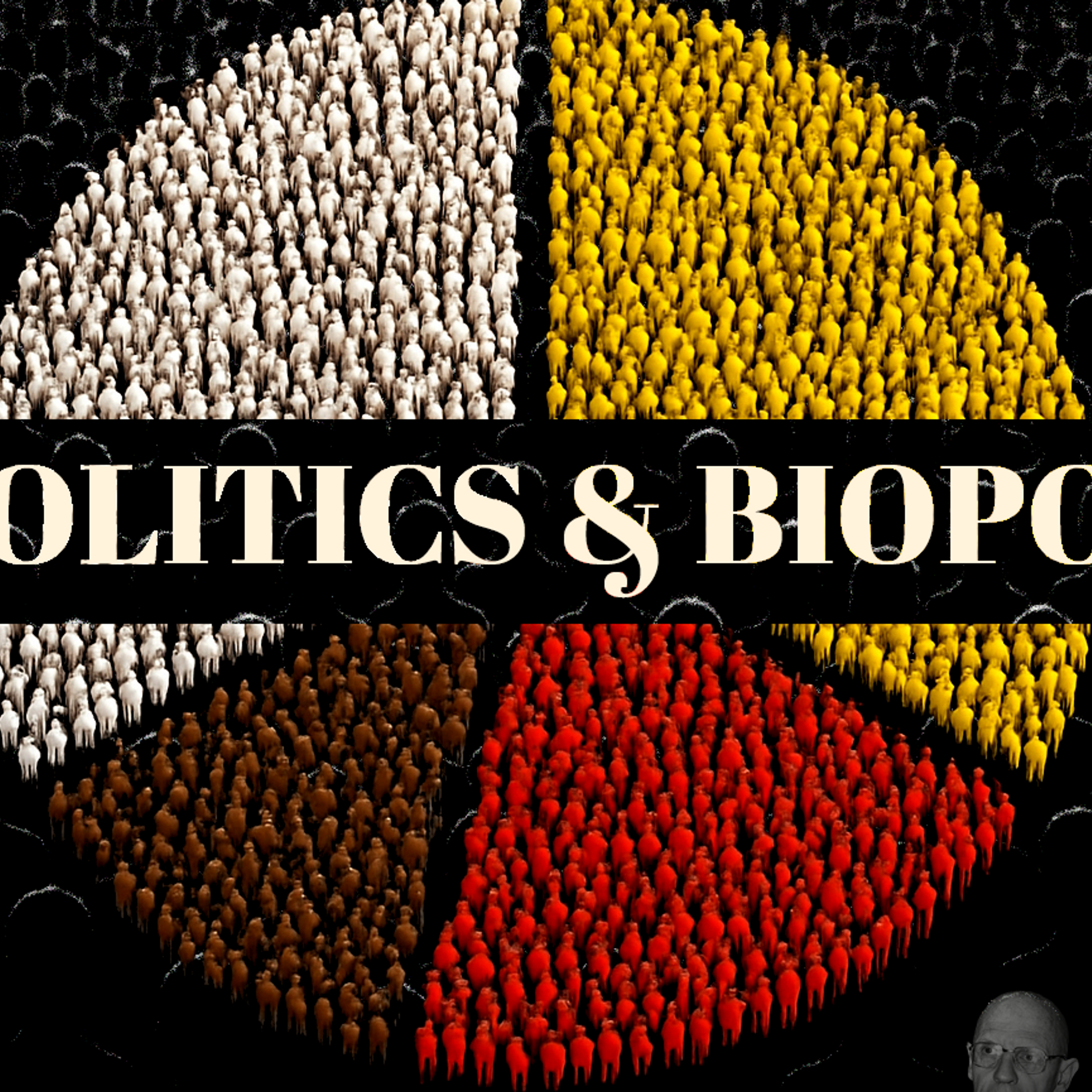
    Biopolitics & Biopower: An Introduction

    Our second video on Michel Foucault offers an overview of Michel Foucault's Biopower and Biopolitics. We discuss how, with the rise of capitalism and the state, Biopolitics is employed to control and manage populations. We outline a genealogy of Biopolitics from slavery, settler colonialism, imperialism, and apartheid. Finally, we imagine what a leftist biopolitics would look like.

  • #19
    Dec 11, 2025 · 1 hr 2 min

    Killing the Congo: Understanding the Conflict in the Eastern Congo

    In this video, we provide an overview of the current conflict in the Eastern Democratic Republic of the Congo. We begin with the historical development of the Congolese State and the institutionalization of graft and corruption. We analyze the far-reaching consequences of colonialism and imperialism, chronically ineffective governance, ethnic divides, and the role resources play in the DRC’s development. Throughout our discussion we highlight the West’s complicity in the Congo’s underdevelopment and structural violence. The conflicts contained within the Congo are expressions of capitalist production, extraction, and war profiteering, processes which have long and violent histories. A weak Congo is a key aspect of the West's demands for cheap sources of raw materials. If you’re looking to understand the most important aspects of the current conflict in the DRC, this is the video for you.

  • #18
    Dec 11, 2025 · 1 hr 17 min

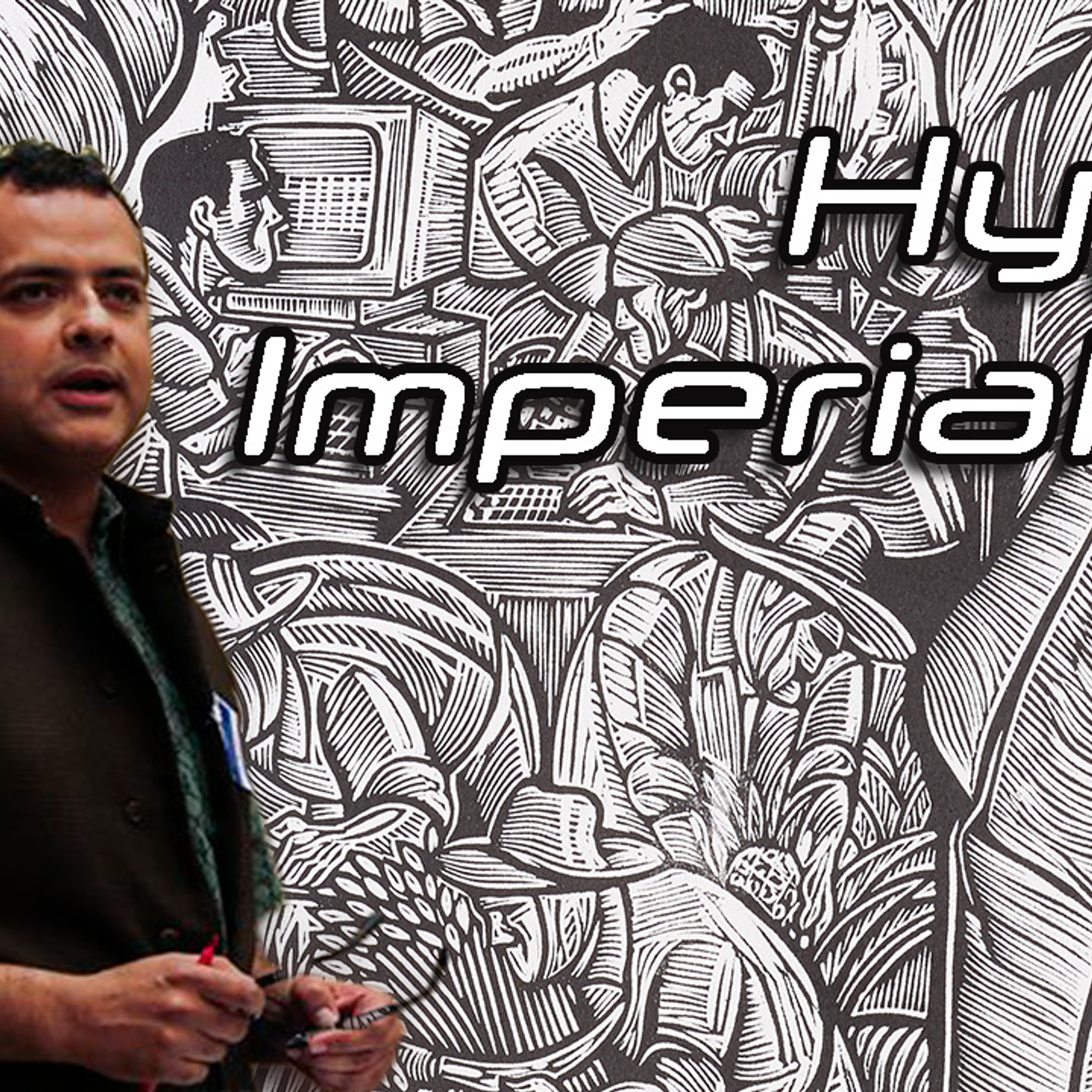
    Vijay Prashad - Hyperimperialism, Palestine, NATO, and the Election of Donald Trump

    In this video, we speak to Vijay Prashad about the changing material conditions of contemporary imperialism. Vijay sheds light on a number of topics, including Palestine, Donald Trump, NATO, and Ukraine, elaborating on his theory of Hyperimperialism to help us better understand the political economy of the 2020s, obscene military spending, the US-dominated world order, the successes of the right, and the motives of elites in maintaining a highly asymmetric and violent system. Vijay Prashad is the director of The Tricontinental: Institute for Social Research, and the author of some of our favorite books concerning Imperialism such as The Darker Nations: A People’s History of the Third World and Washington Bullets: A History of the CIA, Coups, and Assassinations.

  • #17
    Dec 11, 2025 · 21 min

    Body Without Organs

    This is a brief introduction to Deleuze and Guattari’s notoriously fuzzy concept, the Body Without Organs. We first discuss D&G's unique version of materialism founded on desire and reproduction. We then outline what the Body without Organs is not: Organism, Signification, and Subjectification. To further elucidate the concept, we provide some helpful examples like Genetic Mutation, the Egg, Chess Boards, and John Carpenter’s The Thing. We argue that the body without organs is more easily understood as the Body Without Organization, the body as a virtual set of chaotic possibilities and potentials that resists organization.

  • #16
    Dec 11, 2025 · 30 min

    Cyberpunk Edgerunners: Baudrillard, Hyperreality, and Societies of Control [PART TWO]

    In this video, we will challenge Deleuze and Guattari's theories of Schizophrenia and the Body without Organs using Baudrillard theories of hyperreality and the code to cultivate a better understanding of the system that David occupies in Cyberpunk: Edgerunners. We highlight how cybernetic integration and hyperreality condition David’s schizophrenic process, how David’s acceleration towards cyber-psychosis traces a Deleuzian line of flight, but across Baudrillardian, hyper-curved, space which inflexes any trajectory back into capital’s orbit.

  • #15
    Dec 11, 2025 · 11 min

    Cyberpunk Edgerunners: Deleuze, Cyborgs, and Schizophrenia [PART ONE]

    The anime Cyberpunk: Edgerunners (2022), directed by Hiroyuki Imaishi, and the broader Cyberpunk universe, created by Mike Pondsmith, is a prime specimen of the cyberpunk genre. Paying close attention to David, the protagonist, we use Cyberpunk to synthesize the philosophies of Gilles Deleuze and Felix Guattari, Jean Baudrillard, and Jacques Lacan into a theory of the present moment. This series explains how fragmentation, addiction, prosthesis, cybernetics, death drive, and acceleration have come to define our experience under late capitalism. In Part One of this three-part series, we start with the gradual decoding of David's body and end with the volatilization of his subjectivity, following David straight to the schizophrenic limits of his society.

  • #14
    Dec 11, 2025 · 1 hr 29 min

    Interview with Silvia Federici: Witch-Hunting, Patriarchy, and Capitalism

    If you want to understand how witch-hunting and patriarchy contribute to the stratification and repression of the working class, listen to this interview where we speak with feminist historian and philosopher, Silvia Federici, focusing on her book, Caliban and The Witch. Her work focuses on witch-hunting and primitive accumulation as processes that are integral to Capitalism’s historical and continued reproduction. In the interview, we speak about the political and economic significance of the persecutory institution of witch-hunting. We lay out the connection between racial, colonial oppression, and patriarchal oppression and highlight the ways in which witch-hunting traverses political contexts and histories. She goes on to describe the contemporary political stakes of witch-hunting, highlighting the roles that the IMF, World Bank, and NATO play in reproducing the conditions of primitive accumulation, privatization and the degradation of the commons. Federici explains how witch-hunting and the far-right are on the rise across the globe, especially in Africa and South America.

  • #13
    Dec 11, 2025 · 1 hr 25 min

    Interview with Alenka Zupancic: Ontology of Sex

    In this interview, we speak with feminist philosopher and psychoanalytic theorist, Alenka Zupančič, focusing on important ideas from her book, What is Sex? Zupančič theorizes about sexual difference and the social construction of sex using the Lacanian psychoanalytic lens to highlight the complex, always unsettled dimensions of sex and sexual difference. She discussed the dialectical relationship between feminism and Lacanian psychoanalysis, adding to the discourse on Judith Butler’s gender performativity by focusing on the contradictions that animate sexual life. Zupančič highlights the similarities and differences between Lacan’s Real and Deleuze’s Multiplicity. She also succinctly explains the very famous Lacanian aphorisms regarding sex: “Woman does not exist” and “There is no sexual relationship”. We end on the political implications of Lacanian theory for feminism and the left, the “new signifier”, and the potential for a politics of universal struggle. *Sorry, Alenka, for pronouncing your name incorrectly. We will get it next time.

  • #12
    Dec 11, 2025 · 1 hr 25 min

    Interview with Slavoj Zizek: Death Drive and Dialectics

    With Death Drive and Dialectics as our starting point, Zizek takes us on a journey through Hegel, Lacan, Ideology, US Politics, Climate Change, the failures of liberal democracy, leftist politics, data capitalism, neoliberalism, fascism, sexuality and so much more, in classic Zizek fashion

  • #11
    Dec 11, 2025 · 27 min

    Objet a: Desire in the Age of Capitalism

    In this video we discuss one of Lacan's most significant contributions to psychoanalysis and the study of ideology: Objet a. Objet a, or the Object Cause of Desire, forces us to rethink the formal status of desire not only as it pertains to our personal lives, but also to those systems of control which have developed to manipulate and exploit our relationship to desire. Understanding Objet a can help us understand how capitalism and ideology shape our subjectivity. Correction: In the video, we incorrectly defined signifier and signified. We have them reversed.

  • #10
    Dec 11, 2025 · 1 hr 48 min

    Interview With Todd McGowan: The Enjoyment of Politics

    In this video, we bring on Professor Todd McGowan, Host of Why Theory podcast with Ryan Engley, and author of many excellent books, including his most recent one: Enjoyment Right and Left. During the interview, we discuss his new book and theorize with Professor McGowan on contemporary US politics. We touch on events such as the January 6th Insurrection, George Floyd Protests, mass shootings and gun violence, Black Lives Matter, fascism, Qanon, science, social media, hyperreality, Donald Trump, capitalism, liberalism, Brazil, leftist politics, and more!

  • #9
    Dec 11, 2025 · 7 min

    Dialectics: Hegel's Contribution to Leftist Philosophy

    In this video, we discuss Hegel’s philosophy of dialectics, common misconceptions, and how Hegel’s dialectic can help leftists systemically critique ideology and power. If you learn one thing from this fucking video it is that dialectics is not thesis, antithesis, and synthesis!!!!!

  • #8
    Dec 11, 2025 · 6 min

    The Unconscious

    Part of our series on psychoanalytic concepts, this video outlines the basics of the unconscious, briefly examining Freud and Lacan's contributions to its definition. Short, but sweet.

  • #7
    Dec 11, 2025 · 26 min

    Kant, Sade, Batman, and the Joker: Ethics of the Void

    Theses: Pure Good and Pure Evil are, in a sense, interchangeable. The "Law" needs its violation as much as the violation needs the "Law". The usual, dualistic interpretation (Good and Evil) sees Batman and the Joker (Kant and Sade) as opposites whose ethical incompatibility brings them into conflict. However, Lacan wants us to think about the relation between Kant and Sade dialectically. We use a dialectical framework to expose the lack around which both Batman and the Joker are constituted as subjects. Kant and Sade, like Batman and the Joker, bring each other into being and are stuck in an endless conflict, orbiting the same symbolic void. Batman and the Joker both engage in a Sisyphean struggle, where batman seeks to enact the moral law and the joker seeks expose its non-existence.

Showing 1–20 of 20 episodes