Skip to content
Artwork for Philosophy Overdose
HistorySociety & CulturePhilosophyEducation

Philosophy Overdose

Philosophy Overdose

A collection of public and academic philosophy videos, mostly analytic philosophy but occasionally continental philosophy too. The channel looks for thought-provoking lectures and interviews, particularly what is rare and involves famous figures. There is occasionally an attempt at translation as well, especially that of German and French.

Nothing here is monetized, the channel is wholly non-commercial. Everything here is for the purpose of education and spreading around good philosophy content. If there's any problem, let me know, and I can take it down.

Feel free to let me know if there's anything you'd like me to post, including one of your own lectures.

Philosophy, Epistemology, Ethics, History of Philosophy, Political Philosophy, History of Ideas, Ontology, Critical Thinking, Moral Philosophy, Philosophy of Science, Logic, Philosophy of Mind, Metaphysics, Philosophy of Religion, Social Philosophy, Philosophy of Language, Consciousness, Philosophy of Mathematics, etc.

Links:
Facebook: https://www.facebook.com/PhilosophyOverdoseYoutube/
Play
  • 129 episodes
  • Avg 59 min
  • English
Counted on this page — what you have heard stays on this device, so it is not something the list can be paged by.
  • Tuesday · 1 hr 14 min

    Romanticism, Politics, and Ethics - Isaiah Berlin (1963)

    Audio recording of Isaiah Berlin delivering the 1963 Alexander S. Keller lecture on romanticism, politics, and ethics at the University of Hartford. #philosophy #romanticism #isaiahberlin #ethics #intellectualhistory Learn more about your ad choices. Visit megaphone.fm/adchoices

  • Tuesday · 11 min

    Schopenhauer's Thought

    Professor Christopher Janaway discusses some of the ideas of Arthur Schopenhauer. This comes from an episode on Schopenhauer and Wagner. More Short Clips: https://www.youtube.com/playlist?list=PLhP9EhPApKE8v8UVlc7JuuNHwvhkaOvzc #philosophy #schopenhauer ##pessimism Learn more about your ad choices. Visit megaphone.fm/adchoices

  • Tuesday · 47 min

    Intro to the Philosophy of Mathematics (Ray Monk)

    A good introduction to the philosophy of mathematics by Ray Monk. He considers the issue of the nature of mathematical truth - what mathematics is actually about - and discusses the views of Plato, Aristotle, Kant, Frege and Russell. What is mathematics about? Is mathematics something discovered or is it something invented or constructed by us? If numbers and mathematical objects are mere mental constructs, something invented by us, then why does mathematics work so well and seem to describe the world? On the other hand, if mathematical entities are "out there" in some sense waiting to be discovered, then what is their status and how do we get knowledge of them? After all, you can't see or touch numbers and other mathematical objects. And unlike ordinary empirical truths, mathematical truths seem to have a quite different and special status: they are a priori, necessary, eternal, universal, and absolutely certain. And this is why from the time of Plato onward, people have regarded mathematical truths as an ideal. In this talk, some of the ways in which philosophers have tried to account for the special nature of mathematical truth. (My Summary) Another good introduction to the philosophy of mathematics: https://www.youtube.com/watch?v=XyXWnGFKTkg More advanced talk on philosophy of mathematics: https://www.youtube.com/watch?v=ucPhfzCvKnE #philosophy #epistemology #mathematics #kant #historyofphilosophy #metaphysics #philosopher #wittgenstein Learn more about your ad choices. Visit megaphone.fm/adchoices

  • Tuesday · 32 min

    Political Liberalism and its End

    Political liberalism has been extraordinarily successful, freeing the individual from custom, tribe, and tradition. The self-interested, self-directing individual has triumphed. But that great achievement may have come at a heavy cost. Unacceptable levels of inequality and the rise of a new global ruling class are two symptoms of a political system being lauded as the natural end point of history. This is from an episode of the podcast Philosopher's Zone from a few years back with guest Patrick Deneen. More Philosopher's Zone: https://www.abc.net.au/radionational/programs/philosopherszone/ #philosophy #politicalphilosophy #liberalism #politicaltheory #rawls #johnrawls #historyofphilosophy Learn more about your ad choices. Visit megaphone.fm/adchoices

  • Tuesday · 1 hr 15 min

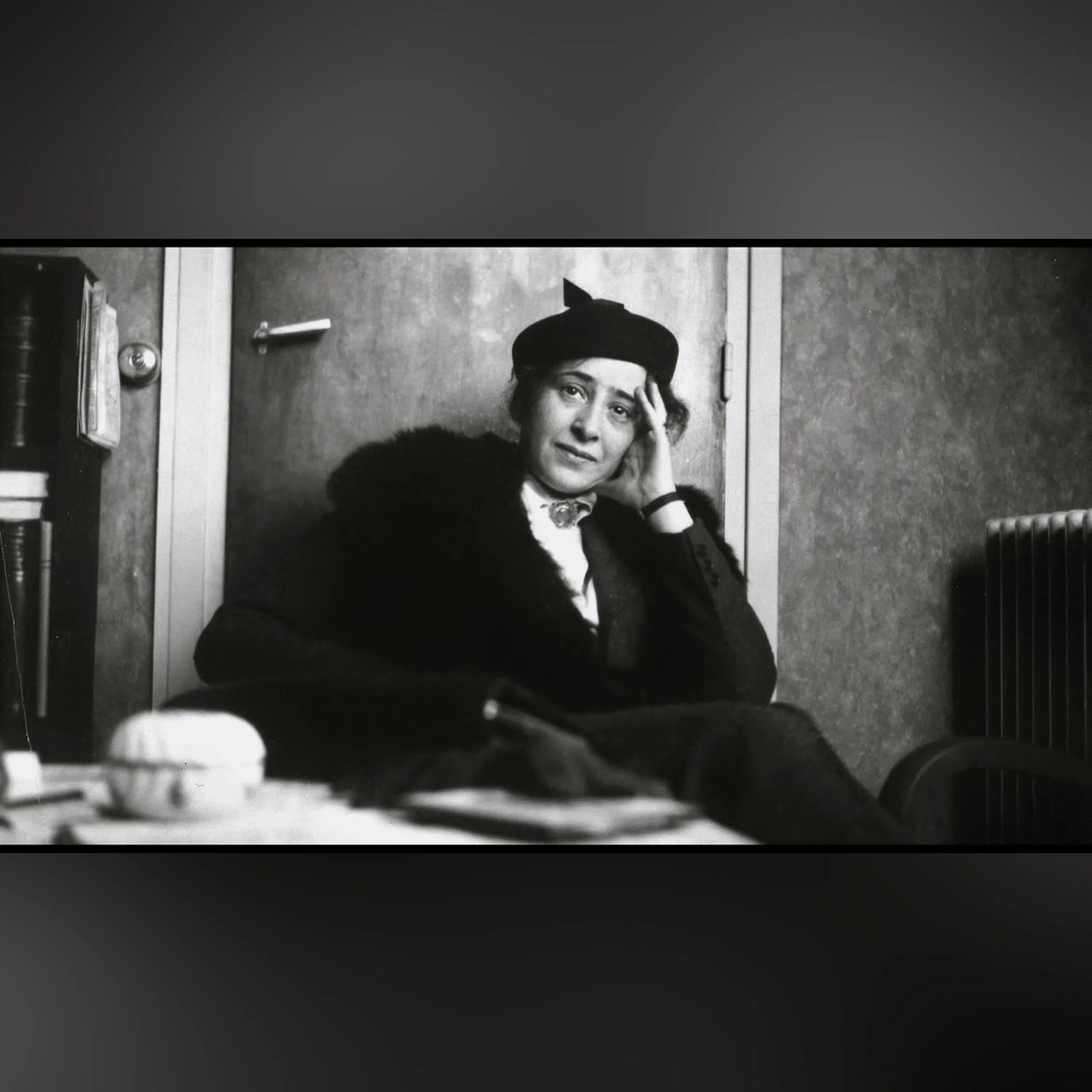
    Hannah Arendt on Power and Violence (1968)

    Audio recording of part of 1968 lecture by Hannah Arendt at Bard College on power and violence. Note, the beginning of the lecture is missing. 00:00 Talk 18:46 Q&A You can find more Arendt here: https://www.youtube.com/playlist?list=PLhP9EhPApKE-07vAVTFEuiDvqli1y8f0U #philosophy #hannaharendt #politicaltheory #politicalphilosophy Learn more about your ad choices. Visit megaphone.fm/adchoices

  • Tuesday · 9 min

    Simone de Beauvoir on Existentialism and God (1959)

    A version of a video from the old channel. This comes from a 1959 interview with Wilfrid Lemoyne from Radio-Canada. The translation is my mine. More Short Clips: https://www.youtube.com/playlist?list=PLhP9EhPApKE8v8UVlc7JuuNHwvhkaOvzc Existentialists take human existence and the human condition to be a fundamental issue. They tend to be radical individualists who privilege our lived experience and choice. They focus on themes such as: freedom, authenticity, the individual, meaning, anxiety, alienation, death, dread, the absurd, contingency, and nihilism. They often are also suspicious of any fixed, pre-determined human nature, objective/universal values, and abstract philosophical systems. Some of the most important existentialist thinkers (or at least thinkers associated with existentialism) include Jean-Paul Sartre, Martin Heidegger, Søren Kierkegaard, Simone de Beauvoir, Friedrich Nietzsche, Dostoyevsky, Albert Camus, and Karl Jaspers. (My Description) #philosophy #existentialism #sartre Learn more about your ad choices. Visit megaphone.fm/adchoices

  • Tuesday · 1 hr

    Killing Civilians in War (Jeff McMahan)

    When is it permissible to kill civilians in war? Jeff McMahan discusses the ethics of killing civilians in war in a talk at Ohio State University back in 2008. More on the morality of war: https://plato.stanford.edu/entries/war/ #philosophy #ethics #justwar #moralphilosophy #war Learn more about your ad choices. Visit megaphone.fm/adchoices

  • Tuesday · 1 hr 7 min

    Identity and the Mind - Raymond Tallis (2007)

    Raymond Tallis discusses the nature of the self or personal identity in a 2007 talk at the University of Cambridge as part of a series of public lectures on the notion of identity. More on personal identity: https://plato.stanford.edu/entries/identity-personal/ #philosophy #mind #metaphysics #personalidentity Learn more about your ad choices. Visit megaphone.fm/adchoices

  • Tuesday · 1 hr 11 min

    3 The True Fathers of Romanticism (Isaiah Berlin 1965)

    Isaiah Berlin gives the 3rd lecture in a series of 6 on Romanticism and its roots. All 6 lectures: https://www.youtube.com/playlist?list=PLhP9EhPApKE_9uxkmfSIt2JJK6oKbXmd- For Berlin, the Romantics set in motion a vast, unparalleled revolution in humanity’s view of itself. They destroyed the traditional notions of objective truth and validity in ethics with incalculable, all-pervasive results. As he said of the Romantics elsewhere: “The world has never been the same since, and our politics and morals have been deeply transformed by them. Certainly this has been the most radical, and indeed dramatic, not to say terrifying, change in men’s outlook in modern times.” In these brilliant lectures Berlin surveys the myriad attempts to define Romanticism, distills its essence, traces its developments from its first stirrings to its apotheosis, and shows how its lasting legacy permeates our own outlook. Combining the freshness and immediacy of the spoken word with Berlin’s inimitable eloquence and wit, the lectures range over a cast of the greatest thinkers and artists of the eighteenth and nineteenth centuries, including Kant, Rousseau, Diderot, Schiller, Schlegel, Novalis, Goethe, Blake, Byron, and Beethoven. Berlin argues that the ideas and attitudes held by these and other figures helped to shape twentieth-century nationalism, existentialism, democracy, totalitarianism, and our ideas about heroic individuals, individual self-fulfillment, and the exalted place of art. This is the record of an intellectual bravura performance–of one of the century’s most influential philosophers dissecting and assessing a movement that changed the course of history. These Mellon lectures were delivered in Washington in 1965. 00:00 Hamann & Others 29:10 Herder #Philosophy #Romanticism #IsaiahBerlin Learn more about your ad choices. Visit megaphone.fm/adchoices

  • Tuesday · 1 hr 36 min

    6 Romanticism - The Lasting Effects (Isaiah Berlin 1965)

    Isaiah Berlin gives the 6th and final lecture in a series of 6 on Romanticism and its roots. All 6 lectures: https://www.youtube.com/playlist?list=PLhP9EhPApKE_9uxkmfSIt2JJK6oKbXmd- For Berlin, the Romantics set in motion a vast, unparalleled revolution in humanity’s view of itself. They destroyed the traditional notions of objective truth and validity in ethics with incalculable, all-pervasive results. As he said of the Romantics elsewhere: “The world has never been the same since, and our politics and morals have been deeply transformed by them. Certainly this has been the most radical, and indeed dramatic, not to say terrifying, change in men’s outlook in modern times.” In these brilliant lectures Berlin surveys the myriad attempts to define Romanticism, distills its essence, traces its developments from its first stirrings to its apotheosis, and shows how its lasting legacy permeates our own outlook. Combining the freshness and immediacy of the spoken word with Berlin’s inimitable eloquence and wit, the lectures range over a cast of the greatest thinkers and artists of the eighteenth and nineteenth centuries, including Kant, Rousseau, Diderot, Schiller, Schlegel, Novalis, Goethe, Blake, Byron, and Beethoven. Berlin argues that the ideas and attitudes held by these and other figures helped to shape twentieth-century nationalism, existentialism, democracy, totalitarianism, and our ideas about heroic individuals, individual self-fulfillment, and the exalted place of art. This is the record of an intellectual bravura performance–of one of the century’s most influential philosophers dissecting and assessing a movement that changed the course of history. These Mellon lectures were delivered in Washington in 1965. 00:00 The Tradition 02:38 Romantic Attack 08:21 Myths & Art 15:20 Politics & Other Spheres 23:35 Music 31:23 Who Were They? 51:48 Transformation of Values 58:49 Existentialism 1:06:03 Fascism 1:07:08 Artistic Model of Life 1:08:05 What we owe to Romanticism #Philosophy #Romanticism #IsaiahBerlin Learn more about your ad choices. Visit megaphone.fm/adchoices

  • Tuesday · 1 hr 5 min

    What is an Emotion?

    Jesse Prinz and Jerome Neu discuss and debate the nature of emotions. This comes from an episode of Odyssey on WBEZ Chicago from quite a few years back (early 2000s) with host Gretchen Helfrich. Read more about emotion: https://plato.stanford.edu/entries/emotion/ #philosophy #psychology #emotions #williamjames #spinoza #debate Learn more about your ad choices. Visit megaphone.fm/adchoices

  • Tuesday · 1 hr 20 min

    The Thought of Philippa Foot

    Alex Voorhoeve and Sarah Broadie discuss the work of the renowned philosopher Philippa Foot at the LSE back in 2013. They discuss her work on the following philosophical issues. Is morality objective? Why should one be moral? And may we kill one to save others? 00:00 Life & Philosophical Style 15:05 Moral Subjectivism 26:05 Why Be Moral? 38:40 The Trolley Problem 50:45 Discussion #philosophy #ethics #metaethics #moralphilosophy Learn more about your ad choices. Visit megaphone.fm/adchoices

  • Tuesday · 1 hr 49 min

    Examining the Ethics of the Unthinkable: The Holocaust and Bioethics - Arthur Caplan (1989)

    Audio recording of a keynote speech by Professor Arthur L. Caplan at a 1989 conference on the meaning of the Holocaust for bioethics at the University of Minnesota. 00:00 Lecture 52:17 Q&A #philosophy #ethics #bioethics #history #moralphilosophy #utilitarianism #medicalethics #totalitarianism #authoritarianism Learn more about your ad choices. Visit megaphone.fm/adchoices

  • Tuesday · 1 hr 51 min

    Foundations of Liberal Equality 1 - Ronald Dworkin (1988)

    Audio recording of a lecture by Ronald M. Dworkin as part of his 1988 Tanner lectures on human values at Stanford University on the foundations of liberalism. This was the first of his Tanner lectures. Note, this is a re-upload. 00:00 Lecture 1:04:07 Q&A #philosophy #politicalphilosophy #ethics #politicaltheory #liberalism #moralphilosophy Learn more about your ad choices. Visit megaphone.fm/adchoices

  • Tuesday · 4 min

    The Loss of Absolute Authority - Hannah Arendt (1972)

    Hannah Arendt believed that the will of the totalitarian ruler occupied the place left vacant by the absolute authority over the world attributed to God during the Middle Ages. With the collapse of the divinely ordained Kingships and the authority exercised by the Catholic church in the name of God, what would replace the authority of God in the world? How would such authority be constituted, who would act in its name, and what rules would it follow? Arendt believed that these questions missed the point. She welcomed the disappearance of absolute authority from the world in the name of the plurality of citizens whose power could now come forward. Only the power created by the collective decisions of citizens coming together to act on matters of public interest could establish a valid and just authority. Of course, this meant that there could be no return to the stability of the past. But it also meant that, as citizens, we assume responsibility ourselves for what happens in the world. These clips come from a 1972 conference on Arendt's work at York University. #philosophy #hannaharendt #politicaltheory #totalitarianism #authority Learn more about your ad choices. Visit megaphone.fm/adchoices

  • Tuesday · 2 hr 16 min

    Alasdair MacIntyre on the Fate of Theism/Atheism and Morals (1966)

    Audio recording of two lectures by Alasdair C. MacIntyre as part of the Bampton Lectures at Columbia University in 1966. 00:00 Lecture I: The Fate of Theism 50:37 Lecture II: Atheism & Morals #philosophy #theism #atheism #religion #historyofphilosophy #intellectualhistory Learn more about your ad choices. Visit megaphone.fm/adchoices

  • Tuesday · 2 hr 17 min

    Prerequisites of Language Acquisition - Noam Chomsky (1964)

    Noam Chomsky discusses language and the innate structures of the mind in a 1964 lecture at UC Berkeley and sponsored by the Philosophy Colloquium. 00:00 Lecture 1:10:24 Q&A Source: https://cla.berkeley.edu/item/?bndlid=26712 #philosophy #chomsky #epistemology #language #linguistics #psychology #mind Learn more about your ad choices. Visit megaphone.fm/adchoices

  • Tuesday · 3 min

    Levinas on the Face

    This short clip comes from the beginning of a 2014 documentary on Emmanuel Levinas by Yoram Ron called "Le Dieu absent - Emmanuel Lévinas et l'humanisme de l'autre" ("Absent God - Emmanuel Levinas and the Humanism of the Other"). I thought it was interesting, so I translated it into English and added subtitles. The full documentary (with English subtitles) can be found on YouTube here: https://www.youtube.com/watch?v=qbGaXEqxSvU #philosophy #levinas #phenomenology Learn more about your ad choices. Visit megaphone.fm/adchoices

  • Tuesday · 4 min

    G. A. Cohen does Isaiah Berlin (1991)

    G. A. Cohen impersonates Sir Isaiah Berlin in this short clip from 1991. #philosophy #isaiahberlin Learn more about your ad choices. Visit megaphone.fm/adchoices

  • Tuesday · 2 hr 7 min

    Reasons, Rationality, and Heuristics - Emma Borg (2024)

    Professor Emma Borg gives the second lecture in a series on "Reasons for Action" as part of the 2024 Frege Lectures in theoretical philosophy at the University of Tartu. Do people generally do what they do on the basis of the reasons they have for acting? The standard philosophical answer - common-sense psychology or folk psychology - says yes. But recently the idea that humans are generally rational, reasons-responsive beings has come under considerable pressure, as a number of empirical findings (often in the fields of social, comparative, and developmental psychology) seem to suggest that, on the contrary, people are often blind to reasons, acting on gut feelings and intuitions, and are subject to various biases and other errors of reasoning. Although these empirical findings are now well-known (reaching beyond the ivory tower into the public consciousness), Emma Borg suggests that the precise problem for common-sense psychology remains unclear. There are (at least) three different arguments that could be made based on the empirical data. In her lectures, Emma Borg explains these three arguments and argues that the proponent of the common-sense view has responses to each of them. She concludes that the case against common-sense psychology can be rejected, and that we should hold on to the notion that action (of a typical adult) involves acting based on reasons. Emma Borg is Professor of Philosophy at the Institute of Philosophy, University of London. Her main research interests are the philosophy of language, philosophy of mind, and business ethics. Borg is the author of Minimal Semantics (2004) and Pursuing Meaning (2012), as well as two forthcoming books: A Very Short Introduction to Meaning and Acting for Reasons: In Defence of Common-Sense Psychology (all published by Oxford University Press). The latter book is also the basis for her Frege Lectures. 00:00 Talk 1:16:47 Q&A #philosophy #epistemology #psychology #rationality Learn more about your ad choices. Visit megaphone.fm/adchoices

Showing 61–80 of 129 episodes