Philosophy Overdose
Philosophy Overdose
A collection of public and academic philosophy videos, mostly analytic philosophy but occasionally continental philosophy too. The channel looks for thought-provoking lectures and interviews, particularly what is rare and involves famous figures. There is occasionally an attempt at translation as well, especially that of German and French.
Nothing here is monetized, the channel is wholly non-commercial. Everything here is for the purpose of education and spreading around good philosophy content. If there's any problem, let me know, and I can take it down.
Feel free to let me know if there's anything you'd like me to post, including one of your own lectures.
Philosophy, Epistemology, Ethics, History of Philosophy, Political Philosophy, History of Ideas, Ontology, Critical Thinking, Moral Philosophy, Philosophy of Science, Logic, Philosophy of Mind, Metaphysics, Philosophy of Religion, Social Philosophy, Philosophy of Language, Consciousness, Philosophy of Mathematics, etc.
Links:
Facebook: https://www.facebook.com/PhilosophyOverdoseYoutube/
- 129 episodes
- Avg 59 min
- English
Yesterday · 15 min- PO
Yesterday · 6 minHonderich vs Penrose on Consciousness (1999)
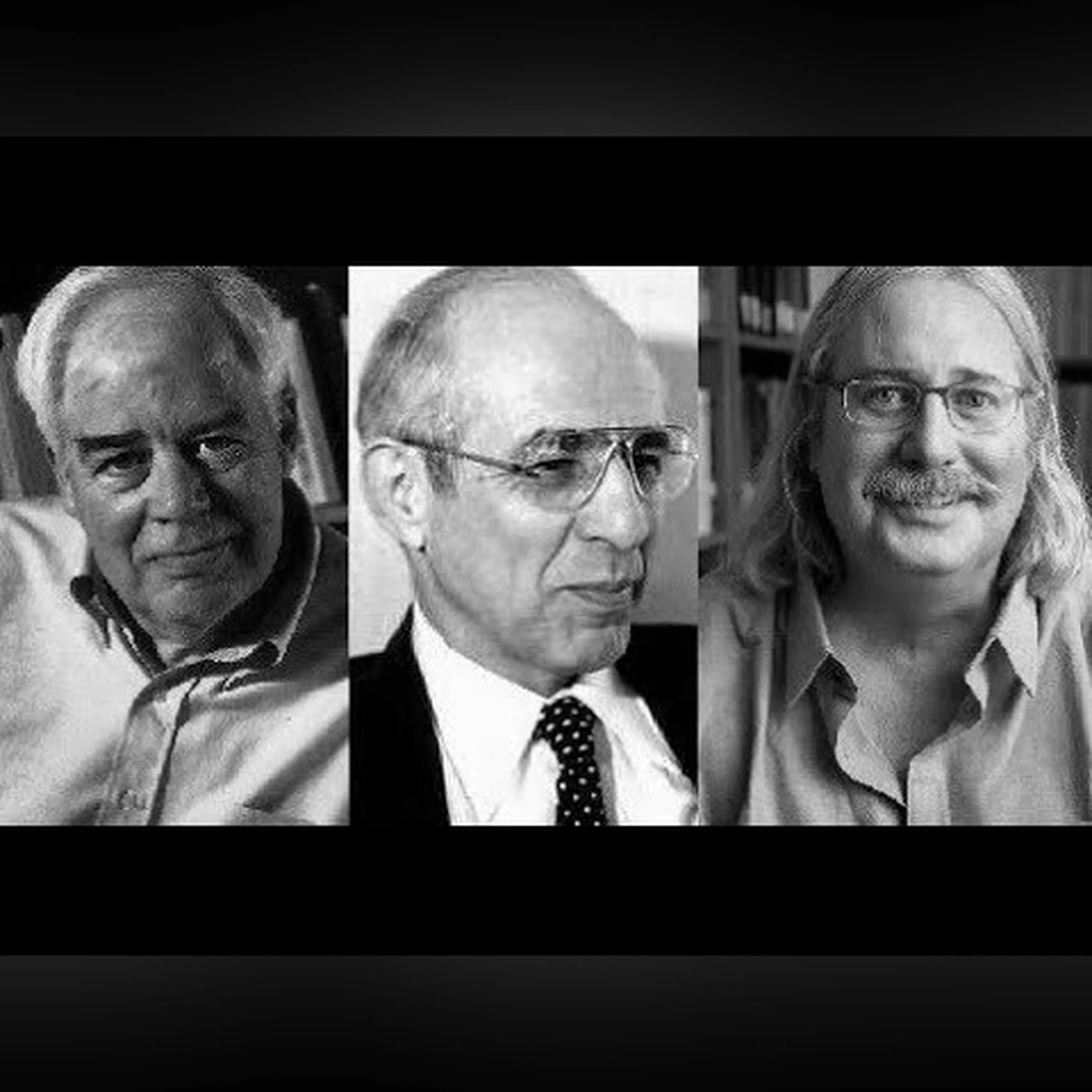
Ted Honderich pushes Sir Roger Penrose about his view about consciousness and whether it involves a relation of identity, presenting something of a dilemma in the process. These clips come from a 1999 exchange on consciousness in an episode of the In Our Time podcast with Melvyn Brαgg. For more information and full episodes of In Our Time, go to: https://www.bbc.co.uk/programmes/b006qykl #philosophy #philosophyofmind #consciousness #metaphysics #materialism Learn more about your ad choices. Visit megaphone.fm/adchoices
- PO
Yesterday · 4 minRobert Nozick on Karl Popper's Anti-Inductivism (2001)
Audio recording of Robert Nozick presenting an argument against Karl Popper's anti-inductivist view of scientific knowledge in a clip from a 2001 interview by Juliαn Sαnchez on Nozick's most recent book "Invariances: The Structure of the Objective World". #philosophy #karlpopper #epistemology #science #nozick Learn more about your ad choices. Visit megaphone.fm/adchoices
- PO
Yesterday · 1 hr 14 minWestern Culture - Kwame Anthony Appiah (2016)
Audio recording of a 2016 lecture by the philosopher and cultural theorist Kwame Anthony Appiah on culture as part of his Reith Lectures on Mistaken Identities. He says the idea of "Western civilization" or "Western culture" is a mistaken one and that we should abandon it. He uncovers the history of the idea from its roots at the time of the Crusades to its modern incarnation in the second half of the 20th century. However, we have very little culturally in common with our forebears in say the England of Chaucer's time. And indeed, much of the knowledge supposedly at the heart of Western civilisation was actually transmitted via Islamic scholarship. No one, he argues, can claim exclusive ownership of culture. This lecture was given by Kwame Anthony Appiah at New York University in 2016 as part of his Reith Lectures on Mistaken Identities. 00:00 Talk 29:45 Q&A #philosophy #politicaltheory #socialphilosophy #culturalcritique Learn more about your ad choices. Visit megaphone.fm/adchoices
- PO
Yesterday · 1 hr 1 min4 Reid on Causation and Active Powers - Reid's Critique of Hume (Dan Robinson)
Professor Dan Robinson gives the fourth in a series of 8 lectures on Thomas Reid's critique of David Hume at Oxford in 2014. “It is evident that a power is a quality, and therefore can’t exist without a subject to which it belongs…This (Humean) suggestion— There exists some power that cannot be attributed to any thing, any subject, which has the power —is an absurdity…No principle seems to have been more universally acknowledged by mankind ever since the first dawn of reason than that every change we observe in nature must have a cause…Another argument to show that all men have a notion or idea of active power is that there are many mental operations—performed by everyone who has a mind, and necessary in the ordinary conduct of life—which presuppose that we have active power”. Under “David Hume”, the Stanford Encyclopedia of Philosophy begins with, “The most important philosopher ever to write in English”. His most formidable contemporary critic was the fellow Scot, Thomas Reid, the major architect of so-called Scottish Common Sense Philosophy. The most significant features of Hume’s work, as understood by Reid, are the representive theory of perception, the nature of causation and causal concepts, the nature of personal identity and the foundations of morality. Each of these topics is presented in a pair of lectures, the first summarizing Hume’s position and the second Reid’s critique of that position. All Lectures: https://www.youtube.com/playlist?list=PLhP9EhPApKE9nki7CXFPi7PMOi5W2g2-q #philosophy #davidhume #causation #causality #historyofphilosophy Learn more about your ad choices. Visit megaphone.fm/adchoices
- PO
Yesterday · 2 hr 1 minReal Direct Realism
Galen Strawson delivers a lecture on the philosophy of perception at the Marc Sanders Foundation back in 2014. More on these philosophical issues regarding the nature of perception: https://plato.stanford.edu/entries/perception-problem/ and https://plato.stanford.edu/entries/perception-episprob/ 00:00 Lecture 52:11 Discussion #philosophy #epistemology #perception #skepticism #philosophyofmind Learn more about your ad choices. Visit megaphone.fm/adchoices

- PO
Yesterday · 1 hr 56 minReasons for Action: Introducing Common-Sense Psychology - Emma Borg (2024)
Professor Emma Borg gives the first lecture in a series on "Reasons for Action" as part of the 2024 Frege Lectures in theoretical philosophy at the University of Tartu. Do people generally do what they do on the basis of the reasons they have for acting? The standard philosophical answer - common-sense psychology or folk psychology - says yes. But recently the idea that humans are generally rational, reasons-responsive beings has come under considerable pressure, as a number of empirical findings (often in the fields of social, comparative, and developmental psychology) seem to suggest that, on the contrary, people are often blind to reasons, acting on gut feelings and intuitions, and are subject to various biases and other errors of reasoning. Although these empirical findings are now well-known (reaching beyond the ivory tower into the public consciousness), Emma Borg suggests that the precise problem for common-sense psychology remains unclear. There are (at least) three different arguments that could be made based on the empirical data. In her lectures, Emma Borg explains these three arguments and argues that the proponent of the common-sense view has responses to each of them. She concludes that the case against common-sense psychology can be rejected, and that we should hold on to the notion that action (of a typical adult) involves acting based on reasons. Emma Borg is Professor of Philosophy at the Institute of Philosophy, University of London. Her main research interests are the philosophy of language, philosophy of mind, and business ethics. Borg is the author of Minimal Semantics (2004) and Pursuing Meaning (2012), as well as two forthcoming books: A Very Short Introduction to Meaning and Acting for Reasons: In Defence of Common-Sense Psychology (all published by Oxford University Press). The latter book is also the basis for her Frege Lectures. 00:00 Intro 03:18 Talk 1:05:13 Q&A #philosophy #epistemology #psychology #rationality Learn more about your ad choices. Visit megaphone.fm/adchoices
- PO
Yesterday · 1 hr 33 minThe Romantic Revolution in Politics and Morals - Isaiah Berlin (1969)
Audio recording of a 1969 lecture by Isaiah Berlin on the romantic revolution in politics and morals at Washington University in St Louis as part of the Assembly lecture series. #philosophy #romanticism #isaiahberlin #intellectualhistory #history Learn more about your ad choices. Visit megaphone.fm/adchoices
- PO
Yesterday · 1 hr 5 minFallibilism's Payoff - Catherine Elgin
Catherine Elgin discusses fallibilism in a 2016 lecture at the University of Edinburgh. Elgin's talk "True Enough": https://youtu.be/P5pKJGXuCNE #philosophy #epistemology #skepticism #science Learn more about your ad choices. Visit megaphone.fm/adchoices

- PO
Yesterday · 1 hr 3 min1 Just What is Kant's "Project"? - Kant's Critique of Pure Reason (Dan Robinson)
Dan Robinson gives the 1st lecture in a series of 8 on Immanuel Kant's Critique of Pure Reason. Both sense and reason are limited. Kant must identify the proper mission and domain of each, as well as the manner in which their separate functions come to be integrated in what is finally the inter-subjectively settled knowledge of science. This series looks at German Philosopher Immanuel Kant's seminal philosophical work 'The Critique of Pure Reason'. The lectures aim to outline and discuss some of the key philosophical issues raised in the book and to offer students and individuals thought provoking Kantian ideas surrounding metaphysics. Each lecture looks at particular questions raised in the work such as how do we know what we know and how do we find out about the world, dissects these questions with reference to Kant's work and discusses the broader philosophical implications. Anyone with an interest in Kant and philosophy will find these lectures thought provoking but accessible. This is series of lectures was given in 2011 at Oxford. Note, audio has been improved. All 8 lectures: https://www.youtube.com/playlist?list=PLhP9EhPApKE_OdgqNgL0AJX9-gwr4tmLw #philosophy #kant #epistemology #metaphysics #empiricism #hume #skepticism #historyofphilosophy Learn more about your ad choices. Visit megaphone.fm/adchoices

- PO
Yesterday · 1 hr 20 minThe Truth is Terrible - Nietzsche's Idea of an Aesthetic Justification for Existence
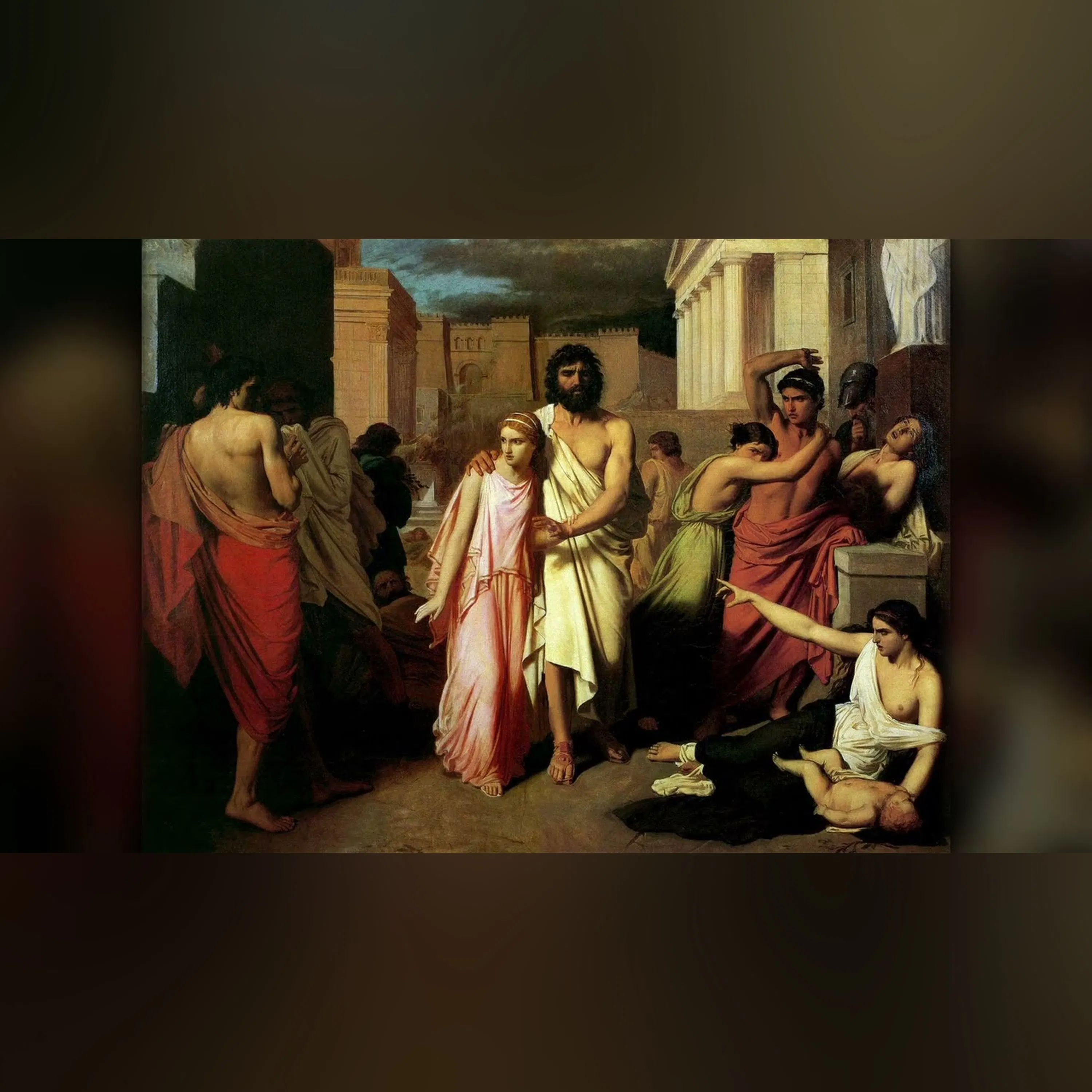
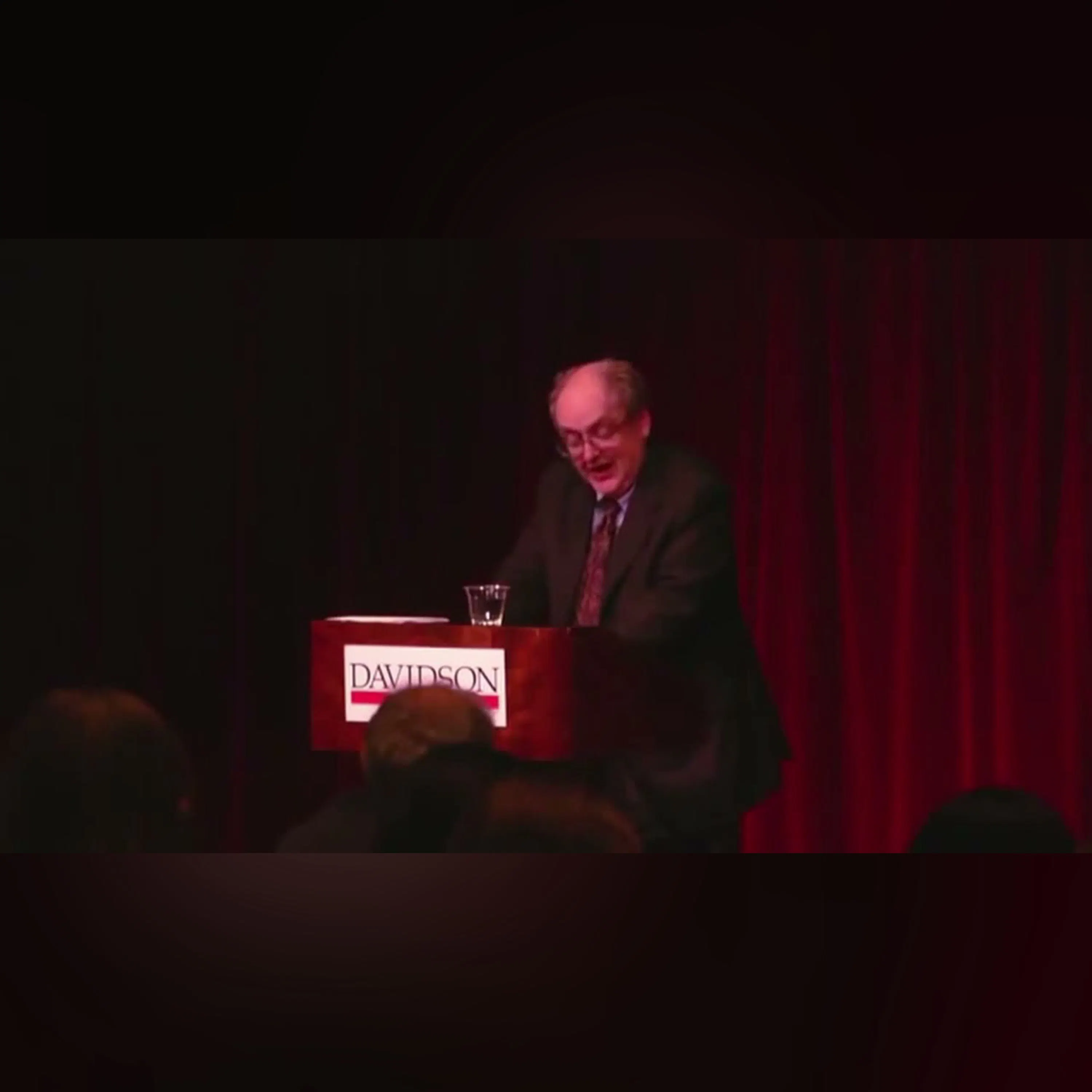
Brian Leiter discusses the thought of Nietzsche at Davidson College a few years back. The truth is terrible, Nietzsche tells us. There is no God, the universe lacks any ultimate meaning or purpose, and is filled with gratuitous pointless suffering. Our only relief comes with nonexistence upon death. Even the existence of the self, free will, objective value, and absolute truth and knowledge are wholly illusory. All forms & qualities are but mere human conventions, subjective expressions of our competing drives. The unquenchable desire for objectivity is the drive to transcend our finite bodily existence and grab hold of something universal, absolute, unchanging, and God-like. But there simply is none. So it is all too easy to become disillusioned and fall into an abyss of anguish and despair, turning away from existence and the drives, as suggested by the pessimistic philosophy of Schopenhauer. But Nietzsche urges against this turning away from life. For Nietzsche, existence is justified, but only as an aesthetic phenomenon. But what does this mean exactly? Brian Leiter explains. (My Summary) More Nietzsche: https://m.youtube.com/playlist?list=PLhP9EhPApKE_ySvPE8kzFUkA5aO_cdKmb #philosophy #nietzsche #ethics #historyofphilosophy Learn more about your ad choices. Visit megaphone.fm/adchoices
- PO
Yesterday · 2 hr 8 minJohn Locke's Political Philosophy
After briefly discussing Thomas Hobbes, Professor Charles Anderson discusses the thought of John Locke. This comes from a course on Political, Economic, & Social Thought given at the University of Wisconsin many years ago. 00:00 Thomas Hobbes 21:50 John Locke #philosophy #locke #politicalphilosophy #politicaltheory #historyofphilosophy #hobbes #philosopher Learn more about your ad choices. Visit megaphone.fm/adchoices
- PO
Yesterday · 1 hr 8 min7 Hume’s “Sentimentalist” Theory of Morals - Reid's Critique of Hume (Dan Robinson)
Professor Dan Robinson gives the seventh in a series of 8 lectures on Thomas Reid's critique of David Hume at Oxford in 2014. In his Enquiry Concerning the Principles of Morals [1751], Hume states: “The final sentence, it is probable, which pronounces characters and actions amiable or odious, praise-worthy or blameable; that which stamps on them the mark of honour or infamy, approbation or censure; that which renders morality an active principle and constitutes virtue our happiness, and vice our misery; it is probable, I say, that this final sentence depends on some internal sense or feeling, which nature has made universal in the whole species”. The ruling motives are shaped by considerations of utility. “The rage and violence of public war; what is it but a suspension of justice among the warring parties, who perceive, that this virtue is now no longer of any USE or advantage to them? The laws of war, which then succeed to those of equity and justice, are rules calculated for the ADVANTAGE and UTILITY…” Under “David Hume”, the Stanford Encyclopedia of Philosophy begins with, “The most important philosopher ever to write in English”. His most formidable contemporary critic was the fellow Scot, Thomas Reid, the major architect of so-called Scottish Common Sense Philosophy. The most significant features of Hume’s work, as understood by Reid, are the representive theory of perception, the nature of causation and causal concepts, the nature of personal identity and the foundations of morality. Each of these topics is presented in a pair of lectures, the first summarizing Hume’s position and the second Reid’s critique of that position. All Lectures: https://www.youtube.com/playlist?list=PLhP9EhPApKE9nki7CXFPi7PMOi5W2g2-q #philosophy #davidhume #ethics #moralphilosophy #historyofphilosophy Learn more about your ad choices. Visit megaphone.fm/adchoices
- PO
Yesterday · 9 minHannah Arendt on Modernity (1964)
A clip of Hannah Arendt from her 1964 interview with Günter Gaus. Among other things, she discusses the dethroning of the community spirit by the modern age and with it the prime importance of the political and the shrinkage of the public realm, which is associated with the uprooting of the masses and the resulting isolation and atomism in the modern world (something which, by the way, she thought made possible totalitarianism in the 20th century, both from the right and the left). She also touches on the labor-consumption process, the public sphere, and the increasing inability to act publicly in the modern world. Full Interview: https://www.youtube.com/watch?v=dVSRJC4KAiE #philosophy #hannaharendt #politicaltheory #politicalphilosophy Learn more about your ad choices. Visit megaphone.fm/adchoices
- PO
Yesterday · 56 min7 The "Self" and Synthetic Unity of Apperception - Kant's Critique of Pure Reason (Dan Robinson)
Dan Robinson gives the 7th lecture in a series of 8 on Immanuel Kant's Critique of Pure Reason. Kant argues that: "The synthetic unity of consciousness is... an objective condition of all knowledge. It is not merely a condition that I myself require in knowing an object, but is a condition under which every intuition must stand in order to become an object for me". This series looks at German Philosopher Immanuel Kant's seminal philosophical work 'The Critique of Pure Reason'. The lectures aim to outline and discuss some of the key philosophical issues raised in the book and to offer students and individuals thought provoking Kantian ideas surrounding metaphysics. Each lecture looks at particular questions raised in the work such as how do we know what we know and how do we find out about the world, dissects these questions with reference to Kant's work and discusses the broader philosophical implications. Anyone with an interest in Kant and philosophy will find these lectures thought provoking but accessible. This is series of lectures was given in 2011 at Oxford. Note, the audio has been improved. All 8 lectures: https://www.youtube.com/playlist?list=PLhP9EhPApKE_OdgqNgL0AJX9-gwr4tmLw #philosophy #kant #epistemology #metaphysics #personalidentity #empiricism #skepticism #historyofphilosophy Learn more about your ad choices. Visit megaphone.fm/adchoices

- PO
Tuesday · 1 hr 5 minWittgenstein vs Socrates on Definitions and Explanations (James Klagge)
Wittgenstein described some of his views as being the opposite of Socrates'. Socrates famously sought essential definitions for concepts such as Truth, Justice, Knowledge, Goodness, Beauty, etc. This search for the definition or essential nature of things (i.e. the necessary and sufficient conditions for a given concept) is the very paradigm of philosophical or conceptual analysis. But according to Wittgenstein, such abstract terms do not have or do not need to have an underlying essence which all the particular instances have in common. We understand the meaning of such terms enough to be able to use them, even if we cannot spell out their precise conditions. Indeed, things of the same kind need not share any underlying universal or common nature, but only a variety of overlapping similarities, which Wittgenstein famously called "family resemblances". In this way, Wittgenstein was something of a nominalist, rejecting essentialism. So too, while Socrates was always looking for deeper explanations, Wittgenstein was quite skeptical of this sort of intellectualism. For although the unexamined life is not worth living, the endlessly examined life is something that isn't even livable. This talk was given by James Klagge at the Wittgenstein Archive at Bergen, University of Bergen, Norway, March 6, 2012. It is a re-upload. #philosophy #wittgenstein #socrates #plato #historyofphilosophy #epistemology Learn more about your ad choices. Visit megaphone.fm/adchoices
- PO
Tuesday · 1 hr 5 min6 Reid on Personal Identity - Reid's Critique of Hume (Dan Robinson)
Professor Dan Robinson gives the sixth in a series of 8 lectures on Thomas Reid's critique of David Hume at Oxford in 2014. In the third of his Essays on The Intellectual Powers of Man, Reid devotes the fourth chapter to the concept of 'identity', and the sixth chapter to Locke's theory of 'personal identity'. This latter chapter is widely regarded as a definitive refutation of the thesis that personal identity is no more than memories of a certain sort, less a “bundle of perceptions”. As he says, “This conviction of one’s own identity is utterly necessary for all exercise of reason. The operations of reason—whether practical reasoning about what to do or speculative reasoning in the building up of a theory—are made up of successive parts. In any reasoning that I perform, the early parts are the foundation of the later ones, and if I didn’t have the conviction that the early parts are propositions that I have approved or written down, I would have no reason to proceed to the later parts in any theoretical or practical project whatever”. Under “David Hume”, the Stanford Encyclopedia of Philosophy begins with, “The most important philosopher ever to write in English”. His most formidable contemporary critic was the fellow Scot, Thomas Reid, the major architect of so-called Scottish Common Sense Philosophy. The most significant features of Hume’s work, as understood by Reid, are the representive theory of perception, the nature of causation and causal concepts, the nature of personal identity and the foundations of morality. Each of these topics is presented in a pair of lectures, the first summarizing Hume’s position and the second Reid’s critique of that position. All Lectures: https://www.youtube.com/playlist?list=PLhP9EhPApKE9nki7CXFPi7PMOi5W2g2-q #philosophy #davidhume #personalidentity #skepticism #historyofphilosophy Learn more about your ad choices. Visit megaphone.fm/adchoices
- PO
Tuesday · 5 minHume on the Argument from Design
Michael Levine discusses David Hume on the teleological argument or the argument from design with Alan Saunders in this clip from an episode of the Philosopher's Zone from back in 2011. Michael Levine was Professor of Philosophy at the University of Western Australia. This clip comes from an episode of the Philosopher's Zone, an ABC Radio National program, from back in 2011. The Philosopher's Zone: https://www.abc.net.au/listen/programs/philosopherszone #philosophy #davidhume #philosophyofreligion #theism #atheism #agnosticism #historyofphilosophy Learn more about your ad choices. Visit megaphone.fm/adchoices
- PO
Tuesday · 1 hr 17 min4 The Restrained Romantics - Kant, Schiller and Fichte (Isaiah Berlin 1965)
Isaiah Berlin gives the 4th lecture in a series of 6 on Romanticism and its roots. All 6 lectures: https://www.youtube.com/playlist?list=PLhP9EhPApKE_9uxkmfSIt2JJK6oKbXmd- For Berlin, the Romantics set in motion a vast, unparalleled revolution in humanity’s view of itself. They destroyed the traditional notions of objective truth and validity in ethics with incalculable, all-pervasive results. As he said of the Romantics elsewhere: “The world has never been the same since, and our politics and morals have been deeply transformed by them. Certainly this has been the most radical, and indeed dramatic, not to say terrifying, change in men’s outlook in modern times.” In these brilliant lectures Berlin surveys the myriad attempts to define Romanticism, distills its essence, traces its developments from its first stirrings to its apotheosis, and shows how its lasting legacy permeates our own outlook. Combining the freshness and immediacy of the spoken word with Berlin’s inimitable eloquence and wit, the lectures range over a cast of the greatest thinkers and artists of the eighteenth and nineteenth centuries, including Kant, Rousseau, Diderot, Schiller, Schlegel, Novalis, Goethe, Blake, Byron, and Beethoven. Berlin argues that the ideas and attitudes held by these and other figures helped to shape twentieth-century nationalism, existentialism, democracy, totalitarianism, and our ideas about heroic individuals, individual self-fulfillment, and the exalted place of art. This is the record of an intellectual bravura performance–of one of the century’s most influential philosophers dissecting and assessing a movement that changed the course of history. These Mellon lectures were delivered in Washington in 1965. 00:00 Intro 00:53 Kant 25:42 Schiller 47:34 Fichte #philosophy #romanticism #kant #isaiahberlin Learn more about your ad choices. Visit megaphone.fm/adchoices
- PO
Tuesday · 1 hr 6 minWhat Distinguishes a Person from a Word? The Thought of C. S. Peirce
A lecture given on the thought of Charles Sanders Peirce by Grant Franks in 2017 at St. John's College. #philosophy #epistemology #philosophyofmind #kant #historyofphilosophy #mind Learn more about your ad choices. Visit megaphone.fm/adchoices