Skip to content
Artwork for Philosophy Overdose
HistorySociety & CulturePhilosophyEducation

Philosophy Overdose

Philosophy Overdose

A collection of public and academic philosophy videos, mostly analytic philosophy but occasionally continental philosophy too. The channel looks for thought-provoking lectures and interviews, particularly what is rare and involves famous figures. There is occasionally an attempt at translation as well, especially that of German and French.

Nothing here is monetized, the channel is wholly non-commercial. Everything here is for the purpose of education and spreading around good philosophy content. If there's any problem, let me know, and I can take it down.

Feel free to let me know if there's anything you'd like me to post, including one of your own lectures.

Philosophy, Epistemology, Ethics, History of Philosophy, Political Philosophy, History of Ideas, Ontology, Critical Thinking, Moral Philosophy, Philosophy of Science, Logic, Philosophy of Mind, Metaphysics, Philosophy of Religion, Social Philosophy, Philosophy of Language, Consciousness, Philosophy of Mathematics, etc.

Links:
Facebook: https://www.facebook.com/PhilosophyOverdoseYoutube/

Play
  • 146 episodes
  • Avg 50 min
  • English
Counted on this page — what you have heard stays on this device, so it is not something the list can be paged by.
  • Yesterday · 1 hr 10 min

    Resurrection of the Body? Physicalism and the Possibility of Life After Death

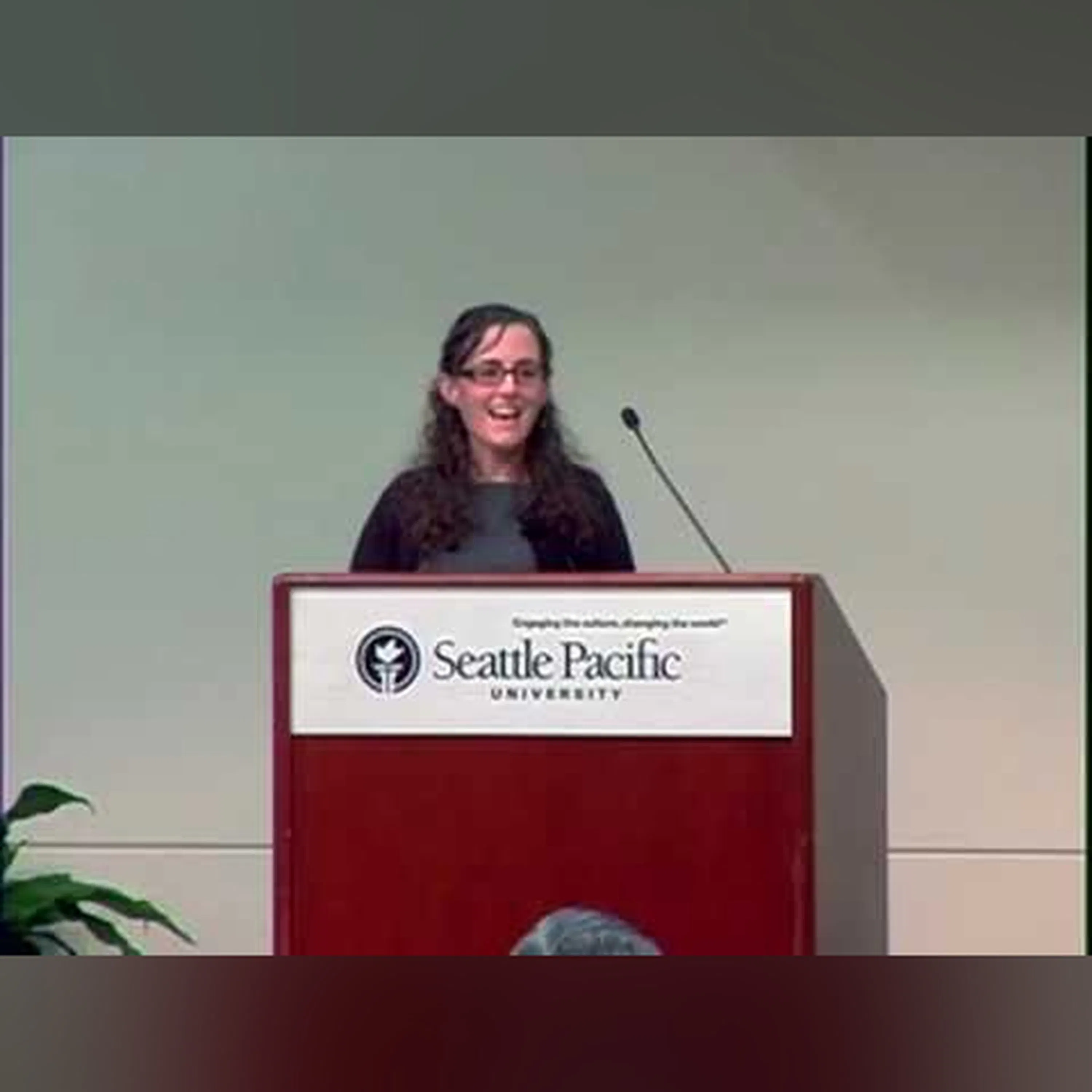
    Can a Christian be a physicalist? And is there a coherent story to tell about how a physical entity can survive bodily death? In this talk, Rebekah Rice evaluates proposals by Christian philosophers who have answered "yes" to both questions and have gone on to propose theories about the possibility of resurrection given physicalism. Rebekah Rice, Assistant Professor of Philosophy at Seattle Pacific University, gave this lecture back in 2012. 00:00 Lecture 49:45 Q&A #philosophy #metaphysics #philosophyofmind #philosophyofreligion #personalidentity #materialism Learn more about your ad choices. Visit megaphone.fm/adchoices

  • Yesterday · 56 min

    3 David Hume on Causation - Reid's Critique of Hume (Dan Robinson)

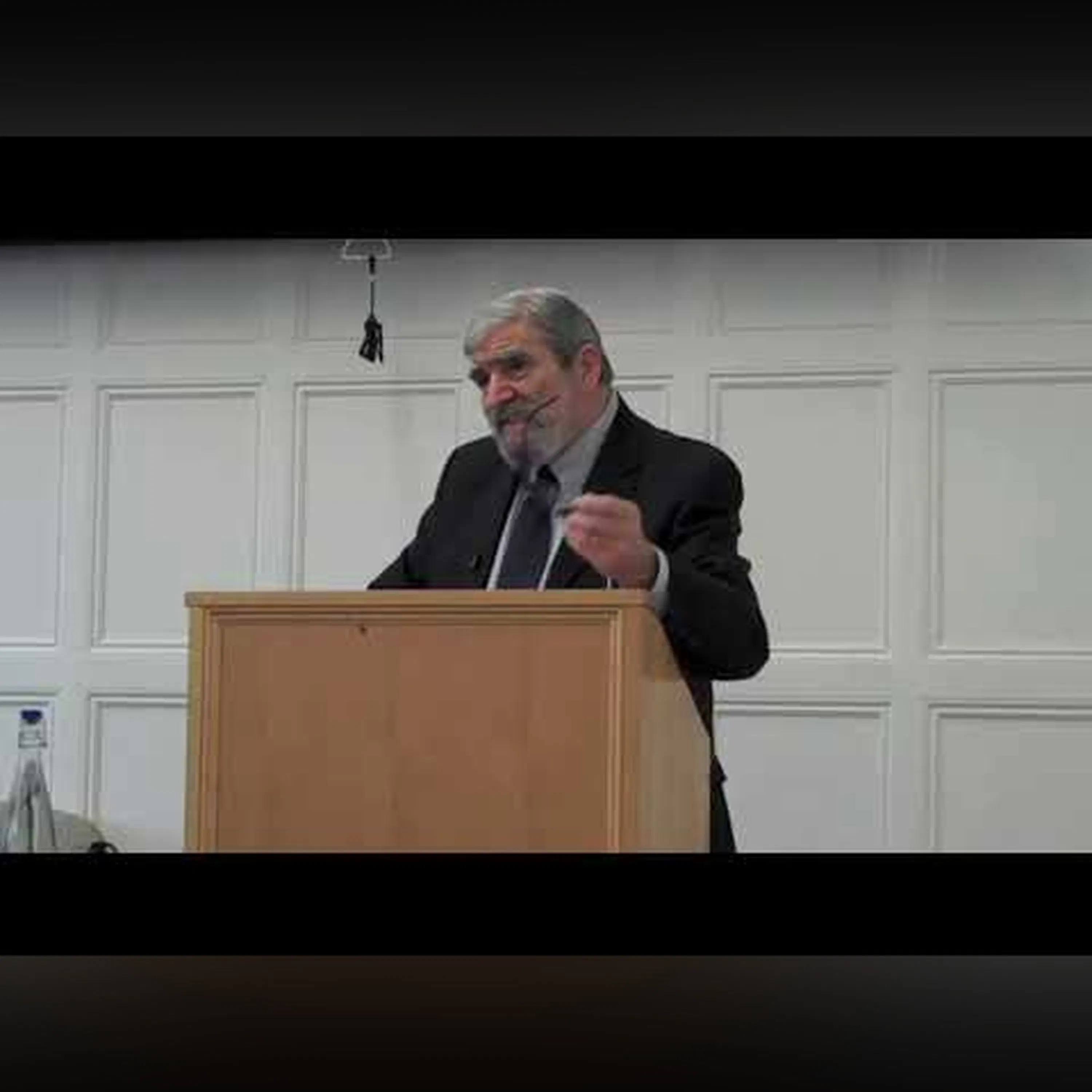
    Professor Dan Robinson gives the third in a series of 8 lectures on Thomas Reid's critique of David Hume at Oxford in 2014. Causality arises from a habit of the mind formed by repeated experiences. “There is nothing in any objects to persuade us, that they are either always remote or always contiguous; and when from experience and observation we discover, that their relation in this particular is invariable, we, always conclude there is some secret cause, which separates or unites them…” Under “David Hume”, the Stanford Encyclopedia of Philosophy begins with, “The most important philosopher ever to write in English”. His most formidable contemporary critic was the fellow Scot, Thomas Reid, the major architect of so-called Scottish Common Sense Philosophy. The most significant features of Hume’s work, as understood by Reid, are the representive theory of perception, the nature of causation and causal concepts, the nature of personal identity and the foundations of morality. Each of these topics is presented in a pair of lectures, the first summarizing Hume’s position and the second Reid’s critique of that position. All Lectures: https://www.youtube.com/playlist?list=PLhP9EhPApKE9nki7CXFPi7PMOi5W2g2-q #philosophy #davidhume #causation #skepticism #causality #historyofphilosophy Learn more about your ad choices. Visit megaphone.fm/adchoices

  • Yesterday · 1 hr 15 min

    Gadamer on Education and Tradition (1979)

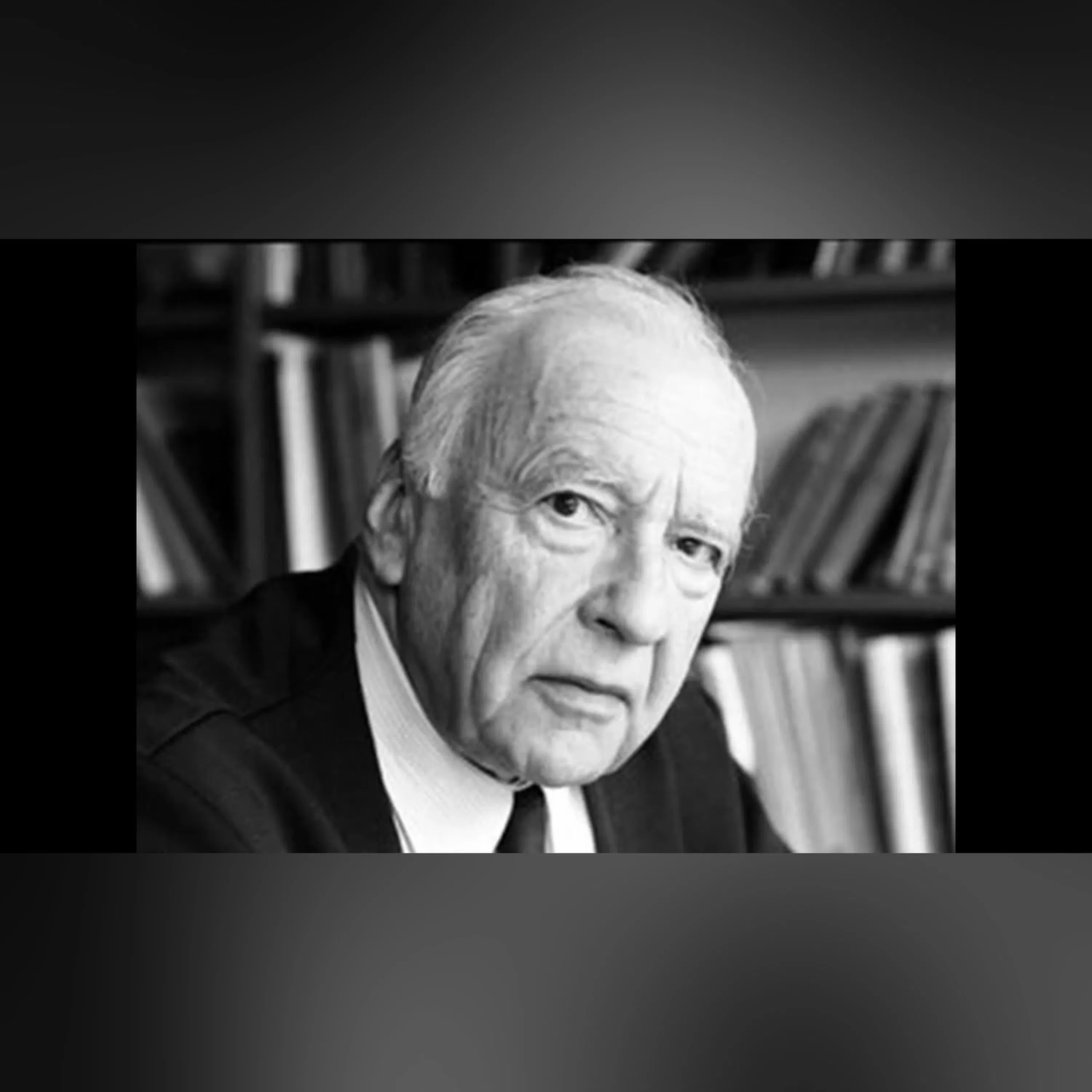
    Audio recording of a 1979 lecture by Hans-Georg Gadamer on tradition and education that was delivered in English at the University of Dallas. #philosophy #gadamer #historyofphilosophy Learn more about your ad choices. Visit megaphone.fm/adchoices

  • Yesterday · 5 min

    Wittgenstein on Rules and Private Language

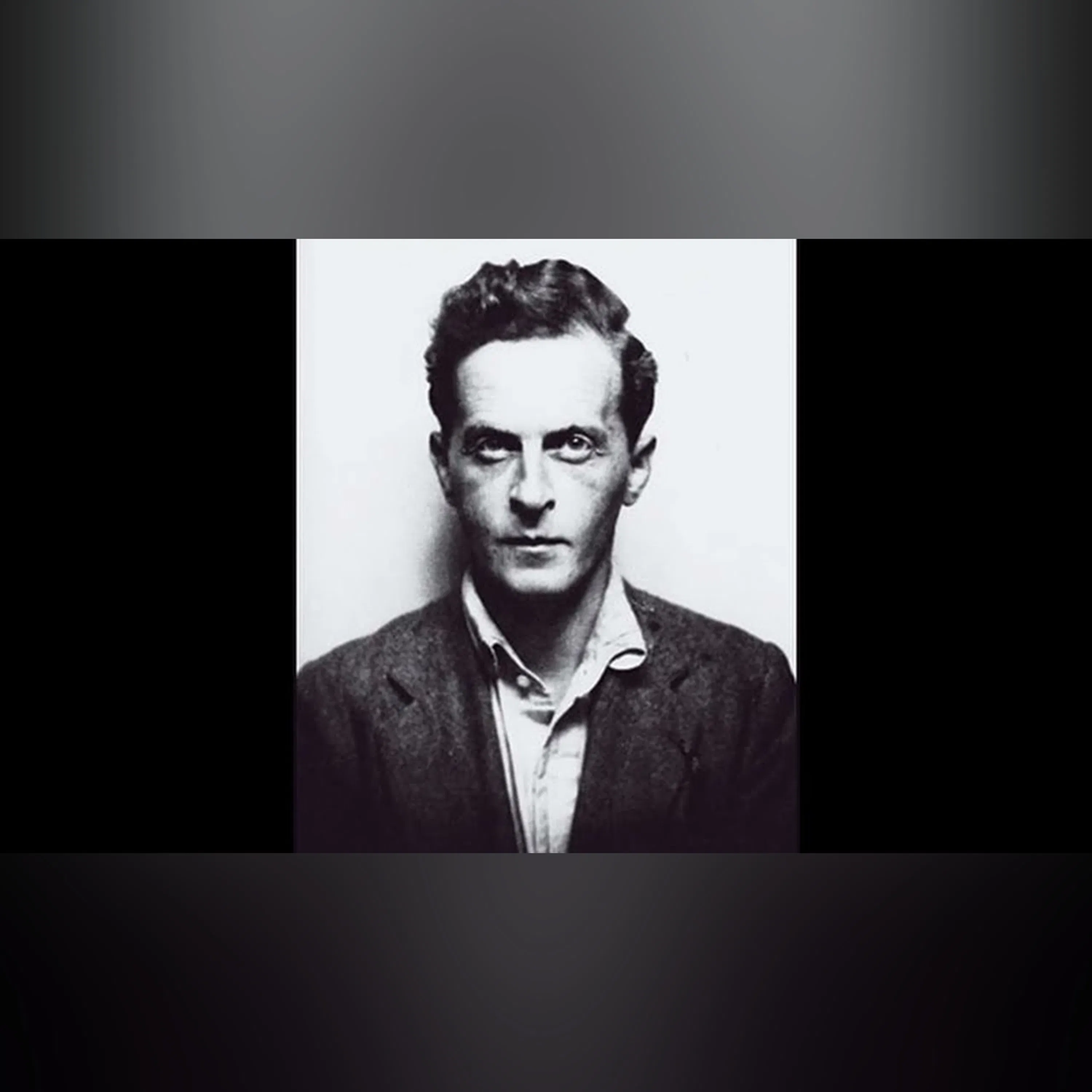
    A reupload of something that I put together awhile back. The audio is from: https://youtu.be/v_hQpvQYhOI Some relevant quotes: "But how can a rule show me what I have to do at this point? Whatever I do is, on some interpretation, in accord with the rule...Any interpretation still hangs in the air along with what it interprets, and cannot give it any support. Interpretations by themselves do not determine meaning." Wittgenstein "This was our paradox: no course of action could be determined by a rule, because any course of action can be made out to accord with the rule." Wittgenstein "To think one is obeying a rule is not to obey a rule. Hence it is not possible to obey a rule 'privately': otherwise thinking one was obeying a rule would be the same thing as obeying it." Wittgenstein #philosophy #wittgenstein #bryanmagee #language #searle Learn more about your ad choices. Visit megaphone.fm/adchoices

  • Yesterday · 6 min

    Hilary Putnam on Science and Non-Science (1977)

    A short clip of Hilary Putnam discussing science and the demarcation project in a 1977 interview with Bryan Magee on the philosophy of science. This is version of an upload from the other channel. The full interview can be found here: https://www.youtube.com/watch?v=JJB2q8ufAgk #philosophy #epistemology #bryanmagee #philosophyofscience #science Learn more about your ad choices. Visit megaphone.fm/adchoices

  • Yesterday · 38 min

    Plato on Knowledge - The Meno and Theaetetus (History of Philosophy)

    Peter Adamson discusses Plato's dialogues the Meno and the Theaetetus, which address various epistemological topics, including Meno's paradox, Plato's theory of recollection, the nature of knowledge, relativism, and the difference between knowledge and true belief (e.g. what must be added to a true belief to turn it into knowledge, and why knowledge is more valuable than mere true belief). This comes from Peter Adamson's amazing podcast on the History of Philosophy from a few years back, which can be found here: https://www.historyofphilosophy.net 00:00 The Meno 14:59 Theaetetus #philosophy #plato #epistemology #socrates #historyofphilosophy Learn more about your ad choices. Visit megaphone.fm/adchoices

  • Yesterday · 55 min

    3 Space, Time and the "Analogies of Experiences" - Kant's Critique of Pure Reason (Dan Robinson)

    Dan Robinson gives the 3rd lecture in a series of 8 on Immanuel Kant's Critique of Pure Reason. Kant's so-called "Copernican" revolution in metaphysics begins with the recognition of the observer's contribution to the observation. Thus, to the extent that Hume's empiricism restricts knowledge to experience, empiricism succeeds only by accepting the a priori grounding of experience itself. This series looks at German Philosopher Immanuel Kant's seminal philosophical work 'The Critique of Pure Reason'. The lectures aim to outline and discuss some of the key philosophical issues raised in the book and to offer students and individuals thought provoking Kantian ideas surrounding metaphysics. Each lecture looks at particular questions raised in the work such as how do we know what we know and how do we find out about the world, dissects these questions with reference to Kant's work and discusses the broader philosophical implications. Anyone with an interest in Kant and philosophy will find these lectures thought provoking but accessible. This is series of lectures was given in 2011 at Oxford. Note, the audio has been improved. All 8 lectures: https://www.youtube.com/playlist?list=PLhP9EhPApKE_OdgqNgL0AJX9-gwr4tmLw #philosophy #kant #epistemology #metaphysics #empiricism #skepticism #historyofphilosophy Learn more about your ad choices. Visit megaphone.fm/adchoices

  • Yesterday · 1 hr 32 min

    Can Machines Become Conscious? (2025)

    David Chalmers and Michael Graziano discuss consciousness and AI with moderator Anil Ananthaswamy at Princeton University in 2025 as part of the Large AI Model Lecture Series. 00:00 Introduction 08:31 Discussion #philosophy #artificialintelligence #consciousness #psychology #davidchalmers #philosophyofmind #debate Learn more about your ad choices. Visit megaphone.fm/adchoices

  • Yesterday · 1 hr 7 min

    Nietzsche on Nihilism and the Death of God - Ken Gemes

    Audio recording of the first of two lectures by Ken Gemes on Nietzsche. In this first talk, Ken Gemes introduces Nietzsche as the philosopher of the death of God. Nietzsche claims that we have not yet fully understood the ramifications of the modern rejection of belief in God. Giving up the belief in God undermines all our values, though many cling to those values in the absence of God or of any other justificatory basis for those values. When we truly appreciate the meaning of the death of God, we will, says Nietzsche, lapse into nihilism; the inability to find any foundation for values and meaning in the world. This Nietzsche presciently predicts as the future of Europe for the next two hundred years. Nietzsche does not endorse nihilism but seeks to move beyond it to a new affirmation of this world, the one and only world. But what does Nietzsche mean exactly by nihilism? This is discussed in the talk. The next lecture by Ken Gemes on Nietzsche: https://www.youtube.com/watch?v=7ejV1cHZL58 Note, this is a re-upload. 00:00 Talk 31:42 Q&A #philosophy #nietzsche #nihilism #atheism #historyofphilosophy Learn more about your ad choices. Visit megaphone.fm/adchoices

  • Yesterday · 59 min

    The Virtual and The Real (David Chalmers)

    Distinguished philosopher Dr. David Chalmers discusses some of the philosophical issues that arise regarding virtual reality technology in a lecture back in 2017 at the Community Library in Idaho. #philosophy #epistemology #davidchalmers #metaphysics #virtualreality Learn more about your ad choices. Visit megaphone.fm/adchoices

  • Yesterday · 1 hr 40 min

    The Afterlife: How People Who Don’t Yet Exist Matter More to Us than People Who Do

    Samuel Scheffler (University Professor of Philosophy and Law at New York University) delivers the first of his 2012 Tanner lectures at Berkeley with commentary from Susan R. Wolf (Edna J. Koury Professor of Philosophy at the University of North Carolina Chapel Hill). Note, the introduction has been edited out. 00:00 Lecture 59:50 Susan Wolf 1:15:53 Response #philosophy #ethics #moralphilosophy Learn more about your ad choices. Visit megaphone.fm/adchoices

  • Yesterday · 4 min

    Frank Jackson on the Knowledge Argument

    A clip of Frank Jackson discussing his famous knowledge argument involving Mary and why he ended up changing his mind about it. This clip comes from an interview with Alan Saunders back in 2012. #philosophy #philosophyofmind #consciousness #metaphysics #materialism Learn more about your ad choices. Visit megaphone.fm/adchoices

  • Yesterday · 52 min

    Language, Thought, and Politics

    John Searle (the University of California, Berkeley) and Michael Silverstein (the University of Chicago) discuss George Orwell on the relation between language, thought, and politics with host Gretchen Helfrich in an episode of Odyssey from Chicago Public Radio back in 2003. #philosophy #orwell #language #politics Learn more about your ad choices. Visit megaphone.fm/adchoices

  • Yesterday · 1 hr 32 min

    What Is Rationality, Anyway?

    Dr. Peter Dennis gives a public lecture on the nature of rationality at the LSE in 2015. Peter Dennis is an LSE Fellow in the Department of Philosophy, Logic and Scientific Method and a Forum for European Philosophy Fellow. 00:00 Talk 54:04 Q&A #philosophy #rationality #epistemology Learn more about your ad choices. Visit megaphone.fm/adchoices

  • Yesterday · 19 min

    Same-Sex Marriage Arguments

    Professor Martha Nussbaum discusses the main arguments against same-sex marriage in a clip which comes from a 2010 lecture at the Harvard Book Store on her book, From Disgust to Humanity: Sexual Orientation and Constitutional Law. Although this topic would've seemed out of date a decade ago, it seems increasingly less so in the current socio-political climate. #philosophy #ethics #socialissues #law #debate Learn more about your ad choices. Visit megaphone.fm/adchoices

  • Yesterday · 1 hr 45 min

    2 Varieties of Philosophical Skepticism - Cartesian and Kantian Skepticism

    In this second lecture (note, it's actually the third because the second wasn't recorded), James Conant continues to give examples of Cartesian skepticism in various other areas of philosophy and discusses some of the differences with Kantian skepticism. Note, because Kantian skepticism was introduced and discussed in the previous session, and there's no recording, it might be a bit difficult at first to understand what Kantian skepticism precisely is. However, this will definitely become clear as the lectures go on. In this series of lectures on varieties of philosophical skepticism, James Conant distinguishes between two forms of philosophical skepticism: Cartesian skepticism and Kantian skepticism. He discusses their general structure and shows how they're related. This sheds light on issues in various different areas, including within the philosophy of perception, philosophy of mind, and philosophy of language. Some of the philosophers discussed throughout this course include Wittgenstein, Sellars, Hilary Putnam, Kripke, C.I. Lewis, John McDowell, and Stanley Cavell. This series of lectures was given in 2005 at the Department of Philosophy at the University of Bergen, Norway. Note, the audio has been slightly edited and improved. "There are never any sure signs by means of which being awake can be distinguished from being asleep." Descartes "The a priori conditions of a possible experience in general are at the same time conditions of the possibility of objects of experience. Now I maintain that the categories ... are nothing but the conditions of thought in a possible experience ... And without such unity no thoroughgoing, universal, and therefore necessary, unity of consciousness would be met with in the manifold of perceptions. These perceptions would not then belong to any experience, consequently would be without an object, merely a blind play of representations, less even than a dream." Immanuel Kant 00:00 Introduction 01:31 Where one is possible, so is the other 03:29 Philosophy of Law 05:27 Skepticism for any Area of Philosophy 07:37 Testimony 13:21 Personal Identity 17:01 The Past 19:51 Reference 24:00 Move to Kantian Problematic 33:55 Why these Two Labels? 45:45 Is Kantian Skepticism a Kind of Skepticism? 51:33 Features of Both All lectures: https://www.youtube.com/playlist?list=PLhP9EhPApKE8muoMpX8qQ-14zKnYPc5VI #philosophy #epistemology #skepticism #kant #historyofphilosophy Learn more about your ad choices. Visit megaphone.fm/adchoices

  • Yesterday · 1 hr 12 min

    Science and Free Will - Herbert Feigl (1963)

    Audio recording of a lecture given by professor Herbert Feigl on free will and science at Coffman Union in 1963 at the University of Minnesota. After introducing the traditional problem of free will, he goes on to discuss how determinism and indeterminism fit into our conception of science. He then goes on to argue that free will is not only consistent with determinism, but it seems to presuppose it. He thereby tries to dissolve the traditional issue by showing the underlying compatibility between free will and that of causal determinism. #philosophy #determinism #science #freewill #causality #causation #philosophyofscience Learn more about your ad choices. Visit megaphone.fm/adchoices

  • Yesterday · 1 hr 1 min

    The Right to Death - Antony Flew (1980)

    Audio recording of a lecture given by the English philosopher Antony Flew on voluntary euthanasia and physician-assisted suicide at the Australian National University back in 1980. #philosophy #ethics #medicalethics #moralphilosophy #bioethics Learn more about your ad choices. Visit megaphone.fm/adchoices

  • Yesterday · 1 hr 25 min

    Animal Selves and the Good - Christine Korsgaard (2016)

    A common defense of the various and sometimes cruel ways in which human beings use the other animals is that human beings are just more important than the other animals are: what happens to human beings matters more. In this lecture, Christine Korsgaard begins by arguing that the trouble with this claim is not so much that it is false, as that it makes almost no sense at all. The difficulty rests in the fact that everything that is important must be important to someone. A defense of this claim requires nothing less than a theory of why there is such a thing as “the good” at all. She will sketch such a theory and then raise some objections to it, which will take us into an examination of the relation between having a self and having a good. Although it is not true that some creatures are “more important” than others, it is true that the fact that some creatures have less of a self means that things may be, in a general way, less important to them. This talk was given by Christine M. Korsgaard (Arthur Kingsley Porter Professor of Philosophy at Harvard) at the University of Berkeley as part of the 2016 Howison Lectures in Philosophy. 00:00 Talk 56:02 Q&A #philosophy #ethics #moralphilosophy #animalethics Learn more about your ad choices. Visit megaphone.fm/adchoices

  • Yesterday · 1 hr 7 min

    Reason, Tone and Judgment - Raimond Gaita (2013)

    Professor Raimond Gaita gives the first talk in a series on 'Prejudice, Reason and Understanding' at the Australian National University as part of the Freilich Foundation's Eminent Lecturer Series back in 2013. Some years ago, Mirko Bagaric, then Professor and Dean of Law at Deakin University in Melbourne, published in the Age an opinion piece in which he argued that we should torture people in certain circumstances if doing so would save many lives. His article provoked incredulity amongst some people: what had seemed to them to be undiscussable and which they believed had partly defined their political culture just because it was undiscussable, was again “on the agenda”. Bagaric was in his turn incredulous that people could be so lacking in respect for rational discussion as to believe that some matters were undiscussable or unthinkable, and that they could be so morally and politically irresponsible as to deem undiscussable something that could potentially save thousands of lives. In the first two lectures, Raimond Gaita tries to bring out what he takes to be most serious in the incredulity voiced by Bagaric and his critics in order to explore what it shows about political discourse that aspires to be a conversation of citizens. He will explore why the ideal that even in ethics and politics, reliable and sound cognitive achievements is best achieved in a tone-free zone, is widespread amongst philosophers, at least in the analytical tradition. He will suggest that attractive as it may be as an elaboration of how best to rise to the claims of reason, it erodes the kind of judgment and sobriety necessary to critical thought about ethics and politics and thereby impoverishes our understanding of what the distinction between legitimate illegitimate persuasion comes to in those realms. It erodes entirely, he will argue, the conditions necessary for the conversation of citizens. In these lectures, Raimond Gaita explores an ideal of a democratic politics as ‘a conversation of citizens’. Reflection germane to the topic goes back at least to the time of Socrates. In Plato’s Gorgias, whose bitter political tone has often been noted, Socrates says to an aspiring young orator that he is good at oratory but bad a conversation. He meant, in part, that oratory betrays a trust intrinsic to real 'conversation’ that one’s partner in conversation will respect ones need to be legitimately persuaded to a belief – that she will not exploit her skills and one’s vulnerability to them, for example. For that reason, Socrates did not look upon oratory as a morally neutral skill that could serve good or bad ends. He regarded it, as many now regard spin, as rotten through and through. More often than not, belief requires trust and so an inquiry into persuasion which honors that trust, will be in part an inquiry into how to discipline trust so that it becomes the expression of good judgment rather than gullibility, for example. Reason, its limits, judgment, trust, sobriety, and realism as these show themselves in ethics and politics is the topic. 00:00 Talk 40:04 Q&A #philosophy #ethics #moralphilosophy Learn more about your ad choices. Visit megaphone.fm/adchoices

Showing 1–20 of 146 episodes