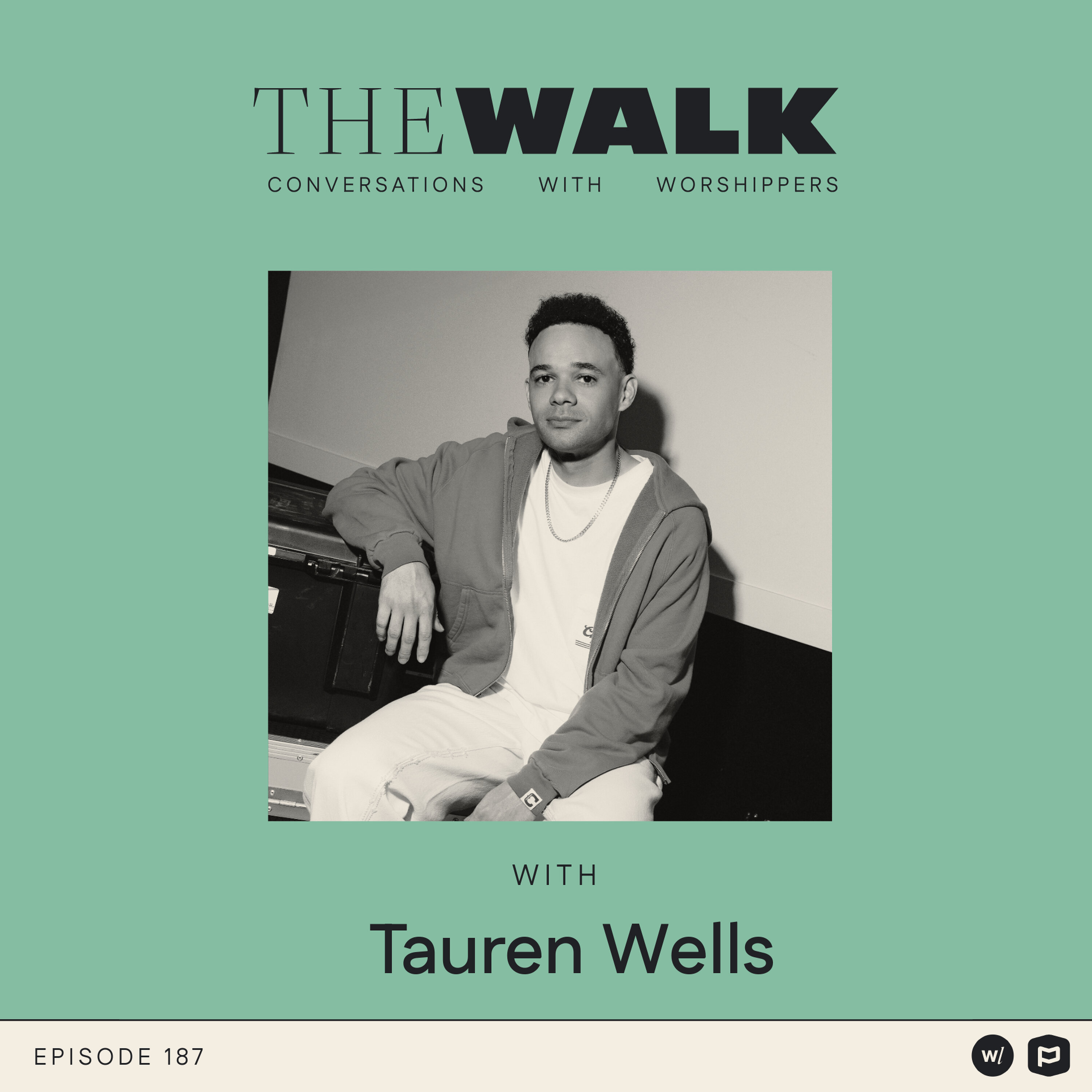
Tauren Wells has four boys under fourteen, a church he planted two years ago, a book, and a live album arriving October 2. Asked how he balances it, he says he gave up on balance a long time ago. What he chases instead is rhythm and discernment about the season he's actually in. He puts it this way: he's spent stretches of his life looking like a man in a fur coat at the fireworks on the Fourth of July, doing the right thing in the wrong season.
The call to plant a church came in 2006, while he was still in Bible college. What followed was seventeen years of waiting. He got married in 2011, served on staff at his in-laws' church in Houston, left his band in 2015 expecting to do music as a hobby, and then found himself on tour with Lionel Richie and Mariah Carey. He served five years at Lakewood as a pastoral worship leader. God gave him the name Whitestone in 2016 and the full vision with it, but no city. Austin came in 2022. When he asked his wife's cousin why so many things in town carried the name, he learned that Austin sits on Texas limestone, and that limestone is called white stone. Church of Whitestone launched January 28, 2024.
Then Kurtis, a church planter himself, asks for the part that doesn't make the Instagram page. Tauren calls it battles and blessings. On the morning they announced the church in Georgetown, it rained all day, the radar opened for exactly two hours, and 4,000 people showed up for Good Friday. In the hotel room beforehand, one of his sons had a health scare out of nowhere. Stretch that over two years, he says, and you get a sense of it. About a year ago he came close to his first panic attack, convinced he was alone in a way no one could relate to, which he now names as a lie. On the other side of the ledger: over a thousand people have given their lives to Jesus in two years, nearly a thousand baptisms, more than a million dollars given to missions, and average attendance around 2,400 across four services.
That leads into what may be the heart of the episode, the power of your yes. Tauren wrote a song that didn't make the album with the line "you have my yes, you have my here am I, Lord send me." He says it's the constant posture of a Jesus follower and you never graduate from it. Yesterday's yes doesn't cover today's assignment. And the yes usually isn't a thousand baptisms; it's forgiving the person you've been bitter toward, or having the conversation you've been avoiding.
On collaboration, he traces a real shift in himself. He grew up in a culture that rewarded individual achievement, and long believed the highest statement was "I did it." He now calls that a poison to purpose, and reframes the question from "what's in it for me" to "what's in me for this." He wanted the record to be the church rather than himself, so it started with the people already around him, Whitestone worship pastor Demetri Wells and longtime collaborator Davies., both of whom moved their families to Austin, before it ever grew to include Tasha Cobbs Leonard, Israel Houghton, Naomi Raine, Paul and Hannah McClure, Abbie Gamboa, Todd Galberth, Tiffany Hudson, Hulvey and Red Rocks Worship. He also makes a point of the people you never see: God, he says, has a very deep bench.
The leadership section is worth the episode on its own. Tauren preaches 30 to 36 times a year and has led worship maybe four times in two and a half years, describing himself as the church mascot and the number one worship leader on the front row. He explains why the frequency of feedback determines the health of a church, and walks through the hard power and soft power framework he credits to Erwin McManus and Rich Wilkerson Jr. Hard power is "shut out the light." Soft power gets the same result through inference and suggestion. Whitestone aims for 90% soft power, so the remaining 10% has relational equity behind it.
It closes at Austin City Limits Moody Theater the night before the recording. The room w