Skip to content
Artwork for YaleCourses
EducationSociety & CulturePhilosophy

YaleCourses

YaleCourses

Yale's philosophy of teaching and learning begins with the aim of training a broadly based, highly disciplined intellect without specifying in advance how that intellect will be used. The Yale Courses channel provides entry into the core of the University--its classrooms and academic programs--including complete sets of lectures from the Open Yale Courses initiative. Complementary syllabi, transcripts, and other resources may also be accessed from the Open Yale Courses website listed below.

Links:
online.yale.edu: http://online.yale.edu

Play
  • 504 episodes
  • Avg 40 min
  • English
Counted on this page — what you have heard stays on this device, so it is not something the list can be paged by.
  • Yesterday · 47 min

    3. Arguments for the existence of the soul, Part I

    Death (PHIL 176) The lecture focuses on arguments that might be offered as proof for the existence of the soul. The first series of arguments discussed is those known as "inferences to the best explanation." That is, we posit the existence of things we cannot see so as to explain something else that is generally agreed to take place. 00:00 - Chapter 1. Introduction: The P-Functioning Body 03:02 - Chapter 2. The Mind According to Physicalists and Dualists 12:17 - Chapter 3. Inferencing to the Best Explanation to Prove the Soul's Existence 19:55 - Chapter 4. Can Only the Soul Justify Feature F? 35:07 - Chapter 5. Abilities, Desires, Emotions -- Candidates for Feature F Complete course materials are available at the Yale Online website: online.yale.edu This course was recorded in Spring 2007. Learn more about your ad choices. Visit megaphone.fm/adchoices

  • Yesterday · 16 min

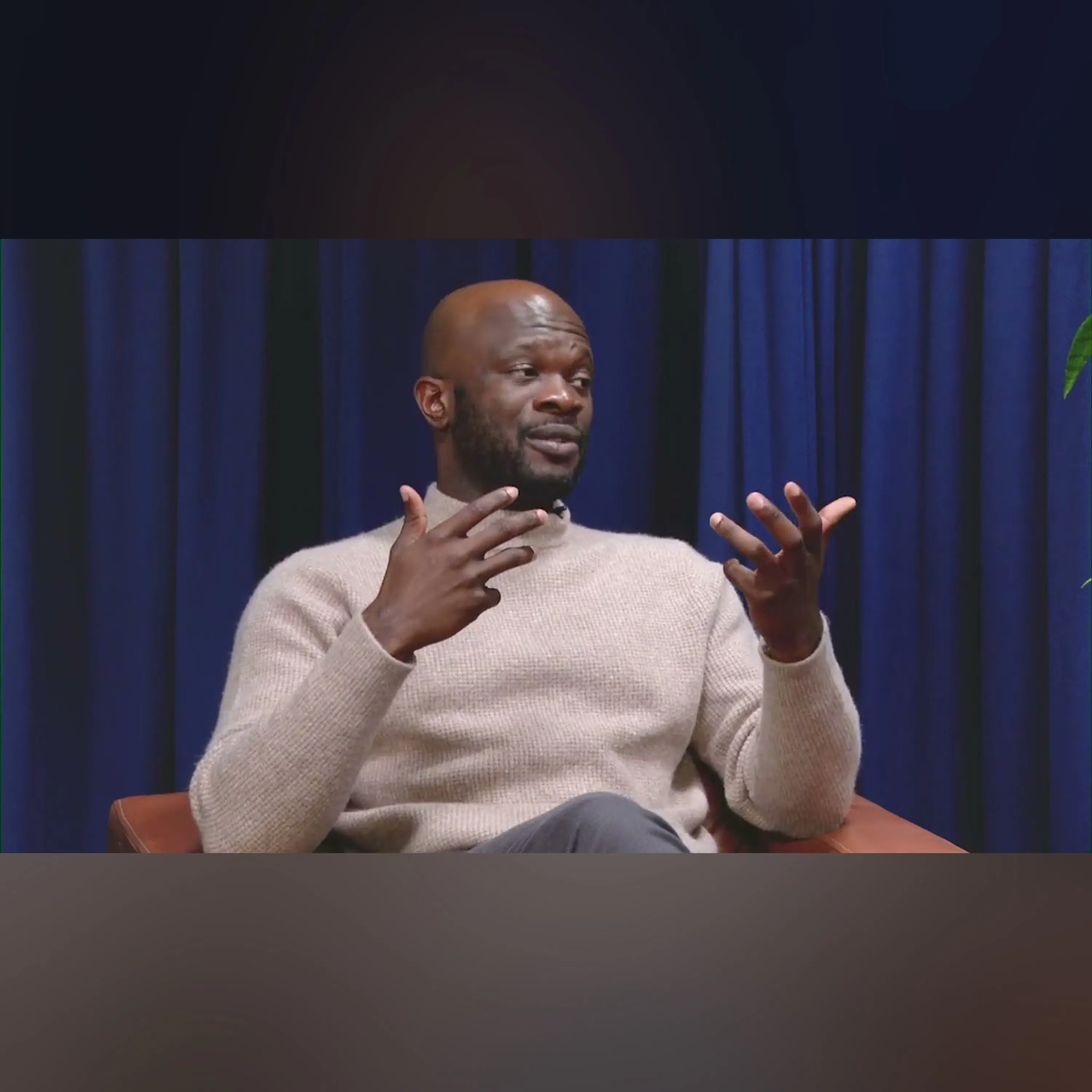
    Module 8 | Onyeka Obiocha on Venture Funding and Social Impact - Social Entrepreneurship Interview

    In this interview, you'll gain unparalleled insights into the dynamic world of venture funding and social entrepreneurship through a compelling conversation with Onyeka Obiocha, Executive Director of CTNext. With a unique background spanning private, academic, non-profit, and government sectors, Onyeka reveals how CTNext supports groundbreaking companies through diverse financial and non-financial resources. He also offers essential advice for entrepreneurs navigating the ever-evolving funding landscape, drawing from his dual perspective as both a funder and a founder. 🎯 Learning Objectives • Understand the multi-sector experience and current role of Onyeka Obiocha at CTNext. • Identify the various financial and non-financial support mechanisms offered by CTNext to groundbreaking companies. • Learn practical advice for entrepreneurs on navigating the funding landscape, including showcasing milestones and strategic investor targeting. • Recognize the importance of effective organization and tracking in the fundraising process. 📚 About the Course Have you ever wondered what it would be like to create real change? You don't have to start your own organization to make a difference in the world. Everyone can learn the social entrepreneurship mindset and skillset to build social impact. In this course, you will immerse yourself in a social or environmental challenge you want to tackle. You'll start by researching your topic of choice, talking to people, and ideating a potential solution that you can contribute. Then, you'll build a business model around that solution, understanding concepts like measuring social change, ensuring financial viability, funding and pitching. This course is a safe space to experiment and explore. You'll be guided by a ten stage framework to help structure your journey. Along the way, you'll hear from social entrepreneurs around the world through case studies and campus conversations. These include Yale alumni, members of the New Haven community, and global changemakers. Everyone is welcome to join this course! You can apply your lived, learned, or professional experience to discover how you're going to make a difference. #SocialEntrepreneurship #YaleCourse #Impact #Changemakers #BusinessPlan #DesignThinking Learn more about your ad choices. Visit megaphone.fm/adchoices

  • Yesterday · 49 min

    2. The Infant Cry of God

    Milton (ENGL 220) Milton's early ode, "On the Morning of Christ's Nativity" (1629) is presented and discussed. The author's preoccupation with his standing as a novice poet and his early ambitions, as carefully outlined in the letter to Charles Diodati, are examined. The ode's subject matter, other poets' treatment of the Nativity, and Milton's peculiar contributions to the micro-genre are discussed, including his curious temporal choices, the competitive attitude of his narrator, and the mingling of Christian and classical elements. The rejection of the pagan world in the poem's final stanzas is explicated and underscored as an issue that will recur throughout the corpus. Additional reading assignments for this class meeting include "At a Vacation Exercise in the College" (1628), "On the Death of a Fair Infant" (1628), and "Elegia sexta" (1629). 00:00 - Chapter 1. Introduction: The Nativity Ode 05:10 - Chapter 2. Milton on Poetry as a Divine Vocation 16:02 - Chapter 3. The Poetic Celebration of the Birth of Christ 18:43 - Chapter 4. Nativity Ode: The Prelude 30:59 - Chapter 5. Nativity Ode: The Hymn Complete course materials are available at the Open Yale Courses website: http://open.yale.edu/courses This course was recorded in Fall 2007. Learn more about your ad choices. Visit megaphone.fm/adchoices

  • Yesterday · 17 min

    1004 | Master Your Message: Why You Need a Communications Plan - Social Entrepreneurship Course

    Why is a robust communications plan essential for your venture's success? In this lesson, we explore the critical components of a strategic communications plan, moving beyond basic pitching to cover comprehensive engagement with all stakeholders. Learn the fundamental 'Who, Why, What, How, and When' framework to develop a clear, goal-oriented communication strategy that builds relationships and drives action. We'll also delve into crafting tailored messages and leveraging diverse communication channels effectively, from social media to invaluable face-to-face interactions. 🎯 Learning Objectives • Understand the five core questions (Who, Why, What, How, When) for building a robust communications plan • Learn to identify key stakeholders and their desired actions to guide your communication efforts • Discover how to craft audience-specific messaging using the stakeholder ladder framework • Explore various communication channels, including digital and in-person methods, for effective outreach • Recognize the importance of consistent planning and collaboration in executing your communications strategy 📚 About the Course Have you ever wondered what it would be like to create real change? You don't have to start your own organization to make a difference in the world. Everyone can learn the social entrepreneurship mindset and skillset to build social impact. In this course, you will immerse yourself in a social or environmental challenge you want to tackle. You'll start by researching your topic of choice, talking to people, and ideating a potential solution that you can contribute. Then, you'll build a business model around that solution, understanding concepts like measuring social change, ensuring financial viability, funding and pitching. This course is a safe space to experiment and explore. You'll be guided by a ten stage framework to help structure your journey. Along the way, you'll hear from social entrepreneurs around the world through case studies and campus conversations. These include Yale alumni, members of the New Haven community, and global changemakers. Everyone is welcome to join this course! You can apply your lived, learned, or professional experience to discover how you're going to make a difference. 📺 Watch the full playlist on YouTube: https://www.youtube.com/playlist?list=PLh9mgdi4rNezbi0aRJeVnt99ynTVZG1PL 🎓 Enroll on Coursera for assessments and a certificate: https://online.yale.edu/courses/creating-change-through-social-entrepreneurship 🌐 Explore more learning opportunities on Yale Online: https://online.yale.edu/courses/creating-change-through-social-entrepreneurship #SocialEntrepreneurship #YaleCourse #Impact #Changemakers #BusinessPlan #DesignThinking Learn more about your ad choices. Visit megaphone.fm/adchoices

  • Yesterday · 41 min

    14. Cardiovascular Physiology (cont.)

    Frontiers of Biomedical Engineering (BENG 100) Professor Saltzman describes the blood flow through the systemic and pulmonary circulatory system. More specifically, he describes, with the help of diagrams, the events that lead to blood flow in the body as a function of contraction/relaxation by specific chambers of the heart, and the effect of four valves which help direct flow. Important terms and concepts such as systole/diastole pressures, cardiac output (CO) as a function of heart rate (HR) and ejection volume (EV), and the action potential propagation that stimulates heart muscle contraction are discussed. 00:00 - Chapter 1. Review of Heart Anatomy and Physiology 04:13 - Chapter 2. Valves and the Generation of Pressure 15:26 - Chapter 3. The Cardiac Cycle 36:57 - Chapter 4. The Cardiac Conduction System and Conclusion Complete course materials are available at the Open Yale Courses website: http://open.yale.edu/courses This course was recorded in Spring 2008. Learn more about your ad choices. Visit megaphone.fm/adchoices

  • Yesterday · 51 min

    8. Cell Communication and Immunology (cont.)

    Frontiers of Biomedical Engineering (BENG 100) Professor Saltzman continues his discussion of cell communication in the body, extending the description to the nervous and immune system. Professor Saltzman describes the mode of signal transmission in neurons: action potential in the axon, and neurotransmitter release at the synaptic cleft. He also introduces elements of the innate and adaptive immune system. The adaptive immune system is presented as a host/foreign antigen recognition system involving immune cells (T, B, and macrophages), antibodies, and the major histocompatibility complex 1 and 2. Immune response by cytotoxic T cells, T helper cells, and B cells to antigen recognition are discussed in detail. 00:00 - Chapter 1. Overview of the Nervous System 05:28 - Chapter 2. Cell Communication in the Nervous System 22:18 - Chapter 3. Overview of the Immune System 28:26 - Chapter 4. Immune System Responses against Foreign Hosts 40:24 - Chapter 5. Cytotoxic T-Cells and Antibodies Complete course materials are available at the Open Yale Courses website: http://open.yale.edu/courses This course was recorded in Spring 2008. Learn more about your ad choices. Visit megaphone.fm/adchoices

  • Yesterday · 46 min

    4. Flannery O'Connor, Wise Blood (cont.)

    The American Novel Since 1945 (ENGL 291) In this second lecture on Flannery O'Connor's Wise Blood, Professor Amy Hungerford continues to offer several specific contexts in which to read and understand the novel. Having used O'Connor's letters to delve into her theological commitments in the previous lecture, Professor Hungerford now explores the southern social context, particularly with respect to race and gender, and the New Critical writing program of which O'Connor was a product. Hungerford finally suggests that O'Connor's writing illuminates the important--and perhaps undertheorized--link between the institutionalization of formal unity by the New Critics, and their strong religious influences. 00:00 - Chapter 1. On the Depiction of Women: Fragmented Bodies and Southern Society 07:36 - Chapter 2. Modes of Violence: Abused Children, Police Brutality, and Racism 16:52 - Chapter 3. Exploring the Narrative Purpose of Violent Imagery: The Question of Sympathy 24:13 - Chapter 4. Returning to a Theological Structure: A Close Reading of Chapter Seven 35:36 - Chapter 5. New Criticism and the Institutionalization of Modernism Complete course materials are available at the Open Yale Courses website: http://open.yale.edu/courses This course was recorded in Spring 2008. Learn more about your ad choices. Visit megaphone.fm/adchoices

  • Yesterday · 52 min

    20. The value of life, Part II; Other bad aspects of death, Part I

    Death (PHIL 176) Lecture 20 continues the discussion of the value of life. It considers the neutral container theory, which holds that the value of life is simply a function of its contents, both pleasant and painful, and contrasts this with the valuable container theory, which assigns value to being alive itself. The lecture then turns to a consideration of some of the other aspects of death that may contribute to the badness of death. Among the issues addressed are the inevitability, variability and unpredictability of death. 00:00 - Chapter 1. What's Missing from the Experience Machine? 05:57 - Chapter 2. The Neutral and Valuable Container Theories: What about Life Is Valuable? 17:05 - Chapter 3. The Fantastic Valuable Container Theory: The Contents Really Matter 26:56 - Chapter 4. Is Deprivation the Only Badness of Death? Consideration of Inevitability 35:16 - Chapter 5. Variability and Unpredictability of Death 43:59 - Chapter 6. Can an Ideal Life Be Planned? Complete course materials are available at the Yale Online website: online.yale.edu This course was recorded in Spring 2007. Learn more about your ad choices. Visit megaphone.fm/adchoices

  • Yesterday · 55 min

    21. Bioimaging (cont.)

    Frontiers of Biomedical Engineering (BENG 100) Professor Saltzman continues his discussion of biomedical imaging technology. Magnetic resonance imaging (MRI) is introduced as an alternate form of imaging, which does not use ionizing radiation yet can provide detailed structure of the body. Functional MRI (fMRI) has a different application from traditional MRI. It can be used to measure oxygen consumption (tissue metabolic rate), and is an important tool in deciphering brain function. Third, ultrasound imaging is another imaging technique that can detect motion by translating sound wave reflections into structural images at fast timescale. Finally, examples of nuclear imaging and advances in light microscopy are discussed. 00:00 - Chapter 1. Introduction 05:04 - Chapter 2. Magnetic Resonance Imaging 25:12 - Chapter 3. fMRI 31:32 - Chapter 4. Ultrasound Imaging 44:23 - Chapter 5. Nuclear Medicine 49:56 - Chapter 6. Optical Imaging and Conclusion Complete course materials are available at the Open Yale Courses website: http://open.yale.edu/courses This course was recorded in Spring 2008. Learn more about your ad choices. Visit megaphone.fm/adchoices

  • Yesterday · 48 min

    8. Areopagitica

    Milton (ENGL 220) Milton's political tract Areopagitica is discussed at length. The author's complicated take on state censorship and licensing, both practiced by the English government with respect to printed materials at the time, is examined. His eclectic use of pagan mythology, Christian scripture, and the metaphors of eating and digestion in defense of his position are probed. Lastly, Milton's insistence that moral truths must be examined and tested in order for goodness to be known is explored as an early manifestation of the rhetoric that will be used to depict the Fall in Paradise Lost. 00:00 - Chapter 1. Introduction: Areopagitica and the English Revolution 05:49 - Chapter 2. Parliamentary Factions During the English Revolution 10:28 - Chapter 3. "Areopagitica": Freedom of the Press, Censorship and Licensing 24:35 - Chapter 4. Milton's Narrative of the History of Truth Complete course materials are available at the Open Yale Courses website: http://open.yale.edu/courses This course was recorded in Fall 2007. Learn more about your ad choices. Visit megaphone.fm/adchoices

  • Yesterday · 8 min

    13 Master Your Job Search Pitch: Get Clear, Get Hired! - Job Searching with Purpose

    Have you ever struggled to articulate exactly what you're looking for in your next role or what unique value you bring? In this lesson, we dive into the art of practicing your job search pitch, transforming your "want" and "bring" triangles into a concise, compelling message. Learn how to communicate top-down, starting with your key points before delving into the supporting stories, and discover the power of feedback in refining your message for maximum impact across all your job search communications. 🎯 Learning Objectives • Construct a concise, top-down job search pitch for various communication formats. • Understand the importance of practicing your pitch with real people to gain clarity and confidence. • Develop strategies for gathering and utilizing feedback to iterate and refine your message. • Effectively articulate your job search priorities, non-negotiables, and what you bring to a role. 📚 About the Course: Navigating a career move can feel overwhelming in today’s dynamic job market. The Hunt offers a practical, structured framework to help you make your next job search intentional, effective, and purpose-driven. Whether you’re starting your career, seeking a new direction, or looking to advance, this course equips you with the tools to clarify your goals, sharpen your pitch, and connect authentically with others. Drawing on strategies tested with hundreds of students and professionals, the course emphasizes how to combine self-reflection, networking tactics, and storytelling to land opportunities that align with your values and strengths. By the end, you’ll walk away with a personalized one-page Hunt Dashboard to guide your ongoing career journey. 🎓 Enroll on Coursera for assessments and a certificate: https://www.coursera.org/learn/the-job-hunt 🌐 Explore more learning opportunities on Yale Online: https://online.yale.edu/ Learn more about your ad choices. Visit megaphone.fm/adchoices

  • Yesterday · 51 min

    5. Planetary Transits

    Frontiers/Controversies in Astrophysics (ASTR 160) Professor Bailyn talks about student responses for a paper assignment on the controversy over Pluto. The central question is whether the popular debate is indeed a "scientific controversy." A number of scientific "fables" are discussed and a moral is associated with each: the demotion of Pluto (moral: science can be affected by culture); the discovery of 51 Peg b (morals: expect the unexpected, and look at your data); the disproof of pulsation as explanation for the Velocity Curves (moral: sometimes science works like science). 00:00 - Chapter 1. A Case for Pluto? Interactions between Culture and Science 08:53 - Chapter 2. Velocity and Center of Mass 24:23 - Chapter 3. Observations of Hot Jupiters and the Selection Effect 31:55 - Chapter 4. Hot Jupiters - Double or Pulsating Stars? 39:49 - Chapter 5. Measuring Doppler Shifts to Understand Hot Jupiters Complete course materials are available at the Open Yale Courses website: http://open.yale.edu/courses This course was recorded in Spring 2007. Learn more about your ad choices. Visit megaphone.fm/adchoices

  • Yesterday · 4 min

    02 Master Job Search Stress: Sketch Your Spheres of Control and Influence | Job Searching with Purpose

    Feeling overwhelmed by your job search? In this lesson, we introduce the powerful "Sketching Your Spheres" exercise, a practical tool inspired by the Serenity Prayer, to help you navigate stress and strategically focus your energy. Learn to differentiate between what you can control, influence, and simply accept, allowing you to anchor your head and heart in your current circumstances and take meaningful action. 🎯 Learning Objectives • Understand the three spheres: concern, influence, and control. • Apply the "Sketching Your Spheres" exercise to categorize job search anxieties and opportunities. • Differentiate between elements you can control, influence, and those you must accept. • Identify actionable steps for each sphere to reduce stress and enhance focus. • Prioritize key actions that will make the most positive difference in your current situation. 📚 About the Course: Navigating a career move can feel overwhelming in today’s dynamic job market. The Hunt offers a practical, structured framework to help you make your next job search intentional, effective, and purpose-driven. Whether you’re starting your career, seeking a new direction, or looking to advance, this course equips you with the tools to clarify your goals, sharpen your pitch, and connect authentically with others. Drawing on strategies tested with hundreds of students and professionals, the course emphasizes how to combine self-reflection, networking tactics, and storytelling to land opportunities that align with your values and strengths. By the end, you’ll walk away with a personalized one-page Hunt Dashboard to guide your ongoing career journey. 🎓 Enroll on Coursera for assessments and a certificate: https://www.coursera.org/learn/the-job-hunt 🌐 Explore more learning opportunities on Yale Online: https://online.yale.edu/ Learn more about your ad choices. Visit megaphone.fm/adchoices

  • Yesterday · 50 min

    America at 250: A History, DeVane Lecture, Class 4 - What Kind of Union?

    America at 250: A History. Class 4 “What Kind of Union?” Professor Joanne Freeman explains the role of states in the American Experiment. Recorded in Yale’s Battell Chapel. This one-time-only course examines U.S. history from 1776 to the present, in advance of the nation’s semiquincentennial (or 250th birthday) in 2026. Taught jointly by Professors Joanne Freeman, David Blight, and Beverly Gage, the course emphasizes the history of the nation-state and the contested nature of American national identity. All three scholars will deliver the course’s first and final lectures together, as an introduction and a wrap-up. In between, they will each deliver eight lectures individually based on their areas of expertise. Joanne Freeman, the Alan Boles, Class of 1929 Professor of History and American Studies, and an expert in the revolutionary and early national periods of American history, will cover the period from the Revolution up through the 1830s, touching on such topics as the birth of party politics, the nature of “Jacksonian democracy,” and the rise of the reform and protest movements. David Blight, Sterling Professor of History and African American Studies and one of the country’s foremost authorities on the history of slavery and the Civil War, will cover the Civil War era up through Reconstruction and the emergence of the Jim Crow laws. Beverly Gage, John Lewis Gaddis Professor of History, who is currently writing a book on the nation’s past to mark the 250th anniversary of the signing of the Declaration of Independence, will pick up in the 1890s and continue through the end of the 20th century, addressing debates around immigration, wealth inequality, and the creation of the social welfare state. The course explores U.S. political history broadly conceived–not just as a realm of presidents and elections and wars (though there will be plenty of those) but as a conversation across time between citizens about what the United States is, was, and was meant to be. It proceeds from the premise that the American Revolution was the first but not the last radical act of national reimagining in U.S. history. A copy of the course syllabus with required readings can be downloaded at the bottom of the page at this link: https://president.yale.edu/committees-programs/devane-lectures/america-at-250-a-history To view all the classes in the DeVane Lecture series, go to this playlist link: https://youtube.com/playlist?list=PLh9mgdi4rNezTQrY_6XMNBWaZqLRdgpoq&feature=shared Learn more about your ad choices. Visit megaphone.fm/adchoices

  • Yesterday · 16 min

    Module 9 | Kendall Barbery on Growing GreenWave's Staff - Social Entrepreneurship Interview

    Have you ever wondered what it takes to scale a non-profit from a small startup to a multi-state organization shaping an entire industry? In this lesson, Kendall Barbery, Director of Partnerships and New Programming at GreenWave, shares her five-year journey with the non-profit, which supports regenerative ocean farmers. She discusses the organization's growth from a three-person team to nineteen staff across six states, the strategic shift from intensive one-on-one training to a broad online learning platform, and how they navigate the unique challenges of building a new, sustainable industry. 🎯 Learning Objectives • Understand the organizational growth and evolution of a non-profit. • Learn about strategies for scaling training programs from high-touch to online platforms. • Explore how an organization adapts its structure and hiring to meet expansion demands. • Discover the opportunities and challenges in shaping a nascent industry like regenerative ocean farming. • Recognize the value of hiring for skill sets and adaptability rather than solely industry-specific knowledge. 📚 About the Course Have you ever wondered what it would be like to create real change? You don't have to start your own organization to make a difference in the world. Everyone can learn the social entrepreneurship mindset and skillset to build social impact. In this course, you will immerse yourself in a social or environmental challenge you want to tackle. You'll start by researching your topic of choice, talking to people, and ideating a potential solution that you can contribute. Then, you'll build a business model around that solution, understanding concepts like measuring social change, ensuring financial viability, funding and pitching. This course is a safe space to experiment and explore. You'll be guided by a ten stage framework to help structure your journey. Along the way, you'll hear from social entrepreneurs around the world through case studies and campus conversations. These include Yale alumni, members of the New Haven community, and global changemakers. Everyone is welcome to join this course! You can apply your lived, learned, or professional experience to discover how you're going to make a difference. #SocialEntrepreneurship #YaleCourse #Impact #Changemakers #BusinessPlan #DesignThinking Learn more about your ad choices. Visit megaphone.fm/adchoices

  • Yesterday · 9 min

    16 Build Your Powerful Job Search Crew with a Stakeholder Matrix | Job Searching with Purpose

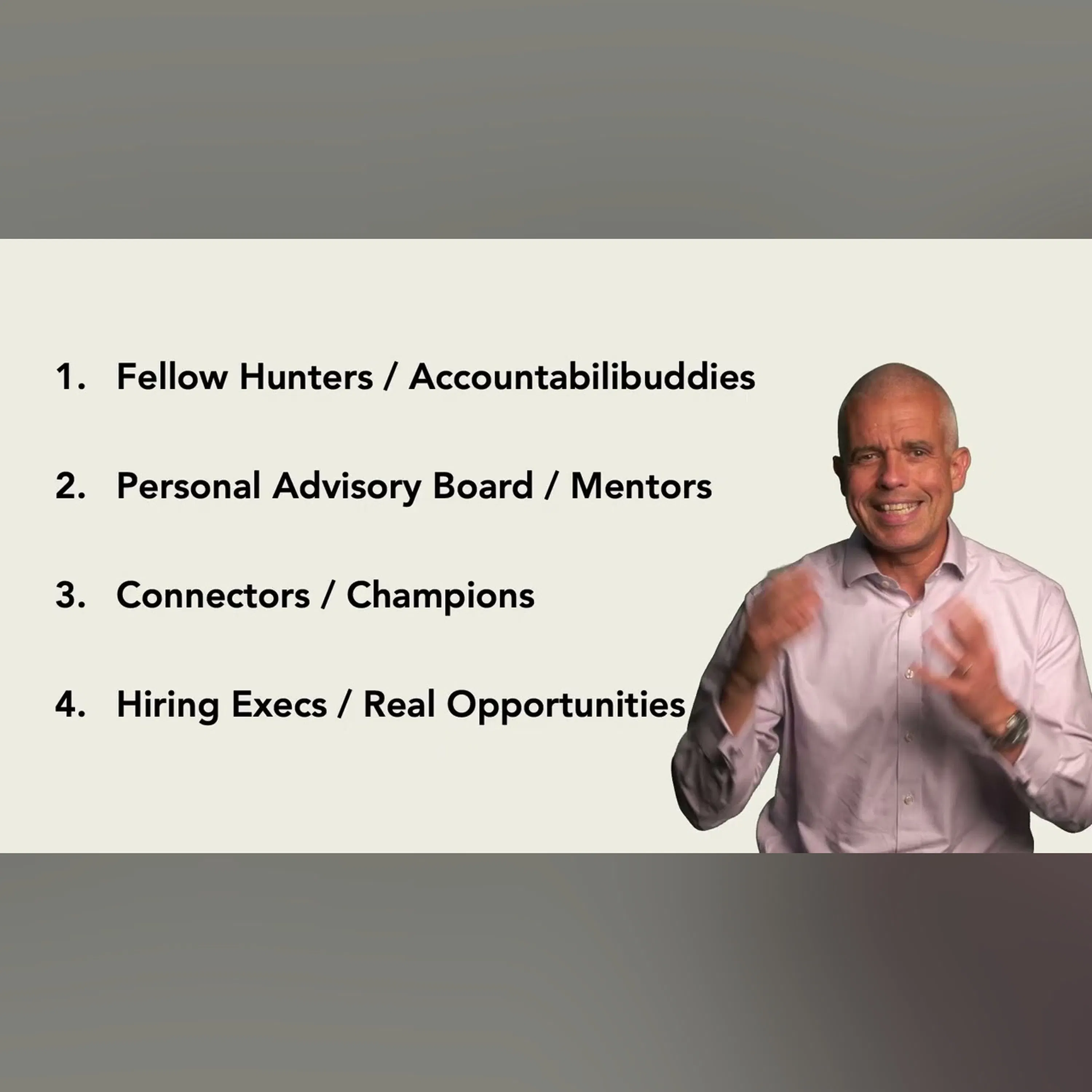
    Have you ever considered the true power of your network in your job search? In this lesson, we explore how to intentionally identify and leverage a diverse "crew" of supporters, from accountability partners and personal advisory boards to connectors and even hiring executives. You'll learn how to map these crucial relationships on a stakeholder matrix, transforming your job hunt from a solitary journey into a collaborative, strategic endeavor. 🎯 Learning Objectives • Identify and categorize your "crew" for job searching, including fellow hunters, advisory board members, and connectors • Understand the strategic value of building a diverse support network for accountability and guidance • Learn how to plot your stakeholders on an influence-support matrix to visualize your network • Develop strategies to engage effectively with supportive stakeholders and manage potential detractors 📚 About the Course: Navigating a career move can feel overwhelming in today’s dynamic job market. The Hunt offers a practical, structured framework to help you make your next job search intentional, effective, and purpose-driven. Whether you’re starting your career, seeking a new direction, or looking to advance, this course equips you with the tools to clarify your goals, sharpen your pitch, and connect authentically with others. Drawing on strategies tested with hundreds of students and professionals, the course emphasizes how to combine self-reflection, networking tactics, and storytelling to land opportunities that align with your values and strengths. By the end, you’ll walk away with a personalized one-page Hunt Dashboard to guide your ongoing career journey. 🎓 Enroll on Coursera for assessments and a certificate: https://www.coursera.org/learn/the-job-hunt 🌐 Explore more learning opportunities on Yale Online: https://online.yale.edu/ Learn more about your ad choices. Visit megaphone.fm/adchoices
  • Yesterday · 11 min

    4.1 | Build Safer Medical Software: Mastering Quality Management Systems | Medical Software Course

    Why are Quality Management Systems essential for medical software? In this lesson, we delve into the critical role of Quality Management Systems (QMS) and risk management in medical software development. We explore the definition of a QMS, its importance in ensuring product safety and effectiveness, and how it serves as a rulebook for organizations. Discover the foundational international standards and regulatory guidelines, including ISO series, FDA regulations, and European MDR requirements, that govern best practices in this vital field. 🎯 Learning Objectives • Define Quality Management Systems (QMS) in the context of medical software. • Explain the importance of QMS in ensuring the safety and effectiveness of medical software. • Identify key international standards and regulatory bodies relevant to QMS for medical devices. • Summarize the core components and principles of an effective Quality Management System. Learn more about your ad choices. Visit megaphone.fm/adchoices

  • Yesterday · 1 hr 11 min

    9. Evolution, Emotion, and Reason: Love (Guest Lecture by

    Introduction to Psychology (PSYC 110) Guest lecturer Peter Salovey, Professor of Psychology and Dean of Yale College, introduces students to the dominant psychological theories of love and attraction. Specific topics include the different types of love, the circumstances that predict attraction, and the situations where people mistakenly attribute arousal for love. 00:00 - Chapter 1. Introduction to Dr Peter Salovey 01:41 - Chapter 2. Defining Love and Its Permutations 16:22 - Chapter 3. The Social Psychology of Love and Attraction 43:53 - Chapter 4. Misattribution for the Causes of Arousal 01:03:46 - Chapter 5. Question and Answer Complete course materials are available at the Yale Online website: online.yale.edu This course was recorded in Spring 2007. Learn more about your ad choices. Visit megaphone.fm/adchoices

  • Yesterday · 8 min

    10 Boost Your Mindset: Confidence, Humility and Self-Affirmation | Job Searching with Purpose

    Is your mindset truly set for job search success? In this lesson, we delve into the essential elements of a powerful job search mindset: grounded confidence, profound humility, consistent self-affirmation, and the crucial 'next play focus'. Discover how these practices can help you navigate challenges, remain open to opportunities, and ultimately secure meaningful work by understanding and affirming your own worth while staying resilient. 🎯 Learning Objectives • Understand the difference between grounded confidence and hubris, and how it impacts your job search. • Cultivate humility as a tool for continuous learning and openness to new opportunities. • Practice self-affirmation techniques to recognize your value and maintain motivation. • Adopt a 'next play focus' mindset to effectively rebound from setbacks and stay resilient. 📚 About the Course: Navigating a career move can feel overwhelming in today’s dynamic job market. The Hunt offers a practical, structured framework to help you make your next job search intentional, effective, and purpose-driven. Whether you’re starting your career, seeking a new direction, or looking to advance, this course equips you with the tools to clarify your goals, sharpen your pitch, and connect authentically with others. Drawing on strategies tested with hundreds of students and professionals, the course emphasizes how to combine self-reflection, networking tactics, and storytelling to land opportunities that align with your values and strengths. By the end, you’ll walk away with a personalized one-page Hunt Dashboard to guide your ongoing career journey. 🎓 Enroll on Coursera for assessments and a certificate: https://www.coursera.org/learn/the-job-hunt 🌐 Explore more learning opportunities on Yale Online: https://online.yale.edu/ Learn more about your ad choices. Visit megaphone.fm/adchoices

  • Yesterday · 50 min

    4. Introduction to Plato's Phaedo; Arguments for the existence of the soul, Part II

    Death (PHIL 176) After a brief introduction to Plato's Phaedo, more arguments are offered in this lecture in defense of the existence of an immaterial soul. The emphasis here is on the fact that we need to believe in the existence of a soul in order to explain the claim that we possess free will. This is an argument dualists use as an objection to the physicalists: since no merely physical entity could have free will, there must be more to us than just being a physical object. 00:00 - Chapter 1. Introduction to Plato's Phaedo 08:27 - Chapter 2. Creativity and Reason in Machines 13:43 - Chapter 3. Feelings in Machines, from Marvin to Hal 20:34 - Chapter 4. "Qualia" in Emotion and Consciousness: The Dualist's Defense and Its Weakness 42:20 - Chapter 5. Free Will as a Defense of the Soul and Conclusion Complete course materials are available at the Yale Online website: online.yale.edu This course was recorded in Spring 2007. Learn more about your ad choices. Visit megaphone.fm/adchoices

Showing 61–80 of 504 episodes