Skip to content
Artwork for YaleCourses
EducationSociety & CulturePhilosophy

YaleCourses

YaleCourses

Yale's philosophy of teaching and learning begins with the aim of training a broadly based, highly disciplined intellect without specifying in advance how that intellect will be used. The Yale Courses channel provides entry into the core of the University--its classrooms and academic programs--including complete sets of lectures from the Open Yale Courses initiative. Complementary syllabi, transcripts, and other resources may also be accessed from the Open Yale Courses website listed below.

Links:
online.yale.edu: http://online.yale.edu

Play
  • 501 episodes
  • Avg 40 min
  • English
Counted on this page — what you have heard stays on this device, so it is not something the list can be paged by.
  • Today · 9 min

    16 Build Your Powerful Job Search Crew with a Stakeholder Matrix | Job Searching with Purpose

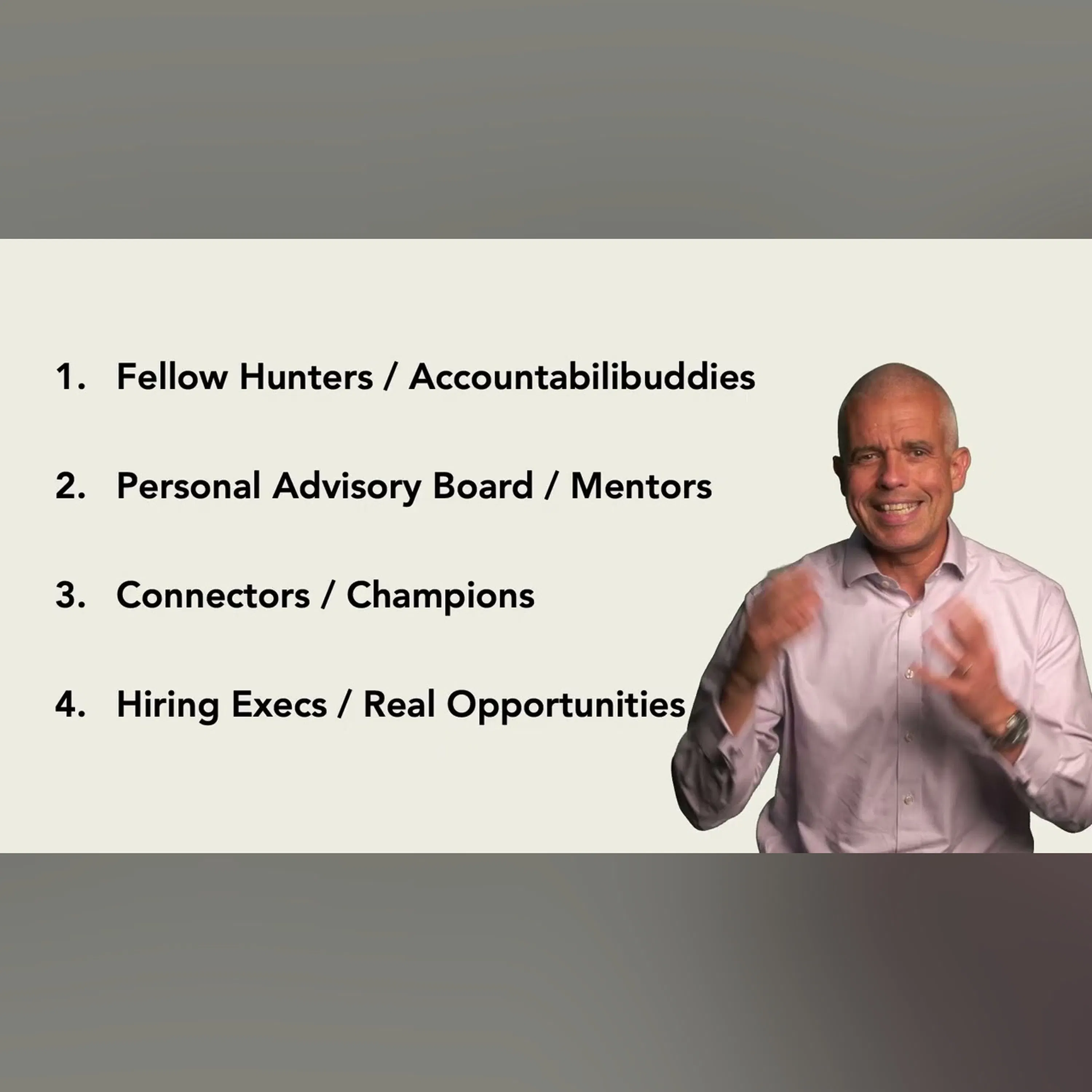
    Have you ever considered the true power of your network in your job search? In this lesson, we explore how to intentionally identify and leverage a diverse "crew" of supporters, from accountability partners and personal advisory boards to connectors and even hiring executives. You'll learn how to map these crucial relationships on a stakeholder matrix, transforming your job hunt from a solitary journey into a collaborative, strategic endeavor. 🎯 Learning Objectives • Identify and categorize your "crew" for job searching, including fellow hunters, advisory board members, and connectors • Understand the strategic value of building a diverse support network for accountability and guidance • Learn how to plot your stakeholders on an influence-support matrix to visualize your network • Develop strategies to engage effectively with supportive stakeholders and manage potential detractors 📚 About the Course: Navigating a career move can feel overwhelming in today’s dynamic job market. The Hunt offers a practical, structured framework to help you make your next job search intentional, effective, and purpose-driven. Whether you’re starting your career, seeking a new direction, or looking to advance, this course equips you with the tools to clarify your goals, sharpen your pitch, and connect authentically with others. Drawing on strategies tested with hundreds of students and professionals, the course emphasizes how to combine self-reflection, networking tactics, and storytelling to land opportunities that align with your values and strengths. By the end, you’ll walk away with a personalized one-page Hunt Dashboard to guide your ongoing career journey. 🎓 Enroll on Coursera for assessments and a certificate: https://www.coursera.org/learn/the-job-hunt 🌐 Explore more learning opportunities on Yale Online: https://online.yale.edu/ Learn more about your ad choices. Visit megaphone.fm/adchoices


  • Today · 11 min

    4.1 | Build Safer Medical Software: Mastering Quality Management Systems | Medical Software Course

    Why are Quality Management Systems essential for medical software? In this lesson, we delve into the critical role of Quality Management Systems (QMS) and risk management in medical software development. We explore the definition of a QMS, its importance in ensuring product safety and effectiveness, and how it serves as a rulebook for organizations. Discover the foundational international standards and regulatory guidelines, including ISO series, FDA regulations, and European MDR requirements, that govern best practices in this vital field. 🎯 Learning Objectives • Define Quality Management Systems (QMS) in the context of medical software. • Explain the importance of QMS in ensuring the safety and effectiveness of medical software. • Identify key international standards and regulatory bodies relevant to QMS for medical devices. • Summarize the core components and principles of an effective Quality Management System. Learn more about your ad choices. Visit megaphone.fm/adchoices

  • Today · 1 hr 11 min

    9. Evolution, Emotion, and Reason: Love (Guest Lecture by

    Introduction to Psychology (PSYC 110) Guest lecturer Peter Salovey, Professor of Psychology and Dean of Yale College, introduces students to the dominant psychological theories of love and attraction. Specific topics include the different types of love, the circumstances that predict attraction, and the situations where people mistakenly attribute arousal for love. 00:00 - Chapter 1. Introduction to Dr Peter Salovey 01:41 - Chapter 2. Defining Love and Its Permutations 16:22 - Chapter 3. The Social Psychology of Love and Attraction 43:53 - Chapter 4. Misattribution for the Causes of Arousal 01:03:46 - Chapter 5. Question and Answer Complete course materials are available at the Yale Online website: online.yale.edu This course was recorded in Spring 2007. Learn more about your ad choices. Visit megaphone.fm/adchoices

  • Today · 8 min

    10 Boost Your Mindset: Confidence, Humility and Self-Affirmation | Job Searching with Purpose

    Is your mindset truly set for job search success? In this lesson, we delve into the essential elements of a powerful job search mindset: grounded confidence, profound humility, consistent self-affirmation, and the crucial 'next play focus'. Discover how these practices can help you navigate challenges, remain open to opportunities, and ultimately secure meaningful work by understanding and affirming your own worth while staying resilient. 🎯 Learning Objectives • Understand the difference between grounded confidence and hubris, and how it impacts your job search. • Cultivate humility as a tool for continuous learning and openness to new opportunities. • Practice self-affirmation techniques to recognize your value and maintain motivation. • Adopt a 'next play focus' mindset to effectively rebound from setbacks and stay resilient. 📚 About the Course: Navigating a career move can feel overwhelming in today’s dynamic job market. The Hunt offers a practical, structured framework to help you make your next job search intentional, effective, and purpose-driven. Whether you’re starting your career, seeking a new direction, or looking to advance, this course equips you with the tools to clarify your goals, sharpen your pitch, and connect authentically with others. Drawing on strategies tested with hundreds of students and professionals, the course emphasizes how to combine self-reflection, networking tactics, and storytelling to land opportunities that align with your values and strengths. By the end, you’ll walk away with a personalized one-page Hunt Dashboard to guide your ongoing career journey. 🎓 Enroll on Coursera for assessments and a certificate: https://www.coursera.org/learn/the-job-hunt 🌐 Explore more learning opportunities on Yale Online: https://online.yale.edu/ Learn more about your ad choices. Visit megaphone.fm/adchoices
  • Today · 50 min

    4. Introduction to Plato's Phaedo; Arguments for the existence of the soul, Part II

    Death (PHIL 176) After a brief introduction to Plato's Phaedo, more arguments are offered in this lecture in defense of the existence of an immaterial soul. The emphasis here is on the fact that we need to believe in the existence of a soul in order to explain the claim that we possess free will. This is an argument dualists use as an objection to the physicalists: since no merely physical entity could have free will, there must be more to us than just being a physical object. 00:00 - Chapter 1. Introduction to Plato's Phaedo 08:27 - Chapter 2. Creativity and Reason in Machines 13:43 - Chapter 3. Feelings in Machines, from Marvin to Hal 20:34 - Chapter 4. "Qualia" in Emotion and Consciousness: The Dualist's Defense and Its Weakness 42:20 - Chapter 5. Free Will as a Defense of the Soul and Conclusion Complete course materials are available at the Yale Online website: online.yale.edu This course was recorded in Spring 2007. Learn more about your ad choices. Visit megaphone.fm/adchoices

  • Today · 52 min

    9. Plato, Part IV: Arguments for the immortality of the soul (cont.)

    Death (PHIL 176) Professor Kagan elaborates on the "argument from simplicity" and discusses in detail Plato's claims that the soul is simple, changeless and therefore indestructible. The final Platonic argument under discussion is the "argument from essential properties" in which the essential properties of the soul are addressed. At the end of the lecture the question of whether one needs to argue for physicalism is posed. 00:00 - Chapter 1. Assumptions Made in the Argument from Simplicity 05:56 - Chapter 2. Plato's Defense against the Harmony Analogy 19:42 - Chapter 3. Essential and Contingent Properties and the Argument from Essential Properties 37:06 - Chapter 4. Kagan: "There is No Good Reason to Believe in Souls" 47:53 - Chapter 5. Qualifications and Conclusion Complete course materials are available at the Yale Online website: online.yale.edu This course was recorded in Spring 2007. Learn more about your ad choices. Visit megaphone.fm/adchoices

  • Yesterday · 54 min

    America at 250, DeVane, Class 11 - Road to Disunion: Politics, Dred Scott, and the Crisis of 1850s

    Beginning with the Dred Scott decision, Professor David Blight continues with the lead up to the Civil War. Class 11 was recorded in Yale's Sprague Hall. This one-time-only course examines U.S. history from 1776 to the present, in advance of the nation’s semiquincentennial (or 250th birthday) in 2026. Taught jointly by Professors Joanne Freeman, David Blight, and Beverly Gage, the course emphasizes the history of the nation-state and the contested nature of American national identity. All three scholars will deliver the course’s first and final lectures together, as an introduction and a wrap-up. In between, they will each deliver eight lectures individually based on their areas of expertise. Joanne Freeman, the Alan Boles, Class of 1929 Professor of History and American Studies, and an expert in the revolutionary and early national periods of American history, will cover the period from the Revolution up through the 1830s, touching on such topics as the birth of party politics, the nature of “Jacksonian democracy,” and the rise of the reform and protest movements. David Blight, Sterling Professor of History and African American Studies and one of the country’s foremost authorities on the history of slavery and the Civil War, will cover the Civil War era up through Reconstruction and the emergence of the Jim Crow laws. Beverly Gage, John Lewis Gaddis Professor of History, who is currently writing a book on the nation’s past to mark the 250th anniversary of the signing of the Declaration of Independence, will pick up in the 1890s and continue through the end of the 20th century, addressing debates around immigration, wealth inequality, and the creation of the social welfare state. The course explores U.S. political history broadly conceived–not just as a realm of presidents and elections and wars (though there will be plenty of those) but as a conversation across time between citizens about what the United States is, was, and was meant to be. It proceeds from the premise that the American Revolution was the first but not the last radical act of national reimagining in U.S. history. A copy of the course syllabus with required readings can be downloaded at the bottom of the page at this link: https://president.yale.edu/committees-programs/devane-lectures/america-at-250-a-history To view all the classes in the DeVane Lecture series, go to this playlist link: https://youtube.com/playlist?list=PLh9mgdi4rNezTQrY_6XMNBWaZqLRdgpoq&feature=shared Learn more about your ad choices. Visit megaphone.fm/adchoices

  • Yesterday · 11 min

    1005 | Amplifying Impact: Do's and Don'ts of Pitching and Communication - Social Entrepreneurship Course

    Have you ever wondered what truly makes a pitch or communication plan effective? In this lesson, we delve into the essential do's and don'ts of compelling communication and pitching, highlighting strategies to engage your audience, convey your message succinctly, and build genuine connections. From mastering body language to understanding the power of vulnerability, discover how to present your ideas with impact and inspire action. 🎯 Learning Objectives • Apply the "less is more" principle to make your pitches and communications concise and impactful. • Balance preparation with genuine conversation and audience connection. • Research and tailor your messaging to effectively engage diverse audiences. • Incorporate honesty, vulnerability, and a clear call to action into your communications. • Utilize positive framing and intentional body language to enhance your message. 📚 About the Course Have you ever wondered what it would be like to create real change? You don't have to start your own organization to make a difference in the world. Everyone can learn the social entrepreneurship mindset and skillset to build social impact. In this course, you will immerse yourself in a social or environmental challenge you want to tackle. You'll start by researching your topic of choice, talking to people, and ideating a potential solution that you can contribute. Then, you'll build a business model around that solution, understanding concepts like measuring social change, ensuring financial viability, funding and pitching. This course is a safe space to experiment and explore. You'll be guided by a ten stage framework to help structure your journey. Along the way, you'll hear from social entrepreneurs around the world through case studies and campus conversations. These include Yale alumni, members of the New Haven community, and global changemakers. Everyone is welcome to join this course! You can apply your lived, learned, or professional experience to discover how you're going to make a difference. 📺 Watch the full playlist on YouTube: https://www.youtube.com/playlist?list=PLh9mgdi4rNezbi0aRJeVnt99ynTVZG1PL 🎓 Enroll on Coursera for assessments and a certificate: https://online.yale.edu/courses/creating-change-through-social-entrepreneurship 🌐 Explore more learning opportunities on Yale Online: https://online.yale.edu/courses/creating-change-through-social-entrepreneurship #SocialEntrepreneurship #YaleCourse #Impact #Changemakers #BusinessPlan #DesignThinking Learn more about your ad choices. Visit megaphone.fm/adchoices

  • Yesterday · 52 min

    16. Renal Physiology

    Frontiers of Biomedical Engineering (BENG 100) Professor Saltzman introduces the basic concepts of renal physiology. Professor Saltzman first introduces the function and anatomy of the kidney. Special attention is given to the cell types and structural aspect of the nephron, the functional unit of the kidney. Filtration, secretion of toxic waste, and reabsorption of water, ions, and nutrients through the glomerulus and various segments of the nephrons is discussed in detail. Finally, Professor Saltzman describes glomerular filtration rate as a function of pressure drop, which is regulated by afferent and efferent arterioles, to control how much volume being filtered through glomerulus. 00:00 - Chapter 1. Introduction to Renal Physiology 04:53 - Chapter 2. Structure and Function of Kidneys 15:52 - Chapter 3. Mechanisms of Renal Functions 29:32 - Chapter 4. Process of Renal Filtration 47:11 - Chapter 5. The Role of Pressure in Filtration and Conclusion Complete course materials are available at the Open Yale Courses website: http://open.yale.edu/courses This course was recorded in Spring 2008. Learn more about your ad choices. Visit megaphone.fm/adchoices

  • Yesterday · 13 min

    19 Master Chats and Interviews: Prep, Presence, and Follow-Up for Success | Job Searching with Purpose

    Are you ready to transform your approach to job chats and interviews? In this lesson, we dive deep into mastering both informal networking conversations and formal job interviews, emphasizing crucial preparation, engaged presence, and diligent follow-up. Learn to refine your pitch, utilize powerful focus techniques like box breathing, practice active listening with methods like 'looping,' navigate cross-cultural communication, and understand the profound impact of timely thank-you notes on your candidacy. 🎯 Learning Objectives • Master comprehensive preparation strategies for both informal job chats and formal interviews • Implement active listening techniques, including the 'looping' method, to improve communication and understanding • Utilize 'box breathing' to center yourself and enhance focus before important conversations • Craft effective follow-up strategies, including the essential practice of sending thank-you notes • Learn to effectively conclude conversations and identify actionable next steps 📚 About the Course: Navigating a career move can feel overwhelming in today’s dynamic job market. The Hunt offers a practical, structured framework to help you make your next job search intentional, effective, and purpose-driven. Whether you’re starting your career, seeking a new direction, or looking to advance, this course equips you with the tools to clarify your goals, sharpen your pitch, and connect authentically with others. Drawing on strategies tested with hundreds of students and professionals, the course emphasizes how to combine self-reflection, networking tactics, and storytelling to land opportunities that align with your values and strengths. By the end, you’ll walk away with a personalized one-page Hunt Dashboard to guide your ongoing career journey. 🎓 Enroll on Coursera for assessments and a certificate: https://www.coursera.org/learn/the-job-hunt 🌐 Explore more learning opportunities on Yale Online: https://online.yale.edu/ Learn more about your ad choices. Visit megaphone.fm/adchoices

  • Yesterday · 4 min

    1003 | Beyond Pitching: Crafting Your Business Plan - Social Entrepreneurship Course

    Are traditional business plans still relevant, or has the landscape shifted? In this lesson, we explore the modern approach to presenting your venture, focusing on the concise power of executive summaries and slide decks. Discover how to effectively summarize your project's main ideas, and learn how to adapt your existing pitch content into a comprehensive business plan should the need arise, incorporating essential components and valuable appendices. 🎯 Learning Objectives • Understand the modern approach to business planning, emphasizing executive summaries and slide decks. • Identify the core components of an effective executive summary. • Learn how to transform existing pitch materials into a full business plan. • Discover valuable appendices to enhance a comprehensive business plan. 📚 About the Course Have you ever wondered what it would be like to create real change? You don't have to start your own organization to make a difference in the world. Everyone can learn the social entrepreneurship mindset and skillset to build social impact. In this course, you will immerse yourself in a social or environmental challenge you want to tackle. You'll start by researching your topic of choice, talking to people, and ideating a potential solution that you can contribute. Then, you'll build a business model around that solution, understanding concepts like measuring social change, ensuring financial viability, funding and pitching. This course is a safe space to experiment and explore. You'll be guided by a ten stage framework to help structure your journey. Along the way, you'll hear from social entrepreneurs around the world through case studies and campus conversations. These include Yale alumni, members of the New Haven community, and global changemakers. Everyone is welcome to join this course! You can apply your lived, learned, or professional experience to discover how you're going to make a difference. 📺 Watch the full playlist on YouTube: https://www.youtube.com/playlist?list=PLh9mgdi4rNezbi0aRJeVnt99ynTVZG1PL 🎓 Enroll on Coursera for assessments and a certificate: https://online.yale.edu/courses/creating-change-through-social-entrepreneurship 🌐 Explore more learning opportunities on Yale Online: https://online.yale.edu/courses/creating-change-through-social-entrepreneurship #SocialEntrepreneurship #YaleCourse #Impact #Changemakers #BusinessPlan #DesignThinking Learn more about your ad choices. Visit megaphone.fm/adchoices

  • Yesterday · 51 min

    12. Thomas Pynchon, The Crying of Lot 49

    The American Novel Since 1945 (ENGL 291) Professor Hungerford introduces this lecture by reviewing the ways that authors on the syllabus up to this point have dealt with the relationship between language and life, that collection of elusive or obvious things that for literary critics fall under the category of "the Real." The Real can shout out from a work of art, as it sometimes does in Black Boy, or haunt it, as in Lolita. It can elude authors like Kerouac and Barth for widely different reasons. Placing Pynchon firmly in the context of the political upheaval of the 1960s that he is often seen to avoid, Hungerford argues that Pynchon--no less than a writer of faith like Flannery O'Connor--is deeply invested in questions of meaning and emotional response, so that The Crying of Lot 49 is a sincere call for connection, and a lament for loss, as much as it is an ironic, playful puzzle. 00:00 - Chapter 1. Language and Reality: Course Review 09:18 - Chapter 2. Pynchon and Politics: Activism and Passivism in the 1960s 15:42 - Chapter 3. The Variable Roles of Oedipa Maas 36:02 - Chapter 4. Finding Reality in the Social Details Complete course materials are available at the Open Yale Courses website: http://open.yale.edu/courses This course was recorded in Spring 2008. Learn more about your ad choices. Visit megaphone.fm/adchoices

  • Yesterday · 6 min

    14 What Employers REALLY Prioritize: Yale's Claudia Reuter – Job Searching with Purpose

    What truly makes a candidate stand out in today's competitive job market? In this lesson, we welcome Claudia Reuter, Executive Director of Engineering Innovation and Director of the Roberts Innovation Fund at Yale, who shares invaluable insights on what employers prioritize. She emphasizes the importance of demonstrating genuine excitement to contribute, backing up claims with real-world examples, and showcasing critical soft skills like curiosity and good judgment. 🎯 Learning Objectives • Recognize key soft skills that employers value, such as curiosity and good judgment. • Understand the impact of demonstrating genuine excitement and a desire to contribute. • Learn to effectively share real-world examples to showcase your capabilities. • Discover how asking thoughtful questions can differentiate you in an interview. • Identify strategies for demonstrating accountability and problem-solving in challenging situations. 📚 About the Course: Navigating a career move can feel overwhelming in today’s dynamic job market. The Hunt offers a practical, structured framework to help you make your next job search intentional, effective, and purpose-driven. Whether you’re starting your career, seeking a new direction, or looking to advance, this course equips you with the tools to clarify your goals, sharpen your pitch, and connect authentically with others. Drawing on strategies tested with hundreds of students and professionals, the course emphasizes how to combine self-reflection, networking tactics, and storytelling to land opportunities that align with your values and strengths. By the end, you’ll walk away with a personalized one-page Hunt Dashboard to guide your ongoing career journey. 🎓 Enroll on Coursera for assessments and a certificate: https://www.coursera.org/learn/the-job-hunt 🌐 Explore more learning opportunities on Yale Online: https://online.yale.edu/ Learn more about your ad choices. Visit megaphone.fm/adchoices

  • Yesterday · 11 min

    4.2 | IMDRF QMS Guidance Decoded: Leadership, Risk, and Documentation | Medical Software Course

    In this lesson, we delve into the core tenets of the IMDRF QMS guidance, specifically dissecting sections 5, 6, and 7. We'll explore the paramount importance of leadership in establishing and maintaining an effective Quality Management System, emphasizing accountability, resource allocation, and fostering a culture of quality. The discussion also covers crucial life-cycle support processes like product planning, balancing safety and security in risk management, and the indispensable role of meticulous documentation and customer feedback in continuous improvement. 🎯 Learning Objectives • Understand the core principles and initial sections (5, 6, 7) of the IMDRF QMS guidance for medical device software. • Recognize the critical role of leadership and management accountability in establishing and maintaining an effective Quality Management System (QMS). • Identify key life-cycle support processes such as product planning, integrated risk management (safety and security), and robust documentation practices. • Appreciate the significance of customer feedback and continuous improvement, as well as the manufacturer's ultimate responsibility for outsourced components. Learn more about your ad choices. Visit megaphone.fm/adchoices

  • Yesterday · 56 min

    America at 250: A History, DeVane Lecture, Class 12–Two Constitutions, Secession and War, 1860-1862

    John Brown’s raid on Harper’s Ferry and the Lincoln - Douglas debates are two key parts of Professor David Blight’s examination of the road to Civil War. Recorded in Yale’s Battell Chapel. This one-time-only course examines U.S. history from 1776 to the present, in advance of the nation’s semiquincentennial (or 250th birthday) in 2026. Taught jointly by Professors Joanne Freeman, David Blight, and Beverly Gage, the course emphasizes the history of the nation-state and the contested nature of American national identity. All three scholars will deliver the course’s first and final lectures together, as an introduction and a wrap-up. In between, they will each deliver eight lectures individually based on their areas of expertise. Joanne Freeman, the Alan Boles, Class of 1929 Professor of History and American Studies, and an expert in the revolutionary and early national periods of American history, will cover the period from the Revolution up through the 1830s, touching on such topics as the birth of party politics, the nature of “Jacksonian democracy,” and the rise of the reform and protest movements. David Blight, Sterling Professor of History and African American Studies and one of the country’s foremost authorities on the history of slavery and the Civil War, will cover the Civil War era up through Reconstruction and the emergence of the Jim Crow laws. Beverly Gage, John Lewis Gaddis Professor of History, who is currently writing a book on the nation’s past to mark the 250th anniversary of the signing of the Declaration of Independence, will pick up in the 1890s and continue through the end of the 20th century, addressing debates around immigration, wealth inequality, and the creation of the social welfare state. The course explores U.S. political history broadly conceived–not just as a realm of presidents and elections and wars (though there will be plenty of those) but as a conversation across time between citizens about what the United States is, was, and was meant to be. It proceeds from the premise that the American Revolution was the first but not the last radical act of national reimagining in U.S. history. A copy of the course syllabus with required readings can be downloaded at the bottom of the page at this link: https://president.yale.edu/committees-programs/devane-lectures/america-at-250-a-history To view all the classes in the DeVane Lecture series, go to this playlist link: https://youtube.com/playlist?list=PLh9mgdi4rNezTQrY_6XMNBWaZqLRdgpoq&feature=shared Learn more about your ad choices. Visit megaphone.fm/adchoices

  • Yesterday · 58 min

    3. Foundations: Freud

    Introduction to Psychology (PSYC 110) This lecture introduces students to the theories of Sigmund Freud, including a brief biographical description and his contributions to the field of psychology. The limitations of his theories of psychoanalysis are covered in detail, as well as the ways in which his conception of the unconscious mind still operate in mainstream psychology today. 00:00 - Chapter 1. Sigmund Freud in a Historical Context 06:51 - Chapter 2. Unconscious Motivation: The Id, Ego and Superego 13:45 - Chapter 3. Personality Development and Psychosexual Development 20:32 - Chapter 4. Defense Mechanisms, the Aims of Psychoanalysis, Dreams 29:11 - Chapter 5. Question and Answer on Freud's Theories 32:55 - Chapter 6. Controversies and Criticisms on Freud's Theories 42:10 - Chapter 7. Examples of the Unconscious in Modern Psychology 51:55 - Chapter 8. Further Question and Answer on Freud Complete course materials are available at the Yale Online website: online.yale.edu This course was recorded in Spring 2007. Learn more about your ad choices. Visit megaphone.fm/adchoices

  • Yesterday · 7 min

    03 Peter Boyd's Unique Path: How His Career Fuels Your Job Search with Purpose

    In this lesson, Peter Boyd introduces himself, sharing his extensive and non-linear career journey across consulting, corporate, non-profit, and government sectors. He explains how his diverse experiences, coupled with years of coaching hundreds of job seekers, led to the creation of this course. Peter also draws parallels between the mental and physical challenges of ultra-marathon running and the strategic mindset needed for a successful job hunt, emphasizing personal mission and purpose. 🎯 Learning Objectives • Understand the diverse professional background and coaching philosophy of instructor Peter Boyd • Identify the key experiences that shaped the creation of this job searching course • Recognize the parallels between ultra-marathon endurance and effective job search strategies • Grasp the instructor's personal mission for impactful leadership and career development 📚 About the Course: Navigating a career move can feel overwhelming in today’s dynamic job market. The Hunt offers a practical, structured framework to help you make your next job search intentional, effective, and purpose-driven. Whether you’re starting your career, seeking a new direction, or looking to advance, this course equips you with the tools to clarify your goals, sharpen your pitch, and connect authentically with others. Drawing on strategies tested with hundreds of students and professionals, the course emphasizes how to combine self-reflection, networking tactics, and storytelling to land opportunities that align with your values and strengths. By the end, you’ll walk away with a personalized one-page Hunt Dashboard to guide your ongoing career journey. 🎓 Enroll on Coursera for assessments and a certificate: https://www.coursera.org/learn/the-job-hunt 🌐 Explore more learning opportunities on Yale Online: https://online.yale.edu/ Learn more about your ad choices. Visit megaphone.fm/adchoices

  • Yesterday · 1 hr 1 min

    10. Evolution, Emotion, and Reason: Evolution and Rationality

    Introduction to Psychology (PSYC 110) This lecture introduces students to the study of psychology from an evolutionary perspective, the idea that like the body, natural selection has shaped the development of the human mind. Prominent arguments for and against the theory of natural selection and its relationship to human psychology are reviewed. Students will hear several examples of how studying mental phenomenon from an evolutionary perspective can help constrain theories in psychology as well as explain many prevalent human instincts that underlie many of our most basic behaviors and decisions. 00:00 - Chapter 1. The Modern Biological Account of the Origin of Psychological Phenomena 13:35 - Chapter 2. Avoiding Misconceptions When Applying Evolutionary Theory to Psychology 22:38 - Chapter 3. Claims Against the Evolutionary Psychology 26:42 - Chapter 4. Ways in Which Evolution Helps Describe the Mind 39:43 - Chapter 5. Heuristics: Framing Effects, Base Rates, Availability Bias and Confirmation Bias Complete course materials are available at the Yale Online website: online.yale.edu This course was recorded in Spring 2007. Learn more about your ad choices. Visit megaphone.fm/adchoices

  • Yesterday · 9 min

    15 Set PQRST Goals: Visualize Your Job Search Success - Job Searching with Purpose

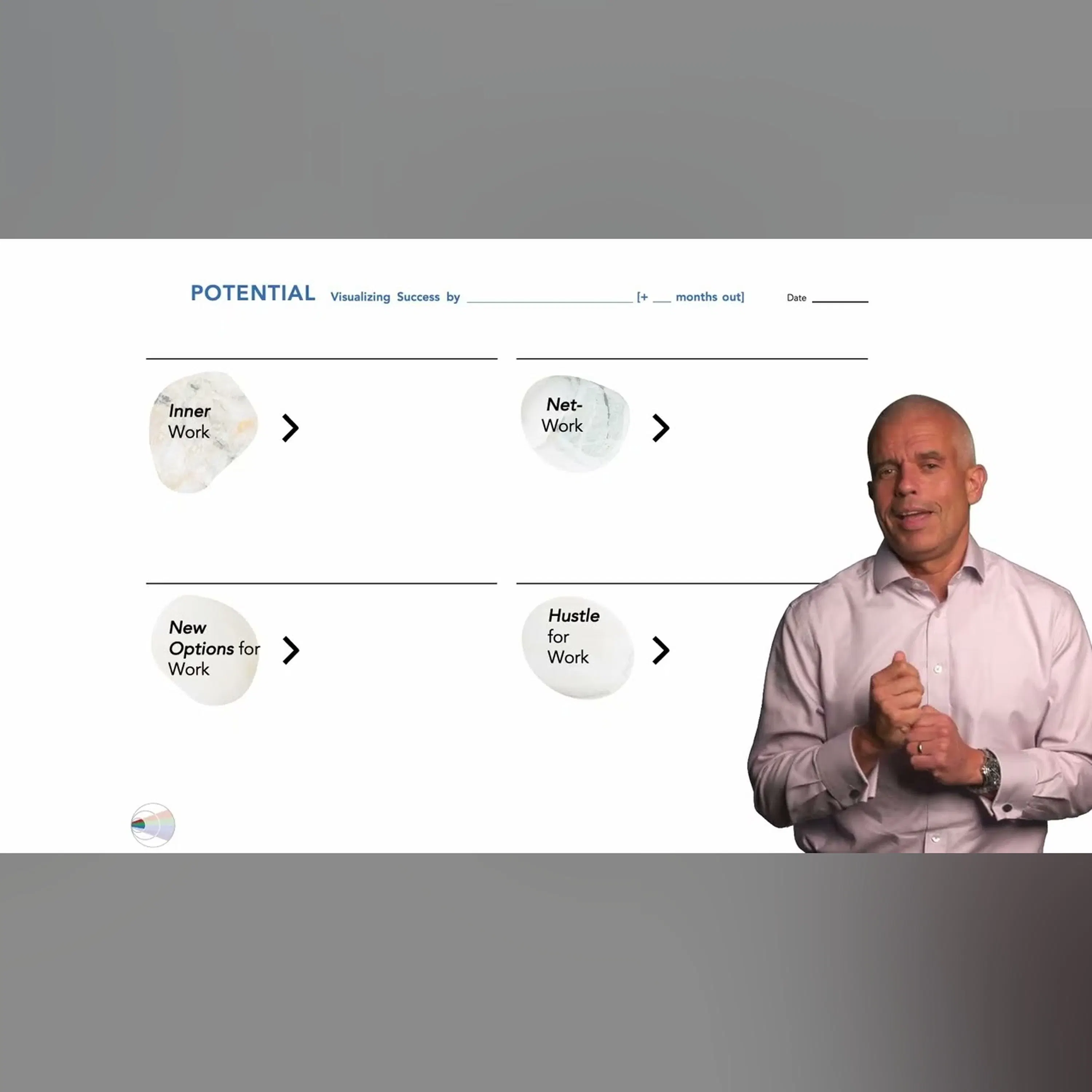
    Ready to unlock your full job search potential? In this lesson, we dive into Module 4: Potential, exploring how to visualize your desired future by setting motivating and effective goals for your job hunt. Learn to apply the PQRST framework – Past tense, Quantitative & Qualitative, Realistic & Stretchy, and Toastable – to craft actionable goals that focus on the effort and process, rather than solely on outcomes, ensuring you stay focused and driven towards landing your next great role. 🎯 Learning Objectives • Understand the PQRST framework for setting effective job search goals. • Learn to formulate goals in the past tense to visualize future achievement. • Incorporate both quantitative and qualitative measures into your job search objectives. • Set goals that are both realistic and stretchy to encourage growth. • Craft "toastable" goals that celebrate milestones and maintain motivation. 📚 About the Course: Navigating a career move can feel overwhelming in today’s dynamic job market. The Hunt offers a practical, structured framework to help you make your next job search intentional, effective, and purpose-driven. Whether you’re starting your career, seeking a new direction, or looking to advance, this course equips you with the tools to clarify your goals, sharpen your pitch, and connect authentically with others. Drawing on strategies tested with hundreds of students and professionals, the course emphasizes how to combine self-reflection, networking tactics, and storytelling to land opportunities that align with your values and strengths. By the end, you’ll walk away with a personalized one-page Hunt Dashboard to guide your ongoing career journey. 🎓 Enroll on Coursera for assessments and a certificate: https://www.coursera.org/learn/the-job-hunt 🌐 Explore more learning opportunities on Yale Online: https://online.yale.edu/ Learn more about your ad choices. Visit megaphone.fm/adchoices

  • Yesterday · 49 min

    20. The Good Life: Happiness

    Introduction to Psychology (PSYC 110) The last lecture in the course wraps up the discussion of clinical psychology with a discussion of treatment efficacy. Does therapy actually work? Professor Bloom summarizes the different types of influences that clinical interventions might have on people who receive therapy. Professor Bloom ends with a review of one of the most interesting research topics in "positive psychology," happiness. What makes us happy? How does happiness vary across person and culture? What is happiness for? Students will hear how the most recent research in psychology attempts to answer these questions and learn how people are surprisingly bad at predicting what will make them happiest. 00:00 - Chapter 1. How and Why Therapy Works 07:48 - Chapter 2. Question and Answer on Therapy 11:16 - Chapter 3. Happiness and Positive Psychology 18:58 - Chapter 4. Getting Used to Happiness 42:41 - Chapter 5. Closing Remarks Complete course materials are available at the Yale Online website: online.yale.edu This course was recorded in Spring 2007. Learn more about your ad choices. Visit megaphone.fm/adchoices
Showing 21–40 of 501 episodes