Skip to content
Artwork for YaleCourses
EducationSociety & CulturePhilosophy

YaleCourses

YaleCourses

Yale's philosophy of teaching and learning begins with the aim of training a broadly based, highly disciplined intellect without specifying in advance how that intellect will be used. The Yale Courses channel provides entry into the core of the University--its classrooms and academic programs--including complete sets of lectures from the Open Yale Courses initiative. Complementary syllabi, transcripts, and other resources may also be accessed from the Open Yale Courses website listed below.

Links:
online.yale.edu: http://online.yale.edu

Play
  • 510 episodes
  • daily
  • Avg 41 min
  • English
Counted on this page — what you have heard stays on this device, so it is not something the list can be paged by.
  • Yesterday · 11 min

    Case Study | The Therac-25 Tragedy: Software Errors Led to Fatal Overdoses | Medical Software Course

    In this lesson, we delve into the infamous Therac-25 case study, a sobering example of how medical software development can go catastrophically wrong. We will explore the series of software failures in a radiation therapy machine that led to multiple patient injuries and deaths from massive radiation overdoses, highlighting critical issues in design, testing, user interface, and the manufacturer's response, ultimately shaping modern medical device regulations. 🎯 Learning Objectives • Understand the critical role of software in medical device safety and the potential for catastrophic failure • Analyze the specific technical and procedural failures that led to the Therac-25 radiation overdose incidents • Identify the organizational and regulatory shortcomings in the response to early complaints and incidents • Explain how the Therac-25 case study significantly impacted medical device development, testing, and regulatory processes Learn more about your ad choices. Visit megaphone.fm/adchoices

  • Yesterday · 18 min

    2.1 | Low Earth Orbit: LEO Satellites and Speed | Rocket Science for Everyone with Yale’s Marla Geha

    In this lesson, we embark on a fascinating journey into Low Earth Orbit (LEO), the closest region of space to Earth, home to iconic residents like the International Space Station and the Hubble Space Telescope. Explore the unique properties of LEO, from the astonishing speeds of its inhabitants to the critical challenges posed by atmospheric drag, increasing satellite traffic, and the potential for catastrophic collisions, all while uncovering the motivations behind the rise of megaconstellations like Starlink. 🎯 Learning Objectives • Define Low Earth Orbit (LEO) and identify its most famous residents. • Explain the phenomenon of atmospheric drag and its impact on LEO satellites. • Calculate the orbital speed of a LEO satellite and understand the implications of high-speed collisions. • Describe the challenges of crowding in LEO, including the Kessler syndrome and collision avoidance measures. • Understand the purpose and characteristics of satellite constellations in LEO. 📚 About the Course This course is an intuitive introduction to rocket science in our everyday lives. Modern life increasingly depends on technology provided by Earth-orbiting satellites, from detailed weather predictions to broad-band internet and GPS. How are satellites launched into orbit and how do they work once they get there? Why are rockets used to get into orbit and how are they different from airplanes? This introductory course is aimed at a wide non-technical audience and is appropriate for all ages. 📺 Watch the full playlist on YouTube: https://www.youtube.com/playlist?list=PLh9mgdi4rNexC1fSWLlpQx_Gjj_0DhjVE 🎓 Enroll on Coursera for assessments and a certificate: https://www.coursera.org/learn/rocket-science-for-everyone 🌐 Explore more learning opportunities on Yale Online: https://online.yale.edu/courses/rocket-science-everyone #Yale #RocketScience #OnlineLearning #RocketScienceForEveryone #YaleOnline #LEOSatellites #LowEarthOrbit #SpaceScience #STEMLearning Learn more about your ad choices. Visit megaphone.fm/adchoices

  • Yesterday · 57 min

    25. Biomedical Engineers and Artificial Organs

    Frontiers of Biomedical Engineering (BENG 100) In this final lecture, Professor Saltzman talks about artificial organs, with a stress on synthetic biomaterials. First, the body's responses (immunological and scar healing responses) to foreign materials are introduced. This leads to discussion of different types of polymer/plastic materials (i.e., Dacron and GORE-TEX) and their properties. Next, Professor Saltzman talks about the design and function of some artificial organs, such as lens implants, heart valves and vessels, hip, dialyzer, heart/lung bypass machine, and the artificial heart. Lastly, challenges and areas for improvement in the field are presented. 00:00 - Chapter 1. Introduction to Biomaterials 03:15 - Chapter 2. Polymers 15:50 - Chapter 3. Threat of Coagulation and Clotting 22:22 - Chapter 4. Physical Responses to Biomaterials 27:41 - Chapter 5. Joint Replacement Using Biomaterials 38:01 - Chapter 6. Dialysis 43:51 - Chapter 7. Artificial Organs and Conclusion Complete course materials are available at the Open Yale Courses website: http://open.yale.edu/courses This course was recorded in Spring 2008. Learn more about your ad choices. Visit megaphone.fm/adchoices
  • Yesterday · 1 hr 21 min

    22. The Struggle for Hegemony in Fourth-Century Greece (cont.)

    Introduction to Ancient Greek History (CLCV 205) In this lecture, Professor Kagan examines the continuation of Spartan tyranny over the Greek poleis and the response of the Greek world. According to Professor Kagan, it became clear that the Greek poleis needed to do something to check the power of Sparta. So, Thebes, Argos, Corinth, and Athens along with some of the smaller poleis joined together to fight Sparta in the Corinthian War. The war ended in a stalemate, but now the Persians were afraid of the growth of Athenian naval power. So, the king made an alliance with Sparta to bring about the King's Peace, which emphasized Greek autonomy and which had the effect of breaking up all alliances, except the Peloponnesian League. After this fact, Sparta continued in its tyrannical behavior. 00:00 - Chapter 1. The Greek Mercenary Army and the March of the 10,000 08:46 - Chapter 2. Further Hostilities 21:32 - Chapter 3. The Corinthian War 40:12 - Chapter 4. Iphicrates's Light-Armed Troops; Conon's Fleet 51:06 - Chapter 5. The War Comes to an End Complete course materials are available at the Open Yale Courses website: http://open.yale.edu/courses This course was recorded in Fall 2007. Learn more about your ad choices. Visit megaphone.fm/adchoices

  • Yesterday · 13 min

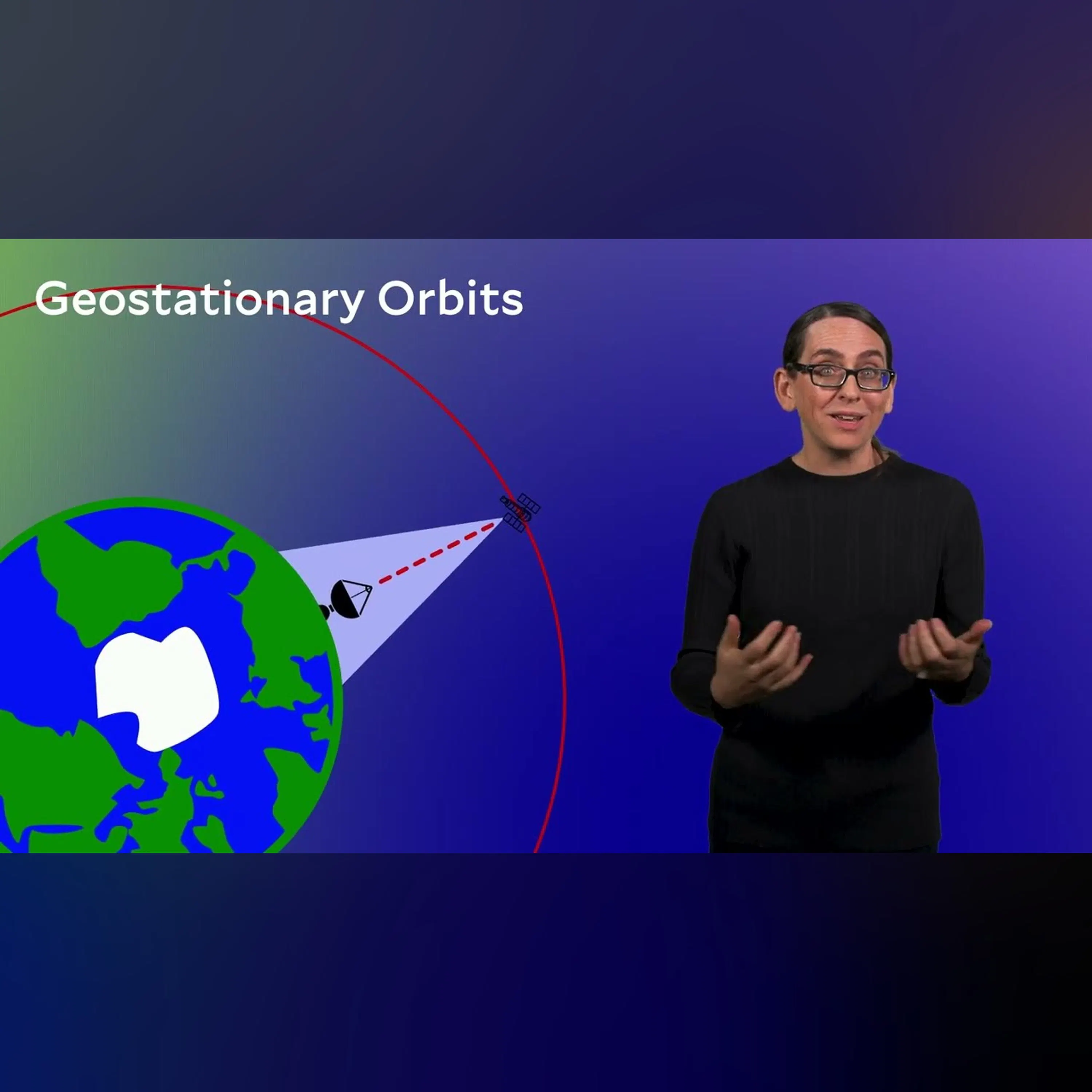
    2.3 | Satellites That Never Move? GEO Orbits | Rocket Science for Everyone with Yale’s Marla Geha

    Have you ever wondered how satellites provide constant TV signals or real-time weather updates? In this lesson, we venture further from Earth to explore Geosynchronous Earth Orbits (GEO) and the incredibly valuable subset, geostationary orbits. Discover why these satellites appear to 'hover' over a single point on Earth, their crucial applications from communication to surveillance, and the unique challenges and solutions for managing them in space. 🎯 Learning Objectives • Understand the definition and distinction between geosynchronous and geostationary orbits. • Explain how Kepler's Third Law relates to the orbital period and distance of GEO satellites. • Identify the practical benefits and applications of geostationary satellites, such as communication and Earth monitoring. • Discuss the challenges of operating satellites in GEO, including communication delays and radiation. • Describe the allocation of geostationary slots and the concept of graveyard orbits for end-of-life satellites. 📚 About the Course This course is an intuitive introduction to rocket science in our everyday lives. Modern life increasingly depends on technology provided by Earth-orbiting satellites, from detailed weather predictions to broad-band internet and GPS. How are satellites launched into orbit and how do they work once they get there? Why are rockets used to get into orbit and how are they different from airplanes? This introductory course is aimed at a wide non-technical audience and is appropriate for all ages. 📺 Watch the full playlist on YouTube: https://www.youtube.com/playlist?list=PLh9mgdi4rNexC1fSWLlpQx_Gjj_0DhjVE 🎓 Enroll on Coursera for assessments and a certificate: https://www.coursera.org/learn/rocket-science-for-everyone 🌐 Explore more learning opportunities on Yale Online: https://online.yale.edu/courses/rocket-science-everyone #RocketScienceForEveryone #YaleOnline #GEOSatellites #GeosynchronousOrbit #SpaceScience #STEMEducation #LearnOnline Learn more about your ad choices. Visit megaphone.fm/adchoices
  • Yesterday · 1 hr 13 min

    4. Portfolio Diversification and Supporting Financial Institutions (CAPM Model)

    Financial Markets (ECON 252) Portfolio diversification is the most fundamental concept of risk management. The allocation of financial resources in stocks, bonds, riskless, assets, oil and other assets determine the expected return and risk of a portfolio. Taking account of covariances and expected returns, investors can create a diversified portfolio that maximizes expected return for a given level of risk. An important mission of financial institutions is to provide portfolio-diversification services. 00:00 - Chapter 1. Introduction 02:37 - Chapter 2. Evaluation of Efficient Portfolio Frontiers 26:59 - Chapter 3. The Significance of Portfolio Diversification 38:43 - Chapter 4. The Tangency Portfolio and the Mutual Fund Theory 51:46 - Chapter 5. The Capital Asset Pricing Model 59:09 - Chapter 6. Implications of the Equity Premium and Conclusion Complete course materials are available at the Open Yale Courses website: http://open.yale.edu/courses This course was recorded in Spring 2008. Learn more about your ad choices. Visit megaphone.fm/adchoices
  • Yesterday · 8 min

    3.2 | Why Doctors Hate EHRs? Understanding Clinical IT | Medical Software Course

    Have you ever wondered what technological infrastructure supports most hospitals and healthcare settings today? In this lesson, we dive into Clinical Information Technology (IT), with a primary focus on Electronic Health Records (EHRs). We'll examine the core components and purpose of EHRs, their historical transition from paper records, and the controversial impact they've had on clinician workflows—including insights into why doctors resisted them—alongside their immense benefits for patient data management and medical research. We'll also explore the common network protocols, like HL7, that enable these crucial systems. 🎯 Learning Objectives • Define Clinical Information Technology (IT), Electronic Health Records (EHRs), and Electronic Medical Records (EMRs). • Understand the purpose and key components of EHR systems in modern healthcare. • Discuss the challenges and benefits of EHR adoption from both clinician and patient perspectives. • Identify HL7 as a primary network protocol for interfacing with EHR systems. Learn more about your ad choices. Visit megaphone.fm/adchoices
  • Yesterday · 11 min

    3.1 | Unpacking the Clinical Environment: Users, Buyers and Regulations — Medical Software Course

    Have you ever wondered about all the hidden layers of the healthcare system that medical software must navigate? In this lesson, we dive deep into the clinical environment, exploring the constraints it imposes and identifying the diverse stakeholders involved beyond just patients and doctors. We'll also examine the critical role of associated technologies like EHR and imaging databases, and the pervasive importance of data privacy, security, and cybersecurity regulations, underscoring that no medical software is an island. We further explore the often-complex relationship between the software user and the ultimate customer or payer. 🎯 Learning Objectives • Understand the constraints and complexities of the clinical environment for medical software development. • Identify the diverse range of stakeholders in the healthcare system, beyond just patients and doctors. • Recognize the critical role of data privacy, security, and cybersecurity regulations (e.g., HIPAA, GDPR) in medical software. • Appreciate that medical software is typically part of a larger workflow and requires integration with other systems and standards. • Differentiate between the end-user and the purchaser of medical software and its implications for product design. Learn more about your ad choices. Visit megaphone.fm/adchoices
  • Yesterday · 12 min

    3.3 | Demystifying Medical Imaging: PACS, DICOM, and Data in Healthcare IT | Medical Software Course

    Have you ever wondered about the technology behind medical images that doctors use to diagnose and treat patients? In this lesson, we dive deep into Clinical IT II, focusing specifically on medical imaging. We'll explore the historical evolution of imaging modalities, from the discovery of X-rays to modern MRI, and unpack the critical IT infrastructure like PACS and DICOM that manage vast amounts of medical image data. Understanding how these systems work and the unique characteristics of medical image data, including metadata and orientation, is essential for anyone working with healthcare technology. 🎯 Learning Objectives • Trace the historical development of key medical imaging modalities. • Define the roles of PACS and DICOM in modern clinical radiology. • Describe the hierarchical structure of medical imaging data: patient, study, series, and instance. • Explain the unique characteristics of medical image data, including pixels, voxels, and essential metadata. • Interpret common medical image orientations like LPS and RAS. Learn more about your ad choices. Visit megaphone.fm/adchoices
  • Yesterday · 29 min

    12.5 | Master the Art of Fundraising:How to Raise Capital for Your Startup | Medical Software Course

    In this lesson, we dive deep into the crucial world of raising capital for your medical software venture. Discover when and how to approach different funding stages, from seed rounds to venture capital, and learn the essential strategies for presenting your ideas to investors. We'll explore common reasons why startups fail and equip you with the knowledge to navigate the fundraising landscape successfully, emphasizing the importance of market validation and strategic partnerships. 🎯 Learning Objectives • Understand key terminology and stages in capital raising, including seed, angel, venture capital, and private equity. • Identify the primary reasons why startups fail and how to mitigate these risks. • Develop effective strategies for pitching your medical software venture to potential investors. • Explore alternative funding sources such as grants, accelerators, and incubators. • Recognize the critical importance of early sales, market validation, and fair team equity distribution in securing investment. Learn more about your ad choices. Visit megaphone.fm/adchoices
  • Yesterday · 1 hr 17 min

    16. The Evolution and Perfection of Monetary Policy

    Financial Markets (ECON 252) Central Banks, originally created as bankers' banks, implement monetary policy using their leverage over the supply of money and credit standards. Since the Bank of England was founded in 1694, through the gold standard which lasted until the 1930s, and into modern times, central banks have pursued monetary policy to stabilize the banking system. Central banks monitor currency flows and inflation, acting when crises, such as bank runs, emerged. More recently, central banks have taken an increasingly expansive role in stabilizing economic fluctuations. In the yet to be confirmed current recession, the Federal Reserve has used open market operations and innovative financial arrangements to try to forestall the recession and bail out failing financial institutions. 00:00 - Chapter 1. Introduction: Thoughts on Icahn's Talk 04:49 - Chapter 2. The Gold Standard and the Earliest Central Bank 15:11 - Chapter 3. The Rise of the U.S. Federal Reserve System 25:30 - Chapter 4. The Abandonment of the Gold Standard and Adoption of Central Bank Autonomy 36:30 - Chapter 5. The Federal Funds Rate and Discount Rate 45:00 - Chapter 6. The Fed's Innovations against U.S. and Global Stagflation 01:00:47 - Chapter 7. A Trace though Recent Recessions and Conclusion Complete course materials are available at the Open Yale Courses website: http://open.yale.edu/courses This course was recorded in Spring 2008. Learn more about your ad choices. Visit megaphone.fm/adchoices
  • Yesterday · 6 min

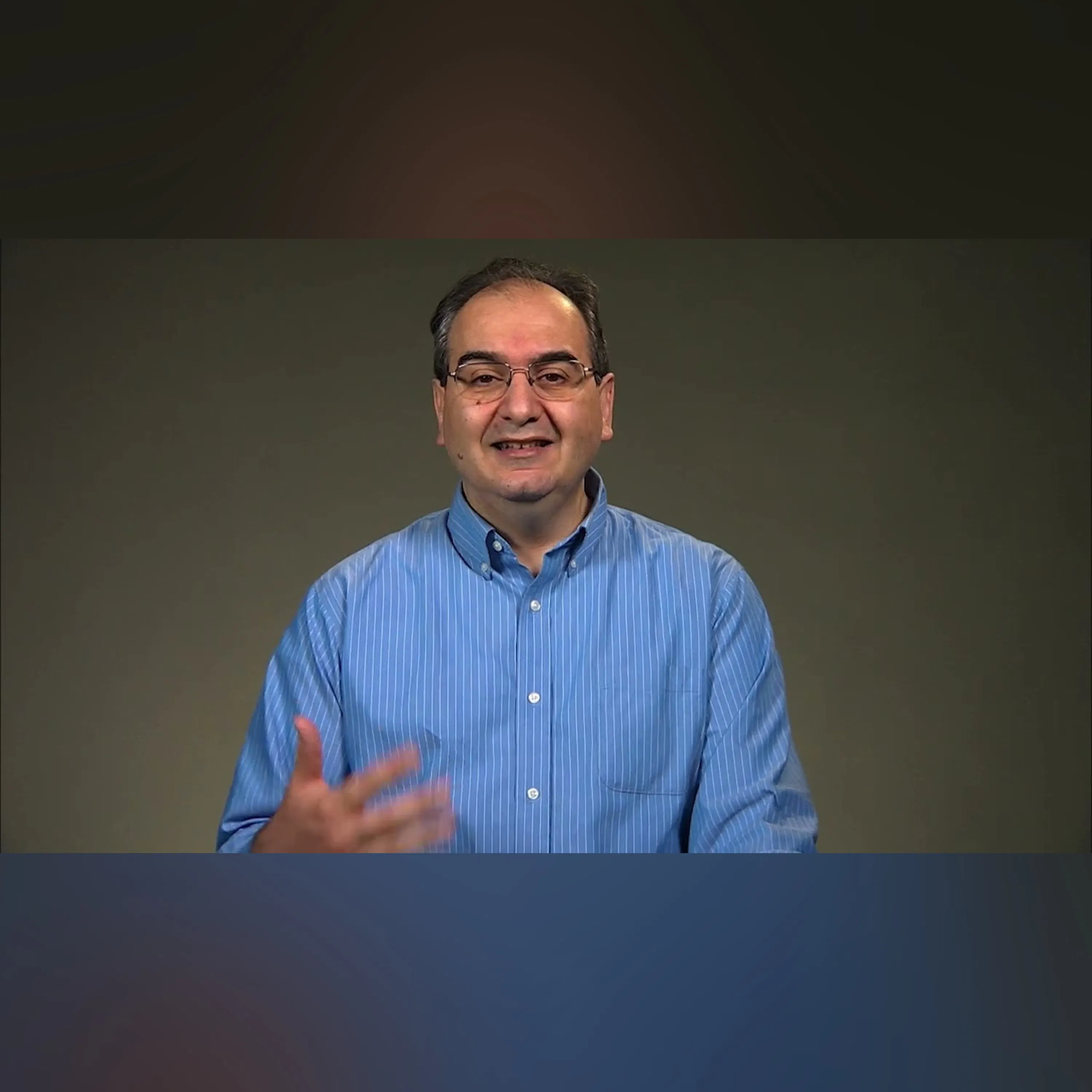
    4.1 | Understanding Satellite Payloads | Rocket Science for Everyone with Marla Geha

    Have you ever wondered what exactly is inside the satellites orbiting Earth and what their purpose is? In this lesson, we explore satellite payloads, the crucial instruments and components that make satellites function. We'll identify common elements like solar panels and the satellite bus, and then delve into the vast array of missions satellites undertake, from providing internet and GPS to monitoring weather and conducting scientific research, highlighting how each mission shapes its unique payload. 🎯 Learning Objectives • Define what constitutes a satellite payload. • Identify common structural and power components of a satellite, such as solar panels and the satellite bus. • Describe the wide variety of missions satellites undertake, including communication, navigation, Earth monitoring, and scientific research. • Explain how the specific goals of a satellite's mission dictate its payload requirements. 📚 About the Course This course is an intuitive introduction to rocket science in our everyday lives. Modern life increasingly depends on technology provided by Earth-orbiting satellites, from detailed weather predictions to broad-band internet and GPS. How are satellites launched into orbit and how do they work once they get there? Why are rockets used to get into orbit and how are they different from airplanes? This introductory course is aimed at a wide non-technical audience and is appropriate for all ages. 📺 Watch the full playlist on YouTube: https://www.youtube.com/playlist?list=PLh9mgdi4rNexC1fSWLlpQx_Gjj_0DhjVE 🎓 Enroll on Coursera for assessments and a certificate: https://www.coursera.org/learn/rocket-science-for-everyone 🌐 Explore more learning opportunities on Yale Online: https://online.yale.edu/courses/rocket-science-everyone #RocketScienceForEveryone #YaleOnline #SatellitePayloads #SpaceScience #STEMEducation #AerospaceEngineering #LearnOnline Learn more about your ad choices. Visit megaphone.fm/adchoices
  • Yesterday · 8 min

    2.6 | AI and Machine Learning in Medicine: Emerging Issues and FDA Regulations | Medical Software Course

    In this lesson, we dive into the exciting yet complex world of artificial intelligence and machine learning in medicine. We explore the foundational role of vast, high-quality data in AI's success, alongside the unique regulatory challenges posed by self-updating AI algorithms in medical software. 🎯 Learning Objectives • Explain the role of deep learning in the current excitement around AI/ML. • Identify the critical importance of data (clean, annotated, diverse) for AI/ML model training. • Discuss the regulatory challenges posed by adaptive AI/ML software in medical devices. • Outline the FDA's proposed frameworks and initiatives, like the Precertification Program, for regulating AI/ML medical software. Learn more about your ad choices. Visit megaphone.fm/adchoices
  • Yesterday · 51 min

    5. Telling a Free Story: Fugitive Slaves and the Underground Railroad in Myth and Reality

    The Civil War and Reconstruction (HIST 119) Professor Blight discusses the rise of abolitionism. Blight begins with an introduction to the genre of slave narratives, with particular attention to Frederick Douglass' 1845 narrative. The lecture then moves on to discuss the culture in which antebellum reform grew--the factors that encouraged its growth, as well as those that retarded it. Professor Blight then describes the movement towards radical abolitionism, stopping briefly on colonization and gradualism before introducing the character and ideology of William Lloyd Garrison. 00:00 - Chapter 1. Frederick Douglass and the Slave Narrative 09:46 - Chapter 2. The Development of Abolitionism in the North 22:37 - Chapter 3. Colonization and the Idea of Gradualism 30:18 - Chapter 4. The Radicalization of Anti-slavery Thinkers 38:43 - Chapter 5. The Ideas of William Lloyd Garrison 46:42 - Chapter 6. Concluding Thoughts on Different Abolitionisms Complete course materials are available at the Open Yale Courses website: http://open.yale.edu/courses This course was recorded in Spring 2008. Learn more about your ad choices. Visit megaphone.fm/adchoices
  • Yesterday · 53 min

    9. Biomolecular Engineering: Engineering of Immunity

    Frontiers of Biomedical Engineering (BENG 100) Professor Saltzman talks about the importance of vaccines, and particularly the role of bioengineering in vaccine development. He first addresses the question of "what is a vaccine" and the role of the immune system. He then describes the biological basis, symptoms, and history of smallpox as a devastating disease worldwide, and how--starting with the work of Edward Jenner--an effective vaccine was systematically developed from cow lesions. Next, methods to deliver vaccine to a wide population are introduced. Finally, Professor Saltzman touches on the possible reemergence of smallpox as weapon for bioterrorism. 00:00 - Chapter 1. Introduction 04:42 - Chapter 2. Vaccine 13:56 - Chapter 3. Smallpox and History of Early Vaccine Development 29:05 - Chapter 4. History of Modern Smallpox Vaccinations 41:27 - Chapter 5. Threat of Bioterrorism and Conclusion Complete course materials are available at the Open Yale Courses website: http://open.yale.edu/courses This course was recorded in Spring 2008. Learn more about your ad choices. Visit megaphone.fm/adchoices
  • Yesterday · 15 min

    2.2 | Medium Earth Orbit and GPS | Rocket Science for Everyone with Yale’s Marla Geha

    Ever wondered how your phone knows exactly where you are, even in the middle of nowhere? In this lesson, we delve into the world of Medium Earth Orbit (MEO), a fascinating region of space located between 2,000 and 35,000 km above Earth. While far fewer satellites reside here compared to Low Earth Orbit (LEO), MEO is the critical home for Global Positioning System (GPS) satellites, despite the challenges posed by the treacherous Van Allen Belts. Discover why these navigation powerhouses orbit at 20,000 km, how they use precise timing and triangulation to pinpoint your location, and the global reliance on this vital technology. 🎯 Learning Objectives • Identify the characteristics and challenges of Medium Earth Orbit (MEO), including the role of the Van Allen Belts. • Explain why MEO is the optimal orbit for Global Positioning System (GPS) satellites. • Describe the core mechanism by which GPS satellites determine a user's location through precise timing and triangulation. • Recognize the global importance and widespread applications of GPS technology. • Name other international satellite navigation systems beyond GPS. 📚 About the Course This course is an intuitive introduction to rocket science in our everyday lives. Modern life increasingly depends on technology provided by Earth-orbiting satellites, from detailed weather predictions to broad-band internet and GPS. How are satellites launched into orbit and how do they work once they get there? Why are rockets used to get into orbit and how are they different from airplanes? This introductory course is aimed at a wide non-technical audience and is appropriate for all ages. 📺 Watch the full playlist on YouTube: https://www.youtube.com/playlist?list=PLh9mgdi4rNexC1fSWLlpQx_Gjj_0DhjVE 🎓 Enroll on Coursera for assessments and a certificate: https://www.coursera.org/learn/rocket-science-for-everyone 🌐 Explore more learning opportunities on Yale Online: https://online.yale.edu/courses/rocket-science-everyone #RocketScienceForEveryone #YaleOnline #MEOSatellites #GPS #SpaceScience #STEMEducation #LearnOnline Learn more about your ad choices. Visit megaphone.fm/adchoices
  • Yesterday · 1 hr 15 min

    2. The Universal Principle of Risk Management: Pooling and the Hedging of Risks

    Financial Markets (ECON 252) Statistics and mathematics underlie the theories of finance. Probability Theory and various distribution types are important to understanding finance. Risk management, for instance, depends on tools such as variance, standard deviation, correlation, and regression analysis. Financial analysis methods such as present values and valuing streams of payments are fundamental to understanding the time value of money and have been in practice for centuries. 00:00 - Chapter 1. The Etymology of Probability 10:01 - Chapter 2. The Beginning of Probability Theory 15:38 - Chapter 3. Measures of Central Tendency: Independence and Geometric Average 33:12 - Chapter 4. Measures of Dispersion and Statistical Applications 50:39 - Chapter 5. Present Value 01:03:46 - Chapter 6. The Expected Utility Theory and Conclusion Complete course materials are available at the Open Yale Courses website: http://open.yale.edu/courses This course was recorded in Spring 2008. Learn more about your ad choices. Visit megaphone.fm/adchoices

  • Yesterday · 20 min

    12.2 | Healthcare's Shifting Landscape: New Business Models Led by Software| Medical Software Course

    How are healthcare business models adapting to a rapidly changing world? In this lesson, we explore the significant drivers behind the evolution of healthcare business models, from increasing costs and technological advancements to new approaches like value-based care. We'll examine various strategic models adopted by health systems and delve into the impact of patient-driven technologies and the role of software in fostering sustainable innovation. 🎯 Learning Objectives • Understand the forces driving changes in healthcare business and revenue models. • Identify and differentiate between key strategic models for health systems, such as leader, experience, integrator, and manager. • Explore the concepts of value-based healthcare and the learning healthcare system, recognizing their impact on patient outcomes and cost. • Recognize how patient-driven technologies and on-demand healthcare are empowering consumers and transforming service delivery. • Learn about the RAPID framework for achieving sustainable innovation in healthcare through regulatory, alternatives, patients, innovation, and data considerations. Learn more about your ad choices. Visit megaphone.fm/adchoices

  • Yesterday · 1 hr 14 min

    23. Options Markets

    Financial Markets (ECON 252) Options introduce an essential nonlineary into portfolio management. They are contracts between buyers and writers, who agree on exercise prices and dates at which the buyer can buy or sell the underlying (such as a stock). Options are priced based on the price and volatility of the underlying asset as well as the duration of the option contract. The Black-Scholes options pricing model is one of the most famous equations in finance and offers a useful first approximation for prices for option contracts. Options exchanges and futures exchanges both are involved in creating a liquid and transparent market for options. Options are not just for stocks; they are also important for other asset classes, such as real estate. 00:00 - Chapter 1. Options Vocabulary and the 1720 Stock Market Crash 14:58 - Chapter 2. The Standardization and Logic of Options: Options Exchanges 27:57 - Chapter 3. The Put-Call Parity Relation 36:32 - Chapter 4. Pricing an Option: The Black-Scholes Formula 51:35 - Chapter 5. Accounting for Volatility in the Black-Scholes Formula 01:00:08 - Chapter 6. Options on Home Prices as Risk Management Complete course materials are available at the Open Yale Courses website: http://open.yale.edu/courses This course was recorded in Spring 2008. Learn more about your ad choices. Visit megaphone.fm/adchoices

  • Yesterday · 10 min

    3.7 | Electric, Nuclear and Solar Rockets | Rocket Science for Everyone with Marla Geha

    Ever wondered what propels spacecraft beyond the initial launch? While chemical rockets are crucial for getting off Earth, this lesson delves into three fascinating alternatives used once in orbit: electric (ion) propulsion, nuclear thermal rockets, and solar sails. Discover how each method works, their unique advantages for different space missions, and their limitations compared to traditional chemical propulsion. 🎯 Learning Objectives • Explain why alternative propulsion methods are necessary for spacecraft once in orbit. • Describe the mechanism and applications of electric (ion) propulsion systems. • Understand the principles and potential uses of nuclear thermal rockets for deep space travel. • Grasp how solar sails generate thrust and their suitability for long-duration voyages. • Compare the advantages and limitations of electric, nuclear, and solar propulsion methods. 📚 About the Course This course is an intuitive introduction to rocket science in our everyday lives. Modern life increasingly depends on technology provided by Earth-orbiting satellites, from detailed weather predictions to broad-band internet and GPS. How are satellites launched into orbit and how do they work once they get there? Why are rockets used to get into orbit and how are they different from airplanes? This introductory course is aimed at a wide non-technical audience and is appropriate for all ages. 📺 Watch the full playlist on YouTube: https://www.youtube.com/playlist?list=PLh9mgdi4rNexC1fSWLlpQx_Gjj_0DhjVE 🎓 Enroll on Coursera for assessments and a certificate: https://www.coursera.org/learn/rocket-science-for-everyone 🌐 Explore more learning opportunities on Yale Online: https://online.yale.edu/courses/rocket-science-everyone #RocketScienceForEveryone #SpacePropulsion #ElectricRockets #NuclearRockets #SolarPropulsion Learn more about your ad choices. Visit megaphone.fm/adchoices

Showing 41–60 of 510 episodes