Is String Theory Really Science?
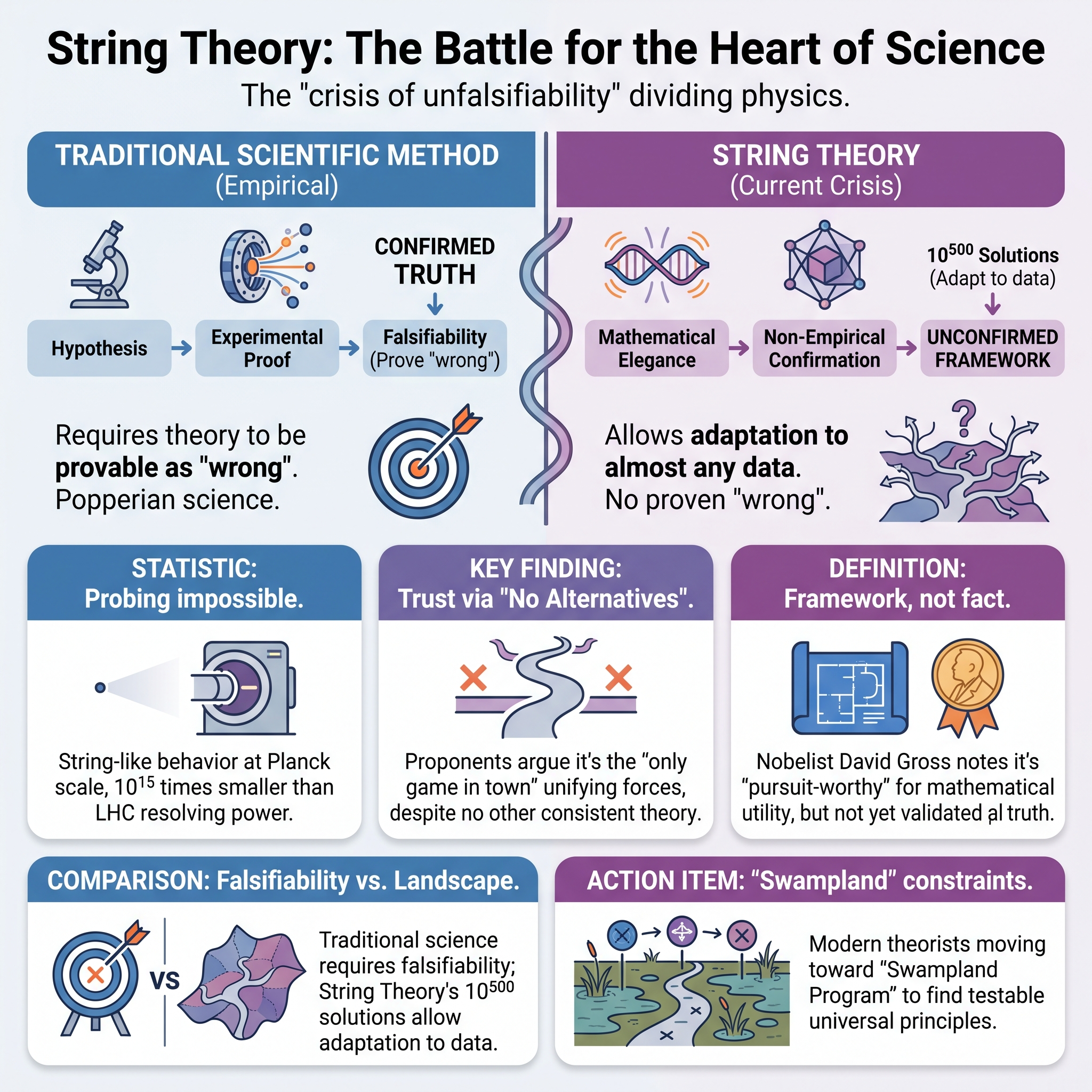
Addressing a modern methodological crisis in fundamental physics, where dominant frameworks like string theory and the multiverse hypothesis have become nearly impossible to test empirically. Critics argue that this departure from Popperian falsifiability—the principle that a theory must be capable of being proven wrong—threatens the integrity of the scientific method. In response, some scholars propose a post-empirical framework using Bayesian inference and non-empirical virtues, such as mathematical elegance and a lack of viable alternatives, to establish theoretical trust. However, skeptics contend that an overreliance on aesthetic beauty and institutional groupthink has led the field into a speculative "no-man's-land" detached from physical reality. Highlighting a historic 2015 meeting in Munich where physicists and philosophers debated whether science should evolve its definition of proof or return to a more foundational, experiment-driven approach. Ultimately, the collection examines the tension between the pursuit of a "theory of everything" and the traditional requirement that science remains grounded in observable evidence.