transcript
show notes
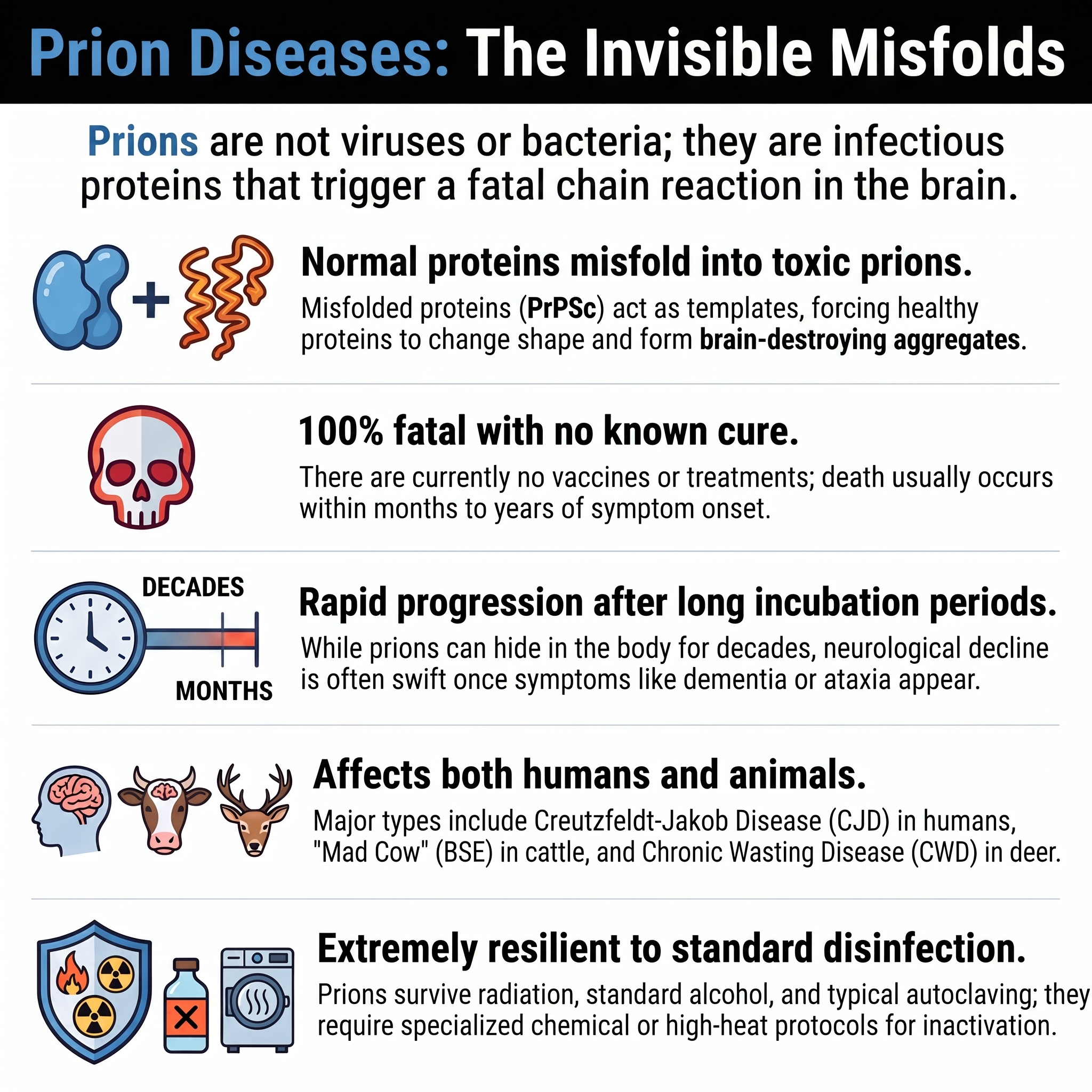
Prion diseases are a group of rare, incurable, and fatal neurodegenerative conditions caused by the abnormal misfolding of cellular proteins in both humans and animals. The infectious particles, which lack genetic material, replicate by transforming healthy proteins into pathogenic forms that destroy brain tissue. Transmission occurs through various pathways, including contaminated food sources, medical procedures, and environmental exposure via soil or water where prions can remain active for years. Notable examples include Creutzfeldt-Jakob disease in humans and Chronic Wasting Disease in wildlife, both of which present significant public health and management challenges. Recent scientific progress has introduced advanced diagnostic tools and experimental vaccines aimed at detecting sub-clinical infections and reducing the spread of the disease. Specialized sterilization protocols, such as alkaline hydrolysis and intense chemical treatments, are necessary to neutralize these remarkably resilient pathogens.