Skip to content
Artwork for The Deep Dive
The Deep Dive · August 26 · 42 min

The PACE Trial Scandal

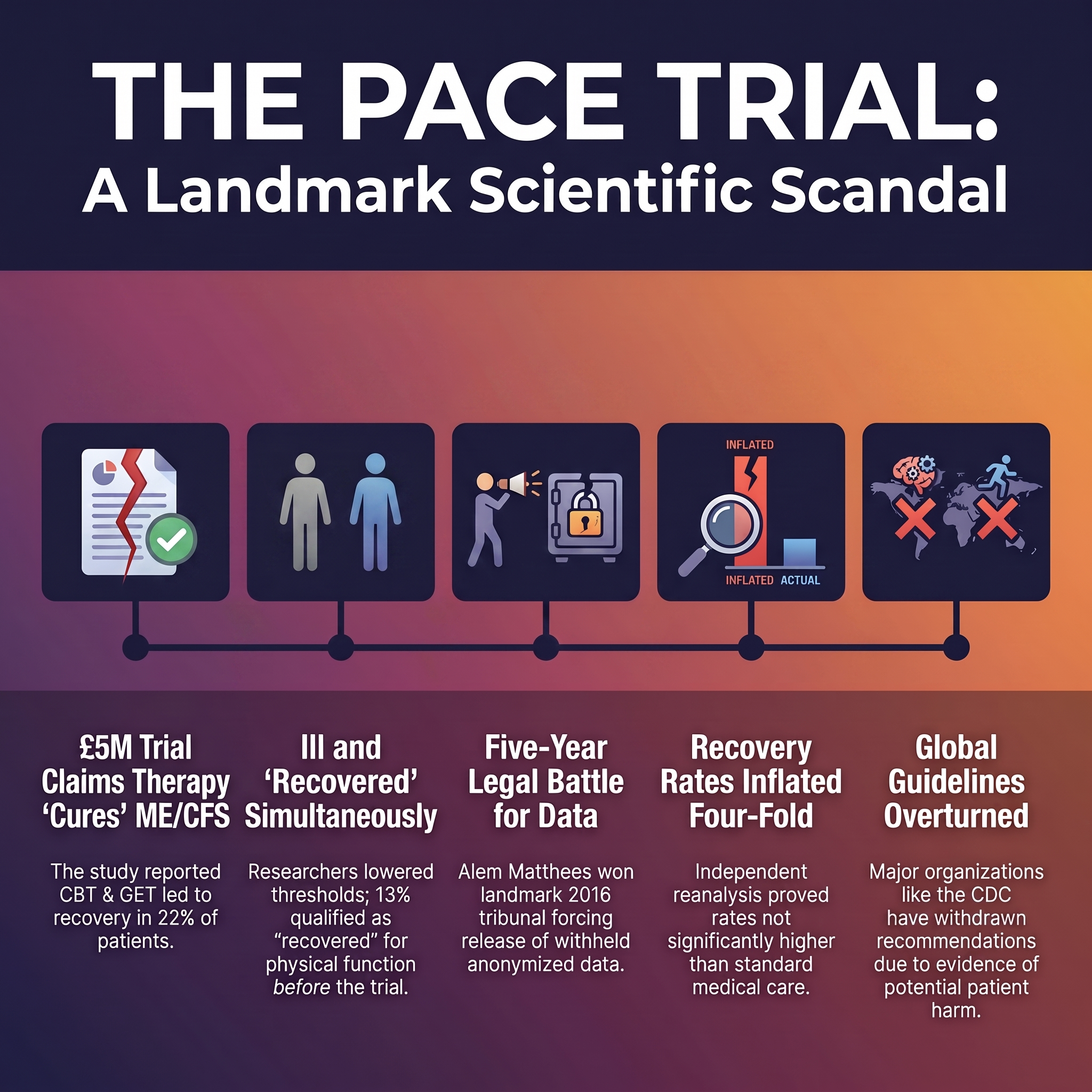
The widespread controversy surrounding the PACE trial, a multi-million dollar study that initially recommended cognitive behavioral therapy (CBT) and graded exercise therapy (GET) as treatments for ME/CFS. Critics, led by advocate Alem Matthees, successfully utilized Freedom of Information requests to obtain the original data, which led to an independent re-analysis revealing significant methodological flaws and inflated recovery rates. This scientific challenge prompted the UK’s National Institute for Health and Care Excellence (NICE) to issue revised 2021 guidelines that formally abandoned CBT and GET as curative treatments. The updated medical consensus now characterizes ME/CFS as a biomedical condition rather than a psychological one, emphasizing the danger of post-exertional malaise (PEM). Current best practices focus on symptom management and pacing techniques to prevent patients from exceeding their limited energy reserves. While some original researchers defend the trial's validity, a global movement of scientists, politicians, and patient groups continues to call for a full review of what they describe as a major medical scandal.

0:00-42:28

transcript

No transcript — this publisher did not publish one.

show notes

The widespread controversy surrounding the PACE trial, a multi-million dollar study that initially recommended cognitive behavioral therapy (CBT) and graded exercise therapy (GET) as treatments for ME/CFS. Critics, led by advocate Alem Matthees, successfully utilized Freedom of Information requests to obtain the original data, which led to an independent re-analysis revealing significant methodological flaws and inflated recovery rates. This scientific challenge prompted the UK’s National Institute for Health and Care Excellence (NICE) to issue revised 2021 guidelines that formally abandoned CBT and GET as curative treatments. The updated medical consensus now characterizes ME/CFS as a biomedical condition rather than a psychological one, emphasizing the danger of post-exertional malaise (PEM). Current best practices focus on symptom management and pacing techniques to prevent patients from exceeding their limited energy reserves. While some original researchers defend the trial's validity, a global movement of scientists, politicians, and patient groups continues to call for a full review of what they describe as a major medical scandal.

more episodes

All episodes