Skip to content
Artwork for Clinical Deep Dives
Health & FitnessMedicineEducationCourses

Clinical Deep Dives

Med School Audio - Medical Knowledge Reimagined & Learning Made Memorable.

Clinical Deep Dives is a Medlock Holmes podcast for clinicians and learners who want understanding, not just information. Using classic medical and surgical texts as a guide and the generative power of AI, each episode explores ideas with curiosity and clarity, designed for learning on the move and knowledge that actually sticks.

drmanaankarray.substack.com
Play
  • 28 episodes
  • daily
  • Avg 58 min
  • English
Counted on this page — what you have heard stays on this device, so it is not something the list can be paged by.
  • S13 · E166
    October 29 · 1 hr

    PSYCH 166: Complementary, Alternative, and Integrative Approaches in Mental Health Care

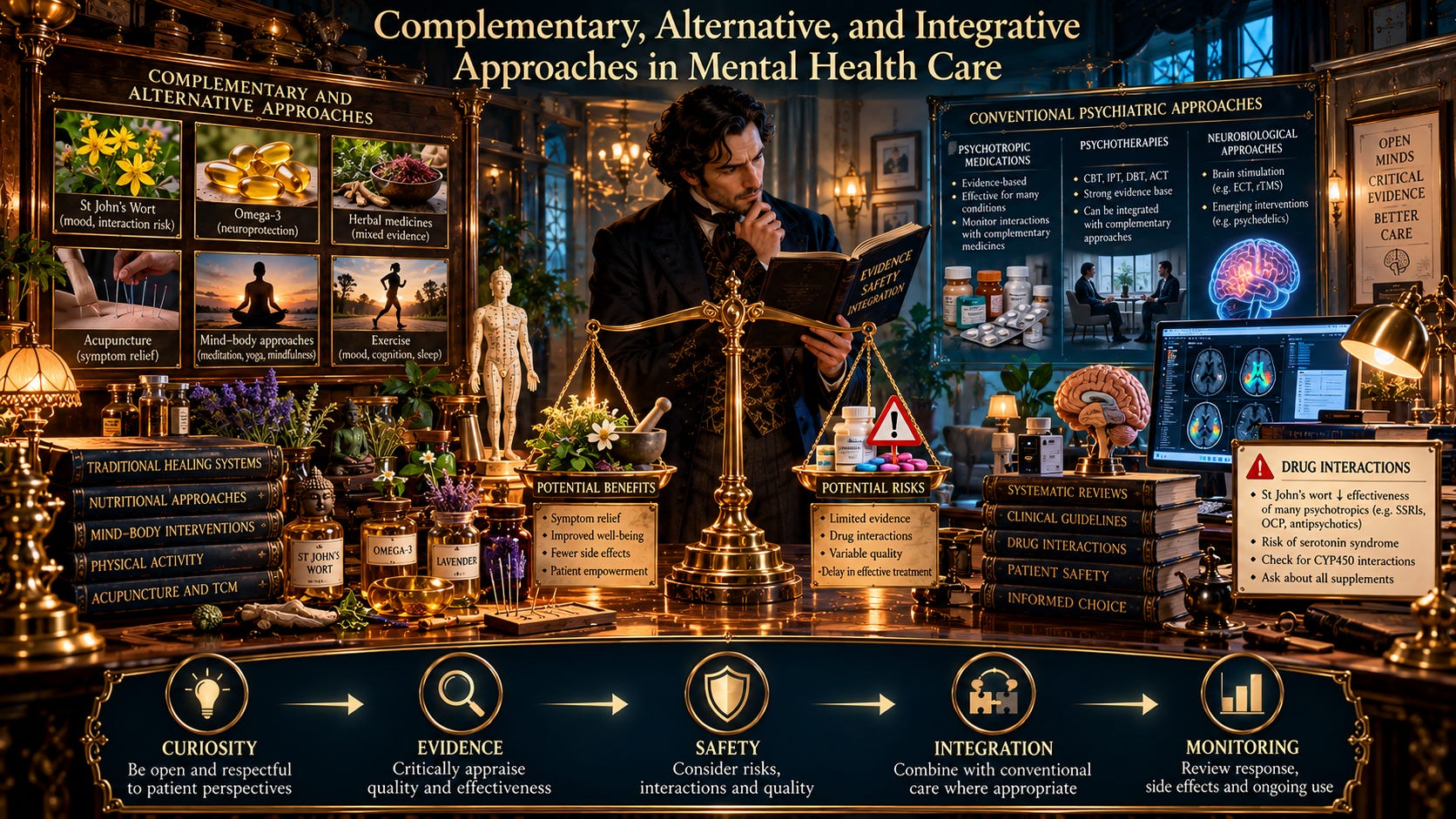
    The House of Unconventional Healing A patient arrives at Baker Street carrying two bags. The first contains prescribed antidepressants. The second contains herbal preparations, vitamins, nutritional supplements and a handwritten list of alternative treatments. “I thought these were natural,” she tells Medlock Holmes. “So I assumed they were safe.” Holmes examines the bottles. Among them is St John’s wort, a herbal preparation with pharmacological effects and potentially significant drug interactions. The patient has not mentioned any of these treatments to her psychiatrist. Holmes realises that the most important clue is not what the patient is taking. It is what her clinician does not know. He opens the doors to The House of Unconventional Healing, where traditional practices, modern neuroscience, nutritional medicine, psychological techniques and commercial claims compete for a place in psychiatric care. The First Chamber: Three Paths to Healing Holmes encounters three approaches. Complementary medicine is used alongside conventional treatment. Alternative medicine is used in place of conventional treatment. Integrative medicine seeks to combine appropriate interventions within a coordinated, person-centred plan. But Holmes refuses to accept that every combination is beneficial. A treatment’s origins do not establish its effectiveness, and popularity does not demonstrate safety. He writes: TRADITION ≠ PROOF NATURAL ≠ HARMLESS INTEGRATION ≠ UNCRITICAL ACCEPTANCE The Second Chamber: The Apothecary of the Mind The next room is lined with bottles labelled omega-3, folate, vitamin D, magnesium, S-adenosylmethionine, St John’s wort, kava and melatonin. Some contain biologically active substances with plausible mechanisms and clinical evidence. Others are supported by small trials, inconsistent findings or speculative theories. Holmes discovers that even promising treatments must be judged by the quality of the evidence, the clinical indication and the risk of interactions. St John’s wort may affect the metabolism of prescribed medicines. Kava carries hepatotoxicity concerns. Serotonergic supplements may interact with antidepressants. Certain preparations may precipitate mania in vulnerable individuals. The question is not whether a substance is natural, but whether its benefits outweigh its risks. The Third Chamber: The Body as an Ally Holmes enters a room filled with movement, music and light. Here he investigates exercise, yoga, meditation, acupuncture, massage, biofeedback and nutritional approaches. He finds an important distinction between interventions that improve general wellbeing and interventions demonstrated to treat a particular psychiatric disorder. Exercise may support mood and physical health. Mindfulness can help some people manage distress. Bright light has established applications in circadian and seasonal mood disturbances. Other approaches remain promising but inadequately established. Holmes writes: PLAUSIBILITY → CONTROLLED EVIDENCE → CLINICAL BENEFIT → SAFETY The Fourth Chamber: The Unseen Forces The final scientific chamber contains unfamiliar diagrams of qi, prana, energy fields and homeopathic remedies. Holmes approaches them with curiosity but distinguishes philosophical traditions from scientifically demonstrated mechanisms. He acknowledges that patients may experience meaningful benefits through attention, expectation, ritual, therapeutic relationships and relaxation. But he also recognises that improvement after treatment does not necessarily prove the proposed mechanism. The therapeutic encounter may be valuable even when a particular explanatory theory is unsupported. The Final Chamber: The Integrative Consultation Holmes returns to the patient with the two bags. He does not dismiss her choices. Instead, he asks what she takes, why she takes it, what she hopes to achieve, whether it helps and whether it could interfere with her existing treatment. He explores the evidence, identifies risks and agrees a treatment plan that respects her preferences without compromising clinical standards. The final deduction: ASK → UNDERSTAND → EVALUATE → CHECK SAFETY → INTEGRATE → MONITOR Holmes closes his casebook: “The physician need not choose between curiosity and scientific rigour. Good medicine requires both.” Key Takeaways 1. Foundations of Complementary, Alternative and Integrative Medicine * Complementary and alternative medicine (CAM) encompasses a broad range of practices outside conventional medical care. * Complementary therapies are used alongside conventional treatments. * Alternative therapies are used instead of conventional treatments. * Integrative medicine combines selected conventional and complementary approaches within a coordinated treatment plan. * Integrative care should be individualised to the patient’s needs, values and clinical circumstances. * CAM practices differ substantially in their mechanisms, evidence base and safety profiles. * Some CAM interventions involve pharmacologically active substances. * Others involve physical treatments, psychological practices or traditional healing systems. * A treatment may move from complementary to conventional practice as sufficient evidence accumulates. * The distinction between conventional and complementary treatment is partly historical and cultural. * Scientific evaluation should apply equally to conventional and complementary interventions. * Historical use alone does not establish efficacy. * A plausible mechanism does not guarantee clinical benefit. * Conversely, an incompletely understood mechanism does not automatically mean an intervention is ineffective. * Patient preference is important but cannot replace informed assessment of benefits and harms. * The defining feature of good integrative medicine is critical selection, not indiscriminate combination. 2. Why Patients Use CAM * CAM use is common among people experiencing mental health problems. * Patients may seek CAM to reduce symptoms. * Some wish to avoid adverse effects associated with prescribed medicines. * Others hope to improve general wellbeing. * Cultural or spiritual beliefs may influence treatment preferences. * Dissatisfaction with previous treatment can motivate CAM use. * Many CAM users are satisfied with their conventional healthcare. * CAM use should therefore not automatically be interpreted as rejection of psychiatry. * Patients may use multiple treatments simultaneously. * Natural supplements are frequently combined with psychotropic medication. * Patients do not always disclose CAM use to their treating clinicians. * They may regard supplements as food rather than medication. * Some fear that their clinician will disapprove. * Others are simply never asked. * Historical surveys in the chapter indicate particularly frequent CAM use among people with depression and anxiety disorders. * Those figures reflect the populations and periods studied, not necessarily current Australian prevalence. * A complete psychiatric medication history must include herbs, supplements and non-prescription preparations. 3. Clinical Assessment of CAM Use * Ask specifically about herbal preparations. * Enquire about vitamins and minerals. * Ask about amino acids and nutritional supplements. * Include over-the-counter sleep products. * Explore use of meditation, yoga and other mind–body interventions. * Ask about acupuncture and traditional healing practices. * Establish the reason each intervention was started. * Record the preparation, dose, frequency and duration where relevant. * Determine whether the patient perceives any benefit. * Ask about adverse effects. * Establish whether prescribed medication has been reduced or discontinued. * Consider whether the patient is receiving advice from multiple practitioners. * Explore the patient’s expectations without dismissing their beliefs. * Identify potential drug–supplement interactions. * Review whether the treatment is supported by reliable evidence. * Agree how outcomes and adverse effects will be monitored. * The best opening question is not “Are you taking alternative medicines?” but “What else are you using to help your health or mood?” 4. Legal and Ethi… This is a public episode. If you'd like to discuss this with other subscribers or get access to bonus episodes, visit drmanaankarray.substack.com/subscribe

    • Transcript
  • S13 · E165
    October 27 · 1 hr 3 min

    PSYCH 165: Physical Violence on Adults

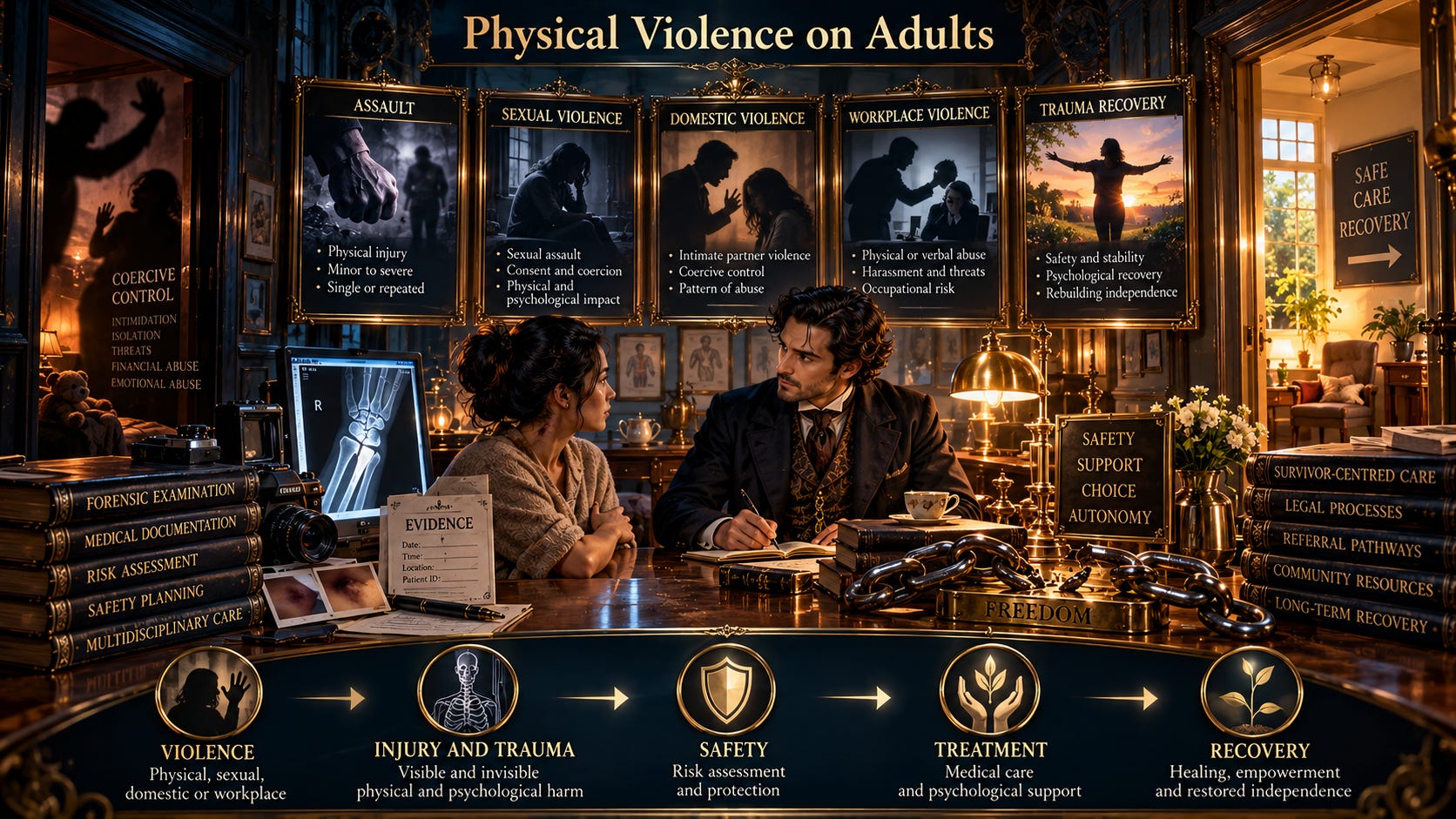
    The House of Broken Safety A woman arrives at Baker Street with a fractured wrist. She tells Medlock Holmes that she fell down the stairs. Her husband, standing beside her, answers most of the questions. Holmes notices three things: the woman’s hesitation, her husband’s insistence on remaining in the room, and the fear that appears whenever she is asked about returning home. The fracture is visible. The danger is not. Holmes opens the doors to The House of Broken Safety, where physical violence is revealed not as a single event, but as a complex interaction of injury, power, vulnerability, trauma and survival. The First Chamber: The Many Faces of Violence Violence takes different forms: assault, sexual violence, intimate partner violence, workplace aggression and abuse of vulnerable adults. Holmes discovers that victims are not confined to any particular age, gender or social group. Some are assaulted by strangers. Others are harmed by people they know, trust or depend upon. In sexual violence, the familiar image of an unknown attacker is particularly misleading. Many assaults are perpetrated by acquaintances, partners or other known individuals. In domestic violence, Holmes finds an even more troubling pattern: the repeated use of fear, intimidation, isolation and abuse to establish power and control. He writes: VIOLENCE ≠ PHYSICAL INJURY ALONE The Second Chamber: The Invisible Injuries Beyond the examination room lies a gallery of symptoms. A survivor experiences nightmares and intrusive memories. Another develops depression, anxiety and chronic pain. A third struggles with shame, emotional numbing, sexual difficulties and substance misuse. Holmes recognises that the consequences of violence extend far beyond the immediate injury. Post-traumatic stress disorder, depression, anxiety, substance misuse, dissociation and suicidal behaviour may emerge or persist long after an assault. He also discovers the importance of social responses. Supportive relationships can promote recovery, while disbelief, blame and rejection may intensify suffering. The response to trauma can become part of either the injury or the healing. The Third Chamber: The Interview That Can Harm Holmes observes a clinician questioning a survivor. The questions are rapid, the details intrusive, and the patient is repeatedly asked to describe the assault. The clinician intends to help, but the patient becomes increasingly distressed. Holmes recognises the danger of inadvertently recreating the experience of powerlessness. A trauma-informed assessment requires privacy, explanation, choice, sensitivity and attention to the patient’s pace. The survivor must not be reduced to a collection of injuries or an account of the crime. Holmes writes: SAFETY → TRUST → CHOICE → ASSESSMENT → RECOVERY The Fourth Chamber: The Question of Safety A patient may be medically stable but still unsafe. Holmes therefore looks beyond the presenting injury. Can the patient return home safely? Does the perpetrator have continuing access? Is there a risk of further assault? Are suicidal thoughts, severe dissociation, psychosis or overwhelming emotional distress compromising safety? Is hospital admission necessary? What legal and safeguarding responsibilities apply? Holmes understands that successful treatment begins not with a prescription or psychotherapy, but with establishing safety. The Fifth Chamber: Rebuilding a Life The final chamber contains no instruments of investigation. Instead, there is a therapeutic room, a network of supportive relationships and an open door. Holmes examines trauma-focused cognitive-behavioural therapy, exposure-based approaches, EMDR and the careful use of medication for clinically significant psychiatric symptoms. He discovers that recovery requires more than symptom reduction. It also involves restoring autonomy, relationships, confidence and the capacity to make choices. Medication may help particular symptoms, but it does not replace psychological treatment or protection from continuing violence. Holmes closes the casebook: “To treat the wound without recognising the violence is to solve only half the case.” The final deduction: RECOGNISE VIOLENCE → ESTABLISH SAFETY → UNDERSTAND TRAUMA → SUPPORT RECOVERY → PREVENT FURTHER HARM Key Takeaways 1. Violence as a Public Health Problem 1. Physical violence against adults is a major public health concern. 2. Violence encompasses several distinct forms of interpersonal harm. 3. These include physical assault, sexual assault, intimate partner violence, workplace violence and torture. 4. Homicide represents one of the most severe outcomes. 5. Different forms of violence have different epidemiological patterns and risk factors. 6. There is no single explanatory factor common to all violence. 7. Violence affects people across genders, ages, ethnicities and socioeconomic groups. 8. Some populations experience disproportionately high rates of victimisation. 9. The consequences of violence extend beyond immediate physical injury. 10. Survivors may experience persistent psychiatric symptoms. 11. Violence can produce chronic medical disability. 12. Reduced productivity and impaired occupational functioning contribute to its societal burden. 13. Fear of violence may influence where individuals live, work or travel. 14. Communities may change their behaviour in response to actual or perceived danger. 15. The chapter describes declining rates of several categories of violent crime over earlier decades in the United States. 16. Such historical trends should not be assumed to represent current rates. 17. Education and prevention programmes are important public health responses. 18. Improved recognition and treatment may reduce morbidity among survivors. 19. Violence prevention requires interventions beyond individual psychiatric treatment. 20. Violence must be understood as both an individual clinical problem and a wider public health challenge. 2. Classification of Assault 21. Assault can be classified according to the relationship between victim and perpetrator. 22. The setting in which violence occurs is also important. 23. Common categories include violent crime, sexual violence, domestic violence and workplace violence. 24. Torture represents another important form of violence. 25. Different categories may overlap. 26. A person may experience sexual assault within an intimate relationship. 27. Workplace violence may involve physical assault, sexual violence or homicide. 28. Domestic violence may involve several forms of abuse simultaneously. 29. Classification is useful for epidemiology, clinical assessment and prevention planning. 30. However, rigid categories should not obscure the survivor’s individual experience. 31. Police-recorded crime statistics reflect incidents reported to law enforcement. 32. Victimisation surveys may capture incidents that never result in police reports. 33. These sources therefore measure somewhat different aspects of violence. 34. Underreporting is particularly important when interpreting sexual violence statistics. 35. The absence of an official crime report does not establish that violence did not occur. 3. Violent Crime 36. The chapter uses the US Uniform Crime Report classification of violent crime. 37. This includes murder and non-negligent manslaughter. 38. It also includes rape, robbery and aggravated assault. 39. Simple assault is classified separately in the reporting framework described. 40. Simple assault generally involves assault without a weapon or serious injury. 41. The chapter also discusses intimidation, coercion and stalking in relation to less severe assault categories. 42. Violence may therefore involve threatening behaviour even when serious physical injury is absent. 43. The chapter reports approximately 5.8 million violent victimisations in the United States in 2019, using the statistical categories described. 44. It identifies aggravated assault, simple assault and robbery as substantial components. 45. The chapter describes a marked reduction in violent victimisation between 1993 and … This is a public episode. If you'd like to discuss this with other subscribers or get access to bonus episodes, visit drmanaankarray.substack.com/subscribe

    • Transcript
  • S13 · E164
    October 26 · 54 min

    PSYCH 164: Genetic Counseling for Psychiatric Conditions

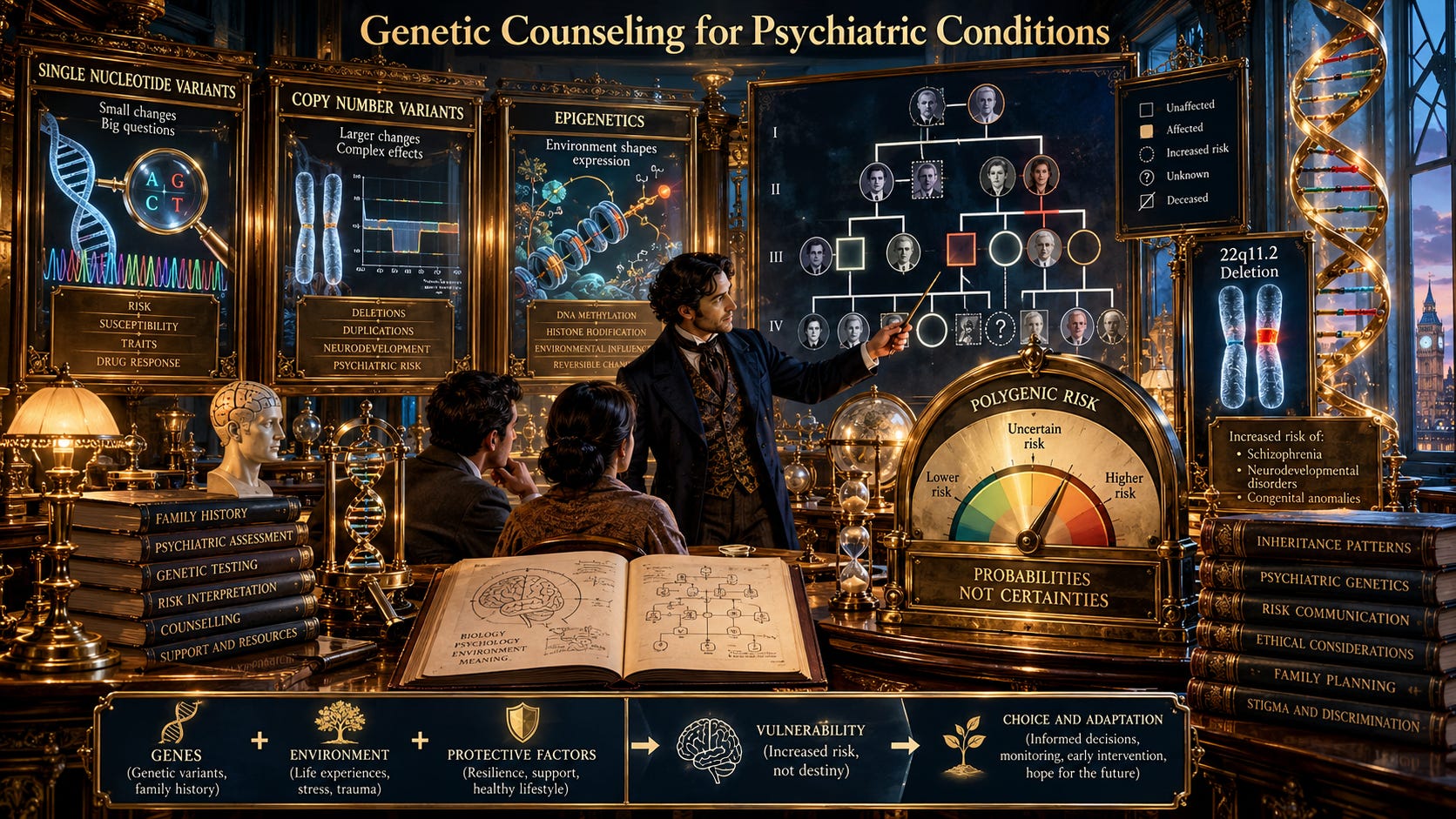
    The House of Inherited Shadows A sealed letter arrives at Baker Street. Inside is a family tree spanning four generations. Several names are marked in crimson: schizophrenia, bipolar disorder, depression and obsessive-compulsive disorder. The accompanying note contains a single question: “If mental illness runs in my family, is it inevitable that my children will inherit it?” Medlock Holmes recognises the question immediately. It is not merely an enquiry about genetics. Beneath it lie fear, guilt, responsibility and the desire to protect those we love. He enters the House of Inherited Shadows, where five mysteries await. The First Mystery: The Family That Feared Its Future A woman with bipolar disorder longs to become a mother but fears passing on her illness. A father with recurrent depression watches his teenage children anxiously, interpreting every emotional fluctuation as a possible warning sign. A young woman brings Holmes a commercial genetic report predicting an increased risk of psychiatric illness. And a couple asks whether genetic testing could help them select an embryo guaranteed never to develop schizophrenia. Holmes examines their questions and discovers a shared misunderstanding: Genetic vulnerability is not genetic certainty. Psychiatric disorders generally arise through complex interactions between numerous genetic variants, environmental exposures and protective influences. The inheritance of susceptibility does not guarantee the development of illness. The Second Mystery: The Three Genetic Keys Holmes enters a laboratory containing three illuminated cabinets. The first contains single nucleotide variants - small alterations in DNA, many of which are common and individually exert only modest effects on psychiatric risk. The second contains copy number variants - deletions or duplications of chromosomal segments that may carry substantially greater clinical significance. The third contains epigenetic mechanisms - processes influencing gene expression without altering the underlying DNA sequence. Holmes discovers that some genetic influences cross traditional diagnostic boundaries. A variant associated with schizophrenia may also influence vulnerability to other psychiatric conditions. He examines 22q11.2 deletion syndrome, in which a chromosomal deletion can be associated with congenital anomalies, developmental differences and an increased likelihood of psychosis. The central deduction is: GENETIC SUSCEPTIBILITY ≠ DIAGNOSIS The Third Mystery: The Numbers That Mislead Holmes turns to the family pedigree. He discovers that the probability of psychiatric illness depends on more than the number of affected relatives. The degree of biological relationship, age at onset, severity of illness, diagnostic accuracy and clustering of conditions all influence interpretation. A family history of schizophrenia may increase a relative’s risk substantially above the population average, but most relatives will still not develop schizophrenia. Holmes also examines polygenic risk scores, which combine information from many genetic variants. These scores may estimate susceptibility at a population level, but they cannot reliably predict whether a particular individual will develop a psychiatric disorder. He writes across the blackboard: HERITABILITY ≠ INDIVIDUAL DESTINY RELATIVE RISK ≠ ABSOLUTE RISK POLYGENIC RISK SCORE ≠ CLINICAL DIAGNOSIS The Fourth Mystery: The Burden of Blame In a quiet consultation room, Holmes meets a mother who believes she caused her daughter’s eating disorder by passing on defective genes. Another family believes that psychiatric illness must have resulted from inadequate parenting. Holmes explains that both interpretations misunderstand the complexity of psychiatric illness. Genes and environment interact, but neither provides a simple explanation of personal responsibility. Environmental influences include prenatal exposures, substances, trauma, illness, developmental experiences and social circumstances. Many lie beyond an individual’s control. Genetic counselling can therefore achieve something important even without genetic testing: it can reduce misplaced guilt, correct misconceptions and restore a sense of agency. The Fifth Mystery: The Ethics of Knowing Holmes enters the final chamber, where a machine promises to reveal every person’s future psychiatric vulnerability. But the machine cannot tell him who will become ill, when symptoms will begin or whether illness can be prevented. Its predictions raise troubling questions. Should children undergo testing when no specific preventive intervention exists? Could employers or insurers misuse genetic information? Might parents feel pressured to avoid having children? Could a result intended to empower someone instead increase stigma and anxiety? Holmes concludes that the ethical challenge is not simply whether genetic information can be obtained, but whether it can be interpreted and used responsibly. Psychiatric genetic counselling must therefore combine scientific understanding with emotional support, informed choice and respect for autonomy. He closes the casebook: “A family history tells us where vulnerability may lie. It does not tell us where a person’s life must lead.” The final deduction: PSYCHIATRIC GENETIC COUNSELLING = UNDERSTANDING RISK + EXPLORING MEANING + REDUCING BLAME + SUPPORTING CHOICE + BUILDING HOPE Key Takeaways 1. Foundations of Psychiatric Genetic Counselling 1. Psychiatric genetic counselling addresses the medical, psychological and familial implications of genetic contributions to psychiatric illness. 2. It is not limited to ordering or interpreting genetic tests. 3. Counselling can provide substantial benefits even when no clinically useful genetic test is available. 4. Patients frequently want to understand why they developed a psychiatric condition. 5. Common questions include whether illness was inherited, whether it could have been prevented and whether children will be affected. 6. These questions often carry considerable emotional significance. 7. In the absence of a satisfactory explanation, individuals develop their own models of illness causation. 8. These explanatory models influence coping, treatment engagement and adherence. 9. Patients may be more willing to participate in treatment when they understand how treatment relates to their beliefs about illness causation. 10. Psychiatric genetic counselling integrates education, psychological support and informed decision-making. 11. It aims to improve understanding of a condition’s origins and familial implications. 12. It also seeks to reduce distress, facilitate adaptation and strengthen perceived personal control. 13. A central objective is to replace deterministic interpretations of inheritance with an understanding of susceptibility. 14. Counselling should explore both genetic and environmental influences. 15. The ideal service involves collaboration between mental health and genetics professionals. 16. Psychiatrists are well placed to initiate these discussions because of their ongoing therapeutic relationships. 17. Specialist genetic counsellors are particularly valuable for complex pedigrees, unusual presentations and genomic testing decisions. 18. The counselling process should be person-centred and responsive to the patient’s own questions. 19. Providing information alone is insufficient when the information has substantial emotional consequences. 20. The purpose of genetic counselling is not simply to calculate risk, but to help people live constructively with uncertainty. 2. The Psychological Meaning of Genetic Risk 21. Patients may interpret psychiatric illness through biological, psychological, social or moral explanations. 22. A genetic explanation may reduce self-blame for some individuals. 23. For others, it may increase feelings of helplessness or fatalism. 24. Some parents feel guilty about potentially transmitting psychiatric vulnerability to their children. 25. Others believe their parenting caused a child’s psychiatric disorder. 26. Both interpretat… This is a public episode. If you'd like to discuss this with other subscribers or get access to bonus episodes, visit drmanaankarray.substack.com/subscribe

    • Transcript
  • S13 · E163
    October 25 · 57 min

    PSYCH 163: Psychiatry and Reproductive Medicine

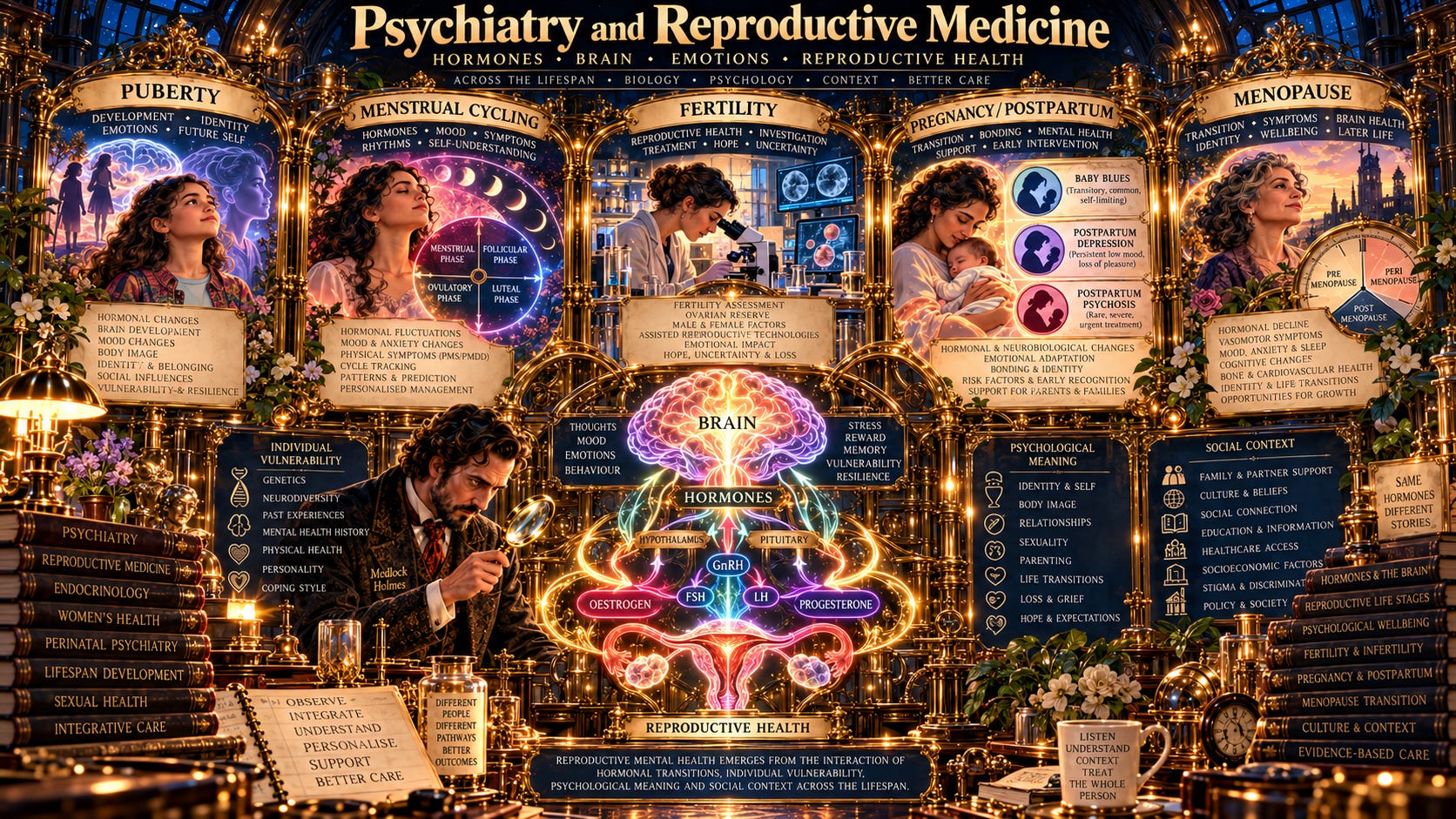
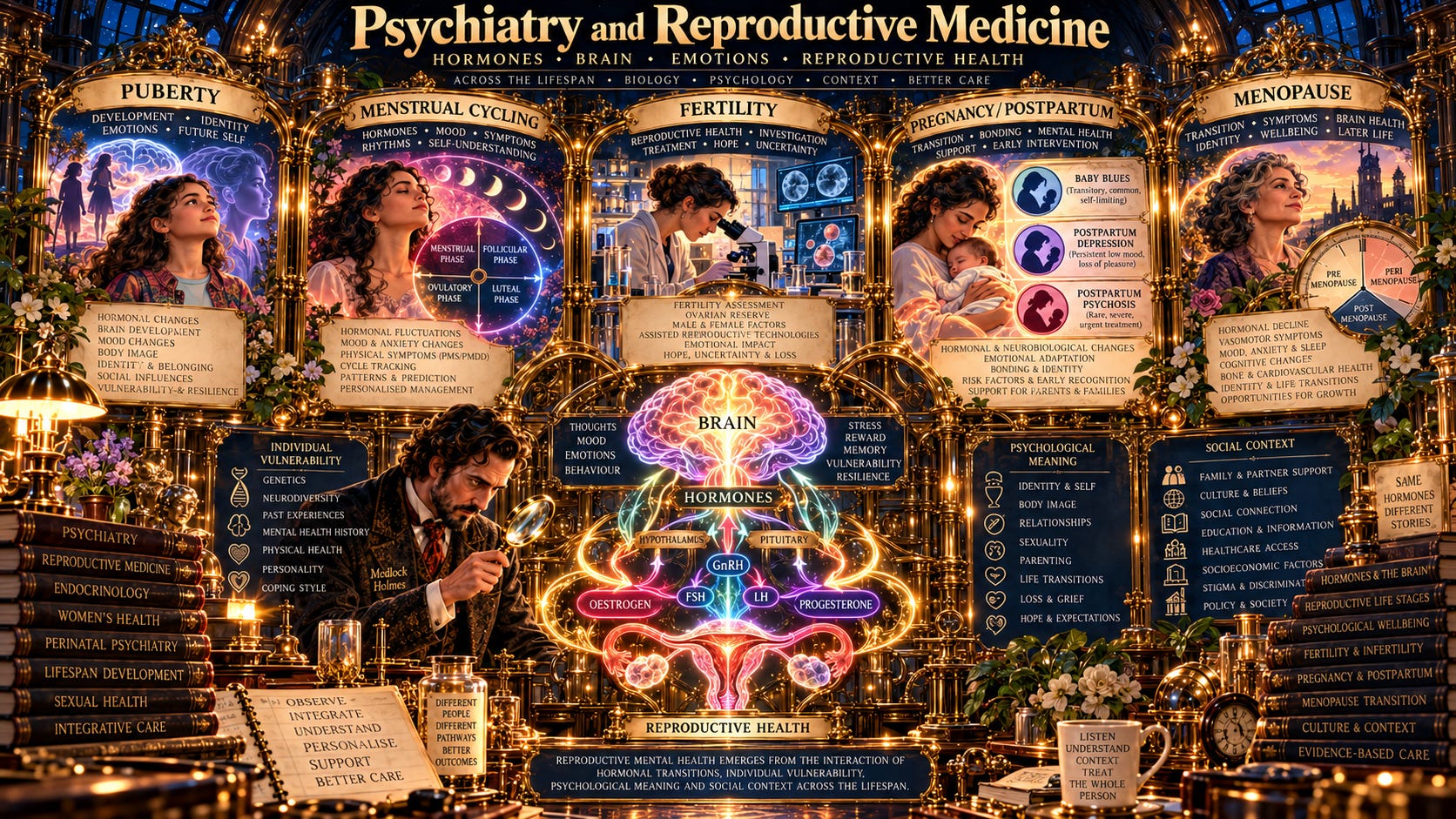
    Medlock Holmes investigates the extraordinary relationship between the reproductive system and the human mind. On a cold London morning, Medlock Holmes receives an unusual summons from the Royal Institute of Reproductive Medicine. The Institute’s physicians have encountered a series of apparently unrelated mysteries. A young woman develops severe depression during the week preceding menstruation, only to recover shortly after bleeding begins. Another experiences profound psychological distress following repeated unsuccessful attempts to conceive. A third, previously stable for years, develops a severe depressive episode during pregnancy. A new mother becomes overwhelmed by terrifying thoughts of accidentally harming her infant, although she desperately wants to protect the child. And elsewhere in the maternity hospital, another mother has stopped sleeping, begun expressing bizarre beliefs about her newborn and appears increasingly disconnected from reality. The physicians have investigated each case separately. Holmes, however, suspects that they share a common thread. He enters an enormous conservatory divided into five chambers, each representing a different season of reproductive life. Across the ceiling runs an intricate brass network connecting the ovaries, hypothalamus, pituitary gland, adrenal system and brain. Holmes studies the machinery. The reproductive system influences the brain, but the brain also regulates reproduction. The relationship is not a simple chain of hormonal causes and psychiatric effects. It is a continuous, bidirectional conversation involving hormones, neurotransmitters, stress physiology, immune signalling, psychological experience and social circumstances. The First Investigation: The Biological Clockwork Holmes begins in the Chamber of Development. He examines how chromosomal signals, gonadal differentiation and hormonal exposure shape reproductive anatomy and physiology. He traces the emergence of the hypothalamic–pituitary–gonadal axis, the maturation of reproductive function during puberty and the establishment of menstrual cycling. A brass mechanism displays the central reproductive pathway: HYPOTHALAMUS → GnRH → PITUITARY → LH/FSH → GONADS → SEX STEROIDS Yet Holmes discovers that this machinery is highly sensitive to conditions elsewhere in the body. Stress, inadequate nutrition, excessive exercise, severe illness and changes in energy availability can alter hypothalamic signalling and reproductive function. In some circumstances, psychological and physiological stress contribute to functional hypothalamic amenorrhoea. In others, reproductive hormonal fluctuations influence mood, cognition and behaviour. Holmes identifies the first essential distinction: Reproductive biology can affect mental health, while mental health and its physiological consequences can affect reproductive biology. He also recognises that reproductive anatomy, chromosomal characteristics, gender identity and sexual orientation are distinct dimensions of human experience. Clinical care must therefore be guided by the individual’s anatomy, physiology, identity and preferences rather than assumptions based on gender alone. The Second Investigation: The Menstrual Clock The next chamber contains an extraordinary clock with a twenty-eight-day dial. Its hands move through the follicular phase, ovulation and luteal phase before returning to menstruation. Holmes observes the coordinated changes in oestradiol, progesterone, gonadotrophins and neuroactive steroid metabolites. But the mystery is not simply how much hormone is present. Two patients may experience similar hormonal fluctuations yet have markedly different emotional responses. The critical issue may be sensitivity to normal hormonal change. Holmes encounters three distinct patterns. In premenstrual syndrome, physical and emotional symptoms emerge cyclically before menstruation. In premenstrual dysphoric disorder, severe affective symptoms cause substantial distress or functional impairment. In premenstrual exacerbation, an existing psychiatric disorder worsens before menstruation but does not disappear during the remainder of the cycle. Holmes writes: PMDD ≠ PREMENSTRUAL EXACERBATION OF AN EXISTING DISORDER He discovers that diagnosis requires prospective daily symptom recording across at least two symptomatic menstrual cycles, alongside careful assessment for other psychiatric and medical conditions. The underlying mechanisms involve altered responses to ovarian steroid fluctuations, serotonergic signalling and neuroactive steroids such as allopregnanolone, which modulates GABA-A receptors. Treatment may include psychological interventions, selective serotonin reuptake inhibitors and selected hormonal approaches. The lesson is unmistakable. The timing of symptoms can be as diagnostically important as their content. The Third Investigation: Fertility, Infertility and Psychological Meaning Holmes enters a garden filled with flowering plants. Some bloom effortlessly. Others struggle despite apparently favourable conditions. He learns that successful reproduction depends on multiple coordinated biological processes: gamete production, ovulation, sperm function, fertilisation, tubal transport, implantation and the maintenance of pregnancy. Yet infertility cannot be understood through reproductive physiology alone. For some individuals, difficulty conceiving challenges identity, relationships, expectations of adulthood and deeply held hopes about family. Repeated treatment cycles may produce a pattern of anticipation, disappointment, grief and renewed uncertainty. Holmes also encounters patients whose reproductive function has been disrupted by severe stress, energy deficiency or eating disorders. He distinguishes the psychological consequences of infertility from the physiological effects of stress and psychiatric illness on reproductive function. Neither relationship should be oversimplified. Stress should not automatically be blamed for infertility, and psychiatric distress should not be dismissed as an inevitable consequence of reproductive treatment. Holmes concludes: INFERTILITY CARE = BIOLOGICAL INVESTIGATION + PSYCHOLOGICAL SUPPORT + RELATIONAL UNDERSTANDING The Fourth Investigation: The Chamber of Reproductive Choice In the next chamber, Holmes examines contraception, pregnancy planning and the psychological significance of reproductive autonomy. He finds that contraceptive methods differ in their mechanisms, hormonal exposure, tolerability and practical demands. Questions frequently arise about whether hormonal contraception causes depression. Holmes discovers that the evidence is complex. Observational associations do not necessarily establish causation, and individual vulnerability may differ. A patient’s history of mood symptoms, contraceptive experiences and reproductive preferences must therefore inform shared decision-making. The investigation extends to emergency contraception, unintended pregnancy, pregnancy termination and the emotional and social circumstances surrounding reproductive decisions. Holmes recognises that good psychiatric care does not impose a particular reproductive choice. It supports informed decision-making, explores coercion and safety, and respects autonomy. The Fifth Investigation: Pregnancy and the Vulnerable Mind The conservatory opens into a maternity ward. Holmes observes that pregnancy produces profound physiological changes. Oestradiol and progesterone rise dramatically. Stress-related endocrine pathways change. Immune function adapts. Sleep, metabolism, body image and social roles are transformed. Yet pregnancy is not necessarily protective against psychiatric illness. Depression and anxiety may begin, recur or worsen during pregnancy. Some patients experience intense fear concerning pregnancy complications, childbirth, the infant’s health or their capacity to become a parent. Others have a history of bipolar disorder, psychosis or recurrent depression, making treatment decisions particularly consequential. Holmes is confr… This is a public episode. If you'd like to discuss this with other subscribers or get access to bonus episodes, visit drmanaankarray.substack.com/subscribe

    • Transcript
  • S13 · E163
    October 24 · 48 min

    PSYCH 162: Cultural Assessments in Psychiatry

    Medlock Holmes investigates the hidden cultural assumptions that shape diagnosis, treatment and the therapeutic relationship. The House of Many Mirrors On a fog-covered evening in Victorian London, Medlock Holmes receives a letter from the Royal Institute of Psychiatric Enquiry. The letter describes an unsettling pattern. Several patients have received technically accurate psychiatric assessments, yet their treatment has failed. Some have disengaged. Others have rejected diagnoses. A few have described feeling profoundly misunderstood, despite their clinicians’ best intentions. The Institute’s director asks Holmes a deceptively simple question: “How can a psychiatrist correctly identify an illness and still fail to understand the patient?” Holmes enters the House of Many Mirrors, an extraordinary institution where each room reflects a different perspective on the same human experience. In the first mirror, he sees a patient suffering from depression. In the second, the same person appears as a migrant struggling with displacement, loss of professional status and separation from family. In the third, the patient is a parent whose illness threatens a deeply valued family role. In the fourth, the patient is someone whose previous experiences of discrimination have made psychiatric services feel unsafe. And in the final mirror, Holmes sees the psychiatrist - carrying their own beliefs about illness, professionalism, autonomy, treatment and what constitutes normal behaviour. The mystery becomes clear. Psychiatric assessment is never simply an encounter between a disorder and a diagnostic manual. It is an encounter between two people, each shaped by culture, history and experience. The First Investigation: The Origins of Cultural Psychiatry Holmes begins by examining the historical development of cultural assessment. He discovers that early comparative psychiatry attempted to determine whether psychiatric disorders appeared similarly across societies. Yet these investigations were frequently compromised by racial assumptions, unequal power relationships and the belief that European psychiatric concepts represented universal standards. Later, the Culture and Personality School proposed that societies produced characteristic personality structures through childhood socialisation. But Holmes identifies a serious weakness. A culture cannot be reduced to a single personality type, nor can individuals be understood merely as representatives of their society. Culture is dynamic. People interpret, negotiate, challenge and transform the traditions to which they belong. The modern investigation must therefore move beyond asking: “What does this cultural group believe?” Towards asking: “What does this particular person believe, and how have their cultural and social experiences shaped those beliefs?” The Second Investigation: The Two Maps of Illness In the Institute’s cartography room, Holmes discovers two maps of the same territory. The first is labelled DISEASE. It describes the clinician’s biomedical understanding of pathology, symptoms, diagnosis and treatment. The second is labelled ILLNESS. It describes the patient’s lived experience: what the problem means, why it happened, how serious it is, what might happen next and what kind of help seems appropriate. Holmes discovers that the maps may overlap without being identical. A psychiatrist may formulate major depressive disorder, while the patient understands their suffering as the consequence of a broken relationship, spiritual disconnection or accumulated social adversity. Neither account should automatically erase the other. Holmes introduces the concept of the Explanatory Model, exploring five essential questions: CAUSE → ONSET → MECHANISM → COURSE AND SEVERITY → TREATMENT The aim is not to make every patient adopt the clinician’s explanation. It is to establish enough shared understanding to develop a meaningful and clinically effective treatment plan. The Third Investigation: Four Instruments of Cultural Enquiry Holmes enters a laboratory containing four extraordinary investigative instruments. The first, Kleinman’s Explanatory Model Framework, reveals how patients understand the origins, mechanisms, course and treatment of illness. The second, the Explanatory Model Interview Catalogue (EMIC), provides a more systematic method for examining cultural meanings and comparing experiences across populations. The third, the Short Explanatory Model Interview (SEMI), introduces a practical structured approach suitable for primary care and research, incorporating social background, help-seeking and treatment expectations. The fourth, the McGill Illness Narrative Interview (MINI), reveals something more subtle. Patients do not always construct perfectly logical explanations. Their accounts may involve metaphors, memories, associations, stories about other people and apparently contradictory beliefs. Holmes recognises an important principle: The patient’s story need not be internally consistent to be clinically meaningful. The Fourth Investigation: The Five Chambers of Cultural Formulation Holmes discovers the Outline for Cultural Formulation, a framework designed to bring cultural understanding into routine psychiatric assessment. Five chambers open before him. The first examines cultural identity - not simply ethnicity, but language, religion, gender, sexuality, migration, age, socioeconomic position and the many identities a person considers important. The second examines cultural concepts of distress - the patient’s language of suffering, explanatory beliefs, perceived severity and expectations of recovery. The third examines psychosocial stressors, vulnerability and resilience - including discrimination, housing, employment, family relationships, social exclusion and sources of strength. The fourth examines the patient–clinician relationship - including communication, power, trust, racism, cultural assumptions and the influence of the institution itself. The fifth integrates these discoveries into an overall cultural assessment that changes how diagnosis and treatment are understood. Holmes notices that these chambers are connected. A patient’s religious identity may provide protection against despair while also influencing treatment preferences. Migration may bring opportunity alongside loss. Family relationships may provide support while simultaneously generating conflict. Cultural formulation must accommodate complexity rather than force experience into simple categories. The Fifth Investigation: The Sixteen Questions In the centre of the House stands a remarkable instrument: the Cultural Formulation Interview, or CFI. It contains sixteen questions arranged into four domains. The first explores how the patient defines the problem. The second examines perceived causes, social circumstances, support and identity. The third investigates coping, previous help-seeking and barriers to care. The fourth explores current treatment preferences and the patient’s relationship with the clinician. Holmes is particularly struck by the opening question. Rather than beginning with an assumption about diagnosis, the clinician invites the patient to explain what has brought them for help. This seemingly simple change alters the direction of the interview. The patient becomes the principal interpreter of their experience, while the clinician contributes diagnostic knowledge and therapeutic expertise. Holmes also discovers that the interview can incorporate the perspectives of family members and other informants, particularly when cognitive impairment, psychosis, developmental factors or interpersonal disagreement complicate assessment. Yet he warns that collateral information must never automatically override patient autonomy or confidentiality. The Sixth Investigation: The Culture of the Psychiatrist The final chamber contains no patient. Only a mirror. Holmes sees the psychiatrist’s own assumptions reflected back. Beliefs about independence, emotional expression, medication, psychological treatment, … This is a public episode. If you'd like to discuss this with other subscribers or get access to bonus episodes, visit drmanaankarray.substack.com/subscribe

    • Transcript
  • S13 · E161
    October 23 · 58 min

    PSYCH 161: Cultural Concepts of Distress

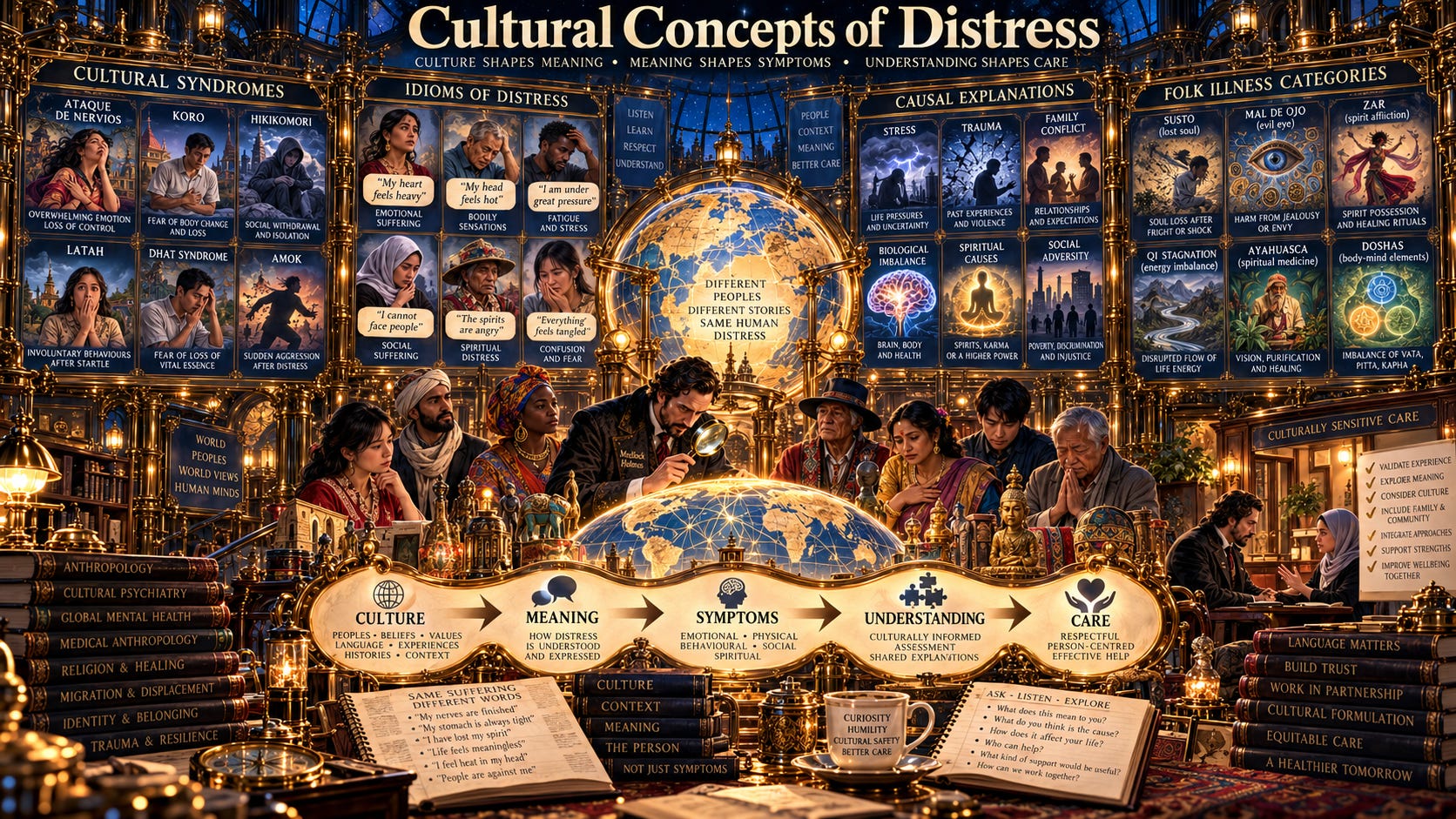
    understanding how culture shapes the experience, expression, explanation and treatment of psychological distress. The Museum of Untranslated Suffering Medlock Holmes receives an unusual invitation to the Museum of Untranslated Suffering, an extraordinary Neo-Victorian institution containing thousands of accounts of human distress collected across continents and centuries. The curator presents Holmes with a puzzle. A young woman from the Caribbean experiences sudden screaming, crying, trembling and a sense of losing control following a family confrontation. Her relatives call it ataque de nervios. A Cambodian refugee experiences dizziness, neck tension and overwhelming fear. He believes that disturbances in the circulation of khyâl, a wind-like bodily substance, may cause a stroke. A Korean woman describes years of suppressed anger, accompanied by chest pressure, bodily heat and emotional suffering. She calls her illness hwa-byung. A Chinese patient complains of exhaustion, poor concentration, insomnia and a weakened nervous system. His diagnosis is shenjing shuairuo. Meanwhile, a young man in Zimbabwe tells his family that he is suffering from kufungisisa - thinking too much. Holmes notices that the museum’s Western diagnostic catalogue offers possible explanations for every presentation: panic disorder, depression, somatic symptoms, trauma-related disorders or dissociation. Yet something remains missing. The psychiatric diagnosis may describe the symptoms without fully explaining what those symptoms mean to the person experiencing them. The Four Languages of Distress Holmes discovers four interconnected galleries. The first contains cultural syndromes - recognisable clusters of symptoms, experiences and behaviours that acquire particular meanings within social and cultural contexts. The second contains idioms of distress - familiar expressions through which people communicate suffering. These include phrases such as nerves, thinking too much and having a heavy heart. They may describe ordinary adversity, severe psychiatric illness or experiences somewhere between the two. The third contains cultural explanations - beliefs about why suffering has occurred. A person may attribute illness to emotional suppression, disturbed bodily energies, spiritual forces, interpersonal conflict or traumatic events. The fourth contains folk or popular illness categories - broader systems of understanding affliction, which may incorporate syndromes, symptoms, explanations and social circumstances. Holmes realises that these categories overlap. A single expression may describe a syndrome, communicate distress and offer an explanation for its cause. The Problem with the Old Catalogue In a dusty archive, Holmes discovers the former classification of culture-bound syndromes. He immediately recognises the flaw. It assumes that certain forms of suffering are culturally specific while Western psychiatric diagnoses are somehow culturally neutral. But depression, anxiety, trauma and psychosis are also understood through historically and culturally shaped concepts. Culture does not merely decorate an underlying biological disorder. It may influence which bodily sensations receive attention, which emotions are acceptable to express, how symptoms are interpreted, when help is sought and what treatment seems credible. Holmes replaces the old catalogue with a more sophisticated principle: CULTURE SHAPES EXPERIENCE → EXPRESSION → EXPLANATION → HELP-SEEKING → TREATMENT → OUTCOME The Gallery of Misdiagnosis The next gallery contains portraits of patients whose suffering was misunderstood. A spiritual experience has been mistaken for psychosis without adequate contextual assessment. A somatic expression of depression has been dismissed because the patient did not describe sadness. A trauma survivor’s understandable vigilance has been labelled paranoia. Another patient has been diagnosed with panic disorder without exploring the culturally meaningful bodily sensations that intensify their fear. Holmes discovers that cultural understanding is not simply an exercise in sensitivity. It is essential to diagnostic accuracy, risk assessment, therapeutic engagement and treatment effectiveness. The same cultural concept may correspond to different psychiatric presentations in different people. Conversely, the same psychiatric disorder may be expressed through very different cultural concepts. There is no reliable one-to-one translation. The Consulting Room of Two Explanations Holmes enters a final chamber containing two desks. At one sits the clinician, with a diagnostic manual. At the other sits the patient, carrying a personal account of suffering. Neither account is sufficient on its own. Holmes introduces the Cultural Formulation Interview, allowing the clinician to explore the patient’s understanding of the problem, its causes, the influence of identity and social circumstances, previous help-seeking and expectations of treatment. The task is not to abandon psychiatric diagnosis, nor to accept every cultural explanation uncritically. It is to build a clinically useful understanding that connects the patient’s world with psychiatric knowledge. In the museum’s final room, Holmes encounters community programmes that use familiar expressions such as thinking too much to improve access to psychological treatment. He discovers that culturally meaningful language can strengthen engagement, facilitate collaboration with community and traditional healers, and provide more relevant measures of recovery. The investigation concludes with a principle written above the museum’s entrance: “Before translating suffering into a diagnosis, understand the language in which suffering is being expressed.” The central lesson: GOOD CULTURAL PSYCHIATRY = CLINICAL ACCURACY + CULTURAL UNDERSTANDING + INDIVIDUAL MEANING + COLLABORATIVE CARE Key Takeaways 1. Foundations of Cultural Psychiatry 1. Cultural psychiatry examines how social and cultural contexts shape the experience, expression, interpretation and treatment of psychological distress. 2. Human distress has both widely shared features and culturally patterned variations. 3. Conditions resembling depression, anxiety and psychosis occur across many societies. 4. However, the meanings attributed to symptoms and the ways they are communicated may differ substantially. 5. Culture influences which experiences are considered normal, problematic, pathological or socially meaningful. 6. Cultural influences operate within Western societies as well as non-Western societies. 7. Psychiatric diagnostic systems themselves emerge from particular historical, scientific and cultural traditions. 8. Western psychiatric classifications should not automatically be regarded as culturally neutral. 9. Cultural psychiatry does not reject the possibility of common psychological and biological mechanisms across populations. 10. Instead, it examines how shared mechanisms interact with local beliefs, practices, relationships and social environments. 11. The same underlying distress may be communicated through emotional, cognitive, behavioural, somatic or spiritual language. 12. Different expressions of distress do not necessarily indicate different psychiatric disorders. 13. Conversely, apparently similar expressions may represent different clinical conditions. 14. Understanding the patient’s cultural context can therefore improve diagnostic precision. 15. Culture also influences stigma, coping, treatment preferences and expectations of healthcare. 2. Moving Beyond Culture-Bound Syndromes 16. The historical term culture-bound syndrome referred to patterns of symptoms thought to occur primarily within particular cultural settings. 17. Early accounts often assumed that such syndromes were geographically restricted. 18. These assumptions sometimes reflected colonial perspectives and limited understanding of local societies. 19. The term risked portraying non-Western illness experiences as exotic deviations from supposedly universal Western diagnoses. 20. M… This is a public episode. If you'd like to discuss this with other subscribers or get access to bonus episodes, visit drmanaankarray.substack.com/subscribe

    • Transcript
  • S13 · E160
    October 22 · 51 min

    PSYCH 160: Relational Problems

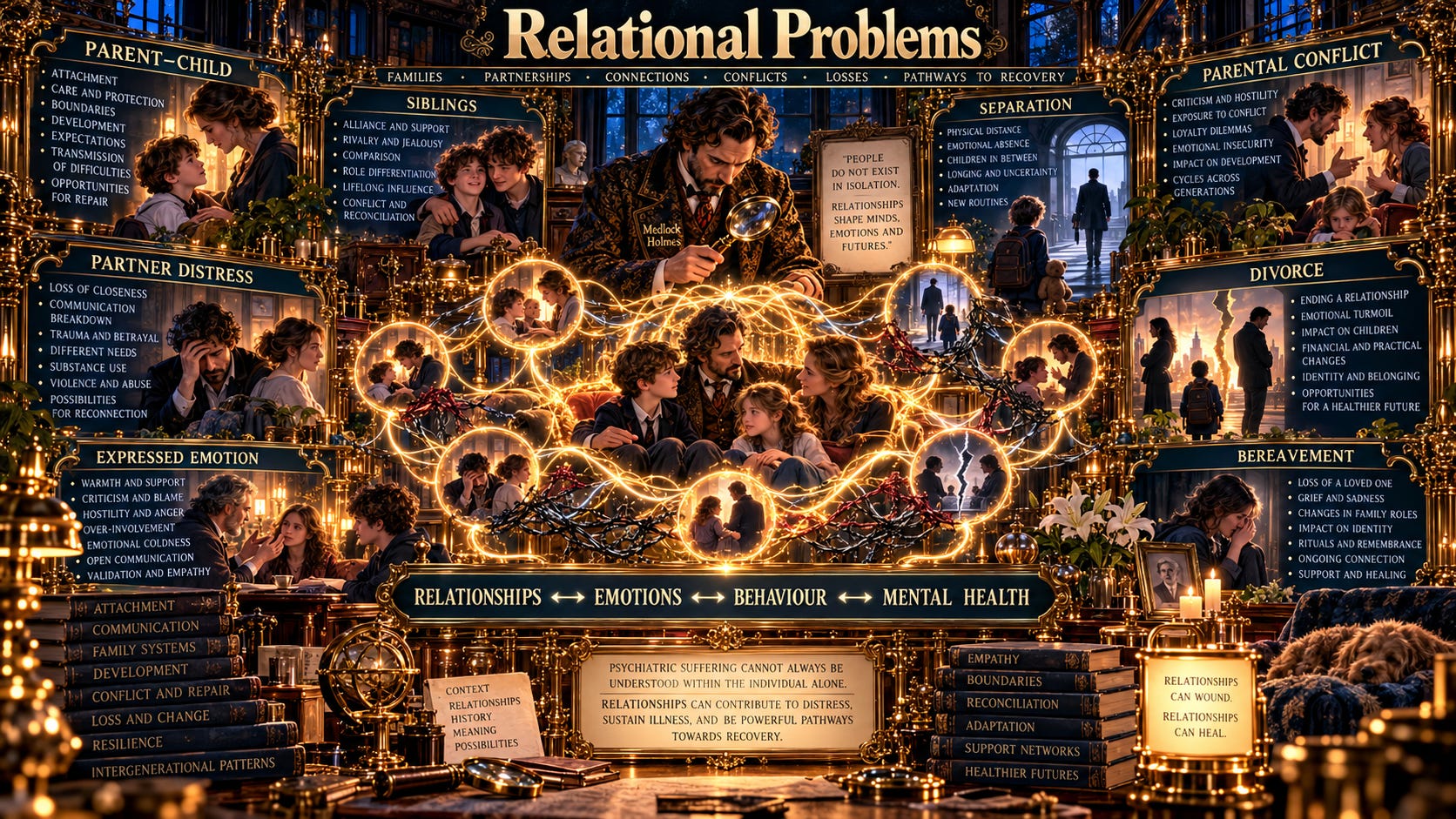
    understanding how relationships shape psychological distress, psychiatric illness, recovery and resilience. The House of Invisible Bonds Medlock Holmes arrives at an imposing Neo-Victorian mansion known as The House of Invisible Bonds. Unlike his previous investigations, there is no single patient waiting behind the consulting-room door. Instead, he encounters families, couples, siblings and grieving individuals, each carrying distress that cannot be fully understood in isolation. A child presents with anxiety, but the parents are locked in relentless conflict. A young man experiences repeated psychiatric relapses while living in an atmosphere of criticism and hostility. A couple seeks treatment for depression, yet their relationship has become a cycle of accusation, defensiveness and withdrawal. Holmes notices a remarkable pattern. The symptoms may belong to an individual, but the processes maintaining them may exist between people. The Eight Chambers of Relational Distress Holmes opens eight interconnected chambers, each representing a distinct relational problem. In the first, he encounters a parent and child trapped in escalating arguments. The parent’s attempts at control provoke resistance, and the child’s resistance generates even stricter control. Holmes examines attachment, parenting styles, behavioural difficulties and the influence of parental psychopathology. In the second chamber, siblings compete for affection and recognition. Ordinary rivalry has transformed into persistent hostility, jealousy and, in some cases, violence. The third chamber contains children growing up away from their parents. Some have found stability through foster care or kinship arrangements; others carry the psychological consequences of separation, disrupted attachments and repeated changes of home. In the fourth, a child stands between two arguing parents, desperately attempting to preserve affection for both. Holmes discovers the emotional burden of parental relationship distress, loyalty conflicts and the complexities of parent–child contact refusal. The fifth chamber contains an intimate couple whose communication has deteriorated into criticism, contempt, defensiveness and withdrawal. Holmes traces the vicious cycle through which relationship distress and depression reinforce one another. The sixth chamber reveals the consequences of separation and divorce, including disrupted family routines, changing attachments and the challenge of protecting children from continuing parental conflict. In the seventh, Holmes encounters a family whose conversations are saturated with criticism, hostility and emotional overinvolvement. He recognises the clinical significance of high expressed emotion, particularly in families supporting someone with serious mental illness. The final chamber is quieter. A grieving individual sits beside an empty chair. Holmes distinguishes the natural pain of bereavement from major depression and more persistent, impairing grief. The Relational Detective’s Method Holmes returns to his consulting room and draws a diagram: INDIVIDUAL VULNERABILITY ↔ RELATIONAL PATTERNS ↔ EMOTIONAL RESPONSE ↔ BEHAVIOUR ↔ MENTAL HEALTH He realises that biological and relational explanations are not competitors. They describe interacting dimensions of the same clinical reality. A genetic vulnerability may increase susceptibility to depression. Depression may alter communication and emotional availability. Relationship distress may then intensify depressive symptoms. The cycle can continue until someone intervenes. But Holmes also discovers a critical distinction: relationship distress must never be used to minimise abuse, coercion or violence. Safety and protection take precedence over attempts to restore relational harmony. The investigation ends with a new understanding of psychiatric formulation. “To understand the suffering of one person, we must sometimes examine the relationships in which that suffering is experienced, expressed and sustained.” The central principle of the episode: MENTAL HEALTH = INDIVIDUAL FACTORS + RELATIONAL PROCESSES + SOCIAL CONTEXT Key Takeaways 1. Understanding Relational Problems 1. Human psychological functioning cannot be understood entirely independently of interpersonal relationships. 2. Relationships influence identity, self-esteem, emotional regulation, physical health and psychiatric outcomes. 3. Supportive relationships may protect against psychological distress and improve recovery. 4. Dysfunctional relationships may contribute to the onset, maintenance or worsening of psychiatric symptoms. 5. Relational problems involve maladaptive patterns of feelings, behaviours and perceptions between two or more people. 6. Unlike most psychiatric disorders, which are primarily identified through symptoms in an individual, relational problems concern the interaction between individuals. 7. The chapter identifies four features that distinguish clinically significant relational problems from ordinary interpersonal difficulties. 8. First, there are recognisable, repetitive and relatively fixed patterns of painful or destructive interaction. 9. Second, these patterns are longstanding rather than merely reactions to a recent stressful event. 10. Third, the maladaptive patterns do not readily improve through ordinary supportive influences in the social environment. 11. Fourth, they produce significant psychological, physical, social or occupational consequences for at least one participant. 12. Relational problems may be the primary reason for seeking professional help. 13. They may also influence the course, prognosis or treatment of an existing psychiatric or medical condition. 14. A person may therefore have both a mental disorder and a relational problem. 15. Relational problems are included among conditions that may be a focus of clinical attention in DSM-5-TR. 16. They are not classified as mental disorders in themselves. 17. Nevertheless, they can be documented clinically when relevant to assessment or treatment. 18. The distinction between individual psychopathology and relational dysfunction is conceptual rather than absolute. 19. Biological vulnerabilities can influence relationships, and relationships can influence the expression of biological vulnerabilities. 20. The essential clinical question is not simply “What is wrong with this person?” but also “What is happening between the people involved?” 2. Classification and Diagnostic History 21. Earlier psychiatric classifications gave relatively little attention to relational problems. 22. DSM-II introduced categories recognising significant social or marital maladjustment without necessarily identifying a psychiatric disorder. 23. DSM-III included conditions such as marital problems, parent–child problems and sibling rivalry. 24. DSM-IV introduced a more explicit grouping of relational problems. 25. Earlier diagnostic descriptions were criticised for being insufficiently specific. 26. The Global Assessment of Relational Functioning scale was developed to describe overall relationship functioning. 27. DSM-5 abandoned the traditional multiaxial diagnostic system. 28. Relational problems are now documented alongside other clinically relevant conditions rather than being restricted to a separate psychosocial axis. 29. DSM-5-TR provides more detailed descriptions of relational problems than earlier editions. 30. Nevertheless, precise diagnostic boundaries and operational criteria remain areas requiring further research. 31. ICD-11 also recognises relationship and family circumstances that can influence health. 32. The two classification systems use somewhat different terminology for comparable problems. 33. Relational problems overlap conceptually with the broader social determinants of health. 34. Social determinants include the conditions in which people grow, live, learn, work and participate in society. 35. Relational diagnosis adds clinically relevant information that may be missed by symptom-based psychiatric diagnoses alone. 3. The Eight Re… This is a public episode. If you'd like to discuss this with other subscribers or get access to bonus episodes, visit drmanaankarray.substack.com/subscribe

    • Transcript
  • S13 · E159
    October 21 · 50 min

    PSYCH 159: Borderline Intellectual Functioning and Academic or Educational Problems

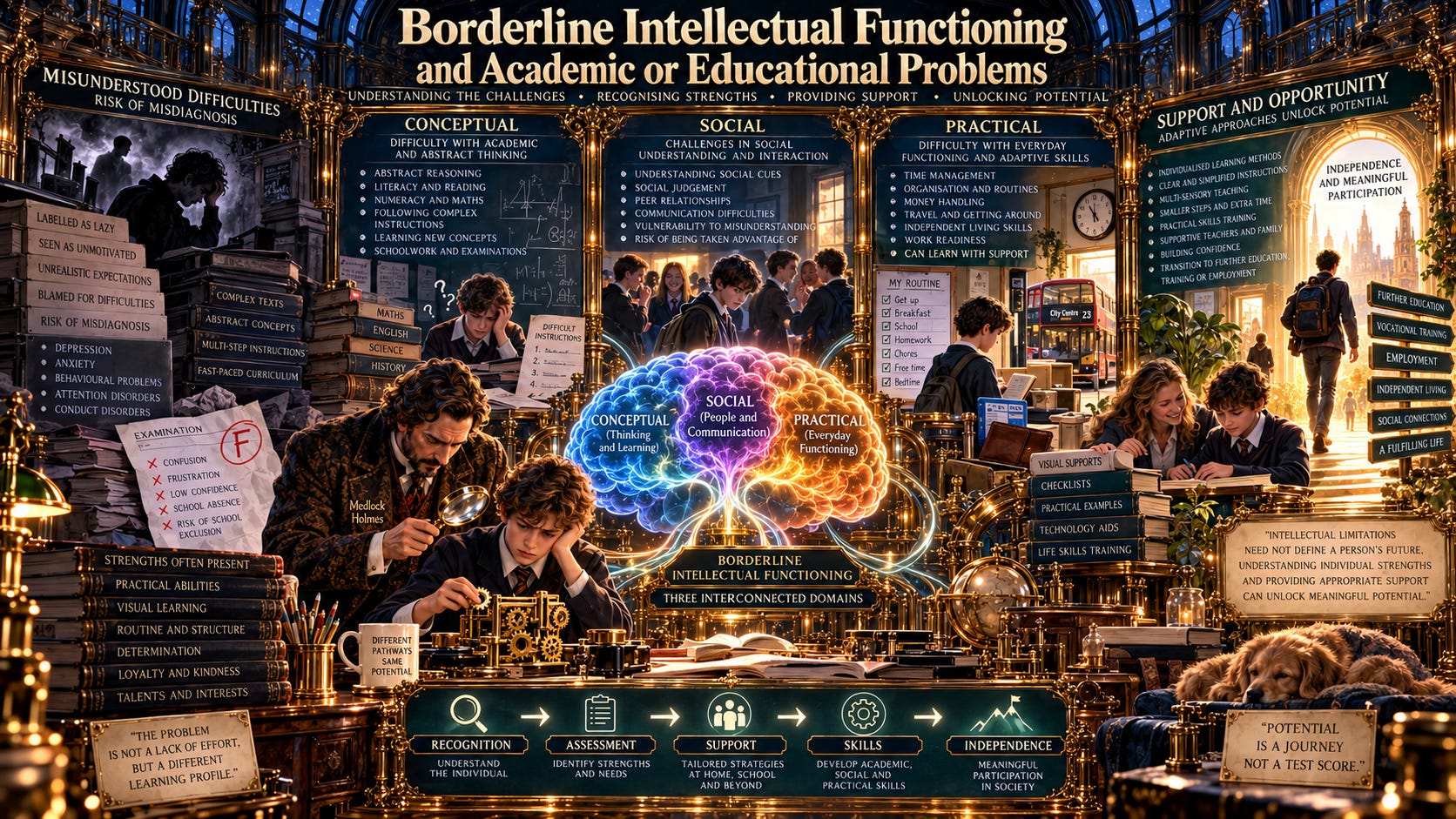
    The Mystery of the Invisible Barrier Medlock Holmes enters The Academy of Hidden Potential, where a puzzling pattern has emerged. Some students struggle despite enormous effort. Others appear articulate yet cannot manage everyday responsibilities. A few have been labelled inattentive, oppositional or unmotivated, although repeated treatments have failed. Holmes discovers that the difficulty may lie not in willingness, but in the interaction between intellectual capacity, adaptive functioning and environmental expectations. His investigation reveals borderline intellectual functioning: a frequently overlooked condition associated with below-average cognitive abilities and, in some individuals, significant difficulties with practical and social adaptation. Yet an intelligence quotient tells only part of the story. Holmes examines three interconnected domains: CONCEPTUAL SKILLS ↔ SOCIAL SKILLS ↔ PRACTICAL SKILLS A student may struggle with abstract reasoning yet excel at practical tasks. Another may communicate fluently while finding planning, problem-solving and independent living unexpectedly difficult. The Diagnostic Labyrinth Holmes follows the clues through ADHD, specific learning disorders, autism, intellectual developmental disorder, trauma and emotional difficulties. He discovers that similar outward behaviours can arise from very different underlying problems. Poor performance is not necessarily poor motivation. The investigation then moves beyond the individual to the classroom and home. Bullying, family adversity, educational disadvantage, inaccessible teaching, substance use and psychiatric illness can all interfere with academic achievement. The Pathway to Potential In the final chamber, Holmes finds no miraculous treatment that transforms intellectual capacity overnight. Instead, he discovers something more useful: carefully matched educational support, adapted communication, practical skills training, family involvement, emotional support and vocational preparation. The goal is not to make everyone learn identically. It is to help each person develop their abilities and participate meaningfully in life. Holmes closes his notebook: “The measure of intelligence is not merely what a person knows, but what they can accomplish when the world provides the right opportunities and support.” Key Takeaways 1. Understanding Borderline Intellectual Functioning 1. Borderline intellectual functioning (BIF) describes intellectual abilities substantially below the population average but generally above the range associated with intellectual developmental disorder. 2. Traditionally, BIF has been associated with IQ scores of approximately 70–85, although this range should not be treated as a rigid diagnostic boundary. 3. The chapter argues that the broader concept of borderline intellectual and adaptive functioning (BIAF) better captures the clinical difficulties experienced by affected individuals. 4. Intellectual ability and adaptive functioning are related but distinct. 5. Intellectual ability concerns reasoning, learning, problem-solving and understanding information. 6. Adaptive functioning concerns how effectively an individual manages the demands of everyday life. 7. Some people with borderline-range IQ scores function well independently, whereas others require substantial support. 8. Therefore, a borderline IQ score alone does not establish clinically significant impairment. 9. BIF is not classified as a formal mental disorder in DSM-5-TR; it is a condition that may warrant clinical attention. 10. Nevertheless, it can have substantial implications for mental health, education, employment and independent living. 11. BIF is frequently underrecognised because difficulties may be subtle or attributed to other diagnoses. 12. Its identification is particularly important when repeated educational or psychiatric interventions have been unsuccessful. 13. A major challenge is that people with BIF may experience significant difficulties without meeting eligibility criteria for disability services. 14. The chapter advocates earlier identification and more flexible approaches to support. 15. The fundamental principle is that clinical need should not be determined by an IQ threshold alone. 2. Intelligence Is More Than IQ 16. Intelligence is a multidimensional capacity rather than a single, uniformly expressed ability. 17. Traditional theories emphasised general intelligence, often represented by the factor g. 18. Contemporary models recognise multiple cognitive abilities, including verbal comprehension, fluid reasoning, working memory and processing speed. 19. The Cattell–Horn–Carroll model provides an influential framework for understanding these different abilities. 20. IQ tests estimate aspects of intellectual functioning but do not capture every dimension of real-world competence. 21. A full-scale IQ score summarises performance across several cognitive domains. 22. Important strengths and weaknesses can be obscured by relying exclusively on this composite score. 23. A person may have relatively strong verbal skills but marked difficulties with non-verbal reasoning. 24. Working memory limitations may interfere with following instructions and retaining information. 25. Reduced processing speed may cause difficulty completing tasks within expected timeframes. 26. Fluid reasoning difficulties may impair problem-solving in unfamiliar situations. 27. Executive functioning contributes to planning, organisation, inhibition and flexible adaptation. 28. Language facilitates conceptual understanding and the development of abstract thinking. 29. Emotional regulation and motivation influence how cognitive abilities are expressed. 30. Cognitive performance is affected by fatigue, anxiety, medication, educational opportunity and environmental demands. 31. Intelligence is therefore best understood as the interaction between underlying abilities and the circumstances in which they are used. 32. A useful distinction is COGNITIVE CAPACITY ≠ EVERYDAY PERFORMANCE. 3. Adaptive Functioning: The Three Domains 33. Adaptive functioning describes the practical application of abilities in everyday environments. 34. Assessment generally considers three domains: conceptual, social and practical. 35. The conceptual domain includes language, literacy, numeracy, memory, reasoning and understanding time and money. 36. Conceptual difficulties may manifest as problems reading instructions, calculating change or managing appointments. 37. The social domain includes interpersonal communication, social judgement, understanding relationships and recognising risk. 38. Social difficulties may include naivety, vulnerability to manipulation or difficulty interpreting complex social situations. 39. The practical domain includes personal care, household activities, transport, shopping, employment and money management. 40. Practical functioning may be relatively preserved for familiar tasks but impaired when situations become unfamiliar. 41. Adaptive functioning must be interpreted in relation to age and cultural expectations. 42. A child requiring help with money management is different from an adult who cannot independently manage essential financial responsibilities. 43. Some individuals compensate for weaknesses through repetition, routines and learned procedures. 44. Procedural learning may be a relative strength even when abstract reasoning is limited. 45. Adaptive abilities can improve through education, experience and appropriate support. 46. The degree of assistance required is often more clinically meaningful than a single IQ score. 47. Assessment should examine what the individual can do independently, what they can do with support and what remains difficult. 48. The clinical model is ABILITY + ENVIRONMENT + SUPPORT → FUNCTIONAL OUTCOME. 4. Diagnostic Boundaries and Intellectual Developmental Disorder 49. BIF and intellectual developmental disorder exist along overlapping dimensions of cognitive and adaptive functioning. 50. Intellectual developmental disorder in… This is a public episode. If you'd like to discuss this with other subscribers or get access to bonus episodes, visit drmanaankarray.substack.com/subscribe

    • Transcript
Showing 21–28 of 28 episodes