Skip to content
Artwork for Strange Bites

Strange Bites

Lance Martin

Strange Bites is a biweekly podcast that delivers real, cutting-edge discoveries served up in bite-sized episodes (15 minutes or less) wrapped in atmospheric, creative fiction. Hosted by Lance Martin, each episode plunges listeners into shadowy labs, forgotten dig sites, and eerie breakthroughs where fact meets chilling narrative.

Imagine stumbling upon a material lighter than air that could reshape aerospace… but in the dead of night, it feels like touching something that shouldn’t exist. Or watching scientists accidentally birth tiny organisms that grow their own primitive brains and perhaps begin to dream. These aren’t dry lectures—they’re immersive tales that make your skin crawl while your mind races with the real implications.

Real science, fictional delivery: Every story is grounded in verifiable research (with sources linked in show notes), but most of the storytelling is creative fiction. This blends thriller-like narration, vivid imagery, and thoughtful exploration of ramifications—ethical dilemmas, existential questions, and “what if” scenarios.

Perfect for commutes, late nights, or quick hits of wonder. Two episodes drop weekly, keeping the strange flowing steadily.

Dark, atmospheric, and wondrous. It evokes horror podcast vibes crossed with popular science, but stays truthful to the facts while amplifying the uncanny.

Notable and Recent episodes

- Soramatex → An impossibly light material from Japanese labs.
- Satyrex - Size Does Matter → A hissing desert spider discovery.
-Gods of Carbon → AI uncovering ancient elemental secrets.
-Biophotons (Auras Are Real) → The human body literally glowing.
-Ghost Murmur → CIA tech detecting heartbeats from miles away.
-Rise of the Neurobots → Living nightmares with self-grown brains.
- And more, from malaria parasites with spinning iron crystals to tiny dinosaur fossils with monster skulls.

If you love podcasts like Radiolab or Stuff You Should Know but crave a darker, more cinematic edge, or if The NoSleep Podcast appeals but you want grounded science, Strange Bites hits that sweet spot. It transforms abstract breakthroughs into visceral stories that linger, prompting you to question everything from the nature of consciousness to the hidden wonders (and horrors) in everyday biology and tech.

Stay strange—and question everything.

Play
  • 24 episodes
  • Avg 10 min
  • English
Counted on this page — what you have heard stays on this device, so it is not something the list can be paged by.
  • S1 · E34
    June 15 · 11 min

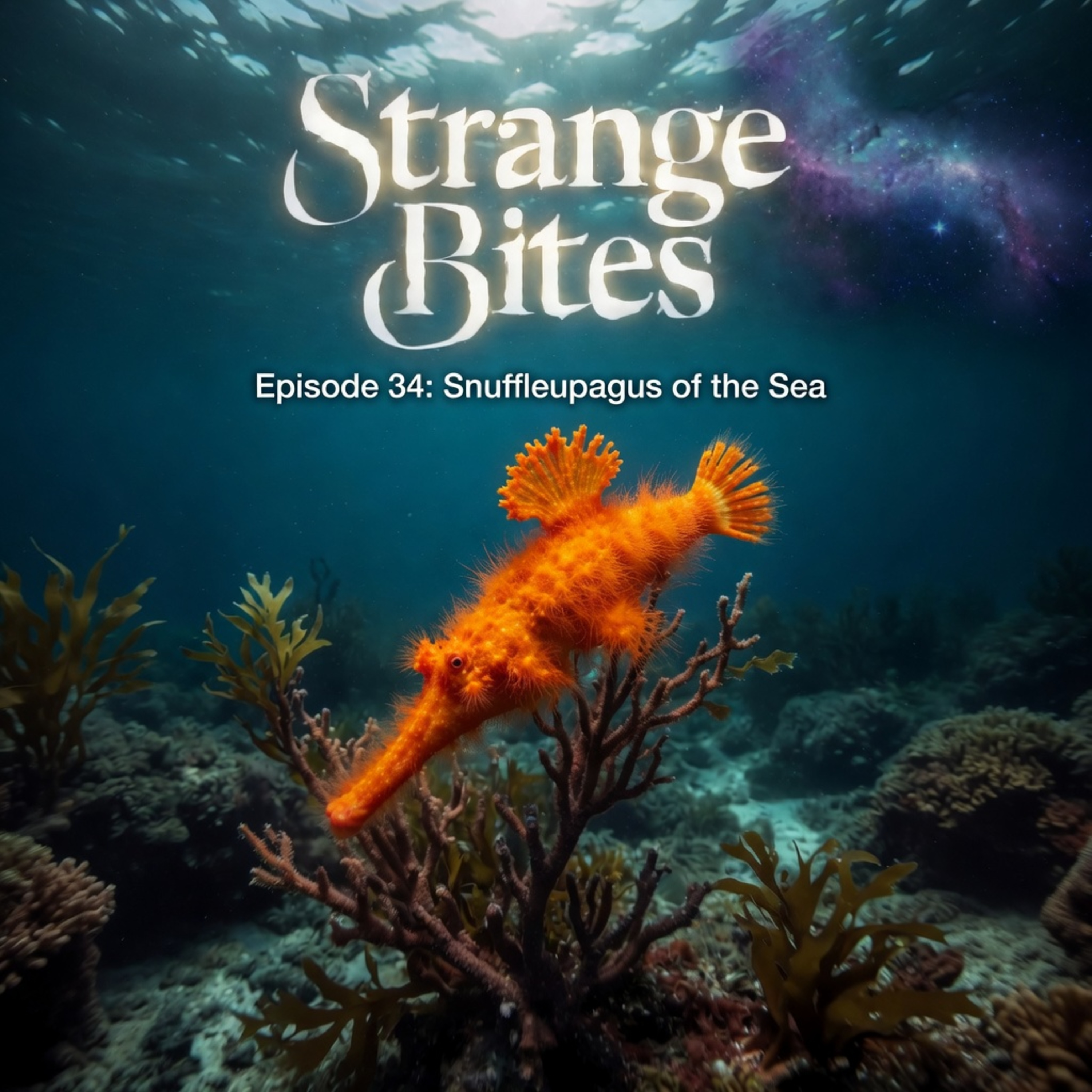
    Episode 34: The Snuffleupagus of the Sea

    Deep beneath the waves, in the twilight zones where sunlight struggles to penetrate, the coral reefs hold secrets that have waited millions of years to be uncovered. Not every mystery hides in the abyss. Some lurk in plain sight, swaying gently among the fronds of red algae, invisible to all but the most patient observers. Today, we descend into the gardens of the Great Barrier Reef to encounter a creature so perfectly disguised that it evaded science for decades. A tiny phantom, draped in living filaments that make it look like a forgotten relic from a children’s story, or something far older and stranger that nature itself dreamed up. This is episode 34, the Snuffleupagus of the Sea (Solenostomus Snuffleupagus). A ghost pipefish that blurs the line between myth and science. Sources Original Research Paper (formal description):
Short, G., & Harasti, D. (2026). Solenostomus snuffleupagus sp. nov., a hairy ghost pipefish (Teleostei: Solenostomidae) from the Southwest Pacific… Journal of Fish Biology.
https://onlinelibrary.wiley.com/doi/10.1111/jfb.70497 National Geographic (excellent overview with photos and diver context):
https://www.nationalgeographic.com/animals/article/snuffleupagus-fish Science News (strong on science details and timeline): 
https://www.sciencenews.org/article/new-fish-sesame-street-snuffleupagus Scientific American (great narrative on the long search):
 https://www.scientificamerican.com/article/a-real-mr-snuffleupagus-meet-the-oceans-strangest-new-fish-species/ Wikipedia (concise summary with references to the paper and key collections):
https://en.wikipedia.org/wiki/Solenostomus_snuffleupagus Sydney Morning Herald (detailed on the 25-year quest and local Australian angle): 
https://www.smh.com.au/national/the-25-year-ocean-mystery-solved-with-a-nod-to-mr-snuffleupagus-20260510-p5zvg4.html Discover Magazine (focus on camouflage and evolutionary context): 
https://www.discovermagazine.com/this-shaggy-new-fish-looked-so-much-like-snuffleupagus-that-scientists-named-it-after-him-49110 IFLScience (includes quotes and collection challenges): 
https://www.iflscience.com/its-beautiful-you-wouldnt-expect-it-to-be-a-predator-new-hairy-looking-ghost-pipefish-is-a-real-life-mr-snuffleupagus-83544 Mongabay (conservation and broader reef context): 
https://news.mongabay.com/short-article/new-species-of-ghost-pipefish-named-after-sesame-street-character-found-in-australia/ CBC Radio / As It Happens (interview with Graham Short): 
https://www.cbc.ca/radio/asithappens/snuffleupagus-fish-9.7207623
  • S1 · E33
    June 11 · 6 min

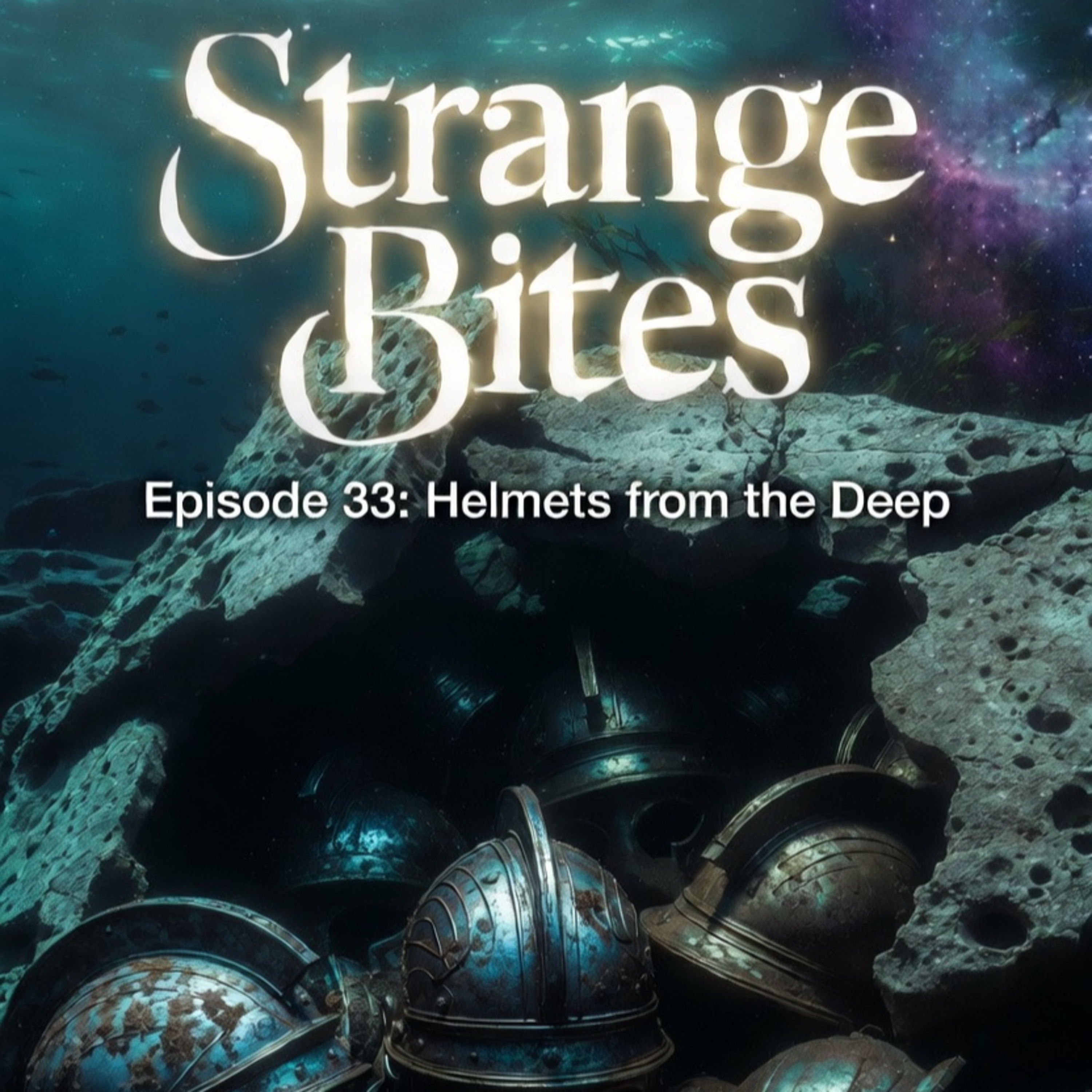
    Episode 33: Helmets from the Deep

    Deep beneath the gentle waves of the Mediterranean, off the sunny coast of Spain, lies a secret that waited centuries to be told. Heavy iron helmets, silent and encrusted in stone-like shells, resting in the sand like forgotten soldiers from a war no one remembered. For over 30 years, experts swore they belonged to ancient Roman legions. But a clever team of modern detectives just proved the helmets were hiding a much stranger truth – one that rewrites a piece of medieval history. Tonight, we plunge into the murky waters of the Piedras de la Barbada site near Benicarló, Spain, where science cracked open a mystery sealed by the sea. This is Episode 33: “Helmets from the Deep”. Sources ScienceDaily Summary (June 8, 2026): https://www.sciencedaily.com/releases/2026/06/260606075515.htm University of Alicante / EurekAlert Release: https://www.eurekalert.org/news-releases/1131062 Full Paper in Antiquity (Cambridge University Press, 2026): https://www.cambridge.org/core/journals/antiquity/article/radiocarbon-dating-and-characterisation-of-textiles-preserved-in-late-medieval-helmets-from-benicarlo-castellon-spain/59996BEBF9D493373F80642F304E1C3F Ancient Origins Overview: https://www.ancient-origins.net/news-history-archaeology/medieval-helmet-hoard-00102847

  • S1 · E32
    June 9 · 8 min

    Episode 32: Is the Block Universe Theory Wrong

    Imagine stepping into a vast, frozen gallery, an endless hall of glass where every moment of your life, every breath you’ve taken, every choice you’ll ever make, is already carved in perfect, unchanging detail. Your first cry as a baby. The laugh you’ll share decades from now. The final beat of your heart. All of them… there. Right now. Not happening, but existing side by side like statues in an eternal museum. This isn’t the plot of a sci-fi thriller. This is one of the most popular ways modern physics describes our universe: the block universe. And a fresh philosophical challenge, just this week, suggests it might rest on a hidden misunderstanding, one that could unravel how we think about reality itself. This is Episode 32 and Tonight, we dive into the weird heart of space-time… where the very fabric of existence might be more mysterious than we ever dreamed. Sources ScienceDaily Summary (June 8, 2026): https://www.sciencedaily.com/releases/2026/06/260606075858.htm Original Article by Daryl Janzen in The Conversation: https://theconversation.com/what-exactly-is-space-time-259630 Music created with Suno - https://suno.com/s/kBby0AbtDNqy1TGc

  • S1 · E31
    June 4 · 7 min

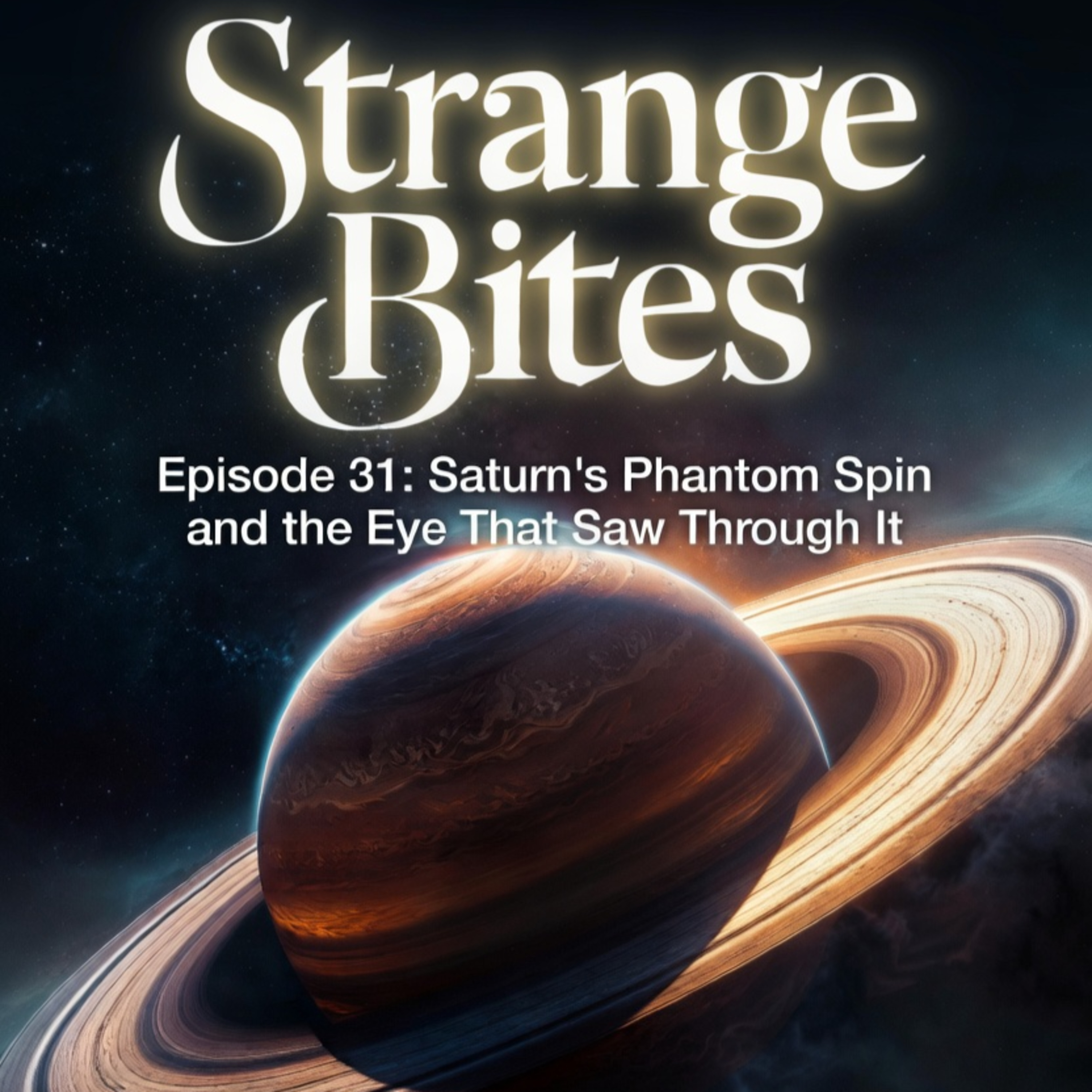
    Episode 31: Saturn’s Phantom Spin and the Eye That Saw Through It

    In the freezing dark beyond the asteroid belt, where sunlight is a distant rumor, there spins a world wrapped in rings and secrets. For decades, astronomers watched Saturn and heard conflicting heartbeats. Voyager’s first whispers in the 1980s and Cassini’s long, patient stare from 2004 to 2017 told the same uneasy tale: Saturn’s rotation rate kept shifting. One measurement said it spun one way; another, taken years later, said something different. A planet the size of nearly ten Earths, with the mass of ninety-five, should not change how fast it turns on any timescale we could notice. Its deep, hidden core should beat with steady, ancient rhythm. Yet the signals kept drifting, as if the ringed giant itself were hesitating, speeding up, then slowing again... Sources ScienceDaily coverage (May 29, 2026): “Astronomers finally solve Saturn’s decades-long spin mystery”
https://www.sciencedaily.com/releases/2026/05/260529043658.htm Phys.org article detailing the research: “JWST solves decades-long mystery about why Saturn appears to change its spin”
https://phys.org/news/2026-03-jwst-decades-mystery-saturn.html Original peer-reviewed paper: “JWST/NIRSpec Reveals the Atmospheric Driver of Saturn’s Variable Magnetospheric Rotation Rate” by Tom S. Stallard et al., Journal of Geophysical Research: Space Physics (2026)
https://agupubs.onlinelibrary.wiley.com/doi/10.1029/2025JA034578

Showing 21–24 of 24 episodes