Skip to content
Artwork for Rewired Sober: The Next Chapter
Health & FitnessMental HealthEducationSelf-ImprovementArtsFashion & BeautyExplicit

Rewired Sober: The Next Chapter

Kate Vitela

Welcome to Rewired Sober: The Next Chapter—a podcast about what happens after survival.

I'm Kate Vitela, a psychiatric nurse with more than twenty-five years of nursing experience, speaker, and lifelong student of human behavior. For years, this podcast focused on alcohol, addiction science, and recovery. Those conversations changed lives—including my own—but something became increasingly clear.

The longer I worked with women, the less we talked about alcohol.

We talked about burnout. Identity. Midlife. Relationships. Confidence. Beauty. Careers. Boundaries. Self-worth. Style. The invisible expectations placed on women. The stories we inherited. And the courage it takes to become ourselves.

That's what this next chapter is about.

Here, we'll explore the psychology of identity, the neuroscience of behavior change, fashion and personal style, beauty, aging, feminism, emotional health, self-concept, and what it really means to evolve throughout our lives.

You'll hear conversations with psychologists, stylists, artists, authors, neuroscientists, entrepreneurs, nurses, and women who have reinvented themselves more than once. We'll ask better questions than "How do I fix myself?" Instead, we'll ask, "Who am I becoming?" and "What kind of life am I creating?"

Sobriety will always be part of my story. Getting sober in 2018 fundamentally changed the trajectory of my life, my nursing career, and my understanding of the human mind. Recovery taught me emotional literacy, humility, curiosity, and resilience. It will always shape the way I see the world, but it is no longer the only lens through which I want to explore it.

Because recovery isn't the destination.

It's the foundation.

Whether you're rebuilding after addiction, navigating midlife, questioning your career, redefining your style, learning to trust yourself again, or simply fascinated by why humans do what we do, you're in the right place.

Around here, you'll find conversations about:

Psychology and neuroscience
Women's mental health and emotional well-being
Identity, self-concept, and personal reinvention
Fashion, personal style, and beauty as forms of self-expression
Midlife, confidence, and aging with intention
Feminism, culture, and the pressures women navigate
Behavior change, habits, and resilience
Creativity, curiosity, and lifelong learning
Sobriety and recovery as part of a much bigger story

This isn't a podcast about becoming perfect.

It's about becoming more fully yourself.

So whether you've been here since episode one or you're just finding us now, thank you for being part of this community.

The goal was never simply to stop drinking.

The goal was always to build a life that feels honest, meaningful, creative, beautiful, and completely your own.

Welcome to the next chapter.

Play
  • 21 episodes
  • weekly
  • Avg 36 min
  • English
Counted on this page — what you have heard stays on this device, so it is not something the list can be paged by.
  • #88
    Tuesday · 54 min

    EP: 88 Fashion as Armor: Patricia Field, Old New York & the Psychology of Style — with Kate Tricarico

    What if getting dressed has less to do with fashion—and everything to do with identity? In this episode, I sit down with New York stylist and creative director Kate Tricarico to talk about why personal style is so much deeper than following trends. From growing up in New York City to working with legendary costume designer Patricia Field on the Bowery, Kate shares stories from the city's unforgettable fashion scene and how those experiences shaped her understanding of clothing as self-expression. Today, Kate styles everyone from celebrities to everyday women, helping people discover a wardrobe that reflects who they are instead of who social media tells them to be. We also dive into one of fashion's most controversial conversations: John Galliano. Fifteen years into his sobriety, does one of the greatest fashion designers of our time deserve recognition from the Met? Can we separate extraordinary art from the deeply flawed human who created it? And what does accountability, forgiveness, and redemption look like in creative industries? Whether you love fashion or have never thought much about it, this conversation is really about something much bigger: Who are you? And are your clothes helping you become more of that person—or less? In This Episode Kate Tricarico's journey from growing up in New York City to becoming a stylist and creative director Working for Patricia Field on the Bowery and lessons from New York's creative scene Archival fashion and why fashion history still matters Why personal style is an extension of identity—not just aesthetics The difference between dressing for trends versus dressing for yourself Confidence, self-concept, and authentic self-expression John Galliano's extraordinary creative legacy and the controversy surrounding his career Sobriety, accountability, forgiveness, and whether redemption is possible Can we separate the artist from the art? Why the most stylish people aren't necessarily the trendiest—they're the most authentic Big Takeaway "Style isn't about becoming someone else. It's about becoming more recognizably yourself." If you enjoyed this conversation, please subscribe, leave a review, and share it with someone who loves psychology, fashion, or the lifelong process of evolving. Because style isn't just what you wear. It's one of the ways you tell the world—and yourself—who you are. Connect with Kate Vitela @katevitela Connect with Kate Tricarico Instagram: @katetricarico Website: katetricarico.com Creative Director • Fashion Stylist • Archival Fashion Specialist

    • Transcript
  • #87
    August 18 · 15 min

    EP: 87 Why Rewired Sober Is Evolving & Expanding the Conversation. Womanhood, Style, Identity, Fashion, Midlife, and So Much More.

    It's Time to Pivot: Why Rewired Sober Is Evolving Eight years ago, getting sober changed everything. For a long time, alcohol was the conversation because it had to be. It was the thing standing between me and the life I wanted. But here's what I've discovered after years of working with women in recovery, psychiatric nursing, coaching, and hosting this podcast: We rarely stay talking about alcohol for very long. Eventually, the conversations become about burnout. Identity. Marriage. Careers. Friendships. Midlife. Confidence. Style. Beauty. Purpose. The pressure of being a woman. And the lifelong process of becoming ourselves. That's where my curiosity lives. In this short episode, I'm sharing why I'm pivoting the podcast and what you can expect moving forward. We'll still talk about sobriety—because it shaped who I am, and it will always weave its way into these conversations—but this next chapter is much bigger than alcohol. We'll explore: Why recovery is only the beginning—not the whole story The psychology of identity and reinvention Womanhood and the invisible rules we've inherited Fashion and personal style as forms of self-expression Beauty, aging, confidence, and the stories we tell ourselves Neuroscience, psychology, and human behavior Midlife as a season of evolution rather than decline The art of becoming who you actually are If you've been with me from the beginning, thank you. I hope you'll stay for what's next. Because the goal was never to spend our entire lives talking about what we stopped drinking. The goal was always to go out and build a life that feels honest, beautiful, meaningful, and completely our own. So here's to Chapter Two. Let's evolve together. In this episode Why I'm changing the direction of the podcast What years of psychiatric nursing and coaching have taught me Why conversations naturally move beyond alcohol What we'll be exploring in future episodes An invitation to keep growing with me Connect with Kate @katevitela or @rewiredsober Follow along for conversations on psychology, identity, style, womanhood, neuroscience, and the art of evolving. If this podcast has meant something to you, I'd love for you to stay for this next chapter. And if someone in your life is navigating change, send this episode their way. Because reinvention isn't a detour. Sometimes it's exactly where life begins.

    • Transcript
  • #86
    August 11 · 29 min

    EP 86: Can You Heal in The Places That Broke You? Rewriting Our Story. Giving Our Brain New Evidence.

    Can healing happen in the very places where we once unraveled? In this deeply personal episode of Rewired Sober, I share the story of returning to Portland—a city that once represented some of the most painful years of my life. It was the place where alcohol left behind professional wreckage, strained relationships, broken trust, and a version of myself I wasn't proud of. Eight years into recovery, I returned not to erase the past, but to experience it as the woman I've become. This episode explores how our brains attach emotions to places, why shame often convinces us to avoid certain people or locations, and how creating new experiences can help us rewrite the stories we've been telling ourselves. Recovery isn't about pretending the past never happened. It's about proving to yourself that your past no longer gets to define your present. In This Episode My recent trip back to Portland and why it mattered so much How alcohol affected my professional life, relationships, and identity Why certain places can trigger powerful memories years later The neuroscience of memory, context, and emotional associations What memory reconsolidation is and how the brain updates old experiences Why avoiding painful places can unintentionally keep shame alive How creating new memories helps reclaim places once connected to addiction The difference between reliving the past and revisiting it as someone new Why I wasn't trying to erase my story—I was expanding it How recovery allows us to reclaim our identity, not just our sobriety Memorable Takeaways "Recovery isn't just about changing your future. Sometimes it's about changing your relationship with your past." "I wasn't trying to rewrite history. I was giving my brain new evidence." "Portland didn't change. I did." "Healing isn't pretending the past didn't happen. Healing is refusing to let the past have the final word." "The places where you unraveled don't have to become places you avoid forever." "Sometimes the greatest repair isn't explaining yourself. It's becoming someone different." "I wasn't reliving my past. I was allowing my present self to meet it." Neuroscience Discussed Memory reconsolidation Emotional memory and place associations The hippocampus and contextual memory The amygdala and emotional learning Avoidance and the nervous system Neuroplasticity Creating new neural associations through lived experience Rewired Sober 1:1 Coaching Spots Are Open (But Fill Up Fast) Start anytime and get 3 months of guidance from Kate designed for women in sobriety. Book a discovery call to inquire: https://calendly.com/katevitelacoaching/deep-dive-1-1-w-kate Connect with Kate @rewiredsober on all social media platforms: Instagram https://www.instagram.com/rewiredsober/ Email: katevitelacoaching@gmail.com

    • Transcript
  • #85
    August 4 · 27 min

    EP: 85 Alcohol Hijacked My Brain (And How I Got It Back)

    What if the greatest thing you recover in sobriety isn't your liver…it's your brain? In this episode of Rewired Sober, I share a deeply personal look at the ways alcohol quietly changed my thinking, attention, stress tolerance, curiosity, and ability to experience everyday joy. This isn't another episode about fear or shame. It's a conversation about hope and neuroplasticity. As a psychiatric nurse, I've spent years studying how alcohol affects the brain. As someone in long-term recovery, I've also lived it. Looking back, I can see that alcohol didn't just take away hangover-free mornings. It slowly narrowed my world. It consumed my attention, shrank my capacity to handle stress, and stole the curiosity that makes life rich and meaningful. The good news? Our brains are remarkably adaptable. Recovery isn't just about putting down the drink. It's about giving your brain the opportunity to heal, reconnect, and rediscover parts of yourself that may have gone quiet for years. In This Episode Why alcohol doesn't just affect the liver—it changes the brain The link between heavy alcohol use and long-term brain health How alcohol quietly steals curiosity and narrows your world Why I didn't really discover Instagram—or many new interests—until after I got sober The hidden cognitive load of planning, drinking, recovering, and trying to moderate How alcohol consumes your attention and mental bandwidth Why everyday pleasures can feel flat while drinking Dr. Anna Lembke's pleasure-pain balance and how the brain recalibrates How alcohol changes the brain's stress response through GABA and glutamate Why life eventually felt harder because I was drinking—not the other way around The concept of "capacity" and how recovery expands your ability to handle discomfort How neuroplasticity allows the brain to recover over time What I believe alcohol borrowed from my brain—and what sobriety gave back Memorable Takeaways "Alcohol didn't steal my brain overnight. It borrowed tiny pieces of it for years." "The world didn't become harder. My capacity to handle it became smaller." "Recovery didn't remove difficulty from my life. It expanded my ability to meet it." "Alcohol occupied so much mental real estate that there wasn't much room left for curiosity." "I didn't just get sober. I got my brain back." Mentioned in This Episode Neuroplasticity GABA and glutamate Executive function Cognitive load The pleasure-pain balance Stress tolerance Curiosity and attention Dr. Anna Lembke and Dopamine Nation Reflection Questions What parts of yourself have gotten quieter over the years? Where has alcohol—or any coping strategy—been borrowing your attention? What has come back since you've been in recovery? What are you curious about today that you weren't curious about while drinking? How has your capacity to handle life changed since you stopped drinking? If this episode resonated with you, I'd love for you to share it with someone who needs a little hope today. And if you're enjoying Rewired Sober, leaving a rating or review helps more women discover these conversations about the neuroscience of recovery and what it truly means to rebuild a life. Rewired Sober 1:1 Coaching Spots Are Open (But Fill Up Fast) Start anytime and get 3 months of guidance from Kate designed for women in sobriety. Book a discovery call to inquire: https://calendly.com/katevitelacoaching/deep-dive-1-1-w-kate Connect with Kate @rewiredsober on all social media platforms: Instagram https://www.instagram.com/rewiredsober/ Email: katevitelacoaching@gmail.com

    • Transcript
  • #84
    July 28 · 25 min

    EP: 84 Quit Breaking Promises to Yourself: The Science of Self-Trust

    Most people think recovery is about quitting alcohol. It's not. Quitting drinking is the beginning. Learning to trust yourself again is where real recovery begins. In this episode, I explore why self-trust—not willpower—is one of the greatest gifts of sobriety. We talk about why so many women lose trust in themselves, how years of self-abandonment quietly erode confidence, and why rebuilding that relationship happens through small, everyday decisions—not dramatic transformations. You'll also learn how your brain literally rewires itself as you begin keeping promises to yourself, setting boundaries, tolerating discomfort, and living in alignment with your values. If you've ever wondered, Can I really trust myself? this episode is for you. In This Episode Why sobriety is the doorway—not the destination The difference between confidence and self-trust How alcohol and self-abandonment weaken our relationship with ourselves Why your brain needs evidence, not positive affirmations The neuroscience of building trust through repetition and neuroplasticity Why failure doesn't destroy self-trust—but abandoning yourself does The surprising role of boundaries, emotional honesty, and integrity in recovery Small daily promises that strengthen your capacity and confidence Key Takeaways Self-trust is earned through repeated action, not wishful thinking. Confidence grows from evidence that you'll show up for yourself. Your brain updates what it believes about you every time you act in alignment with your values. Recovery isn't about becoming perfect. It's about becoming someone you can rely on. Every kept promise—no matter how small—is a vote for the person you're becoming. Reflection Questions Where do I trust myself more today than I did a year ago? Where am I still abandoning myself? What is one small promise I can make to myself this week that I know I can keep? What evidence am I giving my brain that I am becoming someone I can count on? Favorite Quote "Self-trust isn't a feeling. It's evidence. You build it one kept promise at a time." Resources Mentioned The science of neuroplasticity The relationship between integrity, repetition, and lasting behavior change Emotional literacy and boundary-setting as essential recovery skills Connect with Kate: Rewired Sober 1:1 Coaching Spots Are Open (But Fill Up Fast) Start anytime and get 3 months of guidance from Kate designed for women in sobriety. Book a discovery call to inquire: https://calendly.com/katevitelacoaching/deep-dive-1-1-w-kate Connect with Kate @rewiredsober on all social media platforms: Instagram https://www.instagram.com/rewiredsober/ Email: katevitelacoaching@gmail.com

    • Transcript
  • #83
    July 21 · 39 min

    EP: 83 How to Help Someone You Love Who Drinks Too Much (Without Losing Yourself)

    Watching someone you love struggle with alcohol can be heartbreaking, frustrating, confusing, and exhausting. Whether it's a spouse, parent, adult child, sibling, or friend, many of us find ourselves asking the same question: How do I help without becoming consumed by their choices? In this episode, Kate explores the delicate balance between caring and carrying, supporting and controlling, loving and enabling. Drawing from her experience as a psychiatric nurse, addiction nurse, recovery coach, and someone who has been on both sides of the conversation, she breaks down what actually helps—and what doesn't. You'll learn why you can't love someone sober, why "if they loved us enough, they'd stop" is usually the wrong question, and how to set boundaries without abandoning the people you care about. This is a nuanced conversation. There are no perfect scripts or universal answers. But there are principles that can help you stay connected to the people you love without losing yourself in the process. In This Episode: Why you cannot make another adult stop drinking The difference between support and control Why nagging, pleading, and monitoring rarely create lasting change Why "If they loved me, they would stop" is often a misunderstanding of addiction The role of willingness in behavior change How fear can quietly turn into rescuing Why consequences are not punishment What healthy boundaries actually look like The difference between abandoning someone and protecting yourself How to say: "I love you. I see you. And this has to change for me to remain this involved in your life." Why viewing someone as "broken" often creates more shame than healing The concept of maladaptive coping rather than defective character Resources that may help: coaching, therapy, SMART Recovery, Recovery Dharma, support groups, and peer support Thoughts on Codependents Anonymous (CoDA) Why your own mental health and recovery matter too Memorable Takeaways: "You cannot love someone sober." "Love means letting other people voluntarily evolve." "You can care without carrying." "If love alone could cure addiction, addiction wouldn't exist." "Their drinking is not a measurement of your worth." Rewired Sober 1:1 Coaching Spots Are Open (But Fill Up Fast) Start anytime and get 3 months of guidance from Kate designed for women in sobriety. Book a discovery call to inquire: https://calendly.com/katevitelacoaching/deep-dive-1-1-w-kate Connect with Kate @rewiredsober on all social media platforms: Instagram https://www.instagram.com/rewiredsober/ Email: katevitelacoaching@gmail.com

    • Transcript
  • #82
    July 14 · 41 min

    EP: 82 The Dopamine Myth: Why Anticipation is the Real Party Drug.

    Episode Description What if your craving isn't actually for alcohol? What if the thing you're chasing isn't the wine, the cocktail, or the buzz—but the feeling you believe it will create? In this episode, Kate dives into the fascinating neuroscience of dopamine, anticipation, and craving. Drawing from the work of psychiatrist and author Dr. Anna Lembke (Dopamine Nation), she explores why the anticipation of drinking often feels more rewarding than the drink itself and why the first sip rarely lives up to the fantasy. If you've ever said, "I just need a dopamine hit," this episode is for you. You'll learn why dopamine is often misunderstood, how modern life trains us to seek quick relief through shopping, scrolling, food, alcohol, and other habits, and how understanding your brain can help you break free from the craving cycle. This isn't about becoming boring or never wanting pleasure again. It's about learning what your brain is actually asking for and finding healthier ways to meet those needs. In This Episode: Why dopamine is not simply the "pleasure chemical" The difference between wanting and liking How anticipation drives craving The science behind the "Friday afternoon wine" phenomenon Why your brain starts feeling better before you've even had a drink The surprising reason the first sip often feels disappointing How reward prediction influences behavior Dr. Anna Lembke's concept of the pleasure-pain balance Why the relentless pursuit of pleasure often creates more pain Why relapse often starts long before the first drink How to recognize the stories and fantasies behind cravings Why "I need a dopamine hit" is often code for something deeper The difference between seeking alcohol and seeking relief A special discussion on ADHD, novelty-seeking, and reward processing How to create healthier sources of anticipation and excitement Why recovery is not about deprivation—it's about redirection Memorable Takeaways: "The anticipation is the party. The alcohol is often just the bill." "The behavior isn't the need. The behavior is the strategy." "Your brain is an incredible marketing department and sometimes a terrible historian." "Cravings are information, not instructions." "Recovery isn't about becoming less excited about life. It's about teaching your brain to get excited about different things." "The goal isn't to stop seeking dopamine. The goal is to understand what your brain is actually asking for." Mentioned In This Episode: Dr. Anna Lembke Dopamine Nation: Finding Balance in the Age of Indulgence Reward prediction and anticipation The pleasure-pain balance ADHD and dopamine Neuroplasticity and habit change Rewired Sober 1:1 Coaching Spots Are Open (But Fill Up Fast) Start anytime and get 3 months of guidance from Kate designed for women in sobriety. Book a discovery call to inquire: https://calendly.com/katevitelacoaching/deep-dive-1-1-w-kate Connect with Kate @rewiredsober on all social media platforms: Instagram https://www.instagram.com/rewiredsober/ Email: katevitelacoaching@gmail.com

    • Transcript
  • #81
    July 7 · 53 min

    EP: 81: Inside the Making of TOX: A Film About Beauty Obsession & the Cost of Perfection Starring Kerri Lynn Miller

    What do Botox, beauty culture, perfectionism, recovery, feminism, and self-worth have in common? More than most of us want to admit. In this powerful and surprisingly funny conversation, Kate sits down with filmmaker and actress Kerri Lynn Miller to discuss her upcoming psychological drama TOX, a film exploring beauty obsession, body dysmorphia, perfectionism, and the relentless pursuit of external validation. Together, they unpack the uncomfortable truth that many women spend years chasing the next thing that promises to make them feel worthy: The wrinkle fix The weight loss The cosmetic procedure The perfect outfit The perfect body The perfect life And yet somehow, "enough" never arrives. Kate and Kerri explore how beauty culture can mirror the psychology of addiction, why midlife women often feel caught between self-care and self-rejection, and how social media, aging, and modern beauty standards create a nearly impossible game for women to win. In This Episode We Discuss: The surprising overlap between addiction and beauty obsession Why chasing perfection can function much like alcohol, shopping, workaholism, gambling, people-pleasing, dieting, or other process addictions. When does self-improvement become self-punishment? When does self-care cross the line into self-rejection? The hidden cost of perfectionism Kerri shares her own experience working for a pharmaceutical company with unlimited access to Botox, fillers, lasers, and cosmetic procedures—and how what looked like self-improvement was often rooted in a deeper desire to protect herself from rejection and pain. Why women are taught to believe their worth is in their appearance From childhood messages about beauty to social media's impossible standards, Kate and Kerri discuss how women are conditioned to believe that being attractive equals being valuable. And why that belief can quietly shape an entire life. Recovery, authenticity, and taking off the mask One of the most moving parts of the conversation explores the parallels between recovery and creative work. Both women discuss how healing often requires dropping the performance, telling the truth, and letting people see who you really are underneath the carefully curated image. Social media, Instagram Face, and the pressure to compete What happens when every face starts looking the same? Kate and Kerri talk about: Instagram Face AI-generated beauty standards Cosmetic procedures Filters and Zoom dysmorphia The pressure women feel to remain competitive as they age And why so many women feel trapped in a race they never agreed to run. Feminism, aging, and who benefits when women stay obsessed with beauty A candid discussion about the beauty industry, social conditioning, the patriarchy, and the cultural forces that profit when women spend their time, money, and energy trying to fix themselves rather than fully inhabit their lives. Shame, vulnerability, and the healing power of telling the truth Kerri shares how writing TOX became an unexpected healing journey. What started as a story about beauty became a deeper exploration of shame, worthiness, identity, and the freedom that comes when we stop hiding. Memorable Themes From This Conversation You cannot find worth outside yourself if you haven't found it within. Perfectionism is often fear wearing expensive clothes. Socially acceptable addictions are still addictions. Recovery isn't just about alcohol. Authenticity is more powerful than perfection. Aging isn't a character flaw. Freedom begins when you stop chasing someone else's definition of enough. About Kerri Lynn Miller Kerri Lynn Miller is an award-winning filmmaker, actress, writer, and producer whose work explores beauty standards, perfectionism, self-worth, identity, and the psychological cost of seeking validation from the outside world. Her upcoming film TOX follows a woman caught in the increasingly dangerous pursuit of perfection, examining body dysmorphia, beauty culture, addiction, and the universal desire to feel seen, chosen, and loved. TOX Film: @tox_film Instagram: https://www.instagram.com/tox_film/ www.toxfilm.com Rewired Sober 1:1 Coaching Spots Are Open (But Fill Up Fast) Start anytime and get 3 months of guidance from Kate designed for women in sobriety. Book a discovery call to inquire: https://calendly.com/katevitelacoaching/deep-dive-1-1-w-kate Connect with Kate @rewiredsober on all social media platforms: Instagram https://www.instagram.com/rewiredsober/ Email: katevitelacoaching@gmail.com

    • Transcript
  • #80
    June 30 · 36 min

    EP: 80: Self-Objectification, AI, and the Lost Art of Being Human

    Rewired Sober 1:1 Coaching Spots Are Open (But Fill Up Fast) Start anytime and get 3 months of guidance from Kate designed for women in sobriety. Book a discovery call to inquire: https://calendly.com/katevitelacoaching/deep-dive-1-1-w-kate Connect with Kate @rewiredsober on all social media platforms: Instagram https://www.instagram.com/rewiredsober/ Email: katevitelacoaching@gmail.com For most of human history, women experienced life. Now we watch ourselves live it. We stare at our faces on Zoom. We record ourselves. Edit ourselves. Compare ourselves. Analyze ourselves. Then compare ourselves to influencers, celebrities, filters, and increasingly, people who don't even exist. In this episode, I explore the psychological concept of self-objectification—the process of viewing yourself through the eyes of others instead of experiencing yourself from the inside out. After spending a week in New York surrounded by thousands of real faces, I had a surprising realization: Nobody looked like Instagram. Nobody looked like AI. And somehow, that made me feel better about myself. We dive into: What self-objectification is and why women are especially vulnerable to it Why staring at ourselves all day is changing our psychology Zoom dysmorphia and the rise of cosmetic procedures How AI-generated beauty is quietly redefining what's "normal" Why recovery is teaching me to value humanity over perfection The emotional side of aging nobody talks about How beauty culture and alcohol culture both profit from our insecurities Why real-life faces are becoming an act of rebellion How seeing actual humans recalibrates the brain The difference between living your life and performing it Because maybe the goal isn't to become more beautiful. Maybe the goal is to become more human. Maybe the most radical thing a woman can do right now is stop treating herself like a problem to solve. If you've ever found yourself obsessing over wrinkles, filters, Botox, aging, or feeling like you're somehow falling behind, this episode is for you. Quote From This Episode "The happiest moments of my life are the moments I forget what I look like." Key Takeaway Your brain adapts to whatever it repeatedly sees. If all you feed it is perfection, reality starts to feel inadequate. The cure might not be fixing your face. The cure might be getting back into real life. Seeing real people. Laughing harder. Creating more than consuming. And remembering what human actually looks like.

    • Transcript
  • #79
    June 23 · 51 min

    EP: 79: Neurodivergent in Recovery: Autism, GLP-1s, and Being Misunderstood in 12-Step Rooms with Rebecca Rush

    What do autism, Ozempic, alcohol cravings, recovery culture, and a Substack called The Loudest Girl in the Corner have in common? More than you might think. In this episode of Rewired Sober, I sit down with Rebecca Rush—sober autistic peer support coach, poet, essayist, and creator of The Loudest Girl in the Corner—for one of the most honest, hilarious, and thought-provoking conversations I've had on the podcast. We explore the intersection of neurodiversity, addiction, and recovery culture, including why many people spend years being labeled as "alcoholics" while undiagnosed autism, ADHD, sensory overwhelm, masking, and social exhaustion remain hidden beneath the surface. Rebecca shares her experience navigating recovery as an autistic woman and why some traditional recovery spaces can feel confusing, invalidating, or impossible to navigate for neurodivergent people. We also discuss the growing conversation around GLP-1 medications like Ozempic and Wegovy and how they are helping some people dramatically reduce alcohol cravings—raising fascinating questions about addiction, biology, craving, and recovery. And because neither of us is particularly interested in pretending certain topics don't exist, we also dive into some of the more controversial corners of recovery culture. In This Episode We Discuss: Autism and alcohol use Why autism is frequently missed or misdiagnosed in women Masking, people-pleasing, and belonging Why some neurodivergent people struggle in traditional 12-step programs The tendency to pathologize every struggle as alcoholism Group dynamics, sponsorship, and social expectations How autistic traits can clash with recovery culture The vulnerability of newcomers and the reality of the "13th Step" Predatory behavior in recovery spaces Sex inventories, shame, and self-blame The difference between accountability and humiliation When recovery becomes self-flagellation instead of healing Building a recovery that actually fits your brain GLP-1 medications and alcohol cravings Recovery beyond one-size-fits-all thinking We also discuss Rebecca's essay A Few Things I Won't Be Writing About, a sharp, funny, and unapologetic critique of the things recovery culture often struggles to talk about openly. In true Rebecca fashion, she somehow manages to write about all of them while claiming she won't. This episode isn't about telling anyone how to recover. It's about making room for more curiosity, more nuance, and more honest conversations. Whether you're neurodivergent, questioning your relationship with alcohol, frustrated with recovery dogma, curious about GLP-1 medications, or simply interested in the evolving conversation around addiction and healing, this episode will give you plenty to think about—and probably a few things to laugh about too. About Rebecca Rush Rebecca Rush is a sober autistic peer support coach, poet, essayist, and writer of The Loudest Girl in the Corner. Her work explores autism, recovery, masking, identity, belonging, and what happens when people stop shrinking themselves to fit into systems that were never built for them. Resources Mentioned Rebecca Rush's Substack: The Loudest Girl in the Corner TheLoudestGirlintheCorner.substack.com Failbettercoaching.com Instagram.com/failbettercoach Rewired Sober 1:1 Coaching Spots Are Open (But Fill Up Fast) Start anytime and get 3 months of guidance from Kate designed for women in sobriety. Book a discovery call to inquire: https://calendly.com/katevitelacoaching/deep-dive-1-1-w-kate Connect with Kate @rewiredsober on all social media platforms: Instagram https://www.instagram.com/rewiredsober/ Email: katevitelacoaching@gmail.com

    • Transcript
  • #78
    June 16 · 22 min

    EP: 78: Why Smart Women Struggle to Quit Drinking

    In this solo episode of Rewired Sober, we’re talking about why so many intelligent, capable, high-functioning women struggle to quit drinking — even when they know alcohol is hurting them. Because contrary to popular belief, addiction and emotional dependency are not intelligence problems. In fact? Sometimes being highly self-aware actually makes it easier to stay stuck. Smart women are incredibly good at: rationalizing intellectualizing emotions researching instead of acting overthinking every decision procrastinating change explaining away red flags staying “functional” long enough to avoid consequences Welcome to analysis paralysis. This episode breaks down how high-achieving women often use thinking as a defense mechanism. Instead of feeling emotions, making decisions, asking for help, or tolerating discomfort, they stay trapped in loops of: “I just need more information.” “I’ll quit after this event.” “I know what my problem is.” “I should be able to figure this out myself.” And underneath all of that? Usually fear. Shame. Perfectionism. And conditioning. Because many women were taught from a very young age to be: the good one the responsible one the smart one the caretaker the achiever the emotionally controlled one So when alcohol starts becoming a problem, it creates massive cognitive dissonance. “How could I struggle with this?” “I’m educated.” “I’m successful.” “I’m a nurse.” “I’m a mom.” “I’m not like those people.” This episode explores why high-functioning women often stay stuck longer because they can still perform well enough to hide the damage — from others and from themselves. Kate also talks about: hyper-independence and why asking for help feels threatening why self-awareness alone does not create change the nervous system patterns underneath procrastination perfectionism and all-or-nothing thinking in sobriety why information overload keeps women frozen the difference between understanding recovery and practicing recovery why emotional literacy matters more than intellectualizing the neuroscience of habit loops and avoidance how “good girl conditioning” disconnects women from their own needs This conversation is honest, funny, uncomfortable, and deeply validating for women who feel exhausted from trying to “think” their way into changing. Because recovery is not an IQ test. And healing doesn’t happen because you gathered enough information. It happens when you become willing to tolerate discomfort long enough to practice something different. Topics include: women and alcohol high-functioning addiction sober curious women perfectionism and drinking emotional sobriety hyper-independence procrastination and recovery analysis paralysis neuroscience of addiction good girl conditioning people pleasing and alcohol mindset and sobriety emotional regulation why smart women struggle with addiction recovery for professional women overthinking and self-sabotage Subscribe to Rewired Sober on YouTube for honest conversations about women’s recovery, emotional healing, neuroplasticity, mindset, nervous system regulation, and building a life that no longer requires escape. Rewired Sober 1:1 Coaching Spots Are Open (But Fill Up Fast) Start anytime and get 3 months of guidance from Kate designed for women in sobriety. Book a discovery call to inquire: https://calendly.com/katevitelacoaching/deep-dive-1-1-w-kate Connect with Kate @rewiredsober on all social media platforms: Instagram https://www.instagram.com/rewiredsober/ Email: katevitelacoaching@gmail.com

    • Transcript
  • #77
    June 9 · 35 min

    EP: 77 It's Unfair I Have to Be Sober #FML.

    In this episode of Rewired Sober, we’re talking about a thought almost every woman in recovery has had at some point: “It’s unfair I have to live sober.” And honestly? I get it. It can feel deeply frustrating to watch other people drink while you’re trying to rebuild your nervous system, regulate your emotions, and figure out who you even are without alcohol. Nobody wants to be the person ordering club soda while everyone else is posting vodka sodas like they’re in a 2001 episode of Sex and the City. But this episode goes deeper than just “poor me” thinking. We’re talking about the psychology of resentment in sobriety, the Buddhist philosophy that suffering often comes more from our mindset and resistance than the actual circumstance itself, and how comparison quietly keeps women emotionally stuck. Because yes: sobriety can feel unfair. (Don't punch me) But so can: getting cancer being gluten or dairy intolerant struggling with anxiety having trauma dealing with chronic illness being genetically predisposed to addiction Human beings constantly have to adapt to reality. That doesn’t make you weak. It makes you human. In this episode, Kate talks openly about: why social media creates distorted views of “normal drinking” the hidden consequences people don’t post online how resentment can sabotage recovery the difference between pain and suffering why acceptance is not the same as liking something how mindset shifts help rewire the brain in sobriety the neuroscience of comparison and emotional suffering how women can stop seeing sobriety as punishment and start seeing it as information This conversation also explores the idea that nobody escapes consequences forever — we just don’t always see them. The woman posting wine night selfies may also be struggling with anxiety, emotional eating, loneliness, burnout, shame, insomnia, or a miserable relationship behind the scenes. Social media is a highlight reel, not the documentary. Sobriety is not about becoming perfect. It’s about becoming honest. And eventually? It’s about becoming someone you actually trust. If you’re a woman in early sobriety feeling angry, resentful, left out, or stuck in the mindset of “why me?” — this episode is for you. Topics include: women and sobriety sober mindset shifts emotional sobriety addiction recovery for women Buddhist philosophy and suffering resentment in recovery comparison and social media neuroscience and sobriety rethinking alcohol culture healing without shame self-trust in recovery why quitting drinking feels unfair recovery beyond AA emotional regulation and nervous system healing Subscribe to Rewired Sober on YouTube for honest conversations about recovery, emotional healing, neuroplasticity, identity, mindset, and building a life you genuinely love without alcohol. Rewired Sober 1:1 Coaching Spots Are Open (But Fill Up Fast) Start anytime and get 3 months of guidance from Kate designed for women in sobriety. Book a discovery call to inquire: https://calendly.com/katevitelacoaching/deep-dive-1-1-w-kate Connect with Kate @rewiredsober on all social media platforms: Instagram https://www.instagram.com/rewiredsober/ Email: katevitelacoaching@gmail.com

    • Transcript
  • #76
    June 2 · 30 min

    EP 76: Shame Down the Drain: NYC, Julia Fox, Fashion & Cool Sober Friends

    This episode is a little chaotic, deeply human, wildly funny, and honestly? exactly what recovery can start to feel like when you stop making sobriety synonymous with punishment. I’m taking you with me to New York City — from a sober social night at The Maze, to long walks through Central Park with women who are rebuilding themselves out loud. We talk about laughter, freedom, female friendship, feeling safe in your own skin again, and why sober people weirdly become the people partying at noon with popsicles in hand dancing in Central Park. I also share my experience going to Julia Fox Closet Sale after listening to Down the Drain by Julia Fox on audiobook — and why her story hit me harder than I expected. We get into: addiction, survival, and the messy realities women live through sex work, stigma, and the difference between judgment and understanding doing what you have to do to survive why “meeting people where they are” matters in recovery work the performance of being “good” versus being honest the complicated conversation around deprogramming from rigid recovery narratives how some women feel cracked open by recovery… and others feel trapped inside the language of it I also talk about a recent podcast episode that absolutely cracked me wide open and forced me to think differently about identity, healing, and who gets to author their own story. This isn’t a polished “10 steps to heal your life” episode. It’s an episode about women telling the truth. About recovery becoming bigger than not drinking. About creativity, connection, safety, style, humor, grief, rebellion, and learning how to live without abandoning yourself. Because maybe sobriety isn’t the end of your life. Maybe it’s the beginning of finally becoming interesting again. Rewired Sober 1:1 Coaching Spots Are Open (But Fill Up Fast) Start anytime and get 3 months of guidance from Kate designed for women in sobriety. Book a discovery call to inquire: https://calendly.com/katevitelacoaching/deep-dive-1-1-w-kate Connect with Kate @rewiredsober on all social media platforms: Instagram https://www.instagram.com/rewiredsober/ Email: katevitelacoaching@gmail.com

    • Transcript
  • #75
    May 26 · 39 min

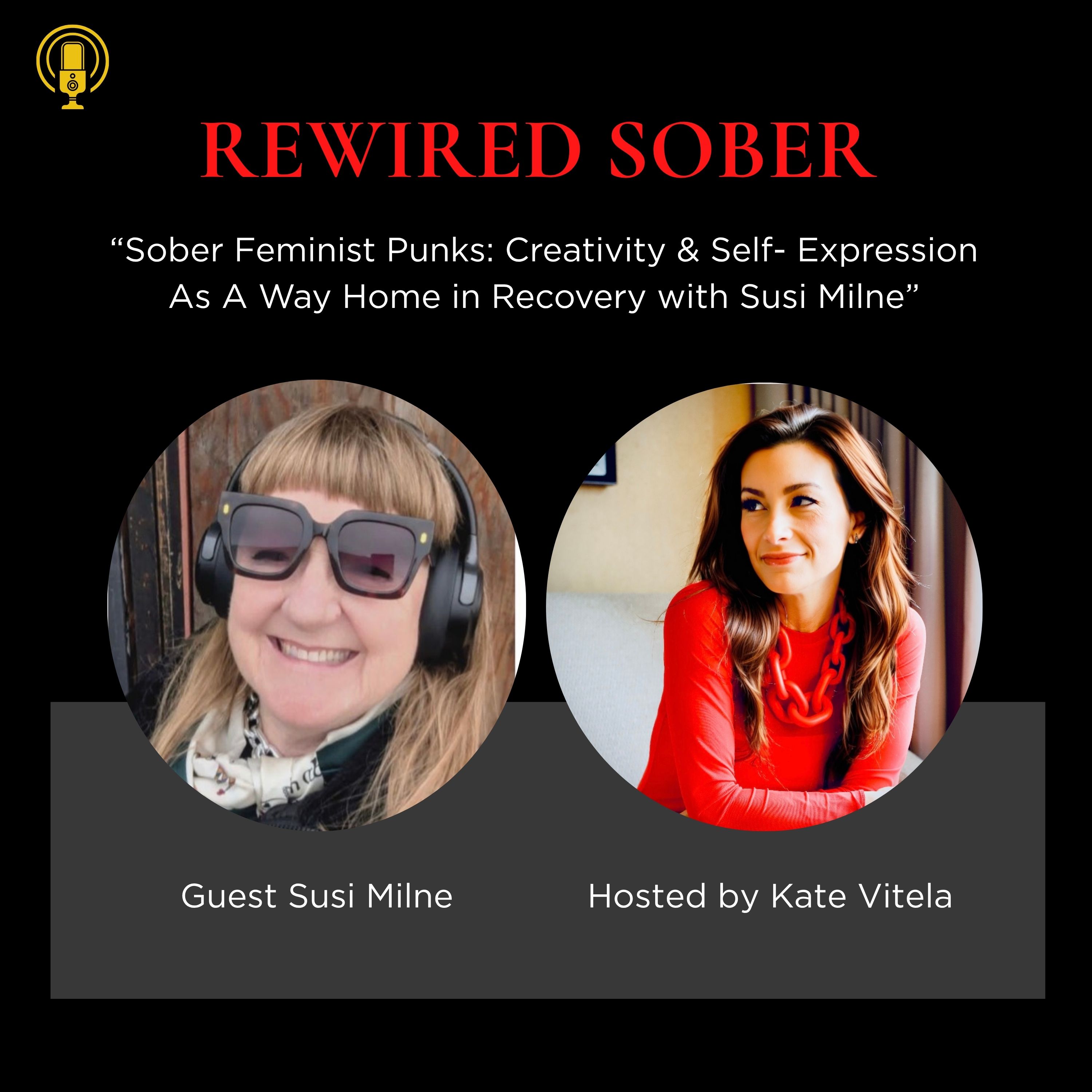
    EP. 75 Sober Feminist Punks: Creativity & Self-Expression as a Way Home in Recovery With Susi Milne

    What if the thing you’ve been calling boredom in sobriety… is actually a lack of expression? In this episode, I sit down with Susi Glenna Milne to talk about creativity not as a hobby—but as a lifeline in recovery. We get into what happens after you stop drinking and realize… okay, now I actually have to feel my life. And instead of numbing out, what if you created your way through it? We talk about how creativity in sobriety and recovery: brings you back online when everything feels flat gives you language for emotions you didn’t even know you had rebuilds self-respect, not just self-control connects you to community in a way that actually sticks Because recovery isn’t just about removing alcohol. It’s about building a life that feels worth staying for. And let’s be clear about something— Art is not reserved for a select, tortured, gallery-approved few. It’s accessible. It’s human. It’s yours. Everyone is an artist. Not in a cheesy “everyone gets a gold star” way— but in a real, grounded, you have something inside of you that needs expression kind of way. We talk about breaking down gatekeeping and elitism in the art world, and why creativity in sobriety and recovery isn’t about being good… It’s about being honest. We also go there on bigger cultural conversations— Like why women have historically been left out of the arts, had to fight harder for recognition, and are still reclaiming space in creative leadership. We talk about Maria Grazia Chiuri, the first female creative director at Dior, and her documentary Her Dior—and why that matters more than people think. We get into feminist punk energy, rebellion, and why creating—especially as a woman in recovery—is a quiet (and sometimes loud) act of resistance. Yes, even against the current cultural climate that can feel… let’s just say icky. And we talk about something that changed both of our lives: The community we found through She Recovers Foundation. A space where sobriety and recovery aren’t about shame or labels— but about strength, voice, and rebuilding self-esteem from the inside out. That kind of community doesn’t just support recovery. It restores identity. This episode is for you if: you’re sober or in recovery and feel flat, lost, or disconnected you’re tired of white-knuckling and want to actually feel alive you’ve told yourself “I’m not creative” (we’re calling bullshit on that) you’re craving connection, expression, and something that feels real KEY TAKEAWAYS Sobriety gives you your life back—but creativity shows you how to live it Numbing shuts you down. Creating brings you back online You don’t need talent—you need willingness Expression is how we process emotion in recovery Community is where self-esteem gets rebuilt Art is not elite—it’s accessible, and it belongs to everyone CONNECT + WORK WITH ME If you’re in that in-between space— Rewired Sober 1:1 Coaching Spots Are Open (But Fill Up Fast) Start anytime and get 3 months of guidance from Kate designed for women in sobriety. Book a discovery call to inquire: https://calendly.com/katevitelacoaching/deep-dive-1-1-w-kate Connect with Kate @rewiredsober on all social media platforms: Instagram https://www.instagram.com/rewiredsober/ Email: katevitelacoaching@gmail.com Guest Info: Susi Milne @susimilne777artwork @susimilneartist777

    • Transcript
  • #74
    May 19 · 33 min

    EP 74 Trying to Quit Drinking But Feeling Stuck? - You Might Be Using a Strategy That Shuts Your Brain Down

    My solid guess is this: You didn’t drink because you were weak. You drank because your brain adapted. In this episode, we’re breaking down one of the biggest lies in recovery culture: that shame will somehow motivate you into becoming a better version of yourself. Spoiler: it won’t. In fact, it does the opposite. Using both neuroscience and real-life, messy-human examples, Kate is walking you through why shame keeps you stuck in the exact patterns you’re trying to escape—and what actually creates lasting change instead. We’re talking about: Why alcohol “worked” (and what it was actually doing for you) The internal war that starts for many women in sobriety The difference between eliminating parts of yourself vs. integrating them What shame does to your brain (hello, survival mode) Why your prefrontal cortex basically clocks out when you’re in self-attack How safety—not punishment—is the key to rewiring your brain The real difference between suppressing behavior and actually changing it Why encouragement works (and why punishment backfires) How to interrupt the shame spiral in real time This isn’t about letting yourself off the hook. It’s about finally using a strategy that actually works. Because: You cannot hate yourself into a new identity. But you can understand yourself into one. If you’ve been stuck in the cycle of: Trigger → shame → escape → repeat This episode will show you how to shift into: Trigger → awareness → safety → choice → change And yeah… we’re also calling out the very human tendency to try and fix your life by bullying yourself into submission. (How’s that been working for you?) KEY TAKEAWAYS Your brain is not moral—it’s efficient Shame activates survival mode, not growth Safety is what allows real change to happen Encouragement reinforces behavior; punishment suppresses it The part of you that drank was trying to help—not destroy you Integration > elimination, every time Rewired Sober 1:1 Coaching Spots Are Open (But Fill Up Fast) Start anytime and get 3 months of guidance from Kate designed for women in sobriety. Book a discovery call to inquire: https://calendly.com/katevitelacoaching/deep-dive-1-1-w-kate Connect with Kate @rewiredsober on all social media platforms: Instagram https://www.instagram.com/rewiredsober/ Email: katevitelacoaching@gmail.com

    • Transcript
  • #73
    May 12 · 25 min

    EP 73: The Words You Speak Are Wiring Your Identity- Stop Introducing Yourself By Your Wound

    What if the way you introduce yourself… is keeping you stuck? In this episode, we’re diving into something that’s deeply normalized in recovery spaces—but rarely questioned: The words you use to describe who you are. Because when you repeatedly say: “I am an alcoholic” “I am broken” “This is just who I am” Your brain listens. Not emotionally. Neurologically. And it starts wiring your identity around those words. But what if there’s another way? A DIFFERENT WAY TO APPROACH RECOVERY As a SHE RECOVERS coach I love their guiding principle: We lead with our strengths, not our defects. Not denial. Not bypassing. Not pretending the past didn’t happen. But choosing to orient your identity toward: what’s working what’s true about your resilience who you are becoming Because that’s how people actually change. WHAT WE COVER IN THIS EPISODE Why identity language in recovery matters more than you think The neuroscience behind repetition, language, and neuroplasticity “Neurons that fire together wire together” (and how your words reinforce patterns) Why your brain doesn’t fact-check you—it patterns you The difference between a fixed identity vs. an evolving one How leading with your “wound” can keep you looping in it The power of the spoken word (science + something deeper) Why some recovery language helps—and some quietly limits growth How to shift your identity without denying your past THIS EPISODE IS FOR YOU IF: You’ve ever felt stuck in a label that no longer fits You’re sober… but still identifying with your lowest point You want to rebuild your identity—not just remove alcohol You’re ready to think for yourself instead of blindly following recovery scripts KEY TAKEAWAYS Your brain wires what you repeat—not what is objectively true Identity is not fixed—it’s built through language and behavior Leading with your strengths creates expansion, not denial You can honor your past without living in it The way you speak about yourself directly shapes your future Work with Kate: Rewired Sober 1:1 Coaching Spots Are Open (But Fill Up Fast) Start anytime and get 3 months of guidance from Kate designed for women in sobriety. Book a discovery call to inquire: https://calendly.com/katevitelacoaching/deep-dive-1-1-w-kate Connect with Kate @rewiredsober on all social media platforms: Instagram https://www.instagram.com/rewiredsober/ Email: katevitelacoaching@gmail.com

    • Transcript
  • #72
    May 5 · 33 min

    EP 72: Its Giving Recovery On The Runway: Sobriety, Fashion, and a Bolder Life (Hint: Announcement Incoming)

    Every year, the first Monday in May, the world watches the Met Gala—a spectacle of fashion, identity, and storytelling through art. And this year? I’m not on that carpet. But I am building something that matters a hell of a lot more. Because the version of me who used to drink herself into invisibility… is now creating a life out loud. In this episode, I’m taking you inside the real plot twist of sobriety—what happens when you don’t just quit drinking… you actually start living. We’re talking about: Why sobriety is not small, safe, or boring (it’s actually disruptive in the best way) How rock bottom can strip you down and make you unexpectedly fearless The identity shift that happens when you stop numbing and start noticing everything Midlife power, body neutrality, and the freedom of no longer performing for approval The psychology of fashion, creativity, and self-expression in recovery Why “escaping” doesn’t go away—you just start escaping into things that expand you The stigma around addiction and what happens when you tell the truth out loud What it’s like to exist in spaces (like fashion) where sobriety “doesn’t belong”… until it does How following small “breadcrumbs” led to building something bigger than I ever planned The vision behind the Vitela Runway Project—fashion, recovery, creativity, and community Because here’s the truth no one tells you: Sobriety doesn’t shrink your life. It expands it. And yeah—it’s inconvenient. Because now you actually have to show up for it. This episode is for the woman who: Quit drinking and is now thinking… “okay, but now what?” Feels more alive, more curious, and slightly overwhelmed by it Is ready to stop playing small and start experimenting with who she actually is Wants more than just “not drinking”—she wants a life You don’t need a perfect plan. You need a breadcrumb. KEY TAKEAWAYS Sobriety doesn’t remove desire—it brings it back online Rock bottom can create grounded fearlessness Midlife can be your most powerful era—not your decline Creativity is a powerful replacement for numbing and suppression Internal validation > external approval You don’t need clarity—you need curiosity and action If you’re in that space— you’ve quit drinking, but you’re not interested in a small, controlled life— Come sit with us. Inside Rewired Sober, we don’t just talk about not drinking. We talk about building something with your life. Rewired Sober 1:1 Coaching Spots Are Open (But Fill Up Fast) Start anytime and get 3 months of guidance from Kate designed for women in sobriety. Book a discovery call to inquire: https://calendly.com/katevitelacoaching/deep-dive-1-1-w-kate Connect with Kate @rewiredsober on all social media platforms: Instagram https://www.instagram.com/rewiredsober/ Email: katevitelacoaching@gmail.com

    • Transcript
  • #71
    April 28 · 45 min

    EP 71: Sacred Rage: The Truth About Anger, Women & Sobriety

    Mama- You’re not too angry. You’re finally paying attention. In this episode, we’re talking about something that gets misunderstood, minimized, and straight-up pathologized—especially in women: Rage. Not surface-level irritation. Not “I need a bubble bath.” I’m talking about the kind of anger that makes you look at your life and go: “Are you kidding me?” This isn’t a “calm down and regulate” conversation. This is about sacred rage—what happens when you stop suppressing yourself, stop numbing out, and start seeing things clearly. We’re getting into: Why anger often explodes in early sobriety (and why that’s normal) The difference between anger and resentment (one moves, one traps you) How women are conditioned to suppress anger—and why that’s not accidental Why “look at your part” can actually backfire for women What anger is really protecting (hint: it’s not just anger) How triggers aren’t problems—they’re information The connection between rage, grief, shame, and heartbreak Why humor might be one of your most underrated tools in recovery How to actually work with your anger instead of bypassing it Because here’s the truth: Anger isn’t dysfunction. It’s data. And when you stop trying to eliminate it—and start understanding it—it becomes something else entirely: Clarity. Power. Direction. This episode is for the woman who: Feels more intense since getting sober Is tired of being told to “just let it go” Knows something isn’t right—but hasn’t fully trusted herself yet Is done being agreeable, quiet, and easy to manage You don’t need to become unbothered to heal. You need to become honest. KEY TAKEAWAYS Anger is activating and truth-telling; resentment is looping and draining Women’s anger has been historically minimized to maintain control Early sobriety removes the buffer—so emotions come back louder Anger is often a secondary emotion (underneath = grief, shame, hurt) Triggers reveal unmet needs, not personal flaws You can feel rage and still be grounded, self-aware, and in control If this episode hit a nerve—good. That’s not a problem. That’s information. And if you’re ready to stop suppressing, bypassing, or second-guessing yourself… and actually learn how to work with your mind, your body, and your emotions in a way that builds self-trust— Come sit with me inside Rewired Sober. We're not numbing it out. We're not bypassing it. We ARE learning how to use it. Begin. Rewired Sober 1:1 Coaching Spots Are Open (But Fill Up Fast) Start anytime and get 3 months of guidance from Kate designed for women in sobriety. Book a discovery call to inquire: https://calendly.com/katevitelacoaching/deep-dive-1-1-w-kate Connect with Kate @rewiredsober on all social media platforms: Instagram https://www.instagram.com/rewiredsober/ Email: katevitelacoaching@gmail.com

    • Transcript
  • #70
    April 21 · 39 min

    EP: 70: Playing Follow The Leader: Red Flags of Cult Mentality in Sobriety, Friendships & Business

    What if the problem wasn’t just alcohol… but the way you were taught to stop thinking for yourself? In this episode, I’m pulling back the curtain on something bigger than recovery culture. Deprogramming from AA dogma forced me to confront a deeper pattern—cult mentality—and how it shows up everywhere: sobriety spaces, religion, spiritual healing circles, coaching communities, friendships, and even romantic relationships. We’re not talking about extreme, fringe groups. We’re talking about everyday environments that: reward obedience punish questioning use fear, shame, or belonging to keep you in line slowly disconnect you from your own voice I break down the actual psychological characteristics of cult-like systems, including: thought reform and control dynamics loaded language and black-and-white thinking why questioning gets labeled as “resistance” or “ego” how doctrine can override your lived experience and how self-trust quietly erodes over time We also go deep into something that doesn’t get talked about enough: spiritualized gaslighting. You know the vibe: “you’re not manifesting hard enough” “your energy is off” “you’re low vibe” “you’re blocked” When everything becomes your fault, even your pain. I share honestly about why I was vulnerable to this—early sobriety, early business, high school (yikes), and relationships where I needed validation because underneath it all, I didn’t trust myself. This is not about blaming groups or shaming people. It’s about understanding how smart, capable women lose themselves in systems that promise healing, certainty, and belonging. And more importantly—how we get ourselves back. If you’ve ever: felt afraid to question something you were told was “the answer” noticed your mental health decline in a space that was supposed to help you felt like you had to perform, comply, or stay quiet to belong or realized you were outsourcing your identity, intuition, or worth This episode is for you. Because recovery isn’t about following the leader. It’s about learning how to trust yourself again. ⬇️ READY TO GO DEEPER? Rewired Sober 1:1 Coaching Spots Are Open (But Fill Up Fast) Start anytime and get 3 months of guidance from Kate designed for women in sobriety. Book a discovery call to inquire: https://calendly.com/katevitelacoaching/deep-dive-1-1-w-kate Connect with Kate @rewiredsober on all social media platforms: Instagram https://www.instagram.com/rewiredsober/ Email: katevitelacoaching@gmail.com Deprogramming AA Tools w/ Kirsten: https://www.sobrietybestie.com/

    • Transcript
  • #69
    April 14 · 49 min

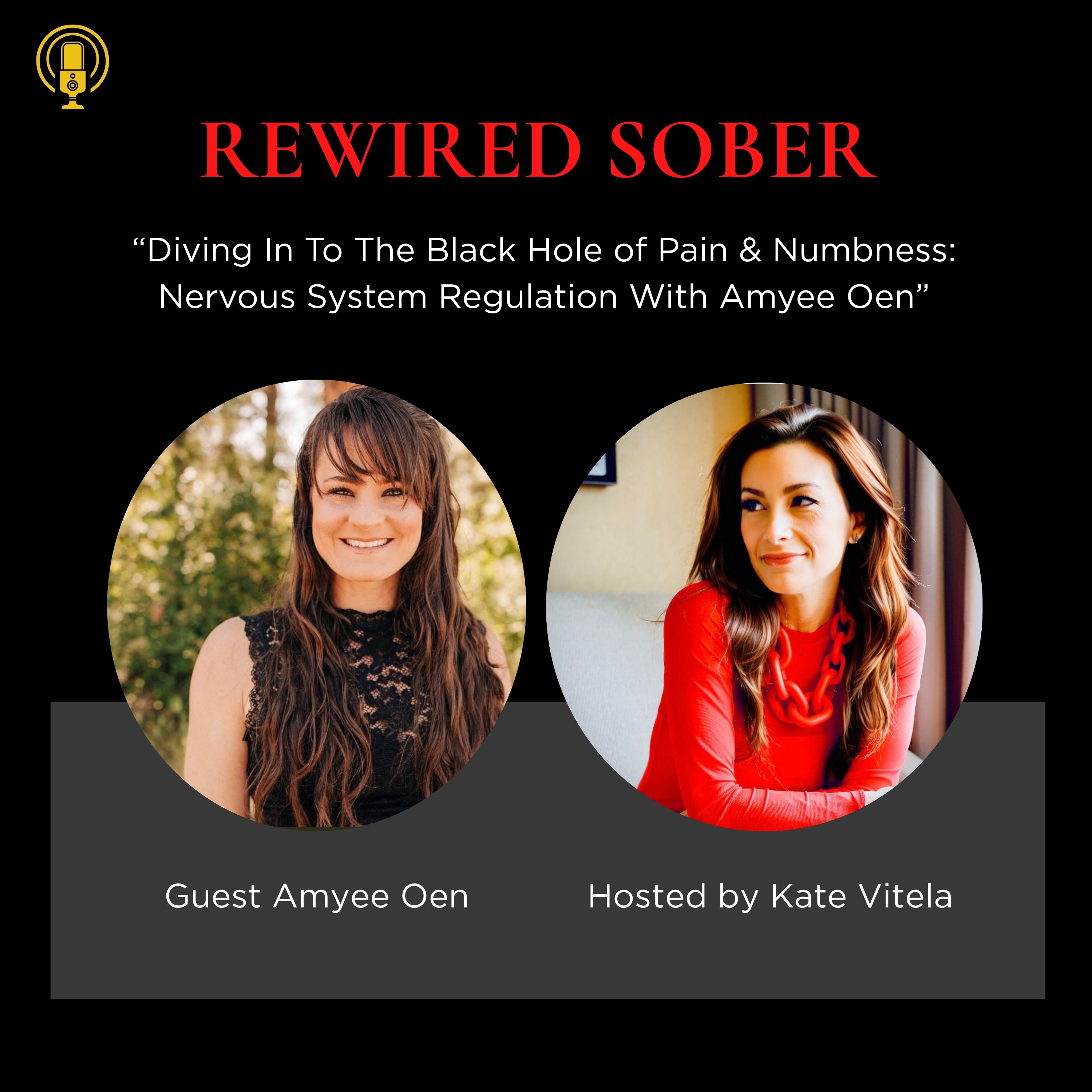
    EP 69: Diving In To The Black Hole Of Pain & Numbness: Nervous System Regulation With Amyee Oen

    ⬇️ READY TO GO DEEPER? Rewired Sober 1:1 Coaching Spots Are Open (But Fill Up Fast) Start anytime and get 3 months of guidance from Kate designed for women in sobriety. Book a discovery call to inquire: https://calendly.com/katevitelacoaching/deep-dive-1-1-w-kate Connect with Kate @rewiredsober on all social media platforms: Instagram https://www.instagram.com/rewiredsober/ Email: katevitelacoaching@gmail.com Everyone is talking about nervous system regulation—but what does that actually look like in real life? In this episode, Kate sits down with nurse coach Amyee to talk about emotional numbness, why so many women feel disconnected from themselves, and what’s really happening in the body after years of stress, trauma, and dysregulation. They explore the idea of numbness as a “black hole”—something many women avoid through coping behaviors like drinking, scrolling, shopping, overeating, and overworking. But what if those behaviors aren’t failures… and are actually attempts to regulate an overwhelmed nervous system? This conversation breaks down: why numbness happens how the nervous system drives coping behaviors the difference between mindset work and somatic work why proper training matters in somatic coaching and how to start reconnecting with your body in practical, real-life ways If you’ve ever felt checked out, flat, or like you’re just going through the motions—this episode will help you understand why… and what to do next. Key Topics Nervous system regulation in everyday life Emotional numbness and disconnection Trauma, chronic stress, and dysregulation The “black hole” of avoided emotions Why women numb out (alcohol, scrolling, food, shopping, overworking) Somatic work vs. mindset work The importance of training and expertise in somatic coaching Practical tools for grounding and staying present What We Get Into Numbness Isn’t Random Why feeling flat, disconnected, or “off” is often the result of a chronically overwhelmed nervous system—not a personal failure. The Black Hole The uncomfortable truth: many women avoid deeper pain, grief, or unresolved emotions by staying busy, distracted, or numbed out—and what it takes to actually face that space. Coping Isn’t the Problem Drinking, scrolling, eating, shopping, overworking—these aren’t just bad habits. They’re attempts to regulate stress when your system doesn’t feel safe. Why Mindset Isn’t Enough You can’t think your way into feeling safe. This episode explores why empowerment has to include the body—not just thoughts. Somatic Work That Actually Helps What real nervous system support looks like (and why training matters if someone is guiding others through this work). Practical Regulation (Without Escaping Your Life) Simple, realistic ways to stay grounded, aware, and connected to your body throughout the day. Connect with the guest Amyee Oen: www.amyeeoen.com IG/FB @amyeeoen @findyourtruenorthcoaching

    • Transcript
Showing 1–20 of 21 episodes