Skip to content
Artwork for Philosophy Overdose
HistorySociety & CulturePhilosophyEducation

Philosophy Overdose

Philosophy Overdose

A collection of public and academic philosophy videos, mostly analytic philosophy but occasionally continental philosophy too. The channel looks for thought-provoking lectures and interviews, particularly what is rare and involves famous figures. There is occasionally an attempt at translation as well, especially that of German and French.

Nothing here is monetized, the channel is wholly non-commercial. Everything here is for the purpose of education and spreading around good philosophy content. If there's any problem, let me know, and I can take it down.

Feel free to let me know if there's anything you'd like me to post, including one of your own lectures.

Philosophy, Epistemology, Ethics, History of Philosophy, Political Philosophy, History of Ideas, Ontology, Critical Thinking, Moral Philosophy, Philosophy of Science, Logic, Philosophy of Mind, Metaphysics, Philosophy of Religion, Social Philosophy, Philosophy of Language, Consciousness, Philosophy of Mathematics, etc.

Links:
Facebook: https://www.facebook.com/PhilosophyOverdoseYoutube/

Play
  • 131 episodes
  • Avg 55 min
  • English
Counted on this page — what you have heard stays on this device, so it is not something the list can be paged by.
  • Wednesday · 1 hr 1 min

    4 Reid on Causation and Active Powers - Reid's Critique of Hume (Dan Robinson)

    Professor Dan Robinson gives the fourth in a series of 8 lectures on Thomas Reid's critique of David Hume at Oxford in 2014. “It is evident that a power is a quality, and therefore can’t exist without a subject to which it belongs…This (Humean) suggestion— There exists some power that cannot be attributed to any thing, any subject, which has the power —is an absurdity…No principle seems to have been more universally acknowledged by mankind ever since the first dawn of reason than that every change we observe in nature must have a cause…Another argument to show that all men have a notion or idea of active power is that there are many mental operations—performed by everyone who has a mind, and necessary in the ordinary conduct of life—which presuppose that we have active power”. Under “David Hume”, the Stanford Encyclopedia of Philosophy begins with, “The most important philosopher ever to write in English”. His most formidable contemporary critic was the fellow Scot, Thomas Reid, the major architect of so-called Scottish Common Sense Philosophy. The most significant features of Hume’s work, as understood by Reid, are the representive theory of perception, the nature of causation and causal concepts, the nature of personal identity and the foundations of morality. Each of these topics is presented in a pair of lectures, the first summarizing Hume’s position and the second Reid’s critique of that position. All Lectures: https://www.youtube.com/playlist?list=PLhP9EhPApKE9nki7CXFPi7PMOi5W2g2-q #philosophy #davidhume #causation #causality #historyofphilosophy Learn more about your ad choices. Visit megaphone.fm/adchoices

  • Wednesday · 2 hr 1 min

    Real Direct Realism

    Galen Strawson delivers a lecture on the philosophy of perception at the Marc Sanders Foundation back in 2014. More on these philosophical issues regarding the nature of perception: https://plato.stanford.edu/entries/perception-problem/ and https://plato.stanford.edu/entries/perception-episprob/ 00:00 Lecture 52:11 Discussion #philosophy #epistemology #perception #skepticism #philosophyofmind Learn more about your ad choices. Visit megaphone.fm/adchoices

  • Wednesday · 1 hr 56 min

    Reasons for Action: Introducing Common-Sense Psychology - Emma Borg (2024)

    Professor Emma Borg gives the first lecture in a series on "Reasons for Action" as part of the 2024 Frege Lectures in theoretical philosophy at the University of Tartu. Do people generally do what they do on the basis of the reasons they have for acting? The standard philosophical answer - common-sense psychology or folk psychology - says yes. But recently the idea that humans are generally rational, reasons-responsive beings has come under considerable pressure, as a number of empirical findings (often in the fields of social, comparative, and developmental psychology) seem to suggest that, on the contrary, people are often blind to reasons, acting on gut feelings and intuitions, and are subject to various biases and other errors of reasoning. Although these empirical findings are now well-known (reaching beyond the ivory tower into the public consciousness), Emma Borg suggests that the precise problem for common-sense psychology remains unclear. There are (at least) three different arguments that could be made based on the empirical data. In her lectures, Emma Borg explains these three arguments and argues that the proponent of the common-sense view has responses to each of them. She concludes that the case against common-sense psychology can be rejected, and that we should hold on to the notion that action (of a typical adult) involves acting based on reasons. Emma Borg is Professor of Philosophy at the Institute of Philosophy, University of London. Her main research interests are the philosophy of language, philosophy of mind, and business ethics. Borg is the author of Minimal Semantics (2004) and Pursuing Meaning (2012), as well as two forthcoming books: A Very Short Introduction to Meaning and Acting for Reasons: In Defence of Common-Sense Psychology (all published by Oxford University Press). The latter book is also the basis for her Frege Lectures. 00:00 Intro 03:18 Talk 1:05:13 Q&A #philosophy #epistemology #psychology #rationality Learn more about your ad choices. Visit megaphone.fm/adchoices
  • Monday · 55 min

    Metaphilosophy and Russell vs Wittgenstein on Judgment

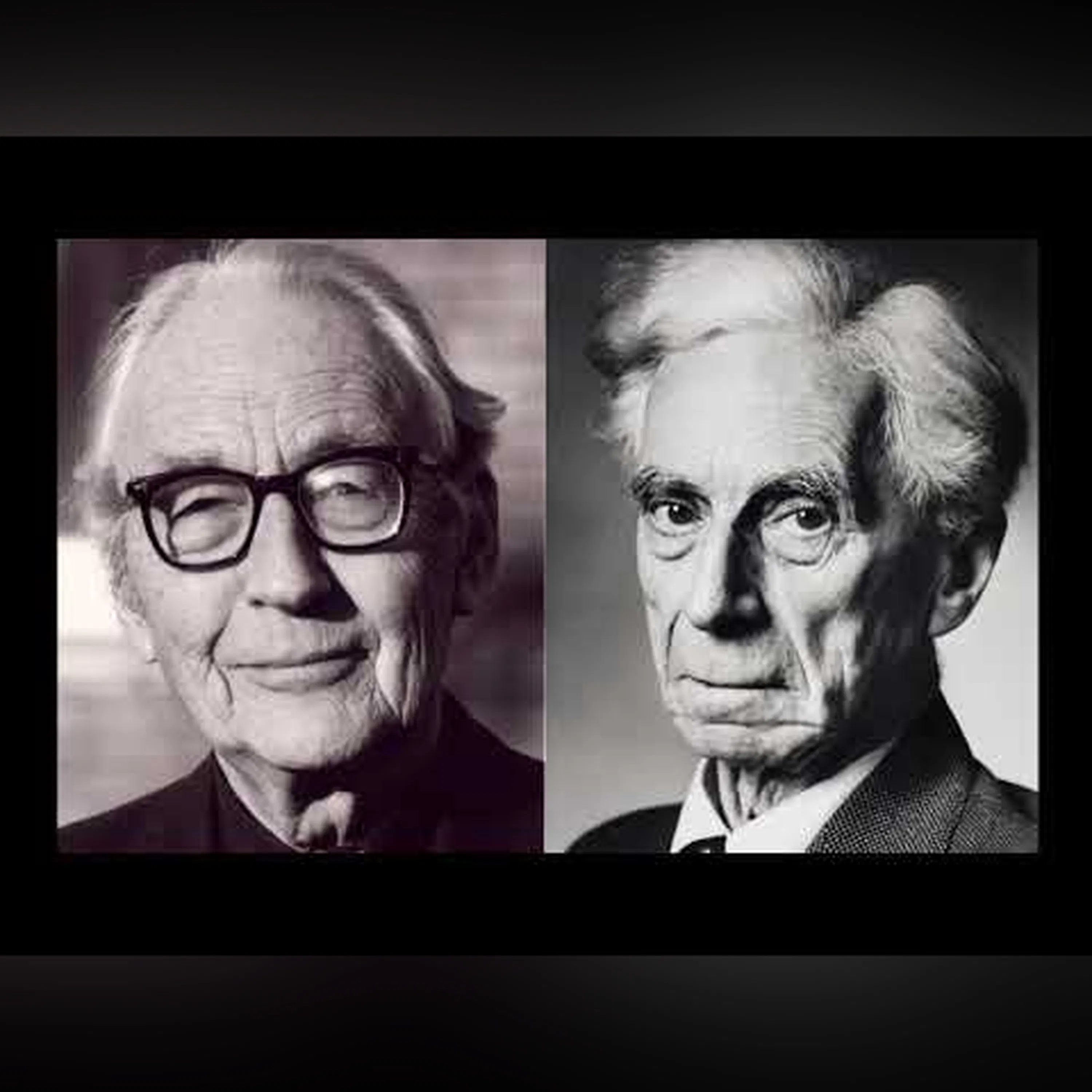
    After a brief discussion of the nature of philosophy and the origins of analytic philosophy, Fraser MacBride discusses Bertrand Russell and Ludwig Wittgenstein on the nature of relations and the structure of judgment or belief, how our thought relates to external objects in the world. Among the topics discussed include metaphilosophy and the history of analytic philosophy, F. H. Bradley's infamous regress argument against the reality of relations, Russell's correspondence theory of truth and various accounts of judgment, including his famous multiple relation theory. "The question of relations is one of the most important that arise in philosophy, as most other issues turn on it: monism and pluralism; the question of whether anything is wholly true except the whole of truth, or wholly real except the whole of reality; idealism and realism, in some of their forms; perhaps the very existence of philosophy as a subject distinct from science and possessing a method of its own.” Bertrand Russell #Philosophy #Wittgenstein #BertrandRussell Learn more about your ad choices. Visit megaphone.fm/adchoices

  • Monday · 1 hr 40 min

    Creativity in Science - Ernest Nagel (1968)

    Audio recording of a public lecture by professor Ernest Nagel on the nature of creativity, particularly in connection with science. This talk was given at the Cooper Union Forum in 1968. #philosophy #science #philosophyofscience #historyofscience #psychology Learn more about your ad choices. Visit megaphone.fm/adchoices
  • Monday · 1 hr 27 min

    Can Machines Become Conscious? (2025)

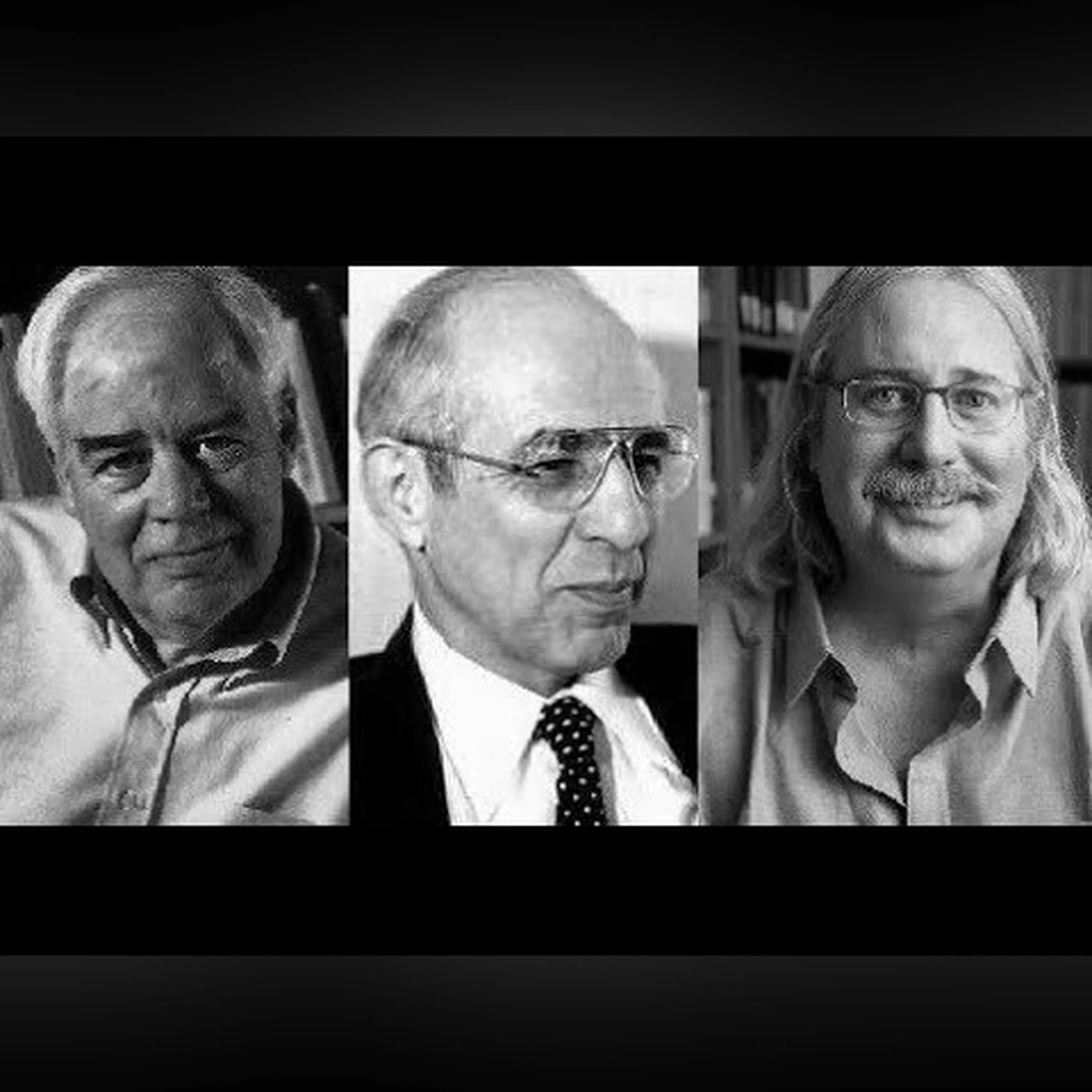
    David Chalmers and Michael Graziano discuss consciousness and AI with moderator Anil Ananthaswamy at Princeton University in 2025 as part of the Large AI Model Lecture Series. 00:00 Introduction 08:31 Discussion #philosophy #artificialintelligence #consciousness #psychology #davidchalmers #philosophyofmind #debate Learn more about your ad choices. Visit megaphone.fm/adchoices

  • Monday · 1 hr 21 min

    1 The "Representational" Theory of Knowledge - Reid's Critique of Hume (Dan Robinson)

    Professor Dan Robinson gives the first in a series of 8 lectures on Thomas Reid's critique of David Hume at Oxford in 2014. Hume defends the thesis according to which “ALL THE PERCEPTIONS OF THE HUMAN MIND RESOLVE THEMSELVES INTO…IMPRESSIONS AND IDEAS”. Accordingly, “We may prosecute this enquiry to what length we please; where we shall always find, that every idea which we examine is copied from a similar impression”. Under “David Hume”, the Stanford Encyclopedia of Philosophy begins with, “The most important philosopher ever to write in English”. His most formidable contemporary critic was the fellow Scot, Thomas Reid, the major architect of so-called Scottish Common Sense Philosophy. The most significant features of Hume’s work, as understood by Reid, are the representive theory of perception, the nature of causation and causal concepts, the nature of personal identity and the foundations of morality. Each of these topics is presented in a pair of lectures, the first summarizing Hume’s position and the second Reid’s critique of that position. All Lectures: https://www.youtube.com/playlist?list=PLhP9EhPApKE9nki7CXFPi7PMOi5W2g2-q #philosophy #davidhume #epistemology #perception #empiricism #skepticism #philosophyofmind #historyofphilosophy Learn more about your ad choices. Visit megaphone.fm/adchoices

  • Monday · 1 hr 5 min

    3 Space, Time and the "Analogies of Experiences" - Kant's Critique of Pure Reason (Dan Robinson)

    Dan Robinson gives the 3rd lecture in a series of 8 on Immanuel Kant's Critique of Pure Reason. Kant's so-called "Copernican" revolution in metaphysics begins with the recognition of the observer's contribution to the observation. Thus, to the extent that Hume's empiricism restricts knowledge to experience, empiricism succeeds only by accepting the a priori grounding of experience itself. This series looks at German Philosopher Immanuel Kant's seminal philosophical work 'The Critique of Pure Reason'. The lectures aim to outline and discuss some of the key philosophical issues raised in the book and to offer students and individuals thought provoking Kantian ideas surrounding metaphysics. Each lecture looks at particular questions raised in the work such as how do we know what we know and how do we find out about the world, dissects these questions with reference to Kant's work and discusses the broader philosophical implications. Anyone with an interest in Kant and philosophy will find these lectures thought provoking but accessible. This is series of lectures was given in 2011 at Oxford. Note, the audio has been improved. All 8 lectures: https://www.youtube.com/playlist?list=PLhP9EhPApKE_OdgqNgL0AJX9-gwr4tmLw #philosophy #kant #epistemology #metaphysics #empiricism #skepticism #historyofphilosophy Learn more about your ad choices. Visit megaphone.fm/adchoices

  • Monday · 20 min

    Same-Sex Marriage Arguments

    Professor Martha Nussbaum discusses the main arguments against same-sex marriage in a clip which comes from a 2010 lecture at the Harvard Book Store on her book, From Disgust to Humanity: Sexual Orientation and Constitutional Law. Although this topic would've seemed out of date a decade ago, it seems increasingly less so in the current socio-political climate. #philosophy #ethics #socialissues #law #debate Learn more about your ad choices. Visit megaphone.fm/adchoices

  • Monday · 5 min

    Karl Popper on the Open Society (1974)

    A short of clip of Karl Popper discussing the Open Society from a 1974 interview. The translation is mine. For more Popper: https://www.youtube.com/playlist?list=PLhP9EhPApKE_VarWCx1d_Uogn_GxsVf-o #philosophy #karlpopper #politicaltheory #politicalphilosophy #opensociety Learn more about your ad choices. Visit megaphone.fm/adchoices

  • Monday · 1 hr 7 min

    3 David Hume on Causation - Reid's Critique of Hume (Dan Robinson)

    Professor Dan Robinson gives the third in a series of 8 lectures on Thomas Reid's critique of David Hume at Oxford in 2014. Causality arises from a habit of the mind formed by repeated experiences. “There is nothing in any objects to persuade us, that they are either always remote or always contiguous; and when from experience and observation we discover, that their relation in this particular is invariable, we, always conclude there is some secret cause, which separates or unites them…” Under “David Hume”, the Stanford Encyclopedia of Philosophy begins with, “The most important philosopher ever to write in English”. His most formidable contemporary critic was the fellow Scot, Thomas Reid, the major architect of so-called Scottish Common Sense Philosophy. The most significant features of Hume’s work, as understood by Reid, are the representive theory of perception, the nature of causation and causal concepts, the nature of personal identity and the foundations of morality. Each of these topics is presented in a pair of lectures, the first summarizing Hume’s position and the second Reid’s critique of that position. All Lectures: https://www.youtube.com/playlist?list=PLhP9EhPApKE9nki7CXFPi7PMOi5W2g2-q #philosophy #davidhume #causation #skepticism #causality #historyofphilosophy Learn more about your ad choices. Visit megaphone.fm/adchoices

Showing 121–131 of 131 episodes