
Sunday · 13 min

Patrick Boyle
Patrick Boyle is a hedge fund manager, a university professor and a former investment banker.
This channel is all about quantitative finance. By subscribing you will see videos explaining what is happening in markets right now, you will learn about financial derivatives, corporate finance and how traders use quantitative tools like statistics. You will see interviews with some of the most interesting people in the financial industry. In addition, you will see some longer form documentaries on the history of financial markets.
To contact Patrick go to the website http://onfinance.org
DISCLAIMER:
This channel is not affiliated with any financial institution. The videos on this channel are for entertainment purposes only and do not constitute financial advice. Those seeking investment advice should seek out a registered professional. Patrick is not responsible for investment actions taken by viewers and his content should not be used as a basis for investment.
Links:
Amazon Author Page: https://amzn.to/3bTeqed
Patreon: https://www.patreon.com/PatrickBoyleOnFinance
Website: https://www.onfinance.org/
Instagram: https://www.instagram.com/patrickeboyle/
BlueSky: https://bsky.app/profile/pboyle.bsky.social

Learn more about your ad choices. Visit megaphone.fm/adchoices
In todays video we will learn about Dividend Swaps, Commodity Swaps and Equity Swaps. These classes are all based on the book Trading and Pricing Financial Derivatives, available on Amazon at this link. https://amzn.to/2WIoAL0 Check out our website http://www.onfinance.org/ Follow Patrick on twitter here: https://twitter.com/PatrickEBoyle What are Dividend Swaps? A dividend swap is an over-the-counter financial derivative contract (in particular a form of swap). It consists of a series of payments made between two parties at defined intervals over a fixed term. One party - the holder of the fixed leg - will pay its counterparty a pre-designated fixed payment at each interval. The other party - the holder of the floating leg - will pay its counterparty the total dividends that were paid out by a selected underlying, which can be a single company, a basket of companies, or all the members of an index. The payments are multiplied by a notional number of shares. Like most swaps, the contract is usually arranged such that its value at signing is zero. This is accomplished by making the value of the fixed leg equal to the value of the floating leg - in other words, the fixed leg will be equal to the average expected dividends over the term of the swap. Therefore, the fixed leg of the swap can be used to estimate market forecasts of the dividends that will be paid out by the underlying What is a Commodity Swap? A commodity swap is a type of swap agreement whereby a floating (or market or spot) price based on an underlying commodity is traded for a fixed price over a specified period. The vast majority of commodity swaps involve oil. Many airline and rail companies enter oil commodity swap deals in order to secure lower oil costs in the long term. A commodity swap is similar to a fixed-floating interest rate swap. The difference is that in an interest rate swap, the floating leg is based on standard interest rates such as LIBOR and EURIBOR. However, in a commodity swap, the floating leg is based on the price of underlying commodity like oil, sugar, and precious metals. No commodities are exchanged during the trade. In this swap, the user of a commodity would secure a maximum price and agree to pay a financial institution this fixed price. Then, in return, the user would get payments based on the market price for the commodity involved. On the other side, a producer wishes to fix the income and would agree to pay the market price to a financial institution, in return for receiving fixed payments for the commodity. What is an equity swap? An equity swap is a financial derivative contract (a swap) where a set of future cash flows are agreed to be exchanged between two counterparties at set dates in the future. The two cash flows are usually referred to as "legs" of the swap; one of these "legs" is usually pegged to a floating rate such as LIBOR. This leg is also commonly referred to as the "floating leg". The other leg of the swap is based on the performance of either a share of stock or a stock market index. This leg is commonly referred to as the "equity leg". Most equity swaps involve a floating leg vs. an equity leg, although some exist with two equity legs. An equity swap involves a notional principal, a specified duration and predetermined payment intervals. The term "tenor" may refer either to the duration or the coupon frequency. Trading and Pricing Financial Derivatives Learn more about your ad choices. Visit megaphone.fm/adchoices

Learn more about your ad choices. Visit megaphone.fm/adchoices
Did Warren Buffett go on a stock buying spree? In todays video we discuss whether Buffett feels markets are still too greedy right now or if it is time to buy. We will discuss the upcoming Berkshire Hathaway annual meeting and how it will be livestreamed this year. Buy Patricks' Books Here: https://amzn.to/3cW3T31 Visit our website: www.onfinance.org Follow Patrick on Twitter Here: https://twitter.com/PatrickEBoyle In todays video we discuss what the biggest investors have been doing in the recent market downturn. We talk about Warren Buffett, Leon Cooperman and Carl Icahn. Berkshire Hathaway investors have been waiting for the company to put its cash pile to work. Warren Buffett has had a few quarters of active stock buying in the past few years, but the company's cash hoard has been growing since its last major purchase - the January 2016 acquisition of Precision Castparts. Berkshire has about $128 billion in cash and equivalents on its balance sheet. Since the COVID-19 pandemic and the resulting bear market began, investors have been waiting to see if the company will finally make some big moves. No major investments have come to fruition - at least not in the acquisition department. And judging by recent comments by Charlie Munger, there are no big acquisition targets in the company's immediate future. Berkshire could be putting some of its money to work in the stock market during the COVID-19 pandemic. The first important date for investors to watch is when Berkshire releases its first-quarter earnings report on Friday May 1 at the Berkshire Hathaway Annual Meeting 2020. We'll get a glimpse of how much cash the company had as of March 31, when the bear market was already well underway. If the cash hoard has declined significantly, we can infer that Berkshire has been doing some stock buying since there haven't been any major acquisitions announced. In the video I mention my favorite books on Warren Buffett and how he invests. The best book in my opinion is by Buffett The Making of an American Capitalist Roger Lowenstein and can be found at this link. https://amzn.to/2y7qT07 It is also worthwhile reading Trade like Warren Buffett by James Altucher. https://amzn.to/2VKR2uN Billionaire investor Leon Cooperman said in an interview with CNBC on Thursday that government support to companies struggling during the coronavirus crisis is likely to change capitalism forever and that politics are moving to the left in the USA and taxes will need to go up—regardless of who wins the 2020 presidential election in November. In addition we discuss Carl Icahn, his Mall Short using CMBS, how he bought oil at a negative price, and his market outlook. Here is a video explaining what negative oil prices mean. https://youtu.be/dfqmjSOD7pQ Warren Buffett stocks 2020 Learn more about your ad choices. Visit megaphone.fm/adchoices
Get an exclusive 15% discount on Saily data plans! Use code BOYLE at checkout. Download Saily app or go to https://saily.com/boyle Two days after its release, my analysis of the Epstein files was on track to break every record on this channel. Then the yellow dollar sign appeared, and the video flatlined. In this video, we explore how algorithmic demonetization has evolved into a form of "soft censorship." It isn't a conspiracy, but a broken business model that taxes serious journalism in favor of "brand safe" entertainment. We look back at the Logan Paul "Adpocalypse," examine the structural bias against independent creators, and analyze the alarming decline of U.S. Press Freedom (now ranked #57 globally). From the missing footage in Epstein's cell to the 2020 spike in journalist arrests, we ask the hard question: If the algorithm filters out the "boring" work of holding power to account, does YouTube cease to be a digital public square? Link to the Demonetized videos: https://youtu.be/GAJf2F1BbRA?si=pocxFNV33xXlANqo https://youtu.be/MG95B0fyuWI?si=ULY-lTHAzqqkAYq2 @VloggingThroughHistory video: https://www.youtube.com/watch?v=SnPrVn24dTE Patrick's Books: Statistics For The Trading Floor: https://amzn.to/3eerLA0 Derivatives For The Trading Floor: https://amzn.to/3cjsyPF Corporate Finance: https://amzn.to/3fn3rvC Ways To Support The Channel Patreon: https://www.patreon.com/PatrickBoyleOnFinance Buy Me a Coffee: https://www.buymeacoffee.com/patrickboyle Visit our website: https://www.onfinance.org Follow Patrick on Twitter Here: https://bsky.app/profile/pboyle.bsky.social Business Inquiries ➡️ sponsors@onfinance.org Patrick Boyle On Finance Podcast: Spotify: https://open.spotify.com/show/7uhrWlDvxzy9hLoW0EYf0b Apple: https://podcasts.apple.com/us/podcast/patrick-boyle-on-finance/id1547740313 Google Podcasts: https://tinyurl.com/62862nve Join this channel to support making this content: https://www.youtube.com/channel/UCASM0cgfkJxQ1ICmRilfHLw/join Learn more about your ad choices. Visit megaphone.fm/adchoices

Learn more about your ad choices. Visit megaphone.fm/adchoices
Today we will learn in financial futures what is convenience yield? These classes are all based on the book Trading and Pricing Financial Derivatives, available on Amazon at this link. https://amzn.to/2WIoAL0 Check out our website http://www.onfinance.org/ Follow Patrick on twitter here: https://twitter.com/PatrickEBoyle In Financial Futures, what is convenience yield? A convenience yield is the benefit or premium associated with holding an underlying product or physical good, rather than the associated derivative security or contract. Learn more about your ad choices. Visit megaphone.fm/adchoices

Learn more about your ad choices. Visit megaphone.fm/adchoices
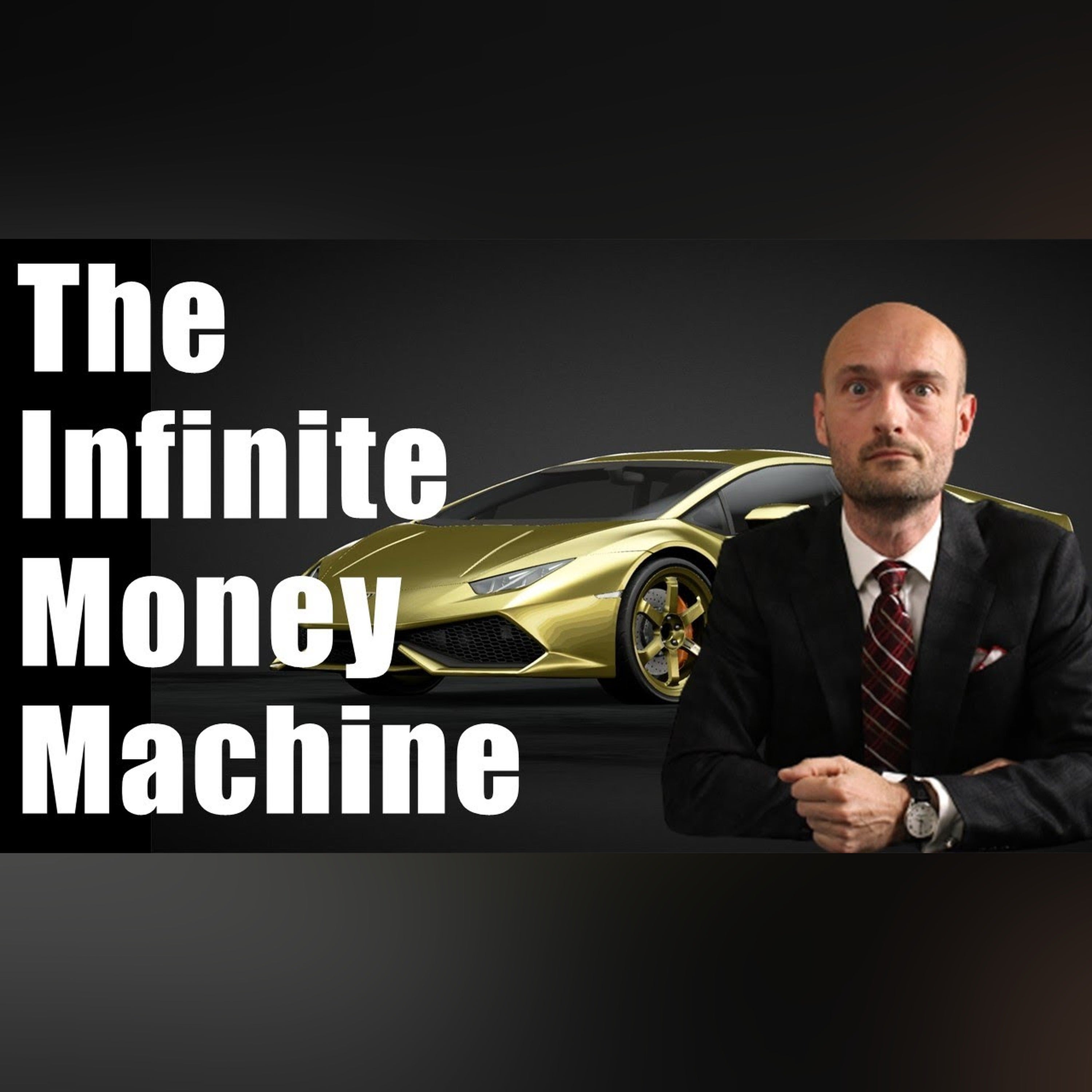
The story I am about to tell you will contradict almost everything I have taught people about risk and return, about how easy it is to make money and about arbitrage in markets. Today I’m going to tell you how an experimental physicist Konstantin Anikeev discovered an infinite money machine and used it to make $310 thousand dollars. In addition he made this money in such a way that the IRS could not even tax him on the income. because Konstantin doesn’t have to pay taxes on his gains, he is left with enough money to buy a Lamborghini Huracan and get it wrapped in gold. It is reasonable to believe that he has achieved “The FX Trader Lifestyle” Patrick's Books: Statistics for The Trading Floor: https://amzn.to/3eerLA0 Derivatives For The Trading Floor: https://amzn.to/3cjsyPF Corporate Finance: https://amzn.to/3fn3rvC Patreon Page: https://www.patreon.com/PatrickBoyleOnFinance Visit our website: www.onfinance.org Follow Patrick on Twitter Here: https://twitter.com/PatrickEBoyle Konstantin made hundreds of thousands of dollars through credit card rewards programs. In particular using the American Express Blue Cash Everyday card for credit card arbitrage also known as credit card churning. Credit card churning is where people look for the credit cards with the highest rewards, sign up bonuses in order to make money. Learn more about your ad choices. Visit megaphone.fm/adchoices

Learn more about your ad choices. Visit megaphone.fm/adchoices

Thanks Morning Brew for my daily news briefing - sign up for free here: https://morningbrewdaily.com/patrickboyle The Los Angeles wildfires have destroyed more than 12,000 structures and at least 24 people have died with more unaccounted for as multiple wildfires, fueled by severe drought conditions and strong winds, continue to burn. Wells Fargo and Goldman Sachs estimate that the destruction will cost insurers as much as $30 billion dollars and after accounting for non-insured damages, the total costs will balloon to $40 billion. The ongoing fires, already appear to be the costliest wildfire event in California history. Patrick's Books: Statistics For The Trading Floor: https://amzn.to/3eerLA0 Derivatives For The Trading Floor: https://amzn.to/3cjsyPF Corporate Finance: https://amzn.to/3fn3rvC Ways To Support The Channel Patreon: https://www.patreon.com/PatrickBoyleOnFinance Buy Me a Coffee: https://www.buymeacoffee.com/patrickboyle Visit our website: https://www.onfinance.org Follow Patrick on Twitter Here: https://bsky.app/profile/pboyle.bsky.social Business Inquiries ➡️ sponsors@onfinance.org Patrick Boyle On Finance Podcast: Spotify: https://open.spotify.com/show/7uhrWlDvxzy9hLoW0EYf0b Apple: https://podcasts.apple.com/us/podcast/patrick-boyle-on-finance/id1547740313 Google Podcasts: https://tinyurl.com/62862nve Join this channel to support making this content: https://www.youtube.com/channel/UCASM0cgfkJxQ1ICmRilfHLw/join Learn more about your ad choices. Visit megaphone.fm/adchoices

⚡️Start designing today with Gamma for free ➡️ https://gamma.app Big tech companies like Microsoft, Amazon and Google are driving the nuclear revival, as to get new power-hungry data centers built in the US and Europe, they have to solve the problem of power generation. Their net zero pledges mean that the sources of power that they have pledged to use have to be low carbon, and they have already invested heavily in wind and solar, but their data centers still need a steady base load, so for big tech, investing in nuclear energy makes a lot of sense. Patrick's Books: Statistics For The Trading Floor: https://amzn.to/3eerLA0 Derivatives For The Trading Floor: https://amzn.to/3cjsyPF Corporate Finance: https://amzn.to/3fn3rvC Ways To Support The Channel Patreon: https://www.patreon.com/PatrickBoyleOnFinance Buy Me a Coffee: https://www.buymeacoffee.com/patrickboyle Visit our website: https://www.onfinance.org Follow Patrick on Twitter Here: https://twitter.com/PatrickEBoyle @PracticalEngineeringChannel Connecting Solar to the Grid is Harder Than You Think: https://www.youtube.com/watch?v=7G4ipM2qjfw Business Inquiries ➡️ sponsors@onfinance.org Patrick Boyle On Finance Podcast: Spotify: https://open.spotify.com/show/7uhrWlDvxzy9hLoW0EYf0b Apple: https://podcasts.apple.com/us/podcast/patrick-boyle-on-finance/id1547740313 Google Podcasts: https://tinyurl.com/62862nve Join this channel to support making this content: https://www.youtube.com/channel/UCASM0cgfkJxQ1ICmRilfHLw/join Learn more about your ad choices. Visit megaphone.fm/adchoices

Learn more about your ad choices. Visit megaphone.fm/adchoices

Buy The Book Here: https://amzn.to/2Vo18ln Follow Patrick on Twitter Here: https://twitter.com/PatrickEBoyle Learn more about your ad choices. Visit megaphone.fm/adchoices

Learn more about your ad choices. Visit megaphone.fm/adchoices
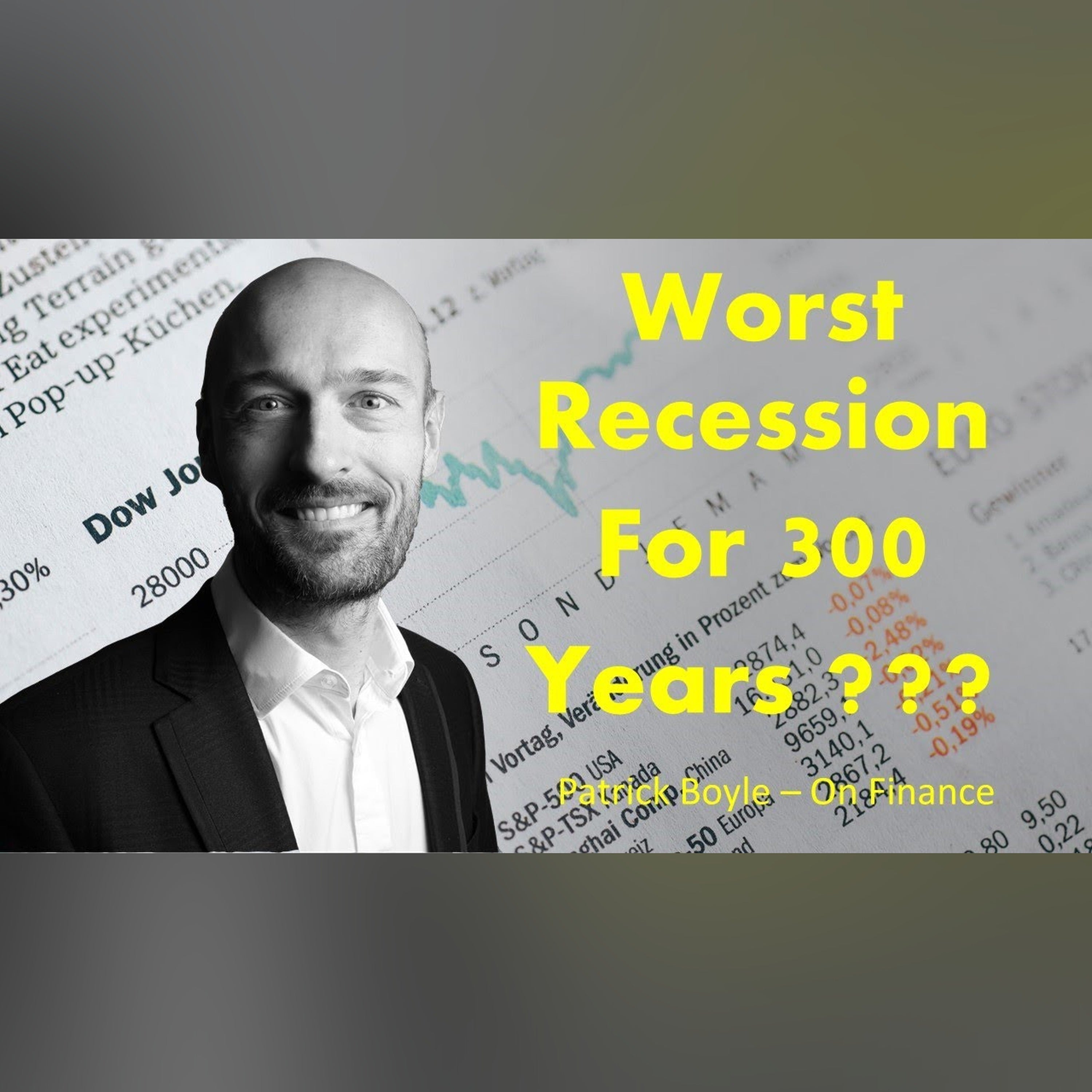
In todays video we will talk about the Bank of England’s forecast that the Coronavirus epidemic will push the UK economy into its deepest recession in 300 years and their decision not to provide any new stimulus right away. Buy The Book Here: https://amzn.to/2J2kF3A Visit our website: www.onfinance.org Follow Patrick on Twitter Here: https://twitter.com/PatrickEBoyle The Bank of England in its monetary policy report this morning put forth its predictions for the UK economy. Suggesting that output would fall 3% in the first quarter followed by 25% in the second quarter an almost 30% drop in output drop in the first half of 2020 the fastest and deepest recession since the great frost in 1709. The great frost of 1709 saw three months of deadly cold that led to a year of famine and food riots in Europe. everything turned to ice. Lakes and rivers and seas froze, the soil froze to a depth of a meter or more. Livestock died from cold in their barns and travelers froze to death on the roads. The last time we have had an annual drop in real GDP of more than 4.5% was in 1945. The last time we have had an annual drop in real GDP of greater than 10% was in 1709. These economic projections came with a warning to Britain’s banks that if they tried to stem losses by restricting lending, they would make the situation worse. Andrew Bailey, the BoE governor, said a failure to lend would create a vicious circle of more bankruptcies and higher losses on loans that would come back to hit the banks themselves. Mr Bailey said: “The better path for banks is to keep lending if the system ensures a good supply of loans, we’ll get a better outcome.” Commercial banks responded that they were committed to lending through the crisis. the BoE warned that, even with adequate lending, the economy was bound to take a big hit; household spending has already dropped about 30 per cent since early March. The central bank forecast that the UK’s unemployment rate was likely to rise to 9 per cent by next year, even with the government’s job retention scheme protecting many employees from being laid off. That would mean a higher rate of joblessness than after the 2008 financial crisis. They forecast that inflation would dip to 0.5 per cent in 2021, before returning to the 2 per cent target the following year. On a more positive note, Mr Bailey said the economic rebound was likely to happen “much more rapidly than the pullback from the global financial crisis”. They assume that long-term damage to the economy would be only 1.5 per cent GDP coming from missed business investment in 2020. Otherwise the prediction is for a V-shaped recovery. Bailey defended the decision not to take more immediate action, saying the measures announced in March had not been exhausted and that they have made a very clear commitment to do what it takes to support the economy consistent with the inflation target. All MPC members agreed that more stimulus might be needed in future. The central bank is signalling that more QE is in the pipeline. The BoE analyzed if the financial system could cope with their expected recession. They say that that banks will lose less money than in their latest stress test and that “the core banking system has capital buffers more than sufficient to absorb losses”. The BoE did stress that the pandemic would severely hit corporate cash flow. Government support would plug some of the gap, but there remains a £60bn additional deficit that banks would need to cover to stop viable businesses from going under. The central bank warned that if banks failed to provide credit to their business customers, they might see a short-term benefit in reduced losses, but this would cause more companies to fail and unemployment to rise another 2 percentage points, ultimately leading to larger losses. Learn more about your ad choices. Visit megaphone.fm/adchoices

Ad: 🔒Remove your personal information from the web at https://joindeleteme.com/BOYLE and use code BOYLE for 20% off Why are some homeowners thriving while others are struggling to keep up? In this video, we explore how America’s housing market has fractured—creating a sharp divide between those who locked in low mortgage rates and those buying today at much higher costs. We’ll unpack: The lock-in effect and its impact on geographic mobility Why millennials face deeper inequality within their own generation How renters are absorbing the full brunt of housing inflation The role of tariffs, interest rates, and investor behavior International comparisons with the UK and China Why your mortgage might be the most important financial instrument you own From sticky inflation to shifting migration patterns, this is the story of how housing finance is reshaping the American economy—and the lives of millions. Patrick's Books: Statistics For The Trading Floor: https://amzn.to/3eerLA0 Derivatives For The Trading Floor: https://amzn.to/3cjsyPF Corporate Finance: https://amzn.to/3fn3rvC Ways To Support The Channel Patreon: https://www.patreon.com/PatrickBoyleOnFinance Buy Me a Coffee: https://www.buymeacoffee.com/patrickboyle Visit our website: https://www.onfinance.org Follow Patrick on Twitter Here: https://bsky.app/profile/pboyle.bsky.social Business Inquiries ➡️ sponsors@onfinance.org Patrick Boyle On Finance Podcast: Spotify: https://open.spotify.com/show/7uhrWlDvxzy9hLoW0EYf0b Apple: https://podcasts.apple.com/us/podcast/patrick-boyle-on-finance/id1547740313 Google Podcasts: https://tinyurl.com/62862nve Join this channel to support making this content: https://www.youtube.com/channel/UCASM0cgfkJxQ1ICmRilfHLw/join Learn more about your ad choices. Visit megaphone.fm/adchoices

A follow-up on yesterday’s GameStop - Wall Street Bets video. I got a lot of questions and figured I’d answer them in a new video. Let’s talk about the trading halts, brokers not allowing people to trade, can short interest be over 100%, should GameStop be added to the S&P500, who are the bad guys and how do I think this will all end? Yesterdays Video: https://youtu.be/Qi5hTqQFhuA Patrick's Books: Statistics For The Trading Floor: https://amzn.to/3eerLA0 Derivatives For The Trading Floor: https://amzn.to/3cjsyPF Corporate Finance: https://amzn.to/3fn3rvC Patreon Page: https://www.patreon.com/PatrickBoyleOnFinance Visit our website: www.onfinance.org Follow Patrick on Twitter Here: https://twitter.com/PatrickEBoyle Learn more about your ad choices. Visit megaphone.fm/adchoices

These classes are all based on the book Trading and Pricing Financial Derivatives, available on Amazon at this link. https://amzn.to/2WIoAL0 Check out our website http://www.onfinance.org/ Follow Patrick on twitter here: https://twitter.com/PatrickEBoyle This is the fifth video in our series on pricing options. The whole series is collected as a playlist here: https://www.youtube.com/watch?v=LHaftRA2N8A&list=PLHC72UlhAthDq-s_jRepKDrsaeGDU3PaJ If you are new to options pricing and binomial trees it might make sense to watch some of the other videos first. Binomial Trees and American Options American options can be exercised anytime up to maturity, as opposed to European options which can only be exercised at maturity. Binomial trees can be used to price American options with the only modification needed is to evaluate at each node as to whether there is more value associated with exercising or holding the option to expiration. The highest of these two values is used in calculating the option value. In the two-step American binomial tree valuation shown in this video, we are using the same example as in our last video but with the option now American. In this case, at T1 it would be optimal to early-exercise. Thus the valuation at the first down node is in fact the early-exercise valuation, which is the intrinsic value at that node, as opposed to the valuation achieved from the risk-neutral valuation for fd. At time zero, the valuation of the derivative is based on fu as usual, but the fd value input into the formula for f is the early exercise cash flow. To watch the video where we priced the same put option, but as a European option, click here. https://www.youtube.com/watch?v=nN4tOYVqf9o Pricing American Options using the Binomial Tree Method multi step binomial trees Learn more about your ad choices. Visit megaphone.fm/adchoices

In todays video we learn about Credit Default Swaps - Credit Derivatives. These classes are all based on the book Trading and Pricing Financial Derivatives, available on Amazon at this link. https://amzn.to/2WIoAL0 Check out our website http://www.onfinance.org/ Follow Patrick on twitter here: https://twitter.com/PatrickEBoyle What is a Credit Default Swap? a financial contract whereby a buyer of corporate or sovereign debt in the form of bonds attempts to eliminate possible loss arising from default by the issuer of the bonds. This is achieved by the issuer of the bonds insuring the buyer’s potential losses as part of the agreement. A credit default swap (CDS) is a financial swap agreement that the seller of the CDS will compensate the buyer in the event of a debt default (by the debtor) or other credit event. That is, the seller of the CDS insures the buyer against some reference asset defaulting. The buyer of the CDS makes a series of payments (the CDS "fee" or "spread") to the seller and, in exchange, may expect to receive a payoff if the asset defaults. In the event of default, the buyer of the CDS receives compensation (usually the face value of the loan), and the seller of the CDS takes possession of the defaulted loan or its market value in cash. However, anyone can purchase a CDS, even buyers who do not hold the loan instrument and who have no direct insurable interest in the loan (these are called "naked" CDSs). If there are more CDS contracts outstanding than bonds in existence, a protocol exists to hold a credit event auction. The payment received is often substantially less than the face value of the loan. Credit default swaps in their current form have existed since the early 1990s, and increased in use in the early 2000s. By the end of 2007, the outstanding CDS amount was $62.2 trillion, falling to $26.3 trillion by mid-year 2010 and reportedly $25.5 trillion in early 2012. CDSs are not traded on an exchange and there is no required reporting of transactions to a government agency. During the 2007–2010 financial crisis the lack of transparency in this large market became a concern to regulators as it could pose a systemic risk. In March 2010, the Depository Trust & Clearing Corporation (see Sources of Market Data) announced it would give regulators greater access to its credit default swaps database. CDS data can be used by financial professionals, regulators, and the media to monitor how the market views credit risk of any entity on which a CDS is available, which can be compared to that provided by the Credit Rating Agencies. U.S. Courts may soon be following suit. Most CDSs are documented using standard forms drafted by the International Swaps and Derivatives Association (ISDA), although there are many variants. In addition to the basic, single-name swaps, there are basket default swaps (BDSs), index CDSs, funded CDSs (also called credit-linked notes), as well as loan-only credit default swaps (LCDS). In addition to corporations and governments, the reference entity can include a special purpose vehicle issuing asset-backed securities. Learn more about your ad choices. Visit megaphone.fm/adchoices