
Today · 59 min

Patrick Boyle
Patrick Boyle is a hedge fund manager, a university professor and a former investment banker.
This channel is all about quantitative finance. By subscribing you will see videos explaining what is happening in markets right now, you will learn about financial derivatives, corporate finance and how traders use quantitative tools like statistics. You will see interviews with some of the most interesting people in the financial industry. In addition, you will see some longer form documentaries on the history of financial markets.
To contact Patrick go to the website http://onfinance.org
DISCLAIMER:
This channel is not affiliated with any financial institution. The videos on this channel are for entertainment purposes only and do not constitute financial advice. Those seeking investment advice should seek out a registered professional. Patrick is not responsible for investment actions taken by viewers and his content should not be used as a basis for investment.
Links:
Amazon Author Page: https://amzn.to/3bTeqed
Patreon: https://www.patreon.com/PatrickBoyleOnFinance
Website: https://www.onfinance.org/
Instagram: https://www.instagram.com/patrickeboyle/
BlueSky: https://bsky.app/profile/pboyle.bsky.social

These classes are all based on the book Trading and Pricing Financial Derivatives, available on Amazon at this link. https://amzn.to/2WIoAL0 Check out our website http://www.onfinance.org/ Follow Patrick on twitter here: https://twitter.com/PatrickEBoyle Learn more about your ad choices. Visit megaphone.fm/adchoices

Today we will learn what structured products are. These classes are all based on the book Trading and Pricing Financial Derivatives, available on Amazon at this link. https://amzn.to/2WIoAL0 Check out our website http://www.onfinance.org/ Follow Patrick on twitter here: https://twitter.com/PatrickEBoyle Patreon Page: https://www.patreon.com/PatrickBoyleOnFinance A structured product, also known as a market-linked investment, is a pre-packaged investment strategy based on a single security, a basket of securities, options, indices, commodities, debt issuance or foreign currencies, and to a lesser extent, derivatives. The variety of products just described demonstrates that there is no single, uniform definition of a structured product. A feature of some structured products is a "principal guarantee" function, which offers protection of principal if held to maturity. For example, an investor invests $100, the issuer simply invests in a risk-free bond that has sufficient interest to grow to $100 after the five-year period. This bond might cost $80 today and after five years it will grow to $100. With the leftover funds the issuer purchases the derivatives needed to perform whatever the investment strategy calls for. Theoretically an investor can just do this themselves, but the cost and transaction volume requirements of many derivatives are beyond many individual investors. Structured products are designed to facilitate highly customized risk-return objectives. This is accomplished by taking a traditional security, such as a conventional investment-grade bond, and replacing the usual payment features (e.g. periodic coupons and final principal) with non-traditional payoffs derived not from the issuer's own cash flow, but from the performance of one or more underlying assets. Structured products were created to meet specific needs that cannot be met from the standardized financial instruments available in the markets. Structured products can be used as an alternative to a direct investment, as part of the asset allocation process to reduce risk exposure of a portfolio, or to utilize the current market trend. Structured products originally became popular in Europe and are a much smaller market in the United States, where they are offered as SEC-registered products, which means they are accessible to retail investors in the same way as stocks, bonds, exchange traded funds (ETFs) and mutual funds. Their ability to offer customized exposure to otherwise hard-to-reach asset classes and subclasses makes structured products useful as a complement to traditional components of diversified portfolios. U.S. Securities and Exchange Commission (SEC) Rule 434 (regarding certain prospectus deliveries) defines structured securities as "securities whose cash flow characteristics depend upon one or more indices or that have embedded forwards or options or securities where an investor's investment return and the issuer's payment obligations are contingent on, or highly sensitive to, changes in the value of underlying assets, indices, interest rates or cash flows". Learn more about your ad choices. Visit megaphone.fm/adchoices

⚡️ Build something with Lovable ➡️➡️https://lovable.link/patrickboyle Private equity has long promised smooth returns, operational excellence, and sophisticated diversification. But behind the pitch decks and performance charts lies a growing crisis. In this video, we explore: 🔹 Why private equity firms are struggling to exit investments 🔹 The illusion of stability created by stale pricing 🔹 The role of leverage in driving returns — and fragility 🔹 The push into 401(k)s and what it means for retail investors 🔹 The rise of continuation funds, NAV loans, and other liquidity maneuvers 🔹 The social and regulatory backlash against PE roll-up strategies 🔹 What Bain, Buffett, and Cliff Asness really think about the model From inflated IRRs to collapsing portfolio companies, the cracks are starting to show. Is private equity still a smart bet — or just a sophisticated shell game? Patrick's Books: Statistics For The Trading Floor: https://amzn.to/3eerLA0 Derivatives For The Trading Floor: https://amzn.to/3cjsyPF Corporate Finance: https://amzn.to/3fn3rvC Ways To Support The Channel Patreon: https://www.patreon.com/PatrickBoyleOnFinance Buy Me a Coffee: https://www.buymeacoffee.com/patrickboyle Visit our website: https://www.onfinance.org Follow Patrick on Twitter Here: https://bsky.app/profile/pboyle.bsky.social Business Inquiries ➡️ sponsors@onfinance.org Patrick Boyle On Finance Podcast: Spotify: https://open.spotify.com/show/7uhrWlDvxzy9hLoW0EYf0b Apple: https://podcasts.apple.com/us/podcast/patrick-boyle-on-finance/id1547740313 Google Podcasts: https://tinyurl.com/62862nve Join this channel to support making this content: https://www.youtube.com/channel/UCASM0cgfkJxQ1ICmRilfHLw/join Learn more about your ad choices. Visit megaphone.fm/adchoices

Go to ➞ https://surfshark.com/boyle or use code BOYLE at checkout to get 4 extra months of Surfshark VPN! Argentina’s economy is in crisis—again. President Javier Milei’s reforms slashed inflation and balanced the budget, but now the peso is under siege. In this video, we unpack the $20 billion U.S. bailout, the speculative pressure on Argentina’s currency, and the political risks ahead of the October 26 midterms. We’ll look at: Why the U.S. Treasury is buying pesos for the first time in decades How Milei’s fixed-but-adjustable exchange rate is draining reserves The geopolitical angle: China, soybeans, and Washington’s strategic bet What history tells us about defending overvalued currencies Whether Milei’s reform agenda can survive—or if the chainsaw has stalled Patrick's Books: Statistics For The Trading Floor: https://amzn.to/3eerLA0 Derivatives For The Trading Floor: https://amzn.to/3cjsyPF Corporate Finance: https://amzn.to/3fn3rvC Ways To Support The Channel Patreon: https://www.patreon.com/PatrickBoyleOnFinance Buy Me a Coffee: https://www.buymeacoffee.com/patrickboyle Visit our website: https://www.onfinance.org Follow Patrick on Twitter Here: https://bsky.app/profile/pboyle.bsky.social Business Inquiries ➡️ sponsors@onfinance.org Patrick Boyle On Finance Podcast: Spotify: https://open.spotify.com/show/7uhrWlDvxzy9hLoW0EYf0b Apple: https://podcasts.apple.com/us/podcast/patrick-boyle-on-finance/id1547740313 Google Podcasts: https://tinyurl.com/62862nve Join this channel to support making this content: https://www.youtube.com/channel/UCASM0cgfkJxQ1ICmRilfHLw/join Learn more about your ad choices. Visit megaphone.fm/adchoices

Level up your note-taking with Plaud NotePro at https://bit.ly/4c9s3bC and use code PBOYLE for 15% off Amazon: https://amzn.to/4xFP79Q In July 2026, the US Treasury did something it hadn't done since 1998: it intervened in the currency markets to prop up the Japanese yen — and Treasury Secretary Scott Bessent, a former Soros hedge fund manager, ran the trade in the strangest way possible, selling euros instead of dollars without telling the ECB. But this was never really about Japan. It was about protecting American borrowing costs at a moment when the US is paying more to borrow than it has in decades — with 30-year Treasury yields hitting their highest since 2001. This video breaks down the US-Japan yen intervention, the carry trade, the FIMA facility, and Bessent's huge bet on falling interest rates, and asks the real question underneath it all: is the Treasury Secretary a visionary macro trader, or a cornered man making an enormous gamble with the balance sheet of the United States? A look at currency intervention, the eroding "exorbitant privilege" of the dollar, and why America's cheap borrowing may be coming to an end. Patrick's Books: Statistics For The Trading Floor: https://amzn.to/3eerLA0 Derivatives For The Trading Floor: https://amzn.to/3cjsyPF Corporate Finance: https://amzn.to/3fn3rvC Ways To Support The Channel Patreon: https://www.patreon.com/PatrickBoyleOnFinance Buy Me a Coffee: https://www.buymeacoffee.com/patrickboyle Visit our website: https://www.onfinance.org Follow Patrick on Twitter Here: https://bsky.app/profile/pboyle.bsky.social Business Inquiries ➡️ sponsors@onfinance.org Patrick Boyle On Finance Podcast: Spotify: https://open.spotify.com/show/7uhrWlDvxzy9hLoW0EYf0b Apple: https://podcasts.apple.com/us/podcast/patrick-boyle-on-finance/id1547740313 Google Podcasts: https://tinyurl.com/62862nve Join this channel to support making this content: https://www.youtube.com/channel/UCASM0cgfkJxQ1ICmRilfHLw/join Learn more about your ad choices. Visit megaphone.fm/adchoices

In todays video we will learn about Dividend Swaps, Commodity Swaps and Equity Swaps. These classes are all based on the book Trading and Pricing Financial Derivatives, available on Amazon at this link. https://amzn.to/2WIoAL0 Check out our website http://www.onfinance.org/ Follow Patrick on twitter here: https://twitter.com/PatrickEBoyle What are Dividend Swaps? A dividend swap is an over-the-counter financial derivative contract (in particular a form of swap). It consists of a series of payments made between two parties at defined intervals over a fixed term. One party - the holder of the fixed leg - will pay its counterparty a pre-designated fixed payment at each interval. The other party - the holder of the floating leg - will pay its counterparty the total dividends that were paid out by a selected underlying, which can be a single company, a basket of companies, or all the members of an index. The payments are multiplied by a notional number of shares. Like most swaps, the contract is usually arranged such that its value at signing is zero. This is accomplished by making the value of the fixed leg equal to the value of the floating leg - in other words, the fixed leg will be equal to the average expected dividends over the term of the swap. Therefore, the fixed leg of the swap can be used to estimate market forecasts of the dividends that will be paid out by the underlying What is a Commodity Swap? A commodity swap is a type of swap agreement whereby a floating (or market or spot) price based on an underlying commodity is traded for a fixed price over a specified period. The vast majority of commodity swaps involve oil. Many airline and rail companies enter oil commodity swap deals in order to secure lower oil costs in the long term. A commodity swap is similar to a fixed-floating interest rate swap. The difference is that in an interest rate swap, the floating leg is based on standard interest rates such as LIBOR and EURIBOR. However, in a commodity swap, the floating leg is based on the price of underlying commodity like oil, sugar, and precious metals. No commodities are exchanged during the trade. In this swap, the user of a commodity would secure a maximum price and agree to pay a financial institution this fixed price. Then, in return, the user would get payments based on the market price for the commodity involved. On the other side, a producer wishes to fix the income and would agree to pay the market price to a financial institution, in return for receiving fixed payments for the commodity. What is an equity swap? An equity swap is a financial derivative contract (a swap) where a set of future cash flows are agreed to be exchanged between two counterparties at set dates in the future. The two cash flows are usually referred to as "legs" of the swap; one of these "legs" is usually pegged to a floating rate such as LIBOR. This leg is also commonly referred to as the "floating leg". The other leg of the swap is based on the performance of either a share of stock or a stock market index. This leg is commonly referred to as the "equity leg". Most equity swaps involve a floating leg vs. an equity leg, although some exist with two equity legs. An equity swap involves a notional principal, a specified duration and predetermined payment intervals. The term "tenor" may refer either to the duration or the coupon frequency. Trading and Pricing Financial Derivatives Learn more about your ad choices. Visit megaphone.fm/adchoices

What is a Derivatives Clearing House? What do they do? These classes are all based on the book Trading and Pricing Financial Derivatives, available on Amazon at this link. https://amzn.to/2WIoAL0 Check out our website http://www.onfinance.org/ Follow Patrick on twitter here: https://twitter.com/PatrickEBoyle After legally-binding trade between a buyer and a seller, the role of the clearing house is to centralize and standardize all of the steps leading up to the settlement of the transaction. The purpose is to reduce the cost, settlement risk and operational risk of clearing and settling multiple transactions among multiple parties. In addition to the above services, central counterparty clearing (CCP) takes on counterparty risk by stepping in between the original buyer and seller of a financial contract, such as a derivative. The role of the CCP is to perform the obligations under the contract agreed between the two counterparties, thereby removing the counterparty risk the parties of the contract had to each other and replacing it with counterparty risk to a highly regulated central counterparty that specializes in managing and mitigating counterparty risk. Learn more about your ad choices. Visit megaphone.fm/adchoices

Start your own store with #printify: https://try.printify.com/72vgyfrvedkq The first 100 people who use the code PATRICK will get 15% off their first order! Nikkei Asia recently reported that the five biggest US tech companies are carrying an estimated $1.65 trillion in "hidden," off-balance-sheet debt — and a lot of commentators have reached for the word "Enron" to describe the issue. In this video I look at whether that comparison holds up. It doesn't: unlike Enron, this debt isn't concealed through fraud — it's disclosed in the footnotes, it breaks no accounting rules, and much of what is going on is perfectly ordinary. But that raises a more interesting question than "will they get caught." If the aggressive stuff — the adjusted earnings, the leases, the stock-based compensation added back — is all sitting there in plain sight, does dressing up the numbers actually fool anyone? Drawing on the work of Aswath Damodaran, Richard Sloan, Robert Bloomfield and others, I dig into what the research says about whether markets reward clean accounting or aggressive accounting, why the debt isn't hidden so much as filed somewhere too tedious for most people to read — and why the real risk in the AI boom probably isn't the borrowing at all, but the enormous revenue it's all assuming will show up. Patrick's Books: Statistics For The Trading Floor: https://amzn.to/3eerLA0 Derivatives For The Trading Floor: https://amzn.to/3cjsyPF Corporate Finance: https://amzn.to/3fn3rvC Ways To Support The Channel Patreon: https://www.patreon.com/PatrickBoyleOnFinance Buy Me a Coffee: https://www.buymeacoffee.com/patrickboyle Visit our website: https://www.onfinance.org Follow Patrick on Twitter Here: https://bsky.app/profile/pboyle.bsky.social Business Inquiries ➡️ sponsors@onfinance.org Patrick Boyle On Finance Podcast: Spotify: https://open.spotify.com/show/7uhrWlDvxzy9hLoW0EYf0b Apple: https://podcasts.apple.com/us/podcast/patrick-boyle-on-finance/id1547740313 Google Podcasts: https://tinyurl.com/62862nve Join this channel to support making this content: https://www.youtube.com/channel/UCASM0cgfkJxQ1ICmRilfHLw/join Learn more about your ad choices. Visit megaphone.fm/adchoices

These classes are all based on the book Trading and Pricing Financial Derivatives, available on Amazon at this link. https://amzn.to/2WIoAL0 Check out our website http://www.onfinance.org/ Follow Patrick on twitter here: https://twitter.com/PatrickEBoyle What is Dynamic Hedging? A hedging technique which seeks to limit an investment's exposure to delta and gamma by adjusting the hedge as the underlying security changes (hence, "dynamic"). The strategy is frequently used by financial professionals working with derivatives. Derivatives dealers often find that they hold large numbers of short options positions on an underlier which they want to offset by purchasing long options, but that they cannot find long options because these types of options are not as available. To reduce exposure the trader will create a delta hedge of a non-linear position, such as an exotic option, with a linear position, such as a spot trade. The deltas of the linear and non-linear positions offset. As the value of the underlying changes the trader will have to take out new linear positions to offset the changing non-linear delta. Watch this video to the end to win a free book Learn more about your ad choices. Visit megaphone.fm/adchoices
Try Mammouth AI now at http://mammouth.ai As Donald Trump and Xi Jinping wrap up their summit in Beijing with little more to show for it than a few awkward handshakes, the media is left wondering where the big breakthrough went. But as we explore in this video, the failure of the "beans and Boeings" summit wasn’t a political failure—it was a certainty. Relying on the insights of economist Michael Pettis, we break down why trade surpluses and deficits are driven by domestic savings and investment choices, rather than trade policies or tariffs. From China’s systematic suppression of household consumption to the United States' structural trap as the global consumer of last resort, the underlying economic imbalances forcing this trade war cannot be fixed by podium announcements. Patrick's Books: Statistics For The Trading Floor: https://amzn.to/3eerLA0 Derivatives For The Trading Floor: https://amzn.to/3cjsyPF Corporate Finance: https://amzn.to/3fn3rvC Ways To Support The Channel Patreon: https://www.patreon.com/PatrickBoyleOnFinance Buy Me a Coffee: https://www.buymeacoffee.com/patrickboyle Visit our website: https://www.onfinance.org Follow Patrick on Twitter Here: https://bsky.app/profile/pboyle.bsky.social Business Inquiries ➡️ sponsors@onfinance.org Patrick Boyle On Finance Podcast: Spotify: https://open.spotify.com/show/7uhrWlDvxzy9hLoW0EYf0b Apple: https://podcasts.apple.com/us/podcast/patrick-boyle-on-finance/id1547740313 Google Podcasts: https://tinyurl.com/62862nve Join this channel to support making this content: https://www.youtube.com/channel/UCASM0cgfkJxQ1ICmRilfHLw/join Learn more about your ad choices. Visit megaphone.fm/adchoices
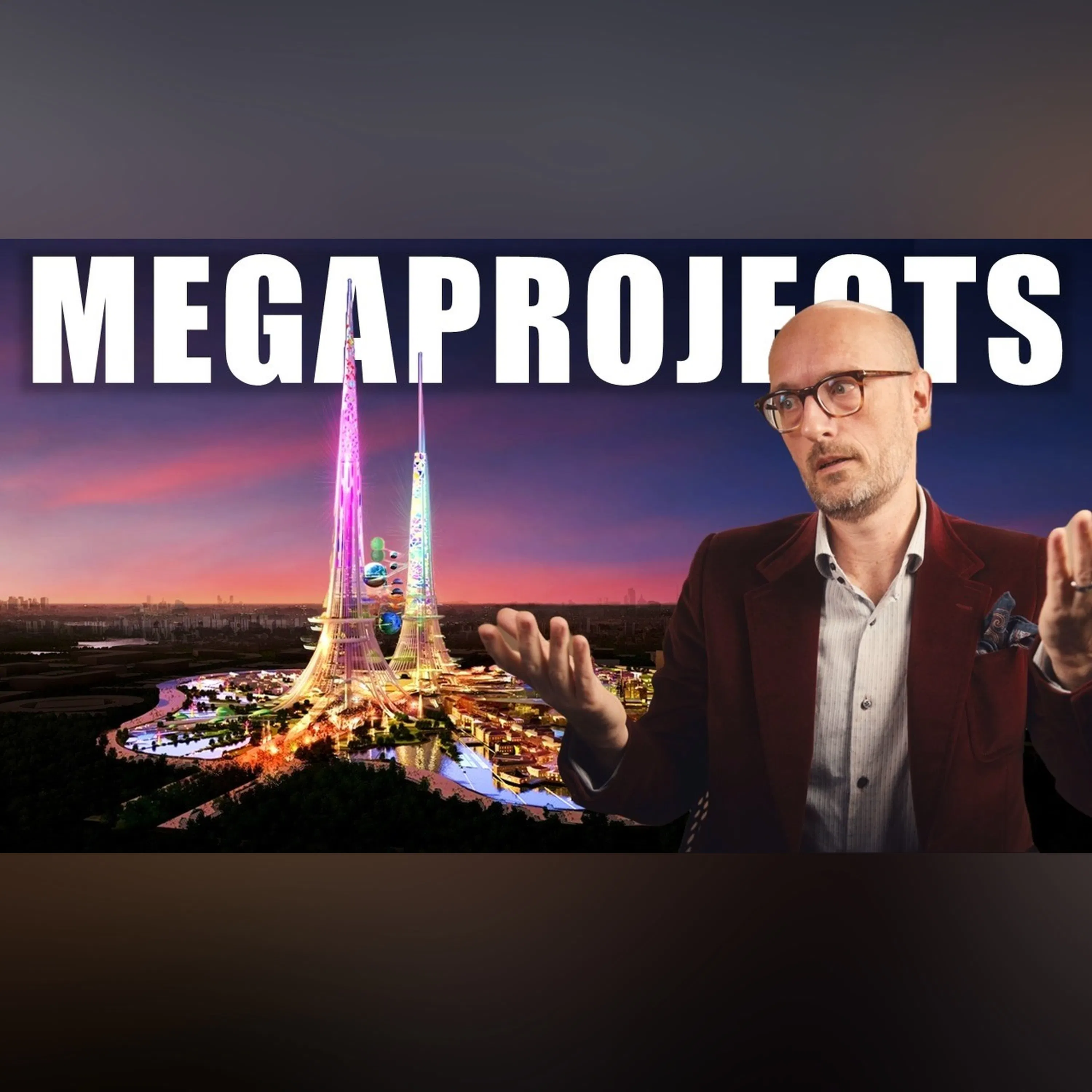
Ad: 🔒Remove your personal information from the web at https://joindeleteme.com/BOYLE and use code BOYLE for 20% off 🙌 DeleteMe international Plans: https://international.joindeleteme.com From skyscrapers in the middle of nowhere, to man-made islands that are sinking into the sea. And from abandoned buildings to foolish transportation infrastructure - let's look at the world's most useless megaprojects. Patrick's Books: Statistics For The Trading Floor: https://amzn.to/3eerLA0 Derivatives For The Trading Floor: https://amzn.to/3cjsyPF Corporate Finance: https://amzn.to/3fn3rvC Ways To Support The Channel Patreon: https://www.patreon.com/PatrickBoyleOnFinance Buy Me a Coffee: https://www.buymeacoffee.com/patrickboyle Visit our website: https://www.onfinance.org Follow Patrick on Twitter Here: https://bsky.app/profile/pboyle.bsky.social Business Inquiries ➡️ sponsors@onfinance.org Patrick Boyle On Finance Podcast: Spotify: https://open.spotify.com/show/7uhrWlDvxzy9hLoW0EYf0b Apple: https://podcasts.apple.com/us/podcast/patrick-boyle-on-finance/id1547740313 Google Podcasts: https://tinyurl.com/62862nve Join this channel to support making this content: https://www.youtube.com/channel/UCASM0cgfkJxQ1ICmRilfHLw/join Learn more about your ad choices. Visit megaphone.fm/adchoices

Get an exclusive 15% discount on Saily data plans! Use code BOYLE at checkout. Download Saily app or go to https://saily.com/boyle South Korea has the best performing stock market in the world for the second year running — and it's also in the middle of one of the worst bear markets on earth. The KOSPI is down around 27% from its June peak, more than 1.2 million retail accounts have been hit with margin calls, and hundreds of thousands of Korean investors have been wiped out entirely. But this isn't a story about meme stocks or worthless companies. Samsung Electronics and SK Hynix are enormously profitable businesses at the center of the global AI boom, and the traders buying them were right about the trend. In this video I look at how a national stock index became a two-stock bet on artificial intelligence, how single-stock leveraged ETFs turned ordinary volatility into a mechanical feedback loop, why Korea's retail "ants" took on so much leverage in the first place, and what Victor Haghani's famous biased-coin experiment tells us about how you can be completely right about a market and still lose everything. Patrick's Books: Statistics For The Trading Floor: https://amzn.to/3eerLA0 Derivatives For The Trading Floor: https://amzn.to/3cjsyPF Corporate Finance: https://amzn.to/3fn3rvC Ways To Support The Channel Patreon: https://www.patreon.com/PatrickBoyleOnFinance Buy Me a Coffee: https://www.buymeacoffee.com/patrickboyle Visit our website: https://www.onfinance.org Follow Patrick on Twitter Here: https://bsky.app/profile/pboyle.bsky.social Business Inquiries ➡️ sponsors@onfinance.org Patrick Boyle On Finance Podcast: Spotify: https://open.spotify.com/show/7uhrWlDvxzy9hLoW0EYf0b Apple: https://podcasts.apple.com/us/podcast/patrick-boyle-on-finance/id1547740313 Google Podcasts: https://tinyurl.com/62862nve Join this channel to support making this content: https://www.youtube.com/channel/UCASM0cgfkJxQ1ICmRilfHLw/join Learn more about your ad choices. Visit megaphone.fm/adchoices

Go to https://surfshark.com/boyle for 4 extra months of Surfshark President Trump’s announcement of reciprocal tariffs on April second were more severe than the market expected. On top of a 10 per cent universal minimum tariff, the new regime includes significantly higher tariffs for most major trading partners and brings US effective tariff rates to levels we have not seen since the early 1900s. How will Trump's Liberation Day Tariffs transform global trade? Patrick's Books: Statistics For The Trading Floor: https://amzn.to/3eerLA0 Derivatives For The Trading Floor: https://amzn.to/3cjsyPF Corporate Finance: https://amzn.to/3fn3rvC Ways To Support The Channel Patreon: https://www.patreon.com/PatrickBoyleOnFinance Buy Me a Coffee: https://www.buymeacoffee.com/patrickboyle Visit our website: https://www.onfinance.org Follow Patrick on Twitter Here: https://bsky.app/profile/pboyle.bsky.social Business Inquiries ➡️ sponsors@onfinance.org Patrick Boyle On Finance Podcast: Spotify: https://open.spotify.com/show/7uhrWlDvxzy9hLoW0EYf0b Apple: https://podcasts.apple.com/us/podcast/patrick-boyle-on-finance/id1547740313 Google Podcasts: https://tinyurl.com/62862nve Hidden Forces Podcast: https://hiddenforces.io/podcasts/end-of-the-german-economic-miracle-wolfgang-munchau/ Manoj Pradhan & Charles Goodhart - The Great Demographic Reversal: https://amzn.to/42zBaNW Michael Pettis & Matthew Klein - Trade Wars are Class Wars: https://amzn.to/42kiiB4 Join this channel to support making this content: https://www.youtube.com/channel/UCASM0cgfkJxQ1ICmRilfHLw/join Learn more about your ad choices. Visit megaphone.fm/adchoices

Ad: 🔒Remove your personal information from the web at https://joindeleteme.com/BOYLE and use code BOYLE for 20% off 🙌🏻 DeleteMe international Plans: https://international.joindeleteme.com Britain once built world-class infrastructure with speed and purpose—now it plans ideas like a £24 billion extension cords to Morocco that are unlikely to ever work. This video dives into the rise and fall of the Xlinks Morocco–UK Power Project, exploring how overcomplication, bespoke design, and regulatory gridlock have turned modern megaprojects into cautionary tales. From fish discos at Hinkley Point C to 31,000-page environmental assessments, we ask: have we forgotten how to build? And what can we learn from countries like Ireland in the 1920s—or South Korea today—about getting big things done? Patrick's Books: Statistics For The Trading Floor: https://amzn.to/3eerLA0 Derivatives For The Trading Floor: https://amzn.to/3cjsyPF Corporate Finance: https://amzn.to/3fn3rvC Ways To Support The Channel Patreon: https://www.patreon.com/PatrickBoyleOnFinance Buy Me a Coffee: https://www.buymeacoffee.com/patrickboyle Visit our website: https://www.onfinance.org Follow Patrick on Twitter Here: https://bsky.app/profile/pboyle.bsky.social Business Inquiries ➡️ sponsors@onfinance.org @TheDavidMcWilliams link: https://youtu.be/niZ1OBQnODw?si=z3mVIIirWfDLE8Mw @commonsenseskeptic link: https://www.youtube.com/watch?v=XPYWyqy1hng&t=7s Patrick Boyle On Finance Podcast: Spotify: https://open.spotify.com/show/7uhrWlDvxzy9hLoW0EYf0b Apple: https://podcasts.apple.com/us/podcast/patrick-boyle-on-finance/id1547740313 Google Podcasts: https://tinyurl.com/62862nve Join this channel to support making this content: https://www.youtube.com/channel/UCASM0cgfkJxQ1ICmRilfHLw/join Learn more about your ad choices. Visit megaphone.fm/adchoices

In this video we will learn how financial Derivatives are Traded, what are the major derivative types and what is the economic function of the derivatives market? These classes are all based on the book Trading and Pricing Financial Derivatives, available on Amazon at this link. https://amzn.to/2WIoAL0 Check out our website http://www.onfinance.org/ Follow Patrick on twitter here: https://twitter.com/PatrickEBoyle Learn more about your ad choices. Visit megaphone.fm/adchoices

Go to https://surfshark.com/boyle or use code BOYLE at checkout to get 4 extra months of Surfshark! Last month Meta agreed to pay up to $18 billion dollars to settle claims that it knowingly harmed teenagers — a number the press immediately called Big Tech's "tobacco moment." Wall Street responded by sending the stock up. In this video I read the actual 130-page consent judgment so that you don't have to, and work out what Meta really bought for its money. It turns out the headline figure is worth about two days of revenue, the "new" safety rules are mostly settings Meta had already written for itself, and the fine print lands rather more heavily on TikTok than on Meta. We'll also get into why the attorneys general took the deal, what Meta was actually paying to make disappear, and why the real reckoning might end up happening in a cinema rather than a courtroom. Meta's Internal Research Website: https://metasinternalresearch.org/ Patrick's Books: Statistics For The Trading Floor: https://amzn.to/3eerLA0 Derivatives For The Trading Floor: https://amzn.to/3cjsyPF Corporate Finance: https://amzn.to/3fn3rvC Ways To Support The Channel Patreon: https://www.patreon.com/PatrickBoyleOnFinance Buy Me a Coffee: https://www.buymeacoffee.com/patrickboyle Visit our website: https://www.onfinance.org Follow Patrick on Twitter Here: https://bsky.app/profile/pboyle.bsky.social Business Inquiries ➡️ sponsors@onfinance.org Patrick Boyle On Finance Podcast: Spotify: https://open.spotify.com/show/7uhrWlDvxzy9hLoW0EYf0b Apple: https://podcasts.apple.com/us/podcast/patrick-boyle-on-finance/id1547740313 Google Podcasts: https://tinyurl.com/62862nve Join this channel to support making this content: https://www.youtube.com/channel/UCASM0cgfkJxQ1ICmRilfHLw/join Learn more about your ad choices. Visit megaphone.fm/adchoices

They can't harm you, if they can't find you! Use code BOYLE at the link below and get 60% off an annual plan: https://incogni.com/boyle US 30-year Treasury yields just hit 5.2% — the highest level since July 2007. UK gilt yields are at levels not seen since 1998. Japanese bond yields are at record highs. Something is happening in global bond markets, and it's not just about inflation. In this video I explain what's driving the global rise in long-term borrowing costs, why the era of free money is probably over, and what fiscal dominance means for central bank independence. I cover the history of US presidents fighting with the Federal Reserve — including LBJ shoving his Fed Chair against a wall — the 1970s UK economic collapse, the Liz Truss mini-budget crisis, the role of private credit and off-balance-sheet SPVs in financing the AI boom, and what all of this means for the new Federal Reserve Chair Kevin Warsh. Patrick's Books: Statistics For The Trading Floor: https://amzn.to/3eerLA0 Derivatives For The Trading Floor: https://amzn.to/3cjsyPF Corporate Finance: https://amzn.to/3fn3rvC Ways To Support The Channel Patreon: https://www.patreon.com/PatrickBoyleOnFinance Buy Me a Coffee: https://www.buymeacoffee.com/patrickboyle Visit our website: https://www.onfinance.org Follow Patrick on Twitter Here: https://bsky.app/profile/pboyle.bsky.social Business Inquiries ➡️ sponsors@onfinance.org Patrick Boyle On Finance Podcast: Spotify: https://open.spotify.com/show/7uhrWlDvxzy9hLoW0EYf0b Apple: https://podcasts.apple.com/us/podcast/patrick-boyle-on-finance/id1547740313 Google Podcasts: https://tinyurl.com/62862nve Join this channel to support making this content: https://www.youtube.com/channel/UCASM0cgfkJxQ1ICmRilfHLw/join Learn more about your ad choices. Visit megaphone.fm/adchoices
If you’re looking to upgrade your business wardrobe, I can recommend giving Tailor Store a try. Their shirts are made to your measurements, so you can create something that fits both your body and your personal style. My viewers receive 25% off their first order through my link: https://www.tailorstore.com/patrickboyle Two chip stocks recently drove seventeen percent of the entire global stock market's return in a single month — which tells you just how concentrated the AI trade has become, and how exposed the average investor now is without realising it. In this video we look at how much wealth an AI crash could actually destroy, with estimates from Dean Baker, former IMF chief economist Gita Gopinath, and Oliver Wyman running into the tens of trillions of dollars. We cover why the usual places to hide — small caps, value funds, international stocks — are now packed with AI stocks, what the Bank for International Settlements found when it compared today's buildout to the great railway and dot-com bubbles, and why a technology being real has never been enough to protect the people who overpaid for it. This isn't a crash prediction. It's a look at the downside risk, the illusion of diversification, and why boring, unexciting investing tends to win in the end. Patrick's Books: Statistics For The Trading Floor: https://amzn.to/3eerLA0 Derivatives For The Trading Floor: https://amzn.to/3cjsyPF Corporate Finance: https://amzn.to/3fn3rvC Ways To Support The Channel Patreon: https://www.patreon.com/PatrickBoyleOnFinance Buy Me a Coffee: https://www.buymeacoffee.com/patrickboyle Visit our website: https://www.onfinance.org Follow Patrick on Twitter Here: https://bsky.app/profile/pboyle.bsky.social Business Inquiries ➡️ sponsors@onfinance.org Patrick Boyle On Finance Podcast: Spotify: https://open.spotify.com/show/7uhrWlDvxzy9hLoW0EYf0b Apple: https://podcasts.apple.com/us/podcast/patrick-boyle-on-finance/id1547740313 Google Podcasts: https://tinyurl.com/62862nve Join this channel to support making this content: https://www.youtube.com/channel/UCASM0cgfkJxQ1ICmRilfHLw/join Learn more about your ad choices. Visit megaphone.fm/adchoices

Happy FlexiSpot Brand Day & Memorial Day Sale, up to 65% OFF —on May 26th at 9:00 AM, the first 20 customers to place an order will have a chance to get it 100% free. If you are on a budget, FlexiSpot premium E7 will be a great option. Shop now and if you liked it, leave a note saying “Patrick Boyle” at checkout and use my code ''YTE7P50'' to get EXTRA $50 off on the E7 Plus/E7 Pro/E7L standing desk or "YTE730" to get EXTRA $30 off on the E7 standing desk! FlexiSpot E7Plus standing desk: USA: https://bit.ly/3Fd9lSU CAN: https://bit.ly/44EIpFV Developed economies around the world have been growing their debts over the last twenty-five years. This was less of a problem when interest rates were close to zero but in the era of trade wars, lower credit ratings and higher interest rates, debt is more expensive to issue and service. Bond investors have worried that governments are addicted to debt for quite some time, and recent drama in the Japanese bond market along with the deficit spending of Trump's "one big beautiful bill" lead many to question the ability of governments to cover massive budget deficits. This video looks at the drivers of growing government debt, what the money is spent on, can Elon Musk's DOGE cut spending and analyze the role of the 'bond vigilantes', to understand if huge budget deficits and government borrowing could spiral out of control. Patrick's Books: Statistics For The Trading Floor: https://amzn.to/3eerLA0 Derivatives For The Trading Floor: https://amzn.to/3cjsyPF Corporate Finance: https://amzn.to/3fn3rvC Ways To Support The Channel Patreon: https://www.patreon.com/PatrickBoyleOnFinance Buy Me a Coffee: https://www.buymeacoffee.com/patrickboyle Visit our website: https://www.onfinance.org Follow Patrick on Twitter Here: https://bsky.app/profile/pboyle.bsky.social Business Inquiries ➡️ sponsors@onfinance.org Patrick Boyle On Finance Podcast: Spotify: https://open.spotify.com/show/7uhrWlDvxzy9hLoW0EYf0b Apple: https://podcasts.apple.com/us/podcast/patrick-boyle-on-finance/id1547740313 Google Podcasts: https://tinyurl.com/62862nve Join this channel to support making this content: https://www.youtube.com/channel/UCASM0cgfkJxQ1ICmRilfHLw/join Learn more about your ad choices. Visit megaphone.fm/adchoices

What is Futures Margin? - What Is It? How Does It Work? These classes are all based on the book Trading and Pricing Financial Derivatives, available on Amazon at this link. https://amzn.to/2WIoAL0 Check out our website http://www.onfinance.org/ Follow Patrick on twitter here: https://twitter.com/PatrickEBoyle Margin is a critical concept for those trading futures and derivatives in all asset classes. Futures margin is a good-faith deposit or an amount of capital one needs to post or deposit to control a futures contract. The margin is a down payment on the full contract value of a futures contract. Futures exchanges determine and set futures margin rates. At times, brokerage companies will add an extra premium to the minimum exchange margin rate to lower risk exposure. The margin is set based on the risk of market volatility. When market volatility moves higher in a futures market margin rates rise. When trading stocks, there is a simpler margin arrangement than in the futures market. The equity market allows participants to trade on up to 50% margin. Therefore, one can buy or sell up to $100,000 worth of stock for $50,000. Margin Rate for Future Contracts In the world of futures contracts, the margin rate is much lower. In a typical futures contract, the margin rate varies between 5 and 15% of the total contract value. Initial Futures Margin is the amount of money that is required to open a buy or sell position on a futures contract. Initial margin is original margin, the amount posted when the original trade takes place. Margin Maintenance or Variation Margin Margin Maintenance is the amount of money necessary when a loss on a futures position requires one to allocate more funds to return the margin to the initial or original margin level. Closing or liquidating a position eliminates the margin call requirement. Learn more about your ad choices. Visit megaphone.fm/adchoices