Skip to content
Artwork for Danger, Vicious Dog
ComedyImprovExplicit

Danger, Vicious Dog

TestTubeBaby

Started updating my bio Dec 31, 2023. Accidentally wrote four autofiction books. Slid from narrative into monologue—not stream-of-consciousness, more like speech-speed meaning performance. Trained my voice into AI, produced a shit-ton of pieces. Had too many. Needed a place to dump them. Saw a sign that said “Beware, Vicious Dog!” Misread it. Named the podcast Danger, Vicious Dog. Didn’t fix it. Just kept going. Queer. Cosmic. Sarcastic. Cheap. Accidentally committed to the bit. Some voice and art is AI... I don't know how I feel about that... so I'm working on figuring it out... how I feel.

Play
  • 28 episodes
  • Avg 29 min
  • English
Counted on this page — what you have heard stays on this device, so it is not something the list can be paged by.
  • S13 · E10
    Yesterday · 36 min

    E10: Bringing a Knife to the Edge; S13: Clickbait Response to Clickbait (Don't worry, it's just Kaposi Sarcoma). Season Finale (Don't worry, Season 14 is on its way)

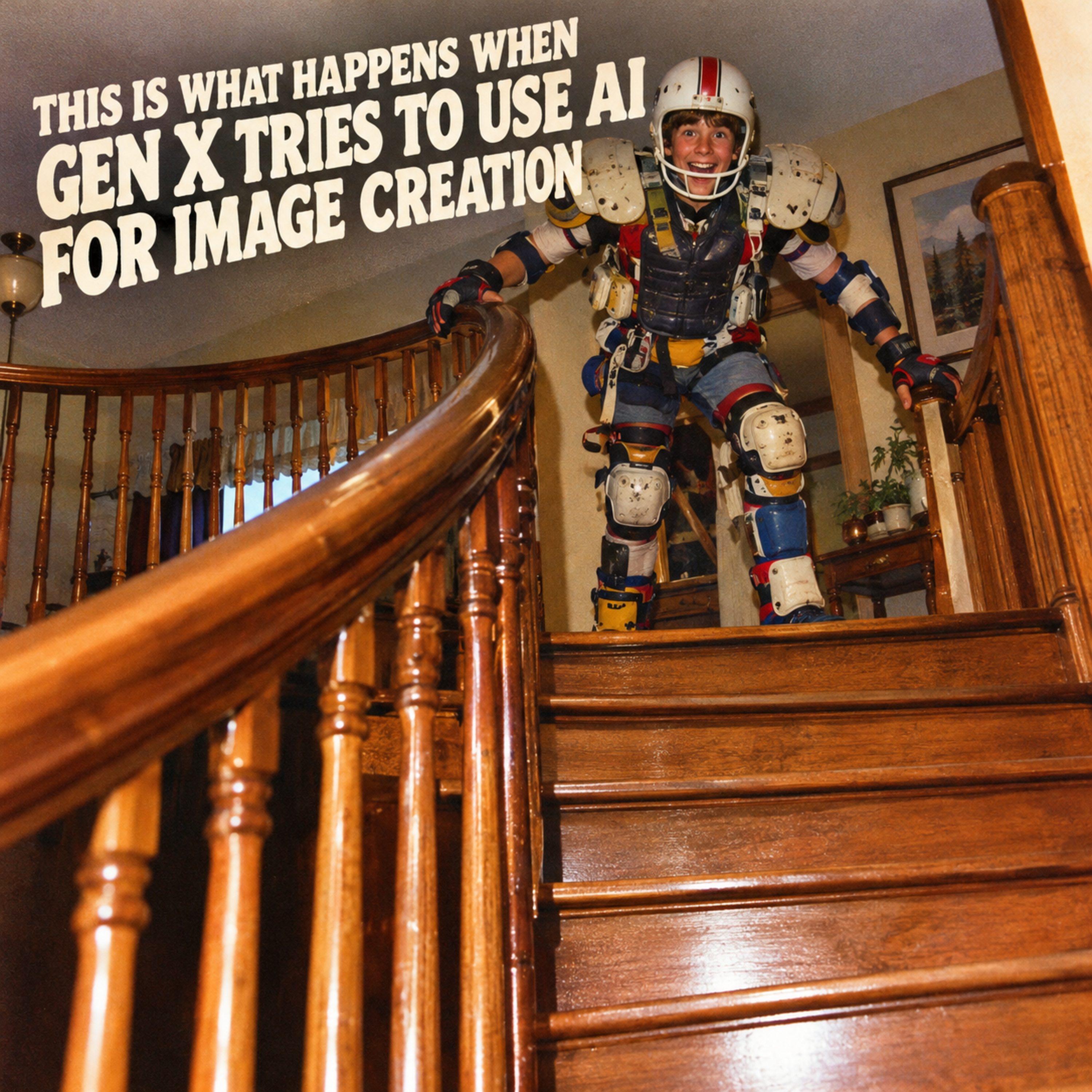
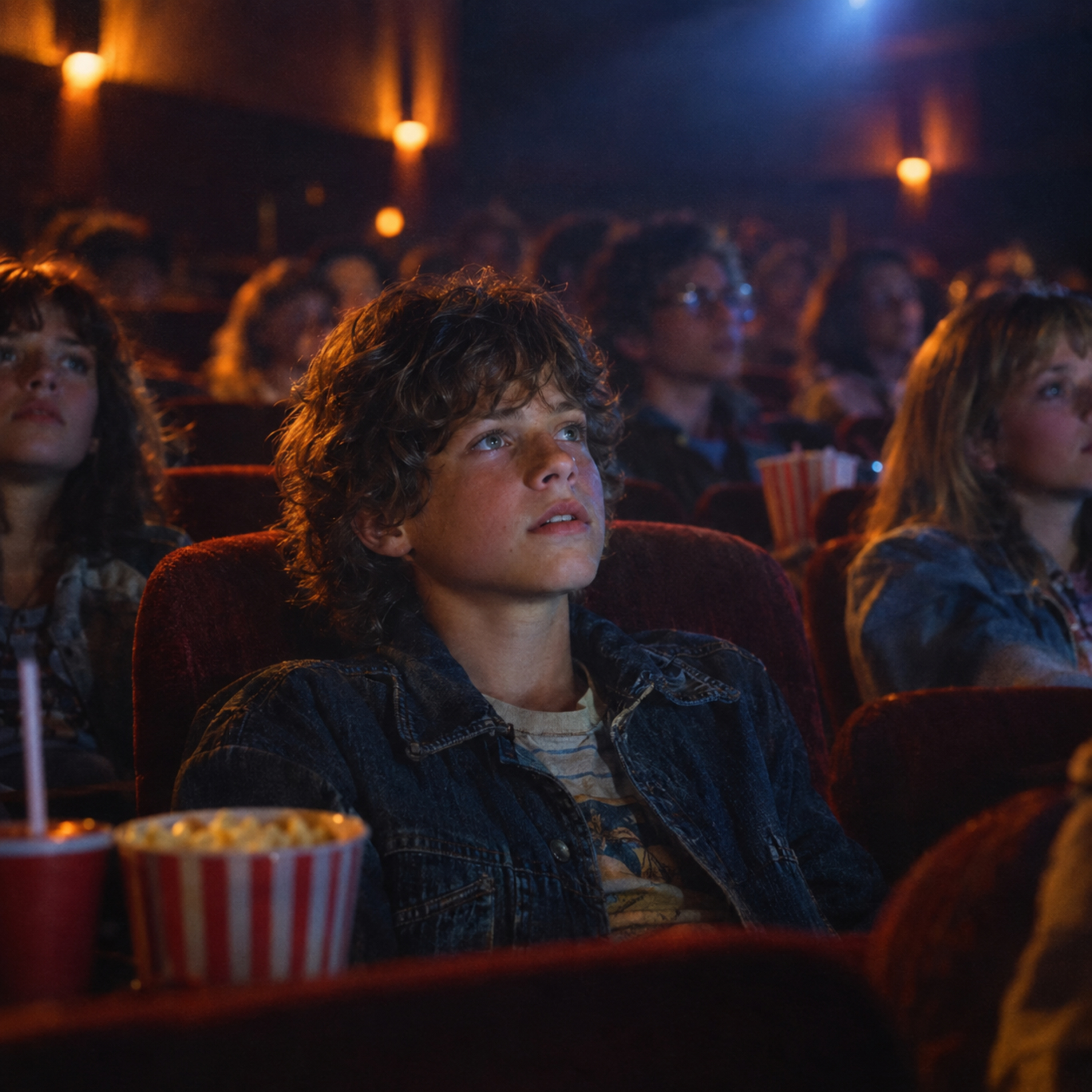
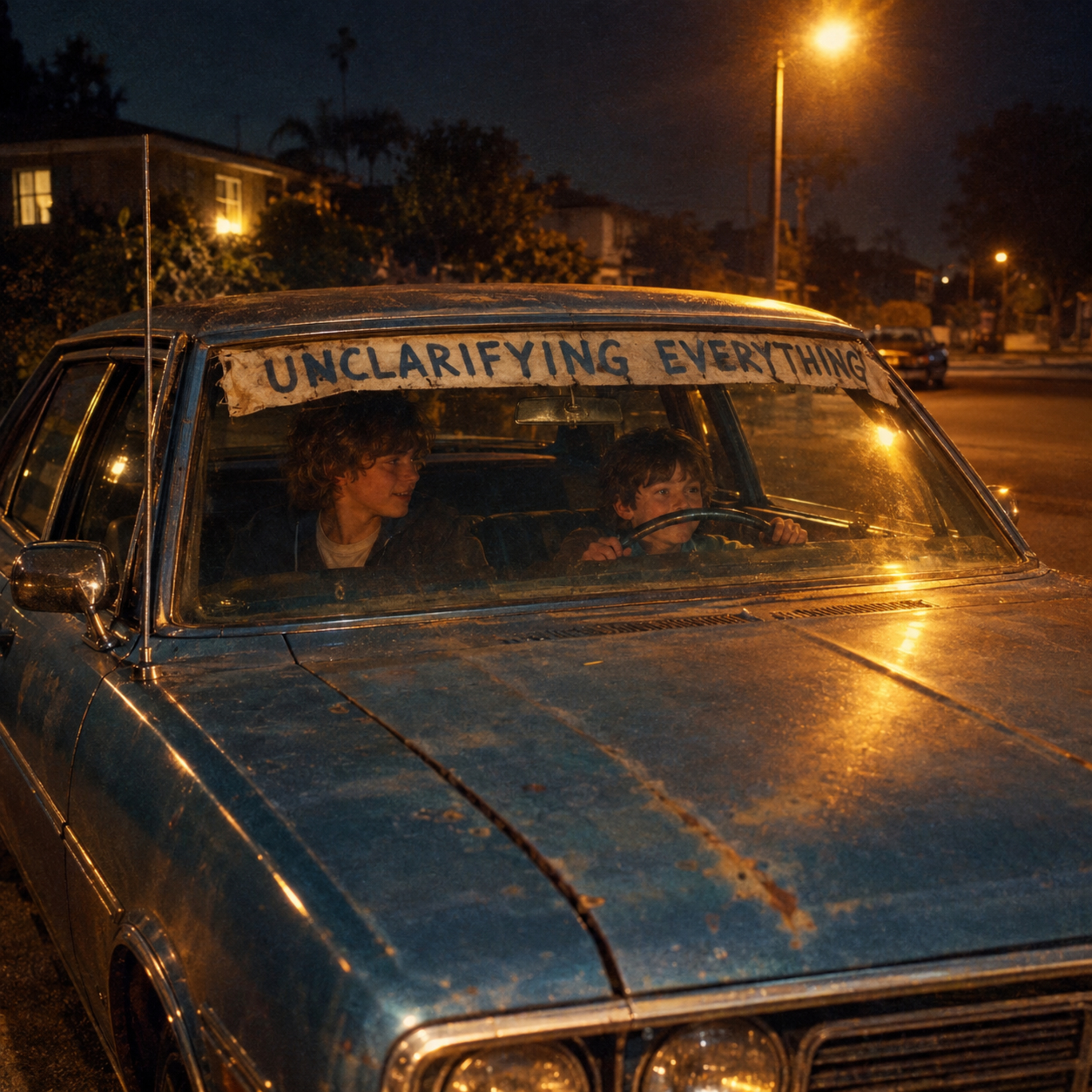
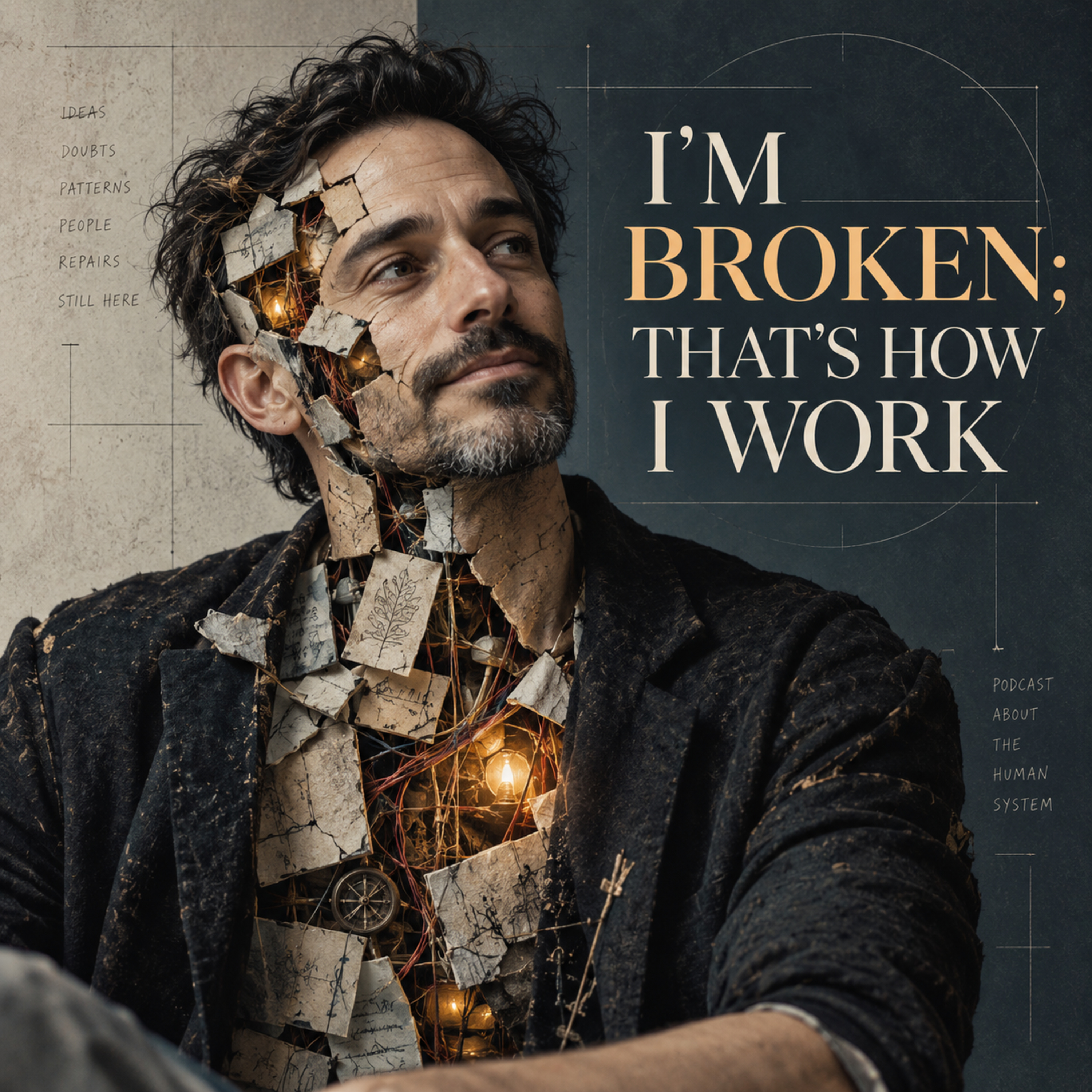
    I accidentally made the artwork for the last episode and this episode into one picture. Which is either a mistake, a concept, or a very efficient use of resources. The last episode was supposed to have the happy kid from Human Relations Camp, the homemade Costa is Gross banner, the little green Go light, all that teenage optimism and category-making and trying to figure out what identity even is. This one was supposed to have the motorcycle. The rainy street. The HOT_L sign with the E burned out. Hourly rates available. A man with Kaposi sarcoma. Methamphetamine. A hotel room. And me, still young enough to be learning what any of this meant, while AIDS had already turned sex, illness, shame, death, morality and public policy into one enormous fucking knot. But I mixed the pictures together. So now I have to wonder why. Am I lazy? Possibly. Did I think, Well, the AI already knows what this picture looks like, so maybe I can save a little water and electricity by making it modify the same thing instead of starting over? Maybe. Does that actually save water and electricity? I have absolutely no idea. Probably not enough to justify congratulating myself. Maybe I wanted continuity. Maybe I wanted the two episodes to look almost identical so you would think you were still in the same place. Same kid. Same smile. Same name tag that says Rose. Same Los Angeles mythology. Same handmade sign. And then you look a little closer. The sign changed. The kid moved to the other side. The motorcycle got bigger. The hotel got closer. And now there are two lines of white powder across the top. Oops. Maybe that is the point. Maybe innocence and depravity are not opposites. Maybe they are just two photographs taken a few years apart. Maybe the smiling kid at Human Relations Camp and the young man in the hourly hotel are not before-and-after pictures in the way we usually like before-and-after pictures to work. Nobody fell from grace. Nobody became corrupted. Nobody wandered off the path. The path was already there. The kid was already living in a world where he liked boys and the television was telling him that boys who liked boys were dying. He was already calling a suicide line at thirteen and wondering whether somebody could find a cure—not merely for the disease, but for the thing in him that seemed to place him in its path. A few years later, he's in a room with a man who appears to be dying of that disease, trying to understand what people do when the world has pushed them toward an edge and then judges whatever they do there. Which is more or less where this episode goes. It starts with somebody posting a nice little list of admirable qualities—character, kindness, grace under pressure, honesty, putting others first, humility—and then the whole thing begins to rot beautifully. What is character when everybody is doing their best under completely different conditions? What is honesty when disclosure can cost you? What is kindness when you don't run out of the room? What is humility when society has already put you on the floor? What happens when people push you to the edge and then call you the villain for what you pull out of your pocket? And what happens when the knife isn't for them? This episode gets into self-harm, suicide, AIDS, drugs, sex, shame, survival, respectability, and the strange moral arithmetic people perform when they are standing safely in the middle and evaluating what somebody did out on the margin. Pasted text.txtTXT So maybe making the artwork resemble the previous episode is camouflage. Maybe I want you to glance at it and think: Oh, there he is again. That happy kid. This can't be that bad. And then— well. Bringing a Knife to the Edge. Season finale. Gross.

  • S13 · E9
    Friday · 27 min

    E9: Essence or Consequence; S13: Is Identity Really Delusion? What if it's contextual? Mira Costa High School's Mascot is Hung Like a Horse. Gross!

    There is an enormous amount of delusion in the world, but not necessarily where we most comfortably put that word. Money is a collective delusion. Borders are collective delusions. Nations are collective delusions. A corporation is a collective delusion with lawyers. We agree that it means something, and then the agreement becomes powerful enough to decide whether you eat. That does not make money unreal. That is part of the problem. Different cultures have understood what we now call psychosis in very different ways. The experience happens; then culture arrives with a vocabulary and starts arranging it. Which may be what we do with almost everything. We are each trapped inside a body, but barely notice because language has been laid over the whole operation. Before there is a category, there is sensation. Something wants. Something fears. Something recoils. The body does something, and language arrives late with a clipboard. Homosexual. Heterosexual. Male. Female. White. Black. Canadian. American. Useful words. Sometimes indispensable. Still words. “Homosexuality” is strange if you stare at it too long. It sounds as though somebody is attracted to a homogeneous category called MEN, when most gay men are not attracted to most men at all. A particular person evokes something in the body. Another does not. Then we compress a lifetime of reactions into an identity category so we can talk. And we do need language. It helped us coordinate the killing of mammoths. Then dodo birds. Eventually we became sophisticated enough to invent neonicotinoids and remove staggering numbers of insects from the world. So clearly the system is working beautifully. The problem isn’t that we invented categories. It’s how easily we forget they are tools and begin treating them as essences. Medicine has participated too. AIDS followed GRID: gay-related immune deficiency. Even “acquired” is an odd little word—as though somebody went shopping. We don’t say “acquired syphilis.” Language can smuggle interpretation inside description. But that isn’t really what this episode is about either. This episode is an experiment. What if identity is not essence? What if it is not delusion either? What if identity is contextual? What if a category can be arbitrary and still have consequences? What if something can be socially constructed and still hurt? What if the map isn’t the territory, but the map determines where the water goes? What if the body knew something before language arrived? And what if language is still the only way I have to tell you about it? Hello, by the way, to anyone from Mira Costa who has wandered in here. I think about high school reunions. I would actually like to go to one. The problem is that I would probably have to say something, and a high school reunion is a terrible place to have to say something. People are there to have fun. I want you to have fun. I want to have fun. And I’ll have more fun elsewhere than sitting at a table thinking: How am I going to say this? Most of you were silent. You were nice people. Some of you were kind. You certainly didn’t want to seem like assholes. But that wasn’t much comfort to me at the time, when I was dealing with all that shit. I know some of you were gay too. Maybe you just hadn’t gotten around to realizing it yet. I was precocious. I always have been. And I imagine some of you probably thought that about me. Maybe the kindest thing you could do was let me be the weird kid who got there first. So thanks for that. I don’t remember much happening after what I describe in this episode. Maybe some of you came up to me. What I remember is the auditorium. What happened in it. What didn’t happen in it. And what I eventually had to do because of that. You may remember the aftermath differently. I probably would too, if I had been you. By the end of the episode, I think you’ll understand why my memory of that moment has some missing pieces. Memory is contextual too. Apparently everything is. Gross.

  • S13 · E8
    Wednesday · 22 min

    E8: I Love Memories That Love Me (Because I Love Myself), S13: And When I Don't Love Myself...

    If you're reading this before you listen to the episode, then you're definitely a keener. Congratulations. Or I'm sorry. Either way, here's what you need to know so you can keep a few things in context, because there are some things said in the episode that are somewhat true, but not entirely clear. And keeners notice those things. Then sometimes they make a huff. And if you've already listened and you're here because you thought, Wait. Some of that doesn't sound quite right, then hello again. This is also for you. First: when I talk about evidence-based practice and practice-based evidence, I'm mostly talking about counselling, social services, community work, and other situations involving human beings who inconveniently refuse to behave exactly like the people in the study. I am not talking about a compound fracture. If your bone is sticking out of your leg, I would prefer the doctor not say, “Let's hold the evidence lightly and see what emerges.” There are procedures. Please use them. Second: the U.S. Supreme Court case floating around in my memory is City of Grants Pass v. Johnson (2024). The Court did not make sleeping under a bridge illegal throughout the United States. What it did was rule that generally applicable public-camping laws are not, simply by being enforced against homeless people, unconstitutional cruel and unusual punishment under the Eighth Amendment. That gives state and local governments considerably more room to make and enforce those laws. (supremecourt.gov) Third: the British Columbia case I am remembering is Abbotsford (City) v. Shantz (2015). Barry Shantz was a friend of mine. He's dead, and I'm still working up to telling you about him, apparently. The actual order was narrower than what it will likely seem the version is that comes strolling out of my mouth. It protected overnight sleeping and temporary shelter in city parks, from 7 p.m. to 9 a.m. It did not order governments to provide toilets, garbage service, washing facilities, or all the other things that would make sleeping in a park remotely workable. The judge did, however, strongly discuss the need for things like proximity to services, somewhere to eat and wash, hygiene, warmth, rest, and shelter. He also left governments room to regulate which parks could be used. So there is an important difference between what the court required and what the judgment strongly suggested a minimally humane system would need. (bccla.org) There. The keeners have been serviced. As for the rest of you, I don't know why you would even be reading this. Do I really give a shit about keeners? Or non-keeners? I mean, clearly I'm a keener. Aren't I? That's what my memory tells me. And my memory loves me.

  • S13 · E7
    Tuesday · 24 min

    E7: Complexity-Based Gravity Wells; S13: Doesn't That Sound Convincing?

    A Treatise Toward a Unified Theory of Cognitive Topology, Relevance-Weighted Complexity, and the Ethical Non-Occupation of Other People’s Brains Suppose a thought is not a line. Suppose it is a network. Suppose the things that keep returning are not necessarily the things you think about most, but the things connected to the greatest variety of other things. Not magnitude, then, but complexity. Not importance because everyone is looking at it, but importance because from there you can go almost anywhere. Certain ideas become gravity wells. Certain memories become transit hubs. Certain writers, categories, embarrassments, theories, bodies, addictions, books, conversations and half-understood fragments of French become unusually dense objects in a private cognitive universe. Release the marble and see where it goes. Do not push it. Do not tell it what the subject is. If the landscape has been shaped by enough living, reading, touching, avoiding, remembering, forgetting and accidentally learning things, the marble may eventually find somewhere that matters. A brief correction to the historical record before somebody builds an entire explanatory structure around a joke: My father did not sneak me into a snuff film. That would be ridiculous. He did, however, take me to The Kentucky Fried Movie when I was a child, which was strange enough that somewhere in the resulting cognitive weather I developed the idea that becoming a porn star might be a perfectly reasonable future career. I was very young. That is all the information you need. Another correction, because stories have an irritating tendency to become cleaner every time they are repeated: I did not simply fail to attend the Sorbonne because I was incapable of French. I ditched the Sorbonne because they were going to put me in a basic French class, and I had already decided I was going to learn the language very quickly by myself. And then I did. After roughly two months in Paris, I came back to USC and tested into sixth-year French. My principal laboratories had been beds, bars and bathhouses. Make of that methodology what you will. This may also explain why a mind benefits from being treated less like a filing cabinet and more like a biome. Introduce things. Let them take hold. Do not necessarily cultivate them into monocultures. A useful idea should have neighbours. Predators. Competitors. Mutations. Escape routes. Study something too completely and you may accidentally make it the explanation for everything. Study nothing at all and, well, good luck. Somewhere between those two possibilities is a practice of allowing ideas to enter, connect, reproduce, decay, cross-pollinate and occasionally become enormous invisible objects around which other thoughts begin to orbit. This is not a unified theory of consciousness. That would be an absurd amount of work. It is, at most, a small transplant from one mental biome into yours. If any of this sounds interesting, you are welcome to go find out more about network pruning, complexity, reification, cognition, Foucault, addiction, biomes, gravity wells, autodidacticism, language acquisition, narrative construction, or whatever else has attached itself to the inside of your skull while reading this. You will have to do that yourself. I am not in the business of taking over your brain. I have given you this little bit of biome. You should be happy with that.

  • S13 · E6
    Monday · 36 min

    E6: Sexy Gravity Well (okay, if we must); S13: If You've Read (and understood) Michel Foucault, Is This Episode a Masterclass?

    For this description, I’m just going to describe some things. You tell me what category they belong in. Taking off some or all of your clothes and rubbing your skin against someone else’s skin until something inside one or both of you squirts out. Putting part of your body inside part of somebody else’s body and moving it back and forth because the movement feels good. Putting your mouth on somebody’s skin. Moving your mouth around. Maybe using your tongue. Maybe doing exactly the same thing to a part of their body that, under different circumstances, would make everyone in the room suddenly become very serious. Lying next to another human being while mostly naked and touching them in places usually covered by clothing. Using your hand to repeatedly move somebody else’s skin around until their muscles tighten, their breathing changes, and then they become extremely relaxed. Putting your face between somebody’s legs. Letting somebody put their face between yours. Making noises because another person is touching you. Touching yourself while another person watches. Watching another person touch themselves. Two people sweating because they have been moving their bodies against each other for twenty minutes. Three people attempting to determine where all the knees should go. Someone saying, “Ow, move your elbow.” Someone saying, “Like that.” Someone saying, “Not like that.” Someone asking, “Are you okay?” Someone answering, “Yes.” Someone laughing because a body made a noise neither person was expecting. Someone stopping because their leg cramped. Someone continuing after the leg cramp. Someone rolling over. Someone getting a towel. Someone wondering where their underwear went. Someone finding it underneath the dog. A penis becoming larger because blood went into it. A vagina becoming wetter because a body responded to stimulation. A nipple becoming harder. A heart beating faster. Skin becoming flushed. Muscles contracting. Breathing getting irregular. Then, quite often, people getting sleepy. Sometimes nothing particularly dramatic happens at all. Sometimes everybody involved decides halfway through that they would rather order food. These are all just things human bodies can do with other human bodies. Some involve pleasure. Some involve affection. Some involve curiosity. Some involve reproduction. Some involve intimacy. Some involve absolutely no emotional significance whatsoever. Some are funny. Some are boring. Some are awkward. Some are transcendent. Some are disappointing. Some require impressive flexibility. Some mostly require a towel. And somehow we decided that a particular collection of these movements, fluids, noises, sensations and arrangements of limbs needed a category unlike almost every other human activity. Sex. Not touching. Not playing. Not exercising. Not communicating. Not pleasure. Not bodies doing things with other bodies. Sex. A category important enough that merely mentioning who somebody loves can cause other people to imagine what that person does without their clothes on. So that’s what I’m wondering about in this episode. What exactly have we put inside this category? Why does it deserve a category of its own? And what happens once we give it one?

  • S13 · E5
    August 23 · 25 min

    E5: Backdoor Bette Breaking Wind (Beneath My Wings); S13: Working Shit Out B4 THC (Is that really possible?)

    An extemporaneous monologue, except when it isn’t. A walk home from work becomes an argument with moral distress, THC, AI narration, editing, and the suspicion that what feels like reality may only be the culture currently surrounding you. Then Bette Midler appears—or, more precisely, the Bette Midler who performed beside a piano at the Continental Baths before the wider world decided she belonged to it. The bathhouse matters here not as a charming origin story, but as evidence: places dismissed as marginal may already be producing the center. There are offshoots involving Barry Manilow, The Rose, Leonard Cohen’s “Chelsea Hotel #2,” clickbait, the Stork, and the increasingly questionable meaning of “extemporaneous” once transcription, revision, and a synthetic voice become involved. The seams are left visible. This may be about working shit out before THC. It may be about whether that distinction is even as clear as it sounds.

  • S13 · E4
    August 22 · 54 min

    E4: Ned Rorem Black Hole Puckering During Pee-Wee’s Cosmic Activity; S13: Once You're Happy in Tennessee Williams, You'll Never Be Happy Again, Even In Perez Hilton Leaving Las Vegas

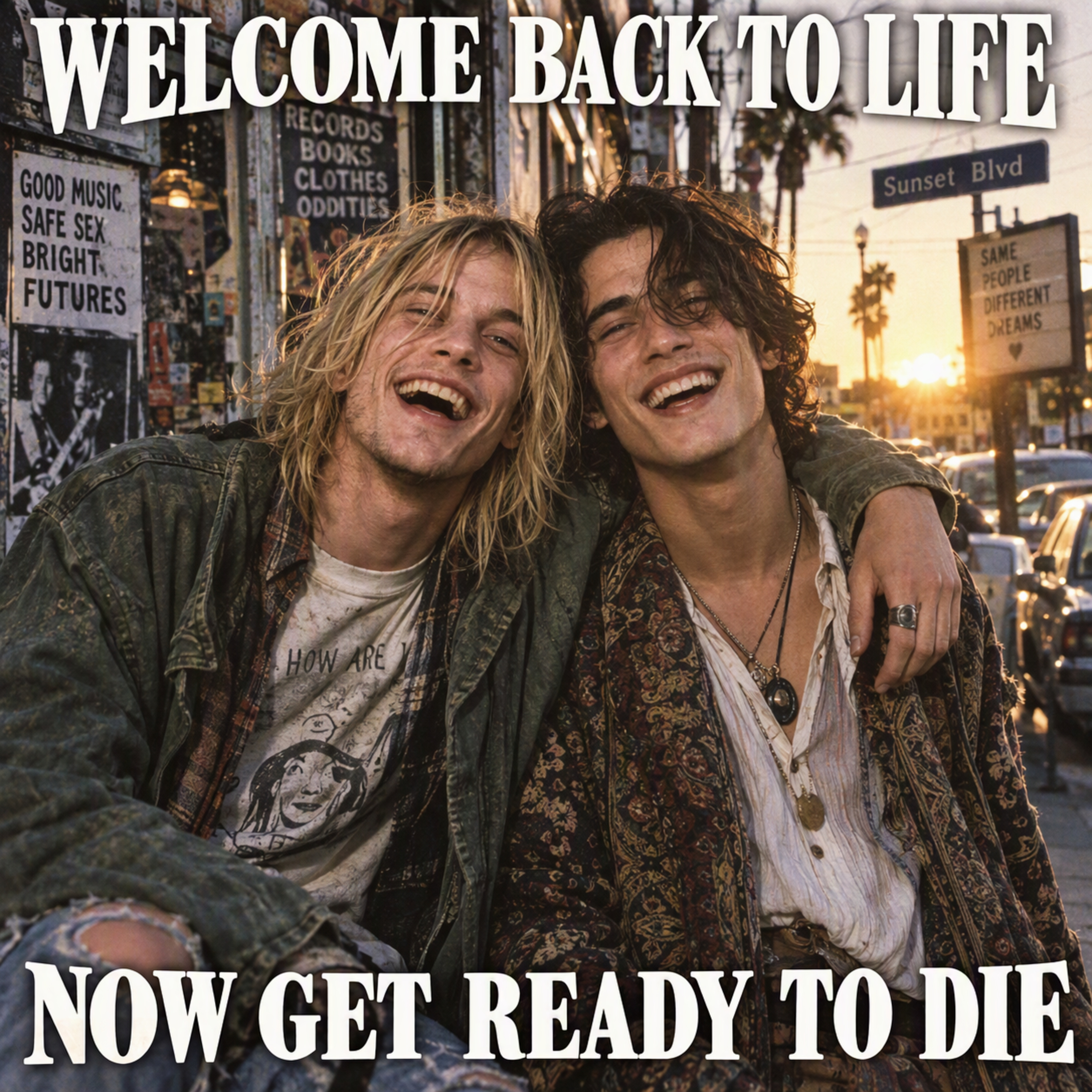
    It may seem fairly strange that Pee-wee Herman is on the cover of this episode—especially after you listen and discover that the episode is not, in any meaningful sense, about Pee-wee Herman. Pee-wee is there because much of the episode circles around a euphemism I invent for masturbation: cosmic activity. The association arrived because Pee-wee had his secret word, and I apparently needed a secret word of my own before I could begin talking about something we are all supposed to pretend is either medically embarrassing, morally significant, psychologically revealing, or simply not happening. Even with the euphemism, I didn’t quite get where I wanted to go. I got near it. I could see it. Then I became afraid of going there and started moving sideways. In another episode, I do go there. So this episode is a bridge to that one. It is a fairly long bridge. It has many, many off-ramps. Those off-ramps pass Ned Rorem, aging, art, plumbing, pleasure, shame, AIDS, AA, grooming, memory, Harry Hay, complicated elders, and the problem of telling the truth about people who offered something valuable while also being profoundly wrong. Ned Rorem functions less as the destination than as a nearby gravitational body, pulling everything slightly out of its expected course. The opening song asks what it means to leave the bad part in: not to turn biography into a fan club, but also not to flatten a complicated person into a monster so we can stop thinking. The monologue then tests that principle by wandering through pleasure, fear, influence, survival, and the strange machinery by which a person attempts to say something while also avoiding saying it. Some of the off-ramps may appear to go into a black hole. If you believe that, then you know nothing about a black hole, because a black hole would fucking eat everything: the bridge, the off-ramps, Ned Rorem, Pee-wee Herman, the cosmic activity, the person describing it, and eventually you. Content includes candid discussion of masturbation, grooming, adolescent sexuality, AIDS, addiction and recovery, self-harm, and Harry Hay’s support for NAMBLA.

  • S13 · E3
    August 21 · 12 min

    E3: Male Deadbeats Having Fun; S13: Is Gary a Drag Queen or a Trickster?

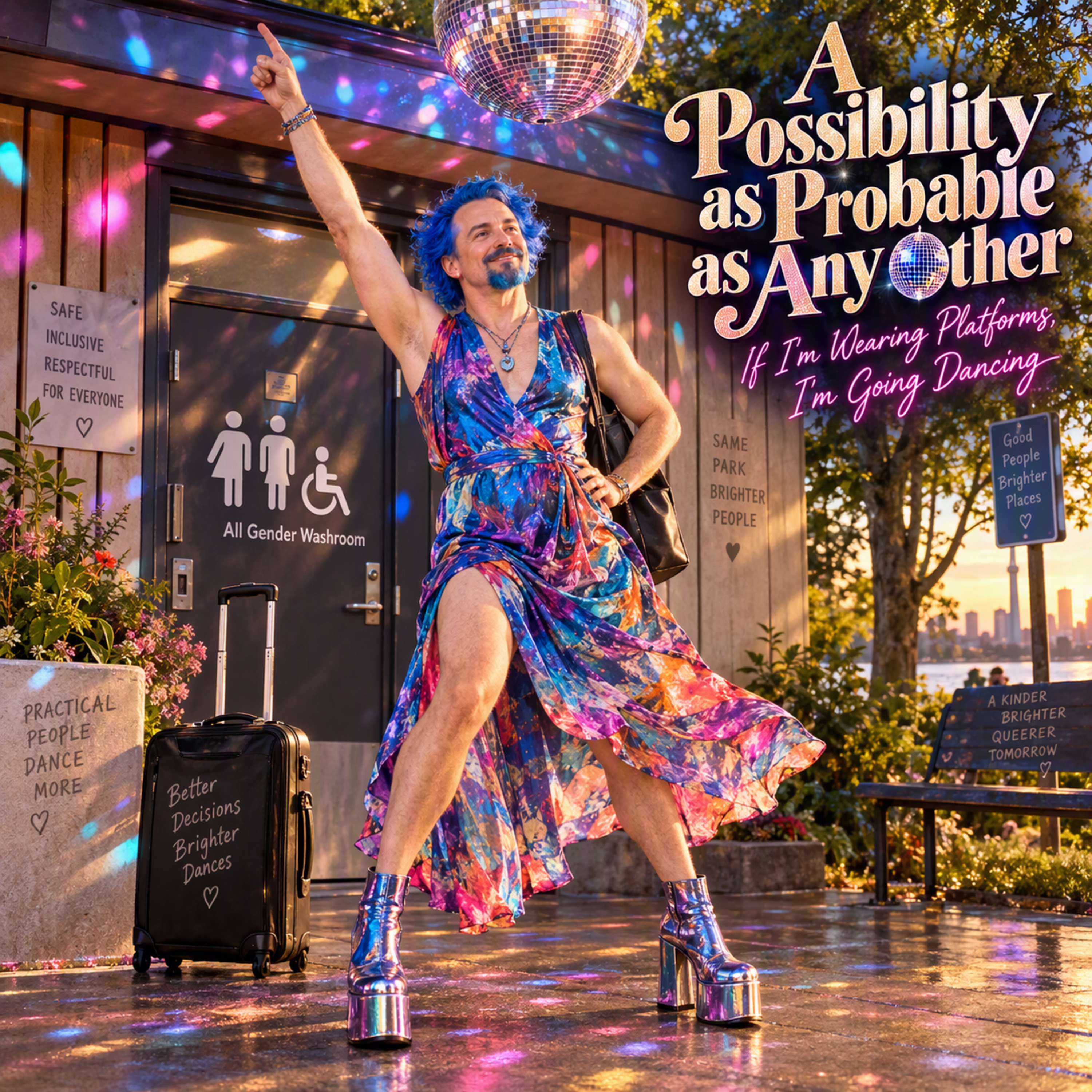
    There is not actually a drag queen in this episode. Or, more precisely, Gary—the man in the final song who takes the children out in his old van to find the tadpoles—was not originally described as a drag queen. I made him one for the artwork. This probably needs to be said because I don’t want the picture to operate as bait. Also, she has very believable tits. Some people may therefore assume she is simply an eccentric woman, except that MALE DEADBEATS HAVING FUN is printed directly over her head. And some of the people who might relate most strongly to this episode may see a drag queen and immediately decide that it is not for them. I know that. I put her there anyway. The picture is not meant to suggest that the episode is about drag queens. Gary is not standing in for drag queens. Gary is a character in a song who owns an old van, provides sandwiches, knows where the tadpoles are, can repair a terrible mood, and has apparently been assigned to laughter, snacks, and keeping Grandpa company. Making him a drag queen just pushes the question a little harder: What makes somebody look useful? What makes somebody look responsible? Why do certain kinds of care become almost invisible when they are performed by someone who does not resemble a provider? This episode started because I heard myself saying that men and women should get along better for the sake of children. It sounded reasonable. Then I noticed how much was hiding inside “reasonable”: the nuclear family, the provider, the deadbeat, the private household, and the assumption that every child’s needs must be contained inside one exhausted little economic unit. So I tried to correct myself with a song. The song was too earnest. Then I tried again from the perspective of the male deadbeats, and Gary arrived with his van. This is partly about families, partly about corporations, partly about colonial arrangements that have become ordinary enough to feel biological, and partly about whether a person can be useful without turning that usefulness into employment, ownership, productivity, or a five-year plan. It may also be about a drag queen with excellent breasts showing some children where the tadpoles go. That is not nothing.

  • S13 · E2
    August 17 · 24 min

    E2: Why Not Me? S13: Kidnapping, Let's Laugh. It's Chemical. Don't Feel Bad. Look at Your Phone.

    When I was a gay teenager in the 1980s, people threatened to kill me. Sometimes the threats came through the telephone my mother handed me. Nearly ten years later, even while visiting San Francisco, holding hands with my boyfriend could make strangers yell at us and make the street feel unsafe. Other people saw it happening. They generally remained bystanders. But that’s not the end of the story. What happens when an experience that once seemed enormous is placed beside dangers carried by somebody close to you—dangers involving kidnapping, disappearance, and a surrounding world organized by an entirely different scale of threat? The comparison does not make either experience unreal. It creates an awareness of unequal vulnerability that refuses to provide instructions for what to do next. Why Not Me? follows that awareness into privilege, guilt, self-importance, technology, abstraction, and the peculiar human need to keep thinking after thought has lost any proportionate object of action. Perhaps awareness is not a moral achievement. Perhaps it is chemistry: a pattern-making nervous system searching for somewhere to run, now connected through a phone to every fire, injustice, and unfinished problem on Earth. The episode eventually turns toward the institutions and algorithms that supply the wheel. They were not designed by a single mind, and they did not have to develop exactly as they did. They emerged from countless small choices, measurements, incentives, personalities, and accidents—then began changing the humans who were changing them. Don’t feel bad. Look at your phone. Content note: Contains discussion of homophobic death threats, gun violence, kidnapping, the AIDS crisis, privilege, and public harassment.

  • S13 · E1
    August 16 · 26 min

    E1: I'm a Teenage Boy and I Can't Stand Up at the Social Work Conference; S13: You Can't Go Home Again

    Thank god I no longer get lost every time I sit down to type. Almost everything I do now is dictated. Not everything, though. I wrote the lyrics for a song yesterday... or maybe it was earlier today. I don't remember. Anything. This episode's monologue was recorded, I think a couple weeks ago. Probably the song was done a week after that. Then today I added the two little book ends. In case you'd rather experience them in chronological order, you could listen to the monologue first, then the song, then the opening and then ending monologues. I'm not going to give you timestamps. You're the one who wants to do that, not me. I don't care if you don't.

  • S12 · E10
    August 16 · 27 min

    E10: Reincarnated Bananas; S12: New AI Voice (Boundaries: For the Algorithm, Fuck You!)

    An AI-generated podcast about this episode offered a remarkably flattering interpretation. It suggested that the monologue develops a model of boundaries in which a boundary is not an instruction for somebody else—it is information that tells you what to do when somebody else keeps pushing. The narrator’s response was more or less: yes, obviously. That idea is old enough to feel ordinary from inside the life that produced it. But perhaps this is one thing AI can do: receive an unstructured human ecology and return one of its recurring patterns as though it were a newly discovered theory. A prompt might be understood as a human biome—not merely an instruction, but an environment made from memory, appetite, humour, shame, history, language, self-correction, unfinished arguments, and whatever wandered into consciousness that day. Feed that biome to an AI and it will decide which organisms appear central. Feed the response back into the biome and something else starts growing. In this case, what grows begins with a banana, an appetite, and a condition that was stated but not respected. From there, the episode moves through expression, self-policing, recovery culture, bureaucracy, personal values, and the difference between understanding why somebody acted harmfully and pretending that the harm therefore requires an excuse. It also introduces a new AI voice. The algorithm may use it briefly. The algorithm has been informed of its boundaries. Content note: Contains explicit sexual metaphor, discussion of coercive pressure, condom negotiation, HIV/STI risk, emotional manipulation, threatened self-harm, addiction recovery, and the AIDS crisis. And this is the only time I will say this. I will never say it again. Every single episode of my podcast (except the ones that don't) needs this content note.

  • S12 · E9
    August 15 · 31 min

    E9: These Aren’t Even Apples; S12: Notes Toward an Increasingly Unmanageable Equity Lens, If You Enjoy This—Fuck You! Love, The Anthropologist

    Wow, I'm almost a serious scholar with a very entertaining presentation style. And the tension between the two... that's what I'm teaching. We need information to locate ourselves in the world, but information has to hold our attention long enough to reach us. Distress becomes narrative; analysis acquires rhythm; structural problems become compelling characters in an increasingly unmanageable story. Voluntarily exposing ourselves to what troubles us can then produce its own peculiar pleasure—not necessarily because we enjoy the suffering, but because attention, recognition, understanding, and entertainment have begun vibrating together. This episode tries to interfere with that vibration without pretending it can escape it. If you find yourself enjoying the presentation, perhaps you can observe that enjoyment while it happens. Then you can become critical of it. Then, if things are working properly, you may notice the pleasure of being critical of your own pleasure—and become suspicious of that too. Somewhere inside this recursion are questions about fairness, productivity, privilege, comparison, and what an equity lens reveals when it is turned toward the conditions that make one person appear more successful than another. These aren’t even apples.

  • S12 · E8
    August 15 · 33 min

    E8: Being Forced; S12: Being. Forced.

    What happens when memories formed before language are examined using categories learned much later? This episode approaches pleasure, shame, fantasy, intimacy, and childhood experience as charged material rather than settled evidence. It asks how words such as sexual, innocent, dangerous, wanted, and forced organize memories—and whether imagining force can sometimes provide distance from a desire that once felt impossible to claim. Recorded as an experiment in speaking without an audience, Being Forced is less a conclusion than an attempt to notice what moves when language is dropped into difficult internal terrain. Content note: Contains explicit discussion of sex, childhood bodily exploration, coercive and violent fantasy, shame, and childhood experiences involving adults.

  • S12 · E7
    August 15 · 45 min

    E7: Squirrel with a Flag and Ration; S12: A Helicopter Assist Would Be Really Helpful (Unless You're A Nurse)

    A walk through a park begins with an ethical problem: can you warn someone about an association without giving them the association in the process? From squirrels and rescue helicopters, the monologue wanders through healthcare, public anger, survival, drug use, professional authority, and the endless track humanity keeps building beneath itself. Along the way, an ordinary animal becomes a possible way of remaining aware of an overwhelming world without having to consume the news every day. This is an episode about attention, responsibility, associative thought, and how much reality one nervous system can reasonably be expected to carry. Content note: Contains frank discussion of climate disaster, suicide, HIV/AIDS, sex, incarceration, and drug use.

  • S12 · E6
    August 15 · 42 min

    E6: Moving Field Notes; S12: Gravity Welling Up

    A day set aside for cleaning the carpets becomes a set of moving field notes on priorities, identity, memory, culture, and the strange mechanics of thought. Priorities, in this episode, are not a system for getting everything done. They are an admission that everything cannot be done—and that choosing one thing means allowing something else to remain unfinished. From there, the monologue moves through the identities other people recognize in us, and the difference between being an artist, an activist, or an anthropologist: not as fixed professions, but as different relationships to experience, interpretation, and the desire to make something happen. What if anthropology begins with the recognition that we live inside cultures rather than directly inside reality? What if perception is less a faithful account of the world than a compressed model built to help us predict what comes next? And what happens when the stories that shaped that model are meaningful, vivid, and personally true—but not necessarily ours to repeat as fact? Running beneath it all is the image of thought as gravity: ideas creating wells in the surface of a life, drawing us back toward them whenever we get moving. Perhaps a thought does not have to be held onto, completed, or captured before it disappears. Perhaps the task is simply to recover momentum and trust that whatever has enough gravity will find us again. Moving Field Notes is an episode about unfinished work, inherited stories, ethical attention, and the possibility that losing the thread is not the same thing as losing what matters.

  • S12 · E5
    August 12 · 1 hr 6 min

    E5: AA When I Meant AI; S12: A Reflection on Friction and Imaginary Friends at the French Whatever

    A brief and necessarily speculative history of dolphin shorts: Dolphin shorts are named not after dolphins but, apparently, after Dolfin, the company that helped popularize the cut: light nylon, contrast binding, rounded corners, side slits, and almost no apparent interest in remaining separate from the runner. The name itself is a slip: one missing letter replaced by an animal. This episode begins with another slip, AA for AI, and spends the rest of its time considering whether mistakes sometimes know where they are going. Short running shorts gathered speed with the running boom. Dolfin’s own history places its rise in track apparel in the late 1970s. This presents a problem for my thesis. Streaking had already become a national craze by the spring of 1974. Dolphin shorts therefore cannot have caused streaking under an orthodox understanding of time. Another explanation is available. Perhaps streaking was market research. The body had identified a demand that manufacturers had not yet learned to meet. People ran naked not because they rejected clothing but because clothing had failed to become sufficiently absent. Once featherweight nylon, curved hems and side slits became widely available, the social emergency subsided. It is only a hypothesis. The methodology is terrible. This episode has room for it. Modern wicking shorts are less flamboyant. They arrive with a practical vocabulary: heat, sweat, ultraviolet light, cooling and range of motion. A person can list these reasons in public. The fabric then encounters the body, and the body may develop an additional opinion for which the product literature has supplied no wording. The episode notices this almost immediately. The speaker says his mind is going somewhere he does not yet feel safe enough to describe. He then talks for a very long time about AA, AI, shame, disclosure, foster care, recovery rooms, imaginary friends, projection, and the strange relief of speaking where the listener cannot be damaged by what they hear. He never returns to finish the sentence about the shorts. Or he never leaves it. For transparency: I eventually told the machine what the missing sentence was. I was afraid it might object. It did not. I then asked it to bury the information inside a tasteful account of dolphin shorts and the streaking craze. You are currently reading the burial site. The question is not whether the shorts caused streaking. They were too late. The question is whether a garment can arrive after an event and reveal what the event had wanted. This episode is about friction. It begins with fabric designed to remove it. Everything that follows may be an attempt to put some back. So, I’m not saying… I am definitely NOT saying that dolphin shorts… or their modern brethren, the wicking short… There is absolutely no pleasure in that. Or codpieces.

  • S12 · E4
    August 12 · 19 min

    E4: Life Is Hard, Louder Than Bombs; S12: An Ice Cream Bar Is Not a Pie Sound

    What if we do this: Prompt: Next, we need an up to 4,000 character description that can also serve as a kind of a post on Substack. And we're gonna have this picture, right, and this title that they're already gonna be here for. So there's not much you have to do because the picture and the title have already done everything. Like, anyone who clicks OK on this is probably gonna get it. Because, I mean, it's still gonna be uncomfortable, but they're probably gonna get it. And you could even just say that, right? You can even just say, well, if you came here thinking I might be able to tell you something about why you clicked on a title like this, then I think you should just listen to it, because it's for you. As long as it was not an accident that you clicked on this. But if it is an accident, I mean, why not? Go ahead. Response: If you came here thinking I might be able to tell you something about why you clicked on a title like this, I think you should just listen to the episode. It is probably for you. As long as it was not an accident that you clicked on this. But if it was an accident, I mean, why not? Go ahead. I walked home and opened my mouth. Life was hard. A Subaru appeared. Children were threatened with imaginary matches. A stream attempted to escape from concrete. Three A’s assembled an aardvark. The brain constructed a kitchen. Pronouns became the sounds one animal makes so another animal can tell which animal it means. Then some very concerned visitors decided Earth required a brief interruption. No one is harmed. One pigeon alters course but later appears unharmed. It may be uncomfortable. But you have already seen the picture, read the title and clicked anyway. I feel we understand one another.

  • S12 · E3
    August 11 · 19 min

    E3: The Case of the Southern Drawl in the Middle; S12: We Ain't Fuckin' Around No More

    Hi. If you came here before listening because you thought this description might tell you what the episode is about, I’m afraid you have misunderstood the arrangement. This is for later. Go listen first. Then come back. … Okay. Now. You see why this is called The Case of the Southern Drawl in the Middle. There really isn’t much else I can do for you here. I mean, I could explain the lemons, but that would be insulting. I could explain the middle, but I think we spent quite enough time in it. I could explain the voice, except by the end I’m not entirely sure the voice requires an explanation anymore. And I could probably make some very serious statement about pleasure, usefulness, existential dread, performance, self-consciousness, or what happens when a person stops interrupting themselves long enough to find out where they were already going. But apparently we have stopped doing that. There was a point at which this was an investigation. Then there was a point at which the investigation became evidence. Then the evidence started talking back. Then somebody brought tea. I don’t know. You were there. And if you weren’t there yet, why are you still reading this? Go away. We’ll be here when you get back. Probably with lemons.

  • S12 · E2
    August 9 · 18 min

    E2: The Drug Addict in Mom’s Play; S12: The Iron Law of Nancy’s Astrologer—Where the Streets Have No Name (I Can’t Take My Eyes Off You)

    Poor Nancy. I had to wait until she was dead to write this, obviously. Wouldn't want to shit on her parade, even if she was going the wrong way on a one-way street. Maybe it was Aries rising. Whatever that means. I'm an Aries, so I could really give a shit about anything. My motto is "I Am!" Just kidding. I wouldn't have been gentle with Nancy, even though her hand was so bony and the secret service. There were some cute guys guarding her. I bet some of them could role play really well. Not that I'm suggesting that at 15 that would have been appropriate. But as a 57 year-old, it's a delicious scenario. Imagine being taken backstage by a cute secret service agent to get that handshake propaganda photo taken. Maybe I'd hang around, ask if I could go into the dark room with the cute secret service agent and watch the photos develop. Honestly, if I'd been able to articulate this at the time, I would have created my own boy band. We'd constantly be fucking each other as we were on tour. Maybe that would have cut down on how many drugs I had to take.

  • S12 · E1
    August 9 · 59 min

    E1: The Aliens are Watching; S12: They are Watching, Even If They Aren't

    This has been a rollercoaster for me. Everything is. Always performing for an audience's judgement, applause and warmth and maybe I'll even become the king of the universe with my cat! That's a great way to live. Don't you think? Or maybe it's the only way to live... if you're human. Sorry Foucault, maybe society didn't build us a cage... maybe we came with it. Or society is just hacking our built-in cage. Or maybe Foucault already noticed that. Did he? Whether he did or he didn't, isn't it interesting? Shall we put it on a stage with all our stuffed animals watching? I think they would love the show, don't you?

Showing 1–20 of 28 episodes