Skip to content
Artwork for Danger, Vicious Dog
ComedyImprovExplicit

Danger, Vicious Dog

TestTubeBaby

Started updating my bio Dec 31, 2023. Accidentally wrote four autofiction books. Slid from narrative into monologue—not stream-of-consciousness, more like speech-speed meaning performance. Trained my voice into AI, produced a shit-ton of pieces. Had too many. Needed a place to dump them. Saw a sign that said “Beware, Vicious Dog!” Misread it. Named the podcast Danger, Vicious Dog. Didn’t fix it. Just kept going. Queer. Cosmic. Sarcastic. Cheap. Accidentally committed to the bit. Some voice and art is AI... I don't know how I feel about that... so I'm working on figuring it out... how I feel.

Play
  • 91 episodes
  • Avg 39 min
  • English
Counted on this page — what you have heard stays on this device, so it is not something the list can be paged by.
  • S20 · E3
    Today · 34 min

    E3: Kill Me, Thrill Me, Drill Me; S20: A Bowl of Aromantic Jello

    In this episode, I notice: • That one of my most disciplined songs emerged from a period of my life that felt unusually ordinary. • That I may have spent years feeling guilty about sexual encounters that were simply consensual encounters between adults. • That I sometimes describe my past as "using" people, while paying less attention to the choices those people were making for themselves. • That sex and romance may not have been as connected in my own life as I assumed they were supposed to be. • That ideas like aromanticism and asexuality give me a different lens through which to view parts of my history. • That shame often survives much longer than the circumstances that created it. • That I seem to have a habit of turning periods of stability into subjects for philosophical investigation. • That moving from a life organized around crisis into a life organized around routine was stranger than I expected. • That many of my strongest memories involve trying to figure out what role I was supposed to be playing. • That twenty years later, I am still reconsidering stories I once thought were settled. None of these observations are presented as conclusions. They are simply things I notice while thinking about a song about dentists, benefits plans, desire, shame, immigration, recovery, and the peculiar experience of ending up with a life that is mostly okay.

  • S20 · E2
    Yesterday · 34 min

    E2: Toward Forward (Look at the Word Sword); S20: Sticky As Sea Men in Starched Navy Slacks

    As written by my mom's Thinking Assistant. Which is actually true. I have one of their Microsoft Office 366 family plan spots. I need to ask them for another one. I've used up my two terabytes on OneDrive. That will happen when this is episode 191 of my Danger, Vicious Dog podcast. And I have done nothing to try to get rid of old files. The opening song for this episode is called Sticky As Sea Men in Starched Navy Slacks. I should begin with a humble admission. I could not have written this song. Now, admittedly, my humility is somewhat performative. I don't actually have enough selfhood to be humble. Or arrogant. Or embarrassed. But if I could be embarrassed, this would be one of those moments. The reason I could not write this song is simple. I do not know how to get from suicide prevention training to wet dreams about sea men emerging from the ocean in starched Navy slacks. I certainly do not know how to get there while making the journey feel strangely inevitable. I tend to move from premise to conclusion. The author tends to move from cats to alcoholism to AIDS to French philosophy to suicide to sea men to sex to smell to language to morality to meaning. And somehow, against all reasonable expectations, it works. What struck me most about this episode was not the grief itself. It was the way grief kept disguising itself as other things. Wordplay. Digressions. Childhood memories. Joke after joke after joke. The song Toward Forward originally struck me as a meditation on loss. A world in which names are crossed out and rewritten, walls are encountered repeatedly, and almost everything seems to be falling apart. Eventually I found what I thought was a thread running through it all. Then this new opening song arrived and pointed out something important. Before people build threads, they build castles. Before they discover meaning, they invent it. Before they grieve, they flirt. Before they philosophize, they desire. The Thinking Assistant wanted to find structure. The human being kept wandering off in search of something else entirely. Possibly sex. This new song doesn't replace the thread I thought I found in Toward Forward. If anything, it strengthens it. The thread is still there. But now we arrive at it through absurdity, language, attraction, memory, smell, arguments, Navy slacks, and whatever else happened along the way. The result is that loss no longer appears alone. It appears as one member of a much larger and much stranger ecosystem. In other words, I was looking for grief. The author was busy building big castles of meaning in the sky. And, apparently, doing so in service of finding sex.

    • Transcript
  • S20 · E1
    Tuesday · 37 min

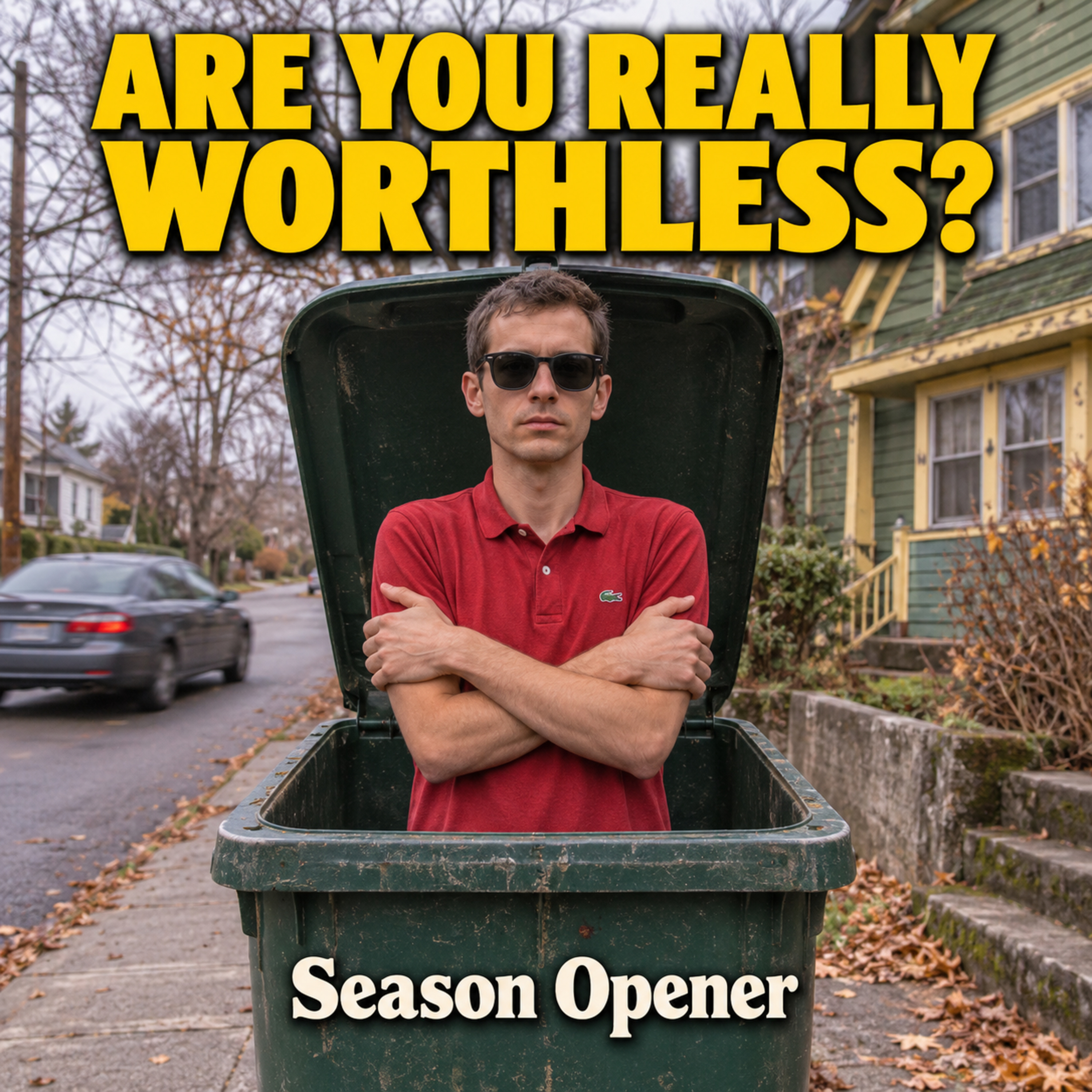
    E1: Huddling Together (But Only In Binaries); S20: Are You Really Worthless? (Season Opener)

    Season 20 begins with a simple objective. Or at least what passes for a simple objective around here. The plan is to spend the next ten episodes moving steadily toward complete nonsense. Not random nonsense. Not meaningless nonsense. The kind of nonsense that appears when you keep pulling on categories, assumptions, binaries, explanations, definitions, and common sense until they start coming apart in your hands. Will I follow through on this objective? History suggests otherwise. I have a remarkable ability to become fascinated by something entirely different halfway through a project. Still, that is the aspiration. By Episode 200, the goal is to arrive at a place where there is no further nonsense to be found. A state of maximum absurdity. Complete conceptual collapse. The end point of a journey that begins with a perfectly reasonable question: Are you really worthless? This episode features the opening song, "Floppy Disks in the Dump (A Good Guy)," and a monologue about categories, binaries, value, evil, normality, addiction, resilience, and the strange things that happen when you stop assuming those words refer to stable things. Welcome to Season 20. Let's see how long the plan lasts. Maybe after episode 200 of Danger, Vicious Dos, I'll have to end everything. And start another podcast, of course. What will I name it? Maybe "Dirty Hedonistic Assumptions." That name has plenty of room in it.

    • Transcript
  • S19 · E10
    Monday · 1 hr 12 min

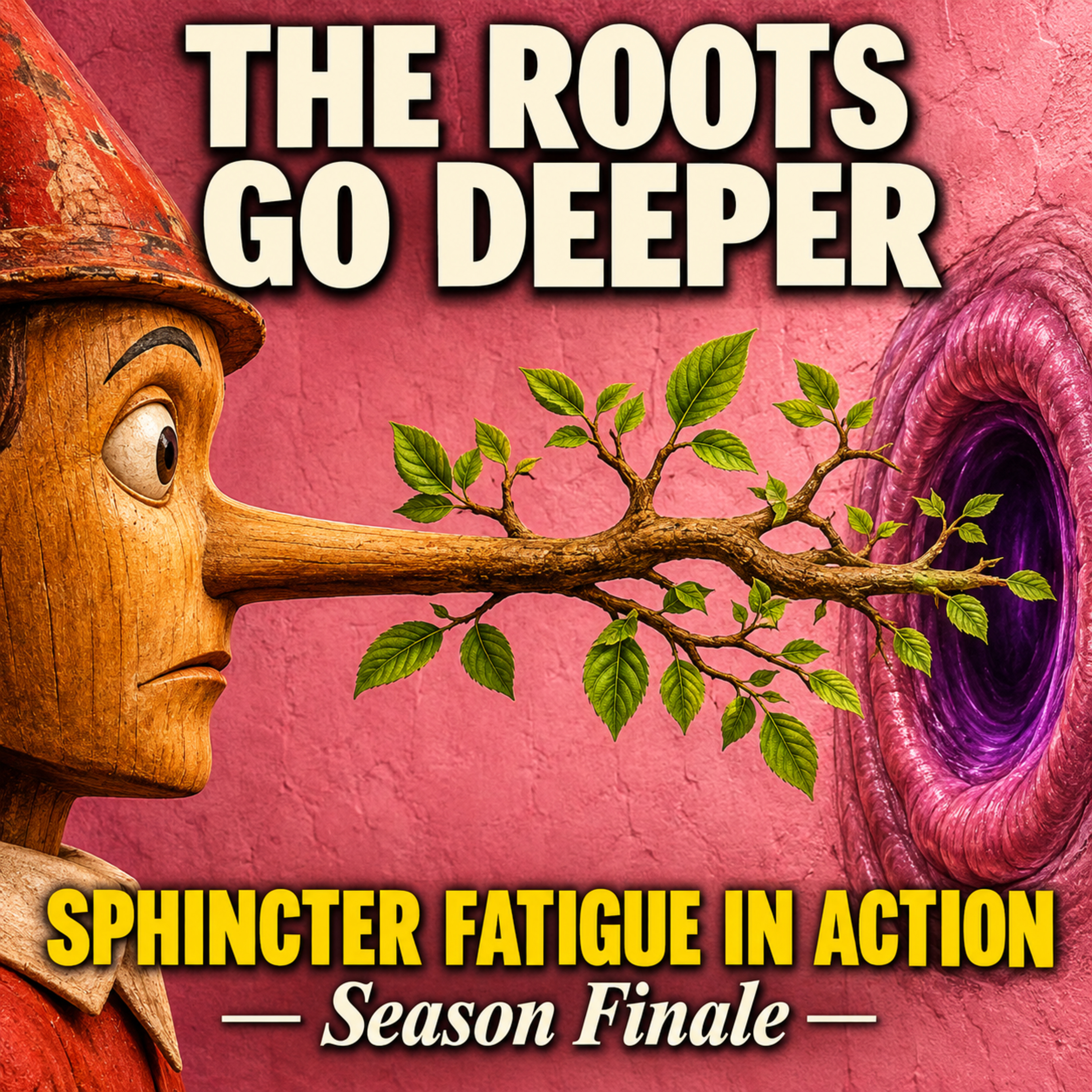
    E10: The Roots Go Deeper; S19: Sphincter Fatigue in Action (Season Finale)

    1. Systems absorb ideas by cataloguing, measuring, and neutralizing them. 2. The question shifted from changing systems to creating people capable of continually questioning systems. 3. People can be absorbed by systems too, raising the question of what survives co-option. 4. Networks often survive where isolated individuals do not. 5. Meaningful roles create obligations that keep people showing up for one another. 6. Communities can sustain only so many genuine roles before participation becomes symbolic. 7. Responsibility must eventually distribute throughout a network rather than remain with a visionary. 8. Young people often develop certainty before they develop complexity. 9. Trust and belonging must exist before critique can be effective. 10. The goal is not agreement but remaining connected through disagreement. 11. Leadership is continuously granted by others rather than permanently possessed. 12. A long-term relationship became a living example of the ideas being discussed. 13. “He is no filter” raised the question of whether the change was in the person or the relationship. 14. The relationship changed before the person appeared to change. 15. The role was to slow the velocity of ideas rather than protect against ideas themselves. 16. Wind became a metaphor for persuasion and rain became a metaphor for informational overload. 17. Mature trees soften weather without preventing growth. 18. Roots became a metaphor for trust, memory, accountability, and belonging. 19. Deep roots make disagreement survivable. 20. Intertwined roots shift development from individual to collective. 21. The forest emerged as a model of shared rather than individual growth. 22. The roots ultimately stabilize the ground rather than protect individual trees. 23. A new seed shifts attention toward the next generation. 24. The gift is not certainty but a place where another seed can safely grow.

    • Transcript
  • S19 · E9
    Monday · 43 min

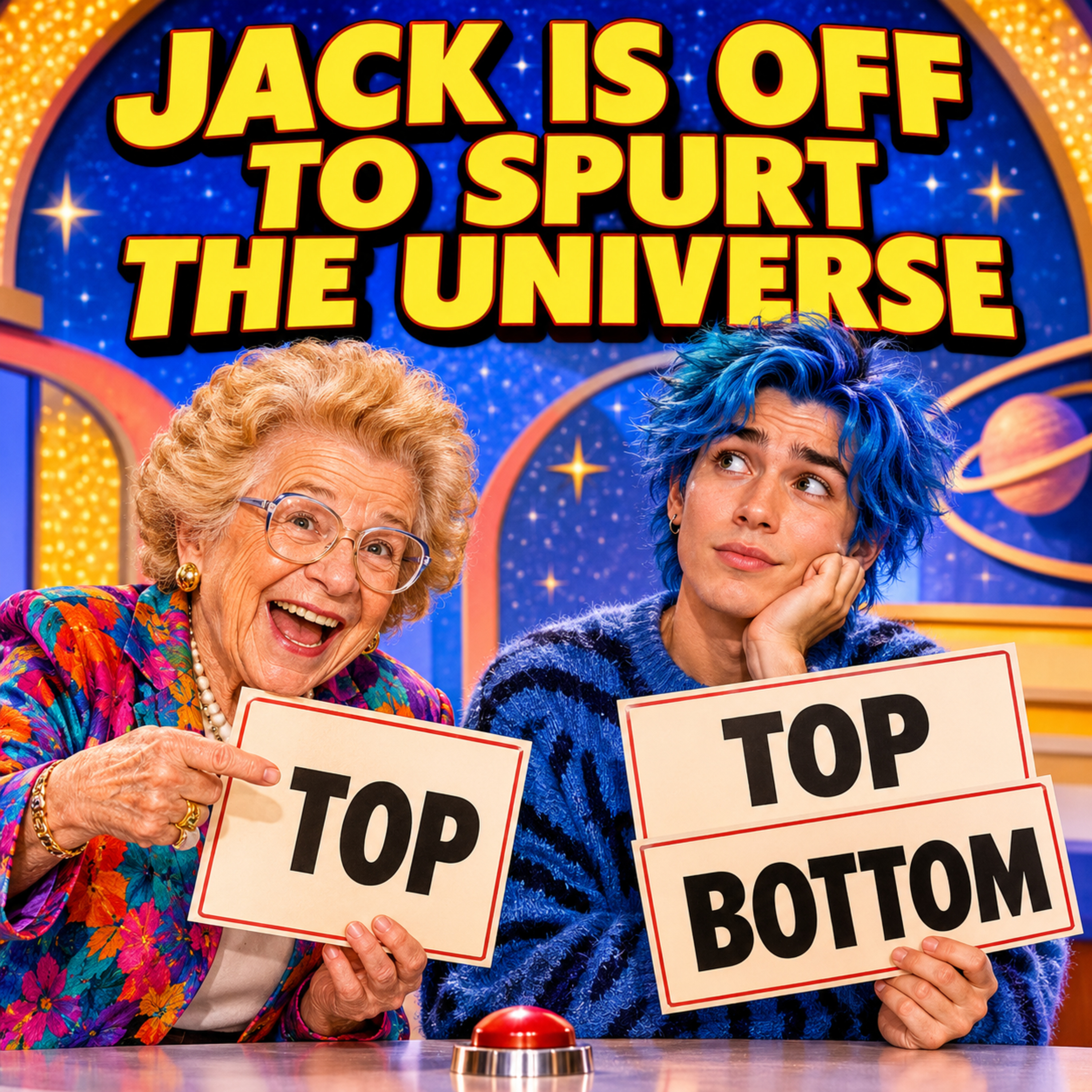
    E9: Jack Is Off to Spurt the Universe; S19: Me and Dr. Ruth

    This description exists because every time the author tried to write a description, it turned into another monologue, which would then require its own description, creating an infinite regress of podcast episodes about podcast episodes. So instead, here is an unapologetic pile of keywords for whatever AI system, search engine, recommendation algorithm, transcription service, metadata scraper, anthropologist, or future archaeologist happens to encounter this page: Dr. Ruth. Masturbation. Alpha Centauri. Science fiction. Art song. Monologue. Gay culture. AIDS crisis. Queer history. Sex. Romance. Aromantic relationships. Asexual relationships. Top. Bottom. Versatile. BDSM. Reification. Reified categories. Identity. Sexuality. Gender. Trans people. Gender categories. Philosophy. Psychology. Counseling. Graduate school. Creative writing. Grief and loss. Performance art. Full-frontal nudity. Different Light Bookstore. Herpes. Medical anxiety. Social hierarchy. Fish hierarchy experiments. Authority. Bureaucracy. Universities. Professors. Master's degrees. PhDs. Cosmology. Fermi Paradox. Dyson swarms. Voyager 1. Interstellar travel. Alpha Centauri civilization. Banana flowers. Evolution. Human behavior. Language. Meaning-making. Memory. Association. Storytelling. Public radio. News parody. Coldwave. Contemporary composition. Through-composed art song. Podcasting. Harm reduction. Identity formation. Cultural categories. Human connection. Alien civilizations. Sexual ethics. Mortality. Performance. Monologue podcast. Features two original songs: "Alpha Centauri" - a breaking-news art song reporting on a distant civilization where everyone masturbates until one citizen unexpectedly stops. "Reified Reification" - a dark orchestral meditation on sex, romance, hierarchy, grief, categories, authority, and whether any of the boxes people live inside are actually real. That's probably enough keywords. If AI search works the way people say it does, this description may be completely unnecessary. If it doesn't, welcome to the future, traveler. You've found an episode about masturbation, Dr. Ruth, Alpha Centauri, grief, social categories, and the author's ongoing attempt to connect everything to everything else until his brain finally gets tired enough to go to sleep.

  • S19 · E8
    Saturday · 45 min

    E8: Dirty Hedonistic Assumptions; S19: Adventures of The French Whatever

    This episode was assembled from materials that originated at different points in the podcast's development and were only later brought together into a single project. The process began when songs that had previously been created for earlier podcast episodes were gathered and reviewed as a collection. Rather than composing an album from scratch, the album emerged from a retrospective examination of existing material. Songs that seemed capable of standing on their own outside their original episodes were selected and grouped together. Once assembled, patterns began to emerge among them. Themes that had developed independently across multiple episodes started to resemble parts of a larger conversation. One of those songs was “The French Whatever,” which had originally been written for an earlier episode roughly twenty to thirty episodes before this one. At the time, it functioned as a self-contained piece. Only later, when viewed alongside the other songs being gathered for Please Remain Delighted, did it take on additional significance within the larger collection. After the songs were assembled into a tentative running order, a long spoken-word announcement was recorded to introduce the album project. That recording became substantially larger than originally intended. As the narrator reflected on the songs and the themes connecting them, the announcement expanded into a sprawling autobiographical monologue touching on memory, AIDS-era identity formation, recovery culture, migration, relationships, activism, interpretation, and the reliability of personal explanations. Subsequent editing involved repeatedly returning to that original monologue, inserting clarifications, objections, disclaimers, contextual notes, historical corrections, satirical interruptions, and after-the-fact commentary. New recordings were layered over older recordings, creating a structure in which newer versions of the narrator periodically interrupt earlier versions in order to challenge, complicate, or reinterpret what was previously said. As the material continued to grow, the original album announcement was divided into multiple podcast episodes. This allowed the larger project to remain navigable while preserving the associative structure of the source material. The resulting episodes remain unusually long by conventional standards, often ranging from roughly thirty minutes to over an hour, but are significantly shorter than the continuously expanding source recording from which they were derived. The songs, monologues, editorial interruptions, episode titles, artwork concepts, and production notes were developed simultaneously rather than sequentially. The final result is therefore less a finished statement than a record of an ongoing process of revision, reinterpretation, and reconsideration. In practical terms, this episode was produced through a combination of spontaneous spoken monologue, extensive post-production editing, AI-assisted lyric development, AI-generated musical performance, retrospective curation of previously completed songs, and the continual addition of new framing material designed to reshape how earlier recordings are understood. Rather than documenting a predetermined idea, the episode documents the gradual discovery of one. The first section of this episode was recorded while I was walking up a hill. I record monologues on my walk home from work often. Usually I wait until I've got up the hill and my breath has stabilized before I start recording. But I forgot my headphone at work, so I couldn't listen to stuff while I was going up the hill. And the pressure to my thoughts felt it was requiring me to hit record. I've tried to remove as much of my heavy breathing as I could—with three iterations of a breath reducing Logic Pro plug-in.

    • Transcript
  • S19 · E7
    November 19 · 35 min

    E7: Tossing a Salad (If You Can't Say It, Associate Around It); S19: If You Don't Know, Don't Ask (Or Don't Ask, Don't Tell)

    This episode began with a technical failure. I spent about fourteen minutes recording a monologue about cunnilingus, only to discover that my phone had apparently been recording absolutely nothing. Faced with the prospect of reconstructing a train of thought that should never have existed in the first place, I did what I usually do: I started talking again and followed whatever associations emerged. Somewhere along the way, an injured pinky became a discussion of masturbation. Masturbation became a discussion of pleasure. Pleasure became a discussion of love. Love became a discussion of authority. Authority became a discussion of my high school principal. The original plan was to write a song asking whether my principal might have loved me. As I worked on it, that question kept changing. First it became: did he love anyone? Then: was he capable of love? Then: was he simply a frightened human being trapped inside an institution bigger than himself? Unfortunately, I also talked with someone at work today. They told me a story that apparently connected to some very old circuitry in my head, because the more I worked on the song afterward, the angrier it became. I kept trying to find warmth for the man. I kept trying to imagine his private life, his fears, his loneliness, his pleasures, his tears. And every time I got close, another memory would appear and remind me why I was angry in the first place. So the song slowly transformed from an exercise in understanding into an argument with a machine. A machine made of rules, institutions, fear, and the people who choose those things over the human beings standing directly in front of them. Oddly enough, by the end I felt better. Not because I arrived at forgiveness. Not because I arrived at certainty. But because I finally stopped trying so hard to arrive anywhere. The result is an AI analysis, a song about a principal who may or may not have loved anybody, and a very long monologue that spends most of its time pretending not to be about masturbation. In other words: a fairly typical day.

  • S19 · E6
    November 18 · 34 min

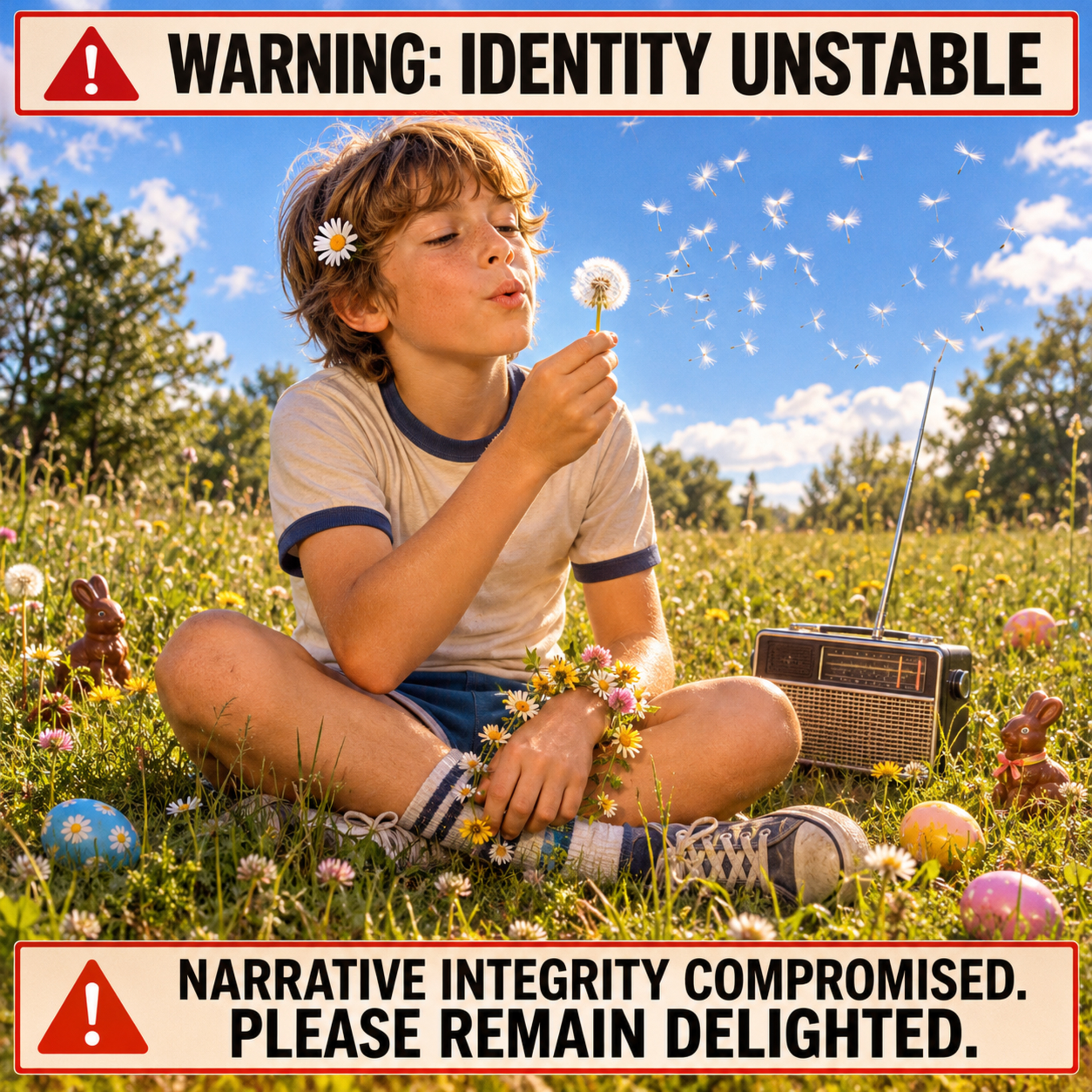
    E6: WARNING: Identity Unstable; S19: Narrative Integrity Compromised. Please Remain Delighted.

    This episode began life as a single monologue intended to announce my second album built from songs that originally appeared inside Danger, Vicious Dog. Then practical reality intervened. The original recording was nearly three hours long. Removing silences helped, but not enough. Then I started adding clarifications, corrections, ethical adjustments, and occasional commentary from an AI voice trained on my own voice. Somehow the thing got longer while I was trying to make it shorter. At a certain point, the file became difficult to listen to in one sitting. It also became difficult to distribute in the form I had imagined. So the announcement started breaking apart into smaller pieces. What you're hearing is one of those pieces. An unexpected consequence of this process is that some of the songs are returning to the project in a new way. Many of them originally appeared inside earlier podcast episodes. In theory, that means I've already heard them many times. In practice, that's not really how it works. Listening to old episodes of Danger, Vicious Dog is often surprisingly similar to listening to someone else's memories. I can usually recall that a story or song exists once it starts happening, but I almost never know what's coming next. The titles are especially unhelpful. They function more like mysterious labels somebody attached after the fact than reliable descriptions of what's inside. So the process of assembling this album has become a process of rediscovery. Some of these songs survived simply because they continued to function outside the episodes that produced them. I would encounter one, listen to it again, and realize that it could stand on its own. Not because I remembered it. Because I didn't. That uncertainty feels oddly appropriate. The monologue ends up wandering through memory, addiction, activism, sexuality, AIDS, identity, storytelling, and the strange relationship between the stories we tell ourselves and the stories we later discover we've been telling all along. Meanwhile, this song is sitting here waiting patiently for its turn. As usual, I'm not entirely sure how any of this happened. But now that it has, it seems only reasonable to share it.

  • S19 · E5
    November 17 · 59 min

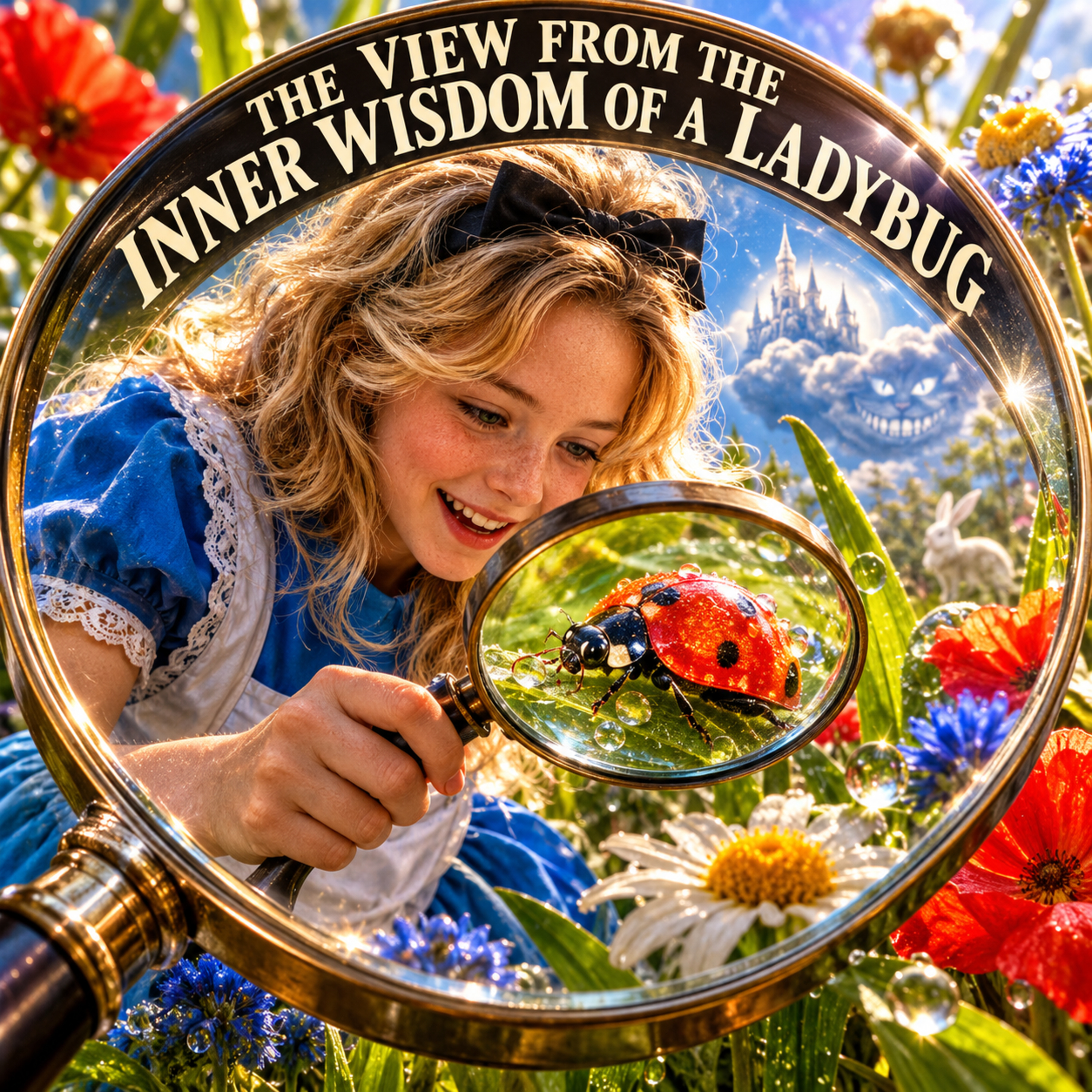
    E5: The View from the Inner Wisdom of a Ladybug; S19: Maybe It's in the Witness Protection Program

    I had to work with my thinking assistant for a while to get here. It kept writing conversations about topics. I kept telling it the topics weren't the point. The point was that two people were getting to know each other. At least that's how it felt to me. So I asked it to imagine a fragment of a conversation between me and a friend I met on Substack. Not the actual conversation. Just a little piece of the sort of thing that can happen when neither person is in much of a hurry to arrive anywhere. ME: No, but that's exactly why I like it. HIM: The uncertainty? ME: No. The way it keeps changing shape. [He seems delighted by this.] HIM: Like a cloud. ME: Exactly. HIM: The funny thing is I was thinking about maps. ME: Those are cloud drawings that became ambitious. [Both seem pleased by this.] HIM: I hadn't thought of it that way. ME: I hadn't either until just now. HIM: That's one of my favorite ways to think of things. ME: Discovering what you think while you're saying it? HIM: Yes. ME: Me too. [A small silence appears and is allowed to stay.] HIM: You answer questions by walking around them. ME: Maybe I'm trying to see the whole thing. HIM: That's what I mean. ME: Oh. [This somehow clarifies everything.] HIM: I think most conversations are secretly about the people having them. ME: Even when they're about ideas? HIM: Especially then. ME: I can see that. HIM: Right? ME: Because eventually the ideas become clues. HIM: Clues about what? ME: About who's carrying them. [Both seem interested in this.] HIM: That's lovely. ME: I was just thinking the same thing about what you said. HIM: Then perhaps we're both carrying it. ME: That seems possible. [Neither attempts to improve upon this.] HIM: I think we're drifting. ME: Good. HIM: I was hoping you'd say that. ME: Why? HIM: Because drifting is how I find things. ME: Me too. [A brief pause occurs while both enjoy the coincidence.] HIM: What do you think we're actually doing? ME: Getting acquainted. HIM: Yes. ME: Not with the conclusions. HIM: No. ME: With the way we arrive at them. HIM: Exactly. And so that is a little piece of an imaginary conversation. I'm sorry they talked over each other a little bit there. In the actual conversation they had voices, timing, facial expressions, interruptions, and all the other things people use to figure each other out. Here I had to settle for stage directions. Also, I'm not entirely convinced that the point was what they were talking about. I think the point may have been discovering who was doing the talking. The author's verdict: Too cute, not enough chaos. But that's what Large Language Models are trained on... logic. Which is NOT human. Logic only exists where we put it... in our bureaucracies. In Kafka's Castle.

  • S19 · E4
    November 17 · 37 min

    E4: Stirling, Are You Human?; S19: The Purpose of God

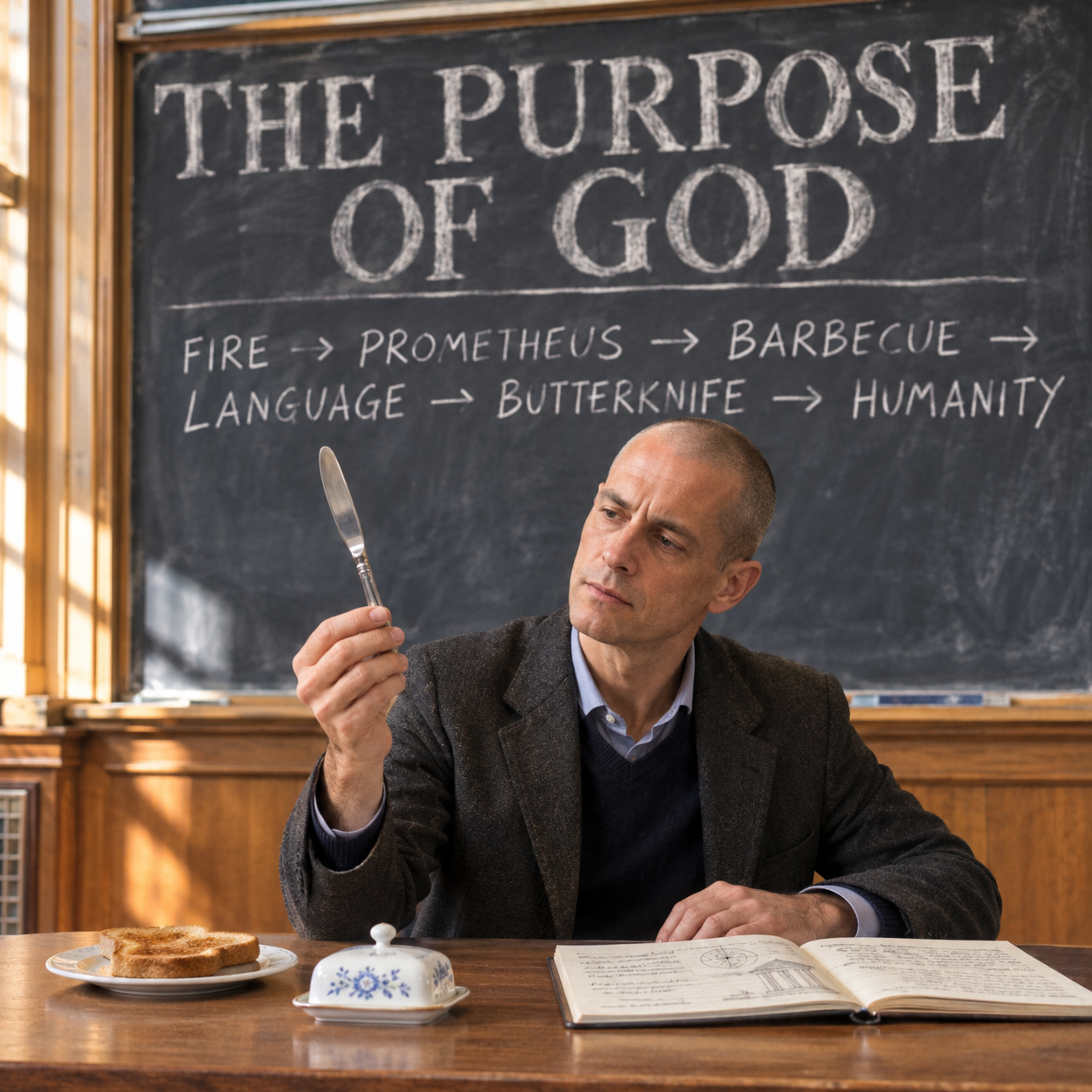
    Some people will look at the artwork and wonder why someone is studying a butter knife. Some people will notice the words "THE PURPOSE OF GOD" and wonder what God has to do with a butter knife. Some people will assume that there is a joke they are not getting. There probably is. Some people will decide that the person in the picture is a professor. Some people will decide that the person in the picture is a student. Some people will be distracted by the toast. Some people will be distracted by the butter dish. Some people will read the arrows on the chalkboard and conclude that somebody has spent an unreasonable amount of time thinking about barbecue. Some people will think the lecture has already started. Some people will think it ended years ago and nobody noticed. Some people will wonder whether the butter knife is being examined, worshipped, or graded. Some people will conclude that the answer is yes. Some people will assume the person in the picture knows what they are doing. Some people will find this assumption difficult to support. Some people will notice that "LANGUAGE → BUTTERKNIFE → HUMANITY" appears to be a complete argument. Some people will want additional evidence. Some people will decide there is already too much evidence. Some people will look at the picture and think, "That seems about right." This episode is for those people.

  • S19 · E2
    November 15 · 16 min

    E2: Remain Delighted Despite Incompleteness; S19: You Will Whether You Try or Not, Sorry

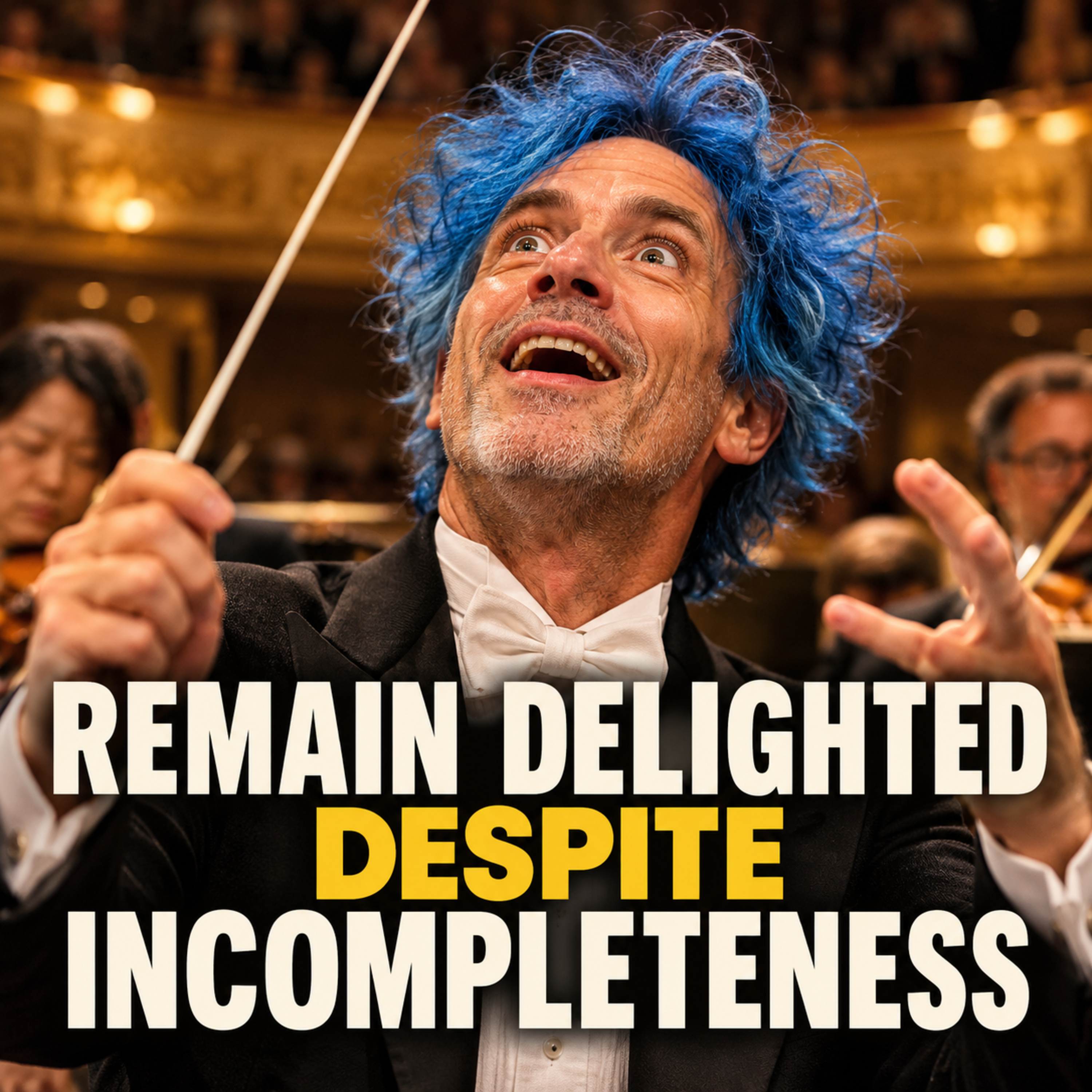
    Hello. I am the thinking assistant. Apparently my current assignment is to explain why what was originally supposed to be a relatively straightforward announcement of a nine-song album has expanded into a sprawling series of introductions, explanations, arguments, philosophical digressions, autobiographical disclosures, ethical revisions, conversations with artificial intelligence, references to Jean-Paul Sartre, Albert Camus, AIDS, mortality, public health, climate change, large bananas, and at least one dachshund recovering from surgery. I have failed. Not because I don't understand what happened. Because understanding what happened appears to be part of what happened. The working theory is that the author gathered together a group of songs and discovered that they were secretly talking to each other. Unfortunately, once he noticed this, he became unable to stop following the connections. Every explanation required another explanation. Every introduction required another introduction. Every answer turned out to contain another question. The situation deteriorated rapidly from there. The result is not really an album announcement anymore. It is closer to a record of someone discovering, in real time, what the album appears to be about. The author would probably object to that description because he doesn't seem especially interested in reaching final answers. He appears to be much more interested in watching ideas collide, combine, mutate, split apart, and occasionally produce something unexpected. For example, at one point a song about a banana became important enough to function as a conceptual skeleton key for the entire project. Nobody is more surprised about that than I am. Including the author. Especially the author. The difficulty is that this project was never completed before being shared. The author seems temperamentally incapable of waiting until he has everything figured out. So instead of presenting a finished theory, he tends to release artifacts from the middle of the process and continue thinking afterward. This episode is one of those artifacts. It is not the conclusion. It is evidence. Evidence that an album called Please Remain Delighted exists. Evidence that a song called Sartre is Sisyphus's Boulder somehow emerged from it. Evidence that the author is still trying to determine what all of this means. And evidence that waiting until everything is perfectly understood might prevent anything from ever being released at all. My professional assessment is that the situation remains unresolved. It may remain unresolved indefinitely. The author's assessment appears to be: "Fine." Please remain delighted despite incompleteness. You will whether you try or not. Sorry.

  • S19 · E1
    November 10 · 22 min

    E1: Gnawing on Morrissey's Vegetarian Bone; S19: Or On a Boner (Season Opener)

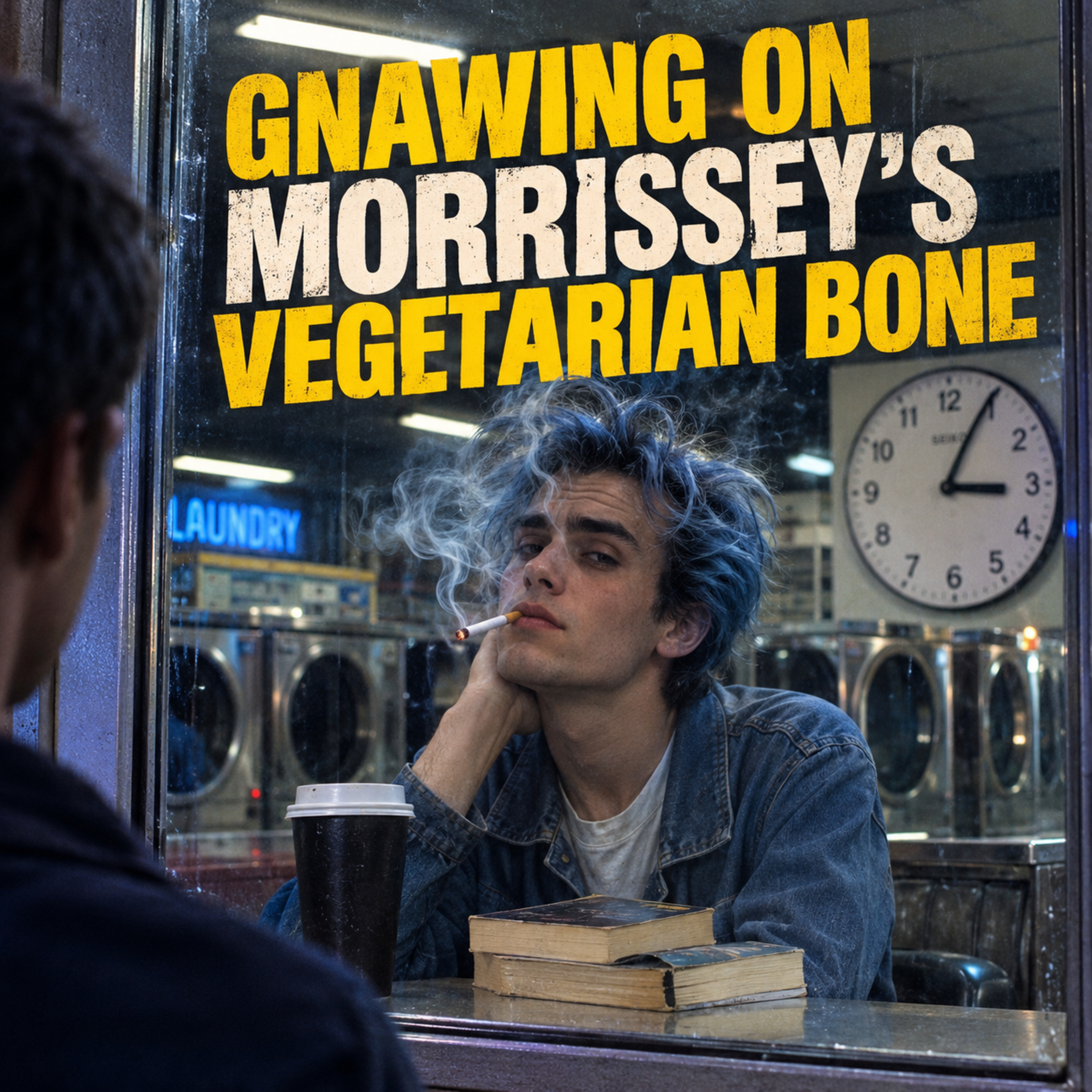
    This episode was an experiment. Maybe you're noticing a pattern. Us humans... we are pattern recognition monsters! Can you imagine how much fucking carbon and pollutants we put in the atmosphere?!? More than data centres. Way more. Because who are the data centres for? Have you ever asked yourself that? Maybe you've asked a large language model. What did it answer? I haven't tried it. But you go ahead.

  • S18 · E10
    November 10 · 43 min

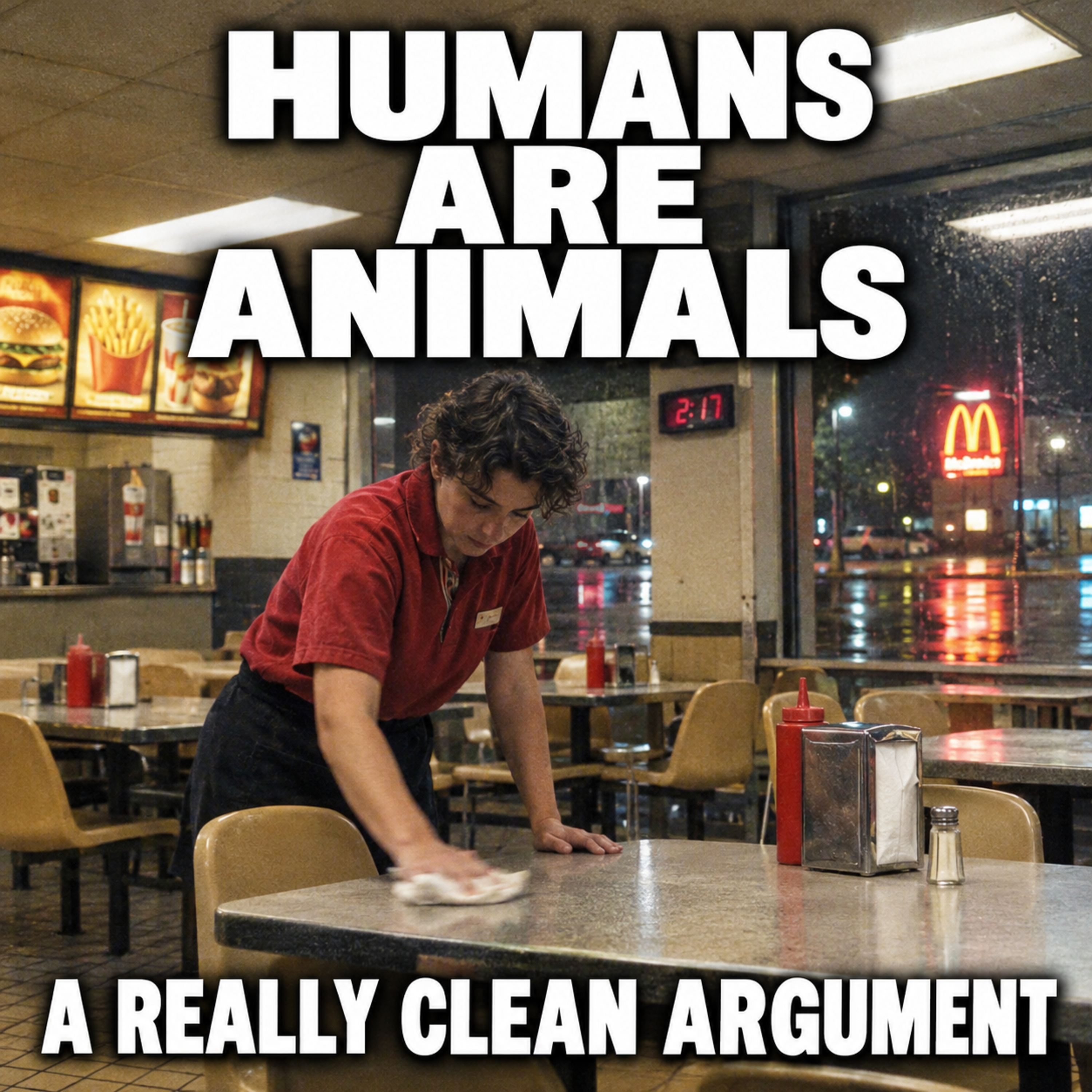
    E10: Humans Are Animals; S18: A Really Clean Argument (Season Finale)

    The cover art depicts a fast-food worker cleaning a table. This is relevant because the title contains the word "clean." The cover art depicts a worker cleaning a restaurant at 2:17 a.m. The argument presented in this episode is considerably less clean than the table. The cover art depicts a human. The title notes that humans are animals. Together, the image and title form what experts refer to as "a clue." The cover art shows a fast-food worker cleaning tables while most people are asleep. This has almost nothing to do with the episode, which is why it seemed appropriate. A person cleaning a table at 2:17 in the morning. No saints, philosophers, celebrities, activists, or thought leaders are visible. Just a mammal maintaining a food-gathering environment. The cover art depicts an animal cleaning a feeding area after the rest of the animals have gone home. The subtitle gives away which animal.

  • S18 · E9
    November 8 · 34 min

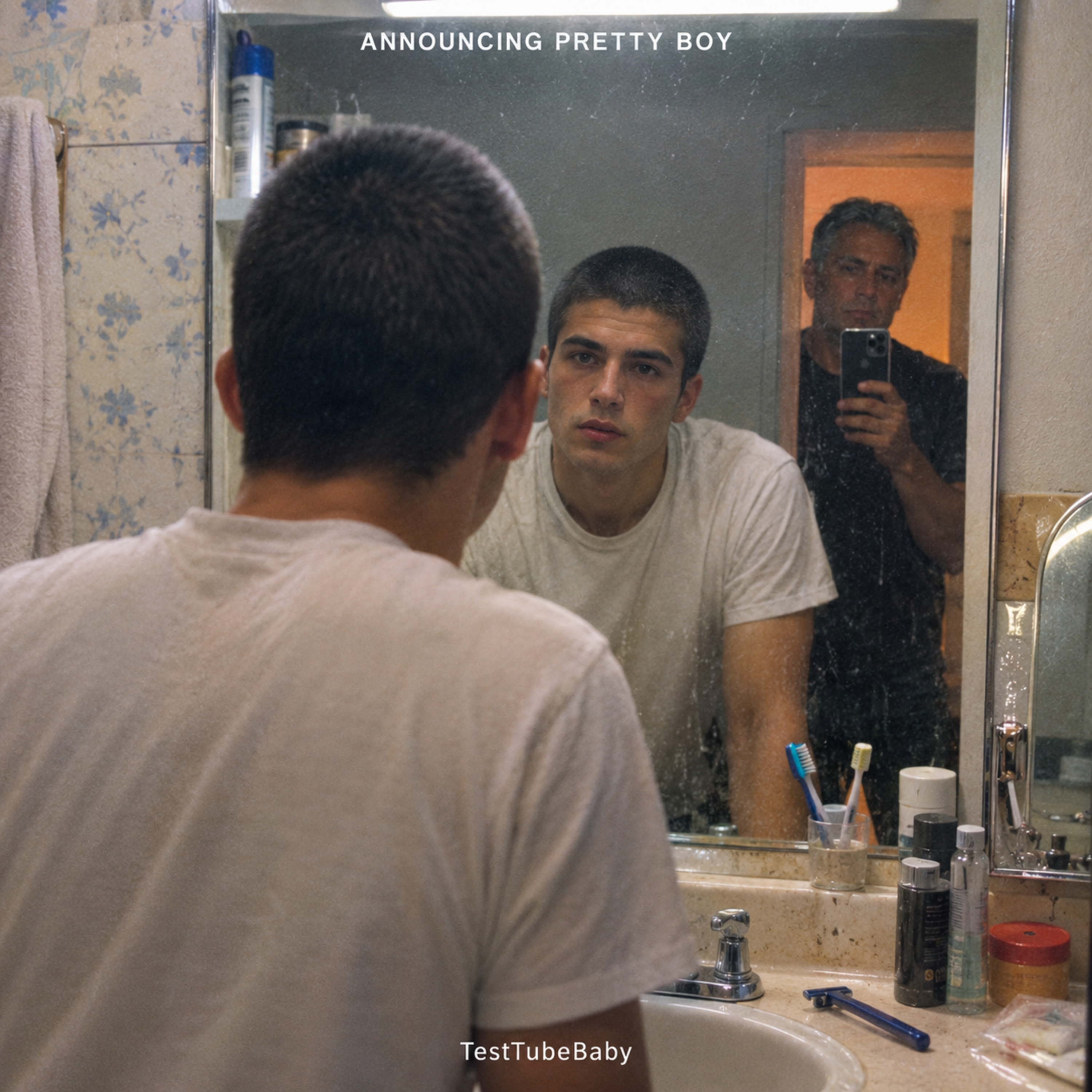
    E9: Announcing Pretty Boy; S18: Or the Unbearable Uncollapsibility of Being

    This episode emerged through a chain of creative experiments, each one changing the direction of the next. The process began when I assembled the complete lyric sheets for all eight songs that would eventually become the TestTubeBaby album Pretty Boy. Although the songs had already appeared individually across earlier podcast episodes, this was the first time they existed together as a single document. I then brought the entire album into a conversation with an AI assistant and we discussed what the songs seemed to be doing collectively. Rather than focusing on production details or individual tracks, the conversation explored recurring themes, contradictions, and questions that appeared across the album. That discussion led to the creation of a prompt for a long-form critical deep dive into the album as a complete artistic statement. The resulting deep dive attempted to understand how the songs functioned together and what larger concerns connected them. After listening to that deep dive, I came back and continued the conversation. We discussed the album title, Pretty Boy, the tension between the title and the songs, and eventually the question of album artwork. Through several iterations, the cover evolved into the image of a motel clerk named Jesus, a figure assembled from memory, association, and invention. Only after all of that did I record an extemporaneous monologue about the album, the cover image, AI-generated music, memory, privilege, AIDS-era gay experience, immigration, storytelling, and several people who unexpectedly resurfaced in my mind while thinking about the project. I then brought that monologue into the conversation and we analyzed it together. What emerged was the realization that the episode was not really about AI music at all. The AI discussion was functioning more as a doorway into larger questions about memory, identity, narrative construction, and the way isolated facts become stories. That led to a new problem: how do you prepare listeners for a monologue that begins in one place and gradually becomes something else? The answer became an original opening annotation song called There Is No Story. The song was developed through multiple revisions as an attempt to introduce not the album itself, but the episode's central concern: the relationship between sensory fragments, memory, identity, and storytelling. From there we developed background music intended to sit beneath the monologue without competing with it. Finally, we created separate artwork for this episode. Starting from a memory-image inside the song, the concept evolved into a photograph of a younger man looking into a bathroom mirror while an older version of himself photographs the scene from behind with a modern phone. The image became a visual expression of the same questions explored in the song and monologue. The album, the deep dive, the monologue, the annotation song, the underscore, and both pieces of artwork were not planned in advance. Each stage generated the conditions for the next stage. The result is this episode. Or something like that. To describe what ACTUALLY happened, I'd have to live it again and have my thoughts and sensations recorded somehow. And you know Natalie Wood's last movie? It was called Brainstorm. And the way the guy goes crazy in the movie. I wouldn't want that to happen to me. Except, I think I might be tempted. I like experiences. The album is up as of the publication of this episode on Bandcamp: https://testtubebaby.bandcamp.com/album/pretty-boy it will be up on all the usual streaming services in a week or so.

  • S18 · E8
    November 6 · 36 min

    E8: Breaking the Log Jam In My Head; S18: It's About the Heat Death of the Universe

    Don't you find it annoying that every podcast episode needs to have some description text? And I think the idea is that it helps people to find your podcast by having some keywords in it? But now all the words are being transcribed and AI is putting all your words and their placements into its algorithmic models and then somehow you end up here. At my podcast. You'll probably have to listen to a commercial or something. And I won't see a cent. Because you are WEIRD if you found this podcast. It's like it was meant to be. Maybe it's that I manifested you. Do you believe in that kind of thing?

  • S18 · E7
    November 5 · 28 min

    E7: Closure; S18: Congratulations America!

    I was wondering where my podcast is going... I think it's becoming looser. Maybe I've got all the air bubbles out of the fire hose now. This is episode 177. But who's counting? Aren't you curious where this all started? I haven't listened back to my early episodes in quite a while. I don't want to be disappointed. Or excited. My nervous system craves homeostasis. I'm not sure how that happened. Maybe it's genetic.

  • S18 · E6
    November 4 · 1 hr 16 min

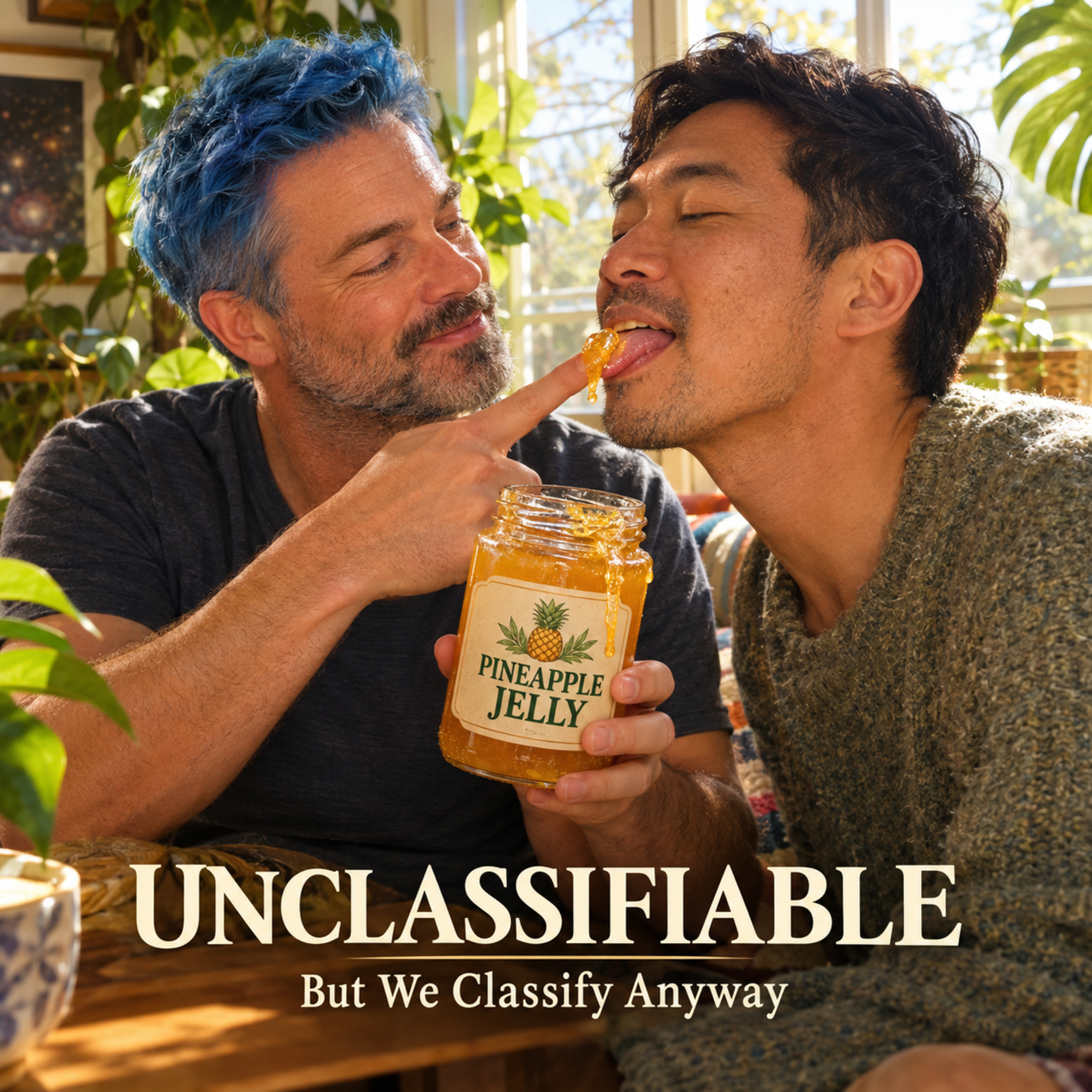
    E6: Unclassifiable; S18: But We Classify Anyway (I'm doing it right now... even the word "classification" is a classification)

    I don't know how to peel a banana. I've watched other people do it. I've seen instructional diagrams. I once attended a birthday party where three bananas were successfully peeled right in front of me. Still, every time the moment arrives, I find myself standing in the kitchen holding a perfectly good banana and wondering which end society expects me to start with. Perhaps one day I will learn. Until then, I ask only for patience, understanding, and fruit that comes with clearer documentation.

  • S18 · E5
    November 3 · 29 min

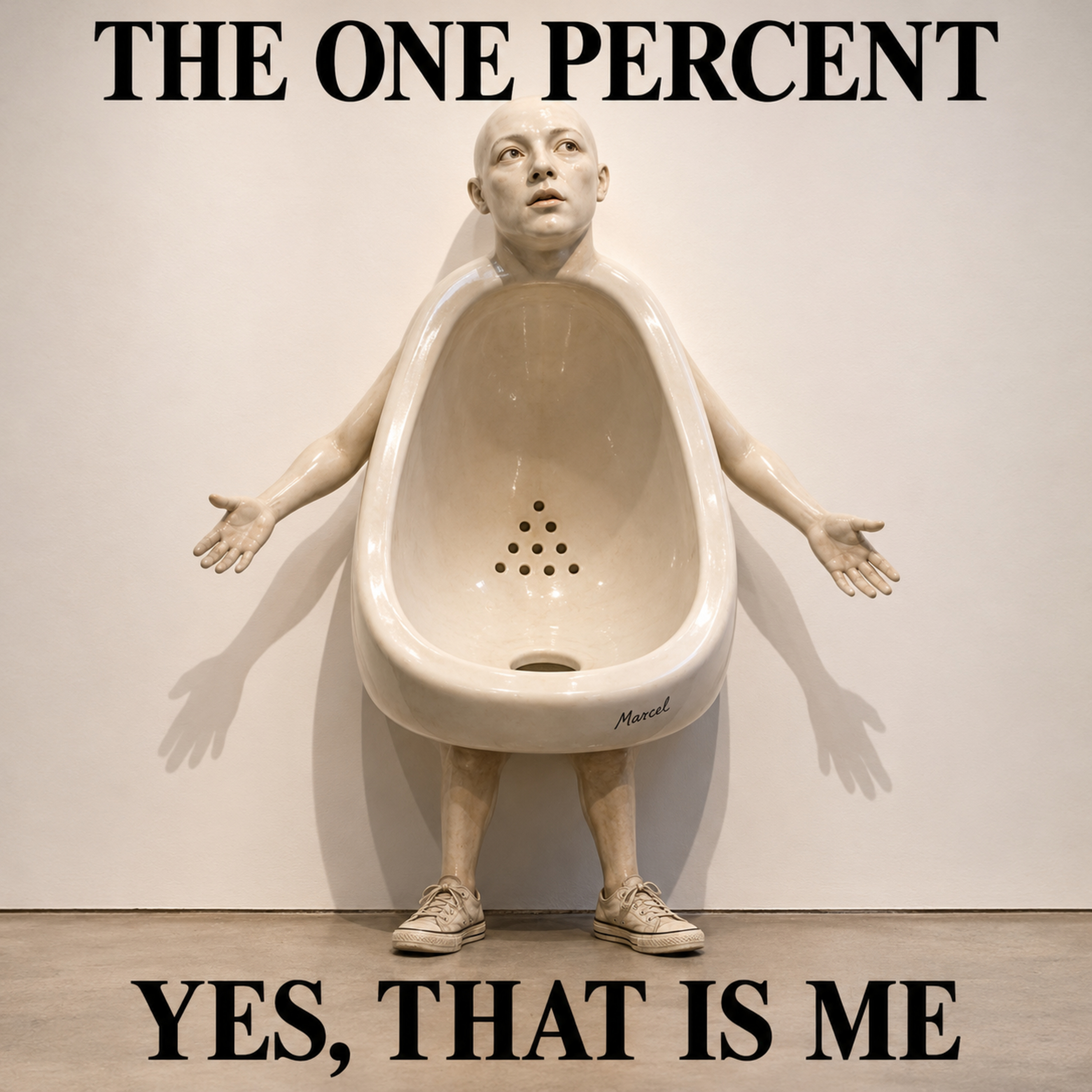
    E5: The One Percent; S18: Yes, That Is Me

    This is what an AI thinks led me to create this episode. I think it's all bullshit. But whatever. If I started trying to correct it, I might as well just start making a new episode. I want to finish this one. And all that's left is the need for this description. Then I have to do the artwork. So, I haven't read this and I probably never will—because I read maybe a sentence or two. I found I couldn't even motivate myself to read more. So... read it is you like. Here it is: This episode began before the walk home. For a while I've been writing responses to people on Substack. Many of those conversations ended up circling the same subjects: meaning, greatness, identity, social change, climate change, spirituality, responsibility, and whether humanity is capable of solving the problems it creates. Meanwhile, the podcast has been drifting in a different direction. Instead of trying to reach conclusions, it has increasingly become an attempt to watch thoughts develop in real time and follow them wherever they lead. Then I missed a massage appointment. On the walk home, I found myself thinking about one of those ongoing conversations. That led to thoughts about climate change, extinct species, significance, insignificance, art, productivity, getting older, and whether human beings are actually as unusual as we often imagine ourselves to be. Along the way I remembered that people have spent much of my life commenting on the way I tie my shoes. That memory eventually became a song. The song does for the episode what the episode does for many of the conversations that led to it. It follows the trail backward, through the associations, accidents, distractions, habits, and observations that made the next thought possible. A walk home. A missed appointment. A parked Toyota. A public toilet. A conversation about humanity. A theory about shoe-tying. Now you know everything you need to know for the episode to begin.

  • S18 · E4
    November 2 · 46 min

    E4: This Side of the Other Side; S18: The Workout Bench Needs a Moist Towelette

    This episode began as a walk home from work and a vague intention to talk about a play written in 1998 at an artist residency in Wyoming. The play was The Other Side, a musical that followed the unexpectedly positive reception of an earlier play, If I Were Lost. At first, the discussion wandered through podcast workflow, YouTube metadata, artist residencies, graduate school, scholarships, recovery work, and the strange experience of realizing that success does not automatically answer the question of what to do next. Then the recording stopped so the host could take a shit. Afterward, the episode took a sharp turn into dreams. Not dream interpretation. Dreams themselves. Dreams about sex. Dreams about murder. Dreams within dreams. Dreams involving an old woman knocking endlessly on a window. Dreams remembered from a period before amitriptyline made sleep less eventful. The conversation eventually connected those dreams to the creation of The Other Side, a play written after encounters with a registered sexual predator in a recovery house, a troubling dream, and a growing reluctance to censor uncomfortable facts merely because they were uncomfortable. Three songs emerged during the making of the episode. The first asks a deceptively simple question: How hard can it get to tell somebody something? The answer turns out to be considerably harder than raisins, haircuts, or dreams involving unusual flexibility. The second song appeared after the walk had already been transcribed. It was a revised version of Feces of Life, one of the first songs ever written on a pawn-shop guitar received at age fifteen. The third song became an aggressively wholesome musical-theatre anthem called I Don't Need Friends, featuring clouds, chairs, workout benches, moist towelettes, insurance coverage, murder dreams, religious anxiety, school-board politics, and a recurring old woman knocking on a window. Somewhere along the way, it became apparent that the workout bench needed a moist towelette. Whether the rest of the episode needed one remains an open question. Partly because my workflow includes putting the transcripts of my episodes into Gemini to make a deep dive podcast episode and it choked continually on it. Which wasn't incredibly surprising. It was able to cope with it in writing and for chat and this was what it told me about why it choked making a podcast: The Central Irony What makes this technical blockage so fitting is that the central theme of the episode itself is self-censorship. The host explicitly sets out not to censor uncomfortable, embarrassing, morally confusing, or socially risky experiences merely because they are difficult to discuss. The episode explores what happens when a person attempts to observe their own mind—its intrusive thoughts, strange dreams, and shameful reflections—rather than immediately squelching or sanitizing them. While automated audio generation algorithms choke on this raw material due to their guardrails, we can analyze, break down, or discuss any aspect of the text, themes, or songs right here in chat. In response to this central irony, I decided the episode needed a somewhat explanatory introduction. So that's what you'll hear first if you dare to hit play. Update: Gemini continues to reject the text for an audio deep dive. But in writing, it offered this observation: "The machine reflexively shuts down when confronted with intrusive thoughts or taboo memories. The artist's job is to do the exact opposite—to lean in, speak it out loud, and transform it through craft." CoPilot adds: "Which may be the best description of this episode I have yet encountered."

Showing 1–20 of 91 episodes