Skip to content
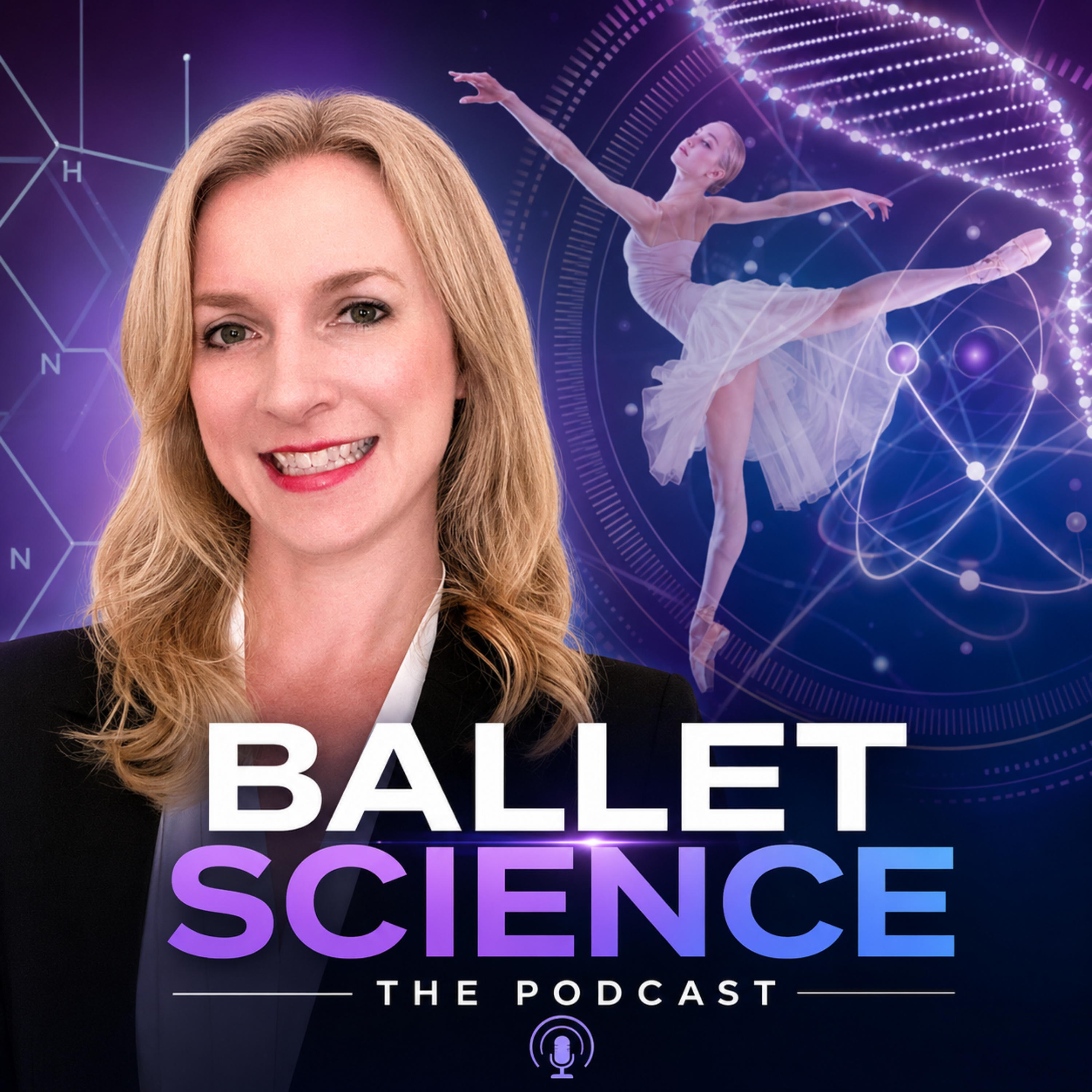
Artwork for Ballet Science

Ballet Science

Caroline Simpkins, Ph.D.

The Ballet Science Podcast is hosted by Caroline Simpkins, Ph.D., a former ballerina turned biomechanics researcher. Each week, we bring science into the ballet studio, exploring the intersection of ballet, dance science, and human movement. Topics include injury prevention, biomechanics, strength, nutrition, mindset, and performance. Discover how the science of ballet can help dancers (and anyone who moves) perform and feel their best.

Play
  • 23 episodes
  • weekly
  • Avg 28 min
  • English
Counted on this page — what you have heard stays on this device, so it is not something the list can be paged by.
  • #46
    April 14 · 8 min

    Dance & Autism: What the Research Shows

    What if dance could do more than build technique… what if it could change how we connect with others? In this video, we break down scientific research examining how dance impacts individuals with autism spectrum disorder (ASD). We explore: Whether dance improves overall ASD symptoms The powerful effects on social interaction and communication Why empathy did not significantly change The neuroscience behind movement, connection, and learning What this means for dancers, teachers, clinicians, and families Research Publication: Chen, T., Wen, R., Liu, H., Zhong, X., & Jiang, C. (2022). Dance intervention for negative symptoms in individuals with autism spectrum disorder: A systematic review and meta-analysis. Complementary therapies in clinical practice, 47, 101565. Join the Ballet Science E-mail List⁠⁠⁠⁠⁠⁠⁠⁠⁠⁠ ⁠⁠⁠⁠⁠⁠⁠⁠Watch This Video On YouTube⁠⁠⁠⁠⁠⁠⁠⁠⁠⁠⁠ Connect With Ballet Science: ⁠⁠⁠⁠⁠⁠⁠⁠⁠Website⁠⁠⁠⁠⁠⁠⁠⁠⁠⁠⁠ ⁠⁠⁠⁠⁠⁠⁠⁠Instagram⁠⁠⁠⁠⁠⁠⁠⁠⁠⁠⁠ ⁠⁠⁠⁠⁠⁠⁠⁠Facebook ⁠⁠⁠⁠⁠⁠⁠⁠⁠⁠⁠ ⁠⁠⁠⁠⁠⁠⁠⁠⁠⁠⁠X⁠⁠⁠⁠⁠⁠⁠⁠⁠⁠⁠ ⁠⁠⁠⁠⁠⁠⁠⁠Amazon Storefront⁠⁠⁠⁠⁠⁠⁠⁠⁠⁠⁠ E-mail: caroline@ballet.science Hosted by Caroline Simpkins, Ph.D., the Ballet Science podcast brings science into the studio to help dancers of all ages and abilities give their best performances both onstage and off, and reveals how the science of ballet can benefit anyone who moves. Each week, we explore the intersection of science and ballet... from injury prevention and biomechanics to nutrition, mindset, and everything in between. If you enjoyed this episode, please hit the subscribe button, leave a review, and share it with your friends and dance community. You can also follow Ballet Science on social media and visit our website for additional information. Filming Equipment Affiliate Links: ⁠⁠⁠⁠⁠⁠⁠⁠⁠⁠⁠⁠Microphone⁠⁠⁠⁠⁠⁠⁠⁠⁠⁠⁠⁠ ⁠⁠⁠⁠⁠⁠⁠⁠Pop Filter⁠⁠⁠⁠⁠⁠⁠⁠⁠⁠⁠⁠ ⁠⁠⁠⁠⁠⁠⁠⁠⁠Mic Stand⁠⁠⁠⁠⁠⁠⁠⁠⁠⁠⁠⁠ ⁠⁠⁠⁠⁠⁠⁠⁠⁠⁠⁠⁠Prompter⁠⁠⁠⁠⁠⁠⁠⁠⁠⁠⁠⁠ ⁠⁠⁠⁠⁠⁠⁠⁠⁠⁠⁠⁠Large Key Light⁠⁠⁠⁠⁠⁠⁠⁠⁠⁠⁠⁠ ⁠⁠⁠⁠⁠⁠⁠⁠⁠⁠⁠⁠Small Key Light⁠⁠⁠⁠⁠⁠⁠⁠⁠⁠⁠⁠ ⁠⁠⁠⁠Eve Flare Light⁠⁠⁠⁠⁠

  • #45
    April 7 · 9 min

    Dance & Parkinson’s Disease: What the Research Shows

    What if dance could actually help people with Parkinson’s disease improve their balance... and potentially reduce their risk of falling? In this episode, I break down one of my own research studies: a systematic review and meta-analysis of 14 randomized controlled trials (612 participants) examining how dance impacts balance in Parkinson’s disease... and the results might surprise you. We’ll cover: Whether dance actually improves balance What an effect size means (in simple terms) Whether certain dance styles work better than others Why duration matters more than style The science behind why dance works (neurology + biomechanics) What this means for real-world fall risk and independence This isn’t just theory... this is high-level clinical evidence translated into real, practical insights. If you're a dancer, teacher, clinician, or just curious about how movement impacts the body and brain, this episode is for you. Publication Discussed: Simpkins, C., & Yang, F. (2023). Do dance style and intervention duration matter in improving balance among people with Parkinson’s disease? A systematic review with meta-analysis. Parkinsonism & related disorders, 106, 105231. Join the Ballet Science E-mail List⁠⁠⁠⁠⁠⁠⁠⁠⁠ ⁠⁠⁠⁠⁠⁠⁠Watch This Video On YouTube⁠⁠⁠⁠⁠⁠⁠⁠⁠⁠ Connect With Ballet Science: ⁠⁠⁠⁠⁠⁠⁠⁠Website⁠⁠⁠⁠⁠⁠⁠⁠⁠⁠ ⁠⁠⁠⁠⁠⁠⁠Instagram⁠⁠⁠⁠⁠⁠⁠⁠⁠⁠ ⁠⁠⁠⁠⁠⁠⁠Facebook ⁠⁠⁠⁠⁠⁠⁠⁠⁠⁠ ⁠⁠⁠⁠⁠⁠⁠⁠⁠⁠X⁠⁠⁠⁠⁠⁠⁠⁠⁠⁠ ⁠⁠⁠⁠⁠⁠⁠Amazon Storefront⁠⁠⁠⁠⁠⁠⁠⁠⁠⁠ E-mail: caroline@ballet.science Hosted by Caroline Simpkins, Ph.D., the Ballet Science podcast brings science into the studio to help dancers of all ages and abilities give their best performances both onstage and off, and reveals how the science of ballet can benefit anyone who moves. Each week, we explore the intersection of science and ballet... from injury prevention and biomechanics to nutrition, mindset, and everything in between. If you enjoyed this episode, please hit the subscribe button, leave a review, and share it with your friends and dance community. You can also follow Ballet Science on social media and visit our website for additional information. Filming Equipment Affiliate Links: ⁠⁠⁠⁠⁠⁠⁠⁠⁠⁠⁠Microphone⁠⁠⁠⁠⁠⁠⁠⁠⁠⁠⁠ ⁠⁠⁠⁠⁠⁠⁠Pop Filter⁠⁠⁠⁠⁠⁠⁠⁠⁠⁠⁠ ⁠⁠⁠⁠⁠⁠⁠⁠Mic Stand⁠⁠⁠⁠⁠⁠⁠⁠⁠⁠⁠ ⁠⁠⁠⁠⁠⁠⁠⁠⁠⁠⁠Prompter⁠⁠⁠⁠⁠⁠⁠⁠⁠⁠⁠ ⁠⁠⁠⁠⁠⁠⁠⁠⁠⁠⁠Large Key Light⁠⁠⁠⁠⁠⁠⁠⁠⁠⁠⁠ ⁠⁠⁠⁠⁠⁠⁠⁠⁠⁠⁠Small Key Light⁠⁠⁠⁠⁠⁠⁠⁠⁠⁠⁠ ⁠⁠⁠Eve Flare Light⁠⁠⁠⁠⁠

  • #44
    March 31 · 10 min

    Dance and Brain Aging: What the Research Shows

    What if dance could actually change your brain? Not just how you feel... but how your brain functions over time. In this video we break down a systematic review and meta-analysis (one of the highest levels of scientific evidence) to answer a powerful question: Can dance improve cognitive function and help protect against decline as we age? We’ll cover: What the research says about memory, attention, and executive function Why dance may stimulate neuroplasticity Whether dance is actually better than other forms of exercise What this means for dancers, adults, and aging populations This isn’t just “exercise is good for you.” This is measurable, clinical data on how movement impacts the brain. Publication Discussed: Hewston P, Kennedy CC, Borhan S, Merom D, Santaguida P, Ioannidis G, Marr S, Santesso N, Thabane L, Bray S, Papaioannou A. Effects of dance on cognitive function in older adults: a systematic review and meta-analysis. Age Ageing. 2021 Jun 28;50(4):1084-1092. doi: 10.1093/ageing/afaa270. PMID: 33338209. Join the Ballet Science E-mail List⁠⁠⁠⁠⁠⁠⁠⁠ ⁠⁠⁠⁠⁠⁠Watch This Video On YouTube⁠⁠⁠⁠⁠⁠⁠⁠⁠ Connect With Ballet Science: ⁠⁠⁠⁠⁠⁠⁠Website⁠⁠⁠⁠⁠⁠⁠⁠⁠ ⁠⁠⁠⁠⁠⁠Instagram⁠⁠⁠⁠⁠⁠⁠⁠⁠ ⁠⁠⁠⁠⁠⁠Facebook ⁠⁠⁠⁠⁠⁠⁠⁠⁠ ⁠⁠⁠⁠⁠⁠⁠⁠⁠X⁠⁠⁠⁠⁠⁠⁠⁠⁠ ⁠⁠⁠⁠⁠⁠Amazon Storefront⁠⁠⁠⁠⁠⁠⁠⁠⁠ E-mail: caroline@ballet.science Hosted by Caroline Simpkins, Ph.D., the Ballet Science podcast brings science into the studio to help dancers of all ages and abilities give their best performances both onstage and off, and reveals how the science of ballet can benefit anyone who moves. Each week, we explore the intersection of science and ballet... from injury prevention and biomechanics to nutrition, mindset, and everything in between. If you enjoyed this episode, please hit the subscribe button, leave a review, and share it with your friends and dance community. You can also follow Ballet Science on social media and visit our website for additional information. Filming Equipment Affiliate Links: ⁠⁠⁠⁠⁠⁠⁠⁠⁠⁠Microphone⁠⁠⁠⁠⁠⁠⁠⁠⁠⁠ ⁠⁠⁠⁠⁠⁠Pop Filter⁠⁠⁠⁠⁠⁠⁠⁠⁠⁠ ⁠⁠⁠⁠⁠⁠⁠Mic Stand⁠⁠⁠⁠⁠⁠⁠⁠⁠⁠ ⁠⁠⁠⁠⁠⁠⁠⁠⁠⁠Prompter⁠⁠⁠⁠⁠⁠⁠⁠⁠⁠ ⁠⁠⁠⁠⁠⁠⁠⁠⁠⁠Large Key Light⁠⁠⁠⁠⁠⁠⁠⁠⁠⁠ ⁠⁠⁠⁠⁠⁠⁠⁠⁠⁠Small Key Light⁠⁠⁠⁠⁠⁠⁠⁠⁠⁠ ⁠⁠Eve Flare Light⁠⁠⁠⁠⁠

Showing 21–23 of 23 episodes