 Safe Travels: A Nature Podcast
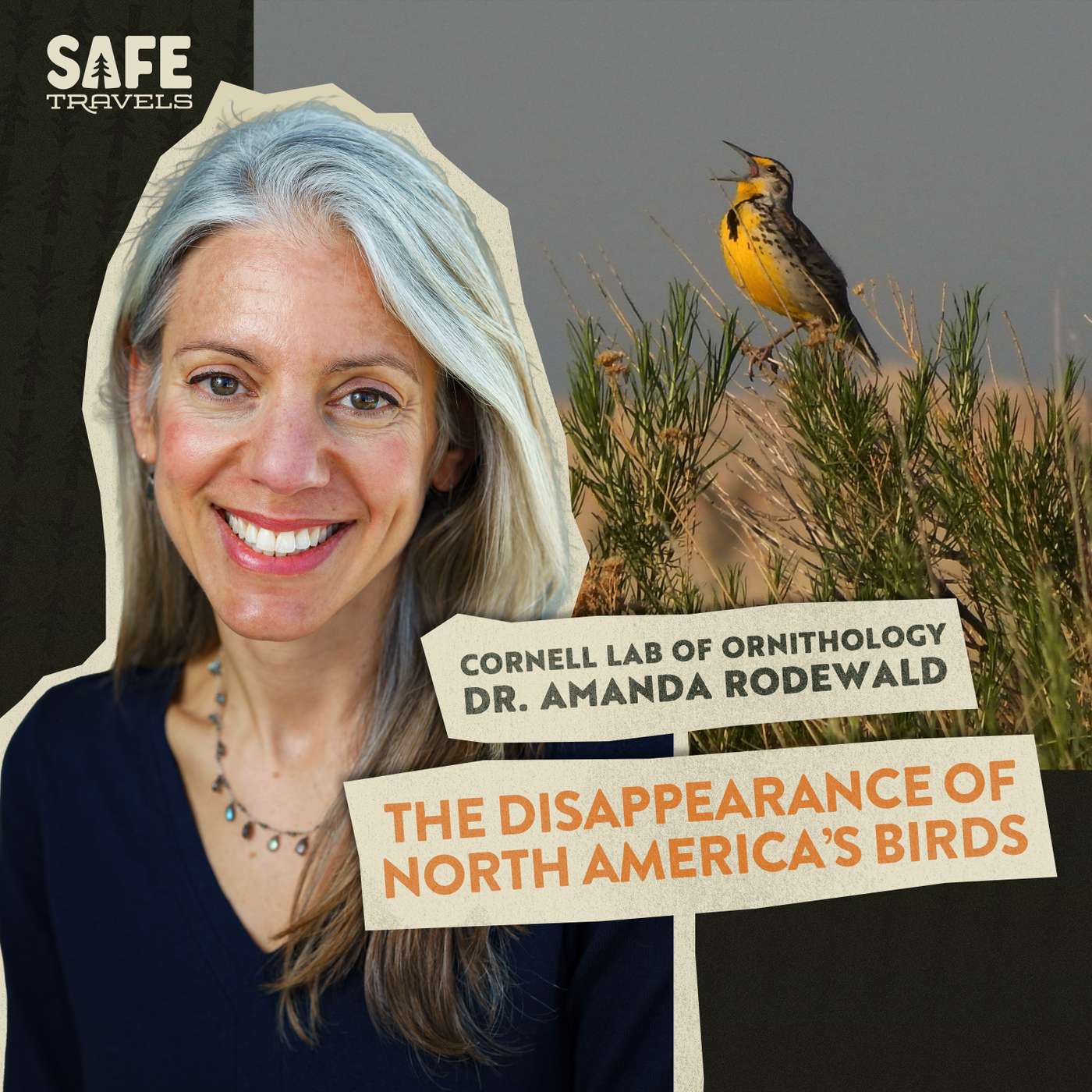
North America has lost 3 billion birds. What does that mean for us? With Dr. Amanda Rodewald
Since 1970, North America has lost nearly three billion birds. That's almost one in every three birds that once inhabited the continent. But what does that loss tell us about the health of our ecosystems? And what does it mean for the people who share those environments? In this episode of the Safe Travels Podcast, I sit down with Dr. Amanda Rodewald, Senior Director of the Center for Avian Population Studies at the Cornell Lab of Ornithology. One of the worlds leading voices in avian ecology and conservation science, Amanda has spent her career studying how birds respond to changes in their environments and how we can better protect the ecosystems we all depend on. We discuss the landmark 2019 study that documented the loss of nearly three billion birds across the United States and Canada, why those declines are continuing, and how habitat loss, industrial agriculture, pollution, and climate change are reshaping bird populations. We also explore the fascinating ways birds have adapted to living alongside humans, from pigeons nesting on city buildings to peregrine falcons thriving in urban environments. Amanda shares an unexpected example of how the decline of vultures in India has been connected to increases in feral dogs and human rabies cases, illustrating just how interconnected the natural world can be. But this conversation isn't just about what's being lost. We discuss conservation success stories like the recovery of peregrine falcons and bald eagles, the importance of community science, and how everyday people can contribute to our understanding of bird populations. And perhaps most importantly, Amanda explains why protecting birds and protecting human health aren't competing priorities. They're deeply connected. In this episode, we discuss: The landmark 2019 study that found nearly three billion fewer birds in North America since 1970 Why common birds are experiencing significant population declines The latest research into bird population trends and the importance of eBird How industrial agriculture, habitat fragmentation, pollution, and climate change affect bird populations How pigeons, peregrine falcons, and chimney swifts have adapted to human-made environments The surprising relationship between vultures, feral dogs, and human health in India Whether unusual bird sightings and changing migration patterns are connected to climate change How conservation efforts helped bring peregrine falcons and bald eagles back from the brink Why birdwatching and listening to birdsong can benefit our mental and physical health How everyday people can contribute to bird conservation through eBird and community science About Dr. Amanda Rodewald: Dr. Amanda Rodewald is the Garvin Professor and Senior Director of the Center for Avian Population Studies at the Cornell Lab of Ornithology. Her research focuses on how wildlife populations and ecosystems respond to human-driven environmental changes, including land use, climate change, and invasive species. Through her work, she helps connect scientific research with practical conservation solutions that benefit both people and biodiversity. Support Safe Travels: patreon.com/safetravelspod Website: https://safetravelspod.com Thank you so much to Patreon supporters: Dan Batson Bonita Wyke William Lonnberg Ian Coulter