Skip to content
Artwork for YaleCourses
EducationSociety & CulturePhilosophy

YaleCourses

YaleCourses

Yale's philosophy of teaching and learning begins with the aim of training a broadly based, highly disciplined intellect without specifying in advance how that intellect will be used. The Yale Courses channel provides entry into the core of the University--its classrooms and academic programs--including complete sets of lectures from the Open Yale Courses initiative. Complementary syllabi, transcripts, and other resources may also be accessed from the Open Yale Courses website listed below.

Links:
online.yale.edu: http://online.yale.edu

Play
  • 519 episodes
  • Avg 41 min
  • English
Counted on this page — what you have heard stays on this device, so it is not something the list can be paged by.
  • Saturday · 1 hr 19 min

    3. The Dark Ages (cont.)

    Introduction to Ancient Greek History (CLCV 205) In this lecture, Professor Kagan addresses what scholars call the Homeric question. He asks: what society do Homer's poems describe? He argues that in view of the long oral transmission of the poems, the poems of Homer probably reflect various ages from the Mycenaean world to the Dark Ages. More importantly, close scrutiny of the poems will yield historical information for the historian. In this way, one is able to reconstruct through the poems, to a certain extent, the post-Mycenaean world. Finally, Professor Kagan says a few words on the heroic ethic of the Greek world. 00:00 - Chapter 1. The Importance of Homeric Poems 13:08 - Chapter 2. The Society Described in Homer's Poems 35:49 - Chapter 3. Political Structures 52:26 - Chapter 4. Ethics and Values Complete course materials are available at the Open Yale Courses website: http://open.yale.edu/courses This course was recorded in Fall 2007. Learn more about your ad choices. Visit megaphone.fm/adchoices

  • Saturday · 44 min

    22. Paradise Regained, Books III-IV

    Milton (ENGL 220) In this second lecture on Paradise Regained, the three temptations are examined and Milton's unusual departure from their account in the Gospel of Luke is discussed. The poem's tacit assertion of the superiority of knowledge and ethics over action is probed. Considerable time is spent examining the Son's rejection of classical literature. Finally, Book Four's allusion to the riddle of the sphinx serves as a springboard to a consideration of the poem's Oedipal elements. 00:00 - Chapter 1. Introduction: The Notion of Identity in Paradise Regained and "Paradise Lost" 03:48 - Chapter 2. Who is John Milton? 10:31 - Chapter 3. The Three Temptations of the Son of God by Satan 42:33 - Chapter 4. Oedipus and the Sphinx's Riddle Complete course materials are available at the Open Yale Courses website: http://open.yale.edu/courses This course was recorded in Fall 2007. Learn more about your ad choices. Visit megaphone.fm/adchoices

  • Saturday · 9 min

    903 | How to Standardize Your Processes for Growth - Social Entrepreneurship Course

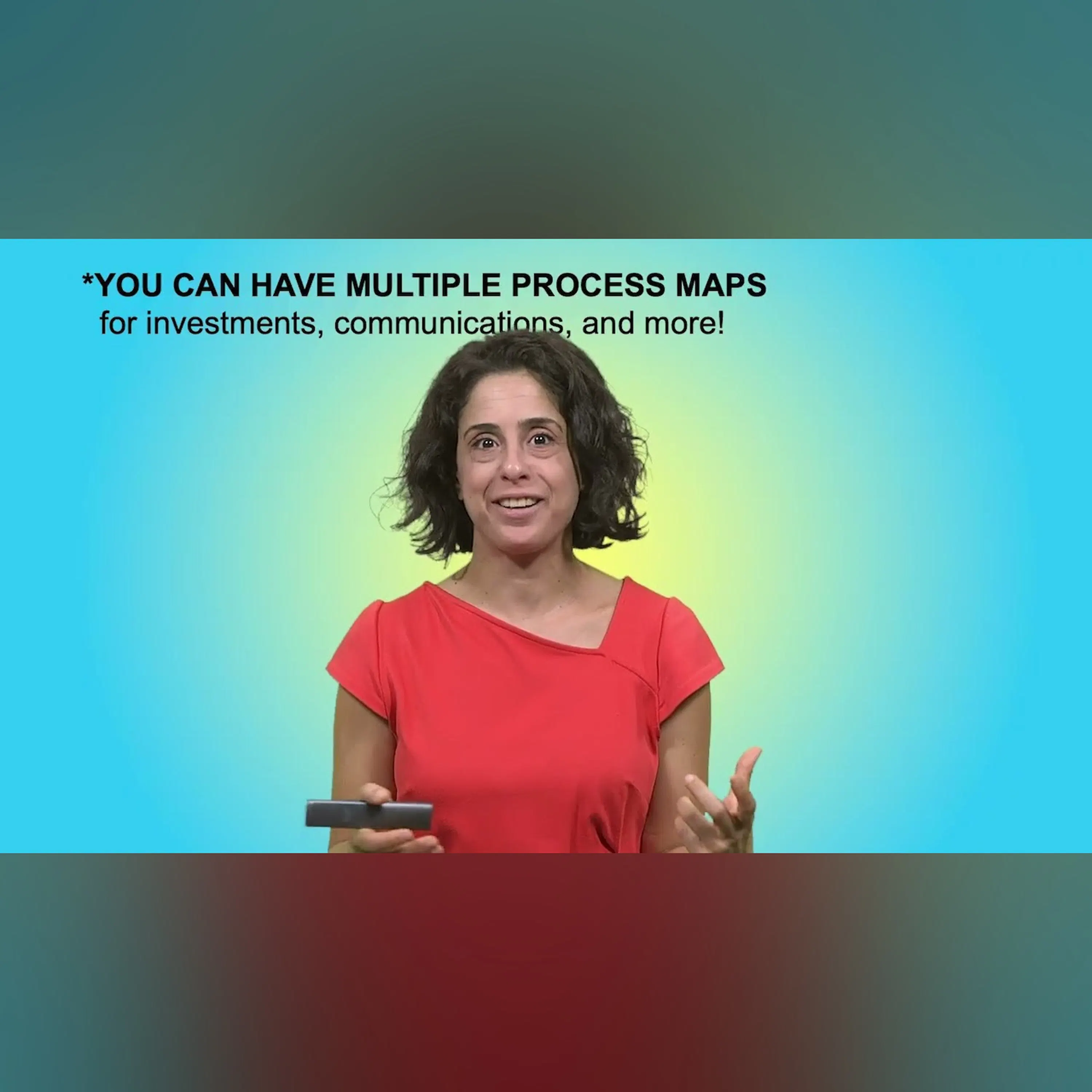
    In this lesson, discover how standardizing your processes is essential for scaling your social venture and ensuring its long-term sustainability beyond the founders. We explore the critical role of operations management, the power of process mapping, and the implementation of policies and manuals to professionalize your organization and maximize its impact. 🎯 Learning Objectives • Understand the purpose of standardizing processes to ensure organizational endurance and growth. • Define operations as the management of your social venture's value chain and daily activities. • Learn how process mapping standardizes decision points and steps for delivering your offering. • Identify other crucial tools for standardization, including policies, procedures, and manuals. • Recognize how professionalizing processes supports team expansion and maximizes impact. 📚 About the Course Have you ever wondered what it would be like to create real change? You don't have to start your own organization to make a difference in the world. Everyone can learn the social entrepreneurship mindset and skillset to build social impact. In this course, you will immerse yourself in a social or environmental challenge you want to tackle. You'll start by researching your topic of choice, talking to people, and ideating a potential solution that you can contribute. Then, you'll build a business model around that solution, understanding concepts like measuring social change, ensuring financial viability, funding and pitching. This course is a safe space to experiment and explore. You'll be guided by a ten stage framework to help structure your journey. Along the way, you'll hear from social entrepreneurs around the world through case studies and campus conversations. These include Yale alumni, members of the New Haven community, and global changemakers. Everyone is welcome to join this course! You can apply your lived, learned, or professional experience to discover how you're going to make a difference. 📺 Watch the full playlist on YouTube: https://www.youtube.com/playlist?list=PLh9mgdi4rNezbi0aRJeVnt99ynTVZG1PL 🎓 Enroll on Coursera for assessments and a certificate: https://online.yale.edu/courses/creating-change-through-social-entrepreneurship 🌐 Explore more learning opportunities on Yale Online: https://online.yale.edu/courses/creating-change-through-social-entrepreneurship #SocialEntrepreneurship #YaleCourse #Impact #Changemakers #BusinessPlan #DesignThinking Learn more about your ad choices. Visit megaphone.fm/adchoices

  • Saturday · 1 hr 12 min

    12. Evolutionary stability: social convention, aggression, and cycles

    Game Theory (ECON 159) We apply the idea of evolutionary stability to consider the evolution of social conventions. Then we consider games that involve aggressive (Hawk) and passive (Dove) strategies, finding that sometimes, evolutionary populations are mixed. We discuss how such games can help us to predict how behavior might vary across settings. Finally, we consider a game in which there is no evolutionary stable population and discuss an example from nature. 00:00 - Chapter 1. Monomorphic and Polymorphic Populations Theory: Definition 30:50 - Chapter 2. Monomorphic and Polymorphic Populations Theory: Hawk vs. Dove 50:00 - Chapter 3. Monomorphic and Polymorphic Populations Theory: Discussion 55:39 - Chapter 4. Monomorphic and Polymorphic Populations Theory: Identification and Testability Complete course materials are available at the Yale Online website: online.yale.edu This course was recorded in Fall 2007. Learn more about your ad choices. Visit megaphone.fm/adchoices

  • Saturday · 14 min

    9.6 | What is Statistical Significance? Clinical Trials Explained - Medical Software Course

    Have you ever wondered what 'statistically significant' truly means in a clinical trial? In this lesson, we demystify this critical concept, differentiating it from real-world clinical importance. We'll explore the foundational mathematical techniques useful for designing and interpreting clinical trials, including the process of hypothesis testing, the role of p-values, the t-test, and how sample size influences our conclusions. We'll also examine the historical context of the p 0.05 threshold. Our goal is for you to confidently understand the vocabulary and methods behind these crucial statistical analyses. 🎯 Learning Objectives • Distinguish between real and statistical significance in clinical trials • Understand the core principles of hypothesis testing, including the null hypothesis • Explain how p-values are calculated and interpreted to determine statistical significance • Describe the components and application of an unpaired T-test • Recognize the impact of sample size on statistical significance and trial power Learn more about your ad choices. Visit megaphone.fm/adchoices

  • Saturday · 15 min

    10.5 | Medical Software's Lifespan: Maintenance and Safe Retirement Strategy | Medical Software Course

    Have you considered the full lifespan of medical software beyond its initial release? In this lesson, we delve into the often-overlooked yet critical phases of medical software maintenance and retirement. You'll learn why maintenance is the longest and most challenging part of a software's life, involving continuous updates, bug fixes, and urgent cybersecurity patches. We'll also explore the controlled and deliberate process of retiring software, from providing ample warning to ensuring secure data migration and privacy protection as systems reach their end-of-life. 🎯 Learning Objectives • Understand the importance and challenges of medical software maintenance throughout its lifecycle. • Identify the key steps and procedures involved in effective software maintenance, including problem analysis and risk evaluation. • Recognize the critical role of cybersecurity in continuous software maintenance and vulnerability reporting. • Explain the structured process of medical software retirement and decommissioning, including providing customer support and safeguarding data privacy. • Appreciate the complexities of maintaining legacy code and the impact of clean coding practices. Learn more about your ad choices. Visit megaphone.fm/adchoices

  • Saturday · 22 min

    11.1 | Demystifying AI and ML: A Core Introduction for Medical Software Course

    What exactly are Artificial Intelligence and Machine Learning, and how do they apply to the critical field of medical software? In this lesson, we dive into the foundational concepts of AI and ML, exploring their definitions, applications, and the unique challenges they present when integrated into healthcare systems. We also touch upon the crucial regulatory aspects and the distinction between supervised learning, classification, and regression. This introduction lays the groundwork for understanding how these powerful technologies are shaping the future of medical diagnostics and treatment. 🎯 Learning Objectives • Define Artificial Intelligence (AI), Machine Learning (ML), and Deep Learning within the medical software context. • Understand the fundamental concepts of supervised learning, including its training and application phases. • Differentiate between classification and regression as common machine learning applications. • Identify key challenges in implementing machine learning, such as data scarcity, high dimensionality, and overfitting. • Recognize the importance of regulatory considerations for AI/ML in medical software. Learn more about your ad choices. Visit megaphone.fm/adchoices
  • Saturday · 1 hr 8 min

    3. Iterative deletion and the median-voter theorem

    Game Theory (ECON 159) We apply the main idea from last time, iterative deletion of dominated strategies, to analyze an election where candidates can choose their policy positions. We then consider how good is this classic model as a description of the real political process, and how we might build on it to improve it. Toward the end of the class, we introduce a new idea to get us beyond iterative deletion. We think about our beliefs about what the other player is going to do, and then ask what is the best strategy for us to choose given those beliefs? 00:00 - Chapter 1. Iterative Deletion of Dominated Strategies: The Median Voter Theorem 27:25 - Chapter 2. Iterative Deletion of Dominated Strategies: Problems with The Median Voter Theorem 35:07 - Chapter 3. Iterative Deletion of Dominated Strategies: Robustness of The Median Voter Theorem 39:11 - Chapter 4. Best Response Complete course materials are available at the Yale Online website: online.yale.edu This course was recorded in Fall 2007. Learn more about your ad choices. Visit megaphone.fm/adchoices

  • Saturday · 12 min

    11.5 | Navigating Singapore AI/ML Med Device Regs: A Dive into Guidelines — Medical Software Course

    How are AI/ML medical devices regulated in Singapore? In this lesson, we take a detailed look at the Health Sciences Authority's (HSA) regulatory guidelines for software medical devices, focusing specifically on artificial intelligence and machine learning applications. We'll explore the unique requirements for pre-market submissions, delve into considerations for continuously learning systems, and understand the critical aspects of post-market monitoring to ensure safety and effectiveness. 🎯 Learning Objectives • Understand Singapore's regulatory framework for AI/ML medical devices. • Identify key pre-market submission requirements for AI-MDs, including dataset and model documentation. • Explain considerations for continuously learning AI/ML systems, such as bias prevention and rollback capabilities. • Describe the importance of post-market monitoring for AI/ML medical devices to prevent performance drift. • Recognize the challenges and future outlook for regulating AI/ML in medical software. Learn more about your ad choices. Visit megaphone.fm/adchoices

  • Saturday · 1 hr 17 min

    20. The Peloponnesian War, Part II (cont.)

    Introduction to Ancient Greek History (CLCV 205) In this lecture, Professor Kagan examines Pericles as a general. First, he describes Pericles' strategy of war and then he evaluates this strategy. According to Professor Kagan, Pericles' strategy was characterized by being both defensive and rational. It was defensive, because the Athenians did not engage the Spartans in a traditional hoplite battle, and it was rational, because Pericles assumed that the Spartans would cease fighting when they realized that the Athenians did not have to fight a land battle, since they had a walled city and a navy. On its surface, this strategy seems reasonable, but Professor Kagan points out that there were two flaws. First, the Athenians did not have an offensive plan: that is, a plan to deter the Spartans from quitting the war. Second, Pericles failed to realize that war is not always rational. 00:00 - Chapter 1. Pericles and His Strategy 16:27 - Chapter 2. Modern Scholars' Views on Pericles 26:04 - Chapter 3. Criticism of Pericles as a Military Leader 40:54 - Chapter 4. Pericles' Other Obstacles 53:47 - Chapter 5. Question and Answer Complete course materials are available at the Open Yale Courses website: http://open.yale.edu/courses This course was recorded in Fall 2007. Learn more about your ad choices. Visit megaphone.fm/adchoices

  • Saturday · 1 hr 20 min

    16. Athenian Democracy (cont.)

    Introduction to Ancient Greek History (CLCV 205) In this lecture, Professor Kagan continues to discuss the constitution of Athens. In particular, he explores the judicial workings of Athens. He describes in detail the effort of the Athenians to create a system of justice that would not only minimize tampering, in order to insure justice, but also maximize citizen participation. After this discussion, Professor Kagan comments on the role of women in Athens by looking at two types of sources. The picture that emerges is considerably complex and left without resolution. Finally, he comments on the role of slaves. In each of these discussions, he draws illuminating analogies to our modern society. 00:00 - Chapter 1. Organization of Athenian Democracy: The Judicial 09:51 - Chapter 2. Flaws in the Athenian Democratic System 40:20 - Chapter 3. Women's Roles in Athenian Society 54:16 - Chapter 4. Slavery in Athenian Society 01:07:37 - Chapter 5. Question and Answer Complete course materials are available at the Open Yale Courses website: http://open.yale.edu/courses This course was recorded in Fall 2007. Learn more about your ad choices. Visit megaphone.fm/adchoices

  • Saturday · 58 min

    15. Lincoln, Leadership, and Race: Emancipation as Policy

    The Civil War and Reconstruction (HIST 119) Professor Blight follows Robert E. Lee's army north into Maryland during the summer of 1862, an invasion that culminated in the Battle of Antietam, fought in September of 1862. In the wake of Antietam, Abraham Lincoln issued his preliminary Emancipation Proclamation, a document that changed the meaning of the war forever. Professor Blight suggests some of the ways in which Americans have attempted to come to grips with the enigmatic Lincoln, and argues that, in the end, it may be Lincoln's capacity for change that was his most important characteristic. The lecture concludes with the story of John Washington, a Virginia slave whose concerted action suggests the central role American slaves played in securing their own freedom. 00:00 - Chapter 1. Introduction: Turning Points in the Civil War 07:42 - Chapter 2. Robert E. Lee's Assumptions on Moving North 15:55 - Chapter 3. The Battle of Antietam 25:07 - Chapter 4. Lincoln's Personal Views on Slavery and Historical Legacy 35:11 - Chapter 5. Slave Conscription and the Emancipation Proclamation 47:35 - Chapter 6. The Story of John Washington and Conclusion Complete course materials are available at the Open Yale Courses website: http://open.yale.edu/courses This course was recorded in Spring 2008. Learn more about your ad choices. Visit megaphone.fm/adchoices

  • Saturday · 11 min

    11.2 | Evaluate ML Methods Ethically: Avoid P-Hacking for Reprod. Results | Medical Software Course

    In this lesson, we delve into the critical aspects of evaluating machine learning methods and the vital importance of data integrity. We'll explore fundamental concepts like separate training and testing sets, cross-validation techniques, and the significant challenge of 'p-hacking' that can undermine research reproducibility. Understanding these issues is crucial for developing robust and trustworthy medical software. 🎯 Learning Objectives • Understand the core principles of evaluating machine learning models. • Differentiate between training and testing data, and the importance of generalization. • Explain K-fold and leave-one-out cross-validation techniques. • Recognize the prevalence and impact of data cleaning in real-world machine learning applications. • Define 'p-hacking' and its implications for the reliability and reproducibility of machine learning research. Learn more about your ad choices. Visit megaphone.fm/adchoices

  • Saturday · 1 hr 18 min

    10. The Rise of Athens

    Introduction to Ancient Greek History (CLCV 205) In this lecture, Professor Kagan finishes up his description of the Spartan constitution. He argues that Sparta had a mixed constitution and gained great power due to alliances that the Spartans made with their neighbors. After the discussion of Sparta, Professor Kagan examines Athens and the development of the Athenian constitution. In addition, he shows how different these two poleis were. Finally, Professor Kagan discusses the emergence of the hoplite class in Athens and the failure of Cylon to make himself tyrant of Athens. 00:00 - Chapter 1. The Spartan Assembly 10:53 - Chapter 2. The Spartan Alliance 26:32 - Chapter 3. Motivations for Sparta's Foreign Policy 34:38 - Chapter 4. The Rise of Athens 46:09 - Chapter 5. Early Athenian Society 01:07:34 - Chapter 6. Cylon's Failed Coup d'État Complete course materials are available at the Open Yale Courses website: http://open.yale.edu/courses This course was recorded in Fall 2007. Learn more about your ad choices. Visit megaphone.fm/adchoices

  • Saturday · 14 min

    9.7 | From Guinness to Clinical Trials: The Story of T-Distribution | Medical Software Course

    Ever wondered where the t-distribution came from? In this lesson, we conclude our exploration of statistical significance by delving into the fascinating history of the t-distribution, born out of the Guinness Brewery. We then transition to its crucial role in modern clinical trials, explaining power analysis, type I and type II errors, and the importance of sample size. Finally, we discuss critical caveats and common misinterpretations of statistical significance and p-values. 🎯 Learning Objectives • Explore the historical origins of the t-distribution, including its connection to the Guinness Brewery. • Understand the characteristics of the t-distribution, particularly its "fatter tails" and higher probability of extreme values. • Learn about power analysis and its use in determining appropriate sample sizes for clinical trials. • Differentiate between Type I and Type II errors and grasp the concept of statistical power. • Recognize the limitations and common misinterpretations of statistical significance, including the issue of p-hacking. Learn more about your ad choices. Visit megaphone.fm/adchoices

  • Saturday · 56 min

    13. Toni Morrison, The Bluest Eye

    The American Novel Since 1945 (ENGL 291) Professor Hungerford draws a contrast between Toni Morrison and most of the writers studied up to this point in the course by pointing out how, for an African-American woman writer in particular, language is a site of violence. For all of her power to recuperate the voices of the oppressed, the novelist must be wary of the ways that breaking the silence, too, can constitute an act of invasion. As in the case of Pynchon, the word in The Bluest Eye enacts a near-physical touch; this is its pleasure and its danger. With inimitable complexity and grace, Morrison weaves her narrative around a young black girl who, in the void of her social persona, constructs a beautiful and poisonous fiction. 00:00 - Chapter 1. Morrison's Politics: The Other Side of the 1960s 07:16 - Chapter 2. Choosing a Form: Morrison's Use of the Novel 16:40 - Chapter 3. Complicated Sympathy: Cholly Breedlove 31:15 - Chapter 4. Negativities: The Other Engine of Narrative 42:56 - Chapter 5. Reading, Rape and Race: Poison in the Canon Complete course materials are available at the Open Yale Courses website: http://open.yale.edu/courses This course was recorded in Spring 2008. Learn more about your ad choices. Visit megaphone.fm/adchoices

  • Saturday · 1 hr 13 min

    5. The Rise of the Polis (cont.)

    Introduction to Ancient Greek History (CLCV 205) In this lecture, Professor Donald Kagan tells the story of the emergence of the polis from the Dark Ages. He shows that by the time of the poet Hesiod, there is already a polis in place. He describes the importance of the polis in the Greek world and explains that it was much more than a mere place of habitation; it was a place where there was justice, law, community, and a set of cultural values that held Greeks together. Finally, Professor Kagan argues, following the lead of Victor David Hanson, that the polis came to be chiefly through the emergence of a new man: the hoplite farmer. 00:00 - Chapter 1. The Polis in Hesiod's Work 22:01 - Chapter 2. The Citizen 26:32 - Chapter 3. Greek Farmers and the Function of the Polis 36:12 - Chapter 4. Property Holding and Internal Colonization 42:26 - Chapter 5. The New Farm 57:09 - Chapter 6. Politics Complete course materials are available at the Open Yale Courses website: http://open.yale.edu/courses This course was recorded in Fall 2007. Learn more about your ad choices. Visit megaphone.fm/adchoices

  • Saturday · 1 hr 15 min

    6. Efficient Markets vs. Excess Volatility

    Financial Markets (ECON 252) Several theories in finance relate to stock price analysis and prediction. The efficient markets hypothesis states that stock prices for publicly-traded companies reflect all available information. Prices adjust to new information instantaneously, so it is impossible to "beat the market." Furthermore, the random walk theory asserts that changes in stock prices arise only from unanticipated new information, and so it is impossible to predict the direction of stock prices. Using statistical tools, we can attempt to test the hypotheses and to predict future stock prices. These tests show that efficient markets theory is a half-truth: it is difficult but not impossible for some people to beat the market. 00:00 - Chapter 1. Last Thoughts on Insurance and Catastrophe Bonds 06:28 - Chapter 2. Information Access and the Efficient Markets Hypothesis 20:00 - Chapter 3. Varying Degrees of Efficient Markets and No Dividends: The Case of First Federal Financial 41:44 - Chapter 4. The Random Walk Theory 51:30 - Chapter 5. The First Order Auto-regressive Model 56:59 - Chapter 6. Challenges in Forecasting the Market Complete course materials are available at the Open Yale Courses website: http://open.yale.edu/courses This course was recorded in Spring 2008. Learn more about your ad choices. Visit megaphone.fm/adchoices

  • Saturday · 20 min

    11.6 | Navigating AI/ML Challenges in Medical Software Development — Medical Software Course

    In this lesson, Professor John Onofrey delves into the unique practical issues and challenges that Artificial Intelligence and Machine Learning applications encounter throughout the medical software life cycle. He contrasts these with traditional software development, highlighting the critical role of training data, risk assessment from sources like distributional shifts and adversarial attacks, and the necessity for robust system design to manage the inherent 'black box' nature and potential failures of AI/ML models in clinical settings. 🎯 Learning Objectives • Differentiate the unique requirements and challenges of AI/ML applications within the medical software life cycle from traditional software. • Identify and understand critical risk factors for AI/ML systems, such as distributional shifts, adversarial attacks, and performance drift. • Explain the intrinsic link between training data, model development, and the importance of reproducibility and quality control. • Articulate the concept of treating AI/ML components as "unsafe" and designing robust systems with failure mitigation strategies, including human-in-the-loop approaches. • Describe the distinct workflows for training and deploying AI/ML models and the need for continuous post-market monitoring. Learn more about your ad choices. Visit megaphone.fm/adchoices

  • Saturday · 1 hr 22 min

    16. Backward induction: reputation and duels

    Game Theory (ECON 159) In the first half of the lecture, we consider the chain-store paradox. We discuss how to build the idea of reputation into game theory; in particular, in setting like this where a threat or promise would otherwise not be credible. The key idea is that players may not be completely certain about other players' payoffs or even their rationality. In the second half of the lecture, we stage a duel, a game of pre-emption. The key strategic question in such games is when; in this case, when to fire. We use two ideas from earlier lectures, dominance and backward induction, to analyze the game. Finally we discuss two biases found in Americans: overconfidence and over-valuing being pro-active. 00:00 - Chapter 1. Establishing a Reputation: Selten's Chain Store Paradox 20:56 - Chapter 2. Establishing a Reputation: Discussion 25:18 - Chapter 3. Dueling: Game Setup 34:04 - Chapter 4. Dueling: Game Analysis 45:42 - Chapter 5. Dueling: Finding a Solution 01:11:24 - Chapter 6. Dueling: Generalization Complete course materials are available at the Yale Online website: online.yale.edu This course was recorded in Fall 2007. Learn more about your ad choices. Visit megaphone.fm/adchoices

Showing 121–140 of 519 episodes