Skip to content
Artwork for YaleCourses
EducationSociety & CulturePhilosophy

YaleCourses

YaleCourses

Yale's philosophy of teaching and learning begins with the aim of training a broadly based, highly disciplined intellect without specifying in advance how that intellect will be used. The Yale Courses channel provides entry into the core of the University--its classrooms and academic programs--including complete sets of lectures from the Open Yale Courses initiative. Complementary syllabi, transcripts, and other resources may also be accessed from the Open Yale Courses website listed below.

Links:
online.yale.edu: http://online.yale.edu

Play
  • 618 episodes
  • Avg 42 min
  • English
Counted on this page — what you have heard stays on this device, so it is not something the list can be paged by.
  • September 29 · 3 min

    What bigger problem is your purpose already pointing to? | Connected Leadership

    Your purpose, impact statement, and team strategy pyramid already hint at the system you care about. Use this exercise to surface a system you want to learn about or change, anchored in the personal why you've developed through the course. Key topics: - Revisiting the purpose worksheet for system clues - Mining your impact statement for bigger ideas - Vision and mission as system signals - Choosing a system you care deeply about - Purpose as the connective tissue across self, team, and system 📚 About the Course: This course is designed to maximize your ability to create change at the individual, team and system levels. Through study, reflection, and deploying practical tools, you will establish a firm connection between your clearly articulated Purpose, effective Priorities, visualized Potential for success, and pathway to maximized Progress. But, what does that mean in practice? When you take this course, you will: Improve your ability to get the most out of life: Learn a simple practice to reflect on your purpose, clarify priorities, visualize your potential, and maximize your effectiveness at progressing towards your goals. Strengthen your leadership toolkit: Tap into your unique leadership style and strengths and join or create a community of others to maximize your potential as a team. Create change through systems thinking: Become a more effective agent of positive change and appreciate the power and complexity of system thinking. Course Takeaways: Improve your ability to get the most out of life Strengthen your leadership toolkit Practice and apply systems thinking to plan for change 📺 Watch the full playlist on YouTube: https://www.youtube.com/playlist?list=PLh9mgdi4rNezZEnhZC8dS3AvTnzOiB0Ij 🎓 Enroll on Coursera for assessments and a certificate: https://www.coursera.org/learn/connected-leadership 🌐 Explore more learning opportunities on Yale Online: https://online.yale.edu/courses/connected-leadership Learn more about your ad choices. Visit megaphone.fm/adchoices
  • September 29 · 1 hr 15 min

    5. Nash equilibrium: bad fashion and bank runs

    Game Theory (ECON 159) We first define formally the new concept from last time: Nash equilibrium. Then we discuss why we might be interested in Nash equilibrium and how we might find Nash equilibrium in various games. As an example, we play a class investment game to illustrate that there can be many equilibria in social settings, and that societies can fail to coordinate at all or may coordinate on a bad equilibrium. We argue that coordination problems are common in the real world. Finally, we discuss why in such coordination problems--unlike in prisoners' dilemmas--simply communicating may be a remedy. 00:00 - Chapter 1. Nash Equilibrium: Definition 09:31 - Chapter 2. Nash Equilibrium: Examples 23:13 - Chapter 3. Nash Equilibrium: Relation to Dominance 31:53 - Chapter 4. Pareto Efficient Equilibria in Coordination Games: The Investment Game 53:11 - Chapter 5. Pareto Efficient Equilibria in Coordination Games: Other Examples Complete course materials are available at the Yale Online website: online.yale.edu This course was recorded in Fall 2007. Learn more about your ad choices. Visit megaphone.fm/adchoices

  • September 29 · 48 min

    19. Democracy and Participation: Rousseau's Discourse

    Introduction to Political Philosophy (PLSC 114) The discussion on the origins of inequality in the Second Discourse continues. This lecture focuses on amour-propre, a faculty or a disposition that is related to a range of psychological characteristics such as pride, vanity, and conceit. The Social Contract is subsequently discussed with an emphasis on the concept of freedom and how one's desire to preserve one's freedom is often in conflict with that of others to protect and defend their own. General will becomes Rousseau's solution to the problem of securing individual liberty. 00:00 - Chapter 1. "Amour-Propre": The Most Durable Cause of Inequality 20:15 - Chapter 2. Civilization and Its DIscontents 32:06 - Chapter 3. The Social Contract Complete course materials are available at the Open Yale Courses website: http://open.yale.edu/courses This course was recorded in Fall 2006. Learn more about your ad choices. Visit megaphone.fm/adchoices

  • September 29 · 1 hr 17 min

    23. The Second Law of Thermodynamics and Carnot's Engine

    For more information about Professor Shankar's book based on the lectures from this course, Fundamentals of Physics: Mechanics, Relativity, and Thermodynamics, visit http://bit.ly/1jFIqNu. Fundamentals of Physics (PHYS 200) Why does a dropped egg that spatters on the floor not rise back to your hands even though no laws prohibit it? The answer to such irreversibility resides the Second Law of Thermodynamics which explained in this and the next lecture. The Carnot heat engine is discussed in detail to show how there is an upper limit to the efficiency of heat engines and how the concept of entropy arises from macroscopic considerations. 00:00 - Chapter 1. Recap of First Law of Thermodynamics and Macroscopic State Properties 13:22 - Chapter 2. Defining Specific Heats at Constant Pressure and Volume 26:01 - Chapter 3. Adiabatic Processes 43:57 - Chapter 4. The Second Law of Thermodynamics and the Concept of Entropy 59:02 - Chapter 5. The Carnot Engine Complete course materials are available at the Yale Online website: online.yale.edu This course was recorded in Fall 2006. Learn more about your ad choices. Visit megaphone.fm/adchoices

  • September 29 · 5 min

    Self-Awareness and the Johari Window | Connected Leadership with Peter Boyd

    The Johari window is a classic 2x2 that helps leaders expand their open and free area while shrinking blind spots and masks. This lesson explains the four quadrants and how to use the model to grow emotional intelligence in yourself and your team. Key topics: - The Johari window: arena, mask, blind spot, and unknown - Expanding the open and free area appropriately - Reducing your mask to build trust and shared norms - Narrowing blind spots through feedback and assessments - Cultural considerations in self-disclosure - Sketching your own arena and your team's 📚 About the Course: This course is designed to maximize your ability to create change at the individual, team and system levels. Through study, reflection, and deploying practical tools, you will establish a firm connection between your clearly articulated Purpose, effective Priorities, visualized Potential for success, and pathway to maximized Progress. But, what does that mean in practice? When you take this course, you will: Improve your ability to get the most out of life: Learn a simple practice to reflect on your purpose, clarify priorities, visualize your potential, and maximize your effectiveness at progressing towards your goals. Strengthen your leadership toolkit: Tap into your unique leadership style and strengths and join or create a community of others to maximize your potential as a team. Create change through systems thinking: Become a more effective agent of positive change and appreciate the power and complexity of system thinking. Course Takeaways: Improve your ability to get the most out of life Strengthen your leadership toolkit Practice and apply systems thinking to plan for change 📺 Watch the full playlist on YouTube: https://www.youtube.com/playlist?list=PLh9mgdi4rNezZEnhZC8dS3AvTnzOiB0Ij 🎓 Enroll on Coursera for assessments and a certificate: https://www.coursera.org/learn/connected-leadership 🌐 Explore more learning opportunities on Yale Online: https://online.yale.edu/courses/connected-leadership Learn more about your ad choices. Visit megaphone.fm/adchoices

  • September 29 · 4 min

    System Examples to Test Your Understanding | Connected Leadership with Peter Boyd

    What separates a true system from a pile of parts? Walk through everyday examples like a car, a tree, and a rugby game to apply Donella Meadows' simple test for recognizing when something is a system rather than just stuff or silos. Key topics: - Quick review of what defines a system - Cars and car parts: system versus collection - Natural and human-made systems side by side - Why a rugby game stays the same game with different players - Meadows' four questions for identifying a system 📚 About the Course: This course is designed to maximize your ability to create change at the individual, team and system levels. Through study, reflection, and deploying practical tools, you will establish a firm connection between your clearly articulated Purpose, effective Priorities, visualized Potential for success, and pathway to maximized Progress. But, what does that mean in practice? When you take this course, you will: Improve your ability to get the most out of life: Learn a simple practice to reflect on your purpose, clarify priorities, visualize your potential, and maximize your effectiveness at progressing towards your goals. Strengthen your leadership toolkit: Tap into your unique leadership style and strengths and join or create a community of others to maximize your potential as a team. Create change through systems thinking: Become a more effective agent of positive change and appreciate the power and complexity of system thinking. Course Takeaways: Improve your ability to get the most out of life Strengthen your leadership toolkit Practice and apply systems thinking to plan for change 📺 Watch the full playlist on YouTube: https://www.youtube.com/playlist?list=PLh9mgdi4rNezZEnhZC8dS3AvTnzOiB0Ij 🎓 Enroll on Coursera for assessments and a certificate: https://www.coursera.org/learn/connected-leadership 🌐 Explore more learning opportunities on Yale Online: https://online.yale.edu/courses/connected-leadership Learn more about your ad choices. Visit megaphone.fm/adchoices

  • September 29 · 5 min

    Why your brain can only hold 3 to 5 priorities | Connected Leadership

    Go deeper on the rocks that should fill your jar by tying them to purpose, naming them with care, and limiting your list to a memorable three to five. Includes the research behind the magic number and a personal example for crafting a vivid rock name. Key topics: - Linking rocks to your sense of purpose - Rocks as arenas of time, not targets - Naming rocks with powerful nouns and adjectives - Why three to five priorities fit working memory - Elaborating what's inside each rock - Comparing rocks with a buddy 📚 About the Course: This course is designed to maximize your ability to create change at the individual, team and system levels. Through study, reflection, and deploying practical tools, you will establish a firm connection between your clearly articulated Purpose, effective Priorities, visualized Potential for success, and pathway to maximized Progress. But, what does that mean in practice? When you take this course, you will: Improve your ability to get the most out of life: Learn a simple practice to reflect on your purpose, clarify priorities, visualize your potential, and maximize your effectiveness at progressing towards your goals. Strengthen your leadership toolkit: Tap into your unique leadership style and strengths and join or create a community of others to maximize your potential as a team. Create change through systems thinking: Become a more effective agent of positive change and appreciate the power and complexity of system thinking. Course Takeaways: Improve your ability to get the most out of life Strengthen your leadership toolkit Practice and apply systems thinking to plan for change 📺 Watch the full playlist on YouTube: https://www.youtube.com/playlist?list=PLh9mgdi4rNezZEnhZC8dS3AvTnzOiB0Ij 🎓 Enroll on Coursera for assessments and a certificate: https://www.coursera.org/learn/connected-leadership 🌐 Explore more learning opportunities on Yale Online: https://online.yale.edu/courses/connected-leadership Learn more about your ad choices. Visit megaphone.fm/adchoices

  • September 29 · 53 min

    23. Edward P. Jones, The Known World (cont.)

    The American Novel Since 1945 (ENGL 291) In this second lecture on The Known World, Professor Hungerford addresses Edward P. Jones's ambitious and ambivalent relation to literacy. Jones shows us the power of narrative to bring together the fragmentation of the world, but is at the same time deeply aware of the fragility of text, all of the ways it can be destroyed, misinterpreted, abused, or lost. The son of an illiterate mother, Jones--who, it seems, composed and memorized large portions of The Known World before setting anything down in print--models a form of literary self-consciousness infused with the moral dilemmas of slavery and freedom that is unique among contemporary novels. 00:00 - Chapter 1. Meditations on the Difficulty of Writing: The Right-to-Left Directionality of Creation 13:43 - Chapter 2. The Fragile Power of Text: Insubstantiality of Freedom 20:45 - Chapter 3. The Complicity of Creation 24:58 - Chapter 4. The Durability of Plastic Arts: Augustus's Carving and Alice's Weaving 33:32 - Chapter 5. Edward P. Jones's Authorial Project: Weaving Unity into the Fragmented Modern Narrative Complete course materials are available at the Open Yale Courses website: http://open.yale.edu/courses This course was recorded in Spring 2008. Learn more about your ad choices. Visit megaphone.fm/adchoices

  • September 29 · 6 min

    601 | Why Measuring Outcomes is Crucial for Social Change - Social Entrepreneurship Course

    In this module, you'll delve into the fundamental importance of measuring outcomes in social entrepreneurship. Learn why it's vital to define success early on and continuously track your progress for both internal evaluation and transparent communication with stakeholders, understanding the nuanced difference between outcomes and the commonly used term 'impact'. 🎯 Learning Objectives • Understand the critical role of measuring outcomes in social entrepreneurship. • Identify the internal and external reasons for defining and tracking success metrics. • Differentiate between the technical terms "outcomes" and "impact" in social change measurement. • Recognize that measuring outcomes should be an inherent, integrated part of your venture from its inception. 📚 About the Course Have you ever wondered what it would be like to create real change? You don't have to start your own organization to make a difference in the world. Everyone can learn the social entrepreneurship mindset and skillset to build social impact. In this course, you will immerse yourself in a social or environmental challenge you want to tackle. You'll start by researching your topic of choice, talking to people, and ideating a potential solution that you can contribute. Then, you'll build a business model around that solution, understanding concepts like measuring social change, ensuring financial viability, funding and pitching. This course is a safe space to experiment and explore. You'll be guided by a ten stage framework to help structure your journey. Along the way, you'll hear from social entrepreneurs around the world through case studies and campus conversations. These include Yale alumni, members of the New Haven community, and global changemakers. Everyone is welcome to join this course! You can apply your lived, learned, or professional experience to discover how you're going to make a difference. 📺 Watch the full playlist on YouTube: https://www.youtube.com/playlist?list=PLh9mgdi4rNezbi0aRJeVnt99ynTVZG1PL 🎓 Enroll on Coursera for assessments and a certificate: https://online.yale.edu/courses/creating-change-through-social-entrepreneurship 🌐 Explore more learning opportunities on Yale Online: https://online.yale.edu/courses/creating-change-through-social-entrepreneurship #SocialEntrepreneurship #YaleCourse #Impact #Changemakers #BusinessPlan #DesignThinking Learn more about your ad choices. Visit megaphone.fm/adchoices

  • September 29 · 1 hr 15 min

    13. Lorentz Transformation

    For more information about Professor Shankar's book based on the lectures from this course, Fundamentals of Physics: Mechanics, Relativity, and Thermodynamics, visit http://bit.ly/1jFIqNu. Fundamentals of Physics (PHYS 200) This lecture offers detailed analysis of the Lorentz transformations which relate the coordinates of an event in two frames in relative motion. It is shown how length, time and simultaneity are relative. 00:00 - Chapter 1. Describing an Event with Two Observers 33:58 - Chapter 2. The Relativity of Simultaneity 41:57 - Chapter 3. Time Dilation 53:41 - Chapter 4. The Twin Paradox 01:00:02 - Chapter 5. Length Contraction Complete course materials are available at the Yale Online website: online.yale.edu This course was recorded in Fall 2006. Learn more about your ad choices. Visit megaphone.fm/adchoices

  • September 29 · 9 min

    302 | What is Knowledge Equity? Why Lived Experience Matters - Social Entrepreneurship Course

    This lesson introduces the vital concept of knowledge equity, highlighting how different forms of knowledge, particularly lived experience, are crucial for effective social entrepreneurship. Through examples like Mariam, a social entrepreneur in a Lebanese refugee camp, and Baljeet Sandhu's 'Lived Experience Movement,' it emphasizes the importance of empowering those directly impacted by challenges to lead solution development, rather than imposing external ideas. 🎯 Learning Objectives • Define knowledge equity and its importance in social entrepreneurship. • Understand why centering change initiatives on lived experience leads to more effective solutions. • Learn how to identify, support, and amplify the work of lived experience leaders. • Recognize the equal value of learned, professional, and lived experiences in addressing social challenges. 📚 About the Course Have you ever wondered what it would be like to create real change? You don't have to start your own organization to make a difference in the world. Everyone can learn the social entrepreneurship mindset and skillset to build social impact. In this course, you will immerse yourself in a social or environmental challenge you want to tackle. You'll start by researching your topic of choice, talking to people, and ideating a potential solution that you can contribute. Then, you'll build a business model around that solution, understanding concepts like measuring social change, ensuring financial viability, funding and pitching. This course is a safe space to experiment and explore. You'll be guided by a ten stage framework to help structure your journey. Along the way, you'll hear from social entrepreneurs around the world through case studies and campus conversations. These include Yale alumni, members of the New Haven community, and global changemakers. Everyone is welcome to join this course! You can apply your lived, learned, or professional experience to discover how you're going to make a difference. 📺 Watch the full playlist on YouTube: https://www.youtube.com/playlist?list=PLh9mgdi4rNezbi0aRJeVnt99ynTVZG1PL 🎓 Enroll on Coursera for assessments and a certificate: https://online.yale.edu/courses/creating-change-through-social-entrepreneurship 🌐 Explore more learning opportunities on Yale Online: https://online.yale.edu/courses/creating-change-through-social-entrepreneurship #SocialEntrepreneurship #YaleCourse #Impact #Changemakers #BusinessPlan #DesignThinking Learn more about your ad choices. Visit megaphone.fm/adchoices

  • September 29 · 4 min

    Faculty Spotlight: Elizabeth Doyle | Yale School of Nursing Continuing Education Online

    Meet Elizabeth Doyle of the Yale School of Nursing. 👋 Through Yale School of Nursing Continuing Education Online, healthcare professionals can access flexible, evidence-based learning designed to help them stay current with the latest advances in diabetes care. Insulin Therapy and Type 2 Diabetes Pharmacology are now available, with additional modules coming soon. Learn more at https://bit.ly/4xKkGjD Learn more about your ad choices. Visit megaphone.fm/adchoices

  • September 29 · 53 min

    13. The Sovereign State: Hobbes' Leviathan

    Introduction to Political Philosophy (PLSC 114) Hobbes' most famous metaphor, that of "the state of nature," is explained. It can be understood as the condition of human life in the absence of authority or anyone to impose rules, laws, and order. The concept of the individual is also discussed on Hobbesian terms, according to which the fundamental characteristics of the human beings are the capacity to exercise will and the ability to choose. Hobbes, as a moralist, concludes that the laws of nature, or "precepts of reason," forbid us from doing anything destructive in life. 00:00 - Chapter 1. Hobbes on Individuality 09:49 - Chapter 2. Hobbes' Skeptical View of Knowledge 14:11 - Chapter 3. The State of Nature 23:14 - Chapter 4. Pride and Fear: Passions that Dominate Human Nature 29:09 - Chapter 5. The Laws of Nature Complete course materials are available at the Open Yale Courses website: http://open.yale.edu/courses This course was recorded in Fall 2006. Learn more about your ad choices. Visit megaphone.fm/adchoices

  • September 29 · 54 min

    1. Introductions

    The American Novel Since 1945 (ENGL 291) In this first lecture Professor Hungerford introduces the course's academic requirements and some of its central concerns. She uses a magazine advertisement for James Joyce's Ulysses and an essay by Vladimir Nabokov (author of Lolita, a novel on the syllabus) to establish opposing points of view about what is required to be a competent reader of literature. The contrast between popular emotional appeal and detached artistic judgment frames literary debates from the Modernist, and through the post-45 period. In the second half of lecture, Hungerford shows how the controversies surrounding the publication of Richard Wright's Black Boy highlight the questions of truth, memory, and autobiography that will continue to resurface throughout the course. 00:00 - Chapter 1. Introduction: Major Themes 08:07 - Chapter 2. Course Requirements 13:43 - Chapter 3. How To Read: On Joyce and Nabokov 29:30 - Chapter 4. Introduction to Richard Wright's "Black Boy": Autobiography and Editorial Influence 43:58 - Chapter 5. Conclusions: "Black Boy" and Major Course Themes Complete course materials are available at the Open Yale Courses website: http://open.yale.edu/courses This course was recorded in Spring 2008. Learn more about your ad choices. Visit megaphone.fm/adchoices

  • September 29 · 1 hr 13 min

    2. Vectors in Multiple Dimensions

    For more information about Professor Shankar's book based on the lectures from this course, Fundamentals of Physics: Mechanics, Relativity, and Thermodynamics, visit http://bit.ly/1jFIqNu. Fundamentals of Physics (PHYS 200) In this lecture, Professor Shankar discusses motion in more than one dimension. Vectors are introduced and discussed in multiple dimensions. Vector magnitude and direction are also explained. Null vectors, minus vectors, unit and velocity vectors are discussed along with their properties. Finally, several specific problems are solved to demonstrate how vectors can be added, and problems of projectile motion are expounded. 00:00 - Chapter 1. Review of Motion at Constant Acceleration 04:45 - Chapter 2. Vector Motion 2D Space: Properties 22:57 - Chapter 3. Choice of Basis Axis and Vector Transformation 38:20 - Chapter 4. Velocity Vectors: Derivatives of Displacement Vectors 43:40 - Chapter 5. Derivatives of Vectors: Application to Circular Motion 54:00 - Chapter 6. Projectile Motion Complete course materials are available at the Yale Online website: online.yale.edu This course was recorded in Fall 2006. Learn more about your ad choices. Visit megaphone.fm/adchoices

  • September 29 · 18 min

    Real World System Change Examples and Takeaways | Connected Leadership with Peter Boyd

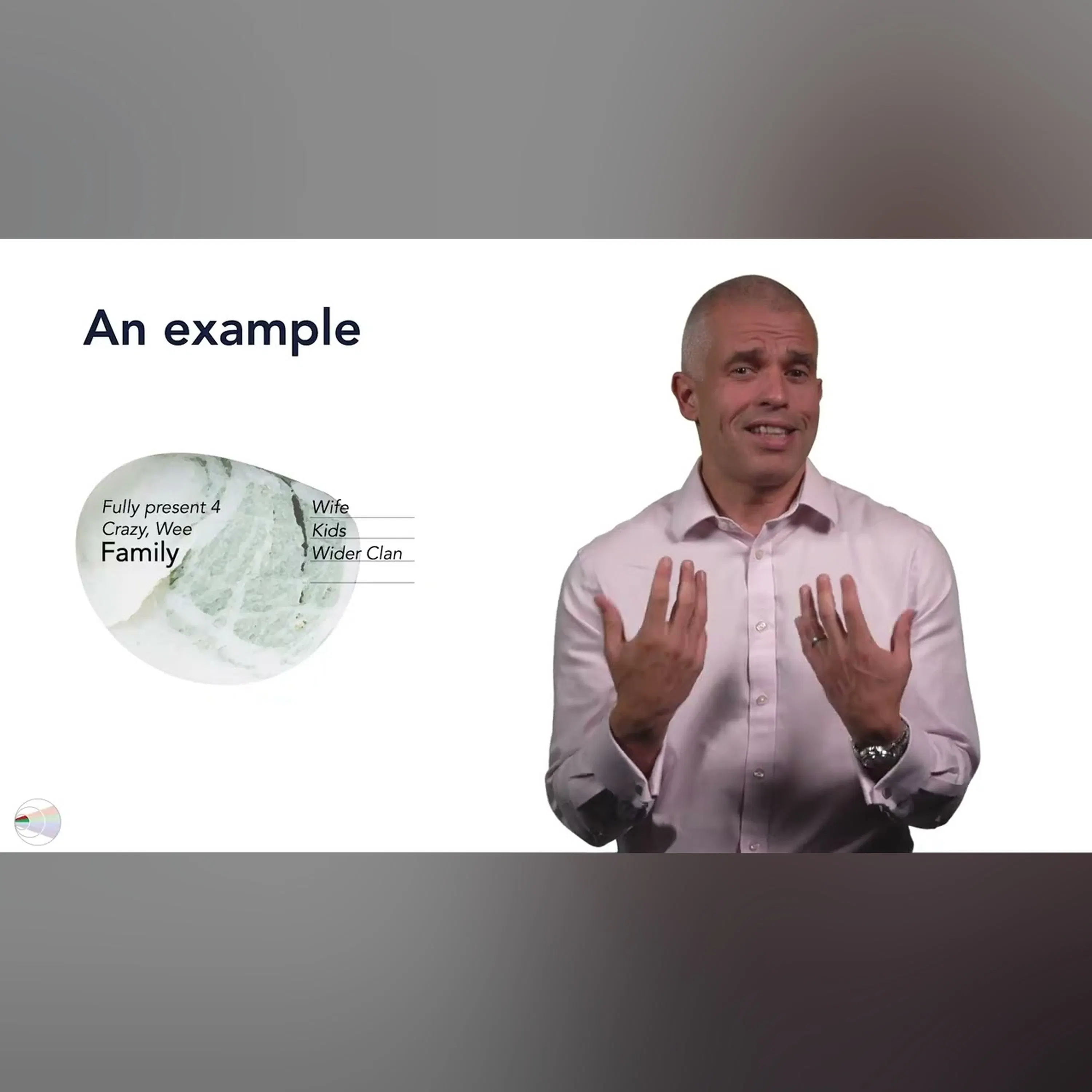
    See systems thinking in action through Peter Boyd's work on Carbon War Room shipping efficiency, net-zero definitions, and tropical deforestation. Each story shows how to find leverage points, go deep on the iceberg, and turn wicked problems into actionable plans. Key topics: - Carbon War Room and clean shipping at gigaton scale - Information, demand, and finance as leverage points - A current and desired iceberg for the shipping industry - Defining cumulative, science-based net-zero - Reframing tropical deforestation with rainforest nations - Engaging skeptical leaders through fresh framings 📚 About the Course: This course is designed to maximize your ability to create change at the individual, team and system levels. Through study, reflection, and deploying practical tools, you will establish a firm connection between your clearly articulated Purpose, effective Priorities, visualized Potential for success, and pathway to maximized Progress. But, what does that mean in practice? When you take this course, you will: Improve your ability to get the most out of life: Learn a simple practice to reflect on your purpose, clarify priorities, visualize your potential, and maximize your effectiveness at progressing towards your goals. Strengthen your leadership toolkit: Tap into your unique leadership style and strengths and join or create a community of others to maximize your potential as a team. Create change through systems thinking: Become a more effective agent of positive change and appreciate the power and complexity of system thinking. Course Takeaways: Improve your ability to get the most out of life Strengthen your leadership toolkit Practice and apply systems thinking to plan for change 📺 Watch the full playlist on YouTube: https://www.youtube.com/playlist?list=PLh9mgdi4rNezZEnhZC8dS3AvTnzOiB0Ij 🎓 Enroll on Coursera for assessments and a certificate: https://www.coursera.org/learn/connected-leadership 🌐 Explore more learning opportunities on Yale Online: https://online.yale.edu/courses/connected-leadership Learn more about your ad choices. Visit megaphone.fm/adchoices
  • September 29 · 1 hr 27 min

    13. The Athenian Empire

    Introduction to Ancient Greek History (CLCV 205) In this lecture, Professor Kagan traces the development and the power of the Persian empire. He also shows how the Persian empire and the Greek world eventually came into conflict through a few incidents concerning Ionian Greeks in Asia Minor, which eventually turned into the Persian Wars. Professor Kagan ends this lecture with a description of the events of the battle of Marathon in which the Athenians defeated the Persians. 00:00 - Chapter 1. The Rise of the Persian Empire 15:07 - Chapter 2. Clashes with the Persian Empire 32:40 - Chapter 3. The Beginning of the Persian Wars 37:37 - Chapter 4. Further Developments Leading to the War with Persia 49:47 - Chapter 5. The Battle of Marathon Complete course materials are available at the Open Yale Courses website: http://open.yale.edu/courses This course was recorded in Fall 2007. Learn more about your ad choices. Visit megaphone.fm/adchoices

  • September 29 · 1 hr 22 min

    22. Repeated games: cheating, punishment, and outsourcing

    Game Theory (ECON 159) In business or personal relationships, promises and threats of good and bad behavior tomorrow may provide good incentives for good behavior today, but, to work, these promises and threats must be credible. In particular, they must come from equilibrium behavior tomorrow, and hence form part of a subgame perfect equilibrium today. We find that the grim strategy forms such an equilibrium provided that we are patient and the game has a high probability of continuing. We discuss what this means for the personal relationships of seniors in the class. Then we discuss less draconian punishments, and find there is a trade off between the severity of punishments and the required probability that relationships will endure. We apply this idea to a moral-hazard problem that arises with outsourcing, and find that the high wage premiums found in foreign sectors of emerging markets may be reduced as these relationships become more stable. 00:00 - Chapter 1. Repeated Interaction: The Grim Trigger Strategy in the Prisoner's Dilemma (Continued) 29:21 - Chapter 2. The Grim Trigger Strategy: Generalization and Real World Examples 37:56 - Chapter 3. Cooperation in Repeated Interactions: The "One Period Punishment" Strategy 53:09 - Chapter 4. Cooperation in Repeated Interactions: Repeated Moral Hazard 01:13:53 - Chapter 5. Cooperation in Repeated Interactions: Conclusions Complete course materials are available at the Yale Online website: online.yale.edu This course was recorded in Fall 2007. Learn more about your ad choices. Visit megaphone.fm/adchoices

  • September 29 · 45 min

    21. Vietnam and Algeria

    France Since 1871 (HIST 276) France's colonial territories were of very high importance after the embarrassment of occupation during World War II. Algeria, in particular, was a complicated case because it involved large numbers of French settlers, the pieds-noirs. Despite international support for Algerian independence, right-wing factions in the military and among the colonizers remained committed to staying the course. After Charles de Gaulle presided over French withdrawal, the cause of the pieds-noirs has remained divisive in French political life, particularly on the right. 00:00 - Chapter 1. Decolonization After the Second World War 05:13 - Chapter 2. Vietnamese Independence: Ho Chi Minh and the Vietminh 14:31 - Chapter 3. The Algerian Case: The Colons versus the Front de Libération Nationale 21:18 - Chapter 4. The Fight for North Africa: Rise of Right-Wing Military Control 29:09 - Chapter 5. De Gaulle's Return to Power: Betrayal of the Army, the Exit from Algeria Complete course materials are available at the Open Yale Courses website: http://open.yale.edu/courses This course was recorded in Fall 2007. Learn more about your ad choices. Visit megaphone.fm/adchoices

  • September 29 · 45 min

    24. In Defense of Politics

    Introduction to Political Philosophy (PLSC 114) This final lecture of the course is given "in defense of politics." First, the idea and definition of "politics" and the "political" are discussed with reference to the ideas of Immanuel Kant and twentieth-century political scientists, novelists, and philosophers such as Bernard Crick, E. M. Forster, and Carl Schmitt. Patriotism, nationalism, and cosmopolitanism are also addressed as integral parts of political life. Finally, the role of educators--and "old books"--is discussed as essential to developing a proper understanding of the political. 00:00 - Chapter 1. Bernard Crick: "In Defense of Politics" 03:55 - Chapter 2. E. M. Forster: PatriotIsm and Loyalty 07:29 - Chapter 3. Carl Schmitt and Aristotle: Patriotism and Loyalty 12:24 - Chapter 4. Immanuel Kant: Transpolitical Cosmopolitanism 16:17 - Chapter 5. Schmitt vs. Kant: NationalIsm vs. Cosmopolitanism 25:45 - Chapter 6. Ethos of the American Regime 33:05 - Chapter 7. Where Should the Study of Political Science Be Today? Who Should Educate the Educators? Complete course materials are available at the Open Yale Courses website: http://open.yale.edu/courses This course was recorded in Fall 2006. Learn more about your ad choices. Visit megaphone.fm/adchoices

Showing 481–500 of 618 episodes