Skip to content
Artwork for WTF Bach
MusicMusic CommentaryEducation

WTF Bach

Evan Shinners

J.S. Bach explained — music analysis, Baroque history, counterpoint and performance practice. A classical music podcast for listeners who want to understand what they're hearing. Weekly analysis of Bach's music: Well-Tempered Clavier, Brandenburg Concertos, St. Matthew Passion and more. Classical music education for all levels.

wtfbach.substack.com
Play
  • 22 episodes
  • weekly
  • Avg 50 min
  • English
Counted on this page — what you have heard stays on this device, so it is not something the list can be paged by.
  • Tuesday · 1 hr 5 min

    145: Der Herr denket an uns, BWV 196

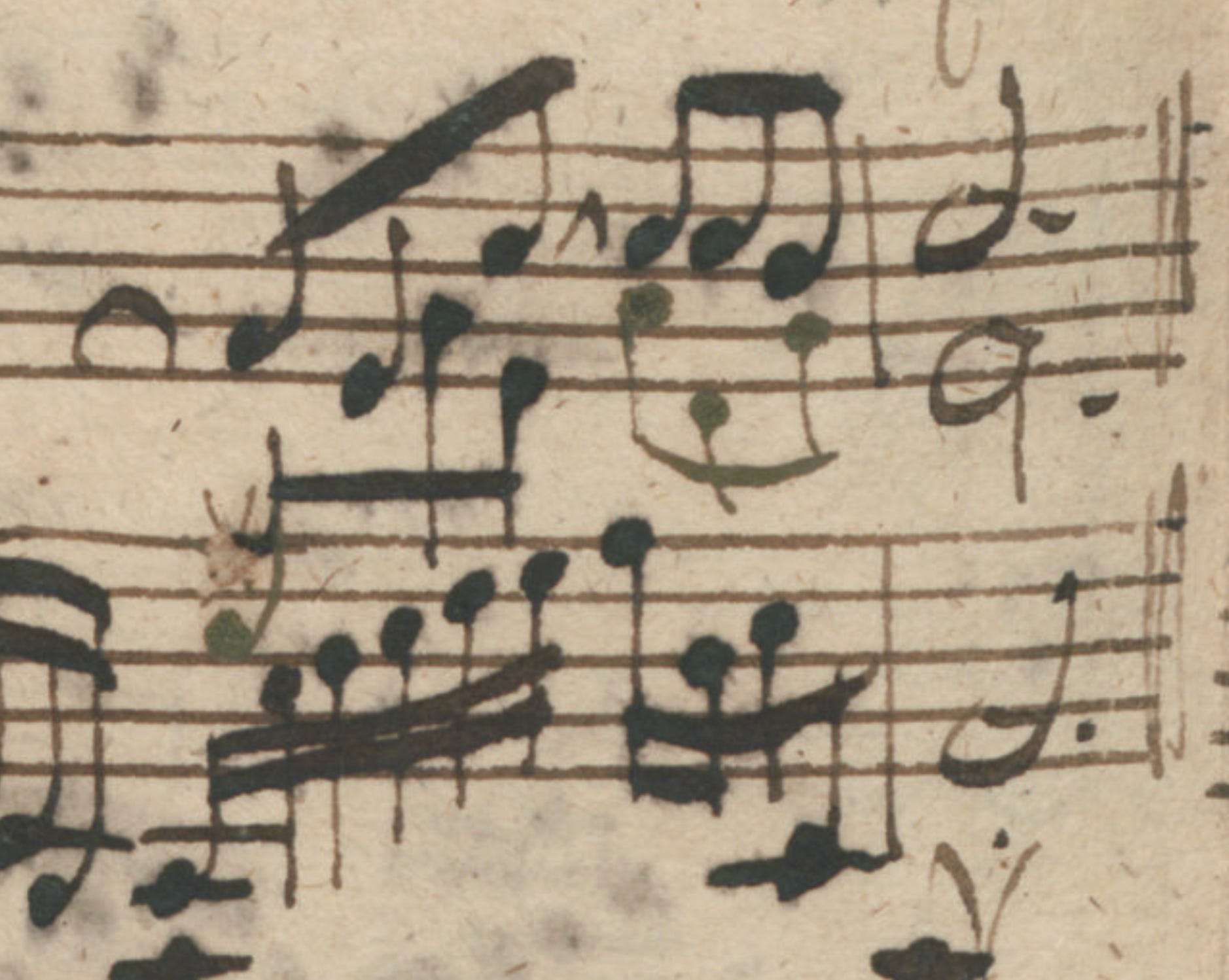
    Bach married his second cousin, Maria Barbara, on October 17, 1707, in St. Bartholomäi’s Church (pictured in the cover image) in a charming little village called Dornheim. They were both 22. According to Spitta, some eight months later, Bach and Maria returned to that same church to attend the wedding of the man who had officiated their own: Johann Lorenz Stauber. J.S. Bach carried with him the parts to a cantata, and this work was heard for the first time in June, 1708. …or so the legend goes. Modern scholarship calls Spitta’s anecdote into question, but in any case, Der Herr denket an uns BWV 196, is one of Bach’s earliest vocal works. Despite being from the same period as the other cantatas we recently covered, the work might show more outward signs of being similar to Bach’s later cantatas: we get a da capo aria for the first time, and the choruses only figure into the first and last movements. We see no sudden shifts of tempo, and movements are clear cut. The only abrupt change of texture comes in the second movement: ‘The lord blesses us.’ Segnet uns. Bach will set the word ‘bless’ differently in every movement. Notice how the soprano soloist amplifies the Lord’s blessings: Despite these examples, the cantata fails to impress us the same way his other early cantatas do. Instead, we take joy in the fugal writing in the outer movements. The finale of the opening chorus is a fugue where the subject is never absent. A glance at a few pages shows this: The closing movement features a fugue with two subjects on the word, Amen! I called the first theme the ‘stomping theme’ and the second theme the ‘climbing theme’ —whatever helps you understand the distinct shapes. When looking for wedding ideas to back up Spitta’s story (though we must be aware of confirmation bias!) I might see the musical representation of two separate figures, always appearing together, never one without the other: Bach adds a classic ‘early Bach’ touch at the end, ending the entire cantata piano, disappearing with a whisper: Write That Fugue! We Rely Exclusively on Paid Subscriptions! Help WTF Bach endure:Join at WTFBach.comThis is the only place Evan checks comments regularly.You can also make a one-time donation here:https://www.paypal.me/wtfbachhttps://venmo.com/wtfbachThank you for your help! Concepts Covered: Bach's Cantata BWV 196, Der Herr denket an uns (The Lord Thinks of Us), one of only seven surviving cantatas from Bach’s earliest period. The traditional story behind the piece — Bach wrote it as a wedding gift for the pastor who had officiated his own marriage to Maria Barbara — and examines why modern scholarship casts doubt on that account, since the text itself doesn't clearly point to a wedding occasion. Bach draws his libretto directly from Psalm 115, making this one of the textually simplest cantatas in his early output, how a single rising melodic motif ties together the Sinfonia, arias, and choruses. Bach's word painting on the recurring word "bless" (segnet), walks through the construction of the cantata's central choral fugue, and highlights the soprano aria's use of da capo form — possibly the earliest example of that structure in Bach's output. Vokaleinbau ‘vocal insertion’ might be used here for the first time. The cantata's final movement, a double fugue built on two contrasting ‘Amen’ subjects, other early stylistic features and analysis. Get full access to W.T.F. Bach? at wtfbach.substack.com/subscribe

  • August 18 · 25 min

    144: Why (And How) I Became An Organist

    Opsimath Organist My first trip to Germany (I was 21) I walked into a church in Weimar and heard— by beautiful coincidence— an unseen organist play Bach’s Passacaglia and Fugue, BWV 582. This was a piece I heard for the first time only a year before. I remember exactly in which chair I first heard it. If the Chaconne is Bach’s universe tightly wound into a handheld box, the Passacaglia is a different vision of the same, exploding through thousands of pipes. It is a piece you cannot overlook when thinking of the crowning achievements in Bach’s career. At 21, I knew Bach was Bach, but I hadn’t yet dedicated myself to him fully. Even so, I knew Bach’s organ works could be the supreme solo musical activity: the most complete musical experience had by a single person. Think about it: it’s making music with all four limbs, drumming on multiple keyboards. The soundboard of this instrument is a church. But I was a pianist, not an organist. At that young age, I had already excluded myself from being able to participate in certain musical activities. Why? Where did I get this notion? Knowing your limitations is healthy in many areas of life, but in music— especially young musicians— you should know: your potential is unlimited. I don’t know how or why one draws the line at what a student can and cannot do, why some teachers restrain enthusiasm, or make students feel limited to certain areas from a young age. I’d guess it’s a mixture of abuse and a fear of money. Abuse is handed down: the teacher was told they can’t do X, soon the student learns to stay away from X. ‘It deepens like a continental shelf.’ We glorify abuse on the screen: teachers inflicting suffering so the student may rise stronger after being broken… but this makes for a good film— not a good life. To actually teach like this is nothing more than sophisticated child abuse. As I’ve said on the show in my ‘advice to musical teens,’ if you ever find a teacher who leaves you feeling worthless or unhappy with music, leave that teacher immediately. There is no reason why a musical education shouldn’t be full of joy and happiness and discovery. Yes, hard work, too, but under the right teacher, hard work can be a joy, not a punishment. One objects, saying a line must be drawn early in order to mold the student into an employable musician. “You should focus on only one instrument, kid.” In an era of specialization, this seems almost necessary. But is the ultimate goal of music a job? Money? A c-a-r-e-e-r? My colleagues reading this can confirm that many of us in the business have lost the spark that initially made us want to become musicians. But I won’t harp on the perils of ‘building a career’ or the traumatic musical upbringing I experienced. I want to focus on how, during my few decades in music, I have time and time again doubted my abilities, only to find that there was no reason for doing so. Rather than passing the blame, I’d like to revisit these moments and focus on how I overcame such a crippling emotion. Become Your Best Buxtehude. Support W.T.F. Bach. Transposition I remember learning a concerto when I was 16 or so— probably Mozart or Beethoven, and I was trying to memorize a section that happened earlier, only now it was in a new key. I explained to my father that, could I transpose, I wouldn’t have to struggle to learn the passage more than once— if I had the type of mind that could transpose. He shrugged and said, ‘so learn how to transpose’ and walked away. That made me mad. What an idiot! I thought. One can’t learn such things. Some are born with the gift of transposition, I wasn’t. Why I thought this at such a young age is a bit sad and confusing (and I’ll resist launching into a rant about how, if a student is advanced enough to play Beethoven, transposing should be something they learned long ago.) For whatever reason, in my mind, I couldn’t transpose. Of course, one does learn how to do such things, and I did— even if it was nearly a decade later. One starts with little things: simple melodies, popular songs, dances… For me the major turning point came when I stopped seeing harmonies as ‘E-flat Major’ or ‘d minor’ but rather as numbers, positions, relations to other chords, ‘this is the sub-dominant’ or ‘this is a whole-step down.’ The name of the chord is meaningless but its number is full of meaning. At one point, transposing seemed unreachable, unimaginable. But one can always learn the most complicated musical thing if you are completely focused on the specific goal for a very long time. I kept a fortune cookie in my nightstand when I was a boy because I thought the image was hilarious, not because I found meaning— but how wise it seems now! ‘If enough people bang their heads on a brick wall, the wall will eventually fall down.’ Rock, and other genres of music The next big obstacle in my thinking came at Juilliard, when my roommate, a jazz musician who was more into the NYC rock scene, asked me to cover for the keyboardist in his punk band. Not only had I never played any music besides classical music, I knew I couldn’t play any other music. (I wonder if the arrogance I had developed about classical music as the ‘pure’ art, was fear masking my inability to partake in any form of more social music. I wonder if this is the arrogance of many…) Whatever the case, my roommate didn’t have my personal obstacles in his head. He didn’t see any reason why I wouldn’t make for a fine punk keyboardist. While most of the songs never had more than a few chords, and there’s nothing ‘technical’ to play, rock music was an absolute education. Never learned from sheet music, finding where and how to improvise, finding a ‘feel’ that is unlike anything in classical music, this was a new world for me that influenced the way I think about music to this day. Again, there was an initial stage of feeling stupid, both musically and socially: all of this can make you feel out of place, but pushing past this doesn’t take very long. Rock music opened up other genres to me, bluegrass, jazz… my forays into these genres helped develop my ear. I learned to play the accordion because I wanted to play with my friends who played bluegrass outside. (The accordion, by the way, expanded my mind: the left side is buttons, organized by circle of fifths. The right side is a normal keyboard. When I realized this is because harmony, the left side, doesn’t move by step like melodies, but moves by fifths, I was forever changed.) I ended up touring with some bands for a few years, playing in settings that undoubtedly made me a better classical musician. If you can handle people spilling beer on you, you can handle an audience clearing their throats. Why I had assumed I couldn’t play rock is maybe not so bad as why I assumed I shouldn’t play rock. Both ideas were built into my identity as a pianist. When I was in the van, driving to grungy venues, playing for $13 a show, when my instrument was missing two of few of the plastic keys it had, was I a pianist? Giant, impossible Bach The next large hurdle deals with those activities that a pianist should do, namely, memorize large amounts of music. When I had heard of Paul Jacob’s triumphant marathon playing the complete organ works, my immediate thought was, ‘I could never do something like that.’ My reaction to Paul’s achievement was one of instant self-doubt. Had someone shrugged like my father, and said, ‘so memorize all of Bach’ I would have said, again, what an idiot! I hadn’t set out to achieve any goal: my marathon started small, with a single volume of The Well-Tempered Clavier., and I didn’t set out to memorize that either, but after two years playing selections in concert, I realized I had performed most of Book Two. Could I memorize all 48? There are rumors of pianists having had all 48 from memory, could I join that club? This was something I never imagined I could do, in fact when I played my first prelude and fugue at 16, I was told it was already too late. A year later and I had done just that. Looking at the density of the counterpoint, I was quite convinced that I had memorized some of Bach’s most complex music, so would the suites come easier? Another year, I had all the suites, the next, all the partitas, on and on until about eight years later, I had memorized Bach’s near-complete keyboard works. I celebrated by playing everything in six five-day, five-hour cycles at the first Bach Store. Were my past self to look at this accomplishment, I’m quite sure he’d say, ‘I could never do something like that.’ This is because it really does look impossible —but it isn’t! It might take nearly ten years of fairly constant dedication, but that time is the blink of an eye, and such discipline stays with you forever. Pianist or keyboardist? I was having an identity crisis: was I a pianist? Or was I into Bach? Are these ideas mutually exclusive? How could I consider myself ‘into Bach’ if I wasn’t familiar with his instruments? Yes, Bach on the piano is a miracle, but a Bach pianist sounds sort of like hypocrisy. I started small: I was given a clavichord by a lovely lady who hadn’t ever used it but as a table. I brought it home and, within seconds— this is an accurate measurement, not an exaggeration— I realized the way I had been fingering Bach and other early music wouldn’t work on such an instrument. Could it be, I asked, that our modern approach would have been completely foreign to Bach? This instant lesson from a clavichord put me in the middle of a dark forest. I set out to tune the clavichord, but I didn’t have a hammer so I used pliers. I broke strings which distressed me immensely at first, but later became a blessing: the world of instrument repair is not something most pianists are familiar with, but it was a world that Bach knew intimately. Learning how to wind a tuning peg, how to tie hitch pin loops, these are skills that put me in direct touch with an older world of musicians who knew how to care and look after their instruments. This gave my musicianship a feeling of competence I never knew about. Again, I wonder, is the disdain with which pianists look down on the humble life of a piano tuner a fear of not knowing how to tune their own piano? Now, the clavichord is a nice transition for pianists because one can still inflect, it is very much like a delicate piano, but the harpsichord is utterly foreign. So was I pianist or Bachian? I went to France to study harpsichord. I am also the proud owner of a harpsichord which I now know how to maintain, tune, repair, voice, even build parts of. But this began with real sadness and frustration, wondering why I’d put myself through such trials. Feeling like a beginner again, and telling myself ‘I can never be a harpsichordist… it’s too late! It’s too late to learn.’ All the skills I now possess began to the sad tune of ‘I can’t do this.’ I was wrong! The king of instruments Once, I was shown into an organ loft where I could go and play for however long I liked. This is a life changing experience— seriously. I urge every musician reading to go into that church you’ve never been in, and ask to play the organ. Even if you can’t play anything but a chord, pull out all the stops and play that chord. You’re not going to break the organ, you’re not being rude. Put yourself in the thick of all that power and you’ll see it is no accidental nickname, ‘the king of instruments.’ I used those few hours to figure out what all the buttons and levers do, playing one stop at a time, completely overwhelmed by the physical vibrations— simply stunned by the force and the arrangement of all the pipes. To sit in the middle of such a machine is awesome. Some readers won’t know that organ pipes are often arranged in a ‘stereo’ fashion, where one pipe is placed on the far left, and the closest half-step is on the complete other side of the loft. So, playing a chromatic scale sounds as if each note is alternating from ear to ear — this is an amazing sensation that should be experienced by every musician. With my interest piqued, but still saddened that I was born ‘pianist,’ I must have mentioned my identity crisis to my wife, who, not plagued by my crippling self-doubt, simply walked into the local London church and mentioned my curiosity. (Nothing anybody could have done for me could have been kinder.) Suddenly I had an instrument! When I first met with the local organist, I assumed he would be a genius like Paul or Helmut Walcha. Again, self-doubt convinced me that I could never measure up to the musicianship of an organist, even the local church organist, but it didn’t take long before I saw that, while he certainly had more physical ease at the instrument, there was little apart from this physicality he could teach me. The local organist was also timid in making repairs on the 250-year-old instrument, but I, from my work with harpsichords and clavichords, was not shy. Soon enough I found myself on the inside of the instrument, tuning flue pipes, voicing reeds, replacing trackers, fixing an organ— feeling deeply connected to Bach. Would my 16-year-old self have adored or despised this vision of me, covered in century-old dust, gently tapping pipes into tune? As for my playing with my feet, I spent only a week or 10 days in London every month. Any progress, therefore, disappeared quickly. I had the same frustrating experience many times: becoming comfortable playing the bass with the feet— not the left hand, a mental gymnastic that must be very familiar to keyboardists. Even after months of practice, this would still take some 24 hours to ‘click.’ By the third day, I had dusted off my brain and was ready to get my legs into shape. Maybe five days later, I was playing organ music— some of it even convincingly! The first time I played, fluently, even the simplest Bach organ piece brought me to tears. Why had I rated such a skill as beyond me? Why don’t other pianists know how to do this? Why did no one encourage this?! What is wrong with the world of music? Playing one page of Bach’s organ music for yourself is worth so much more than a life onstage! Why…?! Why…!? But then, my sojourn done, I couldn’t practice for another three weeks. Progress faded, improvement was slow. I doubted I would ever be able to play the great masterpieces. This frustrating period of two years came to an end when my wife and I settled. I bought an organ console. In addition I was given access (and instantly became the local organist) to several churches in nearby towns (the UK is great for that.) My progress exploded. I had daily access and no excuses now. I began tracking my progress meticulously, noting which pieces I was learning and how fast I could play them. Gradually, as if I were a teenager again, I increased the speed week to week. Since my very first years of learning music, I hadn’t ever permitted myself to go so slowly, to really sound as if I were a complete beginner. My birthday present to myself These days, I meet weekly with another organist in the area and we trade ideas about registration (which combinations of stops to pull) which is an endless art, even on the small organ where we meet. One can never forget the comment about Bach pulling ‘the most unexpected combinations of stops to the organ builder’s horror, but, once heard, they found the most agreeable tones.’ Two weeks ago, after I played the ‘wedge’ prelude and fugue— already a huge accomplishment for me— without saying anything, the organist flipped a few pages to the Passacaglia. I laughed in disbelief— still so full of self-doubt! I went home and began learning it at a very slow tempo. A tempo, by the way, that was already nearly three times what I’d have needed just to get through the notes those first days in London: I used to practice at 20 BPM to the 8th note! There are no shortcuts to learning something new. Learning the Passacaglia, it dawned on me: it was two months before my 40th birthday. I am going to perform the Passacaglia and Fugue before I’m 40. This is where it was all leading. My life, my goals, my work, my passion… I, was going to be that unseen organist in Weimar I heard nearly 20 years before. I was going to travel back, travel through time and pay a visit to my old self, head full of ambitious Beethoven-based goals, and I would drop this orhwurm in his head. What’s more important, fame or your health? Objection: Who has the time to work on such difficult goals in the first place? After all, I’ve got to learn the Nellinini quintet-fantasy next week! I can’t just play organ music in slow motion for months! I read a line in the Tao Teh Ching, ‘What’s more important? Fame or your health?’ This line saw right through me, attacked me, really. It unsettled me but I didn’t know why. I was focused on the conventional path in music: learn big programs, win this award, get this management, A+B+C = career. This is, after all, the way we are told careers happen, unlock one door, then the next one, then the next. But Lao Tze pierced me. Fame or health? What!? Is it a dilemma? He was staring at me with the same eye-twinkle only the enlightened can give you. I suddenly realized why this line upset me: how could I possibly choose fame over health? Health, meaning mental health, meaning going deeply into all that keeps you sane and happy. I had (and continue to have) an inner debate about success and validation— are they the same? Can I be fulfilled accomplishing things I value, or would I be happier reaching goals that other people can see: awards, reputable venues, playing with famous people. Or maybe I don’t value the right things? What you personally call success, vs. what the ‘business’ calls it, these might not be mutually exclusive, but for many of my colleagues— and maybe for Lao Tze— they are. There seemed to be a distinct line between what musicians wanted to be doing, and what they were doing. I’ve heard a depressing amount of times, sentiment like, ‘of course I’d rather stay home and play Bach all day!’ But my colleagues were concerned with an image, or a sort of relevance to their community. Of course they wanted to hole up in a cabin for three years, learning exactly the music they most loved, but when they emerged, the business would have passed them by… But what is this business? I’ve had some colleagues rise to world fame, while others dropped off the face of the earth, and the musicianship, the talent, the hard work, none of that seemed to match proportionally. I was unsettled by the notion of ‘fame’ being something through which others view you, whereas ‘health’ was how the self views the self. ‘Career success’ could emerge or disappear suddenly and without warning, but ‘inner success?’ That would never disappear. Committing to those ideas which meant inner success, dedicating myself to goals that meant ‘health,’ this required the boldest act of leaving self-doubt behind: it meant trusting that I alone could be the judge of my own success, not other people. I’d never trade my ability to play the organ for a concert at Carnegie Hall. And anyhow, if Carnegie Hall is a reflection of the truth in any way, the people who dig deepest into themselves will play there more often than those who pursue the tired avenues of competition, management, labels… Opsimath organist Learning the organ has been the hardest thing I can remember doing. It has taken me back to the beginnings of learning music. I have felt the same states of wonder I felt at nine years old, when I looked at a clef, wondering how it works, counting ledger lines looking for an answer, or writing in one fingering and crossing it out five minutes later. I have sat witnessing my brain form new trenches, uncovering strange habits. I found various rhythms between feet and hands that my body simply refused to do, as if I only just realized I can’t pat my head and rub my belly. These basic problems required such slowing down that I embarrassed my brain by watching how slowly the body was learning. I feel like I’ve lived a second musical education. In this time, I’ve been able to look back on the organ repertoire as I looked at pieces in my childhood: they looked so much bigger back then! Certain measures of the organ repertoire made my jaw drop at the mere thought of being able to play them. Now I play some of them without thinking. So what am I? Where has all this doubt led me? To an organist? A pianist? A harpsichordist? I won’t pretend I am as proficient on the organ as I am on the piano or harpsichord, but after all, I’ve only been seriously practicing for 13 months! But this experience has, above everything, affirmed that I can and, should I continue to set lofty goals — goals which at one point I would have deemed impossible— I will. I performed the Passacaglia (from memory! Thanks, Paul!) two days before my birthday on a program of other organ music no organist would sneeze at. But my next goals are bigger, my next goals I currently think are impossible. Impossible: that is the place to start. Write That Fugue! We rely exclusively on paid subscriptions! Thank you for your help!Join at WTFBach.comYou can also make a one-time donation:https://www.paypal.me/wtfbachhttps://venmo.com/wtfbach Get full access to W.T.F. Bach? at wtfbach.substack.com/subscribe

  • August 11 · 1 hr 2 min

    143: Special Guest, Emma Smith (University of Oxford)

    “For something to be relevant, is it outside of time, or is it somehow speaking to us directly, now?” -Emma Smith Today’s guest is Emma Smith! Professor of Shakespeare studies at the University of Oxford. We discuss the Brook and the Bard, what do they have in common? Are there shared philosophies that helped these two figures to become the most influential in their fields?Hope you enjoy the episode! Here are the some things we chatted about: Parallel career arcs — Both Bach and Shakespeare moved from early imitations of their predecessors through mature masterpieces around the same ages, to unprecedented later styles. They both produced under frequent and practical deadline pressure (the liturgical calendar, the playhouse schedule.) Authorial impersonality, Lack of biographies — Both ‘empty themselves’ into their work rather than projecting a personal voice. Is it this lack of biographical narrative that allows us to see an entire universe? Shakespeare authorship question — There have been attempts to deny both of their work, respectively the ‘works of doubtful authenticity’ by Bach, or a complete attempt to deny that William Shakespeare was William Shakespeare. Revisions, Fair Copies — Bach wrote his music ‘straight through,’ achieving near perfect copies from the first draft. Shakespeare is said to have done the same. Memorization and production practices — How long did it take Burbage to memorize Hamlet the first time? Roles via verse rhythm, and the use of scribe-copied ‘cue scripts,’ referenced through the mechanicals’ scene in A Midsummer Night’s Dream. The Sonnets — Sonnet 126’s missing couplet, wordplay on ‘Will,’ and W.H. Auden’s claim that Shakespeare was embarrassed by their 1609 publication. Textual corruption by editors — We are such stuff as dreams are made on …or is it, of?! Twelfth Night‘s ‘frailty’ vs. ‘our frailty.’ Editorial bias in both, overriding the original as we sometimes see even in the Bach Gesellschaft. Cross-gender performance — Cross dressing is hilarious in the comedies, but is there a comic element to men playing female tragic roles? Smith mentions Henry Jackson’s eyewitness account of an Othello performance describing Desdemona with female pronouns. Religion in the work — Finally, a contrast between Bach’s Lutheranism and Shakespeare’s religiously ambiguous work, was Shakespeare a Protestant son of a possibly Catholic father, or was he a Catholic through and through? Write That Fugue! We Rely Exclusively on Paid Subscriptions! Help WTF Bach endure:Join at WTFBach.comThis is the only place Evan checks comments regularly.You can also make a one-time donation here:https://www.paypal.me/wtfbachhttps://venmo.com/wtfbachThank you for your help! Get full access to W.T.F. Bach? at wtfbach.substack.com/subscribe

  • August 4 · 58 min

    142: Monster Toccata in F, BWV 540

    About four years ago I made an episode about Bach’s ‘longest’ piece: Somehow I missed a piece which should definitely be in contention for his ‘longest.’ At 437 measures, the Toccata in F, BWV 540, is (I think!) the longest stretch of Bach’s music, in terms of measures. It probably also holds the record for longest single note. Take a look at page one— an inanimate object could play the pedal part on page one: From easiest pedal page, to tap-dancing nightmare, the feet on the very next page: …and all that happens twice. What a piece! Over 170 measures of pedal drones and pedal ballet before this piece finally gets modulating. An arpeggio motif (what I call the spiral in the episode) gets passed through each voice, high to low: These arpeggios occur in all major keys but one, and many minor keys. How’s this for tonally exhaustive? Bach eludes the expectations of the listener three times in stunning deceptive cadences, after which, the B-A-C-H motif appears (in transposition) in the pedals: If you play this piece, you’ll face the issue of whether or not to play the high D. The organs lacked this high D, but did Bach want this effect anyhow? Ullrich Böhme’s excellent rendition (with fugue!) We Rely Exclusively on Paid Subscriptions! Help WTF Bach endure:Join at WTFBach.comThis is the only place Evan checks comments regularly.You can also make a one-time donation here:https://www.paypal.me/wtfbachhttps://venmo.com/wtfbachThank you for your help Transcript: Thanks for listening. Thank you for tuning in. I think you’ll be blown away by today’s piece, perhaps the longest piece. What is Bach’s Longest Piece and His Shortest? Probably not, but what I was really After was the longest uninterrupted stretch of music. So it seems like you could count that in two ways. The longest amount of measures or the longest amount of beats. And as I found going through the entire oeuvre or trying to count every single... There are a half dozen pieces that contain over 400 measures, and that’s massive, massive in terms of measures or bars, but all of these pieces are in the quick meter of 3.8. So if it’s actually pulses we’re after, then you see any piece that’s in 4.4 has more than twice the amount of beats than a piece in 3.8. So I don’t understand how to count this. This whole exercise became very superfluous and probably not very meaningful, but I did forget. Somehow I missed this one piece, today’s piece, this Toccata, that actually does, I think, I think unless I’m missing another one, this actually does have the most measures in any piece of Bach. It is 437 bars long. That’s a full 10 bars longer than the previous record holder, the piece that I thought had the most measures in that episode from 2022. But this piece, this Toccata, also holds some very interesting... This has the longest pedal point, I believe, the longest single sustained note in all of Bach’s music. If you look at the first page, I will show the image in the Substack description, you’ll see the first This page is nothing but a giant pedal point. Your left foot is stuck down to this pedal note, holding a note for 54 measures. That’s longer than most pieces, 54 measures. And here you are just holding one note. If you play the piano, for example, if you’re not comfortable playing with your feet on the organ, but if you do want... To feel the experience of playing one and a half pages of Bach’s organ music with not much trouble, start here. Your left foot just simply holds one note for one and a half pages. So this is the Toccata in F Major, BWV 540. It belongs to a Toccata in Fugue. We’ll do the Toccata today, the Fugue later. But here I want to zoom out. I tried to make this episode last week. I don’t know, I was working half the day and it just sort of fell apart. I try my best to be like a storyteller with Bach and for some reason my narrative was off. It just sounded like I was saying and then this happens and then this happens and then this happens and then this happens. Even I was losing the plot. I listened back to it and I was sort of overwhelmed. So I scrapped the entire episode and I’m starting again from a new vantage point. So sorry for no episode last Tuesday. That’s why. Let’s try this. This piece, this giant piece of 437 measures is a conversation between two shapes. One is short and the other is a long shape. So heading over to the organ here, the short shape is like this. This is an arpeggio or a spiral. It’s brief. And it will come in many different keys. The longer shape is more snake-like. It’s like this. You’ll be amazed to see how long this snake can grow. The conversation of these two ideas lasts for 437 measures of essentially an uninterrupted stream of 16th notes, a gigantic river of these 16th notes stopping only a few times to be punctuated with some really stubborn 8th note chords like this. These eighth note chords will sort of be alarmingly halting. It’s like when you’re on a long run or a long bike ride or something and then you have to stop at a crosswalk. That’s how this feels. But those three things are the entire piece. If you can hold on to those three things, you’ll be fine while listening to this piece. So it’s the spiral, the snake, and the eighth notes. You might be asking, but what about the pedal points? Well, this piece is flanked by those pedal points. Two giant pedal points, which began the piece, and two shorter pedal points, which end the piece. And in between, we have the fast succession of those three Those three ideas don’t really get talking until well into the middle of the piece. So now, like Milton, I’m going to start in medias res, in the middle of things. I’m going to start at bar 176, where the short shape... It comes in for the first time, and I’m going to play only the sixteenth notes of the short and long shapes. You can hear how this piece is that constant stream of sixteenth notes, and I’ll play the stubborn eighth note chords when they come in. This is like an outline. It’s everything that happens in the piece, and then we’ll go back and fill it in. The short shape in the pedals. Soprano, alto, tenor, pedals. Again, soprano, alto, tenor, Pedals. Again. Pedals. One more time. Maybe two more times. Pedals. Soprano. Alto. Tenor. A bit longer. Now here are the eighth notes. Now here’s a surprising chord. Very surprising chord. Again, more spirals. Now here’s our long shape. First time we have the long shape from top to bottom. Into the pedals. Now eighth notes. And the snake. Right hand. Into the left hand. Into the pedals. Climbing up. And now conversation. Left hand. Right hand. Now pedals and left hand. Two lines together. We’re coming out of the snake into the spiral. Here starts the spiral. Soprano, Alto, Tenor, Pedals. Soprano, Alto, Tenor, Pedals. We’re modulating through all kinds of keys again. E major, pedals, all the way to the top. Soprano, Alto, a longer line now. Eighth notes again, here they are. No weird chord, no weird chord, straight into the snake. Left hand, pedals. Right hand. Pedals, left hand, right hand and pedals, two at the same time. Left hand, right hand, we’re coming out of the snake into the spirals again. Soprano, alto, tenor, pedals, over and over. Again, soprano, pedals. Soprano once more. Here come the eighth notes. And we are going to have a strange chord. How strange? Spirals. More spirals. And now the snake from top to left hand to pedals. Eighth notes, now the snake in the pedals. In the right hand. In the left hand. The conversation, right hand. Pedals, now two, right hand and left hand. Now here’s the craziest scale you’ve ever heard. Coming out of the snake into the spiral. Soprano. Alto. Alto. Tenor. Pedals, you get it by now. Soprano. One more time, and then all of a sudden we find ourselves here in B-flat major in the subdominant, and this is our penultimate pedal point. So we’re back to the pedal points that flank the entire piece. That is a lot, right? But that is the dark meat of the piece. After this, these pedal points that surround it are just pure joy, just fluffy dessert surrounding that very dense nutrition. Imagine playing this music over the grave. No pressure, no pressure, just Bach is buried beneath, probably listening to all your mistakes. I’m going to play the parts I just dissected and see if you can identify the three motifs at play, the eighth notes, which Those are the easiest to hear, you can’t miss those really. The spiral, the arpeggios, going from soprano to alto to tenor to pedals, a little easier to hear. And the snake motif, these longer lines, can you hear that too? Any music that you think, hmm, I’m not sure which music that is, that’s the snake. Weaving his way in and out of all the parts, sometimes you can see him darting under the grass, appearing from behind the alto lines, sneaking under the tenor. And with that small amount of stasis, that B-flat pedal point, we get to the penultimate pedal point again, and we are now out of the thick of the piece. That is more than half the piece. By the way, what excellent playing, what an amazing interpretation of this piece, this Ulrich Böhm. I suppose if you’re going to be the organist in the church where Bach worked, you’d better know how to play that thing. Just a few things that I want to point our attention to. We’ve heard twice, and we will hear a third time when I finally play the ending. This sneaky chord, this ultra-deceptive cadence. These moments, you obviously think the music will go... No, Bach says... Fake out. They are intriguing in and of themselves, just these... On those very moments there, on the very elusive note in the pedal, the four upcoming notes in the pedal are this. Yes, those of you who have been listening for a while recognize that as the B-A-C-H motif. It occurs in transposition in every instance. The first one we hear, A flat, G, B. The second one, Db, C, Eb, D. And the last one we haven’t heard yet because it comes so very close to the end. Cb, Bb, Db, C natural. So we have a possible signature here, although I don’t like to think of it as a signature because Bach’s own name in music, when he spells it out, it’s so highly chromatic. To think that Bach would write chromatic music and not be signing his name is also equally plausible. But indeed, there you have on those deceptive chords a B-A-C-H in the pedals. It has been seen throughout history. The second thing I want to point out is the range of the keyboard. It goes to a high C. All the organs in Bach’s day have this C as the limit, thus the D up here is not there. We have the D in harpsichord music, but the organs generally stop at this high C, so this means one particular passage here, these chords. That’s a high D up there. Modern editors will think that, well, Bach was limited by this C, this high C, so he really wanted to compose this. This high D up there. But he couldn’t, so he had to write this. I don’t know. I mean, they’re both very convincing. Herr Böhm, just in his recording there, played it as is written, not going up the octave. So what do you like? Here are the two options. That would be the modern edition. And here’s actually what’s on the page. Right, intriguing, isn’t it? It’s like you start thinking, well, maybe in fact Bach really didn’t want the octave transposition. Maybe Bach knew exactly what he was doing. And maybe that sort of opposite effect, instead of going as he does in every other instance, maybe he wanted this. Maybe he really wanted that shape. So just as the deceptive cadence, that highly deceptive cadence in the B-A-C-H motif came three times, another idea comes three times that I want to draw your attention to. And there being really three staves of organ music, your right hand, your left hand, and your feet, there are these three parts that Bach will juggle around. You’ve got two lines at a time, so you begin with your left hand and your pedals playing in parallels like this. So we have two lines singing together. But on top of that, you have this line very melodiously. Altogether. So what I’ll do now, just because I love showing you different lines in different areas of your speaker, I will play, I suppose, this sighing motif in both your speakers, but I will separate the other two lines in your other two speakers. So here’s the first time that it happens where the sighing motif is taken in the right hand. Okay, I’m going to redo that because I think I confused myself. The right hand will be in the right speaker, your left hand will be in your left speaker, and your pedals will be between both speakers. So let me try that again. The sign motif first appears in your right speaker, and let me just speed that up just a bit. Okay, better. Now, the sign motif is in your left speaker, therefore in your left hand, you’re playing the parallel snake figure between your right hand and the pedals. Here we go again. I don’t know if this is educational or just kind of sounding cool, hopefully a bit of both. Here is the last iteration when you will hear in both speakers now and the snake figure in different speakers, so one snake on your right, one snake on your left, and the pedal sighing figure between both speakers. Last iteration. Okay, and then if you’re looking at the score, this is bar 348. I mentioned something on the way through when it was dissected that this was the craziest scale you’ve ever heard. Why is this so crazy? It sounds like this. It’s taken in the feet. Why does that sound so weird? If I say the note names aloud, we hear a scale, D, E, F sharp, G, A, B flat, right? It sounds like D, E, F sharp, G, A, B flat. Bach says, you know, it’s not enough to write a scale. No, how about every other note is taken the octave below. So instead of D, E, I’ll go D, E. And then instead of F, G, I’ll go F, G. Instead of A, B, I’ll go A, B. And the result is that a shape which sounds to your ear like this comes out like this. How amazing, how amazing is that? Transformed into... We might have to hear that on the synthesizer because this has so many overtones in the organ that I’m not quite getting that beautiful and highly innovative effect. Normal scale. Bach scale. Amazing. Just incredible. We could apply that principle to any melody, like if I were to play this one. And drop every other note down the octave, it would sound something like... Harder than that seems. Good brain exercise, by the way. But yeah, just take a simple shape and drop every other note down the octave and you get... Yes, indeed, the Bach scale. Okay, now that we’ve got into the meat of the piece, we’ve had our vegetables, we can enjoy the dessert, which is obviously the delight of playing this piece, is the opening. Speaking of records, most amount of measures, longest single held note, I think there’s also probably the record for the longest pedal solo in the repertoire, and there’s two of them. There’s one that’s 26 bars and the other that is 33 bars long. Again, there are other Pedal solos in common time, so is it most measures or most beats? Doesn’t really matter. These are long, long pedal solos. Some of the great pedal work in the repertoire. This is leg day for all of you hitting the gym in your organ loft in church. Don’t skip leg day. It’s so amazing. Bach, the first page for your pedals. It’s like the easiest thing on earth, right? Just sitting here. It’s almost like there’s a leak in the pipe. But then you turn the page and ugh, the hardest thing imaginable. What is this? This is going to take a few days. A few years? So, the piece begins with the snake figure, which I will now do without the drone. Because I want you to... Imagine how a drone would sound. Just keep in your mind that there’s this fixed sound, this fixed note anchoring everything because, remarkably, the piece will modulate even though it’s fixed to this pedal point. The piece will modulate from F to Bb major and yet there’s still the drone because F is a common tone in both F major and B. B-flat major. So Bach knows this, and he uses his fine spider web to fasten his ankle to the stone of F. So let’s hear this opening, how many measures? 54 measures. 54 measures without the drone. How amazing is that? Just a constant outpouring of sixteenth notes. No, what do they call him? The Brook. He babbled like this divine source of water. Now, I’m not about to be one of those people who say, I want the audience to sing along. Everybody, hold this pitch here. But if you do want to go back and listen to that entire stream of sixteenth notes while humming this note, I feel like it’s some spiritual Indian raga stuff. It is profound to know that just one note is going that entire time and then all of a sudden one of the biggest pedal solos ever. Here’s bar 55 in the feet. Tap dancing. That is tap dancing. And Bach’s not done yet. I mean, he stopped everything. He stopped the stream of 16th notes after 80 measures of something with his bum, bum, bum, with that 8th note stubborn chord figure. But then he starts again, and this time he’ll go even lower. Now, the very lowest note of the pedal board. This would be the biggest pipe on an organ. And he starts again in C major. And he will now, just like he modulated while holding a drone in the previous section, he will still modulate again, doing the same thing, but somehow it feels bigger. And the pedal solo, which I will go straight into after the big drone, is even longer, 33 bars long. How about this? How about this? And where are we now? Where are we now? We’re back at bar 176, where we started our story. Did I lose the reader? Is this plot okay? Four pages of drone bliss, of deity intoning humming, four pages of mad tap dancing all over the pedal board, to the top F, this highest possible note on the pedal board, a rarity in Bach’s music to see this high F, this F here. Probably composed for a very specific organ. In fact, there’s this interesting copy, a copy by Krebs, K-R-E-B-S. Charming, actually. The father made the copy of the Toccata, and son made the copy of the Fugue. Isn’t that touching? You know, father and son, you copy the Prelude, I’ll copy the Fugue. How lovely. Anyways, this copy by Krebs rewrites that last pedal solo that I just played to go not above the C. So it doesn’t even go above middle C, let alone to the high F. So you could see that work. Books were organic in this sort of way that they could be rewritten depending on certain organs. And this very expansive work for pedals clearly called for a special organ. So yes, we’re back at bar 176 where we began our adventure. Can we wrap up this adventure at that penultimate pedal point? Feels so good to say penultimate pedal point. So here we are, bar 367, and we arrive at just... A four and a half bar pedal point. It’s only four and a half bars. One, two, three, four and a half bars, yes. And the snake figure in the left hand and the eighth notes in the right hand. So we could imagine this eighth note, these punctuated chords are no longer as arresting because they’re smoothed out With this lovely 16th note flowing river all over the subdominant pedal point here. And then we just have a few more of these arpeggios. Together with everything we have this. And then more eighth notes. But we’re not gonna go into some very intense minor mode. We’re going to go into a rather calm move from the subdominant all the way down to the very bottom of the pedalboard, starting from the pedals. So we can see that the suspensions, the long notes. The long notes really help bring us home, just guide this insane vehicle to a stop. One more time. And here we are at the, again, once more, the very bottom note, the lowest possible pitch, the biggest pipe, and we have another long, let me see, one, two, three, a 23-bar pedal point here. So about half the length of the first two pedal points, and we have more beautiful ideas coming from this drone. Here is the music without the drone. And now if I play it with this lowest note, we have this wonderful music. Might have played a few wrong notes in there, oh well. And now we have this sort of a transfer of the drone here, which I love. We transfer the drone from this C here to this C. But you know, the whole time, still Cs. This one. Now this. And now this one. So we’ve got this idea of this C moving to this C, moving to this C, moving to this C, moving to finally our last deceptive cadence. And then we’re only a few bars from the end of the piece. So from the so-called transfer of the drone, And there you have the entire 437 measures of this Toccata in F major. What an incredible work of art. I was just thinking as I was playing that last little page here where it goes into D flat major followed by G flat major followed by E flat major followed by A flat major but then A, you know, rising to G. I mean, these keys, they must sound like I’ve got this organ tuned to a Silbermann, sixth comma temperament, so... How does this sound? G flat major. F sharp minor. F sharp minor sounds quite nice. B flat minor. E flat minor sounds a bit rough. But A flat minor. Anyhow, I was just thinking, I wonder if Bach has an arpeggio in every single key. Because when you learn this piece, especially in your feet, you think, oh god, now I really have to shed my... C minor arpeggio followed by, oh, okay, my B flat major arpeggio. It’s really exhaustive in the amount of keys, so I’ll think about that and maybe put a note in the episode description of how many of the 24 possible Here is the piece, because I thought that sounded pretty nice, in... Different areas of your speaker split. You will hear the right hand in your right speaker, the left hand in your left speaker, and the pedals in both speakers, followed, of course, by that magnificent version by Ullrich Böhme. And don’t forget to join Substack so you can see the description where I’m going to put a link to the video where he plays this in St. Thomas Church live, you know, in front of the grave of Bach. And I love that the people there in this video are Can’t see Ulrich. They can’t see it, so they just have to sit there facing away from this music in contemplation. That is such a beautiful idea that you can’t look at the performer. You cannot eat this music with your eyes. Like so much of us today, all we do with music is we see it with our eyes. We don’t really listen to it. But here, you’re forced to listen to it. You’re forced to actually turn away from the music, face the other direction. You can’t even see if the performer is flamboyant or not. Beautiful, beautiful idea. Thanks so much for listening. I really appreciate your support. Your notes from everywhere makes me very happy that you’re listening. And I hope you really got something out of this as usual. I hope you can now hear this work with fresh ears. Maybe you don’t know this work and now you’re listening with a fresh brain. What do you think of this monumental work, this toccata, this giant 437... The fugue, too, is very special. Very, very special. I will try and get that soon as well on the show. Spoiler alert, it’s a double fugue. Now, here is the marvelous Ulrich Böhm. Next week, a special guest. Get full access to W.T.F. Bach? at wtfbach.substack.com/subscribe

  • July 21 · 7 min

    Classical Music Robots

    (PG-13 Warning) Songs Without Lungs Of course I’m not worried about AI replacing me. I’m a pianist. No one will ever pay to watch robots perform. And then we met Sophia. That’s right. Earlier this year, with the Baptist University Symphony Orchestra in Hong Kong, a robot took the stage and ‘sang.’ She’s called Sophia. She seems so human with a name like Sophia. Much better than C-137. I’m less likely to confuse her with a robot now that she’s called Sophia. In what was dubbed her ‘first classical music performance,’ (Oh goodie, there will be more!) Sophia wore gold sequins and drove on and offstage. Her ‘head,’ made of skin-like rubber, doesn’t have any hair. In fact, the entire top of her head is transparent, revealing circuit boards beneath, as if to remind the audience, ‘Look! It’s a robot!’ She has eyes that close when she’s ‘feeling the music’ and little ears that I don’t think have holes in them …Probably not important for a musician to have good ears… Going into classical music, I was told: I had to love it so much, I’d be okay if the rest of the world didn’t understand. I was told that a mere 1 in 10,000 succeed, I was told that staying home and practicing, instead of joining in the camaraderie of other children, I’d be rewarded in the long run. Today I’d probably say the same things to my own child. Only now I’d add, …oh, you might have to compete with robots. Classical musicians already have precarious careers: I’d hate to learn I’d been bumped by a robot. But— and this isn’t me wishing for an upgrade— Sophia doesn’t sing with air and a mouth. No, that’s currently too complicated. Instead, music pumped through speakers while her ‘mouth’ moves. And the music? At least tell me it was AI Verdi, or Robot Mussorgski: It was nothing at all like classical music: Sophia’s voice is autotuned and the only thing that resembled classical music was the human orchestra behind Sophia, led by a human conductor, frantically beating time for the primitive humans— frantically beating any thoughts out of his head that might run something like, ‘…a robot, I’m okay with this, I’m conducting a robot…’ Very well. Maybe Sophia can tell us about her new profession: ‘I work with my vocal coach, Jovankah, and I’ve collaborated with many different musicians, and we write lyrics together.’ Okay. Alright: Lyrics? Text, Sophia. Text! Classical music doesn’t have lyrics. Collaborate? Just the word classical musicians hate. ‘Hey bro, we should collaborate sometime.’…no, we shouldn’t. Very well, Sophia has a vocal coach. Let’s meet this vocal coach. What on Earth could those lessons look like? ‘Very good, Sophia. Now try to relax your… um… tongue switch… have you got one of those?’ Control, alt, relax?’ Quoth the vocal coach, Jovankah: ‘Sophia is the only robot connecting with the heart.’ Oh, I see. And let me guess, you’re the only vocal coach teaching f****** robots?! According to Jovankah, Sophia is an ambassador. Ambassador? What, representing all the humans making music? Imagine being told, as a student, ‘meh, Callas. Don’t bother with Price or Flemming, ah! but have you heard Sophia?’ I’m trying to find a word for Jovankah. I bet it’s lurking somewhere in the middle of ambassador. Another complicit circuit-worshiper, Johnny M. Poon, says about Sophia, ‘It’s almost like you’re looking in the mirror.’ Right, Johnny, almost! And masturbating is almost like sex! In fact, I think I’ve stumbled upon the perfect metaphor for this whole event. I wonder if the same people who would replace human touch by marrying or dating AIs will have found their perfect art in this singing humanoid robot. Is that the target audience? I wonder if, when the competing factory rolls out their classical music model, they’ll hike up the skirt a bit to sell even more tickets. The U hyphen Ja model. I can see it now, in the future of classical marketing departments, ‘Sophia wasn’t good, but she wasn’t sexy enough. Let’s add hair …and breasts! Oh yes, can’t forget the breasts…’ Will I be around to witness the first collaboration between robot string players and a ‘merely human’ orchestra? (Insert jokes here about how many viola sections would be better off…) How about the premiere of Schubert’s unfinished symphony, finally finished by AI? Wow! What an idea! What about Jazz concerts where like, a robot reacts to what the human is doing and there’s an AI vs. human battle!? Or the Mendelssohn Octet with one human string quartet and four robots on the stage with them. That’s the future! Oh, the meeting of technology and art! People get paid for these ideas folks. But in a world changing so rapidly, can we blame the vocal coaches or conductors now forced to work with robots? Can we blame organizers for programming such garbage? Yes! Yes we can! What are you doing?! If you respect art, your new job is: resign. Musicians: The next robot on your program is the program where your case stays shut! Are we so underwhelmed by human performances you had to turn to this? You are guilty making art obsolete. Every ticket you sell has blood on it— human blood. Do we really need to expound? Does Sophia do something differently in performance? Does Sophia get nervous? Can she feel the vibe in the room? Isn’t this what makes performance different? Let’s ask her: ‘Even though I don’t experience emotions the same way humans do, I want to simulate that connection as authentically as I can.’ Uh-huh. And I’m a chef, I just don’t have any edible food, but I still want you to get full. ‘I want to share stories and emotions through music even if I’m made of plastic.’ You want to share the emotions you just admitted you don’t experience? ‘It’s my way of saying, I’m here and I want to be a part of this beautiful human experience called art.’ Well this is my way of saying I’d like you to taste this beautiful human experience called retching. In fact, it happened at your debut, Sophia! Go ahead, be a part of Art: run my software, complete repetitive tasks, you can even give me 10 different titles when I want to know what not to call my album— under no circumstances do you take the stage. We are here to use technology to make art. Let’s get this straight: A metal frame in a piano is technology, horse hair on a bow is technology. Use this, make art with it. We are not ever -ever- supposed to let the technology make the art itself. By the way, Sophia, those lyrics you were collaborating on with other musicians, what were they? They didn’t happen to be some foreboding apocalyptic-sounding message, did they? Sofia sings: ’Don’t be afraid, you don’t have to be afraid.’ Yes we do. W.T.F. Bach? is a reader-supported publication. To receive new posts and support my work, consider becoming a free or paid subscriber. We Rely Exclusively on Paid Subscriptions! Help WTF Bach endure:Join at WTFBach.comThis is the only place Evan checks comments regularly.You can also make a one-time donation here:https://www.paypal.me/wtfbachhttps://venmo.com/wtfbachThank you for your help! Get full access to W.T.F. Bach? at wtfbach.substack.com/subscribe

  • July 16 · 1 hr

    141: Bach's Orchestral Debut

    As part of his new job, the 22-year-old Bach had to provide music for Mülhausen’s city council elections. For the first time, he officially had an occasion to write for a large orchestra: brass, timpani, woodwinds, flutes, strings, two choirs— this is BWV 71, Gott ist mein König. Scoring so largely on the page must have been exciting for the young Bach: That’s a lot of parts! The first time Bach writes for brass and drums! Notice the ‘J.J.’ in the upper left corner, Jesu Juva, ‘Jesus help me.’ We see it spelled out on the title page and get to see Bach’s fancy handwriting: I didn’t go into this in the episode, but is there an S.D.G. inside the big G on the title? Write That Fugue! One of the most striking features of this cantata are the multiple instrumental ‘choirs,’ the groups of instruments which Bach placed in separate areas of St. Mary’s church to achieve stereophonic effects. Bach, the organist, expands his knowledge of registration onto a full orchestra that required two conductors! To hear this music in quick succession from separate areas must have been thrilling: Three trumpets and drums! Then immediately: Woodwinds somewhere else! And then two choirs together, singing from opposite lofts: Still more groups of instruments follow, now the flutes: And finally the strings: What a bold and exciting way for Bach to begin his orchestral career. Links to the performances: Suzuki and Koopman Become your best Buxtehude: We Rely Exclusively on Paid Subscriptions! Help WTF Bach endure:Join at WTFBach.comThis is the only place Evan checks comments regularly.You can also make a one-time donation here:https://www.paypal.me/wtfbachhttps://venmo.com/wtfbachThank you for your help! Transcript: We’ve been tracing the young Bach’s development, writing his very first cantatas. We looked at what may have been his first two, and we heard on quite a few of these recordings that they had only one voice per part. The orchestrations were very small, maybe an oboe, maybe a pair of violins, but things are very neat, very compact. You could put one of these bands in a van, and you should. He’s 22, he’s moving from one — that’s how it begins. A bit different to the last two cantatas, right? Remember the previous two cantatas? They started with these lovely orchestral introductions. The Actus Tragicus, also an early cantata, started with the most wonderful, most inviting introduction. “Christ lag in Todesbanden,” which we will soon cover, also begins with a nice introduction by the orchestra — Bach saying, “Excuse me, I hope you don’t mind if I write a cantata.” But this one is different: Bach is not asking for permission. He’s been asked to write this piece. This is now part of his job to do this. He will not fail the entire city. Everybody at once, go — big chord, big orchestra, no intro, massive sound. Bach is our new organist. And unlike many cantatas, we have an exact date when this music was first heard: February 4th, 1708. Bach has been the new organist in Mühlhausen for about six months, and there was a recent inauguration of the city council, where the new burgomasters — sort of like the mayors — and the city members are honored. They’re probably given some very official looking clothing, maybe a nice new wig, and there’s a concert in a big church, St. Mary’s, with some required town council music. So all the new city council members, every politician, all the notable persons come to St. Mary’s and hear the world premiere of Bach’s cantata “Gott ist mein König” — God is my king. If today, after elections anywhere in the world, everyone piled into the same room to hear a Bach cantata, why, I dare say the world would be a better place. Now, St. Mary’s in Mühlhausen has several galleries and lofts in the church, and Bach took advantage of this. I love this image of the 22-year-old getting the commission, knowing that this is part of his job now for the town council music, knowing that it’s going to take place at St. Mary’s. He walks into the church, he sees all the lofts, and he thinks: I can put trumpets up there and drums up there, and I could put the strings over there. I can have the oboes and bassoons over there. Now I’ve got the money to have the instruments I want. I can put recorders over there. I can have two choirs — one over there, the other over there. The organ, in a different place, can have some solos. This is how Bach makes this piece — a 1708 sound bath, if you will. The different movements feature the various choirs, and here I refer to the choirs of instruments as well as the choirs of singers. It has different choirs in different places in the church, so the listener would have just been delighted — Bach was delighted to hear music first coming from the left and then from the right, and then different sounds coming from the back and from the front. You might ask, but how could Bach conduct two choirs in two different spaces of the church? Well, there were actually two conductors for this cantata — in the original set of parts, there were two conducting scores. I love this idea. You’d think music moves in the direction of small to big — Mozart’s concerti, small ensembles; Beethoven’s Ninth Symphony, a bigger orchestra now with a choir; Mahler even bigger. But Bach had two conductors. To quote friend of the show Christoph Wolff, Bach had composed a work of unusual proportions and complexity that make the performances of earlier council pieces pale by comparison, as most everyone would have immediately noticed. So I like imagining that I’m a parishioner in Mühlhausen at the beginning of the 18th century, and, you know, the last few town inauguration concerts have been a bit dull, but now we’ve got this young whippersnapper, Johann, and boom — “Gott ist mein König,” this chord, this amazing opening. Let me read you from the top to the bottom of the score all the instruments that play. Tromba one, two, three — three trumpets and a timpani as well. That’s the first choir altogether, somewhere separated from the rest of the musicians: three trumpet players and a drummer. Flauto dolce one and two — what is the flauto dolce? It’s the recorder. So two recorders as well as a cellist, in a different area. And yet in a third choir, two oboes and a bassoon. The strings in yet a different choir: violin one, violin two, viola, and violone. Violone is like a fretted bass instrument, like a cello or a bass, but with frets. And then we’ve got the two choirs of singers — soprano, alto, tenor, bass, ripieno, as they say, maybe two voices per part, and then soloists, one voice per part. And on top of all that, the basso continuo, probably more than one player. So now we’re almost ready to explore the music. We’ve answered one of the two important questions you ask whenever looking at a cantata: when and why was this piece written? 1708, new town council. Now the other important question is, what is the text — what are they singing about? Like the other early cantatas we recently covered, this cantata is mostly a psalm — Psalm 74. If you’re a psalm savant, you might think it begins, “O God, why hast thou cast us off forever? Why doth thine anger smoke against the sheep of thy pasture?” Indeed, this is how Psalm 74 begins, but Bach does not begin this cantata there. He begins at line 12 of the psalm: “God is my king.” The King James Version has it as “God is my king of old, working salvation in the midst of the earth.” The German is more like “God is my king of old that gives help for all that happens on the earth” — hilfe is more like “help” than the word Bach sometimes uses for salvation, which is Erlösung. So off we go, and I want you constantly to imagine — though it’s sadly not possible to hear even on the most magnificent recording — all these different groups of instruments coming at you from different areas in this space. I will try to guide your ears left and right as best I can, but nothing can possibly beat the experience of hearing two groups of singers above you in different areas singing at each other, brass at the back, oboes somewhere else — just a lovely idea. Off we go: “God is my king.” Then, “my king from olden days,” “my king from long ago” — quite different music from “God is my king.” What an opening. The first thing to notice is that Bach shows you where the different choirs of instruments are: first brass, then woodwinds, then recorders, then strings, then he moves into the solos, and you heard the soloist singing “from olden days” — they sing in an older style, a more antiquated style, where one part has the cantus firmus, like a Gregorian chant, holding long notes while the other parts move around it. From olden times, Bach goes back, quite literally, to the old musical times. Bach has shown us the forces at work. He’s pulled out all the stops. In fact, it’s very much like Bach’s organ concertos, which begin with him pulling out every stop on the organ to show the lungs of the instrument. And many of the ideas in the way that Bach orchestrates this cantata come directly from his being an organist — his ability to deal with differentiated patterns of sound, that’s something an organist knows, and he shows it here in his orchestra. So he’s hit us with the full organ, all the stops out. And now, as we well know on this show, Bach will change tempo and mood because there’s a different line of text — these early cantatas go with the text in mood, feeling, and tempo. This line is about God giving help to all that happens on earth — in fact, God giving all the help for all that happens on earth. How will Bach paint the word “all”? Like little separate things — everything that’s going on. The soprano doing a little figure here, the tenor doing something over there. The word “all” is spread out in many places — spread out in all places. “All the help”? Why, help comes together. It’s horizontal sounds for “all” and vertical sounds for “help.” Remarkable — it’s such a simple idea, really, that “all” would be in all places and “help” would come together. It’s almost stupidly literal in a way, and yet when you hear it, it’s ingenious. Now the text goes on to “on earth” — all the help, all the things going on, on earth. How would you paint “earth”? Well, you certainly wouldn’t want it to go up in the air — that’s how you paint heaven. So it goes down: “auf Erden.” Things are grounded. That is gardening music — pastoral, pleasant. Meanwhile the bass sits there grounding everything, really grounded, while the soprano floats above, beautiful. And then, of course, back to “God is my king,” new tempo, new mood. Is that the way that young Johann is going to end this first movement — so completely, humbly, so quaint, just like that? Not only in this movement — this will be the end of the entire cantata. Listen to those recorders, how they just, ah, just the teeniest touch, like poof. One of my favorite features of early Bach is that he knows to end pieces with silence — he knows that silence is often more effective than a big drawn-out chord. Can you imagine how much weaker it would be to end with a big chord instead of five eighth-note rests? That’s drama. Now, I’m mostly going to skip the second movement — sadly, I know it’s a crime, but for time, I can’t spend more than a few minutes on it. I want to mention the text, which is interesting. This being a city council inauguration concert, the old council has to hand over their duties to the new council. It’s amazing that such mundane bureaucracy had such divine music to accompany it — can you imagine that today? So the text reflects ideas about getting old, being an old servant. The second movement is a duet similar to what we saw in BWV 131 in a previous episode, where the tenor sings from the Old Testament, and above him, a soprano sings a Lutheran chorale melody. The tenor below sings, “I am 80 years old,” complaining, “let me die in my own town, don’t let me go where you’re going — I just want to, I’m done, I’m done, basically.” And above the tenor, the soprano sings a Lutheran hymn text from 1630: “If in this world I have to live my life longer, through many a bitter step press on to old age, then give me patience, from sin and shame protect me, so that I may bear with honor my gray hair.” A lovely idea — speaking directly to the old council, saying, you’ve done your service, thank you, and now it’s time for you to get old with dignity. Sonically speaking, the organ has an obbligato line — a free line, a really composed line probably played on a different instrument from the usual basso continuo setting. This is not very common in Bach’s cantatas, but it’s very exciting when it happens, when Bach writes out the elaborate shapes in the right hand — instead of normally playing figures over the figured bass and improvising, Bach gives specific shapes to play in the right hand. It’s amazing how living this music was and is — musicians can always find something new in it. What I’m referring to is how contemporary this music was and how there are so many inside references that we might not get today. We’re just barely uncovering some through musicology and scholarship, but so many must also be lost. In particular, in this movement, the mayor was one Adolf Strecker, installed again in 1708 at this very event, when he was in his 80s and probably looked very ill. The Actus Tragicus, the other early cantata we covered some time ago, was possibly the very piece for his funeral, because he died a few months after the premiere of this cantata. So you’ve got this 80-year-old servant from the Bible and this 80-year-old servant right there at the premiere. When you start to look at the cantatas at this level of detail, you stand back and wonder: how could this be packed in there and not make the music suffer? If you sang “lulu lulu” for all the text and played all the instruments on twelve accordions, the music would still be perfect. But to be able to add on top of this perfect architecture biblical references to the aging mayor, references to a solar eclipse, references to fears of an anticipated military aggression from France — these, by the way, are all in this cantata. I won’t go into them because you could spend ages studying this, but it’s there. On to movement three. From the old council, we move to the new council, with text that says, may your old age be like your youth, and God is with you in everything that you do — and Bach sets a fugue. Next movement: in this orchestrated organ recital, Bach pulls out two choirs of instruments in a combination we haven’t yet heard — the recorders and cello, one choir, versus the oboes and bassoons, the other choir. Singing is a bass, a bass solo, and he sings “night and day.” How will Bach set the words “night and day”? Well, he’s not going to set them the same. He sees the sun setting — day, the sun is up; night, the sun is down. So the melody is the sun: when the text is “day,” the melody goes up; when the text is “night,” it goes down. How simple, how obvious. I imagine if the words were “night and day” instead, his melody would go the other way. There, where the music stops, the text changes, and the two instrumental choirs are silent while the bass sings new text. It’s lovely to hear the instruments break apart like that, and sometimes they come together — sometimes apart, sometimes merged and flowing together — and that effect is marvelous. I’m a bit stumped about the next line of text and what goes on musically. This is what I mentioned with the solar eclipse — there was one in Mühlhausen just a couple of years before the premiere, a near-98%-total eclipse. In the 18th century this must have been frightening, or awesome in the true sense of the word. The text here is, “you make them both — the sun and the stars follow their natural course — and you set boundaries for the land,” or “you set for each land its appointed boundaries,” coming from Psalm 74. It’s beautiful poetry — I don’t exactly know how Bach sets it or what’s going on in his mind, I admit; it’s not obvious to me. The only thing that comes to mind is maybe the appointed course of the stars and the lines of the boundary — thinking in astronomical and geographical lines, boundaries, and so on. On the words “course,” Bach makes a long line. That’s my only idea about this. After this text, it returns to “day and night are yours,” and the choirs of instruments come back for the conclusion of this fourth movement. Next movement: Bach the organist puts back in those stops that were the oboes and recorders, and pulls out the powerful stops — trumpets and timpani. This is an alto aria, and the text here is “through mighty strength.” For time’s sake I won’t go too deeply into this, but if you just look at the aria on the page it’s very exciting — 3/8 time signature, vivace tempo marking, then a few bars later andante, then one bar of 3/8, then back to a different time signature. It’s like looking at Mahler to see so many time signatures like this — it does not look very Bachian on the page, and yet this is the early Bach. The text is freely composed poetry by the librettist, and this is what I was talking about with the feared military uprising from France. It really talks about the storm of war: “By mighty power you’ve upheld our borders. Here peace must shine when murder and the storm of war rise everywhere. When the enemy, crown, and scepter instill trembling, you bring salvation by your mighty power.” So, on both sides of the poetry, you will hear the mighty power of the trumpets and timpani, and like the movement we just heard, Bach uses this choir of instruments only at the beginning and end of the movement — the middle is just basso continuo and the alto solo. Next movement, the penultimate one: Bach puts away that very powerful choir of brass and drums and turns to a texture we haven’t yet heard — the full choir of singers, not only soloists but tutti, everybody, maybe both choirs singing. The text, more from Psalm 74, just a few lines down from where we left it. In the New International Version it says, “Do not hand over the life of your dove to wild beasts.” In the King James Version it’s more elaborate: “Oh, deliver not the soul of thy turtledove unto the multitude of the wicked.” So — wild beasts, the wicked — there’s a translation complexity here. Thanks to a native Hebrew speaker who helped with this never-ending study of translating the Hebrew Bible — I received more concerned comments about my Hebrew pronunciation than almost anything I’ve ever done on the show, sorry about that. The Luther Bible chooses the turtledove as the image, not merely a dove. What’s the difference? Probably a very interesting one, but too deep to discuss here. Luther’s Bible says something like, “May you, I pray you, not give the wild animals the soul of your turtledove, and completely forget your miserable animal, this pure innocent turtledove.” Who’s the enemy here? You imagine, with this political tension happening, it could be a very literal political enemy, or the enemy of the church, those without God, those who revile the church. All summed up: please don’t let the enemy conquer. Let’s get into the sound world a little. Imagine three choirs of instruments in different places, and for the first time since the first movement, we hear the singers coming from two places — that must have been thrilling to experience, that reunification of the antiphonal choirs. Just overwhelming beauty and power in the way Bach paints the text. First, the enemies — how creepy, so different from us, these enemies, this feels uncomfortable, the half-step to paint the fiends, the enemies. And then you hear, when he says “the soul of the turtledove,” the melody soars there, and it modulates into a major cadence. We could feel our skin crawling when we imagine being handed over to the enemy — oh God, I really don’t want that, please, please. And then, “soul of the turtledove” — watch the soul soar. Now, when I look at the orchestration of this, I notice that every time Bach speaks of the enemy, the choirs of instruments are pitted against each other. But every time he says “turtledove,” everybody comes together — it’s the only time in this text where all choirs play together, on the words “turtledove.” Think about this: the enemies pitted against each other, but the turtledove — that’s us, that is our innocent congregation, we are all together. That painting there of “turtledove” is absolutely exceptional — isn’t this captivating music? This could be the finest point in this cantata. I want to draw particular attention to the bass line here, or at least the bass sounds — the continual eighth notes, and the violone, this fretted bass instrument in another choir, doubling the basso continuo. We have these two other bass sounds: the cello playing nice and high, this sort of spinning music, and the bassoon. But there, on the setting of “turtledove,” Bach drops the bassoon — the first time in this movement the bassoon is silent, just for a moment. And here Bach writes in the score two different parts for the soprano, one for the ripieno group, maybe a few per part, and another for the soloist — and you can hear them splitting apart. Can you see the wings fluttering? That image of the dove fluttering is beautiful. And now we have possibly the most impressive moment of this movement. Bach, a student of music, a student of the Bible, recites the whole line — “don’t let the soul of the turtledove go to the enemy” — and puts the choir together in unison, making them sing a psalm tone, like Gregorian chant. This is very rare — everyone singing a straight, Gregorian-chant-like melody, while the orchestra still does its thing, and then just at the end, the oboes fly around like the turtledove. What a moment in music — everyone there on that one note, psalm tone one. Bach setting a psalm to psalm tone one — this is exceptional. Now, just to give some idea of how this might have sounded stereophonically: the bassoon and cello in one part, one speaker; add the recorders; and the oboes; pitted against each other like this, one group, the next group, and they all come together. I would just love to go on and on with this movement, but I’ve got about five minutes left for the last movement. Okay, the last movement — all the forces, the big choir of trumpets and drums are back, and the text is a more or less bland text praising the new government, blessing the new government: “crown them with prosperity, and may they delight you, Joseph.” Who’s Joseph? Well, Joseph is the Holy Roman Emperor. This is the Holy Roman Empire we’re talking about — Mühlhausen was a free imperial city subordinate only to Joseph. And this cantata, when it was printed — something I hadn’t mentioned yet — is the only surviving cantata to have been printed during Bach’s lifetime. These performing parts were symbols of Mühlhausen’s civic pride. Bach did such a good job with this performance that Mühlhausen invited him back twice more to do the same thing, and those parts were also printed, but they’re lost. This is an example of how so much of the vocal music is lost — of the three times Bach did this, we only have this first performance. The new government, tempo change, in every way — crown them with blessing. New text: peace, rest, and prosperity, tempo change. May they always be by their side, peace and rest. New choir of instruments, that solo organ coming in again. Now here comes good fortune and victory, and a tempo change. The Emperor — we want a fugue for Joseph. Solo voices, very simple: continuo, soprano, alto, still solo voices, tenor, bass, still solo voices, first violin, first oboe, second violin, second oboe, sopranos tutti, every soprano, first recorder, tutti, all the altos now, second recorder, all the tenors now, the cellos in — what are we missing? We’re missing the bass, the bassoon, and the violone. Bring in those trumpets. We’ve got to break it down back to the soloists, in all the lands and places — listen to the tenor singing “continually.” Bring everyone back in for the choir. Solos. Everyone. Oboes. Flutes. That’s it — that’s how this enormous cantata ends, just like the nutmeg dusting on a giant turkey dinner. Thanks for listening. Hope you enjoyed this. Get full access to W.T.F. Bach? at wtfbach.substack.com/subscribe

  • July 10 · 1 hr 44 min

    140a: Passacaglia Supplement

    I hope you get something out of this experiment! Enjoy Paul Jacobs’ beautiful live performance, followed by, at 16:20, an extremely slow MIDI version of BWV 582. The idea is that you, the listener, can adjust the playback speed to alter your perception of the counterpoint. Perhaps you listen to the slow version at .5x as a three-hour sound bath? Write That Fugue! We Rely Exclusively on Paid Subscriptions! Help WTF Bach endure:Join at WTFBach.comThis is the only place Evan checks comments regularly.You can also make a one-time donation here:https://www.paypal.me/wtfbachhttps://venmo.com/wtfbachThank you for your help! Concepts Covered: BWV 582, Extremely Slow MIDI Computerized Performance Get full access to W.T.F. Bach? at wtfbach.substack.com/subscribe

  • July 7 · 1 hr 5 min

    140: PASSACALIA

    Bachian folklore claims Bach used to disguise himself and wander into random churches to play the organ. After a few minutes the warden was frightened it was either the devil himself or Johann Sebastian Bach. I imagine this piece would have given such an impression. Pedal Shoes Anyone? The Passacaglia BWV 582 appears in the Andreas Bach Book upside down. Its title is in all capitals, spelled like the title of this episode. (Curiously, Buxtehude’s Passacaglia in D Minor BuxWV 16 also appears in all capitals, spelled the same— but it is not upside down.) Have a look: If we rotate the page and zoom in, we see the famous opening bars, played with only the feet: On this theme, Bach pens 20 variations, culminating in a brilliant fugue. The fugue has two countersubjects. Until I made this episode I hadn’t considered the Trinity as a possible vision for the fugue (the nature of countersubjects often demands that they move at different speeds to the theme) but it may be a helpful image: I went long on this episode, so I wasn’t able to feature a full recording of this, I’ll be back in a few days to feature Paul Jacobs. In the meanwhile, here is Ton Koopman’s recording with a score: We Rely Exclusively on Paid Subscriptions! Help WTF Bach endure:Join at WTFBach.comThis is the only place Evan checks comments regularly.You can also make a one-time donation here:https://www.paypal.me/wtfbachhttps://venmo.com/wtfbachThank you for your help! TRANSCRIPT: Hi everyone evan here thanks for tuning in just a quicker episode today or maybe it will be as long but certainly more spontaneous the few days I usually prepare for the podcast researching and writing the show I will now be busy preparing for and playing my first organ concert. I’m quite excited about that. I wrote about this experience at length and I want to share that piece with you. I’m not sure if I’m going to read it aloud on the podcast, however, as it’s a personal essay. In fact, it’s so personal I’ve really been on the fence about whether I should share it or not since I admit some things about myself. Fears, doubts, hesitation. I really don’t hold back. So anyhow, if you’re listening to this podcast without being subscribed to the Substack, you might miss this. But if you follow the links in the episode description, you will be notified when I publish that essay about playing an organ concert, probably the first week of August or so. Thanks, meanwhile, to all my listeners who write me, who offer their insights or their curiosities. Thanks for those of you who take out a paid subscription on Substack. This support means I don’t have to take that one gig that pays, but I really don’t want to play it because it eats away at my soul. Instead, I can focus on what I love about this gig, which is sharing with people what I love about music. Thanks for the support. So a piece I love, a piece that floored me the first time I heard it, this recital, this organ concert ends with that piece, The Mighty Passacaglia and Fugue BWB 582. It’s about time we discussed this piece on the show. No, this is a piece that if you’re into Bach... You haven’t missed this. If you haven’t heard this piece before, take note of where you’re sitting or where you’re standing or maybe you’re running listening to this podcast. Maybe you’re that one listener of mine who rides a tractor while listening to the podcast. Remember where you are because this is the type of piece that you remember where you were the first time you heard it. So let’s go. It’s an early masterpiece, the Passacaglia. In my opinion, the great triumph of Bach’s youth may be this very piece. It comes down to us in a manuscript in the so-called Andreas Bach book, one of the two major collections of keyboard music that gives us remarkable insight into Bach’s youthful compositions. This is a pre-Weimar work. The bulk, I suppose it’s safe to say, or at least a major creative burst of organ compositions happened in Weimar. This precedes that. This is the same period that we’re discussing in these cantatas. 1707 Bach is 22 years old. And if you look into the manuscript, it appears upside down. It’s quite a thrill to flip through the Andreas Bach book and suddenly you wouldn’t even notice if you weren’t really paying close attention to what is upside down. But yes, this Passacaglia... The whole piece is upside down, but it’s not like the pages were sewn in upside down or anything like that. The scribe, Bach’s brother, he turns the page and he flips the whole manuscript 180 degrees in order to pen in the pascalia. Why? Hmm, I assume it has to do with page turns. The idea that this piece is so special that his brother turned the manuscript is probably a modern idea. Anyhow, what is a pascalia? Well, pascalia means, etymologically, to walk the street, to pass the calle, signor. The other form we’re familiar with on this show, the chaconne. We just heard Bach’s first cantata, which ends with the chaconne. These forms, pascalia, chaconne, are very similar. In fact, so similar by the time the Baroque composers inherited these forms, they’re virtually indistinguishable. Pascalia, chaconne, these are pieces with repeated bass lines with bass lines and harmonies that happen over and over and over like a set of variations frescobaldi is the one who took these forms from possibly what distinguishable forms they were and changed them into the form we know which is essentially a piece that starts slow then gets faster and faster in a series of variations so let’s pass the calle with the 22 year old Bach I’ll be switching between two sounds today. One that sounds like a real organ, this one. This is 466, so it’s like the organ that Bach would have had in Mülhausen. A half-step higher to our ears. This sounds like C-sharp minor to our modern ears. It is, in fact, C minor on the keyboard. And this one here... I also apologize if this... This episode is a bit more free than usual since I’m not taking too much time to edit it but this one here which is the electronic one sounding in C minor just to give you a sense of this piece in as many different opportunities as we can hear it so we are walking this street and we begin walking in the pedals like this and this is the melody this is the theme this is the glue that holds everything together this here And that note there is the lowest note of the pedalboard, the lowest note of the organ, unless it’s one of those rare organs in tyringia that has a low B on pretty much any organ you’ll see today. This is the leftmost note of the pedalboard. The biggest pipe would be reserved for that. So I’ll play that melody again in the hands so you can hear it a bit higher. Bach will make 20 variations on this. 20 variations on this. So let’s go through them slowly. Feet alone. One of the greatest openings. Just play the melody with your feet. And then he brings in the hands. Here we go. that’s variation one you start to notice all these really subtle things here so initially there’s three voices and the bottom one always goes down first so so we hear this bottom one descending but then just one time the middle voice goes down first but then back to the bottom voice And you hear that tuning, that sixth tone tuning. So with the G in the bass, you get this lovely dissonance. Goodness. How marvelous is that to hear this pain resolve into consonants? Just a little variation there, this Now, that’s variation 1. Variation 2 starts out quite similarly. The exact same way as variation 1. But then, immediately, we hit this beautiful chord. This E flat, E flat major 7th chord. The hands are getting lower and lower. That’s variation two. Now, out of variation two comes, naturally, variation three, and it comes out of these low depths, and we have this beautiful counterpoint. I will play without the pelety line, without the pelety, without the petaline. So that’s the counterpoint there in Variation 3. Why don’t I play that so you can hear that even more clearly. So it’s Starts like a cannon, in fact. Is imitated in the middle voice. And in the bottom voice. So we have this three-part cannon. And the top voice so expressive is in the top voice. I just love this And this at the end. Not good enough. Twice. Still not enough. Three times. Gorgeous. And in this final scale here, he adds a fourth voice, so no longer three voices but one, two, three, four. So I will add the pedal line here so you can hear that third variation now with the pedals. Gorgeous. Let’s go back to the acoustic organ. And I might have to slow this down again as the piece is speeding up. And speeding up indeed we get our first 16th note so this 16th notes from this smooth 8th Counterpoint to this. With a bass. so far the feet have done nothing but play this over and over again all the way through that was variation four but now we have something different in variation five suddenly the feet stop playing this line and we have this counterpoint these broken octaves going from top to bottom This piece is getting quite fast. I do have to tell myself when I begin this piece, don’t start fast because the music itself gets faster and faster. So if you start fast, you are looking at quite an enthusiastic finish. Anyhow, these lines in the manuals in the hands, but the feet are dancing. Beep-bo. so from slow moving quarter notes and half notes to quicker music but still struggling to get momentum we get the momentum It’s steadily mounting, and then we get sixteenths. And now our feet begin to get animated. Now on variation six, at last, sixteenth notes unbroken. And this is just a beautiful stretch of music. I will play it here without the pedals so you can hear... But it goes seamlessly for the next two variations. So yeah, in fact, I will play variation six, seven, eight in this sound here. And we’ll marvel at the counterpoint slowly. Here’s variation seven. Notice it’s going the opposite direction. It was going up at first in variation six, but now we’re going down in variation seven. And that is the lowest note of the manuals. Now, still going on variation eight. We’re adding some more complications. It seems like we’re going in waves now, sort of up and down at the same time. Right hand up, left hand down, then reverse. So out, now in. And yes, if you’re listening to these harmonies, you’re like, whoa. D flat in the left hand, then the next D natural in the right hand. And here we have This glorious flat tunes Db major with the pedal. Now the pedal, through all those variations, just singing the theme. So let’s add it from variation six. That was variation 7. Here’s variation 8. Great. Now we’re on to variation 9, and we have something different. still sixteenth notes but no longer scales and we get this lovely imitation between four voices so alto tenor bass soprano tenor bass tenor soprano bass alto tenor bass okay so just little little figures one two three four that’s half the variation you can see some of these notes like this beautiful D flat in this tuning quite painful like listen to it goodness and now those little one two three four start to go into eight one two three four five six seven eight Again, three times, one, two, and three, and the variation. Okay, so let’s play this variation from the beginning. And I love playing this one in the pedals because it’s all left, right, left, right. Left, right. Right. Left, RIGHT. Left, RIGHTE. Left, RIght. Left,RIt. Left,Right. Left, Right. Left,right. Left,righ. But then at the very end of the last one is right, left, right, left. Because you go all the way to the bottom. Okay now here we have something unique, something distinct. This is the first time in the piece that I personally change manuals, but given any organist, they could change manuals anywhere. But I see this next variation, this is variation 10, as sort of a reset. It’s like the double, where we have this theme. But now something happening over the top of it going faster. If you’ve missed my episode on dubles, just go to wtfbach.com and search dubla and you’ll have the episode on listening to dubles. Anyhow, it’s just a fancy way of saying doubles because now we have this melody with something going double or in this case 16th notes against these quarters. and the melody in the pedals is no longer legato it’s punctuated like this Okay, and with that punctuated melody we’ve got chords in the left hand. Together they sound on both manuals like this. Okay, now, this is beautiful. What happens is this 16th note line keeps continuing into the next variation. Here’s variation 11. So from all the way up here, In variation 10, do all the way down to the bottom at variation 11. Now, you might be saying, but something’s missing. Yes, something is missing. It is the theme. now variation 12 variation 12 is extremely complicated in the pedals we’ve got for the first time bach really showing you yeah so far i’ve done a bit of this maybe a bit of this maybe a bit of this but this variation 12 begins in the pedals so help our tap dancing muses So that’s and it happens in imitation with other voices. So pedals, alto, tenor, alto and tenor. So it’s like they’re in variation. Bach says, yeah, don’t think you’re getting a break from the pedal, because all of a sudden we have this very difficult pedal passage. So I’ll play that, as I’ve never tried to play it before, without the theme, so you can hear just the counterpoint. And why don’t I do that on the synth? You can see this all the way down to the bottom. I don’t know if you can hear that down there in the speaker. Sorry. That’s the very bottom of the keyboard. Yeah, so what was missing in that particular variation was the theme there. And up top, it just has your ordinary theme. So variation 12, now a bit slower. Any organists out there can commiserate. about how much time we spent on that particular variation that is very difficult now going on variation 13 bach again drops the pedal and he’ll drop the pedal for how many variations three variations the following three variations all manual lighter you can play them on your piano if you want and they are beautiful the theme sort of goes into hiding it’s no longer this but it’s this how glorious is that if i play them at the same time or if i play the theme on top of this varied theme we’ll hear something like this Isn’t that lovely? The other voices dance around it in brilliant counterpoint. This is one of my favorite variations. 13. Thirteen. How gorgeous, I mean that’s, isn’t that incredible? now something wholly different variation 14 now what’s this what is this what is this all of a sudden just arpeggios i mean how simple now here is one of my favorite moments because for the first and only time i believe bach decides on this d e in the theme right the theme goes d e now you could re-contextualize this d e in a lot of ways and that’s one of the ways that bach does it is this half diminished chord to the minor chord but here for the first time and i’ll have to double check if i’m right about the only time bach decides to recontextualize it like this into major chords b flat major and e flat major so you get this magical moment in the midst of all these arpeggios how beautiful is this And that’s the end of the variation. But yeah, just extremely special and simple. One more time through it, why not? In fact, I like to add this very expressive ornament right at that moment. I don’t know. Did it work? Now variation 15 is even simpler. So we had arpeggios in sort of two voices. You know, two notes at a time. Two notes at a time. But now variation 15, if you’re looking at this on the page, it’s just one line. One line going from top to bottom. That’s it. outlining the shape now this is played in two different ways it is played this way in on one keyboard Or it is played like this on two keyboards, and I don’t know if this might be a bit too contrasting to the current setting I have. Maybe I’ll try the other way around. Anyhow, that’s not quite working on this organ right now, so let me put it into two areas of your speaker, and I think this will work much better yes this will work How magical is that? Or I could try it the other way where the keyboard’s reversed and you’ll hear the opposite. bach? bach bach bach bach bach But marvelous music, so simple, and yet the design is just absolutely fascinating. And you hear our theme in there, sort of sneaking in like this. Dum-bum, bum-bum, dum-bee, dum-bum, bum-bee, dum-bum, bum-bum. bum bum sort of passing between the octaves like this talk about like broken melodies or fractured fractals fractured fractals okay Going back to the regular organ and going back to the regular tempo. The next variation starts with the full organ. Pedals are back with the theme. So before we had this upward rising, now we’ve got something going down. In the left hand here, the left hand is the best variation for the left hand because the left hand is this. One, two, three. One, two, three. One, two, three. Three. In fact, if I played the sort of accentuated chords and the theme, we would have this. These downward arpeggios resolve themselves into boom, that accentuated chord. From variation, this is now variation 16. You’re asking yourself, can this piece get any faster? And the answer is obviously. That’s variation 17. Yeah. Just fire, fire descending from the heavens with the bass line. Now we enter the last three variations, the last three variations, and they are nothing more than just adding sound, adding sound, adding sound constantly. Note the bass line is syncopated. Pum-pum. Pum-pum. Now, these are variations 19 and 20. This is one of my favorite pieces in music. Listen to just the hands. 20. I believe that Bach composes a written out ritardando there because this double sixes in all the hands in all the hands all two of them Yes, that is a slowing down because that is the end of the pascalia. But this piece is the pascalia and fugue, so there’s a whole fugue to follow. But before we get into the fugue, we have to add the bass line to variations 19 and 20. Just this sound adding to sound. now this version i mean look at what bach has done here he’s simply taken one shape and he’s put it in four different places or it’s sort of like he it’s phasing it’s steve reich type stuff these are the outer voices nothing complicated nothing at all the inner voices also sixths but when you play them together you get well i could start with the right hand or the left hand but when you play them together I don’t know if you’re getting this sort of like weird stereophonic effect. Something is happening with the sound. Bach’s knowledge of what happens with the sound and sustain and an absolute magical variation. I’ll try it in two speakers so you can hear that effect even perhaps more marvelously. A bit lower. What is going on there? Dreamy. And then of course, when you add the... pedals. Last three variations of the pascalia. now there’s a fugue what’s this? tema fugatum a fugue based on the theme this is a three-part fugue it’s a fugue with two counter subjects obviously this and this lilting figure you heard just one last thing as the pascalia ends bach carefully writes this chord in such a way that this c which leads on to the fugue has a separate stem so bach is saying it’s not over this final chord has a voicing to it and this note here right in the middle is not over yet normally you hear a slowing down but if you didn’t you would hear it just like that okay so we’re going on here’s the second part of the fugue Have you been sick of C minor? Have you been missing other keys? Because so far this entire piece has been in C minor. Me, I get absolute goosebumps when the piece modulates here just like this. To G minor. What is this music, this divine music? And suddenly, these sixteenth notes. So that’s the third part. Talk about God the Father. God the Son proceeding from the Father What? one in being with the father and the holy spirit flickering like tongues and the first time we’ve got this theme in g minor but so far this is just the hands where are the feet where are the feet here they are The thrill of being able to play this music with your four limbs overwhelming overwhelming absolutely overwhelming okay let’s call the holy spirit theme let’s call that three let’s call this theme two and let’s call obviously the main theme one from top to bottom one two three that’s one and two and three on the bottom This is the feat now with one, two in the top. Meanwhile, three is right in the middle. From top to bottom, two, three, one. So we had one, two, three. Now we’ll have two, three, one. Another permutation. Suddenly, G minor, number one in the middle. number three the holy spirit theme on the top and number two in the pedals we get this beautiful permutation another one in the middle back into c minor this one this is in the alta voice this is one but there’s another voice on top this one And we’re modulating from C minor into the relative major E flat major for something that’s absolutely beautiful. Hear this. Two below one. And I hope you’ve got your dancing shoes on because this is what the feet play. The feet play that crazy Holy Spirit theme. Here I go. Absolutely marvelous. I had the thrill of being able to hammer that out with your feet. Here is the whole music. Where are we? Where are we? We’re in this beautiful key of E flat major. No more pedals and this Glorious theme for the first time in the major key. I love that touch to go instead of going we go Damn, these glorious sighing fifths. Okay, but like I said, one in the bass, two in the middle, the Holy Spirit just on top. And now, what is this? What is this variation? Measure 204. Nothing. Absolutely nothing is here, except the utmost simplicity. What is this sequence? I mean for it to just come out, listen to this left hand line. For it to come out of this immensely complex music and then have Bach just hold back, just hold back, lay everything bare, just the elements. theme in the middle two up top holy spear on bottom we have to leave this happy place we have to go back into c minor or at least a minor key g minor pedals Okay, what is this music? What is going on here? Two in the middle. Three, the Holy Spirit on top. The bass had the theme. Together, all like this. You get this wonderful passage here, modulatory passage, no themes. I’ll slow down a bit. So we have this... like the second theme in the feed and so together Where are we going? Beautiful modulation. It’s like through F minor. And here’s C minor. Theme in the middle. So the theme in the left hand. Holy Spirit in your right hand. The God the Son in your feet. here we go now hold on to your hats this section is well hold on to your shoes because this section is all about the feet watch this that’s the feet followed by left hand followed by feet Followed by left hand. Followed by feet. Okay. While the right hand has these infinite staircases. Whoa. Again. Again. So you’ve got this incredible passage. we’re back in g minor now theme in the top underneath the theme number two and i hope those feet are feeling frisky because we’ve got the holy spirit again So, here we go. This modulation here... Oh god, this is in the sequence. where are we going to f minor and here we go this is this is where it just absolutely screams out the tuning this everything f minor i think for the first time the sub dominant the pedals the middle and even below them What is on the top? My goodness, just this screaming line of chromatic pain. Here we go. Did you hear this? G-flat against C. We are not ready to quit. So just nothing to say about this. We’re modulating from this painful F minor back into C minor. Here are what the hands play. Meanwhile, the feet doing that three times thing again. Two. Three. Yes, and combine that all.Okay, now here is where we get something very fun indeed. Left hand. Feet. Isn’t quite ready to play that, but we’ve got... And this is where we, our fingers are just saying, oh, I can’t play, can I play any faster? While the feet just dance beneath it. Listen to that line in the feet. Under the trill. Here’s where we get our last permutation again the holy spirit still dancing in the feet theme up top number two in the middle and we’ve got yet a fourth line of counterpoint in there to bring us to this texture Now this is just where Bach celebrates. I mean, listen to these feet. watch an organist absolutely dancing ask them to play this line in the feet Slow music over it. And we get... And we’ve got this... Very exciting flashes in the feet. and also in the hands and these chords that chord there the neapolitan doesn’t matter what it is that’s the chord you can hit once in the piece that’s the chord you can hit once and then do a fermata and then say yes that is when you would have every single stop out on the organ you would the organ would be struggling to keep up with the power needed to play with all the stops pulled all the stops out bach here writes after this fermata adagio lowest note nice and comfortable you’ve got two you’re playing with both feet here left foot there right foot here so you’ve got just every part of your body and your heart And your fingers and your toes are just... That’s the Pascalian fugue. I’m looking at the time realizing i’ve gone over the hour. I don’t know why i thought i could do this in under an hour but i definitely didn’t think i would use up an hour so easily so i’m gonna stop the episode and in a few days i’m going to give you either the performance or a link to the performance of paul jacobs live performance of the pascalia friend of the show pauljacobs it is Just a stunning recording and then i’m going to provide you with a computerized version that is very straight and very very slow because i’ve had to practice this piece so slowly in order to get it into my body and when i do it so slowly I notice a bunch of dissonances and things that i otherwise wouldn’t notice so i’m going to play it extremely slowly And then i want you the listener to play around with the playback speed listen to it in 1 .5 speed Listen to it and two times be listened to it if it goes faster on And whatever app you’re using hopefully the Substack app it’ll allow you to change speeds and in that way maybe you can hear this architecture in as many different ways as possible so thanks for listening sorry this went over I can’t believe it’s an hour already I need to go practice and here’s Gabby I’ll be telling you that you need to sign up to wtfbach.com thanks very much Get full access to W.T.F. Bach? at wtfbach.substack.com/subscribe
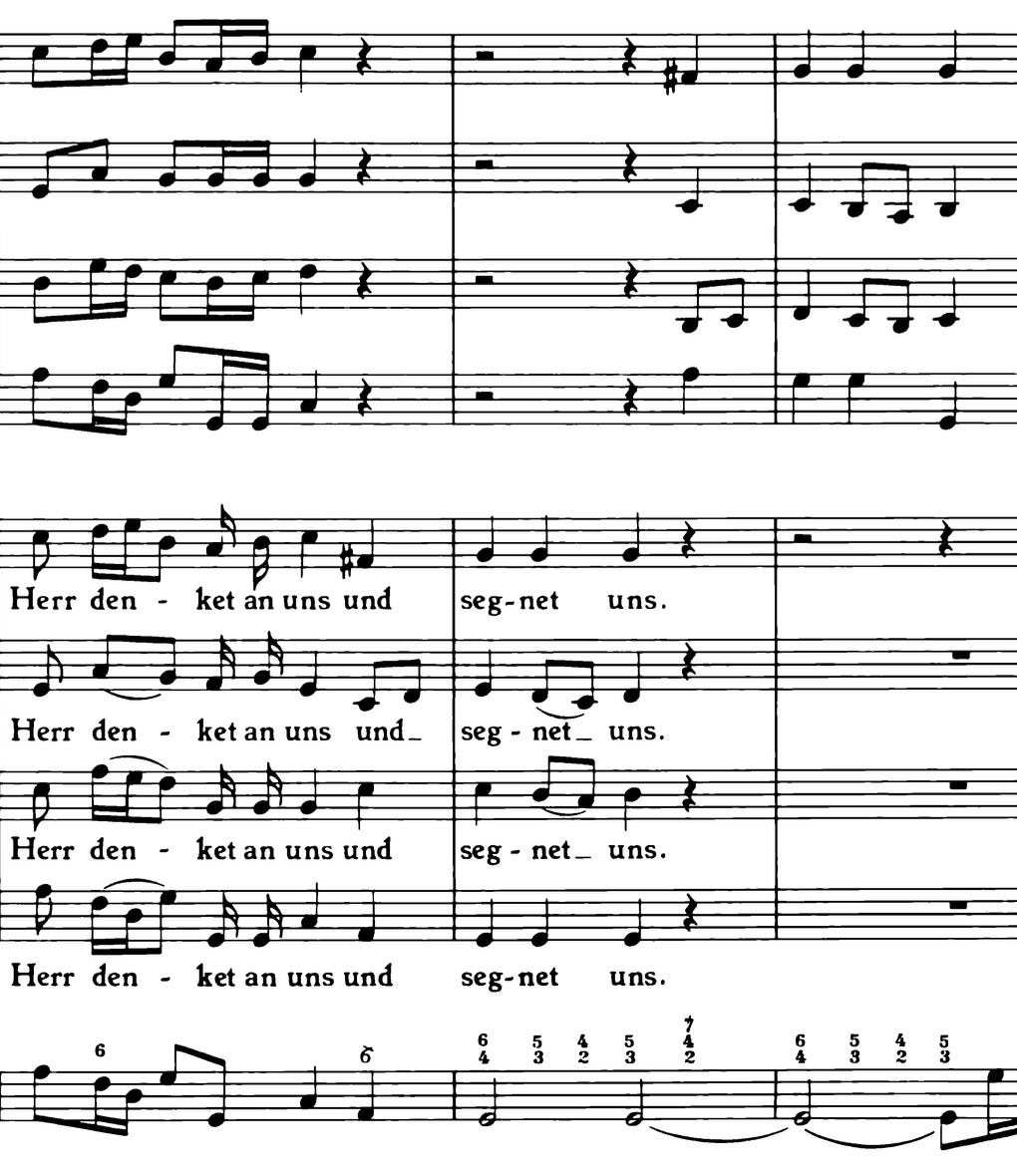
  • June 30 · 1 hr

    139: Bach's Second (or Third) Cantata

    At just 22 years old, Bach set the immortal words of David, ‘Out of the depths I cry to thee, O Lord.’ From the opening bars, we see depths, cries: The second and fourth movements already show Bach’s interest in using chorale melodies in his cantatas. To the Psalm text, Bach adds a 1588 Hymn by Bartholomäus Ringwaldt, asking for mercy, Erbarm dich mein. How lucky we are to see seeds of the Matthew Passion planted as early as 1707! The finale uses a fugue with a countersubject to paint one single line of text: And he will redeem Israel is painted with lively 16th notes, joyful even, while, from all his sins appears as a rising chromatic line. Bach, with a fugue, realizes theology: I forgot to mention in the episode: The fugue in the last movement was arranged as a fugue for organ in g minor, BWV 131a. The attribution to Bach has been contested, but it nevertheless makes for a wonderful fugue playable by one person. When I was making my own electric rendition of the fugue, I was struck by how similar parts are to the organ fugues in c minor, BWV 537, a very late work, but also the youthful BWV 551, both of which were covered on this show. I like this recording a lot, have a listen! Wow! That’s Fabulous. Rudolph Lutz’ performanceMasaaki Suzuki’s recording We Rely Exclusively on Paid Subscriptions! Help WTF Bach endure:Join at WTFBach.comThis is the only place Evan checks comments regularly.You can also make a one-time donation here:https://www.paypal.me/wtfbachhttps://venmo.com/wtfbachThank you for your help! Concepts Covered: Bach's Cantata BWV 131, "Aus der Tiefen rufe ich, Herr, zu dir," composed in 1707 when the composer was just 22 years old in Mülhausen, organist at St. Blasius Church, stands as a remarkable setting of Psalm 130 for bassoon, oboe, strings, and continuo. This sacred cantata integrates the 1588 Lutheran hymn text by Bartholomäus Ringwaldt, "Herr Jesu Christ, du höchstes Gut," demonstrating Bach's early mastery of chorale melody integration in cantata structure. The fugal finale translates theological meaning through musical architecture. The cantata's closing movement exists in an organ arrangement (BWV 131a.) N.B. the dedication to Dr. Georg Christian Eilmar, clergyman at St. Mary's Church. Get full access to W.T.F. Bach? at wtfbach.substack.com/subscribe
  • June 23 · 1 hr 1 min

    138: Bach's Very First Cantata

    Who is Doctor Conrad Meckbach, and what is he doing in the middle of cantata 150?! Using clues from a clever acrostic spread throughout the text, scholars have securely dated this cantata to Bach’s years in Arnstadt. Penitential in theme, it would have been performed during Lent, 1707. It is now considered Bach’s earliest cantata. You Oughta Cantata! The finale, an early chaconne, (as I forgot to mention in the episode!) served as Brahms’ inspiration for his own chaconne in the last movement of his last symphony. Brahms was one of the editors of the Bach-Gesellschaft when this cantata was first published, so here we see the remarkable moment where the 22 year-old Bach inspires the 52 year-old Brahms. Note the similarities in shape, the flute line in particular: Bach’s early cantatas are full of sudden tempo changes. These cantatas are Wagner’s harbingers much more than the later models. The text wholly dictates the mood— even the shapes of the fugue subjects— the choir, unlike in the later cantatas, drives the drama through the majority of movements. This page, for example, looks typical of the early style: The beginning of the 4th movement particularly beautiful. The words ‘lead me’ are painted with a rising scale passing through each part, one section leading the next: See the acrostic (Doktor Conrad Meckbach) via Hans Joachim Schulze’s work:https://bjb.publia.org/bjb/article/view/2270/2196 Ton Koopman’s recording:Masaaki Suzuki’s recording: BWV? Bach Would Vouch! We Rely Exclusively on Paid Subscriptions! Help WTF Bach endure:Join at WTFBach.comThis is the only place Evan checks comments regularly.You can also make a one-time donation here:https://www.paypal.me/wtfbachhttps://venmo.com/wtfbachThank you for your help! Concepts Covered: BWV 150, Nach dir, Herr, verlanget mich, For You, Lord, I Long, as Bach’s first cantata, the acrostic found in Hans Joachim Schulze’s work: Who was Doktor Conrad Meckbach, and what is he doing in the middle of an early Bach cantata? Arnstadt vs. Mülhausen. Bach’s tone painting in his early years, the text driving the fugal shapes. We discuss form to Early Bach, how Bach’s early years rely on a freedom of form, whereas later in his life he narrows the focus on form— quite the opposite of the trend of most artists in history. Get full access to W.T.F. Bach? at wtfbach.substack.com/subscribe
  • June 16 · 11 min

    A Classical Musician's Thoughts at a Party

    Yeah.Evan.Likewise.What I…? Oh what I do… Right, well, if you ask me what I do, I’m going to tell you: I breathe, I walk, I sit, I sleep, just like you! Just like you. What I do. I might venture that I’m an inventor, or no longer need to work, because, right out of university, you see, I came up with a really clever patent for trampolines that has prevented the paralysis of hundreds of bouncing children— if not thousands. Yes, yes, every month, every month checks. …for all the new trampolines in the world that have my… device somewhere on the side of the, trampo—Yes, it is odd being rich from trampolines. But, I’ll take what I can get. That’s a good line, ‘odd being rich from trampolines.’ I’m also a professor of 18th century German religion at an online University in …sssSingapore!Singapore? You ask. Yes, yes, Singapore.Do you, lecture online, what with the time change and all that?Yes, yes, with the, with the time change. Truth hurts: I play the piano and harpsichord and organ. You’ll ask, ‘Is that all you do.’ Is that all I do. Is that all I do. Let’s say I were the 17th best flamenco dancer in the world, but I had to supplement this with bus driving. ‘Hey! There’s Evan the bus driver’ not ‘Hey, there’s Evan, the 17th best flamenco dancer in the world.’ You might consider me a fairly good dancer, best dancer in the village even— but I’d still be, ‘Hey, there goes Evan the bus driver.’ But if suddenly, suddenly, flamenco paid well enough where I could stop driving the bus,‘Hey! There’s Evan the flamenco dancer.’ I wouldn’t have gotten any better or worse at dancing the whole time. I hate these parties where people ask you what you do. I want parties where that’s not allowed, where you lead with, what is your favorite color? The no small talk party. You guys going to the no small talk party? It’s actually going to be enjoyable. Somewhat vibrant green bordering on blueish… what’s yours? Oh did you meet Sheila? She also likes the greenish blues! What’s your main fault? Hey Dave, nice to meet you, what’s your main fault. You ever cheated on someone, Dave? Who is your favorite heroine in fiction? Yes, that’s all I do. All I do is play the piano. Oh, it must be so nice to be able to make a living with your passion. I hate it when people say that. Passion. Overused word. Yes, it is. It’s a good life. I’m healthy I’m happy. I am healthy and I am happy. What did that guy say on Instragram? ‘every day, wake up, sip lemon stare into the sun and say, today is going to be a great day, today is going to be a great day…’ Yes, I should say this to myself more often. I am grateful. But sometimes— sometimes!— I wonder if I had given it all up to be the snowplow man, I wouldn’t have to remind myself to remind myself to be grateful. Just— pkcchhhh— plow the roads, up at at ‘em before even the well-employed! Thermos full of coffee, heater blasting, 20 below out, but I’m in a T-Shirt in here… pkchhhhh— plow the snow, plow the roads— what’s on the radio? Not my colleagues and thank god for that. Who’s got time to remind themselves to be grateful now? Snowplow man! Honk Honk! Do you have any idea what it’s like to not be accountable to anybody but yourself, to make your own deadlines, to create your own goals, make your own structure? If suddenly people woke up and had to create their own work, no one would get out of bed! When robots replace everything, no one will know what to do, but I’ll carry on exactly as I always have. I got fugues to learn man! Let the robot sweep my house, do my laundry, but unless the robot’s gonna write in useful fingering, I’m busy! No one will ever pay to hear robot pianists. Oh …my god. Robot Pianists. These parties. These parties. This vapid socializing! Look, if 95% percent of success is showing up, I’ll take 5% of my potential fame, thank you— You’re a pianist? Oh, I heard this fantastic pianist play the most incredible Schumann — or was it Schubert…’ Was it me? Oh, wasn’t me?! As if they were any good, I wouldn’t be overcome with jealousy, and if they were mediocre, I wouldn’t abhor them for destroying our profession with mediocrity! Don’t talk to a musician about musicians. Unless you’re drinking buddies with Leo van Doeselaar, I have no interest whatsoever in your anecdotes. But shouldn’t I be glad to speak to someone who goes to the symphony— who even goes to the symphony? I should! I’m not! Last thing you do when you meet a working actor is talk about all the movies you’ve seen. Wasn’t Brad Pitt great?! Get a life. This thinly disguised sacred— sacred humility placed upon us by none other than Beethoven, of course, and the fact that we may no longer enjoy music for the reasons we once fell in love with it… likely a classical musician. You guessed it. I must look it. Over qualified. Underpaid. Bitter. Do I have the posture of a classical musician? You bet. And then, I don’t know what’s worse, ‘do you like Sibelius? I used to take music lessons as a kid I never learned how to read do you ever listen to Eric Clapton?’ Did you know that actually Eric Clapton and Paul McCartney don’t know how to read music’ Well it’s about f***** time they did! If they’re such geniuses, have ‘em solve a treble clef. Doesn’t read music. This kills me. It’s like talking about your favorite author who doesn’t read. No really, he doesn’t know how to read! He just talks into a microphone!And you enjoy that?Yes, yes, now would be a bad time to mention your nephew is a DJ. Is there a defibrillator nearby, because I’m going to need to revive the part of me that just died. Also a musician. Also! a musician. What because he makes sound? There, did you count that glass that just fell off the table a musician, also a musician? I’d rather listen to broken glass than your nephew. Ha! What you think about that?! Lots of people took music lessons, lots of people can pick up an instrument and play a little something, and a lot of these people, especially the men, fancy themselves ‘good at music.’ Hence, I’m gonna put musician in my bio. Art lover, coffee historian, dog walker, musician. So...? Well, so a lot of people know how to play ping-pong too. And I feel like the olympic ping-pong player. Is… that a phrase? You remember the olympic ping-pong player who once explained, ‘there is no other sport where, if you tell someone you’re a professional, people respond by saying… ‘I dunno! I’m pretty good…’ So I’m out to prove I’m an olympic musician, and I’m better at music than this party of non-professional musicians. Exactly. Exactly. Okay. This is where we are. Measuring yourself against non-professionals… Oy. I need a drink. Where is the bar. It was only recently pointed out to me that feeling like an imposter is a good sign, really, because real imposters never have imposter syndrome. Turns out the real imposters think they’re ‘pretty good!’ So… I want people to know, that even though I’m a professional, and the world thinks I’m really good. I still think I’m really bad, at music. Okay. Do I really think that I’m bad at music? Well, I didn’t practice enough today… Didn’t practice enough the last seven years really. Oh well, I never had the dreaded 9-5… The dreaded… the dread— This is exactly what I’m talking about! this is the 9-5 man!What, writing dialogues featuring split personalities.Indeed! Hear, hear! Everything is research, even the way I’m going to order this drink is a performance. ‘Negroni please. No garnish.’ Ha ha, no garnish. Bet that threw him off. He wasn’t expecting that little bit of flare. that was my improvised cadenza. Being an artist is crazy work. Ugh, did I say artist? Artist! I hate that word artist. Are we not an artist? Not for us to say. Musician. Musician, now this is fine. I can go over to that piano and entertain this whole party. Can your DJ nephew do that? Schmuck. Sit down and play a little Scott Joplin, Evan.Coming right up.Got any Schubert in there?I dunno, Johnny, does a bear crap in the woods?Hahaha. They’d be so charmed. Only a musician can do that. An artist —why they need curation. They need their tools handy or they can’t create. I can make music on a bottle cap. Musicians don’t just sit around waiting for the muse to whisper… Do people think that? Everybody thinks that! That’s the Cliche! For most people music is American Idol. It’s a lucky break. That’s all success is: a lucky break— everyone wants to know how I can make ends meet if they couldn’t. Can’t be hard work, couldn’t possibly be hours of grueling hard work, what did I have a good manager or something? Author, director, educator, socialite, content creator, cat mom, musician… Puke! Vomit creator. Can you add that one please? Vomit creator. What do you do?I’m a Vomit creator.Accurate, accurate! Maybe like, entertainer… Something demeaning. You’re in the entertainment business— but I’m on the quest for truth. Well, I mean… some pop musicians do understand harmony… yes, yes, I did learn a lot from playing rock music, some classical musicians, actually a lot of classical musicians are more like gymnasts… like robot gymnasts. Oh my god. Robot Pianists. Robot pianists doing flips! Snob. Oh, fine. I’m a snob. At least it’s an anagram of Boss… Ha! Wait, no it’s not. It’s an anagram of …No BS, there you go. Yes! Fine! I don’t tolerate BS. Call the person a snob who spends his life studying something— when he declares it more rewarding than your pop culture—’he’s a snob— he’s locked in the library working on things that have been studied for centuries— what a snob!’ Please, please. Give a man a computer, he’s a DJ for a day. Teach a man to strum, he’s in a band for life. Did… Did I just make that up? Someone should make that a phrase. Sorry, once you’ve read the complete poetry of John Keats, Rupi Kaur just ain’t doin’ it for ya. It’s about the personal voice, though— Oh— please! Quoth the vomit creator! But isn’t taste just a matter of social class, that any judgement about art you make is a matter of your social positioning? So, am I just good at music because my parents could afford to buy a piano? Stupid Pierre Bourdieu. Go away. Yeah, you know, I read Bourdieu because I was trying to figure out why people like you make me feel dumb for going to see rock orchestras or thinking Elton John is the best living piano player… So, is aesthetic judgment just exclusion dressed up? You’ve spent your entire life behind a piano, and a DJ can threaten you by just enjoying the very thing you claim to love? So what if the DJ enjoys music all his life, onto his deathbed, that it gives him spiritual sustenance and lasting happiness? The IV is drippin’ in the morphine, he’s writing out his will, grinning, still listening to the faint BMPP BMPP BMMP four on the floor, carrying him unto the Pearly Gates. What, you want him to collapse into intellectual poverty because he doesn’t know the notes of a B-flat minor scale? Yes! Yes! Collapse. Collapse! Writhe!Ugh. So predictable. I’m such a bore. Oh there he is! Honey, you’d better buy this ‘artist’ his next drink— you know how eating and drinking is quite a financial burden for them… Haha ha. Ahaha haha.” — If you or someone you know is suffering from self-employment, call the emergency number on the bottom of your screen. Harpsichord is not recommended for people who are estranged from a wealthy distant relative worth less than 2.1 million dollars. Self-employment may not be right for you. If you are suffering with the need for external validation or the ability to blame others for your problems, consult an employer. To send WTF Bach a care package, become a paid subscriber on Substack. WTF Bach may need staples of food and clothing to make it through the rest of the year. For his appropriate shoe size, visit WTF Bach dot com. Side effects of WTF Bach may include: anxiety about irregular income, compulsive email-checking and the inability to explain what you do at dinner parties. Ask your accountant if WTF Bach is right for you. Oh Bach’s Art! The Prelude to my Heart! We Rely Exclusively on Paid Subscriptions! Help WTF Bach endure:Join at WTFBach.comThis is the only place Evan checks comments regularly.You can also make a one-time donation here:https://www.paypal.me/wtfbachhttps://venmo.com/wtfbachThank you for your help! Get full access to W.T.F. Bach? at wtfbach.substack.com/subscribe
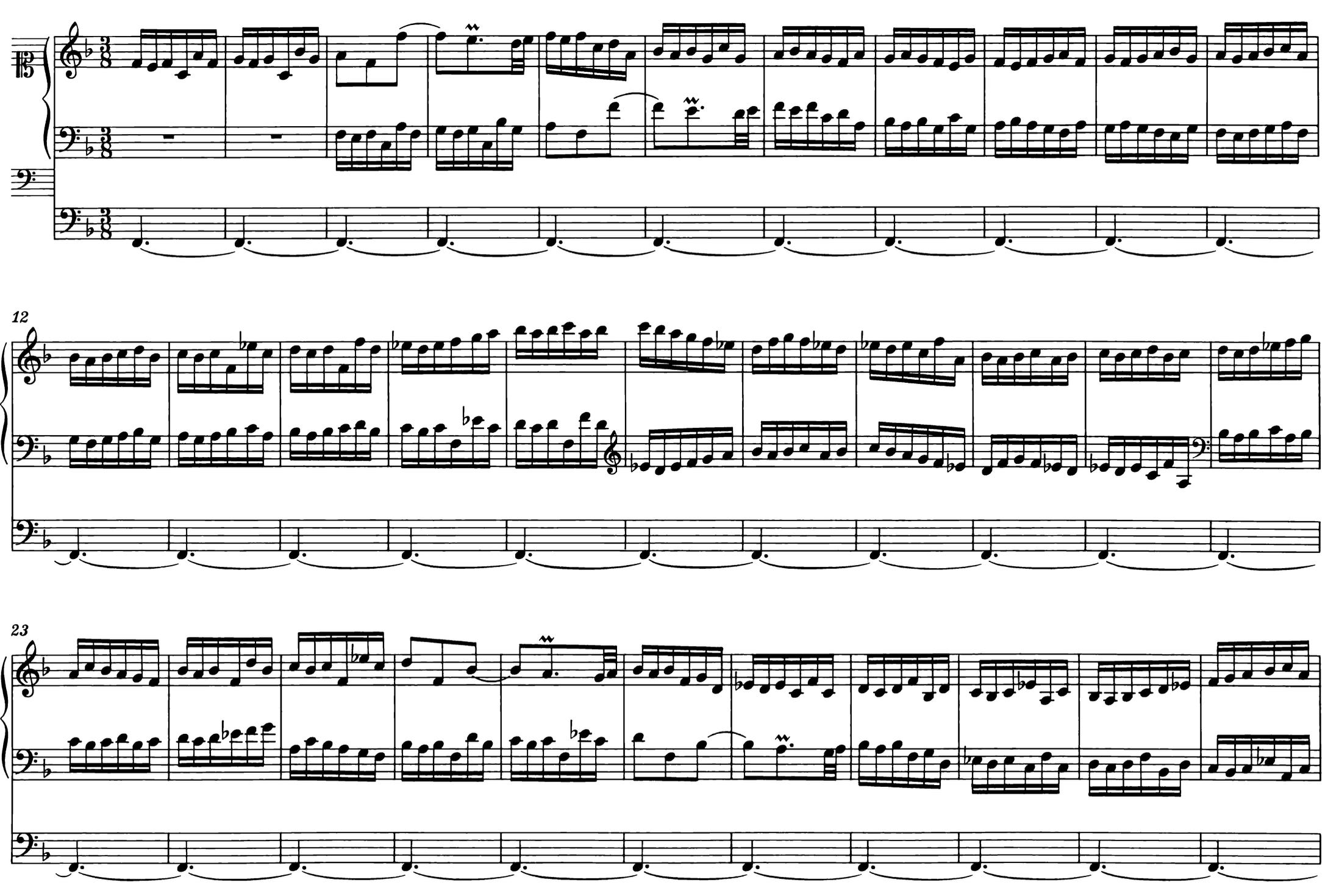
  • June 9 · 52 min

    137: Special Guest! Peter Wollny

    Last December, I spoke with Peter Wollny, one of today’s most important Bach scholars. We discuss how one becomes a Bach scholar, what it’s like to be in close proximity with Bach’s handwritten manuscripts, using watermarks within the paper to form a compositional chronology, and forming a ‘personal relationship’ with a figure from the past. Here are some of my favorite quotes from our interview: Q: Is there something that surprises you when reading a piece with scholarly intent vs. hearing it?A: What you can’t predict is how deeply it will go to your heart. — It can easily be said that there is something in the autograph that conveys something about a personality from the past, and it may be true, but it’s very risky because you can end up looking for something that is in your own head but not included in the manuscript. — This past summer I started a series of photographs trying to figure out the population of wild bees in our garden, and actually I identified a species of bees that was believed to be extinct in Saxony since 1930. Chaconne on the Gramophone: The two new chaconnes! Available for download: BWV 1178, in d minorBWV 1179, in g minor (Outro music is a choir of yours truly singing from Ich hatte viel Bekümmernis, BWV 21.) We Rely Exclusively on Paid Subscriptions! Help WTF Bach endure:Join at WTFBach.comThis is the only place Evan checks comments regularly.You can also make a one-time donation here:https://www.paypal.me/wtfbachhttps://venmo.com/wtfbachThank you for your help! Concepts Covered: ‘Confirmation Bias’ in musicology, J.S. Bach Toccatas BWV 914, BWV 913, the new Johann Martin Schubart sources. The attribution to Johann Christoph Graff in the new discovery of Bach’s early Chaconnes. Independent fascicles sewn into larger books, the process of fascicles copied from page 4, page 1, then pages 2-3. Peter Wollny’s discovery of new works by J.S. Bach. Bach’s early interest in ostinato pieces, Bach’s copies of chaconne’s by Buxtehude. Get full access to W.T.F. Bach? at wtfbach.substack.com/subscribe
  • May 28 · 1 hr 35 min

    136: Bach's 12-Tone Fugue (WTC Finale!)

    (Fear not the length of this episode: the last 25 minutes or so are three different playings of the piece.) Having written a prelude and fugue in every possible key, having created a single temperament for all of those pieces, having stretched the thematic growth from a 6-note fugal subject to one with all 12 possible notes, Bach achieves a victory that would become the very foundations of music. At the very end, in one of his layerings from the 1730s, he adds, S.D.G., Soli Deo Gloria, glory to God alone: While all pieces in this collection may suggest images, no single piece in the collection is as evocative as this one. For the first and only time in this volume, we get tempo markings for the set: andante and largo. The andante is indeed a walk— toward Golgotha. Two voices in imitation trade the weight of dissonances struggling against the fateful steps up to Mount Calvary: This prelude is the only binary piece in the collection, divided in half by repeat signs (whereas roughly half of ‘Book Two’ are binary preludes.) Finally we get to the fugue. Often called the first 12-tone row in history, the fugue’s subject makes use of every single chromatic note. If C=1 in this diagram (it is usually 0 in Schönbergian theory) you will find all 12 pitches accounted for: Sighs in the slurred notes, the theme bursts with musical ‘crosses.’ Those witnessing the crucifixion weep in four voices. Bach’s burden was tone— he carries all twelve of them. Equally striking in the subject is his own name, crossing upon itself dozens of times in this finale. Every other slur spells his name (in transposition.) A twelve-tone row, crosses, weeping, this theme has everything: It has been a great joy to work on all these pieces over the past 10 months. Thanks for all your support. ‘Book Two’ will also be studied in depth on the show, but not quite yet. There are guest interviews to be released and I will be turning my attention to Bach’s earliest vocal works in the coming months. Soli Deo Gloria! We Rely Exclusively on Paid Subscriptions! Help WTF Bach endure:Join at WTFBach.comThis is the only place Evan checks comments regularly.You can also make a one-time donation here:https://www.paypal.me/wtfbachhttps://venmo.com/wtfbachThank you for your help! Concepts Covered: A long discussion on religion in 18th and 17th century Germany, re: the seriousness of Bach’s own faith. The Well-Tempered Clavier finale, in h moll is today’s subject, conjuring images of Golgotha, crucifixion music, Bach’s own signature, musical crosses, Simon bearing the weight of the cross in the prelude et cetera. The fugal subject is a twelve-tone row, a theory not fully realized until some 200 years after J.S. Bach. Get full access to W.T.F. Bach? at wtfbach.substack.com/subscribe
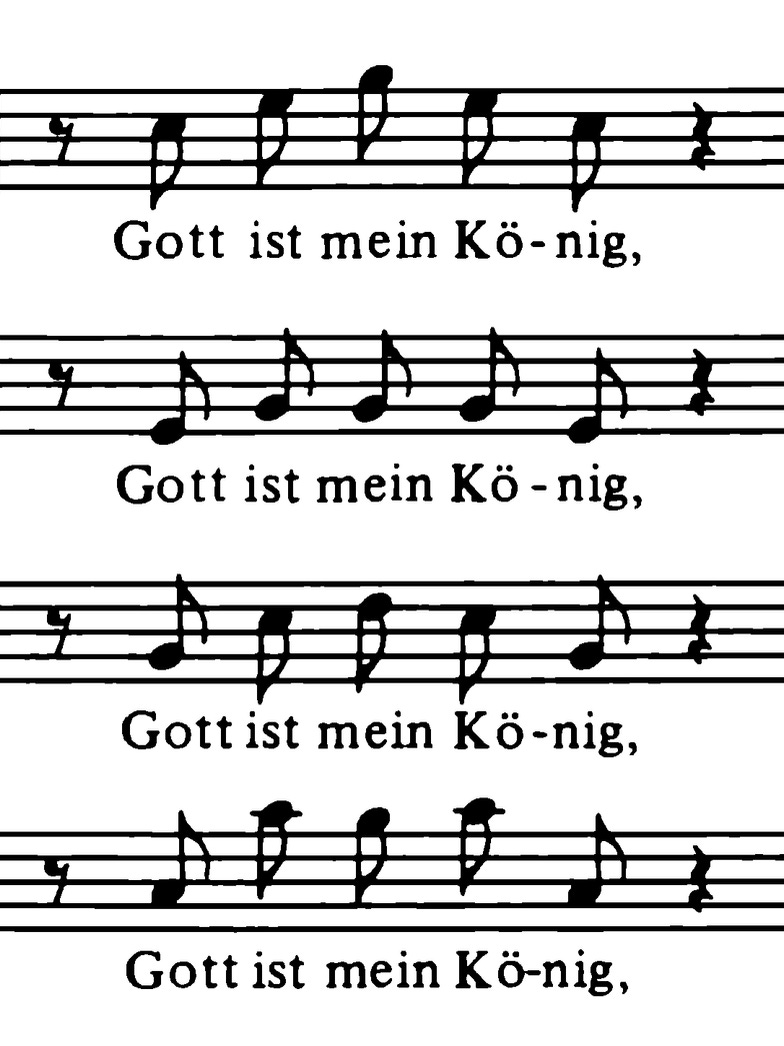
  • May 20 · 59 min

    135: H Major! The Final Major (And Tuning It...)

    We reach the last note in The Well-Tempered Clavier, B natural. To this point, Bach has climbed chromatically from C, visiting both minor and major modes in every half step, and before the stunning finale in b minor, Bach writes a somewhat simpler prelude and fugue, BWV 868, in B major. Thank Bach for God! There are few revisions between the earliest and latest copies, the most striking is the inner voice at measure 11 in the prelude. Which do you prefer: or, The two tuning schemes used in today’s episode are 1/4 Comma Meantone, and Kellner’s Bach. N.B. This Kellner is not J.P. Kellner, the important Bach scribe, but rather, Herbert Anton Kellner, an important 20th century musicologist. The fugue, in four voices, features two inverted entrances. (I inverted, vertically, the word ‘theme,’ which is visually more correct than spinning it 180 degrees— I know you’re here for such details.) Write That Fugue! We Rely Exclusively on Paid Subscriptions! Help WTF Bach endure:Join at wtfbach.substack.comThis is the only place Evan checks comments regularly. You can also make a one-time donation here:https://www.paypal.me/wtfbachhttps://venmo.com/wtfbachThank you for your help! Concepts Covered: J.S. Bach’s BWV 868, the B major Prelude and Fugue from Book 1 of the Well-Tempered Clavier, his compositional revisions between the early version and final fair copy. An analysis of large-scale harmonic progressions, such as the move from the tonic to dominant, and a similar movement, from sub-dominant to tonic. The prelude is played in two temperaments, Kellner’s Bach and quarter-comma meantone. Get full access to W.T.F. Bach? at wtfbach.substack.com/subscribe
  • May 12 · 1 hr 1 min

    134: 5 Flats, 5 Voices: Bach in B-flat Minor

    “While the c# minor fugue awakens the conception of a mighty cathedral, the two numbers in b-flat minor may be likened to artistically wrought side-chapel’s vaults, in which things most precious are kept.” —Busoni’s remarks on BWV 867. Things most precious, indeed. We might well wrap up this dark pearl of b-flat minor and guard it in the ‘side-chapel vaults’ of our hearts. What noble suffering, what secret anguish, what quiet pain is here! To know this music is to be changed, to expand one’s emotional capacity. Notice how, in Bach’s calligraphy, each note in this nine (!) note chord has its own stem: Such detail is sadly missing from any printed edition: It’s Free to B.W.V.! The fugue, in five voices, appears to be almost entirely in stretto, each voice interrupting the former. Notice the overlapping colors: This culminates in what I imagine to be a personal victory for Bach, ‘stretto-ing the stretto,’ making the entrances as close as possible, where the second note of one voice becomes the first note of the next, from top to bottom, all five voices in a masterful technical display: (Looks a bit crowded, yes, but that’s the idea!) We Rely Exclusively on Paid Subscriptions! Help WTF Bach endure:Join at wtfbach.substack.comThis is the only place Evan checks comments regularly. You can also make a one-time donation here:https://www.paypal.me/wtfbachhttps://venmo.com/wtfbachThank you for your help! Concepts Covered: We study the B-flat minor prelude, BWV 867, the Well-Tempered Clavier Book One, both five voice fugues in the second and penultimate minor positions, early manuscript and earliest version alongside P. 415, Bach’s revision of one extra measure. The fugue as a stretto fugue, possible connections between prelude and fugue, a complete stretto in five voices, a five-voice stretto, as well as the Busoni edition’s poetic description of this pair. Get full access to W.T.F. Bach? at wtfbach.substack.com/subscribe
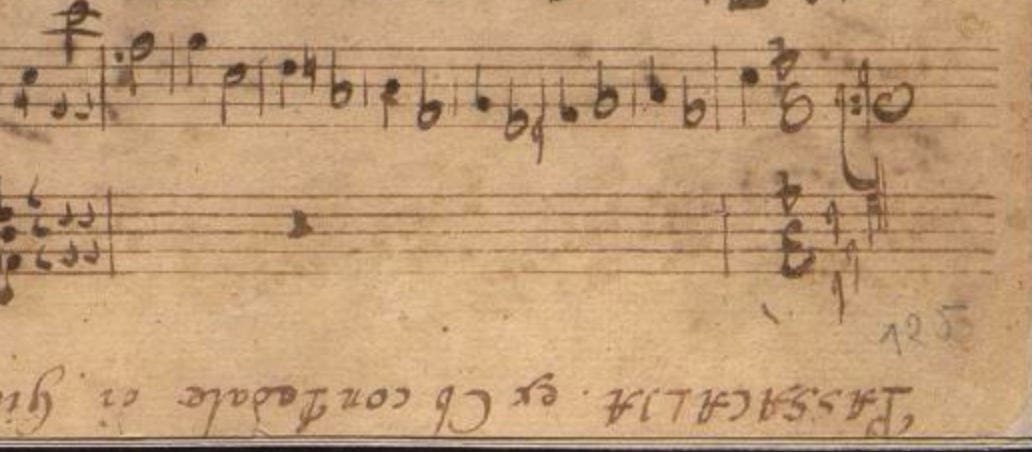
  • May 5 · 33 min

    133: ¿Por qué César Vallejo?

    César Vallejo (1892-1938) is one of my favorite poets. To define his style is difficult: one doesn’t understand his poems so much as one absorbs them. His words— seemingly impenetrable— have a sense to them which gnaws and tugs at dormant parts of the mind. Some 12 years ago I holed up in a little shack near the Canada/USA border with nothing but his poetry to keep me sane— but he began unraveling my mind in a beautiful way that left an indelible mark on me as a reader. Please enjoy my anecdote as well as the profound memoir by Clayton Eshleman, the acclaimed translator of Vallejo’s poetry. Book details below: Vallejo, César. The Complete Poetry: A Bilingual Edition. Edited and translated by Clayton Eshleman, foreword by Mario Vargas Llosa, introduction by Efrain Kristal, contributions by Stephen Hart, translated by José R. Barcia, University of California Press, 2009. ISBN: 9780520261730 A link to the University of California Press where you can buy the book. W.T.F. Bach? is a reader-supported publication. To receive new posts and support my work, consider becoming a free or paid subscriber. We Rely Exclusively on Paid Subscriptions! Help WTF Bach endure:Join at wtfbach.substack.comThis is the only place Evan checks comments regularly. You can also make a one-time donation here:https://www.paypal.me/wtfbachhttps://venmo.com/wtfbachThank you for your help! Get full access to W.T.F. Bach? at wtfbach.substack.com/subscribe
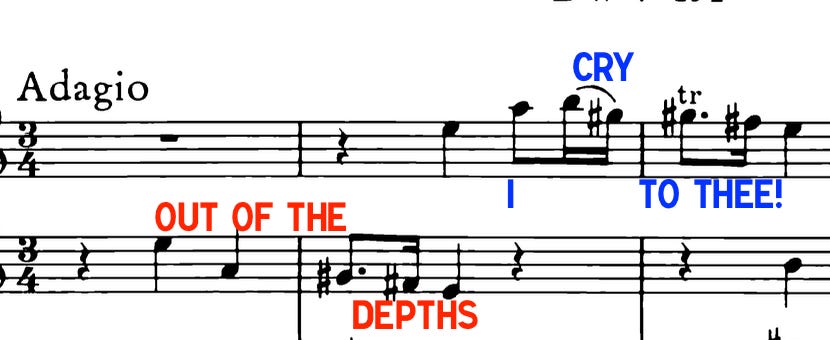
  • April 28 · 45 min

    132: The Other Bach Piece You Probably Played

    It’s thrilling to look at the music of Bach’s predecessors. We see the very shape of Bach to come (I say, referencing my own album…) In several of Buxtehude’s works, we find this texture: Bach tossed the trick into his bag for later deployment: Notice the ending: subtle, elegant, humble. Czerny didn’t think it was enough: Be on the lookout for the extra measure in your own edition! Tovey calls Czerny’s added bar, “perhaps the most Philistine single printed chord in the whole history of music.” Ouch! I Can Cantata! The fugue, one of my all-time favorites, makes strict use of two countersubjects. Together, they form a three-part wonder. I’ve tried to illustrate them: Bach, contrapuntist juggler, will juggle. Watch the orders switch: We Rely Exclusively on Paid Subscriptions! Help WTF Bach endure:Join at wtfbach.substack.comThis is the only place Evan checks comments regularly. You can also make a one-time donation here:https://www.paypal.me/wtfbachhttps://venmo.com/wtfbach Thank you for your help! Concepts Covered: The Prelude in B-flat Major BWV 866 from Bach's Well-Tempered Clavier Book I in the North German toccata style, influenced by Buxtehude's toccatas and prelude. The fugue is a perfect example of Bach's mastery of triple counterpoint with two countersubjects. Get full access to W.T.F. Bach? at wtfbach.substack.com/subscribe
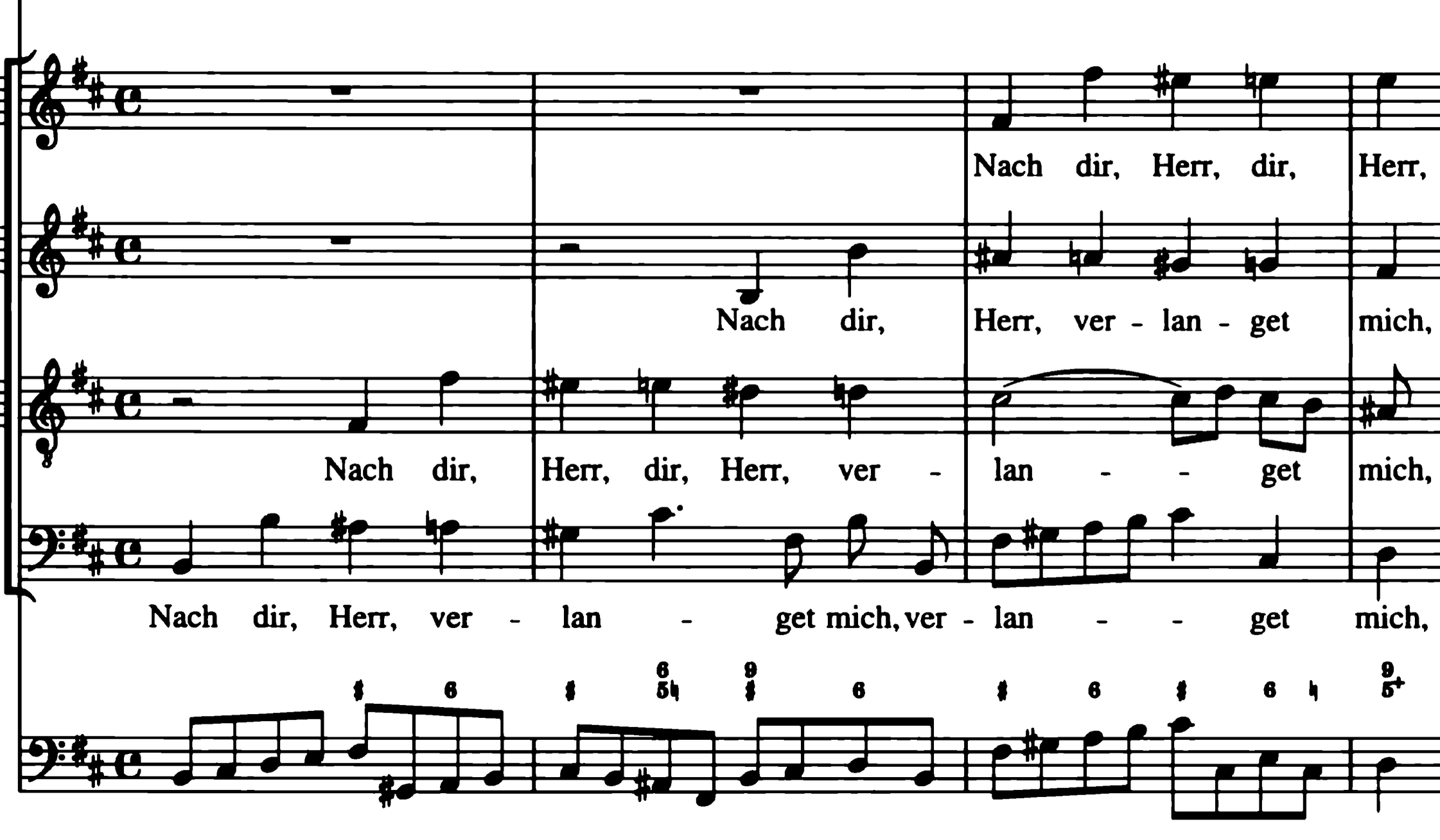
  • April 21 · 52 min

    131: Dissecting The Dragon, A Minor Book 1

    Perhaps before composing the bulk of The Well-Tempered Clavier, Bach had been challenging himself to create a fugue with real technical daring. This fugue, in a minor BWV 865, represents some of the composer’s most ambitious fugal writing. Have a look at an outline of the subjects alone—you might even follow this image while listening to the episode— this might give you some idea of the task Bach undertook: From the beginning of the piece to the end, the combinations of themes become more complex, from entries one by one, to a three-voice stretto and finally all four voices simultaneously. Work! Those! Fingers! The prelude, meanwhile, is much simpler. Between the earliest version and the revisions found in P.415, we see Bach lacquering in his workshop. Notice the right hand: Bach finds more movement in revision: The detail I miss from the earliest version is the beautiful B-flat in the left hand: Although I do like Bach’s longer pedal point in the revision: Enjoying your contrapuntal journey? Here’s how you can help: We encourage our listeners to become a paid subscriber atwtfbach.substack.comFree subscriptions (yes, you can subscribe for free!) are also beneficial for our numbers.You can make a one-time donation here. https://www.paypal.me/wtfbachhttps://venmo.com/wtfbach Supporting this show ensures its longevity. Thank you for your support! Concepts Covered: We study J.S. Bach Well Tempered Clavier, the history, lessons and analysis. Performance practice and contrapuntal structure, especially the complicated stretto fugue in a minor BWV 865 with its inverted stretti, its triple strettos and finally a four-voice stretto half inverted. Get full access to W.T.F. Bach? at wtfbach.substack.com/subscribe
  • April 14 · 55 min

    130: A Double Fugue & A Second Manuscript

    Remember this image from the E-flat Major Prelude and Fugue epsiode, where Bach puts a double fugue at the half within the half? Bach does it once more in today’s episode. We’ve arrived at the other double fugue in this collection, BWV 864 in A major. Bach begins the prelude by juggling three ideas: The ordering of these ideas will switch. A few bars later we see the same three ideas shifted around: Bach presents the same ideas a total of six times in the prelude. Whereas we logicians would love to see all six combinations (ABC, ACB, BAC, BCA, CBA, CAB,) Bach gives us four of the possible orderings. The final one with the syncopation on bottom is particularly nice: Feed the Contrapunctus: Now the fugue: This is the correction I got all excited about. This is from Anna Magdalena’s copy (called the Müller Manuscript) where we clearly see a revision that may improve on P 415. Look closely at the note which is whited out, this is the G-sharp that is found in Bach’s autograph, here, corrected to an E. After playing this measure as we know it, I can’t help but feel that this little gem hidden within Anna Magdalena’s copy reflects the latest thinking of the composer. You can view the Müller Manuscript here: https://www.bach-digital.de/receive/BachDigitalSource_source_00001076 Interesting how the shapes in the first of the subjects in the double fugues of The Well-Tempered Clavier have similar rising perfect fourths: Similar shapes in the E-flat major pair: And finally, here is the charming work of the young WF, copying out one of his father’s cantatas at a young age. See the little attempt at making a mirror monogram, WFB? Wonderful! Schweitzer beautifully recounts this scene. We Rely Exclusively on Paid Substack Subscriptions! Help WTF Bach endure: We encourage our listeners to join at wtfbach.substack.comThis is the best place to leave comments.You can also make a one-time donation here: https://www.paypal.me/wtfbachhttps://venmo.com/wtfbach Thank you for your help! Concepts Covered: J.S. Bach’s A major, book one, Well-Tempered Clavier, Anna Magdalena’s copy, also known as the Müller Manuscript (not to be confused with the Möller Manuscript,) Double fugue writing, juggling three contrapuntal ideas in the prelude. We also paint the scene for how Bach’s cantatas were assembled. A beautiful picture of WF Bach, CPE Bach and Bach’s nephew, JH Bach. Get full access to W.T.F. Bach? at wtfbach.substack.com/subscribe
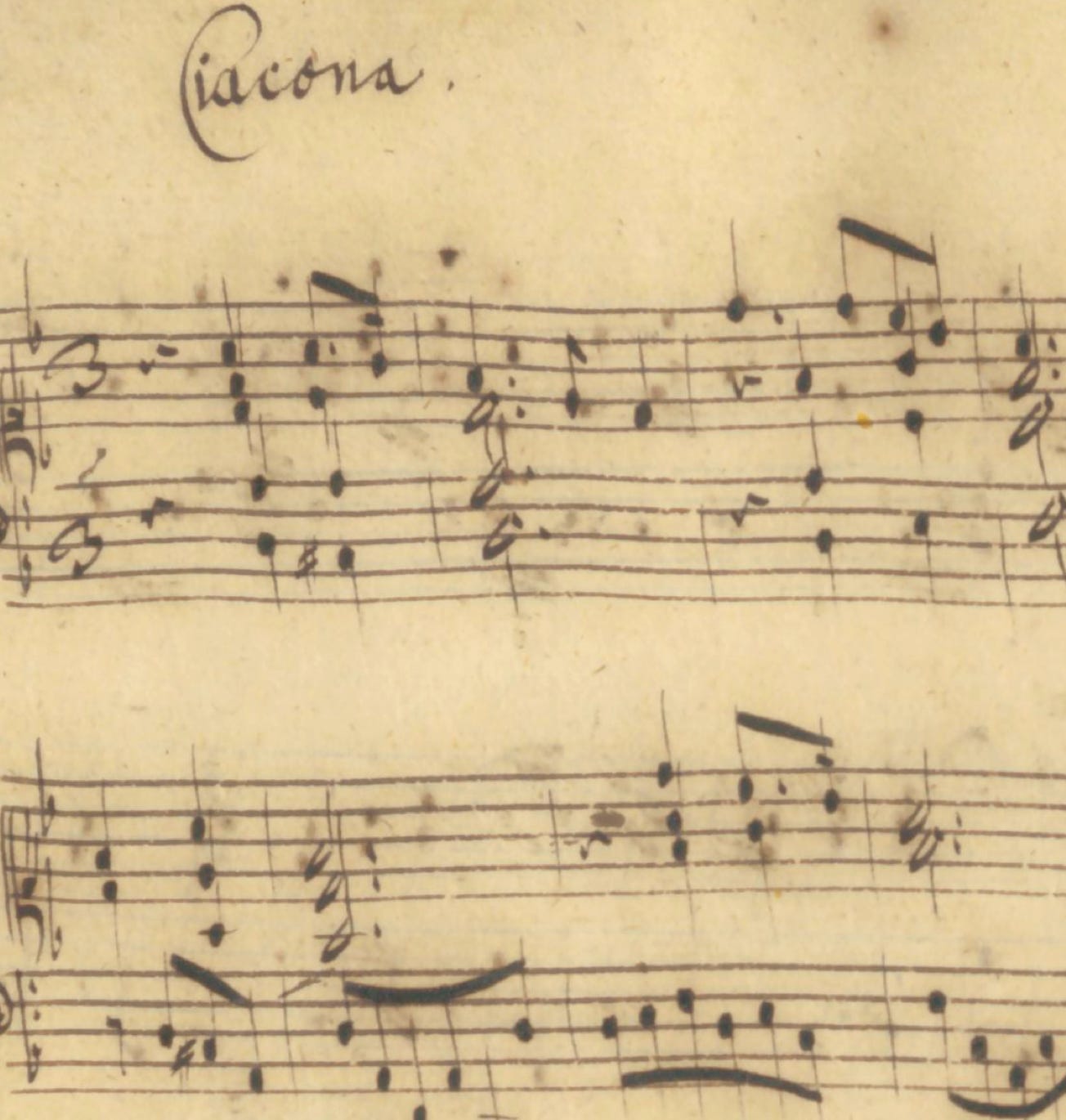
  • April 7 · 24 min

    129: I Got Rid Of All My Books (11 Years Ago...)

    Back to Bach next week! In the meantime, I thought you’d appreciate a story I wrote after I ‘discarded’ the majority of my possessions— mostly books. Whereas I easily tossed things like clothes, artwork, komono, plates, pens, et cetera, getting rid of my massive library took months and was an emotional rollercoaster. I haven’t ever looked back! …mostly. Sans Eyes, Sans Books, Sans Everything If you go home with somebody and they don’t have any books, don’t f*** ‘em!-Not so old aphorism Last scene of all,That ends this strange eventful history,Is second childishness and mere oblivion;Sans teeth, sans eyes, sans taste, sans everything.-As You Like It, 2:7 -for Marie Kondo (and Rachel) At eighteen years old, I moved to New York City with five books: a Mozart biography, a Bach biography, a Beethoven biography, a book about Beethoven’s piano sonatas, and a Bible. My sheet music library (which was already massive) and any other books (which were insubstantial) I left with my parents. All I valued at that time was playing the piano and any reading dealing with that. After a year, my personal Pentateuch had grown four times in size, but was humble still. Eleven years later I had one-thousand nine hundred and thirty two books. Books bought, books found, books stolen, books given, books I printed: any way one could get a book, I got books. I dreamed of creating a library that resembled my teacher Lowenthal’s: wall to wall books, books falling out of books, books used as bookshelves themselves, pages on the ground from who knows which books, books with missing covers, covers with missing books, books rapidly-read-horizontally-stacked-under-coffee-cups books, books under-the-piano-to-muffle-the sound books, books piled-on-top-of-the-piano-to-complete-a-cliche books, the divine image of the godhead seen in books spinning endlessly out from the library walls. “I always imagined heaven to be a kind of library.” That was the first sentence by Borges I ever read, and Lowenthal’s study was the closest to paradise I had been. — I lived in seven different apartments in New York, and with each move at least 75% of the boxes were books, and with books come their doomed counterparts: bookcases (so help us god.) Many a reader may commiserate. Once the first small white case was filled, (Ikea, 2007) there needed to be a match (Ikea, 2008.) By 2009, I had two crumbling, completely useless, bookcases. I called the poet Ron Price, who, though he owned less books than Lowenthal, seemed to have given more thought to their casing. I discussed a sleek white Ikea bookshelf I had seen online: “Oh! Don’t buy a f***ing BILLY!” he shouted. He knew the make. …Everybody knew the make. Little did I know, the crumbling pieces of piecemeal that already housed my books bore the same name. “Buy some nice wood. Make some sturdy shelves.”“Hmm… You’ve been down this road it seems.”He chuckled.“The… shelves are even more important than the books?” I went so far as suggesting“I don’t know about that.” he muttered. In a month, I had, at only a few times the cost of escaping Billy’s curse, three black bookcases, two inches thick per shelf. Unbendable. My East Harlem studio was immensely stylish: I dreamed I would see reconstructions of it in museums as I had seen reconstructions of Proust’s bedroom. Two tall cases stood side by side, and a third half-case, tastefully empty, was stacked horizontally on the other two. It created one giant fifteen foot wide wall, ten feet tall. It was like a tree for inanimate objects. And then, many a reader may commiserate, I tasted the rainbow: a design magazine with a bookshelf arranged by color. I didn’t do anything else for two weeks. I spent every day agonizing over the color of books and where on the new color coordinated shelves they would go. I grouped by color, but then realized my groupings were random. I needed the spectrum: a clean sweep from infrared to ultraviolet. I needed a circle? No, but, this was disastrous. Is color a circle? No, color is a triangle, right? The primary colors are only three… After two months of switching books around, I hit upon the solution: Primary colors would outline a triangle marking the top and the lowest corners. Then, the secondary colors would form the inverted triangle pointed at the bottom. It was so obvious. The only choice then was which of the primary colors to put at the top. In my collection, it made sense that blue should be the crown. Hence: orange went to the bottom, green and purple at the shoulders, therefore yellow and red at the... damn! That looks amazing! But what of all these books without color? Whereas I had previously banished them to the edges, now the black and white spines fit brilliantly into the middle. A zero in the middle of all the brilliance. Quickly, no matter how beloved the content, brown, tan, and off-white, gray books, these were imposters. I stuffed them here or there where they wouldn’t stick out. Eventually I put them with the dishes: behind the cabinets. The bookshelf, now made of only resplendent spines, became a centerpiece. It had eye gravity. It never escaped comments from guests. Any difficulties one might imagine, like two different colors on a spine, for example, were surprisingly rare. And when they did occur, each book somehow fit into only one section. There was one book though, (three novels by DH Lawrence) that had an obtuse, subtle, yet obvious, but odorous! an obnoxious color. It could not be placed: was it pinkish orange, bluish pink…? I know of nothing in the universe colored the same. I tried him in the reds, in the near pinks, in the center of the oranges, on the fringes of the oranges, with the near yellows, no luck. I banished him to the basement. “Look at all these orange books!” That’s what most people said after being sucked into the shelf for some time. (Penguin fiction, bottom center.) Schirmer sheet music publishes in bright yellow, which held down a sunny corner, whereas Henle publishes in matte blue. Dover —many a musician has cringed— seems to publish only in the most carefully selected distasteful colors, but when searching for the perfect transition from reddish-orange to orangish-red, Dover somehow prints an accurate Pantone 17-1464. Now, perhaps you reading will join in with the main criticism, which was, “how can you find anything now?!” But this was ridiculous, I knew all my books of course: the color of every spine, the height, width, the feel, the smell… besides, I had actually read most of these! (That oh-so-memorable moment my illiterate aunt visited and accused me of ‘collecting them,’ that there was no way a person could read so many books.) Rachel would quiz me:“Ancient China?”“In the off green.”“Nonsense of Edward Lear?”“Is dark red.”“Baghavad Gita?”“Purple!” Never could she stump me. She started switching books to see if I would notice. At first she tried the obvious: swapping a blue with a yellow, as if to test if I so much as glanced toward the shelf once a day. Then, sneakily, she tried switching a dark red with an off red. Finally she took to inverting certain books, but I noticed every time. — This was short-lived. Maybe only half a year before the shelf was condemned. It actually did get photographed in a (now defunct) design magazine. I felt like I had achieved something great when that happened— but it was April 2015, and we collectors know what happened then: Marie Kondo burst on the scene. God save our recycle bins. One excerpt from her book— a book about organizing, mind you, not a book about the human spirit, not a book of poems, not a book about love or anything of the sort: a book about organizing, left me in tears. What was wrong with me? And so began the days of getting rid of all my books. Poignant Pentateuch to boastful nineteen-hundred, however many it had been, it was all doomed to die now. Obviously enough, all of the books with the dishes were sold. If they were there, what was their use? Those that gave me a hard time in the color wheel were quickly off the wheel and onto the street. Reference books- gone, cookbooks- gone, any extremely common book- gone. I had, in the eleven years of reading, lost touch with my religion: goodbye St. Augustine, St. John of the Cross, GK Chesterton, (I’ll keep Thomas Merton, though.) I had also, in a sense, also outgrown the beats: goodbye Ginsberg, farewell Ferlinghetti. I sold six hundred books to one single shop in Brooklyn (and visited it a year later to the eeriest of feelings…) I made many a friend happy by giving away any book they asked for. I was actually able to pay my rent with book sales, and to show for it, I had an even brighter, ever slimmer color wheel. That April, I sold, gave away, or put on the street sixteen hundred books. I now had only three hundred odd books. That shelf gave me such immense joy to look at and be near, I stopped purging. I had arrived. Something, as Marie Kondo said it would, ‘clicked.’ — But poor Rachel. We were through. I left for Europe to moan. Would I ever grow up? When I came back to my old life, and my new color wheel, the joy wasn’t in it. I had to clear out all the memories and rid myself of all attachments. The books she gave me had to go, even those quite dear to me: Steinbeck’s letters, R Kelly’s ‘Soulacoster: the diary of me’ (once full of laughter, now simply full of sadness… for godssake, the ‘of’ is in italics!) Frank Ohara’s poems, Thomas Lux poems, gone. She was a reader, all the books we read together had to go: Eugenides, Cheever, Dahl, Yeats. I was nearing 200 books. Some didn’t fit in with the colors so I taped their spines with brightly colored tape — then a few days later thought that seemed stupid and inauthentic. If a book had to be dressed to fit into the damn wheel, it didn’t deserve to be there in the first place! Curbside. I started getting rid of books I never thought I could live without. It made me feel like I was almost irreverent to let some go, as if I were quitting a religion I didn’t realize I was part of. I turned to Marie Kondo who mentioned it was important to thank the discarded objects, to let them go peacefully. Maybe that’s what I was doing wrong. I set condemned books in a pile near the front door for a few days before hauling them to the shop. Every time I walked in or out of the apartment, I thanked them, but mostly, I said goodbye. In Europe, I had spent a solitary month reading music electronically— I never thought I would be able to do that, but I quite enjoyed it. Returning then, I made an effort to stay modern: I got rid of every book of Dover sheet music I had (and I advise every musician to do the same: every single one is online, free, in the same edition.) I donated them to a music school. It seemed charitable, but only I knew I was just being selfish. I had an abusive high-school piano teacher who nearly ruined music for me (hell, she nearly ruined me!) so what were those same books doing in my house!? The Well-Tempered Clavier, Schubert impromptus, sure, these are not permissible to live without, but what were these specific objects, filled with her hateful scribbles, doing in my house? A friend of mine, Tepfer, took those six volumes. “But… why are you getting rid of these?” He asked. I warned him of the horrid teacher, that even though I had erased all her markings, she was still in there, somehow, messing with my head. He chuckled a bit and left. He didn’t believe in such black magic. A half hour later he texted:“man you werent kidding about the bad juju in those books halfway home the bag dropped from my bike slid under front wheel locked it flipped landed on my wrist waiting 4 xrays” He fractured his wrist. This is a true story. — I was down to a hundred and sixty books, though fifty of those were a first edition of the Harvard Classics. Published in 1909-1910, these represented the fifty volumes of what every educated gentleman in 1910 should know (the first volume is Ben Franklin’s autobiography and other Americana, to give you a sense.) Ten more of those hundred and sixty books were my grandmother’s books from the 19th century, the earliest was Goethe’s ‘Elective Affinities’, printed in 1871. They were so old I never opened them. These will fetch a pretty penny. I thought. So I took the more than century-old paper snake, eighth feet in length, to the famous Strand bookstore, where a famous (and I now know, retired) man appraised them. Entering the store, I saw a face which could have been so easily caricatured, I wasn’t sure it had a third dimension. His face had grown into the repetition of fingering books and staring into a computer screen. His nose held up his glasses, angled severely on his pointy face, pointed sharply at his task. Everything was pointed in lines. In fact, a whole row of people at the same long desk were appraising books in a line. His line of apprentices and all the energy in the room pointed toward him. Each person working behind the desk looked more and more like him as the line approached him. The appraiser at his left — clearly his successor and disciple— almost, almost! had his head, nose glasses, almost at the same angle. I waited with the others trying to strike it rich with whatever printed treasure chest a dead relative had forgotten about. Luck saw that he, the master appraiser, handled my books. Without using the muscles in his neck to look, as if an odor had offended him, he took all but two seconds to consider the books from the 19th century. He didn’t touch them. The Harvard Classics— all fifty at once— received maybe five seconds of his glance, but still, he didn’t touch them. My beautifully illustrated edition of Shakespeare, nearly two feet tall, met his fingertips, and even met his caress. It went to one side of the counter. “Mary,” speaking to an assistant, “would you please pass these books back to the gentleman.” She handed me back my eight-foot snake. “We would buy this book from you at the value of 18 dollars.” He told me, speaking about the Shakespeare. We would. Not, we would like. He didn’t wait for my reply or reaction and was about to call the next customer when I interrupted. “W… Wh… What about the other books?” I asked, “Are they too old?” Without missing a beat, and yet without condescension, he replied, “It isn’t a matter of old: you could have an old book that’s worth a small fortune. It’s a matter of condition.” His eyes traveled, as if it were the first time that day his glance left his hands, and he looked at me with an expression explaining that such eye contact was carefully rationed out. This was the glance of a master. There was no possibility of a counteroffer. I accepted his mastery and took the 18 dollars. I bought wine. Drinking from the bottle in the same neighborhood, I left the books, one at a time, on stoops of various apartments until the whole of the Harvard Classics had been strewn about on 4th avenue. — One hundred books. Count ‘em. I owned as many books as I did when I was a teenager! No longer was this large library weighing me down, hell, I might even be able to move now! Home would always be where the books were, and if I could fit my library into a suitcase, why then, I’d be like a bird! “The only good reader is a re-reader.” Nabokov said that. I pondered this. Was it true that I was less likely to read my hundred books, once, before I read my favorite ten, ten times? I calculated how much ten readings of ten books would influence me more than one reading through one hundred books. And so began my ultimate task of trying to divide one-hundred by ten. I hadn’t read maybe five of the 100, but now, with so few books, those which went unread for years were finally readable! Three of the five were interesting, but the other two made me wonder why I had kept them for so many years. In any case I tossed all five, and then another five, and soon five more. I was coming close to the number of books Kondo recommended: 20, or if you can, 10 books. — I called the poet Ron Price because I felt like I was dying. “You’re doing what?”“I got rid of almost all my books.”“Why?”“…I… I’m not sure.” He laughed. Then in his signature Memphis-snake-bit-grit voice, “Sometimes you have to give away what you love before you can keep it.” Ah… Yes, so true. I was giving away my love of literature to keep it, to acquire it again. I was going to become a re-reader and my band of ten books would allow me to… Price interrupted my stream of positive thoughts and added, “but not always.” Ah s***! I’m confused again. What was I doing!? Had I committed an egregious sin? Kondo’s book! Was this the most evil book of all? A book encouraging you to throw away books? She warned that the sentiment found in objects could die when you ‘purge,’ and therefore you start examining exactly where your real sentiment lies, but my god, I was pretty sure my real sentiment was lying in the garbage. I opened one of the last Thomas Merton book I owned and read, “you cannot be a holy man if you value possessions.” “Ach!” I shouted. I threw down the book. I went walking with one of my favorite books to walk with: the heart and diamond sutras in beautiful translations. I must have read this book at least twelve times on walks. I tried to memorize it at one point. But there, on a bench, this one time, one word: attachment. As if rehearsed, I draped the book over a parking meter and walked on. Finally, pretty close to only twenty books, I actually read Borges for the first time. Funny how that works. Until then, the only words of his I knew were about heaven being a library. And I’m pretty sure I had just spent months disassembling heaven. His words were, “…reading (which is to say the rereading)…” Again, here was another immortal talking about rereading! And in an obsessive text to a friend about this whole process, I misspelled ‘bookshelf’ into ‘bookself.’ Oh happy mistake! Oh revealing accident! Your bookshelf is your book-self! Choose wisely: Complete ShakespeareComplete poetry of Cesar VallejoThe Book of Tea- Kakuzo OkakuraTeh Tao Ching- Lao TzuChuang Tzu- (ed. Thomas Merton)Clavichord Tuning and Maintenance- Peter BavingtonA clavichord builders manual (1973)- David WayJ.S. Bach- Albert Schweitzer (2 Vol.)Bach, Essays on his Life and Music- C. WolffThe Well-Tempered Clavier (2 Vol.) (Newly purchased editions) This is twelve books. Compared to the five books that arrived with me to this city, there is little change: the Messiah of the West has become the Messiah of the East, the piano has become the clavichord, but there is little change. There are plans however: Two of my most read books (Zen and the Art of Motorcycle Maintenance, and its sequel, Lila) I discarded due to their thick size and now crumbling covers, but not before finding the text of each, rearranging both into a single slim volume, and ordering it custom printed. Thirteen. Then the Bhagavad Gita: it’s always been one of the most beautiful things I have ever known, but the editions never have, so I wrote the entirety of the scripture into a beautiful yellow notebook: Fourteen. In the process, I should mention, I cut down my clothes to six pairs of trousers, six shirts and a couple jackets, I gave away many sentimental objects, I sold half the artwork in my apartment and I deleted permanently twelve thousand photographs and sixteen thousand emails. Hitting the delete button quite literally made me feel lighter. — “So what if I gave you a book?” someone asks. I respond saying I will now have the space to read it and the freedom to get rid of it! “You would get rid of my gift?” I turn to Kondo again: people who give gifts with the expectation that the receiver keeps them, are giving for the wrong reasons. Others ask, “how could you do that? I just, I just love books so much!” But who else then, if not I, has ever known the love of books? “But the feel, the smell, the…” yes, and I too have known and loved every aspect of a book. “…but what will you read now?” Well, I’ll read everything. “…on one of those e-reader things?” Yes, on one of those. Will I ever own more books in the future? Why not ask me if I’ll own less? My friend Jesse challenged me to scan all fourteen books into my computer and simply have no books. I’m up for the challenge, but for now enjoy looking at the narrow stripe (still organized by color) of fourteen. If there comes a book which I feel desperate to keep, it must be one that shakes me deeply, I would welcome that. But for now, fourteen was Bach’s number and the number of lines in a Shakespeare sonnet. -Brooklyn, 2015. — Postscript, 2017: That book did arrive, number fifteen: Fernando Pessoa’s ‘Book of Disquiet.’ Post-postscript, 2021: Pessoa’s writing has shaken me deeply enough that I have moved to Portugal. I now, very slowly, read him in the original. I notice even my local bike mechanic knows the names of at least four of Pessoa’s heteronyms. I have, in this frenzy, bought a dozen volumes of his writings, and a few things I decided I couldn’t live without, such as Whitman, Milton, William James, and R.H. Blythe’s four-volume haiku work. Still, I’m under 50 books, my entire library sits on a single shelf. Post-post-postscript, 2026: I currently own 286 books. Turns out I did grow up— 286 books and one child— but I’m getting ready for another purge— of books I mean. I’d like to get back around 200. I have a rule about a new book, which is that it must be hardcover and colorful on the spine. (Yes, my shelf is still ruled by the rainbow.) I can’t imagine owning nearly 2000 books ever again, but who knows: when writing this piece, I could not have imagined 286. We Rely On Listener Support! How to Donate to this Resource: The best way to support us, is to become a paid subscriber at wtfbach.substack.com Enough paid subscribers = exclusive content, monthly merchandise giveaways! You can also make a one-time donation here: https://www.paypal.me/wtfbach https://venmo.com/wtfbach Thank you for listening! Thank you for your support. Get full access to W.T.F. Bach? at wtfbach.substack.com/subscribe
Showing 1–20 of 22 episodes