Skip to content
Artwork for WTF Bach
MusicMusic CommentaryEducation

WTF Bach

Evan Shinners

J.S. Bach explained — music analysis, Baroque history, counterpoint and performance practice. A classical music podcast for listeners who want to understand what they're hearing. Weekly analysis of Bach's music: Well-Tempered Clavier, Brandenburg Concertos, St. Matthew Passion and more. Classical music education for all levels.

wtfbach.substack.com
Play
  • 22 episodes
  • weekly
  • Avg 50 min
  • English
Counted on this page — what you have heard stays on this device, so it is not something the list can be paged by.
  • March 24 · 40 min

    128: Donald Francis Tovey's Well-Tempered

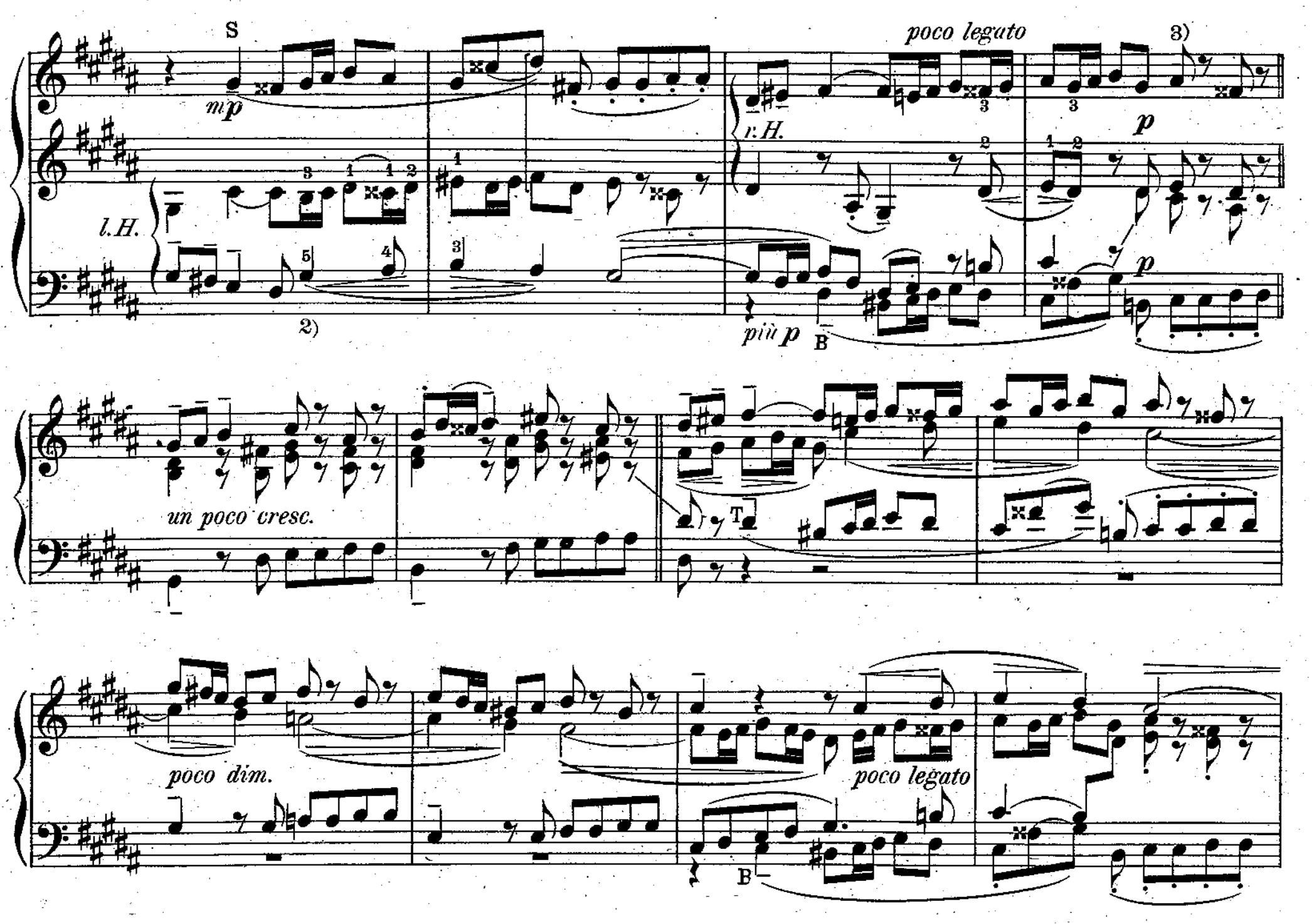
    I don’t blame us for preferring our rather clean, modern Bach editions to this: But are we so confident in our own interpretations that we can throw out the likes of Hans Bischoff, Carl Czerny, Ferruccio Busoni (pictured) and Donald Francis Tovey? These heavily annotated performance editions, while, yes, they should be read alongside a ‘cleaner’ modern edition, can certainly still teach us some beautiful musicianship. In this episode, I let Sir Donald Francis Tovey’s remarks on the g-sharp minor prelude and fugue, BWV 863, lead us through an analysis of the work. Some more from Busoni (the previous prelude and fugue,) his footnotes and ossias are exciting: Most of these editions are in the public domain on IMSLP. Have a look: https://imslp.org/wiki/Das_wohltemperierte_Klavier_I,_BWV_846-869_(Bach,_Johann_Sebastian) Finally, here is the source of confusion about the Picardy third at the end of the g-sharp minor fugue. At first glance, it certainly looks like B natural in the alto voice. (Soprano clef) But look closer. (Sorry for the resolution.) This is not Bach’s normal natural sign. It has a slash (maybe two slashes?) through it: Here are few of Bach’s natural signs. Upon comparison, the above sign certainly is modified with extra strokes to form a sharp: We Rely On Listener Support! How to Donate to this Podcast: The best way to support this podcast, is to become a paid Substack subscriber at wtfbach.substack.com Enough paid subscribers = exclusive content, monthly merchandise giveaways! You can also make a one-time donation here: https://www.paypal.me/wtfbach https://venmo.com/wtfbach Thank you for listening! Thank you for your support. Concepts Covered: An analysis of BWV 863 exploring the four-voice fugue, the two counter-subjects, the invention of the prelude with its inversions — guided by Sir Donald Francis Tovey's annotated Well-Tempered Clavier edition. We mention Busoni, Czerny, and Bartok’s edition as well. What do these historic performance editions still have to teach us? Why a modern urtext editions won’t tell the whole story, and finally the confusion at the end of the prelude and fugue: the Picardy third in the alto voice at the finale. Get full access to W.T.F. Bach? at wtfbach.substack.com/subscribe
  • March 21 · 6 min

    Bach's Birthday is Today, Not March 31st.

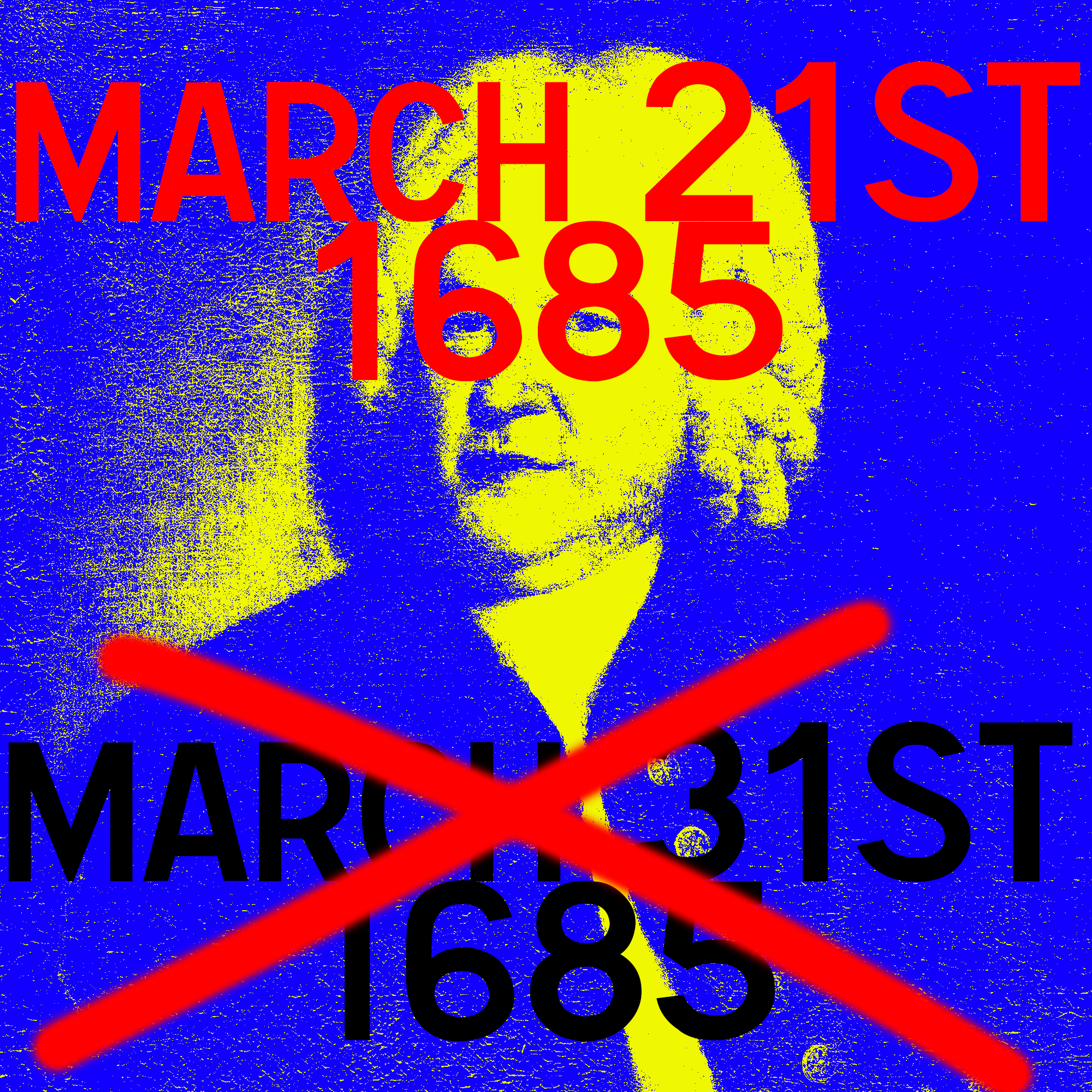
    Happy Birthday Johann. Today, March 21st, not March 31st. Let me repeat that for those of you feeling clever or citing google without thinking: Happy Birthday Johann. Today, March 21st, not March 31st. Why are people confused about this? How did this become a thing? And what extremely boring person got so frustrated with a toccata they started tampering with Bach’s wikipedia page? There were two main calendars in Europe at the time: the Julian and the Gregorian. We are currently on the Gregorian, but it took a while to get everyone on board. Greece held out until 1923 even, and Protestant Germany was holding back in 1685, when Bach was born. But you know, you gotta get with the times, man! Gotta catch up to the modern world! It’s gonna be 1700 pretty soon! We’re gonna have mercury thermometers and calculus… You’re living in the past! …ten days in the past! So in 1700, Germany did indeed make the jump from Julian to Gregorian. In the year 1700, they jumped from February 18, to March 1. No one died, no one was born between Feb 18th and March 1st, 1700 in protestant Germany. (No one even used the toilet.) Germany joined the Gregorian calendar when Bach was 15 years old, with the legal stipulation that all prior dates would remain valid. A legal stipulation, in fact, protecting the old dates from being overridden, and converted to the new calendar. So, come on people, let’s not try to override this actual legal stipulation. (Here’s my gentle reminder that saying Bach was born on March 31st is illegal.) We can’t go about dismissing ecclesiastical records in favor of our modern abstractions just because we’re feeling smug about hybrid cars and vegan smoothies. It’s not like the Gregorian calendar represents some objective truth that the Julian calendar was failing to capture. Bach was Born on March 21st. The next person I hear whispering in the bar, “well, technically he was born on March 31st…” is getting a mordent —to the face. Are you that person who’s trying to switch Bach’s birthday to the 31st? Wow. Can’t wait to hang out with you on Christmas: “Actually, statistically speaking, the odds that Jesus was born on the 25th of December are practically zero! Did you know that in Judea, shepherds typically watched their flocks by night from Spring to early Autumn?” Yeah, yeah, yeah. Get a life. Maybe you know about Shakespeare and Cervantes? That they died on the same day? Or rather, the same date. It’s the same thing: Protestant England, on the Julian calendar, and Catholic Spain, on the Gregorian. It created this beautifully poetic coincidence. The greatest writers of their generations both died on April 23, 1616— 10 days apart. Now, we’re not going to switch the date on which Shakespeare died, are we?! No. That’d be asinine. Which is exactly what shifting Bach’s birthday to March 31st is, asinine. March 21st is also Early Music Day in Europe— for this very reason, and we’re not going to move early music day are we? No, that’d be asinine. March 21st is also, nicely, International Poetry Day, …and World Puppetry Day, …and World Day for Glaciers— if you ask me we have too many days, but sure, why not. In fact, why not make a puppet of Bach reading a poem and dance him around on some ice cubes today. Today is also Harmony Day in Australia, beautiful! The immortal god of harmony, that he should share Harmony Day in Australia. I pictured everyone leaning into triads and flat-nines down unda’ but this day happens to be about racial harmony, but still! Still. Let’s sing four-part chorales with everyone we know. Bach’s birthday is March 21st. It always was March 21st. You know who was born on March 31st? Haydn. Who? Exactly. Never heard of him. If anyone wishes me a happy birthday Bach in 10 days, I’m blocking you. Dig Out Your Inner Ear: Enjoying your contrapuntal journey? Here’s how you can help: We encourage our listeners to become a paid subscriber atwtfbach.substack.comFree subscriptions are also beneficial for our numbers. You can make a one-time donation here. We run a 501(c)3, so let us know if you want a tax deduction: https://www.paypal.me/wtfbachhttps://venmo.com/wtfbach Supporting this show ensures its longevity. Thank you for your support! Get full access to W.T.F. Bach? at wtfbach.substack.com/subscribe

Showing 21–22 of 22 episodes