
Skip to content
Artwork for Translating the Tradition
Religion & SpiritualityChristianitySociety & CulturePhilosophy

Translating the Tradition

Fr. Justin (Edward) Hewlett

Sermons and miscellaneous musings from St. John of Shanghai Orthodox Church in Vancouver, BC, Canada - mostly by Fr. Justin Hewlett.

translatingthetradition.substack.com
Play
  • 20 episodes
  • Avg 17 min
  • English
  • August 24 · 20 min

    Spiritual Success

    We are given, in the modern world, a great many different definitions of success. We might define success as getting straight A’s in high school and university. Or we might define success as getting a really good job by the age of 25. Or we might define success as having so many YouTube followers by this point in your YouTube career. Or whatever — we have a lot of different ones. They all tend to revolve around: how much, or how many? In the Jewish world, in the ancient days, in the days of our Lord, there was a fairly different definition of success, but not completely different. And the rich young ruler here who comes to Jesus — he’s pretty much the definition, the Jewish definition, of success. He keeps the commandments faithfully. So he’s clearly pious. He clearly cares about God and about his neighbours. He’s keeping the law. And it’s also really clear that God has blessed him: he’s rich, he’s got lots of stuff. And in the Jewish understanding, if you want to see whether or not somebody has God’s favour, well, look how many sheep they have. Abraham had a lot of sheep, right? So here this young man comes to Jesus, and he’s pretty successful by the standards of his day. He comes up to Jesus and says to him, “Good teacher, what must I do to have eternal life?” So he recognizes that even in the midst of his success, even in the midst of his fairly good relationship with God and with the people around him, he’s missing something. And Jesus’ answer is really interesting. It doesn’t actually begin by answering the question. He says, “Why do you call me good? No one is good except God.” And then he goes on to say, well, “If you want to enter into eternal life, keep the commandments.” And so the young man says, well, there are a lot of commandments — yes, you’ve got the ten, but some scholars have broken it down to over 600 different commandments. So he asks the natural question: which ones? And Jesus goes on to list the six that have to do with his relationship with those around him — that is to say, with his relationship with his fellow man. And the young man says, “Well, I’ve kept all these from my youth — I’m still missing something, what am I missing?” And so Jesus tells him exactly what he’s missing: “If you want to be perfect, go sell everything that you have, give it to the poor, and come follow me.” So this is a really interesting criterion for what would be, of course, ultimate success within the Jewish or Christian understanding. Sell everything that you have. (Now, admittedly, this is for this particular guy — it’s not necessarily telling all of us to sell everything that we have. Hope not.) But then — and this is the clincher — come and follow me. The young man went away sorrowful, because he has a lot of stuff. And it says in one of the Gospel accounts of this that Jesus looked at him and he loved him. And he certainly sounds kind of sad as the young man is going away. He turns to his disciples and says, “Truly I say to you, it is hard for a rich man to enter the kingdom of heaven. And again I say to you, it is easier for a camel to go through the eye of a needle than for a rich man to enter the kingdom of God.” And when his disciples heard it, they were — well, it says greatly astonished — but I think they were deeply disturbed. This guy’s the definition of success. He’s kept the law. He’s got money, he’s been blessed by God. Who then can be saved? If it’s hard for this guy, it’s got to be even harder for us. And Jesus simply looks at them and says, “With men this is impossible, but with God all things are possible.” I want to go on to the second gospel reading in just a minute, but let’s stop for a minute and unpack a couple of things here. First of all, as I said, when the young man asks which commandments, Jesus tells him the six that have to do with our relationship with human beings, with those around us — six of the ten. The other four are about God: you shall have no other god before me, you shall not worship a graven image, and so on… remember the Sabbath day and keep it holy. But the six he lists here are: you shall not murder, you shall not commit adultery, you shall not steal, you shall not bear false witness, honour your father and your mother. And, interestingly, the Ten Commandments’ last one — you shall not covet — he sums up as, “you shall love your neighbour as yourself.” I only just noticed that this morning, and it struck me: that’s an interesting gloss. What is he doing here? What does it mean to covet? Maybe for this young man, who has lots of stuff, coveting isn’t really a problem in his mind — because he’s got everything that he wants, everything that he needs, well, except eternal life. And so Jesus translates it for him, and for us: love your neighbour as yourself. Because when you think about it, coveting is really looking at our neighbour and saying, “Oh, they have that — I want that. Why don’t I have that? It’s really not fair, and I kind of wish they didn’t have that, so I wouldn’t feel uncomfortable not having it.” What is that? It’s a lack of love for your neighbour. If you actually loved your neighbour and saw that he has something good, you’d say, “Wow, that’s great, that’s awesome, I’m so glad you have that cool car,” or whatever. So Jesus is, as always, talking very clearly and specifically to the person in front of him. He knows this young man; he knows exactly what he needs. That’s also why, at the very beginning, he asks, “Why do you call me good? There’s no one good except God.” Because he wants to get him thinking. If Jesus really is good — if he’s really coming to him for this authoritative pronouncement on what he needs to inherit eternal life, and if he has seen Jesus as he must have by this point, and heard about all that Jesus has done — maybe he actually has some insight, maybe he can actually think about who Jesus is. He’s just called him good. What does he really mean by that? And so when Jesus tells him at the end of this discussion, “Sell everything that you have, give it to the poor, and come follow me,” what he’s asking for is the recognition, the acknowledgement, the understanding of who Jesus really is — what allegiance he should really give to Jesus. All right, the second Gospel reading. This one is given to us because today is the leave-taking of the Great Feast of the Dormition of the Theotokos. And Jesus is entering into the house of Mary and Martha. Now, this is, of course, not Mary his mother — it’s Mary of Bethany. But we like puns in the church, and we like these fairly clear parallels — if you remember, we’ll get to this… So he goes to the house of Mary and Martha, the sisters of Lazarus, whom he later raises from the dead, and they welcome him into their home. Martha gets busy — she’s bustling around, making sure everything’s clean and tidy, or maybe it’s clean and tidy already, but needs a little more, adjusting the vase, making sure the flowers in it are fresh, and making sure all the food they’re going to eat is prepared and really good. And as she’s doing this, she’s getting more and more annoyed, because every time she thinks, “Wow, there’s so much to do,” she looks over at her sister Mary, and Mary’s just sitting there, at Jesus’ feet, listening to him talk. It’s like, “I would like to do that too — I’d really like to just sit at Jesus’ feet and listen, but I have all these things I need to do, and you’re not helping me with any of them.” Finally this frustration boils over, and she comes to Jesus and says, “Lord, don’t you care that my sister has left me to serve alone? Tell her to come and help me.” Jesus answers her and says, “Martha, Martha, you are worried and troubled about a great many things, but really only one thing is needed — and Mary has chosen that good part, which will not be taken away from her.” What part? Well, she’s sitting at the feet of him who is the Word of God, listening to the words coming out of his mouth. She’s chosen, maybe a little more directly than Martha, to follow Jesus. That being said, I think we can give Martha some credit here. What is she doing? She’s trying to serve God, and none of that is wrong. Jesus doesn’t say to her, “That’s the wrong part, you’ve chosen the wrong part.” He says Mary has chosen the better part. What Martha has chosen, therefore, is something good — but her response to that choice, how she’s making it, how she’s engaging with it, is undermining the choice. Because instead of doing what she’s doing simply out of love for Jesus, she’s now doing it while also looking over at somebody else and coveting what they have: “I want that peace. I want that opportunity to relax. I would like that.” And then it boils over into anger and frustration with this other person. And that’s us. We’re so obsessed with the other person, with the other person’s success, with what the other person has that we don’t have. Or we’re so obsessed with what we do have, and just want to hold on to it — that’s really all we want: “Okay, I’ve got some good stuff here, I need to hold on to this stuff.” And so what happens to us is we get caught up in these various definitions of success that actually have nothing to do with real, ultimate, eternal success. “I’m putting all this time and energy and effort into this presentation, or into this meal, or into this supra, or whatever it is that we’re doing, and I want it to be successful and good and wonderful.” Or, “I’m putting all this time and effort and energy into my career, making sure I’m advancing,” or into my studies, or whatever it is. None of these things are bad. The problem is they can become a distraction for us — a distraction from the one thing that is really needed. And so Christ is calling us to that one thing that is really needed, and that’s him. Because he is the Creator, the Lord, the sustainer of the universe. He is the Word of God. He is the wisdom of God, the power of God. He is everything that we really need. And so what he’s doing is asking us to take all these various definitions of success and not just throw them out — because it’s always nicer to succeed than to fail — but to put them in their proper context. And what is that proper context? It’s as the apostle Paul puts it: “Whatever you do, do it as unto the Lord.” He goes further and says, “Slaves, obey your masters — work for them as though you were working for the Lord Jesus.” Before I go further: we’re also a little obsessed with success, with succeeding, that is — “here’s my objective, I must accomplish this objective.” But if you actually look at what the church celebrates, the thing we celebrate most is probably the martyrs. How is that success? They set out to do whatever they’re trying to do — whether that’s preach Jesus, or serve the poor, or heal people — and then somebody comes along, grabs them, and says, “Recant, stop worshipping Jesus,” and they say no, and they’re put to death. How is that success? And yet this is what we celebrate. Why? Because what they are doing is the one thing needful that Christ has called us to do, whether that be in martyrdom or in life — which is, follow Jesus. Look to him, listen to his words, serve and work and do whatever we’re doing as though we’re doing it for him. The other analogy that’s made here is that we are soldiers. And if you’re a soldier, it really doesn’t matter whether you triumph or fail — what matters is: did you obey what your commander was telling you to do? Did you undertake it to the best of your ability? One of my favourite poems is Alfred, Lord Tennyson’s “The Charge of the Light Brigade,” which is all about a rather stupid decision on the part of the military commanders to send a bunch of cavalry to charge right into the guns. Tennyson writes, “Cannon to the right of them, cannon to the left of them, volleyed and thundered. Into the valley of death rode the six hundred.” What Tennyson is honouring in this poem is the valour and the dedication and the honour of these soldiers, even though, in their case, the man on top was an idiot who didn’t know that you shouldn’t send light cavalry against cannons. This is a bad idea. In our case, the one on top is the Lord and Creator and sustainer and ruler of the universe. We can trust him. We need to trust him. This is, ultimately, our definition, our understanding of what it means to succeed. This is how we enter into eternal life: we are willing to get rid of absolutely everything — everything that distracts us, everything that takes us away from him — and we focus on him, on Jesus, the author and finisher of our faith, who, for the joy that was set before him, endured the cross, despising the shame. And if we do this — whether we win or lose, whether we achieve success in the world’s eyes or not, whether it feels like the amazing thing we’ve dedicated our lives to, or whether it feels like an exercise in frustration, but we keep doing it because we believe and understand that this is what Christ is calling me to do — then we will be truly successful. Then we will enter into eternal life, because that is the life that Christ is calling us to live. That is the life that we have been created to live: the life of loving obedience to our Lord and God and Saviour Jesus Christ, to whom be glory, with the Father and the Spirit, now and ever, and unto ages of ages. Scripture readings referenced: * Matthew 19:16-26 Also referenced: “The Charge of the Light Brigade” I Half a league, half a league, Half a league onward, All in the valley of Death Rode the six hundred. “Forward, the Light Brigade! Charge for the guns!” he said. Into the valley of Death Rode the six hundred. II “Forward, the Light Brigade!” Was there a man dismayed? Not though the soldier knew Someone had blundered. Theirs not to make reply, Theirs not to reason why, Theirs but to do and die. Into the valley of Death Rode the six hundred. III Cannon to right of them, Cannon to left of them, Cannon in front of them Volleyed and thundered; Stormed at with shot and shell, Boldly they rode and well, Into the jaws of Death, Into the mouth of hell Rode the six hundred. IV Flashed all their sabres bare, Flashed as they turned in air Sabring the gunners there, Charging an army, while All the world wondered. Plunged in the battery-smoke Right through the line they broke; Cossack and Russian Reeled from the sabre stroke Shattered and sundered. Then they rode back, but not Not the six hundred. V Cannon to right of them, Cannon to left of them, Cannon behind them Volleyed and thundered; Stormed at with shot and shell, While horse and hero fell. They that had fought so well Came through the jaws of Death, Back from the mouth of hell, All that was left of them, Left of six hundred. VI When can their glory fade? O the wild charge they made! All the world wondered. Honour the charge they made! Honour the Light Brigade, Noble six hundred! —Alfred, Lord Tennyson This is a public episode. If you would like to discuss this with other subscribers or get access to bonus episodes, visit translatingthetradition.substack.com
  • August 24 · 24 min

    It’s Not about the Theology

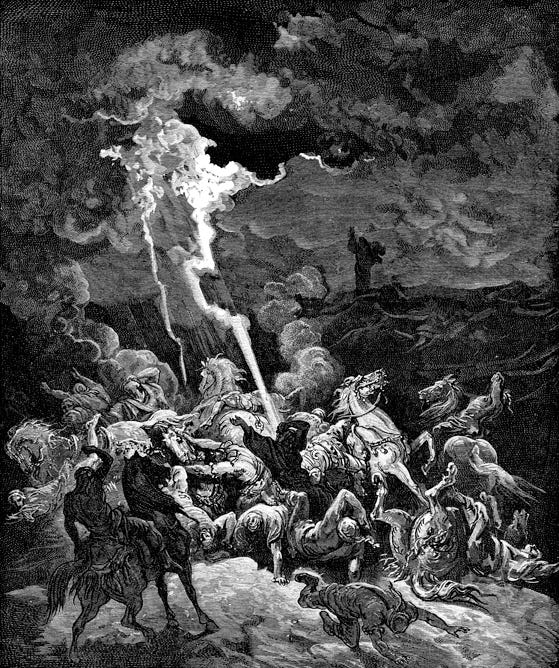
    I want to do things a little differently today. Instead of a three-point sermon, I have three mini-sermons. They’re not exactly connected to each other, except by the day. But I want to preface my remarks by saying that I hope they are all genuinely practical — because one of the things that has struck me after almost 30 years of being Orthodox is that it’s really not about the theology. Now don’t get me wrong, theology is wonderful and important. If you’ve been attracted to the Orthodox Church because of the riches and depths of Orthodox theology, glory to God, that’s wonderful. But even for those of us who have fallen in love with Orthodox theology, the whole point of the Church’s teaching about who God is is so that we can work out our salvation in fear and trembling. It was one of the more disturbing realizations I had about ten years in, when I realized — I had converted to Orthodoxy because I wanted to be right — after all, this is the one true Holy Catholic and Apostolic Church — and that’s not a horrible reason for converting… But about ten years in, as we were reading and studying the sayings of the Desert Fathers, it suddenly struck me, powerfully: this is about me. It’s about me having to allow God to change me. And I really don’t want him to change me. I’m happy to repent of my sins to get rid of my guilt, but I don’t actually want to change. But that’s the whole point. The whole point of Jesus’ teachings is so that we can change and grow into the people God made us to be in the beginning. And we see that all through his ministry. So I want to start with the Gospel reading we heard for the Icon Made Without Hands. I’m not going to talk about that particular icon — if you want to look up the story, go look it up, it’s pretty cool. But the reading itself has Jesus and his disciples going down to Jerusalem. It begins by saying that Jesus “set his face to go to Jerusalem” — which he would have had to do: he knows what is awaiting him there, and he knows that this was his ultimate destiny — this is what he has to accomplish, but it’s going to be pretty hard. So he has set his face steadfastly to go to Jerusalem, and he’s going in the most direct way possible: straight through Samaria. I won’t belabor the point about the relationship between Jews and Samaritans, other than to remind you that one of the key contentions between them was, where do you worship? The Samaritans had built a nice temple on Mount Gerazim, but of course, the Jewish tradition was that you had to worship in the temple at Jerusalem. And so when the Samaritans saw Jesus and his disciples with their face clearly set to go to Jerusalem — this was obviously their destination: they’re going to Jerusalem to worship — they wouldn’t let them in. They showed them no hospitality. They essentially (whether literally or figuratively) slammed their doors in the disciples’ faces. The disciples were distraught. Even given the horrible relationship between Jews and Samaritans, one of the things that is absolutely sacrosanct across the ancient world is the duty to show hospitality to strangers. It was a sacred obligation. They didn’t have hotels — well, they had a few, but it wasn’t quite the same: if someone is traveling and needs a place to stay, it’s your job is to look after them, not to slam your door in their face. So the disciples are furious. James and John come to Jesus and say, “Do you want us to command fire to come down from heaven and consume them, just as Elijah did?” Now, Elijah did do this. When soldiers were sent to arrest him, he called down fire from heaven which consumed them. He was just one unarmed man — when you send a whole host of soldiers to fetch someone, you expect them to come back with their prisoner. But Elijah simply prayed, and fire fell down from heaven and consumed those who were sent to arrest him. This actually happened twice, because the king kept sending more soldiers. The third time, the officer sent fell down before Elijah and begged him not to call down fire, and Elijah was merciful. So this is something that God does, apparently, in certain circumstances. And so the disciples felt it would be entirely appropriate for God to do the same here — to send down fire from heaven and consume those villages that had so rudely rebuffed the one they loved. Because, of course, it wasn’t just about them: the Samaritans had been horribly rude to the Christ, the Messiah. But Jesus turns to them and rebukes them: “You do not know what manner of spirit you are of. For the Son of Man did not come to destroy men’s lives, but to save them.” And they went to another village. I love that last line. They just went to another village. Simple solution. And I think one of the things we can take away from this — particularly as Orthodox Christians, people who have found the one true Holy Catholic and Apostolic Church — is that there is a temptation to be a little triumphalistic, or to be very eager to guard the honor of the tradition we have inherited and come to love. And when people aren’t honoring that tradition, this can become our natural response: I’d like God to send down fire from heaven, and maybe not consume them, but at least show them that I’m right. But in that response, we show that we do not know what manner of spirit we are of. Because the Son of Man did not come to destroy men’s lives, but to save them. And one thing especially important for those of us who are converts to Orthodoxy to remember is that we were wrong too, once. That’s why we’re here. If we don’t extend the same grace to those we’re talking with — or who are maybe trash-talking the Orthodox Church within our hearing — the same grace that God extended to us, then what manner of spirit are we of? The second thing I want to say is something you have heard me say over and over again, and I’m going to say it again, because it is so deeply important for us as we work out our salvation in fear and trembling. It’s the other Gospel reading we heard today, from Matthew. You know the story. A king decided to settle accounts with his servants. When he was going over the books, he found someone who owed him 10,000 talents — a debt on the level of a nation-state. The king calls him in and commands that he be sold, along with his wife, his children, and all that he has, so that some payment can be made. He’s not going to recover 10,000 talents from that, but at least he’ll recoup some of the losses. And the servant is obviously deserving of some punishment — I don’t know how he racked up a debt of 10,000 talents, but probably not by doing the right thing. The servant falls down before him and says, “Master, have patience with me and I will pay you everything.” Which is, of course, ridiculous — there is simply no way he’s ever going to repay 10,000 talents. But the master is moved with compassion and releases him, forgiving him the entire debt. So the servant goes out the door, thinking this is wonderful, he’s off the hook — and immediately spots a fellow servant who owes him money. Not an insignificant sum, but something like a third of a year’s wages. He goes up to this man, grabs him by the throat, and says, “Pay me what you owe.” The fellow servant falls down before him and says, “Have patience with me and I’ll get you the money.” And the servant who has just been forgiven 10,000 talents will have none of it and has the man thrown into prison. The other servants see what has happened, and they go to the master and tell him everything. The master is unsurprisingly unhappy, and says, “You wicked servant, I forgave you all that debt because you begged me. Should you not also have had compassion on your fellow servant, just as I had pity on you?” And his master was angry and delivered him to the torturers until he should pay all that was due. “So my heavenly Father also will do to you if each of you from his heart does not forgive his brother his trespasses.” I don’t know how much more solemn a warning we could receive from the mouth of the most compassionate man who ever lived. But if we do not learn to forgive, we will find ourselves in a hell of our own creation. There is a root of bitterness that grows in us as we refuse to forgive that will consume and destroy us, and make our life a living hell. And I don’t even want to think about what might come after. Jesus is warning us that it is absolutely, fundamentally, life-savingly essential to forgive as you have been forgiven. It’s right there in the prayer he teaches his disciples: “forgive us our trespasses as we forgive those who trespass against us.” But forgiveness is hard. What prompts this particular parable is Peter asking how many times he should forgive his brother — seven times for the same offense? And Jesus says no. Seventy times seven. And, just in case Peter is thinking that’s 490 which is a lot but it is a limit, Jesus tells him the parable. This is a parable I keep returning to because it is our greatest tool as we are learning to forgive, as we are struggling with forgiveness. Because forgiveness is generally not just an “oh yeah, I forgive you, it’s fine.” Maybe if someone steps on your toe, you’ll forget about it the next day. But if someone has done something life-altering to you, and you’re still living with the consequences, or perhaps you’re suffering repeated wrongs day after day — this is hard work. How do we do it? The answer is this: remember what you have been forgiven. Have a correct understanding of just how much you have been forgiven. Because we don’t know the life circumstances of the people who are hurting us, or that we’re struggling to forgive. We’re not God. We don’t know them. But we do know our own life circumstances. We know all the grace that God has poured out on us day in and day out, month in, month out, year in, year out. We have experience of that. We’re alive. We’re drawing breath. We’re in this amazing world that he has created — despite the fact that we keep messing up, keep hurting other people, keep hurting ourselves. God is merciful. That’s precisely why we have all those “Lord have mercy”s in the service — we need that reminder. That’s precisely why we have the rite of confession. Because as we examine ourselves and realize where we’ve failed and confess our sins, God is faithful and just to forgive us our sins and to cleanse us from all unrighteousness: that’s our 10,000 talents that we have been forgiven right there. That’s the depth of God’s love and mercy, his riches toward us, his kindness and compassion — freely given to us day in and day out. And that’s our basis for turning to our brother, our sister, the person on the street, the person who keeps hurting us over and over again, and saying: I’ll be patient with you. In fact, maybe I’ll even forgive you. Because God has forgiven me. As Jesus said to his disciples: freely you have received, freely give. The third and last thing I want to say is this: all of this is really hard. This is not easy. Christianity is not for the faint of heart. As C.S. Lewis said, “it’s a fighting man’s religion.” We have to fight day in and day out. The Apostle Paul himself says: “keep fighting the good fight, do not grow weary in well-doing.” And we don’t always have a lot of encouragement, a lot of confirmation, and that’s precisely why we have the feast we have just celebrated, the Dormition of the Theotokos. We talked yesterday about the humility that was in Christ Jesus, and that was also in her, and that we are called to. But even that’s hard — more hard stuff. So what do we have in terms of reassurance? What we have is precisely what we know about the fate of Mary, the mother of our Lord. When she died, the prophecy she herself spoke was at least in part fulfilled — that all would call her blessed. She was surrounded by people who loved and honored her. The apostles came to say farewell to her — or perhaps were brought, it’s not clear to me from the story I read, but it might even be that they were brought like the apostle Philip was when he was taken away after he baptized the Ethiopian eunuch, and just found himself over at Azotus where God wanted him next. Because one of the things that’s in there in the story is, as the apostles find themselves here, they’re all confused. “What? Why are we here?” And the apostle John says, “It’s the time for the Theotokos to depart. God has brought you here.” You can imagine that if they were plucked up and just kind of deposited there, they might be a little disoriented. And as they have this beautiful funeral, saying goodbye to Jesus’ mother, Thomas — as usual — is late. He has some excuse; he’s over in India. He shows up after they’ve already laid her to rest, and he is absolutely distraught that he didn’t get to say goodbye. In the Christian understanding, the body is still a part of us — that’s why we bury rather than cremate wherever possible, honoring the body as a part of the person. So Thomas asks that the tomb be opened so he can say his goodbyes. And when they open the tomb, there is no body. Because why would her Son leave her there in the grave? The thing about Mary is that she is us. She is us, the Church. As we are the bride of Christ, she was, in a sense, the bride of God. And so what we see and celebrate in her is actually what we can anticipate receiving ourselves as followers of Jesus Christ, as those called to be God-bearers, called to be Theotokos. What is promised to us is that we will share in the resurrection that Jesus experienced, the resurrection of life that the Theotokos experienced. This world is not our home. We are just passing through. It’s a beautiful journey, if only we have eyes to see it. And we can see it a whole lot better if we forgive, and if we are looking to seek and to save those who are lost — who are lost like us, and whom we can invite to come along with us on the journey. It is a hard journey. But at the end there is not only rest, but real, true resurrection: eternal life — that life we were made for in the beginning, that life that was in Christ, and being in Christ is also in his mother, and being in her is also in us, that is God at work in us, his children. He will not abandon us to the grave. He will bring us into his presence, enabling us to stand before him and to give an account of what we have done with what he has given us, knowing that he is the compassionate master who forgives us as we fall down before him and worship and glorify him: Father, Son, and Holy Spirit, now and ever and into ages and ages. Scripture readings referenced: * Luke 9:51-56; 10:22-24 * Matthew 18:23-35 This is a public episode. If you would like to discuss this with other subscribers or get access to bonus episodes, visit translatingthetradition.substack.com
  • August 24 · 13 min

    The Death-to-Self of the Theotokos

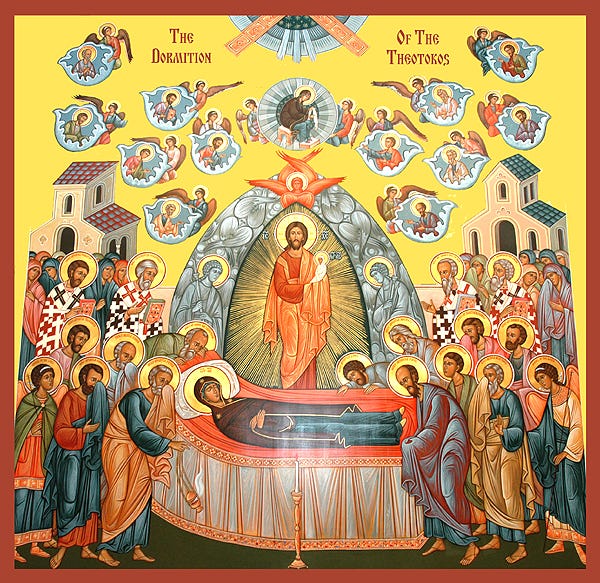
    So we’re all gathered here for the great feast of the Dormition, which of course commemorates the falling asleep of the Mother of God. And I want to begin by looking today at the epistle reading that we just heard. The epistle reading is, of course, about Jesus. Let this mind be in you, which is also in Christ Jesus, who, being in the form of God, did not consider it robbery to be equal with God, but made himself of no reputation, taking the form of a servant [or slave], and coming in the likeness of men. And being found in appearance as man, he humbled himself, and become obedient to the point of death, even the death of the cross. Therefore, God also has highly exalted him, and given him the name which is above every name, that at the name of Jesus, every knee should bow of those in heaven and those on earth, and of those under the earth, that every tongue should confess that Jesus Christ is Lord, to the glory of God the Father. It’s a beautiful and powerful expression of our Lord’s divine glory and his humility in which he set aside that glory. So what does it have to do with Theotokos? With Mary? Well, I think the clue is in the first verse of the pericope. “Let this mind be in you, which was also in Christ Jesus.” You see, we’re called Christians. This is what we profess to be. We are first called Christians at Antioch. When they’re like, “Oh, these guys, they’re like little Christs.” Which, of course, is what “Christian” means. And Mary was the first Christian. She was the first one to trust in Jesus as the Christ, as the Messiah, and to look to him for her salvation, and for the salvation of all her people. And so, while this passage is, of course, about Jesus, it’s supposed to be about all of us. And, after all, if you think about it, most of us tend to think fairly highly of ourselves: you know, we’re not bad people. We’re actually, you know, pretty good. People should really recognize that. And, you know, honour that and treat me nicely and maybe even celebrate me a bit, right? This is, in our, in our pride, in our natural self-centredness, this is how we tend to think. Of course, as soon as we have this mindset, and then put it up against the mindset that Paul has just described here, we realize how stupid it is. It’s like, well, I’m not exactly the creator of the world or anything like that. And even my best writing is really kind of pathetic when you look at it. Jesus, of course, had every reason to expect honour, to expect to be acknowledged. He was, of course, in the form of God. It would not have been robbery for him to consider himself equal with God, with the Creator of the universe, because he was the Word by which the universe was spoken into existence. But, instead, what did he do? He made himself of no reputation, taking on himself the form of a bondservant, taking on himself the likeness of men, and as he was found in appearance as a man, he humbled himself and became obedient unto death, even the shameful, horrific, tortuous death of the cross. And it is for this reason—therefore, God has highly exalted him, and given him the name which is above every name, that the name of Jesus, every knee should bow, of those in heaven, and those on earth, and those under the earth, and that every tongue should confess that Jesus Christ is Lord to the glory of the Father. And the thing is, Paul is not just talking about Jesus. He’s talking about us. Not merely in the sense of, well, this mindset, this humility that Christ displayed to us is something that we should do, but also that this glory is something that we can look forward to. And that is, of course, exactly what Mary, the first Christian, experienced. In the Matins Gospel reading, which we didn’t read yet—I’ll read a bit of it for you here today—Mary visits her cousin Elizabeth, who’s pregnant with John the Baptist. And she’s six months pregnant, and, as Mary enters the house, the baby in Elizabeth’s womb leaps, and Elizabeth is filled with the Holy Spirit. And she speaks out with a loud voice and says, Blessed are you among women. And blessed is the fruit of your womb. But why is this granted to me that the mother of my Lord should come to me? For indeed, as soon as the voice of your greeting sounded in my ears, the babe in my womb leaped for joy. Blessed is she who believed, for there will be a fulfillment of those things which were told her from the Lord. And Mary responds, My soul magnifies the Lord. And my spirit has rejoiced in God, my Saviour, for he has regarded the low state of his handmaiden, and behold, henceforth all generations will call me blessed. For he who is mighty has done great things for me, and holy is his name, and his mercy is on those who fear him from generation to generation. A splendid scene. And one that only two people saw. One thing to keep in mind here, as we think about these words that Mary is saying, that Elizabeth is saying, blessed are you among women, blessed are the fruit of your womb, there will be a fulfillment of everything that was promised because of your belief, and Mary’s amazing magnification of the Lord, rejoicing in the Lord, for regarding her own lowly estate, and rejoicing in the realization that all generations would call her blessed—that hasn’t happened yet. None of that’s happened yet. In fact, the one thing that has happened at this point is Joseph, Mary’s betrothed, has been thinking about divorcing her, putting her away quietly, because he’s an honourable man. But, you know, she’s a young teenage girl, and she was supposedly so holy, and now she’s pregnant. What’s that about? And this is the actual on-the-ground context for this amazing magnification of God, this amazing hymn of rejoicing, and how God is exalting her and working through her. I think that we can learn a thing or two from this. We’re very often—especially in this age of social media—quite concerned about how people view us and think about us, and think about our ideas, and, you know, we want to make sure that there’s no misunderstanding. I must post a response to this Facebook post (or possibly a Substack post), because somebody said this about me, and that’s not quite true. I have to tweak that, and we have to defend ourselves. Or even just in our regular non-online interactions: it hurts when people misunderstand us. When they assume bad things about us. When our reputation is at stake. And yet, this is exactly what the world did with both Mary and Jesus. They misunderstood. They misjudged. And what’s the response? “My soul magnifies the Lord, and my spirit rejoices in God, my Saviour. For he who is mighty has done great things for me, and holy is his name.” How does she manage it? How does she do it? And I think the answer is actually really, really simple. She’s not thinking about herself. Just as Jesus wasn’t thinking about himself. She was thinking about God, thinking about what God would inevitably, by his promise, do through her. What he would accomplish in her, by his grace, poured out upon her, and not only upon her, but upon the whole world, that would benefit from her simple act of saying yes. And the amazing thing is, of course, that it does all come to pass. Even if it isn’t already here yet, it is coming: the ultimate exaltation of our Lord and God and Saviour Jesus Christ, every knee bowing before him, every tongue confessing, that he is Lord, to the glory of God the Father—this is coming. This is the work that God is working here and now, in the world, in us, through us. As we have that mind, which was in Christ Jesus, our Lord. As we have that mind, which was in Mary, who became, by her simple yes, the Theotokos, the God-bearer, the Mother of God. And this is our calling too. Both the cross—the misunderstanding—and the glory, as we embrace what God is doing, as we rejoice in the grace of God, so we, too, can be what we are called to be, God-bearers in this world, that in us and through us, as Christ is exalted, so we too participate in His glory, to the glory of God the Father and the Son and the Holy Spirit, now and ever and unto ages of ages. Scripture readings referenced: * Philippians 2:5-11 * Luke 1:39-49, 56 This is a public episode. If you would like to discuss this with other subscribers or get access to bonus episodes, visit translatingthetradition.substack.com
  • August 7 · 15 min

    The Encouragement of the Transfiguration

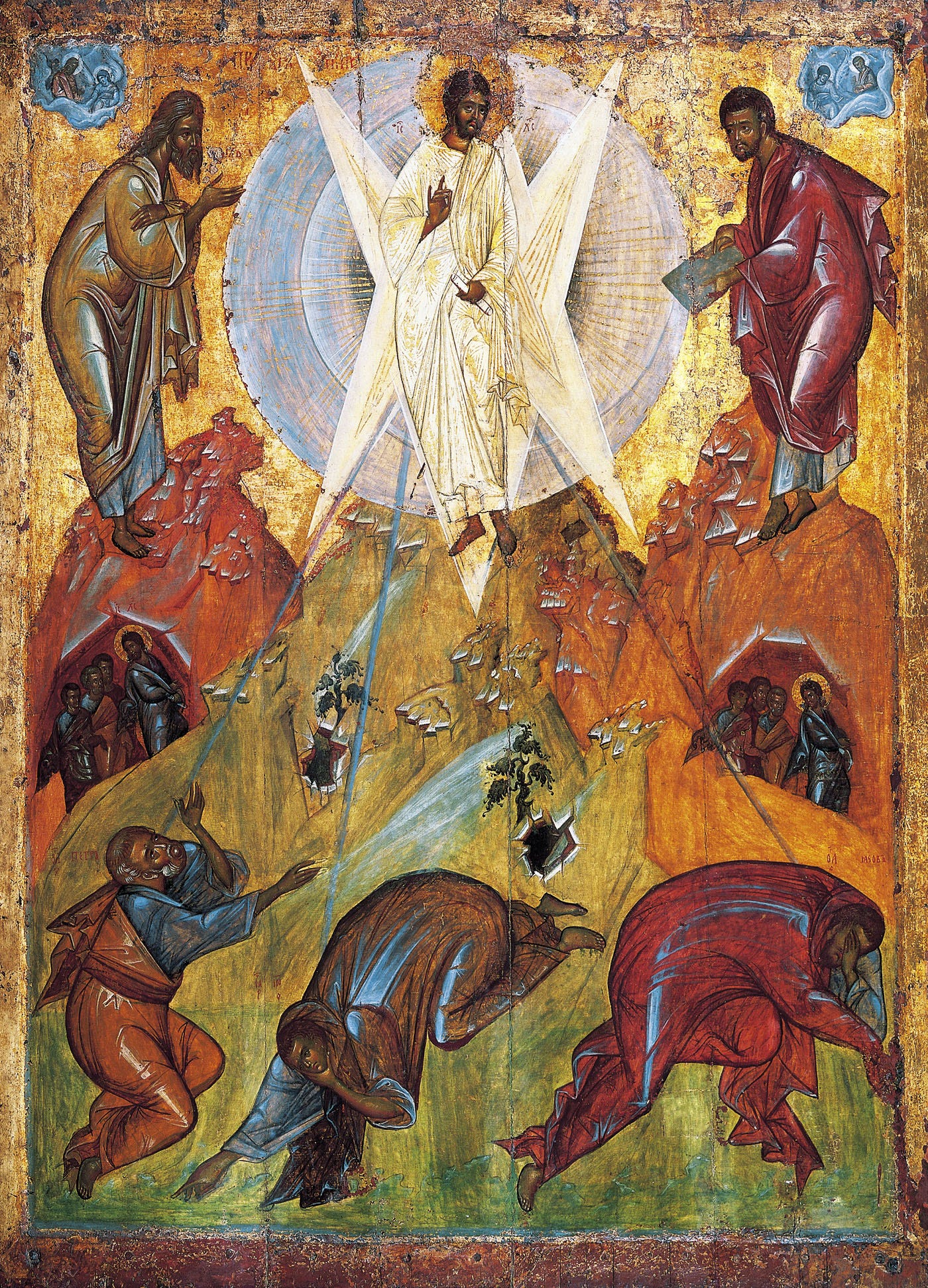
    When I think of the great feast of the Transfiguration, I always think about encouragement. This feast above all — well, I guess Pascha is the most encouraging; Pascha is off the charts — but this feast really seems to be focused on encouragement. You hear it even in the hymnography: one of the reasons Christ went up on Mount Tabor at this point was to encourage his disciples, so that as they knew what was going to happen to him, they would also know who he really was. This incident is recorded in all three of the Synoptic Gospels — Matthew, Mark, and Luke — and interestingly, in all three it occurs in roughly the same context. The Gospels rearrange things sometimes, especially Luke, but here we have three things occurring one after the other in all three accounts. The first is Jesus asking his disciples who he is. He says, “Who do people say that I am?” They answer: “Some say Moses, some say Elijah, some say one of the prophets.” But then he turns to them and asks, “Who do you say that I am?” And Peter answers, “You are the Christ, the Son of the living God.” Jesus responds, “Blessed are you, Simon, son of Jonah, for flesh and blood has not revealed this to you, but my Father who is in heaven.” Peter then messes up a little, because the very next thing Jesus does is tell his disciples what is going to happen to him. They’ve just confessed him as the Messiah — they have a whole set of preconceptions about what the Messiah will do, what he’ll be like, what will happen when he comes — and Jesus blows all of that up with what he says next. The Son of Man is going to be betrayed into the hands of sinful men, crucified, and die. And Peter says, “No, no, we have to make sure this doesn’t happen to you, Lord.” And Jesus turns to Peter and says, “Get behind me, Satan.” He goes on to say that unless someone takes up their cross and follows him, they cannot be his disciple. Given that this is the context in all three Gospels for what happens next, you can see why the disciples might have needed some encouragement at this point. It’s like: okay, great, the Messiah is here — and he’s going to die, and nothing we were expecting is going to come to pass, and now he’s telling us we have to do the very same thing, take up our cross and follow him to our deaths. This doesn’t sound like much fun. So it’s at this point that Jesus goes on a hike with his disciples up Mount Tabor. I just had the pleasure of going on a hike with some of my family. One of the things about hiking is that it’s great, especially when you get to the top — you look out and the whole world is spread out before you. But the hike itself is often tough, especially up a mountain, especially if you’re getting older like I am. My legs start feeling like rubber; I’m not sure I can actually make it all the way. The disciples were far more used to walking than we are, but this must have been, to some extent, their experience too as they hiked up Mount Tabor with Jesus. When they get up there, they’re tired, and they drift off. When they look up, they see Moses and Elijah standing with Jesus, and Jesus’ garments are — I think it’s Mark who says — whiter than any laundry soap could make them. Just absolutely brilliantly white. He is transfigured before them, transformed. And what are they talking about? The disciples overhear some of the conversation, and Moses and Elijah are talking with Jesus about the things that are going to happen to him. So even here, it’s in the context of what is to come. Then Peter, again not quite sure what to say, says, “Lord, it’s good for us to be here. We should build three tabernacles — one for you, one for Moses, and one for Elijah.” And he has some justification for this. Moses is a pretty important person. He leads the children of God out of captivity, leads them to Mount Sinai where they encounter God as he delivers the law through Moses to his people. On that mountain, it’s all darkness — they look up and see no form of anything, just darkness. In fact they’re so scared that when they hear the voice of God, they tell Moses, “You go up — you’re the one who needs to talk to God face to face, because if we hear him, we’ll die.” So Moses goes up into the mountain and talks with God face to face, as a man talks with a friend, and receives the law from him. While he’s up there, he asks to see the glory of God. And God says, “Sure, we can do that — but this might be dangerous for you, so I’m going to hide you in a cleft of the rock, and I’ll pass by in front of you. You’ll just see my back, but you’ll get to see my glory as far as you can bear it.” And he does this, covering Moses with his hand as he passes by, and he proclaims his name: “The Lord, the Lord God, merciful and gracious, long-suffering and abounding in goodness and truth, keeping mercy for thousands, forgiving iniquity and transgression and sin, by no means clearing the guilty, visiting the iniquity of the fathers upon the children and the children’s children to the third and fourth generation.” He proclaims to Moses who he is. And Moses makes haste, bows his head to the earth, and worships. And of course Elijah was pretty important too — one of the first really great prophets, who does all these amazing miracles. He too meets God on the mountain. When he does so, it’s a little less glorious in its circumstances; he’s on the run from the king and queen who are trying to kill him. But God strengthens him and brings him to the mountain. There he hears a great wind — but the Lord is not in the wind. There’s a great fire — but the Lord is not in the fire. There’s a great earthquake — but the Lord is not in the earthquake. The Lord is in the still, small voice. And then Elijah goes and anoints kings and essentially rearranges the geopolitical landscape of his day. So yes, Moses and Elijah are really, really important — it kinda makes sense that there should be three tabernacles, one for each. But at that point a great cloud overshadows them. The Fathers describe it as a cloud of light, not of darkness. And a voice comes out of the cloud: “This is my beloved Son, in whom I am well pleased. Hear him.” They fall on their faces, and when they get up, Moses and Elijah are gone. All they see is Jesus. This is the encouragement given to Peter and James and John, to prepare them for what is to come. This is the encouragement given to us, to prepare us for what is to come. This is the revelation of the new order that God himself is establishing in Christ — something that transcends the Mosaic Law, something that transcends even the greatness of the greatest of the prophets, something that reveals to us the very name and nature of God himself. God made flesh. God made one of us. Revealed to his disciples, revealed to us, in his glory — as far as we can bear it. This is why the fathers were so captivated by this incident and loved this feast. Because this is the revelation of who we are destined in Christ to become. This glory that Christ has, which he shares with us. The glory he had from the beginning of the world, which he sets aside in order to become one of us and subject himself to death, even the death of the cross — and which is renewed in him. As one of the Desert Fathers says, holding up his hands: “If you will, you can become all flame.” The glory of those who are created in the image of God, as that image is renewed in us, as we are in Christ. That is our destiny. That is what we are called to: to become all flame, to be consumed by the glory of God, to be partakers of the divine nature, in Christ. But it’s hard to get there, which is why we need the encouragement. Peter, even after speaking about our becoming partakers of the divine nature, goes on to exhort his readers — reminiscing on this event precisely in order to encourage them. In his second epistle he writes: We have these great and precious promises, that through them we may become partakers of the divine nature, having escaped the corruption that is in the world through lust. For this very reason, give all diligence to adding to your faith virtue, and to virtue knowledge, and to knowledge self-control, and to self-control perseverance, and to perseverance godliness, and to godliness brotherly kindness, and to brotherly kindness love. For if these things are yours and you abound in them, you will be neither barren nor unfruitful in the knowledge of our Lord Jesus Christ. Therefore, brethren, be even more diligent — make your calling and election sure, for if you do these things you will never stumble. For we did not follow cunningly devised fables when we made known to you the power and coming of our Lord Jesus Christ, but were eyewitnesses of his majesty. For he received from God the Father honor and glory, when such a voice came to him from the excellent glory: ‘This is my beloved Son, in whom I am well pleased.’ And we heard this voice which came from heaven when we were with him on the holy mountain. And so we have the prophetic word confirmed, which you will do well to heed as a light that shines in a dark place, until the day dawns and the morning star rises in your hearts. This is our calling. We need to persevere. We need to set aside all those desires that so easily distract us. We need to make our calling and election sure. And it means taking up our cross and following Christ — giving up our reputation, giving up anything that gets in the way, giving up all sorts of things we really want. But it’s worth it. Because what we are called to is to share in the glory of God, to be a part of that glory, to be partakers of the divine nature, to be defined entirely by light and by love — that we might be truly to his glory, the glory of the Father and of the Son and of the Holy Spirit. Scripture readings referenced: * Exodus 33:11-23; 34:4-6, 8 * Luke 9:28-36 * 2 Peter 1:10-19 This is a public episode. If you would like to discuss this with other subscribers or get access to bonus episodes, visit translatingthetradition.substack.com
  • July 27 · 13 min

    The Foundation

    More than 20 years ago now, in the summer of 2005, a young priest who was kind of wet behind the ears, fresh out of seminary, worked with his mentor to determine that they should probably have a new mission in the major city in the area. And so the beginning of that new mission was to establish who would be actually willing to go out on a limb, leave the comfort of the large mother church, and go and help to start this new mission in the city. And so, in order to determine that, in order to begin fostering community, the young priest decided to have a Bible study. And in that Bible study, he chose as the very first passage that this group was going to consider, 1 Corinthians, which we just heard in the Epistle reading. That young priest was, of course, me and my mentor was (and is) Fr. Lawrence. And the little community that we were beginning to establish there in the summer of 2005 was, of course, St. John of Shanghai Orthodox Mission, although I didn’t know at the time it was going to be called that. I thought it was going to be called St. John the Theologian Mission, which it was originally blessed as. But that's another story for another time. I chose this passage for a couple of reasons. One, I actually knew 1 Corinthians reasonably well. I'd done a fairly thorough study of it. I really like 1 Corinthians. It’s a great epistle. And it is particularly helpful, I think, for a new church because it is St. Paul's letter to a church that's getting a whole bunch of things wrong. Not everything wrong, but a whole bunch of things wrong. And I particularly was drawn to 1 Corinthians for this very passage which we heard read just now. Paul is writing to the Corinthians and he says to them, I plead with you, brothers, by the name of our Lord Jesus Christ, that you all speak the same thing and that there be no divisions among you. But that you be perfectly joined together in the same mind and in the same judgment. For it has been declared to me concerning you, my brethren, that by those of Chloe’s household, [everybody knows, of course, who Chloe is in Corinth] that there are contentions among you. Now I say this, that each of you says, I am of Paul, or I am of Apollos, or I am of Cephus, or I am of Christ. And here, of course, one of the things in the back of my mind is the very, very last thing I wanted for a new mission in Vancouver was for anybody to say, “Well, I am of Father Justin.” And then to have other people say, “Well, I am of Father Lawrence.” But I think even as it was relevant back then, it’s even more relevant today. Because there are any number of things in our society that are trying to pull us apart, actively trying to set us against one another. And most of those in our society are taking the form of various labels. Now, labels are convenient. I’m not slagging labels or saying we should pretend they don’t exist or never use labels, but I think they can, as we adopt them and apply them to one another, they can be extremely harmful. So I would really hate to see here in St. John’s a group of people who are labeling themselves either Woke or Conservative, or Left, or Right, or Traditionalist, or Renovationist, or whatever label you want. These are labels that are out there. They’re convenient catch-alls, or it’s like, oh, this set of beliefs, or this set of ideas, or whatever else. But labels are even worse, I think, than people. I mean, at least if you’re saying, “I am of Paul,” or “I am of Apollos,” or “I am of Cephas,” or “I am of Father Lawrence,” or “I am of Father Justin,” at least there you have the complex reality of a whole person and all of the nuances of the beliefs and idiosyncrasies and all of that that flows into a person that you’re attaching yourself to. With labels, I mean, it’s just a collection of ideas. It has no concrete reality in and of itself. And the basic problem with this, besides the fact of us attaching ourselves to ideas which may or may not be Orthodox or may or may not, more importantly, be the Truth—the basic problem with this is that we are all this radically complex collection of not only ideas, but of practices, of habits, of whatever it is that each one of us created in the image of God is. And even with all that amazing complexity of the human individual, Paul says, that’s not enough. I don't want any of you saying, I am of Paul. I don't even want any of you saying, I am of Christ. He goes on to say, Is Christ divided? Was Paul crucified for you? Or were you baptized in the name of Paul? I thank God, he says [He’s so distressed by this, so distressed by this division within the church that he actually says] I thank God that I baptized none of you. Oh, except Crispus and Gaius, lest anybody should say that I had baptized in my own name. Oh yeah, and I also baptized the household of Stephanas. For Christ did not send me to baptize, but to preach the Gospel, not with the wisdom of words lest the cross of Christ be made of no effect. Paul goes on from this to say just a little later here in his epistle to the Corinthians, that “no one can lay any foundation other than that which has already been laid.” And what is the foundation? Jesus Christ. It is Christ that unites us. It is Christ who is our foundation. It is the Gospel, the teachings of Jesus Christ, as lived out by Jesus Christ, as lived out by the apostles, as lived out by holy men and women down through the centuries, that is the foundation of our essential collective reality, that is that which unites us to one another despite all of the petty disagreements that we have, despite all the, “Well, I think this, but you think that.” That’s okay. That’s fine. We can talk about that as long as we talk about it in love. “Speaking the truth in love,” Paul says, “we will in all things grow up into him who is our head.” So yeah, you’ve got to talk these things out. Sure. But that’s what children are doing. And we’re just children. We need to grow up. And we need, moreover, to grow up together into Him who is our head. That is Jesus Christ. He is not only the foundation, He is the head of the body, which is the Church. He is the one that we follow. And it’s His teachings that we try to embody in the Gospel, in the Cross. Now Paul goes on to say, the message of the cross is foolishness to those who are perishing, but to us who are being saved is the power of God. For it is written, I will destroy the wisdom of the wise and bring to nothing the understanding of the prudent. Where is the wise? Where is the scribe? Where is the disputer [the debater, the YouTube influencer] of the age? Has not God made foolish the wisdom of the world? For since, in the wisdom of God, the world through wisdom did not know God, it pleased God through the foolishness of the message preached to save those who believe. For Jews request a sign. And the Greeks seek after wisdom. But we preach Christ crucified, to the Jews a stumbling block and to the Greeks foolishness. But to those who are called both Jews and Greeks, Christ, the power of God and the wisdom of God. Because the foolishness of God is wiser than men. And the weakness of God is stronger than men. This thing that we’re involved in, this thing that we have united ourselves to, or just begun to unite ourselves to, it’s bigger than any one of us. It is a way of life that just in terms of the wisdom of the world doesn't make sense. Love your enemies? Do good to those who hate you? Pray for those who persecute you? Love those who despitefully use you? What does that mean? How can you do that? That doesn't make any sense. If you love your enemy, he might kill you. And then what? But of course, the cross changes all of that. Of course he might kill us. So what? We’re gonna die. All of us are gonna die. Mortality rate is 100%. The question is not, are you gonna die? The question is, how are you going to die? For whom are you going to die? With whom are you going to die? (Now, of course, I’m thinking of The Lord of the Rings. This is a good day to die. With all of you by my side.) Because we are in this struggle together. We are in this fight together. And if we can die with and in Christ, laying down our lives for the other, embodying that love for enemy, which is the core of the gospel, which was lived out by Christ right on the cross, then death has no power over us. The world and sin have no dominion over us. We are free in Christ. How can we not embrace that over and above anything else? So this is the foundation, I hope, of our community because no other foundation can be laid. And there is neither Fr. Justin nor Fr. Lawrence nor Deacon Evan nor Reader Maximus nor Matushka Sarah. We are all one in Christ. He is making us one. Not that we have already attained. We’re not there yet, as we also heard Paul himself say in the other epistle reading that we heard today. We’re not there yet. And we have to acknowledge that. That is also part of the foundation here. We’re being grafted in. We’re growing up as we speak the truth in love with one another. We are working to attain this unity. And it is a work, but it is the only real and only worthwhile work worth dying for and living for: that we might be one in Christ to his glory, the glory of the Father and of the Son and of the Holy Spirit, now and ever and unto ages. Amen. Scripture readings referenced: * I Corinthians 1:10-25 * Philippians 3:7-14 This is a public episode. If you would like to discuss this with other subscribers or get access to bonus episodes, visit translatingthetradition.substack.com
  • July 6 · 17 min

    Spiritual Warfare

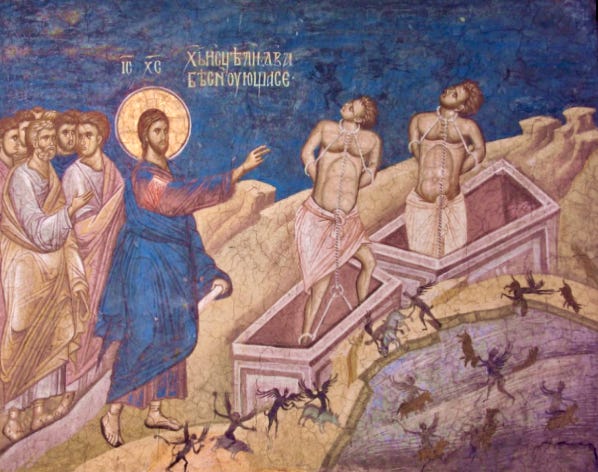
    Today, as we got to induct a new catechumen, I got to say one of my favorite lines — addressed to Satan — saying: “Call to mind him who commanded you to enter into the herd of swine,” and “your power, which has not power even over swine.” And we got to hear the Gospel reading that talks about exactly that. This passage comes up fairly frequently in the Sunday readings, and I wonder if it’s because the early Church had a fair number of catechumens being inducted, so either the reference or the Gospel would have been particularly relevant to them — maybe more obviously so in those early days than it is to us. We tend not to think terribly much about the spiritual world and its existence and its impact on us. In those earlier days it seems to have been a little more “in your face”, because Jesus encountered a great many people who were oppressed, tormented, or even possessed by demons — and he delivered them all. As we heard in the other Gospel reading too: all who came to him with sickness or who were tormented by unclean spirits were healed. I want to talk today about that healing which is available to us through Christ — that power over the unseen world that is ours in him. But I’ll also add a small footnote from one of my mentors, C.S. Lewis. If you haven’t read The Screwtape Letters — which are obviously not real, but actually very real correspondence between a senior tempter and a junior one on how best to tempt human beings — you should read it. One of my favorite parts is where the demons are lamenting the fact that they have to go hidden for now; it’s their new strategy, so that people won’t clue into the spiritual struggle going on that they are involved in. They don’t like flying under the radar, but that’s what they have to do now. So I want us to look at the second Gospel reading we heard, the one from Luke, which also references unclean spirits, in light of the first. This is where Luke talks about Jesus coming down to a level place — if you feel like harmonizing the Gospels, maybe it was a level place on a mountain; if you’re not too worried about it, as the ancients weren’t, you can assume that the exact location of this sermon doesn’t really matter. Or you could note that Jesus, as a teacher, would have said the same things in multiple places — it doesn’t really matter. He comes to a level place with his disciples and a great multitude from all Judea and Jerusalem and from the seacoast of Tyre and Sidon, who came to hear him and to be healed of their diseases, as well as those tormented by unclean spirits. And they were healed. The whole multitude sought to touch him, for power went out from him and healed them all. The first thing to note here is that Jesus has power not only over unclean spirits but over sickness — and, as we know, even over death. He has the power of life at work in him because he is the source of life, and evil cannot stand in his presence. But the next thing I want us to think about is how this works. Because we know something about evil, even if we haven’t had a scientifically verifiable encounter with the supernatural — we know about evil because it’s right here in our own hearts. And so we need to understand what Jesus teaches us not only about evil, but about the far greater power of good. Having healed them all and cast out the unclean spirits, he lifts up his eyes toward his disciples and says: Blessed are you poor, for yours is the kingdom of God. Blessed are you who hunger now, for you shall be filled. Blessed are you who weep now, for you shall laugh. I’ll pause there. Being poor, being hungry, weeping — these are not states that the people of Israel would traditionally have considered states of blessing, states in which one experiences the presence — and the outpouring of goodness that is the presence of God. And yet Jesus is very obviously addressing this misconception. We can think about it in terms of what Jesus says elsewhere about what happens when a spirit is cast out. He describes it as a house emptied of its ugly, horrible presence, swept clean. But then the evil spirit comes back, finds the house empty and swept, and invites seven others like himself to come and inhabit the house — inhabit the person with him. And the last state of that person is worse than the first. So even as Christ manifests his power over evil, he wants to protect his disciples from the sources of that evil. And part of the source of that evil is this misconception: if you’re poor, if you’re hungry, if you’re weeping, if people don’t like you — obviously you’re not blessed of God, obviously God’s presence is not with you. And Jesus says no. You who are poor now are blessed, for yours is the kingdom of God. You who are hungry now are blessed, for you will be filled. You who weep now are blessed, for you will laugh. And you who are hated by men when they exclude you and revile you and cast out your name as evil for the Son of Man’s sake — you are also blessed. You should be rejoicing and leaping for joy in that day, for your reward is great in heaven; for in like manner their fathers treated the prophets. We cannot judge the presence of God, or even the blessing of God, by our physical circumstances or even by our feeling of his presence or absence. Our theology needs to go deeper than that. Christ is teaching us to understand the goodness and power and love of God — that he is at work even in these unfavorable circumstances. And one thing this does in terms of spiritual warfare is it fortifies us against the weapons of the enemy: fear and despair. Fear and despair can easily overwhelm us, so that we feel that it’s all over, it’s all a lie, and that puts us into a state where we are vulnerable to temptation, and more than that, into a state where we actively pursue things in a way that is evil. If we are afraid of poverty, what does that tend to look like? Greed. Avarice. Acquisitiveness. We need more, and just a little more, and if I have a little more I’ll be safe. If we’re afraid of hunger: gluttony — I’ve finally got a chance to eat, I better eat as much as I can right now. Or fear of mourning and sadness — there are all sorts of responses here: think of things like PTSD, or our tendency to entertain ourselves to death, just filling ourselves with laughter. And the fear of man: if you’ve ever seen a people-pleaser, that’s the ultimate back-and-forth — like that fable of the man and the boy and the donkey, where everyone keeps complaining about who’s riding and who isn’t and who is carrying what, until in trying to please everyone they end up with the donkey falling off a bridge. Trying to please people is also an opening for the enemy. But if we do not fear these states — if we understand that even in poverty, hunger, weeping, we are blessed by God; if we know that God will not leave or abandon us in these states but will bless us and fill us and give us what we need: our daily bread — then we are freed from that fear, freed from that despair, freed from the clutches of the enemy. And that’s precisely what Jesus did with the demon-possessed men. He simply manifests his power. The demons, even as he’s approaching, are afraid of him: “It’s not time yet! Don’t cast us into the abyss — there are pigs over there, send us to the pigs.” He says one word: “Go.” They go into the pigs, and the pigs are sensible enough to run down the slope and drown themselves. Probably not what we should do, but I guess pigs can. And so the demons end up with no place to be anyhow. This does mean that a whole crowd of people come, and they’re really annoyed with Jesus, and those people rather fulfill what he goes on to say next. We didn’t read this part, but it’s relevant, so I’ll read it now. After all these blessings, Jesus also pronounces a number of woes: Woe to you who are rich, for you have received your consolation. Woe to you who are full, for you shall hunger. Woe to you who laugh now, for you shall mourn and weep. Woe to you when all men speak well of you, for so did their fathers to the false prophets. If we think about this in terms of the other Gospel reading — what were these people thinking, these folks who were really annoyed that all their pigs were now floating dead in the lake? Their conclusion was to ask Jesus to leave: “Get out of here, we don’t want you, this is too expensive.” These are precisely the people against whom these woes are pronounced. They had lots of stuff — before the pigs went into the lake, anyway — they were full and didn’t need anything, they certainly didn’t need Jesus around. And they were rejoicing; now they’re mourning over the loss of their pigs. That’s the fulfillment, or partial fulfillment, of these woes. And Jesus simply complies, because it’s not his job at this point to dispense judgment. He has come to reveal the blessing and the grace of God. So what does he tell us to do? How do we actually live out this reality of blessing, this understanding that God is providing for us and will continue to provide for us, that he will look after us as his children, and be with us as his children, through thick and thin? If we have this realization, he says: I say to you who hear, love your enemies, do good to those who hate you, bless those who curse you and pray for those who spitefully use you. To him who strikes you on the one cheek, offer the other also; and from him who takes away your cloak, do not withhold your tunic either. Give to everyone who asks of you, and from him who takes away your goods do not ask them back. And just as you want men to do to you, you also do also to them likewise. If we are living in this state of blessing, if we are living in anticipation of the goodness of God, if we are living in the knowledge that no matter what happens God is with us and we are blessed by his presence, then we have the power to resist evil — not with evil, but with love. And that is the only ultimate way to defeat the spiritual enemies who are our only real enemies. That love which is willing to sacrifice what I have and share it with you when you are in need. That love which turns the other cheek when someone slaps you, which does not go for an eye for an eye and a tooth for a tooth lest the whole world be blind and toothless — but which instead returns good for evil, love for hate. Because love is stronger than hate. Good is the only thing that is eternal, and it is worth even laying down our lives for, because we know that Christ is risen, and God himself will not abandon his followers — we, his children — to the grave. Christ is risen! Scripture readings referenced: * Matthew 8:28-9:1 * Luke 6:17-23 This is a public episode. If you would like to discuss this with other subscribers or get access to bonus episodes, visit translatingthetradition.substack.com
  • June 30 · 19 min

    Authority

    Today we are celebrating the great feast of St. Peter and Paul in anticipation, since it’s actually tomorrow. Given that, and given the content of the daily Gospel we just heard, I want to speak to you about authority. Authority is not a particularly popular topic in our society. In fact, we’re almost trained to have a rebellious attitude toward it. This goes all the way back to my childhood — the good guys are the rebels against the empire. That’s kind of how we tend to think about authority, if we think about it at all. We mostly try not to. We pretend, on some level, that we’re not really under authority. In fact, we are. Authority is all around us — it’s how things get done. As the centurion said in today’s Gospel reading: “I say to this one, go, and he goes; and to this one, come, and he comes; and to this one, do that, and he does it.” That’s how things get done, and we know this as human beings — that’s why we always have someone in authority, usually one person. And the centurion himself says, “I myself am a man under authority.” So there’s authority on all sorts of different levels, and it’s actually a pretty important concept for us to get right. This goes all the way back to the founding of the Church. In the festal Gospel reading, Jesus refers to the kingdom of heaven, and the disciples and apostles were all waiting for the coming of this kingdom — because what they saw was that authority, as they were experiencing it as the people of Israel, was really messed up, on all sorts of levels. First, Israel was no longer a kingdom; it had no independence, just another province of the Roman Empire — it wasn’t even called Israel anymore, but split into Judea, Galilee, and Samaria. That was a mess. And on the religious level it was a mess too, because what the people of God had experienced, particularly in the time of the Maccabees, was a constant struggle: how do we keep temple worship going? This was absolutely essential to their salvation, their standing before God, and yet it was difficult to maintain because of all the different problems with all the different layers of authority involved. So when the disciples heard Jesus talk about the kingdom, they simply assumed it meant the Romans would be kicked out, there would be a king again, Israel would be restored, the temple would be freed from the political complications it was experiencing — everything would be perfect. That was their concept of perfect. Of course, that’s not quite how it worked out. The Kingdom of Heaven is here, is among us, in its anticipatory form — which is the Church, the ecclesia, the people of God. That is, in fact, what Jesus was talking about when he said to Peter: “Upon this rock I will build my church, and the gates of hell will not prevail against it, and I will give you the keys to the Kingdom of Heaven. Whatever you bind on earth will be bound in heaven, and whatever you loose on earth will be loosed in heaven.” He’s talking about authority and the establishment of proper and right authority — which again, goes all the way back. Look at the establishment of the nation of Israel: what was it founded on? First you had Moses, by God’s power, leading the people out of Egypt — but now there’s this rabble of people in the wilderness, and someone has to figure out how to keep them from tearing one another’s throats out. We see plenty of evidence of them complaining to Moses about what God was doing, but they’re also complaining about one another. So much so that when Jethro, Moses’ father-in-law, comes and sees Moses with all these people, Moses is judging the people from sunup to sundown. And Jethro says, “You can’t do this — you’ll wear yourself out.” He tells Moses to appoint judges, and Moses does. And as the people appointed to be judges in Israel are gathered, at the prayers of Aaron and Moses, the Holy Spirit comes upon them. That’s actually really important. Because what are they doing? What is the source, the origin, really the one thing government has to get right? Judging. The one thing anyone in authority has to get right is judgment — figuring out how to judge in difficult circumstances, how to choose, and how to choose rightly. And what do we need for that? Obviously, the Holy Spirit of God. That’s why the Holy Spirit came upon the judges, and that’s also why, whenever we celebrate the great councils of the Church, we refer back to that incident when the Holy Spirit came upon the judges of Israel. Because we are the inheritors of that. The kingdom that Christ came to establish was not a political kingdom — it was the Church. So one of the key things we have to get right, in terms of authority within the Church, is this notion of judgment: how do we judge, and how do we judge rightly? The first thing to consider here is the role of knowledge. We are in an age of information overload. We have knowledge available and accessible to us that we could spend our entire lives reading, or watching YouTube videos, and never get to the bottom of — there’s no end to the YouTube rabbit trail. Knowledge seems to be what our society emphasizes, and now it’s emphasizing it in terms of artificial intelligence. Some suggest that AI should even be placed above human decision-making, because it holds so much knowledge — all that knowledge fitting within a million-token context window. We probably need at least a trillion before we hand it full responsibility for the planet, but, well, we’re moving in that direction. It will have all the knowledge, all the information at its fingertips, and will therefore make all the right decisions and never hallucinate. Knowledge is great — don’t get me wrong, I think it’s wonderful that we live in an information age with access to all this knowledge. But knowledge is not actually the first thing we need in order to judge, and to judge rightly. For that we need something a little more nebulous: wisdom. It’s hard to quantify or even define wisdom, except perhaps somewhat circularly — we know wisdom when we see that someone has judged rightly. Because that’s what wisdom does: it enables us to judge rightly. Think of the famous story of Solomon, when two women come to him arguing over a baby. One of their infants died in the night, and the other claims the woman switched the babies — “the living one is mine.” Solomon says, “Fine, I’ll settle this. Bring me a sword.” They’re startled, but a sword is brought, and he says, “Hold the baby out — I’ll cut it in half and give each of you a piece. That’ll solve the problem.” And, of course, one woman says, “Yes, that’ll do it,” while the other says, “No, no — give it to her!” And Solomon says, “It’s her baby. Give it to her.” This is not scientific. It’s not a carefully reasoned response built on established facts, forensics, and DNA samples. No — this is wisdom. And where does wisdom come from? It comes from God. As the Apostle James says, “If anyone lacks wisdom, let him ask God, and God will give it to him.” That is essentially what Christ was teaching his apostles while he was with them — giving them the tools to judge wisely. The second thing we have to think about, in terms of judgment and authority, is what it’s based on. Ultimately, it’s based on the truth. Jesus says to his disciples, “Who do people say that I am?” Some say Moses, some say Elijah, some say a prophet. “But who do you say that I am?” And Peter answers, “You are the Christ, the Messiah, the Son of the living God.” Jesus says to him, “Blessed are you, Simon, son of Jonah, for flesh and blood has not revealed this to you, but my Father who is in heaven.” Again — you need the inspiration of God to discern the truth with wisdom. But what are we discerning? What does proper judgment need to be based on? The truth. There’s plenty of discussion among scholars about what this particular verse means in terms of who holds authority within the Church, and the Fathers offer various opinions on it — but what it really comes down to is that Peter spoke the truth, and it is on this rock that Christ establishes his Church. Most of the Fathers say Jesus is not speaking simply of Peter as an individual, but of all the apostles, and by extension all the elders of the Church, all the bishops. But the core thing — and I remember a certain priest once telling me this about the foundation of authority in the Orthodox Church — is that it’s founded on the truth. If the Church has any claim to authority at all, it’s that we know, understand, preach, adhere to, and embody the truth. That is absolutely essential for judging rightly. The third thing to think about, regarding authority and judgment, is the nature of this authority as Christ articulates it to his disciples. The disciples were anticipating their coming authority, understanding that there was a reason Jesus chose twelve of them — they would be set over the twelve tribes of Israel, judges of those tribes, the ones making decisions. So the disciples were constantly arguing about who would be greatest in the kingdom of heaven, bickering back and forth as they walked along. At one point Jesus, listening to them, places a child in their midst and says you cannot even enter the kingdom of heaven unless you become like this little child. But the passage I always think of, and want us to focus on here, is where he says to them: “The kings of the Gentiles lord it over their subjects. It is not to be so with you. The greatest among you is to be the servant — literally the slave — of all.” So the nature of authority within the Church, within the Kingdom of Heaven, is a constant competition to serve one another. We see this at the highest level, as we just heard, but also right down to the individual level. There’s a lot of controversy about the verse in Ephesians where Paul talks about wives submitting to their husbands — but what does he say just before that? “Submit to one another in the Lord.” We are called to submit to one another, and the greatest among us is the one who serves others the most. That is the nature of authority within the Church: it comes to us from the Spirit of God, who grants us wisdom; it is founded entirely on the truth, on discerning and living out the truth; and its primary characteristic is service — that we are the servants of all. The best title the Pope holds, in my opinion, is “the servant of the servants of God.” That’s a good one — entirely in keeping with what we are called to be as the kingdom of God. And this really is our calling, because while we are all under authority, we also all have those under us — even if it’s only an AI bot we tell to go do this or that. We have to figure out how to exercise authority, and how to respond to it. One of the key problems with our rebellious attitude toward authority is that it collapses what is the primary goal of the exercise of authority, something that is actually multifaceted and beautiful in its diversity, into one thing. If I’m a rebel against authority, that generally takes a fairly predictable shape: “They’re doing it wrong, and they should listen to me, because I’ve got the answer.” Just listen to any political conversation — if it’s among a group of friends: “they should listen to us” (strangely, they’re not consulting us), because we have the solution to all the world’s problems. That’s why we sit around and talk about these things and it’s fun, and, as long as we don’t take it too seriously, it’s probably OK. But that mindset is a collapse of goodness, because it assumes there’s only one right way to do things. Whereas, in fact, there is a plurality, a multitude of different ways to do things rightly. Part of the path of wisdom is discerning that yes, there is evil: there are places that are bad and we shouldn’t go there. But there is also good, and good is beautiful, multifaceted, and complex, and something we should engage with using all the wisdom God has given us. We still need to discern what is true from what is false, what is good from what is bad, and doing that well is itself part of the path of wisdom, of right judgment, and the basis of our authority. But ultimately, as we engage in this dance of authority, we have to do it in love. Because as we seek to serve one another, that is precisely how we fulfill our calling that we were created to do — that we were created to be: to be servants of love, that we might be true children of God, true heirs of the kingdom, to his glory, the glory of the Father, the Son, and the Holy Spirit. This is a public episode. If you would like to discuss this with other subscribers or get access to bonus episodes, visit translatingthetradition.substack.com
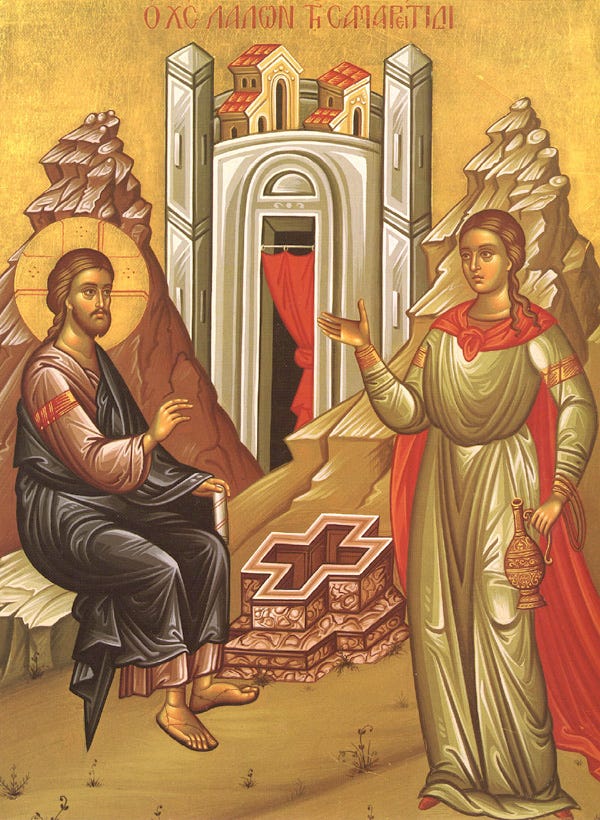
  • June 30 · 23 min

    St. Cuthbert and Silence

    We were blessed to have Reader James Mullin, our local expert in the Celtic saints, give the homily on the feast-day of All Saints of Britain and Ireland: The Scriptures say, “Be still and know that I am God.” The Scriptures also say, “In repentance and rest is your salvation; in quietness and trust is your strength.” Today I find it ironic that I want to talk about a wonderful, holy Christian virtue by using words, when what I want to talk about is the importance of quietness and silence and waiting upon God. So instead, what I shall do is use the example of Holy Saint Cuthbert of Lindisfarne, one of whose primary virtues — he spent many years as a hermit — was an adoration of waiting upon God in quietness, meekness, and stillness. I also thought it appropriate, given that today is the feast of all saints of Great Britain and Ireland, or as I like to call it, all the Celtic saints. Ironically, St. Cuthbert was more along the lines of what we’d call Anglo-Saxon. As a young man, Cuthbert loved to play games. He was obsessed with games, loved winning, and was very good at sports — and he didn’t take life very seriously. One day, when he was about nine or ten years old, a little three-year-old boy came out to the field where he was wrestling, looked up at him, and said, “Cuthbert, why are you wasting your time with this? Do you not know these foolish games will pass away? You were called to be a holy man of God.” Cuthbert was shocked that a three-year-old would say this to him. (If a three-year-old came up to me and said, “Reader James, you’re wasting too much time on the internet watching food channels — you should be in prayer and study for your service to the Lord,” he’d be right, but I’d be stunned too.) So Cuthbert started defending himself, saying he was just having a little fun — and indeed, it’s fine for a child to have fun. But he was getting to an age where he was expected to take on some responsibility, to follow his Christian life and virtues and help his family. Then the boy started crying, and Cuthbert noticed the tears and stopped. He chose silence instead of continuing to defend himself, apologized, and listened to the boy, who again affirmed: “You saddened me, because you’re called to something great.” From that day forward, Cuthbert took his faith extremely seriously. Later, in his teen years, he was out in the field as a shepherd with other shepherds. It was quiet — just the bleating of sheep — when he noticed a beam of light coming down from the sky, and then saw a man going up on that beam of light. He said, “God, I see this — I know you want me to follow you,” and he decided that his calling was to become a monk and follow the Lord with his life. The next day, people told him that St. Aidan of Lindisfarne had passed away. A couple of years ago, in my last sermon, I talked about Holy St. Aidan of Lindisfarne. My patron, St. Columba, brought the gospel to the Picts in Scotland and ministered to the Irish Christians in a place called Iona. St. Aidan, as a young monk, learned there and felt the calling of the gospel to go to the Anglo-Saxon peoples in Northern England. He followed that call and built the church there, and built Lindisfarne. So Cuthbert, himself an Anglo-Saxon, was following in those same footsteps, continuing the mission of his forefathers. What I love about that is the demonstration of continuation — we plant a seed, someone else waters it, and then they take seeds and plant them elsewhere, to the glory of the kingdom of God. So Cuthbert decided to go find a monastery and began checking out different ones. At one, he was on the other side of the River Tyne from the monastery, and the monks used to gather wood and bring it down on rafts. On this particular day it was stormy, with heavy wind blowing the rafts out toward the river mouth and out to sea. One poor monk was on a raft without his pole, in real trouble. The people in the village on the other bank started laughing and jeering at the monks, saying their God, their Christ, was useless — it doesn’t mean anything. They had heard the gospel, but many of them were beginning to turn away, and seeing this they said, “Well, your God’s not doing anything.” Cuthbert, who hadn’t yet become a monk, was distraught, and asked everyone to be quiet. He got them to fall silent, and said, “Can’t you even care about them as human beings? Don’t you want to see them safe?” Then he knelt down and prayed, and the sea became completely still. The rafts were blown back up the river to shore, and the monk on it reached safety. He then journeyed toward what would be his first monastic home with his horse. On the way, hungry, he stopped at a house, and the woman there offered him hospitality and food — but he wouldn’t eat, wanting to keep the Friday fast. She told him there would be nowhere to find food on the rest of his journey, since the next habitation was too far away. But he decided to trust God and went on his way. Partway along, he grew very hungry — and was more worried about his horse than himself. He noticed an abandoned shepherd’s hut (it was fall, and the shepherding season was over) and went in to feed his horse some grass. The horse started nibbling at the roof, and suddenly a blanket fell down containing a hot piece of bread and some delicious food. I love that story — that little miracle. Who knows, maybe a shepherd left it there overnight; it’s up to you to decide. Either way, he finally made it to the monastery at Melrose, where he began his service. His love of silence, of quietude, of listening, would pay off there. The older monks began to realize that they could talk to him and be truly heard, so he was made guest master, responsible for visitors to the monastery. He developed a terrible knee problem — a boil swelling up — and one day a wealthy man on a horse, all in white, came up to him at the foot of the monastery and asked, half in jest, “Would you like me to be your guest tonight?” Rather than dwelling on his pain or on this uninvited, presumptuous guest, Cuthbert said he would indeed love to host him. “Unfortunately, my knee is giving me trouble, but I will what I can.” The horseman told him to soak his knee in hot milk and wheat, then said he must be off, and left. Cuthbert and the other monks did as instructed, and he was healed — and it was later revealed that the horseman had been an angel of the Lord. He went on with his duties, walking to various distant villages. In one village, some people were Christian, some weren’t, and some had begun returning to idols because of a plague. Instead of getting up on his high horse and shouting at the people for their sins, he went among them, asked them questions, and invited them to share their suffering and their story. Because he was able to listen and be quiet, he could hear not just their words but what lay behind their words. This repeatedly gave him the opportunity to share Christ and bring people back to the faith, or come to the faith. Another time, Cuthbert woke one morning and went to the guest room to find a young man there. He said, “Oh, I didn’t know you’d come,” and wanted to get him food. The young man said that wasn’t necessary, but Cuthbert insisted, went out, and said the bread would be ready soon. When he came back to tell him the bread was almost ready, the young man was gone. He went to where the bread was, and one of the monks said he hadn’t even started baking that day — yet there were these incredibly beautiful loaves, which Cuthbert said were like the bread of heaven. So this was a man visited by angels more than once. A little later, he became abbot of Lindisfarne — an island you can actually walk to at low tide, on the north coast of England, near Scotland. He was also made bishop, but he really wanted to spend time as a hermit, so he went to a nearby island called Farne, which was inhabited by demons. He cast out the demons, built himself a small hut, and then, wanting a place for his brothers to visit, built a little house for them as well. But there wasn’t enough wood for the floors. Some younger brother monks were visiting, and he asked them to gather wood lying down by the shore so they could make it into boards. Later they apologized — they’d forgotten, and the sea had swept it all away. He said it didn’t matter and prayed about it, and the next day the monks found the perfect amount of wood right in front of his hut, washed up by the ocean. Even the ocean listened to him — because of his holiness and devotion to God, but also because he listened to the ocean. He could be still and hear the lapping of water on the shore, and praise God for creation, honoring the majesty of the sea. He would listen to animals too. His stillness and silence were a way of reconnecting with the gifts Adam and Eve had before the Fall — not looking at nature and creatures as something to exploit, but as fellow beings on this earth that we share with, which we are called to be stewards of and to be in relationship with. How we exist with creation is actually part of working out our salvation; we become more human in that interaction. Because he was quiet, listening, still among the animals, he was able to witness and observe their behavior, and they came to trust this little hermit on his tiny islet. One day he noticed two ravens pecking at his roof, which was made of twigs and straw. He said, “Don’t do that — you’re destroying it. You need to go away.” And the ravens listened and left. Later, the same two ravens came back wanting to build a nest and have young. They stretched their wings out in front of him and bowed their heads to the ground, as if to say, “I’m sorry.” One of them gave a little push. His boots were dry and cracking, as were the boots of monks who came to visit, and he had a piece of pork lard he would use to anoint them and keep the water out. And that’s another thing — when his fellow monks came to visit, he would wash their feet and anoint their boots with the lard. That relationship was possible because of his stillness before God; the animals felt safe because of his quietness and peace. Another time, he was visiting a monastery near the sea and was asked to speak, which he did. Then at midnight he slipped out and went down to the ocean, wading in up to his chest to stay awake and simply be quiet and silent before God. A young monk, curious and a bit nosy, decided to find out what he was up to — wondering, half-suspiciously, what this Cuthbert fellow was doing out there. He watched all night and came to recognize the man’s holiness. In the morning, Cuthbert, chilled and cold, came out as the waters receded, and two otters appeared, came around his feet, and began drying them with their bodies. The young monk, watching from what he thought was a hidden spot, was amazed. He went back to the monastery, approached Cuthbert, and apologized, distraught. Cuthbert simply said, “I know what you did” — but he didn’t lash out in judgment. He only asked the young monk what he had seen, and what it meant to him. Out of that conversation, the younger monk learned some of the monastic disciplines and virtues he could carry forward. Cuthbert blessed him and told him not to tell anyone until after his death, because he didn’t want attention drawn to himself. Another time, during a period when both the Irish monastic tradition and the Roman monastic tradition had taken root in parts of Northern England, a synod was called to decide which form should be followed. Rather than offering up his own opinion, Cuthbert — who was asked to be present — consistently reminded everyone to hear what each person had to say, and to think and speak in ways that were respectful and loving, aiming not for a majority vote but for a loving consensus. As time went on, he died in good grace, and the monastery continued, and Christianity flourished in Northern England and beyond. So, back to today. We live in a world that’s so noisy. We have buildings being torn down and put up. We’re constantly bombarded, never wanting to be alone with silence — pulling out our devices, our phones, putting in our headphones whenever there’s a free moment. We’re a society constantly surrounded by noise, by social media. Why do we do this? Why do we not spend time quiet and listening? I think, as a society, we’re uncomfortable being alone with silence, or even being together in silence. And the reason is that intentionally keeping silent sounds like an inaction — but some of the greatest Christian virtues are actually profound acts, even though they appear not to be an action at all. Silence is a surrender. It’s an opening of yourself, and in that space God can speak; in that place God can enter into you. That’s part of the acquisition of the Holy Spirit for us as Christians. When we are silent, and more actively listening while others are talking, we can not only hear the words but understand what’s beneath them — rather than being motivated to throw in our own two cents or come up with an immediate rebuttal. Practicing quietness and true listening can build respect, love, and rapport. Maybe someone is having a debate and you have ideas of your own — what about the possibility of staying silent, listening to what people have to say, and choosing not to speak, going home instead to meditate on it? Then, given space, time, and thoughtfulness, you honor the people you’ve spoken with and can address things later with a better understanding of where they’re coming from. Silence alone is very difficult, because it sometimes allows the Holy Spirit to show us where we are broken. Being alone with our own thoughts can be uncomfortable — but if we know what to do with that revelation of who we are, we can repent more fully and become healthier, and maybe even come to enjoy the quietude and silence. Then there’s the silence of being with others in their mourning, in their suffering — when you have no words, when there are no words to say. Sure, you could offer a phrase of condolence, but sometimes the most powerful way of being with one another in suffering is to recognize: I can’t do anything about it. I can’t change the situation. I can’t say anything that will make it better. But I’ll sit with you, and I will be with you in silence, and I will mourn with you. So, firstly: let us try to listen to nature — let us hear the voices of creation and have better fellowship with it. Secondly, let us practice silence and listening so that we may have greater connection and relationship with other human beings, with our brothers and sisters. Third, let us have silence within ourselves, that we may receive the Holy Spirit and be cleansed. And finally, let us keep silent with God, that the Father, Son, and Holy Spirit may enter into that silence and fill it with ultimate joy. This is a public episode. If you would like to discuss this with other subscribers or get access to bonus episodes, visit translatingthetradition.substack.com
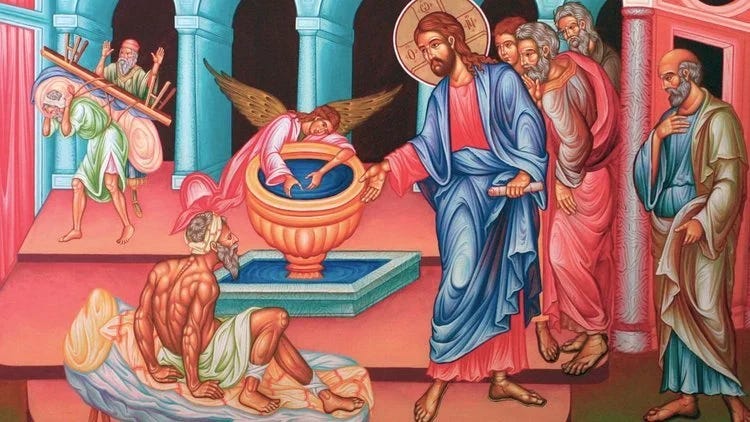
  • May 11 · 23 min

    Speaking the Truth Well, in Love

    “Little children, love one another.” These were the words of the Apostle John when he was too feeble and old to say anything else to his flock. All he would say to them was, simply: “Little children, love one another.” Last night, as we were listening to the readings at Vespers, we read the epistle readings for the Holy Apostle Simon the Zealot, whose feast day is celebrated today. It was a mistake, apparently — according to the Typikon, this year that feast is transferred to Tuesday, but I’m glad we made that mistake, because the Apostle John and his writings have a deep and abiding place in my heart. In fact, this mission was originally the Orthodox Mission of St. John the Theologian. Bishop Seraphim eventually said, “Oh yes, well, we’ll keep St. John, but we’ll give you St. John of Shanghai instead.” So I was like, “Oh, okay — who’s that?” John, in his epistle that was read last night, says two things that are pivotally important, that are the core of our faith. He says: “God is love.” As C.S. Lewis points out, it doesn’t say that love is God. It says God is love. If there is one word that can sum up who God is for us as human beings, in terms of our ability to know and understand him, that word is love. And then John goes on to say that anyone who claims to love God but does not love his brother is a liar, and the truth is not in him. Because how can you say that you love God whom you have not seen, if you do not love your brother whom you have seen? It’s interesting that these epistles were chosen for Simon the Zealot. The Zealots were — I suppose we would think of them today as a separatist group within the Roman client kingdom and eventually province of Judea. They were committed to winning Israel’s independence by any means necessary. They didn’t much care about methods or what they had to do or undergo. In fact, a splinter group of the Zealots would apparently sneak up behind Roman soldiers or Roman sympathizers and stab them in the back with a dagger. This is the world Simon the Zealot came from — maybe he wasn’t part of that splinter group specifically, but that was his movement. And yet, among the same twelve apostles, you also have Matthew. Matthew was a tax collector — exactly the kind of person that Zealot splinter group would have crept up behind and stabbed. And they’re both there, among Jesus’ disciples. This is what I want to talk about today, because I think it is absolutely pertinent to us — especially as we look at the Gospel reading we just heard — in our current, highly divided political climate. It is very difficult nowadays, it seems, even to talk to one another, let alone to understand one another. So let’s look at the Gospel reading: Jesus’ encounter with the Samaritan woman, which is the feast that has actually bumped the Holy Apostle Simon the Zealot to Tuesday. And, as we do so, I want to front-load our reading of it by thinking carefully about who the two people are who are sitting down and talking to one another — or at least, I think Jesus was sitting down; she might have been standing. Usually we think about this story in terms of the Jewish-Samaritan divide. The Jews hated the Samaritans — that comes up in a number of stories and parables. Jews would even go around Samaria to avoid it. Jesus didn’t: he went through Samaria. Because the Samaritans were imposters, they had a false religion, they only recognized the first five books of the Pentateuch, and even then only partially, and from the Jewish perspective they were interlopers who had taken the land. The Babylonians had resettled the populations, these people had been placed there, and they now occupied what was supposed to be the land of the Jewish people — and they weren’t giving it back. So they did not like one another. So that’s usually the starting point. And that’s a fairly good starting point. But of course the person Jesus was talking to was also a woman. In those days there was more of a divide between men and women, with rules and social expectations around who would talk to whom — and who wouldn’t talk to whom. But more than that, as we go on in the story, we realize this is a very deeply troubled woman. She’s had five husbands, and she’s living out of wedlock with a man who is not her husband. She’s also a bit of a liar. She’s a social outcast. She’s a bit of a zealot for her false Samaritan religion. In fact, if there’s anyone the Son of God — the one who insisted on the holiness of his people Israel, who gave the Law and said “You shall not commit adultery,” who hates sin in every form — if there’s anyone whom this man would not want to speak with, it’s probably this Samaritan woman. She’s a sinner, she’s a liar, she’s an adulteress — or at least there’s something wrong there… it’s not actually specified — she’s a social outcast, she’s a Samaritan. There’s no possible hope of any kind of mutual understanding coming out of this. But of course we’re not talking about just anybody sitting down to speak with her. We’re talking about the Son of God. We’re talking about Jesus. We’re talking about the one who is the love of God incarnate. And so Jesus is tired. He’s sitting by the well. His disciples have gone to the village to find food. And this woman of Samaria comes up — and he talks to her. That’s the first thing we have to think about. And I want us to think about it in terms of our own positions. Is there anyone we wouldn’t talk to? Anyone we’d write off as a lost cause? But for Jesus, she’s not a lost cause. He says, “Give me a drink.” He’s actually putting himself in a relatively vulnerable position here, making a request she could simply refuse — which, in a manner of speaking, she kind of does at first. But he opens up the conversation in a way that both of them can understand. They’re at a well; it’s relevant to the situation. And she says, “How is it that you, being a Jew, ask a drink from me, a Samaritan woman?” (Since Jews have no dealings with Samaritans.) So the first issue he encounters right away is identity. There’s no question about her identity — she’s a Samaritan woman, that’s clear — but this identity is what should keep them absolutely apart. Identity is a fraught issue today. It divides us and makes us not want to engage with certain people. This is not new. And Jesus doesn’t address that question actually. He doesn’t get dragged into establishing the terms of the conversation before it can go anywhere. Instead, he gets right to the heart of the matter: this woman needs healing. Because this is what love does — love cares about the other person, looks for the best in them, wants the best for them. So he immediately addresses the heart of the matter with: “If you knew the gift of God, and who it is who says to you, ‘Give me a drink,’ you would have asked him, and he would have given you living water.” OK, so, that’s a bit weird, but it’s something that will be at least a little attractive to her. Living water — what’s that? She does get interested in it a bit later, but initially she focuses on the practical: “Sir, you have nothing to draw with and the well is deep. Where are you going to get this living water?” And then — I love this — “Are you greater than our father Jacob, who gave us this well and drank from it himself, as well as his sons and his livestock?” Our father Jacob. That’s brash. Possibly even arrogant. She’s talking to a Jew — a descendant of Jacob — and and claiming that he’s “our father Jacob and he gave us this well.” Interestingly, this also is nothing new: Isaac dug wells all over the place and people were chasing him away from each of these wells. Wells are important, and the Samaritans have established their claim to this one and she’s going to defend that claim! Here we have politics. Politics threaten now to derail the conversation. Because this is the Jewish homeland, it’s supposed to be part of the land God gave to the Jewish people, and the Samaritans are occupying it. And we’ve seen in modern times what happens when this kind of dispute arises — in Kosovo, or in the Ukraine. What do we do? We fight. “This is our home. This is our homeland. This is my place. This is my heritage.” And Jesus doesn’t go there. He simply continues on with what he began: “Whoever drinks of this water will thirst again. But whoever drinks of the water that I shall give him will never thirst. The water I shall give him will become in him a fountain of water springing up into everlasting life.” And it works. She drops the political question. All of a sudden she’s genuinely interested: “Oh, wow. This could be convenient. I won’t get thirsty again… I won’t have to come to this well again…” It is, by the way, noon. She’s alone. There’s a reason for this. Women didn’t draw water alone in the heat of the day — you went with the other women in the cool of the morning. But she’s alone, and for a very clear reason, which is what Jesus immediately addresses next. He says, “Go, call your husband, and come here.” And the woman says to him, “I have no husband.” I love Jesus’ response here: “You have well said, ‘I have no husband.’ For you have had five husbands, and the one whom you now have is not your husband — in that you spoke truly.” What does he focus on? He focuses on the one thing she said that was actually true. Maybe a good lesson for us. We want to find all the things a person said that were wrong: “You made this mistake, and that logical fallacy, and this part of your argument doesn’t work…” No! Focus on what they have right. Focus on the truth. That’s the part that will enable you to build a bridge, to begin to create mutual understanding with whoever you’re talking to. And that’s what Jesus does here. But he also doesn’t ignore the rest. He takes what she passed over and puts it front and center: “Here’s the problem. Maybe we should address this.” Well, she doesn’t want to address it — so now she pivots to religion. We’ve had identity, we’ve had politics, we’ve had morality, and now we have religion. “Sir, I perceive that you are a prophet.” (Yeah, you think? He knows her entire history!) “Our fathers worshipped on this mountain, and you Jews say that Jerusalem is the place where one ought to worship.” Actually, it’s interesting because I think there’s a bit of a shift here. She recognizes that he’s a prophet, and yes, she’s using religion as a good distractor — now we don’t have to talk about the moral question! But she’s almost open about it. She’s not saying flatly, “We’re right, we should worship on Mount Gerizim.” She’s opening up the question, opening up the conversation. And Jesus says to her: “Woman, believe me, the hour is coming when you will worship the Father neither on this mountain nor in Jerusalem. You worship what you do not know.” He’s not pulling punches. But even as he says “You are ignorant, you actually don’t know the truth, your worship is incorrect,” he’s also saying: “You worship” — there’s almost some validity here, some potential that he is seizing upon. “You worship what you do not know; we know what we worship, for salvation is of the Jews. But the hour is coming, and now is, when the true worshippers will worship the Father in spirit and in truth, for the Father is seeking such to worship him. God is spirit, and those who worship him must worship in spirit and in truth.” The woman says to him, “I know that the Messiah is coming, who is called Christ. When he comes, he will tell us all things.” Jesus says to her, “I who speak to you am he.” This is the most open that Jesus is pretty much anywhere in the Gospels about his being the Messiah. He just straight up tells her, “I’m the Messiah. I who speak to you am he.” And we do have to be careful about what we disclose about ourselves in our own conversations, but sometimes there is a moment to open up — in humility and vulnerability — and disclose the truth about ourselves, especially if it’s relevant to the conversation, which Jesus does right here. At this point the disciples come back and are shocked to find him talking with this Samaritan woman. But none of them are brave enough to say anything about it. They see the problem — “What are you doing” — but none of them address it. None of them ask, “What do you seek?” or “Why are you talking with her?” And the woman leaves her water pot, goes into the city, and says to the men — many of whom she knows… intimately — “Come, see a man who told me all the things I ever did. Could this be the Christ?” And they went out of the city and came to him. The disciples then urge Jesus to eat, and he says, “I have food that you do not know of.” They’re all thinking, as usual, in literal terms — “Someone must have brought him something while we were away… Who would have brought him something?” — and he says, “I have food that you don’t know anything about. My food is to do the will of him who sent me. Look up to the fields — they are white, ready for harvest.” And I can just imagine the disciples looking up at that moment and seeing a crowd coming toward them. That’s the harvest. Many of the Samaritans believe because of what the woman tells them, and they ask Jesus to stay. He stays with them for two days, and then many more believe simply because of his own words. And they say to the woman, “Now we believe — not because of what you said,” (they know she had a tendency to stretch the truth a bit) “for we ourselves have heard him. We know that this is indeed the Christ, the Savior of the world.” Now, you’ve heard most of this from me before. If Fr. Thomas Hopko hadn’t beaten me to the punch with the name of his podcast, the name of my podcast would not be “Translating the Tradition” — which I think is a pretty good name — but would be “Speaking the Truth in Love.” Because this is one of the topics nearest and dearest to my heart. We, as followers of Jesus Christ, as ones who want to look him and at what he has done and follow in his footsteps, should be doing exactly what he does here, which is speaking the truth in love: speaking the truth in love to one another. Neither identity nor politics nor morality nor religion should be off the table in our conversations with one another. But as we converse, we should be looking for what the other understands and acknowledges as true. We shouldn’t gloss over where they have things wrong, but at every moment, in every conversation with everyone we meet, we should be seeking their best interests — seeking to love them, even as we speak with them. As the Apostle says, “Let your speech always be seasoned with salt.” It should be tasty. It should be something people can dig into and enjoy — because you love them. It is an expression of your love for them. This is what should characterize us as followers of Jesus Christ. This is how we need to love one another. “And speaking the truth in love, we will in all things grow up into him who is our head.” Little children, love one another. Scripture readings referenced: * John 4:5-42 This is a public episode. If you would like to discuss this with other subscribers or get access to bonus episodes, visit translatingthetradition.substack.com
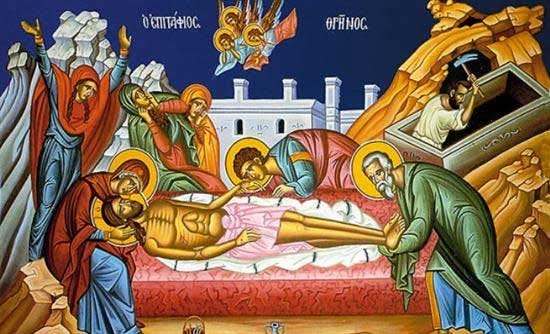
  • May 3 · 5 min

    The Healing of the Paralytic

    We were blessed, today, to have Fr. Nathanael, one of the founding members of St. John’s, with us. Here is his homily on the Gospel for today. Our Gospel reading today was a composite one. The first part is the commemoration of the paralytic, where Christ heals a paralyzed man at the pools of Bethesda. Now, like all the Gospel readings, this is a treasure chest full of jewels. All I’m going to do today is take one or two jewels out of that chest — but there’s a lot more there, and you have to go digging for it yourself. This is why I always encourage people to make it a practice through the week leading up to Sunday: take the Gospel that’s going to be read and read it every day, think about it, meditate on it, try to plumb its depths. That way, when you get to the sermon on Sunday, you’ll already have a pretty clear idea of what the priest is going to talk about. But today — this is the Sunday of the Paralytic. This man was at a pool in the vicinity of Jerusalem, and he had been waiting there for 38 years. That’s amazing. 38 years waiting for his healing. Now, is there significance to that number? I don’t know — there probably is, but I haven’t figured it out yet. What I did want to draw attention to is how Scripture builds symbolism into these events. It points out that there were five porticos around this pool. Well, that’s symbolic. What else is five? The five books of the Law — that would be the first thing to come to mind. So these five porticos surrounding the pool symbolically represent the whole Old Covenant, the Law. And within this Law, every now and then an angel would come down, stir up the water, and whoever got in first got healed. Now the Church Fathers — and I’m not making this up — saw this as a picture of grace coming through the Old Testament. But was it enough grace? Was it for everybody, throughout the whole world, for all time? No, it was limited. And Christ’s grace, the grace we have through Jesus Christ, is not limited in that way. That was the whole point — illustrating that the grace of the Old Covenant was lacking. So Christ asks the man, “Would you like to be healed?” Of course he’d like to be healed — he’s been waiting there for 38 years! But Christ asks anyway, because he never does anything to us that we don’t want. He is very polite. He won’t overpower you or override you. He will ask you what you want. The man says yes — well, an implied yes. He doesn’t actually say the word. And how does Christ heal him? Does he call another angel down and get him into the pool? No. He simply says, “Take up your pallet and walk.” Just like that. It’s done. There’s your healing. Another thing we can easily see in the symbolism of this pool is our own baptism. Whoever went into the pool — that was a symbol of baptism. And so those of us who have been baptized in the Church have this healing. That’s what it really is: an inner healing. We are healed of our sins. Those of you who have been recently baptized — rejoice in this. This is what has happened to you. Those of us who were baptized longer ago may have lost some of that joy. So how do we renew it? That’s what confession is for. I want to encourage everyone here: come to confession, come to healing. The priest is not there to judge you, and he’s certainly not going to gossip about what he hears. Come for the healing. And those of you like Anthony who are looking forward to baptism at some point — know that that is what you’re going to receive. It’s a healing moment. It’s where we are healed of our sins and all the vices and the icky stuff within us that, if we look deeply enough, we actually don’t like about ourselves. That’s the start of the healing of all that. So come to confession, be healed, and let the joy of your healing show to the world. In the name of the Father, and of the Son, and of the Holy Spirit. Amen. Scripture readings referenced: * John 5:1-15 This is a public episode. If you would like to discuss this with other subscribers or get access to bonus episodes, visit translatingthetradition.substack.com
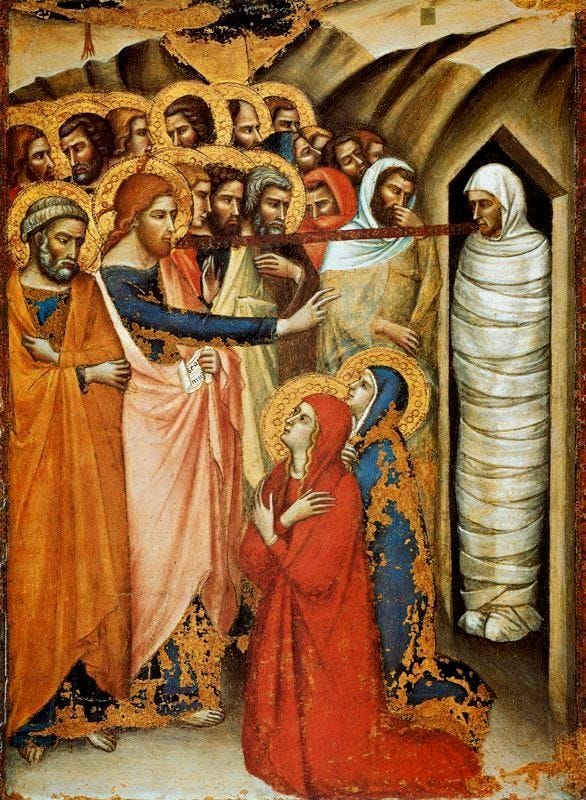
  • April 28 · 14 min

    Myrrh-bearers and the Body of Christ

    It was finished. Or rather, Jesus’ work was finished — but his body was still hanging on the cross. His spirit had gone from it, but his body was still there. The body is something fundamentally important in our tradition. We often think of the Greeks as the ones who celebrated the human body — you see all those beautiful sculptures — and assume the Jews dismissed it. But not at all. The Jews treated the body as sacred, not perhaps as sensually as the Greeks, but as something created by God from the beginning. For God made man from the dust of the earth, breathed into his nostrils the breath of life, and man became a living soul. It was the breath of God, the Spirit, entering into the body that God fashioned with his own hands from the dust of the earth, that makes us who we are: human beings. And there is both a danger and a power about a dead body, a corpse. So much so that even in our society, which tends to downplay the importance of the body — treating it as configurable, something we can put cyber-implants into and alter however we like — we still have this sense of the body as something terrifying, especially a dead one. You can notice this in the very fact that we go out of our way not to encounter dead bodies. We’re very careful when there is one. I happen to know someone who handles these things, and we’re very careful to make sure that as few people as possible see it, that it’s all dealt with nice and neat so nobody actually has to encounter a dead body. But the body is a part of us. That’s why we preserve and venerate and honour the relics of the saints — because it’s all that we have left of them right now in terms of the physical, in terms of their actual presence. And here, the body of Jesus was a lifeless corpse hanging on the cross. It’s at this point that Joseph of Arimathea gathers up his courage and goes to Pilate to ask for the body. This was indeed an act of courage, because this is the body of a condemned criminal — more than that, a potential insurrectionist, someone who was killed for being the King of the Jews. So Joseph of Arimathea gathers his courage, goes to Pilate, and asks for the body. Pilate is surprised to hear that Jesus is already dead, so he checks with a soldier, who confirms it. He grants Joseph the body. Joseph takes it down from the cross and, with the help of Nicodemus, anoints it with myrrh and aloes, wraps it in a shroud, and places it in his own new tomb. At that point, of course, the Jewish authorities are worried that the disciples might come and steal the body, so they go to Pilate, who says, “Take a guard and make it as secure as you like.” They roll a very heavy stone across the entrance, seal it, and place a guard. The next day is the Sabbath, so Jesus rests in the tomb. Nothing happens. Then Sunday morning, the women come — the myrrh-bearing women, whom we are celebrating today, along with Joseph and Nicodemus, though we usually think of the myrrh-bearers primarily in terms of the women. The women are coming to the tomb to anoint Jesus’ body. The guards aren’t particularly worried about them: they haven’t seen the modern movies so they don’t actually know the women can can just pull a cool-looking girl boss move and the three of them will take down the two soldiers and steal the body. So the soldiers are not worried about that and, of course, the women are not thinking along those lines either because, you know, bodies matter. They’re probably not trained in any kind of martial arts and so they’re actually just worried about who’s going to roll the stone away from the tomb for them because it’s really large, very heavy. It took a bunch of people to move that stone into place, and it’s going to be even harder to get it out of place and they’re not expecting that the guards are going to be particularly helpful. Then they arrive at the tomb. The guards are gone. The stone is rolled away. And they encounter men dressed in white who tell them: “Why are you looking for Jesus here? He is not dead. He is risen. Go tell his disciples.” And Mark’s Gospel ends with them running away, saying nothing to anyone, because they were afraid. I think we can infer from the fact that they did indeed say something to the apostles — as all the Gospels confirm — that when Mark says they said nothing to anyone, he means they said nothing to anyone they passed on the street. That would have been dangerous. But they did tell the apostles. They were, in fact, the apostles to the apostles — the sent ones to the sent ones, the first witnesses to the good news of the resurrection. So why do we celebrate the myrrh-bearers? Well, for one thing, it took courage — and courage is worth celebrating. But more importantly, what they did was something fundamentally and foundationally good. Not only were they honouring the body of our Lord and God and Savior Jesus Christ: they were taking care of it. Our Lord’s spirit had departed from his body: he had given up his spirit into God’s hands, and so his body was at that moment the most vulnerable it had ever been — it was dead. He could do nothing with it. He was entrusting his body to our care. He had spoken about this before. When the sinful woman came in and wept and washed his feet with her tears and dried them with her hair and anointed him, and when Mary of Bethany anointed him with fragrant perfume, he said that they had anointed his body for burial — they had prepared it to be buried. These acts were questioned: “Why wasn’t this expensive perfume sold and the money given to the poor?” And he said, “The poor you will always have with you, but you will not always have me.” What Christ is saying is, first, that the body is important — the body is a part of who he is. But more importantly, he is defending worship, because his body is still here. His body is still among us. We are, in fact, a part of his body: the Church. And the same reverence, honour, and respect that we are called to give to the body of Christ — the same care that we would naturally and honourably show to his body if it were lying helpless in our midst right now — is precisely what we should be showing to one another as we gather here as the body of Christ. It takes courage to do this. It takes courage just to gather sometimes, depending on the social conditions. It takes courage to identify with the body of Christ, because we don’t always have a good reputation in the world. And it requires a depth of love and compassion as we encounter one another in our brokenness here as the body of Christ in the Church. We are all broken, even as Christ’s body was broken. We are all in various ways helpless and vulnerable, even as his body was at that point helpless and vulnerable. And what we need from one another — from those who are alive, from those who have strength and agency and resources, even just the ability to do something — is the generosity, the love, the compassion to allow us to deal with that brokenness. To allow us to allow God to deal with that brokenness. Because he will. And he reveals this in how he deals with the body of his own Son, the Logos made flesh. For God himself does not abandon his Holy One to the grave, as Peter says in his first great sermon at Pentecost. Rather, he heals him and raises him up — raises him up in glory, in new life, in a resurrection body that can no longer be killed, because death has been destroyed. And so as we come and worship God, as we come and worship with one another, this time, this energy, this effort that we put in is the reverence we are paying to the body of Christ. It is our act of courage, our act of compassion, our act of love, extended to Christ as we see him in one another. This is the power of God at work in us. This is the love of God at work in us. This is the resurrection life of Christ at work in us, raising us up from our dead isolation, uniting us to one another in love and in glory — to his glory, the glory of the Father and of the Son and of the Holy Spirit. Christ is risen! Indeed he is risen! Scripture readings referenced: * Mark 15:43-16:8 This is a public episode. If you would like to discuss this with other subscribers or get access to bonus episodes, visit translatingthetradition.substack.com
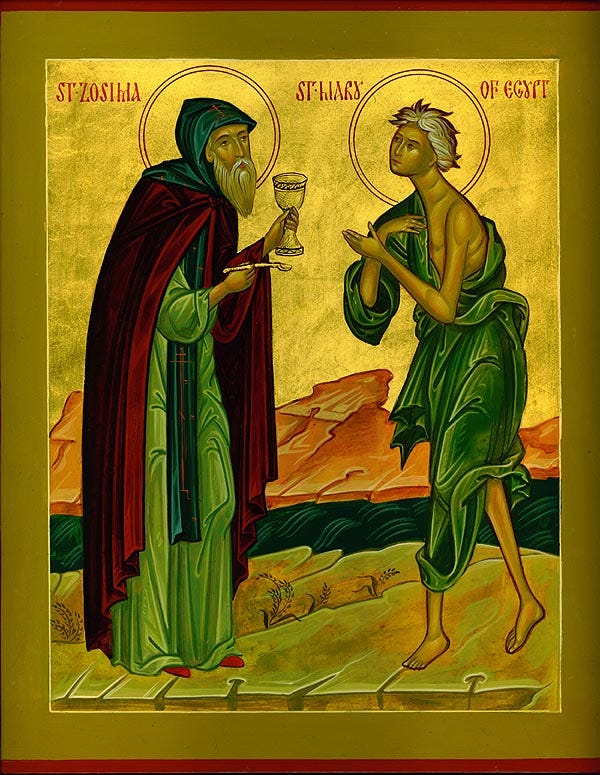
  • April 4 · 13 min

    Joseph and Lazarus and Injustice

    So tonight, as we approach the end of Great Lent and move toward Lazarus Saturday, the story given to us from Genesis to meditate upon is the end of the story of Joseph. It’s an amazing story — it takes up a big chunk of Genesis, actually. And nothing in it is more amazing than this concluding statement which Joseph makes to his brothers as he reveals himself to them and realizes just how scared they are at the moment of the revelation of he is. He says to them: “I am Joseph, your brother, whom you sold into Egypt. But now do not therefore be grieved or angry with yourselves because you sold me here, for God sent me before you to preserve life.” In other words: what you intended for evil, God used for good. If we look at the story of Joseph from this perspective, well, it’s quite a perspective. Joseph was, of course, the son of Rachel, and therefore beloved of his father Jacob. His mother had one more son, Benjamin, and then she died. And out of his love for Rachel, Jacob foolishly showed favoritism towards Joseph — made him the coat of many colors, honored him above all his other brothers. And Joseph, righteous child that he was, suffered because of his father’s foolishness. Joseph is then given by God the gift of dreams, and he tells his father and his brothers that he sees sheaves of wheat representing all of them bowing down before his sheaf, and then the sun and the moon and the stars bowing down before him. His brothers, who are already resentful of their father’s favoritism, are even more angry, more frustrated, more jealous. And Joseph’s youthful zeal for his God-given gift means that this righteous young man suffers. Then Joseph goes out to look for his brothers, sent by his father. His brothers are out working in the fields and they see Joseph coming: “There’s that dreamer — let’s get rid of him once and for all.” In their jealousy they throw him into a pit, initially intending to kill him, with one of them planning to rescue him before it comes to that. Then, in their greed, they sell him to a band of slave traders who take him down to Egypt. And so, out of jealousy, out of greed, the righteous Joseph again suffers wrong at the hands of his brothers. His brothers pour blood on his coat of many colours, take it to their father, and tell him that an animal must have torn Joseph apart. And Jacob is heartbroken, believing the lies his sons have told him. Meanwhile, Joseph is taken down to Egypt and sold as a slave to Potiphar. Because he’s a righteous young man, he works hard and is honest, and Potiphar notices this and raises him up in his household. And he’s just starting to make a go of things as a slave over all the other slaves when Potiphar’s wife takes a liking to him and tries to seduce him. The righteous Joseph says no and flees — but she grabs his cloak and falsely accuses him of having tried to seduce her. And so, because of lust, the righteous Joseph is thrown into prison, again unjustly treated. In prison he continues, being the righteous young man he is, to work hard and be honest, and comes to the notice of those running the prison, and they put him in charge. And he hears the dreams of Pharaoh’s butler and baker, who are both imprisoned because of some misunderstanding. And he interprets the dreams for them: he tells one of them they’re going to die, and the other: “You’re going to be restored — please remember me.” But because of the forgetfulness of the one restored to Pharaoh’s favor, Joseph continues to languish unjustly in prison. I want us to stop there for a moment and think about this. From the perspective of Joseph, who is in the middle of the story and has no idea how it’s going to end, this just isn’t fair. Nothing’s working out right. He’s suffering at the hands of all sorts of people, wrongly and unjustly. He’s being faithful to God, and nothing but bad things seem to be happening to him as a result. Then, of course, Pharaoh has a dream, and the one Joseph told would be delivered suddenly remembers: “Oh yes, there’s a man in prison who knows how to interpret dreams.” He recommends that Pharaoh speak with Joseph. Joseph is cleaned up, brought before Pharaoh, and says, “I can’t tell you the dream — but God can, the God whom I worship and serve (even though he seems to have done nothing for me up to this point). He can interpret the dream for you.” And he tells Pharaoh that the seven blasted ears of corn that eat up the seven good ears mean seven years of famine following seven years of plenty — as do the skeletal cows that devour the fat ones. What Pharaoh should do is collect a portion of the grain during the years of plenty, store it up, and have someone he trusts oversee its distribution. Pharaoh says, “Good idea. You’re my man.” And he raises Joseph up to be second only to Pharaoh in all the land. But Joseph still can’t go home — he’s still, in a sense, trapped. Then his brothers come down to Egypt. They have no idea who this Egyptian is, who understands their speech even though they don’t know it. He questions them, realizes his father is still alive, but can’t quite entrust himself to his brothers who already tried to kill him. So he gives them the grain, sneaks the money back into their sacks, and sends them away saying: “If you want to come back, make sure you bring your youngest brother, who didn’t come with you this time.” His brothers say they’ll try, though they’re not sure their father will let Benjamin go. Eventually they use up everything they bought from Egypt, and, because they’re starving again, they finally convince their father that they’ll have to bring Benjamin. And then — there’s a little more to the story, but the point that we’ve gotten to here is the moment when Joseph sees his brother Benjamin, whom he hasn’t seen in all these years. He can barely contain himself. He goes and weeps in another room, cleans himself up, comes out, and has a feast set before them in order of their ages — which they haven’t told him — so they’re all a little unsettled by what’s going on. And then finally he reveals himself to them. Now, in Joseph — just as we see much later in Lazarus — we have a revelation of all that God is doing in all the things that he does that seem unjust, unfair, wrong. Why should we bother being good? Lazarus’s sisters come to Jesus weeping: “Lord, if only you had been here, he wouldn’t have died. This didn’t need to happen. We know you can heal the sick — why aren’t you doing this for us?” And the answer is that in all these apparent evils — in the favoritism, in the youthful indiscretion, in the jealousy, in the greed, in the lust, in the forgetfulness, even in death itself — God is at work for the righteous, for those who love him and are called according to his purpose. And what he works in and through those faithful ones, what he can work in and through us as we are faithful, is a manifestation of his goodness, of his glory, of his power to save us and to save all those around us. And our job, like Joseph’s job, is actually pretty simple: be faithful, be honourable, do not despair or lose heart, do whatever is set before you with all your might. And, as we live in this way that God has set before us, as we live out the calling to be men and women of integrity, of honour, of truthfulness, faithful to God — God is, and always will be, at work in all the things we experience: in all the injustice and all the blessings, in all the misjudgments and all the honour. He is at work for our good as we live out our calling to love him and to be those he has called us to be, according to his good pleasure. Scripture readings referenced: * Genesis 43:26-31, 45:1-16 This is a public episode. If you would like to discuss this with other subscribers or get access to bonus episodes, visit translatingthetradition.substack.com
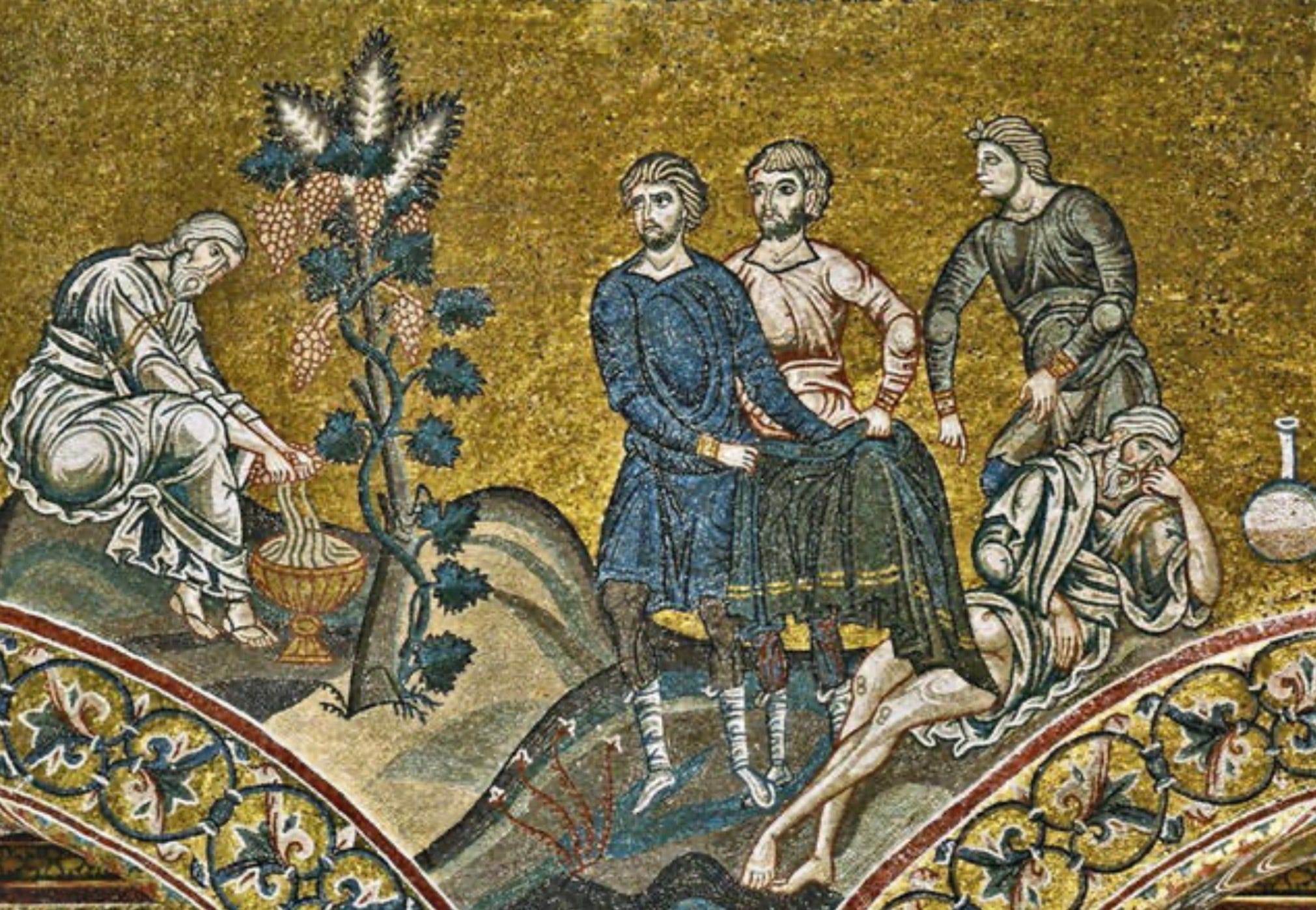
  • March 30 · 24 min

    Our Desert Struggle

    So we’re getting to the end of Great Lent, and the Church gives us, on this Sunday, St. Mary of Egypt to think about. I won’t go through the whole of the story of St. Mary of Egypt, but just very briefly, St. Mary was very much not a saint at the beginning of her life. But the story actually doesn’t begin with her. It begins with Elder Zosima, who was a very righteous young man. He lived in the monastery for most of his life, had managed to exhaust almost all the spiritual disciplines, and was actually thinking, “Is there anyone who can teach me anything in this world about being a monastic, about working out my salvation in fear and trembling?” And if you know anything about monasticism, he’s in a very dangerous spiritual place at that point. He then decides to leave the monastery where he’s spent most of his life and goes to another monastery in the desert near the Jordan River. The custom in that monastery is to go out into the desert during the time of Great Lent, for each of the monks to just be alone in the desert with God, and then come back together for Pascha. He goes out into the desert really hoping to find someone who can teach him more about being a monk. As he’s out there in the desert, he sees a shape flitting away from him. He calls out to them to stop, and the figure replies that she can’t turn and face him because she’s a woman and naked — but please throw her his cloak. So he does, and she wraps it around herself. He obviously assumes that this is a very holy person, but is a little bit scared when she calls him by name — Zosima — when he hasn’t told her his name. He really wants to learn from her, because he is a humble man genuinely seeking to further his spiritual work on his own salvation. He asks her for her story, and she tells him with some reluctance. At about 12 years of age, she left home — she had been brought up in a good Christian family — and basically lived on the streets of Alexandria doing what a young woman with beauty could do in that situation, and doing it because she liked it. Nowadays we would probably label her a nymphomaniac. This went on for 17 years. Then on a lark, she decides to go to Jerusalem for the Feast of the Holy Cross, because everybody else is going and she can get free passage with the sailors. She continues in her horrible, self-destructive lifestyle the whole time. Then, of course, it’s the feast, and she goes to enter the church to venerate the Holy Cross — and she can’t get in. She’s thinking, what’s going on here? There’s a big crowd, and it’s not a polite Canadian crowd, so maybe she just small so she can’t get through. She tries again and again, and then she finally realizes: no, she can’t get in because God himself is keeping her out. That is a devastating moment for her. She’s out there in the narthex, and she looks up and sees an icon of the Mother of God. She contrasts her sinfulness with Mary’s holiness, but calls out to her in fear and desperation, asking her to pray for her, to help her, saying that she’ll do whatever it takes. And so she’s then able to just step right into the church. She goes up and venerates the Holy Cross, and as she comes out she hears a voice saying, “In the desert you will find perfect rest.” So she goes out into the desert and spends the rest of her life there, alone, praying to God, eating whatever comes to hand. It’s in this situation that Elder Zosima encounters her. She’s so holy that not only does she know his name, but when he asks her to pray, she says, “Okay, I’ll pray.” He can’t quite make out all the words, and when he looks up, she’s about a cubit off the ground, praying. At which point he freaks out, and she says, “No, no, I’m flesh and blood like you,” and then continues praying. Her one wish was that Elder Zosima should come back to her the next year with the Eucharist — that’s the one thing she had missed in the desert. Well, not quite. She also tells him something else, which I’ll come back to in a moment. So he does. The following year they meet at the Jordan River. He has the Eucharist for her, as well as a little bit of food, and he’s there at the river wondering what’s going to happen, since she doesn’t have a boat and there’s a fair bit of water. Mary shows up, makes the sign of the cross, and walks across the water like it’s dry land. He’s about to fall down before her, and she says, “No, what are you doing? You’re a priest with the Holy Gifts. You can’t bow in this situation — you have the Body and Blood of Christ there.” So he communes her. He’s eager to see her again, and she says, “Come next year to where you first met me.” When he does, the following Lent, he comes to where he first met her. There she is, dead on the ground, with her name written by her head: Mary. She’s passed away, and he realizes from the writing that God has transported her from where he gave her communion to this place — a 20-day journey — in an instant. He buries her with the help of a lion and then tells the other monks the story. The story is given to us at this point in Great Lent — usually with the Canon of St. Andrew of Crete, but also on this Sunday — for us to think about as we work on our own salvation in the depths of Great Lent. At this point in Lent, we’re in one of two possible spots. We might be — and this is probably the less likely — in the spot of Elder Zosima: it’s been a great Lent, I’ve actually managed to keep the fast, I’ve been doing pretty well! This is actually a bit of a dangerous spiritual place to be in, but it’s also a fairly natural one. We do this all the time. We saw it, actually, in both of the Gospel readings we just heard. Jesus is telling his disciples how he’s going to go down to Jerusalem and be crucified — and what are they doing? They’re oblivious. They say, “Lord, when you come into your kingdom, I want to be on your right hand, and this guy wants to be on your left.” And Jesus is like, “You just don’t get it.” He explains to them what being in his kingdom really means. Or the Pharisee who invites Jesus to supper with him — he’s thinking, “I’m a fairly important man, I’ve got this great teacher here, everything’s going great.” And then the sinful woman comes in: “Her? What’s she doing here? She’s making a scene!” We kind of laugh at the Pharisee and the disciples, but that’s us. Very often we’re just oblivious to the fact that we’re not really working out our salvation in fear and trembling, we’re not really making any kind of spiritual progress, and we’re not as good as we think we are. However, there’s another place where, by this point in Lent, most of us probably actually are at. I would say it’s where Mary was for a good 17 years of her sojourn in the desert. Because she lived in sin for 17 years in Alexandria and, as she tells her story to Elder Zosima, she says to him that for 17 years even in the desert she was longing for what she had left behind. She was tempted by that way of life. Those thoughts just kept coming back and coming back. She would throw herself on the ground and water it with her tears, sometimes for a day and a night, just struggling to repent. And I think maybe that’s where most of us are at this point in Great Lent. Because Lent is hard. Keeping the fast is difficult. You’re tired. You’re hungry. You really want all those nice things — which are coming, it’s okay, they’re coming! But that is actually an image of the sin that we’re struggling with, and continue to struggle with. And sometimes we find ourselves despairing: I’m not making any spiritual progress. I keep wanting to go back. I keep going back. And if we’re at this spiritual low-point, the temptation is to despair. I find Mary’s story encouraging in one way, because it tells us there is going to be a very long road ahead as we try to turn our backs on sin. Mary was in that life for 17 years, and so in the desert it took her 17 years to repent. That’s encouraging to me, because it explains why it’s so hard to repent. But on the other hand, it can also be discouraging, because she had the desert. She had this whole monastic context surrounding her. She could throw herself on the ground and weep for a day and a night. I can’t really do that — my employer would be calling me up: “You were supposed to be at work today.” “I’m sorry, I’m weeping for my sins.” That’s not going to go over so well. So what do we have? I would suggest that what we have is what Jesus offered his disciples when they were, in their case, kind of oblivious. And here I’ll share a short personal story, because this particular teaching is one I love for very personal reasons. As you know, I was in Japan as a missionary English teacher — as a Protestant — for a whole year. It was one of the most delightful and pivotal years of my life. I really fell in love with the Japanese language and culture, even though the language is a little bit difficult. I particularly liked the kanji — the Chinese characters — because we don’t have anything like that in our language. These characters convey both phonetic sounds and visually embedded meaning. So there I am, this henna gaijin (変な 外人), this strange foreigner, looking at these characters, thinking: I’d like to have my name written in them. My name at that point was Ed, and in Japanese — where every syllable ends in a vowel — that becomes “Edo.” Edo-san, or in some cases Edo-sensei, because I was a teacher. So I picked two characters (normally foreigners don’t do this — you just go with the katakana), one for “e” and one for “do.” The character I picked for “e” I would draw on the board in my probably terrible Japanese handwriting — it was megumi (恵), which means “grace.” The students would all look at it and say, “Oh yes, very good, very good” — because grace is beautiful and you want your name to mean something wonderful. Then I put down the “do,” and for that I had chosen the do (奴) from dorei (奴隷), which means “slave.” They were like, “Oh no, no, that’s bad — you don’t want that in your name.” But the Japanese Christians got it, because I was able to explain: Kami no dorei dakara megumi (神 の 奴隷 だから 恵み) — “I am God’s slave, therefore I am blessed, therefore I have received grace.” And that’s precisely what Jesus teaches his disciples in this passage. Initially he’s trying to get them to stop and think about the nature of the kingdom. James and John are asking to be seated on his right and left when he comes into his glory, and he says, “You don’t know what you’re asking. Are you able to drink the cup that I drink and be baptized with the baptism I am baptized with?” They say, “Yes, we can do that” — thinking of course of a literal cup and literal baptism. Jesus, of course, is talking about his death. He says to them, “You will indeed drink the cup that I drink, and with the baptism I am baptized with, you will be baptized. But to sit on my right hand and my left is not mine to give, but for those for whom it is prepared.” Then the other ten hear about it and are indignant — because they don’t get it either. So Jesus calls them all to himself and says, “You know that those who are considered rulers over the Gentiles lord it over them, and their great ones exercise authority over them. [I know that’s what you’re looking forward to…] But it is not to be so among you. Instead, whoever desires to become great among you shall be your servant” — the Greek there is the word for deacon — “and whoever desires to be first shall be the slave of all. For the Son of Man did not come to be served, but to serve, and to give his life as a ransom for many.” So I would suggest: we don’t have the desert. We don’t have the luxury of being able to spend a day and night weeping on the ground for our sins. But what we do have is this attitude that Jesus teaches us to adopt — where we are servants and slaves to those around us. We may not be surrounded by barrenness and rocks and the vast wasteland, the heat of the sun and the cold of the night. But we are surrounded by people. And people are very annoying. They are our ascetic labour. Our job, as we are surrounded by all these people, the way we can work out our salvation in fear and trembling, is to realize that we are their servants — we are their slaves. Our meaning and purpose is to serve them, just as Christ’s purpose in coming was to serve all of the human race, to serve each and every one of us. So often our attitude is the opposite of what Jesus teaches us to adopt. Why do I find these people annoying? Because I’m kind of the center of the universe, right? Everything should revolve around me. They should be doing what I want — not cutting me off in traffic, not demanding my attention right here and right now, not shirking their responsibilities which I am trying to give them. No! They should be doing what I want them to do! And so I’m getting annoyed. But how does that change if all of a sudden they’re not there to do what I want? What if I’m there to do what they need? What if that’s my meaning, my purpose in life? Then we should actually be thankful to them for giving us something to do, something to struggle with. Because it is in this relational context that we have the opportunity, first, to see our own sinfulness and selfishness writ large, as we struggle with annoyance and with the desire not to submit, not to be a servant or a slave. And second, we have the opportunity — given to us by God through them — to serve, to meet their needs, to show them the love that Jesus showed us. And then, all of a sudden, that complaint becomes a gift. That shirking of responsibility becomes a gift. Even that cutting off in traffic might somehow become a gift, as we look on them as our master, as we look on this as an opportunity sent by God for us to work out our salvation in fear and trembling. And as we realize, through this encounter, the depths of our sin, we may well be blessed with tears. We may well be able to be like the sinful woman weeping at the feet of Jesus, honoring him with this understanding of our failure — but also of his love, his grace, his mercy that does not abandon us to our selfishness and our sinfulness, but which reaches out in loving mercy, serving us by embracing the death of the cross for us and for our salvation. Because that great love with which God has loved us is what we are designed to live in — not only to receive freely, but to give freely. This is the kingdom of God. This is what Christ came to inaugurate here on earth. And this is how we are able, like St. Mary of Egypt, like Elder Zosima, like the sinful woman, and yes, even like the apostles, to serve one another in love and to work out our salvation in fear and trembling, to the glory of God, Father, Son, and Holy Spirit, now and ever and unto ages and ages. Scripture readings referenced: * Mark 10:32-45 * Luke 7:36-50 This is a public episode. If you would like to discuss this with other subscribers or get access to bonus episodes, visit translatingthetradition.substack.com
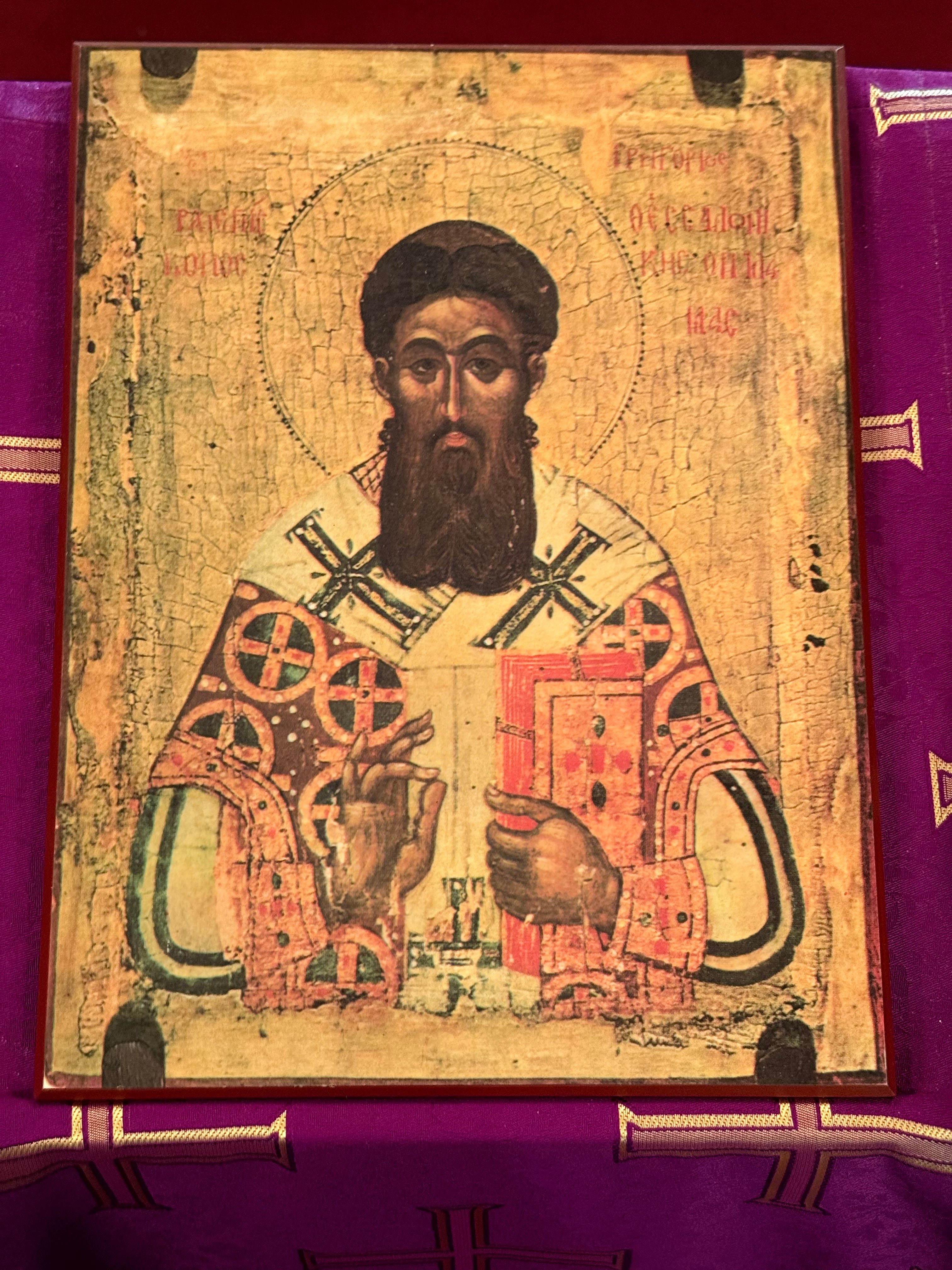
  • March 24 · 9 min

    The First Sin after the Flood

    So on this Wednesday of Great Lent, we’re given the story of Noah just after the flood to meditate on. The story is about the first recorded sin after the flood. Noah and his sons Shem, Ham, and Japheth come out of the ark, and God blesses them. It then notes that Ham was the father of Canaan, and these three were the sons of Noah, and from these the whole earth was populated. You have a brand new start where everything is clean, fresh, and literally cleansed. And here you have Noah and his three sons, and now the son of Ham, Canaan, and the first recorded sin after the flood. And Noah begins to be a farmer. And he planted a vineyard. And then he drank of the wine and was drunk and became uncovered in his tent. Causes of Sin We don’t know why or what was the cause or exactly what was the temptation for this particular sin. Whenever we think of alcohol and drunkenness nowadays, we tend to think of alcoholism and addiction. Not all sin is addiction, but all addiction is sin. As the Apostle Paul says, “All things are created good, but I will not be mastered by anything.” If we allow even good things like video games to master us, then they become for us something that takes us away from God and therefore is sin. It could be that Noah had a bit of an addiction and was waiting to get the first fruits of the harvest so that he could make some wine and just drank a little too much. Or maybe it was one of the more recent suggestions I’ve read: survivor’s guilt. He just survived an incredible catastrophe, and he and his family are the only human beings left alive; you might feel angry, bitter, or wrestle with “Why me?” Possibly then, instead of turning to God with that, he drowned his sorrows in alcohol. Perhaps even more likely, knowing myself the way I do, when God blesses, we have this tendency to take those blessings for granted. It’s like, “Wow, everything’s going great. Isn’t this wonderful? This is how things should be. They should always be this way.” And then as we think of those things separate from or apart from God, they become sin for us because they’re leading us away from that attitude of gratitude that is supposed to characterize our every interaction with this world that God has given us. Responses to Sin Whatever the reason, Noah got drunk and was literally fall-down drunk in his tent, naked. Then, Ham, the father of Canaan, saw the nakedness of his father and told his two brothers outside. But Shem and Japheth [the other two brothers] took a garment, laid it on their shoulders, went backward, and covered the nakedness of their father. Their faces were turned away and they did not see their father’s nakedness. One thing sin always does is expose our shame. As other people around us see what we’ve gotten ourselves into, they too see that shame. Then the question is, “How do we respond when we see that shame of sin?” It’s one thing when it’s us, but it’s quite another thing when it’s somebody else. We’re really good at judging. Because we, of course, never sin, and that other person over there, well, that’s just really shameful. That seems to be something along the lines of Ham’s response to his father’s nakedness. He goes to his brothers and says, “Wow, do you see what dad’s like? He’s just dropped down drunk in the tent over there.” But when Shem and Japheth hear this, they take a cloak, hold it between them, and walking backwards into the tent, cover their father’s nakedness so they can’t even see it. This speaks to us of our response, particularly to the sins of others. We can highlight it, point out the shamefulness of it, maybe even mock it and judge it. Or we can do everything in our power to cover for the person, to honor them in whatever way we are able to honor them, even in the midst of this failure of theirs. If we, like Shem and Japheth, are going to do this, we need to adopt a backwards approach—something that is maybe not quite natural to us—and backing up, cover up the failure of our brother or our sister. This is a better way. The Curse of Canaan and the Church Fathers Now Noah wakes up from his drunkenness. And he knew what his younger son had done to him. And he says—and this is interesting, because as I was reading through some of the early fathers of the church, they’re just as confused about this as I am—“Cursed be Canaan.” Wait, what? “Cursed be Canaan, a servant of servants, he shall be to his brethren.” I find it just a little bit heartening that some of the great fathers of the church are all like, “Hmm. This is kind of weird. Not sure what’s going on here.” My patron, St. Justin the Martyr and Philosopher, suggests that God did just bless them all as they came out of the ark, so maybe Noah didn’t want to overturn God’s blessing. St. John Chrysostom suggests that if you want to make a father really sad, you don’t curse him, you curse his children. I actually rather like St. Ephraim the Syrian’s version—or at least something he heard. He suggests that if you look at the story, you’ve got Shem and Ham and Japheth, and that’s always the order. So the traditional order would be the oldest is Shem, Ham would be second born, and Japheth would be third. But Noah wakes up and sees what his “youngest son” had done to him. Wait, that would be Japheth, wouldn’t it? Or, if you’re thinking about this in more Hebraic terms where you use terms like sons and brothers more loosely, it could be—St. Ephraim the Syrian says—that what he’s actually referring to is the youngest one who’s been named so far, which is his grandson, Canaan. So the speculation goes that quite possibly it was Canaan who saw and told his father, Ham, and then Ham said, “Oh man, we’ve got to tell Shem and Japheth about this.” Whatever the case, we don’t know, and sometimes it’s obscure and that’s okay. We don’t have to understand everything, but for us, I think the most important takeaway should simply be that we need to be on our guard. Be on Guard We need to be on our guard against bitterness, anger, and addiction. That’s why we’re in the middle of Lent trying to disrupt those cycles somewhat. We need to be on guard against ingratitude and taking things for granted. And above all, we need to be on guard, especially during this period of Lent, against judging our brother or our sister. If we aren’t, there’s a curse. But if we are, there’s a blessing for us, because Noah then goes on to bless Shem and Japheth and all of their descendants. That blessing then carries forward through the Scriptures as God’s blessing carries forward in our lives as we seek him above all and in all and seek to glorify him, Father, Son, and Holy Spirit, now and ever and unto ages of ages. Scripture readings referenced: * Genesis 9:18-10:1 This is a public episode. If you would like to discuss this with other subscribers or get access to bonus episodes, visit translatingthetradition.substack.com
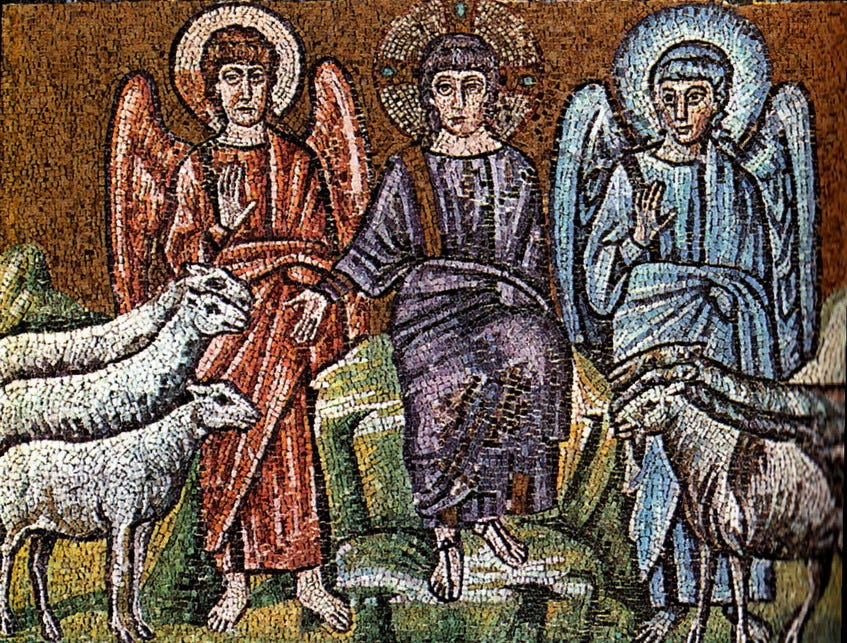
  • March 9 · 21 min

    St. Gregory Palamas Sunday

    There’s supposedly an ancient Chinese curse: “May you live in interesting times.” Well, apparently we’ve all been cursed. People are concerned. Some are worried that Islam is encroaching on our civilization. Some are concerned that with the continual elevation of the culture wars, civil war may not be far off. We’ve been through a pretty weird time with sickness. These are interesting times. If you listen to the hymnography for the saint that we are celebrating today, Saint Gregory Palamas, you would probably not notice—you’d certainly not know from the hymnography—that he lived in even more interesting times. St. Gregory Palamas was a well-educated young man. His education was encouraged and supported by the emperor himself, who was really hoping that this brilliant young man would go into the imperial service. But Gregory instead went into monasticism at a very young age and engaged in the hesychastic tradition. As I said, he lived in interesting times. The Muslims were actually encroaching on their civilization. The Byzantines were being gradually driven back. So that when Gregory was eventually ordained a priest, he was ordained in Thessalonica because that was relatively safe because some of the other places, like Nicaea, had already been taken by Islam. Gregory also lived during a time of civil war. The order of the empire was shaky at best since the Fourth Crusaders had actually taken over Byzantium, and they had only just gotten back their capital city, Byzantium. The imperial family was shaky at best. There was a young emperor on the throne who needed to be protected, and there were people arguing over who should protect him. And so he had different candidates vying for the regency, which actually broke out into civil war. And there was the actual plague: the Black Death. You remember that one, the plague that took out half the population of Europe? That was there in Gregory’s time as well. So he definitely lived in interesting times. More than that, just as we are at some points worried about what controls people might be placing on religious expression, Gregory himself suffered from this, and this is why we remember him. See, one of the problems with God is he’s kind of hard to put in a box. But we human beings don’t like that. We like to be able to explain things, have things nice and rational and ordered. And there was a movement towards that in Gregory’s day. There was a man named Barlaam. He came from Italy. He may well have been influenced by scholasticism that had arisen in the West, which was a very rational approach based on Aristotelian logic, because the West had lost contact with that. And then in the high Middle Ages, in the 1200s, they rediscovered Aristotle, thanks to the Muslims, and realized, “This is great! Logic! We love it. We should apply it to everything, because it will make everything nice and neat and rational and ordered and controlled.” And there’s some good stuff about logic. I like logic. But it doesn’t necessarily explain—or manage to let us control—everything. Barlaam moved from Italy to Constantinople and was invited to see some of these hesychastic monks, the ones that Gregory was now hanging out with and with whom he was actually doing this practice of silence. And it was a fairly rigorous physical discipline of prayer and meditation which had significant spiritual effects. Barlaam came in, and he started interviewing and talking to some of the monks. It reminds me a little bit of maybe some aspects of the internet nowadays. When you’ve got those people who get interviewed, and they suddenly get famous, and they’re not necessarily the best representative of whatever it is that you think. That’s kind of what Barlaam encountered. And so he came away—he was already kind of prejudiced against them with his rationalist, scholastic mindset— but he came away from this encounter basically ridiculing these guys as navel-gazers, because they would actually sit and meditate, looking down towards their navel. And he highlighted all sorts of stories he heard, like someone told him that the spirit came out through the nose and then came back in again, and things like that, which are maybe a little bit weird. And admittedly, when you stop to think about it, a lot of the encounters with God, even the ones that we have recorded in the Old Testament and maybe even some of the New Testament, are a little bit weird. God is not very good at sticking in our little boxes. Barlaam was concerned about this, and he then decided he was going to fix this. So he writes this book, essentially ridiculing the monks and saying basically that God is not knowable. This is a bit of a problem. Because on the one hand, as Orthodox Christians, we know that God is ultimately unknowable. He doesn’t fit in the box. He doesn’t even fit in our ability to comprehend him as human beings. We just don’t have it, not in the sense of being able to know him fully. But that doesn’t mean that we can’t know anything about God. Admittedly that may be slightly overstating Barlaam’s case, but then he was slightly overstating his case as well. Barlaam was slandering the very thing that St. Gregory and his companions were involved in. Because St. Gregory was a well-educated young man, the monks asked him to please respond to this. And so he did. He wrote his Triads, three essays which are interconnected, and there were three of those structures, written at different times in response to Barlaam. Gregory, in addressing the main concern that Barlaam had, which was, how can you see the invisible God? Because what these hesychastic monks—who were practicing inner silence and prayer—were experiencing was a vision of God. They saw the uncreated light, that they identified with the light that glowed from Christ and even from his garments on Mount Tabor. And that was something that they treasured. They were willing to spend an entire lifetime pursuing that, even if they didn’t actually experience that. And here Barlaam was just lampooning them as “navel-gazers”—and, more than that, he’s suggesting that there’s another hypsostasis, another “person”, that they’re worshiping, this “visible” God. And so St. Gregory dives in, and he uses the tools that are at his disposal. He also uses Aristotelian logic (because we like logic: logic is good!) and categories, and he makes this very important distinction between the unknowable essence of God and the knowable, experienceable energies of God. God is ultimately unknowable, St. Gregory says, in his essence, absolutely, in that which is the inner part of him, in that which ultimately makes him what he is. But he is and always has been knowable in his energies, in the work that he does as he engages with the world that he made. He makes himself known to us. And so, as a result of God’s mercy, God’s energies, God’s work, we actually do know something about him, and we can speak positively about him, and we can actually experience God himself. The first thing I want us to consider and take away from this is even in the interesting times that we live in, even in the highly polarized times that we live in, we actually do need to be willing to speak up for that which is good. As the Apostle says, “Let not your good be evil spoken of.” However, it is not unwise or an abdication of responsibility to seek out those who are actually good at talking about these things and saying, “Maybe you should represent us,” because we’re not all experts. We might end up saying things in a way that’s wonky or weird and end up getting picked up on YouTube and ultimately throwing something into disrepute. We are not all experts, and that’s OK. But it is important that we are willing to speak up for that which is right. As St. Peter says, “Always be prepared to give a reason for the hope that lies within you.” And, at the very least, we can speak honestly, openly, lovingly about that which we have experienced. But, when you do speak up, be prepared to suffer for it unjustly. Because St. Gregory did. He ended up spending three years in jail simply for speaking the truth. And we think we have it bad. We worry that people may say nasty things about us on the internet. And yeah, nobody likes having nasty things said about them. But, you know, thankfully, most of us aren’t being thrown in jail for three years. St. Gregory was. And yet he didn’t back down because this was something important. And what was so important? And this is my second point: it is the experience of God. All of our faith is based ultimately not merely on rational theology—although we can come up with a good reason for the hope that lies within us—but it is based on experience. If you look at the Scriptures, what does it record? It records the people of God’s experience of God. f you look at the Gospels, what do they record? They record the people of God’s experience of Jesus, who is God. And they didn’t always get it. This pattern here is not new. This pattern of wanting to control things, wanting to make sure that God fits neatly in our boxes—this is exactly what we heard in the Gospel. Jesus says to the paralytic, “Your sins are forgiven.” And then immediately everybody around him, all the scribes, the Pharisees, all their educated people ask, “Who can forgive sins but God alone?” And Jesus says, “Well, maybe you need to experience something. So that you may know that the Son of Man has power on earth to forgive sins, I say to you, arise, take up your bed, and go home.” And he gets up in front of them all, and that very crowd that was keeping him out just kind of parts as he walks out with his bed. So, this is not a new thing. And it’s actually really important that we understand that we are able to experience God. But it is also important that we understand that that experience of God should be consistent with everything that has gone before. Because there’s all sorts of experiences of weird stuff, and not all of them are God. You can just do a deep dive in any sort of YouTube rabbit hole, and you’ll get all sorts of really wild and interesting stuff. And some of it may well be of God and some of it may well not be. How do we distinguish between the two? And this is the other reason why this dialogue is so important and this dialogue takes place and is always ongoing within the church. And it could take a lifetime of work to wait. We always want our answers instant, right now, right? So that we can do another YouTube video about it. But it takes a while to sort out, “Okay, what does this mean?” What do these experiences that these hesychastic monks are having actually mean? And we need people like St. Gregory of Palamas to meditate on this and engage with this and think about this. And to defend it on the basis that this is consistent with what has been experienced about God and with God before. That’s the importance of tradition. And then finally, as we seek God—because that is really what we should take away from these hesychastic monks: they were seeking God with their whole heart, with their whole being. Body as well as soul and spirit were being disciplined in the pursuit of what? In the pursuit of an encounter with God himself. Because what is there? What more is there in life that is worth pursuing than God himself? Than an encounter with the one who created and who is currently sustaining us? That’s why we’re here. That’s why we are seeking him here, now, in the church, in the context of the living tradition of the Church. That’s why we are currently working in this Great Lent “to beat our bodies and make them our slaves,” as Paul puts it, to curb the appetites of the flesh so that we can encounter God himself as he reveals himself to us very soon in his great and holy Pascha. But as he reveals himself even sooner than that, in every moment and every day, as we take the next breath and experience the miracle of life and experience the fact that God is with us, working in our own lives to bring us closer to himself. Which brings me to my third and final point, which is: what should our response to this be? And it’s very simple. It’s the response of the people who saw the paralytic pick up his bed and walk out in front of them all. God has manifested himself to us, and this is something to rejoice over. This is something that should bring us joy. If there’s anything that should characterize us as followers of Jesus Christ, it should be joy. Not happiness. Happiness is great when you have it, when it happens—there’s an actual etymological relationship there. But joy that is deep and abiding and that sustains us even through those great sorrows that we encounter in life. Because we know that even in those great sorrows, God is working for the good of those who love him and are the called according to his purpose. And in the end, St. Gregory himself, as he dedicated himself to the defense of his friends, the monks, and to the defense of the experience of God, was vindicated by council after council, so much so that that collection of councils is sometimes referred to as the Ninth Ecumenical Council in the Orthodox Church. And so his efforts were not in vain. We don’t always see the result of our efforts in this life. But Gregory was rewarded with the vindication of his essence and energies distinction, which has been incorporated into Orthodox theology ever since, and which, if you look at it, really does go all the way back. Because it’s consistent with the church’s experience of God, with the people of God’s experience of God, all the way back. God is unknowable in his essence. But we experience him. We know him. We experience his mercy, his grace, and above all, his love in his energies as he works in the world, as he works in our lives, to bring us to himself, to his glory, the glory of the Father and of the Son and of the Holy Spirit. Scripture readings referenced: * Mark 2:1-12 This is a public episode. If you would like to discuss this with other subscribers or get access to bonus episodes, visit translatingthetradition.substack.com
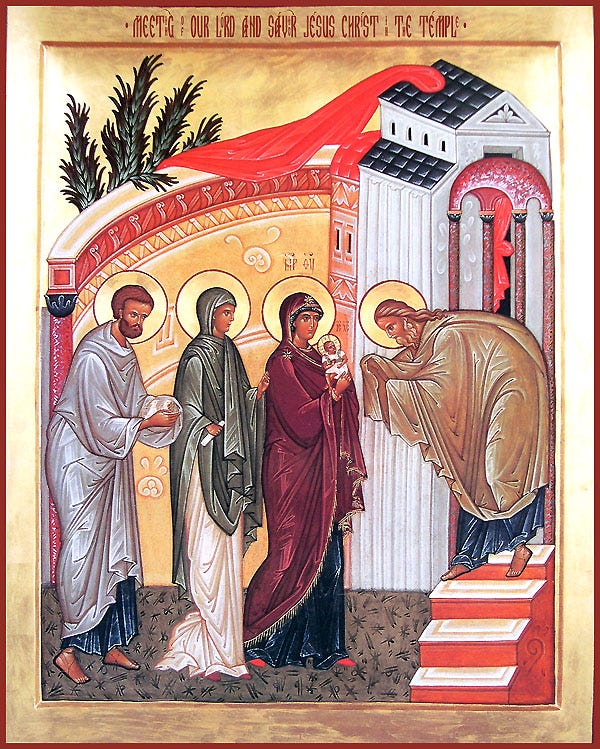
  • February 16 · 22 min

    The Warning and the Nature of the Last Judgment

    Those of you who have been coming to St. John’s for a while will know that the Sunday of the Last Judgment and the parable of the rich man and Lazarus are my two least favourite passages on which to preach. Because this is a warning. We are coming to the edge of Lent, and we are deliberately given this passage to contemplate, the passage where Jesus talks about the Last Judgment. And we have to approach it carefully, with balance. But we also have to acknowledge this is very clearly a warning. And so it would be irresponsible of me to tone down that warning. And there is that temptation. It seems to be rampant now, even within the Orthodox Church, to somehow tone down what our Lord is saying here. And I think it’s understandable on a number of different levels. I think the first level on which it’s understandable is that we really are not sure about this whole concept of eternal punishment, of God judging, of this fire that is consuming, that is talked about here, prepared for the devil and his angels. I think the first thing that really gets us troubled about this is that we’re actually not quite sure that God is good. And to be fair to us and to our society, I think that’s part of our Greco-Roman philosophical heritage. Don’t get me wrong. We as Christians like the Greek philosophers. They were getting pretty close, especially Socrates, starting to realize that, hey, maybe all these stories about the gods are kind of crazy, and maybe there really is only one God, and they were kind of groping their way towards it. And so we like them, but they’re not our primary reference point as followers of Jesus Christ. Jesus is. He is the fullness of the Godhead made flesh. He is the ultimate revelation of who God is and what he is going to do. And so he is our primary referent point. If you have any concern about whether or not the Creator and Sustainer of the universe is essentially good, I would point you to the cross. And this is the primary difference, I think, between the Hebraic understanding of God, which is what we are all actually embracing when we come to Christianity, which I think is epitomized by Abraham when he is faced with the impending judgment of God. God speaks to Abraham and speaks to him like a friend, actually, and says, shall I conceal from Abraham what I am about to do? And then he goes on and talks about how he’s about to judge the cities of Sodom and Gomorrah for their wickedness, to send down fire and brimstone upon them, to consume them. And Abraham’s response is, “Shall not the judge of all the earth do right?” I love that response. Because it’s a rhetorical question, so implicit in it is the answer. Well, of course he’s going to. And then, of course, Abraham proceeds to bargain with God and to get him down as far as possible. It’s like, oh, make sure that God is as merciful as he can possibly be. Because, again, that’s the human instinct here. But I think that should be our starting point as followers of the one true Creator God, as followers of Jesus Christ: shall not the judge of all the earth do right? So whatever we have here, whatever this solemn warning is really about, we can rest assured that God is good. I think perhaps the next reason that we struggle with this passage, and particularly with the notion of the judgment of God, is that we’re a little bit sheltered here in North America. For the most part, we don’t actually get to see evil in all of its horror, in all of its absolute, disgusting, horrific wickedness. The guards at Auschwitz, who delighted in causing extra pain to the people that they were planning to exterminate, is now far away. It’s far back in the rearview mirror. The Gulag Archipelago, about which Solzhenitsyn wrote in such sickening detail. Communism has fallen. It’s okay. And so we haven’t experienced, for the most part, any of us directly, any of this kind of level of evil. Now, we do get glimpses of it. I think Tumbler Ridge was one of those moments when we get a glimpse into the power, the extreme danger, the destructive horror that is pure evil. And the thing is—well, I’ll get to what the thing is. Because what I want to start with first is what the judgment reveals. The Last Judgment reveals that God is more horrified by this evil than we are. And he’s going to do something about it. This is the basis on which the Old Testament says, “‘Vengeance is mine, I will repay,’ says the Lord,” which Paul himself quotes to say, okay, you can leave vengeance to God. You can trust that God is going to deal with this. But the third and most important thing that I want to draw our attention to in terms of the reason why we have trouble with this, is a misunderstanding of what exactly the judgment of God is. And for this, we should look at the teaching. He’s just telling us more or less what is going to happen in terms that we can at least begin to understand. So he begins with, “When the Son of Man comes in his glory and all the holy angels with him, then he will sit on the throne of his glory.” This is a very different coming than the first coming. Because where Christ came as a baby, pretty non-threatening, in a manger, in poverty, with not many people knowing about it—this is different. Now he’s coming in his glory with all the holy angels, and he’s going to sit on the throne of his glory. “And all the nations will be gathered before him, and he will separate them one from another as a shepherd divides his sheep from the goats.” It always strikes me as a little unfair to the goats, because goats are cute too, but they’re also wily. But I think the main thing is that just as any person in Jesus’ day would know how a shepherd goes about separating the sheep from the goats—okay, there’s a sheep that goes that way, and oh, that’s obviously a goat that goes over there—this is the metaphor that our Lord is drawing on to talk about this separation that’s going to happen at the end of days. “And he will set the sheep on his right hand and the goats on his left. And then the king will say to those on his right hand, ‘Come you blessed of my father.’” And here I want to actually back up because there was something here I wanted to highlight, which I forgot to do, so I’m going to do it now, which is: All the nations will be brought before him. This, again, is an important aspect of the judgment for us to consider, and even to begin with, because Jesus begins with it. Everybody is going to be judged. This judgment is universal. The criteria that are about to be established apply not simply to those of us who have heard the gospel, not simply to Christians and Jews or to religious people. No, this applies to everybody in the entire world. All the nations are going to be judged. And the criteria is the same for all of them. So he’s going to separate them as the shepherd separates the sheep from the goats. And then he says to those on his right hand, “Come, you blessed of my Father, inherit the kingdom prepared for you from the foundation of the world. For I was hungry, and you gave me food. I was thirsty, and you gave me drink. I was a stranger, and you took me in. I was naked, and you clothed me. I was sick, and you visited me. I was in prison, and you came to me.” And then the righteous will answer him, saying, “Lord, when did we see you hungry and feed you? Or thirsty and give you drink? Or when did we see you a stranger and take you in? Or naked and clothe you? Or when did we see you sick or in prison and come to you?” And the king will answer and say to them, “Assuredly, I say to you, inasmuch as you did it to one of the least of these my brethren, you did it to me.” Then he will also say to those on the left, “Depart from me, you cursed, into the everlasting fire prepared for the devil and his angels. For I was hungry and you gave me no food. I was thirsty and you gave me no food. I was thirsty and you gave me no drink. I was a stranger and you did not take me in. Naked and you did not clothe me. Sick and in prison and you did not visit me.” Then they also will answer him, saying, “Lord, when did we see you hungry or thirsty or a stranger or naked or sick or in prison and did not minister to you?” Then he will answer them saying, “Assuredly I say to you, inasmuch as you did not do it to one of the least of these, you did not do it to me. And these will go away into everlasting punishment, but the righteous into eternal life.” So this is a very solemn warning, but also a very clear description of the criteria on which we will be judged. So if you’re given a warning, there’s a couple of things you don’t want to do. If I’m to pass on the warning, I must not tone it down in any way, shape, or form, however much I may be tempted to do so. And secondly, I must not change the nature of the warning. And the nature of the warning here is about who we are becoming by our actions. This is the basis on which we will be judged. Because—and here I want to talk about one of the fathers who’s often characterized as possibly being a universalist: St. Gregory the Theologian talks about the salvation of all humanity. But what does that mean? What does it mean to be truly human? What are we as human beings made for? What makes us human, truly human, rightly human, fully human, is that we love. And that’s precisely the criteria that we see here. And love, not merely in the abstract. Not merely a bunch of feelings. It’s like, okay, well, I just feel love for all humanity, and it’s very nice. I just feel that love. No, this is concrete love. This is the love where your grandmother sits you down and says, “You haven’t been eating enough.” And then sets a huge plate of home cooked food in front of you and says, “Okay, now eat.” That is the love we’re talking about here. Like literally, “I was hungry and you gave me some food.” This is what it means to be human is to reach out to those around us, to those God brings us into contact with, and to see the need that is there in their lives, and to say, “Oh, let me help you with that. You don’t have enough clothes. I have an extra coat in my wardrobe. I’m not really using it. Here, take it. You’re sick and incapacitated, unable to really take care of yourself. Here, let me bring you some food. Here, let me give you some money so you can go get Uber Eats. Here, let me help you in some way, shape, or form,” as opposed to what we saw when the priest and the Levite walk by on the other side. As opposed to what we saw when the brother of the prodigal son refuses to go in. There is this in us too, this evil, that is stirred up very often by evil itself, this response that begins to dominate our heart, our understanding, our thinking. As we experience evil, as we are the recipients of mistreatment and misjudgment, we can allow that to fester and to poison our hearts and our souls, such that we begin to cut ourselves off from humanity, that we begin to see everyone else as the enemy, and we find ourselves ultimately alone and in despair because of the hatred that has taken over our hearts. And that is not what we are made for, but that is a very real danger that we can fall into, even sometimes motivated by anger at what the injustices are that are being perpetrated in this world. And it eats away at us. It eats away at our humanity and causes us to draw back into ourselves so that we no longer are concerned for the other. We are no longer concerned for mitigating the horrors that other people are feeling, are experiencing. All that is left is this solitary, isolating anger at our fellow human beings, at the God who made and created this world, and there is almost nothing left. This is the solemn warning. Because if we are going to become truly and fully human, as St. Gregory the Theologian says, we must in order to be saved, then what are we created for? We’re created for something more. We’re created to be filled with love for God, to be filled with love for our neighbor, to be filled with one another, to be united with one another in love and co-suffering service. That is what we are made for. That is the nature of salvation itself. That is the nature of what it means to be human, truly human, in the presence of the Almighty God, who is good and whose goodness we acknowledge and receive and then freely give to those around us. That is the blessed state prepared for us from the foundation of the world: to be truly human, to be truly defined ultimately and wholly by love, to be united with one another and with God in love. And that is what is manifested here in this visiting the sick, visiting those in prison, looking after those who are thirsty or hungry or naked. That’s why this is the criteria. And the warning is, the very solemn warning is, that those who reject this, those who reject their fellow human beings, those who reject God in anger or suffering or hatred, are opening themselves up for the other state. The state where there is almost nothing left of that true humanity, where there is nothing more than a simple kind of burning wreckage of what used to be a soul. And Jesus says, don’t go there. Don’t do that. This is what must be avoided at all costs. So for us, as we consider this solemn warning, we need to keep in mind, first of all, the essential and ultimate goodness of God. Shall not the judge of all the earth do right? The answer is, of course he shall. He is doing it right now in his great mercy and love, sustaining us in existence, even as we turn our backs on him and serve him incompletely, inaccurately, not very well, inconsistently. He still loves us. He still sustains us. He still gives us life and breath and everything that we have and are so that we can work out our salvation in fear and trembling by loving one another in basic, practical terms. Loving one another, opening our hearts to one another, welcoming one another, especially those who are in need in any way, shape, or form. And that, too, is something we have to watch because when we see someone in need, we’re often like, I’m not sure I have time for that. I’m not sure I have the energy for that. Well, OK, sometimes you don’t. But if you do, you should do something about it. That is you working out your salvation in fear and trembling before God, opening your heart to the person who is in need and helping them in a difficult and dangerous world and uniting yourself to them, and by uniting yourself to them, uniting yourself to Christ himself. This is what we are called to do. This is what we were made to do. This is what we must become in order to enter into the blessed state that has been prepared for us by God, who loves us, from the foundation of the world, that we might be with him, with one another, to his glory: the glory of the Father and of the Son and of the Holy Spirit. Scripture readings referenced: * Matthew 25:31-46 * Genesis 18:25 This is a public episode. If you would like to discuss this with other subscribers or get access to bonus episodes, visit translatingthetradition.substack.com
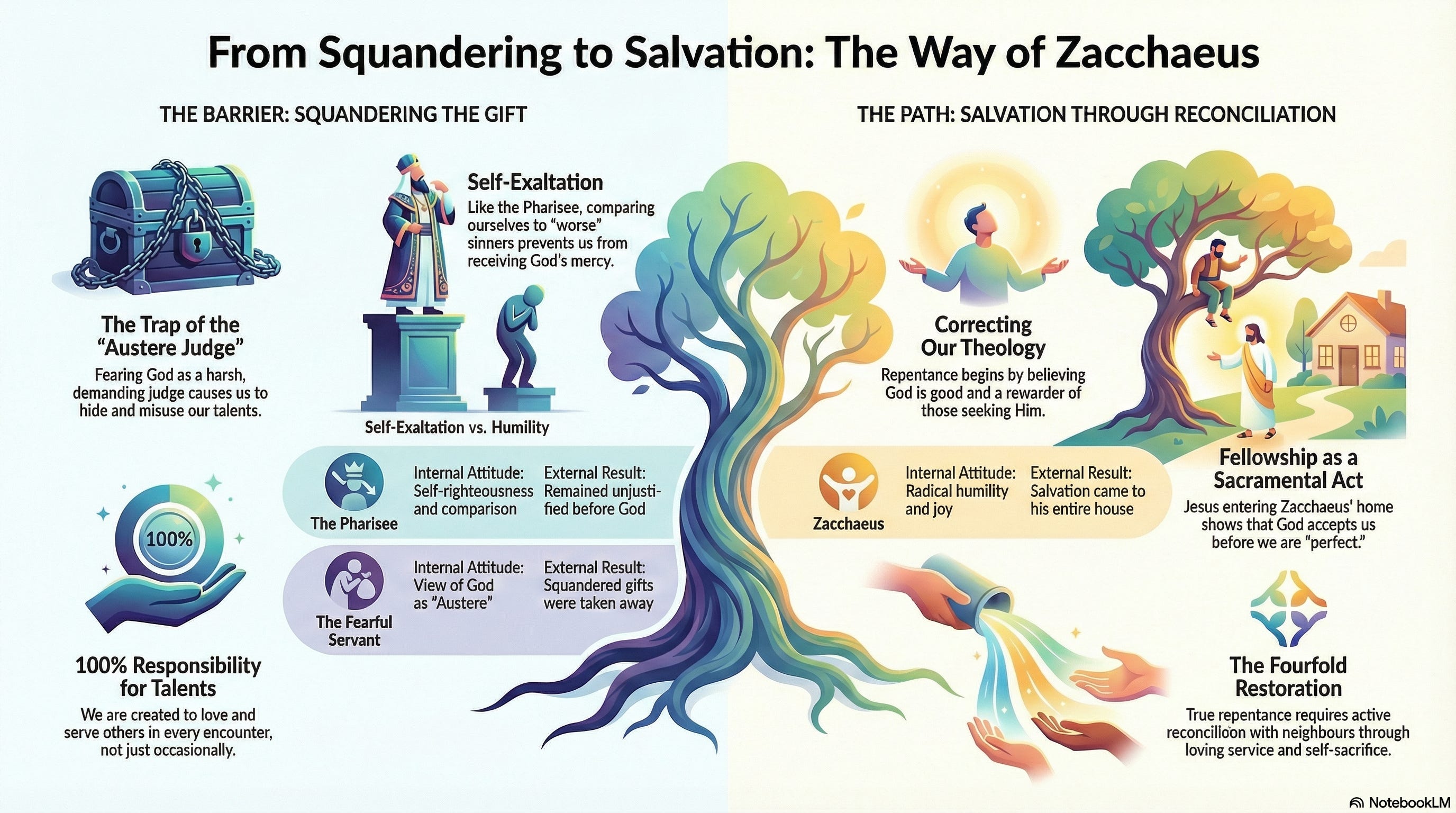
  • February 2 · 16 min

    Waiting

    We spend a lot of our lives waiting. And it can be really tough. We’re waiting for justice. We’re waiting for, I don’t know, an appointment at ICBC or something like that. We’re waiting for the fruition of some sort of hope. And what we see in the Gospel reading today is, well, a lot of waiting. It begins, of course, with Mary and Joseph. Mary has been waiting 40 days. She’s had a firstborn son under the Levitical law with its categories of clean and unclean. She was unclean for a time, with these categories understood as being connected to moments of, well, lack of bodily integrity, shall we say, but also also connected to the significance of some of those moments. And in this case, it’s a fairly significant moment. She’s just given birth to her firstborn son, and having given birth to a son, she now waits 40 days, which is the time of her purification. Interestingly, in the Levitical law, the period of purification after giving birth to a girl was 80 days, while we, as Orthodox Christians, retain the custom of giving the woman 40 days off from church when she has a baby, whether it be a boy or a girl. I suspect that’s because the Levitical law, with its categories of clean and unclean, has been superseded in Christ. We no longer worry about those categories, although occasionally they do show up in the prayers for those who, in some of the many other cultures that Orthodoxy engaged with, have an understanding of clean and unclean which the church does accommodate, according to the Apostle Paul’s instructions on following the dictates of one’s conscience. In Christ, we no longer call things clean or unclean, but we do tend—and this is part of where I’m going with this—we do tend in the church to reenact, in every context possible, that which the Church as a whole has gone through. And so, given that Mary waited 40 days and then came into the temple, when the days of her purification were complete, to present a sacrifice—to do what the law required: the redemption of the firstborn. They were obviously poor, that’s why the sacrifice was two turtle doves or two young pigeons. So, as Orthodox Christians, with women who have children, have had a baby, boy or girl, we give them 40 days off, not simply to relax and bond with the child, although that is the natural thing, but also to participate in this mystery that we are all participating in, which is our union with Christ: our union with Christ in all of the history of salvation that he enacted. So Mary’s been waiting 40 days, but of course she’s been waiting longer than this. She’s been waiting nine months, because that’s when she received the Annunciation. And of course, again, if you look at our church calendar and do the math, Annunciation, which is coming up on March 25th, falls nine months before Christmas. And so here she is. She’s coming into the temple. She’s waited nine months, and now she’s waited another 40 days, and is redeeming her firstborn child with Jesus’ adoptive father Joseph. And behold, there was a man in Jerusalem whose name was Simeon. This man was just and devout, waiting for the consolation of Israel. And the Holy Spirit was upon him, and it had been revealed to him by the Holy Spirit that he would not see death before he had seen the Lord’s Christ. And so here’s a man who has had a revelation from God, Simeon. He was just, he’s devout, and God has told him that he’s not going to die until he sees the Messiah. That’s got to be a pretty amazing revelation, particularly because he’s not the only one waiting. We’ll get to that in a minute. But he’s been waiting now for the coming of the Messiah, and here Jesus comes into the temple, and he recognizes by the Spirit of God that this child Jesus is the Messiah, is the Promised One, is the one that God has promised to his people to deliver them. And so he comes up to Joseph of Mary, takes the baby, and he blesses God and says, “Lord, now let your servant depart in peace according to your word, for mine eyes have seen your salvation, which you have prepared for the face of all people, a light to enlighten the Gentiles and the glory of your people Israel.” It’s an interesting prayer, given that the main focus of the people of Israel on the coming of the Messiah was the last part, “the glory of your people Israel”; but he also says that this is “a light to enlighten the Gentiles” because of course this is what the world needs—the world needs something more than the paganism and the idolatry and the power politics and the horrors that it has endured up until this point. It needs something that will allow it to transcend its tribalism and allow it to move past the anger and the mutual assured self-destruction that has come to characterize it. And that’s precisely what the Messiah was, is. He’s not simply the glory of Israel. He is that, but he’s a light to enlighten the Gentiles, that is, the whole world. And then, of course, while Joseph and his mother, and Jesus’ mother, were marveling at these things, another person comes up to them. Anna, a prophetess. She’s a widower. After she lived with her husband seven years, her husband died, and now for 84 years she’s been in the temple. So she’s been in the temple worshiping and praying God, although we might even consider that maybe she’s not even waiting. I mean, she is in a sense. In fact, I would suggest that she’s waiting in the sense that we are all called to wait. She is waiting on the Lord. Her entire life revolves around the temple of the living God. And she’s moved from the joy of marriage into the joy of being in the presence of God for 84 years. And she comes up as well. She’s a prophetess, and she gives thanks to the Lord and speaks of him to all those who are looking for redemption in Jerusalem. But of course, as I already alluded to, Anna and Simeon and even Mary herself are not waiting alone. All of the people of God, all of the children of Israel have been waiting for years, hundreds of years, for the promised Messiah, for the one that God has promised to them. And many, as the author of the epistle to the Hebrews said, many of the holy people passed away without seeing this come to fruition, because God had, again, according to Hebrews, God had provided that they would not be made perfect without us. Because this salvation that he is preparing in Christ is not simply for the Jewish people. It’s not simply for the people of a particular time or place. It is for all time, in every place. Because this is how God transforms waiting. See, the basic problem with most of our waiting is what we’re waiting for. We’re waiting in line to see the government agent. And we know that when we get there, then it’s basically just a stamp on a document. And it’s actually pretty darn meaningless. Maybe that document will help us to get somewhere or do something, but the actual process and the actual culmination of that waiting is pretty lame if you think about it. Or we’re waiting for something more significant. Maybe we’re waiting for the fruition of some hope that we’ve been working for, working towards. But even that hope, which may be meaningful to us, is meaningful only to us and or maybe to us and a few other people. Or we’re waiting for something larger, perhaps. We’re waiting for justice to be executed on the oppressors. We’re waiting for deliverance from oppression and evil and harm. In fact, the whole world is waiting for this. And the amazing thing is, that has already come. That deliverance has already come in the person of this little baby being brought into the temple of God, the Promised One, the Messiah, the one who transforms our approach to death. Because now Simeon can say, “Lord, now let your servant depart in peace.” Because he has seen the one who fulfills in himself, all that longing for God. The one who comes and is born in order to die, that he might reveal the way of life to all of us. The way of love to all of us. Because, as I say, the world is being torn apart by tribalism and warfare and strife and evil and power and oppression. And the sense that we have in our hearts is that we have to do something about this. Maybe I should protest. Maybe I should do this or that or the other thing. And the answer is, no, you don’t have to do anything except wait on the Lord. Now, this waiting is hard. Because when is God going to do something about this problem? When is God going to resolve this? And so it is that we have, throughout the Scriptures, and throughout our tradition, practice at waiting. We’re going to get 40 days worth of practice at waiting, as we wait for Pascha to come. 40 days plus, actually. We all should know exactly how long 40 days is, because we know that’s the length of Nativity fast. And the amazing thing is that as we wait for Pascha to come, as we wait for whatever feast it is that we’re fasting and praying and waiting on God to bring, it comes. Every year, it comes. And this is a promise going back all the way to the days of Noah when it rained for 40 days and 40 nights and the whole world was destroyed. And when Noah comes out of the ark, God says to him that springtime and harvest will not be disrupted evermore. And it’s no coincidence that Pascha comes with the spring. This is the renewal of life that God has begun in Christ, that God has begun in us, as we have laid aside our power politics, as we have laid aside our tribalism, as we have laid aside, following the example of Christ, the hatred that we have for our enemies, and instead have embraced the way of love. Because as we do this, we participate in the salvation of the world. We do everything that is in our power to participate in God’s long-term plan for the universe in which all of us, Jew and Gentile, slave, free, male, female, all of us are united in this one little baby brought into the temple. The salvation of the world, united in the love that he demonstrated for us, united in that self-sacrificial love even for our enemies as we pray for them. We are being brought by God into unity, the unity of being his holy temple, indwelt by the Spirit of God, motivated by the love of God, fulfilling our destiny as the children of God, to his glory: the glory of the Father, and of the Son, and of the Holy Spirit. Amen. Scripture readings referenced: * Luke 2:22-40 * Hebrews 11:39-40 * Genesis 8:22 This is a public episode. If you would like to discuss this with other subscribers or get access to bonus episodes, visit translatingthetradition.substack.com
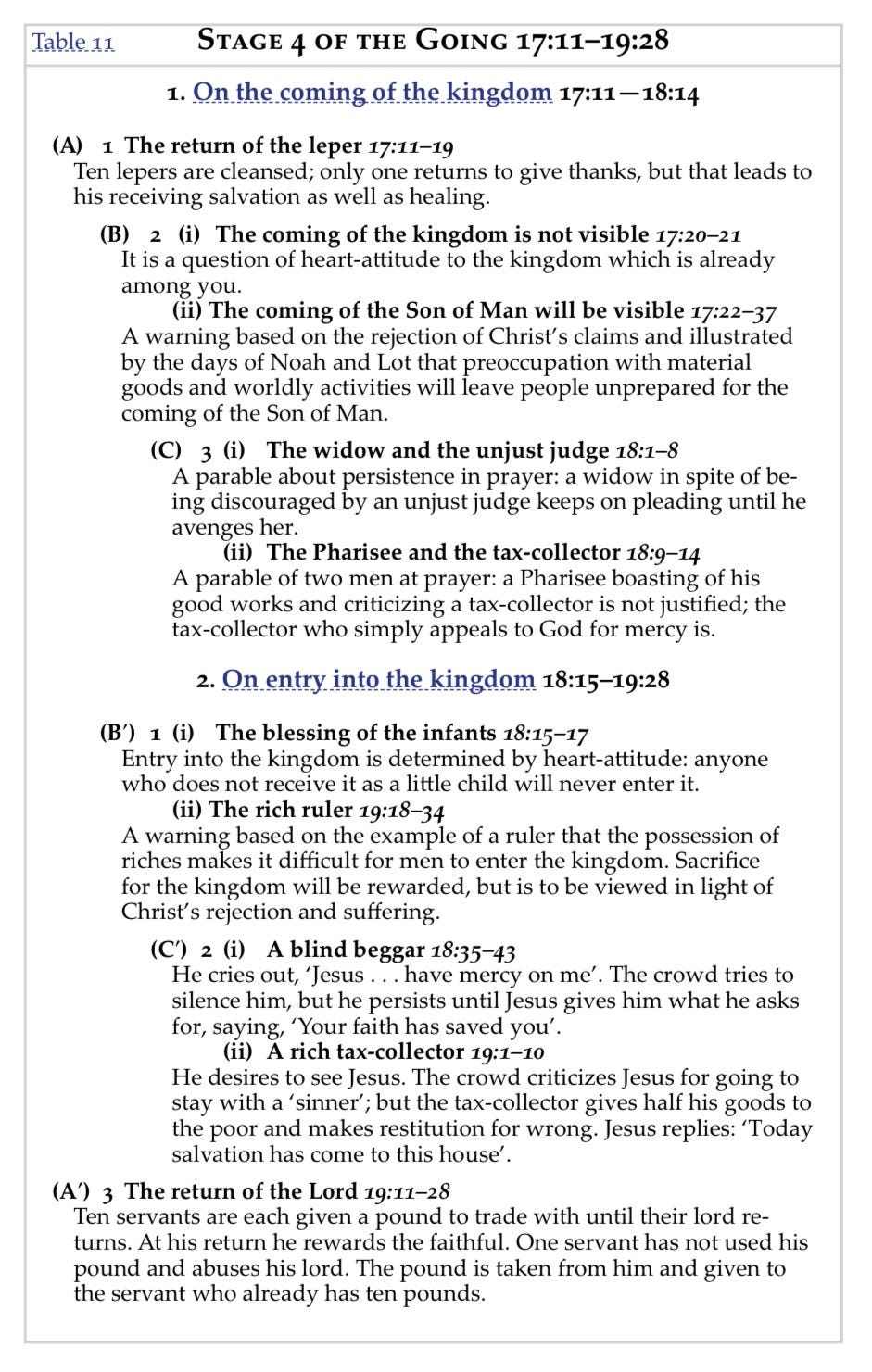
  • February 2 · 22 min

    Zacchaeus, the Publican and the Pharisee, and the Right Response to the Squandering of Our Talents

    As an experiment, I thought I’d try getting Google’s NotebookLM AI to summarize my sermon, and I was rather impressed with the following (lightly edited) results: In his sermon for Zacchaeus Sunday, Fr. Justin explains that as Lent approaches, we must reflect on the “gifts galore” and spiritual talents we have received from God. He observes that like the tax collector Zacchaeus, humans often squander or misuse these gifts rather than using them to love and serve others. To illustrate this, Fr. Justin connects three specific scriptural accounts from the same section of the Gospel of Luke as last Sunday’s Gospel reading: * The Parable of the Ten Minas: Fr. Justin highlights the servant who hid his mina in a handkerchief because he viewed his master as an “austere man” who reaped where he did not sow. Fr. Justin notes that this servant is judged “out of his own mouth” because he misunderstood God’s character, projecting the image of a strict judge onto Him as an excuse for his own failure to use his gifts. * The Parable of the Pharisee and the Tax Collector: Fr. Justin presents this parable as a “corrective” to the servant’s fearful theology. He contrasts the Pharisee, who exalts himself through public displays of piety, with the Tax Collector (the Publican), who humbles himself, beating his breast and crying, “God, be merciful to me a sinner”. This humility leads to justification, as “he who humbles himself will be exalted”. * The Story of Zacchaeus: Fr. Justin notes that Zacchaeus is a real-life manifestation of the repentant Publican. Despite being a “chief tax collector” and “traitor” to his people, Zacchaeus humbles himself by performing the undignified act of climbing a tree just to glimpse Jesus. Fr. Justin relates these by showing that while the “wicked servant” in the minas parable remained paralyzed by a false view of an austere God, Zacchaeus was transformed by God’s actual goodness and acceptance. When Jesus identifies with Zacchaeus by eating at his home, Zacchaeus is moved to rectify his misapplication of talents by giving half his wealth to the poor and restoring fourfold to those he cheated. Ultimately, the conclusion is that we must correct our theology by moving away from the “austere judge” mindset. By humbling ourselves like the Publican and Zacchaeus, we change our way of life to invest our God-given resources into acts of loving service, thereby fulfilling the commandments to love both God and neighbour. This is a public episode. If you would like to discuss this with other subscribers or get access to bonus episodes, visit translatingthetradition.substack.com
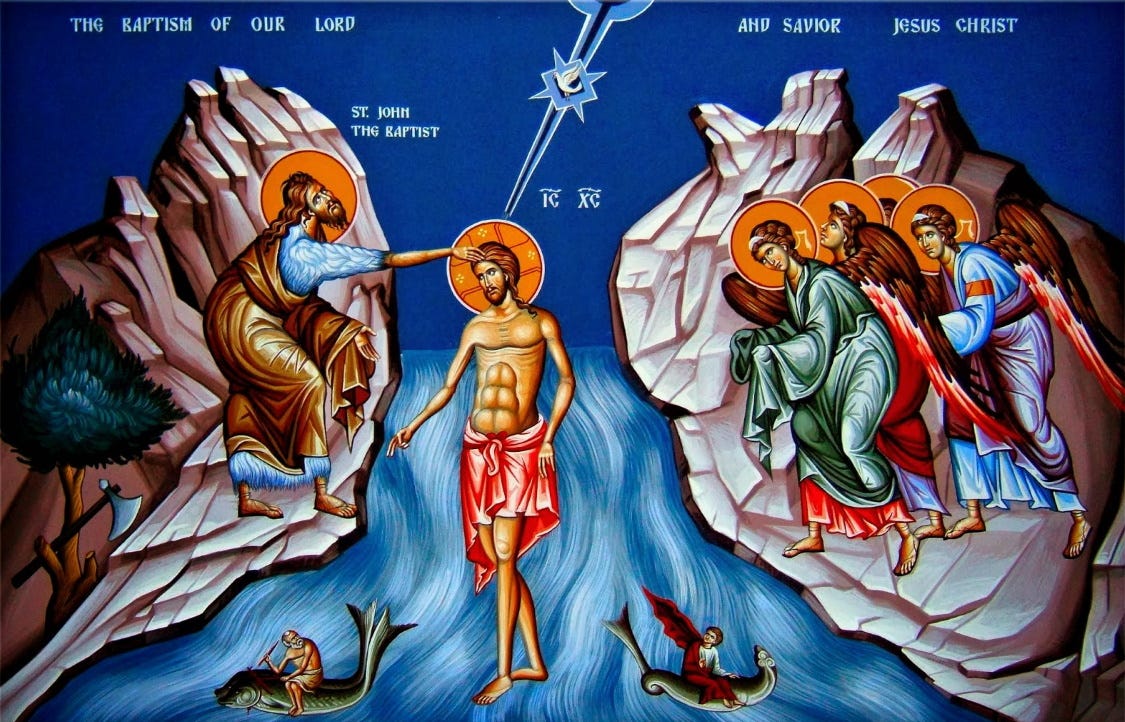
  • January 19 · 17 min

    Pray and Do Not Lose Heart

    So in today’s Gospel reading, our Lord is approaching Jericho, and there’s a blind man sitting by the side of the road. He’s begging, because if you’re blind in those days, they didn’t have a lot of alternative support for you. And so the basic way that you got by was you sat and you asked people for help. And so that’s what this man was doing. He hears this large crowd going by. And he asks, “What’s happening? What’s going on?” And so they tell him that Jesus of Nazareth is passing by. And he calls out. And it’s interesting. He doesn’t call out, “Jesus of Nazareth, have mercy upon me!” He says, “Jesus, Son of David, have mercy on me!” Now to understand what this means a little more fully, we need to back up a little bit. Jesus has just been talking to his disciples again about his death. And, once again, they really don’t get it. He’s saying, “Behold, we’re going up to Jerusalem, and all the things that are written by the prophets concerning the Son of Man will be accomplished. He will be delivered to the Gentiles and will be mocked and insulted and spit upon, and they will scourge him and kill him, and the third day he will rise again.” So, in retrospect, for us, it’s pretty clear. But of course, as they are hearing what the prophets have to say, they’re not quite getting it, because they’re thinking, again, of a political Messiah: one who’s going to come in and sweep away the Gentiles, and restore the kingdom to Israel. And Luke really drives home the point that they don’t get it here. He says, “But they understood none of these things, this saying was hidden from them, and they did not know the things which were spoken.” In other words, they really, really didn’t get it, like, thrice over. And yet, this blind man, who can’t even see what’s going on, who has to ask people what’s happening: he recognizes who Jesus is. Even though he’s blind, he can see that this is the Messiah, the Promised One, the Son of David. And so there’s this contrast here between Jesus’ own disciples, whom he’s telling very clearly, “This is what’s going to happen,” and the blind man, who, despite his blindness, actually sees more accurately than Jesus’ disciples do. Now, those around, who are going on before, warn the blind man, “Look, look, you’re making a scene!” If there’s one thing we really don’t like, it’s any kind of scene, right? And so they tell him, “Look, shut up! Just be quiet.” But he cries out instead: he cries out all the more, “Son of David, have mercy on me!” So Jesus then stands still and commands the blind man to be brought to him. And he asks him, “What do you want me to do for you?” Because “have mercy on me” is actually fairly general. “In what way do you want me to have mercy on you?” And the blind man blurts out, “Lord, that I may receive my sight.” Although here, actually, I prefer the ESV’s translation, “Lord, that I may recover my sight.” Because if you go all the way back—everything’s in context, layers upon layers upon layers of context—if you go all the way back to the very beginning of Jesus’ ministry, in Luke Chapter 4, Jesus opens up the scroll of the prophet Isaiah, and he reads there The Spirit of the Lord is upon Me, Because He has anointed Me To preach the gospel to the poor; He has sent me to heal the brokenhearted, To proclaim liberty to the captives And recovery of sight to the blind. To set at liberty those who are oppressed; To proclaim the acceptable year of the Lord. So he begins his public ministry by reading them this passage, this prophecy, which includes, among the signs that are going to reveal that the Messiah is coming, recovery of sight for the blind. And in fact, it’s the same Greek word, ἀναβλέπω, there as this blind man is using here. In other words, the blind man understands the prophets better than the disciples do. And so he’s asking for the fulfilment of that prophecy from the one, the Messiah, the Son of David, who came to fulfil that prophecy. And, you know, it wouldn’t hurt to be able to see again, right? So Jesus says to him, “Receive your sight,” or “Recover your sight. Your faith has made you well. And immediately, he received his sight and followed him, glorifying God. And all the people when they saw it, gave praise to God.” So, again, in order to fully understand the impact here, we do need to also understand the larger context. So we’ve looked at some of the context, reflected on the immediately preceding context and looked at the overarching context—I guess you could call it—of the beginning of Jesus ministry, but there is one more bit of context I want to introduce here. If you read the Gospels through—and I do recommend this. I mean, I also recommend you read the daily readings that are in the lectionary, and if you do that, you will eventually read the gospels through, but it’s also good to just pick up the Gospels and read them through, the whole thing. Maybe not at one sitting, maybe two or three, though the Gospel of Mark, you can probably manage in one sitting. But if you read them through, you’ll start to see that Luke is divided up into sections. Luke, as I’ve said before, carefully structures his narrative. He says so right from the beginning, that he wants to make an “orderly” account. And if we back up just to the beginning of this chapter, which is in the same section of the Gospel of Luke, Jesus tells the people a parable which is fairly relevant here. Then He spoke a parable to them, that men always ought to pray and not lose heart, saying: “There was in a certain city a judge who did not fear God nor regard man. Now there was a widow in that city; and she came to him, saying, ‘Get justice for me from my adversary.’ And he would not for a while; but afterward he said within himself, ‘Though I do not fear God nor regard man, yet because this widow troubles me I will avenge her, lest by her continual coming she weary me.’ ” Then the Lord said, “Hear what the unjust judge said. And shall God not avenge His own elect who cry out day and night to Him, though He bears long with them? I tell you that He will avenge them speedily. Nevertheless, when the Son of Man comes, will He really find faith on the earth?” So I love this parable. There’s this judge, he’s not a good judge. He doesn’t care about God. He doesn’t care what people think about him. He doesn’t really even care about doing his job, which is to implement justice. And this widow comes to him. And she’s coming to him day in and day out, saying, “Give me justice from my adversary.” But he doesn’t want to. He’s like, ah, that’d be too much trouble. I don’t want to do that. But she keeps coming, and coming, and coming, and coming. And she keeps on coming. Finally, he’s like, man, if I don’t do something, this woman’s just gonna wear me out. Fine, I’ll hear the case. I’ll give her justice against her adversary. And I love it that, in this parable, God is compared to this unjust judge—and that’s deliberate. Because Jesus says, “Hear what this unjust judge says. And shall God not avenge his own elect, who cry out day and night to him. Though he bears long with them. I tell you that he will avenge them speedily. Nevertheless, when the Son of Man comes, will he really find faith on the earth?” And one of the other themes that you find in this section, if we go a little further—I won’t go into this one in depth—but you’ll remember, of course, the parable of the talents; well, Luke has it slightly different: his is a parable of the minas. And one of the things that Luke highlights in his version of the parable is that this nobleman entrusts these minas to his servants and then he goes away because his citizens don’t want him to rule over them. And he’s away for a while and it’s eventually he comes back. And his servants, you know, report to him. But there’s this delay. And if we think about this in terms of our own experience of the presence of God, it often seems like there’s a delay. It often seems like, as we pray, as we cry out to God, asking him for this or that or the other thing, there’s a delay. And the question is, “Is that delay permanent? Does God not care?” “Does he even exist?” is the question that we are forced to ask ourselves these days, just by virtue of the society that surrounds us, that is saying to us, “No, he doesn’t exist. You’re just dumb.” But what Jesus says here is very clear. And what Luke reinforces here, with the story of the blind man, is very clear. We should keep praying. We should keep trusting that God cares about us, far more than the unjust judge. And why? Well, one, the prophets have said this. We live in this era of the fulfilment of all that the prophets have said. And we have had signs upon signs upon signs recorded here in the Scriptures that God has not abandoned his people, Israel, and he has not abandoned us, his holy ones, whom he has called and adopted into the chosen people of God. He will never abandon us, his holy ones. But from our temporal perspective, you know, God may be acting speedily, but for us, it seems like a long delay. When is it gonna happen? When is what I am asking God for going to come to pass? When is this problem or challenge that I am encountering, going to be gone? When is he going to address it? And the answer is, keep praying. Keep praying, keep bugging God until he’s tired… no, he won’t get tired of us. But keep bugging God, just like the blind man. Keep bugging God, just like the widow bugged the unjust judge. Now, that may, at some points, involve us changing our prayer. Because, like the disciples, we don’t always see clearly. We want this. We want God to solve the problem this way, and sometimes our prayers are very specific. “Lord, this is the solution. Please give it to me.” And more specific than we probably should be. Because we may not realize—again, like the disciples, who are thinking of Jesus coming and just destroying all their physical enemies—that he has something more profound, more needful in mind. But because he came to destroy death: by embracing death, by allowing his enemies to put him to death. This is the real need that we have. This is the real source of injustice. But they didn’t get it. Like, thrice over, they didn’t get it. And again, that’s us, right? “Lord, I need this problem fixed, and I need you to fix it this way, and I need you to fix it now.” But, you know, the advantage of persisting in prayer is that you are maintaining a relationship with our Creator, with the one who can actually answer that prayer, and, as you are in relationship with someone, that actually changes you. They—the person that you are interacting with, who you are in relation with—change you, influence you. And that includes God. And so, our job really is simple. Paul puts it very simply: pray without ceasing. Be in this continual relationship with God. Do so in a way that is open to correction, open to realizing that, “Wait, I don’t understand all that God has in store for me. I don’t understand all the ways that he is in planning and intending to work here. But ultimately, I trust that he is good. I trust that he does want to avenge his elect, and is doing so, from his divine perspective, speedily.” And so I simply need to wait on him, to keep calling on him, even when people around me say, “Stop it! You’re making a scene. Stop it. You’re being an idiot.” Keep calling on him, and, above all, keep trusting him. Because he is good, because he comes to heal us. Because what he wants for us is life itself, in all its splendour, all its glory. “I have come,” Jesus says, “that you might have life, and that you might have it abundantly.” Because God loves us as his children, and wants us, with the blind man, as we receive the answers to our prayers, to glorify Him, Father, Son, and Holy Spirit, now and ever and unto ages of ages. Scripture readings referenced: * Luke 18:31-43 * Luke 4:16-21 * Luke 18:1-8 * Luke 19:11-27 This is a public episode. If you would like to discuss this with other subscribers or get access to bonus episodes, visit translatingthetradition.substack.com

  • January 6 · 7 min

    The Great Blessing of the Waters

    As we’ve been going through Father Alexander Schmemann’s For the Life of the World, one of the things that Father Schmemann is very careful to point out is this dichotomy that we human beings naturally fall into: we have the spiritual, which is up there, and then the physical, the ordinary, the mundane, which is down here, and we kind of have an almost “never the twain shall meet” attitude. The thing about the baptism of our Lord and God and Saviour, Jesus Christ, that we are just celebrating right now, is that it brings those two things together, definitively, absolutely, revelatorily (Is that a word?), and in a way that cannot be denied. Because, as our Lord was incarnate, as he took upon himself human flesh, he united himself to us in all the humblest, weakest, most servile, commonest ways possible. He was laid in the manger because they didn’t have a cradle for him. He was born in poverty. He was a refugee. He was just an ordinary human being in almost every way possible. I mean, when he begins his ministry it becomes clear that he’s not just an ordinary human being, but it even says in the Scriptures that he “learned obedience”. Wrap your brain around that. What does it mean for God himself, the Son of God, to learn obedience? But that’s what the Scriptures say. And then he comes to John the Baptist, who has been preparing the way before him diligently, working for this moment, when the Messiah will reveal himself, in all his power, in all his splendour, in all his glory. John the Baptist has been calling the people to repentance and getting them to undergo baptism, which was unheard of for the Israelites because this was what somebody who wanted to convert to Judaism did. But John is saying, no, no, all of you have to prepare yourselves by getting baptized—and they did. They flocked to him. And then, out of all those people who are flocking to him, comes the Messiah himself. And John is kind of horrified. Like, “Whoa, wait a second. You know, I should be baptized by you! I can’t do this.” And Jesus says, “Let us do so for now to fulfill all righteousness.” And he is baptized by John the Forerunner in the Jordan. And, as he comes up out of the water, he sees the Spirit. The heavens open up. So here we have again, heaven, high above all things, which is now opening up, and the Spirit of God—which, if anything is spiritual, I think it would be the Spirit of God—descends on the incarnate Word of God, in the form of a dove. And a voice comes from heaven saying, “This is my beloved Son, with whom I am well pleased.” And so our Lord, in his baptism, unites heaven and earth, the spiritual and the physical, those things which are most exalted, and those things which are humblest and most ordinary, because as Hopkins put it, the world is charged with the glory of God. The grandeur of God, it flows all through creation. And we just miss it. We just don’t realize it. But the feast that we have here today reminds us of this, and the water that we bless today reminds us of this, because what is more ordinary than water? We use it in our cooking, we use it to clean our houses, we use it to bathe in. We use it to drink on its own or in various unfortunately mixed beverages. It’s the stuff of life. But we don’t even think about it. We take it for granted, until it’s gone, and then that’s all we can think about. You know, if we’re walking through the desert—I haven’t done this myself, but in all the stories, the guy who’s walking through the desert, the only thing he can think of is water, right? But for most of our lives, we’re not thinking about it. So here what we’ve done today, as we have called down the Holy Spirit to descend upon this water, and to sanctify this water, and to bless this water, is to set it apart, to make it holy, set apart to God. And then we are going to take of this water and take it into our homes and use it to bless our homes and drink it. If we need to take our pills, we drink them, as Orthodox Christians, with holy water. And we are going to use this to remind ourselves, however, often we need to, that the world is charged with the glory of God. That all these ordinary things, that we go about every day just doing, and living, and being: work and sleep and eating and praying and playing, and being with one another, all of these things, our Lord involves himself in, our Lord sanctified, made holy by his presence in them, and we now participate in the ordinariness of our daily life in union with him, indwelt by his Holy Spirit. So that there is nothing that is ordinary, that is not now shot through with the spiritual, with the supernatural. And it’s all summed up here. In water. The water that our Lord descended into, in anticipation of his death and his burial, his resurrection on our behalf; the water that, he, together with the Spirit of God, and God the Father, separated out, so that dry land could appear, and we could live; the water that was the forces of death and chaos, that he himself unleashed to destroy the earth, and then promised never to do that again. The water that he himself created, and drank, and bathed in, and just did all that ordinary stuff in and with, reminds us of his presence. Because, God, in him, Emmanuel, is with us. Poem referenced: God’s Grandeur The world is charged with the grandeur of God. It will flame out, like shining from shook foil; It gathers to a greatness, like the ooze of oil Crushed. Why do men then now not reck his rod? Generations have trod, have trod, have trod; And all is seared with trade; bleared, smeared with toil; And wears man's smudge and shares man's smell: the soil Is bare now, nor can foot feel, being shod. And for all this, nature is never spent; There lives the dearest freshness deep down things; And though the last lights off the black West went Oh, morning, at the brown brink eastward, springs — Because the Holy Ghost over the bent World broods with warm breast and with ah! bright wings. —Gerard Manley Hopkins This is a public episode. If you would like to discuss this with other subscribers or get access to bonus episodes, visit translatingthetradition.substack.com

Showing 1–20 of 20 episodes