Skip to content
Artwork for The Pivot
Religion & SpiritualitySpiritualitySociety & CulturePersonal Journals

The Pivot

Andrew Osenga

"What happens when life stops working?" Musician / Author Andrew Osenga talks with thinkers, artists, scientists and theologians about dealing with change, failure, and starting over again. Faith, health, career, family... No subject is off limits in this engaging and intimate series.

Play
  • 23 episodes
  • fortnightly
  • Avg 1 hr 4 min
  • English
Counted on this page — what you have heard stays on this device, so it is not something the list can be paged by.
  • #115
    January 13 · 1 hr 11 min

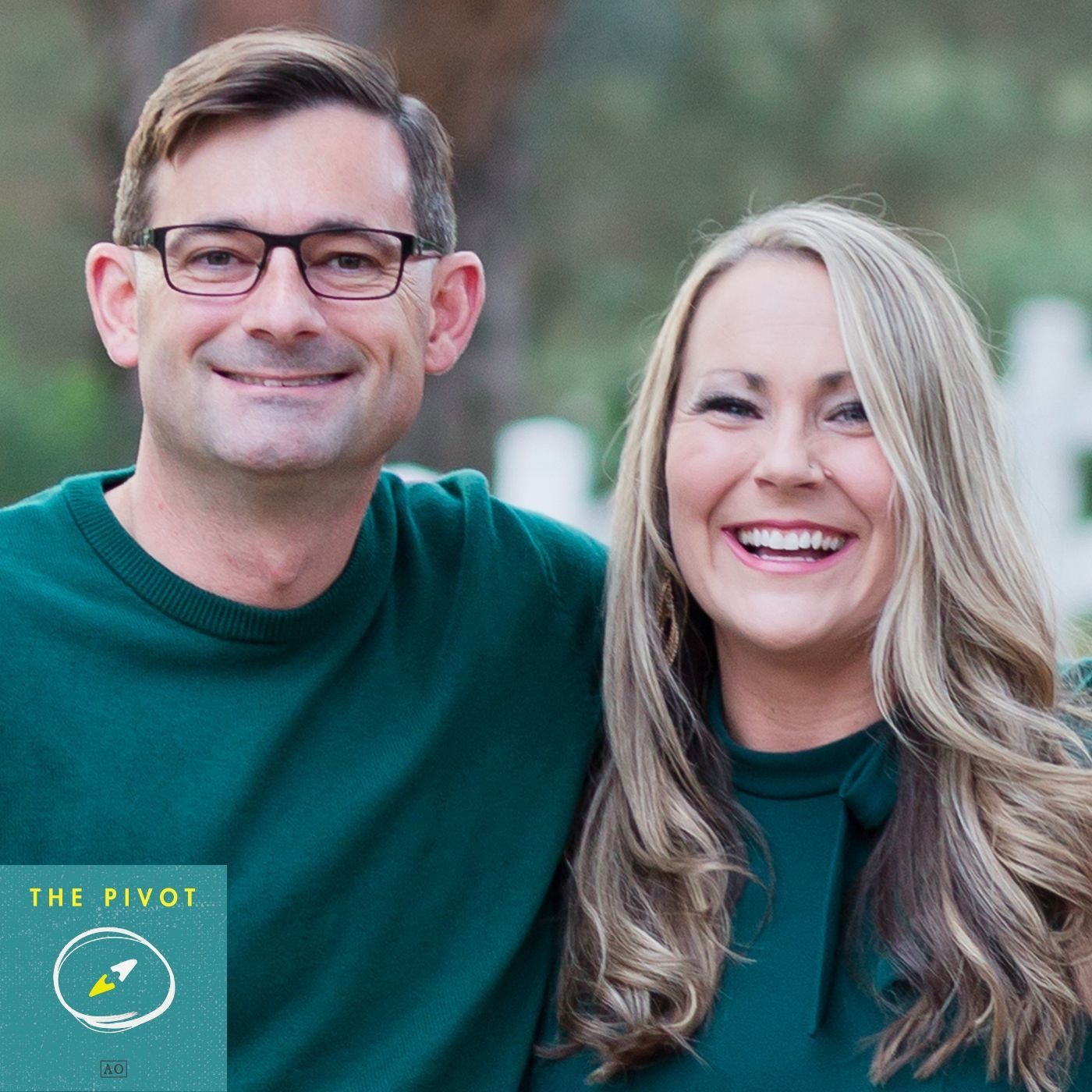
    Robert & Lori Crosby: Being Present in Others’ Pain

    This week on The Pivot, we had a heartfelt conversation with Robert and Lori Crosby as they shared the vital work of their Reach Hurting Kids Institute. They opened up about what it truly means to apply a trauma-informed lens to ministry, explaining how shifting our perspective is key. Instead of seeing trauma-related behaviors as something to be taken personally, they teach us to see them as opportunities—chances to uncover deeper feelings and support a child’s path toward healing. Robert, with his researcher’s insight, and Lori, with her therapist’s heart, emphasize the power of a relational approach over a rigid, behavior-focused one. They talked about the beauty of flexible planning—the need to “pivot” to meet a specific child’s needs—and, most importantly, the profound importance of ensuring every single child genuinely knows and feels their inherent worth. Thought-Provoking Quotes: “It’s always amazing when you meet people who work in areas that are so heavy, and yet carry themselves so lightly. The area of children’s trauma, that’s as heavy as it gets, and yet [Robert and Lori] carry this joy with them.” - Andrew Osenga “I had the chance to start doing research in the realm of children’s ministry, to research trauma as it intersects with ministry. And pretty quickly I realized this is something I’m really passionate about, and this is a place where the church can have a huge, huge impact.” - Robert Crosby “Some of the clients I was working with were getting kicked out of churches because of trauma-related behaviors. And children kind of interpret that as they’re not good enough to be in the presence of God, which broke my heart.” - Lori Crosby “A trauma-informed ministry leader recognizes the signs and symptoms of trauma. So if a child is hiding under a desk or they’re dysregulated and screaming, the leader doesn’t personalize the child’s emotional dysregulation, but walks alongside them, shows up, sits with them until the child is regulated, and then can help them heal from whatever they’re going through—help them feel safe, feel connected, feel valued.” - Lori Crosby “What is the underlying feeling? How can I minister to that? How can I help them be okay so they can participate and engage and feel part of a community and feel loved, so that the church can be part of that child’s healing process?” - Robert Crosby “You can share God’s love more powerfully by sitting down next to a hurting child and just having a conversation, just checking in with them while you’re building with Legos, maybe sharing a meal. Just showing them Jesus through genuine connection, really being interested in their lives and being curious and open and being present. That speaks so deeply to all of us, I think.” - Lori Crosby “There’s often a disconnect between what we have planned and what a child actually needs. We have to have the freedom to say, ‘Okay, I’m prepared, but we’ve got to pivot and adapt so we can minister to them.’” - Robert Crosby “There’s a correlation between the way a child understands and experiences the church and the way they understand and experience God. We’re a proxy for God in that way.” - Robert Crosby “Relationships are the foundation of this entire approach. It’s getting to know the kids and building rapport and letting them know they’re loved and accepted and unconditionally cared for. This is what’s transformative.” - Robert Crosby “I think sometimes we over spiritualize things. If you have someone struggling with anxiety or depression, and we [share] scripture verses, there’s so much baggage that a child’s bringing in. So if a child has experiences or is still currently under threat, and we’re trying to pray it away or theologically correct their behaviors which are protecting them from harm, that’s not helpful at all.” - Robert Crosby “‘God’s not gonna give you more than you can handle’ is one of the most common misquoted scriptures that just does unfathomable harm to somebody who’s in the midst of trauma.” - Lori Crosby “Maybe the pivot, the shift, is that miracles can happen instantly, but sometimes the miracle is the very long, painful journey we walk.” - Lori Crosby “Just being present in the pain is what is the most helpful, because you don’t get to do or say anything that takes away somebody’s pain. We desperately want to, but the best thing to do is just sit in silence and be a loving presence who listens.” - Lori Crosby Links, Products, and Resources Mentioned: Trauma-Informed Children’s Ministry by Robert and Lori Crosby Reach Hurting Kids Institute Los Angeles County Office of Education Promise Keepers Tortured for Christ by Richard Wurmbrand B.F. Skinner Church of the Nazarene Trail Life USA Dollywood *Watch this interview on Andrew’s YouTube channel! *All episode music is by Andrew Osenga. Guest’s Links: Reach Hurting Kids website Robert and Lori’s Facebook Robert and Lori’s Instagram Connect with Andrew: Website YouTube Substack Spotify Facebook Instagram How to Remember by Andrew Osenga Hold the Light by Andrew Osenga *The Pivot is produced in conjunction with Four Eyes Media.
  • #114
    January 6 · 1 hr 13 min

    Phil Vischer: Letting Go of Your Dream, and Asking “What’s Next?”

    Creator of the beloved series VeggieTales Phil Vischer, whose influence impacted generations of children, joins The Pivot to talk about what happens when you build something incredible, only to watch it fall apart. Phil opens up about what to do when you discover that you’re not as important as you think you are, how to let God save you from your own ambition, and how to cope with devastating failure in order to turn around and build the life you were meant for—free from what others might think. Thought-Provoking Quotes: “All I wanted to do was make films and I wanted to be one of the good guys. And then I thought, Well, maybe I’m more than just a good guy who makes films. Maybe I’m like the next Walt Disney.” - Phil Vischer “I don’t like leading people. Which is a bad thing to discover after you’ve hired a whole bunch of people. So my management style tended to be, find the most competent person who liked to be in charge and make them in charge of all the people.” - Phil Vischer “You make a huge mistake when you decide that God needs you. Bad things happen.” - Phil Vischer “[I felt like] I wasn’t doing big things for God if I was curtailing my ambition, not expanding it. I had such a view of evangelical workaholism.” - Phil Vischer “The model I grew up with was if you’re enjoying life, you’re not trying hard enough. If you’re happy, you’re not doing it right. And finally, God got tired of watching me be that way.” - Phil Vischer “I wrote 80% of every line that came out of a vegetable’s mouth for ten years. So you become somewhat personally attached to the characters you’ve created and are bringing to life with your writing. And then, someone says ‘We don’t need you to write them anymore.’” - Phil Vischer “I realized that God was saving me from my ambition, that I was pushing a rock up a hill that He never asked me to push.” - Phil Vischer “What’s your life’s work going to look like? Who’s the model for your life’s work? We pick almost every model in the world except Jesus.” - Phil Vischer “We always talk about our successes in the church. We never talk about our failures.” - Phil Vischer “We’re trying to help a generation stay connected to their faith. To throw out the bathwater, but hang on to baby Jesus.” - Phil Vischer “I think a lot of people that have gone through what Phil has gone through could be bitter and angry, and I’m sure he had his moments. But I don’t get that from him now. I get a lot of wisdom and compassion and definitely curiosity and a sense of ‘What’s next?’” - Andrew Osenga Links, Products, and Resources Mentioned: VeggieTales The Holy Post Walt Disney Experiencing God by Henry Blackaby Biola University Billy Graham Disneyland Willow Creek Community Church Christianity Today Moody Publishers Skye Jethani K-Love Jars of Clay Sixpence None the Richer U2 Wheaton College Radio Switchfoot The Ed Sullivan Show Larry Norman Randy Stonehill Keith Green Angel Studios John Irwin Mike Nawrocki The Dead Sea Squirrels The Toy That Saved Christmas Blender The Apple Dumpling Gang Time Bandits Coen Brothers Wes Anderson O Brother, Where Art Thou? The Hudsucker Proxy Slumdog Millionaire *Watch this interview on Andrew’s YouTube channel! *All episode music is by Andrew Osenga. Guest’s Links: Phil Vischer’s website Phil Vischer’s Facebook Phil Vischer’s Instagram Phil Vischer’s X Phil Vischer’s YouTube Connect with Andrew: Website YouTube Substack Spotify Facebook Instagram How to Remember by Andrew Osenga Hold the Light by Andrew Osenga *The Pivot is produced in conjunction with Four Eyes Media.

  • #113
    Dec 30, 2025 · 1 hr

    [ENCORE EPISODE] Ashley Cleveland: Get to Know My Dear Friend

    This episode with Ashley Cleveland came out in January 2018—the first time Andrew ever met Ashley. This interview had such a profound impact on Andrew that he’s referenced it again and again throughout the years, and we wanted to re-share it with you as we look to a New Year. Thought-Provoking Quotes: “I quickly became an alcoholic and a drug addict, but I also became a musician. I started getting a positive response, whereas everything prior had been pretty negative. So I look upon it as this marker that God gave me to keep me on the planet.” - Ashley Cleveland “I knew less than anything about the industry. But a divide had been crossed, and suddenly I’m a songwriter. I dropped out of school after a couple of years and I went back to California and that’s really where I learned to be an artist. I cut my teeth in clubs.” - Ashley Cleveland “I wound up pregnant, very ill with my addiction, so I turned to the church. And I have to say the church responded deeply and wonderfully.” - Ashley Cleveland “I couldn’t even cope with myself, let alone a child. And yet once I heard that heartbeat, I knew it was gonna be beyond me to give her up. Suddenly, there was someone else, and that was really the beginning of faith for me.” - Ashley Cleveland “I left that hospital knowing that there was a God and He loved me, though I had no earthly idea why.” - Ashley Cleveland “You take the art wherever you go. I’m so glad I had a career with a small C because what that meant for me in practical terms was I was home.” - Ashley Cleveland “For me, the best way to live is with my hands wide open and say, ‘Lord, you are the most surprising thing in my life.’” - Ashley Cleveland “I’m so thankful to be alive. Everything else is gravy.” - Ashley Cleveland Links, Products, and Resources Mentioned: Anchor Hymns Sally Lloyd-Jones Neil Young University of Tennessee Pam Tillis John Hiatt NACA (National Association of Campus Activities) Michael W. Smith Steven Curtis Chapman Rich Mullins Twenty Feet From Stardom C.S. Lewis *Watch this interview on Andrew’s YouTube channel! *All episode music is by Andrew Osenga. Guest’s Links: Ashley Cleveland’s Instagram Ashley Cleveland’s Facebook Connect with Andrew: Website YouTube Substack Spotify Facebook Instagram How to Remember by Andrew Osenga Hold the Light by Andrew Osenga *The Pivot is produced in conjunction with Four Eyes Media.

Showing 21–23 of 23 episodes