Skip to content
Artwork for The Peptide Effect
Health & FitnessAlternative HealthScienceLife Sciences

The Peptide Effect

Peptides Made Simple

The Peptide Effect is your go-to podcast for breaking down peptides, performance compounds, and cutting-edge wellness science in a way that actually makes sense.

From fat loss and muscle growth to anti-aging, recovery, hormones, brain health, and biohacking, we cover the most talked-about peptides and protocols—what they do, how they work, and what people are really using them for.

Whether you’re brand new to peptides or already deep in the game, this show delivers simple explanations, real-world insight, and practical conversations to help you learn smarter, optimize better, and stay ahead of the curve.

Educational, engaging, and always curious—welcome to The Peptide Effect.

Play
  • 27 episodes
  • Avg 17 min
  • English

Support the show

Goes straight to the publisher. podnod takes nothing.

Counted on this page — what you have heard stays on this device, so it is not something the list can be paged by.
  • Monday · 46 min

    ICOTYDE: The Breakthrough Oral Peptide Taking on Arthritis — No Injections Required!

    🧬💊 ICOTYDE: THE BREAKTHROUGH ORAL PEPTIDE TAKING ON ARTHRITIS — NO INJECTIONS REQUIRED! Could a simple daily pill change the future of peptide medicine and inflammatory arthritis treatment? A groundbreaking oral peptide called ICOTYDE (icotrokinra) is making headlines! Already FDA-approved for certain patients with plaque psoriasis, this innovative medication is now showing promising Phase 3 clinical trial results for psoriatic arthritis. And here’s what makes it so exciting… It’s a peptide you SWALLOW instead of inject! In this episode of The Peptide Effect, we’re diving into the science behind ICOTYDE, how it targets inflammation, and why this development could open the door to an entirely new generation of oral peptide medications. 🔬 What we’re covering: 💊 No injections required! How scientists engineered a peptide that can be taken orally. 🧬 The science of ICOTYDE: How blocking the IL-23 receptor helps regulate inflammatory signaling. 🔥 Arthritis and inflammation: Understanding psoriasis, psoriatic arthritis, and the immune system. 📊 The latest clinical trial results: Why 58% of ICOTYDE patients achieved an ACR20 response compared with 41% receiving placebo. 💪 Joint pain and mobility: What the research reveals about improving symptoms and physical function. ✨ Skin improvements: How ICOTYDE is helping patients with moderate to severe plaque psoriasis. ⚠️ Side effects and safety: What researchers know and what questions remain. 🔮 The future of oral peptides: Could this technology transform how other peptide medications are developed? Is ICOTYDE the beginning of a new era in peptide medicine? We’re breaking down the clinical evidence, separating scientific breakthroughs from marketing hype, and exploring why this medication is generating excitement in both dermatology and rheumatology. 🎙️ Whether you’re interested in peptide science, autoimmune diseases, inflammation, arthritis research, or the future of medicine, this is an episode you won’t want to miss! ⚠️ Medical Disclaimer: This podcast is for educational purposes only and does not constitute medical advice. ICOTYDE is FDA-approved for certain patients with plaque psoriasis, but its use for psoriatic arthritis remains investigational. Always consult a qualified healthcare professional before making treatment decisions. 🎧 The Peptide Effect Thanks for listening, keep learning and stay curious! #ThePeptideEffect #ICOTYDE #Icotrokinra #PeptideScience #OralPeptides #PsoriaticArthritis #Psoriasis #ArthritisResearch #Inflammation #IL23 #AutoimmuneDisease #PeptideNews #MedicalBreakthroughs #JohnsonAndJohnson #FutureOfMedicine

    • Transcript
  • S12 · E11
    Friday · 42 min

    Retatrutide vs. Ozempic: The Head-to-Head Results Are In — Is the Triple Agonist the Future of Weight Loss?

    🧬🔥 RETATRUTIDE VS. OZEMPIC: THE RESULTS ARE IN! Could the next generation of weight-loss peptides leave Ozempic behind? In a groundbreaking Phase 3 clinical trial, Eli Lilly’s investigational triple agonist, retatrutide, delivered more than DOUBLE the average weight loss of Ozempic at its highest approved diabetes dose! In this episode of The Peptide Effect, we’re breaking down the latest head-to-head clinical trial results and exploring what they could mean for the future of weight loss, diabetes treatment, and metabolic health. 💉 Here’s what we’re covering: 🔬 Retatrutide vs. Ozempic: The actual clinical trial results. ⚖️ Average weight loss of 19.5%–20.9% with retatrutide compared to 9.4% with Ozempic. 🧬 Triple agonists explained: How GLP-1, GIP, and glucagon work together. 🩸 Blood sugar control: Why retatrutide produced greater A1C reductions. 🔥 The science behind metabolism, appetite suppression, and energy expenditure. ⚠️ Side effects, safety concerns, and why more weight loss doesn’t always mean a better medication. 💪 Muscle preservation, body composition, and the challenges of maintaining weight loss. 🔮 What’s next? Retatrutide vs. tirzepatide and the future of metabolic medicine. Is retatrutide the future of weight-loss treatment, or are we getting ahead of the science? We’re separating the research from the hype and giving you the facts behind one of the most talked-about peptides in development. 🎙️ Whether you’re interested in GLP-1 medications, peptide science, diabetes research, or the future of obesity treatment, you won’t want to miss this episode! ⚠️ Disclaimer: This podcast is for educational purposes only and does not constitute medical advice. Retatrutide remains investigational and is not FDA-approved. Clinical trial results do not guarantee individual outcomes. 🎧 The Peptide Effect Thanks for listening, keep learning and stay curious! #ThePeptideEffect #Retatrutide #Ozempic #GLP1 #GLP3 #TripleAgonist #Tirzepatide #Semaglutide #WeightLossResearch #PeptideScience #PeptideNews #MetabolicHealth #DiabetesResearch #EliLilly

    • Transcript
  • S12 · E10
    November 11 · 40 min

    The Peptide Comeback: 6 Research Peptides Get a Regulatory Break — What You Need to Know

    🧬 The Peptide Comeback: 6 Research Peptides Get a Regulatory Break — What You Need to Know Big news in the peptide world! The U.S. Department of Health and Human Services has announced a major regulatory shift involving six popular research peptides: BPC-157, TB-500, KPV, MOTS-c, Epitalon, and Semax. But does this mean they’re finally legal? Can compounding pharmacies start offering them? And does this mean the FDA considers them safe? In this episode of The Peptide Effect, we’re breaking down what this announcement actually means, why these peptides were previously restricted, and what could happen next. 🔬 We’ll explore the science behind all six peptides, including their potential roles in tissue repair, inflammation, metabolism, longevity, and neurological health. 💉 We’ll also discuss the new compounding requirements, manufacturing standards, patient safety concerns, and why regulatory access does NOT mean FDA approval. Whether you’re a longtime peptide enthusiast or just beginning to explore peptide science, this is an episode you don’t want to miss! ⚠️ Disclaimer: This podcast is for educational purposes only and does not constitute medical advice. Many research peptides are not FDA-approved, and their safety and effectiveness in humans remain uncertain. 🎙️ The Peptide Effect — Thanks for listening, keep learning and stay curious! #ThePeptideEffect #PeptideNews #BPC157 #TB500 #KPV #MOTSc #Epitalon #Semax #PeptideResearch #PeptideScience #FDA #Longevity #Biohacking #CompoundingPharmacy

    • Transcript
  • S12 · E9
    November 5 · 40 min

    Peptide-Related Death: The Tragic Story of Richard Norton and the Risks of CJC-1295 and Ipamorelin

    A Hollywood legend, two experimental peptides, and a fatal allergic reaction. In this episode of The Peptide Effect, we examine the tragic death of Australian actor, martial artist, and stunt coordinator Richard Norton, whose death was linked to injections of CJC-1295 and Ipamorelin. We break down what happened, why he was using these peptides, the warning signs he experienced, his reported dosing mistakes, and the coroner’s findings. We also explore the growing number of severe allergic reactions associated with experimental peptides, the potential risks of anaphylaxis, and why Australian authorities are considering stricter regulations. Does this tragedy mean peptides are dangerous, or is there more to the story? Join us as we separate facts from fear, examine the science, and discuss what this case means for the peptide community. Disclaimer: This episode is for educational purposes only and does not constitute medical advice. Always consult a qualified healthcare professional before considering experimental treatments. #ThePeptideEffect #RichardNorton #Peptides #CJC1295 #Ipamorelin #PeptideSafety #Anaphylaxis #PeptideResearch

    • Transcript
  • S12 · E8
    October 30 · 25 min

    Trick or Treatment? A Halloween Guide to AOD, Cagrilintide, and Weight-Loss Peptides 🎃

    Are weight-loss peptides a treat, or is the marketing playing tricks? 🎃 In this Halloween episode of The Peptide Effect, we explore AOD-9604, cagrilintide, semaglutide, tirzepatide, and retatrutide—unmasking their differences and separating promising research from spooky sales pitches. From food noise and fullness to fat-loss claims and peptide stacks, we shine a flashlight on what the evidence shows, what remains uncertain, and why stronger appetite suppression is not always better. Expect science, Halloween humor, and a reminder that enjoying a little candy does not require a metabolic exorcism. For education and entertainment only. This episode is not medical advice; some compounds discussed are investigational or not approved for weight management.

    • Transcript
  • S12 · E7
    October 20 · 27 min

    CBL-514 Isn’t a Peptide: How It Compares to AOD-9604 and Other Fat-Loss Peptides

    CBL-514 is making waves in fat-reduction research, but despite showing up in peptide conversations, it isn’t a peptide. In this episode of The Peptide Effect, we explain what it is, how it differs from AOD-9604, and how peptides like tesamorelin, semaglutide, tirzepatide, and retatrutide fit into the discussion. Discover the differences between targeted fat reduction, visceral fat reduction, and overall weight loss—and what the research actually supports.

    • Transcript
  • S12 · E6
    September 6 · 37 min

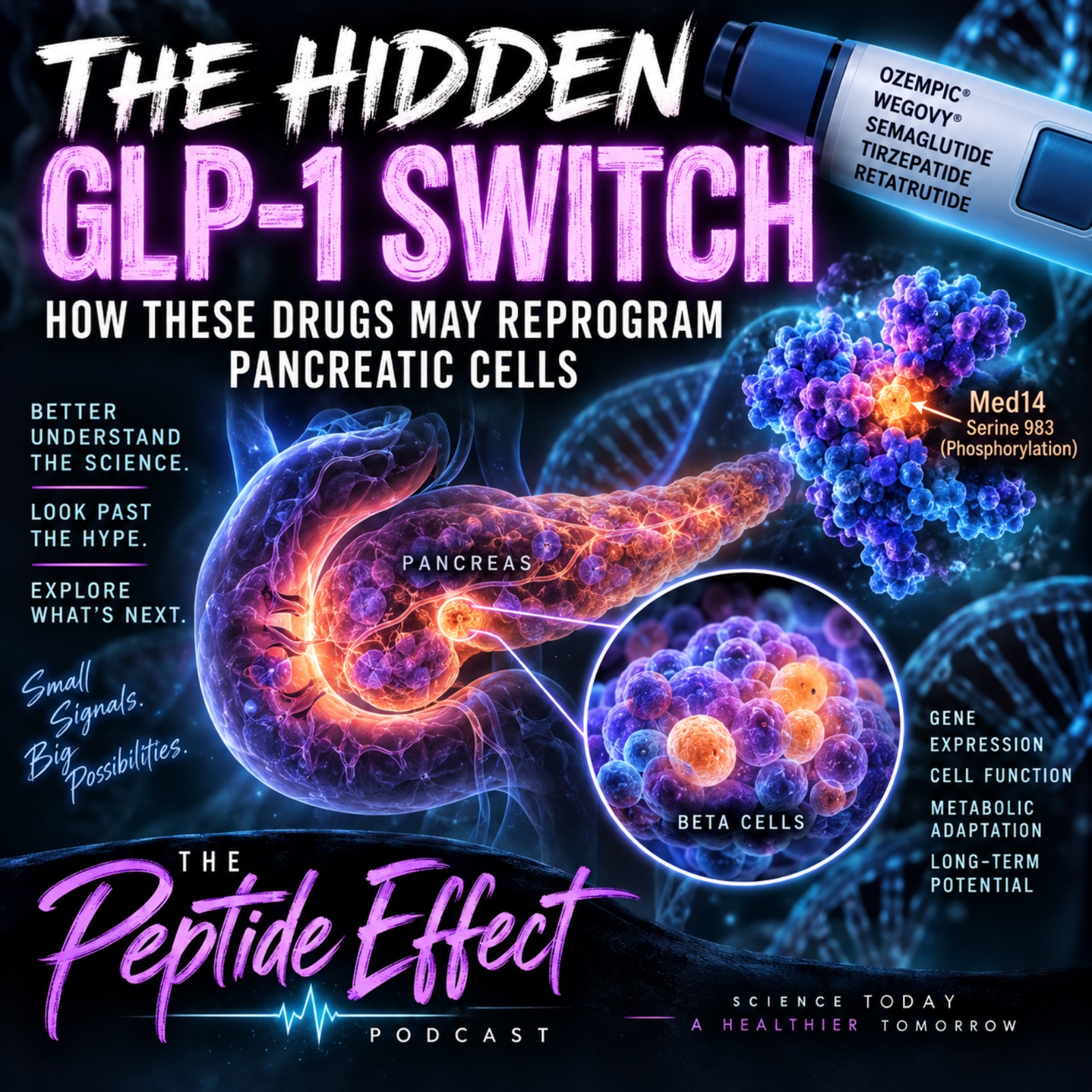
    The Hidden GLP-1 Switch: How These Drugs May Reprogram Pancreatic Cells

    What if GLP-1 drugs are doing more than controlling blood sugar and reducing appetite? In this episode of The Peptide Effect, we break down a 2026 study revealing a newly identified molecular “switch” involving Med14, a protein that helps regulate gene transcription inside pancreatic beta cells. Researchers found that sustained GLP-1 receptor signaling may activate broader gene programs tied to beta-cell function, metabolism, and viability. We’ll explain what Med14 is, what phosphorylation means, how GLP-1 signals travel from the cell surface to the nucleus, and why this discovery could matter for the future of metabolic medicine. We’ll also separate what the study actually found from the exaggerated claims you may see online, including whether GLP-1 drugs permanently “reprogram” the pancreas. A fascinating look at what may be happening beneath the surface of GLP-1 therapy, far beyond appetite suppression and weight loss.

    • Transcript
  • S12 · E5
    June 30 · 10 min

    The Science of Peptide-Based Myostatin Inhibitors: Can We Unlock More Muscle?

    Can we really unlock the body’s natural limits on muscle growth? In this episode of The Peptide Effect, we explore the science behind peptide-based myostatin inhibitors and why they’ve become one of the most talked-about areas of peptide research. Learn what myostatin is, how it regulates muscle growth, the differences between compounds like follistatin, ACE-031, apitegromab, and bimagrumab, and why researchers are investigating these therapies for muscle-wasting diseases, aging, and athletic performance. We also separate scientific evidence from internet hype and discuss the potential benefits, limitations, and safety considerations surrounding this exciting field of research. Whether you’re interested in peptides, fitness, longevity, or the future of regenerative medicine, this episode provides an easy-to-understand overview of one of the most fascinating topics in modern biomedical research.

    • Transcript
  • S12 · E4
    June 27 · 33 min

    Apolipoprotein-Targeting Peptides: The Future of Cholesterol, Brain Health, and Longevity

    In this episode of The Peptide Effect, we explore the emerging world of apolipoprotein-targeting peptides and how they’re reshaping the future of cardiovascular and neurological research. Learn how apolipoproteins transport cholesterol throughout the body, why HDL function may be just as important as HDL levels, and how experimental peptides such as 4F, 5A, ATI-5261, FAMP, CN-105, and D6PV are being investigated for their potential to improve cholesterol metabolism, reduce inflammation, protect the brain, and support healthy aging. We’ll also discuss reverse cholesterol transport, ApoA-I, ApoE, ApoC-II, and the role these peptides may play in the future of precision medicine. Whether you’re interested in peptide science, longevity, heart health, or cutting-edge biomedical research, this episode offers a comprehensive introduction to one of the newest frontiers in peptide therapeutics.

    • Transcript
  • S12 · E3
    April 20 · 9 min

    Border Seizures and the Peptide Market: What’s Happening to Supply, Pricing, and Access

    In this episode, we break down the recent surge in peptide seizures at U.S. borders and what it really means for availability, pricing, and the future of the peptide market. From supply chain disruptions and rising costs to shifts in sourcing, quality, and regulation, you’ll get a clear, no-nonsense look at what’s driving these changes. Whether you’re a consumer, researcher, or building a brand in the space, this episode helps you understand what’s happening now and how to navigate what’s coming next.

    • Transcript
  • S12 · E2
    April 17 · 7 min

    Thyroid Bioregulators Protocols: What to Use, How to Stack, and What to Expect

    In this episode, we go beyond the basics and break down the most commonly used thyroid bioregulators, including Thyreogen, Pinealon, Endoluten, and Vesugen, and how they’re often stacked to support metabolism, energy, and overall hormone balance. You’ll learn how each one works within the thyroid–brain–hormone connection, why targeting different layers of the system matters, and how to think about building a simple, effective approach instead of guessing. We also cover what to realistically expect, how these support cellular function over time, and why lifestyle factors like stress, nutrition, and sleep still play a major role. If you’re looking for a clearer, practical understanding of thyroid support, this episode puts the pieces together in a way that actually makes sense.

    • Transcript
  • S12 · E1
    April 16 · 9 min

    Kidney Peptides: The Most Overlooked Bioregulator for Detox, Balance, and Longevity

    Kidney peptides might be the missing link in your health and peptide protocol. In this episode, we break down how these overlooked bioregulators support detoxification, fluid balance, energy, and overall cellular function. You’ll learn why optimizing kidney health can enhance everything from fat loss and recovery to skin and hormone balance, and why fixing the system matters more than forcing results. If you’re serious about longevity and real optimization, this is one you don’t want to skip.

    • Transcript
  • S11 · E15
    April 15 · 9 min

    Liver Bioregulators Explained: Detox vs Repair and What Your Liver Actually Needs

    In this episode, we break down liver bioregulators in a way that actually makes sense, cutting through the confusion between detox and repair. You’ll learn how the liver really functions, why detoxing isn’t the same as healing, and where bioregulators fit into the bigger picture of liver health. We walk through phase one and phase two detox pathways, signs your liver may be stressed, and when focusing on repair matters more than pushing detox harder. If you’ve ever wondered why some protocols work and others don’t, this episode connects the dots so you can understand what your body actually needs and when.

    • Transcript
  • S11 · E14
    April 14 · 10 min

    Cytogens vs Cytomaxes Explained: Cellular Signals vs Performance Boosters

    In this episode, we break down the real difference between cytogens and cytomaxes in a way that actually makes sense. Both work at the cellular level, but they do completely different things. One focuses on signaling, regulation, and guiding cells back to optimal function, while the other is all about boosting output, energy, and performance. We walk through how each one works, why people confuse them, when to use one over the other, and how combining both can create a smarter, more effective approach to longevity, recovery, and overall cellular health.

    • Transcript
  • S11 · E13
    April 13 · 9 min

    Bioregulators Explained: The Future of Cellular Longevity and Repair

    What if aging isn’t just about getting older, but about your cells forgetting how to function properly? In this episode, we break down bioregulators in a way that actually makes sense—what they are, how they work, and why they’re becoming a major focus in the world of longevity, recovery, and performance. You’ll learn how these small peptide chains may help regulate gene expression, support specific organs, and restore balance at the cellular level instead of just masking symptoms. We also cover the difference between bioregulators and traditional peptides, what people are using them for, and what to realistically expect. If you’re interested in anti-aging, optimization, or just understanding what’s next in advanced health science, this is one you don’t want to miss.

    • Transcript
  • S11 · E12
    April 10 · 10 min

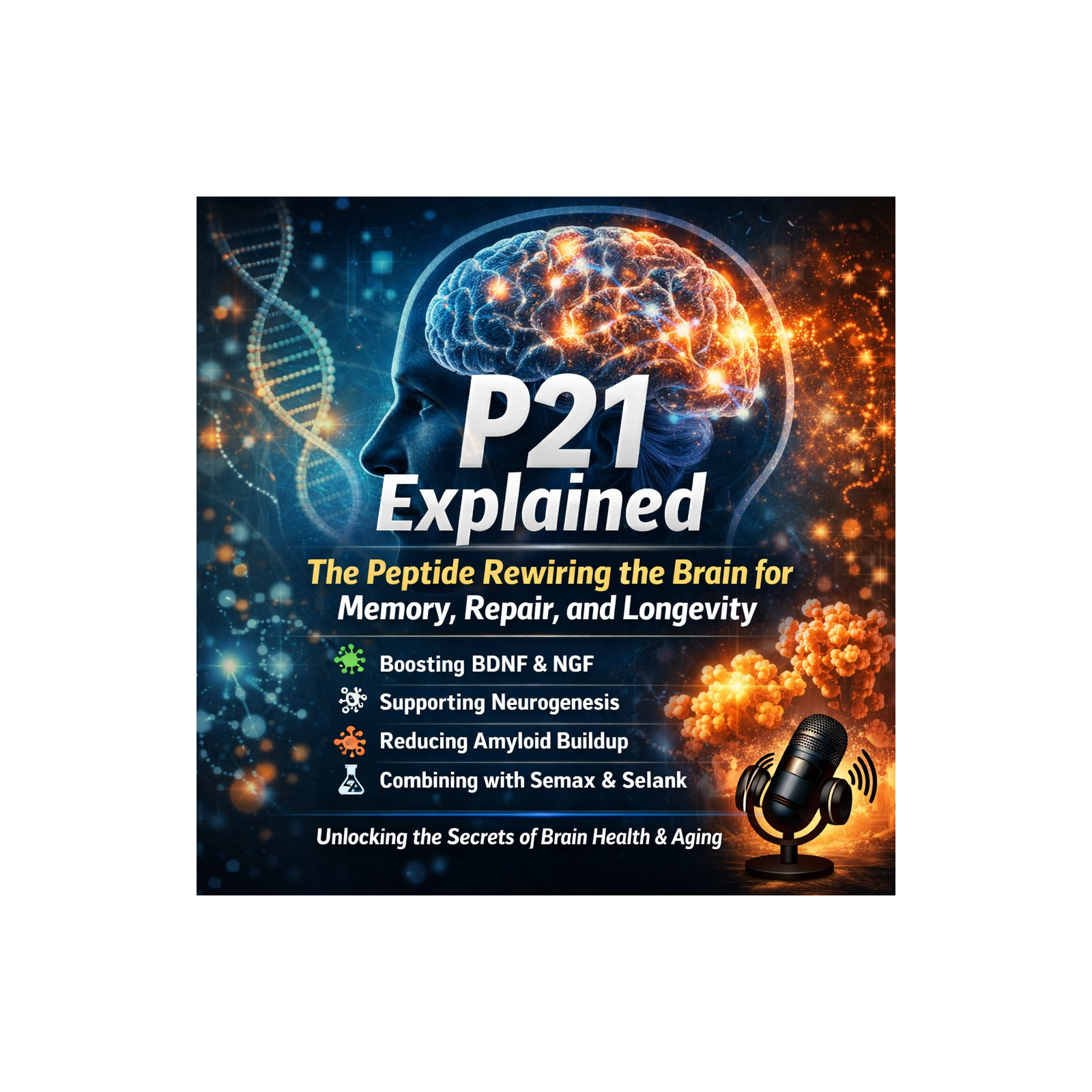
    P21 Explained: The Peptide Rewiring the Brain for Memory, Repair, and Longevity

    In this episode, we break down P21, one of the most talked-about neuropeptides in the research space, and what makes it so unique. You’ll learn how it works at the cellular level to increase BDNF and nerve growth factor, support neurogenesis, reduce oxidative stress, and help clear harmful amyloid buildup in the brain. We walk through how P21 fits into the bigger picture of cognitive health, aging, and brain resilience, and how it compares to other peptides like Semax and Selank. Whether you’re focused on memory, mental clarity, or long-term brain support, this episode gives you a clear, science-backed understanding of what P21 is doing and why it’s getting so much attention.

    • Transcript
  • S11 · E11
    April 9 · 9 min

    Audience asked: Peptides and Ovarian Health: Supporting Hormones, Energy, and Fertility at the Cellular Level

    In this episode, we explore ovarian health through a deeper, cellular lens and break down how peptides may support the systems that drive hormone balance, egg quality, and overall reproductive function. Instead of focusing on quick fixes, this conversation connects the dots between mitochondrial health, inflammation, blood flow, and the brain-ovary communication loop. You’ll learn how peptides like MOTS-c, SS-31, BPC-157, KPV, and kisspeptin are being discussed in relation to energy production, tissue support, and hormonal signaling, along with how metabolic health and cellular aging play a role in ovarian function. This is a clear, easy-to-follow explanation designed to help you understand what’s happening beneath the surface so you can make more informed decisions about your health journey.

    • Transcript
  • S11 · E10
    April 8 · 10 min

    Audience asked: Peptides and Fertility Explained: Optimizing Hormones, Mitochondria, and Reproductive Health

    In this episode, we break down how peptides may support fertility by working with your body’s natural signaling systems instead of forcing outcomes. You’ll learn how fertility really works at a deeper level, from brain-to-hormone communication to mitochondrial health, inflammation, and cellular energy. We walk through key peptides people explore for both female and male fertility, including those that influence hormone signaling, improve egg and sperm quality, and support overall reproductive function. This episode also covers realistic expectations, timing, and why foundational factors like hydration, sleep, and stress matter just as much as anything else. If you want a clear, science-based understanding of how peptides fit into fertility support, this is a must-listen.

    • Transcript
  • S11 · E9
    April 7 · 9 min

    How Important Is Your Bac Water Choice? The Overlooked Factor That Can Make or Break Your Results

    In this episode, we break down one of the most overlooked parts of any peptide or reconstitution process—the bacteriostatic water you choose. Not all bac water is created equal, and small differences in quality, sterility, preservatives, and handling can have a big impact on stability, consistency, and overall outcomes. We walk through what bacteriostatic water actually is, why benzyl alcohol matters, how manufacturing standards affect reliability, and the risks of cutting corners on something most people ignore. If you want tighter control, better consistency, and fewer unknowns in your process, this is a conversation you don’t want to skip.

  • S11 · E8
    April 6 · 9 min

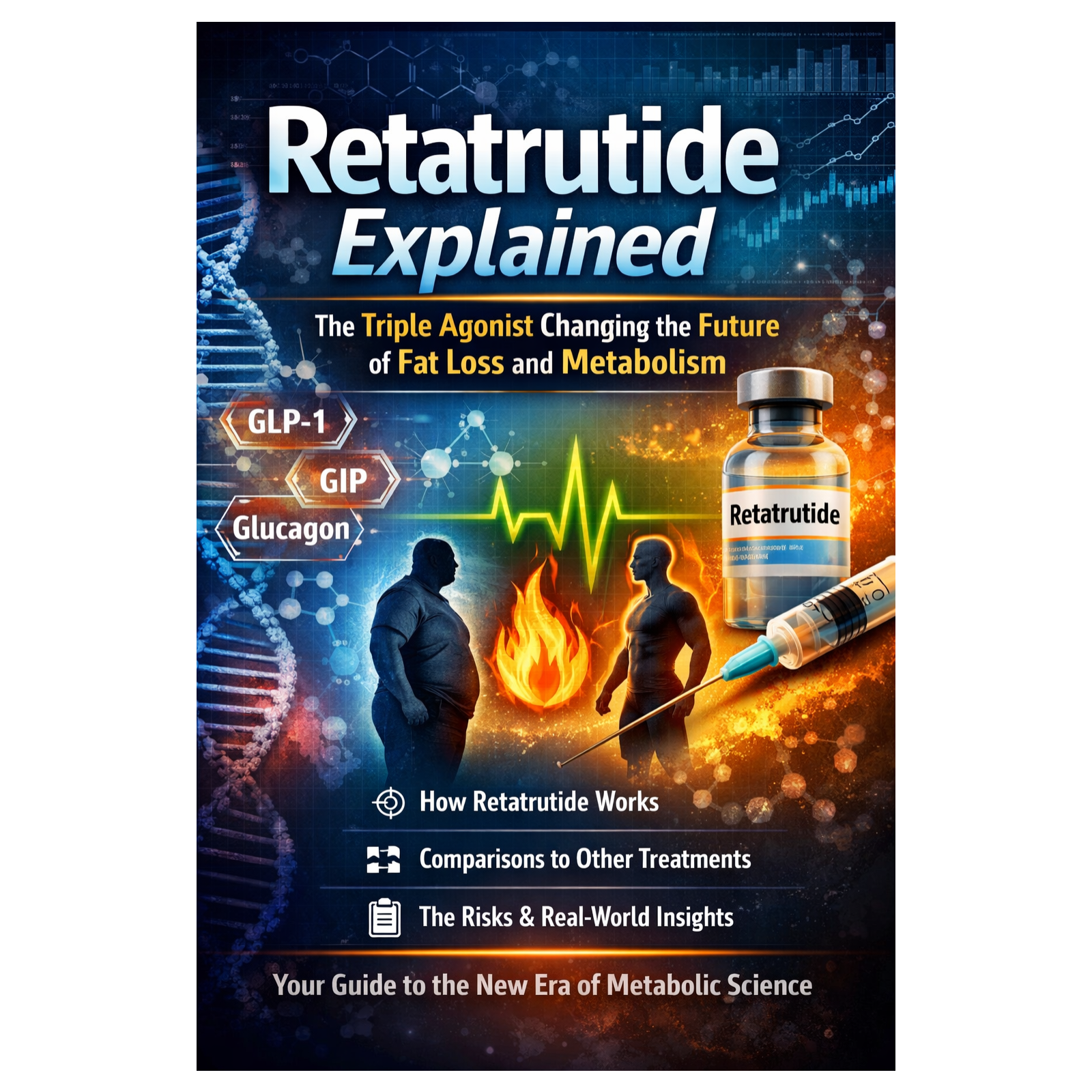
    Retatrutide Explained (Revised): The Triple Agonist Changing the Future of Fat Loss and Metabolism

    What if fat loss wasn’t just about eating less, but also about burning more at the same time? In this episode, we break down retatrutide, one of the most talked about compounds right now, and why it’s getting so much attention. You’ll learn how it works as a triple agonist targeting GLP-1, GIP, and glucagon receptors, and what that actually means for appetite, energy expenditure, and overall metabolic function. We also dive into how it compares to other well-known options, what the early research is showing, and the real-world considerations people aren’t talking about enough. If you want a clear, no-hype explanation of what makes retatrutide different and why it could represent a major shift in how we approach metabolism, this episode is for you.

Showing 1–20 of 27 episodes