
Skip to content
Artwork for The Other 80
Health & FitnessMedicineGovernmentNews

The Other 80

Claudia Williams

The Other 80 podcast — brought to you by Claudia Williams at UC Berkeley School of Public Health — hosts real, honest dialogue about the things that help keep people healthy beyond traditional medical care, like housing, social connections and food, and the cutting edge policies, research and programs supporting whole person health. Join former White House advisor, entrepreneur and host Claudia Williams for deep conversations with the innovators, implementers, researchers and policymakers bringing these new models to life. We’ll talk about what’s working, what’s not and how to move towards whole person health rapidly and equitably across the US.

Play
  • 21 episodes
  • fortnightly
  • Avg 36 min
  • English
Counted on this page — what you have heard stays on this device, so it is not something the list can be paged by.
  • S3 · E78
    Wednesday · 39 min

    Dr. Francis Collins on the Human Genome Project, Faith, and the Future of Science

    Dr. Francis Collins served as NIH director for 12 years across three administrations (Obama, Trump, Biden), both Democrat and Republican. He brought enormous scientific vision to the role, along with a level of connection and humanity rare in any leader. A year and a half ago, he left NIH, not by his own choice. And now, he joins Claudia to ask: How do we make the case for future investments in science in a world of distrust? Dr. Collins and Claudia cover: Why he believes faith and science belong together What the Human Genome Project teaches us about taking on big scientific challenges What listening to people who felt harmed by the COVID response taught him about trust Dr. Collins says, for him, science and religion can walk hand-in-hand because they answer different questions: “Science is the right way to answer questions about the natural world, but it doesn't help you so much with other questions like is there a God? Why am I here? Why is there something instead of nothing? That's where faith, if you're gonna get answers at all, comes to the rescue of the silence of science. And I think it's exciting to be able to consider all those questions. And if, as it is now in my worldview, the natural world is the handiwork of a creator, then studying the natural world is also getting a glimpse of God's mind, which means science and faith are in fact connected to each other and the laboratory maybe is… And even if you want to say what you're doing in science is to uncover with awe things about creation, this feels like worship.” Relevant Links Read Vannevar Bush’s 1945 paper “Science, the Endless Frontier” See Dr. Collin’s 2003 Nature paper called “A vision for the future of genomics research” Find latest update on NIH’s All of Us Research Program Read Rebecca Skloot’s book The Immortal Life of Henrietta Lacks Explore Braver Angels, the cross-partisan, volunteer movement Dr. Collins references Listen to Carrie Newcomer’s song “If Not Now” About Our Guest Francis S. Collins, M.D., Ph.D., is the former director of the National Institutes of Health (NIH). As the longest serving director of NIH — spanning 12 years and three presidencies — he oversaw the work of the largest supporter of biomedical research in the world, from basic to clinical research. Dr. Collins is a physician-geneticist noted for his landmark discoveries of disease genes and his leadership of the international Human Genome Project, which culminated in April 2003 with the completion of a finished sequence of the human DNA instruction book. He served as director of the National Human Genome Research Institute at the NIH from 1993-2008. Dr. Collins' research laboratory has discovered a number of important genes, including those responsible for cystic fibrosis, neurofibromatosis, Huntington's disease, a familial endocrine cancer syndrome, and most recently, genes for type 2 diabetes, and the gene that causes Hutchinson-Gilford progeria syndrome, a rare condition that causes premature aging. Dr. Collins received a B.S. in chemistry from the University of Virginia, a Ph.D. in physical chemistry from Yale University, and an M.D. with honors from the University of North Carolina at Chapel Hill. Prior to coming to the NIH in 1993, he spent nine years on the faculty of the University of Michigan, where he was a Howard Hughes Medical Institute investigator. He is an elected member of the Institute of Medicine and the National Academy of Sciences. Dr. Collins was awarded the Presidential Medal of Freedom in November 2007 and the National Medal of Science in 2009. Source Connect With Us For more information on The Other 80 please visit our website - www.theother80.com. To connect with our team, please email claudia@theother80.com and follow us on twitter @claudiawilliams and LinkedIn Subscribe to The Other 80 on YouTube so you never miss our video extras or special video episodes!


  • S3 · E77
    August 12 · 35 min

    Can states build a healthier health system? Maryland is trying with Meena Seshamani

    Today’s guest, Dr. Meena Seshamani, ran Medicare at CMS and is now Secretary of Health in Maryland. She is leading one of the country’s most ambitious health reform efforts: evolving Maryland’s all-payer model, expanding investment in primary care, and using data infrastructure to strengthen coverage and population health—all while navigating the implementation of HR1. In this conversation, recorded at Aspen Ideas Health, Meena makes the case that policy design matters, but implementation is where its promise is realized or lost. Meena and Claudia discuss: How Maryland saved $1.6 billion for Medicare New primary care investment strategies How the state is leveraging CRISP, the state’s HIE, to implement HR1 and streamline enrollment in public programs Meena shares how Maryland is strengthening food systems using rural health transformation funding: “We are also taking rural health transformation dollars and investing in cold storage, food aggregators, and distribution hubs for our local Maryland farms, so that when we are doing outreach on healthy eating and providing nutritious food to people, that's actually coming from our local Maryland farms. So it's boosting the local economy in our rural areas as well.“ Relevant Links Maryland’s Total Cost of Care Model: Evaluation of the First Four Years Article on the impact of Maryland’s model How CRISP supports Medicaid redetermination The state’s Rural Health Transformation plan About Our Guest Meena Seshamani, MD, PhD serves as the Secretary of Health for Maryland in the Moore-Miller Administration, where she stewards a $20 billion health system that encompasses public health, Medicaid, disability, behavioral health, and 11 state-run hospitals. She leads the state’s mission to improve the health and well-being of all Marylanders through a focus on accessibility, affordability, and equity. Under her leadership, Maryland has emerged as a national laboratory for healthcare innovation. Dr. Seshamani successfully negotiated a first-of-its-kind, multi-billion dollar healthcare payment model with federal partners and secured $168 million in inaugural funding to transform rural health delivery. Her tenure is also marked by a proactive approach to public health, exemplified by ensuring broad vaccine access in the state through the creation of a landmark program providing free vaccines to uninsured and underinsured residents—codifying health security as a statewide priority. Prior to her cabinet appointment, Dr. Seshamani served as Deputy Administrator and Director of the Center for Medicare at CMS. There, she executed the most significant pharmaceutical reform in decades: the Medicare Drug Price Negotiation program, achieving $6 billion in first-year savings. Her work at CMS fundamentally shifted the Medicare model to value-based care by introducing payments for community health services, caregiver training, and navigating patient care, while simultaneously tightening accountability and oversight. A board-certified head and neck surgeon and an Oxford-trained health economist, Dr. Seshamani’s perspective is grounded in how health care policy and operations impact the real lives of patients. She previously served as Vice President of Clinical Care Transformation at MedStar Health, maintaining a surgical practice while leading large-scale system changes. A widely published author in the New England Journal of Medicine and JAMA, her insights are frequently sought by The New York Times, The Wall Street Journal, and major news networks. Dr. Seshamani holds her MD from Johns Hopkins University and her PhD from the University of Oxford, where she was a Marshall Scholar. Source Connect With Us For more information on The Other 80 please visit our website - www.theother80.com. To connect with our team, please email claudia@theother80.com and follow us on twitter @claudiawilliams and LinkedIn Subscribe to The Other 80 on YouTube so you never miss our video extras or special video episodes!

  • S3 · E76
    July 29 · 35 min

    The CMS Innovation Center at 15: What worked, what didn’t, and the next big bets with Abe Sutton

    Fifteen years ago Congress created the CMS Innovation Center to test new ways of delivering quality care at lower costs. Since then, the Innovation Center has tested dozens of models - some have been successes, and many have not. Director Abe Sutton joins The Other 80 for a candid conversation about the Innovation Center’s record, its next chapter, and the big bets ahead. Abe identifies three features of successful models: Mandatory participation to avoid cherry picking Downside risk to drive provider attention and engagement Minimal gaps between first- and second-generation models to maintain momentum Abe says success should not be measured by how many models work, but by overall return on investment: “If we are taking bold bets, if we're trying to say, all right, let's back the next thing that could really transform care in a country and put the country on a more solid fiscal foundation while improving care and the affordability of care. Well, one thing that really was transformative and did that well may be worth the cost of running 20 things.” Relevant Links Read the CMS Accountable Communities Evaluation Access the GAO report evaluating the CMMI model from 2011-2024 Read the CMMI’s most recent Strategic Plan About Our Guest Abe Sutton serves as the Director of the Center for Medicare and Medicaid Innovation and Deputy Administrator for the Centers for Medicare and Medicaid Services (CMS). Before assuming this role in January of 2025, he co-founded two health service companies; Honest Health, which focuses on enabling primary care physicians, and Evergreen Nephrology, which focuses on enabling nephrologists. Sutton focused on health policy with the federal government from 2017 to 2019, serving at the National Economic Council, Domestic Policy Council and Department of Health and Human Services. In these roles, he coordinated health policy across the federal government, with a focus on the shift to paying-for-value within Medicare, increasing choice and competition in health care markets, and updating the federal government’s approach to kidney care. He holds a law degree from Harvard Law School and undergraduate degrees in political science, management, and health care management and policy from the Wharton School and the College at the University of Pennsylvania. Source Connect With Us For more information on The Other 80 please visit our website - www.theother80.com. To connect with our team, please email claudia@theother80.com and follow us on twitter @claudiawilliams and LinkedIn Subscribe to The Other 80 on YouTube so you never miss our video extras or special video episodes!
  • S3 · E75
    June 17 · 42 min

    Rebuilding Primary Care with Rushika Fernandopulle

    Healthcare pioneer Rushika Fernandopulle joins us to discuss his new venture Liza and why this is the perfect moment to build new primary care models from the bottom up. Rushika argues that “shareholder value” has usurped the needs of patients in US healthcare, and that fundamental rethinking, not optimizing or tweaking at the edges, is needed. Rushika shares the ‘build principles’ for Liza: Backload constraints - don’t frontload them. First show that a new approach works, then figure out the business model Take cues from conscious capitalism: the purpose of a business is to create good in the world, not to optimize shareholder value Figure out the right thing to do, not a business that fits how healthcare is broken Rushika argues that AI invites us to rethink healthcare based on abundance, not scarcity: “We've built our whole economy, all our processes with this assumption of scarcity, that there were a scarce number of human brains who could do things, right? Doctors, teachers, et cetera. And now all of a sudden that assumption has gone away. So we need to rethink from scratch how we build these systems. So that's what we're trying to do at Liza. Like, what if we started from scratch?” Relevant Links More information on LIZA Health The book Conscious Capitalism by John Mackey et al Podcast episode where Tim Ferris and Jerry Colonna talk about sabbaticals Article by Sara Riggare about living with Parkinson's and her image of blue and red dots About Our Guest Rushika Fernandopulle is a practicing physician who is the CEO of Liza Health, a startup building a new AI-enabled platform for Primary Care. He was the co-founder and CEO of Iora Health, an early innovator in Primary Care redesign which was acquired by Amazon in 2023. Prior to this, Rushika was the first Executive Director of the Harvard Interfaculty Program for Health Systems Improvement and Managing Director of the Clinical Initiatives Center at the Advisory Board Company. He is a member of the Schweitzer, Ashoka, Aspen, and Salzburg Global Fellowships, on faculty at Harvard Medical School. He serves on the boards of the Asian American Foundation, Families USA, and Premera Blue Cross, and is a member of the Lancet Commission for Person Centered Care. He earned his A.B., M.D., and M.P.P. from Harvard University, and completed his clinical training at the University of Pennsylvania and the Massachusetts General Hospital. Source Connect With Us For more information on The Other 80 please visit our website - www.theother80.com. To connect with our team, please email claudia@theother80.com and follow us on twitter @claudiawilliams and LinkedIn Subscribe to The Other 80 on YouTube so you never miss our video extras or special video episodes!

  • S3 · E74
    June 3 · 40 min

    Drug Story: Thomas Goetz on Drugs, Diseases and The Medicalization of Everyday Life

    Does the history of drugs tell us something bigger about the world? That’s what former Wired executive editor and UC Berkeley Senior Impact Fellow Thomas Goetz is betting on with his new podcast Drug Story. He joins Claudia to talk about how big drug breakthroughs have shaped how we live and what it will really take to build health in our society. Thomas and Claudia dive into: Fluoride: The paradox of public health success becoming invisible Why modern culture medicalizes ordinary human experiences like sleep, aging & energy How public health needs to communicate differently, think bigger, and position itself as essential infrastructure for everyday health Thomas says the illusion of free will makes consumers feel like unhealthy choices are their choice alone: “There is some agency, like somebody decides to take a cigarette out of the pack. People decide whether to have a Coke instead of a glass of water or what have you. But there's also this vast machine, an invisible universe that is so powerful in compelling us from the commercials that are on our TV shows to the infrastructure of fast food in our neighborhoods. And it just is this easy inertia where oftentimes we don't actually have free will… We have much less free will than we think we do when it comes to things like what we eat, how we get our entertainment, where we live. There's a lot that is not really up to us and our choices.” Relevant Links Listen to Thomas Goetz’s podcast Drug Story About Our Guests Thomas Goetz is an award-winning science journalist and author. He has won National Magazine Awards (print and digital), Webby Awards, and FDA contracts. He created Drug Story as an Impact Fellow at the University of California Berkeley School of Public Health. The former Executive Editor at WIRED, he has worked at The Wall Street Journal, Inc., and the Robert Wood Johnson Foundation, and has written two award-winning books about technology and medicine. His writing has been selected for the Best American Science Writing and the Best American Technology Writing anthologies. He spent much of the past decade developing digital tools to help people make sense of prescription medications, including leading the development of openFDA for the Food and Drug Administration, and building an economic research team and editorial operations at GoodRx. You can reach him at thomas@drugstory.co Source Connect With Us For more information on The Other 80 please visit our website - www.theother80.com. To connect with our team, please email claudia@theother80.com and follow us on twitter @claudiawilliams and LinkedIn Subscribe to The Other 80 on YouTube so you never miss our video extras or special video episodes!

  • S3 · E73
    May 20 · 36 min

    The ARPA for Philanthropy: Kumar Garg on Funding 'Big If True' Ideas in Science and Tech

    After spending time in the Obama White House, Kumar Garg came away with a toolset of skills to help drive change, spotlight good ideas and scale them. Now he’s applying those ideas to philanthropy. As the co-founders of Renaissance Philanthropy, Kumar and Tom Kalil have built an organization around a deceptively simple idea: What if philanthropy could help scientists, technologists, and innovators think bigger — and then actually fund the work at the scale required? Kumar and Claudia dive into: Renaissance Philanthropy’s approach: time bound and thesis driven funding How Kumar would spend $500 million on health right now How public health and academics could think bigger Kumar’s intriguing ‘open notebook’ idea: “It's very valuable to me if a researcher has the equivalent of an open notebook. These are all the ideas… Here's my active research projects. Here's all the interesting sort of experiments I've done… you can imagine then sending an agent out and read[ing] people's open notebook.. it would be a way to discover people's work.” Relevant Links Learn more about Renaissance Philanthropy Get info on the Big If True Science Accelerator (BITS) See a photo of Kumar’s White House white board on Twitter About Our Guests Kumar Garg is the President at Renaissance Philanthropy. Kumar has helped to shape the science and tech landscape for almost two decades. Working with Eric Schmidt, he helped design and launch moonshot initiatives in education, provided early support to game-changing ideas and pioneers, and built ongoing multi-donor and multi-sector collaboratives. Prior to that, he helped set budget and policy priorities for the Obama Administration as part of the White House Office of Science and Technology Policy, and drove progress on topics ranging from education and workforce issues, biotechnology, entrepreneurship, space, advanced manufacturing, broadband, nanotechnology, behavioral sciences, digital media, incentive prizes, and broader innovation policy. In particular, he led the Obama Administration’s efforts to bolster science, technology, engineering and math (STEM) education, including development of major budget and policy initiatives in the State of the Union to train 100,000 excellent STEM teachers and bring computer science to all K-12 students, development of the Educate to Innovate campaign with over $1 billion in in-kind and philanthropic investment, and creation of iconic events such as the White House Science Fair. Prior to his time in government, Kumar worked on behalf of parents and children seeking educational reform as an education lawyer and advocate. Kumar received a B.A. from Dartmouth College and a law degree from Yale Law School. Source Connect With Us For more information on The Other 80 please visit our website - www.theother80.com. To connect with our team, please email claudia@theother80.com and follow us on twitter @claudiawilliams and LinkedIn Subscribe to The Other 80 on YouTube so you never miss our video extras or special video episodes!
  • S3 · E72
    April 22 · 30 min

    The "Smart Shot": Halle Tecco on Aligning Mission & Margin for Massively Better Healthcare

    Halle Tecco is an investor, entrepreneur, and author of the new book Massively Better Healthcare. In this live conversation, she offers advice for aspiring health tech founders, reflects on why “hustle culture” needs to be kept in check, and makes the case that founders should become anthropologists of the problems they want to solve. Most importantly, she argues that today’s founders need to be “bilingual” — fluent in both healthcare and technology. Halle and Claudia cover: The early days of Rock Health in a walkup office in SF’s Chinatown How she learned to be a founder without the grind Why AI is growing faster in healthcare than in any other industry Halle says there is lots of opportunity to build businesses in the healthcare industry, but you need to pick something you are passionate about: “It is extremely hard to be a founder. It is 10 times harder to be a founder in healthcare… you're working on what I think are the most important problems that we will be able to solve, but it's also really challenging. [Make] sure you're picking a problem that you're genuinely very passionate about solving. That will help drive you and be your North Star when things get inevitably very, very hard. “ Relevant Links Buy Halle’s book Massively Better Healthcare Listen to Halle Tecco’s Podcast “The Heart of Healthcare” Learn more about Rock Health Menlo Ventures report on the state of AI in healthcare About Our Guest Halle Tecco is an entrepreneur, angel investor, and podcast host passionate about fixing our healthcare system. She is the founder of Natalist, which was acquired by Everly Health in October 2021. Previously, Halle founded and ran Rock Health, and was also an Adjunct Professor at Columbia Business School, teaching the first MBA-level course on digital health investing. A proud first-generation college graduate, Halle earned an M.P.H. from Johns Hopkins University, an M.B.A. from Harvard Business School, and a B.S. from Case Western Reserve University. She has served as a Board Member to the International African American Museum since 2018, and as an Advisor to the Harvard Medical School Department of Biomedical Informatics since 2014. Halle has appeared in The New York Times, The Wall Street Journal, and CNBC. She was named as one of Goldman Sach’s Most Intriguing Entrepreneurs and listed on the Forbes 30 under 30. She has spoken at the Aspen Ideas Festival, CES, TechCrunch Disrupt, and was a SXSW Keynote speaker. Source Connect With Us For more information on The Other 80 please visit our website - www.theother80.com. To connect with our team, please email claudia@theother80.com and follow us on twitter @claudiawilliams and LinkedIn Subscribe to The Other 80 on YouTube so you never miss our video extras or special video episodes!

  • S3 · E71
    April 8 · 32 min

    Can robots save your life? Fred Khosravi on the ambitious plan to bring stroke care to everyone

    After moving to the US from Iran at age 17, entrepreneur and inventor Fred Khosravi went on to launch more than 20 companies and earn hundreds of patents. In this conversation, Fred reflects on the power of immigration, freedom, education and what it means to build a life in a new country. He shares how leaving Iran after the revolution shaped his willingness to take risks, his sense of purpose, and his entrepreneurial drive. Claudia and Fred also get into some of the biggest opportunities he sees ahead, from women’s health to the long-overdue shift from a healthcare system organized around visits to one centered on outcomes and connected care. This interview was recorded in person at the JP Morgan - Berkeley healthcare conference in Taipei. Fred and Claudia dive into: How in the age of AI our greatest asset is our humanity Why institutions like the FDA are essential foundations for innovation How specialty-driven medicine makes it hard to deliver whole person care Fred says strong regulation is the foundation, not a barrier, to America’s global leadership in biotech: “I happen to believe that the reason American medical technology and American pharmaceuticals are the most sought after in the world, if you can afford it, is because of the FDA. I like to say it's because of entrepreneurs like me, and it's because of everybody who's actually working so hard on it… We could not achieve the results that we're achieving around the world… If it weren't for the systems of standards and highest quality level thinking… that the FDA is bringing to the table.” Relevant Links Learn more about Imperative Care’s vision for treating stroke and other thromboembolic diseases About Our Guest Fred (Farhad) Khosravi is a Silicon Valley medical device entrepreneur who has held management and executive positions in both large and small medical technology enterprises over the last 30+ years. Throughout his career, he has been either the inventor or co-inventor for over 200 U.S. and worldwide granted and patent applications, making him one of the most prolific minds and leaders in the industry. However, Fred’s passion for improving people’s lives goes beyond the medtech field. He currently serves on the Board of Trustees at the Center for Strategic and International Studies, a bipartisan think tank dedicated to providing strategic national security insights to help decision makers chart a course toward a better world; is a member of the Board of Directors at Spirit of America, a nonprofit that promotes private-sector support for the safety and success of our troops and the local people they want to help; and is a convening board member for Technology for America, a nonprofit for promotion of innovation as a way to engage public-private dialogue that benefit all Americans. Fred holds a B.S. degree in mechanical engineering and graduated cum laude with an M.S. degree in mechanical engineering from Tennessee Tech University. Source Connect With Us For more information on The Other 80 please visit our website - www.theother80.com. To connect with our team, please email claudia@theother80.com and follow us on twitter @claudiawilliams and LinkedIn Subscribe to The Other 80 on YouTube so you never miss our video extras or special video episodes!
  • S3 · E70
    March 25 · 42 min

    Patient Agency in the Age of AI with Liz Salmi & Hugo Campos

    Patient innovators Liz Salmi and Hugo Campos join The Other 80 to discuss the evolving role of patients in healthcare, using the recent release of ChatGPT Health as a central lens. They delve into how AI is shifting the power dynamic by enabling greater patient agency and creating new expectations for health systems. Drawing on their personal experiences, including Liz's work with OpenNotes and Hugo's long struggle for access to his cardiac device data, they explore how technology can serve as a bridge for collaboration, rather than a source of conflict, between patients and clinicians. Claudia, Liz and Hugo talk about: How patients who are sick and scared often choose sharing over privacy Why Hugo still can’t access his implanted device data The need for a new doctor-patient relationship grounded in collaboration, not control Liz says AI is surfacing the same reactions she saw around patients googling health information: “It makes me think of the Dr. Google era of when clinicians were like, ‘patients shouldn't go online and look for information about their own health because they don't know how to search accurately for their own health information’. And I think we're at this early stage of the tension between health systems wanting to still control how patients find their own health information, versus our own curiosity and exploration of digging into our own health information and… asking the questions that are important to us and then discovering the answers ourselves in our own journey.” Relevant Links Read Liz and Hugo’s paper on Critical AI Health Literacy Watch Hugo’s TEDx Talk on Fighting for the Right to Open His Heart Data Learn more about the patient data transparency movement at OpenNotes Read the full text of the 21st Century Cures Act About Our Guests Hugo Campos is an internationally recognized patient advocate, combining creative and technical expertise to promote participatory medicine and patient-centered, AI-enabled healthcare. Named a White House Champion of Change for Precision Medicine by President Obama in 2015, he advocates for patient rights and health data access while managing his own cardiac condition. Hugo serves on the NIH’s All of Us Research Program Steering Committee, co-leads patient engagement for PCORI’s THRIVE trial, and advises UCSF/UC Berkeley’s Computational Precision Health program. A TEDx Cambridge speaker, his advocacy has been featured in national media and scientific publications. Hugo lives in Oakland, California, with his husband, elderly father, and Memphis the cat. Source Liz Salmi is the Communications & Patient Initiatives Director for OpenNotes. In this role, Liz helps clinicians, hospitals and health systems understand through “the patient’s eyes” the changing nature of patient-clinician communication in an age of growing transparency. Her research areas of interest include: the effects of transparency on patient-clinician communication, stakeholder engagement, research dissemination, and the role of social media in patient-clinician-researcher collaborations. As a person living with a low grade malignant brain tumor, Liz is passionate about helping all people engage in their own health care by improving their experience as patients. Over the last 17 years she has been: a research subject; an advisor in patient stakeholder groups; a leader in “patient engagement” research initiatives; and an innovator, educator and investigator in national educational and research projects. In addition to her work with OpenNotes, Liz led the Brain Cancer Quality of Life Collaborative, a multi-stakeholder group dedicated to advancing science and improving the quality of life for people with malignant brain tumors. In fall 2021, members of the BCQoLC team (along with established investigators), were awarded a $12.8 million Center Grant from the National Cancer Institute to determine optimal methods for patient enrollment in a brain tumor registry. Source Connect With Us For more information on The Other 80 please visit our website - www.theother80.com. To connect with our team, please email claudia@theother80.com and follow us on twitter @claudiawilliams and LinkedIn Subscribe to The Other 80 on YouTube so you never miss our video extras or special video episodes!
  • S3 · E69
    March 11 · 38 min

    Missing the Nobel Call with Fred Ramsdell

    Newly-minted Nobel laureate Fred Ramsdell joins Claudia to discuss his groundbreaking work on regulatory T cells, which act as the immune system's natural "brakes." His research aims to "reset" the immune system to cure autoimmune diseases (like rheumatoid arthritis and MS) moving beyond mere symptom management. Fred reflects on his new role as a science advocate, addressing the crisis of public trust in science and the need for greater diversity in biomedical research. During this conversation, recorded at the UC Berkeley/JP Morgan Healthcare Conference in Taipei, Claudia and Fred discuss: How Fred missed the Nobel Prize call while off-grid camping His shifting goals in retirement post Nobel win Why he chose biotech: collaboration, speed, and being "wrong fast" The deeper threat to science: funding vs. trust, and his surprise in Sweden Fred says he’s excited to see what other advances are possible in what he calls “the early innings” of scientific discovery: “As humans, we're really good at solving technological problems. If we know what the problem is, historically, we're pretty good at figuring out an answer. [We’re] pretty confident now that we know the problem in peripheral tolerance, that is the breakdown of our immune system recognizing our own tissues. Now we know what at least part of that problem is, we'll be able to engineer our way into a solution.” Relevant Links See more about Fred’s Nobel win and read the UCLA press release Fred’s Nobel prize lecture See Fred and his co-laureates accept their prize Read more about Fred’s 2025 co-laureates Mary E. Brunkow and Shimon Sakaguchi About Our Guest Fred Ramsdell, PhD, is a veteran biotechnology leader in immunology with nearly three decades of experience and was named a winner of the 2025 Nobel Prize in Physiology or Medicine. A co-founder of Sonoma Biotherapeutics, Dr. Ramsdell was the former Chief Scientific Officer (CSO) and current Scientific Advisory Board Chair of the Company. Dr. Ramsdell earned his doctoral degree in microbiology and immunology from the University of California, Los Angeles and holds a bachelor’s degree in biochemistry and cell biology from the University of California, San Diego. Following a fellowship at the NIH, Dr. Ramsdell joined Immunex studying T cell activation and tolerance, with a focus on gene discovery and functional characterization. He later joined Darwin Molecular (which was later acquired by Celltech R&D) to establish the immunology program. Amongst other programs, he led the team that discovered and characterized FoxP3, a gene critical to the function of regulatory T cells. Dr. Ramsdell joined ZymoGenetics in 2004, where he led teams studying novel proteins with potential regulatory activity in lymphoid cells. In 2008, Novo Nordisk brought on Dr. Ramsdell to help establish the company’s new Inflammation Research Center in Seattle and lead the Immunobiology group. Prior to SonomaBio, Dr. Ramsdell was the CSO at the Parker Institute for Cancer Immunotherapy (PICI) where he helped to build and advance multiple research programs from the inception of the Institute. Source Connect With Us For more information on The Other 80 please visit our website - www.theother80.com. To connect with our team, please email claudia@theother80.com and follow us on twitter @claudiawilliams and LinkedIn Subscribe to The Other 80 on YouTube so you never miss our video extras or special video episodes!

  • S3 · E68
    February 25 · 40 min

    Breaking the Cycle of Homelessness with Kunal Modi

    When Mayor Lurie took office, San Francisco was spending nearly $1 Billion a year responding to homelessness, yet the number of people living unsheltered had not budged in years. In this episode, Kunal Modi, the city’s Chief of Health and Human Services, shares how the Lurie administration is tackling the intersecting homelessness, mental health and addiction crises. Rather than layering on new programs, the city is attempting something harder: redesigning how fragmented systems work together. Kunal and Claudia discuss: The city’s move to unify fragmented and siloed outreach teams The importance of shifting accountability and decision-making to the front lines How San Francisco’s strategy is leveraging the community supports in CalAIM Why solutions need to reflect the intersecting nature of the homeless problem Kunal reminds us that ending the cycle of homelessness is far more complicated than just finding housing: “This is more than a homelessness crisis, it's an intersecting homelessness, behavioral health, and drug addiction crisis that we need to bring our healthcare system and our social service system in closer alignment… We need to reorient our Public Health strategies to not only support those in crisis, but to think about the broader communities and neighborhoods.” Relevant Links See Mayor Lurie’s thoughts on the “Breaking the Cycle” initiative Get more information on the City’s new RV parking restrictions Read the Crankstart report on tackling homelessness in San Francisco About Our Guest Kunal Modi is the policy chief of health, homelessness, and family services in San Francisco Mayor Daniel Lurie’s administration. In this role, he coordinates eight agencies, including the Department of Homelessness and Supportive Housing, the Department of Children, Youth and Families and the Department of Early Childhood, while also serving as liaison to San Francisco Unified School District and City College. He brings extensive experience in cross-agency collaboration and reform, aiming to deliver compassionate, effective solutions for the city’s most pressing health, housing, and family needs. Before joining City Hall, he spent over 11 years as a partner at McKinsey & Company’s Bay Area office and previously served on the boards of Larkin Street Youth Services and St. Anthony’s Foundation. His educational background includes an M.B.A. from Harvard Business School, an M.P.P. from Harvard Kennedy School, and a B.A. from Northwestern University. Connect With Us For more information on The Other 80 please visit our website - www.theother80.com. To connect with our team, please email claudia@theother80.com and follow us on twitter @claudiawilliams and LinkedIn Subscribe to The Other 80 on YouTube so you never miss our video extras or special video episodes!
  • S3 · E67
    February 11 · 39 min

    Bending the Chronic Disease Curve with Sean Duffy

    Not many digital health companies go public. And even fewer do so with a model designed to fix what’s truly broken in U.S. healthcare: episodic, fragmented care that fails to support the behavior change required to manage chronic disease. Omada Health CEO Sean Duffy joins Claudia to discuss the company’s journey from scrappy startup to public company—and his biggest ambition for the future: bending the nation’s chronic disease curve, both in cost and in human suffering. Claudia and Sean talk about: Omada’s “full stack” approach to chronic care What Omada’s IPO signals for digital health’s future Why GLP1s are a catalyst for behavior change How employers have quietly driven healthcare innovation Sean says for Omada to actually shift what consumers pay out of pocket every month for their premiums we need to make big changes: “Affordability is the thing… That's the burden we're bearing as a country… And so, the only way to bring down healthcare costs are completely transformed care models. That's the only way… Thank goodness we're at a moment where those models are being supported and being scaled nationally. Thank goodness we're at a moment where technologies like AI can help add even more efficiency and help scale… Our only way out are different care models [that] leverage new technologies.” Relevant Links Access more info in Omada’s research library Get details on Omada Health’s S1 IPO Filing See the GLP-1 research Sean mentions: Omada members maintain weight loss after discontinuing GLPs Get more info on the CMS ACCESS model About Our Guest Sean Duffy co-founded Omada in 2011 with the aim of merging medical trends and cutting edge technology to revolutionize health care of chronic disease as we know it. Today, he proudly serves as CEO and has been instrumental in steering Omada toward global recognition, such as being hailed a potential “medical triumph” by The New York Times, and one of Fast Company’s 50 most innovative companies in the world. A longtime devotee of healthcare and technology, Sean also founded a largely automated lifestyle business around Excel Everest, the interactive Microsoft Excel training tool he created. He formerly covered healthcare innovation as writer and editor for Medgadget, a popular medical technology blog. As CEO of Omada, Sean cares deeply about honing the organization’s exceptional products, values-driven approach to healthcare, and the innovative ways in which primary care can continue to better humanity. More recently, Sean has been spending more and more of his free time learning how to build and fly first-person view drones. Source Connect With Us For more information on The Other 80 please visit our website - www.theother80.com. To connect with our team, please email claudia@theother80.com and follow us on twitter @claudiawilliams and LinkedIn Subscribe to The Other 80 on YouTube so you never miss our video extras or special video episodes!
  • S3 · E66
    January 28 · 36 min

    Free Childcare for All with Elizabeth Groginsky

    In 2025, New Mexico made history as the first state in the nation to commit to free childcare for all families. Elizabeth Groginsky, who leads this effort, joins Claudia to discuss what Governor Michelle Lujan Grisham has described as a “cradle-to-career education system”—and why investing early pays dividends from school readiness to family economic stability. Claudia and Elizabeth dive into: The critical link between fair worker wages and childcare capacity How New Mexico’s early childhood trust fund is helping the state stay the course Why NYC and other cities and states want to replicate New Mexico’s move Unexpected allies in the state’s quest to provide free childcare Elizabeth underscores this is not only good social policy but also a smart financial investment: “If we believe the Heckman equation, if we believe the economists coming out of the Federal Reserve, this is your best investment. If it's a 7 % return, that's better than anyone's getting on any portfolio. It could be as high as a 13 % return… And so it's not going to be a question of ”How can we afford it?”, but “How can we not afford to invest in universal child care?”” Relevant Links Find out more about New Mexico’s Childhood Education and Care Department Read more about Universal Childcare in New Mexico What is the Heckman Equation? See information on the “Developing Futures” Campaign About Our Guest Elizabeth Groginsky has more than two decades of executive leadership experience administering public and private human service organizations at the national, state and local levels. She previously served as the assistant superintendent of early learning for the District of Columbia, a role she held for nearly five years where she administered a $160 million annual budget that funded programs to ensure equal access to quality services for the District’s most vulnerable children and their families. The District of Columbia was first in the nation in 2009 to pursue universal pre-K and today has the highest U.S. participation rate, with 85 percent of all 4-year-olds and 75 percent of 3-year-olds. She previously directed early childhood education for United Way Worldwide, where she helped expand the number of communities collecting and using population-based early childhood data; and she was the first executive director of the Early Childhood Data Collaborative, a national coalition to improve state policies and practices in the development and use of early childhood data system. Her experience with Head Start programs is extensive: She began as a family services coordinator, later administered a county program and then directed the Head Start Collaboration Office for Colorado. In Washington, D.C., she oversaw one of only eight state Early Head Start Child Care Partnership grants. Groginsky earned a master’s degree in social sciences from the University of Colorado at Denver and a bachelor’s degree from the University of Maryland. Source Connect With Us For more information on The Other 80 please visit our website - www.theother80.com. To connect with our team, please email claudia@theother80.com and follow us on twitter @claudiawilliams and LinkedIn Subscribe to The Other 80 on YouTube so you never miss our video extras or special video episodes!
  • S3 · E65
    Dec 17, 2025 · 24 min

    Making Drugs More Affordable with Paul Markovich (Encore Episode)

    This week, we close out our three-part series on rethinking drug access and costs with a must-listen encore episode. After detailing the scope of the drug price crisis with Mark Cuban and how we can re-purpose drugs to treat rare illnesses with David Fajgenbaum, we turn to a leader who is actively changing the dynamic: Paul Markovich. Now the CEO of Ascendiun (the parent company of Blue Shield of California), Paul argues that healthcare affordability isn't just a patient pocketbook issue - it’s a massive economic crisis for the nation. In this episode, Paul and Claudia discuss: His conviction that reducing healthcare costs is essential to averting a national fiscal crisis The upside-down economics that make PBMs reject cheaper drug prices Paul’s candid advice on what it takes to be a courageous leader in a dysfunctional system Paul Markovich challenges healthcare leaders to shift from explaining high costs to being accountable for lowering them: “Almost everybody in the entire value chain, whether it's health plans or hospitals or all the way through, they want to explain why healthcare is so expensive and why there's this inflation rate as if that absolves them of any responsibility to make it different. And so, what I really want is accountability, and a level of accountability that doesn't exist yet in our industry, to say, 'Hey, we own this' ". Relevant Links Part 1: Listen to our episode “New Life for Old Drug with David Fajgenbaum” Part 2: Listen to our episode “Lessons in Disruption with Mark Cuban” Rethinking how Americans get affordable medications California’s new PBM reform law About Our Guest Paul Markovich is president and chief executive office of Ascendiun, a nonprofit corporate entity as part of the new parent to the family of organizations that includes Blue Shield of California. Paul Markovich was president and chief executive officer at Blue Shield of California, a nonprofit health plan with $25 billion in annual revenue, serving 6 million members in the state's commercial, individual, and government markets. Paul launched and led numerous initiatives to drive innovation and help reimagine health care, including funding support for a statewide provider directory to make it easier for Californians to find physicians and facilities in their plan; supporting the development of a statewide health information network for patients’ records, enabling more seamless and holistic care; and investing in a partnership with the California Medical Association to help physicians pilot new care delivery models and leverage technology. At Blue Shield, Paul previously served as chief operating officer (responsible for healthcare services, network management, e-business, marketing, product development, and customer operations). He was senior vice president of the large group and CalPERS business units. He led the company’s product development unit, introducing numerous products and services such as the first California Health Maintenance Organization to allow self-referrals to specialists and initiating online access to member benefits. He currently serves on the board of the Chicago-based Blue Cross Blue Shield Association, the national umbrella organization across the country. Together, these plans provide health coverage for more than 100 million Americans. Paul also serves on the board of America’s Health Insurance Plans. Paul is a North Dakota native and Rhodes Scholar with a master’s degree in philosophy, politics, and economics from Oxford University. He is a graduate of Colorado College, where he earned a Bachelor of Arts degree in International Political Economy and played Division I hockey. Source: https://www.linkedin.com/in/paul-markovich/ Stay Informed Sign up for The Other 80 Newsletter to receive a monthly update with reflections, news, events, jobs and funding curated for you by Claudia. Click here to sign up. Connect With Us For more information on The Other 80 please visit our website - www.theother80.com. To connect with our team, please email claudia@theother80.com and follow us on twitter @claudiawilliams and LinkedIn.

  • S3 · E64
    Dec 3, 2025 · 43 min

    Lessons in Disruption with Mark Cuban

    Investor and healthcare disruptor Mark Cuban joins The Other 80 to talk about his online pharmacy, Cost Plus Drugs, that is bringing affordable drugs with transparent markups to American households. Mark lays out his basic formula for taking overhead and complexity out of the US healthcare system by disaggregating huge vertical businesses and disintermediating middlemen. In this episode, Mark Cuban pitches: That direct contracting with hospitals is his next healthcare disruption Why he thinks medical schools should be free How financial audits are a first step to lowering healthcare prices Why price transparency is contagious Mark thinks the best way to make change is from outside the system: “What makes [Cost Plus Drugs] radical is when we started, everybody presumed and expected that we would work within the system. That we would partner with the big three wholesalers that control 98% of the sale of drugs - that we would partner with the big three PBMs that control 85% of prescriptions. And, we did the exact opposite because we knew they were the problem.” Relevant Links The Cost Plus Drugs mission statement Read and watch Mark Cuban testimony for the Senate Special Committee on Aging More on Mark’s hospital negotiation strategy About Our Guest Mark Cuban is an investor who lives for his family, his "Shark Tank" companies and the Dallas Mavericks. He is the owner of the 2011 World Champion Dallas Mavericks and bestselling author of "How to Win at the Sport of Business," and was an entrepreneur from the early age of 12 when he sold garbage bags door to door. Today, Cuban is the highly successful entrepreneur and investor with an ever-growing portfolio of businesses. A lifelong entrepreneur and investor, Cuban has started and built multiple industry-changing organizations including Costplusdrugs.com, which sells medications at industry low pricing with total cost transparency, which he founded with Dr. Alex Oshmansky. Named a winner of the GQ Men of the Year in 2006 and included in The New York Times Magazine's Year in Ideas, Cuban is recognized as being among the most influential people in both the cable and sports industries. He may be best known for his purchase of the Dallas Mavericks on Jan. 4, 2000. Under his leadership, the team's home games have become a total entertainment experience. Prior to his purchase of the Mavericks, Cuban co-founded the first commercial streaming company AudioNet, which became Broadcast.com, the leading provider of multimedia and streaming on the Internet. Broadcast.com was sold to Yahoo! Inc. in July 2000. MicroSolutions, a leading national systems integrator, was co-founded by Cuban and partner Martin Woodall in 1983, and later sold to CompuServe. In 2001, Cuban founded AXS TV (www.axs.tv) and sister network, HDNet Movies, the very first all high-definition TV network. He also co-owns the Landmark Theater chain, Magnolia Pictures, Magnolia Home Video and 2929 Productions along with partner Todd Wagner. With the release of the movie "Bubble" in 2005, Magnolia and Landmark Theaters pioneered the release of the movie's "day and date," meaning the movie was released in theaters, on TV (HDNet Movies) and on DVD all on the same day. Taking this process one step further, Cuban created the Ultra VOD platform, releasing movies to video on demand on both cable and satellite up to four weeks prior to their release in theaters. As an executor producer for 2929 and HDNet Films, Cuban has been nominated for seven Academy Awards® for "Enron," "The Smartest Guys In the Room" and "Good Night and Good Luck." He later sold HDNet in 2018. Source Connect With Us For more information on The Other 80 please visit our website - www.theother80.com. To connect with our team, please email claudia@theother80.com and follow us on twitter @claudiawilliams and LinkedIn Subscribe to The Other 80 on YouTube so you never miss our video extras or special video episodes!
  • S3 · E63
    Nov 19, 2025 · 36 min

    New Life for Old Drugs with Dr. David Fajgenbaum

    When David Fajgenbaum nearly died of Castleman disease for the fifth time, he decided to take fate into his own hands. Using his medical training, he searched for an existing drug that might save his life—and found one. Now his organization, Every Cure, is scaling the same approach to uncover hidden treatments for other diseases with no known cure. David and Claudia discussed: How Every Cure is using AI to test 75 million possible disease-drug combinations The perverse incentives that keep generic drug repurposing in the shadows Why the hardest part of innovation isn’t discovery, it’s getting proven treatments into clinical practice Repurposing existing drugs makes so much sense. But as David points out, there’s no market for it: “Once a drug is generic.. the price is going to plummet… And even if you were to double the sales of your drug because you found a new disease area, now you've gone from 1% to 2% of what you got before… So there's no incentive whatsoever for our system to find a new use for a generic drug. Zero incentive.” Relevant Links Learn more about Every Cure Read David’s book Chasing My Cure: A Doctor’s Race to Turn Hope Into Action Watch David's TEDTalk Listen to David’s Podcast interview with Adam Grant Get info on the Dada2 Foundation Watch a video on Matt Might’s story About Our Guest David Fajgenbaum, MD, MBA, MSc, is co-Founder & President of Every Cure and a physician-scientist at the University of Pennsylvania, where he is one of the youngest faculty members ever to receive tenure at Penn Medicine. He is also the national bestselling author of Chasing My Cure: A Doctor’s Race to Turn Hope Into Action, which is being adapted into a film by Forrest Gump producer Wendy Finerman. During medical school, Fajgenbaum discovered a treatment that saved his own life and founded the Castleman Disease Collaborative Network. He has advanced 13 more repurposed treatments for cancers and rare diseases and co-founded Every Cure to unlock more hidden cures from existing medicines which has received over $100M from ARPA-H and TED’s Audacious Project. He also serves on the Board of Directors for the Reagan-Udall Foundation for the FDA. One of the youngest recipients of multiple top NIH and FDA grants, Fajgenbaum has authored over 100 scientific papers in leading journals, including The New England Journal of Medicine, The Lancet, and The Journal of Clinical Investigation. He has been profiled by The New York Times, Good Morning America, TODAY, and Forbes 30 Under 30 and has received numerous honors, including the 2016 Atlas Award alongside then VP Joe Biden, 2022 NDRI Service to Science Award alongside Nobel Laureates Katalin Kariko and Drew Weissman, 2023 Philadelphia Citizen of the Year Award, and selection to the 2025 TIME100 Health list of the world’s most influential people in health. Fajgenbaum earned a BS from Georgetown University, MSc from the University of Oxford, MD from the University of Pennsylvania, and MBA from The Wharton School. Source Connect With Us For more information on The Other 80 please visit our website - www.theother80.com. To connect with our team, please email claudia@theother80.com and follow us on twitter @claudiawilliams and LinkedIn Subscribe to The Other 80 on YouTube so you never miss our video extras or special video episodes!

  • S3 · E62
    Nov 5, 2025 · 47 min

    Gun Violence Interruption in American Cities with DeVone Boggan and Jason Corburn

    Richmond, California used to be called America’s “Murder Capital”. But when city leaders chose a different path the city’s gun violence problem dramatically declined. DeVone Boggan and UC Berkeley’s Jason Corburn join Claudia to discuss their new book “Advancing Peace”, which chronicles their efforts to reduce gun violence in Richmond and other cities by focusing on those most likely to pull the trigger. Boggan and Corburn make a case for an approach to gun violence interruption grounded in deep mentorship, community investment and healing and accountability. We discuss: The book's core ideas: ending urban gun violence with redemptive love How public health overlooks community strengths by fixating on risk Why Richmond’s Office of Neighborhood Safety sits in government - but outside policing DeVone says that the greatest demonstration of this approach has always been Richmond: “From the moment we implemented the Peacemaker Fellowship in 2010, within 18 to 24 months after we did that, there were dramatic, precipitous reductions in gun violence… Our argument has been [that] when you get the right people to get at the right people the right way over a long period of time, here's living proof and demonstration of what can happen…In 2014, we achieved a 40 year low in gun violence [in Richmond].” Relevant Links Read Jason and DeVone’s book “Advancing Peace: Ending Urban Gun Violence through the Power of Redemptive Love” Listen to an episode from our archives with Megan Ranney on gun violence as a public health issue Check out Richmond, California’s Office of Neighborhood Safety Read more about Jason Corburn’s work at UC Berkeley Get more information on DeVone’s organization Advance Peace About Our Guests DeVone Boggan serves as Founder and CEO of Advance Peace. Advance Peace interrupts gun violence in American urban neighborhoods by providing transformational opportunities to young men involved in lethal firearm offenses and placing them in a high-touch, personalized fellowship. By working with and supporting a targeted group of individuals at the core of gun hostilities, Advance Peace bridges the gap between anti-violence programming and a hard-to-reach population at the center of violence in urban areas, thus breaking the cycle of gun hostilities and altering the trajectory of these men’s lives. DeVone is the former Neighborhood Safety Director and founding director of the Office of Neighborhood Safety (ONS) for the City of Richmond, California. The ONS is a government, non-law enforcement agency that is charged with reducing firearm assaults and associated deaths in Richmond. Under his leadership as Neighborhood Safety Director, the city experienced a 71% reduction in gun violence between 2007 when the office was created and 2016. His work with ONS has been recognized in national publications and media, including the New York Times, Mother Jones, The Nation, Detroit Free Press, The Washington Post, TIME Magazine, PBS NewsHour, NPR, NBC Nightly News, ABC Nightline, CNBC, MSNBC, and CNN. Prior to his tenure in Richmond, DeVone served as Policy Director for Safe Passages, a nonprofit public/private partnership focused on improving urban health outcomes for children, youth and families. Jason Corburn is a Professor in the Department of City and Regional Planning and School of Public Health. He directs the Center for Global Healthy Cities and co-directs the joint Master of City Planning (MCP) and Master of Public Health (MPH) degree program at UC Berkeley. His research focuses on the links between environmental health and social justice in cities, notions of expertise in science-based policy making, and the role of local knowledge in addressing environmental and public health problems. Professor Corburn’s research and practice works to build partnerships between urban residents, professional scientists and decision-makers in order to collaboratively generate policy and planning solutions that improve the qualities of cities and the well-being of residents, particularly the poor and people of color. Professor Corburn is currently leading the evaluation of the Advance Peace, urban gun violence reduction program. This project is operating in 10 cities across the US, hires formerly incarcerated residents to act as ‘credible messengers’ to interrupt conflicts and mentor those at the center of gun violence in each city. The work takes a public health approach to eliminating gun violence, which means addressing the traumas experienced in disinvested in neighborhoods and helping to heal impacted people and places. Connect With Us For more information on The Other 80 please visit our website - www.theother80.com. To connect with our team, please email claudia@theother80.com and follow us on twitter @claudiawilliams and LinkedIn Subscribe to The Other 80 on YouTube so you never miss our video extras or special video episodes!
  • S3 · E61
    Oct 22, 2025 · 31 min

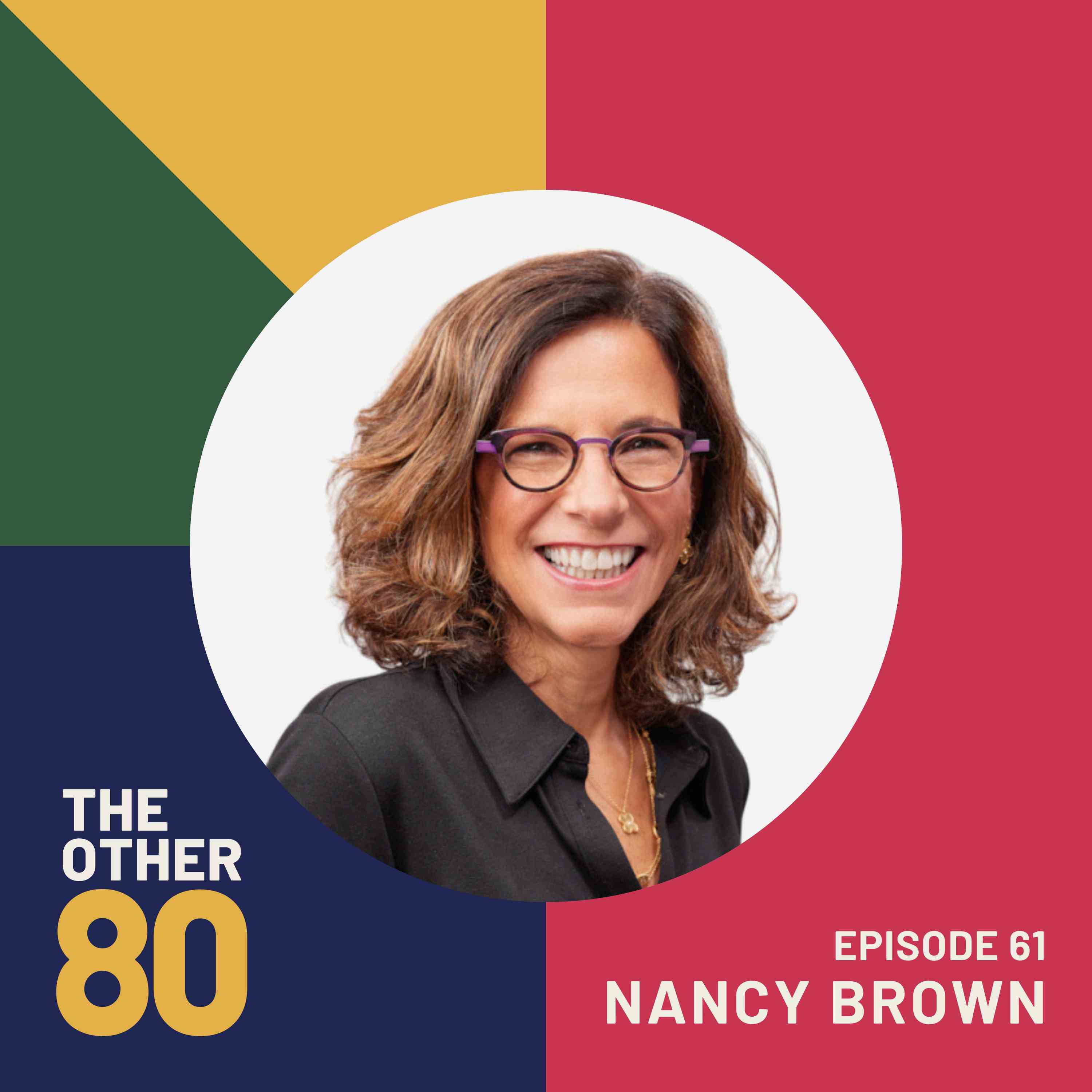
    Smarter Venture Bets with Nancy Brown

    Investor Nancy Brown joins us at Aspen Ideas Health to share her blueprint for impactful investments. Identify public health breakthroughs that deliver measurable cost and quality improvements — then show how they can thrive in the marketplace. You don’t have to look far to see this playbook in action. One of the year’s biggest health exits, Omada Health, is a digital version of the CDC’s Diabetes Prevention Program. At Oak HC/FT, Nancy has partnered with entrepreneurs who are redefining how America stays healthy — and she’s eager to see more people with public health roots take the leap into building impactful companies. Please note: this conversation happened before HR1 was passed, so big Medicaid cuts were a threat but not yet a reality when we spoke. In this episode, we discuss: Lessons from Todd Park in the early days of athenahealth How to turn good ideas into great businesses Nancy’s advice in an era of policy disruption: keep on building and proving value The lesson Kaiser Permanente is still teaching us Nancy reminds us that in reality, even a brilliant idea needs to have ROI built in: “We look for entrepreneurs, for innovators, who have really defined a way in which to find a cohort of patients, it could be pregnant Medicaid moms... And they have identified if they apply a certain clinical process consistently to that population, they will get a consistently good outcome, quality outcome, and they can do it in a sustainable [way] at a sustainable price.” Relevant Links Read Oak HC/FT’s AI Investment Policy Explore businesses Nancy mentioned from Oak HC/FT’s investment portfolio: Maven Clinic Oshi Health About Our Guest Nancy Brown is a General Partner at Oak HC/FT, a leading venture and growth equity firm investing in transformative healthcare and fintech companies. Since joining Oak HC/FT at its inception in 2014, Ms. Brown has focused on identifying and supporting technology-enabled healthcare services that deliver measurable clinical and financial impact. She focuses on growth equity and early-stage venture investments in healthcare, serving on the boards of innovative companies such as Firefly Health, Groups Recover Together, InterWell Health, Maven Clinic, Oshi Health, Regard, Unite Us, and Wayspring. Her portfolio also includes Noom, TurningPoint Healthcare Solutions, Limeade (ASX: LME), OncoHealth, and OODA Health. Ms. Brown brings over three decades of operational and leadership experience to her investment role. Prior to Oak HC/FT, she was Vice President of Strategy and Business Development at McKesson Technology Solutions and Chief Growth Officer at MedVentive (acquired by McKesson in 2012). Previously, she served as Senior Vice President of Clinical Services and Corporate Development at athenahealth, and earlier held senior roles at McKesson and Harvard Community Health Plan. She also co-founded Abaton.com, one of the first web-based clinical solution companies, which was later acquired by McKesson. A graduate of the University of New Hampshire (B.S. in Zoology) and Northeastern University (MBA), Ms. Brown is an active mentor and advisor. She serves on Northeastern’s D’Amore‑McKim School of Business Dean’s Executive Council and is involved in the Roux Institute’s Future of Healthcare Founder Residency program. Source Connect With Us For more information on The Other 80 please visit our website - www.theother80.com. To connect with our team, please email claudia@theother80.com and follow us on twitter @claudiawilliams and LinkedIn Subscribe to The Other 80 on YouTube so you never miss our video extras or special video episodes!
  • S3 · E60
    Oct 8, 2025 · 33 min

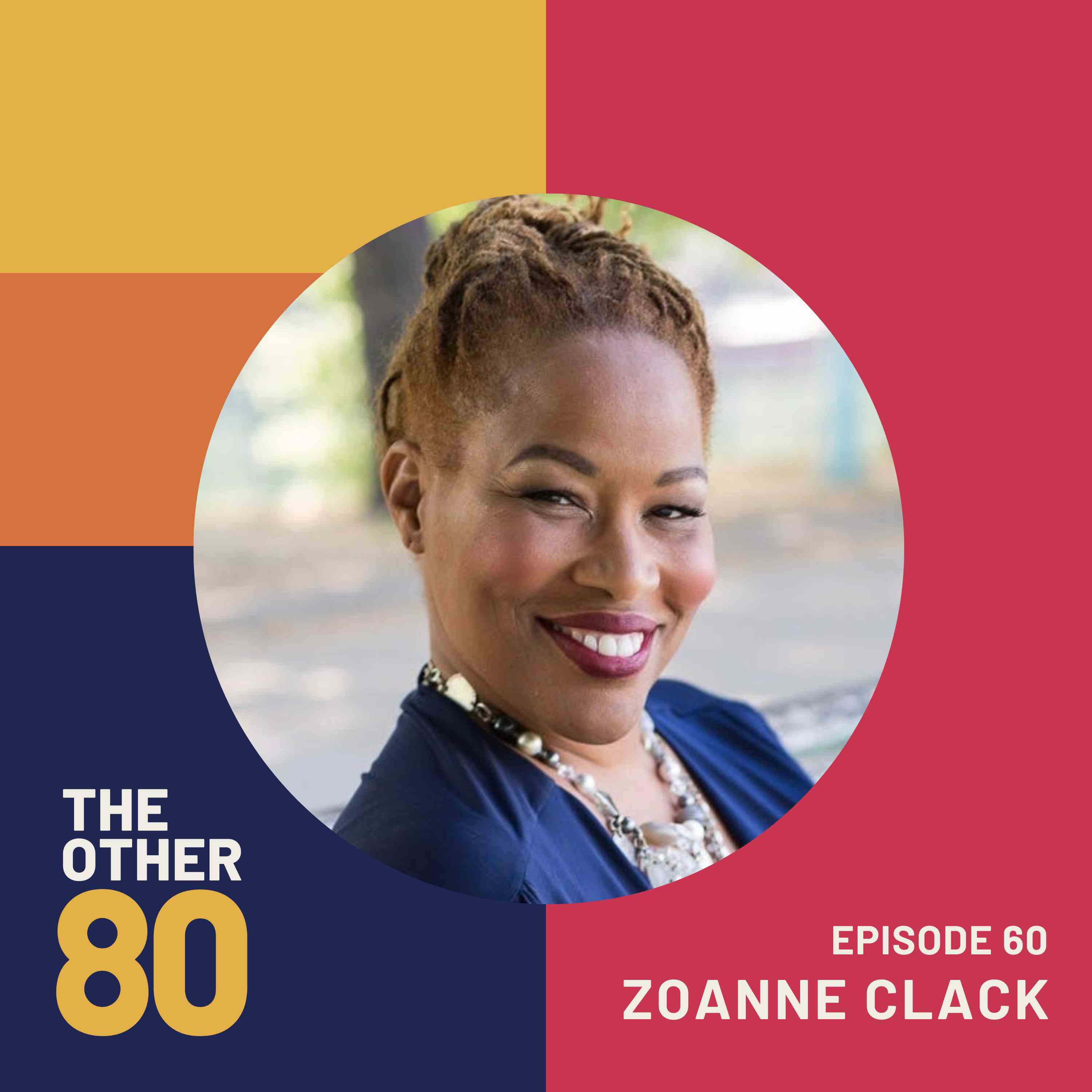
    Stories Move the World with Zoanne Clack

    Grey’s Anatomy Executive Producer and physician Dr. Zoanne Clack joins The Other 80 at Aspen Ideas: Health to talk about what public health leaders can learn from Hollywood storytelling. After training as a doctor and working for the CDC, Zoanne followed her childhood dreams and moved to Hollywood. With no job or warm leads, Zoanne set out to use the power of storytelling to drive health change. We discuss: What Shonda Rhimes taught Zoanne about standing in power Making it as a Hollywood “showrunner” Why public health leaders should lean into storytelling Zoanne reminds us that stories - even about fictional characters - have the ability to help us move the world: “I think just having that, that feeling of belonging, that feeling of these are my people, and I am very interested in what they're doing and thinking is just a great way for the media in Hollywood to have impact.” Relevant Links Watch the two episode Zoanne mentioned are her favourites: “Fight the Power” (Season 17, Episode 5) and “The Time Warp” (Season 6, Episode 15) See Zoanne’s filmography About Our Guest Zoanne Clack is executive producer and showrunner for “Grey’s Anatomy” and “Station 19.” An emergency medicine physician turned TV writer and showrunner, Clack is best known for her influential writing roles on these critically acclaimed ABC-TV series, where she combines her medical background and artistic flair, offering a unique and authentic touch. As a writer/producer on "Grey's Anatomy" since the show began, she has played an integral role in the show's longevity and cultural impact. She uses her knowledge of entertainment education to promote global public health issues through the media, advocating for representation and inclusivity and providing diverse characterizations as well as poignant social commentary. Clack is co-chair of the Norman Lear Center’s Hollywood, Health & Society program at USC’s Annenberg School of Journalism and serves on the board or as an advisor of several global health groups. Source Connect With Us For more information on The Other 80 please visit our website - www.theother80.com. To connect with our team, please email claudia@theother80.com and follow us on twitter @claudiawilliams and LinkedIn Subscribe to The Other 80 on YouTube so you never miss our video extras or special video episodes!
  • S3 · E59
    Sep 24, 2025 · 34 min

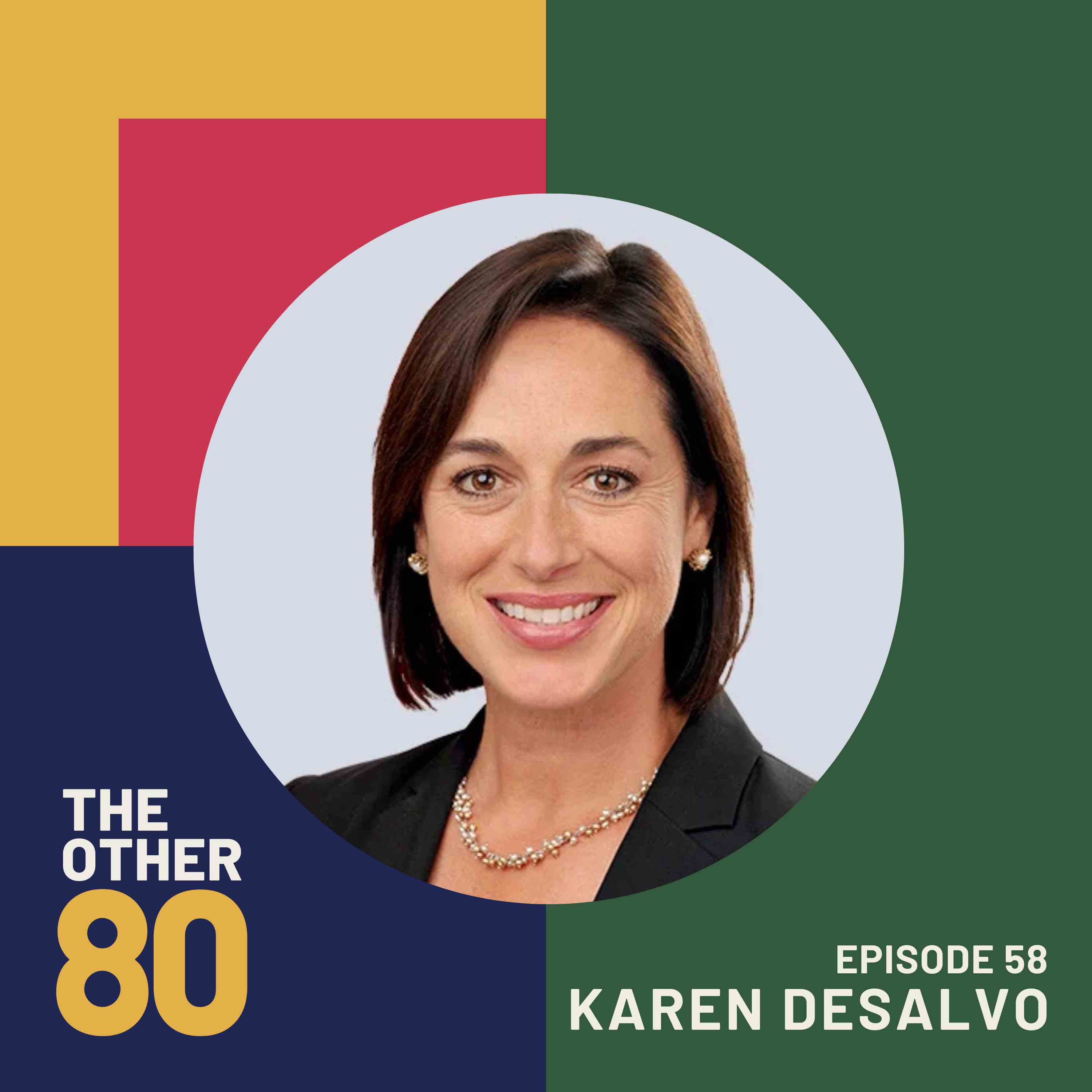
    Is AI Public Health’s New Ally? with Dr. Karen DeSalvo

    AI is going to transform healthcare - but how do we ensure it does so responsibly, equitably and ethically? Google’s former Chief Health Officer, Dr. Karen DeSalvo, says that AI could be public health’s new best friend - if we use it in the right ways. Karen sits down with Claudia at Aspen Ideas Health to talk about her longtime career as a public health leader and where she sees a role for AI in helping to take some heat off public health communicators. She’s interested in how AI can support - not replace - our human values. We discuss: How AI health agents could personalize and simplify care, especially for patients navigating complex health challenges Why government should act as both regulator and convener to shape the future of how we use AI in health Our failure to scale and implement big ideas because we keep adding new layers instead of simplifying Karen underscored that AI-enabled robots will bring new ethical challenges: “I think when robotics becomes more commonplace, that also raises some of the need for us to be very thoughtful as a society about the ethical challenges when there's a physical manifestation of the models that's not just in a computer screen or even through your glasses, but as the robots get more and more humanoid.” Relevant Links Read the Forbes article on Karen’s tenure at Google Watch a Video where Karen introduces “Check Up” Read the Association of State and Territorial Health Officials’ spotlight on Karen Read Karen’s article about “Public Health 3.0” Check out Karen’s Health Affairs article on the future of public health About Our Guest Dr. Karen DeSalvo is a physician executive working at the intersection of medicine, public health, and information technology to help everyone, everywhere, live a healthier life. She leads a team of experts at Google who build helpful products, develop AI solutions focused on some of the biggest health challenges and bring information and insights to consumers, caregivers and communities with the aim of democratizing access to health and healthcare. She provides clinical leadership for Google employee health, including as part of the company COVID response team. Prior to joining Google, Dr. DeSalvo was National Coordinator for Health Information Technology and Assistant Secretary for Health (Acting) in the Obama Administration. Dr. DeSalvo served as the New Orleans Health Commissioner following Hurricane Katrina and was previously Vice Dean for Community Affairs and Health Policy at the Tulane School of Medicine where she was a practicing internal medicine physician, educator, and researcher. She is co-founder of the National Alliance to Impact the Social Determinants of Health. Dr. DeSalvo serves on the Council of the National Academy of Medicine and the Board of Directors for Welltower. Source Connect With Us For more information on The Other 80 please visit our website - www.theother80.com. To connect with our team, please email claudia@theother80.com and follow us on twitter @claudiawilliams and LinkedIn Subscribe to The Other 80 on YouTube so you never miss our video extras or special video episodes!

Showing 1–20 of 21 episodes