Skip to content
Artwork for The Eye-Q Podcast

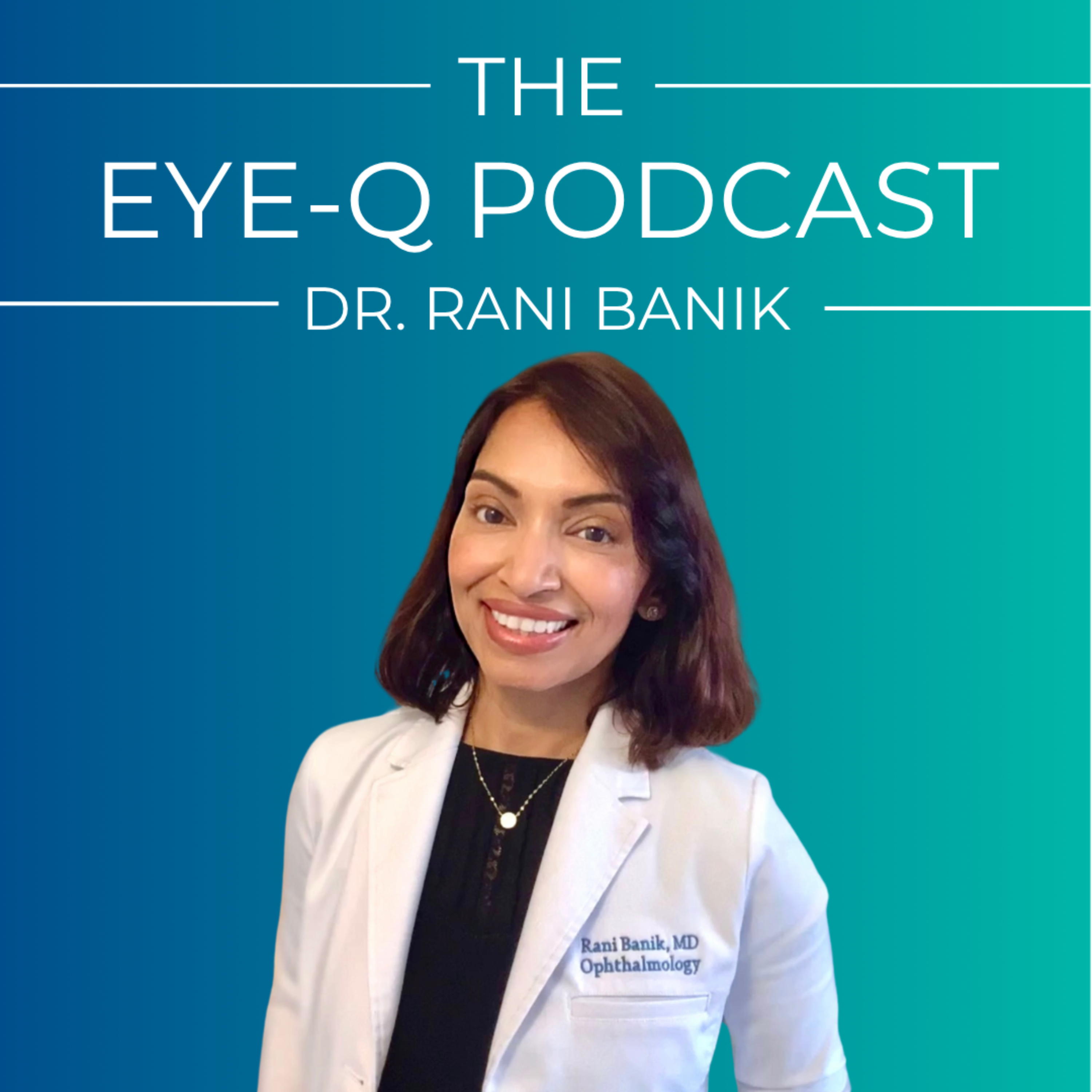
The Eye-Q Podcast

Dr. Rani Banik

Join Dr Rani Banik, America's Integrative Neuro-Ophthalmologist, as she explores the brain-eye connection. Learn about the latest technologic advancements in vision and brain health, and discover how science intersects with a holistic approach based on nutrition and lifestyle.  Raise your Eye-Q about all things eye and brain-related!

Play
  • 34 episodes
  • weekly
  • Avg 27 min
  • English
Counted on this page — what you have heard stays on this device, so it is not something the list can be paged by.
  • S3 · E99
    November 13 · 13 min

    Episode 099: Which Vitamins Are Best for Macular Degeneration?

    Which vitamins and supplements actually have evidence for macular degeneration? In this Eye-Q Quick Take, Dr. Rani Banik explains the research behind lutein and zeaxanthin, B vitamins, homocysteine, omega-3s, AREDS formulations, and diet for age-related macular degeneration. You’ll learn why recommendations depend on your stage of AMD, why supplements are not one-size-fits-all, and where broader vision-longevity nutrition may fit. Webinar replay: "Protect Your Vision: The Science of Vision Longevity After 40"' https://youtu.be/pS3Hd9_2yOA Save 10% on all OpticaMD Products with Code: NEW10

  • S3 · E98
    November 6 · 24 min

    Episode 098: Heart Health = Eye Health

    Your eyes and your cardiovascular system are more connected than you may realize. In this episode, Dr. Rani Banik speaks with Naa-Solo Tettey, PhD, professor of public health and director of the Heart Smarts program, about the relationship between heart health, metabolic health, and vision. They discuss blood pressure, blood sugar, cholesterol, diabetes, obesity, exercise, nutrition, and the lifestyle factors that can influence both cardiovascular and eye health. Dr. Tettey also shares practical strategies for making sustainable change: • Start with healthy foods you already enjoy. • Add more colorful plant foods. • Move throughout the day instead of waiting for the “perfect” workout. • Walk more. • Build a supportive community. • Know your numbers—and understand what they mean. They also explore health disparities and why access to understandable health information is itself an important part of prevention. One of Dr. Tettey’s key messages: Heart health equals eye health. Learn more about Heart Smarts at heartsmarts.com. Follow The Eye-Q Podcast™ for more conversations about vision, nutrition, lifestyle, and healthy aging.

  • S3 · E97
    October 30 · 27 min

    Episode 097: Blindness Is Not Inability: Thriving With Vision Loss

    What does it mean to truly thrive with vision loss? Attorney and disability advocate Prasanna Ranganathan joins Dr. Rani Banik, MD to share his experience of progressive vision loss, legal blindness, and ultimately blindness—and why none of it prevented him from building a meaningful professional and personal life. They discuss accommodations in education and the workplace, assistive technology, cooking and everyday independence, accessibility in healthcare, and the damaging assumption that blindness means someone is less intelligent or capable. Prasanna also explains the social model of disability: disability does not exist simply within an individual—it often arises from environments, systems, communication, and attitudes that were not designed to include everyone. You’ll hear practical advice for: • students with vision loss • employers and organizations • eye-care professionals • families and caregivers • and anyone interested in creating more accessible, inclusive environments. Connect with Prasanna at www.prasannaranganathan.com, on LinkedIn, and on Instagram at @prasran. If you enjoyed this conversation, follow The Eye-Q Podcast™, leave a rating or review, and share the episode with someone who needs to hear it.

  • S3 · E96
    October 23 · 12 min

    Episode 96: HeLa Cells and the Eye Connection: The Henrietta Lacks Story

    How did cells taken from one woman more than 70 years ago become one of the most important tools in modern medicine? In this Eye-Q Science Story, Dr. Rani Banik explores the life and legacy of Henrietta Lacks, whose cancer cells became the immortal HeLa cell line. The episode covers the enormous scientific impact of HeLa cells, their surprising connection to eye research, and a 2018 study that used HeLa cells to investigate retinal and blue light. Dr. Banik also explains why laboratory cell findings should not be confused with proof of disease in humans—and why the familiar claim that ordinary screen exposure “kills retinal cells” goes far beyond what that experiment established. Finally, the episode examines the ethical legacy of Henrietta Lacks: informed consent, privacy, race, medical research, and the importance of remembering the human being behind the cell line. If you enjoyed this episode, follow The Eye-Q Podcast™, leave a rating or review, and share it with someone who loves science and medical history.

  • S3 · E95
    October 16 · 29 min

    Episode 95: Plant-Based Nutrition for Eye, Brain, Gut & Healthy Aging with Nichole Dandrea-Russert, MS, RDN

    Do you need to become vegan to benefit from plant-based nutrition? Registered dietitian Nichole Dandrea-Russert, MS, RDN joins Dr. Rani Banik to break down what plant-based eating really means and how adding more whole plant foods can support gut health, brain health, mood, hormones, healthy aging, and overall wellness. They discuss: fiber and the microbiome short-chain fatty acids plant-based protein nutrients to pay attention to menopause and healthy aging eye-supportive foods carbohydrates and plant-based diets and simple ways to eat more plants without feeling overwhelmed Nichole is the founder of Purely Planted, author of The Fiber Effect and The Vegan Athlete’s Nutrition Handbook, and co-author of Powered by Plants and Real Superfoods Cookbook. Her work has been featured in The Washington Post, EatingWell, VegNews, Better Homes & Gardens, and The Weather Channel. Connect with Nichole: Instagram: @purely__planted YouTube: @purelyplanted LinkedIn: Nichole Dandrea-Russert Website: PurelyPlanted.com If you enjoyed this episode, follow The Eye-Q Podcast™, leave a rating or review, and share it with someone who wants practical, evidence-informed nutrition advice.

  • S3 · E94
    October 9 · 20 min

    Episode 094: GLP-1 Drugs and NAION: What Patients and Their Eye Doctors Need to Know

    Could Ozempic, Wegovy, Mounjaro or Zepbound affect the optic nerve? In this special episode of The Eye-Q Podcast™, neuro-ophthalmologist Dr. Rani Banik examines the rapidly evolving evidence surrounding GLP-1–based medications and nonarteritic anterior ischemic optic neuropathy, or NAION. You’ll learn what NAION is, which patients may already be more susceptible, why optic disc anatomy and optic disc drusen matter, how diabetes and obstructive sleep apnea complicate the risk-benefit discussion, and what the major studies actually tell us. Dr. Banik also discusses proposed mechanisms, a real-world patient experience with bilateral sequential NAION, practical guidance for patients and physicians, and the recent litigation surrounding these medications. The key message: association is not the same as causation, and relative risk is not the same as absolute risk. Do not discontinue a prescribed GLP-1 medication without discussing the risks and benefits with your treating clinician. If this episode was helpful, follow The Eye-Q Podcast™, leave a rating or review, and share it with someone who takes—or prescribes—these medications.

  • S3 · E93
    October 2 · 16 min

    Episode 93: Why Do Busy Stores Make You Dizzy? The Eye–Balance Connection

    Why do grocery stores, scrolling, crowds, or driving make some people feel dizzy or off-balance? Dr. Rani Banik explains the eye–inner ear–brain connection, visual motion sensitivity, vestibular migraine, PPPD, and the warning signs that deserve medical evaluation. She also discusses vestibular rehabilitation, lifestyle strategies, supportive migraine nutrition, OpticaMD's Neuro Tension supplement, and why vestibular migraine can occur even without a prominent headache. If you found this episode helpful, follow The Eye-Q Podcast™ and leave a rating or review—it helps more people discover the show.

  • S3 · E92
    September 25 · 12 min

    Episode 92: Why Does Light Hurt? 7 Causes of Light Sensitivity

    Why do sunlight, fluorescent lights, headlights, screens, or even your phone sometimes feel painfully bright? In this Eye-Q Podcast Quick Take, neuro-ophthalmologist Dr. Rani Banik explains 7 causes of photophobia, from migraine and dry eye to corneal irritation, uveitis, concussion, and neurologic conditions. You’ll also learn why constantly wearing dark sunglasses indoors may backfire, when tinted lenses may be helpful, and what emerging evidence suggests about lutein and zeaxanthin for supporting glare tolerance and photostress recovery. Most light sensitivity is not an emergency—but certain combinations of pain, redness, vision loss, fever, neck stiffness, or neurologic symptoms should never be ignored. Try OpticaMD's Daily Vision eye supplement - boost your lutein and zeaxanthin levels and protect against harmful wavelengths of light. Learn more HERE: https://www.opticamd.com/collections/all/products/daily-vision If you found this episode helpful, follow The Eye-Q Podcast™ on Spotify and leave a rating or review. It helps more people discover the show and learn how to protect their vision.

  • S3 · E91
    September 18 · 15 min

    Episode 91: Eye Floaters: When Should You Worry?

    Ever see dots, strings, cobwebs, or squiggly shapes drifting across your vision? They’re called floaters, and most of the time they’re harmless. But a sudden shower of new floaters—especially with flashing lights—can sometimes be a warning sign of a retinal tear or retinal detachment. In this Eye-Q Quick Take, neuro-ophthalmologist Dr. Rani Banik explains what floaters actually are, why they become more common with age, what happens during a posterior vitreous detachment, and the symptoms that mean you should seek urgent eye care. You’ll also learn why floaters don’t necessarily disappear completely, who is at higher risk for retinal problems, and how floaters differ from migraine aura. If you found this episode helpful, follow The Eye-Q Podcast™ on Spotify so you don’t miss future episodes—and please leave a rating or review. It helps more people discover the show and learn how to protect their vision.

  • S3 · E90
    September 11 · 10 min

    Episode 90: Why Won’t My Eyelid Stop Twitching?

    That tiny eyelid flutter can be incredibly irritating—and after a few days, sometimes a little scary. In this short Eye-Q Podcast Quick Take, neuro-ophthalmologist Dr. Rani Banik explains the five most common triggers for eyelid myokymia, what you can do to calm it down, and the signs that mean it’s time to get checked. Dr. Banik also shares her own experience with eyelid twitching and what her published long-term research on chronic eyelid myokymia found about prognosis. If you found this episode helpful, follow The Eye-Q Podcast™ on Spotify so you don’t miss future episodes—and please take a moment to leave a rating or review. It helps more people discover the show and learn how to protect their vision.

  • September 5 · 29 min

    Episode 89: Can Stress and the Brain Change How You See?

    Can your mindset, stress level, sleep, and nervous system influence how clearly you see? In Episode 89 of The Eye-Q Podcast™, Dr. Rani Banik, MD, IFMCP, speaks with holistic vision coach Claudia Muehlenweg about the mind–vision connection and why visual performance may fluctuate more than many people realize. Claudia shares her own journey from wearing glasses in early childhood to exploring natural vision techniques and ultimately remaining glasses-free for approximately 20 years. They discuss: Why vision can fluctuate with stress, sleep, hydration, lighting, and environment The relationship between the brain and visual perception The Bates Method and the concept of reducing visual “effort” Palming and relaxation techniques How peripheral vision can be trained Why anxiety during an eye examination may affect visual performance Screens, restricted visual attention, and “tunnel vision” Breathing and parasympathetic nervous system activation Claudia’s “chains and gains” method for recognizing patterns in visual clarity Why mindfulness may matter more than simply repeating eye exercises Claudia also explains why she does not promise that everyone can eliminate glasses, and why natural vision approaches should complement—not replace—appropriate professional eye care. Follow The Eye-Q Podcast™ for insightful conversations about eye health, migraine, brain health, nutrition, and integrative medicine. Keywords:vision, stress and vision, blurry vision, mindset, Bates Method, natural vision, Claudia Muehlenweg, eye relaxation, palming, peripheral vision, nervous system, visual perception, eye strain, brain eye connection, holistic vision, Dr Rani Banik, Eye-Q Podcast

  • S3 · E88
    August 28 · 32 min

    Eye on Functional Medicine: Looking Beyond the Eye With Dr. Scott Forman

    What does functional medicine have to do with your eyes? In Episode 88 of The Eye-Q Podcast™, neuro-ophthalmologist Dr. Rani Banik speaks with longtime mentor Scott Forman, MD, IFMCP about looking beyond the eye itself to understand the systemic factors that may influence vision and ocular health. Dr. Forman explains how a functional medicine approach considers nutrition, metabolism, inflammation, stress, sleep, immune health, and lifestyle alongside conventional ophthalmic care. They discuss: • Functional medicine versus symptom-based care • Dry eye, inflammation, and the ocular surface • Nutrition, omega-3s, and tear-film health • How stress and sleep can influence chronic eye symptoms • Oxidative stress and age-related macular degeneration • Antioxidants and nutrients important for retinal health • UV exposure and cataracts • What we really know about screens and blue light • Functional medicine testing and personalized care • The limits of current evidence and where further research is needed Dr. Forman also explains why the extraordinary metabolic demands of the retina make nutrition and cellular health particularly interesting areas of study. ABOUT THE GUEST Scott Forman, MD, IFMCP is a board-certified ophthalmologist and neuro-ophthalmologist with decades of clinical experience. His work integrates conventional neuro-ophthalmology with functional medicine and nutritional biochemistry, with an emphasis on understanding the systemic factors that may influence ocular and neurologic health. Follow The Eye-Q Podcast™ for expert conversations about eye health, brain health, migraine, nutrition, healthy aging, and integrative medicine. **Disclaimer: This episode is for educational purposes only and does not constitute individualized medical advice. Keywords: functional medicine, eye health, functional medicine ophthalmology, neuro-ophthalmology, Scott Forman MD, dry eye, macular degeneration, AMD, cataracts, eye nutrition, supplements, omega-3, oxidative stress, stress and eye health, integrative medicine, vision longevity, Dr. Rani Banik, The Eye-Q Podcast

  • S3 · E87
    August 21 · 28 min

    Visual Snow vs Visual Aura: What’s the Difference?

    What’s the difference between Visual Snow Syndrome and a Visual Aura—and can you experience both? In Episode 87 of The Eye-Q Podcast™, neuro-ophthalmologist Dr. Rani Banik, MD speaks with Caryn Hartglass, who has experienced visual snow since childhood as well as several dramatic episodes of migraine aura. Caryn describes persistent visual static that she remembers seeing as early as age five. She also recalls a very different visual experience while performing onstage: a vivid arc of colorful geometric shapes that appeared across her field of vision. Dr. Banik explains how Visual Snow Syndrome differs from migraine aura, why the two conditions may coexist, and which features can help distinguish one from the other. They also discuss: Persistent visual static and other VSS symptoms Scintillating scotoma and migraine aura Tinnitus and sensory-processing symptoms Stress, dehydration, sleep, and other possible triggers Meditation and nervous-system regulation When visual symptoms may warrant additional evaluation Caryn’s lifelong experience with visual snow Her cancer-survivorship journey and the roles of nutrition, meditation, and community About My Guest Caryn Hartglass is co-founder of Responsible Eating and Living (REAL) and host of It’s All About Food on the Progressive Radio Network. She is a longtime plant-based food advocate, speaker, author, and cancer survivor. Follow The Eye-Q Podcast™ for expert conversations about eye health, migraine, brain health, nutrition, and integrative medicine. *Disclaimer: This episode is for educational purposes only and does not constitute individualized medical advice.

  • S3 · E86
    August 14 · 32 min

    Is Your Eye Makeup Hurting Your Eyes? With Drs Rani Banik and Diane Hilal-Campo

    Can the makeup you wear every day actually affect your eye health? In Episode 86 of The Eye-Q Podcast™, Dr. Rani Banik speaks with board-certified ophthalmologist and Twenty/Twenty Beauty founder Dr. Diane Hilal-Campo about how to enjoy makeup without sacrificing healthy, comfortable eyes. They discuss common beauty habits that can contribute to irritation and dry-eye symptoms, including applying eyeliner directly to the waterline, using products that are difficult to remove, allowing cosmetic particles to migrate into the tear film, and not practicing good makeup hygiene. You’ll learn what to consider when choosing mascara, eyeliner and eye shadow; why people with dry or sensitive eyes may need to be particularly careful; how to remove makeup gently; and simple ways to make your beauty routine more eye-friendly. Dr. Hilal-Campo also shares why her experience treating patients with makeup-related eye irritation inspired her to create Twenty/Twenty Beauty, an ophthalmologist-developed cosmetics line centered around eye safety. Follow The Eye-Q Podcast™ for expert conversations about eye health, brain health, nutrition, migraine, healthy aging, and integrative medicine. This episode is for educational purposes only and does not constitute individualized medical advice.

  • S3 · E85
    August 7 · 27 min

    How Can Your Gut Affect Your Vision?

    What does your digestive system have to do with your eyes? In Episode 85 of The Eye-Q Podcast™, Dr. Rani Banik, MD, speaks with ophthalmologist and functional medicine practitioner Dr. Radka Toms, MD, about the emerging gut–eye axis—the complex relationship among the intestinal microbiome, immune system, metabolism, inflammation, and ocular health. They explore how an imbalance in the gut microbiome may influence inflammation throughout the body and why researchers are investigating potential connections with dry eye, rosacea, glaucoma, diabetic retinopathy, and age-related macular degeneration. You’ll also learn: • What gut dysbiosis means • Why intestinal barrier and immune health may matter to the eyes • How blood sugar and metabolic health affect vision • Why eye symptoms can sometimes reflect broader systemic issues • How fiber, plant diversity, and fermented foods support the microbiome • Why probiotics are not necessarily one-size-fits-all • How nutrition and lifestyle can complement—not replace—medical eye care Dr. Toms also shares how her own health experience inspired her interest in food as medicine, functional medicine, and nutritional ophthalmology. Dr. Radka Toms is an ophthalmologist, functional medicine practitioner, and integrative nutrition health coach specializing in nutritional ophthalmology, metabolic health, and the gut–eye connection. Follow The Eye-Q Podcast™ for expert conversations about eye health, brain health, migraine, nutrition, healthy aging, and integrative medicine. This episode is for educational purposes only and does not constitute personalized medical advice. Research concerning the gut–eye axis is still evolving, and microbiome-focused treatments for eye disease remain investigational.

  • S3 · E84
    July 31 · 28 min

    Still Thirsty? How to Hydrate Better With Dr. Dana Cohen

    Do you really need eight glasses of water every day? And why do some people still feel thirsty even when they drink water constantly? In Episode 84 of The Eye-Q Podcast™, Dr. Rani Banik speaks with integrative medicine physician and hydration expert Dr. Dana Cohen about how to hydrate more effectively—and why hydration needs are different for every person. Dr. Cohen discusses: • Why drinking more plain water is not always the full answer • Her three foundational habits for better hydration • Why she recommends front-loading water in the morning • How hydrating foods, fiber, and electrolytes may help your body retain fluid • The benefits of blended green smoothies • Why chia and flax seeds can be useful smoothie additions • How urine frequency and color may offer hydration clues • Why completely clear urine may signal excessive water intake • How hydration may relate to dry eye, headache, and migraine • Whether coffee and tea count toward your daily fluid intake Dr. Cohen also explains the proposed concept of structured or “gel” water and why eating water-rich plants may be an important part of a hydration strategy. ABOUT MY GUESTDr. Dana Cohen is an internal medicine physician who has practiced integrative medicine in New York City since 1998. Early in her career, she worked alongside Dr. Robert Atkins and developed a clinical approach centered on nutrition, lifestyle, and individualized care. She is the coauthor of Quench and the author of Fuel Up, which explores using blended whole foods to reduce ultra-processed foods and improve nutrition.Website: www.drdanacohen.comInstagram: drdanacohenSubscribe to The Eye-Q Podcast™ for evidence-informed conversations about eye health, brain health, nutrition, migraine, healthy aging, and integrative medicine.Please like this episode, share it with someone who struggles to stay hydrated, and leave your hydration questions in the comments.**NOTE: This episode is for educational purposes only and is not a substitute for individualized medical care. Fluid and electrolyte needs vary. Consult your healthcare professional before significantly changing your intake, particularly if you have kidney, heart, blood pressure, or electrolyte-related conditions.#Hydration #Dehydration #Electrolytes #EyeHealth #DrDanaCohen

  • S3 · E83
    July 24 · 37 min

    Episode 83: Eye Bags, Botox and Fillers: What Actually Works? With Dr. Flora Levin

    What really causes under-eye bags, hooded eyelids, and a tired-looking appearance—and which treatments actually address the underlying problem? In Episode 83 of The Eye-Q Podcast™, Dr. Rani Banik speaks with oculoplastic surgeon Dr. Flora Levin about the anatomy of aging around the eyes and the differences among Botox, Dysport, fillers, laser treatments, skincare and eyelid surgery. Dr. Levin explains why the brows, eyelids, fat pads, muscles and facial bones must be evaluated together. She also discusses why under-eye filler is not appropriate for everyone, why some fillers may remain in the tissues much longer than patients expect, and when surgery may create a more natural result than repeated injections. You’ll learn: • What causes upper-eyelid hooding and under-eye bags • When Botox or Dysport may help • When filler may make puffiness or heaviness worse • How to evaluate a provider’s aesthetic judgment • Why technical skill alone does not guarantee a natural result • When blepharoplasty may be worth considering • Which preventive strategies matter in your 20s, 30s, 40s and beyond Dr. Levin also shares one of the episode’s most memorable insights: “Skill can be learned. Taste, not so much.” About My Guest Dr. Flora Levin is a board-certified ophthalmologist and fellowship-trained oculoplastic surgeon specializing in cosmetic and reconstructive treatments of the eyelids and surrounding facial structures. Her expertise includes blepharoplasty, ptosis repair, brow rejuvenation, Botox, fillers, and other surgical and non-surgical procedures designed to create natural, balanced results. In this episode, she explains what really causes aging around the eyes, when injectables may help, and when surgery may be the better option. Follow Dr Levin on Instagram https://www.instagram.com/floralevinmd/ Follow The Eye-Q Podcast™ for expert conversations about eye health, healthy aging, brain health, migraine, nutrition and vision longevity. *This episode is intended for education only and is not a substitute for individualized medical advice or treatment.

  • S3 · E82
    July 17 · 29 min

    Episode 82: Why These Centenarians Don't Develop Macular Degeneration

    In Episode 82 of The Eye-Q Podcast™, Dr. Rani Banik sits down with integrative optometrist, filmmaker and podcast host Dr. Kerry Gelb to explore why the eyes are much more than organs of sight. Dr. Gelb explains how examining the retina and its blood vessels may provide important clues about cardiovascular health, diabetes, inflammation and other systemic concerns. He also shares what he discovered while visiting centenarians in Nicoya, Costa Rica, one of the world’s Blue Zones. Did these adults living beyond 100 develop age-related macular degeneration—and what might their nutrition, movement, community and lifestyle teach us about vision longevity? You’ll also hear practical insights about: • Nutrition and age-related eye disease • Lutein, zeaxanthin and omega-3-rich foods • Exercise, sleep and morning sunlight • Stress management and healthy aging • The connection between retinal and cardiovascular health • The biggest misconception about the eyes and the rest of the body This whole-body conversation may change the way you think about eye examinations—and what your eyes can tell you about your health. Follow The Eye-Q Podcast™ so you never miss an episode, and share this conversation with someone who wants to protect their vision for life. ABOUT MY GUEST: Dr. Kerry Gelb is an optometrist, health educator and creator of the documentary Open Your Eyes. He also hosts the Open Your Eyes Podcast, which explores the connections among eye health, nutrition, lifestyle and systemic wellness. Watch until the end to hear Dr. Gelb identify what he believes is the single biggest misconception about eye health. Subscribe to The Eye-Q Podcast™ for evidence-informed conversations about eye health, brain health, nutrition, migraine, healthy aging and vision longevity. Please like this episode, leave your questions in the comments and share it with someone who wants to protect their eyesight. This episode is intended for education only and does not replace individualized medical advice, diagnosis or treatment. #EyeHealth #MacularDegeneration #HealthyAging #IntegrativeMedicine #TheEyeQPodcast

  • S3 · E81
    July 12 · 27 min

    Episode 81: Eye Trauma: How to Protect Your Vision Before It's Too Late

    A split second can change your vision forever. In this episode of The Eye-Q Podcast, Dr. Rani Banik welcomes renowned retina surgeon Dr. Ronald Gentile for an essential conversation about eye trauma, emergency eye care, and preventing vision loss. Together they discuss sports injuries, workplace accidents, chemical burns, retinal trauma, and the critical first steps to take after an eye injury. Dr. Gentile also explains why protective eyewear can prevent the vast majority of serious eye injuries and shares practical advice that every parent, athlete, coach, and DIY enthusiast should know. • What to do immediately after an eye injury • When to seek emergency eye care • How sports injuries can permanently damage vision • Why chemical eye injuries require immediate treatment • How protective eyewear helps prevent blindness • Common myths about eye injuries Whether you're an athlete, parent, homeowner, or someone who simply wants to know how to protect your vision, this episode could help you respond quickly—and potentially save someone's sight.

  • S3 · E80
    July 3 · 24 min

    Episode 080: Living Blind: Independence, Advocacy & Thriving with Vision Loss

    What does everyday life really look like when you're born with severe vision loss? In this episode of The Eye-Q Podcast, Dr. Rani Banik, MD speaks with her patient, Milica Milić, who lives with Leber's Congenital Amaurosis (LCA). Milica shares her remarkable journey—from childhood diagnosis to becoming a teacher of students with visual impairments and an advocate for accessibility and independent living. Together they discuss early signs of congenital vision loss, navigating school and work, self-advocacy, assistive technology, Braille, orientation and mobility, and how people with blindness can build fulfilling, independent lives. Whether you have low vision, know someone who does, or simply want to better understand life through a different perspective, this conversation is filled with practical advice, inspiration, and hope. In this episode you'll learn: • What is Leber's Congenital Amaurosis • How blindness affects everyday life • Why self-advocacy is one of the most important life skills • How families can better support children with vision loss • Practical strategies for thriving—not just surviving—with blindness About My Guest Milica Milić is a teacher of students with visual impairments and an advocate for accessibility and independent living. Diagnosed with Leber's Congenital Amaurosis (LCA), she combines her lived experience with professional expertise to help children with visual impairments build confidence, independence, and life skills. She also mentors young adults with vision loss, helping them navigate education, careers, and daily living. Connect with Dr. Rani Banik, MD 🌿 Website: https://www.drranibanik.com 🛍 Shop: https://shop.rudranibanikmd.com 📸 Instagram: https://www.instagram.com/dr.ranibanik ▶️ Subscribe for weekly videos on eye health, nutrition, brain health, and integrative medicine. #Blindness #LowVision #LebersCongenitalAmaurosis #EyeHealth #VisionLoss #Accessibility #NeuroOphthalmology #EyeQPodcast #DrRaniBanik

Showing 1–20 of 34 episodes