Skip to content
Artwork for Scaling Theory

Scaling Theory

Thibault Schrepel

Scaling Theory is a podcast dedicated to the power laws behind the growth of companies, technologies, legal and living systems. The host, Dr. Thibault Schrepel, has a PhD in antitrust law and looks at the regulation of digital ecosystems through the lens of complexity theory. The podcast is hosted by the Network Law Review. It features scholarly discussions with select guests and deep dives into the academic literature.

Play
  • 22 episodes
  • monthly
  • Avg 50 min
  • English
Counted on this page — what you have heard stays on this device, so it is not something the list can be paged by.
  • Feb 3, 2025 · 46 min

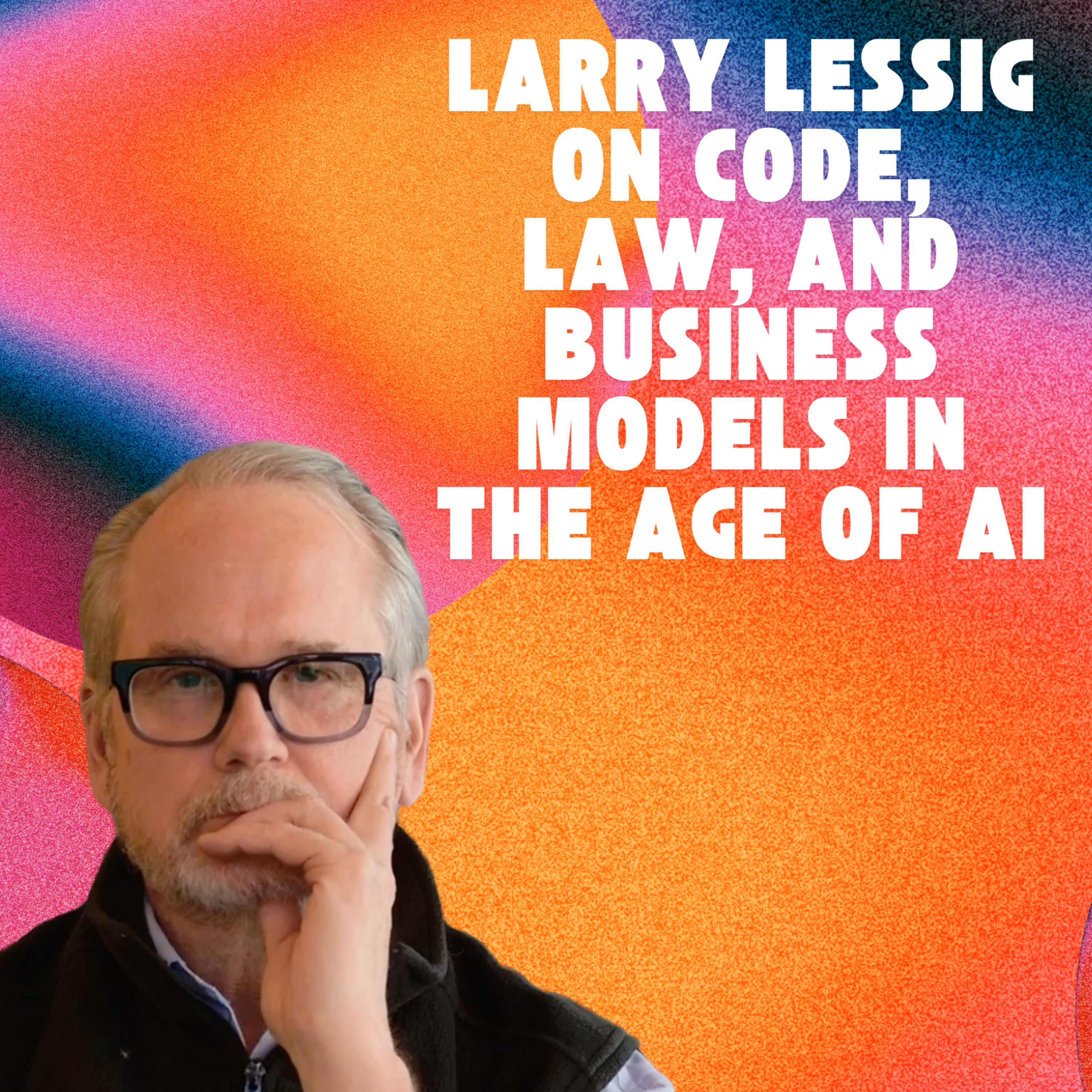
    #15 – Larry Lessig: Code, Law, and Business Models in the Age of AI

    My guest today is Larry Lessig, Professor of Law and Leadership at Harvard Law School. Larry is the author of numerous influential books and articles, including Code 2.0 (2006), which we discuss at length in this episode. If you have been listening to Scaling Theory since the very beginning, you probably remember that I cited a couple of books that changed my perception of everything in the first episode. Code 2.0 is one of these books. Larry Lessig develops what he calls the “pathetic dot theory,” in which he explains that all things are influenced by four constraints: the law, economic forces, norms, and architecture. In this conversation, Larry and I talk about the importance of these four constraints in the digital economy and assess which ones have scaled the most in recent years. We also explore how complexity science can contribute to Larry’s theory by seeing the dots and their constraints as a complex network. We then steer our conversation toward open source in AI, examine how regulation at the hardware layer could solve software issues, and consider whether we can trust our institutions and current regulations to do so, or if we need to scale other institutions for that purpose. I hope you enjoy our discussion. References: Code 2.0 (2006) https://lessig.org/product/codev2/ Code (1999) https://lessig.org/product/code/ You can follow me on X (@ProfSchrepel) and BlueSky (@profschrepel) to receive regular updates.
  • Jan 13, 2025 · 47 min

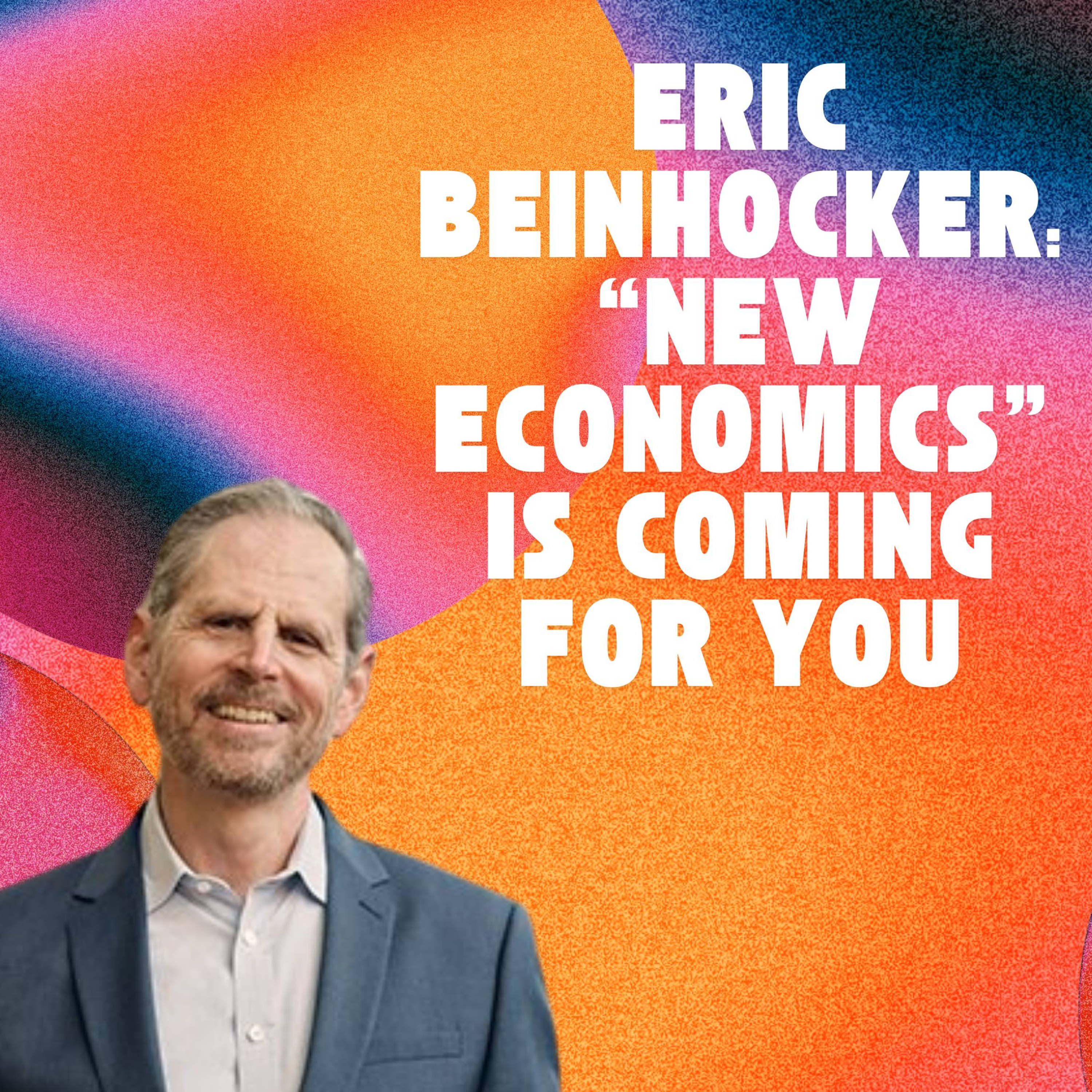
    #14 – Eric Beinhocker: “New Economics” Is Coming For You

    My guest today is Eric Beinhocker, Professor of Practice in Public Policy at the Blavatnik School of Government, University of Oxford, and the founder and Executive Director of the Institute for New Economic Thinking at the University’s Oxford Martin School. Eric is the author of numerous academic articles and books, including The Origin of Wealth: Evolution, Complexity, and the Radical Remaking of Economics (2007). In our conversation, Eric and I contrast traditional economics (neoclassical theory) with new economics (complexity economics). We also explore the policy implications of these differing economic theories, discussing topics ranging from aggressive growth strategies to complexity catastrophes in digital economies. I hope you enjoy our conversation. References: The origin of wealth: Evolution, complexity, and the radical remaking of economics (2007) ⁠https://moldham74.github.io/AussieCAS/papers/Origins⁠ of Wealth.pdf Getting Big Too Fast: Strategic Dynamics with Increasing Returns and Bounded Rationality (2007) ⁠https://pubsonline.informs.org/doi/pdf/10.1287/mnsc.1060.0673⁠ Fair Social Contracts and the Foundations of Large-Scale Collaboration (2022) ⁠https://oms-inet.files.svdcdn.com/staging/files/Fair-Social-Contracts-Beinhocker-v8-22-22.pdf⁠ Reflexivity, complexity, and the nature of social science (2013) ⁠https://www.tandfonline.com/doi/full/10.1080/1350178X.2013.859403⁠

Showing 21–22 of 22 episodes