Skip to content
Artwork for PT Pintcast - Physical Therapy
Health & FitnessMedicineScienceLife Sciences

PT Pintcast - Physical Therapy

Jimmy McKay, PT, DPT | Physical Therapy Podcast

PT Pintcast is a physical therapy podcast featuring conversations with physical therapists, clinic owners, educators, and leaders shaping the future of physical therapy.

Hosted by Jimmy McKay, PT, DPT, PT Pintcast blends real talk, big ideas, and practical insight on clinical care, business, culture, and where physical therapy is headed next. If a TED Talk and a radio show had a baby and raised it in a physical therapy clinic, this would be it.

Play
  • 20 episodes
  • Avg 49 min
  • English
  • Yesterday · 57 min

    The Business Model Behind the Care

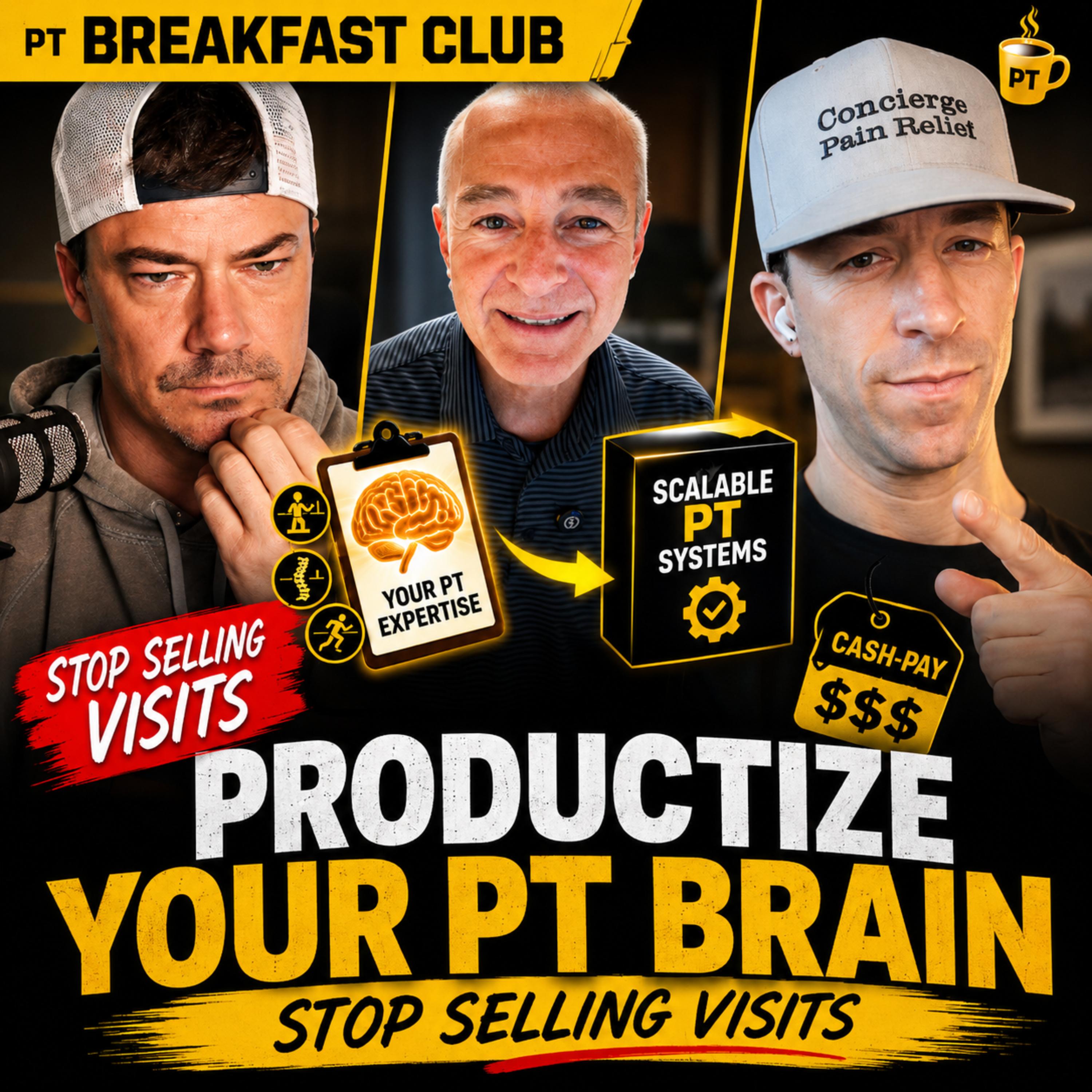
    What if physical therapy is not bad at care, but bad at naming, packaging, and selling the thing patients actually want? In this episode of PT Breakfast Club, Jimmy McKay, Tony Maritato, and Dave Kittle start with Dave’s poker night in New York City and end up in a much bigger conversation about relationship-building, recruiting, cash-pay offers, performance training, AI, and why clinics may need to stop selling visits. The crew talks about how poker night, PT pub nights, student events, and live experiences can create better connections between clinicians, students, employers, and practice owners. Instead of another stale job fair, what if recruiting looked more like a room people actually wanted to be in? Then Tony raises the bigger identity question: should everything delivered by a physical therapist be called physical therapy? Or should clinics start naming the service more clearly, like performance training delivered by a physical therapist? Dave breaks down a real cash-pay experiment at Concierge Pain Relief, including a paid evaluation, a value stack, and a results-based plan of care instead of selling visit by visit. That sparks a deeper discussion about why selling transformation is harder than selling a commodity, why clinicians struggle with large dollar amounts, and how repetition, call recording, AI feedback, and coaching can make value communication stronger. The episode closes with AI’s future role in patient decision-making. Patients may increasingly use their own AI tools to evaluate offers, compare options, and decide whether a package makes sense. The final takeaway: clarity beats complexity, and clear beats clever every time.

    • Transcript
  • Wednesday · 1 hr 1 min

    The PT Profession Has a Math Problem

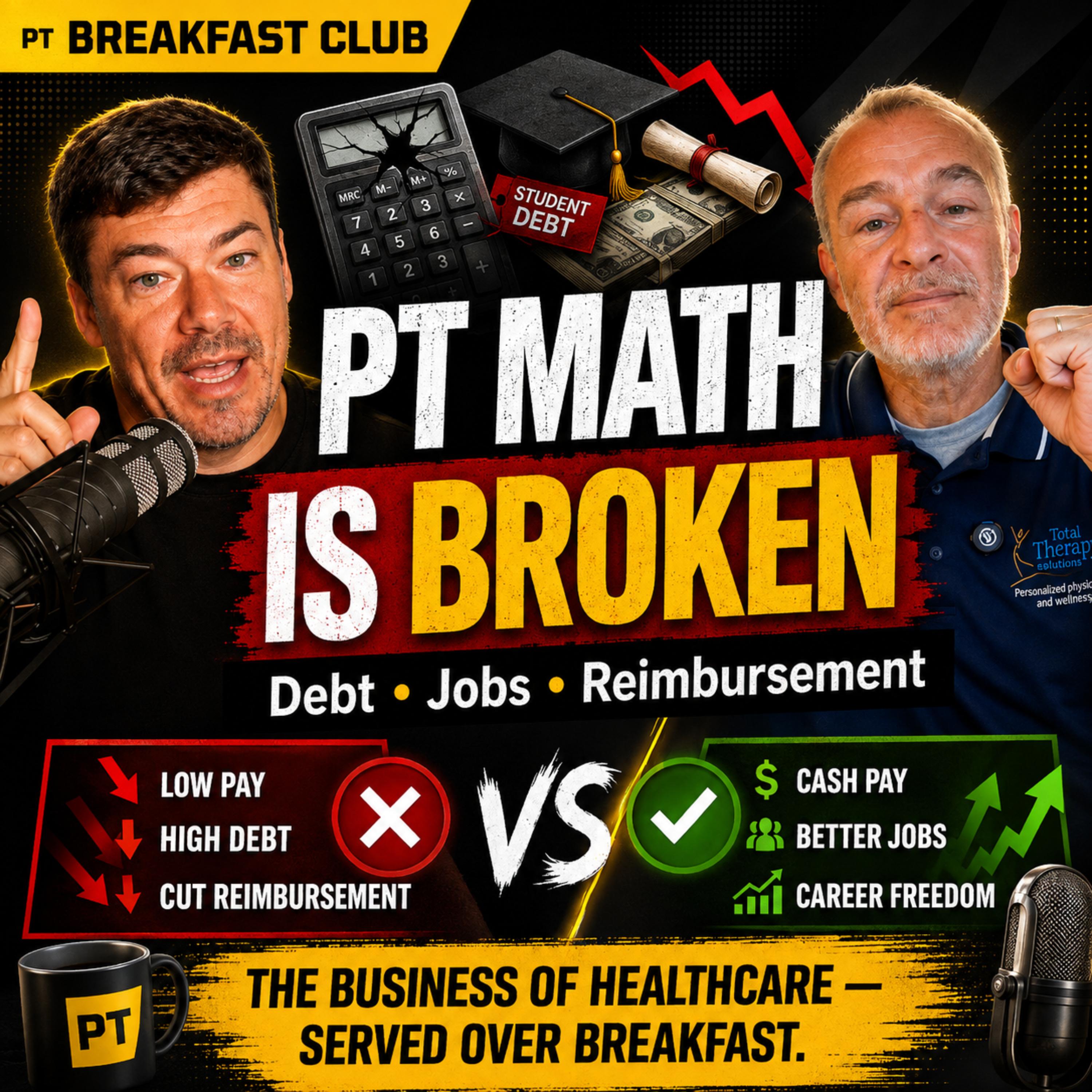
    Physical therapy has always told students some version of the same story: Work hard. Get the degree. Help people. There will be a job waiting. But what happens when the math starts to break? In this episode of PT Breakfast Club, Jimmy McKay and Tony Maritato start with a post from Richard Severin about the financial viability of the physical therapy profession. The conversation quickly moves into PT school ROI, student debt, academic program pressure, and whether the next generation of students is more willing to ask the uncomfortable question: Is this still worth it? Tony argues that the profession may be facing a bigger identity problem than it wants to admit. If a patient’s desired outcome is less pain and better function, PT is only one possible delivery model. AI, tech-enabled MSK platforms, personal trainers, hospital systems, cash-pay clinics, PTAs, techs, and other professions may all compete to deliver parts of what PT has traditionally owned. Jimmy pushes the business angle: if you own a private practice, you are not just in the physical therapy business. You are in the marketing business, the patient attraction business, the hiring business, the customer experience business, and the human resources business. The second half of the episode turns into a practical marketing lab. Jimmy and Tony critique a listener’s marketing pitch about targeting new families moving into a clinic’s area, then break down why so much AI-generated healthcare marketing feels cheap, loud, and generic. They use classic advertising examples like Rolls-Royce, Grey Poupon, Holiday Inn, and Volkswagen to show how better strategy leads to better creative. The episode closes with Prompt’s Career Connection program and the idea that maybe some clinicians do not need to leave physical therapy. Maybe they just need to leave the wrong job. Key Ideas PT has a financial viability problem, not just a morale problem. Students who really run the numbers may never enter the profession. “I just want to help people” is not enough if the career cannot support a life. The profession may need to separate outcomes from identity. Outpatient ortho under insurance may not be the future of private practice. If PT cannot scale the outcome, someone else will. Private practice owners are not only in the PT business. Marketing is not decoration. It is how the market understands your value. AI-generated design still requires strategy, taste, and iteration. Career matching may work better when it is human, specific, and trust-based.

    • Transcript
  • August 6 · 1 hr

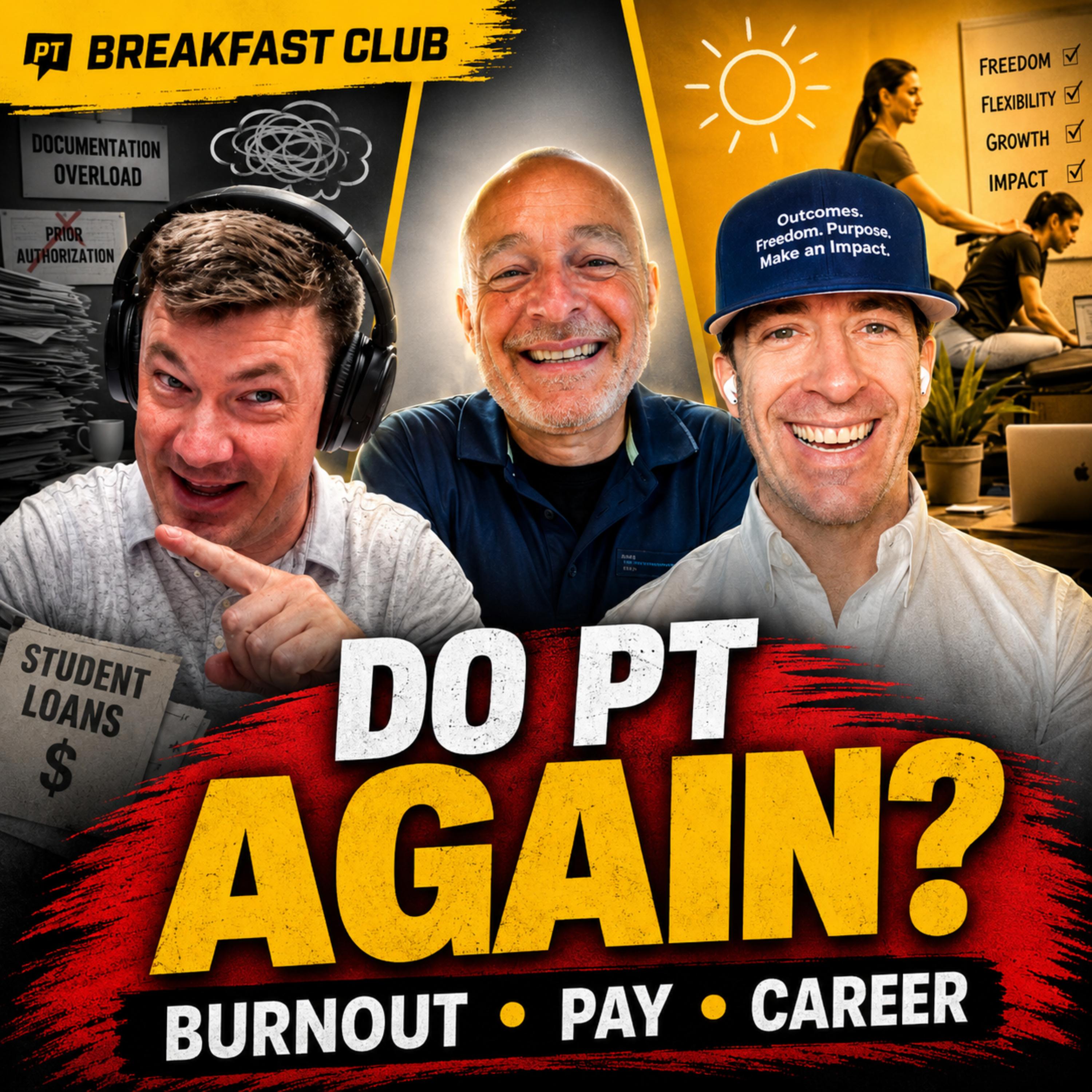
    Would You Do PT Again?

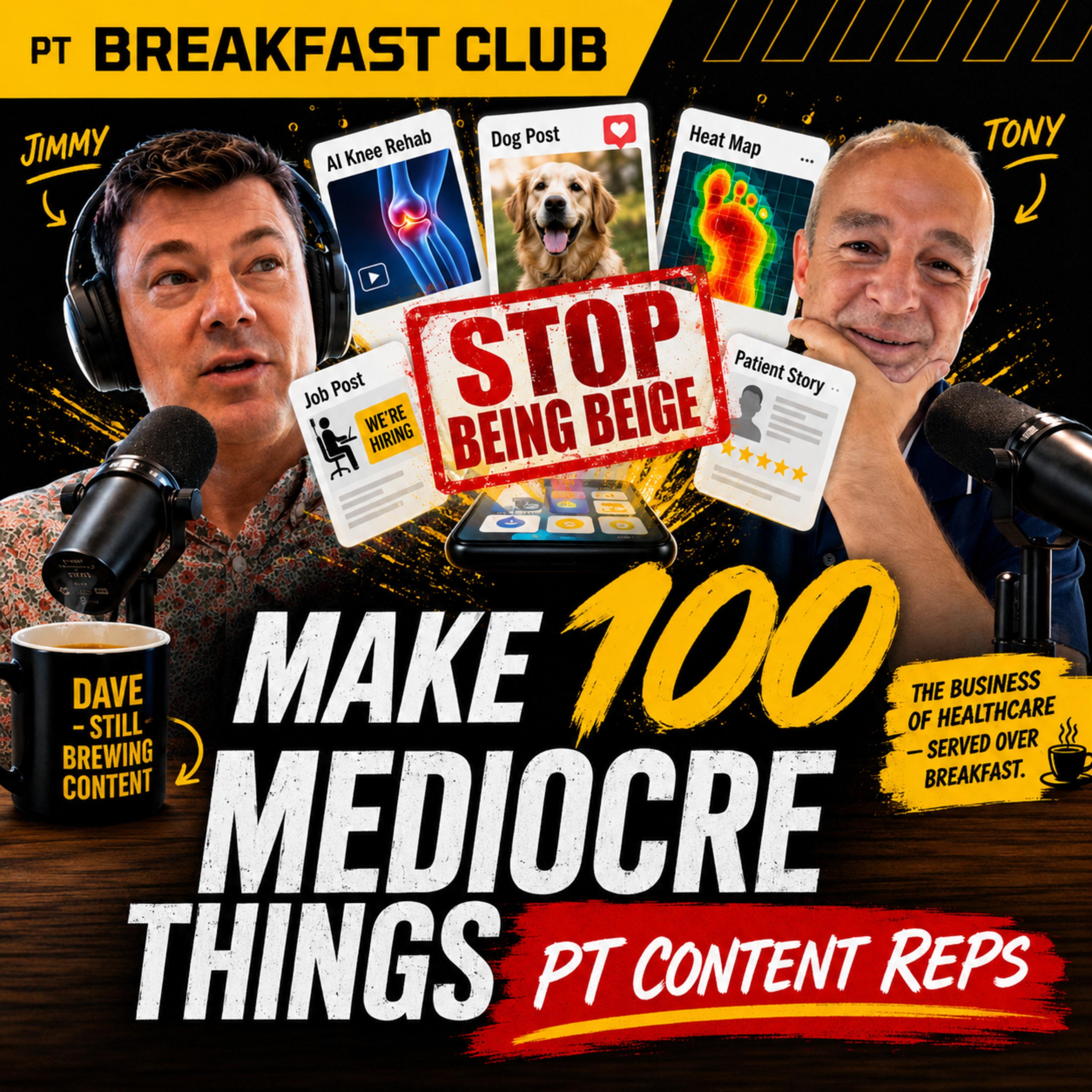
    Would you become a physical therapist again? That question sits underneath this episode of PT Breakfast Club with Jimmy McKay, Tony Maritato, and Dave Kittle. The conversation starts with physical therapy burnout. Tony reacts to a survey suggesting nearly half of PTs report burnout, and the crew debates what burnout actually means. Is it exhaustion? Cynicism? Reduced effectiveness? Or has the word become a catch-all for low pay, paperwork, bad bosses, student loans, long hours, and the general sensation that work has become a haunted spreadsheet? Jimmy shares a LinkedIn poll asking what clinicians really mean when they say they want fewer patients. Do they want more time with each patient? A buffer between visits? Both? Or do they simply want less work? Dave talks about hiring clinicians for a concierge/cash-pay model and why he wants people who may want a better model, but are not publicly torching their current employer or profession online. Then the conversation turns to the big career question: would Tony and Dave become PTs again? Would they recommend physical therapy to their kids? The answer is complicated. PT can still be a great career, but only if clinicians understand the game they are actually entering. The back half of the episode shifts into social media and clinic growth. Tony explains how he is using Meta AI, ChatGPT, and Gemini to analyze his Facebook content, where he generated massive reach and meaningful revenue from simple posts. Jimmy connects it to his talk with Colorado PT students: don’t create “social media.” Create media that is social. The takeaway: Attention leads to trust. Trust leads to action. In This Episode Prior authorization as an escape room from hell What burnout actually means Why being tired is not always burnout Can burned-out clinicians still deliver great care? What PTs really want when they ask for fewer patients Why some clinicians want better while others just want less Hiring for concierge and cash-pay PT Would Tony and Dave become PTs again? Whether PT is still a good career What students should know about market forces AI-assisted social media analysis Why simple posts can outperform polished content How comments become community Why clinics should stop overthinking content creation Attention → trust → action Pull Quotes “Prior Authorization Escape Room: nobody has escaped yet.” “Burnout has become the catch-all for ‘work sucks.’” “Patients stop becoming Mrs. Smith and start becoming the ten o’clock.” “When you say you want fewer patients, what are you actually asking for?” “You don’t want the person looking for your job opportunity to fix their life.” “Know the game before choosing the career.” “Don’t create social media. Create media that is social.” “People love to talk about themselves.” “Attention leads to trust. Trust leads to action.” “Don’t spend a dollar on anything until you do 100 repetitions.” “If you’re staying the same, you’re left behind.”

    • Transcript
  • August 5 · 54 min

    Stop Making the EMR Suck Less

    This episode of PT Breakfast Club starts with a simple question: What should an EMR actually do? Tony Maritato and Jimmy McKay discuss the divide between the clinical and administrative sides of EMRs, why AI should be more than ambient documentation, and how the future of physical therapy technology should make clinicians better instead of turning them into data-entry horses with name badges. Jimmy introduces the idea of the centaur vs reverse centaur: good technology combines human reasoning with machine horsepower. Bad technology makes the human serve the machine. From there, the conversation expands into wearable data, RTM, patient apps, Peloton, video games, hospitality, software, and why PT may need to steal ideas from outside healthcare to build something patients and clinicians actually want to use. The crew also talks about Sean Pastuch and Active Life, the space between physical therapy and fitness, trainers “stepping on toes,” UnitedHealthcare reimbursement, the reality of $60 visits, price anchoring, and why Dick’s Sporting Goods may have a better patient engagement lesson than most healthcare conferences. The final message: Understand what game you’re playing. In This Episode What EMRs should do in an AI world Why clinical and administrative workflows are two sides of the same coin The “centaur vs reverse centaur” model for AI and clinicians Why wearable data needs synthesis, not just capture Why RTM often feels like homework What PT can learn from video games, Peloton, software, and hotels Why Active Life found the space between PT and fitness Scope creep, trainers, and PT defensiveness The UnitedHealthcare $60 visit problem Why some clinics can make low reimbursement work and others can’t Price anchoring and the PACE BIKES shoe example What clinics can learn from Dick’s Sporting Goods Why attention leads to trust and trust leads to action Pull Quotes “The EMR should work for me. I shouldn’t work for the EMR.” “We want to be centaurs, not reverse centaurs.” “We don’t need more data. We need useful data at the moment of care.” “RTM fails when it feels like homework.” “We keep trying to make the EMR incrementally suck less.” “The answer is not coming from inside healthcare.” “Are you mad they’re doing it, or are you mad they’re doing it better than you?” “Attention leads to trust. Trust leads to action.” “Understand what game you’re playing.”

    • Transcript
  • July 31 · 55 min

    Understand What Game You’re Playing

    Today on PT Breakfast Club, we’re talking physical therapy business, cash PT positioning, fall recovery, and the uncomfortable question: are trainers reaching patients better than physical therapists? Jimmy McKay, Tony Meritato, and Dave Kittle dig into whether PTs are defending the wrong thing: the license, the title, the visit, the referral, the insurance model, or the certification. The conversation starts with concierge/activity-based PT, including the idea of a physical therapist joining an older adult on the golf course to help them safely return to something they love. Then Tony brings up an Instagram trainer teaching older adults fall recovery and big movement strategies. Is that physical therapy? Occupational therapy? Personal training? Practicing without a license? Or just useful? From there, the crew gets into cash-based physical therapy, premium patient experience, why “1-on-1 care” is not enough as a value proposition, and how concierge PT can position itself around fewer handoffs, less confusion, and more continuity. Plus: Tony explains why he sells an experience instead of physical therapy, Dave shares early results from his direct mail/postcard campaign, and Jimmy closes with the bigger lesson: understand what game you’re playing. In this episode: • Concierge golf PT and activity-based care • Trainer-led fall recovery and the PT license debate • Cash PT vs insurance-based PT positioning • Patient experience, handoffs, and continuity • Why small clinics can create magic • Direct mail, postcards, and analog marketing • Understanding the game you’re actually playing Chapters: 00:00 PT Breakfast Club intro 00:56 Concierge golf PT and activity-based care 03:52 How to price premium PT experiences 10:52 Trainer-led fall recovery: PT, OT, or just useful? 14:29 Is the PT license really the moat? 17:45 Are trainers doing it better? 18:04 Uber, Airbnb, and PT disruption 21:30 Why cash PT needs better positioning 24:44 You’re buying fewer handoffs 30:08 “I don’t sell physical therapy. I sell an experience.” 31:40 Why small clinics can create magic 33:52 Hiring the right PT for premium care 42:55 Dave’s postcard campaign results 49:01 Is analog marketing coming back? 53:37 Understand what game you’re playing Follow: Tony Meritato: Total Therapy Solution Dave Kittle: Concierge Pain Relief / The Dave Kittle Show Jimmy McKay: PT Pintcast This livestream is for conversation and entertainment only, not medical, legal, billing, or business advice. #PhysicalTherapy #PTBusiness #CashPT

    • Transcript
  • July 30 · 42 min

    The Messy Middle Between Physical Therapy and Fitness | Sean Pastuch

    Being medically cleared does not always mean someone feels capable of returning to the life they actually want. In this episode of PT Pintcast, Jimmy McKay sits down with Dr. Sean Pastuch, founder of Active Life and author of Live More, Hurt Less, to explore the “messy middle” between physical therapy and fitness. A patient may be able to work, drive, sleep, and complete every activity of daily living. But can they run competitively? Lift heavy weights? Play with their children? Trust their body again? Sean argues that temporary restrictions can quietly become permanent beliefs. A diagnosis may provide relief and clarity, but without the right conversation, it can also become an identity and a permission slip to live smaller. Jimmy and Sean discuss: • The difference between being cleared and being capable • Why discharge is not always the end of recovery • How healthcare language can unintentionally make people feel fragile • Why chronic pain has physical, psychological, and social dimensions • How PTs can find fitness professionals they trust • Why patients need to clearly communicate the life they want to return to • The problem with telling someone their pain is “all in their head” • How PTs and fitness coaches can collaborate without competing • Why Sean believes people are both the cause and solution to many of their problems • The ideas behind Sean’s book, Live More, Hurt Less ABOUT SEAN PASTUCH Dr. Sean Pastuch has spent more than two decades working at the intersection of healthcare and fitness. He began his career as a personal trainer, became a clinician, founded Active Life, and built his work around helping people move from medically cleared to genuinely capable. CONNECT WITH SEAN Website: https://www.drseanpastuch.com Instagram: https://www.instagram.com/drseanpastuch LinkedIn: https://www.linkedin.com/in/sean-pastuch-02ba88109 Learn more about Active Life professionals and the coach network discussed in the episode at ActiveLifeProfessional.com. Find Live More, Hurt Less through Sean’s website or wherever books are sold. ABOUT PT PINTCAST PT Pintcast is where smart people in healthcare come to make noise. Hosted by Jimmy McKay, PT, DPT, the show delivers conversations, not presentations, about the people, ideas, and uncomfortable questions shaping physical therapy. Follow PT Pintcast and share this episode with a physical therapist, coach, or healthcare professional who works with people trying to return to the activities that make life feel like theirs.

  • July 28 · 52 min

    The Golden Mile Problem: Money, PR, and Why AI Still Needs You

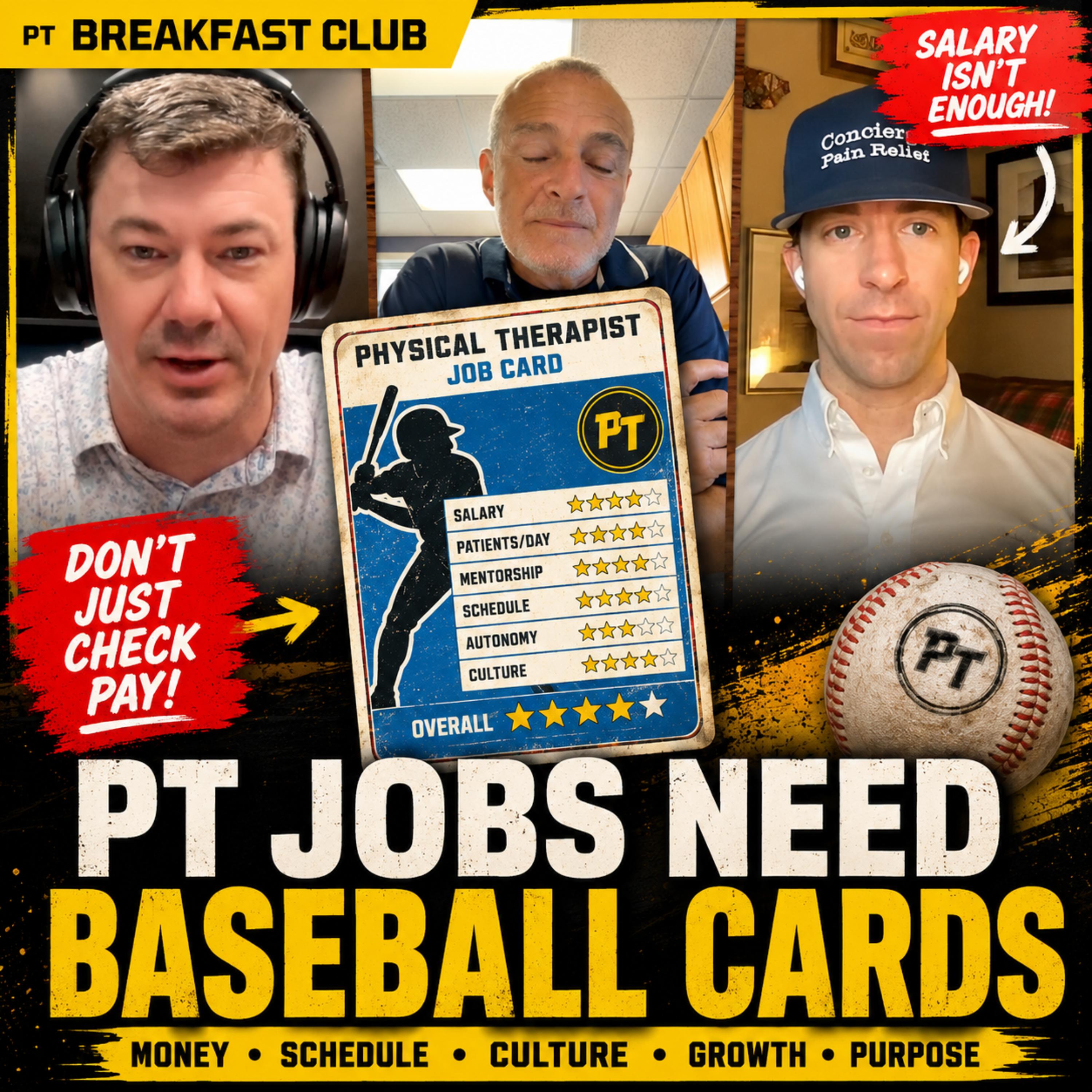
    Dave Kittle and Tony Maritato open with a prediction: Sophie Cunningham becomes the WNBA's first billionaire — not from basketball, but from the same social-media gravity that's already reshaping how physical therapists build wealth outside patient care. Jimmy joins mid-scooter-commute to Hoboken and the conversation turns practical fast: why PR only works as a growth lever when you're the underdog, why "dumbing down" clinical education is the wrong frame (scaling it down is the right one), and why a Career Connection candidate's real question is never "what's the salary" — it's "what's the floor, and how high is the ceiling." The back half digs into hiring and retention: why money alone rarely explains why a PT leaves, the concept of "career cuffing season" (staying somewhere out of convenience, not conviction), and a "baseball card" framework for evaluating a job the way you'd evaluate a player — caseload, culture, mentorship, not just take-home pay. Jimmy also walks through the AI prompt he's been running against clinics' Google reviews to surface hidden strengths (and hidden problems), and the crew closes on the "golden mile problem" — the case for why AI can automate the diagnosis but will never replace the person who shows up, adjusts the plan, and gets someone back to their life. Topics covered: PR and personal brand in healthcare, cash-pay retention economics, clinician compensation structure, hiring and recruiting friction, documentation compliance pitfalls, AI-assisted marketing, and the limits of AI in hands-on care.

    • Transcript
  • July 21 · 1 hr

    Burnout, Better Jobs, and the PT Social Media Game

    On this episode of PT Breakfast Club, Jimmy McKay, Tony Maritato, and Dave Kittle unpack one of the profession’s loudest conversations: burnout. But instead of stopping at “PTs are burned out,” they push into the more useful question: what are clinicians actually asking for when they say they want fewer patients? More time? A buffer between visits? Better systems? Less emotional carryover? A job that matches the version of the profession they thought they were entering? The crew also asks the dangerous dinner-party question: would you become a PT again? Tony and Dave both say yes, but with caveats. They’d understand market forces sooner, think differently about ownership, and build earlier. In the second half, the conversation pivots to social media, AI, and clinic growth. Tony shares how he’s using Meta AI, ChatGPT, and Gemini to analyze what is actually working across his content. Dave explains how TikTok is already creating real patient conversations for Concierge Pain Relief. Jimmy ties it together with a lesson from his talk to PT students in Colorado: Attention leads to trust. Trust leads to action. And the big takeaway for clinics? Stop trying to create “social media.” Create media that is social. Big Ideas Burnout needs a clearer definition before PT can solve it. “Fewer patients” may actually mean more time, recovery, documentation space, or emotional reset. Better pay might help, but it does not automatically fix workplace dissatisfaction. PT students are still fired up about the profession, and that matters. Future clinicians need to understand market forces, not just anatomy and interventions. Social media is not just marketing fluff. It is attention, trust, and patient behavior. Clinics should stop overproducing and start documenting real moments. AI can help clinicians and clinic owners understand what their audience is telling them. The FITT-VP principle works for exercise, communication, business, and content. Best Line “Don’t try to create social media. Try to create media that is social.”

    • Transcript
  • July 17 · 26 min

    How Physical Therapists Can Turn Content Into Patients, Income and Opportunity

    Physical therapists spend years learning how to help people—but almost no time learning how to reach them. Jimmy McKay is joined by Tony Maritato and Dave Kittle to unpack what actually works on social media for physical therapists, clinic owners and students. Tony shares how simple Facebook posts generated more than a million views and approximately $2,000 in ad revenue over 28 days. Dave explains how clinicians can turn their online presence into local patients, professional leverage and a stronger career. The crew also debates whether creators should optimize for algorithms, audiences or actual business results—and why polished production may be less effective than simply pulling out your phone and hitting record. This episode covers: Why PT students should build a personal brand before graduation How simple clinical content can outperform polished videos The rise of micro-influencers and performance-based clipping Why reach and relevance are different Facebook monetization versus selling services directly How content can help clinicians attract patients and negotiate raises Why communication may become one of a clinician’s most valuable skills Featuring Tony Maritato, Dave Kittle and Jimmy McKay.

    • Transcript
  • July 9 · 58 min

    Why Patients Quit PT After Visit 3

    This week on PT Breakfast Club, Jimmy McKay and Dave Kittle start with a simple patient text exchange and end up inside one of the biggest problems in physical therapy: Expectation rarely matches reality. Dave shares how he responds when a prospective patient asks whether his clinic is in-network or out-of-network. Instead of dodging the question or pushing the sale, he explains the difference between choosing the lowest-cost option and choosing a higher-touch model. That opens the door to a larger conversation about why patients often disappear after visit three. Is it really because patients do not care? Is it because they will not do their home exercises? Or is the experience inconsistent enough that leaving is actually a rational consumer response? Jimmy and Dave talk about the in-network volume model, cash-pay customer acquisition costs, personal training, patient switching, the third-place concept, Equinox, Planet Fitness, Starbucks, Ironman, APTA, payment advocacy, and whether physical therapy can ever become more than a series of appointments. The episode closes with a practical reminder: the easiest growth lever is not always finding new patients. Sometimes it is serving the people who already trust you at a much higher level. In this episode How to respond when patients ask about in-network vs out-of-network care Why cash practices need to explain the tradeoff, not just the price Why visit 3 drop-off may be an experience design problem How inconsistent therapist switching damages trust What PT can learn from personal training Why volume-based models create predictable consequences The role of customer acquisition cost in patient retention What physical therapy can learn from Equinox and Planet Fitness Why community-first businesses win Why a package is not the same thing as a membership What APTA can and cannot realistically solve Why retention and relationship may be the most underused growth strategy Best quote “If you launched a video game where 70% of the people played it three times and never played again, would you blame the player? No. You’d blame the game.”

    • Transcript
  • July 2 · 29 min

    Why Most PT Ads Don’t Work

    This week on PT Breakfast Club, Tony Maritato, Dave Kittle, and Jimmy McKay look at a real physical therapy Instagram ad and ask a simple question: Would this actually make someone take action? The answer leads to a bigger conversation about physical therapy marketing, cluttered ads, weak offers, fake scarcity, AI-generated creative, trendjacking, TikTok Shop, LinkedIn recruiting, and how clinics can earn attention without looking like everyone else. The crew talks about why “free physical therapy” may not be the irresistible offer some clinics think it is, why too many visuals and calls-to-action can make an ad feel cheap, and why AI can help create marketing but still needs a human being to check whether the final product makes sense. They also get into Dave’s orange square LinkedIn post, Tony’s AI-generated Home Depot knee replacement image, and whether viral content is worth anything if it does not connect back to revenue. The big takeaway: You cannot interrupt a pattern if you do not have a pattern.  In this episode Why many PT ads feel cluttered or cheap The problem with “free PT” as a marketing hook Why scarcity needs to feel real How AI-generated ads can fail without human review What PTs can learn from trendjacking and meme culture Why attention only matters if it connects to a business goal How TikTok Shop could become an opportunity for PT creators Why Dave’s orange square LinkedIn post worked How clinic owners can create better behind-the-scenes content Why clear beats clever, and clear definitely beats clutter Best quote “You can’t interrupt a pattern if you don’t have a pattern.”

    • Transcript
  • June 24 · 1 hr 2 min

    Physical Therapists Need to Stop Selling Visits

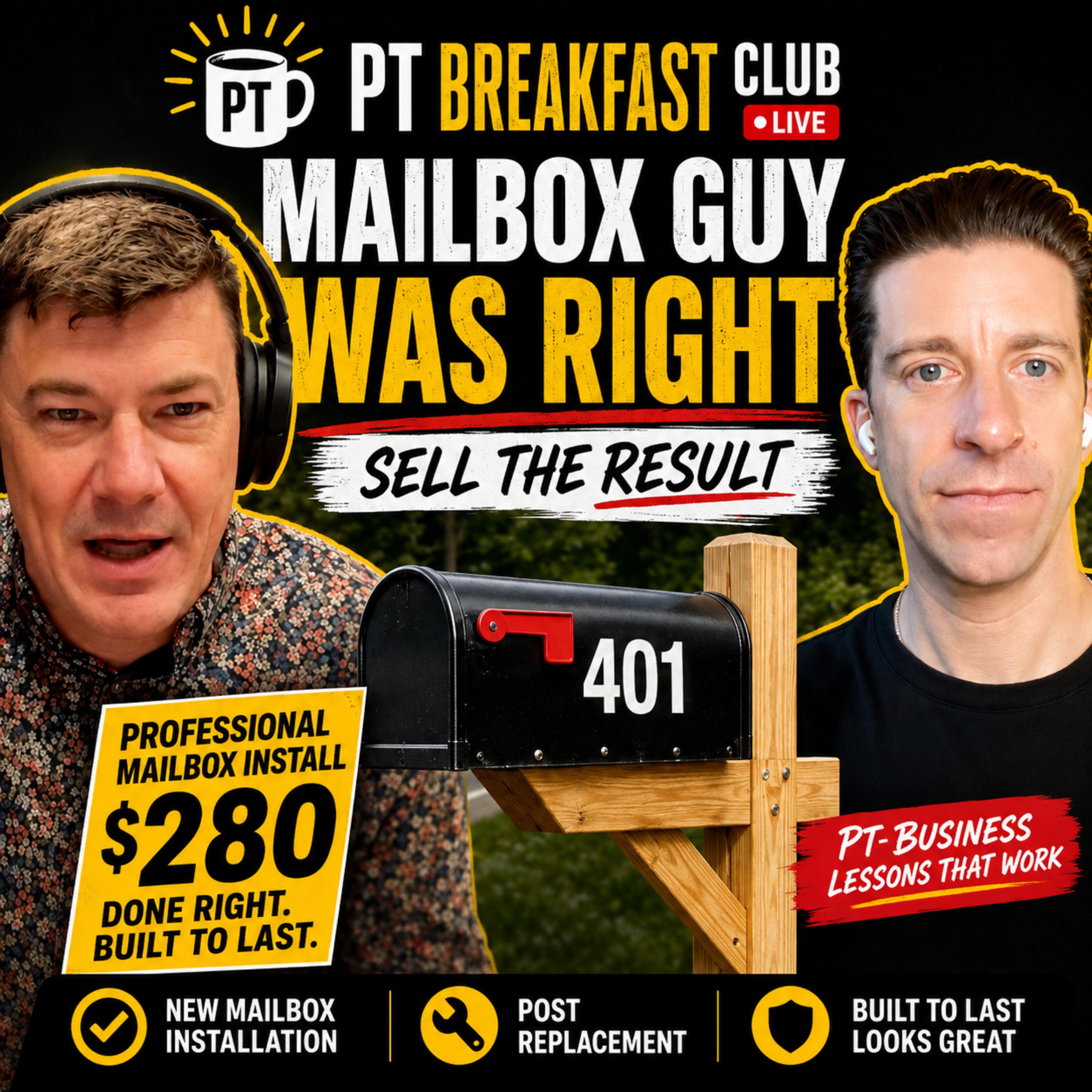
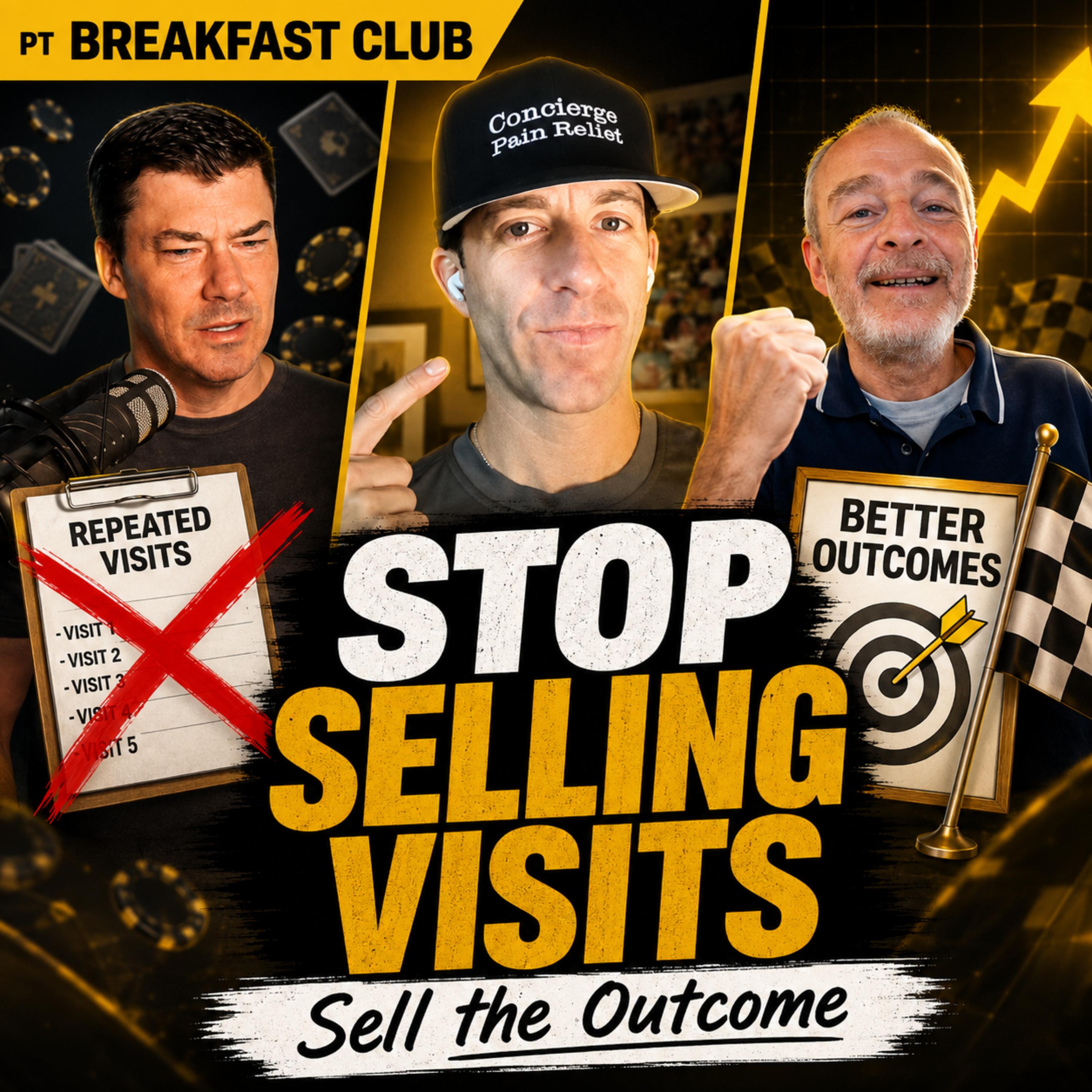
    Physical therapists keep saying they provide value — but then many clinics hand patients a confusing menu of visits, rates, packages, discounts, weekday pricing, weekend pricing, and “per visit” math. That confusion may be costing you patients. In this episode of PT Breakfast Club, Tony Meritato, Dave Kittle, and Jimmy McKay break down a real cash pay physical therapy pricing problem and ask a bigger question: Are physical therapists selling the wrong thing? Patients are not really buying “visits.” They are buying relief, confidence, access, trust, and a clear plan to get back to the life they want. This conversation covers cash based physical therapy, private practice pricing, price anchoring, simplifying your offer, patient decision-making, and why “confuse me, lose me” might be one of the most important marketing lessons for any physical therapy business. We also talk about AI coaching, business coaching, babysitter economics, roof replacement psychology, pharma advertising, digital physical therapy platforms, and why PTs need to stop talking themselves out of money. In this episode: 00:00 PT Breakfast Club opens 00:30 Tony’s accidental weight-loss strategy 03:00 Using AI for running, fitness, and accountability 07:30 AI vs human coaching 12:45 Dave’s cash pay PT pricing card 14:30 Why too many numbers confuse patients 17:40 If price is the biggest thing, you compete on price 18:40 Price anchoring and why it works 21:15 Should PTs sell visits, appointments, or outcomes? 24:30 The simple buying journey: call, evaluation, plan of care 29:30 What cash pay physical therapists are charging 36:15 Babysitter pricing as a value lesson 44:30 Buying back time and unlocking value 47:00 What PT can learn from pharma and insurance ads 49:30 Selling hope instead of visits 58:00 Sword, Kaia, and where PT investment is going 01:00:15 Parting shots Hosts: Tony Maritato Dave Kittle Jimmy McKay

    • Transcript
  • June 11 · 36 min

    What PT Clinics Can Learn From Amazon Prime Day

    In this episode of PT Breakfast Club, Jimmy McKay, Tony Maritato, and Dave Kittle look outside healthcare to ask a practical clinic question: what are other industries doing to create demand, loyalty, and repeat behavior that physical therapy keeps ignoring? The conversation starts with Amazon Prime Day and the idea that the event matters more than the discount. From there, the group talks about how PT clinics could use reactivation campaigns, memberships, bundled services, and community-based models to keep patients engaged beyond a single episode of care. Key insights from the episode: • Prime Day is not just about discounts. It is about creating an event people plan around. • PT clinics can use the same thinking for return-to-run weeks, reactivation campaigns, product education, or seasonal service bundles. • Membership models work because they create belonging, not just access. • Clinic community can become a real differentiator when hospitals and larger systems compete on network control. • Patients may come for PT, but they stay for trust, social connection, and a familiar place where they feel known. • The profession may need to think differently about hiring, including second-career professionals who bring life experience and patient connection. • Healthcare often fails to bundle services in a way that makes the next step obvious for patients. Why this matters for PTs and clinic owners: If your clinic only thinks in terms of visits, referrals, and discharge plans, you may miss the bigger business opportunity. Patients need care, but they also respond to timing, community, convenience, and clear offers. The clinics that understand that may be better positioned to retain patients and build long-term value. GUEST LINKS Tony Maritato YouTube: Total Therapy Solution Dave Kittle Website: https://conciergepainrelief.com YouTube: The Dave Kittle Show Jimmy McKay YouTube: PT Pintcast SPONSORS SaRA Health https://sarahealth.com EMPOWER EMR https://empoweremr.com U.S. Physical Therapy https://usph.com SUBSCRIBE & FOLLOW Apple Podcasts https://podcasts.apple.com/us/podcast/pt-pintcast-physical-therapy/id1000443325 Spotify https://open.spotify.com/show/3LmMUT64yrUc2iGo9Emafc YouTube https://www.youtube.com/@PTPintcast LinkedIn https://www.linkedin.com/in/jimmy-mckay-pt-dpt-a4207659/ Instagram https://www.instagram.com/ptpintcast X / Twitter https://x.com/PTPintcast Website https://www.ptpintcast.com/

    • Transcript
  • June 10 · 1 hr

    Stop Pricing Physical Therapy Like Billing Codes

    This episode of PT Breakfast Club is a practical conversation about value, access, content, and revenue in physical therapy. Jimmy McKay, Tony Maritato, and Dave Kittle start with a wild sports pricing example, then bring the conversation back to the clinic: why do PTs struggle to charge for expertise when other industries clearly understand premium access? The group digs into insurance reimbursement, cash-pay models, YouTube memberships, creator burnout, and why patient education content may become a serious business asset for PTs and clinic owners. Key Insights • People pay for access, status, trust, and simplicity. PTs need to understand which of those they are actually offering. • Billing codes can train clinicians to think in units instead of outcomes, expertise, and value. • Premium PT care and broad access are not opposites. A clinician can charge more for high-touch care while also creating lower-cost education through content, memberships, and video libraries. • YouTube memberships may be a practical way for PTs to build education-based revenue without building a custom app. • The biggest content barrier for many PTs is not editing, gear, or planning. It is confidence, consistency, and fear of being judged. • A shared rehab creator network or launchpad could help PTs, OTs, and SLPs build audiences faster than working alone. • Corporate content often fails when it feels like an ad too early. Trust has to come before the close. Why This Matters For PTs And Clinic Owners Clinic owners are under pressure from reimbursement, staffing, burnout, and rising patient expectations. This episode pushes the profession to think beyond the visit-based model and ask: what else can expert clinicians build with their knowledge? For individual PTs, the message is simple: your expertise can create value outside the treatment room, but only if you are willing to publish, test, learn, and keep going. Hosts / Guests Jimmy McKay PT Pintcast Tony Maritato Total Therapy Solution - Physical Therapy https://www.youtube.com/c/TotalTherapySolution Dave Kittle The Dave Kittle Show https://www.youtube.com/@thedavekittleshow Sponsors SaRA Health https://sarahealth.com EMPOWER EMR https://empoweremr.com U.S. Physical Therapy https://usph.com Subscribe & Follow Apple Podcasts https://podcasts.apple.com/us/podcast/pt-pintcast-physical-therapy/id1000443325 Spotify https://open.spotify.com/show/3LmMUT64yrUc2iGo9Emafc YouTube https://www.youtube.com/@PTPintcast LinkedIn https://www.linkedin.com/in/jimmy-mckay-pt-dpt-a4207659/ Instagram https://www.instagram.com/ptpintcast X / Twitter https://x.com/PTPintcast Website https://www.ptpintcast.com/

    • Transcript
  • June 4 · 1 hr 1 min

    Content Is Not The Business. Patients Are.

    This episode is a practical clinic-owner conversation about marketing that actually has a job to do. Jimmy McKay, Dave Kittle, and Tony Maritato talk through content creation, direct mail, therapist branding, anonymous posts, AI comments, and why PT clinic owners need to understand the game they are playing before spending money or time. Key insights from the discussion: • Content should attract something specific: patients, referral partners, or staff. • Local positioning matters more than generic posting. • Direct mail can work when clinic owners commit to testing over months, not days. • A new therapist can become a visible local authority if the clinic builds content around them. • Seasonality affects some PT clinics heavily, especially in markets with snowbirds or summer travel. • Anonymous posting and AI comments may create noise, but they rarely build trust. • Showing real clinic interactions can help other PTs learn and give patients a clearer sense of the experience. Why this matters for busy PTs and clinic owners: Most clinics do not have a content problem. They have a positioning problem. This episode shows how to connect marketing activity to real business goals: booked evaluations, stronger staff visibility, better local awareness, and more trust before the first patient visit. GUEST LINKS Dave Kittle https://conciergepainrelief.com YouTube: The Dave Kittle Show Tony Maritato YouTube: Total Therapy Solution Jimmy McKay YouTube: PT Pintcast SPONSORS SaRA Health https://sarahealth.com EMPOWER EMR https://empoweremr.com U.S. Physical Therapy https://usph.com SUBSCRIBE & FOLLOW Apple Podcasts https://podcasts.apple.com/us/podcast/pt-pintcast-physical-therapy/id1000443325 Spotify https://open.spotify.com/show/3LmMUT64yrUc2iGo9Emafc YouTube https://www.youtube.com/@PTPintcast LinkedIn https://www.linkedin.com/in/jimmy-mckay-pt-dpt-a4207659/ Instagram https://www.instagram.com/ptpintcast X / Twitter https://x.com/PTPintcast Website https://www.ptpintcast.com/

    • Transcript
  • May 8 · 39 min

    Chronic Pain Isn’t What You Think It Is

    Chronic pain patients are some of the toughest cases in physical therapy—not because they’re complicated, but because they’re often misunderstood. In this episode, we break down why treating chronic pain like an acute injury leads to poor outcomes—and what to do instead. The shift is simple but powerful: stop focusing only on tissue and start understanding the person. If you run a clinic or treat patients daily, this matters because better conversations lead to better outcomes, stronger patient relationships, and more consistent retention. What you’ll learn: • Why chronic pain is different from acute pain • How to identify non-tissue drivers of pain • The role of therapeutic alliance in outcomes • Why listening is a clinical skill—not a soft skill • How to improve patient retention starting day one Guest Links: Website: megansteelept.com Instagram: @painscienceprof YouTube: Unpacking Pain Podcast Sponsors: SaRA Health — Helping clinics generate revenue between visits with remote monitoring EMPOWER EMR — Built for PTs who want faster, cleaner documentation U.S. Physical Therapy — Supporting PT careers and clinic growth nationwide

    • Transcript
  • May 7 · 30 min

    What a Rock Radio DJ Learned That Every PT Needs to Hear

    Most episodes, Jimmy McKay is the one asking the questions. Not this time. In this episode, Amit Gagliani flips the script and turns the mic on the host himself — using AI-generated questions to dig into the story Jimmy rarely tells. You'll hear how a morning announcement in sixth grade led to running a rock radio station, interning at K-Rock (yes, Howard Stern's station), and eventually walking away from the dream job he'd had since he was 11 years old. Then: why he almost went to law school, spent a year in business school, and finally found physical therapy through a triathlete friend on a bike ride. Plus — what radio actually taught Jimmy about healthcare communication, why the PT profession's biggest problem has completely shifted in the last decade, and the one thing he says every clinic owner needs to stop saying on their website. If you've ever wondered who Jimmy McKay is when he's not the one holding the mic — this is it. Topics covered: Rock radio to PT: the iPhone moment that changed everything (2008) Interning at WXRK / K-Rock in New York What PT school looked like at 28, surrounded by 21-year-olds "Accidentally" starting the PT Podcast The $125K CSM fundraiser — and why no one stole the idea Why talent retention has replaced patient acquisition as PT's #1 challenge The PASO framework and why "mentorship" on your website means nothing "I make suggestions. You make decisions." — and what that really means in the clinic

    • Transcript
  • May 6 · 47 min

    Why PTs Are Underpaid (And What To Do About It)

    Most physical therapists don’t have a clinical problem — they have a business model problem. In this episode, Jimmy sits down with Courtney Morse to unpack what happens when you step away from traditional outpatient care and rethink how a PT clinic should operate. From burnout and stacked schedules to launching a cash-based practice out of a hair salon, this conversation shows what’s possible when PTs stop undervaluing their services. Courtney shares how mindset, pricing, and business structure play a bigger role in success than most clinicians realize. He also breaks down why so many PTs hesitate to start a practice — and what actually gets them moving. If you’re a clinic owner or thinking about becoming one, this episode gives you a clearer picture of what’s holding you back — and what to do next. GUEST LINKS • Courtney Morse • PT Biz SPONSORS SaRA Health — Increase revenue between visits with automated patient engagement ???? http://sarahealth.com EMPOWER EMR — Documentation built for PTs, not against them ???? https://empoweremr.com/ U.S. Physical Therapy — Growth, mentorship, and career pathways for PTs ???? https://usph.com/

    • Transcript
  • May 5 · 35 min

    PT Burnout Isn’t What You Think

    Burnout in physical therapy isn’t just about workload—it’s about how clinicians process stress over time. In this episode, Jimmy talks with Charles Inniss about why optimism is not a personality trait, but a trainable skill. They break down how burnout develops in PT careers, why cynicism follows exhaustion, and what clinicians and clinic owners can actually do about it. If you run a clinic, this matters because burnout directly impacts retention, patient outcomes, and culture. If you’re a clinician, this gives you a practical framework to regain control of your career experience. What you’ll learn: • Why PT burnout happens even in “good” jobs • The difference between exhaustion and cynicism • How optimism works like a muscle • Simple daily habits to improve mental resilience • How clinic culture contributes to burnout (or prevents it) Get His Book: https://www.amazon.com/Your-Optimism-Game-Depression-Happiness/dp/1967115281 Sponsors: SaRA Health – helping clinics increase revenue without adding staff EMPOWER EMR – faster documentation and better workflows U.S. Physical Therapy – clinician-led growth and career support

    • Transcript
  • May 4 · 1 hr

    Decision Fatigue Is Costing Your Clinic More Than You Think

    Decision fatigue isn’t just a mindset issue—it’s a business problem. In this episode, Jimmy, Tony, and Dave break down how hesitation around hiring, outsourcing, and systems decisions slows clinic growth. From front desk staffing to outsourcing intake, they show how trying to make the “perfect” decision often leads to doing nothing—and that’s where clinics lose momentum. One of the biggest insights: the right person in the right role matters more than the job title. A clinically minded operator at the front desk can outperform cheaper outsourced solutions because they think, solve problems, and prevent issues before they happen. Key Takeaways: • Decision fatigue delays growth in PT clinics • Making a “wrong” decision is often better than no decision • Front desk roles can drive revenue when staffed strategically • Outsourcing fails when expectations and execution don’t match • Clinic owners must prioritize speed and adaptability Sponsors: SaRA Health — helping clinics increase revenue between visits EMPOWER EMR — faster, cleaner documentation workflows U.S. Physical Therapy — career growth and clinic partnerships Subscribe & Follow: Apple Podcasts: https://podcasts.apple.com/us/podcast/pt-pintcast-physical-therapy/id1000443325 Spotify: https://open.spotify.com/show/3LmMUT64yrUc2iGo9Emafc YouTube: https://www.youtube.com/@PTPintcast LinkedIn: https://www.linkedin.com/in/jimmy-mckay-pt-dpt-a4207659/ Instagram: https://www.instagram.com/ptpintcast Twitter/X: https://x.com/PTPintcast Website: https://www.ptpintcast.com/

    • Transcript
Showing 1–20 of 20 episodes