Skip to content
Artwork for Peptides Explained

Peptides Explained

John Garrett

#23 in Health & Fitness this week

Peptides Explained breaks down the most talked-about peptides and GLP-1 medications in health, fitness, and longevity — including semaglutide, tirzepatide, BPC-157, TB-500, and more.

Hosted by Registered Nurse John Garrett, this podcast explains how these compounds work, why they're popular, what the research shows, and the real risks and side effects — all in plain language.

No bro science. No hype. Just clear, foundational education.

For informational purposes only. Not medical advice.

For Research Peptides;
True-Sciences.com use Pep20 for 20% off
https://www.skool.com/peptides-explained-15

Play
  • 67 episodes
  • a few times a week
  • Avg 20 min
  • English
Counted on this page — what you have heard stays on this device, so it is not something the list can be paged by.
  • July 1 · 15 min

    I Asked ChatGPT to Build the Ultimate Peptide Stack... Here's What It Chose

    I asked ChatGPT a simple question... and the answer surprised me. For Research Grade Peptides, check out Offline Peptides 🌐 ⁠OfflinePeptides.com/Ref/JohnGarrett⁠ If ChatGPT were a 47-year-old peptide researcher who needed to lose 40 pounds, had a nagging knee injury, wanted to preserve muscle, improve energy, and had an unlimited budget, what peptide stack would it choose? Instead of recommending every popular peptide on the market, it built a surprisingly logical plan focused on solving the biggest problems first. In this episode of Peptides Explained, we break down the science and reasoning behind each selection: Retatrutide BPC-157 TB-500 Tesamorelin MOTS-c GHK-Cu We also discuss why several well-known peptides didn't make the list, why ChatGPT preferred individual peptides over a Glow Stack, and how prioritizing your biggest health challenge may be more important than simply taking more compounds. This episode is an educational thought experiment—not medical advice—and is designed to spark discussion about peptide science, mechanisms, and evidence. Powered by Peptide Solutions Looking for peptide education, research resources, or provider-guided peptide options? 🌐 https://peptide-solutions.info For Research Grade Peptides, check out Offline Peptides 🌐 OfflinePeptides.com/Ref/JohnGarrett Affiliate Disclosure: Peptides Explained is an affiliate partner with OfflinePeptides.com. If you choose to use my affiliate link, I may earn a commission at no additional cost to you.

  • June 29 · 14 min

    Epitalon Explained: The Science of Telomeres, Aging & Longevity

    Can a peptide actually slow the aging process? In this episode of Peptides Explained, we take a deep dive into Epitalon—one of the most talked-about peptides in longevity medicine. You'll learn: What Epitalon is and where it came from How telomeres and telomerase work Why the pineal gland may play a role in aging What the human and animal research actually shows Why activating telomerase is both exciting and scientifically complex The current FDA and regulatory status of Epitalon The difference between promising mechanisms and proven clinical outcomes Rather than relying on hype, we examine the available evidence and discuss what researchers know—and just as importantly, what they still don't know. New Segment – N=1: Your Real-World Results Have you used Epitalon or another peptide we've covered on the show? I'd love to feature your experience in a future episode. Record a 2–3 minute video sharing: • Which peptide you used • Why you decided to try it • Your results—positive, negative, or somewhere in between • Anything you learned along the way Email your video to: john@peptidesexplained.info Your experience may be featured in an upcoming N=1: Your Real-World Results segment. This podcast is for educational purposes only and is not medical advice.

  • June 24 · 16 min

    SS-31 Explained: The FDA-Approved Mitochondrial Peptide

    SS-31 (Elamipretide) may be one of the most fascinating peptides ever developed. Unlike most peptides that work by activating receptors on the surface of cells, SS-31 targets the mitochondria—the cellular power plants responsible for producing energy. In this episode of Peptides Explained, we break down: ✅ What mitochondria actually do ✅ The role of cardiolipin in cellular energy production ✅ How SS-31 works biologically ✅ Why SS-31 received FDA Accelerated Approval in 2025 ✅ What Barth Syndrome is ✅ The latest human clinical data ✅ How SS-31 compares with MOTS-c ✅ Whether repairing mitochondria before metabolic optimization makes biological sense We'll separate proven science from speculation and discuss what remains investigational. This podcast is for informational purposes only and is not medical advice. Support the Show Peptides Explained is an affiliate partner with OfflinePeptides.com. If you use my link, I may earn a commission at no additional cost to you. https://offlinepeptides.com/ref/JohnGarrett/ For peptide education, provider resources, and information about compounded peptide options through licensed providers: https://peptide-solutions.info #PeptidesExplained #SS31 #Elamipretide #Forzinity #BarthSyndrome #Mitochondria #Longevity #MOTSc #Peptides

  • June 22 · 14 min

    Peptide Math Explained: Dose, Volume, Concentration & Reconstitution

    Most peptide users understand what peptide they want to use, but many struggle with the math behind vial size, reconstitution, concentration, units, volume, and medication calculations. In this episode of Peptides Explained, we break down the fundamentals of peptide math in plain English. You'll learn the difference between total vial contents and dose, what reconstitution actually means, why concentration matters, how syringe units can create confusion, and the medication calculation formula used throughout healthcare. Whether you're interested in GLP-1 medications, growth hormone secretagogues, BPC-157, TB-500, Tesamorelin, or other peptides, these mathematical principles apply across the board. Topics Covered: • Vial Size vs. Dose • Reconstitution Explained • Concentration Made Simple • Units vs. Volume • The D ÷ H × V Medication Calculation Formula • Common Mistakes Peptide Users Make This podcast is for informational and educational purposes only and is not medical advice. Support the Show: Visit Peptide Solutions: https://peptide-solutions.info Peptides Explained is an affiliate partner with OfflinePeptides.com. If you use my link, I may earn a commission at no additional cost to you. https://offlinepeptides.com/ref/JohnGarrett/

  • June 17 · 12 min

    Melanotan I, Melanotan II & PT-141 Explained: The Tanning Peptides That Changed Sexual Medicine

    What do tanning peptides have to do with sexual medicine? More than you might think. In this episode of Peptides Explained, we explore the fascinating science behind Melanotan I, Melanotan II, and PT-141 (Bremelanotide). What began as research into skin pigmentation and UV protection unexpectedly led to the development of an FDA-approved medication for hypoactive sexual desire disorder. You'll learn: • How the melanocortin system works • The role of alpha-MSH in pigmentation and physiology • The differences between Melanotan I and Melanotan II • Why Melanotan II became known for effects beyond tanning • How PT-141 was developed from Melanotan II research • The clinical data behind pigmentation and sexual function • Potential side effects and safety considerations • The current regulatory status of these compounds Whether you're interested in peptide science, dermatology, sexual health, or drug development, this episode highlights one of the most unexpected stories in modern peptide research. This podcast is for informational purposes only and is not medical advice. Learn more at: 📍 Peptide-Solutions.info Research Peptide Affiliate Partner: 📍 https://offlinepeptides.com/ref/JohnGarrett/ Affiliate Disclosure: Peptides Explained is an affiliate partner with OfflinePeptides.com. If you use my link, I may earn a commission at no additional cost to you. #PeptidesExplained #Melanotan #Melanotan2 #Melanotan1 #PT141 #Bremelanotide #PeptideTherapy #Longevity #HealthPodcast #MedicalScience
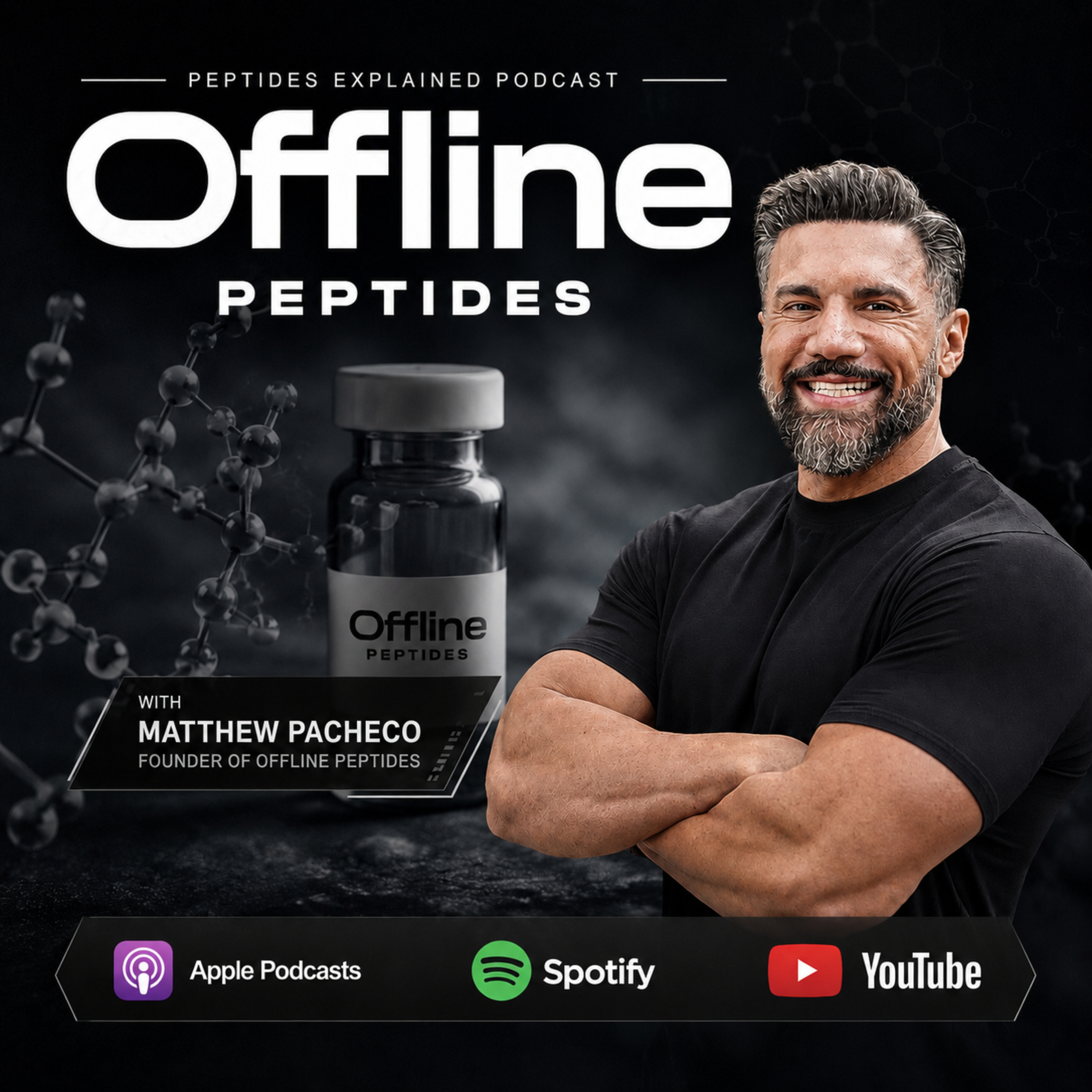
  • June 15 · 35 min

    Inside the Peptide Industry: Quality, Testing, Regulation & Grey Market Peptides

    The founder of Offline Peptides joins Peptides Explained for a candid discussion about grey market peptides, quality control, regulation, and the future of the peptide industry. What are grey market peptides, and why have they become one of the fastest-growing topics in health, wellness, longevity, and performance? In this episode of Peptides Explained, host John Garrett sits down with Matthew Pacheco, founder of Offline Peptides, for an in-depth conversation about the current peptide landscape, quality control, consumer education, and the realities of the peptide industry. Together, they discuss why peptides have exploded in popularity, what consumers should know about third-party testing and Certificates of Analysis (COAs), the challenges facing the industry, and how the regulatory environment may shape the future of peptide access. This is not a sales pitch. It's an honest discussion about one of the most talked-about areas in modern health and wellness. TOPICS COVERED • What "grey market peptides" actually means • Why peptides have become so popular • Quality control and third-party testing • Understanding COAs and lab testing • Common misconceptions about peptides • Regulatory and FDA considerations • Consumer safety and education • The future of peptide research • The role of transparency in the peptide industry GUEST Matthew Pacheco Founder, Offline Peptides PEPTIDE RESOURCES Peptides Explained Podcast Website https://peptidesexplained.com Peptide Solutions https://peptide-solutions.info Peptide Solutions was created to help connect listeners with peptide education and peptide access pathways through trusted partners. OPTION 1: RESEARCH PEPTIDES Offline Peptides https://offlinepeptides.com/ref/JohnGarrett/ OPTION 2: LICENSED PROVIDER & COMPOUNDED PEPTIDES Premier Pharmacy For clinicians interested in prescribing peptides in their practice, or individuals interested in speaking with a licensed healthcare provider regarding peptide therapies, visit: https://peptide-solutions.info AFFILIATE DISCLOSURE Peptides Explained is an affiliate partner with Offline Peptides. If you use the affiliate link above, I may earn a commission at no additional cost to you. ABOUT PEPTIDES EXPLAINED Peptides Explained is a podcast dedicated to helping listeners understand peptide science, mechanisms, clinical research, and real-world applications through evidence-based discussions and expert interviews. DISCLAIMER This podcast is for informational and educational purposes only and is not medical advice. Nothing discussed in this episode should be interpreted as medical, legal, or regulatory guidance. Always consult a qualified healthcare professional regarding your individual health needs. #PeptidesExplained #OfflinePeptides #PeptideSolutions #Peptides #GLP1 #Retatrutide #Tirzepatide #Semaglutide #Longevity #Healthcare #MedicalEducation #FunctionalMedicine #WeightLoss #PeptideResearch

  • June 10 · 20 min

    KPV Explained: Gut Inflammation, Ulcerative Colitis, and the Science Behind the KLOW Blend

    In this episode of Peptides Explained, we take a deep dive into KPV, a three-amino-acid peptide derived from alpha-melanocyte stimulating hormone (alpha-MSH) that has generated growing interest for its potential anti-inflammatory effects. We explore the biology behind KPV, how it may influence inflammatory pathways such as NF-kB, and why researchers have studied it in models of ulcerative colitis, Crohn's disease, inflammatory bowel disease (IBD), and intestinal barrier dysfunction. You'll learn: • What KPV is and where it comes from • How KPV may reduce inflammatory signaling • The role of PepT1 transporters in the gut • What animal and laboratory studies have shown • The limitations of current human data • Why KPV has become popular in gut health discussions We also examine the growing interest in the KLOW Blend, a combination of: • KPV • BPC-157 • TB-500 • GHK-Cu and discuss the scientific rationale behind combining these peptides to target inflammation, tissue protection, cellular migration, and regeneration. As always, we separate biological mechanisms from marketing claims and review what the evidence actually shows. Peptide Solutions is owned and operated by host John Garrett and helps educate both patients and healthcare professionals about peptide science and peptide therapy pathways. Learn more at: Peptide-Solutions.info Peptides Explained is an affiliate partner with OfflinePeptides.com. If you use the link below, I may earn a commission at no additional cost to you: https://offlinepeptides.com/ref/JohnGarrett/ Healthcare providers interested in prescribing compounded peptides and individuals interested in telehealth consultation options can learn more through Peptide Solutions. Visit: Peptide-Solutions.info Disclaimer: This podcast is for educational and informational purposes only and is not medical advice. KPV and the KLOW Blend are not FDA-approved therapies, and much of the research discussed comes from laboratory and animal studies. Always consult a licensed healthcare professional regarding medical decisions. Powered By Peptide SolutionsResearch Peptide Affiliate DisclosureCompounded Peptide Information

  • June 8 · 12 min

    Selank vs Semax: The Russian Peptides for Anxiety, Focus, and Brain Health

    In this episode of Peptides Explained, we take a deep dive into two of the most talked-about Russian research peptides: Selank and Semax. We'll explore where these peptides came from, how they work in the brain, and why researchers have studied them for anxiety, stress resilience, cognitive performance, neuroprotection, and stroke recovery. You'll learn about key mechanisms involving GABA, dopamine, serotonin, BDNF, and neuroplasticity while separating scientific evidence from internet hype. We also review the available clinical data, discuss regulatory status in the United States, and explain what is known—and still unknown—about the safety and effectiveness of these compounds. Whether you're a clinician, researcher, peptide enthusiast, or simply curious about emerging neuroscience, this episode provides a balanced, evidence-based look at Selank and Semax. Topics Covered: • What are Selank and Semax? • Russian peptide research history • Anxiety and stress-response signaling • BDNF and neuroplasticity • Cognitive enhancement claims • Stroke recovery research • Safety considerations and limitations • Current regulatory status Support the Podcast Peptides Explained is powered by Peptide Solutions, owned and operated by John Garrett. For educational information about peptides and available options: Peptide Solutions: https://peptide-solutions.info For those interested in research-use peptides: https://offlinepeptides.com/ref/JohnGarrett/ Affiliate Disclosure: Peptides Explained is an affiliate partner with OfflinePeptides.com. If you use the affiliate link above, I may earn a commission at no additional cost to you. This podcast is for informational and educational purposes only and does not constitute medical advice.

  • June 3 · 21 min

    Can Peptides Help Menopause? The Truth About Libido, Weight Gain & Aging

    In this special episode of Peptides Explained, we're focusing on a topic that affects millions of women but often isn't discussed openly enough: menopause, hormonal signaling, libido, body composition, and the emerging role of peptides. Why does weight gain seem different during menopause? What causes the sudden changes in energy, sleep, skin, hair, and sexual desire? And where do peptides like Kisspeptin, PT-141 (Bremelanotide), Tesamorelin, GHK-Cu, BPC-157, and GLP-1 medications fit into the conversation? Join host John Garrett, RN, as he breaks down the science behind female hormone signaling in clear, understandable language. We'll explore the biology of menopause, the neurochemistry of desire, the "collagen cliff," metabolic changes, and the latest research on peptides being studied for women's health and aging. This episode covers: • Menopause and metabolic changes • GLP-1 medications and weight management • Kisspeptin and reproductive hormone signaling • PT-141 and female sexual desire • Tesamorelin and growth hormone pathways • GHK-Cu and collagen production • BPC-157 and recovery science • Oxytocin and emotional connection • What is evidence-based vs. what remains experimental Whether you're navigating perimenopause, menopause, or simply interested in understanding how peptide science intersects with women's health, this episode delivers a balanced, evidence-based look at one of the most important conversations in modern medicine. Learn more: www.peptide-solutions.info Podcast website: www.peptidesexplained.info Support the podcast and learn more about peptide research: offlinepeptides.com/ref/JohnGarrett Affiliate Disclosure: Peptides Explained is an affiliate partner with Offline Peptides. If you use my affiliate link, I may earn a commission at no additional cost to you. Follow Peptides Explained: • Instagram: @PeptidesExplained • Facebook: Peptides Explained • LinkedIn: Peptides Explained • Patreon: Peptides Explained • Skool: Peptides Explained Community If you enjoy the show, please follow, subscribe, leave a review, and share this episode with someone who would benefit from understanding the science behind menopause, hormones, and peptide therapy. Peptides Explained is powered by Peptide Solutions, founded and operated by John Garrett, RN, providing education on peptide science and helping connect patients and clinicians with peptide-related resources. This podcast is for informational purposes only and is not medical advice.

  • June 1 · 17 min

    GLP-1 Medications and the Brain | Mood, Anxiety, Motivation & Dopamine Explained

    GLP-1 medications may affect far more than appetite and weight loss. In this episode, we explore the growing evidence surrounding semaglutide, tirzepatide, and retatrutide and their potential effects on mood, anxiety, dopamine signaling, motivation, and compulsive behavior. We discuss both the research and the real-world patient reports clinicians are increasingly hearing in practice.

  • May 25 · 16 min

    Do Growth Hormone Peptides Cause Cancer? | The Truth About IGF-1

    Do growth hormone secretagogues increase cancer risk? This episode breaks down the real science behind IGF-1, cancer biology, and compounds like MK-677, Ipamorelin, Sermorelin, CJC-1295, and Tesamorelin. We review: Human IGF-1 cancer studies Acromegaly data Tumor signaling pathways Observational vs causal evidence What current science actually supports This podcast is for informational purposes only and is not medical advice. Peptides Explained is an affiliate partner with OfflinePeptides.com. If you use my link, I may earn a commission at no additional cost to you. Support the show: OfflinePeptides Affiliate Link

  • May 18 · 32 min

    BPC-157 and Cancer: What the Studies Actually Show

    Does BPC-157 cause cancer — or is that claim being oversimplified? In this episode of Peptides Explained, we take a study-review approach to one of the biggest concerns surrounding BPC-157: its potential angiogenic effects and whether that could theoretically contribute to cancer proliferation. Angiogenesis means new blood vessel formation. It is essential for normal wound healing and tissue repair, but it also plays a role in tumor biology. That overlap has led to concerns that BPC-157 could "feed" cancer growth. But what do the studies actually show? In this episode, we review key papers on BPC-157, including: • Hsieh et al., 2017 — VEGFR2 activation and angiogenesis • Radeljak, Seiwerth, and Sikiric, 2004 — melanoma cell-line data • Kang et al., 2018 — cancer cachexia context • Masnec et al., 2015 — corneal injury and neovascularization We break down the difference between physiologic repair signaling and pathologic tumor angiogenesis, and explain why the current evidence does not support the simple claim that BPC-157 causes cancer proliferation. That said, the lack of strong human oncology safety data means caution is still appropriate, especially for anyone with active cancer, prior cancer, unexplained symptoms, or elevated cancer risk. This episode is designed as a literature review for clinicians, physicians, and scientifically curious listeners who want a balanced, evidence-based explanation. Disclaimer: This content is for informational and educational purposes only and is not medical advice. Always consult a licensed healthcare professional before considering any therapy. Affiliate disclosure: Peptides Explained is an affiliate partner with OfflinePeptides.com. If you use my link, I may earn a commission at no additional cost to you. https://offlinepeptides.com/ref/JohnGarrett/ #BPC157 #PeptidesExplained #CancerRisk #Angiogenesis #PeptideScience #VEGF #TissueRepair #MedicalEducation #PhysicianReview #Peptides

  • May 11 · 10 min

    Tesamorelin Explained: Visceral Fat, Growth Hormone & Real-World Outcomes

    Tesamorelin is one of the few peptides with FDA approval—but its effects on visceral fat and growth hormone signaling have made it a major topic in metabolic health and body composition circles. In this episode of Peptides Explained, we break down: • What tesamorelin actually is • How growth hormone releasing hormone works • Why visceral fat matters metabolically • Clinical trial data and FDA-approved use • Anecdotal outcomes in real-world settings • Risks, limitations, and off-label discussion We also explain why tesamorelin is different from traditional fat loss medications and why many users report changes in abdominal fat distribution rather than dramatic scale weight loss. This podcast is for informational purposes only and is not medical advice. Peptides Explained is an affiliate partner with Offline Peptides. If you use my link, I may earn a commission at no additional cost to you.

  • May 7 · 2 min

    Special Announcement: New Partnership for Peptides Explained

    In this special update episode, I'm announcing a new affiliate partnership between Peptides Explained and Offline Peptides. The mission of this podcast remains unchanged: providing clear, responsible, science-based education around peptides, metabolic health, recovery, and emerging therapeutic research. If you choose to support the show through my affiliate link, I may earn a commission at no additional cost to you. Affiliate Link: https://offlinepeptides.com/ref/JohnGarrett/ Disclosure: This podcast is for informational and educational purposes only and is not medical advice. Always consult a licensed healthcare professional before considering any therapy or intervention.

  • May 6 · 12 min

    Retatrutide Explained: The Triple Agonist Changing Obesity Medicine

    Retatrutide may represent the next evolution in metabolic medicine. In this deep-dive episode of Peptides Explained, we break down the science behind the investigational "triple agonist" peptide that's generating major attention in obesity and metabolic research. Topics covered: • GLP-1 + GIP + glucagon receptor activation • How retatrutide differs from semaglutide and tirzepatide • Phase 2 clinical trial results • Fat loss vs lean mass loss • Liver fat reduction data • The emerging discussion around obesity-related cancer risk • What may happen after discontinuation • Known side effects and unanswered questions This episode goes beyond headlines and social media hype to explain the actual biology and human data behind retatrutide. Peptides Explained is focused on evidence, mechanism, and clarity. This podcast is for educational purposes only and is not medical advice.

  • April 22 · 22 min

    GLP-1 Drugs... Are They Destroying Muscle? — What Semaglutide, Tirzepatide & Retatrutide Data Actually Shows

    A clinical deep dive into the muscle loss problem on GLP-1 medications. Semaglutide, tirzepatide, and the investigational triple agonist retatrutide all produce remarkable weight loss — but clinical trial data shows that a significant fraction of that loss is lean body mass, not fat. This episode covers the mechanism behind GLP-1-induced muscle wasting, the body composition data from STEP 1 and SURMOUNT trials, who carries the highest risk, and where the next generation of obesity pharmacology — bimagrumab combinations, pemvidutide, and retatrutide's glucagon receptor pathway — is trying to solve the problem. For clinicians, patients, and anyone paying attention to where obesity medicine is actually going. This podcast is for informational purposes only and is not medical advice.

  • April 16 · 25 min

    The Peptide Ban Is Ending: FDA Officially Begins Reclassification Process for BPC-157, TB-500 & More

    Breaking news episode. On April 15, 2026, the FDA formally initiated the reclassification process for BPC-157, TB-500, and other peptides restricted since 2023 — publishing a Federal Register notice and scheduling a July 2026 Pharmacy Compounding Advisory Committee meeting. This episode breaks down the full regulatory timeline, what the Category 1 vs Category 2 framework means, what today's action specifically does, and what patients and clinicians should know right now. Clinical, evidence-grounded, no hype.

Showing 41–60 of 67 episodes