Skip to content
Artwork for Peptides Explained

Peptides Explained

John Garrett

Peptides Explained breaks down the most talked-about peptides and GLP-1 medications in health, fitness, and longevity — including semaglutide, tirzepatide, BPC-157, TB-500, and more.

Hosted by Registered Nurse John Garrett, this podcast explains how these compounds work, why they're popular, what the research shows, and the real risks and side effects — all in plain language.

No bro science. No hype. Just clear, foundational education.

For informational purposes only. Not medical advice.

For Research Peptides; Offlinepeptides.com/ref/johngarrett/
https://www.skool.com/peptides-explained-15

Play
  • 35 episodes
  • Avg 19 min
  • English
Counted on this page — what you have heard stays on this device, so it is not something the list can be paged by.
  • Today · 17 min

    Why Your Favorite Peptides May Never Get a Big Human Trial

    If BPC-157, TB-500, KPV, MOTS-C and similar peptides are so interesting, why don't we have giant randomized human trials? This episode looks at the less dramatic—and more important—answer: clinical trials require a sponsor, regulatory strategy, manufacturing package, defined indication, safety program, and a very large amount of money. For old, easily copied, poorly protected, or commercially fragmented compounds, the incentive to fund definitive trials may be weak. John also explains why that does not excuse the evidence gap. "No Phase 3 trial" is not proof that a peptide works. It simply means confidence should remain limited until better evidence exists. Educational only. Not medical advice.

  • Monday · 18 min

    The Hollywood Trinity Stack: What Happened When I Tried It

    Download The Peptide App @ ThePeptide.App/Explained For more info on research peptides visit PeptidesExplained.info/OfflinePeptides John Garrett shares his N=1 experience with the so-called "Trinity Stack"—established TRT, retatrutide, and tesamorelin—combined with resistance training, Zone 2 cardio, high protein intake, creatine, sauna, and cold plunging. The transformation was dramatic. But what likely came from appetite control? What helped preserve muscle? What might the GH/IGF-1 axis have added? And how much credit belongs to the boring fundamentals? This is a candid personal testimony and accessible science breakdown—not a deep dive, a dosing guide, or a warning lecture. John also explains what happened during an eight-week break and why he recently restarted with a goal of reaching 10% body fat. Educational only. Retatrutide remains investigational and is not FDA-approved.

  • September 9 · 14 min

    SNAP-8: Is "Botox in a Bottle" Real?

    SNAP-8 is a synthetic cosmetic octapeptide marketed for expression lines and frequently called "Botox in a bottle." John Garrett, RN, breaks down the SNAP-25 and SNARE-complex mechanism, the difference between topical SNAP-8 and injected botulinum toxin, the skin-penetration problem, the Argireline evidence, a small 2024 microneedle combination study, safety, and the limits of the current human data. The mechanism is plausible. The evidence is not strong enough to call it a needle-free Botox equivalent. Educational content only; not medical advice.

  • September 7 · 23 min

    GLP-1 Microdosing: Smart Strategy or the Next Wellness Fad?

    Visit peptidesexplained.info for more info and resources For more info on research peptides check out PeptidesExplained.info/OfflinePeptides or email John at john@peptidesexplained.info What exactly is GLP-1 microdosing? Depending on who you ask, it can mean remaining on the starter dose, taking a fraction of that dose, spacing injections farther apart, stepping down after weight loss, or using a tiny amount for food noise and longevity. Those are not the same strategy. John Garrett breaks down the new low-dose semaglutide and tirzepatide data, FDA-approved dose structures, weight-regain research, maintenance questions, side effects, and the major gap between individualized clinical titration and social-media "microdosing" protocols. Educational content only. Not medical advice.

  • September 2 · 15 min

    Thymalin vs Thymogen: Can Thymus Peptides Reverse Immune Aging?

    Can a peptide reverse age-related immune decline? Thymalin and Thymogen are often discussed together, but one is a complex calf-thymus extract and the other is the defined dipeptide Glu-Trp. John Garrett explains thymic involution, T-cell biology, proposed mechanisms, the Russian clinical history, limitations of the human evidence, safety, and U.S. regulatory status. The science is interesting. The "immune rejuvenation" and life-extension claims remain unproven. Educational only. Not medical advice.

  • August 31 · 22 min

    What Is Pinealon? Brain Aging, Neuroprotection, and the Evidence

    Check out The Peptide App here: thepeptide.app/explained What is Pinealon, and does this three-amino-acid peptide really protect the aging brain? Pinealon—also called EDR or Glu-Asp-Arg—is a synthetic tripeptide associated with the Khavinson bioregulator research program. It is discussed for memory, neuroprotection, oxidative stress, brain aging, and even Alzheimer's disease, but the evidence is much more complicated than the marketing language suggests. John Garrett, examines Pinealon's proposed mechanism, cell and animal research, a newer induced-neuron study, and the PubMed-indexed human reports that are often overlooked. The episode also explains why Pinealon is different from Epitalon, where the human evidence is weak, what remains unknown about brain exposure and long-term safety, and why a plausible mechanism is not the same thing as an established cognitive therapy. Educational content only. Not medical advice.

  • August 30 · 19 min

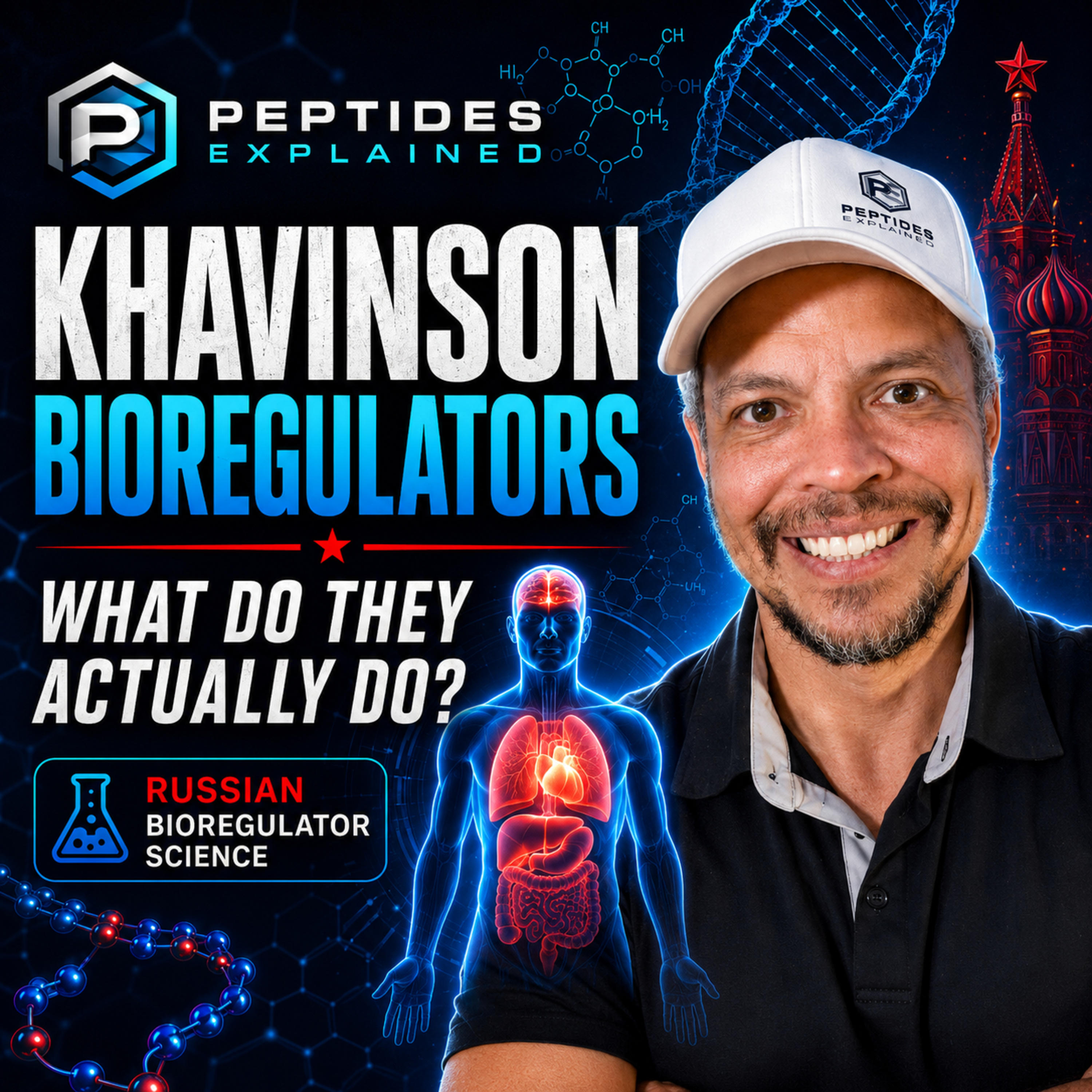
    Khavinson Peptide Bioregulators: What Do They Actually Do?

    What are Khavinson peptide bioregulators, and what do they actually do? John Garrett examines the Russian research tradition behind organ-derived peptide complexes and synthetic ultrashort peptides. This episode explains the proposed gene-expression mechanism, the claim of tissue specificity, common examples such as Thymalin and Epitalon, the limitations of the human evidence, oral absorption questions, product-quality concerns, safety, and U.S. regulatory status. The science is more interesting than a simple dismissal—but less proven than organ-rejuvenation marketing suggests. This episode is educational and is not medical advice.

  • August 30 · 21 min

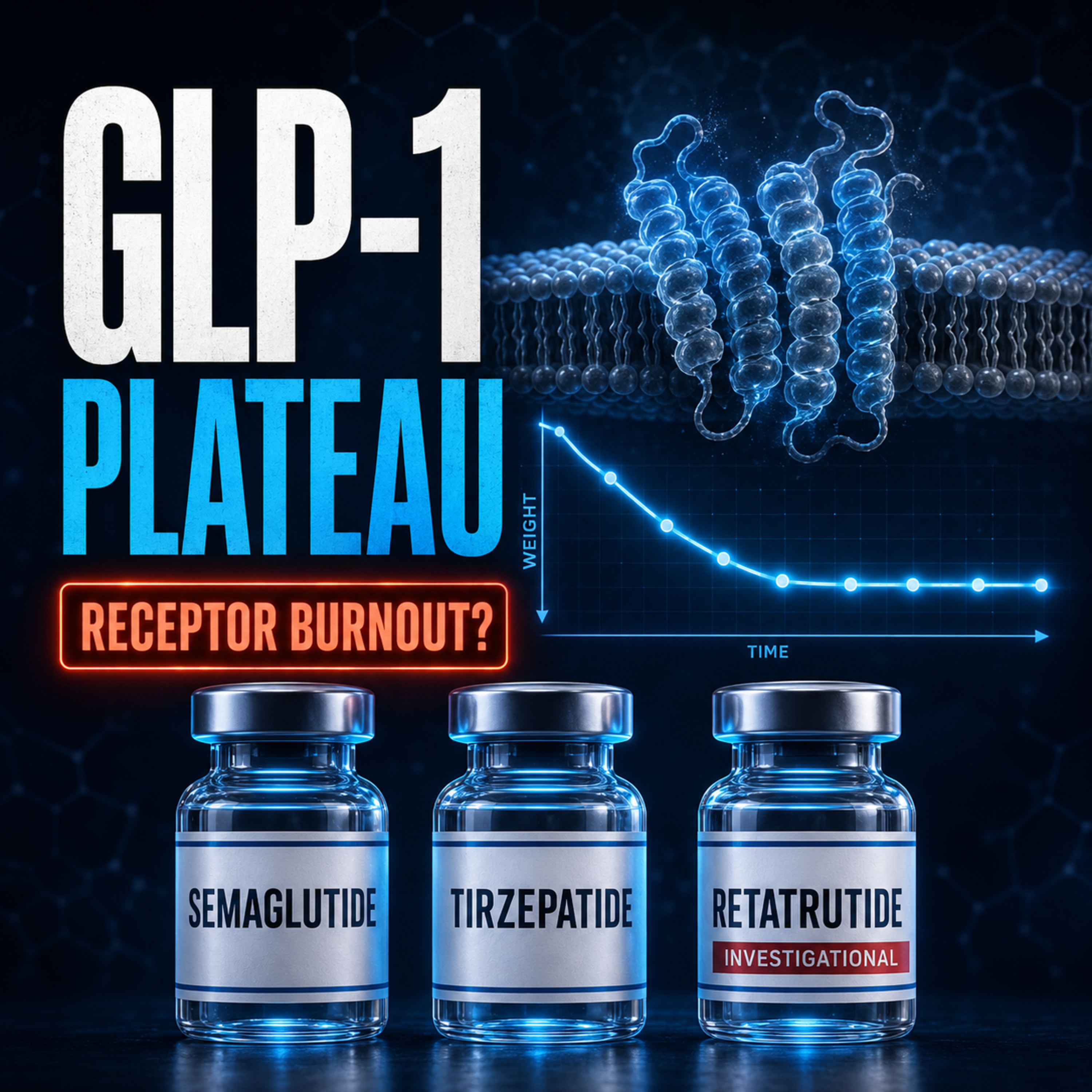
    Did Your GLP-1 Stop Working? Appetite, Receptors and Weight-Loss Plateaus

    Does a weight-loss plateau mean your GLP-1 receptors have become desensitized? John separates cellular receptor biology from whole-body weight regulation and compares semaglutide, tirzepatide, and investigational retatrutide. We examine appetite suppression, food noise, gastric-emptying tachyphylaxis, metabolic adaptation, switching therapies, and what the clinical evidence can—and cannot—tell us. A plateau is real. "Receptor burnout" is a much bigger claim. Educational only; not medical advice.

  • August 26 · 19 min

    Khavinson Peptide Bioregulators: What Do They Actually Do?

    What are Khavinson peptide bioregulators, and what do they actually do? John Garrett examines the Russian research tradition behind organ-derived peptide complexes and synthetic ultrashort peptides. This episode explains the proposed gene-expression mechanism, the claim of tissue specificity, common examples such as Thymalin and Epitalon, the limitations of the human evidence, oral absorption questions, product-quality concerns, safety, and U.S. regulatory status. The science is more interesting than a simple dismissal—but less proven than organ-rejuvenation marketing suggests. This episode is educational and is not medical advice.

  • August 24 · 21 min

    Did Your GLP-1 Stop Working? Appetite, Receptors and Weight-Loss Plateaus

    Peptide-solutions.info App.peptidesexplained.info Does a weight-loss plateau mean your GLP-1 receptors have become desensitized? John separates cellular receptor biology from whole-body weight regulation and compares semaglutide, tirzepatide, and investigational retatrutide. We examine appetite suppression, food noise, gastric-emptying tachyphylaxis, metabolic adaptation, switching therapies, and what the clinical evidence can—and cannot—tell us. A plateau is real. “Receptor burnout” is a much bigger claim. Educational only; not medical advice.

  • August 20 · 18 min

    Should You Be Using Peptides? The Honest Answer

    Visit Peptide-Solutions.info for more info Check out App.PeptidesExplained.info Should you be using peptides? The honest answer is that not everyone should. Peptides are not a nutritional requirement, a shortcut to better health, or something you need simply because they are trending. But some people do have a defined problem—such as obesity, metabolic disease, an injury, loss of function, a diagnosed hormone-related condition, or another health issue—for which a peptide-based medication or investigational compound may be relevant. In this episode, John Garrett, explains how to decide whether a peptide belongs in the conversation. You will learn how to start with the problem rather than the product, compare FDA-approved, off-label, compounded, experimental, and research-use categories, evaluate human versus animal versus anecdotal evidence, identify better-established alternatives, and build a plan for monitoring and stopping. This episode also points viewers to "The 11 Peptides I Find Most Compelling" and the individual Peptides Explained deep dives for compound-specific education. This content is educational only and is not medical advice. Speak with a qualified healthcare professional before starting, stopping, or changing any therapy.

  • August 18 · 17 min

    ARA-290: Can It Repair Small Nerve Fibers?

    ARA-290, also called cibinetide, is an investigational 11-amino-acid peptide designed from erythropoietin biology to activate tissue-protective signaling without stimulating red-blood-cell production. In this episode, John Garrett, RN, breaks down the innate repair receptor, why ARA-290 has been studied in small-fiber neuropathy, what randomized human trials in sarcoidosis and type 2 diabetes actually found, and why objective nerve-fiber signals are interesting—but not the same thing as an approved therapy. You'll learn: • What ARA-290/cibinetide is • How it differs from full-length erythropoietin • What the innate repair receptor is • Why researchers studied corneal nerve fibers • What the 22-patient pilot trial showed • What the 64-patient phase 2b trial showed • Why pain and nerve-fiber endpoints did not tell exactly the same story • What is known—and not known—about safety • Why online ARA-290 products should not be assumed equivalent to trial material Explore the Peptides Explained app: app.peptidesexplained.info Learn more through Peptide Solutions: peptide-solutions.info Educational content only. ARA-290 is investigational and is not an FDA-approved treatment for neuropathy or any other clinical indication.

  • August 12 · 15 min

    Lipo-C Injections: What Do They Actually Do?

    Check out Peptide.Solutions.info/Pathways and submit a request to see what companies I have partnered with to get products. Lipo-C injections are often marketed for fat burning, energy, liver support, or breaking a weight-loss plateau. But "Lipo-C" is not one standardized formula—and real metabolic biology is not the same thing as proven fat loss. In this episode, John Garrett, RN, breaks down the ingredients commonly found in Lipo-C blends, including L-carnitine, choline, methionine, inositol, and B vitamins. We examine what each ingredient actually does, what human studies of L-carnitine suggest, why that evidence cannot automatically be applied to a compounded injection, and the questions to ask before paying for one. You'll learn: • Why two products called Lipo-C may be completely different • How carnitine participates in mitochondrial fatty-acid oxidation • What "lipotropic" does—and does not—mean • Whether Lipo-C is FDA approved • What people report versus what trials establish • Risks, limitations, and when provider involvement matters Explore the Peptides Explained app: app.peptidesexplained.info Learn more through Peptide Solutions: peptide-solutions.info Educational content only. This is not medical advice or a recommendation to use an injectable product.

  • August 10 · 23 min

    FOXO4-DRI: Can It Really Remove Senescent Cells and Reverse Aging?

    FOXO4-DRI has been called a "zombie-cell killer," a senolytic peptide, and even a possible anti-aging breakthrough. The mechanism is fascinating—but the claims have moved much faster than the human evidence. In this episode, John explains what senescent cells are, why they are not automatically harmful, and how FOXO4 and p53 help regulate cell survival and cell death. He then breaks down the D-retro-inverso design of FOXO4-DRI, the proposed mechanism, and what the original 2017 research actually found in cultured human cells and mice. The episode also examines what has happened since that first study, why removing senescent cells may produce different effects in different tissues, and what the cancer, tissue-repair, regulatory, and long-term safety questions really look like. The bottom line: FOXO4-DRI is a scientifically credible experimental senolytic with compelling preclinical biology—but it has not been proven to reverse aging or provide clinical benefit in humans. Explore the Peptides Explained App: https://app.peptidesexplained.info Peptide Solutions: If you are interested in checking out Compounded or Research Peptide Sources visit Peptide Solutions. https://peptide-solutions.info This episode is educational and is not individualized medical advice. FOXO4-DRI is experimental and is not an FDA-approved medication.

  • August 5 · 22 min

    ATX-304: AMPK Activation, Metabolic Demand, and the Limits of "Exercise in a Pill"

    ATX-304 is often called "exercise in a pill," but it is more accurate to describe it as an investigational oral small molecule that activates AMPK and alters mitochondrial energy demand. John explains the mechanism, the preclinical metabolic findings, the early human signal in type 2 diabetes, the current obesity-development strategy, and the major gaps that remain before anyone can claim it reproduces the health effects of exercise. Batch tested and they have COAs available on all peptides https://www.americanpeptides.us/discount/JOHNATHAN10?ref=SteWwgMLys Or use Johnathan10 at checkout 2. Offline Peptides Based in Texas Batch tested and they have COAs available on all peptides Visit; OfflinePeptides.com/ref/JohnGarrett I am an affiliate with each of these companies. If you use my link I may earn a commission at no extra cost to you. All information on this podcast is for educational and not meant as medical advice.

  • August 3 · 19 min

    Thymosin Alpha 1: What Does It Do?

    Thymosin alpha 1—also called Tα1 or thymalfasin—is frequently described online as an "immune-boosting peptide." But that phrase oversimplifies a complicated biological system. In this episode of Peptides Explained, John Garrett breaks down how thymosin alpha 1 may influence dendritic cells, Toll-like receptor signaling, T-cell maturation, natural-killer-cell activity, cytokines, and immune regulation. The episode also reviews where it has been studied, including chronic viral hepatitis, vaccine response, oncology-support settings, severe infection, pancreatitis, and sepsis. The evidence is not uniformly positive. Earlier sepsis trials and pooled analyses suggested benefit, but a large multicenter phase 3 trial involving more than 1,100 adults found no reduction in 28-day mortality. That contrast illustrates why biological mechanisms and small clinical studies must be separated from confirmed patient outcomes. The episode also covers: • What thymosin alpha 1 is • Why "immune modulator" is more accurate than "immune booster" • Innate versus adaptive immunity • Human clinical evidence versus cell and animal research • International approval versus U.S. FDA status • FDA concerns involving compounded thymosin alpha 1 • Potential risks, product-quality concerns, and major unknowns • A responsible decision framework for evaluating immune-peptide claims This content is for education and discussion only and is not medical advice. Always consult a qualified healthcare professional before starting, stopping, or changing any therapy. Peptides Explained is an affiliate partner with OfflinePeptides.com. If you use the link below, I may earn a commission at no additional cost to you. PeptidesExplained.info/OfflinePeptides #ThymosinAlpha1 #Thymalfasin #PeptidesExplained #ImmuneSystem #Immunology #PeptideScience #TCells #Longevity #Peptides #MedicalEducation

  • July 31 · 3 min

    **Special Announcement** Healthcare Provider Webinar

    The State of Peptides 2026 | Clinician Webinar The peptide landscape is changing rapidly. New research is emerging, regulatory decisions continue to shape clinical practice, and healthcare providers are being asked more questions than ever before. Join Peptide Solutions for a live clinician-focused webinar covering the current state of peptides in 2026. This educational session is designed for physicians, nurse practitioners, physician assistants, pharmacists, nurses, and other healthcare professionals interested in understanding the latest developments. • The current peptide and GLP-1 landscape • Recent FDA and PCAC regulatory updates • The most commonly discussed therapeutic peptides • Current evidence and clinical data • Safety, quality, and sourcing considerations • What providers should expect moving forward 📅 August 13, 2026 🕖 7:00 PM Central Time Register: https://peptide-solutions.info This webinar is intended for educational purposes only. Peptide Solutions does not diagnose, treat, prescribe, compound, or dispense medications. Prescription therapies require evaluation and oversight by a licensed healthcare provider. Discussions of research peptides are for educational purposes only and should not be interpreted as recommendations for human use.

  • July 29 · 48 min

    The 11 Peptides I Find Most Compelling

    After researching peptide science week after week—and using some compounds personally—I'm answering one of the most common questions I receive: Which peptides do I find the most useful and compelling? This is not a universal ranking or a recommendation to use all 11. Tirzepatide, retatrutide, tesamorelin, ipamorelin, BPC-157, TB-500, GHK-Cu, KPV, PT-141, MOTS-c, and SS-31 occupy very different evidence and regulatory categories. Some are FDA-approved prescription drugs. Some have encouraging human data. Others remain experimental and are supported mainly by animal, cell, mechanistic, or anecdotal evidence. In this episode, we examine the problem each peptide is intended to solve, how it works, what the human evidence shows, where the evidence is weak, known risks, regulatory status, and why each compound made my personal list. This episode is for education and discussion only. It is not medical advice. Always involve a qualified healthcare professional before starting, stopping, or changing a therapy. Peptides Explained is an affiliate partner with OfflinePeptides.com. Visit PeptidesExplained.info/OfflinePeptides. For Peptides through a compounding pharmacy or a telehealth option Visit Peptide-Solutions.info and submit a request for more information.

  • July 27 · 19 min

    Cagrilintide vs GLP-1s: A Different Appetite Pathway?

    GLP-1 medications changed obesity treatment, but appetite regulation involves more than one hormonal signal. Cagrilintide is a long-acting analogue of amylin, a pancreatic peptide released alongside insulin that helps regulate satiety, gastric emptying, and post-meal glucagon signaling. In this episode of Peptides Explained, John Garrett breaks down what cagrilintide is, how it differs from GLP-1 receptor agonists, what standalone phase 2 data show, and what the phase 3 CagriSema trials tell us about combining cagrilintide with semaglutide. We also examine the REDEFINE 4 comparison with tirzepatide, common gastrointestinal adverse effects, unresolved questions about long-term outcomes and lean mass, and why online research products should not be treated as equivalent to the pharmaceutical trial material. Cagrilintide remains investigational and is not currently an FDA-approved treatment. This content is educational and is not medical advice. Peptides Explained is an affiliate partner with Offline Peptides. Research-use products are not approved medications and are not intended for human use. Visit: PeptidesExplained.info/OfflinePeptides For information on Compounded Peptides through Premier Pharmacy visit Peptide Solutions and submit a request for more information Visit: Peptide-Solutions.info and submit a request for more information Send a two- to three-minute N=1 video to john@peptidesexplained.info.

  • July 22 · 20 min

    AOD-9604 Explained: Can a Growth Hormone Fragment Burn Fat?

    AOD-9604 is often marketed as the "fat-burning fragment" of human growth hormone. But what does it actually do, and did it work in human obesity trials? In this episode of Peptides Explained, John Garrett, RN, breaks down: • What AOD-9604 is and how it differs from full-length HGH • Lipolysis, lipogenesis, and beta-3 adrenergic signaling • Why animal studies looked promising • What the early human trials showed • Why the obesity-development program was discontinued • Whether AOD-9604 raises IGF-1 • Regulatory status, risks, unknowns, and anti-doping concerns • A responsible framework for evaluating experimental fat-loss peptides The central takeaway: AOD-9604 has a plausible preclinical mechanism, but the available human evidence does not establish dependable, clinically meaningful fat loss. This episode is for informational purposes only and is not medical advice. Always consult a qualified healthcare professional before starting, stopping, or changing any therapy. This episode is brought to you by Offline Peptides. If you are interested in Research Peptides Learn more at PeptidesExplained.info/OfflinePeptides. For more information about Peptide Solutions, visit Peptide-Solutions.info. Send your 2–3 minute N=1 video to john@peptidesexplained.info.

Showing 1–20 of 35 episodes