ARA, Listening to the Ice: The World’s Most Sensitive Search for Ultrahigh-Energy Neutrinos
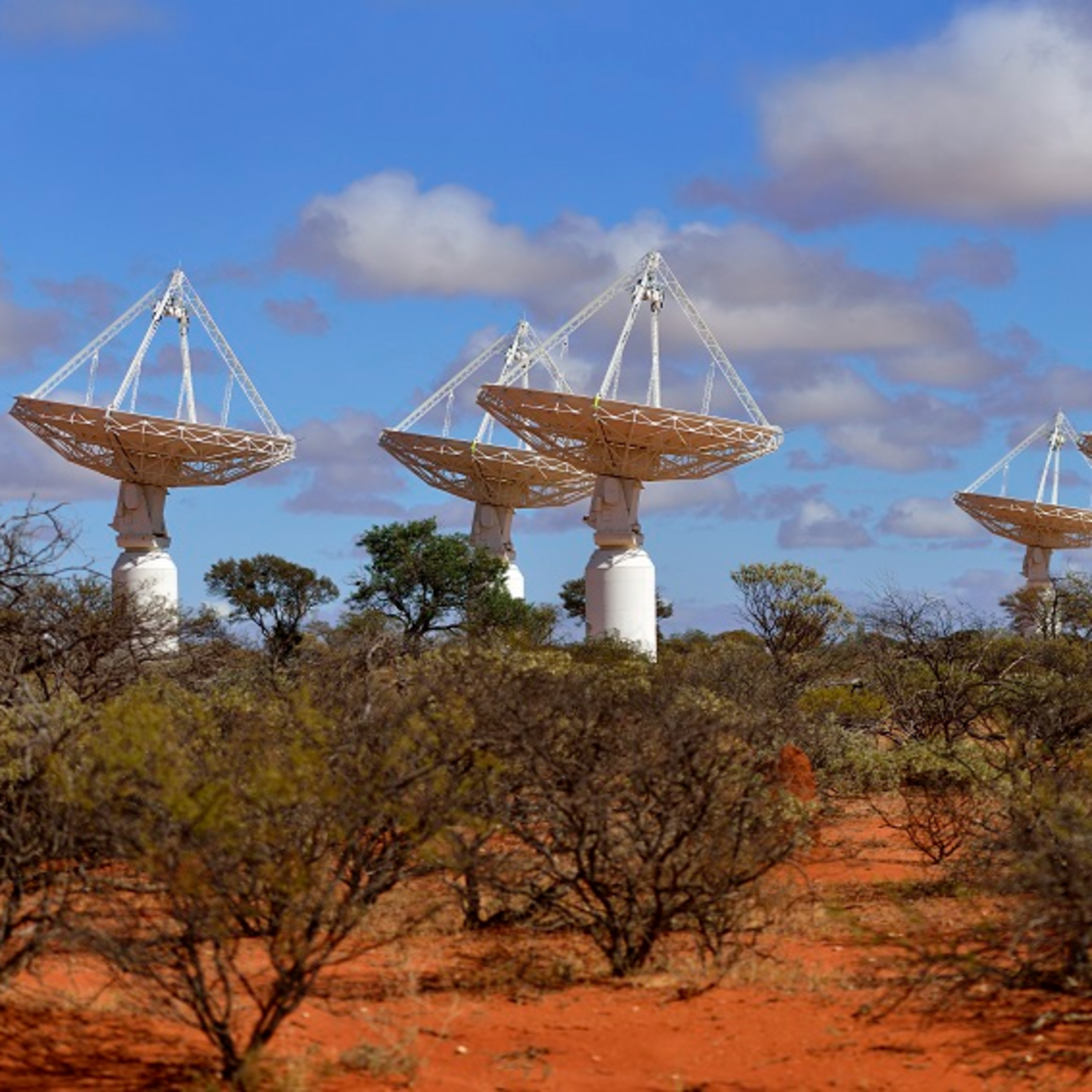
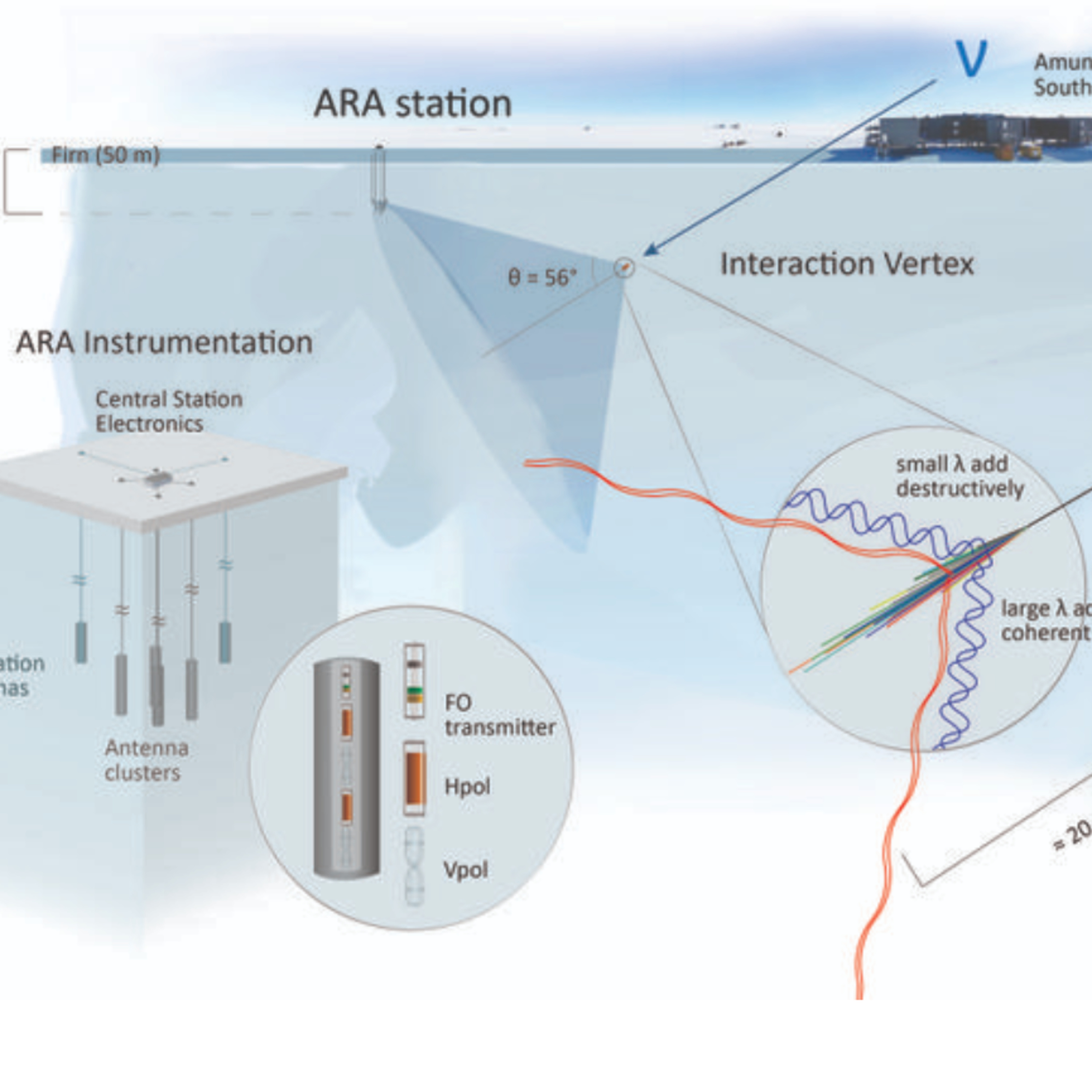
### Episode Show Notes How do you detect the most energetic, elusive particles in the cosmos? In this episode, we dive into landmark results from the Askaryan Radio Array (ARA), an antenna observatory buried up to 200 meters deep in the Antarctic ice cap at the South Pole. Analyzing a decade of array-wide data (10.6 years of livetime across five stations and a phased array), researchers conducted the largest Askaryan detector search ever performed. While no neutrino events were found, this "null result" delivers the world's most stringent upper limit on the diffuse ultrahigh-energy neutrino flux between 50 EeV and 1000 EeV—challenging cosmic-ray source models and offering complementary tension with recent optical Cherenkov observations. #### Key Discussion Topics & Highlights The Neutrino Messengers: Why ultrahigh-energy cosmic rays (UHECRs) are deflected and attenuated on their journey across the universe, while ultrahigh-energy neutrinos (E_\nu \gtrsim 100\text{ PeV}) travel unimpeded directly from extreme cosmic accelerators The Askaryan Effect in Action: How relativistic particle cascades colliding with dielectric Antarctic ice generate nanosecond-scale coherent radio impulses detectable over massive subterranean volumes. A Decade Under the Ice: Combining five distinct detector stations and a central phased array across 50 operational configurations into a unified, single observatory. Filtering the Noise: How machine learning (linear discriminant analysis) and directional reconstruction weeded out anthropogenic interference (airplanes, snowmobiles) and ice thermal noise to achieve an expected background of just 0.13 events. World-Leading Constraints: Setting the most stringent limits from 50 EeV to 1000 EeV, placing tension on the 220 PeV neutrino candidate reported by KM3NeT, and excluding Auger-compatible trans-GZK cosmic-ray proton source models at 90% confidence. What Comes Next: How ARA’s methodology and "ARA-Next" trigger advancements lay the technological foundation for upcoming observatories like RNO-G and IceCube-Gen2 Radio. ### Article Reference > ARA Collaboration (Alden, N., Ali, S., Allison, P., Bishop, A., Clark, B. A., Dasgupta, P., Giri, P., Machtay, A., Muzio, M. S., Salcedo-Gomez, A., Seikh, M. F. H., et al.). (2026). New Constraints on the Ultrahigh Energy Neutrino Flux from the First Array-Wide Search with the Askaryan Radio Array. arXiv:2611.14350v1 [astro-ph.HE]. Acknowledements: Podcast prepared with Google/Gemini Notebook. Illustration credits: ARA collaboration