Skip to content
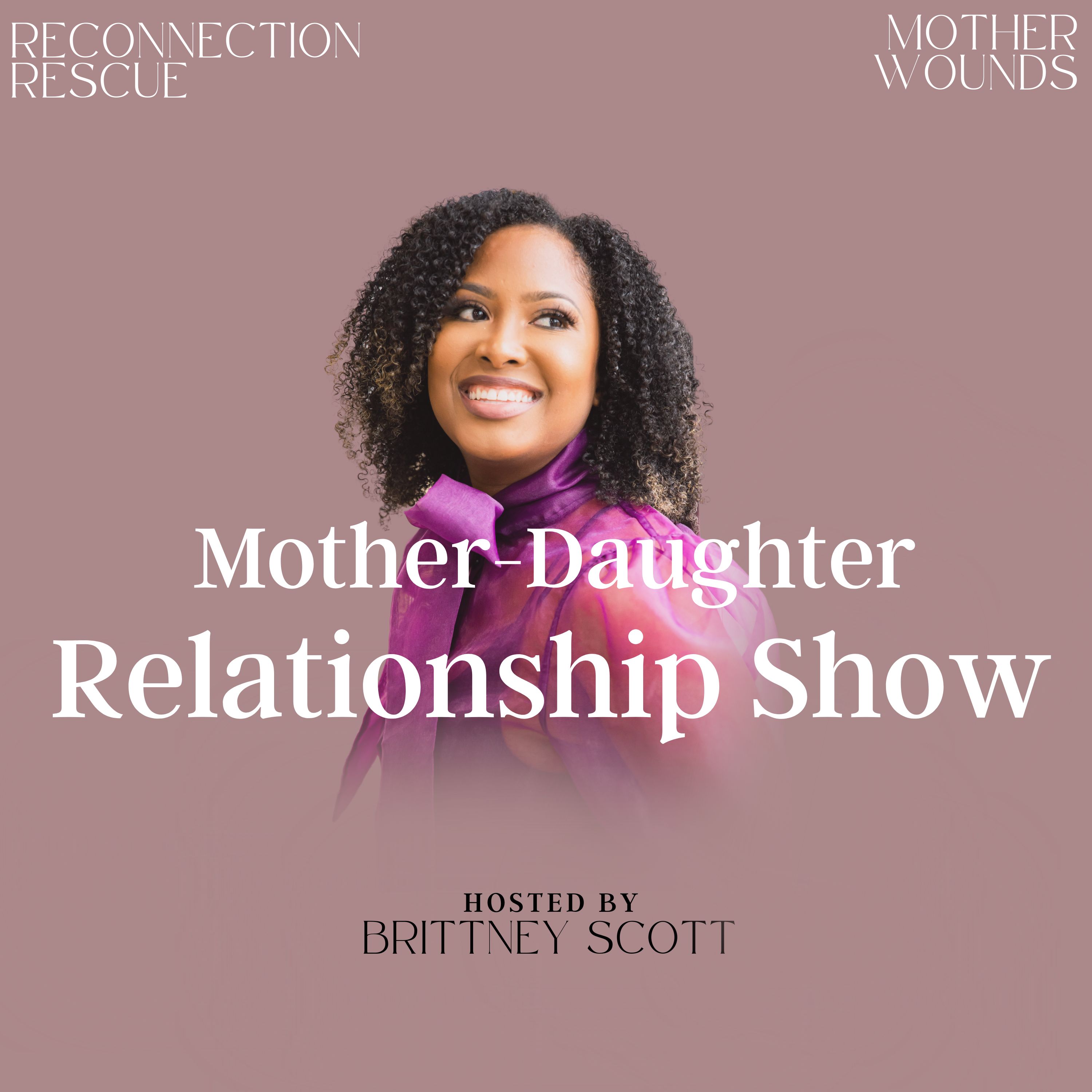
Artwork for Mother Daughter Relationship Show
Health & FitnessMental HealthEducationSelf-Improvement

Mother Daughter Relationship Show

Brittney Scott

Are you tired of trying to get your mom to understand your pain and apologize, just to be left feeling worse than when you started? I get it! What if I told you that you could heal your mother wound and your inner child, even if your mom wont take any accountability for her behavior or your childhood?

Let's be real, it takes a self aware mother to acknowledge hurt done to her daughter. You’re healing should not rely on her being self aware.

Welcome to the Mother Daughter Relationship Show, the go to podcast for mother daughter relationships, mother wound healing, eldest daughters, and women learning to mother when they weren’t mothered.

I’m your host, Brittney Scott - mother daughter therapist and coach, the eldest daughter and mom to a daughter, book nerd, scripted show over reality show person. I understand the position of the eldest daughter and I know what healthy relationships look and feel like.

I’ve worked with women like you who want better relationships and want to stop the pain and frustration from their mother daughter relationship. This podcast will answer questions such as:

*What is a mother wound?
*How do I heal my mother wound?
*How do I reconnect with my mother?
*How do I fix my broken relationships?
*How do I become a good mom when I don't have an example of one?
*What is my inner child?
*What is generational trauma?

Tune in to learn about generational trauma, mother wounds, inner child healing, and exploring how these experiences influence adult connections, friendships, and self-identity.

Ready to find your voice, understand your needs, and heal your mother wound? Hit play on the latest episode and lets get started.

Play
  • 33 episodes
  • weekly
  • Avg 27 min
  • English
Counted on this page — what you have heard stays on this device, so it is not something the list can be paged by.
  • S3 · E93
    Friday · 56 min

    Does Your Daughter Have an Eating Disorder? Signs Every Mom Should Know [Ep. 93]

    Navigating Eating Disorders with Taylor Johnson, LCSW In this episode, host Brittney sits down with Taylor Johnson, LCSW and owner of Opalescence Counseling, to explore the complexities of eating disorders in adolescents and young adults. Taylor breaks down key diagnostic categories, shares actionable strategies for parents suspecting an eating disorder, and discusses how to cultivate a balanced, shame-free relationship with food and body image. In this episode you’ll learn: The longest relationship of your life is with your body: How we view, speak to, and treat our bodies matters deeply. Cultivating a relationship of self-compassion and body liberation is essential for our own well-being and sets a powerful example for the next generation. Mothers are extensions, not clones: Daughters should be encouraged to be an evolution of us, enjoying a different level of freedom and liberation in their bodies than past generations experienced. Early intervention is vital: Eating disorders carry the second-highest mortality rate of any psychiatric illness, making early detection and open conversations crucial for long-term recovery and healing. Look beneath the surface behaviors: Eating disorders are often maladaptive coping mechanisms used to manage underlying pain, lack of control, anxiety, or perfectionism. Healing requires looking past the food or weight to address what is truly happening emotionally. Systemic biases must be recognized: Eating disorders affect people of all backgrounds, but systemic gaps such as historical baseline standards and a lack of inclusive research frequently lead to BIPOC individuals going undiagnosed and unsupported. Shift from "healthy" to "balanced": Labeling food as strictly "good" or "bad" (or "healthy" vs. "unhealthy") can internalize shame and disordered thinking. Teaching children about balance, variety, and enjoying food without guilt fosters a healthier long-term relationship with eating. Unlearning generational body shaming: Parents must be mindful of how they speak about their own bodies, weight, and food choices, as children closely absorb and internalize these subtle messages. Connect with Brittney: Instagram: @theBrittneyScott Website: www.brittneymscott.com Consultation to work with Brittney Key Takeaways: "The longest relationship you're ever going to have in your life is the one with your body. How do you want it to go? You were born in this body, and when you leave this earth, you will leave it in this body. Do you want to spend your whole life not liking it? And do you want your daughter spending her whole life not liking hers? If the answer is no, then we need to do some work." - Taylor Johnson, LCSW Resources & Guest Contact Information Guest: Taylor Johnson, LCSW (Practice Owner & Clinical Supervisor) Practice: Opalessence Counseling (Virtual Services in NC & VA) Website: opalessence-counseling.com Email: info@opalescence-counseling.com This show is free because I believe every mother and daughter deserves access to healing conversations, and each episode is powered by research, real stories, and a whole lot of coffee. If the show has helped you, you can help keep it going by buying me a cup. You can also rate and review the show wherever you listen. Keyword tags: #EatingDisorderAwareness#EDRecovery#AnorexiaRecovery#BulimiaRecovery#BingeEatingDisorder#EatingDisorderSuppor#ParentingTeens#MotherDaughterRelationship#FamilyBasedTreatment#ParentingSupport#RaisingTeens#OpalescenceCounseling

    • Transcript
  • S3 · E92
    November 6 · 44 min

    What I Wish I’d Known About My Daughter’s Eating Disorder: An Author Interview [Ep. 92]

    Navigating Eating Disorders and Mother-Daughter Healing with Special Guest Jennifer Longenecker In this poignant and vulnerable episode of The Mother-Daughter Relationship Show, host Brittney sits down with special guest Jennifer Longenecker, author of Held in the Dark. As a mother of five who walked alongside her daughter Heather through a severe eating disorder, Jennifer shares her raw, unfiltered journey of early warning signs, navigating the maze of treatment centers, insurance roadblocks, and learning how to step out of "food police mode" to rebuild trust. This episode serves as an essential lifeline, gentle reminder, and guide for any parent or young woman facing the shadows of an eating disorder. << Enter The Book Giveaway >> With this episode you’ll be able to: Identifying the subtle and overt indicators of an eating disorder in teens and young adults, such as hidden meals, changing food routines, and excessive or compulsive over-exercising disguised as athletic training. Exploring the heavy feelings of isolation, frustration, and misplaced guilt that parents experience when trying to understand, confront, and support a child through a mental health crisis. Breaking down the continuum of care ranging from outpatient therapy and Intensive Outpatient Programs (IOP) to Partial Hospitalization (PHP) and residential treatment centers. Discussing the difficulties families face with insurance approvals, waitlists, and managing rigid coverage limits that dictate how long a patient can stay in a treatment facility. The crucial shift parents must make from policing a child's plate and constantly monitoring food intake to trusting specialized clinical care teams and becoming a safe, supportive Acknowledging that healing is not a straight line, and how major life transitions, high-stress environments, or demanding job schedules can trigger old coping mechanisms. Discussing the inspiration behind writing Held in the Dark to bridge the gap for parents, alongside helpful community resources like F.E.A.S.T. (Families Empowered and Supporting Treatment of Eating Disorders) to help families realize they are not alone. Connect with Brittney: Instagram: @theBrittneyScott Website: www.brittneymscott.com Consultation to work with Brittney Free Resources Key Takeaways: Eating disorders are clinical illnesses, not parental failures. Look beyond the food and exercise. Step out of "food police mode". Recovery is non-linear. You are not alone in the fight. Mind your words and compliment character over body. Thank you for listening. Don't forget you can submit your question! And yes, I really am going to give you an answer in an upcoming podcast.and be sure to say hi on Instagram! Resources Mentioned Featured Book: Held in the Dark by Jennifer Longenecker Where to Find the Book: Available on Amazon, Barnes & Noble, Walmart, and Books-A-Million Support Group Resource: F.E.A.S.T. (Families Empowered and Supporting Treatment of Eating Disorders) – Support groups available weekly at feast_ed Assessment Quiz: Check for early signs of concern at heldinthedark.com Additional Bonuses: https://jenniferhopelongenecker.com/bonuses. This show is free because I believe every mother and daughter deserves access to healing conversations, and each episode is powered by research, real stories, and a whole lot of coffee. If the show has helped you, you can help keep it going by buying me a cup. You can also rate and review the show wherever you listen.

    • Transcript
  • S3 · E91
    October 30 · 40 min

    Feeling Rage or Anger AND Father Wounds [Ep. 91]

    Listener Q&A - Why Anger Feels Like the Only Answer (Plus Father Wounds) In this listener question episode, I tackle two submissions. The first comes from an anonymous daughter of a mother with addiction and narcissistic traits, who is now estranged and asks how to self-regulate her anger response so she can maintain a limited relationship as her mother ages. I explain how anger becomes a wired-in “factory setting” from childhood - the response your brain learned got you noticed, heard, or attended to - and why it’s often a reaction protecting a different emotion underneath. I walk through practical self-regulation tools including specific breathing techniques and progressive muscle relaxation (complete with the lemon-squeezing and baby elephant exercises I use with clients), plus the deeper work of deciding who you want to be and practicing new responses with someone you trust. The second question comes from a listener asking about father wounds on behalf of a client - I break down the attunement versus validation distinction some experts draw between mother and father wounds, and why accepting the parent you actually received (not the one you deserved) is the necessary first step before any healing can happen. With this episode you’ll be able to: Understand why anger can become a learned “factory setting” response from childhood Recognize anger as sometimes a secondary emotion protecting what’s underneath Learn specific breathing techniques and progressive muscle relaxation for calming your body Decide who you want to be and practice new responses with a trusted adult Understand the potential distinction between mother wounds (attunement) and father wounds (validation) Recognize why accepting who your parent actually is must come before healing can begin Separate a parent’s failures from your own sense of self-worth Don’t forget: a tense body can panic, but a calm body cannot - working on physical calm is often where self-regulation has to start. << Submit Your Own Question >> Mentioned resources: Progressive muscle relaxation technique (demonstrated with specific exercises) “Father Wound: Break Unhealthy Patterns to Reclaim Your Worth and Power” by Terry Cole “Adult Children of Emotionally Immature Parents” (recommended reading) Link in show notes to submit your own listener questions Connect with Brittney: Instagram: @theBrittneyScott Website: www.brittneymscott.com Consultation to work with Brittney Free Resources This show is free because I believe every mother and daughter deserves access to healing conversations, and each episode is powered by research, real stories, and a whole lot of coffee. If the show has helped you, you can help keep it going by buying me a cup. You can also rate and review the show wherever you listen. Keyword tags: anger response, self-regulation, listener Q&A, father wounds, progressive muscle relaxation, breathing techniques, narcissistic mother, Brittney Scott, estrangement, emotional regulation, parent wounds, accepting limitations

    • Transcript
  • S3 · E90
    October 23 · 25 min

    Breaking What Was Passed Down: Why Knowing Isn’t Enough [Ep. 90]

    Why Knowing the Pattern Isn’t Enough to Stop It (Part 2) Continuing last week’s conversation on the four patterns in mother-daughter relationships, this episode tackles the harder question: why does understanding a pattern rarely stop it? I explain why your body learned these roles before your mind had words for them - the quick “yes” before you can even think, the urge to soothe, all wired in during childhood when your brain was still developing. I break down three reasons change is so difficult: your nervous system reacts before your thinking brain catches up, roles carry their own gravity because they once gave you identity and rewards, and families push back when one person starts to shift the system. Most importantly, I walk through what change actually looks like in stages - noticing the pattern in the moment, creating space before reacting, making small different choices, and holding steady through pushback - plus what stepping out of each of the four roles (the one who owes, obeys, carries, and soothes) actually feels like in practice. << Buy The Workbook >> With this episode you’ll be able to: Understand why your body reacts with old patterns before your mind catches up Recognize why stepping out of a long-held role can feel like betrayal, even when it’s healthy Expect and prepare for family pushback when you start changing established dynamics Learn the actual stages of change: noticing, creating space, small choices, and holding steady Know what stepping out of each of the four roles feels like in real, practical terms Understand that repair isn’t always the goal - healing can happen with or without reconnection Recognize that breaking the cycle can start from either the mother’s side or the daughter’s side Don’t forget: you don’t need your mother’s participation to stop passing the pattern down or heal the little girl inside of you - you can break the cycle even if she never changes. Mentioned resources: Break the Cycle: Healing Painful Mother-Daughter Dynamics workbook (nine chapters, $67) Expanding self-study course with guidance on what to bring to your own therapist Previous episode naming the four patterns (guilt, disrespect, parentification, apology-soothing) Scripts and exercises for navigating difficult conversations and pushback This show is free because I believe every mother and daughter deserves access to healing conversations, and each episode is powered by research, real stories, and a whole lot of coffee. If the show has helped you, you can help keep it going by buying me a cup. You can also rate and review the show wherever you listen. Keyword tags: breaking cycles, behavior change, nervous system patterns, family pushback, Break the Cycle workbook, Brittney Scott, stages of change, role gravity, repair vs boundaries, mother daughter healing, generational patterns, stepping out of roles

    • Transcript
  • S3 · E89
    October 16 · 20 min

    4 Patterns Mothers Pass Down and Daughters Inherit [Ep. 89]

    Show Notes: Four Patterns Keeping You Stuck in the Same Cycle With Your Mom (Part 1) In this eye-opening first installment of a two-part series, I name four patterns that show up repeatedly in mother-daughter relationships. The ones that leave you feeling 12 years old again even with a mortgage and kids of your own. From guilt used as a tool to get a certain response, to disagreement treated as disrespect, to being leaned on as your mother’s partner or therapist, to apologies that somehow end with you comforting her. I break down exactly what each pattern sounds like, what it feels like in your body, and the role it forces you into. I also explain why these patterns rarely happen on purpose; they’re usually inherited from your grandmother and passed down quietly through tone of voice and family silence. Most importantly, I validate that recognizing a pattern doesn’t erase decades of conditioning, and two things can be true at once: it isn’t your fault, and it still hurts. << Grab The WorkBook Here >> With this episode you’ll be able to: Identify guilt used as a tool versus healthy guilt that aligns with your values Recognize when disagreement has been conflated with disrespect in your family Name parentification when your mother leans on you as a partner or second parent Spot the pattern where you end up comforting her after bringing up your own hurt Understand that these patterns are usually inherited, not intentionally created See that you can hold both understanding for your mother and acknowledgment of what it cost you Recognize these patterns whether you sit in the daughter role or see yourself in the mother role Don’t forget: recognizing the pattern isn’t the same as stopping it - next week’s episode covers what it actually takes to break the cycle, not just understand it. Mentioned resources: Break the Cycle: Healing Painful Mother-Daughter Dynamics workbook ($67, includes all future updates) Upcoming full self-study course (complete by January 2027) Guidance on what to bring to your own therapist from the workbook Reconnection Rescue program for those pursuing reconnection This show is free because I believe every mother and daughter deserves access to healing conversations, and each episode is powered by research, real stories, and a whole lot of coffee. If the show has helped you, you can help keep it going by buying me a cup. You can also rate and review the show wherever you listen. Keyword tags: guilt patterns, disrespect vs disagreement, parentification, eldest daughter, apology patterns, generational cycles, Break the Cycle workbook, Brittney Scott, inherited patterns, family roles, emotional caretaking, mother daughter dynamics

    • Transcript
  • S3 · E88
    October 12 · 20 min

    Your Mom’s Disapproval Doesn’t Mean You’re Wrong [Ep. 88]

    Navigating Different Life Choices & Values from Your Mother Being the one in your family who does things differently whether it's parenting, career paths, faith, or personal values can be exhausting. In this episode, Brittney explores the emotional weight of living with a mother’s disapproval and offers guidance on how to stop over-explaining, build internal self-trust, and maintain family connection without compromising your authentic self. With this episode you’ll learn: The Weight of Choosing Differently: Bracing for disapproval when your life choices diverge from your mother's. Why differing values from faith and career to relationship choices and parenting apply across the board. The deeper emotional fatigue of constantly defending your decisions. A lighthearted look at generational differences in parenting and safety concerns. Why a daughter’s different choice is not a rejection of her upbringing or a mother's worth. You don't need permission or approval to live your own life. How to separate a loved one’s reaction from the validity of your decision. Protecting relationships by focusing on areas of shared connection rather than points of friction. Connect with Brittney: Instagram: @theBrittneyScott Website: www.brittneymscott.com Consultation to work with Brittney Free Resources Key Takeaways: The Exhaustion of Being the "Cycle Breaker": Living differently often comes with endless explaining, justifying, and bracing for judgment from family members. Understanding Her Disapproval: A mother's disapproval is frequently less about your choices and more about her own internal reflections or generational beliefs about what is "right". Closeness Without Sameness: You do not need to share identical values or life choices to have a warm, connected relationship with your mother. Building Self-Trust: Real self-trust comes from separating someone else’s emotional reaction to your decision from the actual merit of the choice itself. Establishing Healthy Boundaries: Learn to state decisions clearly as complete sentences without feeling obligated to offer follow-up justifications or debate. Thank you for listening. Don't forget you can submit your question! And yes, I really am going to give you an answer in an upcoming podcast and be sure to say hi on Instagram! This show is free because I believe every mother and daughter deserves access to healing conversations, and each episode is powered by research, real stories, and a whole lot of coffee. If the show has helped you, you can help keep it going by buying me a cup. You can also rate and review the show wherever you listen. Keyword tags: MotherDaughterRelationship #CycleBreaker #FamilyBoundaries #SelfTrust #GenerationalDifferences #MotherDaughterPodcast #PersonalGrowth #HealthyBoundaries #AuthenticLiving

    • Transcript
  • S3 · E87
    October 2 · 38 min

    Navigating Adoption From an Agency Owner [Ep. 87]

    Motherhood Beyond Biology: Navigating Open Adoption & Lifelong Connections In this episode of The Mother-Daughter Relationship Show, host Brittney sits down with Donna, the owner of an adoption agency, to explore how modern adoption agencies operate and how they support both birth mothers and adoptive families. Before the interview, Brittany shares her perspective on how adoption intersects with mother-daughter relationships, highlighting the unique dynamics involving both birth mothers and adoptive mothers. Donna shares what inspired her to start her agency back in 1998, how her team prioritizes respect and informed choices for birth parents, and how they use technology to facilitate ongoing connection between families. The conversation also tackles the complex emotional landscape of adoption, including addressing the needs and autonomy of adopted children as they grow. With this episode you’ll understand: Complexity of Adoption in Mother-Daughter Dynamics: For adopted daughters, understanding mother-daughter relationships involves navigating connections with both adoptive mothers and birth mothers, making the concept of motherhood multifaceted. Centering Respect and Choice: Donna's agency was founded to ensure birth mothers are treated with deep respect and dignity, emphasizing informed choice without pressure. Empowering the Adopted Child: Adoptive parents can support and empower their children by being honest about their origins, providing age-appropriate information, and giving them the tools to seek answers as they grow. Overcoming Adoption Stigmas: Donna’s work aims to debunk historical and cultural stigmas surrounding adoption by fostering open dialogue, transparency, and education for all parties involved. Shift to Open Adoption: Modern practices have moved away from secrecy; open adoptions are now widely recognized as beneficial for the child’s emotional development and identity formation. Support Beyond Placement: The agency's role does not end at placement; ongoing post-placement support, counseling, and connection tools are essential for the long-term well-being of birth and adoptive families. Fluctuating Connection Boundaries: Open adoption relationships require flexibility, as communication frequency and emotional readiness naturally evolve for birth parents and children over different stages of life. Empowering Honesty from Day One: Adoptive parents build deeper trust by maintaining age-appropriate transparency about a child's adoption story, helping prevent feelings of betrayal or confusion later in life. Connect with Brittney: Instagram: @theBrittneyScott Website: www.brittneymscott.com Consultation to work with Brittney Free Resources Key Takeaways Focus on Child Autonomy & Lifelong Connections: Donna emphasizes that adoption is an evolving, lifelong journey. She advocates for adoptive parents to practice early, age-appropriate honesty so adopted children grow up empowered in their identity and possess the tools to explore their roots whenever they choose. Thank you for listening. Don't forget you can submit your question! And yes, I really am going to give you an answer in an upcoming podcast.and be sure to say hi on Instagram! Resources Mentioned HeartsConnect: A private, moderated online platform used by Donna's agency that allows adoptive families to post photos and updates for birth mothers to access at their own pace. Help me reach more service providers like you by following the show & leaving a rating or review on Apple & Spotify! Keyword tags: #Adoption #AdoptionJourney #MotherDaughter #OpenAdoption #AdoptionSupport #AdoptionAgency #BirthParents #AdoptiveParents #AdoptionAwareness #FamilyDynamics #Forgiveness, #Reclaiming Self.

    • Transcript
  • S3 · E86
    September 25 · 34 min

    Growing Up With a Narcissistic Mother [Ep. 86]

    When Your Mother’s Patterns Follow You Into Adulthood Growing up with a mother who consistently centered herself, needed admiration, struggled with empathy, or made love feel conditional can shape far more than childhood. Those early experiences can influence how you see yourself, the relationships you choose, your friendships, and even how you parent your own children. In this episode, we shift the focus away from understanding Mom and toward understanding you—the patterns you may have developed to survive childhood and the ways those patterns can still show up decades later. With this episode you’ll hear about: Hypervigilance and constantly monitoring other people's moods People-pleasing and difficulty being yourself Losing touch with your own needs and wants Parentification and taking responsibility for a parent's emotions Perfectionism and tying worth to achievement or performance Difficulty trusting your own perception and intuition Fear of being "too much" Low self-esteem and conditional beliefs about your worth We also look at how these patterns can carry into romantic relationships, including choosing self-focused or critical partners, struggling to trust unconditional love, overgiving, anxiety around conflict, and difficulty identifying what you actually need. In friendships, these patterns may look like overfunctioning, difficulty setting boundaries, gravitating toward one-sided relationships, and feeling as though people value you primarily for what you do rather than simply for who you are. When you become a parent, old wounds can become especially visible. You may experience a fear of becoming your mother, overcorrect in the opposite direction, or find yourself unexpectedly triggered by your child's normal needs and big emotions. You can intentionally break the cycle. Key Takeaways: The adaptations that helped you survive childhood may not serve you in adulthood. Familiar relationship dynamics can feel safe even when they're unhealthy. Healthy, calm relationships can initially feel unfamiliar or even "boring." Knowing your own needs is a skill that can be strengthened through practice. You don't have to swing from one extreme to another to break a cycle; intentional change matters. Being triggered doesn't mean you're failing. What matters is what you do after you notice the trigger. Self-esteem is rebuilt through repeated experiences of choosing yourself, expressing your needs, and recognizing your own worth. Thank you for listening. Don't forget you can submit your question! And yes, I really am going to give you an answer in an upcoming podcast.and be sure to say hi on Instagram! This show is free because I believe every mother and daughter deserves access to healing conversations, and each episode is powered by research, real stories, and a whole lot of coffee. If the show has helped you, you can help keep it going by buying me a cup. You can also rate and review the show wherever you listen. Keyword tags: #NarcissisticMother #NarcissisticParent #MotherDaughterRelationship #DysfunctionalFamily #ChildhoodTrauma #EmotionalNeglect #EmotionalAbuse #Parentification #PeoplePleasing #Hypervigilance #WalkingOnEggshells #LowSelfEsteem #Perfectionism #HealingFromChildhood #InnerChildHealing #HealingJourney #BreakingTheCycle #CycleBreaking #ConsciousParenting #GentleParenting #ParentingAfterTrauma #HealthyRelationships #RelationshipPatterns #RelationshipHealing #SettingBoundaries #HealthyBoundaries #SelfWorth #SelfTrust #SelfEsteem #TraumaHealing #AttachmentHealing #CodependencyRecovery #FamilyDynamics #ChildhoodWounds #HealingGenerationalTrauma #DaughtersOfNarcissisticMothers #AdultChildrenOfNarcissists #EmotionalHealing #PersonalGrowth #MentalHealthAwareness

    • Transcript
  • S3 · E85
    September 18 · 27 min

    Loving a Mother With Narcissistic Traits [Ep. 85]

    Episode 85: Loving a Mother With Narcissistic Traits Without Losing Yourself What happens when you love your mother, but the relationship continues to hurt you? In this episode, Brittney explores what it can be like to have a mother with narcissistic traits and why you don't need an official diagnosis to recognize the impact certain patterns have had on your life. Rather than focusing on labels, this episode looks at the behaviors and relationship dynamics that can leave daughters feeling confused, invalidated, and disconnected from their own reality. Brittney also talks about the complicated grief of loving someone who may genuinely love you while still being unable to provide the kind of consistent, emotionally attuned relationship you need. Most importantly, the episode explores how you can protect yourself while deciding what relationship, if any, you want to have with your mother. In this episode, you'll hear about: Why "narcissist" and "gaslighting" have become overused and why focusing on patterns matters more than labels Lack of empathy and difficulty seeing your perspective A mother's need for admiration, control, or to always be right Conditional warmth and approval based on your accomplishments or how you reflect on her Difficulty tolerating criticism or accountability Gaslighting and having your memories or experiences denied Playing the victim when you're the one who has been hurt Triangulating siblings and other family members The difference between how a mother presents publicly and how she behaves at home Why loving a mother who hurts you can be so confusing Grieving the mother you needed but may never have Why your mother's limitations are not evidence that you're unlovable Staying connected without giving up your emotional safety Adjusting expectations to match reality rather than hoping someone will become who you need them to be Setting boundaries without waiting for your mother's approval or accountability Protecting your sense of reality when gaslighting has been part of the relationship Using journaling and trusted relationships to reinforce your own memories and intuition The "gray rock" strategy for high-conflict interactions Why you are allowed to choose closeness, distance, or no relationship at all Key Takeaways: You don't have to choose between loving your mother and taking care of yourself. You are allowed to recognize the reality of the relationship, adjust your expectations, establish boundaries, protect your emotional wellbeing, and decide for yourself what the relationship looks like. Loving her can be your choice. Protecting yourself can be your choice, too. Connect with Brittney: Instagram: @theBrittneyScott Website: www.brittneymscott.com Consultation to work with Brittney Free Resources A note from Brittany If you've spent years wondering whether you were the problem, questioning your memories, or trying to change yourself to finally receive the love and approval you needed, this episode is a reminder: you are not crazy, you are not a bad daughter, and you were not responsible for your mother's limitations. Thank you for listening. Don't forget you can submit your question! And yes, I really am going to give you an answer in an upcoming podcast.and be sure to say hi on Instagram! This show is free because I believe every mother and daughter deserves access to healing conversations, and each episode is powered by research, real stories, and a whole lot of coffee. If the show has helped you, you can help keep it going by buying me a cup. You can also rate and review the show wherever you listen. Keyword tags: #NarcissisticMother #NarcissisticTraits #MotherDaughterRelationship #ToxicMother #EmotionalAbuse #Gaslighting #ChildhoodTrauma #HealingFromTrauma #FamilyBoundaries #HealthyBoundaries #DifficultMother #HealingJourney #SelfTrust #EmotionalHealing #InnerChildHealing #NarcissisticAbuse #MaternalTrauma #AdultDaughters #ChooseYourself #GrayRock #MotherDaughterHealing #MentalHealthAwareness #HealingIsPossible #ProtectYourPeace #TheMotherDaughterRelationshipShow

    • Transcript
  • S3 · E84
    September 11 · 23 min

    The Hidden Costs of Being The Favorite: A Look at Family Roles [Ep. 84]

    When Sisters Were Raised by the Same Mother but Had Different Childhoods Summary In this episode, licensed therapist and mother-daughter coach Brittany Scott explores the golden child and scapegoat dynamic: two roles that can profoundly shape how sisters see themselves, each other, and their mother. The golden child may appear to have “won,” but being favored can come with perfectionism, pressure, loyalty demands, guilt, and a loss of connection to the authentic self. Meanwhile, the scapegoat may carry the pain of being blamed, criticized, dismissed, or held to a different standard. Neither child chose these roles. Brittney discusses how these dynamics can create resentment, guilt, distance, and misunderstanding between sisters, and why healing can begin when both recognize that they were shaped by the same family system in different ways. Most importantly, she explores how adult sisters can build a relationship that exists independently of their mother, even if the mother never acknowledges what happened or changes her behavior. In this episode, you'll hear about: What the golden child and scapegoat child roles mean Why children don't choose or create these family roles How favoritism can affect the golden child's identity and sense of self The hidden guilt that golden children may carry into adulthood The grief and anger that can accompany the scapegoat experience Why sibling resentment can develop even when neither sister created the dynamic How golden-child guilt can become a barrier to sibling closeness The difference between taking responsibility and spiraling into shame How a golden child can listen to and validate her sister's experience What not to do when trying to repair the relationship Why healing doesn't require the mother to apologize, change, or participate How sisters can create a new adult relationship separate from their mother's influence Key Takeaways: Your childhood roles don't have to determine your adult relationship. If both sisters are willing to see what each carried, acknowledge the ways they were affected, and move beyond the roles assigned to them, they can begin creating something new together. The relationship between sisters can heal, even if the relationship with their mother never does. Thank you for listening. Don't forget you can submit your question! And yes, I really am going to give you an answer in an upcoming podcast. Help me reach more service providers like you by following the show & leaving a rating or review on Apple & Spotify! Keyword tags: #MotherDaughterRelationship #MotherDaughterHealing #FamilyDynamics #GoldenChild #ScapegoatChild #SiblingRelationships #SiblingHealing #ChildhoodTrauma #FamilyTrauma #EmotionalNeglect #ToxicFamilyDynamics #DysfunctionalFamily #HealingFromChildhood #InnerChildHealing #FamilyHealing #GenerationalTrauma #TraumaHealing #Boundaries #AdultChildren #NarcissisticFamily #MentalHealth #TherapyTalk #LicensedTherapist #MotherDaughter #SisterRelationships #SiblingEstrangement #HealingJourney #EmotionalHealing #FamilyPatterns #TheMotherDaughterRelationshipShow

    • Transcript
  • S3 · E83
    September 4 · 24 min

    Feeling Resent Towards Mom: What To Do About It [Ep. 83]

    How to Move Forward With Your Mom While Still Feeling Old Resentment In this compassionate episode, I address something many daughters struggle with: wanting to move forward with their mom while still flinching at memories from years ago. I explain why these two things aren't contradictory. Resentment and forgiveness can coexist in the same body, even the same day. Rather than focusing on dramatic harms, I dig into the smaller, harder-to-name hurts that accumulate over time: offhand comments about your body, being compared to a sibling, or being told "you're okay" when you clearly weren't. I walk you through five concrete steps for working through a specific memory: naming the exact hurt, feeling it fully in your body without minimizing it, getting curious about why it still has a grip, deciding what you need now, and choosing your relationship to it going forward. I also address how this process looks different depending on whether you're still in contact with your mom or estranged from her. With this episode you'll be able to: Understand that resentment and forgiveness can exist simultaneously, not as opposites Recognize that smaller, harder-to-name hurts deserve just as much validation as major harms Name one specific memory instead of vague generalizations that are hard to process Feel emotions fully in your body instead of minimizing or explaining them away Get curious about what a specific memory meant about you and what you needed at the time Separate old hurts from current frustrations when you're still in an active relationship with your mom Know that healing doesn't require her participation, acknowledgement, or apology to be real Don't forget: there's no deadline for when you should be "over it." You can take memories one at a time, one day at a time, at whatever pace feels right for you. Connect with Brittney: Instagram: @theBrittneyScott Website: www.brittneymscott.com Consultation to work with Brittney Free Resources Mentioned resources: Break the Cycle digital course and workbook for deeper resentment work Individual one-on-one coaching for personalized memory processing Five-step framework for working through specific memories Body-awareness techniques for moving emotional energy through the body Help me reach more mothers and daughters by following the show & leaving a rating or review on Apple & Spotify! Keyword tags: resentment, forgiveness, processing hurt, mother daughter healing, body awareness, small hurts, boundary setting, Brittney Scott, Break the Cycle, emotional processing, estrangement, active relationship healing

    • Transcript
  • S3 · E82
    August 28 · 16 min

    Healing VS Reconciling [Ep. 82]

    Healing vs. Reconciling: Why You Don't Need Her Permission to Heal In this episode, I separate two concepts most women believe are the same thing: healing and reconciling. Healing is internal work you can do entirely alone. It's making peace with what happened, grieving what you didn't get, accepting the mother you got rather than the one you deserved. It requires nothing from her, not even her being alive. Reconciling, on the other hand, is relational and requires both people willing to rebuild together. When we treat these as identical, we fall into two traps: forcing unsafe reconciliation to "prove" healing is real, or staying stuck waiting on someone else's willingness before we're allowed to feel better. I share stories of women whose mothers passed away before repair could happen or remain unsafe to be close to and women who did the internal work anyway and found their relationship with what happened actually changed, even though their mother never knew or participated. I also speak directly to mothers of adult daughters: sometimes you have to heal first, examining your own patterns and what you passed down, before your daughter shows any interest in reconciling. Healing is the floor everything else is built on. Reconciliation, if it happens, is optional and never the finish line. With this episode you'll be able to: Understand the critical difference between healing (internal, solo work) and reconciling (relational, requires both people) Recognize the two traps of conflating healing and reconciling: forcing unsafe relationships or staying stuck waiting for permission Learn why reconciling without healing first often means falling back into old unaddressed patterns See how women whose mothers passed away or remain unsafe still achieved real healing through internal work alone Discover why mothers sometimes need to heal and examine their own patterns first before daughters show interest in reconciling Accept that you can heal completely without ever reconciling, and that's a valid and complete outcome Don't forget you can submit your questions about mother-daughter relationships for me to answer in upcoming episodes! Check out the Break the Cycle workbook (with lifetime access to all future updates) or learn about Reconnection Rescue for guided healing and reconciliation work together. Mentioned resources: Break the Cycle workbook/course - healing work, no reconciliation required (link in show notes) Reconnection Rescue - private program for mothers and daughters working on healing and reconciliation together Connect with Brittney: Instagram: @theBrittneyScott Website: www.brittneymscott.com Consultation to work with Brittney Free Resources Help me reach more mothers and daughters by following the show & leaving a rating or review on Apple & Spotify! Keyword tags: Healing versus reconciling, internal healing work, mother-daughter reconciliation, healing without her, grief and acceptance, healing after death, unsafe relationships, breaking generational patterns, accountability for mothers, adult daughter estrangement, self-healing, reconciliation is optional, Break the Cycle workbook, Reconnection Rescue, healing timeline

    • Transcript
  • S3 · E81
    August 21 · 24 min

    Four Shifts for Parenting Daughters Through Adolescent Growth [Ep. 81]

    What Actually Changes When Your Daughter Starts Middle or High School Your daughter isn't pulling away from you when she starts middle or high school, she's building a self that exists outside of you for the first time. This episode breaks down the four shifts every mother-daughter relationship needs to make during this stage, and what it actually sounds like to make them in real time. With this episode you'll be able to: Recognize the difference between your daughter pulling away and her doing normal developmental work Understand why "access" has to become "invitation" as she gets older Shift from monitoring her choices to modeling your own Trade constant availability for consistent, reliable presence Move from managing her life to mentoring her decisions Hear exactly what a real conversation sounds like when you make this shift Know where to start tonight if you want a framework to work through on your own Remember: "The goal during this stage isn't to hold on tighter. It's to become someone she keeps choosing to let in." Connect with Brittney: Instagram: @theBrittneyScott Website: www.brittneymscott.com Consultation to work with Brittney Free Resources Tags: mother daughter relationship, daughter starting middle school, daughter starting high school, parenting teenage daughters, mother daughter communication, teen daughter pulling away, raising teen daughters, mother wound healing, mother daughter boundaries, parenting through adolescence, daughter independence, mother daughter trust, break the cycle workbook, reconnection rescue

    • Transcript
  • S3 · E80
    August 7 · 18 min

    What to Say in the First Five Minutes of a Hard Conversation with Your Mom [Ep. 80]

    In this practical episode, I break down exactly what needs to happen in the opening minutes of a difficult conversation with your mom, the part that determines whether she actually hears you or immediately gets defensive. I explain why most confrontations don't fall apart because of what was said, but because of how the conversation opened. You'll learn the four-part structure: naming what kind of conversation this is, anchoring to one specific memory instead of your whole childhood, speaking to impact rather than accusation, and clearly stating what you need from her. I also do a full role-play demonstrating these techniques in action with a daughter addressing a memory her mother has repeatedly denied, showing you exactly what this sounds like when it's said out loud. With this episode you'll be able to: Understand why the first five minutes set the emotional temperature for the entire conversation Learn to open by naming the conversation type instead of diving straight into the issue Anchor difficult conversations to one specific memory instead of vague, arguable generalizations Speak to impact ("this made me feel") rather than accusation ("you always") Clearly state what you need: acknowledgement, listening, or understanding her side Recognize when a mother's negative reaction is information about her, not a verdict on you Know how to end a conversation that's gone badly while protecting your own experience Don't forget: you don't need perfect words, just an opening that anchors to something specific and speaks to impact, and if you don't receive care back after going in with care, that's not on you. Mentioned resources: Reconnection Rescue program for real-time communication coaching between moms and daughters Role-play framework for practicing difficult conversation openings Strategies for ending conversations that aren't landing well In-session practice and rephrasing techniques used in the program Help me reach more mothers and daughters by following the show & leaving a rating or review on Apple & Spotify! Keyword tags: hard conversations, confrontation, communication skills, conversation openers, impact vs accusation, Reconnection Rescue, Brittney Scott, role play, acknowledgement, specific memories, defensive reactions, difficult conversations

    • Transcript
  • S3 · E79
    July 31 · 14 min

    Do I Deserve It? Healing the Question Your Mother's Belittling Left Behind [Ep. 79]

    Do I Deserve It? Reclaiming Your Right to Want More What if the question, “Do I deserve it?”, is quietly shaping your life? In this episode of The Mother Daughter Relationship Show, Brittney Scott explores the self-doubt that can develop when you grow up feeling belittled, criticized, or taught to make yourself smaller. That question can follow you into your career, relationships, friendships, and dreams, causing you to second-guess compliments, hesitate to ask for what you want, or settle for less than you truly desire. With this episode you’ll be able to: Create a personal values list. Identify what truly matters to you Ask who gets to decide what you deserve. Connect with Brittney: Instagram: @theBrittneyScott Website: www.brittneymscott.com Consultation to work with Brittney Free Resources Key Take aways: The question “Do I deserve it?” often lives quietly in our internal dialogue. Growing up feeling small can affect what you believe you're worthy of receiving. Your values can help you reconnect with who you are beneath other people's expectations. Ask yourself whose voice is telling you that you don't deserve what you want. Journaling and physically writing down your thoughts can help you process them differently. It's never too late to pursue something that brings you happiness, fulfillment, or pride. Episode Quotes: “If you're willing to work toward something you genuinely desire, ask yourself: Why not you?” Thank you for listening. If this episode resonated with you, take some time this week to write down your values and reflect on who gets to decide what you deserve. Then ask yourself: What is one thing I would go after if I truly believed I was worthy of it? Don't forget you can submit your question! And yes, I really am going to give you an answer in an upcoming podcast.and be sure to say hi on Instagram! Help me reach more service providers like you by following the show & leaving a rating or review on Apple & Spotify! Keyword tags: Emotional Triggers, #Corrective Experiences, #Self-Reflection, # Internal Shifts. #Therapeutic Groups, #Sisterhood, #Community Healing, #Safe Relationships, #Non-linear Healing, #Forgiveness, #Reclaiming Self

    • Transcript
  • S3 · E78
    July 24 · 19 min

    Does Your Daughter Know You Like Her? Not Just Love Her? [Ep. 78]

    How to Keep Your Daughter Close: 3 Communication Habits Every Mom Needs What helps create a strong mother-daughter relationship that lasts into adulthood? In this episode, Brittney shares three foundational principles every daughter wants from her mom: to be loved, heard, and supported. Drawing from her experience as a therapist working with teenage girls and families, she explains how communication—not perfection—is the key to building trust and connection. Whether you're raising a young child, a tween, or a teenager, you'll learn practical ways to strengthen your relationship now so your daughter continues to turn to you as she grows. A special guest also makes a surprise appearance as Brittany's five-year-old daughter shares her thoughts on flowers, growing, and why everything needs a little care. With this episode you’ll be able to: The three things every daughter wants from her mother Why daughters need to feel liked, not just loved How listening more than talking builds trust The importance of allowing age-appropriate mistakes The "potted plant" analogy for becoming a safe, trusted parent Supporting the unique daughter in front of you instead of your expectations Why your relationship today shapes your relationship in adulthood Connect with Brittney: Instagram: @theBrittneyScott Website: www.brittneymscott.com Consultation to work with Brittney Free Resources Key Takeaways: Love your daughter for who she is, not who you expected her to be. Show genuine interest in her hobbies, passions, and personality. Listen without immediately fixing, correcting, or interrupting. Give your daughter room to learn through safe mistakes. Be emotionally steady so she feels safe bringing difficult conversations to you. Support her growth as she discovers who she is. Memorable Quotes "Every daughter wants to be loved, heard, and supported." Thank you for listening. Don't forget you can submit your question! And yes, I really am going to give you an answer in an upcoming podcast.and be sure to say hi on Instagram! Help me reach more service providers like you by following the show & leaving a rating or review on Apple & Spotify! Keyword tags: #MotherDaughterRelationship #ParentingTips #ParentingPodcast #MomsOfDaughters #RaisingDaughters #TeenGirls #PositiveParenting #GentleParenting #ConsciousParenting #AttachmentParenting #ParentChildConnection #ParentingAdvice #EmotionalIntelligence #HealthyCommunication #FamilyRelationships #Motherhood #MomLife #TeenParenting #ChildDevelopment #SupportYourChild #ListenToYourChild #BuildTrust #FamilyConnection #RelationshipAdvice #MentalHealth #TherapistTips #ConfidentKids #ParentingSupport #PodcastRecommendations #MotherDaughterShow

    • Transcript
  • S3 · E77
    July 17 · 24 min

    Communication, Boundaries, and Apologies: The Final Step in Mother-Daughter Repair [Ep. 77]

    How to Rebuild a Healthy Mother-Daughter Relationship After Hurt Repairing a strained mother-daughter relationship doesn't end with difficult conversations, it continues by intentionally rebuilding trust. In this episode, I walk through the third step of my relationship repair framework: creating healthier communication, establishing meaningful boundaries, and developing a repair process for future conflict. Whether you're navigating estrangement, low contact, or simply hoping to strengthen your relationship, this episode offers practical tools to help both mothers and adult daughters reconnect in a healthier way. With this episode you’ll be able to: Why rebuilding is just as important as addressing past hurt How effective communication creates emotional safety The difference between listening to understand vs. listening to respond Why defensiveness blocks connection How to create healthy boundaries based on your personal needs Examples of financial, communication, visitation, and grandparent boundaries Why boundaries are about your behavior and not controlling someone else's How to develop a repair process for future conflict What genuine apologies sound like Why healthy relationships still experience conflict—and how to move through it Key Takeaways: Listen to fully understand before responding. Validate emotions before defending your intentions. Healthy boundaries begin with identifying your needs. Boundaries define your limits, not another person's behavior. Conflict is normal, the ability to repair is what strengthens relationships. Every healthy relationship benefits from clear communication, mutual respect, and consistent repair. Connect with Brittney: Instagram: @theBrittneyScott Website: www.brittneymscott.com Consultation to work with Brittney Free Resources Memorable Quotes "People are often listening to respond instead of listening to understand." Thank you for listening. Don't forget you can submit your question! And yes, I really am going to give you an answer in an upcoming podcast.and be sure to say hi on Instagram! Resources Mentioned Free Boundaries Guide Free Consultation with Brittney Scott Help me reach more service providers like you by following the show & leaving a rating or review on Apple & Spotify! Keyword tags: #MotherDaughterRelationship #HealthyBoundaries #CommunicationSkills #RelationshipHealing #FamilyRelationships #ConflictResolution #EmotionalHealing

    • Transcript
  • S3 · E76
    July 10 · 24 min

    The Repair Step Most Moms and Daughters Skip [Ep. 76]

    Beyond the Apology - Why Talking About Your Grandmothers Rebuilds Trust Continuing from last week's episode on sitting through painful stories, I dive into what actually comes next in repairing a mother-daughter relationship: creating vulnerability by talking about the women who came before you. From understanding great-grandma's emotional expression to being honest about how she treated grandma, I explain why mothering never happens in a vacuum, patterns get passed down through generations whether we consciously teach them or not. I also address one of the most damaging cycles I see between moms and daughters trying to reconnect: getting stuck arguing about whose version of events is true. I explain why a parent-child relationship's inherent hierarchy means stories will rarely match, and why listening for emotion matters infinitely more than winning the truth debate. With this episode you'll be able to: Understand that repair requires more than apology, you have to build something new together Create vulnerability by honestly discussing the women in your lineage, including their flaws Recognize why family secrets keep pain alive and honesty helps it dissipate Identify what's specific to YOUR family patterns, not just universal generational cycles Stop the exhausting cycle of arguing over whose memory of events is correct Learn why listening for feelings matters more than validating exact details of a story Know when truth-seeking does matter (like in cases of assault) versus when it doesn't Don't forget: if her emotions are safe with you, she is safe with you - that's ultimately what rebuilds trust and reconnects the relationship! Mentioned resources: Reconnection Rescue program for guided mom-daughter repair work Free, no pressure, consultation calls to discuss the program Previous episode on sitting through the initial painful conversations Framework for discussing family lineage and inherited patterns Help me reach more mothers and daughters by following the show & leaving a rating or review on Apple & Spotify! Keyword tags: reconnection, family lineage, generational patterns, vulnerability, truth-seeking cycle, emotional safety, Reconnection Rescue, Brittney Scott, repair process, family secrets, listening for emotion, rebuilding trust

    • Transcript
  • S3 · E75
    July 3 · 26 min

    Facing The Past is Part of Healing The Relationship [Ep. 75]

    The Hard Part Nobody Talks About - Why the First Sessions of Reconnection Hurt So Much In this raw, unscripted episode, I'm back after a month of guest hosts (and a chaotic cross-country move complete with an ER visit, broken AC, and a month-long wait for furniture!) to talk about the hardest part of reconnecting a mother-daughter relationship: the very beginning. Inside my Reconnection Rescue program, the first few sessions require both mom and daughter to share what broke the relationship, and it's rarely easy. I walk you through why some moms decide not to continue, why daughters are left devastated when that happens, and why you can't skip straight to healing without acknowledging the pain first. I also explain why open communication throughout childhood prevents this painful flood of memories later, and what daughters actually need to hear: not pretending nothing happened, but genuine acknowledgment, accountability, and a real apology. With this episode you'll be able to: Understand why the relationship with your healer or guide matters more than any technique Recognize why the first few sessions of reconnection work are the hardest and most likely to end things See why you can't skip past acknowledging pain to get to a healed relationship Learn the difference between pretending nothing happened and actually healing what did Identify relationship dynamics that don't work, like fight-flight mismatches during conflict Discover what genuine accountability sounds like versus empty apologies Find motivation to try again if you've walked away from reconnection work before Don't forget: daughters never stop needing their moms, we just need them differently at each stage of life. If you want the relationship, you have to walk through the muddy waters until they get clear again! Connect with Brittney: Instagram: @theBrittneyScott Website: www.brittneymscott.com Consultation to work with Brittney Free Resources Mentioned resources: Reconnection Rescue program (12-session mom and daughter reconnection work) Repair language and conflict resolution skill building Guest episodes from June (interviews and guest hosts) Individual and joint coaching options for moms and daughters Help me reach more mothers and daughters by following the show & leaving a rating or review on Apple & Spotify! Keyword tags: reconnection, repair work, mother daughter healing, accountability, acknowledgment, Reconnection Rescue, Brittney Scott, difficult conversations, generational healing, relationship dynamics, conflict resolution, hard conversations, healing process

    • Transcript
  • S3 · E74
    June 26 · 54 min

    Coming Back to Life with Makena Interview [Ep. 74]

    Coming Back to Life: Healing the Mother Wound with Makena & Gigi Sage Makena had built a life that looked successful on paper (career, independence, and ambition) but underneath it all, she was struggling with anxiety, burnout, and a quiet sense that something was missing. In this deeply personal episode, McKenna sits down with her mother, Gigi Sage—a pioneering coach with over 40 years of experience—to share their powerful journey through breakdown, healing, and transformation. Together, they explore what it means to “lose your light,” how to find your way back to yourself, and the profound role their mother-daughter relationship played in that process. From navigating a shared “dark night of the soul” to healing the mother's wound and redefining their relationship beyond traditional roles, this conversation offers insight, honesty, and practical wisdom for anyone seeking deeper connection and aliveness in their life. What You’ll Learn in This Episode: What it means to “lose your light” and how it happens The impact of childhood experiences and family challenges on identity How burnout, anxiety, and misalignment show up—even in a “successful” life The power of slowing down and reconnecting with what truly brings you alive A simple but transformative question: What brings you vitality? How to navigate and heal the “mother wound” Why forgiveness is more about your freedom than the other person How redefining roles (mother, daughter, mentor, partner) can deepen connection The importance of curiosity over assumptions in relationships Key Takeaways: Start noticing what energizes you vs. drains you Create space to slow down, clarity doesn’t come from force Ask yourself regularly: What brings me alive? Get curious about the people closest to you instead of assuming you know them Healing doesn’t require the other person’s participation—it starts with you Practical Thoughts: Healing, whether within yourself or in your relationships, isn’t about rewriting the past it’s about releasing its hold on you. Thank you for listening. Don't forget you can submit your question! And yes, I really am going to give you an answer in an upcoming podcast.and be sure to say hi on Instagram! Resources Mentioned Makena's Book - The Wisdom That Raised Me: A Daughter's Journey into Wholeness, Wisdom and Womanhood (featuring exercises like “Charting Your Aliveness”) Coaching principles from Gigi Sage’s 40+ years of experience This show is free because I believe every mother and daughter deserves access to healing conversations, and each episode is powered by research, real stories, and a whole lot of coffee. If the show has helped you, you can help keep it going by buying me a cup. You can also rate and review the show wherever you listen. Keyword tags: Brittneyscott,#MotherDaughterRelationship #podcast #podcastclips #podcastlife #selfgrowth #personaldevelopment #healingjourney #innerhealing #motherwound #selfdiscovery #mindsetshift #emotionalhealing #anxietyrecovery #burnoutrecovery #womensupportingwomen #womenempowerment #relationshiphealing #familyhealing #forgivenessjourney #mentalwellness #liveyourtruth #findyourpurpose #authenticliving #growthmindset #selfawareness #healingtrauma #lifecoach #coachinglife #spiritualgrowth #wellnessjourney #empoweredwomen

    • Transcript
Showing 1–20 of 33 episodes