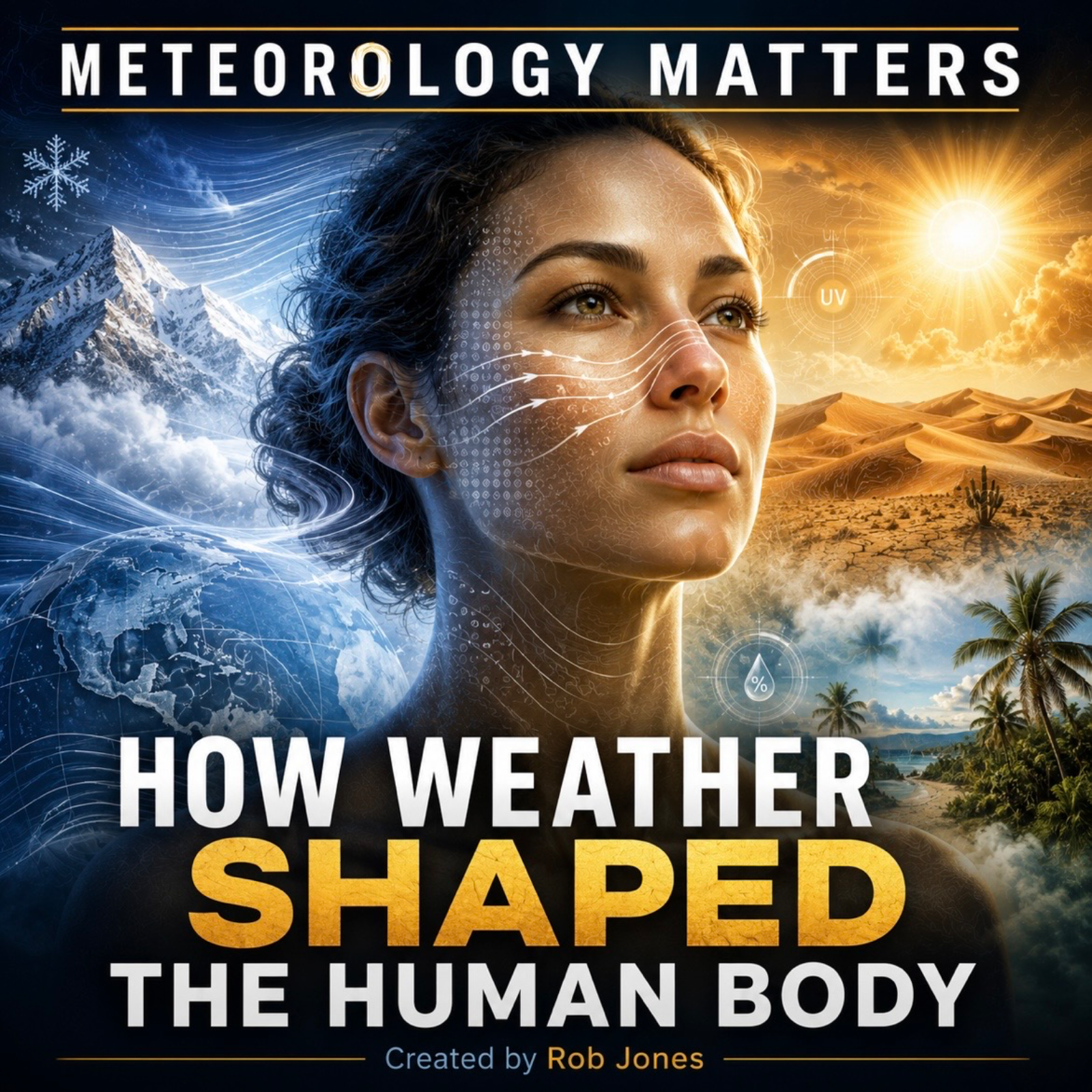
How Weather Shaped the Human Body
What if some of the features you see every time you look in the mirror were partly shaped by weather experienced thousands of years before you were born? In this episode of Meteorology Matters, we explore the extraordinary evidence connecting human evolution with temperature, humidity, sunlight, drought, atmospheric pressure and other environmental conditions. From the shape of the human nose and differences in skin pigmentation to curly scalp hair, body proportions and our remarkable ability to sweat, generations of exposure to very different climates appear to have left biological fingerprints on populations around the world. We also look beneath the surface. Research is revealing genetic differences associated with cold-weather thermogenesis, kidney function and dehydration tolerance in extremely arid environments, and the remarkable physiological solutions developed independently by Tibetan, Andean and Ethiopian high-altitude populations living with reduced oxygen. But climate does not always change humans gradually. Major droughts, cold periods and other environmental disruptions can alter migration, isolate populations, create genetic bottlenecks and change which inherited traits become more common. Finally, we look forward. In today’s interconnected world of international migration, intermarriage, air conditioning, medicine and modern infrastructure, can regional climate still shape human evolution? And as extreme heat, drought and disease environments change, could future generations experience selection involving heat tolerance, sweating efficiency, water conservation, metabolism or entirely different traits we have not yet recognized? Meteorology Matters was created by meteorologist Rob Jones. TikTok: @TVmeteorologist Instagram: @meteorologist Facebook: Hurricane Rob Jones Bluesky: @meteorologist.bsky.social Mastodon: @meteorologist@mstdn.social
- Transcript