Skip to content
Artwork for Meteorology Matters

Meteorology Matters

Rob Jones

Meteorology Matters delivers clear, data-driven insight into weather, hurricanes, and climate science cutting through hype to explain what’s happening and why it matters.

Created by Meteorologist Rob Jones, the podcast explores:

  • Extreme weather and hurricane forecasting
  • Climate trends and real-world impacts
  • Forecast uncertainty and what the data actually shows
  • How weather science affects safety, infrastructure, and daily life

Whether it’s breaking weather risk, long-range outlooks, or deep-dive analysis, Meteorology Matters helps you understand what’s happening and why it matters.

Play
  • 25 episodes
  • Avg 39 min
  • English

Support the show

Goes straight to the publisher. podnod takes nothing.

Counted on this page — what you have heard stays on this device, so it is not something the list can be paged by.
  • S3 · E17
    May 23 · 42 min

    Better Weather Forecasts, Growing Uncertainty

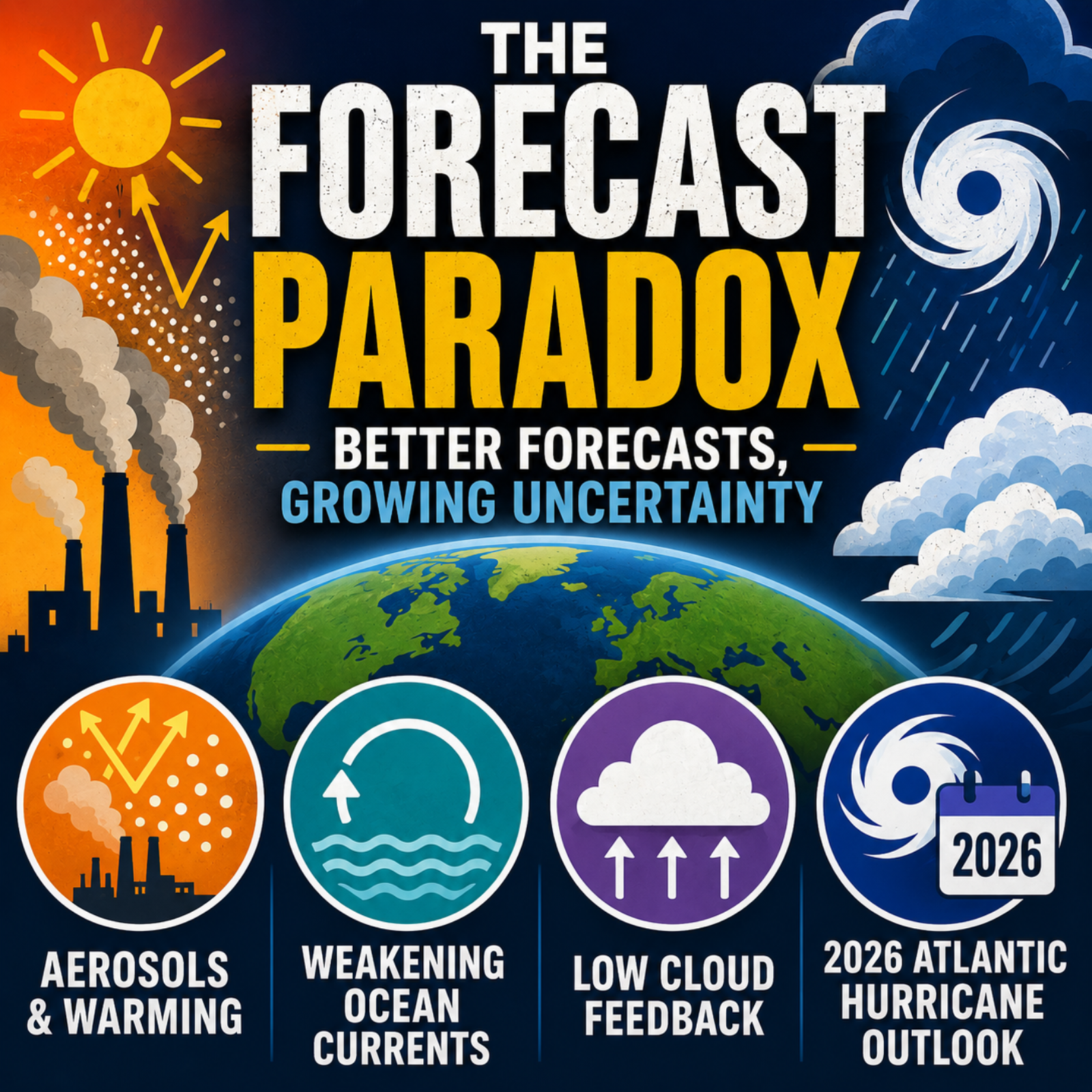
    Weather forecasting has never been more advanced. Yet many scientists say Earth’s atmosphere and oceans may be becoming more interconnected, nonlinear, and difficult to fully model. In this episode of Meteorology Matters, meteorologist Rob Jones explores the growing “tug of war” unfolding across global weather and ocean systems — from warming oceans and aerosol cleanup to low cloud feedbacks, El Niño (“el NEEN-yo”), rapid intensification, and long-term sea level rise. Topics include: • Why reducing air pollution may unintentionally accelerate warming in some regions • The surprising role aerosols and cloud reflectivity play in Earth’s temperature balance • Concerns surrounding weakening ocean circulation patterns like the AMOC • Why some recent temperature spikes are difficult for current forecast models to fully explain • New research suggesting sea levels may continue rising for centuries beyond 2300 • NOAA’s outlook for the 2026 Atlantic hurricane season • Why a “below-normal” hurricane season does not mean low risk • The growing challenge of rapid intensification forecasting The conversation also explores broader questions surrounding environmental policy, forecasting uncertainty, and whether current Earth-system models are fully equipped to capture the complexity of the future. Forecasting is improving. But the atmosphere and oceans may also be evolving in ways that are becoming harder to simplify. You’ve been listening to Meteorology Matters, created by meteorologist Rob Jones.

    • Transcript
  • S3 · E16
    May 15 · 45 min

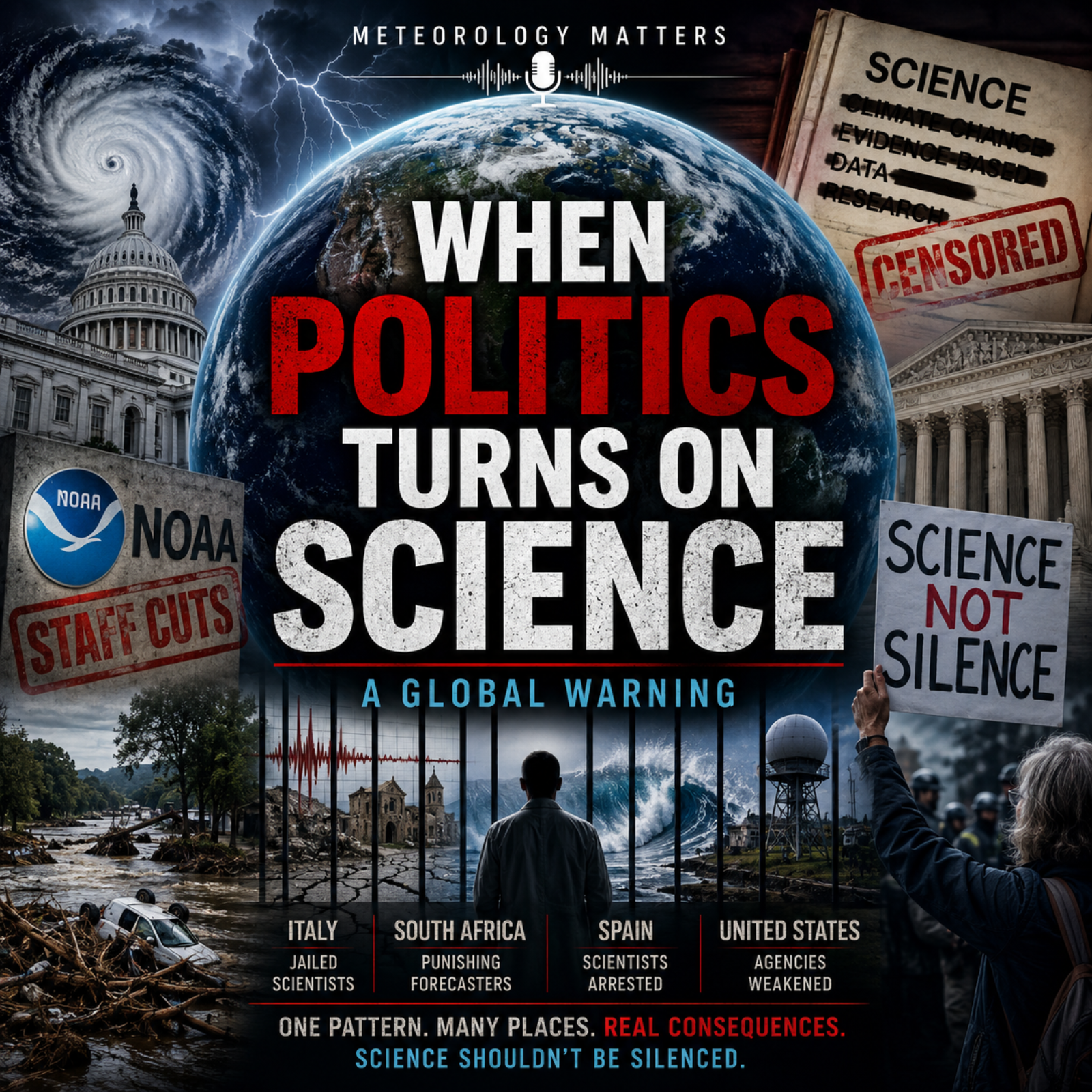
    When Politics Turns on Science Globally

    Weather scientists are increasingly being ignored, censored, arrested, or pushed aside by political movements around the world. From NOAA staffing cuts in the United States to jailed earthquake scientists in Italy and arrested climate activists in Europe, this episode explores the growing global conflict between science and political power. Meteorology Matters examines how attacks on scientific institutions can weaken disaster preparedness, public safety, weather policy, and public trust and why this pattern is no longer isolated to one country or one political system.

    • Transcript
  • S3 · E15
    May 8 · 33 min

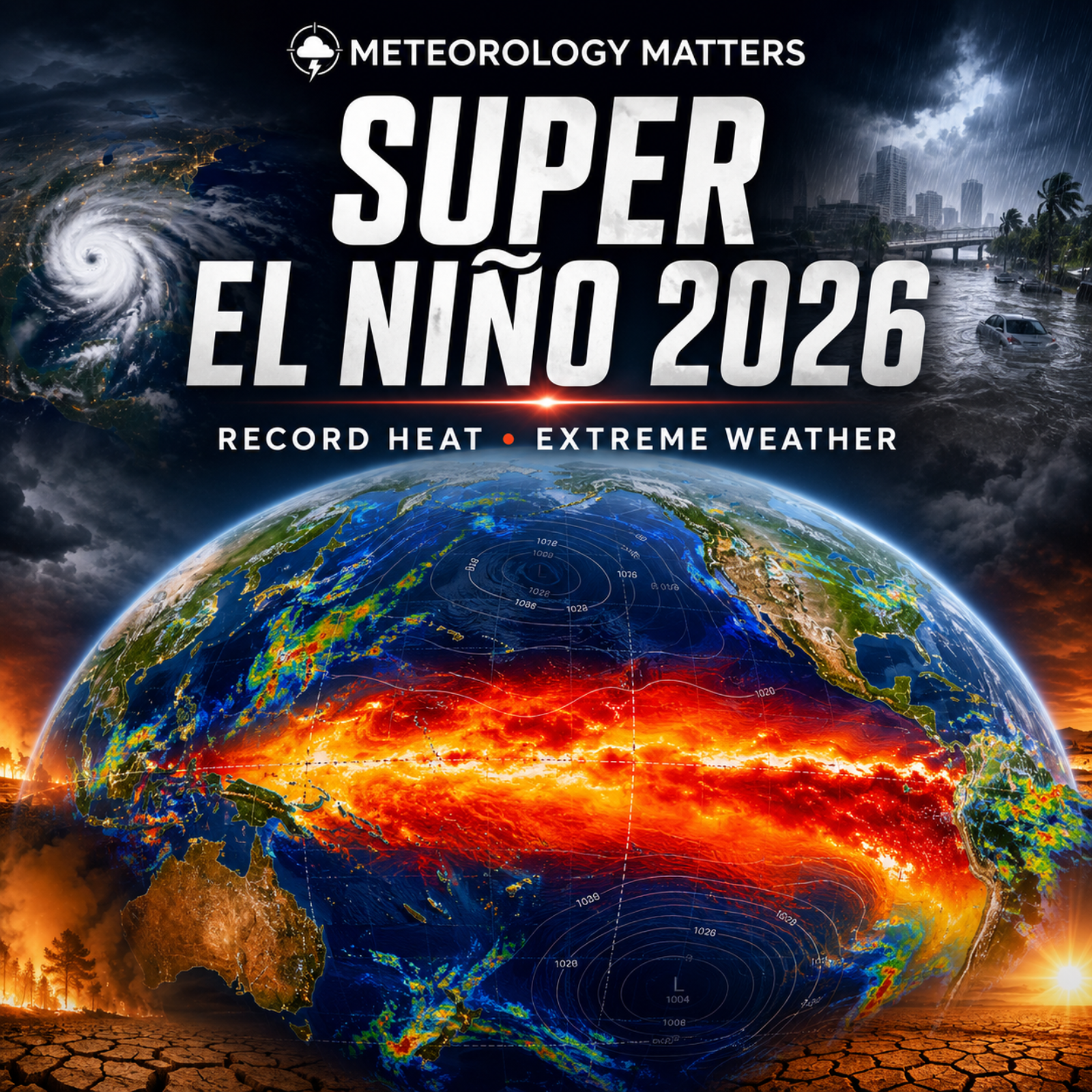
    2026 Weather Shock: Super El Niño, Record Heat, and a Planet Running Hot

    A Super El Niño may be forming for 2026, and it could push global heat, extreme weather, flooding, drought, and hurricane impacts into dangerous new territory. A Super El Niño may be forming for 2026, and it could push global heat, extreme weather, flooding, drought, and hurricane impacts into dangerous new territory. In this episode of Meteorology Matters, we break down the 2026 global weather outlook and why scientists are watching the possibility of record heat, a historic El Niño, and accelerating warming across the planet. The forecast signals point toward a year that could challenge or surpass recent temperature records, with major implications for rainfall patterns, agriculture, food security, Atlantic hurricanes, and global weather extremes. We look at why the atmosphere and oceans are running hotter, how a powerful El Niño can reshape weather across North America, South America, Asia, Africa, and the tropics, and why warmer oceans and a more moisture-loaded atmosphere can intensify both drought and flooding. We also explain what a strong El Niño could mean for the 2026 Atlantic hurricane season, including fewer overall hurricanes but continued risk from Gulf storms, inland flooding, and the “one storm” rule. This is not just a forecast for one season. It is a look at how the old weather patterns are changing, why past El Niño events may no longer be reliable guides, and what 2026 could reveal about the future of extreme weather.

    • Transcript
  • S3 · E14
    May 5 · 42 min

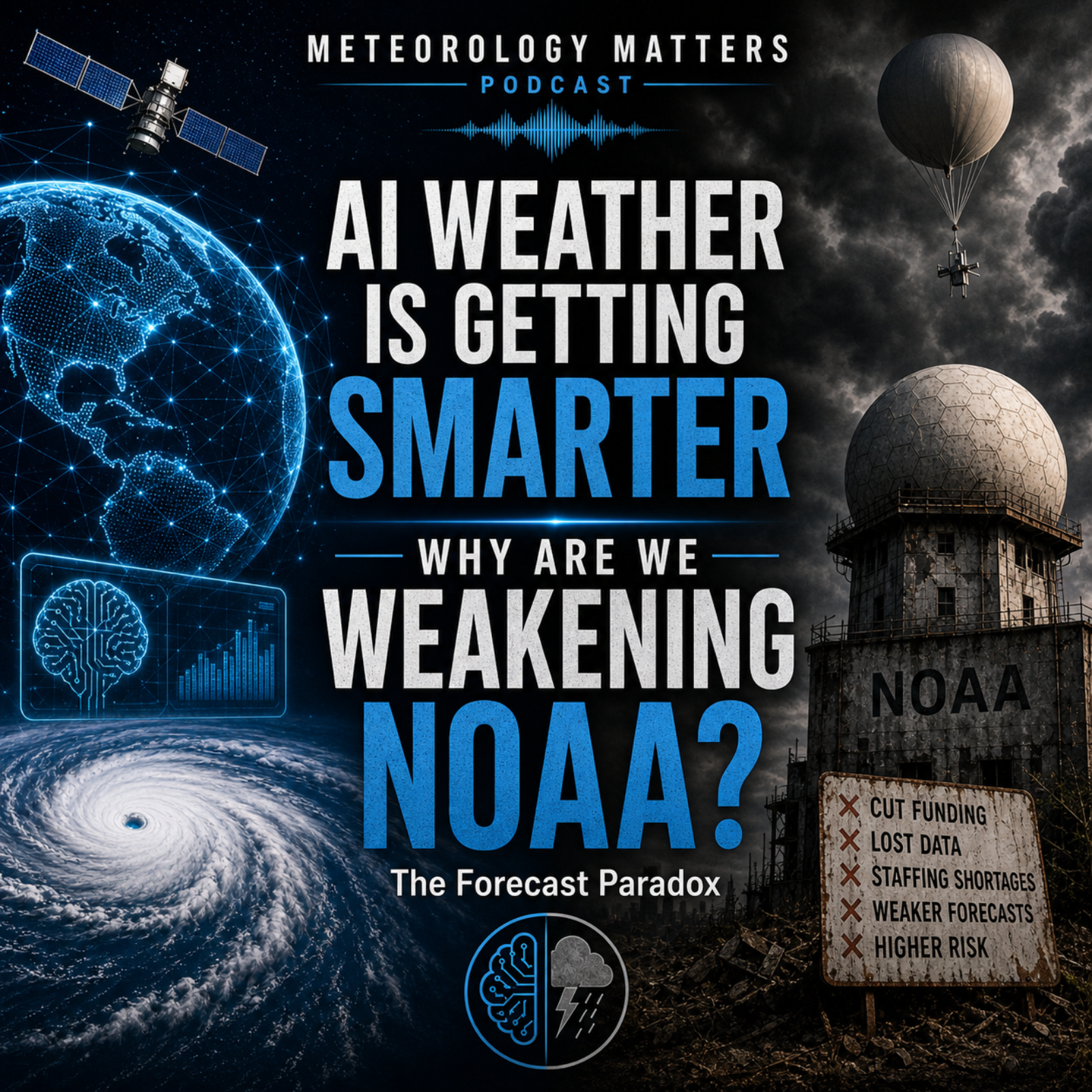
    AI Weather Forecasts Are Getting Smarter. So Why Are We Weakening NOAA?

    AI is revolutionizing weather forecasting. New models like Google DeepMind’s GraphCast and GenCast, ECMWF’s AIFS, and NOAA’s experimental AI-GEFS are producing faster, cheaper, and increasingly accurate forecasts, including major improvements in hurricane track prediction, ensemble forecasting, and global weather modeling. But there is a dangerous paradox at the center of this breakthrough. AI weather models do not replace the weather observing system. They depend on it. Satellites, weather balloons, ocean buoys, aircraft reconnaissance, radar, NOAA research, and experienced meteorologists are still the foundation of every forecast. Without high-quality data and the scientists who understand it, even the smartest AI system can start producing weaker guidance. In this episode of Meteorology Matters, we break down The Forecast Paradox: while artificial intelligence is making weather forecasts faster and more powerful, proposed cuts to NOAA, weather research, satellites, staffing, and atmospheric science infrastructure could weaken the very system that feeds and validates these models. We connect AI weather forecasting, hurricane prediction, rapid intensification, storm surge modeling, NOAA budget cuts, the future of the National Weather Service, and the growing competition between U.S. and European weather models. The big question: can AI help save weather forecasting if we dismantle the infrastructure it depends on? The future of forecasting is not AI versus meteorologists. It is AI plus observations, AI plus research, AI plus human expertise, and AI plus a strong national weather enterprise.

    • Transcript
  • S3 · E13
    April 21 · 53 min

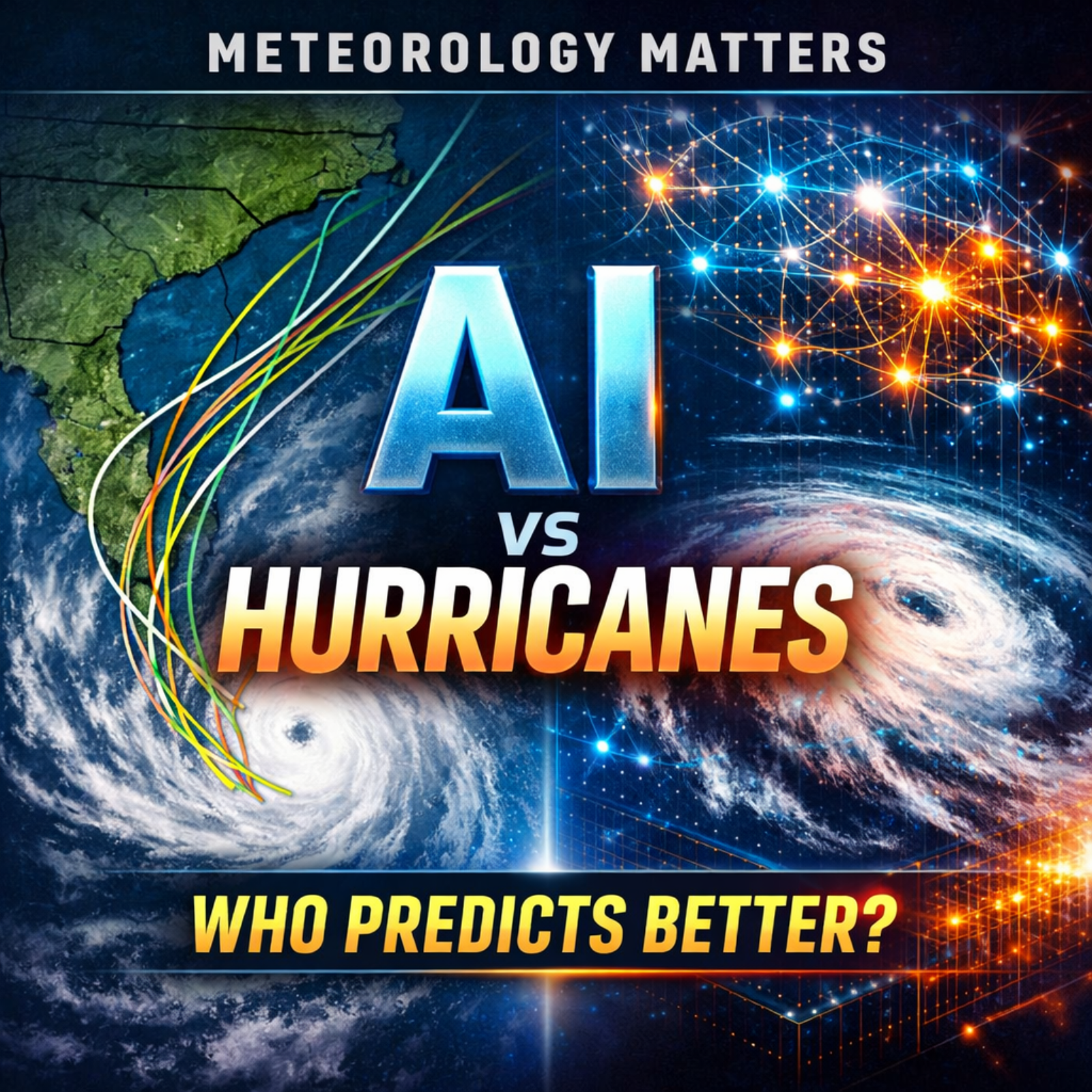
    AI Just Beat Hurricane Forecasting… Should We Be Worried?

    AI just changed hurricane forecasting forever. In 2025, it outperformed traditional models and even challenged official NHC forecasts. Artificial Intelligence is no longer experimental in meteorology rather it’s operational. In this episode of Meteorology Matters, we break down the 2025 hurricane season… the moment AI models like Google DeepMind’s GraphCast and FGN proved they can outperform traditional forecasting methods in track, intensity, and lead time. We’re talking: A hurricane predicted 9 days before landfall AI beating traditional models in accuracy Forecasts generated in minutes instead of hours And a major shift in how the National Hurricane Center operates But here’s the twist… AI isn’t replacing meteorologists but it’s forcing a complete evolution of the science. We’ll break down: AI vs traditional weather models (what’s actually different) Real-world case studies from 2025 storms The truth about AI hype vs reality And what this means heading into the 2026 hurricane season Because in a world where forecasts are faster, bigger, and more complex… The human forecaster may be more important than ever. 🎧 Follow Meteorology Matters 📲 TikTok: @TVmeteorologist 📸 Instagram: @meteorologist 📺 YouTube: RobJonesHurricane #HurricaneSeason #AIWeather #Meteorology #WeatherForecast #ClimateScience

    • Transcript
Showing 21–25 of 25 episodes