Skip to content
Artwork for Machine Dreams
TechnologyNewsTech News

Machine Dreams

Kolawole Samuel Adebayo & Leah Stern

Machine Dreams is a weekly dive into the real world of AI. Hosts Kolawole Samuel Adebayo and Leah Stern talk with the founders, researchers, investors, engineers, and stakeholders shaping the future of intelligent machines. These are unfiltered, human conversations about what’s working in AI, what isn’t, and what might reshape the world next. From databases and infrastructure to agents, regulation, the future of work, and more, Machine Dreams brings clarity to arguably the most important tech story of our time.

Play
  • 29 episodes
  • Avg 16 min
  • English
Counted on this page — what you have heard stays on this device, so it is not something the list can be paged by.
  • March 26 · 1 min

    Machine Dreams - Episode 15 Trailer

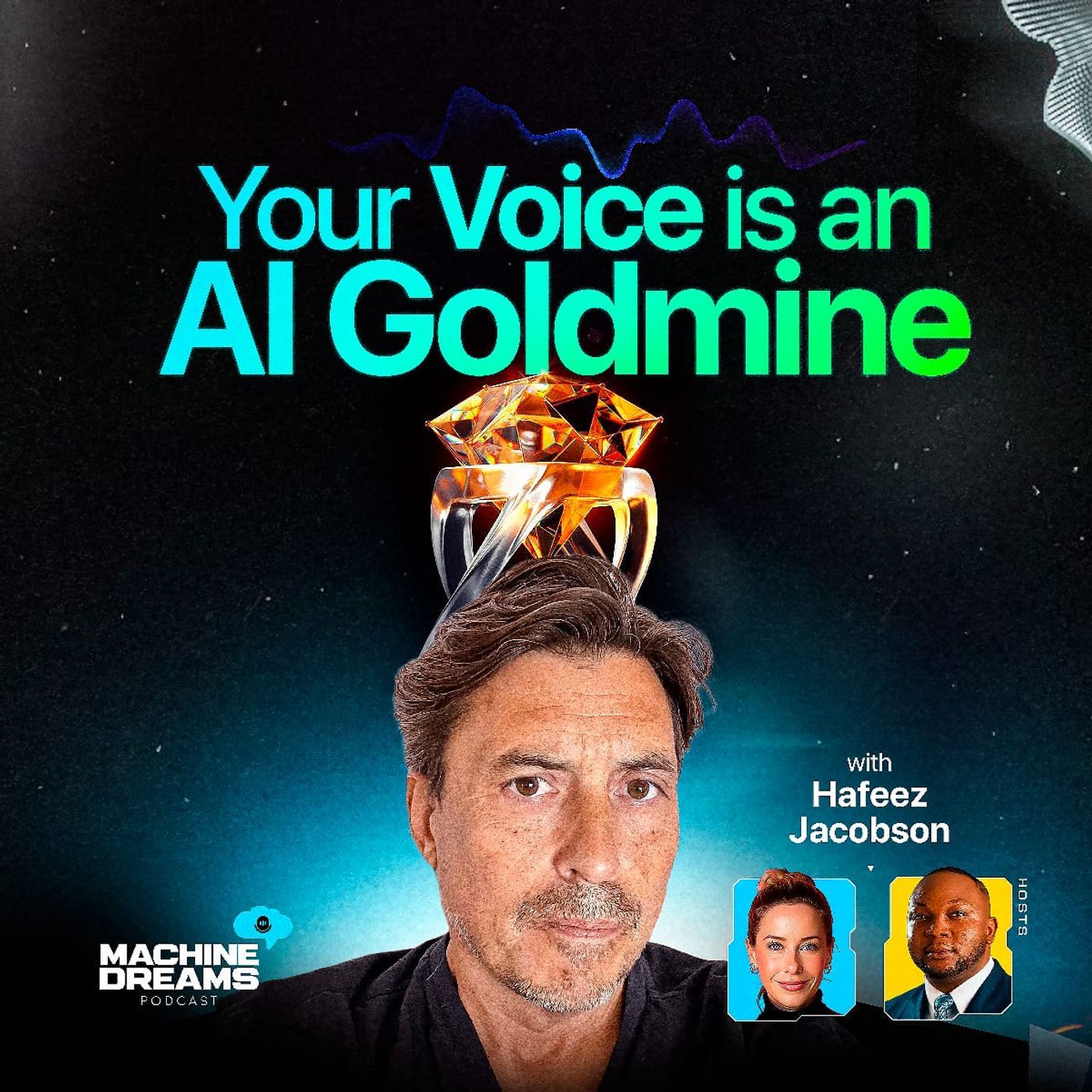
    What if your voice could predict your future behavior? This isn't science fiction. On this episode of Machine Dreams, we explore how Daatra Holdings uses AI to analyze the "music" of your speech, not just the words, to help banks assess risk and HR teams make hiring decisions. CEO Hafeez Jacobson explains the difference between AI and machine learning, how this tech evolved from military stress tests, and why they focus on "EQ" (emotional intelligence) over traditional "IQ." Find out how AI is listening to the world and what it hears when you speak. Live today on YouTube, Spotify, and Apple Podcasts. 7pm GMT+1. 6pm UK. 1pm EST.

    • Transcript
  • S1 · E14
    March 19 · 21 min

    AI Agents Can Now Investigate Financial Crime Faster Than Humans

    Financial crime is becoming more complex, more connected, and harder to detect. As money moves across borders in real time, many of the systems banks rely on were built for a very different era. In this episode of Machine Dreams, Sam and Leah speak with Brad Levy, CEO of ThetaRay, about how AI is being used to detect and investigate money laundering across global payment networks. From anomaly detection to “cognitive AI,” Brad explains how these systems move beyond static rules to identify patterns that don’t look right—even when no one has seen them before. The conversation also explores how geopolitical conflicts reshape financial flows, why banks still struggle to modernize, and whether AI-powered agents will replace human investigators or make them more effective.

    • Transcript
  • S1 · E13
    March 5 · 13 min

    Can AI Predict When Students Will Drop Out?

    Nearly one third of college students drop out every year. According to Elvee's 2026 Higher Education Retention Report, 42% of students say they've felt close to leaving at some point. The drivers aren't just academic. It's burnout, financial pressure, mental health struggles, and trying to balance work with school. In this episode of Machine Dreams, Raz Dar, CEO of Elvee, explains how AI can identify students at risk of dropping out before it happens. The system analyzes over 100 behavioral signals from learning management platforms like Canvas and Blackboard. We also talk about how the same technology tracks employee burnout in contact centers, why Elvee avoids demographic data to prevent bias, and what happens when universities actually measure whether their interventions work.

    • Transcript
  • S1 · E12
    February 26 · 23 min

    The Nancy Guthrie Case And The Truth About Bitcoin

    This episode of Machine Dreams comes with a twist. We’re diving into the Nancy Guthrie kidnapping case, a story that’s dominated headlines and sparked fierce debate about cryptocurrency, crime, and public misconception. When news broke that the perpetrators demanded millions in Bitcoin, the narrative wrote itself: That crypto is anonymous, untraceable, and built for criminals. But that’s not how Bitcoin works. Katherine Kirkpatrick Bos, General Counsel at StarkWare, breaks down what most people get wrong. “Bitcoin isn’t anonymous,” she tells us. “It’s pseudonymous.” Every transaction lives on a public ledger forever. In addition, machine learning tools from companies like Chainalysis and Elliptic can trace crypto across wallets and exchanges with precision cash never offered. In other words, the technology people think helps criminals is actually what catches them. We also discuss how AI is changing crypto in ways most people don’t realize. Machine learning is now being used to hunt down criminal activity on blockchain networks, tracking patterns humans would miss. Katherine explains zero-knowledge proofs— a technology that could let companies use AI on sensitive data without ever seeing the actual information. And she breaks down why privacy, long confused with anonymity in crypto, is now the key to getting Wall Street fully on board with blockchain. Get more in this brand new episode of Machine Dreams.

  • S1 · E11
    February 19 · 21 min

    Your Employees Are Using AI You Don’t Know About—And It’s A Security Nightmare

    Most companies believe they’ve approved 30 apps. The truth? Over 500 are running right now. Your employees aren’t waiting for IT approval. They’re using ChatGPT instead of the Copilot you paid for. They’re uploading sensitive data to free design tools that train on your information. They’re connecting AI agents to Salesforce, HubSpot, and your knowledge base without anyone tracking what those agents can access. This is shadow AI. And it’s spreading faster than your security team can see it. Gal Nakash is co-founder of Reco and Forbes 30 Under 30 honoree. He explains why AI agents are now crown jewels for hackers. Compromise one agent and you access every system it touches. He walks through the moment CISOs see their real AI footprint for the first time and realize traditional security assumptions no longer hold. The companies that survive won’t be the ones blocking AI. They’ll be the ones who assume chaos is permanent and build security that can keep up. Learn more in this very insightful conversation.

  • S1 · E10
    February 12 · 19 min

    How This Biotech Founder Studies Breast Milk To Design Unique Therapeutics

    Most AI drug discovery companies fail in clinical trials. Maolac’s success rate? 10 out of 10. In this episode of Machine Dreams, CEO Maya Ashkenazi Otmazgin explains how her company uses “protein intelligence” to reverse-engineer breast milk’s biological playbook, designing therapeutics that mimic what nature already perfected. We discuss why biological data is scarce, how Maolac compresses drug timelines without cutting safety corners, and why women’s biology demands different solutions than men’s. If you’re tired of AI drug discovery vaporware, this conversation is for you.

  • S1 · E9
    February 5 · 23 min

    The Age of Digital Humans Has Already Begun

    Digital humans are no longer a concept. They’re already showing up in how we learn, work, communicate, and interact online. In this episode of Machine Dreams, we sit down with Ron Friedman, head of content and creative marketing at D-ID, to talk about what AI-powered digital humans actually are, how they’re being used in the real world today, and why they’re becoming the next interface between people and machines. From business and accessibility to trust, identity, and responsibility, this conversation looks past the demos and into what this shift really means.

  • #8
    January 27 · 23 min

    “You Can’t Worship AI”: Building Brain Recovery Tech That Puts Patients First

    One in four people over 65 will have a stroke. Most will survive, but survival doesn’t mean recovery. While we’ve built data centers in space, stroke patients are still treated with 19th-century physical therapy. In this episode of Machine Dreams, we sit down with Yotam Drechsler, CEO of BrainQ, who’s building what he calls “NVIDIA for brain recovery.” His AI-powered platform retrains neural networks damaged by stroke, helping patients recover at home through personalized electromagnetic fields and telemedicine. Yotam explains why AI started in neuroscience but left the brain behind, why the first weeks after stroke matter so much, and what “responsible AI” actually means when patients are elderly, fragile, and trying to regain the ability to button their own shirt. We push back on the fear of AI replacing doctors and ask how you balance innovation with patient safety when families must trust an algorithm with their most precious asset. This is AI beyond the demo—where the stakes are personal, timelines span decades of R&D, and getting it wrong means more than a bad user review.

  • S1 · E7
    January 20 · 21 min

    His VC Firm Just Raised a $140M Fourth Fund. What He Says About AI Cuts Against the Narrative

    In this episode of Machine Dreams, we sit down with Judah Taub, Co-founder and Managing Partner at Hetz Ventures, fresh off closing the firm’s $140M Fund IV during wartime and a period of global uncertainty. Hetz now manages close to $500M in assets, and Judah has a front-row view into what serious investors are funding in AI and what they are walking away from. We talk about why Judah sees this moment as the internet in the late 1990s, why “AI bubble” is really two different debates, and what separates durable AI businesses from fast demos. He breaks down the signals he watches, including a sharp test most founders don’t like to hear: does GPT-X make you obsolete, or does it make you stronger? We also unpack why infrastructure and deep software still win in Israel, what “color of revenue” means in practice, and where returns may actually accrue over the next five years as AI fragments into large models beyond language. If you’re building, investing, or trying to understand where the real money is going in AI, this is the conversation that cuts through the noise.

Showing 21–29 of 29 episodes