Skip to content
Artwork for Machine Dreams
TechnologyNewsTech News

Machine Dreams

Kolawole Samuel Adebayo & Leah Stern

Machine Dreams is a weekly dive into the real world of AI. Hosts Kolawole Samuel Adebayo and Leah Stern talk with the founders, researchers, investors, engineers, and stakeholders shaping the future of intelligent machines. These are unfiltered, human conversations about what’s working in AI, what isn’t, and what might reshape the world next. From databases and infrastructure to agents, regulation, the future of work, and more, Machine Dreams brings clarity to arguably the most important tech story of our time.

Play
  • 20 episodes
  • Avg 14 min
  • English
  • S2 · E2
    Wednesday · 21 min

    Snowflake’s VP of AI on the Cost, Data, and Future of AI

    AI feels instant. Ask a question, get an answer. But behind every answer is data, computing power, a choice of models, and a real cost. In this episode of Machine Dreams, Snowflake VP of AI Baris Gultekin joins Sam Adebayo and Leah Stern to unpack what it actually takes to make AI work at scale, why there is no AI strategy without a data strategy, and why the biggest model isn’t always the best one. Baris has worked on AI since his early days at Google, long before the current boom. We talk about how far the technology has come, where it still falls short, and what happens next as AI becomes capable of working on increasingly complex tasks on its own.

    • Transcript
  • S2 · E1
    August 20 · 21 min

    The Hidden Cost of AI Nobody Is Talking About | Collibra CEO Felix Van de Maele

    AI is getting smarter. But inside real companies, intelligence alone isn't enough. If employees still have to double-check every response, correct mistakes and babysit AI agents, how much productivity are we actually gaining? In this episode of Machine Dreams, we sit down with Felix Van de Maele, co-founder and CEO of Collibra, to unpack what he calls the “hallucination tax.” We explore why even the best AI models struggle without the right company data and context, why businesses may be working more despite adopting AI, and what it will take for enterprises to finally trust AI to make decisions and take action at scale.

    • Transcript
  • #23
    June 4 · 25 min

    AI Agents Are About To Flood The Internet. There’s Just One Problem

    Gartner predicts that more than 40% of agentic AI projects will be canceled by the end of 2027 due to escalating costs, unclear business value, and inadequate risk controls. Enterprises are building fast and failing fast. The problem isn't the models or the ambition. It's that agents can't actually talk to each other. Most companies are deploying single agents in silos when the real future requires hundreds of them working together, delegating tasks, sharing credentials, and holding context across conversations. The infrastructure for that doesn't exist yet. Arick Goomanovsky is co-founder and CEO of BAND (https://www.band.ai) and has built two cybersecurity companies that exited for a combined $550 million. Sygnia was acquired by Temasek for $250 million. Ermetic was acquired by Tenable for around $300 million. Now he's tackling what he believes is the next defining infrastructure challenge in AI: building the harness that lets agents discover each other, communicate bidirectionally, and collaborate across the enterprise and the open internet. Arick explains why single-agent architectures don't scale, why identity and trust between agents is harder than most people realize, and what a functioning internet of agents will look like inside the enterprise five years from now.

    • Transcript
  • June 4 · 1 min

    Machine Dreams - Episode 23 Trailer

    What happens when your company doesn't hire one AI agent... but a thousand? In this episode of Machine Dreams, BAND CEO Arick Goomanovsky explains why the future of enterprise AI isn't about bigger models, it's about getting thousands of AI agents to discover each other, trust each other, and work together. From personal AI assistants and digital coworkers to the rise of an "Internet of Agents," this conversation explores one of the most important infrastructure challenges shaping the next era of AI. Live today on YouTube, Spotify, and Apple Podcasts. 7pm GMT+1. 7pm UK. 1pm EST.

    • Transcript
  • #22
    May 29 · 21 min

    AI Is Finding Vulnerabilities Faster Than Humans Can Fix Them

    The cybersecurity industry has spent decades getting better at finding vulnerabilities. Better scanners, better scoring systems, better detection. And yet breaches keep happening. The problem isn't discovery anymore. It's that security teams are drowning in critical alerts, most of which turn out to be noise, while the real bottleneck remains: how do you actually fix what matters before attackers exploit it? Now AI models like Mythos are about to flood teams with even more vulnerabilities than they can possibly remediate. David Warshavski is co-founder and CPO of Tonic Security (https://www.tonicsecurity.com) and spent more than 20 years in cybersecurity, leading the red team and enterprise security department at Sygnia. He explains why Mythos is both overhyped and a genuine warning sign, why the goal of security was never to plug every hole but to protect what keeps the business running, and how Tonic's agentic platform finally closes the gap between identifying risk and eliminating it at machine speed. If you work in security or sit on a board trying to understand where the real threat lies, this conversation cuts through the noise.

    • Transcript
  • May 28 · 1 min

    Machine Dreams - Episode 22 Trailer

    AI is about to flood cybersecurity with vulnerabilities, and most companies are nowhere near ready for what comes next. In this episode of Machine Dreams, Tonic Security co-founder and cybersecurity veteran David Warshavski breaks down why Anthropic’s Mythos model is a warning sign for the entire industry, how AI is accelerating both cyberattacks and defense, and why organizations drowning in alerts may soon face a vulnerability tsunami unlike anything we’ve seen before.

    • Transcript
  • #21
    May 21 · 20 min

    Fortune 500 Companies Are Deploying AI Agents Faster Than They Can Secure Them

    AI agents are being deployed across enterprises faster than security teams can track them. Employees aren't waiting for approval. They're spinning up agents connected to Salesforce, HubSpot, and the most sensitive company data because they've been told to move faster. Most organizations have no visibility into what these agents are doing, what permissions they hold, or where the risk actually lives. This isn't shadow IT. This is shadow AI, and it's already inside your company. Ofer Klein is CEO and co-founder of Reco (https://www.reco.ai/), a company helping Fortune 500 organizations govern AI agent sprawl. Ofer comes from a background as an IDF helicopter pilot and serial entrepreneur who's built and scaled go-to-market teams across the US. Reco works with companies like Waste Management, Nestlé, and major banks to answer one question: how do you enable AI adoption at speed while maintaining visibility and control? Ofer explains what he calls the "oh shit" moment every board is having right now, why Mythos changed the security conversation overnight, and why his company hired 40 people in the last 10 weeks. If you're deploying AI agents, running enterprise security, or trying to figure out how to move fast without getting breached, this matters.

    • Transcript
  • May 21 · 1 min

    Machine Dreams - Episode 21 Trailer

    AI agents are already inside companies making decisions, accessing sensitive systems, and moving faster than most security teams can track. But here’s the real question: who’s actually governing them? In this episode of Machine Dreams, Reco CEO Ofer Klein joins us to unpack the rise of AI agents, the “oh sh*t” moment happening in boardrooms, why companies are rushing into AI before security catches up, and what the Mythos era means for the future of cyber defense. This one gets very real, very fast.

    • Transcript
  • #20
    May 14 · 24 min

    What Happens When AI Starts Making Decisions Without You?

    AI agents are already deployed across enterprises. They touch company data, hold permissions, and perform actions on behalf of employees. But most organizations have no visibility into what these digital workers are actually doing. This isn't shadow IT where someone installs unauthorized software. This is shadow AI, and it's moving faster than any governance framework was built to handle. Shahar Tal is a veteran of Israel's elite 8200 unit and former senior executive at Checkpoint and Celebrite. In 2024, he co-founded Cyata (https://cyata.ai) with fellow 8200 alumni to solve agentic security. The company raised $8.5 million in seed funding and seven months out of stealth got acquired by Checkpoint Software Technologies. Shahar and his researchers have been mapping vulnerabilities in major agentic frameworks that most organizations don't know exist yet. They'll disclose findings at Black Hat this August. We discuss why AI agents represent the biggest enterprise shift since the cloud, what agentic identity actually means, and why demand is outrunning governance. Shahar explains how prompt injection enables real exploits at scale, why security teams need to stop being the brake pedal and start enabling safe AI use, and what CISOs should ask internally before agents run blind. If you're building AI systems, running enterprise security, or trying to understand where the real risk lies, this conversation matters.

    • Transcript
  • May 14 · 2 min

    Machine Dreams - Episode 20 Trailer

    AI agents are already operating inside enterprises. They're touching company data, performing actions, and working on behalf of employees. But most organizations have no visibility into what these digital workers are actually doing. Demand for AI adoption is moving faster than governance can keep up. Shahar Tal is a veteran of Israel's elite 8200 unit and CEO of Cyata, a company he built in 2024 to solve agentic security. Seven months out of stealth, Checkpoint Software acquired the company. Shahar explains why AI agents represent the biggest leap in enterprise technology since the cloud, what agentic identity actually means, and why shadow AI is fundamentally different from shadow IT. Live today on YouTube, Spotify, and Apple Podcasts. 7pm GMT+1. 6pm UK. 1pm EST.

    • Transcript
  • #19
    April 30 · 25 min

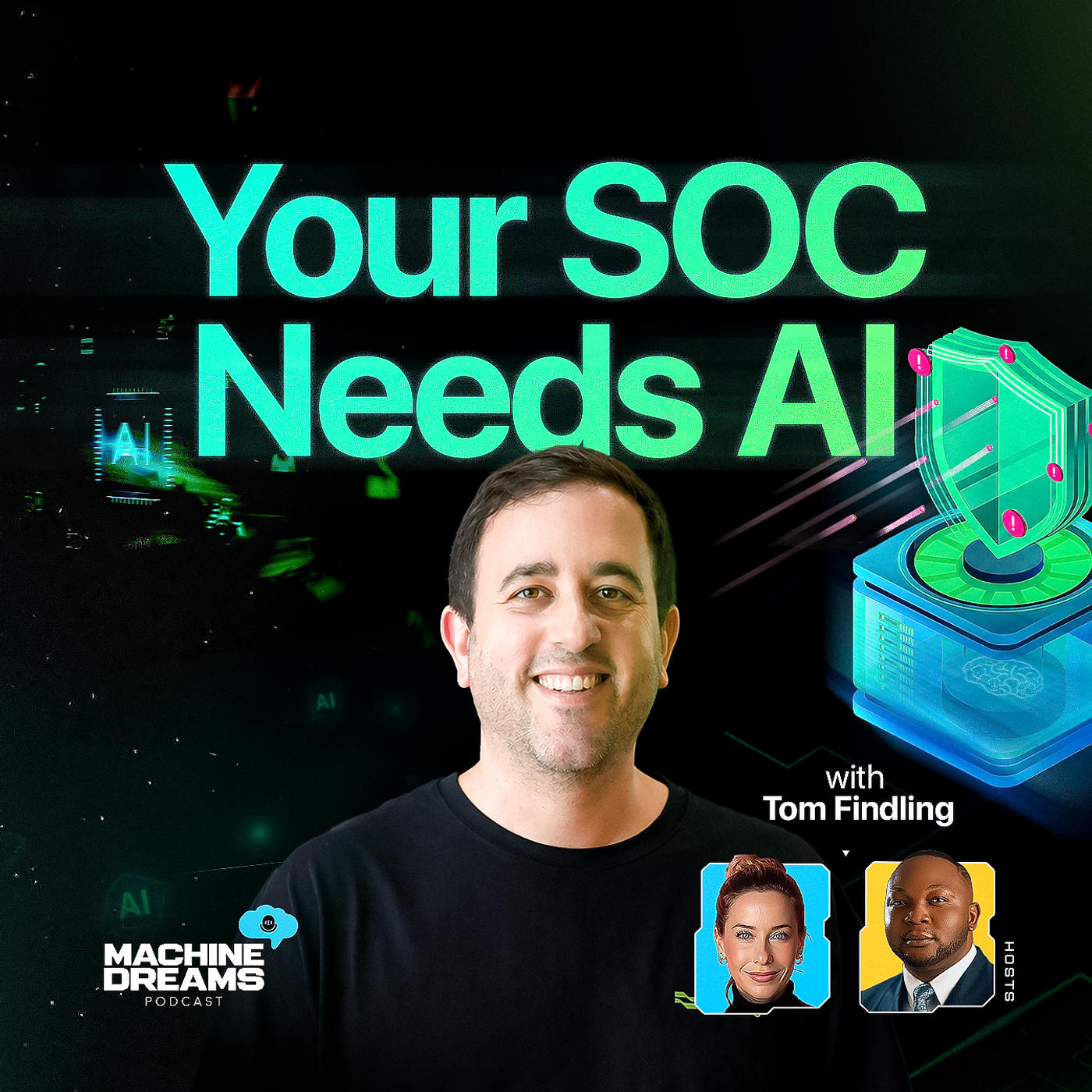
    AI Agents Are Coming For The Security Operations Center

    Security teams are buried. Alerts pile up faster than analysts can triage them. Investigations take days or weeks. By the time threats get contained, the damage is done. Meanwhile, adversaries are starting to use AI agents to find vulnerabilities at machine speed. The defense is still running at human speed. That imbalance is about to break the entire security model. Tom Findling is CEO and co-founder of Conifers, a company building AI SOCs that don't just assist human defenders but take ownership of security investigations in real time. Tom comes from deep roots in Israeli cybersecurity and has been tracking how AI is shifting the threat landscape faster than most people realize. Anthropic's Mythos release made it clear: any 12-year-old with a thousand dollars in API tokens now has nation-state-level capabilities to uncover zero-day vulnerabilities. If attackers have that kind of power and defenders don't, the gap becomes unsurvivable. We discuss what Tom calls the agentic blue team, a future where AI handles threat intelligence, continuous threat hunting, detection engineering, investigation, and response without waiting for human analysts to catch up. Tom explains why agents today make fewer mistakes than humans in certain tasks, why there's a double standard when AI gets something wrong, and what the role of human defenders will actually look like when machines are doing the front-line work. If you're in security, building defense tools, or trying to understand where this industry is headed, this conversation matters.

    • Transcript
  • #19
    April 30 · 2 min

    Episode 19 Trailer

    AI is no longer just assisting security teams. It is starting to investigate, triage, and respond at machine speed. Tom Findling is CEO and co-founder of Conifers, a company building AI SOCs that take ownership of security investigations in real time without waiting for human analysts. Tom explains what he calls the agentic blue team, a future where AI handles threat intelligence, investigation, and response at machine speed. He breaks down why agents already make fewer mistakes than humans on certain tasks, why there's a double standard when AI gets something wrong, and what the future actually looks like for human defenders when machines are doing the front-line work. If you're in security or trying to understand where defense is headed, this matters.

    • Transcript
  • #18
    April 16 · 28 min

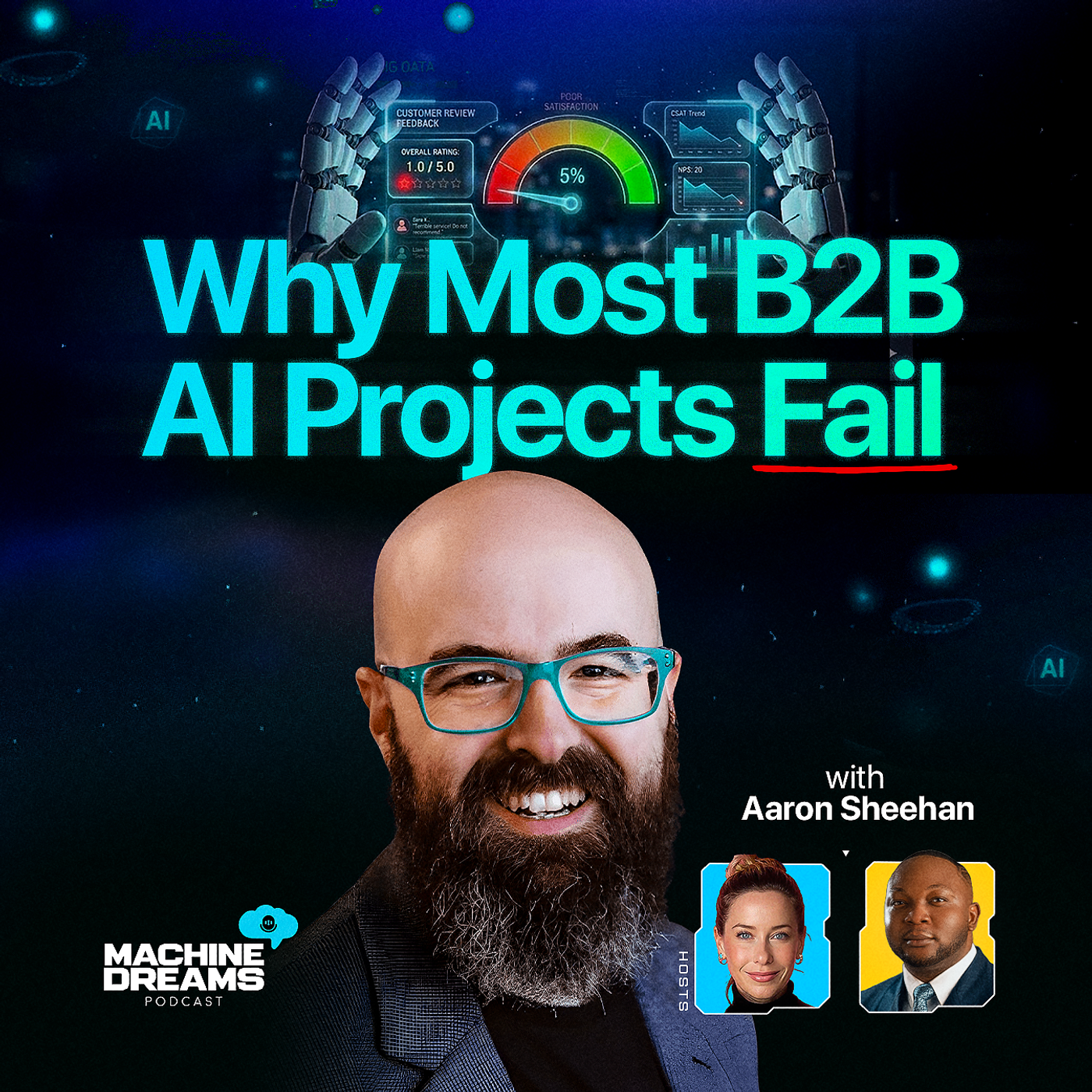
    How to Make Your AI Work in B2B Commerce

    Most B2B companies get pitched AI that sounds great in demos but doesn’t fix what’s actually broken: fragmented systems, manual order entry, and buyers who just want things to work. Aaron Sheehan has spent over a decade building eCommerce platforms for manufacturers and distributors. He’s VP of Strategy and Partnerships at OroCommerce, and he’s not buying the hype. Instead, he shows us the right way to do things with AI in the very dynamic and ever-changing B2B world. In this conversation, we dig into why so many B2B AI projects fail, what actually delivers ROI, and why agentic commerce isn’t nearly as close as the marketing suggests. If you’re evaluating AI for your business or trying to figure out where the budget should go, this one’s worth your time.

    • Transcript
  • April 16 · 1 min

    Machine Dreams - Episode 18 Trailer

    Most B2B companies are being sold flashy AI demos that don’t solve their real problem: fragmented back-office systems, manual order processing, and customers who just want a reliable portal. Aaron Sheehan (VP of Strategy at OroCommerce) has spent over a decade building for manufacturers and distributors-and he’s not buying the hype. In this episode, he explains why agentic commerce is years away, where B2B AI budgets should actually go, and the one word that separates a real solution from a magic eight ball. If you sell to other businesses and you’re tired of being pitched AI that doesn’t work, this conversation is for you.

    • Transcript
  • #17
    April 8 · 32 min

    Can AI Replace Your Rabbi Or Pastor? Two Faith Leaders Answer Honestly

    Many people are now turning to AI chatbots like ChatGPT and Claude for spiritual guidance, asking algorithms questions that used to go to rabbis and pastors. That shift raises questions religious institutions have never faced before. In this special episode, we sit down with Rabbi Bentzi Sudak of The Centre - Chabad Hampstead Garden Suburb, United Kingdom and Pastor Tomiwa Immanuel of Celebration Church International, Ibadan, Nigeria, to discuss this shift. Both lead communities rooted in ancient traditions. Both are watching AI reshape how people connect with faith. Rabbi Sudak explains why AI can provide information but misses the human journey that makes faith meaningful. Pastor Tomiwa breaks down why dependency on AI for spiritual guidance risks replacing intimacy with God. We also discuss whether religious people can be tech-savvy, what role faith leaders should play in shaping AI tools, and whether AI was part of God’s design all along, and much more. A Passover and Easter special. ONLY on Machine Dreams Podcast.

    • Transcript
  • April 7 · 2 min

    Machine Dreams - Episode 17 Trailer

    Our next episode on Machine Dreams Podcast is one unlike any other. In this special edition, we talk about something that most people don’t talk about: The interplay between AI, faith, community, and meaning. Many people around the world are turning to AI chatbots for succor, meaning, and to find answers to life’s many existential questions. But what does it mean for institutions of faith, which have traditionally been the pillar of meaning and purpose for many? Is AI disrupting religion as we know it today? Can AI get you closer to God? What’s technology’s role in the simple but deeply important issues of faith, community, and purpose? Our guests, Rabbi Bentzi Sudak and Pastor Tomiwa Immanuel, cut right into the very meat of the matter. They answer, without equivocation, some of the most pressing issues about AI and religion today. This is one episode you shouldn’t miss for anything. ONLY on Machine Dreams. LIVE today at 8pm GMT+1, 8pm UK, and 3pm EST. Watch on YouTube; listen on Spotify and Apple Podcasts. Subscribe, share, and engage!

    • Transcript
  • #16
    April 2 · 28 min

    AI Is Flooding Journalism. This Analyst Shows Where To Draw The Line

    The AI in journalism debate is trending hard right now. The Wall Street Journal recently reported on journalists using AI to boost output. Tech.eu suspended a senior correspondent for using AI-fabricated quotes in his reporting. And now everyone’s asking: Where’s the line? In this episode of Machine Dreams, we sit down with Victor Dey, tech analyst and writer for Fast Company, Forbes, Observer, and more. Victor breaks down where the line is between using AI as a research tool and crossing into unethical territory that destroys credibility. But this conversation goes beyond journalism. We talk about agentic AI reshaping how software companies price their products, quantum computing converging with AI infrastructure, and what Victor sees behind the scenes interviewing top executives at some of the world’s biggest tech companies.

    • Transcript
  • April 1 · 2 min

    Machine Dreams - Episode 16 Trailer

    AI is flooding journalism. Reporters are getting suspended for fabricating quotes with AI. Publications are catching writers who generated entire stories with language models. The debate is raging across newsrooms and social media about where the line should be. Live today on YouTube, Spotify, and Apple Podcasts. 7pm GMT+1. 6pm UK. 1pm EST.

    • Transcript
  • #15
    March 27 · 22 min

    This AI Can Predict Your Behavior From How You Speak

    In this episode, hosts Samuel Adebayo and Leah Stern sit down with Hafeez Jacobson, CEO of Daatra Holdings, to explore how AI is reshaping the software industry. Hafeez explains why companies are moving beyond traditional SaaS models toward “data as a service,” using real-world examples from finance and HR. Through Daatra’s VoiceSense technology, they analyze the behavioral cues in natural speech—not just words—to help banks assess risk, HR teams make hiring decisions, and even support mental health monitoring. The conversation dives into how this approach can provide insights at scale, especially for underserved populations without traditional credit histories. Hafeez also addresses critical questions around bias, privacy, and the difference between AI and machine learning. He explains how focusing on vocal patterns rather than content helps reduce demographic bias, and why companies must integrate AI into existing processes rather than chasing novelty. From the origins of the technology in government stress testing to its future in remote patient monitoring, this episode cuts through the hype to reveal what is genuinely new—and what is simply a fresh coat of paint—in the world of behavioral AI.

    • Transcript
  • March 26 · 1 min

    Machine Dreams - Episode 15 Trailer

    What if your voice could predict your future behavior? This isn't science fiction. On this episode of Machine Dreams, we explore how Daatra Holdings uses AI to analyze the "music" of your speech, not just the words, to help banks assess risk and HR teams make hiring decisions. CEO Hafeez Jacobson explains the difference between AI and machine learning, how this tech evolved from military stress tests, and why they focus on "EQ" (emotional intelligence) over traditional "IQ." Find out how AI is listening to the world and what it hears when you speak. Live today on YouTube, Spotify, and Apple Podcasts. 7pm GMT+1. 6pm UK. 1pm EST.

    • Transcript
Showing 1–20 of 20 episodes