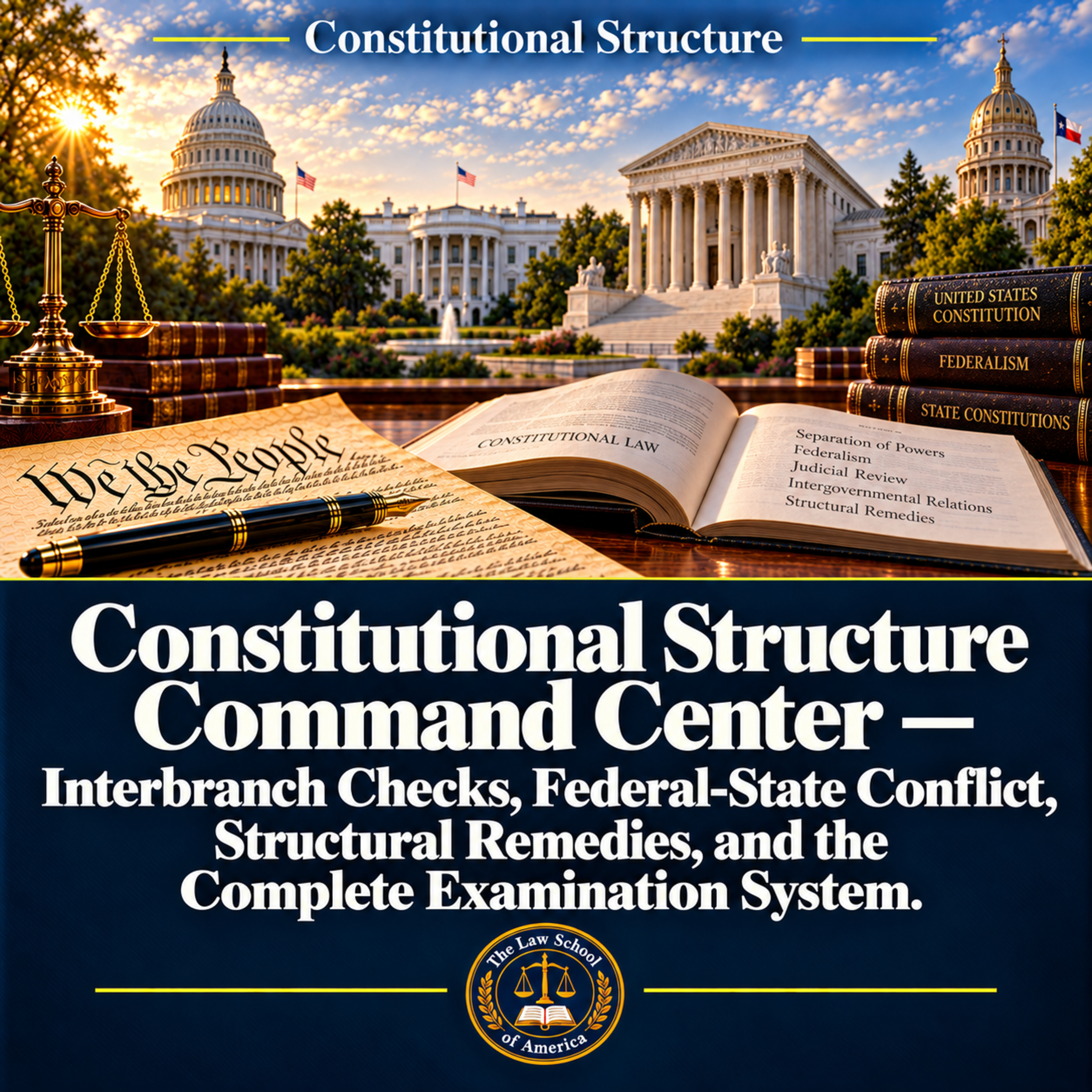
Constitutional Structure: Constitutional Structure Command Center — Interbranch Checks, Federal-State Conflict, Structural Remedies, and the Complete Examination System
📘Turn this episode into a free Game or Exam-Ready Study Plan.📘 👉 OR CLICK HERE TO OPEN TODAY’S FREE STUDY GUIDE 👈 🎧 EPISODE SUMMARY 🎧 Constitutional structure establishes a system of checked power and divided sovereignty: Horizontal separation of powers allocates authority among Congress, the President, and federal courts. Presidential power is highest when authorized by Congress, in twilight when Congress is silent, and lowest when acting against congressional will. The administrative state is bounded by the Appointments Clause and presidential removal authority. Principal officers require Senate confirmation; inferior officers may be appointed by Department Heads or Courts. Officers exercising executive authority must be removable at will, and vast economic or political assertions trigger the major questions doctrine. Vertical federalism divides power between the national government and states. Under the Tenth Amendment anti-commandeering doctrine, Congress cannot compel states to enact or enforce federal policy, though conditional spending is permitted. Under the Supremacy Clause, valid federal law preempts state law. State sovereign immunity shields states from private money suits but permits prospective injunctive relief against officers. The Dormant Commerce Clause bars state protectionism; discriminatory laws face strict scrutiny unless saved by the market participant doctrine. The examination rule requires analyzing: Government actor and asserted power; Justiciability, jurisdiction, and separation of powers; Federalism, preemption, and commercial restrictions; and Proper judicial remedy. ℹ️ INFORMATION, PRIVACY POLICY & TERMS OF USE ℹ️ The Podcast and Website Purpose The Law School Podcast and 1L Study Aide webpage supplements law-school and Bar Exam study with strategies, condensed rules, quizzes, and flashcards. Educational Disclaimer Content is for educational and informational purposes only. It is not legal advice, creates no attorney-client relationship, and does not guarantee law-school or Bar Exam success. Privacy Policy No account or login is required. This webpage uses no forms or analytics to collect personal information. Quiz and flashcard activity stays in your browser and may clear when local site data is removed. Terms of Use By using this webpage, you agree to use its content only for lawful, personal, noncommercial educational purposes. It supplements—not replaces—courses, textbooks, official materials, or qualified instruction.