Skip to content
Artwork for KacheliTV

KacheliTV

KacheliTV

KacheliTV — the world's stories, read aloud.

Looking for a story to fall asleep to, to ride with on a long drive, or to share at bedtime? Start here.

We read the folk tales and classics of every culture on Earth — complete and unabridged, never excerpts — in fresh English translations, performed by our cast of voices. The fairy tales of Ireland and Japan. The legends of India and Nigeria. Jamaica, the Netherlands, the Cherokee, the Norse — and the Russia of Pushkin and Krylov. The stories your grandmother knew, and stories from shores you've never heard — every culture in the spotlight, no one missed.

New tales arrive every week. Pick a shelf, press play, and let the world's grandmothers talk you to sleep.

Free always — here and on every podcast app. Prefer no commercials? Find us on Apple Podcasts.

From The Dog You Chose LLC, Gulfport, Florida. Public-domain sources, told with respect.

Find us:

YouTube — https://www.youtube.com/@KacheliTVFlorida

Telegram — https://t.me/kacheliTV

Website — https://dogyouchose.com

The Dog You Chose books — https://www.amazon.com/dp/B0FYSTBLQ3

Our cast is a company of AI-generated voices, performing fresh in-house translations of public-domain works from every culture.

Play
  • 443 episodes
  • Avg 28 min
  • English
Counted on this page — what you have heard stays on this device, so it is not something the list can be paged by.
  • S20 · E7
    October 15 · 19 min

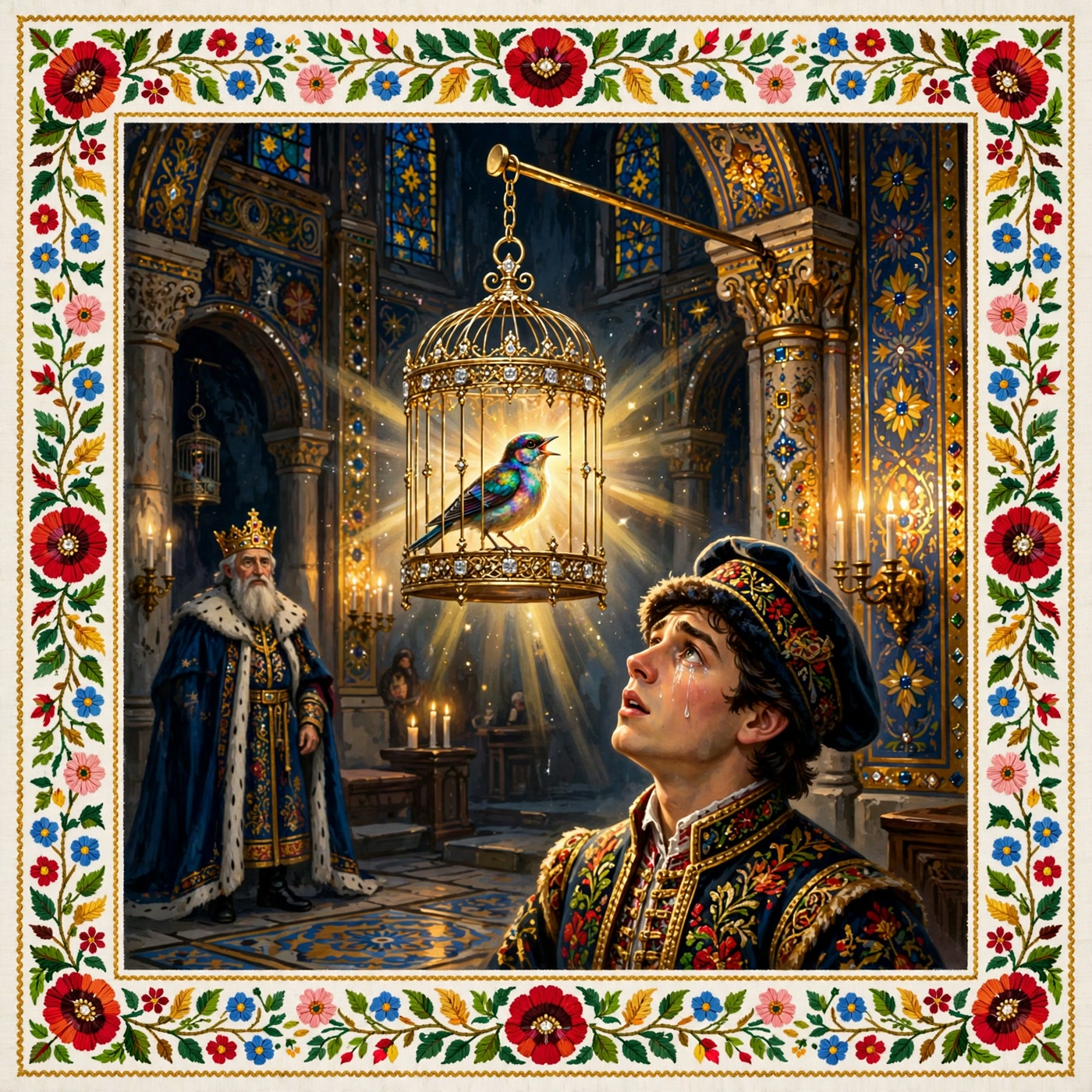
    Hungarian Folk Tales — Part 7 (The Psalm-Singing Bird)

    A god-fearing king builds a church of gold and diamonds — and will not set foot in it until someone brings him the psalm-singing bird, wherever in the world it may be. His youngest son rides a táltos horse past three enchanted wells, where three maidens wait out twelve years of captivity, and across the Red Sea to the castle of the twelve-headed dragon — and wins the bird at last not by the sword, but by mercy. But the road home holds the tale's true trial: the elder brothers, ransomed from slavery by his own gold, repay him with a cruelty that only a wonder-lake can undo — and it falls to the bird itself, mute for every other soul, to sing the truth into the king's church. From Benedek Elek, Magyar mese- és mondavilág (Athenaeum, 1894–96), public domain; told in a fresh in-house rendering. KacheliTV — world classics, read aloud.

    • Transcript
  • S17 · E10
    October 15 · 10 min

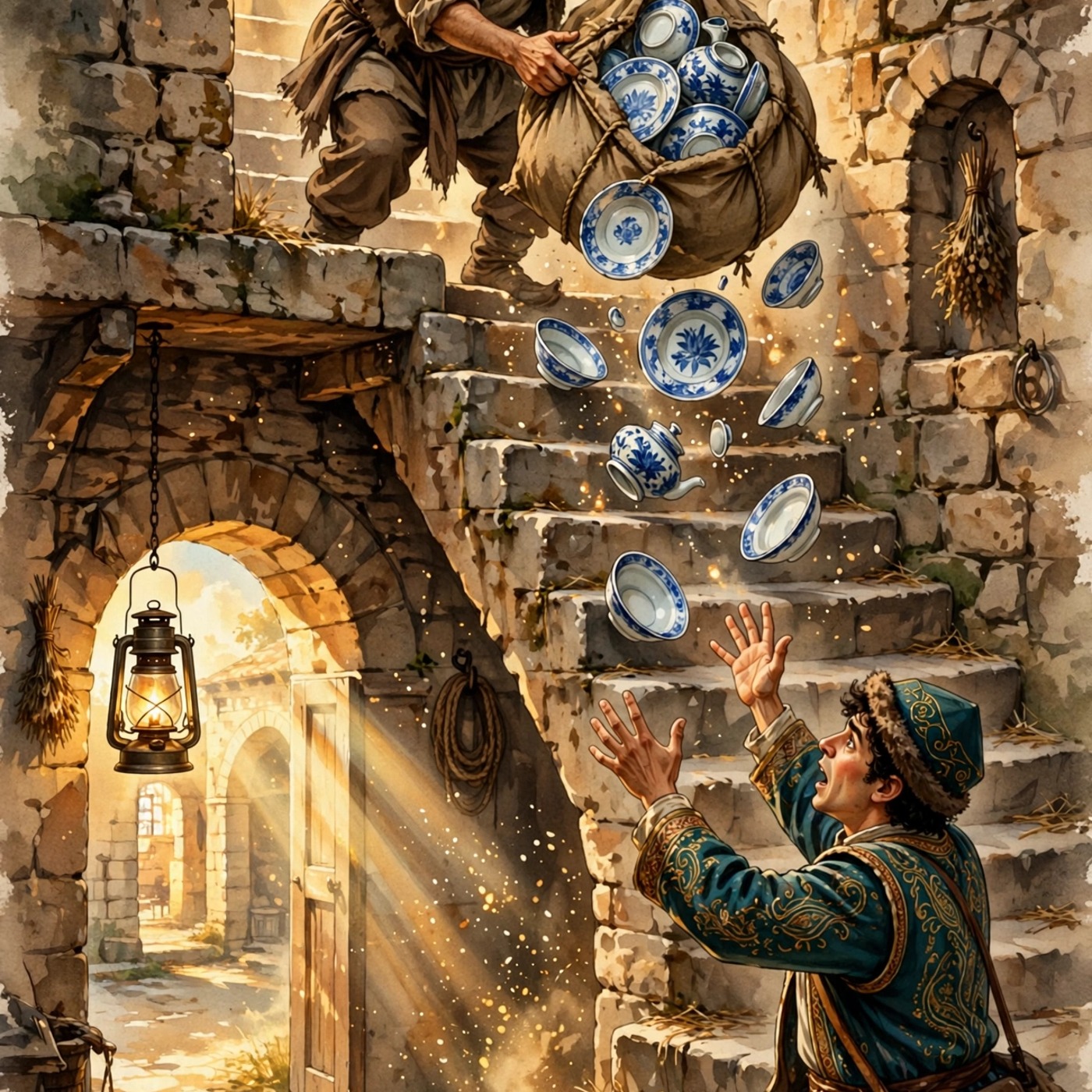
    Nasreddin Hodja — Part 10 of 20 (Don't Believe It)

    Twelve more anecdotes of the Hodja, from the minaret of Konia to the door of the Kaaba and home to the neighbours and animals of the old folk book. Playing hide-and-seek, he leaves Akschehir altogether and hides for days in a minaret, calling down to the searchers: bring the money, I have won. Pressed into service as a guide, he answers that he is a servant of the Most High — and providence answers for him. Fallen from the roof, he asks his visitors for a comrade in the fall; a guest in his poverty-struck house is blanketed with a ladder and a trough still full of water; and a young man who pays his porter in three counsels — do not believe it — learns the fourth at the top of the stairs. A summer afternoon is weighed against three whole days in winter; at the Kaaba door the Hodja rebukes the crowd that mocks a black pilgrim; a mighty wind is blamed for a sackful of vegetables; the Ramadan pot reckons the forty-fifth day of the month; a stolen calf is demanded back as an ox; a horse that will not be mounted hears the truth about worse fellows; and a great cudgel, raised against a dog on a burial ground, is quietly lowered: go on, friend, go on. From Der Hodscha Nasreddin by Albert Wesselski (1911), public domain; told in a fresh in-house rendering. KacheliTV — world classics, read aloud. Chapters: 0:00 Opening 0:04 I Have Won 1:07 A Servant of the Most High 2:34 Fallen from the Roof 2:58 The Ladder and the Trough 4:38 Don't Believe It 6:17 Three Days in Winter 6:44 Blacker Than He 7:14 The Wind Blew Me In 8:01 The Forty-Fifth Day 9:04 An Ox for a Calf 9:36 Worse Fellows than the Horse 10:00 Go On, Friend

    • Transcript
  • S21 · E7
    October 15 · 19 min

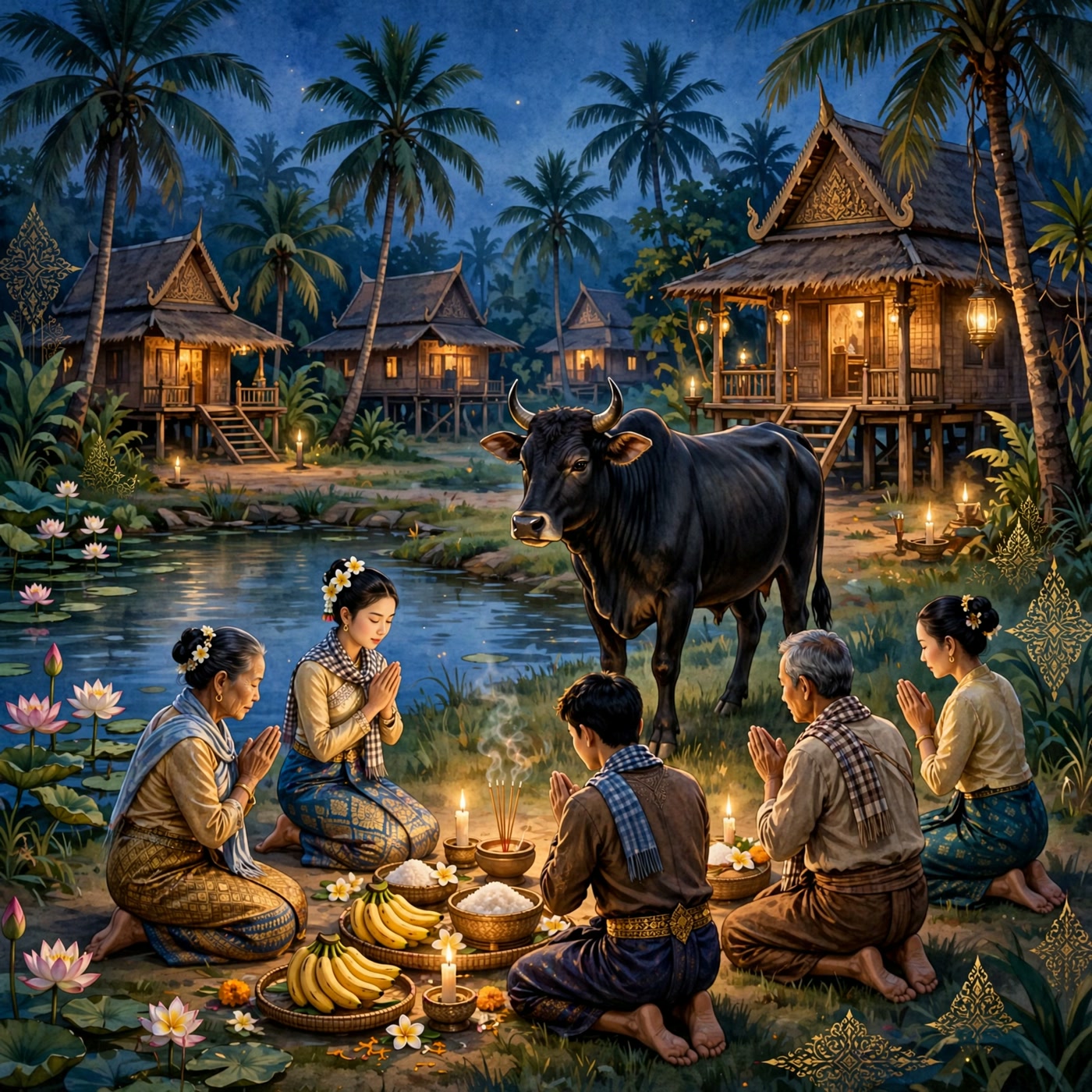
    The Gatiloke — Part 7 of 23 (The Worship of the Pond Water · The Dangko Tree · The Black Bull · Grandmother Tep · Mount Krom and Mount Trangil · Ta Hua Lan and His Two Sons-in-Law · The Fool Who Rode the Buffalo)

    The Gatiloke opens the treatise of the Eight Worldly Conditions — gain and loss, fame and disgrace, blame and praise, pleasure and pain — and turns on what foolish people worship when they will not stop to think. A buffalo's healed eyes make a shrine of a pond, until the authorities come to forbid it. A fallen tree rises a little, by the pull of its own roots, and is stripped of its bark and roots for medicine until it dies. A stray black bull is taken for the Sacred Bull come home from Siam, and the crowd that chases it with offerings is scattered by the beast itself. An image of Grandmother Tep is worshipped by people who cannot say who she ever was. Two bare mountains are explained by the hairs of Hanuman. A father-in-law's old tales are answered, one after another, by the son-in-law who thinks. And a man rides his buffalo to the field carrying the rice on his own head, out of pity for the buffalo — and will not hear it that he is a fool. Chapters: 00:04 — The Worship of the Pond Water 01:02 — The Worship of the Dangko Tree 02:10 — The Worship of the Black Bull 07:50 — The Worship of Grandmother Tep 11:09 — Mount Krom in Siem Reap and Mount Trangil 12:33 — Ta Hua Lan and His Two Sons-in-Law 16:09 — The Fool Who Rode the Buffalo and Carried the Rice Himself From the Gatiloke by Suttantaprija Ind (1859–1924), Cambodia's treasury of Khmer folk tales, first published in parts in Phnom Penh in 1914–1921 — public domain, and told here in a fresh in-house English rendering made from the Khmer text, in the book's own order. One question-chapter near the collection's opening is held back under house rule — its matter is murder itself, and such a tale is not read until it is ruled on; it stands recorded in the collection's written register, in its place. One further tale of the book's second part — the tale of Bhikkhu Sok, the Pnong teacher — is likewise held back under house rule: its matter is a whole lineage put to death, and such a tale is not read until it is ruled on; it stands recorded in the register, in its place. One further tale of the treatise — the tale of the Singha-To who wanted the chief's daughter — is likewise held back under house rule: its close is a beating given to a creature first stripped of its defences, and such a tale is not read until it is ruled on; it stands recorded in the register, in its place. KacheliTV — world classics, read aloud.

    • Transcript
Showing 441–443 of 443 episodes