Skip to content
Artwork for How I Doctor with Dr. Graham Walker
Health & FitnessMedicineScience

How I Doctor with Dr. Graham Walker

Offcall

I built MDCalc 20 years ago because I wanted to save myself and other doctors time and make it easy for them to integrate more evidence into their medical care. Now I’ve launched Offcall to tackle something even bigger: giving doctors back our autonomy — through salary and workload transparency. These ideas shouldn’t be radical…but here we are. I still practice emergency medicine, but I’ve spent my career breaking out of the cookie cutter version of “what a doctor looks like” or “what a doctor’s supposed to do.” That’s why I started How I Doctor: a podcast about the most creative and influential physicians and how they’re rewriting the job description. Medicine wasn’t built for creativity. But I think that’s exactly what it needs. If you’re looking for new role models, different stories, or just proof that fulfillment is still possible in this era of medicine — this show’s for you. Welcome to “How I Doctor,” where we’re bringing joy back to medicine.

If you enjoy the show, please hit the follow button! That will help us continue to bring you more great episodes every week. And don’t forget to sign up for Offcall. Join the growing movement!

Offcall: https://www.offcall.com/
LI: https://www.linkedin.com/company/joinoffcall
TikTok: https://www.tiktok.com/@offcalldotcom
IG: https://www.instagram.com/offcalldotcom/

Play
  • 30 episodes
  • weekly
  • Avg 34 min
  • English
Counted on this page — what you have heard stays on this device, so it is not something the list can be paged by.
  • S1 · E104
    Thursday · 33 min

    What if Any Doctor Could Open Their Own Practice Without Quitting Their Job? with Dr. Scott Korotkin

    Most doctors picture starting a practice as a leap: quit the job, sign the lease, hope the patients come. Hundreds of physicians have launched micropractices with AutonomyMD, many starting small and on the side of the work they already do. In this episode of How I Doctor, Offcall co-founder Dr. Graham Walker sits down with Dr. Scott Korotkin, a board-certified family medicine physician, co-founder of AutonomyMD, and founder of a small practice in Reno, Nevada. Scott started AutonomyMD in 2020 as a resident at UC Davis, after a neighbor with a bad laceration made him wonder what doctors do when friends and family ask for help and their employer's coverage doesn't follow them home. The two start with that neighbor and the coverage gap behind it, then move to how a membership built on a major carrier's policy gives doctors a way to see a small number of patients each month. Scott shares who is using it, from DPC doctors and metabolic health clinicians to ER physicians and hospitalists testing something on the side, and why most of his roughly 350 active members see fewer than 30 visits a month. He also gets candid about what insurers understand about specialty risk and what they miss about the nuance of medicine, and about the cost of stepping away from clinical work, even for a year or two. The conversation closes on the bigger picture: whether direct care can scale without leaving patients behind, the risk of insurers reshaping it, Scott's wish for a WeWork for physicians, and his advice for doctors who want to build something of their own. Building it is the easy part. Reaching doctors is the hard one. What You'll Learn Why a neighbor's laceration led a resident to start AutonomyMD in 2020 How hundreds of physicians have launched micropractices, many on the side, and why most of Scott's members see fewer than 30 visits a month Why Scott says going independent is less complicated than doctors assume, and why where you start is not where you have to end up What insurers understand about specialty risk, and what they miss about the nuance of medicine Why leaving clinical practice for a year or two makes malpractice coverage and re-hiring harder Why Scott's biggest lesson as a founder is that building something does not mean doctors will come Resources and Where to Find Scott and Offcall Find Scott on LinkedIn: linkedin.com/in/scott-korotkin Scott's website: scottkorotkinmd.com Scott's Reno practice, Caramella Ranch Doc: caramellaranchdoc.com AutonomyMD: autonomymd.com Find Graham on LinkedIn: linkedin.com/in/graham-walker-md 🩺 Offcall is more than a platform — it’s a community. Join today! 📝 For a full transcript of this episode click HERE 🎧 Subscribe to receive new How I Doctor episodes directly in your feed here: https://episodes.fm/1767429315 👨‍⚕️Follow Dr. Graham Walker on LinkedIn https://www.linkedin.com/in/graham-walker-md/ IG https://www.instagram.com/ubergraham/ Bluesky https://bsky.app/profile/drgrahamwalker.com ✉️ Join our newsletter On/Offcall here https://offcall.beehiiv.com/subscribe 🟧 Follow Offcall on LinkedIn https://www.linkedin.com/company/joinoffcall/ IG https://www.instagram.com/offcalldotcom/ TikTok https://www.tiktok.com/@offcalldotcom

  • S1 · E103
    November 12 · 28 min

    Telehealth Isn't Enough for Rural Patients. Northwell's Dr. Chethan Sathya on Remote Monitoring, Home-Based Care, and Who Will Pay for It

    Dr. Chethan Sathya is a pediatric trauma surgeon at Cohen Children's Medical Center and Vice President of Strategic Initiatives at Northwell Health. In his first week as an attending, he operated on a six-month-old with a gunshot wound. The baby survived, and the case launched a second career: Chethan founded Northwell's Center for Gun Violence Prevention, built the We Ask Everyone firearm risk screening protocol that is now available nationally through Epic, and worked on All the Empty Rooms, this year's Oscar winner for Best Documentary Short. In this episode of How I Doctor, Dr. Graham Walker sits down with Chethan to ask whether the public health playbook that moved gun violence into the clinical workflow can work on a different problem: why a patient in rural Iowa or Kansas can't see a specialist. Chethan helped launch the National Specialty Care Access Coalition, a health system led group of more than 20 systems, and he argues the answer isn't more video visits. It's tech-enabled care that reaches patients where they live, through remote monitoring, home-based care, and upskilled primary care, paired with payment models that keep local hospitals open. Along the way they dig into why nuance matters in gun policy, how to screen more than 400,000 patients without judgment, why virtual care outside of stroke still lacks reimbursement, the licensure barriers that keep specialists from crossing state lines, and the tension between hospitals as businesses and as community lifelines. The technology to reach rural patients largely exists. The harder question is who will pay for it. What You'll Learn in This Episode Why Chethan treats firearm risk like a vital sign, and how a harm reduction approach has made gun owners the program's biggest supporters Why mass shootings, suicides, accidental injuries, and urban violence need different policy responses Why tech-enabled care is more than telehealth, from remote patient monitoring to specialists taking quick referral touchpoints Why reimbursement is the real barrier to rural specialty access, and how to incentivize local hospitals to survive How state licensure and credentialing barriers limit physicians who want to see patients across state lines Resources and Where to Find Chethan and Offcall Find Chethan on LinkedIn: https://www.linkedin.com/in/dr-chethan-sathya-md-00707441/ Find Chethan's Northwell profile: northwell.edu/chethan-sathya-md Northwell Health Center for Gun Violence Prevention: northwell.edu/center-for-gun-violence-prevention Find Chethan on Instagram: https://www.instagram.com/drchethansathya/ Find Graham on LinkedIn: linkedin.com/in/graham-walker-md 🩺 Offcall is more than a platform — it’s a community. Join today! 📝 For a full transcript of this episode click HERE 🎧 Subscribe to receive new How I Doctor episodes directly in your feed here: https://episodes.fm/1767429315 👨‍⚕️Follow Dr. Graham Walker on LinkedIn https://www.linkedin.com/in/graham-walker-md/ IG https://www.instagram.com/ubergraham/ Bluesky https://bsky.app/profile/drgrahamwalker.com ✉️ Join our newsletter On/Offcall here https://offcall.beehiiv.com/subscribe 🟧 Follow Offcall on LinkedIn https://www.linkedin.com/company/joinoffcall/ IG https://www.instagram.com/offcalldotcom/ TikTok https://www.tiktok.com/@offcalldotcom

  • S1 · E102
    November 5 · 33 min

    Most Patients Have Never Heard of Direct Primary Care. A Doctor on The Traitors Is Changing That with Dr. Jay Vinnedge

    Most patients have never heard of direct primary care. One family physician is introducing it to them from a downtown Oklahoma City clinic and now from NBC's The Traitors: New Blood. In this episode of How I Doctor, Offcall co-founder Dr. Graham Walker sits down with Dr. Jay Vinnedge, a family physician and former Air Force flight medic who opened The Little DPC in 2023 with his wife Danielle, a PA. The two talk about how Jay filled his panel by speaking candidly on social media about what's broken in healthcare, why he caps new patients so same-day access stays real, and what changes when a practice has no billing department and no volume treadmill. Jay also gets specific about the math: a small rented office, an affordable EMR, and a breakeven point he puts at around 20 patients. From there the conversation turns to The Traitors. Jay explains why he applied, how reading what patients leave unsaid carried over to reading other players, and what the show gave him that he didn't expect. It closes with Jay's message for employed physicians weighing a leap, and a look at whether direct specialty care could follow where DPC has led. What You'll Learn Why Jay built his audience on social media and why patients arrive feeling like they already know him How removing insurance from the visit eliminates billers, coders, and the pressure to see more patients What Jay's breakeven math looks like for a small DPC Why Jay limits new patients to one a day and is hiring a second physician How reading what patients leave unsaid shaped Jay's approach to The Traitors Why Jay tells physicians weighing a leap that their MD or DO is a safety net, and why he believes most don't see the revenue they generate Where to Find Jay and Offcall Find Jay's practice: thelittledpc.com Follow The Little DPC on social media: @thelittledpc Follow Jay's personal account: @wellroundedphysician Watch The Traitors: New Blood on NBC on Thursday nights, streaming the next day on Peacock 🩺 Offcall is more than a platform — it’s a community. Join today! 📝 For a full transcript of this episode click HERE 🎧 Subscribe to receive new How I Doctor episodes directly in your feed here: https://episodes.fm/1767429315 👨‍⚕️Follow Dr. Graham Walker on LinkedIn https://www.linkedin.com/in/graham-walker-md/ IG https://www.instagram.com/ubergraham/ Bluesky https://bsky.app/profile/drgrahamwalker.com ✉️ Join our newsletter On/Offcall here https://offcall.beehiiv.com/subscribe 🟧 Follow Offcall on LinkedIn https://www.linkedin.com/company/joinoffcall/ IG https://www.instagram.com/offcalldotcom/ TikTok https://www.tiktok.com/@offcalldotcom

  • S1 · E101
    October 29 · 36 min

    Meet DR GPT™: Dr. Harvey Castro on Patients, Robots, and Who Will Drive AI in Medicine

    By the time your patient reaches you, you may be their fourth opinion. They have already asked a chatbot, or several, and they arrive with a diagnosis, a drug name, and a level of confidence you did not create. In this episode of How I Doctor, Offcall co-founder Dr. Graham Walker sits down with Dr. Harvey Castro, an emergency physician, MBA, and one of the most visible physician voices on AI in healthcare, known as DR GPT™. Before he became an AI evangelist, Harvey owned and ran freestanding emergency departments in Texas, with a payroll he personally guaranteed. He wrote one of the first medical apps for the iPhone, then wrote a book on ChatGPT in healthcare days after it launched, against the advice of friends. His message to physicians is simple: treat AI output as a draft, not a decision, and keep the clinician accountable for making the call. Harvey and Graham get into what changes when patients show up with an AI first opinion, and why Harvey worries about both bias in the models and patients self-treating. He makes the case that generative AI is mostly a communication tool, from discharge instructions as coloring books to coaching physicians on bedside manner. He describes the personal digital twin he built from his wearables, genetics, labs, and medical record, and why he believes patients, not hospitals or governments, will drive the next wave of AI. Graham pushes back on whether the next generation will really prefer a robot to a human doctor, and the two debate what happens to the role of physicians over the next 50 years. The conversation closes with rapid-fire takes, including whether ambient AI scribes are overhyped, why Harvey calls the human in the loop a scapegoat in the loop, what he thinks is the biggest mistake medicine could make with AI, and the one thing he says AI should never touch. What You’ll Learn Why patients arriving with an AI first opinion creates new risks around bias, self-treatment, and physician liability How generative AI can improve communication across languages, cultures, and ages, and even coach doctors on bedside manner Why Harvey believes patients, not hospitals, will drive AI adoption, and what a patient “Bill of Rights” for AI could look like Why “human in the loop” can really mean “scapegoat in the loop” Where Harvey draws the line on what AI should never do 📖 Learn more about Dr. Harvey Castro, his apps, books, and speaking at https://HarveyCastroMD.com 🩺 Offcall is more than a platform, it’s a community. Join today! 📝 For a full transcript of this episode click HERE 🎧 Subscribe to receive new How I Doctor episodes directly in your feed here: https://episodes.fm/1767429315 👨‍⚕️Follow Dr. Graham Walker on LinkedIn https://www.linkedin.com/in/graham-walker-md/ IG https://www.instagram.com/ubergraham/ Bluesky https://bsky.app/profile/drgrahamwalker.com ✉️ Join our newsletter On/Offcall here https://offcall.beehiiv.com/subscribe 🟧 Follow Offcall on LinkedIn https://www.linkedin.com/company/joinoffcall/ IG https://www.instagram.com/offcalldotcom/ TikTok https://www.tiktok.com/@offcalldotcom

  • S1 · E100
    October 22 · 27 min

    Primary Care Is the API for Healthcare. So Why Is Nobody Building for It? with Jefferson Health’s Dr. David Nichols

    Primary care doctors spend their days stitching together a system that was never built to connect. Dr. David Nichols thinks they should be the ones to rebuild it. In this episode of How I Doctor, Dr. Michael Hobbs sits in for Dr. Graham Walker to talk with his friend Dr. David Nichols, a family physician who finished residency in 2023 and became a medical director at Jefferson Health a year later. David co-founded a value-based care company at 23, ran its technology side through medical school and part of residency, and now leads AI work inside a large health system. He explains why primary care is the API for healthcare, the connector that fills every gap between specialists, hospitals, and patients’ lives, and why that connector is so poorly built. From there, Michael and David get practical. David shares how clinicians can start building, what makes an AI project stick instead of stalling after phase one, and why hours saved is a risky way to measure AI when saved time can quietly become more patients on the schedule. They also dig into a billing structure that pays doctors only when patient and physician share a room, physical or digital, and never for the thinking and coordination that make care safe. What You’ll Learn Why David calls primary care the API for healthcare, and why he says it is poorly written How to start building if you’re a frontline clinician, from finding builders in your own network to meetups and online communities What separates AI projects that stick from pilots that stall, and why Jefferson’s boss prefers the term phase one Why AI scribes may not save time but can still improve the quality of a visit Why doctors are not paid for coordination, asynchronous work, or cognitive thinking, and what David would change 🩺 Offcall is more than a platform — it’s a community. Join today! 📝 For a full transcript of this episode click HERE 🎧 Subscribe to receive new How I Doctor episodes directly in your feed here: https://episodes.fm/1767429315 👨‍⚕️Follow Dr. Graham Walker on LinkedIn https://www.linkedin.com/in/graham-walker-md/ IG https://www.instagram.com/ubergraham/ Bluesky https://bsky.app/profile/drgrahamwalker.com ✉️ Join our newsletter On/Offcall here https://offcall.beehiiv.com/subscribe 🟧 Follow Offcall on LinkedIn https://www.linkedin.com/company/joinoffcall/ IG https://www.instagram.com/offcalldotcom/ TikTok https://www.tiktok.com/@offcalldotcom

  • S1 · E99
    October 15 · 33 min

    Is Not Asking About ChatGPT the Next Malpractice Risk? With Berkeley Law's Vincent Joralemon

    Your patient asked a chatbot about their medication before they asked you. If something goes wrong, the law may care less about what the chatbot said than about whether you asked. In this episode of How I Doctor, Offcall co-founder Dr. Graham Walker sits down with Vincent Joralemon, director of the Life Sciences Law and Policy Center at Berkeley Law. Vincent is a former high school biology teacher who went on to law school at Berkeley and Harvard. In his recent paper in npj Digital Medicine, “Who bears liability when AI gives bad prescribing advice?”, co-authored with Julia Etkin, he argues that the learned intermediary doctrine works differently depending on whether AI sits behind the clinician or advises patients directly, and that clinicians may be required to screen patients for AI-sourced prescribing advice. Graham expected the answer to be technology companies, but Vincent’s argument lands back on physicians. Vincent explains the learned intermediary doctrine, the legal principle that already makes physicians the filter between drug manufacturers and patients, and why the same logic is likely to govern AI. He and Graham work through what happens when a physician follows an algorithm, when one overrides it, and how a note explaining your reasoning can be the strongest protection you have. They also get into whether asking “What did ChatGPT tell you?” is on its way to becoming a standard of care question, what de-skilling means in legal terms, and what a physician should do when a hospital mandates an AI tool they know is flawed. The conversation closes with rapid-fire predictions, including a malpractice case that names both a physician and a chatbot company, and Vincent’s answer on the biggest legal mistake a physician can make with AI right now. What You’ll Learn Why the learned intermediary doctrine is the foundation of AI liability for physicians Why patients’ tendency to trust chatbots more than traditional sources may change a physician’s duty to ask about them How to protect yourself when you override an AI recommendation, or follow one What the law may expect of you when your hospital requires a tool you believe is faulty Why Vincent expects settlements before court decisions, and a physician and chatbot company named in the same suit 📄 Read the paper: Etkin J, Joralemon V. “Who bears liability when AI gives bad prescribing advice?” npj Digital Medicine. 2026;9:448. https://doi.org/10.1038/s41746-026-02854-5 This episode is presented in partnership with eNavvi, a clinician-built digital prescribing platform. ePrescribe anytime anywhere with eNavvi 🩺 Offcall is more than a platform — it’s a community. Join today! 📝 For a full transcript of this episode click HERE 🎧 Subscribe to receive new How I Doctor episodes directly in your feed here: https://episodes.fm/1767429315 👨‍⚕️Follow Dr. Graham Walker on LinkedIn https://www.linkedin.com/in/graham-walker-md/ IG https://www.instagram.com/ubergraham/ Bluesky https://bsky.app/profile/drgrahamwalker.com ✉️ Join our newsletter On/Offcall here https://offcall.beehiiv.com/subscribe 🟧 Follow Offcall on LinkedIn https://www.linkedin.com/company/joinoffcall/ IG https://www.instagram.com/offcalldotcom/ TikTok https://www.tiktok.com/@offcalldotcom
  • S1 · E98
    October 8 · 40 min

    If AI Can Prescribe, Who's Liable When It Gets It Wrong? Four Experts Weigh In

    In the first-ever How I Doctor Roundtable, Dr. Graham Walker brings together four people who see prescribing from four different seats: Dr. Simon Chang, an internal medicine physician, AI Task Group lead for NCPDP, and founder of eNavvi; Tanvi Patel, Vice President and General Manager of Amazon Pharmacy; Deepika Srivastava, Chief Operating Officer of The Doctors Company, the nation's largest physician-owned malpractice insurer; and David Simon, Associate Professor of Law at Northeastern University. Together they dig into why prescribing in 2026 still runs on one-way messages and guesswork, why the prescriber is usually the last to learn a patient never got their medication, and how real-time price, stock, and delivery data could change treatment decisions at the point of care. They also take on the harder questions: how AI concentrates liability, why broken handoffs (not bad clinical decisions) drive so much malpractice risk, and what physicians should do to protect themselves while the law and regulation catch up. The common thread: physicians stay in charge of clinical decisions, and everyone else's job is to make that safer and easier. This episode is presented in partnership with eNavvi, a clinician-built digital prescribing platform. ePrescribe anytime anywhere with eNavvi What You'll Learn What really happens after a physician hits send, and why the prescriber is usually the last to know when a prescription fails. How real-time price, stock, and delivery data at the point of prescribing could change treatment plans. Why e-prescribing shifted the burden of choosing a pharmacy from patients to physicians, and how putting the digital script back in patients' hands could restore choice. Why AI prescribing concentrates liability, and what a malpractice carrier and a health law professor say physicians should do right now. Why labeling AI involvement in prescriptions matters for audit trails, accountability, and trust. Where to Find The Panel Dr. Simon Chang: https://www.linkedin.com/in/docschang/ Tanvi Patel: https://www.linkedin.com/in/tanvipatel/ Deepika Srivastava: https://www.linkedin.com/in/deepika-srivastava-1041257a/ David Simon: https://davidasimon.us / 🩺 Offcall is more than a platform — it’s a community. Join today! 📝 For a full transcript of this episode click HERE 🎧 Subscribe to receive new How I Doctor episodes directly in your feed here: https://episodes.fm/1767429315 👨‍⚕️Follow Dr. Graham Walker on LinkedIn https://www.linkedin.com/in/graham-walker-md/ IG https://www.instagram.com/ubergraham/ Bluesky https://bsky.app/profile/drgrahamwalker.com ✉️ Join our newsletter On/Offcall here https://offcall.beehiiv.com/subscribe 🟧 Follow Offcall on LinkedIn https://www.linkedin.com/company/joinoffcall/ IG https://www.instagram.com/offcalldotcom/ TikTok https://www.tiktok.com/@offcalldotcom
  • S1 · E97
    October 1 · 30 min

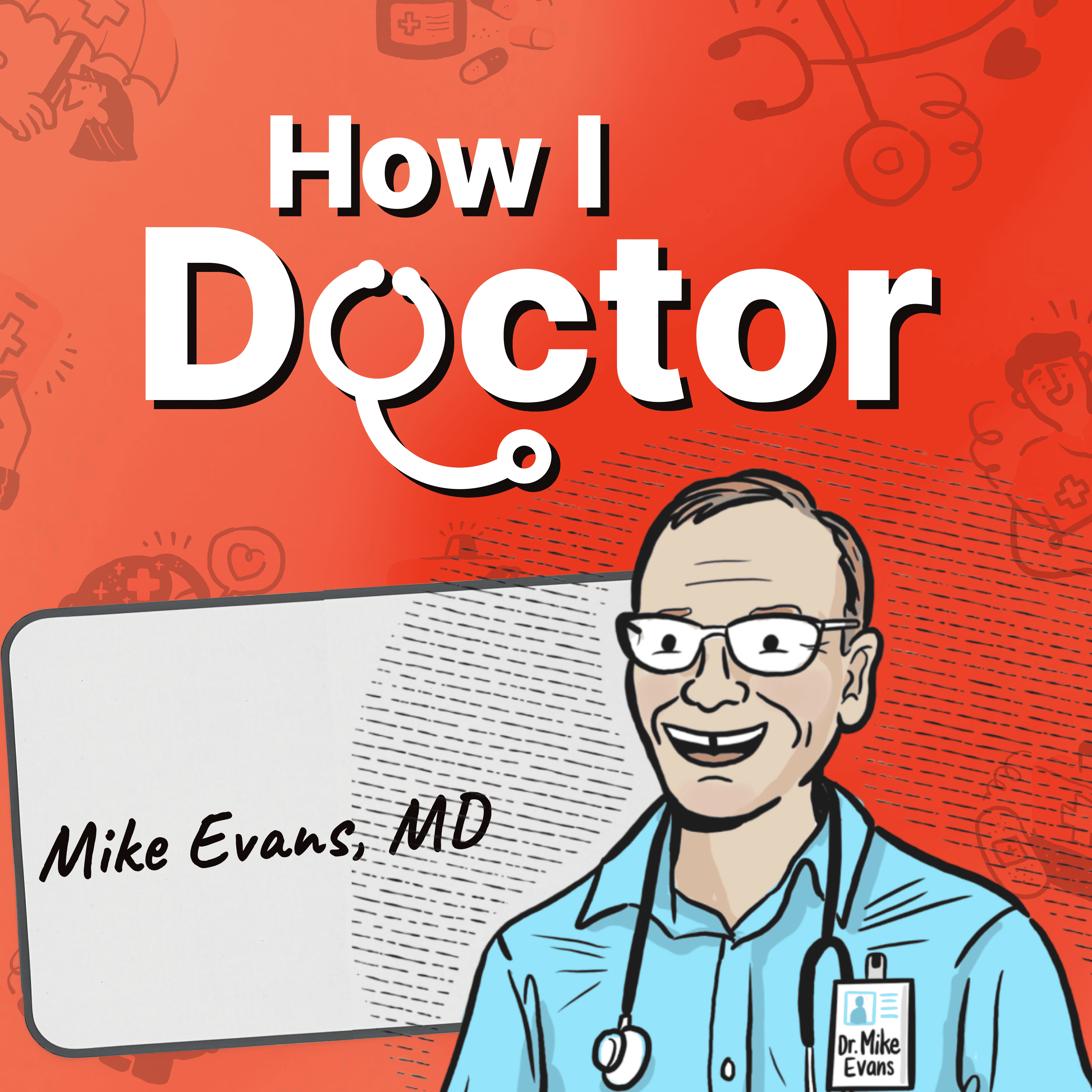
    Why Can't Good Medical Advice Go Viral? Dr. Mike Evans on Health Communication in the Influencer Era

    Every physician has met the patient who arrives with a confident claim from a feed, a podcast, or a supplement ad. The careful, evidence-based answer is the one that sounds like the outlier. Good medicine is nuanced, and nuance rarely travels. In this episode of How I Doctor, Dr. John Schumann sits in for Dr. Graham Walker to talk with Dr. Mike Evans, a family physician best known for a whiteboard, a marker, and a question that became a phenomenon: What is the single best thing we can do for our health? Mike practiced inner city family medicine for 15 years, taught at the University of Toronto, and later brought his approach to health innovation at Apple. His whiteboard videos have been watched tens of millions of times. Mike and John dig into the gap between knowing and doing. Mike shares what he learned about behavior change building health programs at Apple scale, including a 900-person asthma trial published in JAMA that cut emergency room visits by 42% among Medicaid patients. They also take on the influencer economy, from the halo effect to paid promotions, and Mike makes his case that the basics of movement, connection, sleep, diet, and agency still deliver the highest return in health. The conversation closes with Mike's research on retirement, his read on where wearables and AI are headed over the next year, and the Evans Health Lab Substack he is building as a counterweight to bad influencers. What You'll Learn Why the most evidence-based health advice struggles to go viral, and why Mike believes audiences will still reward authenticity How the halo effect and undisclosed paid promotion shape what patients believe about health Why behavior change depends more on environment, peers, and personalization than on willpower What an Apple asthma trial showed about who benefits most from digital health tools Why the basics still have the best returns in medicine, and what the evidence says about retirement, social connection, and the brain 🩺 Offcall is more than a platform — it’s a community. Join today! 📝 For a full transcript of this episode click HERE 🎧 Subscribe to receive new How I Doctor episodes directly in your feed here: https://episodes.fm/1767429315 👨‍⚕️Follow Dr. Graham Walker on LinkedIn https://www.linkedin.com/in/graham-walker-md/ IG https://www.instagram.com/ubergraham/ Bluesky https://bsky.app/profile/drgrahamwalker.com ✉️ Join our newsletter On/Offcall here https://offcall.beehiiv.com/subscribe 🟧 Follow Offcall on LinkedIn https://www.linkedin.com/company/joinoffcall/ IG https://www.instagram.com/offcalldotcom/ TikTok https://www.tiktok.com/@offcalldotcom
  • S1 · E96
    September 24 · 27 min

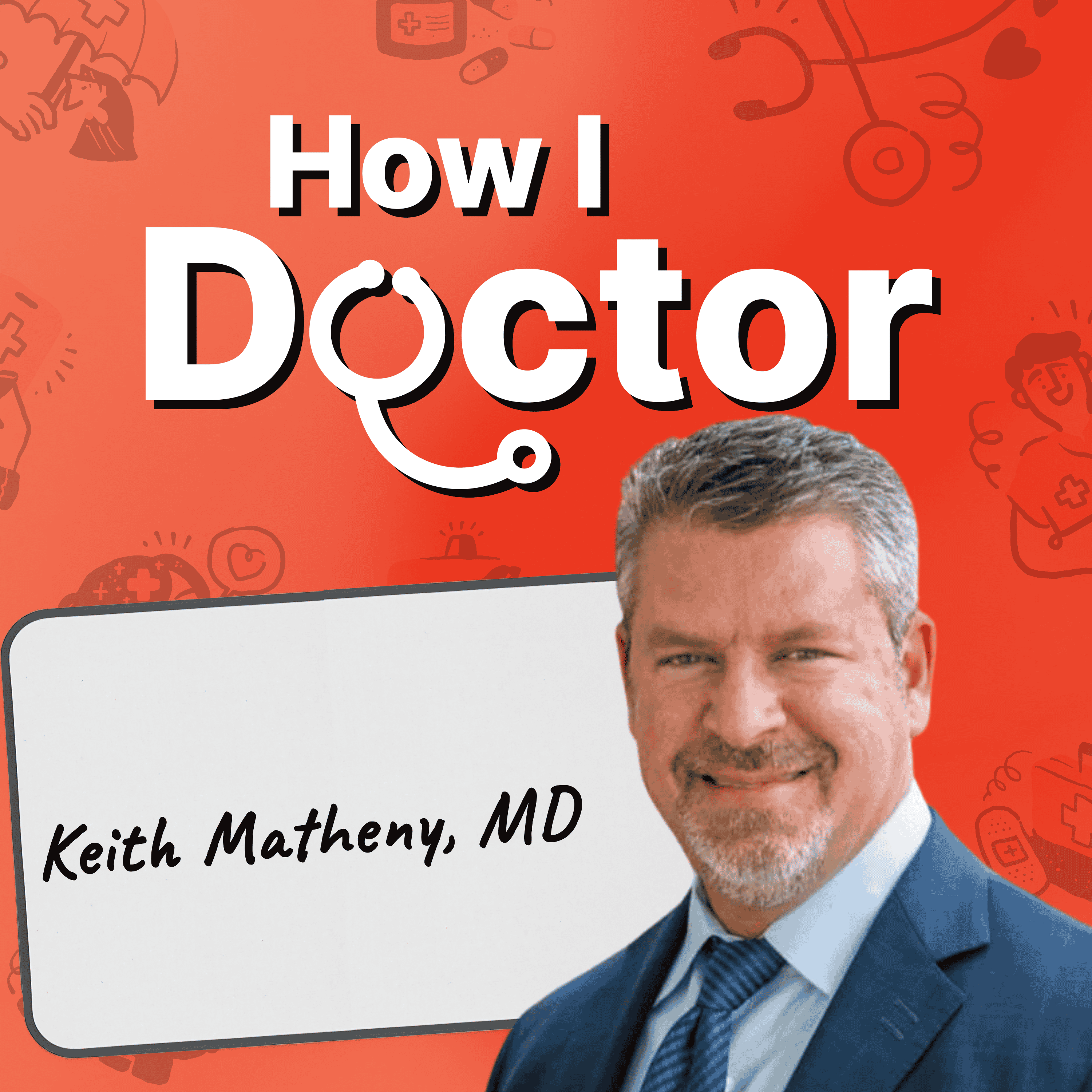
    How Dr. Keith Matheny Turned His Practice's Biggest Headaches Into Businesses, While Still Seeing Patients

    Most physicians finish training without a single business class, then spend their careers inside practices run the same way. Dr. Keith Matheny decided to fix that, starting with his own. In this episode of How I Doctor, guest host Dr. Basil Kahwash sits down with Dr. Keith Matheny, an ENT in the Dallas area who holds patents on bioabsorbable drug delivery implants, has co-founded device and remote monitoring companies, serves as team otolaryngologist for the Dallas Cowboys, and still keeps a full clinic schedule. Keith explains how, before he was even a partner, he took over operations at a practice with paper charts, no website, a leaky revenue cycle, and ancillary services that were losing money, and turned it into one with new locations, new referral streams, and service lines that supported the rest of the practice. That turnaround became a consulting business and then US ENT, a national group purchasing organization. Keith walks through why supply costs have exploded for office-based specialties, why he signed up suppliers before he had a single physician member, and how early suspicion that he was a private equity "Trojan horse" gave way to rapid growth when COVID shutdowns left practices scrambling to make payroll. Today the GPO is free to join and has about 3,500 members. The conversation closes on why Keith refuses to leave the exam room, how staying clinical keeps him credible with colleagues facing the same rising costs he is, and his advice for physicians who want to build something of their own: get involved, protect your ideas, and just start. What You'll Learn What Keith found when he took over the business side of his practice, and how he turned money-losing service lines into profit centers Why community practice gave him more freedom to patent and commercialize his inventions than an academic path would have Why Keith recruited suppliers before physicians, and how COVID turned skeptics into members How rising payroll, rising supply costs, and flat reimbursement are squeezing independent practices, and why Keith feels it as much as his members do Keith's case for why physicians should shape AI rather than fear it 🩺 Offcall is more than a platform — it’s a community. Join today! 📝 For a full transcript of this episode click HERE 🎧 Subscribe to receive new How I Doctor episodes directly in your feed here: https://episodes.fm/1767429315 👨‍⚕️Follow Dr. Graham Walker on LinkedIn https://www.linkedin.com/in/graham-walker-md/ IG https://www.instagram.com/ubergraham/ Bluesky https://bsky.app/profile/drgrahamwalker.com ✉️ Join our newsletter On/Offcall here https://offcall.beehiiv.com/subscribe 🟧 Follow Offcall on LinkedIn https://www.linkedin.com/company/joinoffcall/ IG https://www.instagram.com/offcalldotcom/ TikTok https://www.tiktok.com/@offcalldotcom

  • S1 · E95
    September 17 · 35 min

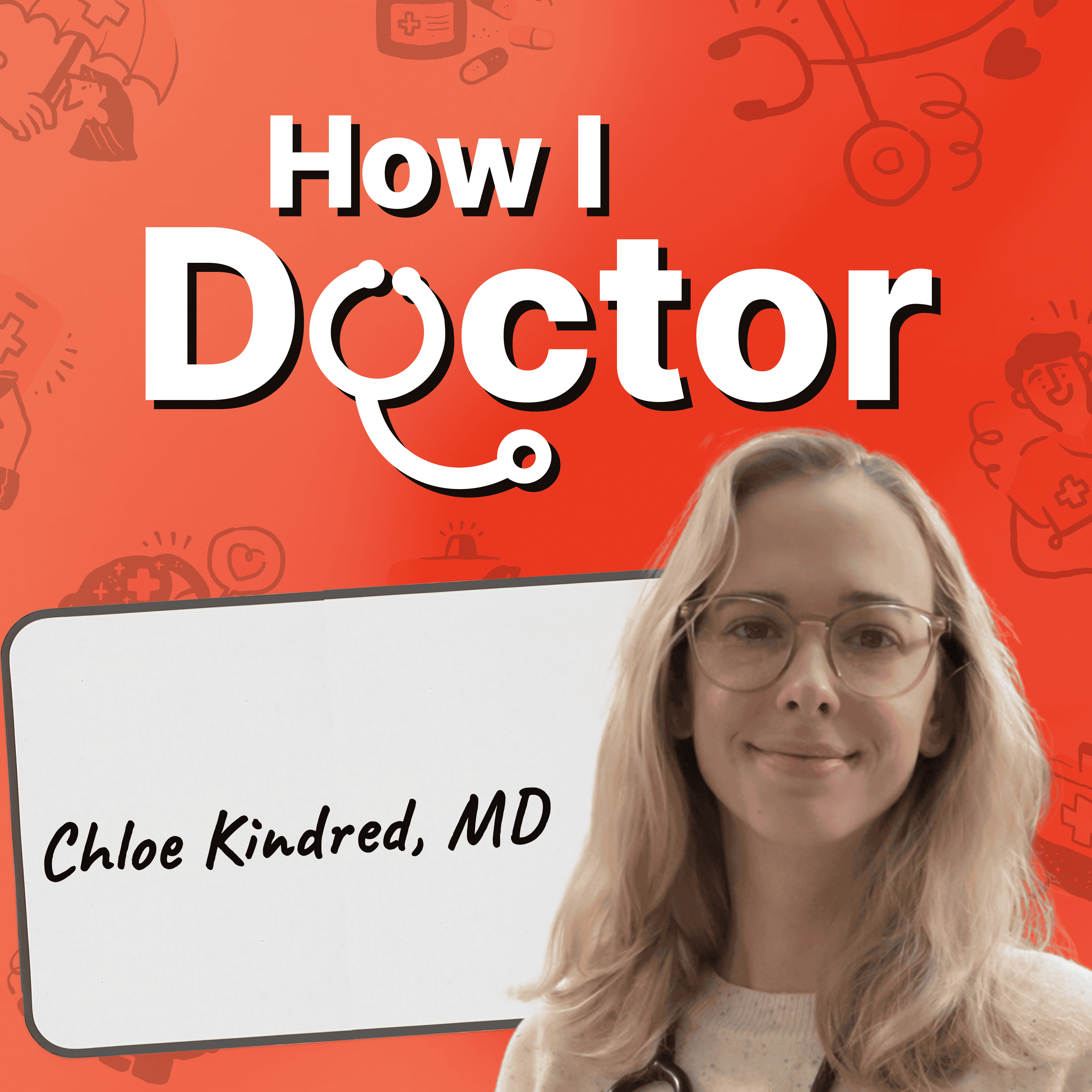
    Cut Out the Middleman, Keep the Patients: Dr. Chloe Kindred on Building a Direct Primary Care Practice From Zero

    Most doctors who complain about their employed job never actually leave. Dr. Chloe Kindred did, with no backup plan the first time and a real one the second. In this episode of How I Doctor, Offcall co-founder Dr. Graham Walker sits down with Dr. Chloe Kindred, a family physician who spent three years in a hospital-affiliated system in Central Florida before leaving to launch Kindred Family Medicine, a direct primary care practice opening this October. Chloe walks through exactly how an employed job that started out manageable became untenable: a starter panel that tripled within months after three colleagues left in close succession, unpaid hours that crept from thirty minutes early into full weekend mornings, and a request to simply pause new patients that her health system flatly refused. What follows is a real-time account of building an independent practice from nothing, from pricing a subscription against other DPC practices in the region to picking an EHR and billing platform to the bureaucratic loops of setting up basic infrastructure like prescribing credentials. Along the way, an unscripted Instagram post she made mostly so patients could find her after she left turned into 800,000+ views and a 230-person pre-enrollment waitlist, more than double her original year-one goal. The conversation closes on why Chloe thinks direct primary care specifically, not just independence broadly, is the model that actually removes the risk she couldn't tolerate: a payer able to unilaterally rewrite the terms of her own work. What You'll Learn What happened when Chloe asked her health system to simply pause new patient intake, and why the answer was no The story of her first resignation: submitted with zero plan, rescinded twelve hours later What actually convinced her to quit for good, and why it wasn't burnout but a single contract email How she's pricing, staffing, and sizing Kindred Family Medicine, and what tools she chose to run it Why an unscripted Instagram post now has 800,000+ views, and how it turned into a 230-person waitlist before she saw a single patient Chloe's case for direct primary care 🩺 Offcall is more than a platform — it’s a community. Join today! 📝 For a full transcript of this episode click HERE 🎧 Subscribe to receive new How I Doctor episodes directly in your feed here: https://episodes.fm/1767429315 👨‍⚕️Follow Dr. Graham Walker on LinkedIn https://www.linkedin.com/in/graham-walker-md/ IG https://www.instagram.com/ubergraham/ Bluesky https://bsky.app/profile/drgrahamwalker.com ✉️ Join our newsletter On/Offcall here https://offcall.beehiiv.com/subscribe 🟧 Follow Offcall on LinkedIn https://www.linkedin.com/company/joinoffcall/ IG https://www.instagram.com/offcalldotcom/ TikTok https://www.tiktok.com/@offcalldotcom
  • S1 · E95
    September 10 · 20 min

    These Physicians Explain Why They'd Never Go Back to Being Employed

    Something kept happening on Offcall that we didn’t plan for. Guest after guest, across totally different specialties, kept circling back to the same decision: walking away from employed medicine and building something of their own instead. This Labor Day, instead of one long conversation, How I Doctor is pulling together the sharpest moments from five of those conversations, physicians in primary care, pediatrics, allergy, and ENT, who each found their own path to independence and never looked back. Featured in This Episode Dr. Farzad Mostashari, Former National Coordinator for Health IT and CEO of Aledade: on the economics behind why independent primary care is making a financial comeback, and why he calls employed physicians "cogs in a machine" built around someone else's goals. Dr. Ari Brown, Pediatrician and founder of 411 Pediatrics: on what it takes to stay independent for over thirty years, and her stark warning that independent pediatric practice is now "on the extinction list." Dr. Paulius Mui, Family medicine physician and founder of XPC Health: on walking away from full-time employed primary care to build a direct primary care practice where patients pay what they can afford. Dr. Basil Kahwash, Allergist/immunologist and co-author of Offcall's Referral Manifesto: on the isolation that comes with independent practice, and his vision for a connected network that fixes it. Dr. Bradley Block, Otolaryngologist and board member at ENT and Allergy Associates: on how a 170-partner, full-equity ownership model became too big and too democratic for private equity to buy. Resources and Where to Find Our Guests Dr. Farzad Mostashari's full episode: The Future of Primary Care Is Independence, And It's More Lucrative Than You Think Dr. Ari Brown's full episode: What Happened to Trust Between Parents and Pediatricians Dr. Paulius Mui's full episode: Reinventing Primary Care to Put Patients First Dr. Basil Kahwash's full episode: Going Independent Doesn't Mean Going It Alone Dr. Bradley Block's full episode: The Physician-Owned Practice That Private Equity Can't Buy Submit a comment on the CMS CY 2027 Physician Fee Schedule (file code CMS-1848-P): regulations.gov Read the Referral Manifesto: offcall.com/manifesto Learn about Offcall's referral product and new Lounges feature: offcall.com/referrals 🩺 Offcall is more than a platform — it’s a community. Join today! 🎧 Subscribe to receive new How I Doctor episodes directly in your feed here: https://episodes.fm/1767429315 👨‍⚕️Follow Dr. Graham Walker on LinkedIn https://www.linkedin.com/in/graham-walker-md/ IG https://www.instagram.com/ubergraham/ Bluesky https://bsky.app/profile/drgrahamwalker.com ✉️ Join our newsletter On/Offcall here https://offcall.beehiiv.com/subscribe 🟧 Follow Offcall on LinkedIn https://www.linkedin.com/company/joinoffcall/ IG https://www.instagram.com/offcalldotcom/ TikTok https://www.tiktok.com/@offcalldotcom
  • S1 · E94
    September 3 · 35 min

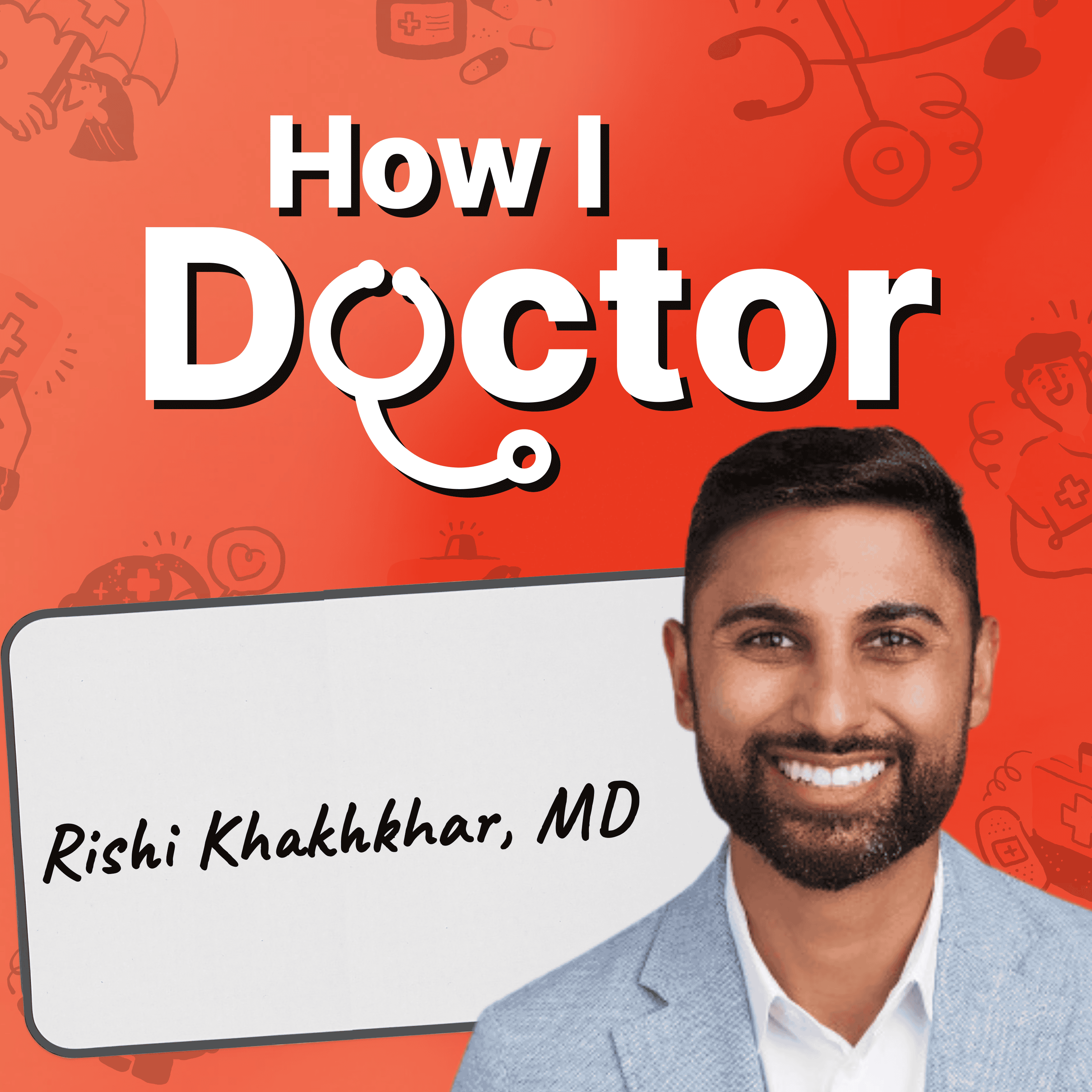
    Medicine Is Headed Toward Semi-Autonomous Care. Are Doctors Ready? With Counsel Health CMO Rishi Khakhkhar

    A recent JAMA perspective argued that AI already outperforms physicians in many cases. One emergency physician building an AI health company thinks that argument gets the timeline right and the conclusion wrong. In this episode of How I Doctor, Offcall co-founder Dr. Graham Walker sits down with Dr. Rishi Khakhkhar, an emergency physician at Mount Sinai and Chief Medical Officer of Counsel Health, an AI-enabled virtual care company. Rishi splits his week between ER shifts and building toward what he calls semi-autonomous care, a deliberate middle stage between fully human and fully automated medicine. The two start with the patients Rishi sees in the ER who never needed to be there, then work through how AI-assisted, physician-supervised care actually functions in practice: an AI takes a full history first, flags when a physician should join, and leaves the decision to escalate in the patient's hands. From there the conversation turns to the JAMA piece itself, with Rishi agreeing that AI can already outperform physicians on narrow tasks like reading subtle EKGs, while pushing back hard on the idea that human-in-the-loop care is holding medicine back. He compares it to Waymo's years of supervised driving before removing the human behind the wheel, and argues medicine shouldn't rush that same transition. The conversation closes on what's structurally in the way: a 50-state licensing system built for a pre-internet world, the deskilling risk facing residents who train alongside tools that already outperform them, and what Rishi thinks primary care looks like in 2036, when it may no longer be built around a relationship with one person at all. What You'll Learn How AI-assisted care actually works: what the AI is allowed to decide, and what always escalates to a physician Where Rishi agrees and disagrees with the JAMA perspective arguing AI already beats doctors Why Rishi resists skipping past human-in-the-loop care What Rishi tells residents they still need to learn without AI, and what he thinks doesn't matter as much anymore What Rishi thinks primary care looks like by 2036 🩺 Offcall is more than a platform — it’s a community. Join today! 📝 For a full transcript of this episode click HERE 🎧 Subscribe to receive new How I Doctor episodes directly in your feed here: https://episodes.fm/1767429315 👨‍⚕️Follow Dr. Graham Walker on LinkedIn https://www.linkedin.com/in/graham-walker-md/ IG https://www.instagram.com/ubergraham/ Bluesky https://bsky.app/profile/drgrahamwalker.com ✉️ Join our newsletter On/Offcall here https://offcall.beehiiv.com/subscribe 🟧 Follow Offcall on LinkedIn https://www.linkedin.com/company/joinoffcall/ IG https://www.instagram.com/offcalldotcom/ TikTok https://www.tiktok.com/@offcalldotcom
  • S1 · E93
    August 27 · 35 min

    The Physician-Owned Practice That Private Equity Can't Buy With Dr. Bradley Block

    Private equity has been buying up ENT and allergy practices at a fast clip. One group has stayed independent and grown into the largest player in its space anyway. In this episode of How I Doctor, Offcall co-founder Dr. Graham Walker sits down with Dr. Bradley Block, an otolaryngologist and board member at ENT and Allergy Associates, the country's largest ENT, allergy, and audiology practice. Brad is also the voice behind Succeed in Medicine, a physician communication podcast he ran for years and hundreds of episodes before stepping away this spring. The two start with why Brad built a podcast in the first place, a solo project born out of a long commute and a simple question: how were his partners seeing more patients per hour than he was without sacrificing the visit. From there the conversation turns to ENTA itself, a practice built on a contract every incoming physician can read on day one, one with a clear, no buy-in path to full equity partnership. That structure now spans roughly 170 partners, and Brad makes the case that scale, not resistance, is exactly what keeps private equity away. He also gets specific about what it costs to build a model like this: founding partners who sacrificed financially to create it, then retired with no buyout at all. The conversation closes on where the real disadvantage lies for independent practices, not efficiency or leadership, but lobbying power on Capitol Hill, where large health systems can outspend independent groups on influencing the reimbursement rules everyone has to live by. What You'll Learn Why Brad built a physician communication podcast because the one he needed didn't exist How ENTA's contract guarantees a clear, no buy-in path to full equity partnership for every incoming physician Why a 170 partner structure is nearly impossible for private equity to acquire, and why Brad argues it wouldn't even help What the founding partners gave up to create the model ENTA runs on today The one question Brad tells physicians to ask before joining any practice, and why the leverage to ask it disappears the moment they sign Resources and Where to Find Brad Find Brad on LinkedIn: Find Brad's ENTA profile: Succeed in Medicine (podcast archive): succeedinmedicine.com Find Brad on Instagram and Threads: @succeedinmedicine 🩺 Offcall is more than a platform — it’s a community. Join today! 📝 For a full transcript of this episode click HERE 🎧 Subscribe to receive new How I Doctor episodes directly in your feed here: https://episodes.fm/1767429315 👨‍⚕️Follow Dr. Graham Walker on LinkedIn https://www.linkedin.com/in/graham-walker-md/ IG https://www.instagram.com/ubergraham/ Bluesky https://bsky.app/profile/drgrahamwalker.com ✉️ Join our newsletter On/Offcall here https://offcall.beehiiv.com/subscribe 🟧 Follow Offcall on LinkedIn https://www.linkedin.com/company/joinoffcall/ IG https://www.instagram.com/offcalldotcom/ TikTok https://www.tiktok.com/@offcalldotcom
  • S1 · E92
    August 20 · 33 min

    Dr. Ari Brown on What Happened to Trust Between Parents and Pediatricians

    Dr. Ari Brown is a pediatrician in Austin, Texas, who has run her own independent practice, 411 Pediatrics, for more than 13 years and been a pediatrician for more than 30. She's the author of the bestselling Baby 411 series, Baby 411, Toddler 411, and the newly released Expecting 411, books that have sold millions of copies and made her one of the most trusted parent educators in the country. Every new edition means going back and correcting the record, including reversing her own earlier guidance to delay introducing peanuts and eggs once the evidence flipped. In this episode of How I Doctor, Dr. Graham Walker talks with Ari about what happened to trust between parents and pediatricians, and what it actually takes to hold that trust together while the ground underneath the science keeps shifting. They dig into why vaccines have become victims of their own success, as parents who've never seen measles or chickenpox come to fear the shot more than the disease, and why so many pediatricians have moved onto social media to fight misinformation directly. Ari reframes physicians as teachers first, and walks through the honesty and communication skills she thinks medical training still underserves. Ari and Graham also get into how instant portal access to labs and imaging has reshaped the emotional weight of practicing medicine, how she coaches families through screens and digital parenting, and what she's seeing families care about most today, from nutrition to developmental milestones. The conversation closes on a warning: with margins this thin, Ari believes independent pediatric practices, and the kind of long-term, trusted care they provide, are genuinely at risk of disappearing. What You'll Learn Why Ari calls vaccines "victims of their own success" and what that means for how parents perceive risk Why she believes physicians are teachers first, and what medical training still gets wrong about communication How instant portal access to labs and imaging has quietly reshaped physician workload and burnout What's actually changed for families in the last decade, from screen time to a growing focus on developmental milestones Why Ari believes independent pediatric practice is at real risk of disappearing, and what's at stake if it does 🩺 Offcall is more than a platform — it’s a community. Join today! 📝 For a full transcript of this episode click HERE 🎧 Subscribe to receive new How I Doctor episodes directly in your feed here: https://episodes.fm/1767429315 👨‍⚕️Follow Dr. Graham Walker on LinkedIn https://www.linkedin.com/in/graham-walker-md/ IG https://www.instagram.com/ubergraham/ Bluesky https://bsky.app/profile/drgrahamwalker.com ✉️ Join our newsletter On/Offcall here https://offcall.beehiiv.com/subscribe 🟧 Follow Offcall on LinkedIn https://www.linkedin.com/company/joinoffcall/ IG https://www.instagram.com/offcalldotcom/ TikTok https://www.tiktok.com/@offcalldotcom
  • S1 · E91
    August 13 · 35 min

    Dr. Karandeep Singh Doesn’t Trust AI Blindly. That’s Exactly Why UC San Diego Health Trusts Him With It

    Dr. Karandeep Singh is a practicing nephrologist, an informaticist, and the inaugural Chief Health AI Officer at UC San Diego Health, where he also leads the Joan and Irwin Jacobs Center for Health Innovation. Back in 2021 at the University of Michigan, he published research questioning Epic's own sepsis model, finding it worked only about 63% of the time and that a clinician might have to evaluate eight separate alerts just to find one real case of sepsis. He's one of the rare people who has been on both sides of AI in medicine, exposing a flawed model and now deciding which ones get deployed at all. In this episode of How I Doctor, Dr. Graham Walker talks with Karandeep about what it actually takes to govern AI inside a health system, and why the doctors who trust AI the least are often the ones best equipped to run it. Karandeep traces his path from teaching himself to code at age eight, through building tools to solve his own clinical frustrations in training, to formally discovering biomedical informatics as a field only during his nephrology fellowship. Karandeep and Graham dig into why generative AI feels transformative to physicians while predictive AI often doesn't, even when the data shows it's saving lives. They walk through a real case study of using agentic AI to automate pre-colonoscopy prep calls without cutting nurses out of the loop, and unpack what a Chief Health AI Officer's job actually involves day to day. The conversation closes on Karandeep's case for regulatory sandboxes, structured ways to test AI-enabled care models that current rules don't yet allow, and his prediction for where AI scribes are headed next. What You'll Learn Why Karandeep's research found Epic's sepsis model wasn't doing what its own model card claimed Why predictive AI creates work that's hard to feel, while generative AI's time savings are noticeable almost daily How UC San Diego Health automated colonoscopy prep calls with AI while keeping nurses at the center of care What a Chief Health AI Officer actually does across evaluation, governance, and implementation Why Karandeep believes regulatory sandboxes, not blanket approval, are how AI expands access to care 🩺 Offcall is more than a platform — it’s a community. Join today! 📝 For a full transcript of this episode click HERE 🎧 Subscribe to receive new How I Doctor episodes directly in your feed here: https://episodes.fm/1767429315 👨‍⚕️Follow Dr. Graham Walker on LinkedIn https://www.linkedin.com/in/graham-walker-md/ IG https://www.instagram.com/ubergraham/ Bluesky https://bsky.app/profile/drgrahamwalker.com ✉️ Join our newsletter On/Offcall here https://offcall.beehiiv.com/subscribe 🟧 Follow Offcall on LinkedIn https://www.linkedin.com/company/joinoffcall/ IG https://www.instagram.com/offcalldotcom/ TikTok https://www.tiktok.com/@offcalldotcom
  • S1 · E90
    August 6 · 36 min

    Running Kaiser's Largest Medical Group Taught Former CEO Dr. Robert Pearl What’s Actually Broken in Healthcare

    Dr. Robert Pearl spent 18 years as CEO of The Permanente Medical Group, the nation's largest physician-led medical group, where he oversaw the care of more than 5 million Kaiser Permanente members delivered by 10,000 physicians and 38,000 staff. He's since become one of healthcare's most direct critics from the inside, a Forbes healthcare contributor, a LinkedIn Top Voice, and the author of the Washington Post bestseller "Mistreated" and his newest book, "ChatGPT, MD," which argues generative AI will become as essential to physicians as the stethoscope. In this episode of How I Doctor, Dr. Graham Walker sits down with Robert, his former CEO, to trace some of the hardest calls of his tenure, including the lunchroom video he made to prepare 10,000 physicians and staff for the uncertainty of the Affordable Care Act. That instinct for delivering an uncomfortable diagnosis before anyone wants to hear it runs through the entire conversation. Robert doesn't think AI's biggest opportunity in healthcare is cutting physician headcount. He argues the real prize, close to $1.8 trillion by his estimate, is preventing the chronic disease that drives most heart attacks, strokes, and kidney failure before it ever starts. Graham and Robert get into why fee-for-service quietly rewards a patient staying sick, how hospital consolidation and private equity have monetized medicine in ways unique to the United States, why he believes capitation is the prerequisite for AI to actually work, and what a routine doctor's visit could look like in five years if his vision plays out. What You'll Learn Why Robert says cutting physician jobs is the wrong AI strategy for hospitals The real math behind the $1.8 trillion he says is sitting in chronic disease prevention Why fee-for-service rewards treating a complication over preventing one How capitation changes what a physician group is financially motivated to want for a patient What Robert thinks a doctor's visit looks like in five years 🩺 Offcall is more than a platform — it’s a community. Join today! 📝 For a full transcript of this episode click HERE 🎧 Subscribe to receive new How I Doctor episodes directly in your feed here: https://episodes.fm/1767429315 👨‍⚕️Follow Dr. Graham Walker on LinkedIn https://www.linkedin.com/in/graham-walker-md/ IG https://www.instagram.com/ubergraham/ Bluesky https://bsky.app/profile/drgrahamwalker.com ✉️ Join our newsletter On/Offcall here https://offcall.beehiiv.com/subscribe 🟧 Follow Offcall on LinkedIn https://www.linkedin.com/company/joinoffcall/ IG https://www.instagram.com/offcalldotcom/ TikTok https://www.tiktok.com/@offcalldotcom
  • S1 · E89
    July 30 · 33 min

    Dr. Jordan Shlain: Insurance Killed Primary Care, So I Built a Practice Without It

    Dr. Jordan Shlain is an internist,= and founder of Private Medical, one of the longest-running concierge practices in the country, and a doctor who has spent 25 years arguing that primary care should never have been bundled into health insurance in the first place. His practice, and his writing on Substack at Don't Listen To Me, have made him one of concierge medicine's most direct voices, direct enough that the New England Journal of Medicine recently devoted a piece to asking whether his model has something to teach the rest of primary care. In this episode of How I Doctor, Dr. Graham Walker sits down with Jordan to trace the origin story back to when a canceled business meeting sent Jordan wandering into a hotel lobby, where he talked his way into becoming the on-call physician for the Mandarin Oriental. That accidental job became San Francisco On Call Medical Group, then Private Medical in 2002, and eventually a 25-year experiment in what happens when a doctor's incentives and a patient's health point in exactly the same direction. Jordan doesn't hedge. Insurance, he argues, is a financial hedge against catastrophic loss, not a mechanism for a doctor visit, and folding primary care into that system created most of the dysfunction physicians and patients feel today. Graham and Jordan get into the actual economics of membership-based primary care, why fee-for-service quietly rewards a patient staying sick, what trust really means when it's stripped down to a promise instead of a marketing term, and why Jordan believes AI will only help physicians if it restores their agency instead of adding another layer of control. What You'll Learn Why Jordan argues insurance was never built for routine primary care The real math behind a membership-based practice How a flat annual membership changes what a doctor is financially motivated to want for a patient The real definition of trust Jordan's prediction that 90 percent of healthcare could already move to email, text, and video What Jordan would eliminate from healthcare tomorrow if he could 🩺 Offcall is more than a platform — it’s a community. Join today! 📝 For a full transcript of this episode click HERE 🎧 Subscribe to receive new How I Doctor episodes directly in your feed here: https://episodes.fm/1767429315 👨‍⚕️Follow Dr. Graham Walker on LinkedIn https://www.linkedin.com/in/graham-walker-md/ IG https://www.instagram.com/ubergraham/ Bluesky https://bsky.app/profile/drgrahamwalker.com ✉️ Join our newsletter On/Offcall here https://offcall.beehiiv.com/subscribe 🟧 Follow Offcall on LinkedIn https://www.linkedin.com/company/joinoffcall/ IG https://www.instagram.com/offcalldotcom/ TikTok https://www.tiktok.com/@offcalldotcom
  • S1 · E88
    July 23 · 30 min

    51 of the Top 100 Healthcare Companies Had a Physician Founder: Dr. David Lortscher Explains Why

    Dr. David Lortscher is a dermatologist turned founder of Curology, one of the first companies to combine telehealth, prescription skincare, and a subscription model into something patients would actually use. He's also the author of a new book making a data backed case that should unsettle every hospital administrator who's ever doubted a physician founder: Why Doctors Win. In this episode of How I Doctor, Dr. Graham Walker sits down with David to trace his path from a dermatopathology fellowship waiting for him at UCLA to starting Curology, and then a decade later stepping back from the CEO seat. That gave him time to go looking for proof that his own success wasn't a fluke. What he found is that 51 of the top 100 healthcare companies founded in the last 40 years had a physician founder! Graham and David get into why the doctor plus engineer pairing keeps showing up in the biggest healthcare success stories, the blind spot that trips up even smart physician founders, and David's blunt rule for anyone gathering advice before making the leap: take the inputs, not the conclusions. What You'll Learn Why physician founded healthcare companies outperform at roughly 3x the rate you'd expect from their overall representation among founders The doctor plus engineer combination that shows up in 7 of the 10 companies profiled in Why Doctors Win, and why it works How an MD behind your name changes the way you sell into a hospital, from the CMO's office up to the CEO and CFO The most common blind spot physician founders hit: falling for the technology itself instead of the harder question of who will actually pay for it David's rule for gathering advice from as many people as possible while still keeping the final decision your own 🩺 Offcall is more than a platform — it’s a community. Join today! 📝 For a full transcript of this episode click HERE 🎧 Subscribe to receive new How I Doctor episodes directly in your feed here: https://episodes.fm/1767429315 👨‍⚕️Follow Dr. Graham Walker on LinkedIn https://www.linkedin.com/in/graham-walker-md/ IG https://www.instagram.com/ubergraham/ Bluesky https://bsky.app/profile/drgrahamwalker.com ✉️ Join our newsletter On/Offcall here https://offcall.beehiiv.com/subscribe 🟧 Follow Offcall on LinkedIn https://www.linkedin.com/company/joinoffcall/ IG https://www.instagram.com/offcalldotcom/ TikTok https://www.tiktok.com/@offcalldotcom

  • S1 · E87
    July 16 · 31 min

    What Does Good AI in Healthcare Look Like? CHAI CEO Brian Anderson Is Trying to Get Every Hospital in America to Agree

    Dr. Brian Anderson is a pediatrician turned CEO of the Coalition for Health AI (CHAI), the organization behind the push to give every AI tool in your EHR something like a nutrition label: what it was trained on, who trained it, and where it might fail. In this episode of How I Doctor, Dr. Graham Walker sits down with Brian to trace his path from a Mass General exam room, where a clunky EHR rollout first pushed him toward building technology instead of just using it, to running a coalition of more than 3,000 organizations trying to agree on one deceptively hard question: what does good AI in healthcare actually look like. They also break two major pieces of news together, live on the show. OpenAI and Anthropic are donating thousands of AI licenses to public health agencies through CHAI, aimed at rebuilding trust in digital tools after decades of underinvestment. And CHAI is launching a health sector specific version of Anthropic's Project Glasswing, bringing serious cybersecurity firepower to the industry Brian calls the most attacked critical infrastructure in the country. Graham and Brian also get into what "human in the loop" should really mean for a working physician, why model cards solve procurement but not the fifteen-minute exam room, and what CHAI is doing to finally connect AI performance to real clinical outcomes. What You'll Learn What CHAI's model cards actually tell a physician, and the gap that still exists between hospital procurement and the exam room The details of CHAI's new partnership with OpenAI and Anthropic, and what it means for public health agencies gaining free access to Claude and ChatGPT Why CHAI is bringing a health sector version of Anthropic's Project Glasswing to hospitals, the most attacked critical infrastructure sector in the country How CHAI plans to measure whether AI tools are actually improving patient outcomes, not just getting deployed 🩺 Offcall is more than a platform — it’s a community. Join today! 📝 For a full transcript of this episode click HERE 🎧 Subscribe to receive new How I Doctor episodes directly in your feed here: https://episodes.fm/1767429315 👨‍⚕️Follow Dr. Graham Walker on LinkedIn https://www.linkedin.com/in/graham-walker-md/ IG https://www.instagram.com/ubergraham/ Bluesky https://bsky.app/profile/drgrahamwalker.com ✉️ Join our newsletter On/Offcall here https://offcall.beehiiv.com/subscribe 🟧 Follow Offcall on LinkedIn https://www.linkedin.com/company/joinoffcall/ IG https://www.instagram.com/offcalldotcom/ TikTok https://www.tiktok.com/@offcalldotcom

  • S1 · E87
    July 9 · 39 min

    Two Surgeons Explain Why U.S. Healthcare Is So Broken And Can't Be Reformed From Inside, from Wendy Dean's 43cc Podcast

    A few weeks ago, Graham sat down with Dr. Wendy Dean, co-founder of Moral Injury in Healthcare, for one of his favorite conversations this show has ever recorded. It's the kind of episode that changes how you talk about your own job. That's why this week, How I Doctor is doing something new: handing the feed over to Wendy's own show, 43cc, which she co-hosts with orthopedic surgeon Dr. Matt Ramsey. 43cc bills itself as informal, informative, and irreverent, and if this episode is representative, that's undersold. It's the conversation you'd have with a colleague after a brutal clinic day, if you let yourself say the quiet part out loud. In this episode, Wendy and Matt start from a real patient encounter, a $3,100 out-of-pocket shoulder MRI on a $6,500 deductible, and use it to walk through exactly how the system got this expensive and this hard to fix from the inside. They don't stop at diagnosing the problem. They name the specific legislative mechanism (a provision buried in the Affordable Care Act) that keeps physicians from building an alternative, and the bills currently in Congress trying to undo it. What You'll Learn in This Episode: Why one patient's $3,100 out of pocket MRI charge reveals exactly how high deductible plans are designed to work against patients, not for them The real difference between concierge medicine and direct primary care, and why Wendy argues only one of them actually changes the underlying cost of care How Section 6001 of the Affordable Care Act froze the growth of physician owned hospitals in 2010, and why reversing it has become one of the more promising paths to real competition in healthcare Why employer sponsored health plans, not federal legislation, may be the most realistic lever for forcing change in how insurers and hospitals operate Subscribe to 43cc wherever you get your podcasts to hear more from Wendy Dean and Matt Ramsey. Full episode and show notes here: 43ccpodcast.com 🩺 Offcall is more than a platform — it’s a community. Join today! 📝 For a full transcript of this episode click HERE 🎧 Subscribe to receive new How I Doctor episodes directly in your feed here: https://episodes.fm/1767429315 👨‍⚕️Follow Dr. Graham Walker on LinkedIn https://www.linkedin.com/in/graham-walker-md/ IG https://www.instagram.com/ubergraham/ Bluesky https://bsky.app/profile/drgrahamwalker.com ✉️ Join our newsletter On/Offcall here https://offcall.beehiiv.com/subscribe 🟧 Follow Offcall on LinkedIn https://www.linkedin.com/company/joinoffcall/ IG https://www.instagram.com/offcalldotcom/ TikTok https://www.tiktok.com/@offcalldotcom

Showing 1–20 of 30 episodes