Skip to content
Artwork for HELMET
EducationScience

HELMET

Pirotian Pirotsky

H (history), E (education), L (languages), M (medicine), E (ethnology), T (tradition)

Play
  • 90 episodes
  • Avg 26 min
  • English
Counted on this page — what you have heard stays on this device, so it is not something the list can be paged by.
  • S27 · E1
    November 3 · 37 min

    🇷🇸 Crkve i manastiri Pirotskog kraja (Detaljna analiza)

    Духовни живот и уметничко наслеђе пиротског краја вековима су се развијали под утицајем геополитичких промена и вишевековне османске владавине. Централно место у овој сакралној географској зони заузима манастир Поганово из 15. века, чији префињени фреско-ансамбл и вредне иконе представљају врхунски домет средњовековне баштине. Духовну везу са ширим српским центром народ је одржавао кроз разгранату мрежу манастирских метоха, међу којима су се истицали хиландарски, студенички и дечански метох. У тешким временима туђинске управе и притисака грчких фанариота, храбро свештенство и народ одлучно су бранили своју веру, црквени ред и матерњи језик. Захваљујући тој дубокој духовној и националној свести, цркве и манастири Понишавља успешно су преживели сва историјска искушења и сачували идентитет овог краја. ИЗВОРИ: Antić LJ. Manastir Svete Bogorodice u Sukovu kod Pirota. Narodna biblioteka Pirot; 1978, 40 p. Crkva od sna i sećanja - sakralno nasleđe Pirotskog kraja. Monografska studija. Pirot; 2018. 120 p. Crkva Svete Petke u Staničenju. Beograd: Republički zavod za zaštitu spomenika kulture; 2015. p. 1–12. Zidno slikarstvo i arhitektura manastira Ponišavlja [doktorska disertacija]. Beograd: Univerzitet u Beogradu; 2020. 350 p. Pregled crkvene Eparhije niške 1927–1928. Niš: Eparhija niška; 1928. p. 1–120. Evstatije - poslednji episkop pirotske eparhije. Pirotski zbornik. 1989; (14): 128–52. Gavrilović A. Manastir Sveti Jovan Bogoslov - Poganovo: istorija, ikona, identitet. Niš: Međunarodni centar za pravoslavne studije; 2026. 306 p. Katić M. Jerusalim Hadži-Ignjatija iz 1845. godine. Pirotski zbornik. 2017; (42): 55–72. Lilić B. Odanost Srba Nišavljana veri i tradiciji. Niš: Eparhija niška; Pirot: NIP Hemikals; 1998. 150 p. Manastir Sveti Đorđe u Temskoj. Beograd: Republički zavod za zaštitu spomenika kulture; 2015. p. 1–15. МАНАСТИРЪТ „СВ. КИРИК И ЮЛИТА” В НИШАВСКАТА ЕПАРХИЯ ПРЕЗ ХVІІІ-ХІХ ВЕК. Istorijski pregled. 2012; p. 45–68. МИТРОПОЛИТ ЕВСТАТИЙ ПЕЛАГОНИЙСКИ. Sofija/Pirot; 2011. 48 p. Popović M, Gabelić S, Cvetković B, Popović B. Crkva Svetog Nikole u Staničenju. Beograd: Arheološki institut; 2005. 232 p. Radović A. Manastir Temska - istraživački i konzervatorsko-restauratorski radovi 1970. godine. Saopštenja RZZSK. 1974; 10: 125–39. Rančić D. Episkopi Piroćanci (Knjiga 1): Vladika Kiril Živković. Pirot: Pravoslavno udruženje "Vladika Vasilije Kostić"; 2019. 224 p. Subotić G. An architectural workshop from the 2nd decade of the 15th century. Zbornik radova Vizantološkog instituta. 2013; 50(2): 811–34. Subotić G. Ikona vasilise Jelene i osnivači manastira Poganova. Saopštenja RZZSK. 1993; 25: 25–44. Subotić G. Studije o manastiru Poganovo i spomenicima Ponišavlja. Beograd: Vizantološki institut SANU; 2013. p. 811–34. Sukovski manastir - značajan nalaz keramičkih predmeta. Pirotski zbornik. 1980; (10): 145–50. Sveti Nikita Remizijanski i rano hrišćanstvo u Ponišavlju. Niš; 2014. p. 15–38. Tomić G, Deljanin B, Mitrović M. Istraživački radovi na lokalitetu Poganovo I. Pirotski zbornik. 1979; (8–9): 211–27. Tomić G, Deljanin B, Mitrović M. Istraživački radovi na lokalitetu Poganovo II. Pirotski zbornik. 1979; (8–9): 228–40. Zebić T. Četiri ikone Pazarske crkve u Pirotu – prilog poznavanju duhovnog života u XVIII veku. Pirotski zbornik. 2016; (41): 41–55. Zebić T. Darovi Živka Svinjara Sabornoj crkvi u Pirotu. Pirotski zbornik. 2018; (43): 85–100. Zidno slikarstvo crkve Svetog Đorđa u manastiru Temska [doktorska disertacija]. Beograd; 2020. 320 p.

  • S26 · E16
    November 2 · 18 min

    🇨🇳 世界语是代码还是自然语言 (辩论)

    世界语于1887年由路德维克·拉扎尔·柴门霍夫博士创立,旨在为全世界人民创造一种简单、中立的共同语言。它最大的优点是非常容易学习,因为它的规则没有任何例外,这意味着每个字母只有一个发音,而且重音总是固定在同一个位置。得益于巧妙设计的词尾系统,只需从几个基本词根出发,就能快速建立起整个词汇量,而无需记忆不规则的变化形式。虽然它是人工创造的,但该语言足够灵活,完全可以正常用于日常口语、书面表达,甚至现代计算机程序中。由于其简单性,学习世界语能够显著促进并加速随后对其他外语的学习。 来源 Beginning Esperanto Workbook. Introductory Educational Workbook for Esperanto Learners. Cresswell J, Hartley J. Teach Yourself Esperanto. 3rd ed. Revised by Sullivan JH. London: Hodder and Stoughton; 1987 Esperanto Essentials: An Introductory Guide to Esperanto. Practical Learning Manual for Beginners Esperanto Pocket Textbook. Pocket Introductory Manual for Universal Second Language Acquisition; 2016. Fettes M. Esperanto and Education: Towards a Research Agenda. Rotterdam: Universal Esperanto Association; 2003 Gledhill C. The Grammar of Esperanto: A Corpus-based Description. 2nd ed. München: Lincom Europa; 2000. Janton P. Esperanto: Language, Literature, and Community. Edited by Tonkin H; translated by Tonkin H, Edwards J, Johnson-Weiner K. Albany: State University of New York Press; 1993 Kellerman I. A Complete Grammar of Esperanto: The International Language with Graded Exercises for Reading and Translation. New York: D. C. Heath and Company; 1910 Lapenna E. Esperanto za svakoga / Esperanto por ĉiu: Udžbenik za brzo učenje međunarodnog jezika esperanta sa dvostrukim rječnikom. Zagreb: Društvo esperantista "Bude Borjan"; 1980 Lapenna I. Esperanto u deset lekcija: Potpuna gramatika međunarodnog jezika sa vježbama i rječnikom. 3. izd. Zagreb: Savez esperantista Hrvatske; 1946 Richardson D. Esperanto: Learning and Using the International Language. Eastsound (WA): Orcas Publishing Company; 1988 Stria I. Esperanto as a natural language. Język. Komunikacja. Informacja. 2015;10:32-42 Zamenhof LL. The Sixteen Rules of Esperanto Grammar (with annotations by Harlow DJ). Fundamento de Esperanto; 1905.

  • S26 · E15
    November 2 · 27 min

    🇨🇳 世界语长出灵魂 (深入探讨)

    世界语于1887年由路德维克·拉扎尔·柴门霍夫博士创立,旨在为全世界人民创造一种简单、中立的共同语言。它最大的优点是非常容易学习,因为它的规则没有任何例外,这意味着每个字母只有一个发音,而且重音总是固定在同一个位置。得益于巧妙设计的词尾系统,只需从几个基本词根出发,就能快速建立起整个词汇量,而无需记忆不规则的变化形式。虽然它是人工创造的,但该语言足够灵活,完全可以正常用于日常口语、书面表达,甚至现代计算机程序中。由于其简单性,学习世界语能够显著促进并加速随后对其他外语的学习。 来源 Beginning Esperanto Workbook. Introductory Educational Workbook for Esperanto Learners. Cresswell J, Hartley J. Teach Yourself Esperanto. 3rd ed. Revised by Sullivan JH. London: Hodder and Stoughton; 1987 Esperanto Essentials: An Introductory Guide to Esperanto. Practical Learning Manual for Beginners Esperanto Pocket Textbook. Pocket Introductory Manual for Universal Second Language Acquisition; 2016. Fettes M. Esperanto and Education: Towards a Research Agenda. Rotterdam: Universal Esperanto Association; 2003 Gledhill C. The Grammar of Esperanto: A Corpus-based Description. 2nd ed. München: Lincom Europa; 2000. Janton P. Esperanto: Language, Literature, and Community. Edited by Tonkin H; translated by Tonkin H, Edwards J, Johnson-Weiner K. Albany: State University of New York Press; 1993 Kellerman I. A Complete Grammar of Esperanto: The International Language with Graded Exercises for Reading and Translation. New York: D. C. Heath and Company; 1910 Lapenna E. Esperanto za svakoga / Esperanto por ĉiu: Udžbenik za brzo učenje međunarodnog jezika esperanta sa dvostrukim rječnikom. Zagreb: Društvo esperantista "Bude Borjan"; 1980 Lapenna I. Esperanto u deset lekcija: Potpuna gramatika međunarodnog jezika sa vježbama i rječnikom. 3. izd. Zagreb: Savez esperantista Hrvatske; 1946 Richardson D. Esperanto: Learning and Using the International Language. Eastsound (WA): Orcas Publishing Company; 1988 Stria I. Esperanto as a natural language. Język. Komunikacja. Informacja. 2015;10:32-42 Zamenhof LL. The Sixteen Rules of Esperanto Grammar (with annotations by Harlow DJ). Fundamento de Esperanto; 1905.

  • S26 · E14
    November 1 · 17 min

    🇮🇳 क्या एस्पेरान्तो एक प्राकृतिक भाषा है (वाद-विवाद)

    स्रोत Beginning Esperanto Workbook. Introductory Educational Workbook for Esperanto Learners. Cresswell J, Hartley J. Teach Yourself Esperanto. 3rd ed. Revised by Sullivan JH. London: Hodder and Stoughton; 1987 Esperanto Essentials: An Introductory Guide to Esperanto. Practical Learning Manual for Beginners Esperanto Pocket Textbook. Pocket Introductory Manual for Universal Second Language Acquisition; 2016. Fettes M. Esperanto and Education: Towards a Research Agenda. Rotterdam: Universal Esperanto Association; 2003 Gledhill C. The Grammar of Esperanto: A Corpus-based Description. 2nd ed. München: Lincom Europa; 2000. Janton P. Esperanto: Language, Literature, and Community. Edited by Tonkin H; translated by Tonkin H, Edwards J, Johnson-Weiner K. Albany: State University of New York Press; 1993 Kellerman I. A Complete Grammar of Esperanto: The International Language with Graded Exercises for Reading and Translation. New York: D. C. Heath and Company; 1910 Lapenna E. Esperanto za svakoga / Esperanto por ĉiu: Udžbenik za brzo učenje međunarodnog jezika esperanta sa dvostrukim rječnikom. Zagreb: Društvo esperantista "Bude Borjan"; 1980 Lapenna I. Esperanto u deset lekcija: Potpuna gramatika međunarodnog jezika sa vježbama i rječnikom. 3. izd. Zagreb: Savez esperantista Hrvatske; 1946 Richardson D. Esperanto: Learning and Using the International Language. Eastsound (WA): Orcas Publishing Company; 1988 Stria I. Esperanto as a natural language. Język. Komunikacja. Informacja. 2015;10:32-42 Zamenhof LL. The Sixteen Rules of Esperanto Grammar (with annotations by Harlow DJ). Fundamento de Esperanto; 1905.

  • S26 · E13
    November 1 · 18 min

    🇮🇳 एस्पेरांतो कैसे बनी एक जीवंत भाषा (गहन विश्लेषण)

    एस्पेरेंटो की रचना 1887 में डॉ. लुडविक लेज्जर ज़ामेंहोफ़ द्वारा दुनिया भर के लोगों के लिए एक सरल और तटस्थ आम भाषा बनाने के लिए की गई थी। इसका सबसे बड़ा फायदा यह है कि इसे सीखना बहुत आसान है क्योंकि इसके नियम बिना किसी अपवाद के हैं, जिसका अर्थ है कि प्रत्येक अक्षर की केवल एक ही ध्वनि होती है और तनाव (उच्चारण का बल) हमेशा एक ही स्थान पर रहता है। शब्द के अंत के रूप की एक चतुराई से डिज़ाइन की गई प्रणाली के कारण, अनियमित रूपों को याद रखने की आवश्यकता के बिना केवल कुछ बुनियादी मूल शब्दों से एक संपूर्ण शब्दावली जल्दी से बनाई जा सकती है। हालांकि इसे कृत्रिम रूप से बनाया गया था, फिर भी यह भाषा इतनी लचीली है कि इसे सामान्य बोलचाल, लेखन और यहाँ तक कि आधुनिक कंप्यूटर कार्यक्रमों में भी सामान्य रूप से उपयोग किया जा सकता है। अपनी सादगी के कारण, एस्पेरेंटो सीखना अन्य विदेशी भाषाओं के बाद के सीखने को काफी हद तक सुगम और तेज करता है। स्रोत Beginning Esperanto Workbook. Introductory Educational Workbook for Esperanto Learners. Cresswell J, Hartley J. Teach Yourself Esperanto. 3rd ed. Revised by Sullivan JH. London: Hodder and Stoughton; 1987 Esperanto Essentials: An Introductory Guide to Esperanto. Practical Learning Manual for Beginners Esperanto Pocket Textbook. Pocket Introductory Manual for Universal Second Language Acquisition; 2016. Fettes M. Esperanto and Education: Towards a Research Agenda. Rotterdam: Universal Esperanto Association; 2003 Gledhill C. The Grammar of Esperanto: A Corpus-based Description. 2nd ed. München: Lincom Europa; 2000. Janton P. Esperanto: Language, Literature, and Community. Edited by Tonkin H; translated by Tonkin H, Edwards J, Johnson-Weiner K. Albany: State University of New York Press; 1993 Kellerman I. A Complete Grammar of Esperanto: The International Language with Graded Exercises for Reading and Translation. New York: D. C. Heath and Company; 1910 Lapenna E. Esperanto za svakoga / Esperanto por ĉiu: Udžbenik za brzo učenje međunarodnog jezika esperanta sa dvostrukim rječnikom. Zagreb: Društvo esperantista "Bude Borjan"; 1980 Lapenna I. Esperanto u deset lekcija: Potpuna gramatika međunarodnog jezika sa vježbama i rječnikom. 3. izd. Zagreb: Savez esperantista Hrvatske; 1946 Richardson D. Esperanto: Learning and Using the International Language. Eastsound (WA): Orcas Publishing Company; 1988 Stria I. Esperanto as a natural language. Język. Komunikacja. Informacja. 2015;10:32-42 Zamenhof LL. The Sixteen Rules of Esperanto Grammar (with annotations by Harlow DJ). Fundamento de Esperanto; 1905.

  • S26 · E12
    November 1 · 25 min

    🇧🇷 O Esperanto é engenharia ou língua viva (Debate)

    O esperanto foi criado em 1887 pelo Dr. Ludwik Lejzer Zamenhof para criar uma língua comum simples e neutra para pessoas ao redor do mundo. Sua maior vantagem é que ele é muito fácil de aprender porque possui regras sem exceções, o que significa que cada letra tem apenas um som e a tônica está sempre no mesmo lugar. Graças a um sistema inteligentemente projetado de terminações de palavras, um vocabulário inteiro pode ser construído rapidamente a partir de apenas algumas raízes básicas, sem a necessidade de memorizar formas irregulares. Embora tenha sido criado artificialmente, o idioma é flexível o suficiente para ser usado normalmente na fala cotidiana, na escrita e até mesmo em programas de computador modernos. Devido à sua simplicidade, aprender esperanto facilita e acelera significativamente o aprendizado subsequente de outros idiomas estrangeiros. FONTES: Beginning Esperanto Workbook. Introductory Educational Workbook for Esperanto Learners. Cresswell J, Hartley J. Teach Yourself Esperanto. 3rd ed. Revised by Sullivan JH. London: Hodder and Stoughton; 1987 Esperanto Essentials: An Introductory Guide to Esperanto. Practical Learning Manual for Beginners Esperanto Pocket Textbook. Pocket Introductory Manual for Universal Second Language Acquisition; 2016. Fettes M. Esperanto and Education: Towards a Research Agenda. Rotterdam: Universal Esperanto Association; 2003 Gledhill C. The Grammar of Esperanto: A Corpus-based Description. 2nd ed. München: Lincom Europa; 2000. Janton P. Esperanto: Language, Literature, and Community. Edited by Tonkin H; translated by Tonkin H, Edwards J, Johnson-Weiner K. Albany: State University of New York Press; 1993 Kellerman I. A Complete Grammar of Esperanto: The International Language with Graded Exercises for Reading and Translation. New York: D. C. Heath and Company; 1910 Lapenna E. Esperanto za svakoga / Esperanto por ĉiu: Udžbenik za brzo učenje međunarodnog jezika esperanta sa dvostrukim rječnikom. Zagreb: Društvo esperantista "Bude Borjan"; 1980 Lapenna I. Esperanto u deset lekcija: Potpuna gramatika međunarodnog jezika sa vježbama i rječnikom. 3. izd. Zagreb: Savez esperantista Hrvatske; 1946 Richardson D. Esperanto: Learning and Using the International Language. Eastsound (WA): Orcas Publishing Company; 1988 Stria I. Esperanto as a natural language. Język. Komunikacja. Informacja. 2015;10:32-42 Zamenhof LL. The Sixteen Rules of Esperanto Grammar (with annotations by Harlow DJ). Fundamento de Esperanto; 1905.

  • S26 · E11
    November 1 · 20 min

    🇧🇷 Como o Esperanto treina a inteligência artificial (Análise detalhada)

    O esperanto foi criado em 1887 pelo Dr. Ludwik Lejzer Zamenhof para criar uma língua comum simples e neutra para pessoas ao redor do mundo. Sua maior vantagem é que ele é muito fácil de aprender porque possui regras sem exceções, o que significa que cada letra tem apenas um som e a tônica está sempre no mesmo lugar. Graças a um sistema inteligentemente projetado de terminações de palavras, um vocabulário inteiro pode ser construído rapidamente a partir de apenas algumas raízes básicas, sem a necessidade de memorizar formas irregulares. Embora tenha sido criado artificialmente, o idioma é flexível o suficiente para ser usado normalmente na fala cotidiana, na escrita e até mesmo em programas de computador modernos. Devido à sua simplicidade, aprender esperanto facilita e acelera significativamente o aprendizado subsequente de outros idiomas estrangeiros. FONTES: Beginning Esperanto Workbook. Introductory Educational Workbook for Esperanto Learners. Cresswell J, Hartley J. Teach Yourself Esperanto. 3rd ed. Revised by Sullivan JH. London: Hodder and Stoughton; 1987 Esperanto Essentials: An Introductory Guide to Esperanto. Practical Learning Manual for Beginners Esperanto Pocket Textbook. Pocket Introductory Manual for Universal Second Language Acquisition; 2016. Fettes M. Esperanto and Education: Towards a Research Agenda. Rotterdam: Universal Esperanto Association; 2003 Gledhill C. The Grammar of Esperanto: A Corpus-based Description. 2nd ed. München: Lincom Europa; 2000. Janton P. Esperanto: Language, Literature, and Community. Edited by Tonkin H; translated by Tonkin H, Edwards J, Johnson-Weiner K. Albany: State University of New York Press; 1993 Kellerman I. A Complete Grammar of Esperanto: The International Language with Graded Exercises for Reading and Translation. New York: D. C. Heath and Company; 1910 Lapenna E. Esperanto za svakoga / Esperanto por ĉiu: Udžbenik za brzo učenje međunarodnog jezika esperanta sa dvostrukim rječnikom. Zagreb: Društvo esperantista "Bude Borjan"; 1980 Lapenna I. Esperanto u deset lekcija: Potpuna gramatika međunarodnog jezika sa vježbama i rječnikom. 3. izd. Zagreb: Savez esperantista Hrvatske; 1946 Richardson D. Esperanto: Learning and Using the International Language. Eastsound (WA): Orcas Publishing Company; 1988 Stria I. Esperanto as a natural language. Język. Komunikacja. Informacja. 2015;10:32-42 Zamenhof LL. The Sixteen Rules of Esperanto Grammar (with annotations by Harlow DJ). Fundamento de Esperanto; 1905.

  • S26 · E10
    November 1 · 17 min

    🇫🇷 L'espéranto - est-il une langue universelle? (Débat)

    L'espéranto a été créé en 1887 par le Dr Ludwik Lejzer Zamenhof pour créer une langue commune simple et neutre pour les gens du monde entier. Son plus grand avantage est qu'il est très facile à apprendre car il possède des règles sans exceptions, ce qui signifie que chaque lettre n'a qu'un seul son et que l'accent est toujours placé au même endroit. Grâce à un système ingénieux de terminaisons de mots, il est possible de construire rapidement un vocabulaire entier à partir de quelques racines de base seulement, sans avoir à mémoriser de formes irrégulières. Bien qu'elle ait été créée artificiellement, la langue est suffisamment flexible pour être utilisée normalement dans la conversation quotidienne, à l'écrit et même dans les programmes informatiques modernes. En raison de sa simplicité, l'apprentissage de l'espéranto facilite et accélère considérablement l'apprentissage ultérieur d'autres langues étrangères. SOURCES: Beginning Esperanto Workbook. Introductory Educational Workbook for Esperanto Learners. Cresswell J, Hartley J. Teach Yourself Esperanto. 3rd ed. Revised by Sullivan JH. London: Hodder and Stoughton; 1987 Esperanto Essentials: An Introductory Guide to Esperanto. Practical Learning Manual for Beginners Esperanto Pocket Textbook. Pocket Introductory Manual for Universal Second Language Acquisition; 2016. Fettes M. Esperanto and Education: Towards a Research Agenda. Rotterdam: Universal Esperanto Association; 2003 Gledhill C. The Grammar of Esperanto: A Corpus-based Description. 2nd ed. München: Lincom Europa; 2000. Janton P. Esperanto: Language, Literature, and Community. Edited by Tonkin H; translated by Tonkin H, Edwards J, Johnson-Weiner K. Albany: State University of New York Press; 1993 Kellerman I. A Complete Grammar of Esperanto: The International Language with Graded Exercises for Reading and Translation. New York: D. C. Heath and Company; 1910 Lapenna E. Esperanto za svakoga / Esperanto por ĉiu: Udžbenik za brzo učenje međunarodnog jezika esperanta sa dvostrukim rječnikom. Zagreb: Društvo esperantista "Bude Borjan"; 1980 Lapenna I. Esperanto u deset lekcija: Potpuna gramatika međunarodnog jezika sa vježbama i rječnikom. 3. izd. Zagreb: Savez esperantista Hrvatske; 1946 Richardson D. Esperanto: Learning and Using the International Language. Eastsound (WA): Orcas Publishing Company; 1988 Stria I. Esperanto as a natural language. Język. Komunikacja. Informacja. 2015;10:32-42 Zamenhof LL. The Sixteen Rules of Esperanto Grammar (with annotations by Harlow DJ). Fundamento de Esperanto; 1905.

  • S26 · E9
    November 1 · 20 min

    🇫🇷 L'Espéranto, du code à la poésie (Analyse approfondie)

    L'espéranto a été créé en 1887 par le Dr Ludwik Lejzer Zamenhof pour créer une langue commune simple et neutre pour les gens du monde entier. Son plus grand avantage est qu'il est très facile à apprendre car il possède des règles sans exceptions, ce qui signifie que chaque lettre n'a qu'un seul son et que l'accent est toujours placé au même endroit. Grâce à un système ingénieux de terminaisons de mots, il est possible de construire rapidement un vocabulaire entier à partir de quelques racines de base seulement, sans avoir à mémoriser de formes irrégulières. Bien qu'elle ait été créée artificiellement, la langue est suffisamment flexible pour être utilisée normalement dans la conversation quotidienne, à l'écrit et même dans les programmes informatiques modernes. En raison de sa simplicité, l'apprentissage de l'espéranto facilite et accélère considérablement l'apprentissage ultérieur d'autres langues étrangères. SOURCES: Beginning Esperanto Workbook. Introductory Educational Workbook for Esperanto Learners. Cresswell J, Hartley J. Teach Yourself Esperanto. 3rd ed. Revised by Sullivan JH. London: Hodder and Stoughton; 1987 Esperanto Essentials: An Introductory Guide to Esperanto. Practical Learning Manual for Beginners Esperanto Pocket Textbook. Pocket Introductory Manual for Universal Second Language Acquisition; 2016. Fettes M. Esperanto and Education: Towards a Research Agenda. Rotterdam: Universal Esperanto Association; 2003 Gledhill C. The Grammar of Esperanto: A Corpus-based Description. 2nd ed. München: Lincom Europa; 2000. Janton P. Esperanto: Language, Literature, and Community. Edited by Tonkin H; translated by Tonkin H, Edwards J, Johnson-Weiner K. Albany: State University of New York Press; 1993 Kellerman I. A Complete Grammar of Esperanto: The International Language with Graded Exercises for Reading and Translation. New York: D. C. Heath and Company; 1910 Lapenna E. Esperanto za svakoga / Esperanto por ĉiu: Udžbenik za brzo učenje međunarodnog jezika esperanta sa dvostrukim rječnikom. Zagreb: Društvo esperantista "Bude Borjan"; 1980 Lapenna I. Esperanto u deset lekcija: Potpuna gramatika međunarodnog jezika sa vježbama i rječnikom. 3. izd. Zagreb: Savez esperantista Hrvatske; 1946 Richardson D. Esperanto: Learning and Using the International Language. Eastsound (WA): Orcas Publishing Company; 1988 Stria I. Esperanto as a natural language. Język. Komunikacja. Informacja. 2015;10:32-42 Zamenhof LL. The Sixteen Rules of Esperanto Grammar (with annotations by Harlow DJ). Fundamento de Esperanto; 1905.

  • S26 · E8
    October 31 · 19 min

    🇩🇪 Ist Esperanto Code oder lebendige Sprache? (Debatte)

    Esperanto wurde 1887 von Dr. Ludwik Lejzer Zamenhof geschaffen, um eine einfache und neutrale gemeinsame Sprache für Menschen auf der ganzen Welt zu schaffen. Ihr größter Vorteil ist, dass sie sehr leicht zu erlernen ist, da sie ausnahmslose Regeln hat, was bedeutet, dass jeder Buchstabe nur einen Laut hat und die Betonung immer auf derselben Stelle liegt. Dank eines clever entworfenen Systems von Wortendungen kann aus nur wenigen Grundwurzeln schnell ein vollständiger Wortschatz aufgebaut werden, ohne dass unregelmäßige Formen auswendig gelernt werden müssen. Obwohl es künstlich geschaffen wurde, ist die Sprache flexibel genug, um im alltäglichen Sprechen, Schreiben und sogar in modernen Computerprogrammen normal verwendet zu werden. Wegen seiner Einfachheit erleichtert und beschleunigt das Erlernen von Esperanto das anschließende Erlernen anderer Fremdsprachen erheblich. QUELLEN: Beginning Esperanto Workbook. Introductory Educational Workbook for Esperanto Learners. Cresswell J, Hartley J. Teach Yourself Esperanto. 3rd ed. Revised by Sullivan JH. London: Hodder and Stoughton; 1987 Esperanto Essentials: An Introductory Guide to Esperanto. Practical Learning Manual for Beginners Esperanto Pocket Textbook. Pocket Introductory Manual for Universal Second Language Acquisition; 2016. Fettes M. Esperanto and Education: Towards a Research Agenda. Rotterdam: Universal Esperanto Association; 2003 Gledhill C. The Grammar of Esperanto: A Corpus-based Description. 2nd ed. München: Lincom Europa; 2000. Janton P. Esperanto: Language, Literature, and Community. Edited by Tonkin H; translated by Tonkin H, Edwards J, Johnson-Weiner K. Albany: State University of New York Press; 1993 Kellerman I. A Complete Grammar of Esperanto: The International Language with Graded Exercises for Reading and Translation. New York: D. C. Heath and Company; 1910 Lapenna E. Esperanto za svakoga / Esperanto por ĉiu: Udžbenik za brzo učenje međunarodnog jezika esperanta sa dvostrukim rječnikom. Zagreb: Društvo esperantista "Bude Borjan"; 1980 Lapenna I. Esperanto u deset lekcija: Potpuna gramatika međunarodnog jezika sa vježbama i rječnikom. 3. izd. Zagreb: Savez esperantista Hrvatske; 1946 Richardson D. Esperanto: Learning and Using the International Language. Eastsound (WA): Orcas Publishing Company; 1988 Stria I. Esperanto as a natural language. Język. Komunikacja. Informacja. 2015;10:32-42 Zamenhof LL. The Sixteen Rules of Esperanto Grammar (with annotations by Harlow DJ). Fundamento de Esperanto; 1905.

  • S26 · E7
    October 31 · 19 min

    🇩🇪 Warum Esperanto wie eine echte Sprache lebt? (Tiefenanalyse)

    Esperanto wurde 1887 von Dr. Ludwik Lejzer Zamenhof geschaffen, um eine einfache und neutrale gemeinsame Sprache für Menschen auf der ganzen Welt zu schaffen. Ihr größter Vorteil ist, dass sie sehr leicht zu erlernen ist, da sie ausnahmslose Regeln hat, was bedeutet, dass jeder Buchstabe nur einen Laut hat und die Betonung immer auf derselben Stelle liegt. Dank eines clever entworfenen Systems von Wortendungen kann aus nur wenigen Grundwurzeln schnell ein vollständiger Wortschatz aufgebaut werden, ohne dass unregelmäßige Formen auswendig gelernt werden müssen. Obwohl es künstlich geschaffen wurde, ist die Sprache flexibel genug, um im alltäglichen Sprechen, Schreiben und sogar in modernen Computerprogrammen normal verwendet zu werden. Wegen seiner Einfachheit erleichtert und beschleunigt das Erlernen von Esperanto das anschließende Erlernen anderer Fremdsprachen erheblich. QUELLEN: Beginning Esperanto Workbook. Introductory Educational Workbook for Esperanto Learners. Cresswell J, Hartley J. Teach Yourself Esperanto. 3rd ed. Revised by Sullivan JH. London: Hodder and Stoughton; 1987 Esperanto Essentials: An Introductory Guide to Esperanto. Practical Learning Manual for Beginners Esperanto Pocket Textbook. Pocket Introductory Manual for Universal Second Language Acquisition; 2016. Fettes M. Esperanto and Education: Towards a Research Agenda. Rotterdam: Universal Esperanto Association; 2003 Gledhill C. The Grammar of Esperanto: A Corpus-based Description. 2nd ed. München: Lincom Europa; 2000. Janton P. Esperanto: Language, Literature, and Community. Edited by Tonkin H; translated by Tonkin H, Edwards J, Johnson-Weiner K. Albany: State University of New York Press; 1993 Kellerman I. A Complete Grammar of Esperanto: The International Language with Graded Exercises for Reading and Translation. New York: D. C. Heath and Company; 1910 Lapenna E. Esperanto za svakoga / Esperanto por ĉiu: Udžbenik za brzo učenje međunarodnog jezika esperanta sa dvostrukim rječnikom. Zagreb: Društvo esperantista "Bude Borjan"; 1980 Lapenna I. Esperanto u deset lekcija: Potpuna gramatika međunarodnog jezika sa vježbama i rječnikom. 3. izd. Zagreb: Savez esperantista Hrvatske; 1946 Richardson D. Esperanto: Learning and Using the International Language. Eastsound (WA): Orcas Publishing Company; 1988 Stria I. Esperanto as a natural language. Język. Komunikacja. Informacja. 2015;10:32-42 Zamenhof LL. The Sixteen Rules of Esperanto Grammar (with annotations by Harlow DJ). Fundamento de Esperanto; 1905.

  • S26 · E6
    October 31 · 21 min

    🇪🇸 Esperanto - ¿lengua viva o artificial? (Debate)

    El esperanto fue creado en 1887 por el Dr. Ludwik Lejzer Zamenhof para crear un idioma común, simple y neutral para las personas de todo el mundo. Su mayor ventaja es que es muy fácil de aprender porque tiene reglas sin excepciones, lo que significa que cada letra tiene un solo sonido y el acento siempre está en el mismo lugar. Gracias a un sistema inteligentemente diseñado de terminaciones de palabras, se puede construir rápidamente un vocabulario completo a partir de unas pocas raíces básicas sin la necesidad de memorizar formas irregulares. Aunque fue creado artificialmente, el idioma es lo suficientemente flexible como para usarse con normalidad en el habla cotidiana, la escritura e incluso en programas informáticos modernos. Debido a su simplicidad, aprender esperanto facilita y acelera significativamente el aprendizaje posterior de otros idiomas extranjeros. FUENTES: Beginning Esperanto Workbook. Introductory Educational Workbook for Esperanto Learners. Cresswell J, Hartley J. Teach Yourself Esperanto. 3rd ed. Revised by Sullivan JH. London: Hodder and Stoughton; 1987 Esperanto Essentials: An Introductory Guide to Esperanto. Practical Learning Manual for Beginners Esperanto Pocket Textbook. Pocket Introductory Manual for Universal Second Language Acquisition; 2016. Fettes M. Esperanto and Education: Towards a Research Agenda. Rotterdam: Universal Esperanto Association; 2003 Gledhill C. The Grammar of Esperanto: A Corpus-based Description. 2nd ed. München: Lincom Europa; 2000. Janton P. Esperanto: Language, Literature, and Community. Edited by Tonkin H; translated by Tonkin H, Edwards J, Johnson-Weiner K. Albany: State University of New York Press; 1993 Kellerman I. A Complete Grammar of Esperanto: The International Language with Graded Exercises for Reading and Translation. New York: D. C. Heath and Company; 1910 Lapenna E. Esperanto za svakoga / Esperanto por ĉiu: Udžbenik za brzo učenje međunarodnog jezika esperanta sa dvostrukim rječnikom. Zagreb: Društvo esperantista "Bude Borjan"; 1980 Lapenna I. Esperanto u deset lekcija: Potpuna gramatika međunarodnog jezika sa vježbama i rječnikom. 3. izd. Zagreb: Savez esperantista Hrvatske; 1946 Richardson D. Esperanto: Learning and Using the International Language. Eastsound (WA): Orcas Publishing Company; 1988 Stria I. Esperanto as a natural language. Język. Komunikacja. Informacja. 2015;10:32-42 Zamenhof LL. The Sixteen Rules of Esperanto Grammar (with annotations by Harlow DJ). Fundamento de Esperanto; 1905.

  • S26 · E5
    October 31 · 22 min

    🇪🇸 Del esperanto a la inteligencia artificial (Análisis detallado)

    El esperanto fue creado en 1887 por el Dr. Ludwik Lejzer Zamenhof para crear un idioma común, simple y neutral para las personas de todo el mundo. Su mayor ventaja es que es muy fácil de aprender porque tiene reglas sin excepciones, lo que significa que cada letra tiene un solo sonido y el acento siempre está en el mismo lugar. Gracias a un sistema inteligentemente diseñado de terminaciones de palabras, se puede construir rápidamente un vocabulario completo a partir de unas pocas raíces básicas sin la necesidad de memorizar formas irregulares. Aunque fue creado artificialmente, el idioma es lo suficientemente flexible como para usarse con normalidad en el habla cotidiana, la escritura e incluso en programas informáticos modernos. Debido a su simplicidad, aprender esperanto facilita y acelera significativamente el aprendizaje posterior de otros idiomas extranjeros. FUENTES: Beginning Esperanto Workbook. Introductory Educational Workbook for Esperanto Learners. Cresswell J, Hartley J. Teach Yourself Esperanto. 3rd ed. Revised by Sullivan JH. London: Hodder and Stoughton; 1987 Esperanto Essentials: An Introductory Guide to Esperanto. Practical Learning Manual for Beginners Esperanto Pocket Textbook. Pocket Introductory Manual for Universal Second Language Acquisition; 2016. Fettes M. Esperanto and Education: Towards a Research Agenda. Rotterdam: Universal Esperanto Association; 2003 Gledhill C. The Grammar of Esperanto: A Corpus-based Description. 2nd ed. München: Lincom Europa; 2000. Janton P. Esperanto: Language, Literature, and Community. Edited by Tonkin H; translated by Tonkin H, Edwards J, Johnson-Weiner K. Albany: State University of New York Press; 1993 Kellerman I. A Complete Grammar of Esperanto: The International Language with Graded Exercises for Reading and Translation. New York: D. C. Heath and Company; 1910 Lapenna E. Esperanto za svakoga / Esperanto por ĉiu: Udžbenik za brzo učenje međunarodnog jezika esperanta sa dvostrukim rječnikom. Zagreb: Društvo esperantista "Bude Borjan"; 1980 Lapenna I. Esperanto u deset lekcija: Potpuna gramatika međunarodnog jezika sa vježbama i rječnikom. 3. izd. Zagreb: Savez esperantista Hrvatske; 1946 Richardson D. Esperanto: Learning and Using the International Language. Eastsound (WA): Orcas Publishing Company; 1988 Stria I. Esperanto as a natural language. Język. Komunikacja. Informacja. 2015;10:32-42 Zamenhof LL. The Sixteen Rules of Esperanto Grammar (with annotations by Harlow DJ). Fundamento de Esperanto; 1905.

  • S26 · E4
    October 31 · 19 min

    🇺🇸 Is Esperanto a Natural or Artificial Language (Debate)

    Esperanto was created in 1887 by Dr. Ludwik Lejzer Zamenhof to create a simple and neutral common language for people around the world. Its greatest advantage is that it is very easy to learn because it has rules without exceptions, meaning every letter has only one sound and the stress is always in the same place. Thanks to a cleverly designed system of word endings, an entire vocabulary can be quickly built from just a few basic roots without the need to memorize irregular forms. Although artificially created, the language is flexible enough to be used normally in everyday speech, writing, and even in modern computer programs. Because of its simplicity, learning Esperanto significantly facilitates and accelerates the subsequent learning of other foreign languages. SOURCES: Beginning Esperanto Workbook. Introductory Educational Workbook for Esperanto Learners. Cresswell J, Hartley J. Teach Yourself Esperanto. 3rd ed. Revised by Sullivan JH. London: Hodder and Stoughton; 1987 Esperanto Essentials: An Introductory Guide to Esperanto. Practical Learning Manual for Beginners Esperanto Pocket Textbook. Pocket Introductory Manual for Universal Second Language Acquisition; 2016. Fettes M. Esperanto and Education: Towards a Research Agenda. Rotterdam: Universal Esperanto Association; 2003 Gledhill C. The Grammar of Esperanto: A Corpus-based Description. 2nd ed. München: Lincom Europa; 2000. Janton P. Esperanto: Language, Literature, and Community. Edited by Tonkin H; translated by Tonkin H, Edwards J, Johnson-Weiner K. Albany: State University of New York Press; 1993 Kellerman I. A Complete Grammar of Esperanto: The International Language with Graded Exercises for Reading and Translation. New York: D. C. Heath and Company; 1910 Lapenna E. Esperanto za svakoga / Esperanto por ĉiu: Udžbenik za brzo učenje međunarodnog jezika esperanta sa dvostrukim rječnikom. Zagreb: Društvo esperantista "Bude Borjan"; 1980 Lapenna I. Esperanto u deset lekcija: Potpuna gramatika međunarodnog jezika sa vježbama i rječnikom. 3. izd. Zagreb: Savez esperantista Hrvatske; 1946 Richardson D. Esperanto: Learning and Using the International Language. Eastsound (WA): Orcas Publishing Company; 1988 Stria I. Esperanto as a natural language. Język. Komunikacja. Informacja. 2015;10:32-42 Zamenhof LL. The Sixteen Rules of Esperanto Grammar (with annotations by Harlow DJ). Fundamento de Esperanto; 1905.

  • S26 · E3
    October 31 · 46 min

    🇺🇸 How Esperanto Became a Living Language (Deep Dive)

    Esperanto was created in 1887 by Dr. Ludwik Lejzer Zamenhof to create a simple and neutral common language for people around the world. Its greatest advantage is that it is very easy to learn because it has rules without exceptions, meaning every letter has only one sound and the stress is always in the same place. Thanks to a cleverly designed system of word endings, an entire vocabulary can be quickly built from just a few basic roots without the need to memorize irregular forms. Although artificially created, the language is flexible enough to be used normally in everyday speech, writing, and even in modern computer programs. Because of its simplicity, learning Esperanto significantly facilitates and accelerates the subsequent learning of other foreign languages. SOURCES: Beginning Esperanto Workbook. Introductory Educational Workbook for Esperanto Learners. Cresswell J, Hartley J. Teach Yourself Esperanto. 3rd ed. Revised by Sullivan JH. London: Hodder and Stoughton; 1987 Esperanto Essentials: An Introductory Guide to Esperanto. Practical Learning Manual for Beginners Esperanto Pocket Textbook. Pocket Introductory Manual for Universal Second Language Acquisition; 2016. Fettes M. Esperanto and Education: Towards a Research Agenda. Rotterdam: Universal Esperanto Association; 2003 Gledhill C. The Grammar of Esperanto: A Corpus-based Description. 2nd ed. München: Lincom Europa; 2000. Janton P. Esperanto: Language, Literature, and Community. Edited by Tonkin H; translated by Tonkin H, Edwards J, Johnson-Weiner K. Albany: State University of New York Press; 1993 Kellerman I. A Complete Grammar of Esperanto: The International Language with Graded Exercises for Reading and Translation. New York: D. C. Heath and Company; 1910 Lapenna E. Esperanto za svakoga / Esperanto por ĉiu: Udžbenik za brzo učenje međunarodnog jezika esperanta sa dvostrukim rječnikom. Zagreb: Društvo esperantista "Bude Borjan"; 1980 Lapenna I. Esperanto u deset lekcija: Potpuna gramatika međunarodnog jezika sa vježbama i rječnikom. 3. izd. Zagreb: Savez esperantista Hrvatske; 1946 Richardson D. Esperanto: Learning and Using the International Language. Eastsound (WA): Orcas Publishing Company; 1988 Stria I. Esperanto as a natural language. Język. Komunikacja. Informacja. 2015;10:32-42 Zamenhof LL. The Sixteen Rules of Esperanto Grammar (with annotations by Harlow DJ). Fundamento de Esperanto; 1905.

  • S26 · E2
    October 31 · 25 min

    🇷🇸 Esperanto - veštački kod ili živi jezik (Debata)

    Есперанто је 1887. године осмислио др Лазар Лудевит Заменхоф како би створио једноставан и неутралан заједнички језик за људе из целог света. Његова највећа предност је у томе што се врло лако учи јер има правила без изузетака, па тако свако слово има само један глас, а акценат је увек на истом месту. Захваљујући паметно осмишљеном систему наставака за речи, од само неколико основних корена може се брзо направити читав вокабулар без мукотрпног памћења неправилних облика. Иако је вештачки створен, језик је толико флексибилан да се може сасвим нормално користити у свакодневном говору, писању, па чак и у савременим компјутерским програмима. Због своје једноставности, учење есперанта значајно олакшава и убрзава касније учење других страних језика. ИЗВОРИ: Beginning Esperanto Workbook. Introductory Educational Workbook for Esperanto Learners. Cresswell J, Hartley J. Teach Yourself Esperanto. 3rd ed. Revised by Sullivan JH. London: Hodder and Stoughton; 1987 Esperanto Essentials: An Introductory Guide to Esperanto. Practical Learning Manual for Beginners Esperanto Pocket Textbook. Pocket Introductory Manual for Universal Second Language Acquisition; 2016. Fettes M. Esperanto and Education: Towards a Research Agenda. Rotterdam: Universal Esperanto Association; 2003 Gledhill C. The Grammar of Esperanto: A Corpus-based Description. 2nd ed. München: Lincom Europa; 2000. Janton P. Esperanto: Language, Literature, and Community. Edited by Tonkin H; translated by Tonkin H, Edwards J, Johnson-Weiner K. Albany: State University of New York Press; 1993 Kellerman I. A Complete Grammar of Esperanto: The International Language with Graded Exercises for Reading and Translation. New York: D. C. Heath and Company; 1910 Lapenna E. Esperanto za svakoga / Esperanto por ĉiu: Udžbenik za brzo učenje međunarodnog jezika esperanta sa dvostrukim rječnikom. Zagreb: Društvo esperantista "Bude Borjan"; 1980 Lapenna I. Esperanto u deset lekcija: Potpuna gramatika međunarodnog jezika sa vježbama i rječnikom. 3. izd. Zagreb: Savez esperantista Hrvatske; 1946 Richardson D. Esperanto: Learning and Using the International Language. Eastsound (WA): Orcas Publishing Company; 1988 Stria I. Esperanto as a natural language. Język. Komunikacja. Informacja. 2015;10:32-42 Zamenhof LL. The Sixteen Rules of Esperanto Grammar (with annotations by Harlow DJ). Fundamento de Esperanto; 1905.

  • S26 · E1
    October 31 · 29 min

    🇷🇸 Savršena logika Esperanta za ljude i mašine (Detaljna analiza)

    Есперанто је 1887. године осмислио др Лазар Лудевит Заменхоф како би створио једноставан и неутралан заједнички језик за људе из целог света. Његова највећа предност је у томе што се врло лако учи јер има правила без изузетака, па тако свако слово има само један глас, а акценат је увек на истом месту. Захваљујући паметно осмишљеном систему наставака за речи, од само неколико основних корена може се брзо направити читав вокабулар без мукотрпног памћења неправилних облика. Иако је вештачки створен, језик је толико флексибилан да се може сасвим нормално користити у свакодневном говору, писању, па чак и у савременим компјутерским програмима. Због своје једноставности, учење есперанта значајно олакшава и убрзава касније учење других страних језика. ИЗВОРИ: Beginning Esperanto Workbook. Introductory Educational Workbook for Esperanto Learners. Cresswell J, Hartley J. Teach Yourself Esperanto. 3rd ed. Revised by Sullivan JH. London: Hodder and Stoughton; 1987 Esperanto Essentials: An Introductory Guide to Esperanto. Practical Learning Manual for Beginners Esperanto Pocket Textbook. Pocket Introductory Manual for Universal Second Language Acquisition; 2016. Fettes M. Esperanto and Education: Towards a Research Agenda. Rotterdam: Universal Esperanto Association; 2003 Gledhill C. The Grammar of Esperanto: A Corpus-based Description. 2nd ed. München: Lincom Europa; 2000. Janton P. Esperanto: Language, Literature, and Community. Edited by Tonkin H; translated by Tonkin H, Edwards J, Johnson-Weiner K. Albany: State University of New York Press; 1993 Kellerman I. A Complete Grammar of Esperanto: The International Language with Graded Exercises for Reading and Translation. New York: D. C. Heath and Company; 1910 Lapenna E. Esperanto za svakoga / Esperanto por ĉiu: Udžbenik za brzo učenje međunarodnog jezika esperanta sa dvostrukim rječnikom. Zagreb: Društvo esperantista "Bude Borjan"; 1980 Lapenna I. Esperanto u deset lekcija: Potpuna gramatika međunarodnog jezika sa vježbama i rječnikom. 3. izd. Zagreb: Savez esperantista Hrvatske; 1946 Richardson D. Esperanto: Learning and Using the International Language. Eastsound (WA): Orcas Publishing Company; 1988 Stria I. Esperanto as a natural language. Język. Komunikacja. Informacja. 2015;10:32-42 Zamenhof LL. The Sixteen Rules of Esperanto Grammar (with annotations by Harlow DJ). Fundamento de Esperanto; 1905.

  • S25 · E4
    September 28 · 20 min

    🇺🇸 Health conditions in Pirot and its surroundings from the 18th to the mid-20th century (Debate)

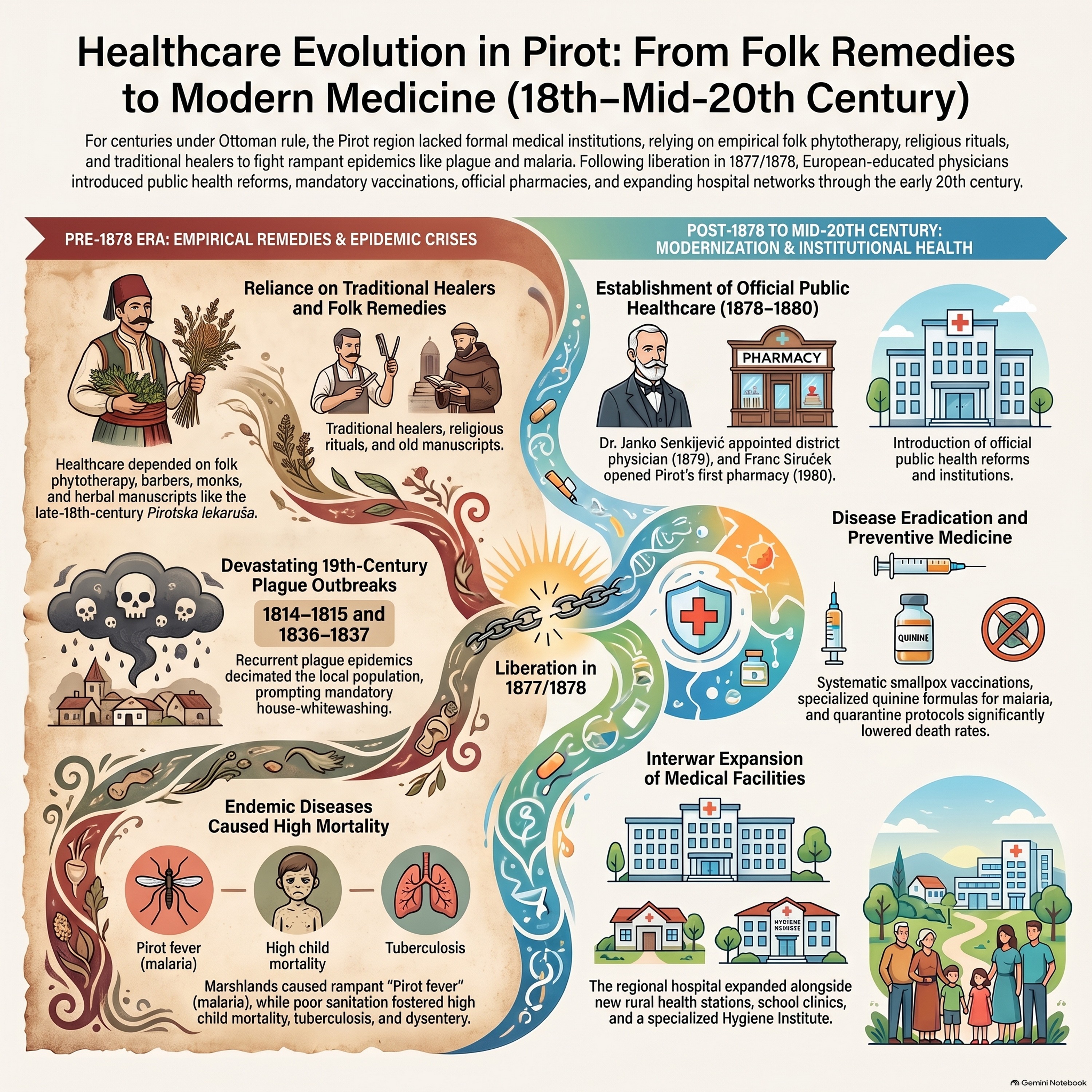
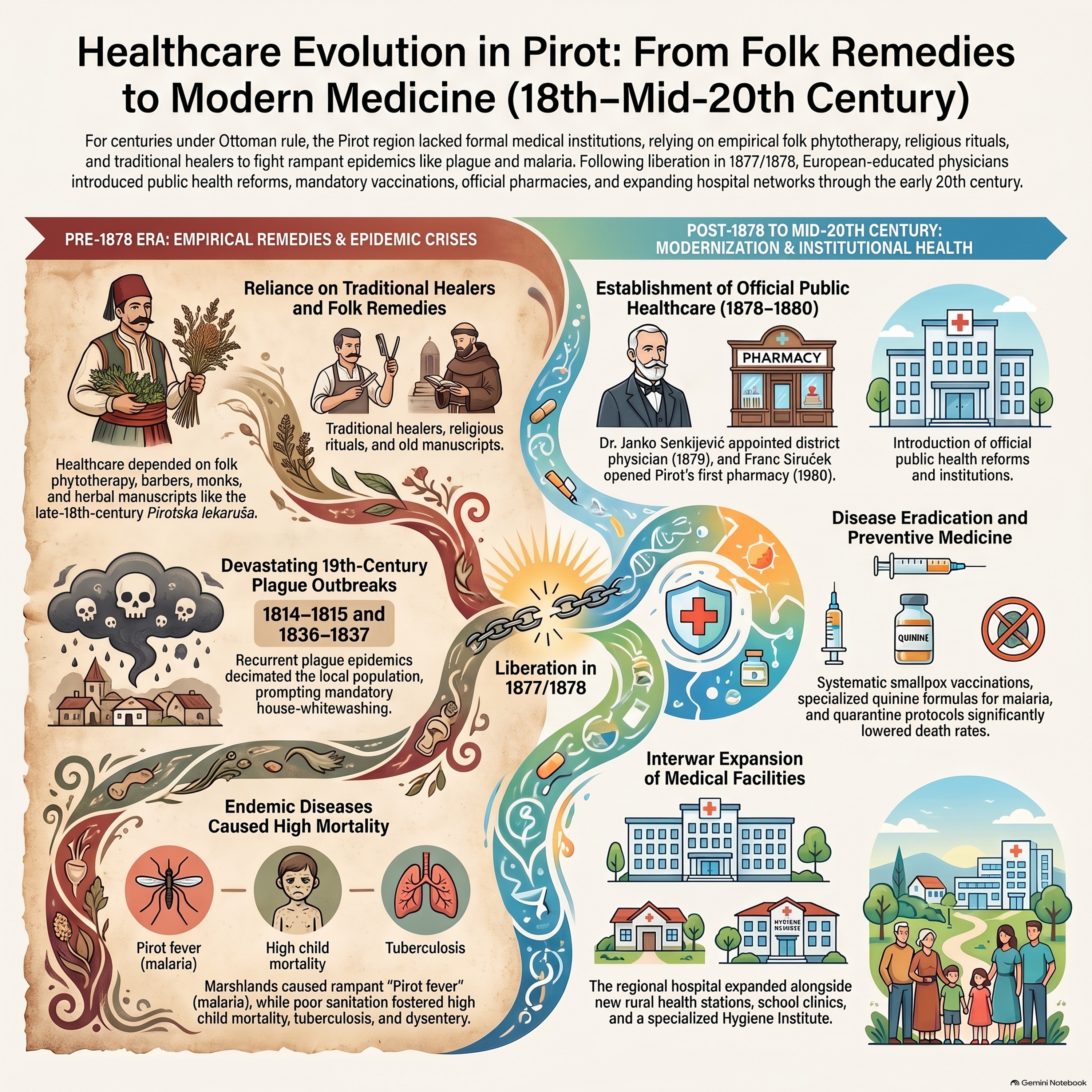
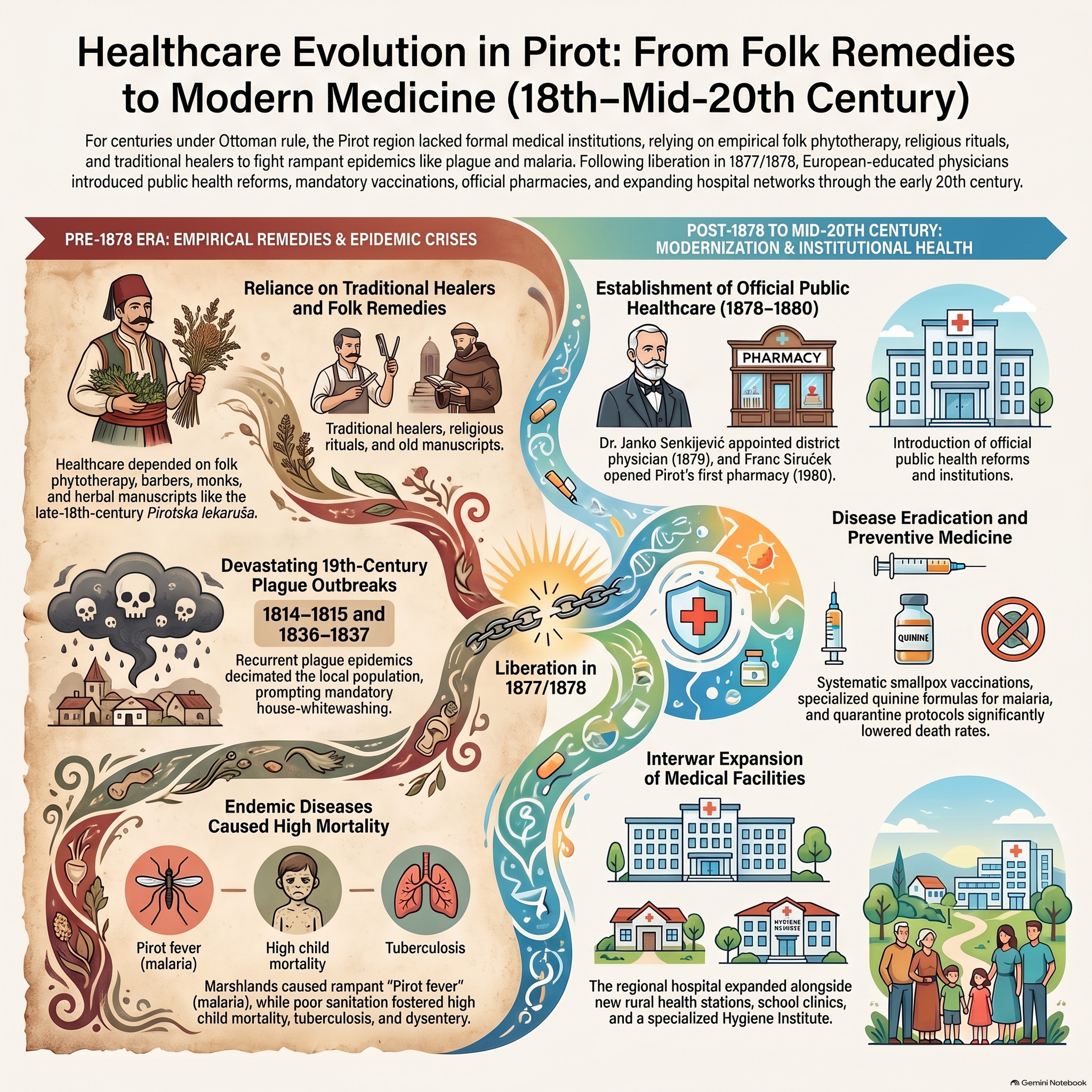
    Health conditions in Pirot and its surroundings before and during the 19th century and in the first half of the 20th century underwent a major evolution from traditional folk medicine to a modern healthcare system. Due to marshy terrain and its location on a busy road, the region was exposed for centuries to floods and devastating epidemics such as plague and cholera, which is why the local population primarily relied on folk healers, medicinal herbs, and manuscripts such as the "Pirot Pharmacopeia" (Pirotska lekaruša). A turning point in modernization began in the second half of the 19th century with the opening of the first pharmacies and the introduction of strict state supervision over public health. Following the liberation in 1877, the first medical institutions were established, educated doctors arrived, and the first surgical operations were performed, while extensive urban engineering works raised the town above the waterlogged soil. In the first half of the 20th century, Pirot finally consolidated itself as a modern medical center with developed disease prevention, institutional epidemiological surveillance, and hygienic infrastructure. SOURCES: Ćirić JV. Zdravstvene prilike u Pirotu i srezu Nišavskom u vremenu između dva svetska rata. Pirotski zbornik. 1972; 4: 83–102. Ćirić PB, Jeremić MM, Ćirić DB, et al. Kuga u Jagodini i Pirotu u 19. veku. Uzdanica. 2021; 18(2): 11–18 Čukić G. Pegavi tifus u Srbiji u Drugom srpsko-turskom ratu 1877/78. godine. Acta Medica Medianae. 2012; 51(3): 55–64 Džunić R. Hronologija razvoja i jačanja zdravstva: Narodno zdravlje stvara bogatstvo. Medicus. 1997; 5-6: 38–39 Ilić JM. Grip ili španska groznica u Budžaku na Staroj planini. Pirotski zbornik. 2021; 46: 25–41 Jeremić MM, Stanojlović NS, Vuković AP. Početak razvoja zdravstva u Pirotskom okrugu. Uzdanica. 2023; 20(2): 277–284 Krivošejev V. Španska groznica 1918–1920: zapostavljena i zaboravljena epidemija u Srbiji. Tokovi istorije. 2025; (1): 15–46 Lazarević D. Parametri mortaliteta stanovništva pirotske varoši od 1879. do 1889. godine. Pirotski zbornik. 2020; 45: 31–44 Lilić B. Narodna medicina u vreme Turaka: Samo da nije bilo čume. Medicus. 1997; 5-6: 18–19 Lilić B. Velika kuga u pirotskom kraju od 1836. do 1838. godine: vreme plača, jauka i leleka. Medicus. 1997; 5-6: 16–17 Lilić B. Zdravstvene prilike u pirotskom okrugu u vreme oslobodilačkih ratova 1912–1918. godine. Medicus. 1997; 5-6: 25–28 Lilić B. Zdravstvo posle oslobođenja od Turaka od 1878. do 1918. godine. Medicus. 1997; 5-6: 21–24 Manić M. Pirotski vremeplov — hronologija. Pirot: Istorijski arhiv u Pirotu; 2017 Marjanović V. Osnivanje prve apoteke u Pirotu 4. avgusta 1880. Pirotski zbornik. 1971; 3: 85–94 Marković M, Pljevljakušić D, Nikolić B, Rakonjac L. Application of dog rose (Rosa canina L.) in ethnomedicine of the Pirot County. Pirotski zbornik. 2020; 45: 1–16 Milovanović B, Ristić Vakanjac V, Vakanjac B, et al. Traditional use of common centaury (Centaurium erythraea) in the Pirot District. Pirotski zbornik. 2023; 48: 175–190 Papović O, Pljevljakušić D, Marković M. Ethnopharmacological application the plants from family Geraniaceae in the Pirot County. Pirotski zbornik. 2021; 46: 43–51 Pejčić M. Istorija zdravstvene kulture pirotskog kraja u XIX veku. Medicus. 1997; 5-6: 4–15 Pejčić M. Zdravstvene prilike u pirotskom okrugu prvih godina posle oslobođenja od Turaka 1877. godine. Pirotski zbornik. 1979; 8-9: 51–62 Rakonjac LB, Nikolić BM, Eremija S, et al. Tradicionalna upotreba divlje kruške u Pirotskom okrugu. Pirotski zbornik. 2023; 48: 1–18 Stankov Jovanović V, Šmelcerović A, Smiljić M, et al. Ethnopharmacological application of St. John’s wort in Pirot County. Pirotski zbornik. 2018; 43: 141–164 Zlatković D. Tradicionalna medicina Pirota i okoline. Glasnik Etnografskog muzeja. 2010; 74(2): 133–176

  • S25 · E3
    September 28 · 54 min

    🇺🇸 Health conditions in Pirot and its surroundings from the 18th to the mid-20th century (Deep Dive)

    Health conditions in Pirot and its surroundings before and during the 19th century and in the first half of the 20th century underwent a major evolution from traditional folk medicine to a modern healthcare system. Due to marshy terrain and its location on a busy road, the region was exposed for centuries to floods and devastating epidemics such as plague and cholera, which is why the local population primarily relied on folk healers, medicinal herbs, and manuscripts such as the "Pirot Pharmacopeia" (Pirotska lekaruša). A turning point in modernization began in the second half of the 19th century with the opening of the first pharmacies and the introduction of strict state supervision over public health. Following the liberation in 1877, the first medical institutions were established, educated doctors arrived, and the first surgical operations were performed, while extensive urban engineering works raised the town above the waterlogged soil. In the first half of the 20th century, Pirot finally consolidated itself as a modern medical center with developed disease prevention, institutional epidemiological surveillance, and hygienic infrastructure. SOURCES: Ćirić JV. Zdravstvene prilike u Pirotu i srezu Nišavskom u vremenu između dva svetska rata. Pirotski zbornik. 1972; 4: 83–102. Ćirić PB, Jeremić MM, Ćirić DB, et al. Kuga u Jagodini i Pirotu u 19. veku. Uzdanica. 2021; 18(2): 11–18 Čukić G. Pegavi tifus u Srbiji u Drugom srpsko-turskom ratu 1877/78. godine. Acta Medica Medianae. 2012; 51(3): 55–64 Džunić R. Hronologija razvoja i jačanja zdravstva: Narodno zdravlje stvara bogatstvo. Medicus. 1997; 5-6: 38–39 Ilić JM. Grip ili španska groznica u Budžaku na Staroj planini. Pirotski zbornik. 2021; 46: 25–41 Jeremić MM, Stanojlović NS, Vuković AP. Početak razvoja zdravstva u Pirotskom okrugu. Uzdanica. 2023; 20(2): 277–284 Krivošejev V. Španska groznica 1918–1920: zapostavljena i zaboravljena epidemija u Srbiji. Tokovi istorije. 2025; (1): 15–46 Lazarević D. Parametri mortaliteta stanovništva pirotske varoši od 1879. do 1889. godine. Pirotski zbornik. 2020; 45: 31–44 Lilić B. Narodna medicina u vreme Turaka: Samo da nije bilo čume. Medicus. 1997; 5-6: 18–19 Lilić B. Velika kuga u pirotskom kraju od 1836. do 1838. godine: vreme plača, jauka i leleka. Medicus. 1997; 5-6: 16–17 Lilić B. Zdravstvene prilike u pirotskom okrugu u vreme oslobodilačkih ratova 1912–1918. godine. Medicus. 1997; 5-6: 25–28 Lilić B. Zdravstvo posle oslobođenja od Turaka od 1878. do 1918. godine. Medicus. 1997; 5-6: 21–24 Manić M. Pirotski vremeplov — hronologija. Pirot: Istorijski arhiv u Pirotu; 2017 Marjanović V. Osnivanje prve apoteke u Pirotu 4. avgusta 1880. Pirotski zbornik. 1971; 3: 85–94 Marković M, Pljevljakušić D, Nikolić B, Rakonjac L. Application of dog rose (Rosa canina L.) in ethnomedicine of the Pirot County. Pirotski zbornik. 2020; 45: 1–16 Milovanović B, Ristić Vakanjac V, Vakanjac B, et al. Traditional use of common centaury (Centaurium erythraea) in the Pirot District. Pirotski zbornik. 2023; 48: 175–190 Papović O, Pljevljakušić D, Marković M. Ethnopharmacological application the plants from family Geraniaceae in the Pirot County. Pirotski zbornik. 2021; 46: 43–51 Pejčić M. Istorija zdravstvene kulture pirotskog kraja u XIX veku. Medicus. 1997; 5-6: 4–15 Pejčić M. Zdravstvene prilike u pirotskom okrugu prvih godina posle oslobođenja od Turaka 1877. godine. Pirotski zbornik. 1979; 8-9: 51–62 Rakonjac LB, Nikolić BM, Eremija S, et al. Tradicionalna upotreba divlje kruške u Pirotskom okrugu. Pirotski zbornik. 2023; 48: 1–18 Stankov Jovanović V, Šmelcerović A, Smiljić M, et al. Ethnopharmacological application of St. John’s wort in Pirot County. Pirotski zbornik. 2018; 43: 141–164 Zlatković D. Tradicionalna medicina Pirota i okoline. Glasnik Etnografskog muzeja. 2010; 74(2): 133–176

  • S25 · E2
    September 28 · 24 min

    🇷🇸 Zdravstvene prilike u Pirotu i okolini od 18. do polovine 20. veka (Debata)

    Здравствене прилике у Пироту и околини пре и током 19. века и у првој половини 20. века претрпеле су велику еволуцију од традиционалне народне медицине до модерног здравственог система. Због баровитог терена и положаја на прометном путу, регион је вековима био изложен поплавама и разорним епидемијама попут куге и колере, због чега се народ примарно ослањао на видaре, лековито биље и списе попут „Пиротске лекаруше“. Прекретница у модернизацији започела је у другој половини 19. века отварањем првих апотека и увођењем строгог државног надзора над здравством. Након ослобођења 1877. године, оснивају се прве здравствене установе, долазе образовани лекари и изводе се прве хируршке операције, док су обимни урбанистички радови издигли варош изнад подводног тла. У првој половини 20. века Пирот се коначно консолидовао као савремени медицински центар са развијеном превенцијом, институционалним епидемиолошким надзором и хигијенском инфраструктуром. ИЗВОРИ: Ćirić JV. Zdravstvene prilike u Pirotu i srezu Nišavskom u vremenu između dva svetska rata. Pirotski zbornik. 1972; 4: 83–102. Ćirić PB, Jeremić MM, Ćirić DB, et al. Kuga u Jagodini i Pirotu u 19. veku. Uzdanica. 2021; 18(2): 11–18 Čukić G. Pegavi tifus u Srbiji u Drugom srpsko-turskom ratu 1877/78. godine. Acta Medica Medianae. 2012; 51(3): 55–64 Džunić R. Hronologija razvoja i jačanja zdravstva: Narodno zdravlje stvara bogatstvo. Medicus. 1997; 5-6: 38–39 Ilić JM. Grip ili španska groznica u Budžaku na Staroj planini. Pirotski zbornik. 2021; 46: 25–41 Jeremić MM, Stanojlović NS, Vuković AP. Početak razvoja zdravstva u Pirotskom okrugu. Uzdanica. 2023; 20(2): 277–284 Krivošejev V. Španska groznica 1918–1920: zapostavljena i zaboravljena epidemija u Srbiji. Tokovi istorije. 2025; (1): 15–46 Lazarević D. Parametri mortaliteta stanovništva pirotske varoši od 1879. do 1889. godine. Pirotski zbornik. 2020; 45: 31–44 Lilić B. Narodna medicina u vreme Turaka: Samo da nije bilo čume. Medicus. 1997; 5-6: 18–19 Lilić B. Velika kuga u pirotskom kraju od 1836. do 1838. godine: vreme plača, jauka i leleka. Medicus. 1997; 5-6: 16–17 Lilić B. Zdravstvene prilike u pirotskom okrugu u vreme oslobodilačkih ratova 1912–1918. godine. Medicus. 1997; 5-6: 25–28 Lilić B. Zdravstvo posle oslobođenja od Turaka od 1878. do 1918. godine. Medicus. 1997; 5-6: 21–24 Manić M. Pirotski vremeplov — hronologija. Pirot: Istorijski arhiv u Pirotu; 2017 Marjanović V. Osnivanje prve apoteke u Pirotu 4. avgusta 1880. Pirotski zbornik. 1971; 3: 85–94 Marković M, Pljevljakušić D, Nikolić B, Rakonjac L. Application of dog rose (Rosa canina L.) in ethnomedicine of the Pirot County. Pirotski zbornik. 2020; 45: 1–16 Marković MS, Pljevljakušić DS, Miladinović DL, et al. Etnofarmakološka upotreba bagrema (Robinia pseudoacacia L.) u Pirotskom okrugu. Pirotski zbornik. 2024; 49: 151–164 Milovanović B, Ristić Vakanjac V, Vakanjac B, et al. Traditional use of common centaury (Centaurium erythraea) in the Pirot District. Pirotski zbornik. 2023; 48: 175–190 Papović O, Pljevljakušić D, Marković M. Ethnopharmacological application the plants from family Geraniaceae in the Pirot County. Pirotski zbornik. 2021; 46: 43–51 Pejčić M. Istorija zdravstvene kulture pirotskog kraja u XIX veku. Medicus. 1997; 5-6: 4–15 Pejčić M. Zdravstvene prilike u pirotskom okrugu prvih godina posle oslobođenja od Turaka 1877. godine. Pirotski zbornik. 1979; 8-9: 51–62 Rakonjac LB, Nikolić BM, Eremija S, et al. Tradicionalna upotreba divlje kruške u Pirotskom okrugu. Pirotski zbornik. 2023; 48: 1–18 Stankov Jovanović V, Šmelcerović A, Smiljić M, et al. Ethnopharmacological application of St. John’s wort in Pirot County. Pirotski zbornik. 2018; 43: 141–164 Zlatković D. Tradicionalna medicina Pirota i okoline. Glasnik Etnografskog muzeja. 2010; 74(2): 133–176

Showing 41–60 of 90 episodes