Skip to content
Artwork for Doc Talk by MedAudPro

Doc Talk by MedAudPro

Network of Medical Audiology Professionals

A place where providers in ENT chat it up. Its hard to stay on top of all the specialties in a multi-specialty environment. We like to pick a topic, find the experts and deliver a heavy-hitting, short-format series that allows our listeners to dive in and get up to speed quickly. Our provider community is smart, busy and collaborative. You don't have to be an otolaryngologist or audiologist to hang out here - our community is full of medical providers of all types - the broader the perspective - often the better the care.

Play
  • 20 episodes
  • fortnightly
  • Avg 26 min
  • English
  • August 25 · 30 min

    Taking the Lead: Access, Advocacy, and What’s Next for ACI Alliance

    Closing the Gap in Cochlear Implant Access Cochlear implant technology is better than ever, candidacy is expanding, and awareness is growing. So why are so many potential candidates still not reaching a cochlear implant evaluation? In this episode, we sit down with Carrie Spangler, AuD, Executive Director of the American Cochlear Implant Alliance, to talk about where the field is making progress, where access still breaks down, and what providers can do differently. Dr. Spangler brings a unique perspective to the role. She spent decades as an educational audiologist, was born with bilateral hearing loss, received her first cochlear implant in 2019, and became a bilateral recipient in 2025. Today, she leads ACI Alliance at a time when referral, reimbursement, awareness, advocacy, and patient expectations are all changing. What You'll Hear: Why Better Technology Isn’t Enough: The biggest opportunity may not be the device itself, but the systems that help patients understand, access, and move through cochlear implant care. The Awareness Problem: Why many patients still do not understand what a cochlear implant is, who may qualify, or when they should start asking questions. Making Referral Easier: How tools such as the 60/60 guideline can help community audiologists and hearing healthcare providers recognize when it may be time to refer. What Policy Has to Do With Patient Care: Why Medicare, Medicaid, insurance coverage, and reimbursement decisions directly affect what happens in the clinic. New Tools for Providers: A look at ACI Alliance resources, including a Medicaid toolkit designed to help clinicians and families navigate coverage and access. Building Better Referral Relationships: Why cochlear implant programs may need to reach outward to community audiologists, ENT practices, and other providers instead of simply waiting for patients to arrive. What Patients Are Really Worried About: Surgery, outcomes, technology, cost, and uncertainty can all influence whether someone moves forward, even when they may be a strong candidate. A Clinician and a CI Recipient: How Dr. Spangler’s own cochlear implant journey shapes the way she thinks about advocacy, counseling, continuity of care, and the importance of community. The takeaway is simple: expanding cochlear implant candidacy does not automatically expand cochlear implant access. Patients still need someone to recognize the possibility, start the conversation, answer enough questions to reduce uncertainty, and help them take the next step. For providers outside of a cochlear implant center, that may be one of the biggest opportunities to improve care. Who should listen? Audiologists, otologists, neurotologists, cochlear implant teams, ENT providers, hearing healthcare professionals, clinic leaders, educators, students, advocates, and anyone interested in improving cochlear implant awareness, referral, and access. Stay up to date with us on LinkedIn, Facebook, and Instagram @MedAudPro. Want to learn more about FCOM? https://FCOMnow.com Join the MedAudPro Provider Community: https://medaudpro.com/join
  • August 18 · 31 min

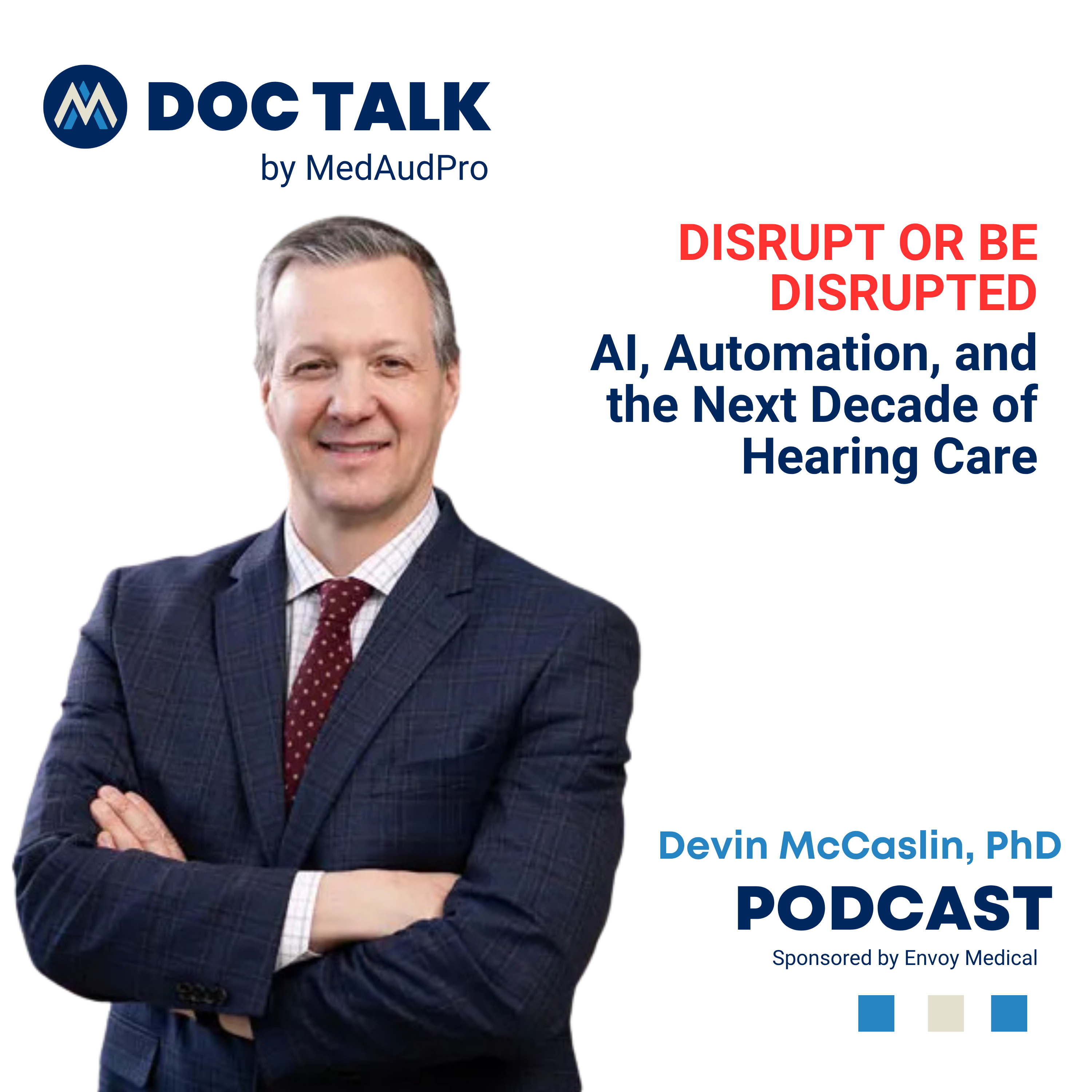
    Disrupt or Be Disrupted: AI, Automation, and the Next Decade of Hearing Care

    Artificial intelligence is already influencing hearing healthcare, but the biggest changes may have less to do with replacing clinicians and more to do with how patients move through the system, how data is used, and how care teams make decisions. Meet Devin McCaslin, PhD, Clinical Director of Communication Sciences and Disorders at Michigan Medicine and a professor in Otolaryngology and Biomedical Engineering at the University of Michigan. His work sits at the intersection of audiology, vestibular care, engineering, and artificial intelligence. He and his collaborators are developing AI-supported approaches to triage, data integration, clinical decision support, and the future design of hearing healthcare. What You'll Hear: What AI Can Actually Do Today: Where artificial intelligence is already being used in healthcare, including triage, workflow efficiency, decision support, and reducing variability in how patients move through complex systems. From Models to AI Agents: Why the next step goes beyond predicting what might happen. AI agents may be able to identify patients, verify missing information, support referrals, monitor outcomes, and complete tasks across multiple systems. Finding Cochlear Implant Candidates Earlier: How structured data and AI could help identify patients who may qualify for cochlear implantation before they are lost in the referral pathway. The Learning Health System: Why McCaslin believes healthcare is moving toward systems where every patient encounter contributes data that can improve decisions for the next patient. The Data Problem: Why artificial intelligence is only as useful as the information behind it, and why audiology programs need to think differently about how they structure, capture, and control their clinical data. Building the Right Team: Why future innovation in audiology may require partnerships with AI engineers, operations engineers, biomedical engineers, and other professionals who bring completely different perspectives to longstanding clinical problems. What Happens to the Audiologist?: As AI becomes better at pattern recognition, diagnostics, and routine tasks, the audiologist's value may increasingly center on interpretation, critical thinking, counseling, communication, and helping patients make informed decisions. The Business Model Will Have to Change: Why greater efficiency does not automatically solve the question of how clinicians are compensated for the counseling, rehabilitation, and decision-making that become even more important in an AI-supported healthcare system. Preparing for What Comes Next: Why healthcare organizations that invest in people, data infrastructure, engineering resources, and internal champions may be better positioned to adapt than those waiting for new technology to simply arrive. McCaslin's message is not that AI is going to replace audiologists. It is that the infrastructure around audiology is changing quickly, and clinicians need to understand enough about these technologies to participate in shaping how they are used. For cochlear implant and medical audiology programs, that creates an important question: Are we preparing our systems, our data, and our teams for where healthcare is going, or are we still designing care around the way it has always been delivered? Who should listen? Audiologists, otologists, neurotologists, cochlear implant teams, vestibular specialists, hearing healthcare professionals, program directors, clinic managers, hospital administrators, researchers, students, and anyone interested in how artificial intelligence may change the delivery of medical audiology. Stay up to date with us on LinkedIn, Facebook, and Instagram @MedAudPro. Want to learn more about FCOM? https://FCOMnow.com Join the MedAudPro Provider Community: https://medaudpro.com/join
  • August 11 · 34 min

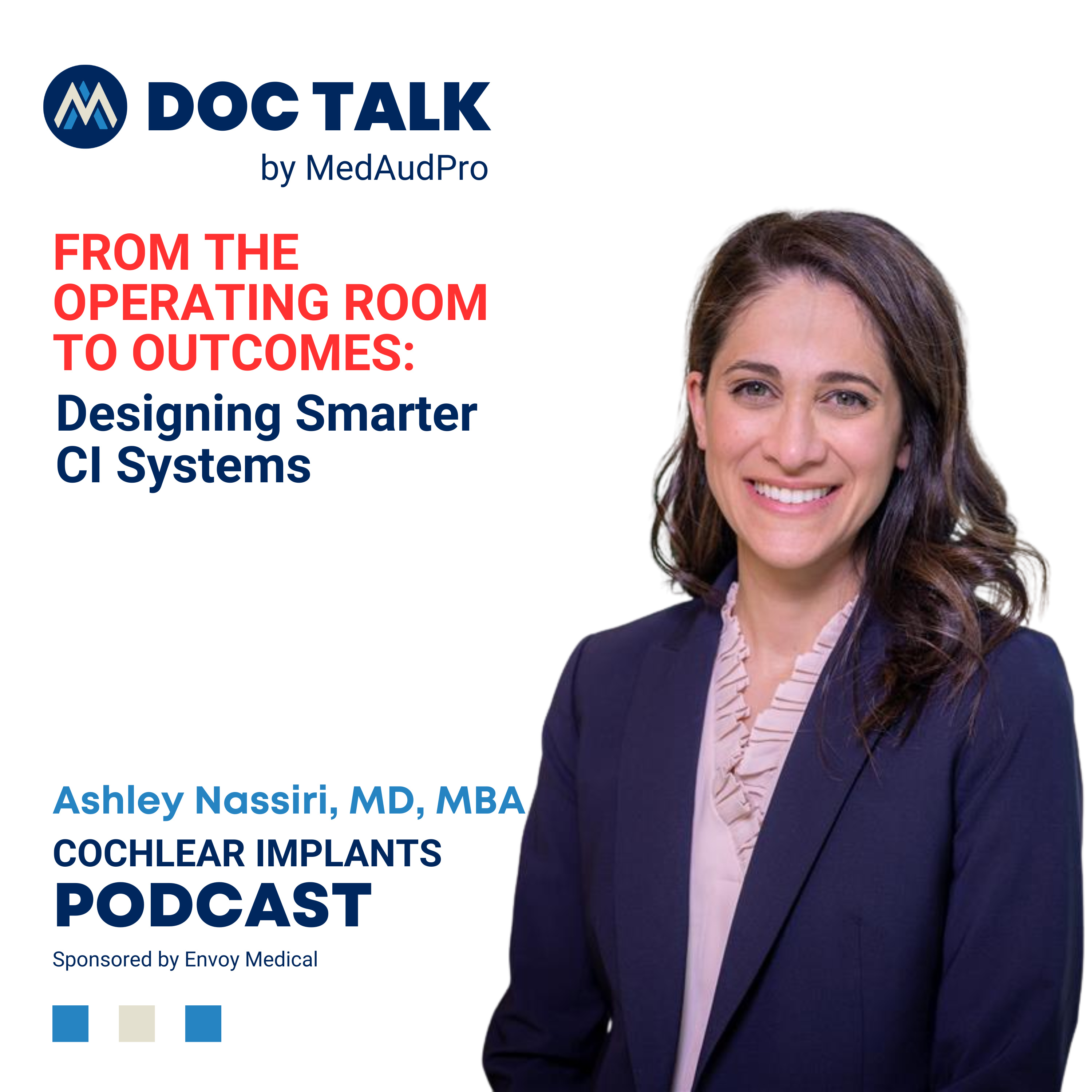
    From the Operating Room to Outcomes: Designing Smarter CI Systems

    Cochlear implantation has advanced dramatically, but getting the right patient from hearing loss to evaluation, surgery, activation, and long-term care can still be unnecessarily complicated. As candidacy expands and demand grows, the question is not simply how to see more patients. It is how to design a smarter system around them. Meet Ashley Nassiri, MD, MBA, a fellowship-trained neurotologist and skull base surgeon at the University of Colorado School of Medicine, where she serves as Director of the Cochlear Implant Program. Her work examines cochlear implant access, utilization, surgical care, and new models of care delivery. With training in both medicine and business, Dr. Nassiri brings a broader perspective to how CI programs can improve access, efficiency, and outcomes. What You'll Hear: Thinking Beyond the Procedure: Why successful cochlear implant care depends on much more than what happens in the operating room. The Access Problem: Why cochlear implant utilization remains low despite broader candidacy and greater awareness, and where patients can get lost along the way. Rethinking the Traditional Pathway: How long-standing workflows may create unnecessary delays, visits, and barriers for patients. Designing Care Around the Patient: Why programs should evaluate which parts of the pathway truly require separate appointments and which can be coordinated differently. New Models of Care: What same-day consultation and surgery, telemedicine, remote programming, and digital education can teach us about improving CI delivery. Using the Right Resource at the Right Time: Why every part of CI care does not need to happen in the same place, with the same provider, or through the same type of visit. The Surgeon’s Role in System Design: Why physicians need to think beyond surgery and understand the operational barriers that affect whether patients reach implantation and receive appropriate follow-up. Technology Is Only Part of the Answer: Why remote tools can improve access, but only when they are part of a thoughtful clinical model. Measuring What Matters: Why programs should look beyond visit volume and focus on patient experience, access, clinical outcomes, and the use of limited healthcare resources. Dr. Nassiri makes the case for viewing cochlear implant care as one connected system rather than a series of individual appointments. Improving access does not mean sacrificing quality or simply asking clinicians to work faster. It means identifying where the current pathway creates friction and redesigning care more intentionally. Who should listen? Audiologists, otologists, neurotologists, cochlear implant teams, hearing healthcare professionals, program directors, clinic managers, hospital administrators, private practice owners, students, residents, fellows, researchers, and anyone working to improve access and outcomes in cochlear implant care. If your CI program is growing or operating largely the same way it has for years, this episode asks an important question: Are we optimizing individual parts of cochlear implant care, or are we designing a better system from beginning to end? Stay up to date with us on LinkedIn, Facebook, and Instagram @MedAudPro. Want to learn more about FCOM? https://FCOMnow.com Join the MedAudPro Provider Community: https://medaudpro.com/join This episode is sponsored by Envoy Medical.
  • S3 · E10
    July 28 · 23 min

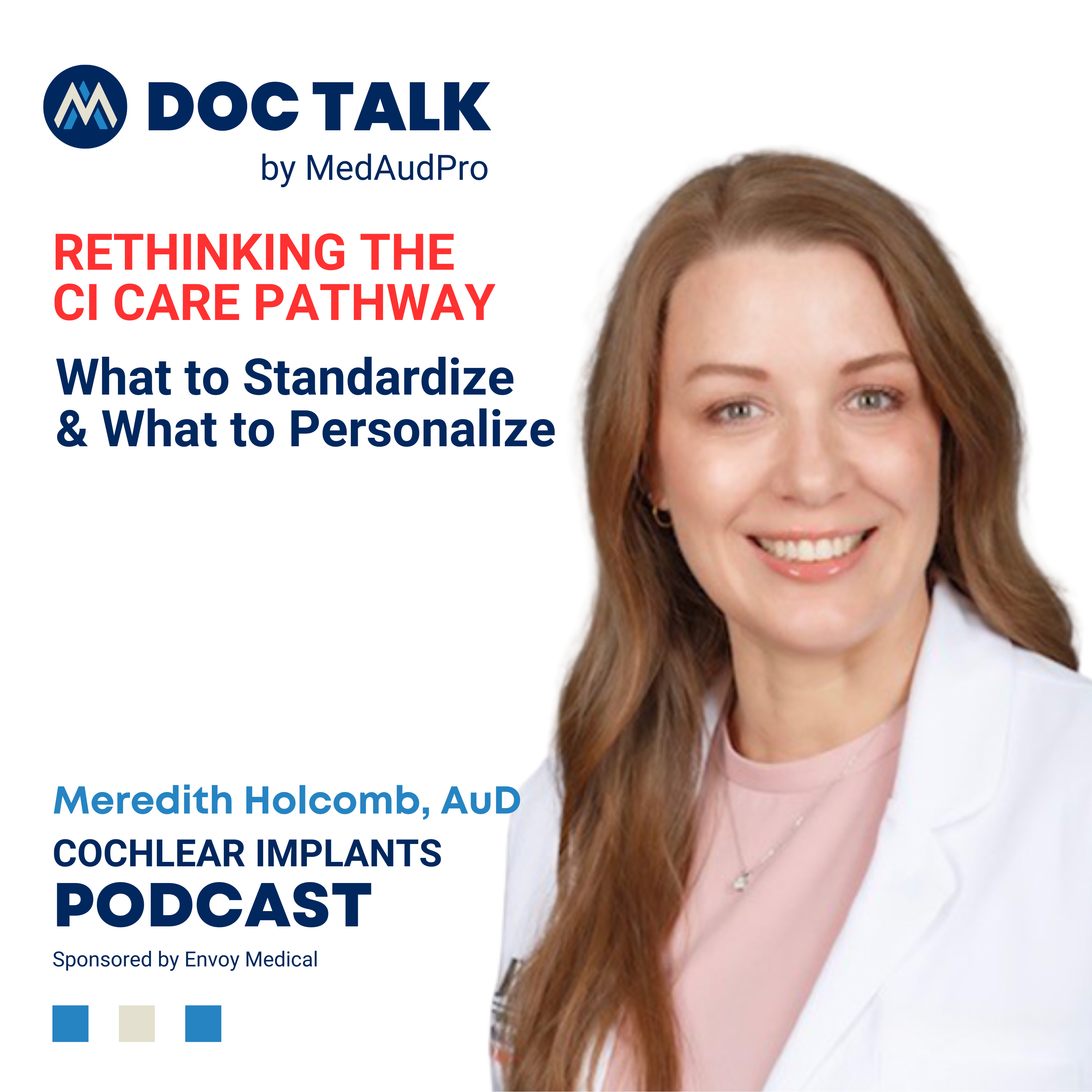
    Rethinking the CI Care Pathway: What to Standardize and What to Personalize

    For years, cochlear implant programs have relied on established protocols for candidacy evaluations, programming, and long-term follow-up. But national data now show wide variation in how that care is delivered. So what should every clinic standardize, and where should clinicians retain the flexibility to respond to individual patients? Meet Meredith Holcomb, AuD, Professor and Director of the Hearing Implant Program at the University of Miami and past chair of the American Cochlear Implant Alliance. Dr. Holcomb has led a major redesign of cochlear implant care at Miami, including a de-escalated postoperative protocol, fewer routine visits for established adult CI users, and greater use of remote care and industry support. She also co-authored a national survey revealing how widely CI audiology practices vary across institutions, work settings, and patient populations. What You'll Hear: The Standardization Question: Why cochlear implant care needs a clear minimum standard without forcing every patient, clinician, and program into the same rigid workflow. Changing an Established Program: How Dr. Holcomb introduced new care models, earned team support, and used feedback and data to guide the process. Fewer Visits, Comparable Outcomes: What happened when the University of Miami reduced routine postoperative appointments and stopped automatically scheduling annual visits for stable adult CI users. The Real Cost of Routine Follow-Up: How repeated appointments can require patients to miss work, remove children from school, arrange transportation or childcare, and travel for visits that may not provide meaningful clinical value. What the National Data Revealed: Why some patients wait two weeks for a cochlear implant evaluation while others wait as long as six months, and how access, staffing, equipment, and clinical capabilities differ across programs. Personalizing the Care Pathway: Why older adults, patients with technology challenges, and people who are not progressing as expected may need additional support, even when most stable patients can follow a reduced schedule. The “More Is Better” Myth: Why some patients associate more appointments with better care, even when additional programming does not improve outcomes. Using the Entire Care Team: How telehealth, remote programming, manufacturer representatives, coordinators, and support staff can expand care without placing every responsibility on the audiologist. Finding the Root Cause: Why programs should identify their most important access or workflow problem before changing protocols or investing limited resources. Protecting Evidence-Based Care: Why efficiency cannot mean forcing complex CI appointments into unrealistic time slots that prevent audiologists from providing appropriate care. Dr. Holcomb makes the case that the future of cochlear implant care is not complete uniformity. It is a stronger foundation of evidence-based standards, combined with enough flexibility to account for patient needs, local resources, geography, language, technology, and clinical setting. Who should listen? Audiologists, otologists, neurotologists, cochlear implant teams, hearing healthcare professionals, program directors, clinic managers, hospital administrators, private practice owners, students, residents, fellows, researchers, and anyone responsible for improving access, efficiency, and outcomes in hearing implant care. If your clinic is relying on the same follow-up schedule for every patient, this episode asks an important question: Which parts of the care pathway are truly necessary, and which are simply being continued because that is how they have always been done? Stay up to date with us on LinkedIn, Facebook, and Instagram @MedAudPro. Want to learn more about FCOM? https://FCOMnow.com Join the MedAudPro Provider Community: https://medaudpro.com/join This episode is sponsored by Envoy Medical.
  • S3 · E9
    July 14 · 27 min

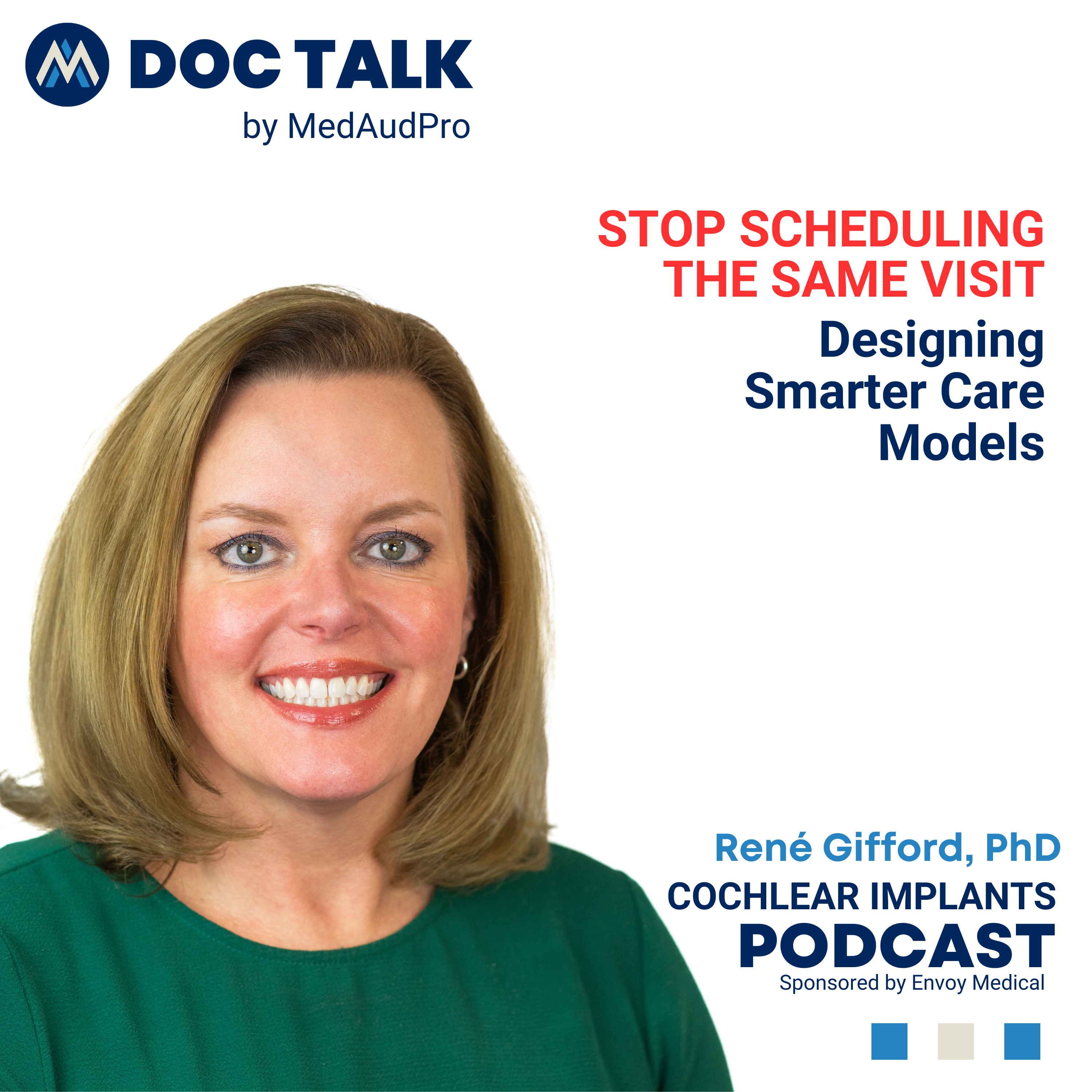
    Stop Scheduling the Same Visit Twice: Designing Smarter Care Models

    For decades, cochlear implant programs have followed the same basic appointment schedule. Activation, one week, one month, three months, six months, nine months, one year. But what if that schedule is based more on tradition than evidence Meet René Gifford, PhD, Chief of Audiology and Research at Hearts for Hearing and one of the most respected voices in cochlear implant audiology. As a leader in the development of the Cochlear Care Consensus, Dr. Gifford is helping challenge long-standing assumptions about programming, follow-up care, remote services, and how audiologists use their time. Her work points toward a more efficient, evidence-based model that improves access without sacrificing outcomes. What You'll Hear: The Follow-Up Schedule Nobody Questioned: How a clinical trial protocol from the 1990s became the standard model for cochlear implant follow-up and why the evidence no longer supports many of those routine visits. The Cochlear Care Consensus: How a multidisciplinary group with more than 200 years of combined cochlear implant experience reviewed the research and developed a new framework for more consistent, efficient, and patient-centered care. Are We Seeing Patients Too Often? Why many stable cochlear implant patients may not need repeated programming appointments and how unnecessary follow-ups can create barriers for both patients and clinics. Remote Care’s Untapped Potential: Why remote programming and support remain underused despite being available across all three major cochlear implant systems, and how these tools can improve convenience, efficiency, and access. The Institutional Inertia Problem: How reimbursement, productivity expectations, state licensure, hospital policies, and traditional workflows can prevent clinics from adopting better models of care. Making Room for the Patients Still Waiting: Why programs cannot continue filling schedules with patients who are already doing well while new candidates wait months for evaluations and treatment. Programming for Audibility from Day One: How objective measures, evidence-based programming, and remote support can help patients reach strong outcomes faster without relying on repeated progressive mapping appointments. Education Is the Real Value: Why the future of audiology depends less on dispensing technology and more on clinical expertise, counseling, hearing health education, and helping patients understand how hearing affects their lives. Working at the Top of Your License: How assistants, techs, automated testing, apps, and new care models should allow audiologists to spend more time interpreting results, making recommendations, and managing complex patients. Dr. Gifford challenges one of the most deeply rooted habits in hearing care: bringing patients back simply because that is how it has always been done. Instead, she argues that every appointment should have a clear clinical purpose, be supported by evidence, and contribute meaningfully to the patient’s outcome. Who should listen? Audiologists, otologists, neurotologists, cochlear implant teams, hearing healthcare professionals, program directors, clinic managers, hospital administrators, students, residents, fellows, researchers, and anyone responsible for improving access, workflow, and patient outcomes in hearing healthcare. If your clinic has a months-long evaluation backlog while stable patients continue returning for routine appointments, this episode asks an important question: Are you delivering the care patients need, or simply repeating the schedule you were taught? Stay up to date with us:LinkedIn, Facebook, and Instagram @MedAudPro Want to learn more about FCOM? ⁠https://FCOMnow.com⁠ Join the MedAudPro Provider Community for free access to behind-the-password content and connect with providers practicing at the top of their game: ⁠https://medaudpro.com/join This episode issponsored by Envoy Medical.

  • S3 · E8
    July 7 · 23 min

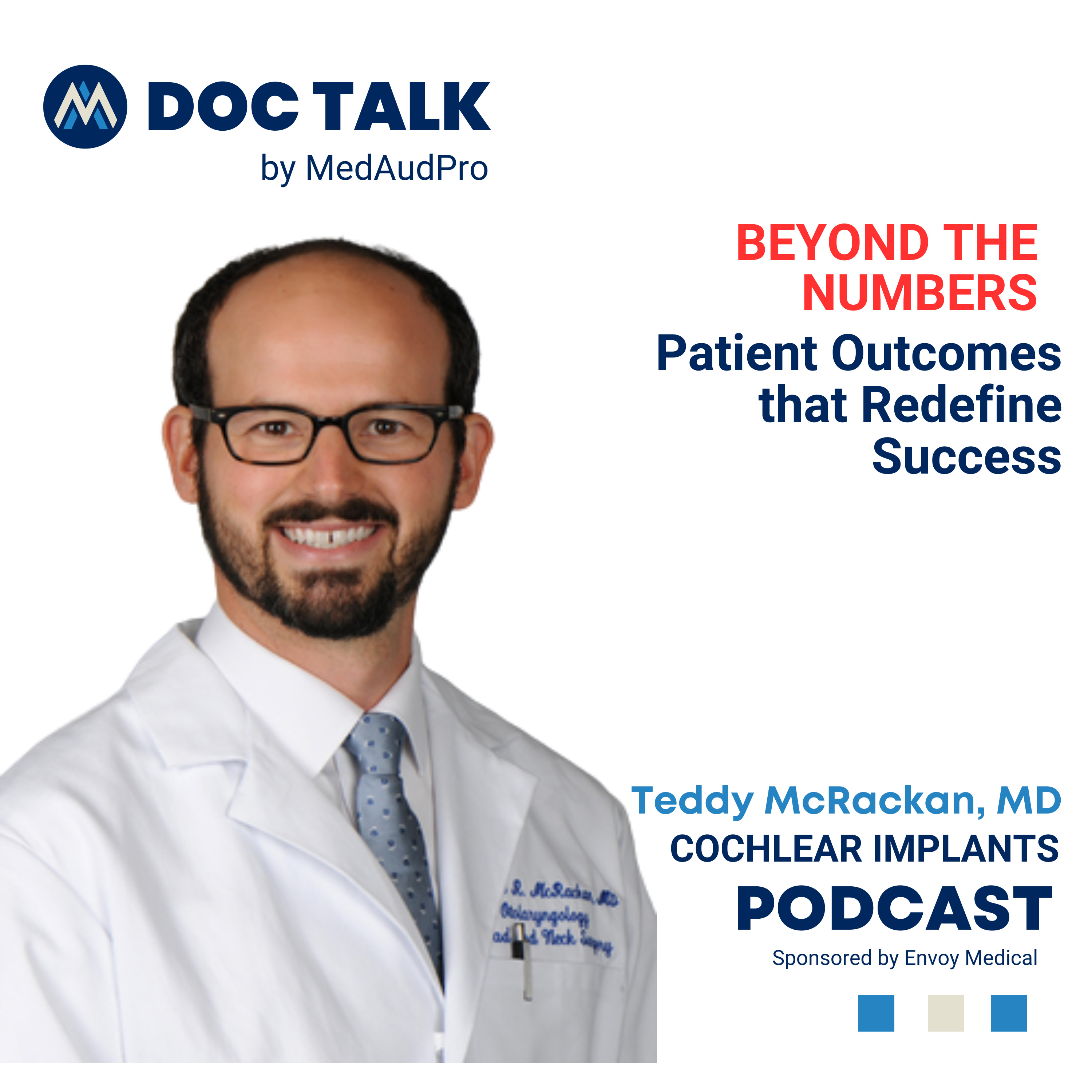
    Beyond the Numbers: Patient Outcomes that Redefine Success

    For decades, cochlear implant success has been measured by speech scores. But what if those numbers don't tell the whole story? Meet Teddy McRackan, MD, neurotologist at the Medical University of South Carolina and one of the leading researchers redefining how cochlear implant outcomes are measured. As the developer of the CIQOL (Cochlear Implant Quality of Life) framework, digital platform, and the first national cochlear implant data repository, Dr. McRackan is helping shift the conversation from how patients perform in the sound booth to how they actually live with their cochlear implant. What You'll Hear: Beyond the Speech Score: Why traditional speech recognition testing often has surprisingly little correlation with how patients communicate, socialize, and experience life outside the clinic. The Quality of Life Revolution: How patient-reported outcomes are changing the way clinicians evaluate cochlear implant success and why quality of life may be the outcome that matters most. A Better Way to Counsel Patients: Why nearly one-third of patients who are recommended for cochlear implantation never move forward, and how functional outcome modeling can help patients make more informed decisions. Predicting Real-World Success: How new prediction models use quality-of-life data to estimate which patients are most likely to experience meaningful improvement after cochlear implantation. The CIQOL Digital Platform: A look at the new clinician dashboard that collects patient-reported outcomes before surgery, tracks progress over time, and brings meaningful data directly into the clinical workflow. Building the First National CI Data Repository: Why the field needs thousands of patients, not hundreds, to truly understand cochlear implant outcomes and how a national prospective database could transform research, prediction models, and patient care. Dr. McRackan challenges one of the longest-standing assumptions in cochlear implant care: that a speech recognition score alone can define success. Instead, he argues that understanding how patients function in everyday life, their communication, listening effort, social participation, emotional well-being, and overall quality of life, should be central to both counseling and long-term care. Who should listen? Audiologists, otologists, neurotologists, cochlear implant teams, hearing healthcare professionals, researchers, program directors, students, residents, fellows, healthcare administrators, and anyone interested in the future of outcome measurement and patient-centered cochlear implant care. If you've ever had a patient with modest speech scores who tells you their cochlear implant changed their life, or a patient with excellent scores who still struggles, this episode explains why both experiences can be true and how the next generation of cochlear implant care will measure what really matters. Stay up to date with us: LinkedIn, Facebook, and Instagram @MedAudPro Want to learn more about FCOM? https://FCOMnow.com Join the MedAudPro Provider Community for free access to behind-the-password content and connect with providers practicing at the top of their game: https://medaudpro.com/join This episode is sponsored by Envoy Medical.
  • S3 · E7
    June 23 · 35 min

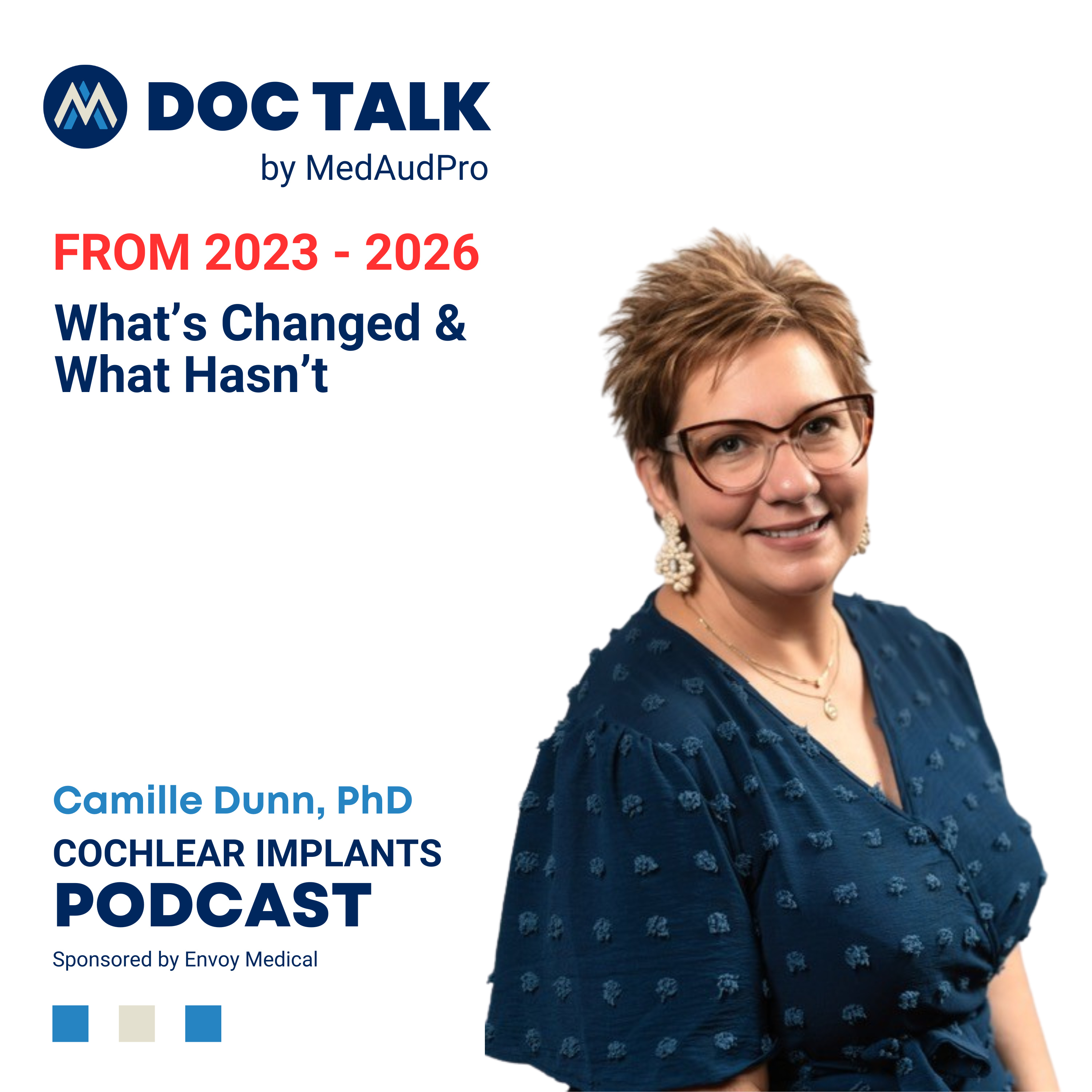
    Spring CI Conference Recaps with Drs. Dan Zeitler and Camille Dunn

    What happens when the cochlear implant field starts moving faster than the traditional care model? In this episode of the CI Report, a special series from Doc Talk by MedAudPro, Dr. Susan Good is joined by Dr. Camille Dunn and Dr. Dan Zeitler for a post-meeting download from two major cochlear implant meetings: ACIA in Chicago and the 18th International Conference on Cochlear Implants in Warsaw, Poland. Dr. Dunn brings the audiology perspective from both meetings, while Dr. Zeitler, Chair of the American Cochlear Implant Alliance, offers insight from the physician and leadership side of the field. Together, they unpack what felt new, what is gaining momentum, and what these conversations tell us about where cochlear implant care is heading next. What You’ll Hear: The Energy at ACIA: Why this year’s meeting felt different, with more practical takeaways, broader engagement, and renewed momentum across the field From Research to Real-World Practice: How programming, mapping, follow-up models, and patient-reported outcomes are becoming more central to clinical care A More Patient-Centered Model: Why cochlear implant care is moving away from rigid protocols and toward individualized follow-up, activation timing, programming, and outcome measurement The Rise of Remote Care and Telehealth: How new tools may help reduce unnecessary clinic visits while preserving strong patient outcomes Programming as a Clinical Priority: Why practical programming education drew major interest and what clinicians are looking to bring back to their own clinics Fully Implantable Cochlear Implants: What the field is watching and what questions remain AI in Programming and Rehab: How artificial intelligence may shape oral rehabilitation, programming support, personalization, and future outcome improvement Beyond Speech Scores: Why quality of life, psychosocial well-being, listening effort, and patient-reported outcomes are becoming increasingly important measures of success Hearing Loss as a Societal Issue: Why the field may need to shift the conversation from hearing loss as an individual problem to a public health and societal challenge Dr. Dunn and Dr. Zeitler offer a practical look at the trends shaping cochlear implant care, from fully implantable systems and AI to follow-up models, programming strategies, and the growing importance of personalized care. Who should listen? Audiologists, otolaryngologists, neurotologists, cochlear implant teams, hearing healthcare professionals, students, residents, fellows, researchers, healthcare administrators, industry partners, and anyone interested in where cochlear implant care is heading. If you have ever wondered what leaders in the field are talking about behind the scenes, what new ideas are starting to influence clinical care, or how cochlear implant medicine is evolving beyond traditional models, this episode offers a valuable look at what is coming next. Stay up to date with us: LinkedIn, Facebook, and Instagram @MedAudPro Want to learn more about FCOM? ⁠https://FCOMnow.com⁠ Join the MedAudPro Provider Community for free access to behind-the-password content and connect with providers practicing at the top of their game: ⁠https://medaudpro.com/join This episode is sponsored by Envoy Medical.

  • S3 · E6
    June 23 · 24 min

    Beyond One Good Ear: How Expanded CI Indications Changed Care

    What happens after clinical eligibility expands, butaccess, testing, and counseling are still catching up? Meet Margaret Dillon, AuD, PhD, Associate Professor andDirector of Cochlear Implant Clinical Research at the University of North Carolina at Chapel Hill. Dr. Dillon’s clinical trial work was instrumental in the 2019 FDA approval of cochlear implants for single-sided deafness (SSD) and asymmetric hearing loss (AHL), opening the door for thousands of patients who were previously told they still had “one good ear.” As the lead author of the American Cochlear Implant Alliance task force guidelines for adult CI assessment and management in single-sided deafness, Dr. Dillon brings a practical, research-grounded perspective on how this patient population is changing cochlear implant care. What You’ll Hear: The Shift from Bilateral Hearing Loss to SSD/AHL: Whypatients with single-sided deafness often present with very different needs, goals, and expectations than traditional cochlear implant candidates Why “One Good Ear” Is Not Always Enough: How loss ofbinaural hearing impacts safety, independence, spatial awareness, listening effort, tinnitus, and quality of life From Clinical Trial to Real-World Care: How early SSD/AHL cochlear implant patients helped build the evidence base that led to expanded FDA indications Programming and Counseling Differences: Why SSD patientsmay initially reject the sound of the implant, and how loudness levels, consistent use, and acclimation can influence outcomes The Importance of Fusion: What it means when patients describe the cochlear implant and normal-hearing ear working together, and why this can be a major milestone in SSD care Rethinking Outcomes: Why traditional speech testing does not fully capture benefit in SSD patients, and how quality-of-life tools, spatial hearing measures, tinnitus outcomes, and listening effort are becoming increasingly important Practical Testing Considerations: How clinicians are adapting protocols, including direct audio input, two-speaker setups, speech-in-noise testing, and tools like the MSTB-3 and SSD testing worksheets The Medicare Coverage Gap: Why Medicare beneficiaries still face access barriers for SSD/AHL despite FDA approval and growing evidence of benefit Dr. Dillon offers a clear look at how cochlear implantcare has changed since the 2019 FDA approval, and why the field still needs to refine how it evaluates, counsels, programs, and measures benefit for patients with single-sided deafness and asymmetric hearing loss. Who should listen? Audiologists, otolaryngologists, neurotologists, hearinghealthcare professionals, cochlear implant teams, students, residents, fellows, healthcare administrators, researchers, payers, and anyone interested in improving access to cochlear implant care. If you have ever wondered how cochlear implants became an option for patients with single-sided deafness, how SSD outcomes should be measured, or why counseling and programming look different for this population, this episode provides valuable insight from one of the researchers who helped make expanded access possible. Stay up to date with us: LinkedIn, Facebook, andInstagram @MedAudPro Want to learn more about FCOM? ⁠https://FCOMnow.com⁠ Join the MedAudPro Provider Community for free access to behind-the-password content and connect with providers practicing at the top of their game: https://medaudpro.com/join⁠ This episode is sponsored by Envoy Medical.

  • June 9 · 26 min

    Adults & Medicare - Who's Left Behind?

    What happens when clinical evidence expands faster than Medicare coverage policy? Meet Dr. Maura Cosetti, Director of the Ear Institute at the New York Eye and Ear Infirmary of Mount Sinai and one of the nation's leading cochlear implant surgeons. As a leader of the American Cochlear Implant Alliance's effort to expand Medicare coverage for single-sided deafness (SSD) and asymmetric hearing loss (AHL), Dr. Cosetti has spent the last several years working directly with CMS to address one of the most significant access barriers in cochlear implant care today. What You'll Hear: The Medicare Gap: Why patients with single-sided deafness are often told to wait until their better ear declines before qualifying for coverage, despite growing evidence supporting earlier intervention Inside the CMS Process: A behind-the-scenes look at the multiyear effort to expand Medicare coverage, including what evidence CMS requested and why the process has taken longer than many expected The Real-World Evidence Challenge: Why gathering Medicare-specific outcomes data is more difficult than it sounds when many eligible patients cannot access treatment in the first place Candidacy vs. Coverage: The critical distinction between being a cochlear implant candidate and qualifying for insurance coverage, and why confusing the two has delayed care for countless patients The Testing Debate: How clinicians are interpreting current Medicare guidelines, including the 60% word recognition threshold, best-aided testing, and ear-specific evaluation Why Traditional Outcomes Don't Tell the Whole Story: The limitations of conventional speech testing for SSD patients and the growing importance of quality-of-life, tinnitus, and functional hearing outcomes The Access Problem: Why fewer than 10% of cochlear implant candidates ultimately receive an implant, and how Medicare policy represents just one piece of a much larger challenge Dr. Cosetti offers a practical perspective on what providers can do today while broader policy changes remain under review. She also explains why access, not technology, remains one of the greatest barriers facing cochlear implant candidates. Who should listen? Audiologists, otolaryngologists, neurotologists, hearing healthcare professionals, primary care providers, students, residents, fellows, healthcare administrators, policymakers, and anyone interested in improving access to hearing healthcare. If you've ever struggled to explain the difference between candidacy and coverage, wondered why Medicare has not kept pace with clinical evidence, or questioned how policy decisions impact patients sitting in front of you every day, this episode provides valuable insight from one of the leaders helping shape the future of cochlear implant access. Stay up to date with us: LinkedIn, Facebook, and Instagram @MedAudPro Want to learn more about FCOM? https://FCOMnow.com Join the MedAudPro Provider Community for free access to behind-the-password content and connect with providers practicing at the top of their game: https://medaudpro.com/join This episode is sponsored by Envoy Medical.
  • S3 · E4
    June 2 · 23 min

    No Time to Wait: Pediatric CI Referrals and Fast-Tracking Care

    What if every month of waiting actually costs a child their future voice? In pediatric cochlear implant care, time is not just a factor - it is the factor. The window for neuroplasticity is open from birth, and for children with congenital hearing loss, it starts closing earlier than most providers realize. Meet Dr. Melissa Hall, AuD, CCC-A/SLP, audiologist and cochlear implant team coordinator at UF Health and Clinical Associate Professor at the University of Florida. Dr. Hall holds dual certification in audiology and speech-language pathology, and brings a deeply personal connection to the technology through her husband, who is a bilateral cochlear implant recipient. In this episode, we take on the clock - and ask what it actually takes to move fast enough to give every child their best chance. What You'll Hear: Why children born with hearing loss are already behind at birth - and what that means for every delayed referral Current FDA age minimums, why Dr. Hall believes we can go younger, and what objective testing makes that possible Where the newborn hearing screening pipeline breaks down after hospital discharge How insurance-driven hearing aid trial requirements bottleneck children who will not benefit from amplification alone How to counsel families who want to wait for the next breakthrough - and why waiting is itself a choice with consequences What Dr. Hall's husband's experience as a late-implanted bilateral CI recipient teaches families about early intervention Dr. Hall's message for every provider, regardless of specialty: no referral is a bad referral. If you are not sure, send them. Who should listen? Audiologists, otolaryngologists, neurotologists, pediatricians, neonatologists, primary care providers, speech-language pathologists, nurse practitioners, physician assistants, newborn hearing screening coordinators, early intervention specialists, and anyone involved in the care of children with hearing loss. If you have ever wondered whether a child in your practice might have been identified sooner, referred faster, or implanted younger - this conversation is for you. Stay up to date with us: LinkedIn, Facebook, and Instagram @MedAudPro Want to learn more about FCOM? https://FCOMnow.com Join the MedAudPro Provider Community for free access to behind-the-password content and connect with providers practicing at the top of their game: https://medaudpro.com/join This episode is sponsored by Envoy Medical.
    • Transcript
  • S3 · E3
    May 19 · 28 min

    Beyond Hearing, Dr. Gurgel Talking About the Brain Health Connection

    What if hearing loss isn't just about hearing? For decades, hearing loss has often been viewed as a quality-of-life issue or simply part of aging. But what if we've been framing it all wrong? What if untreated hearing loss is actually a whole-body health issue with consequences that extend far beyond communication? Meet Dr. Richard Gurgel, MD, an NIH-funded surgeon scientist at the University of Utah whose research focuses on the relationship between hearing loss, cognition, and cochlear implantation. Dr. Gurgel is known for his work on the influential Cache County Study, which helped demonstrate that older adults with hearing loss experience higher rates of dementia and faster cognitive decline. His latest work examines the long-term impact of cochlear implantation on cognitive outcomes over five years. In this episode, we explore one of the biggest questions in hearing healthcare today: can treating hearing loss actually change the trajectory of brain health? What You'll Hear: · Hearing Loss as a Medical Condition: Why hearing loss should no longer be dismissed as a normal part of aging · The Brain Health Connection: How hearing loss is linked to cognitive decline, dementia risk, social isolation, falls, depression, and overall health outcomes · Five-Year CI Outcomes: What long-term data reveals about cognition after cochlear implantation · Stability Is a Win: Why maintaining cognitive function in older adults may be one of the most important outcomes in medicine · Beyond Communication: How cochlear implants may support healthy aging through social engagement and brain stimulation · The Screening Challenge: Why hearing screening still has not become standard practice in primary care · Reframing the Message: Moving from fear-based counseling toward conversations focused on healthy aging and quality of life · Demystifying Surgery: Why cochlear implantation may be safer and less invasive than many patients and providers assume · Local vs General Anesthesia: Emerging approaches that may reduce barriers for older adults considering implantation · Awareness Is the Real Bottleneck: Why technology may not be the biggest challenge anymore Dr. Gurgel challenges the field to think bigger. The question is no longer whether hearing loss matters. The question is whether healthcare is ready to treat it like the medical condition it truly is. Who should listen? Audiologists, otolaryngologists, neurotologists, primary care providers, geriatricians, neurologists, nurse practitioners, physician assistants, hospital administrators, and anyone interested in the connection between hearing, cognition, and healthy aging. If you've ever wondered whether treating hearing loss can impact more than communication, this conversation may change how you think about hearing healthcare altogether. Stay up to date with us: LinkedIn, Facebook, and Instagram @MedAudPro Want to learn more about FCOM? https://FCOMnow.com Join the MedAudPro Provider Community for free access to behind-the-password content and connect with providers practicing at the top of their game: https://medaudpro.com/join This episode is sponsored by Envoy Medical.
    • Transcript
  • S3 · E2
    May 19 · 20 min

    The Referral Gap: Where CI Patients Get Lost

    How many cochlear implant candidates are current hearing aid patients being seen in audiology and ENT clinics right now without anyone realizing it? Meet Hemina Harris, ARNP, a nurse practitioner specializing in general otolaryngology and pediatrics at the University of Iowa Health Care System, adjacent to one of the country’s most established cochlear implant centers. Working on the front lines of ENT, Mina often becomes the first provider to recognize when a patient’s hearing loss may need to progress into a CI consult. In this episode, we take a closer look at one of the biggest blind spots in cochlear implant care: the referral pathway itself. Why are so many qualified patients still slipping through the cracks? And what happens before they ever reach the cochlear implant team? What You’ll Hear: · The Front Door Problem: Why general otolaryngology clinics may be one of the most overlooked opportunities for identifying CI candidates · “I Thought Hearing Aids Were My Only Option”: The education gap preventing patients from exploring cochlear implants sooner · The 60/60 Referral Rule: A simple screening framework that can help providers recognize potential CI candidates faster · Workflow Bottlenecks: How imaging, insurance approvals, scheduling delays, and fragmented communication slow patient access · The Mid-Level Perspective: Why nurse practitioners and physician assistants are uniquely positioned to improve CI identification and coordination · Referral Confidence Matters: How seeing successful patient outcomes encourages more providers to refer candidates earlier · The Communication Disconnect: Why providers inside the same department often never hear what happened after a referral is made · Building Better Systems: How multidisciplinary teams can improve coordination and reduce the risk of patients getting lost in the process Mina offers a practical and honest look at what happens in real-world ENT clinics every day. From quick screening conversations to coordinating imaging before surgical consults, this episode highlights the critical role advanced practice providers play in helping patients access cochlear implant care sooner. Who should listen? Audiologists, otolaryngologists, neurotologists, nurse practitioners, physician assistants, primary care providers, cochlear implant coordinators, practice administrators, and anyone involved in hearing healthcare delivery. If you’ve ever wondered where cochlear implant candidates are getting lost before they even make it to the CI team, this conversation shines a light on the gaps and the opportunities to fix them. Stay up to date with us: LinkedIn, Facebook, and Instagram @MedAudPro Want to learn more about FCOM? https://FCOMnow.com Join the MedAudPro Provider Community for free access to behind-the-password content and connect with providers practicing at the top of their game: https://medaudpro.com/join This episode is sponsored by Envoy Medical.
    • Transcript
  • May 5 · 23 min

    She's Back: Dr. Camille Dunn on What's Changed in Cochlear Implants Since 2023

    She's back! Meet Dr. Camille Dunn, PhD, cochlear implant expert, industry leader, and the co-host who helped make our 2023 CI series a success. In this intro episode, Susan and Camille reunite to set the stage for what's changed (and what hasn't) in cochlear implant care since 2023. What You'll Hear: The State of CI in 2026: From ACIA's updated candidacy recommendations to Medicare's expanded criteria and FDA approvals opening doors for new populations, what progress has been made and where are we still stuck? Workflow Evolution: Why two-day activations became single-day, and why being open-minded about change is critical for providers today Referral Bottlenecks & Capacity Strain: The real barriers keeping 95% of eligible patients from getting implanted Telehealth, AI & Trimming Unnecessary Visits: How modern CI programs are rethinking post-operative care Breaking Down Silos: Why cochlear implants are no longer just for specialists - general practice audiologists need to be in the loop ICIT Partnership Announcement: Learn about the exciting pre-conference hands-on CI training coming to FCOM in November 2026 at the Grand Floridian (Nov 12-15). Camille brings her experience as Associate Professor and Director of the Iowa Cochlear Implant Clinical Research Center, plus her role co-authoring the landmark ACIA Task Force recommendations for adult CI candidacy. Over the next 12 episodes, she and Susan will tackle the biggest questions in CI care with surgeons, audiologists, researchers, and innovators driving the field forward. Who should listen? Audiologists (CI specialists AND general practice), otolaryngologists, nurse practitioners, physician assistants, speech-language pathologists, and anyone working in or around hearing healthcare. This isn't just about staying current—it's about understanding how CI candidacy has fundamentally shifted, and what that means for the patients sitting in front of you today. Stay up to date with us: LinkedIn, Facebook, and Instagram @MedAudPro Want to learn more about FCOM? https://FCOMnow.com Join the MedAudPro Provider Community for free access to behind-the-password content and connect with providers practicing at the top of their game: https://medaudpro.com/register This episode is sponsored by Envoy Medical.

    • Transcript
  • S3 · E1
    May 5 · 28 min

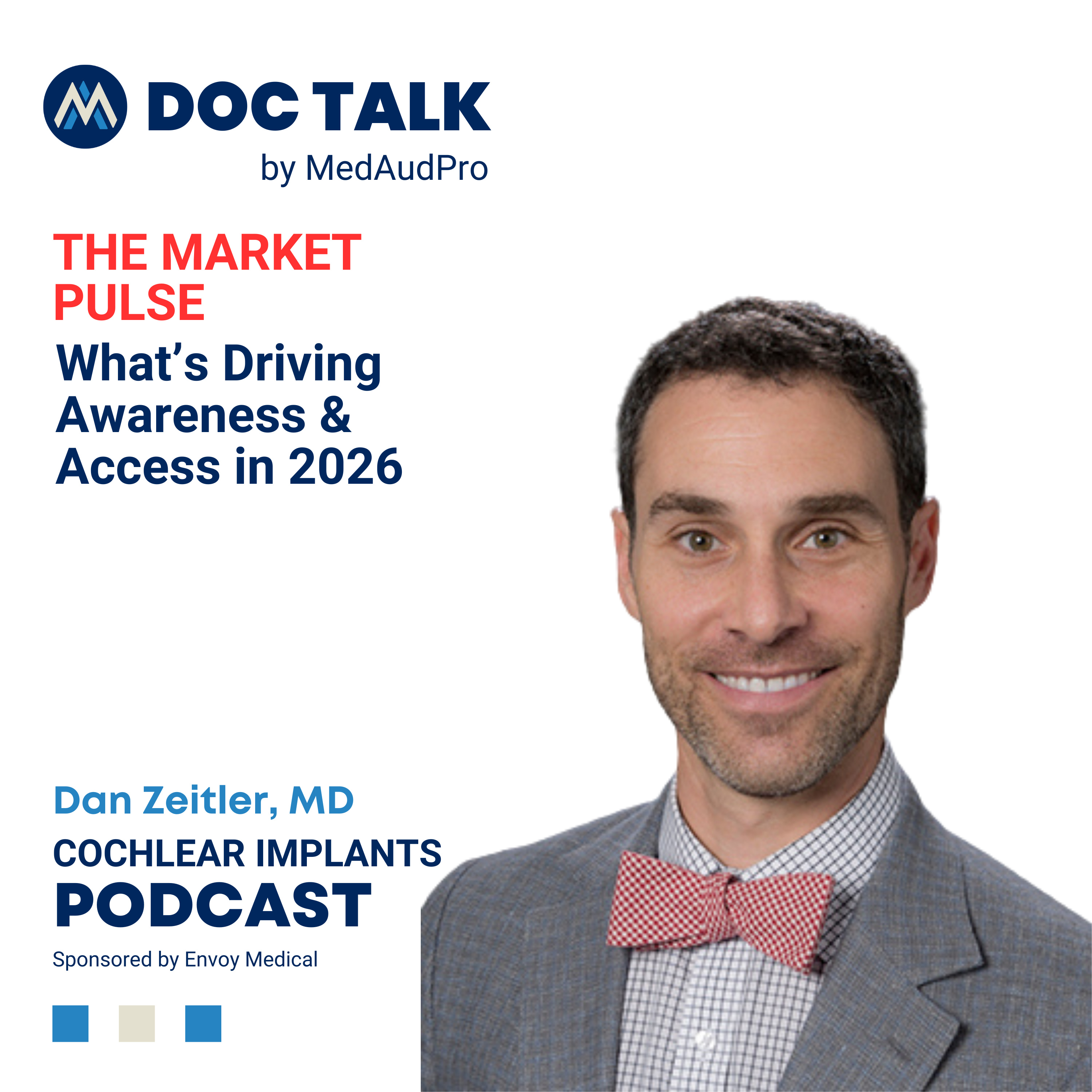
    The Market Pulse - What's Driving Awareness & Access in 2026

    What's really driving cochlear implant growth in 2026? And what's holding it back? Meet Dr. Dan Zeitler, MD, FACS, Chair of the American Cochlear Implant Alliance (ACIA) and co-director of the Listen for Life Cochlear Implant Center in Seattle. As the lead author on ACIA's groundbreaking task force recommendations for adult CI candidacy, Dan has a front-row seat to the market forces reshaping the field. What You'll Hear: · The Penetration Problem: Why only 2% of eligible candidates are getting implanted under expanded criteria (down from 12-13% under traditional Medicare standards) · The Numerator vs. Denominator Challenge: More people are being implanted than ever before, but the pool of eligible candidates is growing even faster · Who's Coming Through the Door (and Who Isn't): Why single-sided deafness and asymmetric hearing loss patients are flowing in, but bilateral hearing loss patients remain resistant · Supply vs. Demand: Is the bigger bottleneck lack of patient awareness or lack of clinical capacity? · The Primary Care Gap: Why PCPs are the critical missing link in the referral pathway · Workflow Revolution: How reducing appointment schedules, adopting remote programming, and partnering with community audiologists can scale CI access · The 40-Year Problem: Why the field must be willing to change workflows that have been standard practice for decades Dan doesn't pull punches: "We all have to be willing to change what we've done with our patients for the last 40 years. We have to be willing to change." This conversation tackles Medicare expansion, private payer follow-through, competitive dynamics among the three major manufacturers, and the workforce capacity constraints threatening to create a supply-side crisis. Who should listen?Audiologists, otolaryngologists, neurotologists, program directors, hospital administrators, payers, policymakers, and anyone trying to understand why 95% of eligible CI candidates still aren't getting implanted. If you're wondering whether the field is actually ready for the demand that expanded candidacy could create, this episode gives you the honest answer. Stay up to date with us: LinkedIn, Facebook, and Instagram @MedAudPro Want to learn more about FCOM? https://FCOMnow.com Join the MedAudPro Provider Community for free access to behind-the-password content and connect with providers practicing at the top of their game: https://medaudpro.com/join This episode is sponsored by Envoy Medical.
    • Transcript
  • S3 · E1
    Oct 22, 2023 · 22 min

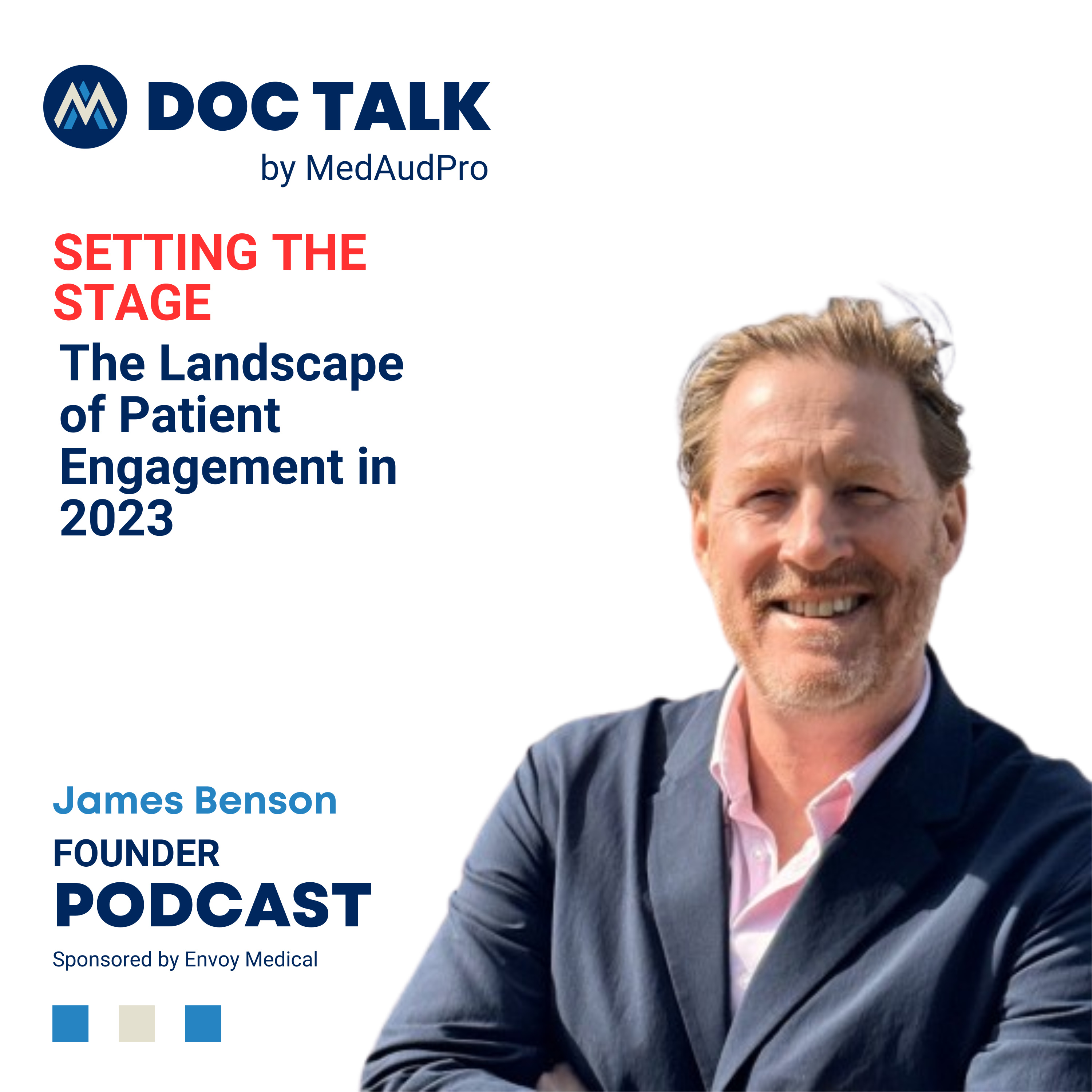
    Setting the Stage: Jamie Benson on the Landscape of Patient Engagement in 2023

    Kicking off this short-format series on Patient Engagement, Jamie Benson, the CEO of QM2 Solutions sets up the landscape of patient engagement looks like in 2023. Stay up to date with us on LinkedIn, Facebook, Twitter and Instagram @MedAudPro. Joining the MedAudPro Provider Community is a great way to support our show, get free access to behind the password content and interact with other providers looking to practice at the top of their game. Subscribe today at bit.ly/JoinMedAudPro This episode is sponsored by QM2 Solutions.

  • S2 · E20
    Nov 10, 2022 · 20 min

    It's a Wrap: Brent Lucas on Envoy's First Human Implant and the Series' Biggest Takeaways

    Wrapping up this sprint series on CI, Brent Lucas, the CEO of Envoy Medical helps recap the episodes. Stay up to date with us on LinkedIn, Facebook, Twitter and Instagram @MedAudPro. Joining the MedAudPro Provider Community is a great way to support our show, get free access to behind the password content and interact with other providers looking to practice at the top of their game. Subscribe today at bit.ly/JoinMedAudPro This episode is sponsored by Envoy Medical.

    • Transcript
  • S2 · E19
    Nov 8, 2022 · 33 min

    Focusing on the Individual: Ray Gamble on MED-EL's History, Innovation, and What's Next

    Ray Gamble, the MED-EL President of North America. He talks history, innovation, and how the company is committed to focusing on the individual. Be sure to listen in, and enjoy the in-depth overview of tech and provider insights. Stay up to date with us on LinkedIn, Facebook, Twitter and Instagram @MedAudPro. Joining the MedAudPro Provider Community is a great way to support our show, get free access to behind the password content and interact with other providers looking to practice at the top of their game. Subscribe today at bit.ly/JoinMedAudPro This episode is sponsored by Envoy Medical.

    • Transcript
  • S2 · E18
    Nov 8, 2022 · 27 min

    Where the Industry Leader Is Headed: Lisa Aubert on Cochlear Americas' Mission and the Road Ahead

    Cochlear America's President, Lisa Aubert, shares her journey, the company's mission, and how it impacts the direction for the future. Wondering where the Industry leader is heading? This episode is for you. Stay up to date with us on LinkedIn, Facebook, Twitter and Instagram @MedAudPro. Joining the MedAudPro Provider Community is a great way to support our show, get free access to behind the password content and interact with other providers looking to practice at the top of their game. Subscribe today at bit.ly/JoinMedAudPro This episode is sponsored by Envoy Medical.

    • Transcript
  • S2 · E17
    Nov 8, 2022 · 27 min

    Technology Is a Team Sport: Dr. Michael Hoa on Turning Research into Standard of Care

    Ever wonder how new technology and best practice procedures are born into a speciality? Michael Hoa, MD share how research becomes the new standard in the OR and beyond. Stay up to date with us on LinkedIn, Facebook, Twitter and Instagram @MedAudPro. Joining the MedAudPro Provider Community is a great way to support our show, get free access to behind the password content and interact with other providers looking to practice at the top of their game. Subscribe today at bit.ly/JoinMedAudPro This episode is sponsored by Envoy Medical.

    • Transcript
  • S2 · E16
    Nov 2, 2022 · 24 min

    Tired of Your Own Message? Dr. Sarah Sydlowski on Rewriting the CI Counseling Story

    Are you tired of your message yet? Dr. Sarah Sydlowski talks about creating stories to help providers improve their counseling and education. Learn about getting comfortable with new counseling conversations, reaching out to providers beyond your specialty, and even the specifics of balancing FDA guidelines, medicare coverage and clinical best practices. Stay up to date with us on LinkedIn, Facebook, Twitter and Instagram @MedAudPro. Joining the MedAudPro Provider Community is a great way to support our show, get free access to behind the password content and interact with other providers looking to practice at the top of their game. Subscribe today at bit.ly/JoinMedAudPro This episode is sponsored by Envoy Medical.

Showing 1–20 of 20 episodes